Photo Credit: Richmond International Raceway‘s official Twitter account, @RIRInsider

RELATED: Schedule for Martinsville

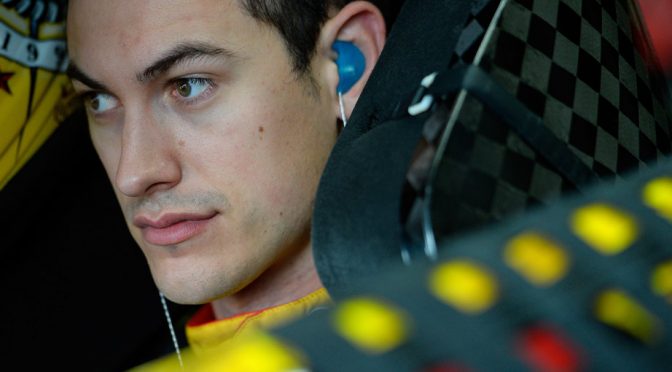
Joey Logano isn’t expecting a warm reception when he arrives at Martinsville Speedway for this Sunday’s STP 500 NASCAR Sprint Cup Series race (1 p.m. ET, FS1, MRN, SiriusXM NASCAR Radio), but the driver of the Team Penske No. 22 Ford isn’t losing any sleep over it.
 
“I think that’s one of those race tracks that will probably be fairly negative toward me,” Logano said during a break in Tuesday’s Goodyear tire test at Richmond International Raceway. “But you know, I guess over the years there are only certain people that know who I really am. I don’t really take that stuff too personal. I know there’s only one person who can judge me. So I don’t get worried about it. To be honest with you, it motivates me. I’m kind of OK with it.”
 
It will be the first Sprint Cup race at the 0.526-mile track since last fall’s Chase for the NASCAR Sprint Cup event, when Logano’s day soured after he was taken out, while leading the race, by Joe Gibbs Racing driver and 2003 series champion Matt Kenseth.
 
Many fans on hand that day cheered as Kenseth drove his ailing Toyota into the left rear of Logano’s Ford, pushing it up into the outside wall in Turn 1.

RELATED: Recap what happened at Martinsville last year
 
Kenseth had been spun out of the lead in a race at Kansas two weeks earlier after contact from Logano as the two battled for the lead. He was parked by NASCAR and eventually suspended for two races as a result of his actions at Martinsville.
 
Logano was unable to rebound from the incident, and failed to advance to the championship round as a result.
 
How he is greeted this week, Logano said, “doesn’t bother me at all.
 
“I just want to go show them up,” he said. “It gives you that motivation, you know. … Someone puts you down and you want to show them. It gives you that little extra fire to show people what’s up. And I think that kind of gives me a little drive.”
 
Asked if Logano has merely gotten a bad rap, Hamlin — who had his own run-in with the 25-year-old — joked “He’s in the room, so (it’s) a little difficult …”
 
“Careful what you say!” Logano quipped.
 
“My perfect 100 percent honest answer is Joey races really tough and really hard,” Hamlin, who also races out of the JGR camp, said. “At times he’s difficult to pass. A lot of times that pays off in the end … I think it just seems like sometimes there are coincidences. I’ve had probably the same thing happen to me — somebody is pissed at me, then next week someone else was pissed at me.
 
“We all have our styles of driving. … You can’t expect someone to convert the way that they drive to appease other people, because it’s what’s made them successful. It’s hard for me to criticize the way anyone drives, even though it may not be the way that I do it.”
 
Hamlin opened up the 2016 season with wins in the Sprint Unlimited non-points event, then capped off SpeedWeeks with his first Daytona 500 victory.
 
Logano, six times a winner last season, is sixth in points and searching for his first victory of the year.
 
“A lot of times when drivers put on helmets, their attitude changes,” Logano said. “It becomes a competitive atmosphere. You’re out here to win.
 
“Like Denny said, I race hard. I’m not going to disagree with that. That’s what I’ve found works for me. I’ve tried it the other way and it didn’t work. When you find something that works for you, you try to stick to that.”

CHARLOTTE, N.C. — The respect was there from the beginning, a carryover from years of competing against one another on the track.
 
The understanding has been a bit slower to materialize as the two former rivals became co-workers, but it’s coming along nicely according to NASCAR on FOX analyst Jeff Gordon.
 
The four-time premier series champion, speaking Tuesday at the NASCAR Hall of Fame, said there are no issues between himself and fellow NASCAR on FOX analyst Darrell Waltrip.
 
“We all understand the age difference and the different eras where we were dominant in our sport, but the respect that DW and I have for one another has always been there,” Gordon, 44, said during an appearance to help promote this Sunday’s STP 500 NASCAR Sprint Cup event at Martinsville Speedway (1 p.m. ET, FS1, MRN, SiriusXM NASCAR Radio).
 
Gordon retired from driving at the conclusion of the 2015 season with 93 victories to go along with his four titles. Waltrip, a staple in the FOX broadcast booth since 2001, ended his career with 84 wins and three championships.
 
“In the booth, even though we might not always agree on things, because we have common respect for one another … it probably took a little bit of time of that understanding and having more personal time together, at dinner and meetings and texting back and forth – but our relationship is great,” Gordon said. “And I think we’re having a lot of fun.”
 
There have been differences of opinion, but Gordon said fans shouldn’t read “controversy” into those situations.
 
When Stewart-Haas Racing driver Kevin Harvick pitted for tires and fuel under green and then inherited the lead in the Auto Club 400 thanks to a caution flag barely two laps after his stop, the question for Gordon and Waltrip was who benefited? Harvick because of the immediate gain in track position as those who hadn’t previouly stopped came to pit road, or Jimmie Johnson, the race leader at the time of the caution, who restarted second after a two-tire change?
 
“I wouldn’t call it a disagreement but a difference of opinions,” Gordon said of the conversation. “The nice thing … (whichever) one of us is right and one of us is wrong, we smile about it, pat one another on the back, make jabs about it and go on. I think at first fans were taking that maybe the wrong way or people at home were taking that as ‘Oh man, these guys genuinely don’t like one another.’
 
“No … we do have differences of how we see things and we’re going to express that. But at the end of the day we’re going to have fun and enjoy those differences and not take it personally.”
 
The Auto Club Speedway discussion was similar to one just a few weeks earlier when rev limiters on the cars was the topic.
 
Waltrip, 69, later addressed that particular discussion in a posting on the FOXSports.com website.
 
“Some of you have tweeted suspecting there’s friction, but trust me, you couldn’t be more wrong,” Waltrip wrote. “Just because we don’t agree on everything doesn’t mean I don’t like him and he doesn’t like me. Who wants a booth where they all think, sound and act alike? I sure don’t.”
 
With five races in the booth under his belt, Gordon is becoming more comfortable in his new role. Whenever possible, he arrives at the track on Friday morning and heads into the garage as soon as it opens.
 
“My old crew chief, Alan Gustafson, is all mad at me (saying), ‘Oh sure, you stop driving and now you decide to come in the garage area at 8 o’clock when it opens up,’ Gordon said.
 
“I said, ‘Yeah, I didn’t need to know all this stuff before. I just drove the car.’ “
 
Those early-morning conversations allow him to catch up on topics of the day and get acquainted with many people he once raced against.
 
“When you’re up in that booth and mentioning names, it’s nice to put a face with it and have a conversation with … (No. 78 crew chief) Cole Pearn comes to mind, someone I talked to at Daytona,” he said. “… A lot of these guys, I’ve been on the other side where they’re my competitors and I didn’t really get to know them.
 
“Now I’m looking at it as personalities that really make up our sport. And I don’t think our job on Sunday in the broadcast booth is to come up with some revelation of ‘Hey, somebody’s doing this or doing that and that’s how they’re getting a competitive advantage.’
 
“It’s not necessarily that, but if something happens, you want to have knowledge. And understand why they’re doing that. Or why they’re not doing that. Whether it’s a pit call … an adjustment to the car or what the car looks like on the race track.”
 
Such understanding, he said, is important in his new role. And thus far, it’s been extremely helpful.
 
“In the times I’ve gone in the garage are I probably have learned more in that hour that I’ve been there than I have in years, actually,” he said.

JR Motorsports officials have announced that Cole Custer, driver of the No. 00 Chevrolet in the Camping World Truck Series, will compete in five XFINITY Series events for the organization this season.


Team owner Dale Earnhardt Jr. said Custer, 18, “is a driver who has shown a lot of potential.


“He is fast and tenacious, he leads laps and wins races, everything you want out of a driver no matter how much experience they have.”


Custer, a two-time winner in the NCWTS, is scheduled to make his XFINITY Series debut April 23 in the JRM No. 5 Chevrolet at Richmond International Raceway. He will be behind the wheel of the group’s No. 88 entry for races at Charlotte Motor Speedway (May 28) and Kentucky Speedway (July 8), then return to the No. 5 ride for events at CMS (Oct. 7) and Homestead-Miami Speedway (Nov. 19).


The 2016 season is Custer’s first full-time effort in the Truck Series; He ran a limited schedule (10 races) for the organization last year and made nine starts for Stewart-Haas Racing co-owner Gene Haas in ’14.


“Seat time is critical to development as a driver, and the more I can get, especially with a team like JRM, the faster that development will go,” said Custer, the Truck Series’ youngest race winner. “This is a great opportunity for me to get more laps, get used to the equipment, and compete at another level.”


JRM fields three full-time XFINITY Series entries, two for drivers Elliott Sadler (No. 1) and Justin Allgaier (No. 7) and a third (No. 88) that is shared by several competitors in the JRM/Hendrick Motorsports group. The No. 5 entry competes on a limited schedule.


“We take a lot of pride in helping guys advance their careers towards their ultimate goal of racing in the Cup Series,” Earnhardt Jr. said. “Cole is on that path and I’m happy that we’re able to put him in our cars to help in that process.”


The No. 00 is the lone NCWTS entry fielded by JRM. Custer enters this weekend’s third series stop, at Martinsville (Va.) Speedway, 22nd in points.

Front tire changer Nick Krizmanich of Chip Ganassi Racing will undergo open-heart surgery on March 29. Krizmanich has been a mainstay on pit road for the last few years working with multiple teams, including the Nos. 11, 2 and 42. This year Krizmanich was slated as the backup for the Nos. 1 and 42.

“My condition was found during a physical,” Krizmanich said. “The condition the doctors are fixing is called an aortic insufficiency. They will be replacing the main aortic valve in my heart through open-heart surgery. Apparently, the valve I was born with has a defect and doesn’t close all the way, not allowing blood to fully pump through my heart and body.

“Thankfully, they found it, and it’s getting fixed before it got even worse.”

Good luck to Nick in his surgery. There has been a GoFundMe page set up, if you would like to help: https://dm2.gofund.me/2fvcvnz6

For more pit crew news, visit PitTalks.com.

RELATED: Entry list for Martinsville

A pair of NASCAR Sprint Cup Series regulars will double-dip into the Camping World Truck Series this weekend at Martinsville Speedway.


Defending Sprint Cup champion Kyle Busch will attempt to break an 0-for-8 drought in the series at the .526-mile track, driving the No. 18 Toyota from his Kyle Busch Motorsports stables in Saturday’s Alpha Energy Solutions 250 (2:30 p.m. ET, FS1, MRN, SiriusXM NASCAR Radio). He’ll be part of a four-truck KBM effort with teammates Christopher Bell, William Byron and Daniel Suarez.


Kyle Larson is scheduled to make his first Truck Series start since September 2015, driving the GMS Racing No. 24 Chevrolet. GMS will also field three other trucks in Saturday’s 250-lapper, with Larson joining Daytona winner Johnny Sauter, Spencer Gallagher and Kaz Grala, a NASCAR K&N Pro Series standout making his Truck Series debut.


Justin Haley, formerly known as J.J., plans to make his fourth career truck series start in the Braun Motorsports No. 32 Toyota. The 16-year-old driver won the most recent K&N Pro Series East event last weekend at Greenville-Pickens Speedway.

Matt Kenseth will have a familiar voice over his team radio this weekend at Martinsville Speedway.


Chris Osborne will return to the spotters’ stand at the .526-mile track for the Joe Gibbs Racing No. 20 Toyota team. Osborne — nicknamed “Crazy” — has been out since the start of the NASCAR Sprint Cup Series season to recover from multiple injuries suffered in an automobile crash on Dec. 17.


Osborne suffered severe injuries to his right leg and foot. His wife, Melissa, was affected by major injuries to her pelvis, right hip, right shoulder, right arm and elbow; and Osborne’s son Austin suffered a concussion, partially collapsed lung, cracked sternum and broken nose.


“It’s been a lot of tough days and nights and healing,” Osborne said Tuesday morning on SiriusXM NASCAR Radio. “The mindset was to get back at Daytona, but the physical part of it and the reality was, there just wasn’t enough healing time. Once we got past Daytona and Atlanta, the doctor said ‘I can’t release you to get on an airplane and fly back and forth to the West Coast three weeks in a row.’ “


Kenseth has worked with two spotters so far this season. Lorin Ranier handled the duties for Daytona’s Speedweeks in February; Curtis Markham spotted for Kenseth in Atlanta and the three Sprint Cup races that followed at Las Vegas, Phoenix and Auto Club.


Osborne was welcomed back by drivers and spotters alike when he got to the track Friday morning.

Two-time Richmond race winner Denny Hamlin is one of four NASCAR Sprint Cup Series drivers scheduled to take part in a one-day Goodyear tire test Tuesday, March 29 at Richmond International Raceway.


Hamlin, 35, is a native of Chesterfield, Virgina, which is located approximately 30 minutes south of the .75-mile NASCAR track. The driver of the Gibbs Racing No. 11 Toyota earned NASCAR Sprint Cup Series victories at RIR in 2009 and ’10. The Toyota Owners 400 is scheduled for Sunday, April 24 (1 p.m. ET, FOX, MRN, SiriusXM NASCAR Radio).


Also expected to participate in the test are Joey Logano (Team Penske No. 22 Ford), Greg Biffle (Roush Fenway Racing No. 16 Ford) and Danica Patrick (Stewart-Haas Racing No. 10 Chevrolet).


Tuesday’s Richmond test is one of two single-day tests by the tire supplier for 2016. A one-day test is also scheduled for Tuesday, May 17 at Michigan International Speedway.


The Richmond test is scheduled to run from 10 a.m. until 5 p.m. ET. According to track officials, the grandstands will be open and fans attending the test should enter through Gate 70.


Kurt Busch (SHR) is the defending winner of the Toyota Owners 400.

A picture of a race track hangs above the fireplace in the living room of Shane Hmiel’s home in Greensboro, North Carolina. Smoke fills most of the shot, the result of a celebratory burnout. Barely visible in the center of the smoke is a truck from the NASCAR Camping World Truck Series. Invisible under the smoke and inside the truck is the man driving it — Hmiel.


As a NASCAR driver in the early 2000s, Shane Hmiel was on the rise. He won that Truck Series race at Las Vegas in 2004 and had 10 top-five finishes in 83 races in what is now known as the XFINITY Series. He made seven starts in the Sprint Cup Series, including two for Braun Racing, which was co-owned by Ralph Braun, founder and CEO of BraunAbility, the world’s largest manufacturer of wheelchair accessible vehicles.


Hmiel was cocky, mouthy and fast, the kind of driver loved and loathed in equal measure. Hmiel was also a drug addict, and after he failed three drug tests, NASCAR banned him for life in 2006, the first time the sanctioning body ever did that to anybody. Hmiel was only 25, and already his career at the highest level of American motorsports was over.


“Getting kicked out of NASCAR was a total embarrassment for my parents,” he says now, sitting in front of that picture. His father is Steve Hmiel, who was the first employee of Roush Racing and a crew chief for Terry Labonte, Mark Martin and Dale Earnhardt Jr., among others, in a career that spanned four decades.


As Shane Hmiel fought his drug addiction, he was diagnosed as bipolar, which was in a way a relief, an explanation for the mood swings he had experienced his whole life. After a trip to rehab, Hmiel got clean and says he has been so since October of 2007. “When I got kicked out, I was so driven to get back,” Shane Hmiel says.


He knew he couldn’t go back to NASCAR, but he could get back into racing. Though he had never raced on dirt — and thought it was, as he put it, “stupid” — he started entering sprint car races on the USAC (United States Auto Club) circuit. He was fast. The wins piled up. He had fallen down in life and gotten back up. “I was on a higher mountain than I had ever been,” he says.

• • •

Photo courtesy of Eric Saunders

When Eric Saunders was about 12, friends of his family built an oval race track in his Lakeville, Indiana, backyard, adjacent to the motocross track that was already there. One of those friends, three-time Sprint Cup champion Tony Stewart , gave Eric a 600 Mini Sprint race car. Eric climbed in the car and turned a few laps.


Eric’s father is Irish Saunders, a longtime employee for Hoosier tires. His years in racing had given him an eye for talent, and he saw his son’s driving skill immediately. He turned smooth laps, with delicate throttle control — which was great, except turning in circles while staying on the ground the whole time didn’t interest Eric, who was used to flying through the air on his dirt bike, racing for a team owned by Stewart. “This is really boring,” he told Irish after just a few laps in the car.


Eric stuck with motocross instead, and by the time he was 17, he had won 700 races, landed lucrative sponsorships, spoken at the Pentagon and positioned himself for stardom. “I used to go out there and sit there and watch him for hours riding. I used to love to sit there and watch him ride,” Irish Saunders says. “He’d do stuff on motorcycles where I’d be like, you have to be kidding me.


Early in his career, Eric Saunders relied on natural ability. He didn’t work at his craft. But the more success he had, the more devoted he became. As he started his professional career while still only 17, he worked himself, he says, into great physical shape.


“He was going to be the guy,” Irish Saunders says. “He was on his way. He was running his first season as a pro at 17 years old. He was living the dream. He had the life of a rock star. He had the glory and the glamour and the girls — the three Gs.”


On August 28, 2010, the day before his 18th birthday, Eric Saunders was practicing on the motocross track in his backyard. He’s not sure what happened, except that he wiped out, and when he tried to get up, he couldn’t. He woke up in a hospital in Indianapolis five days later to learn he had broken his back and was paralyzed from the chest down.


As Eric Saunders recovered, the NASCAR Sprint Cup Series raced in Atlanta. Stewart got word to the Saunders family to watch the event on TV. He won the race, climbed from the car and said, “This one’s for my buddy Eric Saunders, who’s in Indianapolis. He got hurt really bad in a motocross crash. He’s up in Indianapolis healing. He’s paralyzed right now. But he’s one of the toughest young guys I know. So, Eric, buddy, this one’s for you, pal.”


Ten days before Eric was scheduled to be released from the hospital, the Saunders’ home was not ready to accommodate Eric’s wheelchair. By the time Eric got out, Stewart, X Games superstar Travis Pastrana and others had made sure the home was handicap accessible.


A few weeks later, Irish Saunders attended a USAC meeting in Indy. He ran into Shane Hmiel. They had known each other since the 1990s, and when Shane Hmiel made the transition from NASCAR to USAC, Irish served as a mentor to him, helping him understand the differences between the two series. By the time of the meeting, the mentorship had turned into a friendship.


Hmiel was startled by the look on Irish’s face. Pain shrouded him, like the smoke that shrouds Hmiel’s truck in that picture in his living room. “Irish, man, I don’t know what I would do if this ever happened to me,” Hmiel told him.


Irish responded: “Shane, let’s just hope it never does.”


• • •

Shane Hmiel, left, has found plenty of support from his parents — and dog. (Photo courtesy of Shane Hmiel)


That was a sobering encounter for Hmiel in a life full of such moments. He had been good friends with Adam Petty, who died in a crash during practice at New Hampshire in 2000, and with Ricky Hendrick, son of Hendrick Motorsports owner Rick Hendrick, who died in a plane crash in 2004.


But as late summer turned to fall in 2010, Hmiel savored the spectacular view that his new life afforded him. The fog from so many years of drug use had cleared; he had been clean for three years, the longest stretch since he started smoking marijuana at 12. He had a renewed outlook on life — he wasn’t going to waste his on drugs and fighting, two things he had done nearly as often as he’d raced.


Already in 2010, Hmiel had won the three biggest sprint car races of the season, a feat no one had ever accomplished. And in rehabbing a back injury, he had worked himself into the best physical shape of his life. He had plans to progress into the IndyCar Series and race in the Indianapolis 500.


During a qualifying run on October 9, 2010 at a track in Terre Haute, Indiana, Shane Hmiel slammed into a wall. The roll cage hit first, and it crumpled under the force of the collision. Shane Hmiel was clinically dead when emergency workers got to him, his dad, Steve, says, but they revived him. He nearly died two more times during surgery to repair a rip in his carotid artery. Shane spent more than a month in a coma with catastrophic injuries, including a partially severed spinal cord and a traumatic brain injury.


He was paralyzed.


Among the people to arrive at Indiana University Health Methodist Hospital in Indianapolis as Hmiel fought to survive was Irish Saunders.

• • •

Eric Saunders now drives for Shane Hmiel (Photo courtesy of Eric Saunders)

The Saunders family spent the first year after Eric’s accident getting used to their new life. As they started to settle in, a friend named Ed Kennedy asked Irish how the family would stay involved in racing, which had been a constant in the family’s life. Irish said he had no idea. Kennedy, a businessman and part-time ARCA driver from Daytona Beach, Florida, had one. On March 17, 2011 — Irish’s birthday — Kennedy called Irish to tell him he had he bought Plymouth Speedway, a dirt track near the Saunders’ home. Kennedy asked the Saunders family to oversee it for him.


Racing again became central to the Saunders family. One night, Plymouth Speedway sponsored a drag race for fans’ street cars. Eric Saunders entered his Jeep Rally Compass, outfitted with the gas and brake on the steering wheel so he could drive it. He won the race. The crowd loved it.


Something about that win — the rush of adrenaline, the noise of the crowd, the thrill of taking the checkered flag — rekindled Eric’s dormant desire to race. Soon he was back in a 600 Mini Sprint race car — the same kind he once labeled boring. Someone painted, “I can. I will,” on it, a slogan Eric adopted to motivate himself as he stayed active and fought depression throughout his recovery.


Racing the car, owned by Tony Stewart Racing, did not come easy. The hand controls needed to be ironed out. They worked, but they weren’t nearly as fine-tuned as traditional brakes and throttles. On top of that, he had never raced anything with four wheels. Driving laps alone on a track in his backyard with just his dad watching was one thing. Racing in a tight bullring full of other cars was another.


But Eric was determined to get better. By 2013, he started to get comfortable in the car. On October 4, 2014, he dominated a race at Plymouth Speedway from beginning to end. When he took the checkered flag, his mom, brother, sister and dad all cried.


“I was a basket case,” Irish Saunders says. “I was down there with him when he stopped. The look in his eyes, when he looked at me and said, ‘Dad, I’m back,’ that’s just the stuff he did when he was racing motorcycles. It was just unbelievable.”


There’s an old saying in racing, that the first win is the hardest, and then they come in bunches, and that proved true for Eric Saunders. After that first win in 2014, he won six times in 2015.


• • •


Doctors gave Hmiel a 10 percent chance of surviving. They said he’d never walk or breathe on his own again. They said he’d never feed himself or brush his teeth.


The last memory Hmiel has is of walking out of a McDonald’s in Toledo, Ohio four days before the wreck. The next thing he remembers, it was five weeks later and he was on a plane, with who knows how many tubes sticking out of him. He asked his mom what had happened. Crying, she told him he had been in a wreck.


He was being flown to Charlotte, North Carolina. Doctors there told the Hmiels to take him home. He was immobile and used a ventilator to breathe. They said he’d never get any better. The Hmiels did not accept that. Instead, they checked Shane into the Shepherd Center in Atlanta, one of the top spinal cord and brain injury rehabilitation facilities in the country.


Life had knocked him down, again. But he decided to start getting back up immediately. It would not happen easily or quickly. He stayed at Shepherd for much of the next three years. Early on, his parents often slept at the foot of his bed. His brain injury meant he wasn’t yet lucid, and they didn’t want his incoherent rambling to alarm anybody. He told nurses that his mom and dad had put him in the bed of a pickup truck, taken him to a car wash and cleaned him up there because they didn’t know how to get him in the shower.


Slowly, excruciatingly, Shane began to recover. He relearned how to brush his teeth and how to feed himself. He recalls the first time he left the Shepherd facility, months after his injury. It was a simple trip, first to Walgreens and then out for tacos. As he drove his wheelchair over the Walgreens parking lot, each pebble felt like a boulder, and the jostling sent searing ripples of pain through his body. This man who once drove stock cars at 200 miles per hour now could barely drive a wheelchair. “It hurt so bad that I drove so slow. The people walking with me were like, ‘Come on, come on,’ ” he says.


But there is a glimmer in his eye as he tells this story. “Now I could drive over it wide open.”


Shane Hmiel’s journey isn’t over yet, but the racer has made tremendous progress since being paralyzed in 2010. (Photo courtesy of Shane Hmiel)


He says his goal each day is to go to bed with something he didn’t have when he woke up. He doesn’t mean money (though he wouldn’t argue with that). He means he tries to collect knowledge or information that will make tomorrow better.


He hopes technology will one day make it possible for him to walk again.


He drives a van with “BraunAbility” painted on the side of it and a lift inside that allows him to get in and out in his wheelchair. He laughs as he describes the two reactions he sees in traffic when people realize a paralyzed guy is driving next to them. They either give him a thumbs-up … or move over as many lanes as they can.


Today Hmiel lives in that brick home in Greensboro with a childhood friend — a level of independence nobody would have believed as his heart beat only four times per minute while he lay in his hospital bed in Indianapolis. Ramps allow him to maneuver throughout his home. He attends physical therapy three days a week, and aides come during the day and stay with him at night.


“He’s like his mother, and his mother’s side of the family. They’re tough, tough, tough,” Steve Hmiel says. “Thank God Shane is like that. He never would allow himself to roll up into a ball and let people take care of him. Eric Saunders is exactly the same way.”

The first time Shane Hmiel, Steve Hmiel, Eric Saunders and Irish Saunders were in the same place at the same time was at the hospital in Indianapolis shortly after Shane’s crash. Irish took Eric there for a checkup; Steve was visiting Shane. They ran into each other in the ICU.


One son was in a coma. The other was just weeks removed from being paralyzed. The two dads were overcome by grief with no idea what they would do with the rest of their lives. That they would all go racing together five years later would have seemed impossible. But that’s what happened.


Last fall, Eric Saunders set running the Chili Bowl as a goal. Held every January in Tulsa, Oklahoma, the Chili Bowl is the premier event on the midget racing calendar. At first, Eric Saunders had a car for it, but when that fell through, he started looking for another one.


Irish Saunders discussed the pursuit with Levi Jones, an old friend and former USAC driver who also was close with Shane Hmiel — indeed, Jones won a race for a team owned by Hmiel on the one-year anniversary of Hmiel’s wreck. You should call Shane, Jones told Irish. He’s got a car.


Irish Saunders called Steve Hmiel first. Steve said he would talk to Shane, but he made no promises. Shane sometimes has an old-school approach to the business side of racing: He writes a check on Friday with plans to win enough money on Saturday that the check clears on Monday. Soon enough, Shane called Irish. He said one of his cars was stored near St. Louis, and that Eric was welcome to drive it. When Irish and Eric separately recounted what happened next, each broke into an impression of Shane, with his North Carolina drawl and distinctive cadence. Drive down to St. Louis and get that car. Get it all set up. Meet me at the Chili Bowl. Let’s go have some fun.


As the Chili Bowl approached, the friendship between Irish Saunders and Steve Hmiel deepened. They had known each other, but barely, for decades. Now the two talk on the phone almost every day. They talk about racing and their sons and how to best take care of them, both now and in the future. They lament how they both tried to do too much too soon after their sons’ injuries and how they were in shock for the first couple years.


They talk about the twists and turns they’ve already faced and the ones they don’t know are coming. They worry about their sons wasting away as wards of the state, or tucked away in the corner of some nursing home somewhere.


“We both have the understanding that our sons will need to live on after we’re gone,” Steve Hmiel says. “We can’t protect them physically or financially once we’re dead. Our goal is to make sure that when we pass away, they either have a business in place, or a really nice job, or enough cash in the bank that they can live until they pass away.”


• • •

Shane Hmiel and Eric Saunders (Photo courtesy of Eric Saunders)

On Thursday evening, Jan. 14, at the 448,400-square foot Tulsa Expo Center, the third of five nights of racing at the Chili Bowl, the Saunders and Hmiels were together again, their haulers parked side by side. Eric, now 23, and Shane, now 35, maneuvered their wheelchairs between them.


Garrett Saunders, Eric’s younger brother and fellow racer, helped lift Eric up and over the roll cage of his car. Eric put his hands on the roll cage and lowered himself into the driver’s seat. He headed to the track for hot laps.


When he returned a few minutes later, he was frustrated. He knew he shouldn’t be — he had never raced a midget before. But he couldn’t help it. He wheeled his wheelchair away from the car.


Shane wore a winter hat and a scarf; one lingering effect of his injury is that his body struggles to stay warm. He drove toward Eric. They leaned across their chairs to be heard above the din. “I put more pressure on myself than anything else,” Eric told Shane. “The more fun I have, the better off I’ll be.”


Eric’s team worked on the car. He left for another run and came back again. “Did I look like I ran one of these things before?” he asked. He proclaimed the job he did “not that bad.”


“Not that bad?” Shane said. “Not even close to not that bad.”


And then Shane paid Eric the highest compliment one racer can give another: “You were fast.”


This man who spent the first 30 years of his life looking for fights — and sometimes started one when he couldn’t find one — now relishes his role as a cheerleader. He loves to watch Eric drive. “When he comes in, when he lifts his helmet up, if he runs dead last or spins out, he’s smiling,” Hmiel says. “To me, nowadays, that’s what life is about, smiling.”


Over and over, Shane summed up his goals for his partnership with Eric with two words: Have fun. The power of racing together, they believe, is bigger than results. To Shane and Eric and their dads, the Chili Bowl seemed like the start of something powerful, much deeper than the typical owner-driver relationship. They’re looking for sponsors to buy into their passion, to help them run as many races as they can with the idea that they more they race together, the more they can tell their stories.


The confluence of their stories is eerie: Two promising young motorsports stars from well-known families suffer paralyzing injuries, rebound from them, and team up. Even the way they separately describe the changes they have undergone since their injuries is strikingly similar.


“I know that, honestly, this sounds stupid, but I wouldn’t change anything,” Shane says. “My life was how I ran last week, until I got to try again. Now my life has, to an extent, meaning.”


Says Eric: “I would say the same thing. … I used to think I’m Eric Saunders, superstar at motocross. Now I’m starting to live my life as Eric Saunders, the person. It humbled me.”


They had to lose racing in order to find out it was too important to them. Now they want to use racing as a way to share their newfound perspectives, to teach others that it’s possible to rebuild a wrecked life.


Each knows he can help the other and by doing so, help himself. By driving Shane’s cars, Eric can further his racing career and teach others that the end of one dream can be the beginning of another. By hiring Eric to drive his cars, Shane can draw attention to his foundation, Shane’s Spark, through which he wants to help the recently injured and people who are transitioning from the hospital to “normal” life.


“I want to take Eric, and it sounds bad, but I want to use him up. I want to drag him all over the country,” Hmiel says. “I want to get it to where, when people think Eric, they think, totally kick-ass human.”


• • •


Shane Hmiel and Eric Saunders have an inseparable bond. (Photo courtesy of Shane Hmiel)


Eric’s Chili Bowl ended early Saturday morning, when he failed to transfer out of his first race. He and Shane were disappointed, even while acknowledging the odds of having success were very long. They viewed it as a starting point and promised to return to the Chili Bowl next year and show vast improvement.


The event would go on for more than 12 more hours. Eric and his mom, dad, brother and sister stayed around the hauler all Saturday after Eric was done racing. Shane and his mom and dad stayed, too, parked right next door. It seemed like the Fourth of July, except the people who ate and drank and laughed as they sat in lawn chairs watched racing instead of fireworks. Someone in the party provided profane and hilarious running commentary and broadcast it via Periscope.


Eric Saunders sipped a beer out of a red plastic cup. Shane drove his wheelchair back and forth from the hauler to the track, where he watched one of his other drivers perform. Steve Hmiel worked on one of Shane’s race cars while Irish worked on Eric’s.


As the afternoon turned to evening, Irish Saunders soaked up the moment. He thought he had lost the happiness that racing brought to his family, and now here he was, here they all were, swimming in it again. The pain on his face that had so startled Shane Hmiel at that USAC meeting five years ago was replaced by joy.


“I never thought I’d be at this level in my life right now, I can honestly tell you that,” Irish Saunders says. “It’s been a great ride. I hope it never quits.”

Photo credit: Eddie Wood/Wood Brothers. Glen Wood stands next to his first NASCAR Grand National car, a 1953 Lincoln, at Martinsville Speedway on May 17, 1953 – his first NASCAR start.

It’s a home game for the Wood Brothers.
 
But the April 3 STP 500 (1 p.m. ET, FS1, MRN, SiriusXM NASCAR Radio) is a home game the Wood Brothers haven’t experienced as a full-time NASCAR Sprint Cup Series team with a single driver since Ken Schrader filled the seat of the vaunted No. 21 Ford in 2006.
 
We’re talking about Martinsville, of course, the shortest track on the Sprint Cup circuit at 0.526 miles, the closest to the Wood Brothers’ family home in Stuart, Virginia, and the next race on the Sprint Cup schedule.
 
“It’s a huge thing,” says NASCAR Hall of Fame crew chief Leonard Wood, who co-founded NASCAR’s most venerable organization with brother, driver and fellow Hall of Famer Glen Wood.
 
“We look forward to going to Martinsville. We used to run over there and have a lot of fun.”
 
The Wood Brothers last competed at Martinsville in 2011, when Trevor Bayne‘s unexpected victory in the season-opening Daytona 500 gave the family-owned team the wherewithal to run more races than originally planned.
 
The Woods’ last trip to the paper-clip-shaped track before Bayne’s 35th-place run was with veteran driver Bill Elliott in 2008.
 
This year, they return to the track with Sunoco Rookie of the Year hopeful Ryan Blaney, a 22-year-old who has never driven a Sprint Cup car at Martinsville, though he does have five NASCAR Camping World Truck Series races under his belt there.
 
Blaney appreciates the significance Martinsville holds within his organization.
 
“It’s really a home race for those guys, and almost for me, too,” Blaney said. “I grew up in High Point, North Carolina, an hour away from Martinsville, and I vividly remember every Martinsville race I went to, watched my dad (Dave Blaney) run it.
 
“And it’s really neat to go back and bring the Wood Brothers back there and have them in their hometown and home state. Hopefully, we’ll see a bunch of Wood Brothers fans out there. I think we will.”
 
Obviously, Leonard Wood’s memory is a bit longer than Blaney’s, dating to the days in the early 1950s when Martinsville was still a dirt half-mile. In 1953, Glen Wood raced there for the first time at NASCAR’s highest level in a ’53 Lincoln.
 
“It had power steering on it, and the power steering was so easy that we had to mark the steering wheel, because, when the track was wet, it was so smooth you couldn’t feel it,” Leonard Wood says.
 
In 1959, Glen Wood won the pole at Martinsville with a lap at 69.471 mph, a track record at the time. All told, Glen won four poles there, though he never won a race in NASCAR’s premier division. In fact, the only two Martinsville victories recorded by the Wood Brothers in 109 starts came with NASCAR Hall of Famers Cale Yarborough (1968) and David Pearson (1973) behind the wheel.
 
When Blaney completes his 22nd lap at the .526-mile track on April 3, it will mark 45,000 laps in Cup competition at Martinsville for the Wood Brothers.
 
But that’s just the tip of the iceberg. Thanks to the beneficence of track founder Clay Earles, the Woods spent countless hours testing there.
 
Leonard recalls one instance where Glen was testing the team’s “back-seat car,” a 1937 Ford with both the engine and driver’s seat moved radically toward the rear of the car. Glen though the car needed a bigger spindle on the right front. From observing the car on the track, Leonard wasn’t so sure.
 
“So I climbed in and rode with him around the track at Martinsville” Leonard says. “He is just flying through the corners, and it felt like there’s about 10 tons of pressure on the right front. It was getting so much grip that I was just holding on, like it was trying to throw me right out the window.
 
“I’m trying to get him to slow down. He can’t hear me. Finally we came to a stop. And I said, ‘Glen, you need a bigger spindle on that right front.'”
 
Blaney’s experience clearly is a lot more limited, and he’s not sure racing the trucks at Martinsville will be all that helpful, even though he posted fifth-place finishes in his last three starts.
 
“I think there are some things you can take away from running the Truck races,” Blaney said, “but I think there’s a reason why the Cup guys don’t normally run both of them. For one thing, it’s really hard on your body. And, two, I hear it kind of messes them up when they run both, trying to be consistent between the two cars.
 
“There are probably some things we can take away, and I’m looking forward to learning and everything like that, but there’s not a lot that you can take away.”
 
Though Blaney readily admits Martinsville hasn’t been one of his best tracks, he credits crew chief Jeremy Bullins with helping to retool his attitude.
 
“Last year, when we announced the full-time deal, I said ‘Martinsville’s the one place I’m not looking forward to,’ and he persuaded me (otherwise),” Blaney said. “And now I’m looking forward to going to Martinsville, and I want to go real bad.
 
“So it’s nice to have someone that can motivate you.”
 
Doubtless, on April 3, there will be a large contingent of fans in the grandstands trying to amplify that support.
 
After all, it’s a home game for the Wood Brothers—and by extension and proximity, for Blaney, too.