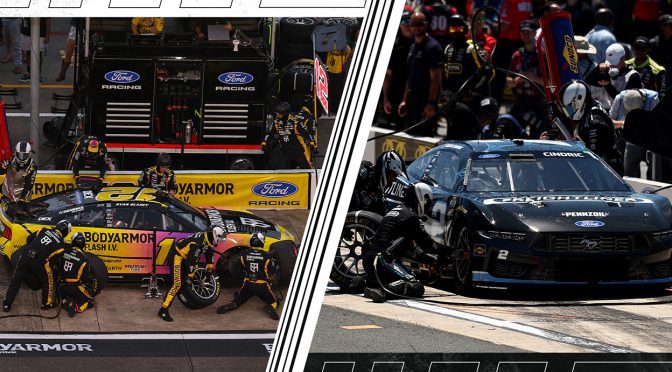
Team Penske has swapped the pit crews of its Nos. 2 and 12 teams driven by Austin Cindric and Ryan Blaney, respectively, before the start of The Chase presented by Mobil 1, a team spokesperson confirmed to NASCAR.com on Tuesday.

Blaney and the No. 12 team enter the NASCAR Cup Series Chase as the No. 2 seed, 25 points behind series leader Denny Hamlin. However, his pit crew through Daytona ranked just 32nd of 35 full-time teams, according to NASCAR Insights.

MORE: Chase standings | Darlington schedule

Cindric and the No. 2 team qualified for The Chase and enter as the No. 15 seed of 16, sitting 95 markers back of Hamlin ahead of Sunday’s Cook Out Southern 500 at Darlington Raceway (5 p.m. ET, USA Network, HBO Max, MRN Radio, SiriusXM NASCAR Radio). Cindric’s crew was the 10th-best crew in the series following Saturday’s regular-season finale at Daytona International Speedway.

That 10th-best crew now moves over to pit Blaney’s No. 12 Ford beginning at Darlington, featuring jackman Jourdan Osinskie, fueler Andrew Lackey, front tire changer Justin Armwood, rear changer Geoffrey Wall and tire carrier Jesse Mills.

Cindric will inherit jackman Graham Stoddard, fueler Chris Conklin, front changer Keiston France, rear changer Justin Fox and tire carrier Trevor Apsey to start the postseason.

This change marks the second major change to Blaney’s No. 12 crew this season. Team Penske made additional changes to the crew in April, adding Stoddard to the roster ahead of the NASCAR Cup Series race at Kansas Speedway. According to NASCAR Insights, the No. 12 crew has cost Blaney a series-worst 129 positions on the race track. The next-closest deficit is the No. 77 Spire Motorsports pit crew of Carson Hocevar, which has cost Hocevar 70 positions. Hocevar enters The Chase as the No. 12 seed.

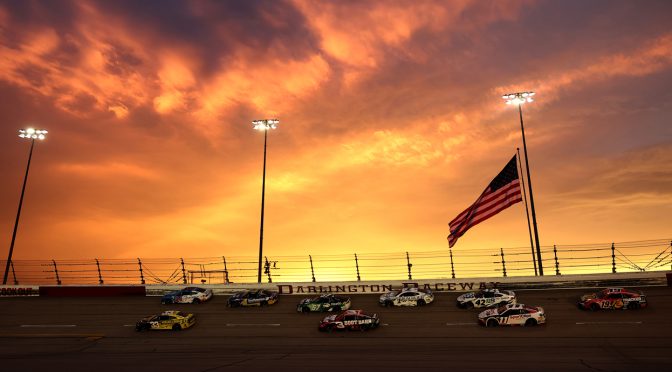
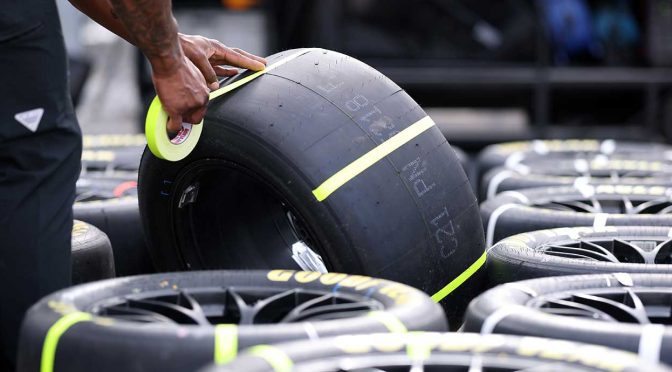
The NASCAR Cup Series teams that tackle the Cook Out Southern 500 this weekend will have the same Goodyear tire set-up from their last visit to Darlington Raceway, just with more of them.

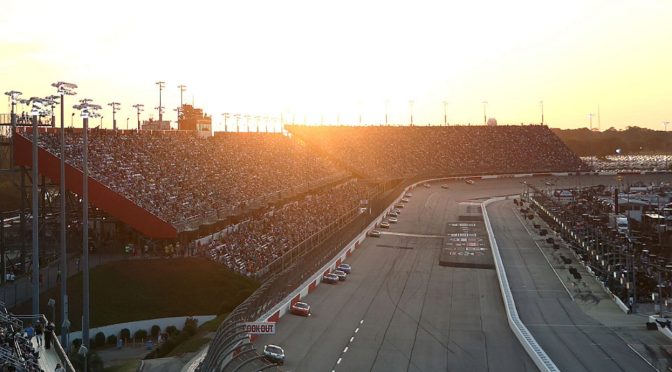
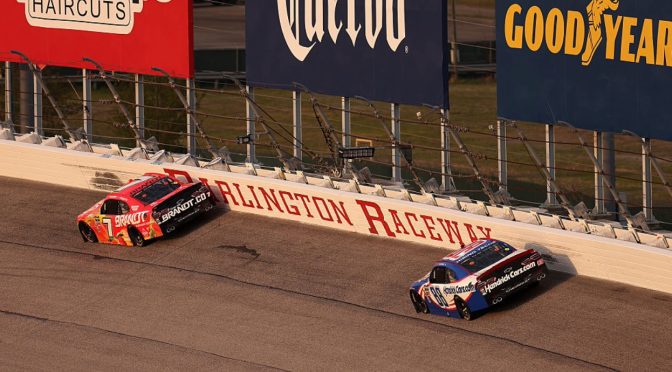
The allotment grows to 15 total sets for Sunday’s opener to The Chase presented by Mobil 1 (5 p.m. ET, USA Network, HBO Max, MRN Radio, SiriusXM NASCAR Radio) at the rugged 1.366-mile South Carolina track, which is known for its treacherous layout and abrasive racing surface. Teams will have an additional set of tires for the extended practice, plus two more sets to accommodate the 100 miles of extra distance compared to the track’s Goodyear 400 in March.

RELATED: Darlington weekend schedule | Entry lists

“Darlington’s rough surface and egg-shaped layout make it a demanding track on tires,” said Justin Fantozzi, Goodyear’s Director of Racing for the Americas. “To account for the longer race distance, teams will have two additional sets of tires compared to the spring race, as well as the extra set for the new practice format. As we enter The Chase, giving teams a trusted tire package is even more important as they put everything on the line.”

The Cup Series tire configuration has been in action multiple times since the springtime trip to Darlington, most recently in July for the circuit’s return to Chicagoland Speedway.

The NASCAR O’Reilly Auto Parts Series also opens The Chase at Darlington with Saturday’s Fleetio 200 (7:30 p.m. ET, The CW, ESPN Unlimited, MRN Radio, SiriusXM NASCAR Radio). That series’ teams will have a right-side tire that’s making its Darlington Raceway debut, but was previously used at Charlotte Motor Speedway in May. The left-side tire is a familiar one, with its most recent usage at Iowa Speedway last month.

Tire allotment for each team competing this weekend:

Cup Series: 15 total sets — 12 new for the race, 2 for practice, 1 for qualifying, which transfers to the race.
O’Reilly Auto Parts Series: 7 total sets — 4 new for the race, 2 for practice, 1 for qualifying, which transfers to the race.

Editor’s note: Birches Health  is the leading national provider of Problem Gambling treatment and Responsible Gaming resources, offering specialized problem gambling support from the privacy of home, covered by insurance.

September is Responsible Gaming Education Month, and this year it lines up with a NASCAR Cup Series championship that looks different from any in the past decade. The Chase is back: 16 drivers, 10 races, no eliminations, and the driver with the most points after Homestead-Miami on Nov. 8 is the champion.

That change matters for fans who bet. The elimination playoffs of recent years created a series of do-or-die weekends, and the betting markets built around them (advancing to the next round, surviving a cutoff race) no longer exist. In their place is a points race that plays out over 10 weeks, which rewards patience over big swings. Here is how to enjoy The Chase and practice responsible sportsbetting, without letting the stakes run higher than you intended.

Understand the new format before you bet

Under The Chase, the 16 drivers are reseeded once at the start of the postseason, from 2,100 points for the top seed down to 2,000 for the 16th, with the regular-season winner earning a 25-point cushion over second place. From there, points simply accumulate across all 10 races with no resets and no eliminations. (MORE: The Chase 101: How NASCAR’s new championship format works)

A bad day at Talladega hurts, but it does not end a season the way a cutoff race once did. Before placing any futures or race-week bets, take a few minutes to understand how the standings work now, because assumptions carried over from the playoff era can lead to bets that no longer make sense. Sportsbooks may also change or drop the props they offered in past years, so check what is actually on the board.

Treat futures as entertainment, not a plan

Championship futures are the most tempting bet of the fall, and under a cumulative points format they are also the slowest to resolve. Money placed on a title pick in September is tied up until November, and the odds will move every week. If you want a rooting interest, size the bet small enough that it stays fun for 10 weeks even if your driver falls out of contention early.

Keep race-week exposure steady across all ten races

The 2025 guide to betting on NASCAR responsibly made the point that popular races invite bigger wagers, and The Chase compounds that with 10 weeks of elevated stakes in a row. Decide now how much of your bankroll each remaining race gets, and hold that number through Homestead. Ask the same question every week: if every pick loses, what is my total loss? If the answer changes as the standings tighten, that is the moment to stop and reset rather than push.

Know the rules of your book, and where you are betting

Sportsbook house rules on weather-shortened races, overtime finishes, and post-race penalties differ, and they can decide whether a bet wins or loses. Read them before you wager. It is also worth knowing what kind of platform you are using. Licensed sportsbooks in 39 states plus Washington, D.C. are required to offer deposit limits, timeouts and self-exclusion. Fans in other states may encounter prediction markets, which are regulated differently and may not provide those same protections. If the tools are not there, set the limits yourself before the race starts.

Use the tools your platform gives you

Common sportsbook features that support responsible betting, such as deposit limits, wager limits, and loss limits exist on every licensed sportsbook and take about a minute to set. The best time to set them is now, at the start of The Chase, when you are thinking clearly about the season as a whole, rather than in the middle of a cold streak. A limit set in September protects the version of you that is watching a late restart at Martinsville in November.

Watch for the signs that betting has stopped being fun

The most common warning sign for sports betting we see in our recovery clients is chasing losses: betting more to win back what was lost earlier in the week or the season. Others include betting money set aside for bills, hiding wagers from family, or feeling irritable when not betting. If any of these sound familiar, the most responsible bet of The Chase is to step away for a race or two.

Know where to turn for support

Following best practices reduces the chance that betting becomes a problem, but it does not eliminate the risk. Birches Health has a nationwide team of certified clinicians specially trained to help people dealing with gambling-related struggles. Care is confidential, available from home across the United States, and can be covered by insurance or state funding.

To book a consultation or learn more about Birches Health, just click here, call (866) 843-5917, or email [email protected].

Editor’s note: Birches Health is the leading national provider of Problem Gambling treatment and Responsible Gaming resources, offering specialized support from the privacy of home, covered by insurance.

As The Chase heats up and excitement continues to build, it is important to also recognize that September is Responsible Gaming Education Month. Led every September by the American Gaming Association (AGA), this annual campaign aims to educate and empower bettors and fantasy players with the knowledge and tools necessary to engage with those activities in responsible ways.

As a proud AGA partner, NASCAR supports their “Play Smart from the Start” campaign that encourages bettors to always understand why they’re playing, know the upside and downside of every bet beforehand, and set personal limits. When bettors play smart, they’re in control throughout the entire experience.

Playing smart also isn’t a one-time action; it is a cycle players return to every time. A positive betting experience begins before placing that first wager.

With that in mind, the AGA is also transparent about the likelihood of bettors turning a profit:

The House Really Does Always Win in the Long Run
“Casinos and sportsbooks maintain the ‘house advantage’ — a mathematical edge built into every game that ensures that over time, they always win. Depending on what you’re playing, it might be called the “vigorish,” “the vig,” the rake, hold, edge or juice. Whatever you call it, it’s keeping the casino or sportsbook in business so they can keep providing an exciting gaming experience for everyone… While sports bettors use knowledge of teams, players, etc., to inform their wagers, the mathematical reality remains: the odds ultimately favor the house. This isn’t hidden or deceptive — it’s simply how gambling economics work.”

Responsible Gaming tips and best practices

Responsible Gaming Education Month is a great time to run through some reminders about best practices for playing in a sustainable manner. Let’s run through a few of the most important tips.

— Approach betting as paid entertainment: As the AGA points out, you are statistically likely to lose money in the long term if you choose to bet. Therefore, you should view it as an entertainment expense, similar to paying to go to the movies or attend a NASCAR race. Bets can provide extra rooting interests to increase excitement while watching, but winning them should never be something you depend on financially.

— Bankroll management: It is critical to determine your “bankroll” before betting. This can be thought of as a betting budget and needs to be an amount that you can afford to lose entirely without it impacting your financial wellbeing.

— Set limits: Sportsbooks and other gaming platforms nowadays offer Responsible Gaming tools that allow users to set limits that help them play responsibly. These act as helpful guardrails for all bettors to keep their play in check. They can include Deposit Limits, Bet Limits, Loss Limits and Time Limits. And if you’d ever like to take a break, they often offer “Cool Down” periods to suspend your account for a set time frame.

— Never chase losses: Counselors at Birches Health have found that “chasing” losses is the at-risk behavior exhibited most commonly in gambling recovery clients before entering the program. Loss chasing involves betting more — additional wagers and often larger amounts — in attempts to win back what was lost. You are never “due” for a win, so accept losses as the cost of entertainment and move on to another (non-gambling) activity.

Responsible gaming tools can be useful guardrails, but they are not a test of willpower and they do not work equally well for everyone. If you repeatedly go past limits, feel unable to stop after a loss, hide your betting, or find gambling affecting your finances or relationships, it may be time to look beyond self-management and speak with someone who understands gambling & sports betting recovery.

For more on betting responsibly during NASCAR’s new championship format, see: Guide to betting on The Chase responsibly.

Gambling Addiction treatment & resources

Even if you are betting responsibly, there’s still the potential that you or someone you know may end up having a gambling problem. Therefore, it’s also important to know where you can turn for support if that ever happens.

Nowadays, there are gambling-specialized treatment options available nationwide. Birches Health offers the leading virtual gambling recovery program in the United States, featuring a team of counselors who have been specially trained to help individuals struggling with gambling addiction and related challenges. Treatment with Birches is confidential, available from the comfort of home, and can be covered by insurance or state funding for eligible residents.

If you or someone you know would like to speak with a Birches Health care specialist, simply click here, email [email protected] or call (866) 843-5917.

Editor’s note: Birches Health is the leading national provider of Problem Gambling treatment and Responsible Gaming resources, offering specialized support from the privacy of home, covered by insurance.

Since the Supreme Court’s 2018 repeal of the Professional and Amateur Sports Protection Act, 39 states have legalized sports betting in some form. During that time, NASCAR has seen significant increases in betting popularity and the number of bet types available at sportsbooks. As more racing fans get involved with sports gambling, it’s important to know how to engage with NASCAR betting in a responsible and sustainable manner. 

The excitement of NASCAR races often involves many lead changes, penalties, weather impacts and critical strategic decisions that regularly result in exhilarating finishes. For many fans, placing bets on different types of outcomes adds another level of engagement and rooting interests as they watch. But with hundreds of betting options available every race week, taking a measured and disciplined approach is key. 

Betting on NASCAR in a responsible, sustainable manner

The same general best practices for responsible sports betting naturally also apply to NASCAR betting, but there are nuances with making picks and predictions for NASCAR races that warrant special attention. So let’s run through some Responsible Gaming tips for NASCAR specifically. 

Limit your bets and risk

There are countless NASCAR bets available every race week, especially when you factor in live-betting opportunities. Therefore, it’s critical to enter with a plan for how many bets you’re comfortable placing and how much money you can comfortably lose. Ask yourself, “if all of these picks lose, what will my total losses be?” It’s common to think that at minimum some of them will win, but that is not always the case (even when diversifying with different bet types), so calculating your entire risk exposure is key. Always check beforehand that your total amount wagered isn’t going to surpass what you can afford to lose.  

Don’t increase your exposure for big races

The excitement around popular races like the Daytona 500 and The Chase may lead some bettors to risk more than usual. Increased exposure can quickly lead to heavier losses than expected, potentially your entire bankroll. Stay disciplined and don’t let the high stakes of an iconic race lead to your own stakes getting higher than usual. 

Learn the race format and rules

The variety of tracks, stage lengths and race formats creates excitement and intrigue throughout the season and playoffs. So before betting on a race, be sure to have a full understanding of all factors that could impact your wager(s).

Research the “house rules” of your sportsbook

Rules for grading wagers can vary from one sportsbook to another, so be sure to check your preferred platform’s individual set of rules before betting. Some will even have specific rules published for NASCAR, as approaches to grading certain bet types in unusual situations like post-race inspection penalties, multiple overtimes or weather-shortened races can differ notably and potentially be the difference between your bet winning or losing. Licensed sportsbooks are also required to offer deposit limits, timeouts and self-exclusion; if you are using a platform that does not, set those limits yourself before the race starts.

Steady as you go

The NASCAR Cup Series season spans February through early November every year, and The Chase alone runs 10 races from Labor Day weekend through the finale at Homestead-Miami, so taking a measured approach is strongly recommended. The cliche “marathon, not a sprint” applies here, as almost all bettors who wager throughout the season will encounter cold streaks. Therefore, betting exposure for any one race should only be a portion of your total bankroll. 

Problem Gambling Treatment

Learning and following best practices for betting responsibly may help reduce the chances of it ever turning into a problem, but it doesn’t fully eliminate that risk. Therefore, all bettors should be aware of the specialized resources available in case gambling-related issues arise. 

Birches Health has a nationwide team of certified counselors specially trained to help people dealing with gambling-related struggles. Birches’ leading gambling recovery program can be covered by insurance or state funding. Care is fully confidential and available from the comfort of home across the United States. 

To book a consultation or learn more about Birches Health, just click here, call (866) 843-5917, or email [email protected].

Editor’s note: Birches Health is the leading national provider of Problem Gambling treatment and Responsible Gaming resources, offering specialized support from the privacy of home, covered by insurance.

September is officially Responsible Gaming Education Month, but learning and following recommended best practices for betting and playing fantasy responsibly needs to be a year-round focus. Therefore, NASCAR has collaborated with Birches Health to provide guidance around responsible play to help try to ensure that fans who engage with these different forms of gaming do so in a healthy, sustainable way. 

Here are 10 tips to keep in mind if you are of legal age and choose to bet on NASCAR races or any other sporting events. 

1. Determine your bankroll

Your “bankroll” can be most simply thought of as a budget for betting and/or fantasy. This should be a portion of your disposable funds and an amount that you can afford to lose fully without any impact on your finances. Your bankroll should be sustainable for multiple weeks or months to avoid feeling a need to increase it or deposit more into your account. 

2. Pick a unit size and stick to it

Related to bankroll management is the concept of unit sizing. A “unit” in sports betting is your usual amount for a single wager. Some recommend that this be between 1-4% of your total bankroll. Being disciplined and keeping your unit size small should allow you to maintain funds during inevitable “cold streaks” without the need to deposit again or increase your bankroll. 

3. Set limits

Setting limits is an easy process nowadays. Sportsbooks and fantasy platforms provide tools to let players set personal limits that can help them play responsibly. These can be seen as an extra set of guardrails that assists all users (not just those who may have a problem) keep their play in check. Platforms generally offer: Deposit Limits (this can help with bankroll management, as noted above), Bet/Entry Amount Limits (set these to align with your unit size), Loss Limits, Time Limits and “Cool Down” periods.

4. See betting and fantasy as paid entertainment

The reality is that you are more likely than not to lose money in the long term when betting. Knowing that, it is recommended that bettors and DFS players approach it as an entertainment expense, such as buying tickets to a NASCAR event to elevate the experience of watching the race. Picks and lineups can create another level of engagement, but their outcomes should not ever impact your financial health. If your picks are correct and you do win, it can be a pleasant surprise. But in the (more likely) case that they result in a loss, it should be seen as a cost that helped increase your excitement throughout, not something you need to try to win back.

5. Never “chase” losses

Chasing losses involves betting or playing more – additional bets/picks, often at larger amounts – in hopes of winning back what was lost before. Our partners at Birches Health have seen first hand that loss-chasing is the most common at-risk behavior exhibited by individuals before entering their problem gambling recovery program. No matter how many times you’ve lost or come close to a win, you are not “due” for a correct pick. Betting more can result in compounding losses that may reach unforeseen levels.

6. Only bet with a clear mind

Your decision-making skills and risk-assessment abilities are critically important when betting or playing fantasy, so it’s paramount to only do so when able to think clearly. If you’re in a highly emotional state or have been drinking, you should not be risking your hard-earned money on sports picks.

7. Never borrow to bet

If you don’t have the funds for betting, you should not be wagering in the first place. Using borrowed money or credit to bet can be extremely risky and result in debts that you may not be able to pay.

8. Take breaks

Be sure to maintain balance between gaming and all other parts of life. If making picks, setting lineups or researching plays is taking up too much of your day, take time away to focus on other activities and priorities. The “Time Limit” options on gaming platforms can be a big help in making sure you’re not dedicating too much time to gaming. 

9. No such thing as a sure thing

Unfortunately, there is no such thing as a “lock” or “guarantee” in sports betting or fantasy. There is an incredibly large number of variables that can impact the outcomes of sporting events and make it difficult to predict their outcomes correctly, so no pick is ever guaranteed to win. Always keep this in mind when making a pick – huge upsets and highly unlikely results happen regularly in the world of sports, including NASCAR.

10. Know where to turn for support

In case sports betting or fantasy ends up leading to issues for you, a friend or family member, being aware of the specialized resources available is also very important. 

Birches Health has a nationwide team of counselors specially trained to help people dealing with gambling-related struggles. Birches offers the leading gambling recovery program in the United States, with costs that can be covered by insurance or state funding for eligible residents. Care is fully confidential and available virtually from the private comforts of home.

If you or someone you know could benefit from a conversation with Birches Health, you can simply click here, call (866) 843-5917 or email [email protected].

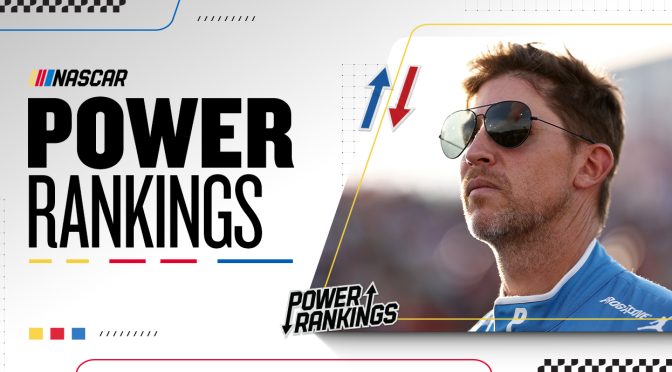
NASCAR.com’s Pat DeCola ranks the 16 NASCAR Cup Series drivers in The Chase presented by Mobil 1 after Ryan Preece’s win at Daytona International Speedway and before Sunday’s 2026 Chase opener at Darlington Raceway (5 p.m. ET, USA Network, HBO Max, MRN Radio, SiriusXM NASCAR Radio).

RELATED: Cup Series Chase schedule | Cup Series standings
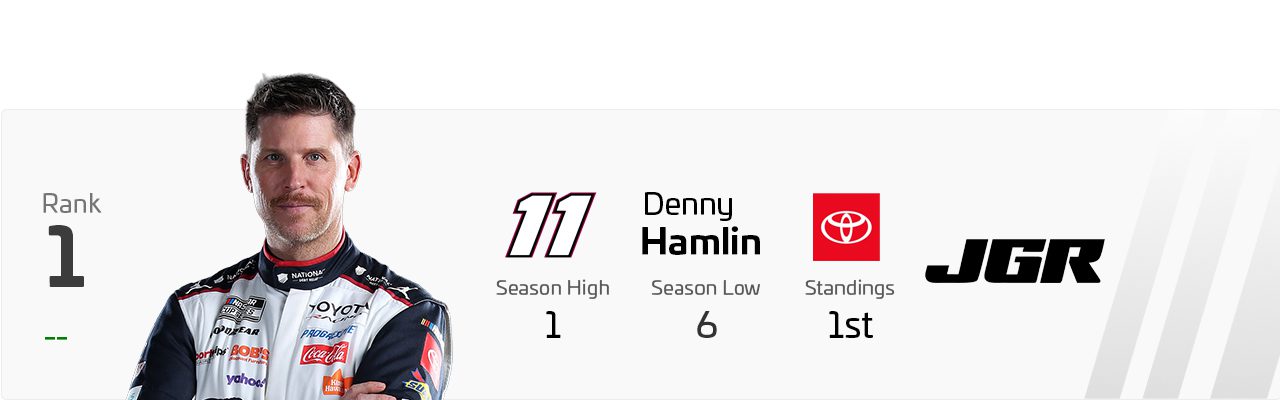
Seed: No. 1

Postseason appearance: 20th

Regular-season stats: 4 wins, 14 top fives, 17 top 10s, 4 poles, 880 laps led

Best Chase tracks: Darlington, Bristol, Martinsville, Kansas, Homestead

Analysis: The Chase resets the field, but it does not erase the fact that Hamlin and the No. 11 team spent the regular season looking more complete than anybody else. He starts with the maximum 2,100 points and a 25-point head start on Blaney, while ranking first in season-long speed, third in defense and fifth on pit road. Daytona was largely immaterial for Chase purposes — P11 after already clinching the top seed at Loudon — and now the schedule immediately tilts toward one of his strongest venues, with five career Cup wins at Darlington. There is no shortage of interesting championship storylines among the field, but Hamlin’s is the biggest: the long-elusive title, the top seed and a Chase schedule loaded with several of his best tracks. If there was ever a “now or never” feel to one of his championship runs — and there certainly have been — this might be the biggest one yet.
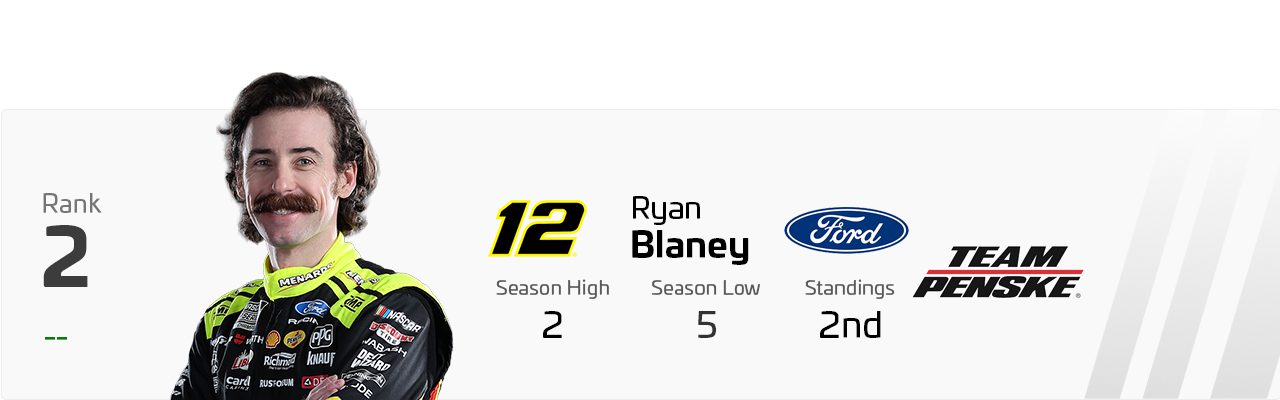
Seed: No. 2

Postseason appearance: 10th

Regular-season stats: 3 wins, 6 top fives, 17 top 10s, 4 poles, 828 laps led

Best Chase tracks: Bristol, Talladega, Martinsville, Phoenix

Analysis: Blaney enters The Chase with the second seed, the second-best season-long speed rating and probably the strongest combination of current form and organizational momentum outside Hamlin. Daytona ended in a wreck and 33rd-place run, but only after the No. 12 won Stage 2; the reset still leaves Blaney second, 10 points clear of Reddick. Darlington has historically been more nuisance than playground for Blaney, but third there this spring is a compelling recent data point on top of his strong summer. The glaring weakness remains the No. 12 pit crew, ranked 32nd for the season. If Penske cleans that up, Blaney has very few championship-profile holes to poke.
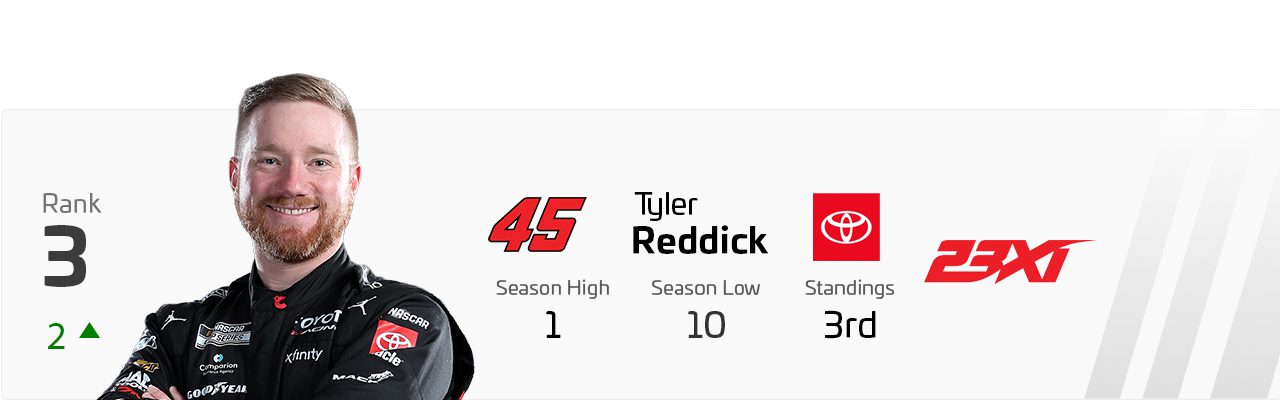
Seed: No. 3

Postseason appearance: 6th

Regular-season stats: 5 wins, 11 top fives, 16 top 10s, 5 poles, 449 laps led

Best Chase tracks: Darlington, Kansas, Homestead, Talladega, Las Vegas

Analysis: If Reddick needed a reset in every sense of the word, he got one. The five-win juggernaut No. 45 team from spring spent much of the summer fighting itself, but finishes of 11th, eighth and third in the final three regular-season races suggest the freefall may finally be leveling out and perhaps Reddick can sleep soundly for now. Daytona in particular looked much more like the old No. 45, which led late and was still attacking for the win on the final lap. Better still, The Chase opens where Reddick delivered perhaps his most impressive performance all year, winning at Darlington in March. He starts just 35 points behind Hamlin and still ranks third in both speed and passing — the early-season monster may have picked an awfully convenient time to wake back up.
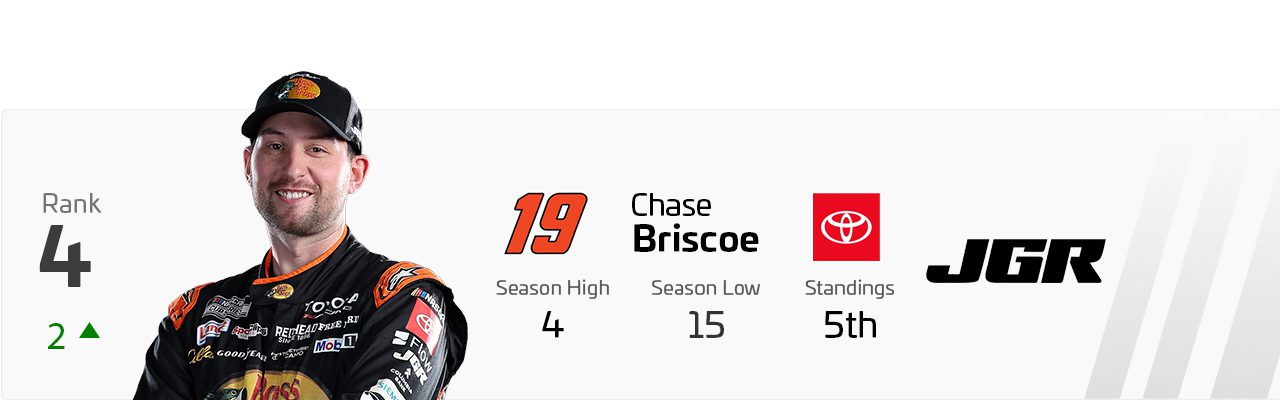
Seed: No. 5

Postseason appearance: 4th

Regular-season stats: 1 win, 10 top fives, 13 top 10s, 359 laps led

Best Chase tracks: Darlington, Phoenix, Bristol, Las Vegas

Analysis: There might not be a driver in the field happier to see the Southern 500 sitting at the front door of The Chase. Briscoe enters just 45 points behind his JGR teammate Hamlin after a summer in which the No. 19 evolved from fringe contender when it started into one of the most consistently dangerous cars in the garage at the turn of autumn. His season profile backs up the eye test: first in defense, first on restarts and fourth in pit-crew performance. Then there is Darlington itself. Briscoe has won the last two Southern 500s, doing it with two different organizations. Forget dark horse. That label no longer fits, especially where Briscoe was title-eligible down to the wire last year, too.

Seed: No. 6

Postseason appearance: 6th

Regular-season stats: 0 wins, 11 top fives, 13 top 10s, 1 pole, 559 laps led

Best Chase tracks: Bristol, Kansas, Phoenix, Martinsville, Homestead

Analysis: Bell enters The Chase in one of the strangest positions imaginable: fifth in these rankings, sixth in the reset and still winless despite spending chunks of the year looking as fast as anybody. Seven runner-up finishes will do that to a season, yet the championship case remains obvious — Bell ranks fourth in speed, fifth on restarts and carries the seventh-ranked pit crew into the postseason. Darlington is less straightforward after a 19th there this spring, though Bell has plenty of strength scattered throughout the remaining nine tracks. The guy spent months knocking on the door to get here, but The Chase is where “almost” stops carrying much, if any, value.
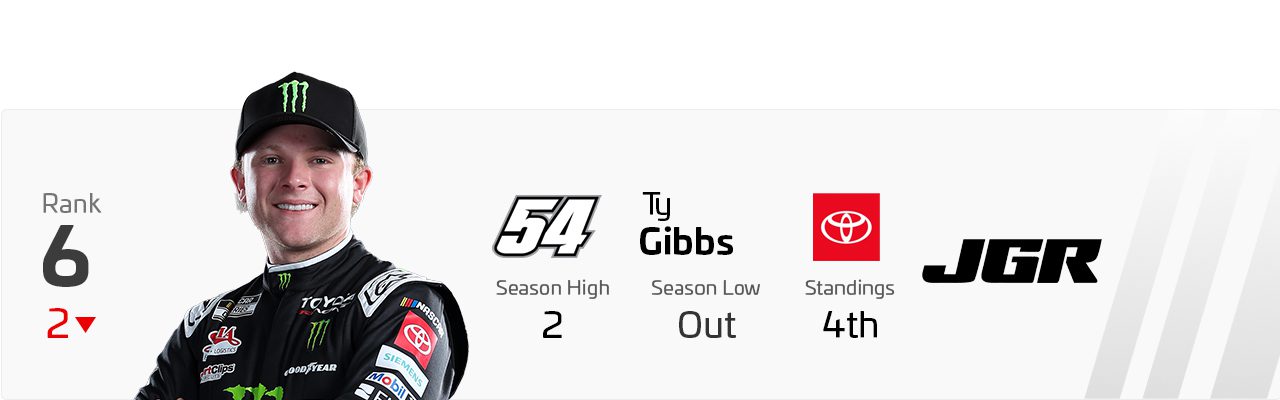
Seed: No. 4

Postseason appearance: 2nd

Regular-season stats: 2 wins, 10 top fives, 16 top 10s, 1 pole, 280 laps led

Best Chase tracks: Bristol, Darlington, Phoenix, Las Vegas, Kansas

Analysis: Gibbs took a nasty Daytona hit at exactly the wrong moment, collecting damage in Hocevar’s Lap 155 crash and even more in the final-lap melee to finish 34th, but the reset does him a considerable favor. He starts fourth in the standings, only 40 points behind Hamlin and five behind Reddick, after a regular season that produced two wins and one of the most balanced underlying statistical profiles in the field. Darlington is quietly encouraging, too: Gibbs finished sixth there in March, and Bristol already delivered his breakthrough Cup victory this season, so he could get off to a quick start. There is still somewhat of an “upstart” quality to the championship conversation around him, but the statistics stopped indicating him as one a while ago.
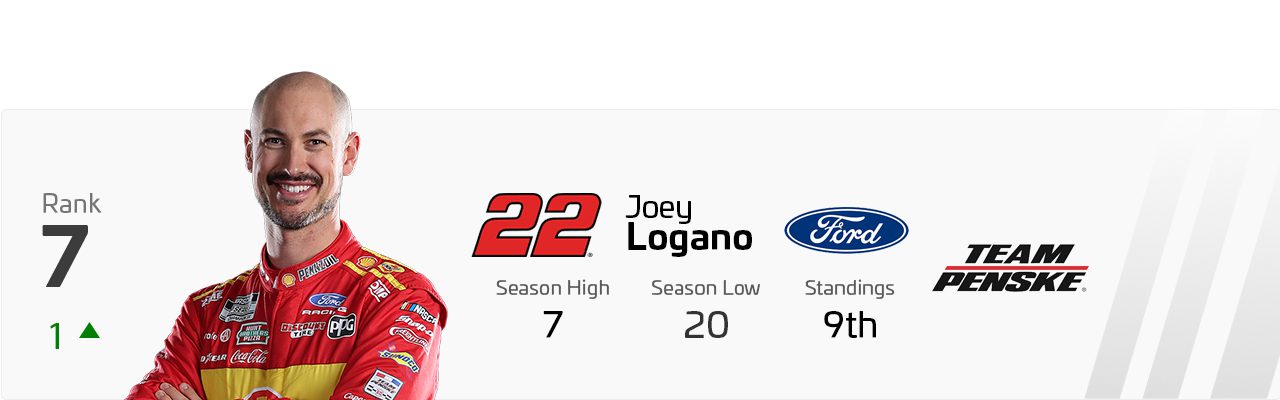
Seed: No. 9

Postseason appearance: 13th

Regular-season stats: 2 wins, 5 top fives, 9 top 10s, 1 pole, 536 laps led

Best Chase tracks: Las Vegas, Phoenix, Talladega, Bristol, Martinsville

Analysis: Here we go again. Logano spent much of the regular season looking like an afterthought, then won twice in a four-race stretch and suddenly arrives at The Chase with the same annoying-for-everyone-else profile that has preceded three championships. The reset leaves him 65 points behind Hamlin, a real hole but hardly insurmountable over 10 races. His season-long metrics remain surprisingly pedestrian — 12th in speed, 16th in passing, 14th in defense — which is why this ranking stops at seventh rather than following the championship hardware all the way toward the top. Nobody should be shocked if he disappears for a week. Nobody should be shocked if he is still standing at Homestead, either.
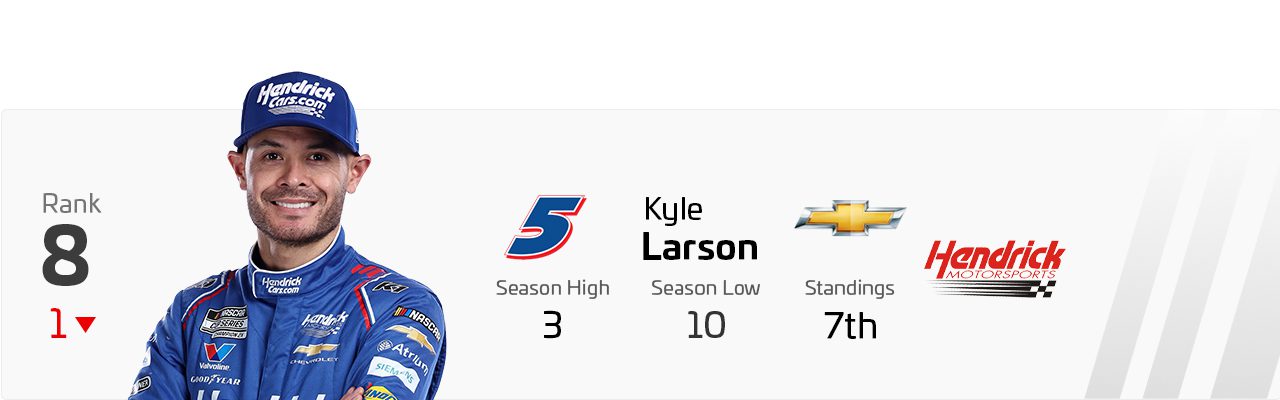
Seed: No. 7

Postseason appearance: 10th

Regular-season stats: 0 wins, 9 top fives, 13 top 10s, 659 laps led

Best Chase tracks: Las Vegas, Kansas, Darlington, Bristol, Homestead

Analysis: The reset might be exactly what Larson needs because judging the No. 5 strictly by regular-season results became a maddening exercise months ago. The speed never disappeared — Larson still ranks fifth there, while being second in defense and second on restarts, paired with the No. 1 pit crew in the series — but too many Sundays ended nowhere near where the car showed it belonged. Darlington captures the contradiction perfectly: Larson owns a Southern 500 win there, yet his recent results have been wildly uneven. He starts 55 points behind Hamlin as part of a Hendrick group that, remarkably, doesn’t feel like the championship favorite it usually does. That said, Larson is still the Hendrick driver most capable of changing that perception in a hurry, and perhaps as soon as Sunday.
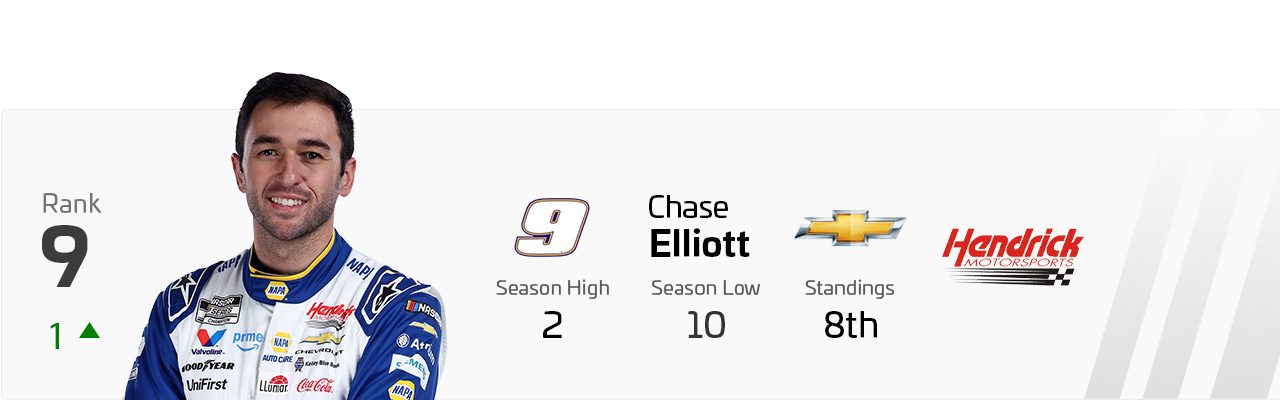
Seed: No. 8

Postseason appearance: 10th

Regular-season stats: 2 wins, 6 top fives, 9 top 10s, 317 laps led

Best Chase tracks: Talladega, Martinsville, Phoenix, Kansas

Analysis: Elliott enters The Chase in a much healthier place than he appeared headed a month ago, but he remains one of the harder champions to peg. The two wins remain banked, and Hendrick showed signs of life again late in the regular season, yet Elliott’s underlying numbers — 11th in speed, 11th in defense and 14th on restarts — are not exactly the profile of a driver poised to steamroll 10 races. He starts 60 points behind Hamlin, and Darlington was similarly middling in March. Hendrick going an entire Chase without seriously threatening for the title would qualify as a major development, as unlikely as it seemed in February, but Elliott has 10 races to make sure that conversation never gets there.
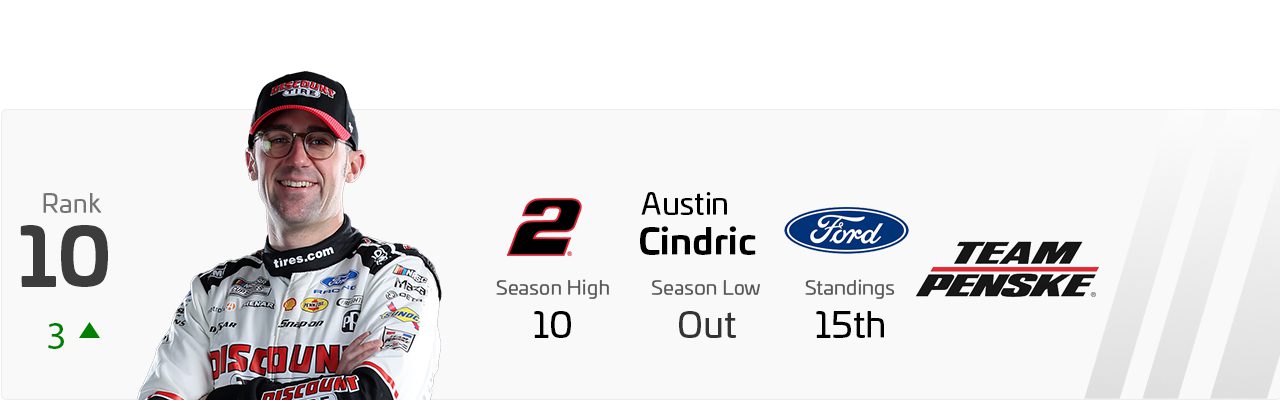
Seed: No. 15

Postseason appearance: 4th

Regular-season stats: 0 wins, 2 top fives, 6 top 10s, 51 laps led

Best Chase tracks: Gateway, Talladega, Darlington

Analysis: This is where the board starts getting interesting. Cindric is only the 15th seed, a whopping 95 points behind Hamlin, but he enters The Chase on easily the strongest footing of the lower-seeded group. Third at Richmond Raceway, 12th at Loudon and sixth at Daytona, while Penske is picking up steam, make for a sturdy closing stretch, and the No. 2 also ranks fifth in defense for the season. More important for Sunday: Cindric finished fifth at Darlington in March, his best Cup result there, while World Wide Technology Raceway at Gateway is already a Cup victory site. He has a mountain to climb in points, but there are considerably shakier profiles starting ahead of him. A sleeper fits.
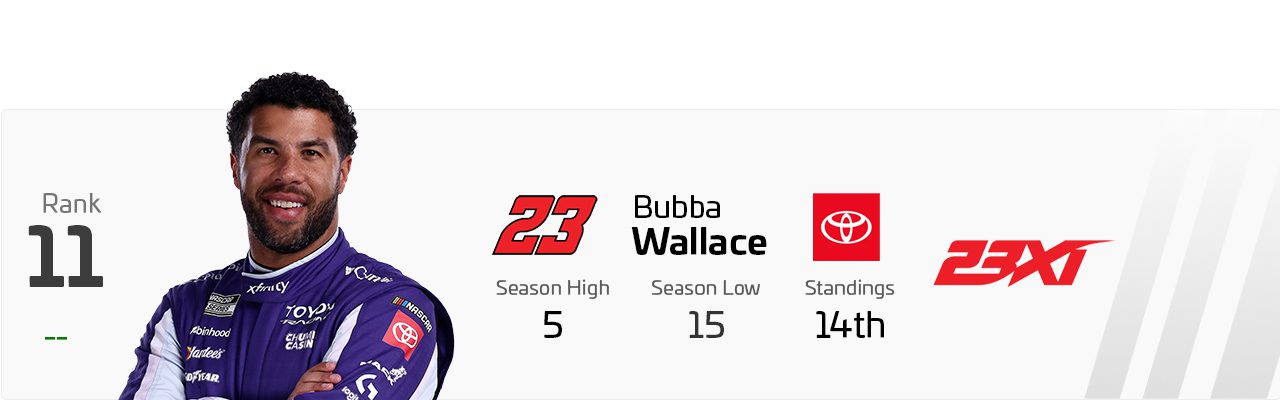
Seed: No. 14

Postseason appearance: 3rd

Regular-season stats: 0 wins, 4 top fives, 11 top 10s, 214 laps led

Best Chase tracks: Kansas, Talladega, Las Vegas, Homestead

Analysis: Wallace made it through a full regular season without needing a last-gasp miracle, but now comes the harder assignment: proving he can stay relevant for 10 straight weeks. He starts 14th, 90 points behind Hamlin, though his broader performance profile is much stronger than that seed suggests — seventh in passing, ninth in speed and eighth in restarts, defense and pit crew. Darlington was a disaster this spring, but there are friendlier venues ahead, particularly Kansas Speedway and Talladega, where Wallace has already won in Cup. The No. 23 has enough speed to make noise in this Chase. The larger question is whether it can stop turning good cars into avoidable, self-induced problems.
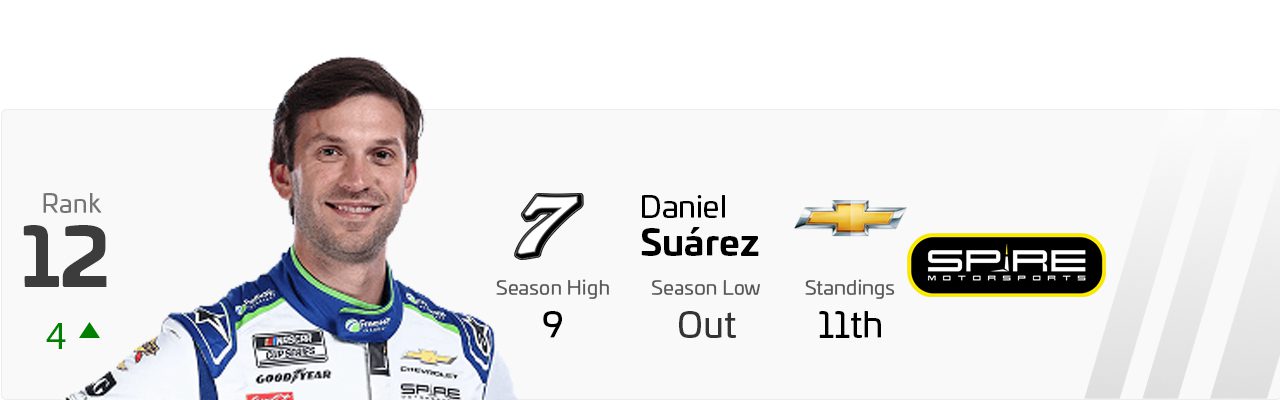
Seed: No. 11

Postseason appearance: 3rd

Regular-season stats: 1 win, 3 top fives, 7 top 10s, 40 laps led

Best Chase tracks: Darlington, Las Vegas, Kansas, Gateway, Charlotte

Analysis: Suárez could hardly have drawn up a better bridge into The Chase after a quiet summer than his Daytona runner-up. Starting 23rd, he avoided the late carnage and finished second for the second consecutive year in the summer Daytona race; a nice jolt for a team whose underlying season metrics remain much less flattering than its standings position. He starts 75 points behind Hamlin and ranks only 18th in speed, 20th in passing and 21st in defense. Darlington offers a reason to believe the result column can keep outrunning the spreadsheets after Suárez finished seventh there in March. This may not look like a championship profile on paper, but The Chase has 10 races to make paper irrelevant, and being the defending Coca-Cola 600 winner is notable given Charlotte is returning to its oval format for the fall race.
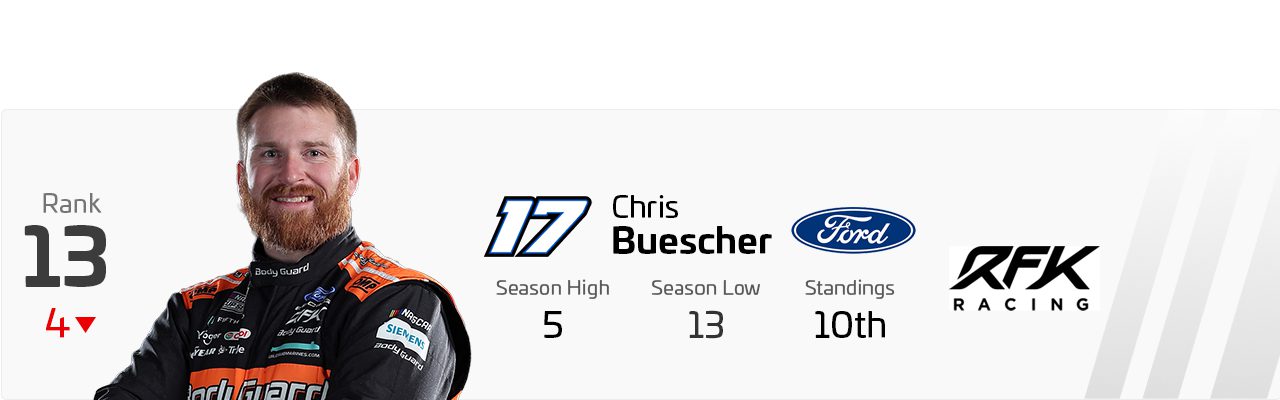
Seed: No. 10

Postseason appearance: 3rd

Regular-season stats: 0 wins, 2 top fives, 10 top 10s, 81 laps led

Best Chase tracks: Bristol, Darlington, Kansas

Analysis: Buescher enters The Chase with one of the better Darlington profiles in the lower half of the field — but one of the murkier overall championship cases. Daytona was a wash after Larson’s push sent the No. 17 spinning from the lead at the Stage 1 finish, eventually leaving Buescher 40th. The reset places him 70 points behind Hamlin, while the broader season says “solid” much more loudly than “champion” — 10th in speed, 19th in passing, but backed by the third-ranked pit crew. Darlington is where the argument gets better, as Buescher finished ninth there this spring, and Bristol remains the site of one of his signature Cup victories. If he is going to announce himself as more than Chase afterthought, Sunday is an excellent place to do it, and RFK Racing is already riding a high.
Seed: No. 13

Postseason appearance: 8th

Regular-season stats: 0 wins, 4 top fives, 11 top 10s, 176 laps led

Best Chase tracks: Martinsville, Las Vegas, Darlington, Phoenix, Homestead

Analysis: Byron has spent three straight years reaching the Championship 4, yet begins this revamped Chase as one of its strangest wild cards. He starts 13th and 85 points behind Hamlin after a winless, uneven regular season, but still owns the second-ranked pit crew and eighth-best speed profile. Darlington should be an obvious get-right venue: Byron won there in 2023 and finished eighth this March, with several more historically strong tracks waiting for him later in The Chase to help prod him along. Still, the broader Hendrick question hangs over him as much as anyone. Three straight championship-round appearances built a reputation that this year’s results have not yet matched, but indicate what he’s capable of.
Seed: No. 12

Postseason appearance: 1st

Regular-season stats: 1 win, 5 top fives, 9 top 10s, 2 poles, 157 laps led

Best Chase tracks: Talladega, Darlington, Bristol, Gateway

Analysis: Hocevar’s regular season contained enough brilliance to make The Chase comfortably — and enough late carnage to make you wonder what might be left of the momentum. Daytona followed a P31 at Iowa Speedway and 37th-place showing at Richmond with another ugly box score — 38th after losing control while battling Preece for second and collecting Jones before the race went to overtime. That leaves him 80 points behind Hamlin after the reset, paired with the 27th-ranked pit crew and only the 14th-best season-long speed. And yet Darlington offers a very real counterpoint: Hocevar finished fourth there in March after starting 16th. The talent is not the question; it’s whether the unevenness can stop wobbling long enough for Hocevar to weaponize it in this 10-race run.
Seed: No. 16

Postseason appearance: 1st

Regular-season stats: 1 win, 1 top five, 7 top 10s, 55 laps led

Best Chase tracks: Bristol, Martinsville, Kansas, Darlington

Analysis: Nobody arrives at Darlington feeling better about how Saturday night ended, and nobody arrives with a steeper championship hill. Preece entered Daytona 31 points behind Shane van Gisbergen for the final Chase spot, meaning even a runner-up finish would not have gotten the job done. He had to win — and, after getting collected in the Stage 1-ending crash and surviving a chaotic final lap, did exactly that for his first career Cup victory. The reward is the No. 16 seed and a reset, exactly 100 points behind Hamlin. While Darlington produced a respectable 13th-place finish in March, his season-long speed ranks only 15th, so there is no pretending this suddenly looks like an obvious title run. But Preece already faced one must-win scenario this year and answered it about as emphatically as possible. At this point, it’s anybody’s ballgame.
The 2026 NASCAR Cup Series Chase kicks off Sunday in the Cook Out Southern 500 at Darlington Raceway (5 p.m. ET, USA Network, HBO Max, MRN Radio, SiriusXM NASCAR Radio).

The race will be the 27th points-paying event of the 2026 Cup Series season. Chase Briscoe is the defending winner of the crown-jewel race at the 1.366-mile South Carolina track.

ENTRY LISTS: Cup Series | O’Reilly Auto Parts Series

For the next 10 weeks, 16 drivers will battle for the Cup Series championship, with Denny Hamlin entering the “Lady in Black” as the top seed in The Chase.

Two non-chartered entries are set to compete with Garage 66 driver Chad Finchum in the No. 66 Ford and 23XI Racing’s Corey Heim in the No. 67 Toyota.

Thirty-eight cars are entered into this weekend’s postseason opener.

MORE: Weekend schedule | How to watch NASCAR on NBC, USA Network

View the full entry list here:

The NASCAR O’Reilly Auto Parts Series Chase gets underway this weekend at Darlington Raceway on Saturday (7:30 p.m. ET, The CW, ESPN Unlimited, MRN Radio, SiriusXM NASCAR Radio).

Saturday’s Fleetio 200 will be the 25th points-paying race of the 2026 O’Reilly Auto Parts Series season.

ENTRY LISTS: Cup Series | O’Reilly Auto Parts Series

Twelve drivers will battle the next nine races, in hopes of becoming the 2026 O’Reilly Auto Parts Series champion. JR Motorsports driver Justin Allgaier begins The Chase as the top seed and won the Darlington spring race earlier this year.

Jake Finch is set to make his second start of the 2026 season in JRM’s No. 9 Chevrolet.

Thirty-eight cars are entered into this weekend’s Chase opener.

MORE: Weekend schedule | How to watch NASCAR on the CW

View the full entry list here:

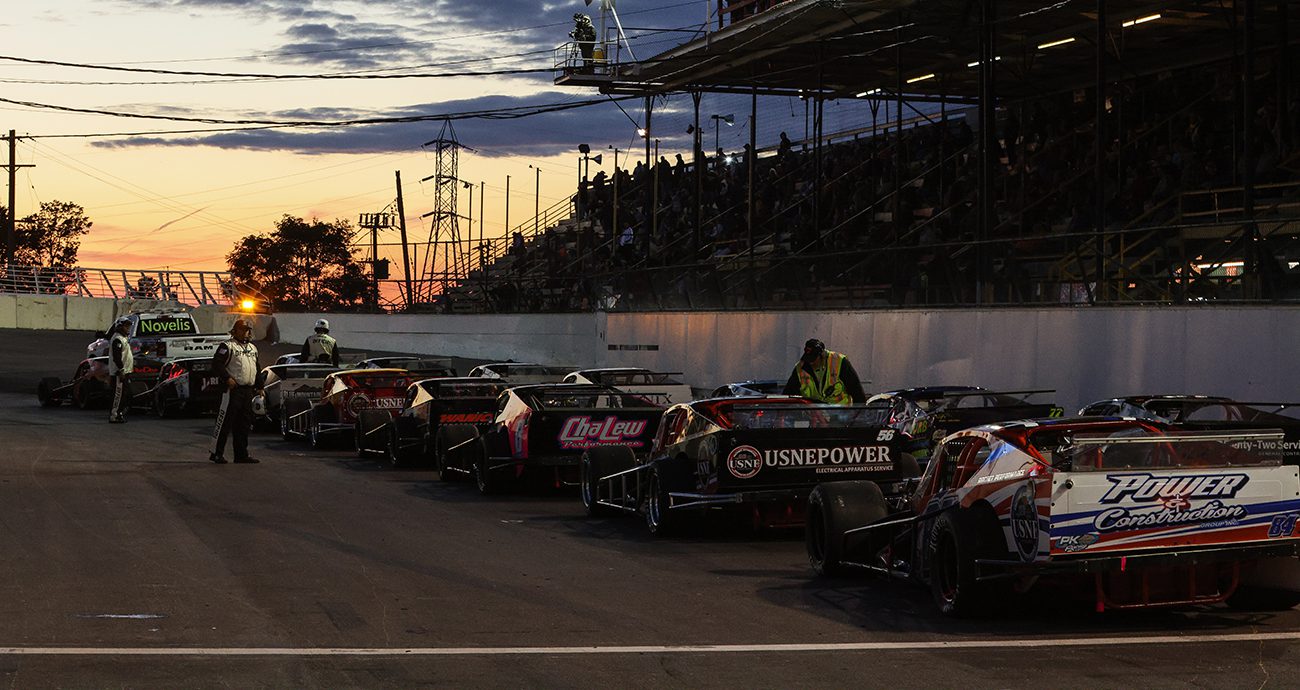
The battle for the NASCAR Whelen Modified Tour championship heads to Central New York this Saturday night as Oswego Speedway welcomes NASCAR’s oldest division for the running of the Toyota Mod Classic 150 (8 p.m. ET on FloRacing).

With just three races left in the 2026 season, the championship lead belongs to Patrick Emerling after a top-five finish last Friday at Stafford Speedway. Defending series champion Austin Beers sits second, 10 points behind Emerling ahead of Saturday’s 150-lap test of skill at the track known as “The Steel Palace.”

The historic 0.625-mile oval has hosted the Modified Tour 18 times dating back to 1988. The first two Modified Tour events held at Oswego were won by New York native Brian Ross. Other notable Oswego winners include Mike McLaughlin, Tony Hirschman, Mike Stefanik, Doug Coby, Ryan Preece, Matt Hirschman, Justin Bonsignore, Ron Silk and Emerling, among others.

Tickets to Saturday’s Toyota Mod Classic 150 are available here. Below is everything you need to know about the 14th race of the 2026 NASCAR Whelen Modified Tour season.

Oswego Speedway
Oswego Speedway will welcome the NASCAR Whelen Modified Tour for the 19th time this Saturday night. (Photo: Bryan Bennett/NASCAR)

Toyota Mod Classic 150 at Oswego Speedway

With only three races remaining in the 2026 NASCAR Whelen Modified Tour season, the championship chase remains incredibly tight.
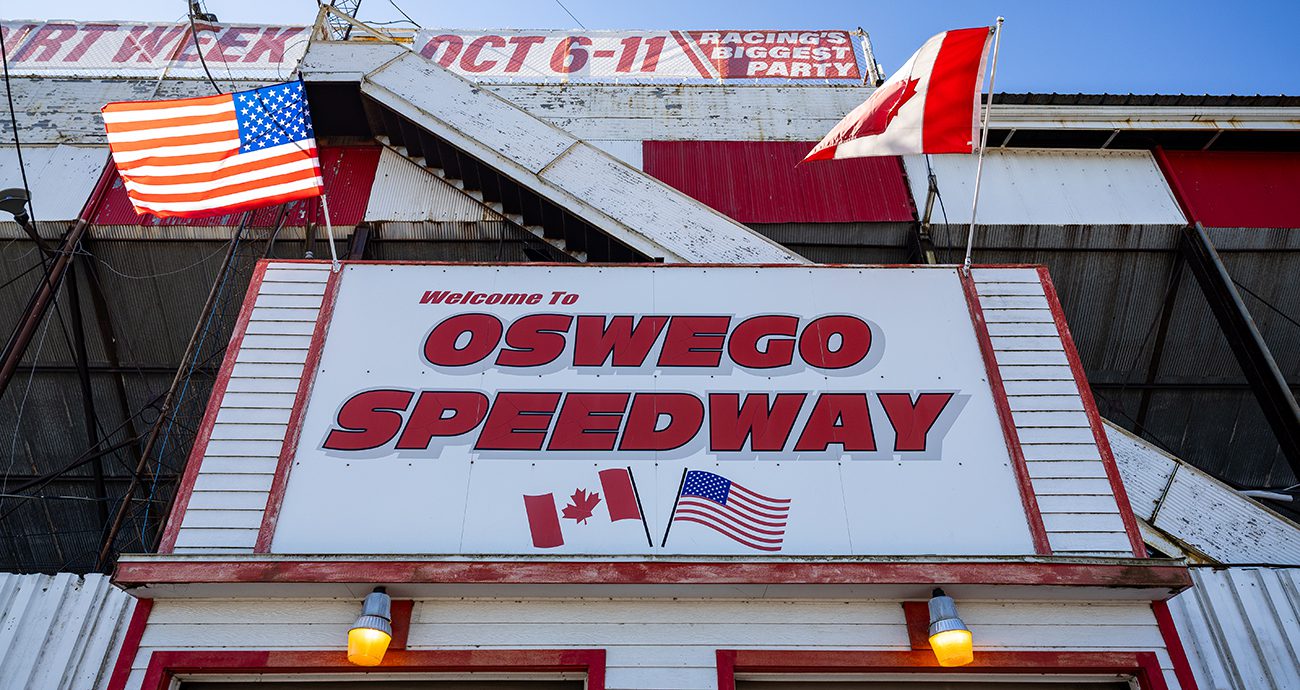
Patrick Emerling has reassumed sole possession of first in the series standings after entering last Friday’s GAF 150 at Stafford Speedway tied at the top of the standings with Austin Beers. However, a fifth-place finish by Emerling has allowed him to regain command of the championship chase entering Saturday’s Toyota Mod Classic 150 at Oswego Speedway.

Emerling enters Saturday’s Oswego event with statistical advantage on Beers at the 0.625-mile asphalt oval. Emerling is a previous Oswego Speedway winner, having conquered The Steel Palace during the 2024 season when he led a race-high 81 laps. Beers, who is now 10 points behind Emerling in the title hunt, has finished in the top five at Oswego in each of the last three seasons.

Both drivers should be among the contenders Saturday night, but they’ll be far from the only drivers to watch.

Another will be Teddy Hodgdon, who stunned Modified Tour teams and fans by winning the Tour’s return to Stafford Speedway one weekend ago. The driver he beat last Friday night, Matt Hirschman, is a previous Oswego victor and should be another driver to watch this weekend.

Jon McKennedy and Stephen Kopcik are still in the hunt for the Modified Tour championship, but both need a win at Oswego to keep pace with Emerling and Beers. Tyler Rypkema, aboard the Ole Blue No. 3, will make his 100th Modified Tour start during Saturday’s Oswego Speedway event.

Additional entries for Saturday’s event include Mike Christopher Jr., Tommy Catalano, Eric Goodale, Andrew Molleur and Trevor Catalano, among others.

The full entry list for Saturday’s Toyota Mod Classic 150 is available here.

Oswego Speedway’s 0.625-mile asphalt oval is among the most challenging race tracks NASCAR Whelen Modified Tour teams will face this year. (Photo: Susan Wong/NASCAR)

RACING REFERENCE:

Race Toyota Mod Classic 150
Date Saturday, Sept. 5, 2026
Track Oswego Speedway
Layout 0.625-mile asphalt oval
Location Oswego, New York
Start time 8 p.m. ET
Laps 150
Posted Awards $109,132
Tickets Here
How to Watch FloRacing

SCHEDULE: Saturday, Sept. 5: Practice from 3:05 to 3:45 p.m. ET … Final practice from 4:15 to 4:45 p.m. ET … American Racer Pole Award qualifying at 5:40 p.m. ET … Start of the Toyota Mod Classic 150 (150 Laps / 93.75 Miles) at 8 p.m. ET.

QUALIFYING: Two consecutive qualifying laps. Faster lap determines qualifying position. Adjustments or repairs may not be made on the vehicle after the vehicle has taken the green flag at the start/finish line. NASCAR reserves the right to have more than one vehicle engage in qualifying runs at the same time. Starting field for the Toyota Mod Classic 150 is limited to 24 starters including Provisional Positions.

TIRE ALLOTMENT: The maximum tire allotment available for this event is eleven (11) tires per team. All tires used for qualifying and the race must be purchased at the track and scanned by NASCAR Officials, unless otherwise approved in advance by the Series Director. The same four (4) tires must be used for qualifying and to begin the race. The remaining tire allotment may be used for practice and/or change tires during the event. A maximum of three (3) tires of the allotment may be used for change tires. The tire change rule is two (2) tires per stop. This includes “swapping” tires front to back.