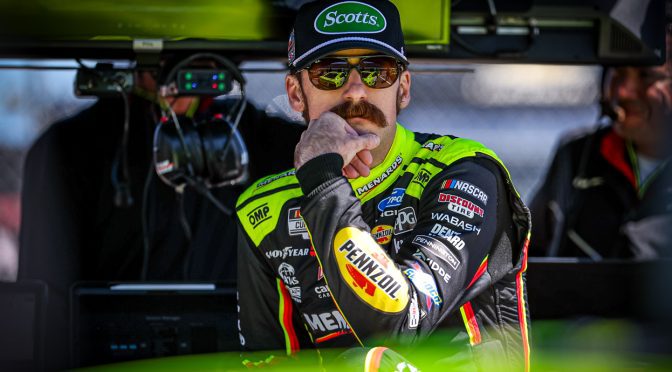
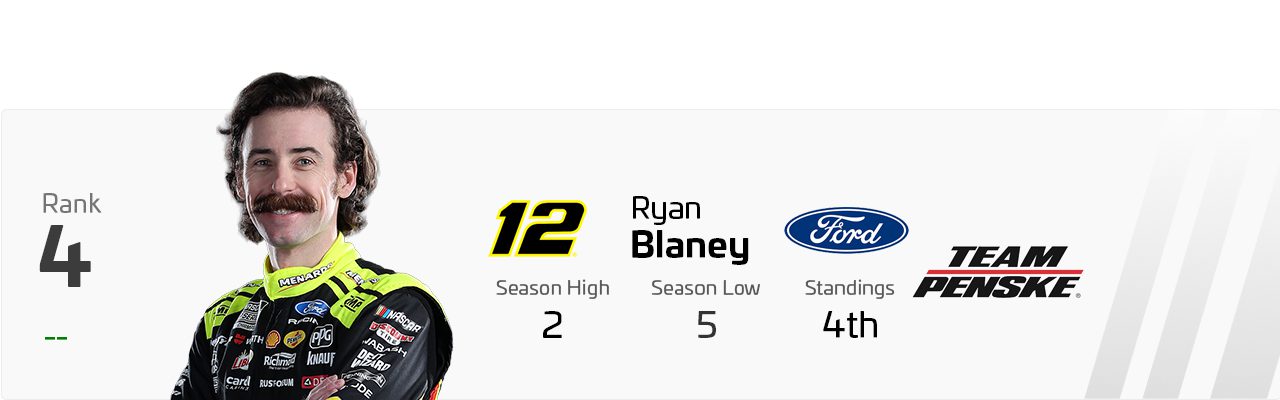
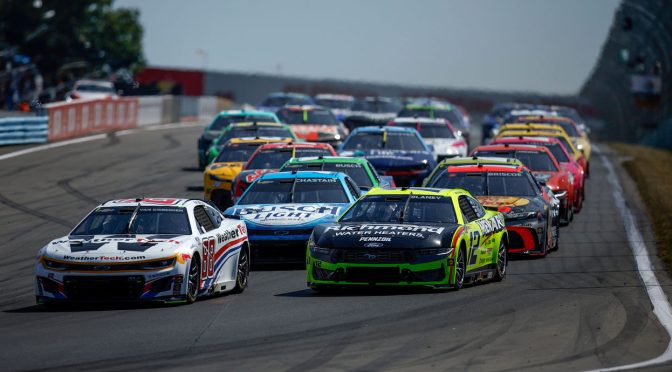
Ryan Blaney signed a long-term contract extension to remain with Team Penske in the NASCAR Cup Series, the team announced Wednesday.
The 2023 Cup champion, Blaney has driven Roger Penske’s No. 12 Ford full-time since 2018 but has driven for the team in stints dating back to 2012, when he made part-time starts for Penske’s NASCAR O’Reilly Auto Parts Series program.
The team also announced a multiyear renewal of its longstanding partnership with Menards.
“Roger’s commitment to me and my career has been something a race-car driver could only dream of — not only getting the opportunity in the first place, but sticking with me through the highs and lows for more than a decade,” Blaney said in a team release. “To still be a part of Team Penske — the wins, the championships, the people — and continuing to grow my career with the unwavering support of Roger and the entire organization has been the opportunity of a lifetime. We’re going to keep pushing to deliver more wins and championships, and to do that with the support of John Menard and the Menard family is truly an honor.”
Now 32, Blaney has scored Cup victories in nine of the last 10 seasons, amassing 18 victories in 389 career starts. He has established himself as one of NASCAR’s top talents, and a long-term extension with Team Penske offers an opportunity to maintain that status together for years to come.
“Ryan Blaney has developed into one of the elite drivers in the NASCAR Cup Series, and the success he’s achieved speaks for itself,” Roger Penske said in a team release.“I’m confident Ryan and the No. 12 team will continue to build momentum into the future, especially positioned alongside a committed partner like Menards who’s been instrumental to our team for more than a decade.”
Blaney is one of the series’ most consistent drivers, collecting 17 or more top 10s in each of the last seven full seasons. After Sunday’s race at Texas Motor Speedway, NASCAR Insights rated Blaney as the No. 3 driver in both passing and speed, and he was ranked 12th in restarts and ninth in defense.
He has grown into a reliable leader for Team Penske, which is part of why the team locked him into another long-term deal.
Blaney currently sits fourth in the Cup standings with one win, three top fives and seven top 10s in 11 races in 2026. He and the Cup Series return to action on Sunday at Watkins Glen International (3 p.m. ET, FS1, HBO Max, MRN Radio, SiriusXM NASCAR Radio).
Did you blink? Following action at Texas Motor Speedway, the NASCAR O’Reilly Auto Parts Series is halfway through its regular season. Among the nine different winners through the opening 12 races, there have been plenty of high-pressure moments that will only crank up several notches more over the following 12 contests and ahead of The Chase.
So, who has stood out the most through the opening dozen contests? Let’s investigate, with NASCAR.com’s John Crane ranking the top 10 O’Reilly drivers at the official halfway mark of the regular season.
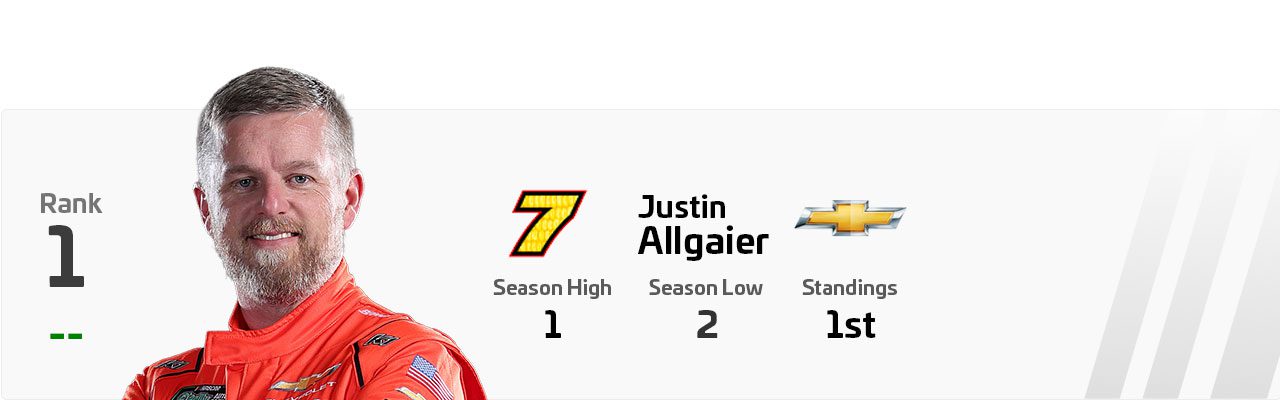
Analysis: Do you want to know the kind of year Allgaier is having? His P23 finish at Talladega Superspeedway in April is only the second time the 2024 O’Reilly champion has finished outside the top eight; the other time came at EchoPark Speedway in February (33rd). Allgaier’s 2.9 average finish over the other 10 races is the stuff of a potential title winner, and it’s no wonder he remains comfortably No. 1 in the driver standings and this ranking installment.
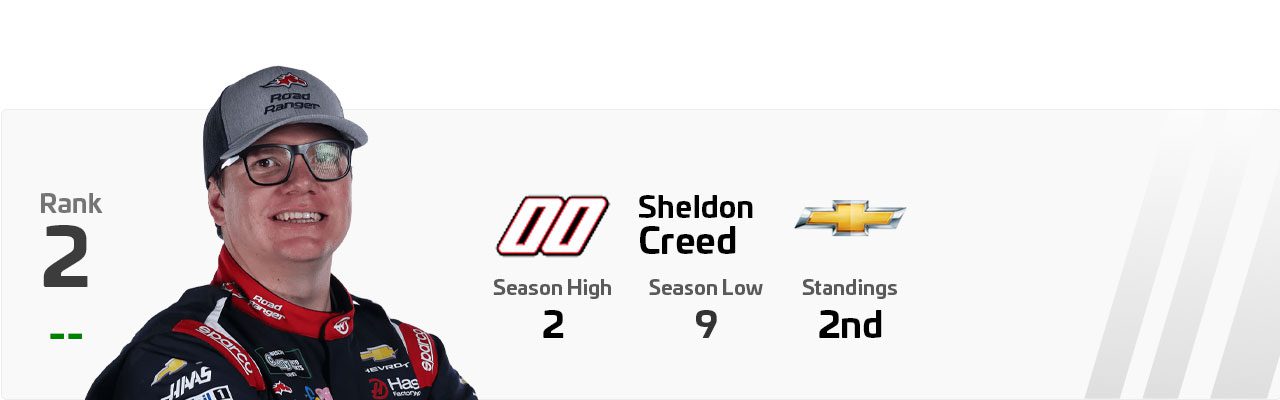
Analysis: It’s been nothing but up, up, up for Creed and the No. 00 Haas Factory Team camp. After winning at EchoPark for his first career O’Reilly victory, the 28-year-old California native has continued to excel. Creed has finished seventh or better in nine of 10 races since, with his one finish outside the top 10 being a P11 at Circuit of The Americas. Tally it all together, and Creed’s 6.4 average finish leads all full-time drivers. Expect Creed to firmly remain in the championship hunt.
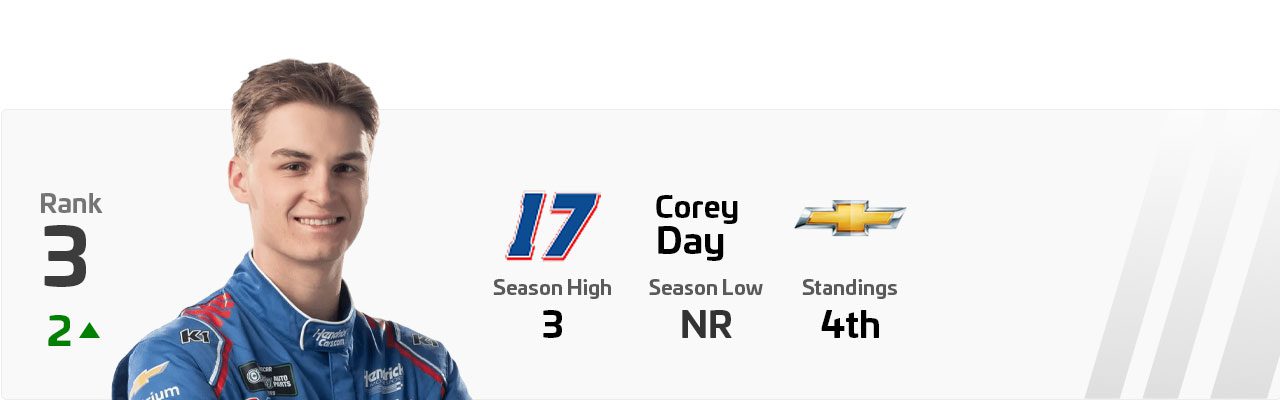
Analysis: A 37th-place result at Texas Motor Speedway might’ve been a hiccup, but Day’s entrance into the full-time O’Reilly fold has been a roar otherwise, with the 20-year-old triumphing at Talladega Superspeedway a weekend prior for the 20-year-old’s first O’Reilly dub. A 7.9 average start, 10.8 average finish and 191 laps led are solid benchmarks to build upon over the latter half of the regular season. And build upon, he certainly will need to do so should he wish to maintain this position over others on this list.
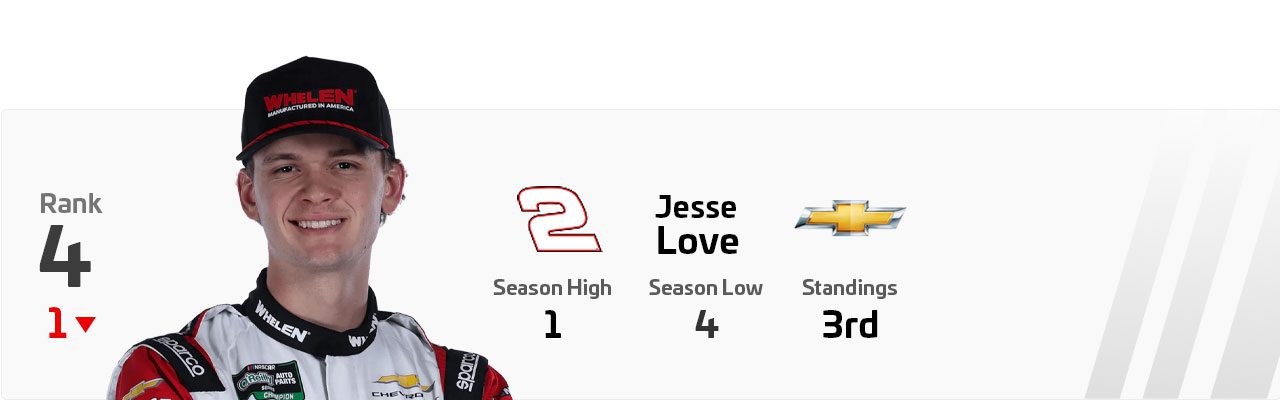
Analysis: Champions do two things. One: They maintain consistency. Love has finished 12th or better in 11 of 12 contests, and his 9.0 average finish is third-best among full-timers. Two: They quickly flush poor finishes and deliver smoother results. Since finishing 27th at Rockingham Speedway in April, the 21-year-old Love has compiled three finishes of ninth or better. The steadiness has been there, and if points continue to compound (with perhaps a win sprinkled in here and there), the 2025 O’Reilly champion will have a legitimate shot at rocketing to the top of this ranking … and going back-to-back in the championship-winning department.
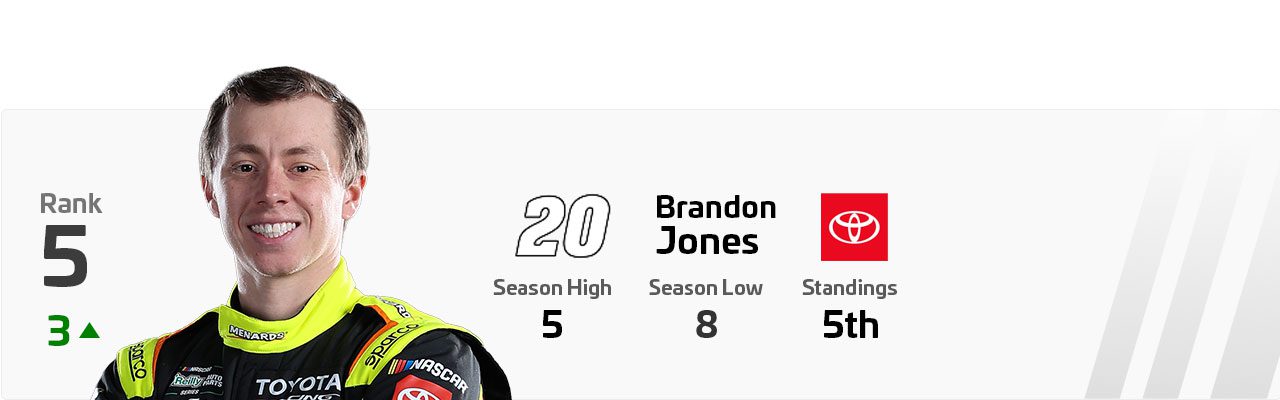
Analysis: Jones has started to establish a sturdy footing of late, with the No. 20 Joe Gibbs Racing pilot stacking three consecutive eighth-place finishes in the three most recent races. For those keeping score, five of Jones’ six top-10 results this season have come in five of the last seven races, and during that seven-race stretch, Jones has averaged 39 points per weekend. Momentum is brewing, which should bode well over the latter half of the regular season.
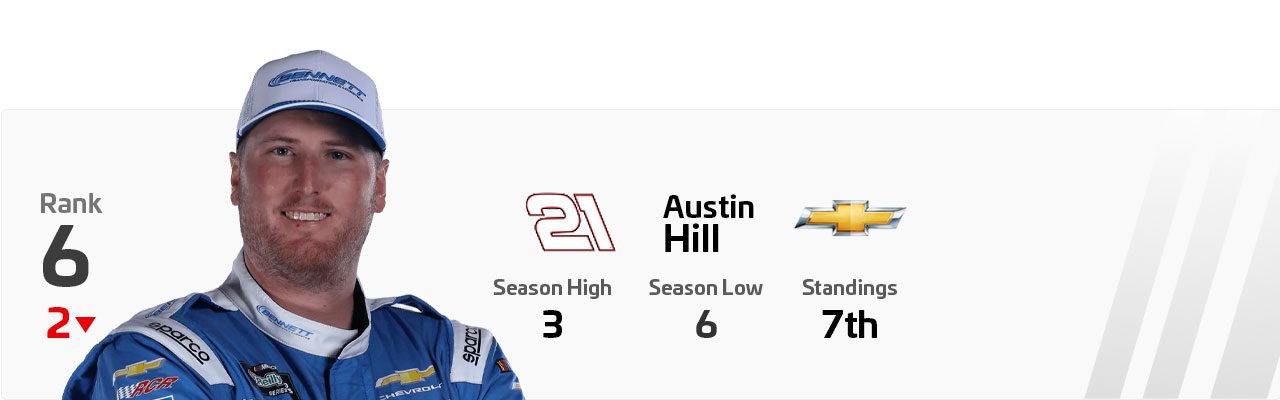
Analysis: It was an excellent start to 2026 for Hill, tallying top-10 finishes (and a race win) in the opening five contests. The following seven races haven’t been as illustrious, with only two top 10s. Two duds at Darlington Raceway and Kansas Speedway — resulting in netting five points combined — leave a bitter taste, too. There is still plenty of talent, of course, and two finishes of 13th or better in the two most recent races means the arrow could be pointing upward again for Hill and the No. 21 team no time.
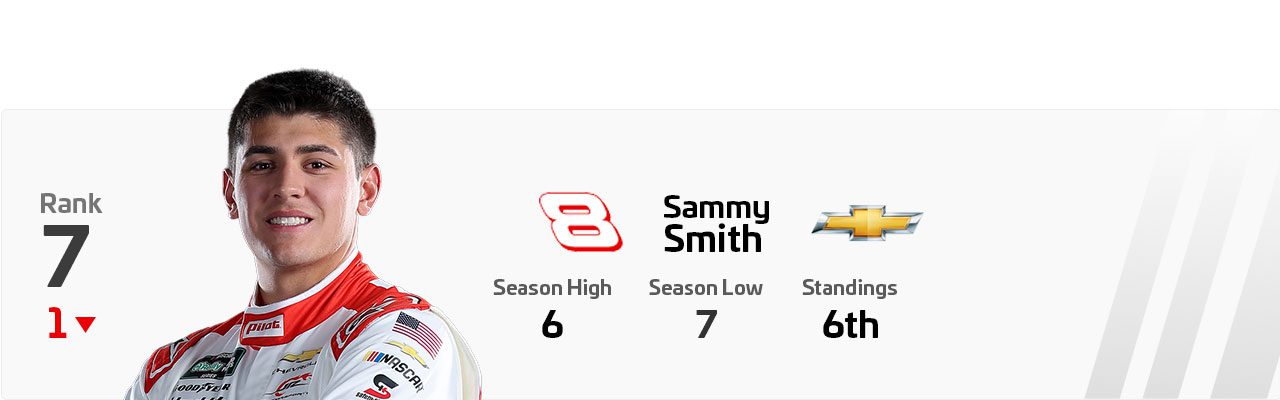
Analysis: Though he hasn’t led many laps (17, tied for 14th among full-timers) and doesn’t possess as many stage points relative to others (51, tied for 10th), there Smith is, standing sixth in the driver standings, respectable positioning at this juncture. Such poise and staying out of trouble — Smith’s lone DNF came at EchoPark in February — has the 21-year-old in a relatively comfortable position. Is there another level yet to be seen, though?
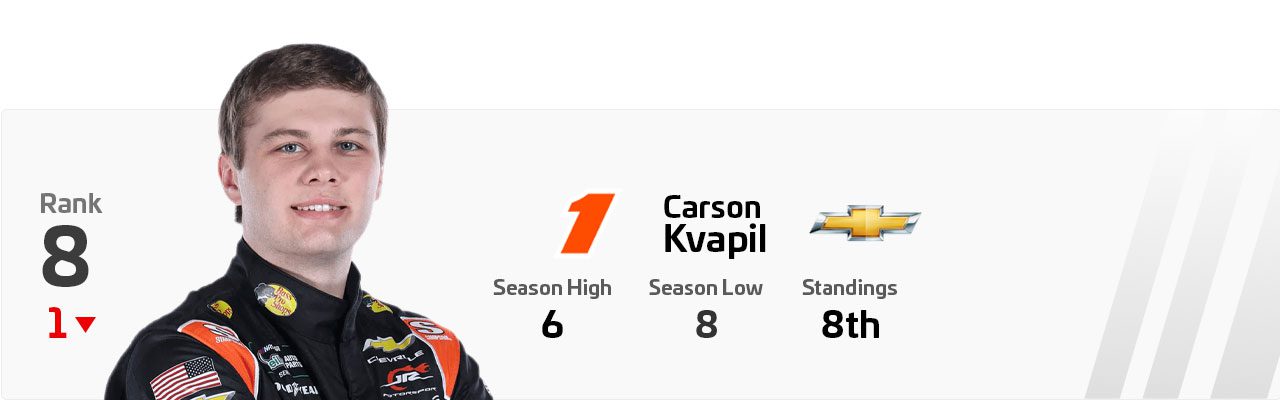
Analysis: The qualifying speed has been there from the jump for the 22-year-old Kvapil. The finishing touches can’t say the same; he has three DNFs to his ledger, with the most recent coming in a rollover wreck at Kansas. This season has been one of adversity for the young driver, especially with pressure to manage, and Kvapil has done an admirable job to this point. That said, there is some sense of urgency in finding Victory Lane this season. Will that checkered flag be found?
Analysis: A thrilling Kansas victory — to go along with 64 points amassed from the win — emphasizes the upside the 21-year-old can show on the track. Six separate instances this season of leading multiple laps further demonstrate this potential, and while four finishes outside the top 25 need improvement, there’s no denying there is more than enough to work with here.
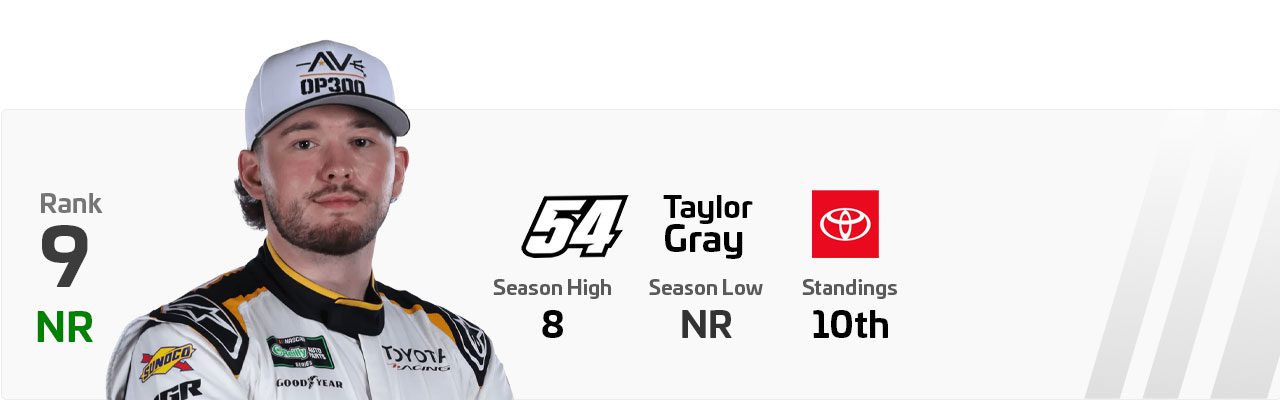
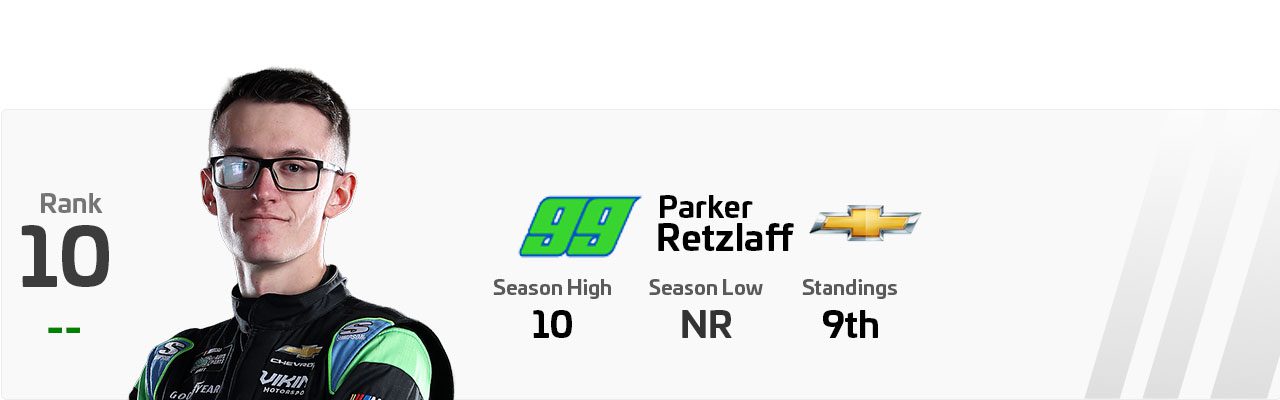
Analysis: Retzlaff is a foil of sorts to Gray and William Sawalich, who just missed out in this ranking. On one hand, Retzlaff currently ranks ahead of both in the driver standings, and his 13.2 average finish additionally outpaces the pair (Gray with 17.4, Sawalich with 17.5). The flip side: Retzlaff’s 15.5 average start is below both (Gray with 10.1, Sawalich with 10.8), and the No. 99 driver has yet to lead a lap this season. Slightly more consistency of late than Sawalich means the 22-year-old Wisconsin native holds serve at 10th.
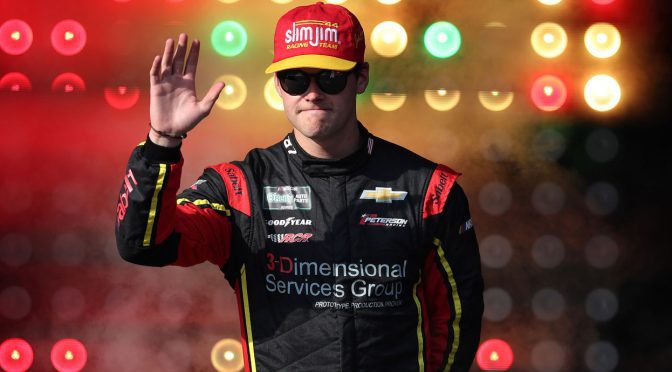
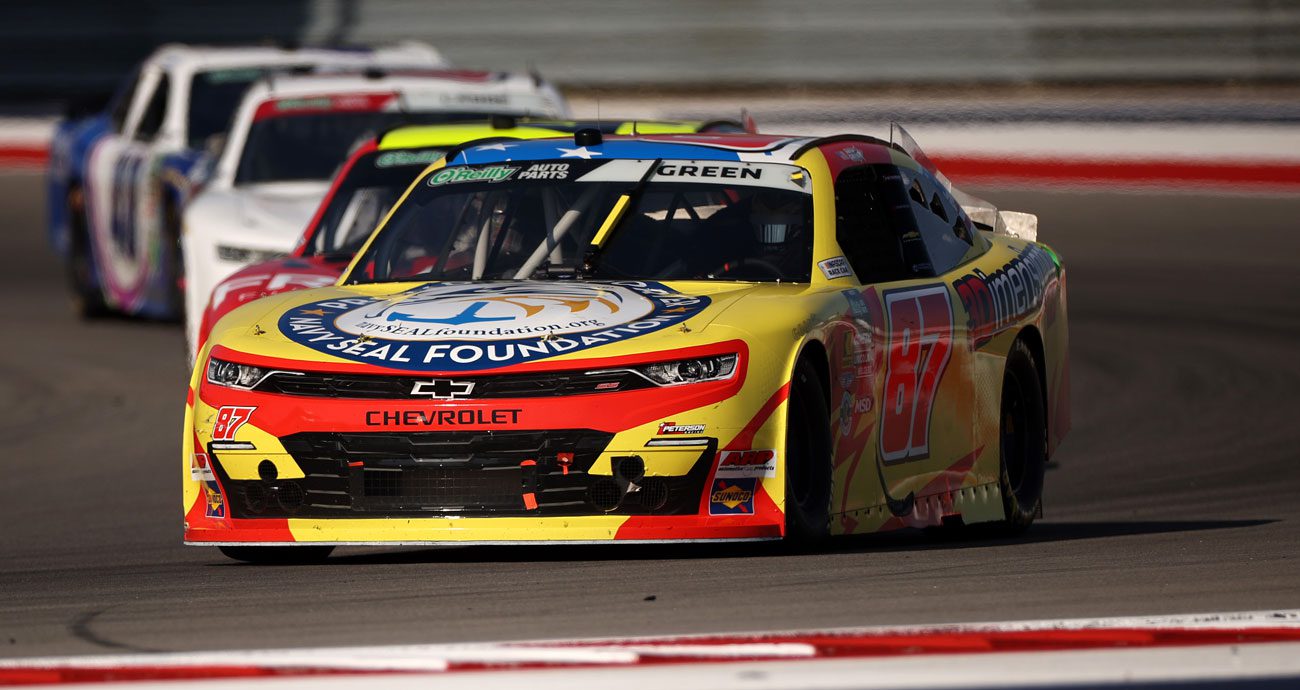
Austin Green comes from a deep family lineage of NASCAR O’Reilly Auto Parts Series competitors. David, his father, and Jeff, his uncle, both reigned supreme in the series, hoisting the championship trophy in 1994 and 2000, respectively.
When Green linked up with the Doug Peterson-owned Peterson Racing in the Trans-Am Championship TA2 class towards the end of the 2022 season, the natural progression for the former short-track competitor was to eventually go full-time in NASCAR racing.
“I think [Peterson] knew that NASCAR was my goal and he wanted to help out as much as possible,” Green told NASCAR.com at Texas Motor Speedway. “I think they’ve slowly fallen in love with it as much as I have.”
Before creating an alliance with Jordan Anderson Racing in 2024 for Green to run a six-race slate at road courses — which included a trio of top-10 finishes — Peterson’s focus was sports-car racing. It slowly shifted to NASCAR as Green became more competitive.
“He told me he never had aspirations of going to NASCAR, but I’ve heard him mention ever since he’s come to NASCAR that he enjoys it and has fun,” Jody Measamer, crew chief of the No. 87 Chevrolet, said. “I’m excited because this is all I’ve ever done.”
When the organization — only three full-time employees in total — decided to run the full 2026 season, it increased its resources, signing an alliance with Richard Childress Racing. Despite the small core group of team members, Peterson has a fleet of 22 chassis, and the team is prepared for what’s next on the docket.
The RCR partnership has been evident with speed, even if the results haven’t shown in the finishing column. Green led his first O’Reilly laps at Talladega Superspeedway and finished 10th, his first top 10 of 2026 and best career O’Reilly finish on an oval.
“It’s been tough, but I don’t look at the finishes as much as how we ran,” Green said. “We’ve always run pretty well in the top 15 and then get caught up in a wreck, flat tire, something happens. That has been disappointing and has put us in a hole in the points.”
With the jump to running the full circuit, Green’s greatest obstacle is the intermediate races. He had not raced at half of the tracks from the first 12 races of the season before strapping in for practice.
The best tool for Green is simulation. He also religiously watches race film, trying to pick up tricks that he can apply come race day. He has also found himself picking the brains of RCR teammates Austin Hill and Jesse Love.
“He’s learning every week,” Measamer said. “Being in the seat every week makes a huge difference. We didn’t have any bad luck the last two years. I know a lot of people don’t believe in luck, but it’s been a challenge the first part of the year. Stuff happening that shouldn’t. I think we’re getting through it.”
James Gilbert | Getty Images
Throw Green’s 27.1 average finish in 2026 out the window when it comes to Saturday’s Mission 200 at The Glen (4 p.m. ET, The CW, MRN Radio, SiriusXM NASCAR Radio). He is a force to be reckoned with at road courses, and he finished seventh at Watkins Glen International in 2025.
“My personal goals are a little different from some of the other people on the team,” Measamer said. “I think if we could qualify in the top 20 and finish in the top 20 consistently, I think it is a good goal. I do think we’re capable of running in the top 15 most weeks.
“Going into the road courses, I do have high expectations. I feel like we have a shot at a top five next week.”
In 14 prior road course starts, Green has eight top-10 finishes, including a runner-up effort to Connor Zilisch last fall at the Charlotte Motor Speedway Roval. He also has a pair of 11th-place finishes at Watkins Glen (2024) and Sonoma Raceway.
The bulk of the full-time O’Reilly drivers have competed at road courses longer than Green. Green had zero road-course experience before jumping on the TA2 tour. He believes learning the technique of racing clean and not laying the bumper to drivers has paid dividends at the NASCAR level. In TA2, penalties are enforced should there be contact.
Much of Green’s road course success, he says, comes from out-braking the competition on corner entry. He also knows that, since there has been an additional focus on road courses over the last handful of seasons, his competitors have fine-tuned their craft.
“It’s a confidence boost knowing you can go and run well,” Green said. “What is tough now is there used to be such a wide spread. Now, everyone is getting closer. At COTA, I felt like everyone was pretty tough. There are a lot more road courses than there used to be back in the day, so you have to be good and versatile.”
Even if Green doesn’t have a fantastic starting position at Watkins Glen, don’t count him out. The No. 87 team is synonymous with flipping stages to get track position and hanging on to it.
Such a strategy could be the formula for gathering even more momentum as the race — and season — continues.
“I hope we have enough speed to where we can make those decisions as they come,” Measamer said.
Based on its review of team radio, race video and driver data, NASCAR punished Ryan Preece for an incident with Ty Gibbs at Texas Motor Speedway.
The same type of review yielded no penalty for Kyle Busch for his collision with John Hunter Nemechek late in the race.
On the latest episode of the “Hauler Talk” podcast, NASCAR vice president of race communications Mike Forde explained the difference between the decisions.
Preece was docked 25 points and fined $50,000 for the incident with Gibbs, who slammed the Turn 3 wall in the skirmish.
During a prior yellow flag, Preece had radioed his team about Gibbs: “What a [expletive] idiot that kid is. He is so lucky his car is so [expletive] fast. … All right, when I get to that 54, I’m done with him. [Expletive] idiot.”
Forde said the audio factored into the penalty.
“We do look at all available resources, whether that’s the video, in-car audio, SMT data,” Forde said. “And really what this came down to is … (Preece) said what he said, and then he did what he said. And so in our view, it was intentionally wrecking another vehicle.”
Forde said Preece (who radioed his Roush Fenway Keselowski team that he “never touched” Gibbs) can appeal the penalty.
Explaining why NASCAR declined to penalize Busch, Forde said competition strategist Scott Miller determined that SMT data was inconclusive as to whether the No. 8 Chevrolet driver had intentionally wrecked Nemechek’s No. 42 Toyota.
The handling on Busch’s car was also altered by damage from a previous incident with Nemechek.
“The SMT data is largely what played a role for us in this decision,” Forde said. “(NASCAR vice president of competition) Elton Sawyer said the data told us that after the incident, (Busch) was turning the wheel all the way left just to go straight. So we had a feeling that he had some pretty significant damage. And it was inconclusive on if that was a damaged vehicle that caused (Busch) to get into (Nemechek), or if it was intentional. There were zero things that, in our opinion, said he did this intentionally, and it rose to the level of penalty. So that’s why we landed on no penalty.”
Unlike Preece, Busch also refrained from vowing retribution against Nemechek on his team radio.
“There was no audio that came out that said, ‘I’m going to wreck the 42,’ and then he wrecked the 42,” Forde said. “So that’s one. And then two is the SMT data didn’t show anything that suggested that he did do it, and also the fact that his steering was so jacked, it showed that there was at least a plausible chance that his car had some damage that led to what happened.”
Forde said NASCAR officials will meet with Busch and Richard Childress Racing leadership about the two-time Cup Series champion being involved in two incidents over the past four races. Busch tangled with Riley Herbst at Bristol Motor Speedway last month.
Other topics covered by Forde and Ellis during the 52nd episode of “Hauler Talk,” which explores competition issues in NASCAR:
–Whether the numbers in a race’s name have to correlate to the actual distance of the event.
–The decision to hold the yellow flag for Nemechek’s crash.
–Whether NASCAR would consider using pit speeding limiters.
–What happens if the Xfinity fastest lap is recorded by a driver ineligible for receiving Cup points.
–Watkins Glen International’s new date.
–Changes to the Watkins Glen layout.
–Why Sunday’s race at Watkins Glen has been extended by 10 laps.
Nate Ryan has written about NASCAR since 1996 while working at the San Bernardino Sun, Richmond Times-Dispatch, USA TODAY and for the past 10 years at NBC Sports Digital. He is a contributor to the “Hauler Talk” show on the NASCAR Podcast Network. He has also covered various other motorsports, including the IndyCar and IMSA series.
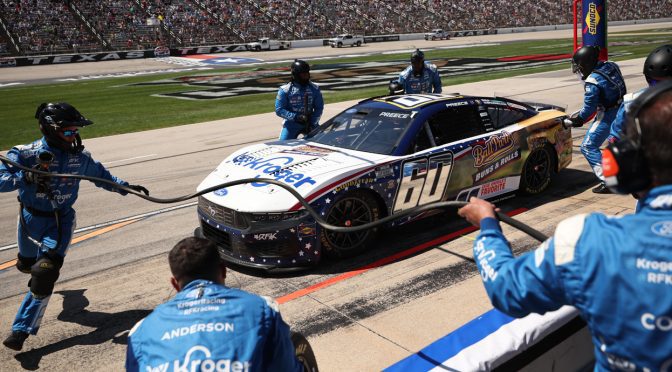
Ryan Preece was penalized 25 points and fined $50,000 following an incident with Joe Gibbs Racing driver Ty Gibbs in Sunday’s NASCAR Cup Series race at Texas Motor Speedway.
Preece, driver of the No. 60 RFK Racing Ford, was penalized under Sections 4.3 and 4.4.A in the NASCAR Rule Book, which state NASCAR’s member conduct guidelines and specifically list “wrecking or spinning another vehicle, whether or not that vehicle is removed from competition as a result” as a potentially punishable offense.
Preece appeared to contact the back bumper of Gibbs’ No. 54 Toyota at Lap 101 of the Würth 400 entering Turn 3. That move sent Gibbs sliding into the SAFER barrier and ultimately ended his day with a 36th-place finish. Preece radioed to his team during the race that he felt he did not touch Gibbs’ car.
The incident followed vocal frustration from Preece, who took exception to an aggressive move Gibbs made entering Turn 1 during Stage 1.
“All right, when I get to that 54, I’m done with him. [Expletive] idiot,” Preece said in part.
Preece appeared on SiriusXM NASCAR Radio’s “Late Shift” Monday night — prior to Tuesday’s penalty announcement — and further explained to hosts Brad Gillie and Todd Gordon what led to the moment on-track.
“There are people that you know you can race with respect around and cut breaks to,” Preece said. “Like I can think of multiple times yesterday that instead of putting another driver in a pretty tough spot, you make the decision not to do that. And I feel like I just grew up racing against people that I learned that lesson a long, long time ago, when I was a lot younger. And sometimes I question if those same lessons are learned by the time you get to Cup.
“So for me, it was more along the lines of he pretty much was very close to clear getting into (Turn) 3, and I could lift, but I didn’t.
“I was right there and I felt like he came down, and I was not going to cut him a break because in the past, him and I have had problems. So I’ve got a little bit of a short fuse with him and I, with how we’re racing. And that was just one of those situations that, could I cut him a break? Probably could have, but I didn’t. And ultimately, I didn’t feel like I hit him. I felt like I stayed right on him, and he got loose, and from there on, unfortunately, he wrecked.”
The 25-point penalty drops Preece one spot in the points standings to 13th, 38 points above the provisional cutline of the 16-driver field for The Chase.
RFK Racing released a statement on social media Thursday that it will appeal the penalties issued to Preece.
<blockquote class=”twitter-tweet”><p lang=”en” dir=”ltr”>Statement on Ryan Preece’s Penalty. <a href=”https://t.co/1S5eJKvwlu”>pic.twitter.com/1S5eJKvwlu</a></p>— RFK Racing (@RFKracing) <a href=”https://twitter.com/RFKracing/status/2052493675335127528?ref_src=twsrc%5Etfw”>May 7, 2026</a></blockquote> <script async src=”https://platform.twitter.com/widgets.js” charset=”utf-8″></script>
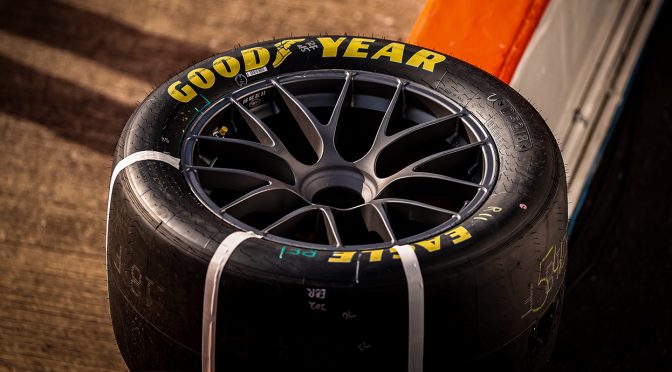
Goodyear will bring a familiar tire setup to Upstate New York as the NASCAR circuit shifts to Watkins Glen International.
The 2.45-mile road course will host all three national series this weekend, with the O’Reilly Auto Parts Series and Craftsman Truck Series joining the tripleheader. Those events culminate in the Go Bowling at The Glen on Sunday (3 p.m. ET, FS1, HBO Max, FOX One, MRN Radio, SiriusXM NASCAR Radio).
Sunday’s Cup Series race marks the second trip to a road course in 2026, with Circuit of The Americas as the only left- and right-turn track in the books this season. The current road-course tire was used on all six such tracks last season and was developed to increase wear and fall-off.
“Teams are familiar with the Goodyear Racing Eagle road course tires we’ve brought to Watkins Glen, which will help them plan their race strategies,” said Rick Heinrich, Goodyear NASCAR product manager. “That consistency gives teams the benefit of a detailed notebook and a strong understanding of how it responds over the course of a run, which is particularly important at a high-speed track that has historically seen low tire wear.”
The O’Reilly Auto Parts Series is using the same Goodyear setup from COTA as well, while the Craftsman Truck Series will utilize the same setup used at the St. Petersburg, Florida, street course debut in February.
Wet-weather tires will also be available for all series this weekend if needed.
The tire allotment for each team competing this week:
Cup Series: 7 total sets — 5 new sets for the race, 1 for practice and 1 from qualifying that transfers to the race. (Six additional wet-weather sets)
O’Reilly Auto Parts Series: 6 total sets — 4 new sets for the race, 1 for practice and 1 from qualifying that transfers to the race. (Four additional wet-weather sets)
Craftsman Truck Series: 5 total sets — 3 new sets for the race, 1 for practice and 1 from qualifying that transfers to the race. (Four additional wet-weather sets)
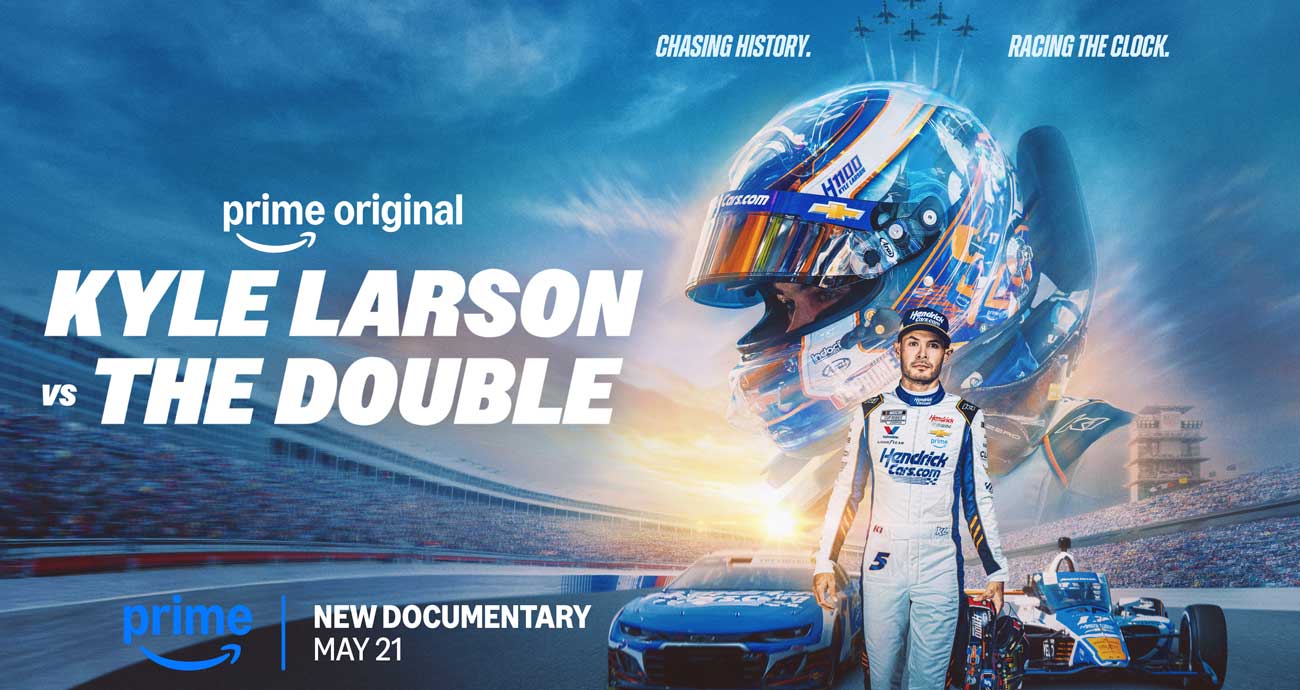
Kyle Larson has never shied away from a challenge. In Prime Video’s upcoming documentary “Kyle Larson vs. The Double,” the Hendrick Motorsports driver takes aim at one of racing’s most grueling feats — completing the Indianapolis 500 and the Coca-Cola 600 on the same day. The film premieres May 21, offering a behind-the-scenes look at Larson’s pursuit of history over the past two years.
Known simply as “The Double,” the 1,100-mile test has been attempted by only a handful of drivers, with Larson just the fifth to take it on. The task demands a rapid shift from the 230-mph speeds of Indianapolis to the 600-mile endurance grind in Charlotte, pushing drivers to their physical and mental limits.
“Racing’s everything I’ve ever known,” Larson says in the trailer. “I want to experience the challenge — what it takes mentally and physically.” That mindset sits at the core of the project, which captures not only the logistics behind the attempt but also the personal drive fueling it.
Prime Video
“You’re literally going from 60 mph to 220 in a matter of seconds,” Larson explains of his craft. “I mean, you have to commit.” It’s that willingness to embrace risk that has defined Larson’s career. And it’s what set his pursuit of “The Double” apart: “That’s just what makes me different,” he says. “I’m not scared of anything.”
Few drivers ever reach the level required to even consider “The Double,” and fewer still take the leap. “How many race car drivers are there in the world?” Larson asks. “How many have had the courage to try and do both?”
For Larson, the answer seemingly isn’t as important as the attempt itself — it was a chance to test his limits and chase a place in racing history. Watch “Kyle Larson vs. The Double” on Prime Video starting May 21.
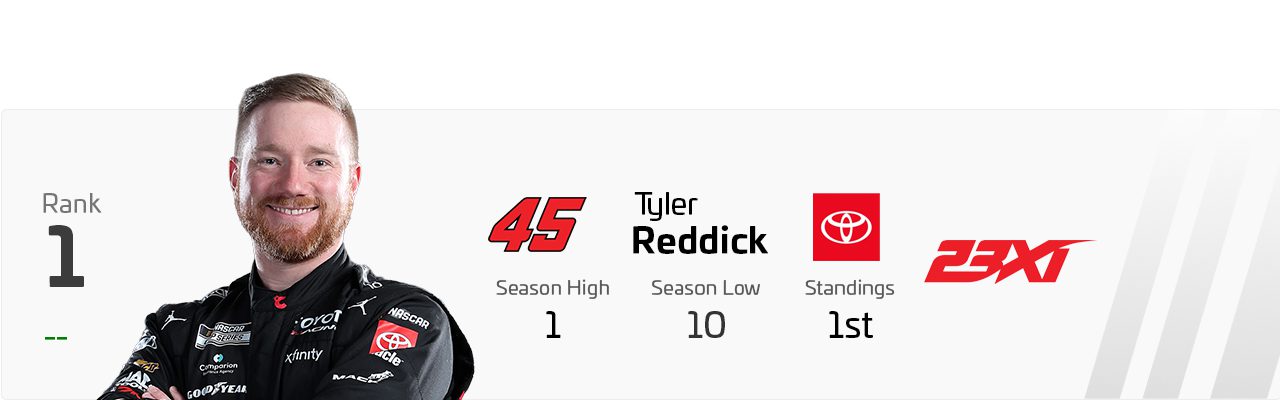
Analysis: Reddick didn’t need to win Texas to tighten his grip, so he’ll take a fourth-place finish via a late two-tire call that vaulted him forward in the final stage and kept him firmly atop the standings with a triple-digit cushion. He wasn’t the fastest car, but he was in position when it mattered … again. Five wins, elite consistency and a strong road-course profile (plus four top 10s in five Watkins Glen starts) make this a chance to extend, not just defend, his points lead. The gap isn’t shrinking at all, and he’s not quite giving anyone an opening to make a run at it.
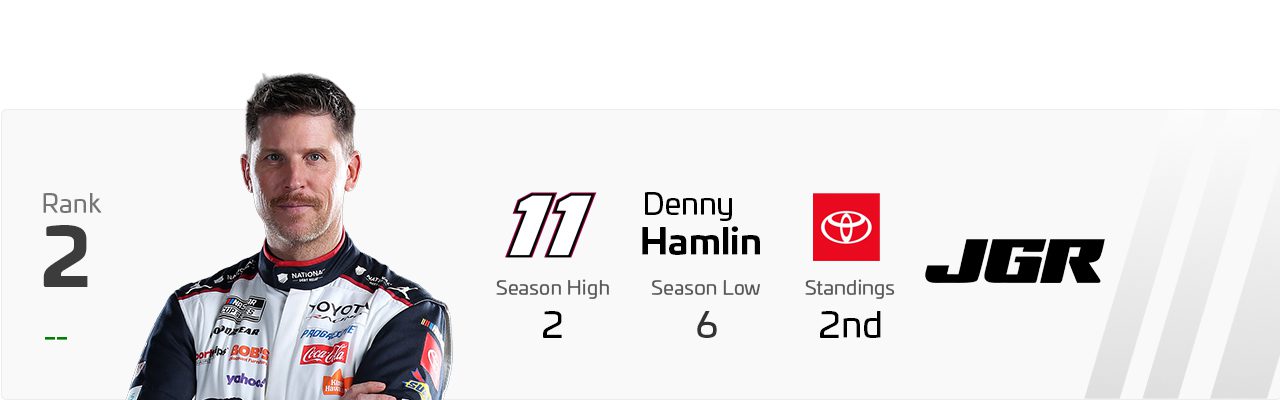
Analysis: Hamlin did everything but win at Texas, finishing second after running inside the top five for most of the day and putting himself in position late, only to come up short again. He’s now stacked multiple runner-ups since winning at Las Vegas earlier this year. Watkins Glen offers another shot at victory, with nine career top 10s there, including a win.
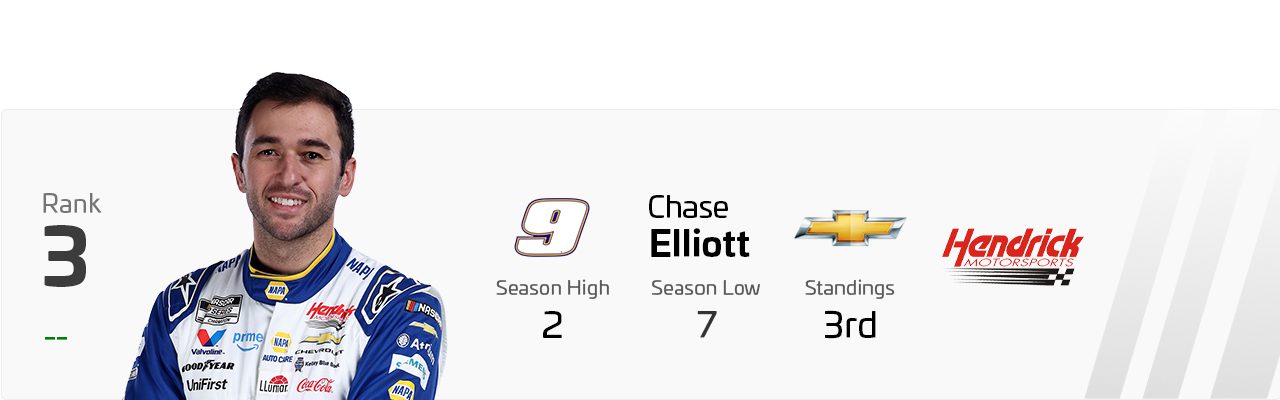
Analysis: Elliott and the No. 9 team are making a lot of preseason pundits who said he would excel in this revamped championship format look wise, and a second win this early in the season hints at 2026 having career-year potential. A two-tire call flipped track position late, and from there he led 87 laps and executed perfectly on the final restart to hold off Hamlin in a pressure moment. Now with a pair of victories in his pocket and momentum building, Elliott heads to Watkins Glen — once considered one of his best tracks — as a threat to stack another.
Analysis: Blaney’s 10th-place finish came after starting 31st, once again a solid recovery through the field that reflects the team’s ability to salvage days when not dominating them. Watkins Glen is more solid than spectacular for him, with one top five, four top 10s, one pole and a 15.0 average finish in nine starts. The issue isn’t whether Blaney is good — he clearly is — it’s whether the No. 12 team as a whole can find the next gear while Elliott is starting to make a louder statement.
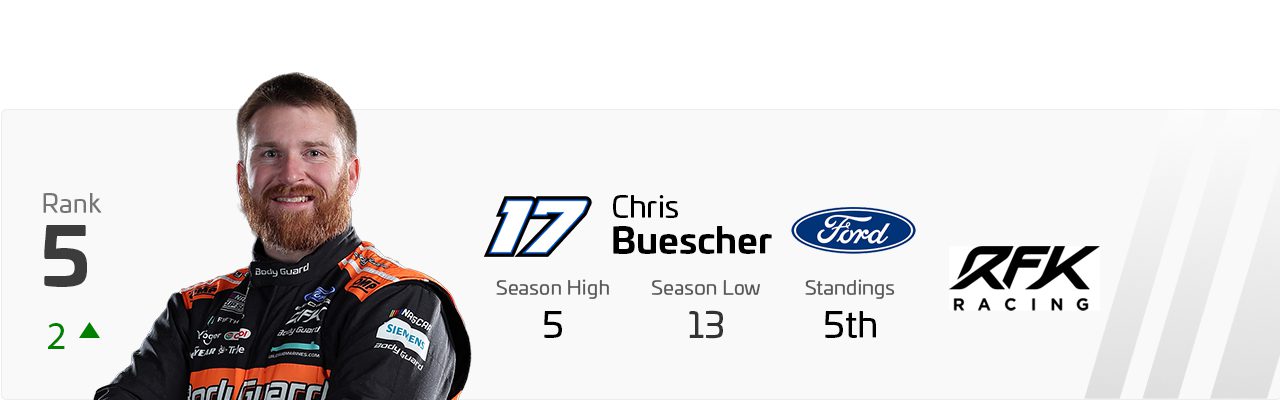
Analysis: Buescher backed up the Talladega runner-up with another excellent run at Texas, finishing fifth for his first top 10 at his home track in 17 tries and his first back-to-back top fives since June 2024. The Glen is friendly territory, too, winning there in 2024 and being among the drivers to beat in general at the track this decade. Buescher enters as one of the few recent Cup winners at the track and one of the hottest non-Reddick/Elliott/Hamlin drivers in the garage.
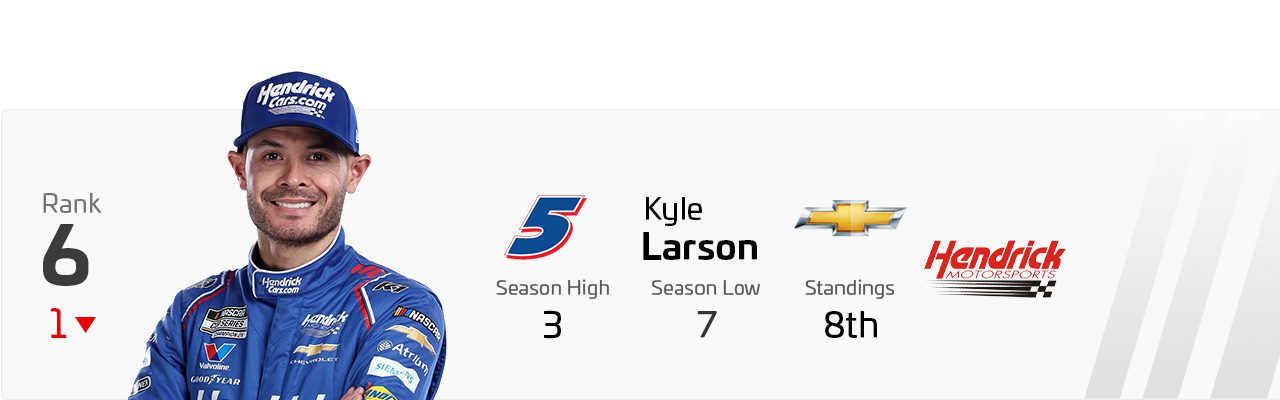
Analysis: Larson’s Texas race was another frustrating miss, ending after he lost it and hit the wall on Lap 160 in a race he was expected to win. He finished 34th, scored just three points and slipped again in the standings, as his title defense begins to fray a bit. Watkins Glen is an obvious reset button, with two wins, three top fives, five top 10s and a 14.6 average finish in 11 starts.
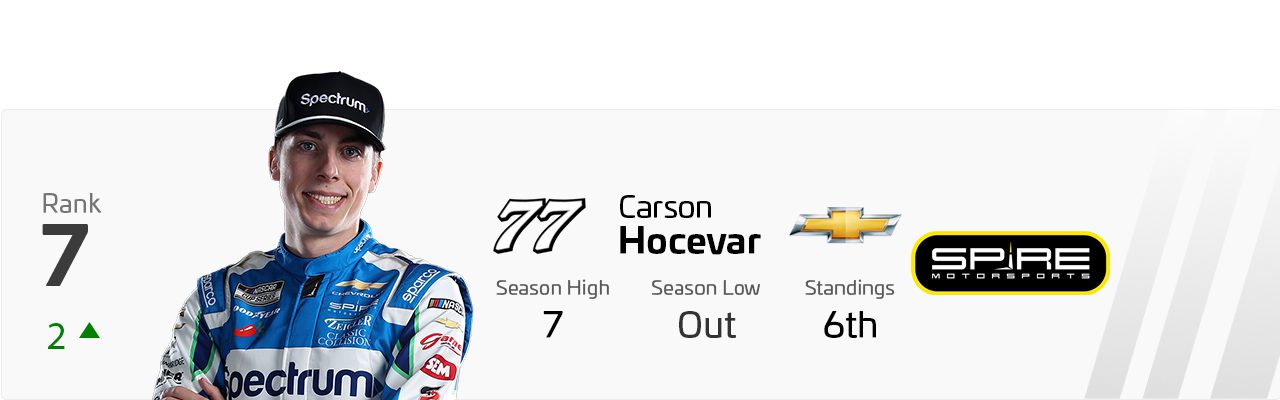
Analysis: Hocevar wasn’t just a nice story at Texas to follow up his landmark Talladega victory — Sunday’s pole-starter was a legitimate factor. Hocevar wound up with 40 laps led and a seventh-place finish, giving him 96 points over the last two weeks and a move to sixth in the standings. Watkins Glen is a fascinating next test, because the early returns are strong: two starts, one top five, one top 10, one lap led and a 10.5 average finish. He’s still ironing out the edges, but the speed is no longer surprising; the question is how quickly “fast enough to matter” becomes “polished enough to keep winning.”
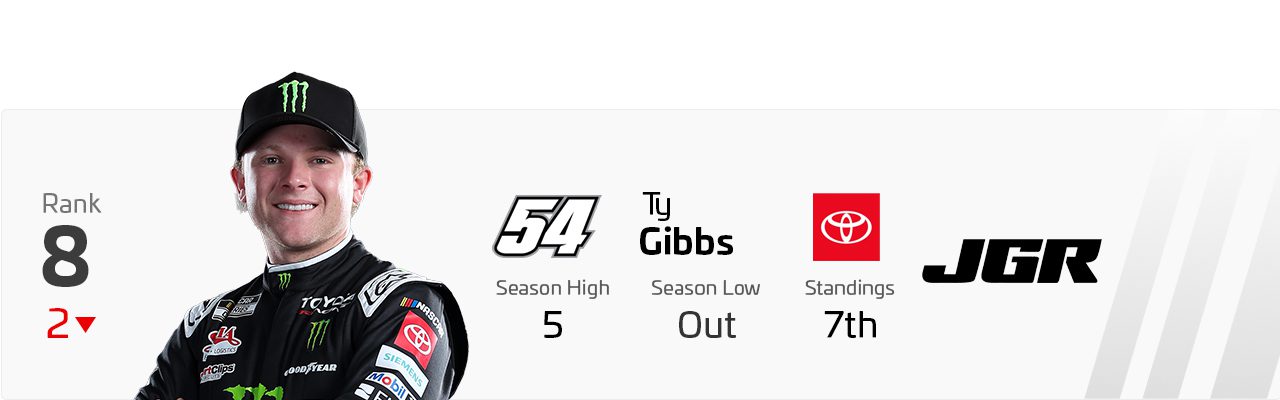
Analysis: Texas was a hard stop after his recent Bristol breakthrough, with Gibbs crashing out after a run-in with Ryan Preece and finishing 36th. He did at least score Stage 1 points before the race got away, but the overall result knocked him from fifth to seventh in the standings. The Glen has been more promise than payoff so far, with four starts, one top five, one top 10 and a 21.5 average finish — though his 12.3 average start suggests the speed has generally been there. This weekend feels like a good measuring stick for whether Bristol was the start of a serious climb or just a temporary spike.
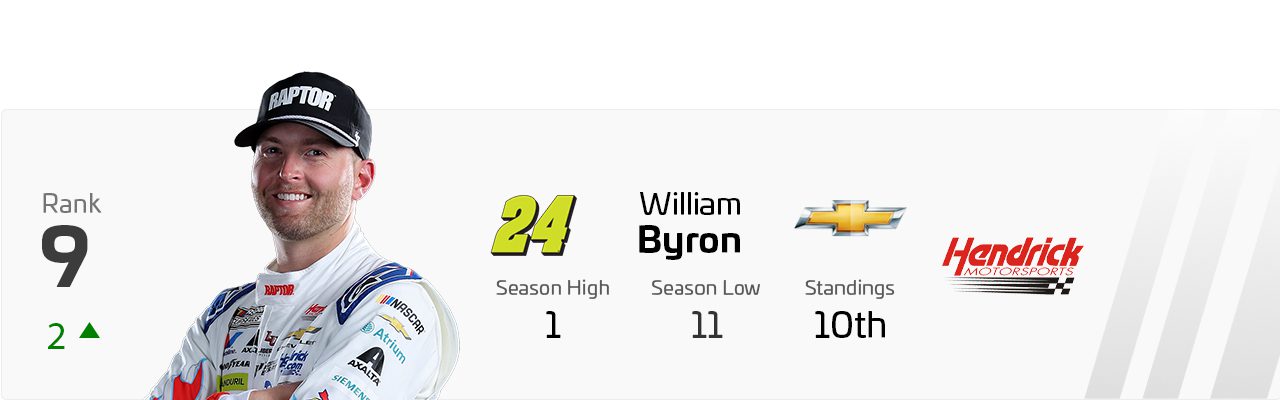
Analysis: Byron had one of those sneaky good survival days at Texas, spinning from seventh on Lap 93 and still clawing back to finish eighth. That gave him six top 10s in his last eight races, which is the kind of understated consistency that can get lost when he’s not dominating like normal. Watkins Glen lines up well for a more obvious statement, with Byron owning a win, two top fives, four top 10s, 66 laps led and a strong 8.6 average start in seven races. He hasn’t had the typical weekly “No. 24 is inevitable” feel yet, but this is a very reasonable place for that to come back around.
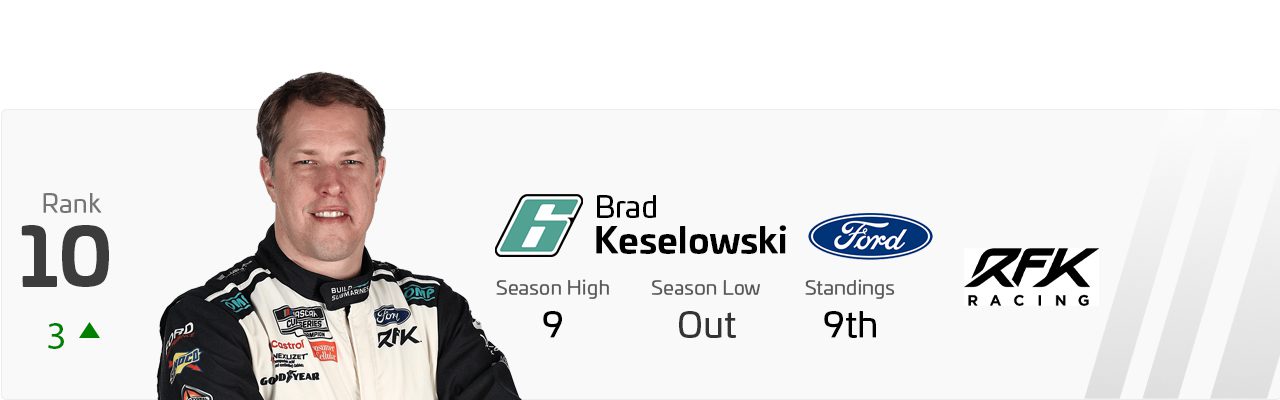
Analysis: Keselowski had a better Texas than 13th suggests, using strategy to get to the front, leading four laps and finishing third in Stage 2. It wasn’t the full result, but it was another competitive RFK showing on a weekend where he and Buescher (and to a lesser extent Ryan Preece) continued to validate the organization’s 2026 pace. Watkins Glen has been a longtime good-not-great place for him, with a handful of runner-ups included in his winless 15 starts, four top fives, six top 10s, 128 laps led and 15.9 average finish.
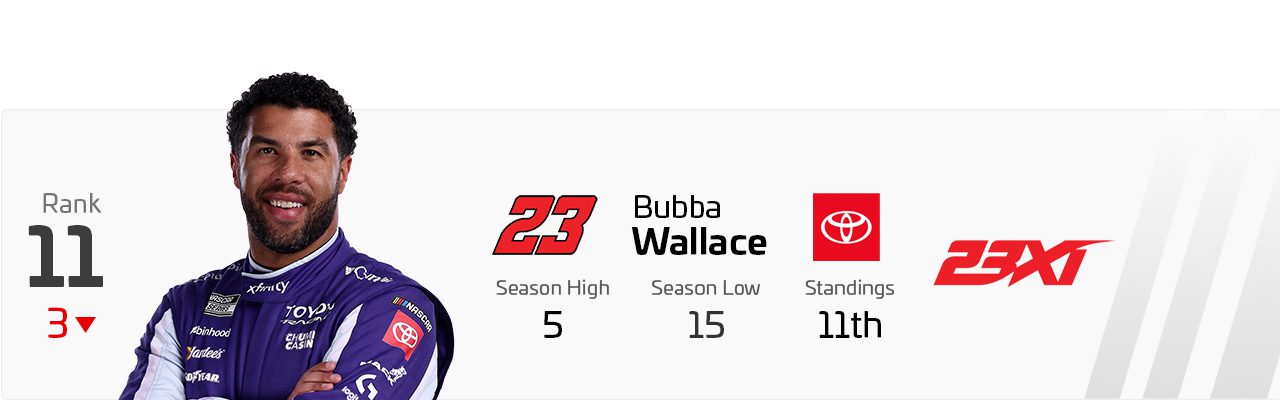
Analysis: Wallace’s Texas result was impressive, starting from the rear in a backup car and still finishing ninth in a tumultuous day for the field. He also had the fastest four-tire pit stop in NASCAR history at 8.62 seconds … but that could all come to a halt this weekend, and his slide could continue. Watkins Glen has not been a source of much magic for Wallace, with just one top 10 and a 21.1 average finish there in the veteran’s career.
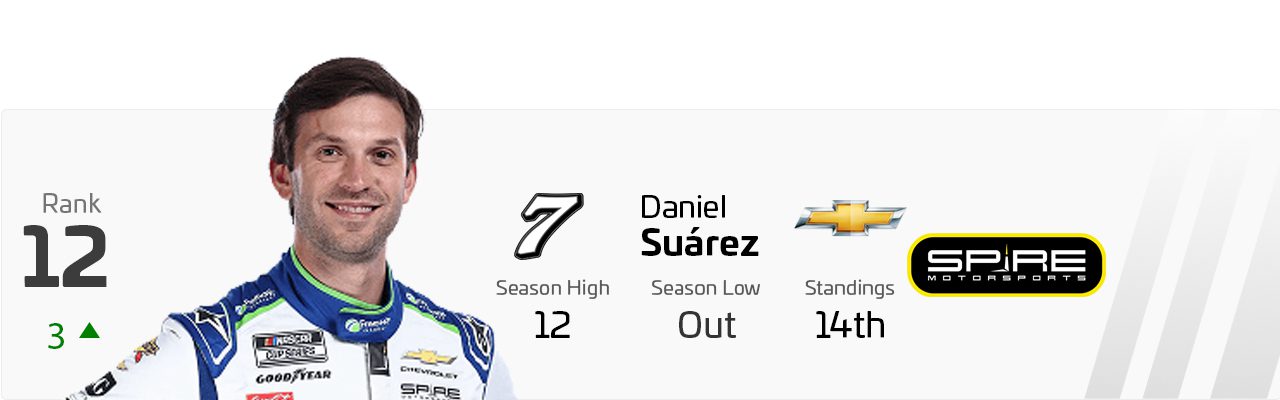
Analysis: Suárez continues to be one of the most notable yet unheralded stories on the board, finishing sixth at Texas for his fourth straight top 10 at the track and gaining 23 points on the cutline. He also spent a healthy chunk of the race in the top five conversation, which made the result feel earned rather than inherited through chaos. Watkins Glen has been similarly useful for him, with three top fives, four top 10s and a 12.8 average finish in eight starts. He’s not driving like a title threat, just yet, but he is driving like a guy who belongs in this top 20 and could keep grinding his way into safer playoff footing, especially as Spire Motorsports as a whole continues to round into a playmaker.
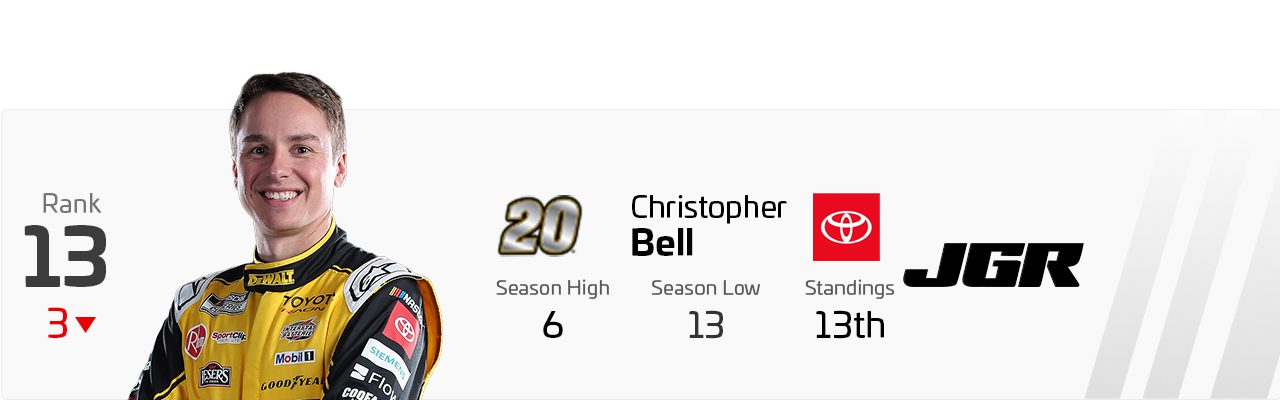
Analysis: Bell’s Texas race was brutal, mostly because it looked so good before it went bad … like much of his season in general so far, typically through no fault of his own. He led 22 laps and was battling Hamlin for the lead when Todd Gilliland’s spin clipped him and sent the No. 20 hard into the wall, leaving Bell last for the day and dropping him four spots in the standings. Watkins Glen is arguably the best possible place for him to stop the bleeding, because his track record there is excellent: five starts, two top fives, four top 10s and a series-best 6.8 average finish. The speed is not the concern; the concern is how many more weeks like this he can absorb before the season starts looking unrecoverable from a points perspective.
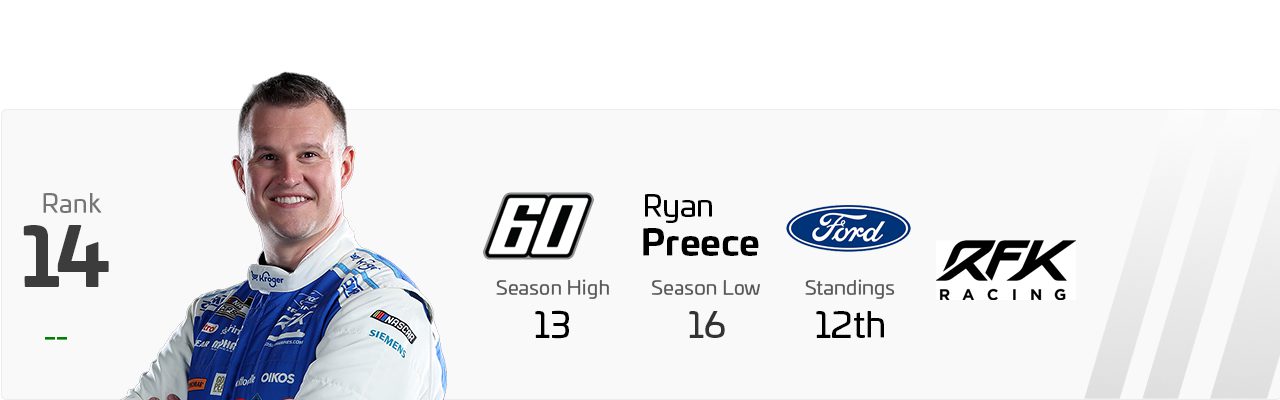
Analysis: Preece didn’t have a headline Texas race, but 14th with fifth-place Stage 2 points is exactly the kind of day that keeps him comfortably inside this group as he still searches for a first Cup Series win. He’s now 12th in the standings, which remains one of the more quietly impressive developments of the season as we begin to hit the meat of the schedule. Watkins Glen is more of a prove-it spot, with one top 10 and a 20.6 average finish in five starts. The RFK speed has been there more weeks than not, but this is a track where Preece probably needs strategy, execution and a little attrition to keep the run going.
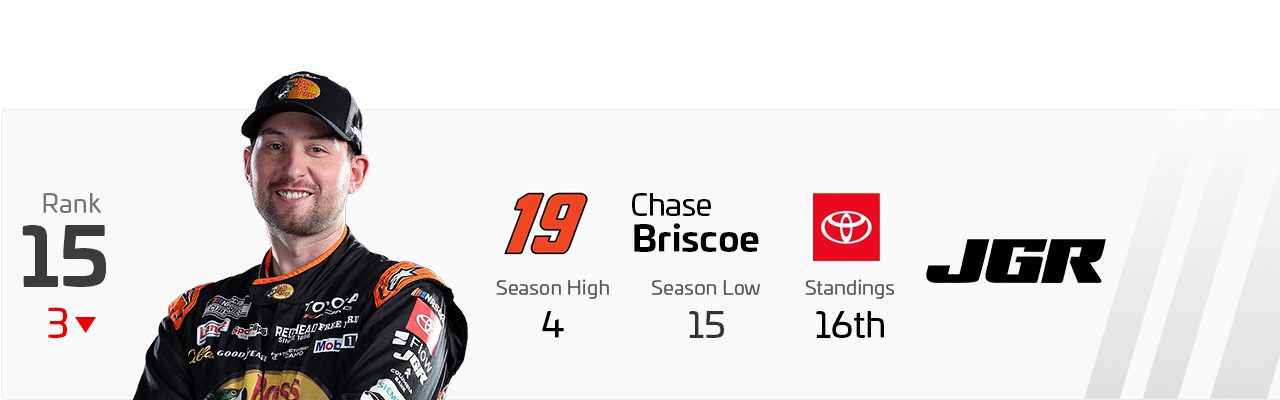
Analysis: Briscoe’s Texas day started with promise — he led four laps, scored Stage 1 points and was part of the early JGR strength as one of the race favorites — but it turned into a 23rd-place finish after errant pit-road contact, loss of track position and an eventual lap-down result. That’s been too much of the No. 19 season so far: flashes, then mess. Watkins Glen gives him a better runway, with one top five, three top 10s, 13 laps led and a 16.0 average finish in five starts. He’s only seven points above the cutline, though, so “solid” probably isn’t going to be enough for much longer.
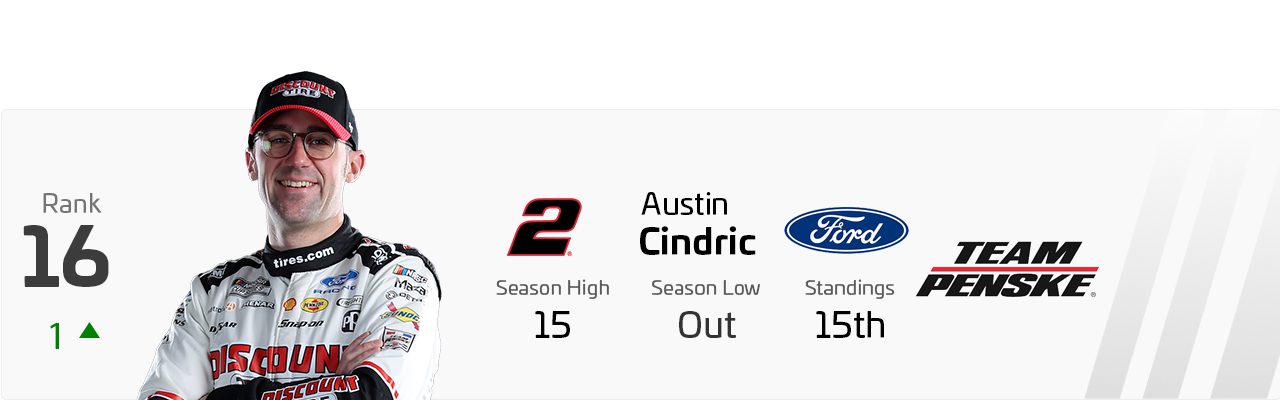
Analysis: Cindric landed 15th at Texas, which is about where this team has lived since an uptick in mid-March, which is useful enough to stay afloat, but not loud enough to move the conversation into title talk just yet. He did gain nine points on the cutline, but he’s still only 13 points to the good. The Glen is interesting, though, because his Cup numbers have borne out his road-racing background there with four starts, one top 10, a 10.8 average start and a 13.8 average finish. If there’s a week for Cindric to look a little more like the polished version of himself, this is it.
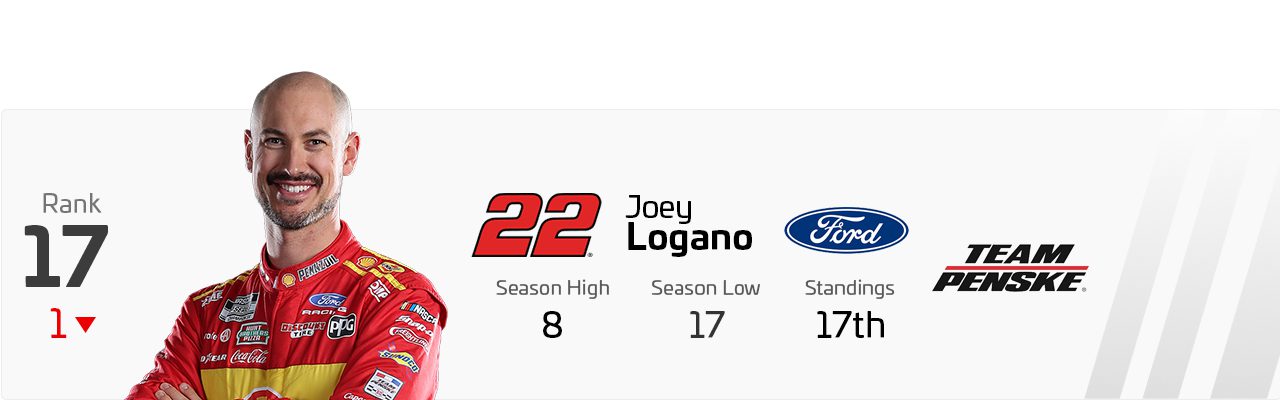
Analysis: Logano’s spiral continued at Texas in the most annoying way possible, with heavy pit-road damage after Cole Custer slowed to avoid Ty Gibbs, ending the No. 22’s day after 95 laps … after he just narrowly and miraculously avoided an on-track collision. He finished 37th, scored one point and fell seven points below the cutline. That said, Watkins Glen has been good to him historically — one win, four top fives, seven top 10s and a 15.6 average finish in 16 starts — but history only matters if the present stops sputtering.
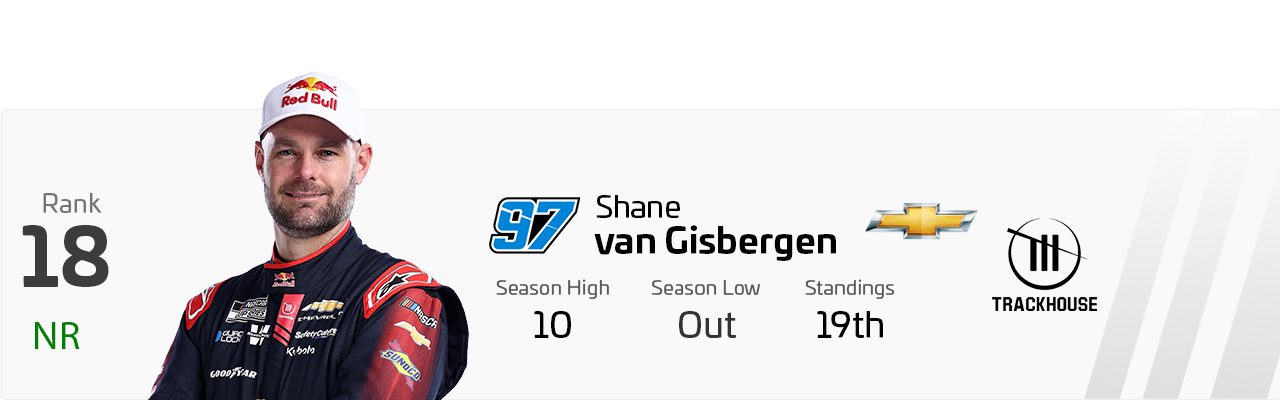
Analysis: SVG was quiet but solid at Texas, finishing 17th and gaining a few points on the cutline, but he can expect to be the center of attention this weekend. Already looking for his third top-two finish in what will be his third Watkins Glen start, last year’s defending winner should be able to make his mark and begin his ascent up the standings this weekend. The field has every reason to be concerned.
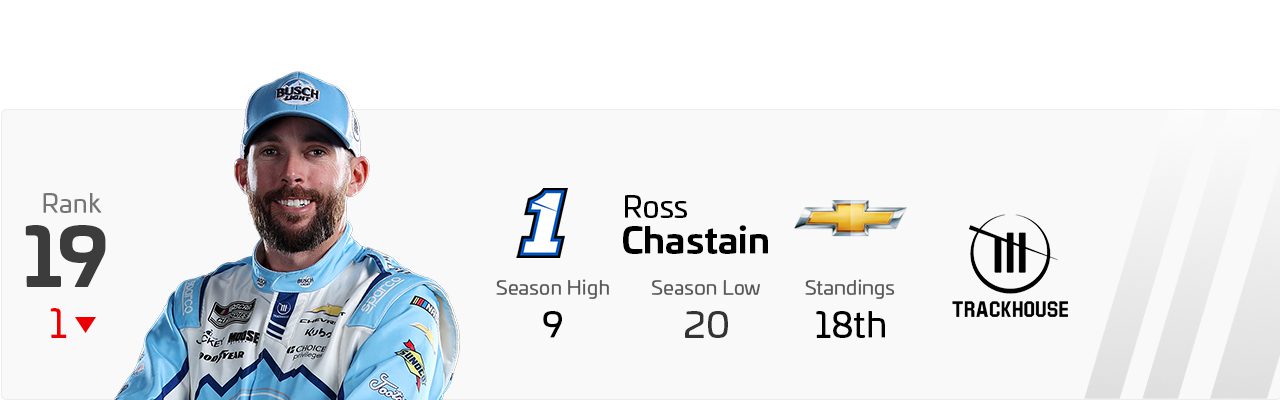
Analysis: Chastain finished 26th at Texas after a speeding penalty during green-flag stops knocked him backward, continuing a stretch where the No. 1 just hasn’t felt all that present. He’s now 26 points below the cutline, which is getting deep early for a driver and team used to being much more central to the weekly conversation. Watkins Glen at least offers some reasons for optimism, with one top five, two top 10s, a pole and 51 laps led in seven starts. But a 17.7 average finish there also tracks with the larger issue: the flashes are still there, but the sustained results are not.
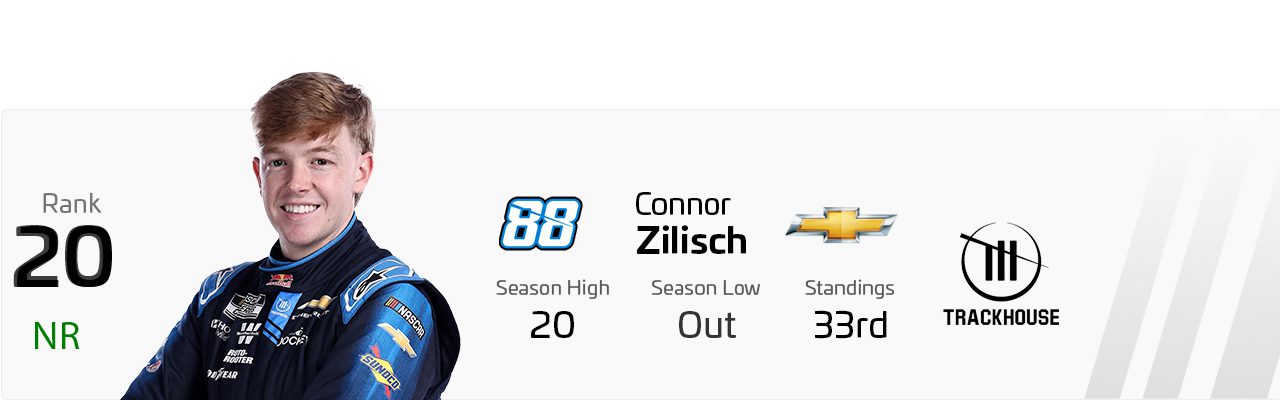
Analysis: Aaand he’s back. Zilisch’s 16th-place run at Texas was the kind of result that matters more than it looks like, marking both his best qualifying effort of the season and his best Cup finish on an oval. For a rookie still building a full Cup résumé, that’s a real step forward, especially with the weekend ahead. The Watkins Glen outlook is even stronger, considering he won the O’Reilly Auto Parts Series race there from the pole in both 2024 and 2025. There’s a high likelihood Zilisch earns his first real Cup Series moment this weekend.
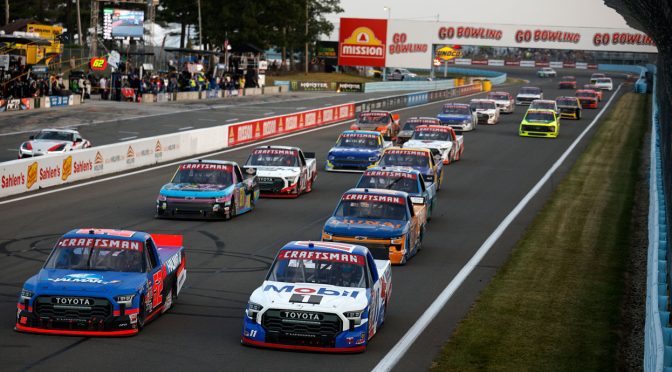
The NASCAR Craftsman Truck Series returns to New York for the second consecutive year, with Watkins Glen International on tap for Friday (4:30 p.m. ET, FS1, NASCAR Racing Network Radio, SiriusXM NASCAR Radio).
The event will mark the eighth time the Truck Series has raced at the 2.45-mile road course. The contest is the eighth points-paying event of 2026 and the second road-course event of the season.
Toni Breidinger will drive behind the wheel of the No. 20 McAnally-Hilgemann Racing Chevrolet, a new driver development entry that will debut this weekend. Five full-time NASCAR Cup Series regulars will additionally take part in the event: Shane van Gisbergen (No. 4 Niece Motorsports Chevrolet), AJ Allmendinger (No. 25 Kaulig Racing Ram), Ross Chastain (No. 45 Niece Motorsports Chevrolet), Connor Zilisch (No. 71 Spire Motorsports Chevrolet) and Carson Hocevar (No. 77 Spire Motorsports Chevrolet).
Thirty-eight race trucks are entered into this weekend’s event at the 2.45-mile road course.
The NASCAR Cup Series returns eastward to New York on Sunday at Watkins Glen International (3 p.m. ET, FS1, HBO Max, MRN Radio, SiriusXM NASCAR Radio).
Shane van Gisbergen is the defending winner. The race is the 12th points-paying contest of the 2026 season and the second road-course contest of the campaign.
Katherine Legge returns to Cup Series action to drive the No. 78 Live Fast Motorsports Chevrolet. The Guildford, England, native compiled seven Cup starts in 2025, including one at The Glen.
Thirty-eight cars are entered into this weekend’s event at the 2.45-mile road course.