Joe Gibbs Racing driver resting comfortably in hospital

RELATED: Ragan, Jones to sub for Kyle Busch at Atlanta | Drivers wish Kyle Busch well

Kyle Busch underwent successful surgery on his left foot Wednesday in Charlotte, according to a statement released by Joe Gibbs Racing.

FULL SERIES COVERAGE

Latest news
Standings
Schedule

The team said that the surgery on Busch’s left mid-foot fracture was performed by Dr. Robert Anderson of OrthoCarolina. The NASCAR Sprint Cup Series driver is resting comfortably and will remain hospitalized for observation.

Busch suffered the foot injury as well as a compound fracture of his right lower leg in a crash in Saturday’s XFINITY Series Alert Today Florida 300 at Daytona International Speedway. The accident forced him out of the season-opening Daytona 500, and his No. 18 Toyota Camry was driven by Matt Crafton.

On Tuesday, Busch was released from Halifax Medical Center in Daytona Beach, Florida, where he had surgery on his right leg, and he was transported home to Charlotte.

The team announced on Tuesday that David Ragan will serve as interim driver in place of injured Busch for the next several weeks beginning this weekend at Atlanta Motor Speedway in Sunday’s Folds of Honor QuikTrip 500 (1 p.m. ET, FOX). Erik Jones will sub for Busch in the No. 54 car in the XFINITY Series’ Hisense 250 (Saturday, 2 p.m. ET, FOX Sports 1).

Samantha Busch tweeted about her husband’s surgery.

MORE:

READ: Latest
 NASCAR news

PLAY: Sign up
 for Fantasy Live

WATCH: Latest
 NASCAR video

FOLLOW LIVE: Get
 RaceView today

Unapproved left-side driver heat shield discovered

Play: NASCAR Fantasy Live

RELATED: Official NASCAR news release

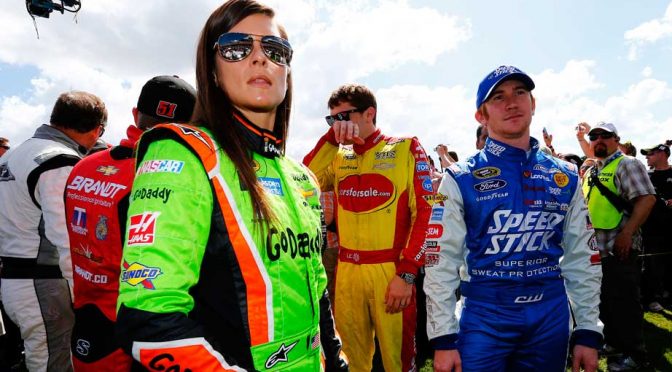
NASCAR officials issued a written warning Wednesday to the Stewart-Haas Racing No. 10 Chevrolet team driven by Danica Patrick in the NASCAR Sprint Cup Series after a rules violation found at Daytona International Speedway.

FULL SERIES COVERAGE

Latest news
Standings
Schedule

Officials discovered an unapproved left-side driver heat shield during opening day inspection at the 2.5-mile track on Feb. 13. According to an official NASCAR release detailing Section 20.11.2.2.2.1.b in the NASCAR Rule Book, "the outer exterior exhaust heat shield panel must follow the horizontal surface plane of the left side floorboard forward section to the bottom edge of the left side toe board."
 
The infraction also fell under the heading of the rule book’s Section 12-1: "actions detrimental to stock car racing."
 
Patrick is beginning her third full season in the Sprint Cup Series, and her first full campaign with Daniel Knost as crew chief. The former team engineer was promoted to crew chief of Stewart-Haas’ No. 41 team and driver Kurt Busch last season, then switched to Patrick’s No. 10 entry for the final three races of 2014.
 
Wednesday’s written warning sits on the lowest end of the spectrum of penalties detailed in NASCAR’s deterrence system, which was implemented ahead of the 2014 season. Warnings are detailed in Section 12.5.3.1 of the rule book, which reads in part:
 
"When appropriate, NASCAR will issue a Warning instead of a Penalty for certain types of very minor, first-time infractions. While the Warning is primarily for the information of the Member or team affected, NASCAR will also advise the garage that a warning has been issued to that Member or team. However, NASCAR will generally not specify or detail the infraction publicly unless it pertains to something new or unforeseen that the rest of the garage would benefit by knowing. Warnings are not appealable."
 
Patrick finished 21st in Sunday’s season-opening Daytona 500.

MORE:

READ: Latest
 NASCAR news

PLAY: Sign up
 for Fantasy Live

WATCH: Latest
 NASCAR video

FOLLOW LIVE: Get
 RaceView today

Keep tabs on the activity at Atlanta Motor Speedway

This week brings the NASCAR Sprint Cup Series, the NASCAR XFINITY Series and the NASCAR Camping World Truck Series to Atlanta Motor Speedway.

The Sprint Cup Series Folds of Honor QuikTrip 500 will be held on Sunday, March 1 at 1 p.m. ET with coverage on FOX. 

The XFINITY Series Hisense 250 is on Saturday, Feb. 28 at 2 p.m. ET with coverage on FOX Sports 1.

The Camping World Truck Series Hyundai Construction Equipment 200 is on Saturday, Feb. 28 at 5:30 p.m. ET with coverage on FOX Sports 1.

For more information on track times, press conferences and GarageCam, you can check out the full weekend schedule.

We know you may not have the time to watch the race action without any interruptions, so if you’re on the go, here’s how to keep up at Atlanta.

FULL CHASE COVERAGE

Chase hub page
Chase Grid games
#MyChaseNation

NASCAR.com’s live Sprint Cup Series leaderboard, XFINITY Series leaderboard and Camping World Truck Series leaderboard update in real-time and offer constant text updates of lead changes, cautions, strategies, strong runs and everything in between. From the NASCAR Sprint Cup Series leaderboard, fans can also access live standings. On the go? Download the NASCAR Mobile app to follow the leaderboards live from your device.

Lap-by-Lap will keep you caught up even if you can only take a peek here or there. Check in to read back through all the laps you’ve missed, or keep an eye on the feed for real-time race updates.

We’ll also send race updates via Twitter through the official @NASCAR and @NASCARStats handles.

RaceBuddy will have enhanced views and coverage for the Sprint Cup Series and for most XFINITY Series races with 10 HD live race views, including six in-car cameras as well as a backstretch camera, pit road camera and more.

Haven’t tried RaceView yet? If you sign up, you’ll get virtual video of cars on the track from various angles and hear what your favorite team is saying over the radio in both the Sprint Cup and select XFINITY Series races. Use it as a second screen or as your only screen. Just want to scan the radios? You can have that too with Scanner (formerly RaceView Audio). On a mobile device? Get RaceView Mobile here.

If you want to be more involved in the on-track action, you can manage your fantasy team on NASCAR.com and follow your team’s performance in NASCAR Fantasy Live. Mobile users can also download NASCAR Connect, a game from OneUp Sports that allows users to play other fans with race predictions for some off-track competition while drivers battle it out on the track.

Live Press Pass video streams will keep the NASCAR action rolling even after the winner goes in and out of Victory Lane. Catch interviews with the top finishers and series champions immediately following the checkered flag for all three national series events, and stay tuned to NASCAR.com throughout the week for the latest news.

Joe Nemechek taking over at Atlanta while Ragan subs for Kyle Busch

Play: NASCAR Fantasy Live

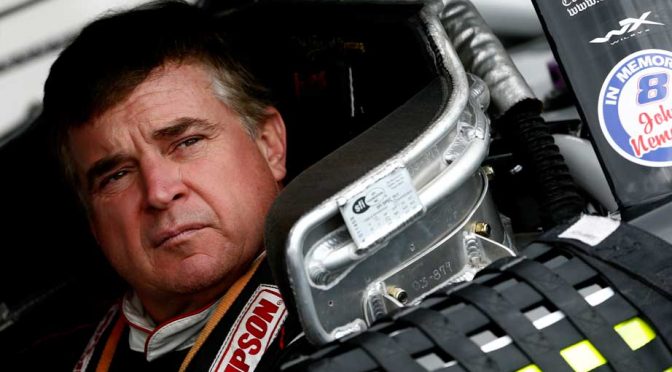
Front Row Motorsports announced Wednesday that Joe Nemechek will drive its No. 34 Ford in this weekend’s NASCAR Sprint Cup Series race at Atlanta Motor Speedway.

FULL SERIES COVERAGE

Latest news
Standings
Schedule

Nemechek takes over for David Ragan, who has joined Joe Gibbs Racing as the interim driver of the No. 18 Toyota for the injured Kyle Busch. Ragan had driven the Bob Jenkins-owned No. 34 for the last three seasons, plus turned in a 17th-place finish for the team in Sunday’s Daytona 500.

The announcement pairs the Front Row team with a synonymous driver in Nemechek, who earned the nickname "Front Row Joe" for his qualifying successes during the height of his career.

Nemechek’s appointment is the latest in a series of driver developments since last Saturday’s crash indefinitely sidelined Kyle Busch, who suffered multiple lower-leg injuries in the NASCAR XFINITY Series opener. Matt Crafton, two-time Camping World Truck Series champion, was a last-minute fill-in for Busch in the JGR No. 18 for the Daytona 500, and Ragan’s move as Busch’s newest substitute is expected to last several weeks. 

Nemechek, the 1992 champion of what is now the NASCAR XFINITY Series, has four premier series wins in 666 career starts. The 51-year-old driver competed in just six Sprint Cup races last year, focusing on his NASCAR Camping World Truck Series efforts with his son and fellow team driver, John Hunter Nemechek.

Nemechek will be required to qualify the No. 34 car for the 43-car field in Sunday’s Folds of Honor QuikTrip 500 (1 p.m. ET, FOX) on the basis of speed.

MORE:

READ: Latest
 NASCAR news

PLAY: Sign up
 for Fantasy Live

WATCH: Latest
 NASCAR video

FOLLOW LIVE: Get
 RaceView today

From weather to dust-ups to surprise winners, Daytona had it all

Play: NASCAR Fantasy Live

"One race down and 35 to go" might be an oversimplified assessment as NASCAR turns the page from Daytona to Atlanta. Digging into the last two week’s complexities reveals much more to the 10 crazy days of Daytona’s Speedweeks than just one race.

FULL SERIES COVERAGE

Latest news
Standings
Schedule

The better part of a Daytona fortnight lulled us into a false sense of normalcy from the beginning, instilling the faulty notion to the masses that the run-up to the 57th annual Daytona 500 might be a smooth sail. Those waters turned choppy in a hurry, and near the end, developed into a full-fledged storm.

Never failing to keep us on our toes, here are 10 takeaways from one of the most hectic Daytona Speedweeks in memory:

1. NASCAR’s new pit-road officiating technology works, and teams seem to get it. The black-and-white nature of deciding pit-road penalties got its first trial run in race conditions during the Sprint Unlimited before taking effect in NASCAR’s most prestigious event. While the forecast seemed to point toward a drastic upswing in infractions in the 500-miler, the penalty sheet was proportionate to past years — 29 total violations were flagged Sunday, compared to 31 in the 2014 Daytona 500, 28 in 2013 and 37 in 2012. Time will tell, but based on early reviews, the technology doesn’t appear to seriously impact the ebb and flow of race-day procedures.

2. There’s no timetable for either Busch brother to return. With Kyle Busch out with multiple injuries and Kurt Busch having exhausted the avenues of appealing his indefinite suspension, neither brother may return to the driver’s seat for many moons. Kyle Busch faces an intense road of medical treatment and rehabilitation before he can even think about belting back into the Joe Gibbs Racing No. 18; Kurt Busch’s discipline for violating the NASCAR behavioral code also throws the Stewart-Haas Racing No. 41 ride into indefinite limbo. That both developments transpired within a 36-hour span only added to this Speedweeks’ frantic nature.

3. Tracks must expand their use of impact-absorbing barriers. Auto racing is never going to be 100 percent safe, but plenty of technological advances over the last several years have helped move that number higher and higher. Without safer car construction and the development of the HANS device safety restraints, Kyle Busch’s injuries may have been far more severe. But had the bare, concrete wall inside Daytona’s frontstretch been better protected — by the SAFER system, tire barriers, anything — Busch may have walked away under his own power. The circumstances prompted a renewed call to action for race-track safety; in this instance, better late than never will have to suffice.

4. Competition in the XFINITY Series is now wide-open. Sprint Cup Series stars double-dipping into the XFINITY Series has long been a source of debate and derision, with Kyle Busch — a 19-time XFINITY Series winner over the last two seasons — often cited as Exhibit A in the argument against it. While no one is openly rejoicing over the circumstances, the frequent moonlighter’s time on the shelf equals opportunity for the series’ regulars, who now stand a far better chance at breaking into Victory Lane. It also means opportunity for NASCAR Next driver Erik Jones, who may gain valuable seat time in one of the series’ best rides.

5. Nothing small-time about Daytona’s neighboring short tracks. While New Smyrna Speedway and Volusia Speedway Park host events on a much smaller scale compared to the 2.5-mile centerpiece of the Daytona racing scene, the racing is no less competitive. While one plies its wares on asphalt and the other on dirt, both tracks should be applauded for keeping the sport’s grassroots tradition alive on — amazingly — a nightly basis during Speedweeks.

6. More changes likely coming to group qualifying format at restrictor-plate tracks. Major pileups in Coors Light Pole Qualifying for both the Sprint Cup and XFINITY Series at Daytona surely made for drama, but foremost, the crashes cost teams precious time and money in their preparations for season openers. The argument could be made that race officials don’t cause crashes, drivers do, but the fact remains that the knockout-style qualifying system simply hasn’t translated as well at restrictor-plate tracks like Daytona and Talladega as it has at other venues. More tweaks could be in the works, but so many fine-tuning alterations have already been made to the format that starting over with a clean slate may be the best resort.

7. Weather whims make for a finicky Florida February. While last week’s cold snap in the Sunshine State didn’t compare to the sub-freezing conditions the rest of the nation faced, it made for challenging conditions for both teams and hardy fans. After practicing and qualifying in frigid weather for the bulk of the week, teams welcomed the warmth of Daytona 500 race day but cursed the ever-changing handling challenges brought on by the climate fluctuations. Likewise, fans wearing gloves and winter hats for Thursday night’s qualifying races were in short sleeves in the grandstands by Sunday’s 500.

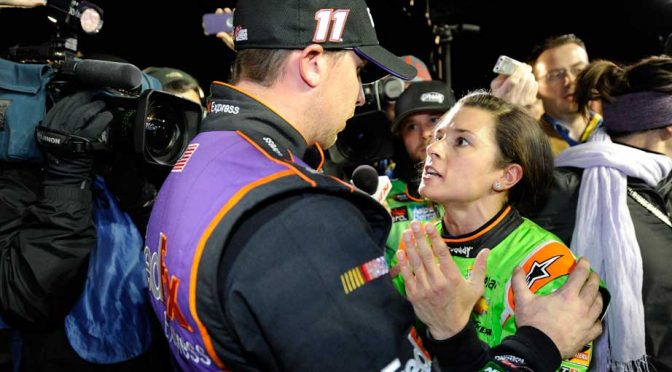
8. Will post-race tensions remain high? Last year’s late-season rise of post-race confrontations and disagreements seemed to carry over during Speedweeks, with a pair of high-profile dust-ups — Kevin Harvick vs. Joey Logano after the Sprint Unlimited, and Denny Hamlin vs. Danica Patrick after their Budweiser Duel qualifying race. It’s likely too early to call the Speedweeks squabbles a trend, but the pair of arguments — which never crossed the line from verbal to physical — still kept the tensions chippy.

9. Restrictor-plate tracks remain the great equalizer. Having a strong car can often tip racing luck into a certain team’s favor, but competing at Daytona or Talladega regularly deals out a fickle hand in all three NASCAR national series, pushing the sport’s parity to even greater heights. If anyone had the Tyler Reddick-Ryan Reed-Joey Logano trifecta at Daytona, it’s time to go play the lottery.

10. The Chase currently has seating for a table of one.
Joey Logano’s season-opening victory virtually locked him into the Chase for the NASCAR Sprint Cup playoff field. It’s a regular-season bonus that caused team owner Roger Penske to pump his fist upon being reminded of the perk. "We’re going to have fun for 25 weeks," Penske said. If Logano and the No. 22 team approach last year’s performance level, the venerable Captain could be celebrating for an additional 10-week stretch.

The opinions expressed are solely those of the author.

MORE:

READ: Latest
 NASCAR news

PLAY: Sign up
 for Fantasy Live

WATCH: Latest
 NASCAR video

FOLLOW LIVE: Get
 RaceView today

Why group has stayed together since FOX began its NASCAR telecasts

Play: NASCAR Fantasy Live

DAYTONA BEACH, Fla. — The schedule has changed, drivers and crew chiefs have come and gone, and the sport has continued to evolve.

But one thing has remained nearly untouched since FOX Sports began airing coverage of NASCAR races in 2001 — the people standing in front of the cameras.

When FOX Sports came on the air this past Sunday to begin its coverage of the season-opening Daytona 500, the principals in the booth were lead announcer Mike Joy and analysts Darrell Waltrip and Larry McReynolds. Downstairs, roaming pit road, was Matt Yocum.

"We set it up from the very beginning to be (just like a team) — Mike’s the owner, Larry’s the crew chief and I’m the driver."

— Darrell Waltrip

Just as they were 15 years before, when it all began.
 
"I don’t think there’s another three-man booth in network television sports that’s been together as long," said Joy, who also anchored the first live Sprint Cup telecasts on ESPN (1981) and TNN (’91). "It’s all based on trust.
 
"We went in with a mutual friendship and respect for each other and for what each of us could bring to the table."
 
Joy brought a wealth of experience, having worked races from pit road and the announcer’s booth for both radio and television.
 
Waltrip, a three-time champion as a driver in NASCAR’s premier series, brought the knowledge of what it’s like behind the wheel for a driver in just about any given situation.
 
And McReynolds, who won 23 times — including a pair of Daytona 500 victories with Davey Allison and Dale Earnhardt — provided the perspective of the crew chief.
 
"The three of us have very good chemistry," said Waltrip, who spent Monday after the non-points Sprint Unlimited race at Daytona studying tape of the race in his motorcoach.
 
"We set it up from the very beginning to be (just like a team) — Mike’s the owner, Larry’s the crew chief and I’m the driver. That’s how we approached it; to this day, that’s how we looked at things. Mike … sets the stage and Larry and I react to it."
 
They’ve been successful, he said, "because we’re not outsiders. We grew up in the sport."
 
It’s been pointed out, McReyolds said, that "the three of us are so different that we’re alike, if that makes sense.
 
"An example we were given, and it’s spot-on," he said. "I’m the guy that’s going to be in the booth an hour before (we need to be). Darrell’s going to be on time; he’s not going to be late, he’s not going to be early but he’s going to be there. And Mike’s going to come in at the last minute.
 
"But at the end of the day, when that light comes on and the mics are hot, there we are."
 
When David Hill, former chairman and CEO of FOX Sports, began assembling his group for NASCAR on FOX after acquiring a significant portion of the television rights in ’99, he knew he wanted Waltrip in the booth. Waltrip, however, was still competing as an owner/driver in the Sprint Cup Series at the time.
 
"I’ve always felt that it didn’t matter how important Darrell was in the 17 car to NASCAR, he’s become far more important to them now," Hill said, taking a break from overseeing a recent production of "American Idol" in Los Angeles.
 
"He’s kind of like a missionary with enthusiasm; he’s like the Billy Graham of NASCAR."
 
Hill said the network wanted the makeup of the NASCAR broadcast booth to reflect the successful pairings it had enjoyed with its NFL broadcasts. Instead of typical, anchor-heavy teams with less input from the analysts, FOX wanted the analysts to be a major focus of the broadcast team.
 
"Working for David Hill was like working for Junior Johnson," Waltrip said. David is the mastermind of putting panelists together, understanding how to do a sporting event. He’s unbelievable. He was really the one that drove this whole thing. Eric Shanks (FOX Sports President and COO) is the same way, a young guy that loves the sport."
 
With Waltrip in the fold, Hill set about assembling the rest of the broadcast team. Joy had the experience, and Hill knew his calm delivery and knowledge of the sport would be reassuring to viewers while keeping newcomers Waltrip and McReynolds on point.
 
"In a sport like this with so many moving parts, I really think that between FOX’s experience at doing huge sporting events, including the Super Bowl and our collective experience, those of us that were NASCAR insiders and the people that had both broadcast and produced NACAR on TV, I think we were pretty well prepared," Joy said of that first season. "I think we had a good idea of what to expect.
 
"I went in knowing that I was going to get really good opinionated analysis from Larry and Darrell, no doubts in that department."
 
Like Waltrip, McReynolds was still on the "other" side of the sport when Hill approached him about becoming a part of the team. Although he had worked on pit road occasionally for non-Sprint Cup events, McReynolds thought long and hard about the opportunity to step away from the car and move in front of the camera.
 
"I was a little concerned that if I didn’t do it, knowing it would be a very small box of people that were going to have these roles in our sport, that I would probably always look back over my shoulder and say, ‘What if?’ " McReynolds said.
 
"They were only offering me a two-year deal so I felt like if I went and did it and I didn’t enjoy it, or they didn’t enjoy me, I could go back (to being a crew chief). It was a hard decision. …
 
"I still miss being a crew chief, but I think working with (my son’s) racing has helped fill that void. And honestly when I go in that booth, I feel like I’m crew chief for all 43 teams; I just don’t have to take the heat for a bad call made on Sunday."
 
While the trio upstairs has remained unchanged, there have been minor moves among those who roam pit road keeping tabs on the action for the network. Yocum, however, has been there from the beginning.
 
"We all play off each other; everyone very generous," he said. "It’s like playing Air Force football when you were a kid. Someone’s about ready to get you and you chuck the ball to your teammate and they run and then they pitch it to someone else.
 
"It’s been that way really for 15 years now."
 
Being out in the elements presents its challenges — race day can break cold and wet or incredibly hot, depending on the time of year and venue. But Yocum said he’s perfectly content to remain downstairs.
 
"I would never want to miss out on being around the folks in the garage or going over the wall," he said. "To me that’s my culture, that’s my family. I just feel like every race weekend I’ve hit the Powerball. …  
 
"I’m just humbled and honored to be a part of such a special group for so many years."

MORE:

READ: Latest
 NASCAR news

PLAY: Sign up
 for Fantasy Live

WATCH: Latest
 NASCAR video

FOLLOW LIVE: Get
 RaceView today

Chat with race fans during the Atlanta tripleheader

MORE:

READ: Latest
 NASCAR news

PLAY: Sign up
 for Fantasy Live

WATCH: Latest
 NASCAR video

FOLLOW LIVE: Get
 RaceView today

The 1960s: Building tracks from Charlotte to Alabama

Play: NASCAR Fantasy Live

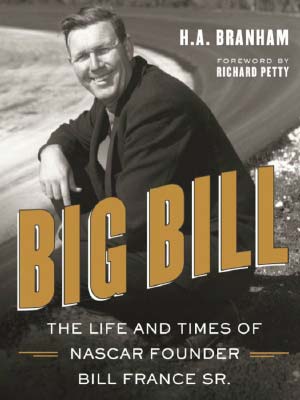
"Big Bill: The Life and Times of NASCAR Founder Bill France Sr." is the first official biography of the man who organized the sport. In the third of four excerpts that will appear over the next four weeks leading up to March 3, the publication date of the book, author H.A. Branham addresses France’s stand against the Teamsters and building Talladega Superspeedway.

RELATED: Big Bill Excerpt 2 on France building the Daytona International Speedway
RELATED: Big Bill Excerpt 1 on France’s induction into the NASCAR Hall of Fame

Curtis Turner, the hard-drinking, fast-driving black-hat hero, would forever be a good news-bad news proposition for Bill France Sr. He was daring. He was colorful. He was talented. He was also a pain in the ass.

And he was a pilot, giving him something in common with Bill Sr. But that road likely forked when stories surfaced about Turner landing his plane on a road near a liquor store, jumping out to go grab a bottle or two, and then getting back into the cockpit to take off again.

On the subject of his undeniable talent: Turner was credited with approximately 360 race victories in a variety of series, with 22 wins coming in 1956 in NASCAR’s short-lived Convertible Division and another 17 in NASCAR’s headlining Grand National Division. His biggest victory came in the 1956 Southern 500 at Darlington Raceway.

In 1960, Turner, partnered with Bruton Smith, sought to capitalize on the sudden appeal of bigger race tracks by building Charlotte Motor Speedway. In ’61, Turner was tossed out as the track’s president via a coup of sorts staged by the facility’s board of directors. To get back in, Turner needed money he didn’t have. He approached the Teamsters Union, which could provide large loans, albeit with significant interest charges coming down the pike. Turner’s need for a loan coincided with Teamsters president Jimmy Hoffa’s quest to unionize professional sports in the United States. Turner got the loan; as part of the deal he was required to recruit drivers to a union — the Federation of Professional Athletes, which promised drivers more money, a pension, and insurance. Drivers thought this sounded good, and overdue.

Bill Sr., suffice to say, did not approve.
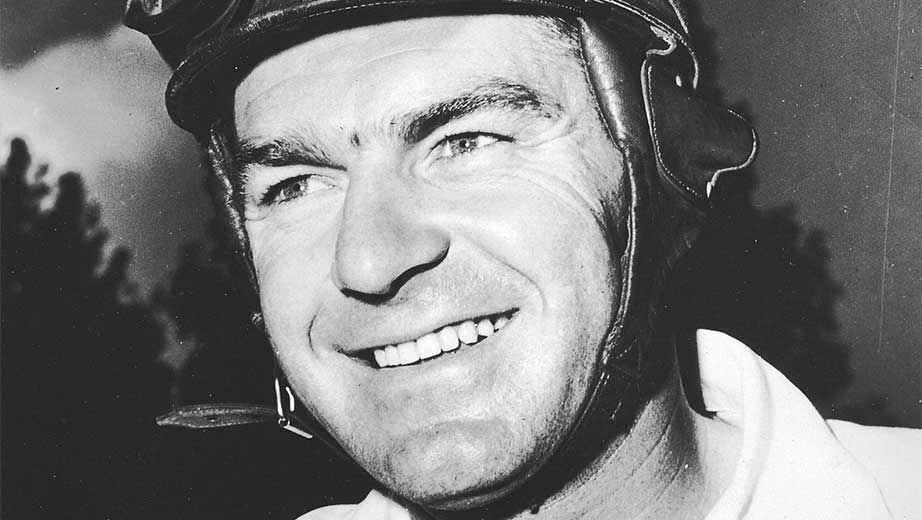

NASCAR Hall of Fame nominee Curtis Turner was known as the ‘Babe Ruth of stock car racing’

To battle the initiative he went to the top, talking his way into a meeting with the attorney general of the United States, Robert Kennedy (a pain in the ass to Jimmy Hoffa in those days of Camelot). A young attorney named John Cassidy — Bill Sr.’s "inductor" at the NASCAR Hall of Fame in 2010 — worked in the Department of Justice for RFK. He recalls the day of Bill Sr.’s visit as if it was yesterday. It actually was 1961, only months into the Kennedy administration.

How did Bill Sr. get a meeting with Kennedy in the first place? With the passage of years, Cassidy isn’t absolutely certain, but he thinks the access likely can be attributed to Bill Sr.’s relationship with the controversial South Carolina Democratic congressman Mendel Rivers, who stood alongside whatever hawkish tendencies the Kennedys had but firmly against even the slightest move toward improved civil rights. Much like Bill Sr.’s friendship with Alabama Governor George Wallace, his relationship with Rivers benefited from the relative lack of media attention accorded NASCAR at the time.

"The Teamsters were trying to organize the drivers," Cassidy said, "because they figured if they could control them and all the teams from motorsports  … they had set up a professional athletes division of the Teamsters that was heavily committed to organizing the NBA, the NFL, and motorsports."

Motorsports — that especially made sense. The Teamsters unionized truck drivers. Auto racing was a sport that truck drivers loved.

"The Teamsters knew what they were doing," Cassidy said.

"Senior knew he was in the battle of his life, and he was really viewing it as a battle for survival because if he lost the battle [over unionization] he would have lost control of NASCAR. One of the keys to Senior’s thought process was always a straight-line approach. How to solve the problem? One way was to attack Hoffa, who Senior believed to be corrupt. What better place to go for help than the U.S. Department of Justice? It just so happened that he and Bobby Kennedy were on the same wavelength."

With Cassidy advising at the behest of RFK, Bill Sr. also enlisted the help of two of his valued lieutenants, Pat Purcell and Ed Otto, to collectively beat back the beast of the Teamsters. It was a multi-level response to the threat, and it started in dramatic fashion when Bill Sr. imposed a lifetime ban from NASCAR on Turner, former champion Tim Flock, and Fireball Roberts, three central figures pushing for unionization. Turner’s involvement had especially infuriated Bill Sr. because it included an additional push to have betting at race tracks. After all he had done to cleanse stock car racing of its unsavory past, Bill Sr. was not about to let NASCAR regress.

Roberts was reinstated when he pulled out of the fledgling union after a long, Scotch-fueled come-to-Jesus discussion with Purcell. Other drivers defected following an impassioned Bill Sr. speech prior to a race in Winston-Salem, North Carolina, in which he appealed to the drivers’ basic values. "Auto racing," Bill Sr. told them, "is one of the few sports which has never had a scandal. Do you want to be the ones who changed that?"

Despite the defections, Flock and Turner stood their ground. So did Bill Sr., which meant they were gone from NASCAR — permanently. They tried to have their bans overturned repeatedly in the courts, to no avail. In NASCAR’s corner during these legal battles was a precedent dating to 1951, when Otto had helped a Long Island race track overturn a judgment resulting from the deaths of two drivers. The state of New York originally decreed that the drivers were in effect race track employees; the reversal placed the drivers in the category of independent contractors. That distinction provided an additional roadblock to unionization in NASCAR’s case; the drivers were not employed by NASCAR but rather by the individual teams.

The footnote: Bill Sr., pressured by track promoters in 1965, would grudgingly end up lifting the bans on Turner and Flock. Turner tried a half-hearted comeback. Flock stayed away for good.

 *     *     *    *
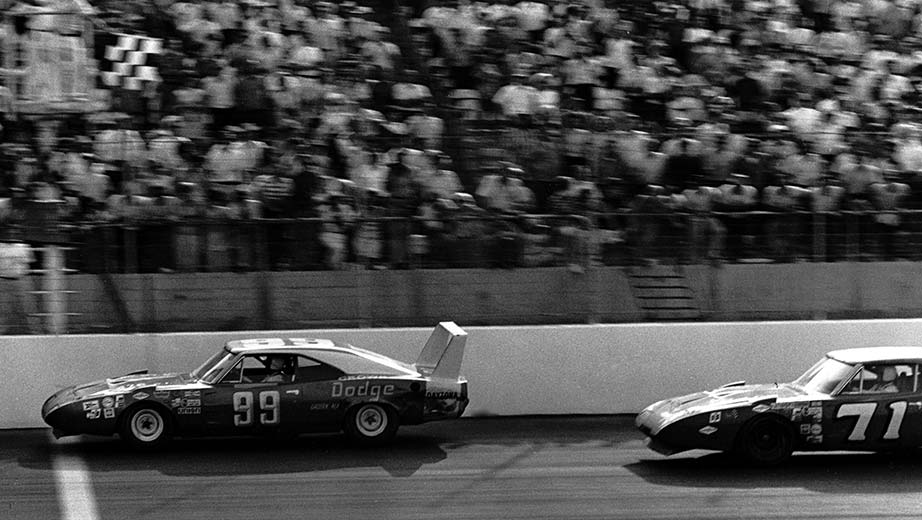

Richard Brickhouse takes the checkered flag to win the 1969 Talladega 500. Bobby Isaac, in the No. 71 car, was a lap down and finished fourth.

Daytona’s initial success and steady climb in relevance whetted Bill Sr.’s appetite for yet another project: a track that would be even larger and faster than Daytona, the world’s largest oval track. The fact that his proposed site was in the middle of nowhere was a slight obstacle, but Bill Sr. was accustomed to overcoming obstacles.

Talladega, Alabama, 50 miles east of Birmingham, 105 miles west of Atlanta. That was the site Bill Sr. chose for a 2.66-mile monster tri-oval with 33-degree banks — two degrees steeper than Daytona’s.

Ground was broken for Talladega on May 23, 1968, and that ground was on the site of the old Anniston Air Force Base, just outside the small burg of Lincoln, Alabama. Again, as with Daytona, it was a rush job, with the Moss-Thornton Construction Company of Birmingham the builder. The target date for the first race was September 14, 1969 — the 44th race on the 54-race Grand National schedule.

Amazingly, it was built in time to host one of the most historic weekends in NASCAR history, a confluence of events that served as a collective metaphor for the changing times surrounding the sport. Old was giving way to new. Alabama International Motor Speedway — the track’s name until 1989’s switch to Talladega Superspeedway — was definitely new. And for many drivers, it was absolutely frightening when tires started to fail at high speeds on the high banks.

And when the tires did start to balk, so did the drivers, with the specter of unionization resurfacing for the second time in the decade.

As it just so happened, earlier that season, drivers had semi-organized once more, forming the Professional Drivers’ Association (PDA), with Richard Petty as an especially tenuous president. The Talladega situation facilitated a coming-out party for the group.

Soon, talk of boycotting the very first Talladega event was in the air — rapidly gaining momentum. The way the weekend transpired is well-documented:

The growing discontent among drivers; the laps run around the track by a then-59-year-old Bill Sr. and his son Bill Jr. in an attempt to assuage the drivers — an effort discounted as a publicity stunt, with the drivers pointing to the Frances’ lap times as being far under what they would be turning in actual race conditions; Bill Sr. telling the drivers that if they were scared they could feel free to go home; drivers enraged at that remark and leaving en masse; and LeeRoy Yarbrough, feeling his oats during the most successful season of his career, flat-out cold-cocking Bill Sr. in the jaw, putting an end to a tumultuous meeting in the garage.

The boycott proceeded, putting Bill France Sr. in a serious bind.

A boycott was one thing. A cancellation was something altogether different, and Bill France Sr. was not about to let that happen.

Bill Sr. pieced together a patchwork field of drivers who weren’t involved in the boycott plus others from the Grand American Division, which raced the day before the premier series event. And so, on September 14, 1969, a crowd of 64,000 gathered at the gigantic new facility, with many fans attending thanks to free tickets France dispensed. Richard Brickhouse — who withdrew from the PDA to take advantage of what he called a "golden opportunity" — won the first Talladega 500, the triumph coming despite "competition cautions" every 25 laps to enable teams to inspect and change tires if needed. Those cautions belied the fact that competition was fierce, with 37 lead changes, and transpired without a serious incident.
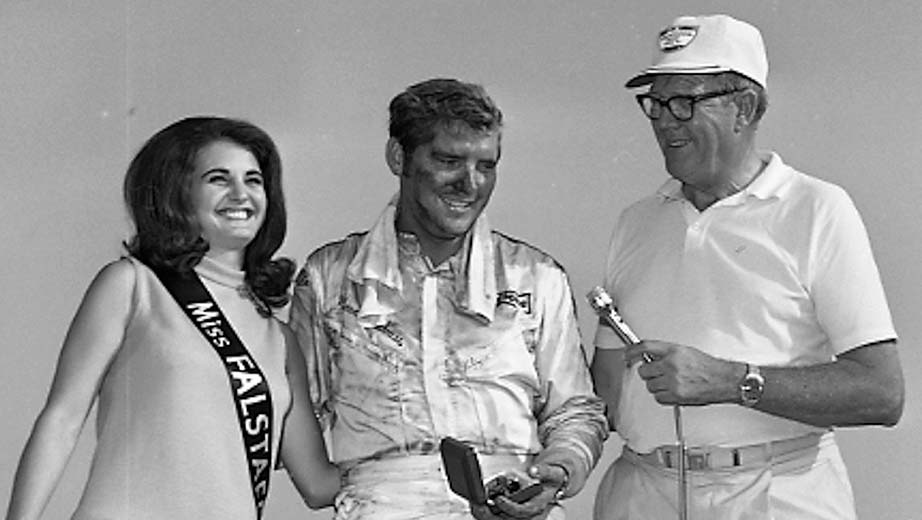

Bill France Sr. congratulates Richard Brickhouse in Victory Lane following the first premier series race in 1969 at Alabama International Motor Speedway, now known as Talladega Superspeedway.

Yes, by God, the race was run. The great Indy-car racer A.J. Foyt, who through the years became one of Bill Sr.’s closest friends in racing, was not surprised.

"I really admired that he told everybody to kiss his ass, that that race was going to run," Foyt said.

The end game, as far as racing, was that the drivers returned only four days — FOUR DAYS ! — later to compete in Columbia, South Carolina. Bobby Isaac won the Sandlapper 200, with Petty running second. And the following year, Bill France Sr. welcomed full fields to not one, but two Talladega events — April and August, both won by Pete Hamilton, also the Daytona 500 champion in 1970.

"Bill Sr. knew we had to go racing and we knew we had to go racing," Bobby Allison said. "We knew we didn’t want to have to go out and get newspaper routes or gas-station jobs, that’s for sure."

And so another end game was played and won, with memories left brewing in the heart and soul of Bill France Sr. Jousting over the unionization concept while having his authority challenged so severely did not sit well with the man who had started NASCAR. He had taken a hard hit, several hard hits: professionally, personally, and publicly. One newspaper headlined the United Press International report from the event as "Brickhouse Wins Talladega as Czar’s Empire Crumbles."

Twelve days after Richard Brickhouse became the answer to the ultimate NASCAR trivia question, Bill Sr. turned 60 years old.

It is likely that he felt much older.
18-year-old driver wanted more from strong Daytona run

Play: NASCAR Fantasy Live

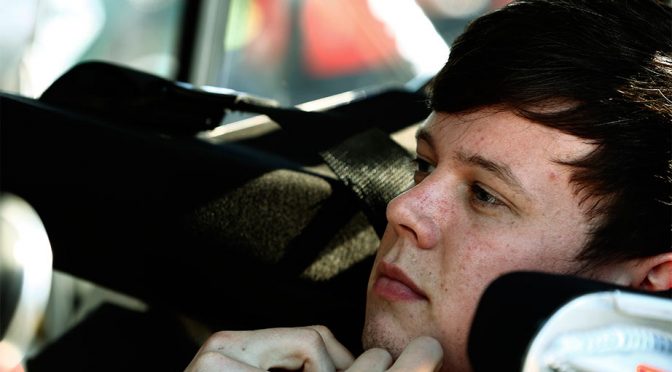
DAYTONA BEACH, Fla. — Erik Jones wrapped up his 2014 Camping World Truck Series campaign with his third win of the season, putting a stomping on the field to the tune of 114 of 126 laps led in the Lucas Oil 150 at Phoenix Raceway.

The 18-year-old Kyle Busch Motorsports driver then finished second in Friday night’s 2015 season-opening NextEra Energy Resources 250 at Daytona International Speedway, making a last-lap move to position himself for — albeit coming up just short of — the win.

Bookending seasons with an average finish of 1.5 in a pair of races?

Surely, any driver would take that. However, the highly-touted NASCAR Next wheelman wasn’t satisfied.

FULL SERIES COVERAGE

Latest news
Standings
Schedule

"I wish we could have won the race; that’s first off," Jones said on pit road following the race. "… It’s unfortunate for us to finish second any day, but it’s a good run for us. We just wanted to come in here and have a good day, solid day to start off the year.

"Second is a great start to the season and we did what we wanted to. We came in here and didn’t get wrecked and put ourselves in a position not to be making up all year."

That second-place finish was looking like a certain fourth for the latter chunk of the 100-mile event, as the Brad Keselowski Racing duo of race-winner Tyler Reddick and Austin Theriault had a lock on the 1-2 spots ahead of the field.

Jones said his final lap strategy was to lay back through Turns 3 and 4, hopeful that if Theriault ended up making a move on his teammate — which is what ended up happening — he could pull his No. 4 Toyota Tundra off both of them and attempt to make his way to the front.

"It worked up to second, but just couldn’t quite get to the lead," he said.

Give him one more lap and there’s a good chance he puts his truck in Victory Lane. Considering it was just Jones’ second career restrictor-plate race, there are still lessons to be learned from finishing a position lower than he’d prefer, particularly from his experienced team owner, who has been offering his sage advice to his young padawan.

"Just lots of listening. Lots of listening," Jones said. "Really talked to Kyle a lot about it last year before Talladega. Talked to him more about it here. Read a lot of data that Toyota gives us. Try to apply it all in real‑time.

"I think everybody kind of knows the basics of drafting. It’s not extremely complicated. It’s just a matter of being able to process those during the race and being able to remember all the things you’ve gathered about it. Actually, I don’t mind plate racing. I enjoy it. I had fun tonight. Would have had a lot more fun if we came home one position higher."

You see? At all times — Jones is focused on nothing but winning. It’s the same mentality that all of NASCAR’s greats shared, and one that bodes well for the future of a talented young driver that is quickly rising within the sport’s ranks — he finished 18th in Saturday’s Alert Today Florida 300 XFINITY Series event.

While the first win of 2015 will have to wait, it was still crucial for Jones to escape Daytona without digging himself into a points hole, something that he and his team knew could be a possibility.

Instead, his momentum remains in tact and the team will head to Atlanta Motor Speedway for next weekend’s Hyundai Construction Equipment 200 (Saturday, 5:30 p.m. ET, FOX Sports 1).

"That was pretty important to us," the Michigan native said. "We talked about it for the last couple weeks. When you start off Daytona and get wrecked or whatever, say you finish 30th, it really gives you a hole to dig out of for really the next four races, even if you run those well. 


"It’s pretty important to finish well here, just get good momentum going for your season. It’s my first full‑time season."

Atlanta is similarly configured to the 1.5-mile Las Vegas Motor Speedway, where he picked up his second win of the year in 2014. Needless to say, he’s looking forward to it.

"Atlanta is going to be fun. I think our mile‑and‑a‑half program is pretty strong. It was really strong last year. I think we can probably go out and hopefully contend for a win."

MORE:

READ: Latest
 NASCAR news

PLAY: Sign up
 for Fantasy Live

WATCH: Latest
 NASCAR video

FOLLOW LIVE: Get
 RaceView today

Organization owns 12 tracks in NASCAR’s Sprint Cup Series

Play: NASCAR Fantasy Live

Officials at International Speedway Corporation, which owns 12 tracks where NASCAR’s premier Sprint Cup Series races, said Tuesday that the company has a "significant plan" in development to expand its use of impact-diffusing barriers in the interest of safety.

FULL SERIES COVERAGE

Latest news
Standings
Schedule

John Saunders, ISC president, said in a statement that the project will focus first on its two largest tracks — 2.66-mile Talladega Superspeedway and 2.5-mile Daytona International Speedway, where Kyle Busch’s severe crash and resulting injuries during last Saturday’s NASCAR XFINITY Series race renewed the focus on safety measures.
 
In a statement provided by ISC, Saunders said the plan would emphasize "the installation of additional impact-absorbing technologies including but not limited to SAFER barriers (Steel and Foam Energy Reduction). We will utilize all available tools to ensure the safety of the drivers and our fans. It will remain our top priority."
 
Saunders also indicated that a "thorough review of our other ISC facilities will continue with the focus to prioritize each track’s most critical areas first." That focus will become sharper at the next ISC tracks hosting Sprint Cup and other NASCAR national series events — one-mile Phoenix International Raceway, March 13-15; and two-mile Auto Club Speedway in Fontana, California, March 20-22.
 
"ISC is working very closely with NASCAR and industry experts to identify areas for additional safety protections," Saunders said. "As we finalize our plans, we will communicate them to the drivers and necessary stakeholders ahead of our races at each ISC facility."

Daytona International Speedway President Joie Chitwood III emphatically said Saturday, hours after Busch’s crash, that his track would expand its use of impact-absorbing protective barriers. On Monday, Talladega and Kentucky Speedway followed suit with their plans, followed a day later by Atlanta Motor Speedway, site of this weekend’s tripleheader for all three NASCAR national series.
 
The Auto Club track expanded its use of energy-absorbing walls ahead of its 2014 race, after Denny Hamlin suffered a broken back when his car hit an unprotected concrete retaining wall the year before. The inside-wall area of Turn 4, just ahead of the pit road entrance, is now covered with SAFER barriers.

MORE:

READ: Latest
 NASCAR news

PLAY: Sign up
 for Fantasy Live

WATCH: Latest
 NASCAR video

FOLLOW LIVE: Get
 RaceView today