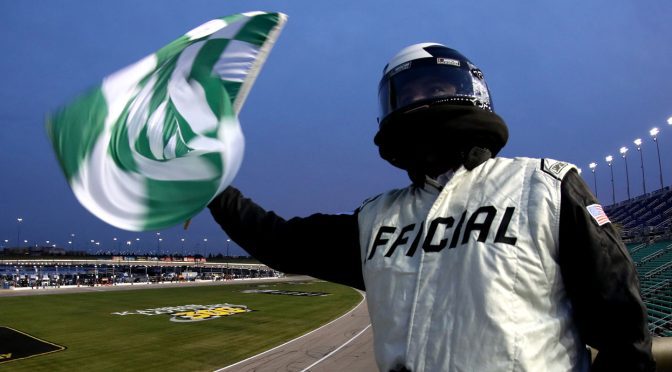
The sport’s return to Southern California produced plenty of surprises and drama in the inaugural NASCAR Cup Series race at Naval Base Coronado.
Many expected polesitter Shane van Gisbergen to put on one of his masterclass performances at the 3.4-mile Qualcomm Circuit near San Diego, California. But when the No. 97 Trackhouse Racing Chevrolet driver was taken out in a multicar wreck during the Lap 32 restart, the Anduril 250 was anyone’s game, with 23XI Racing driver Corey Heim taking advantage of van Gisbergen’s misfortune to claim his first career Cup Series victory in only his 13th premier series start.
Outside of Heim’s memorable maiden victory at NASCAR’s highest level, a few drivers punched above their weight at the base to score a decent result, while others hope to put the street race behind them and look ahead to Sunday’s Toyota/Save Mart 350 at Sonoma Raceway (3:30 p.m. ET, TNT Sports, HBO Max, PRN Radio, SiriusXM NASCAR Radio).
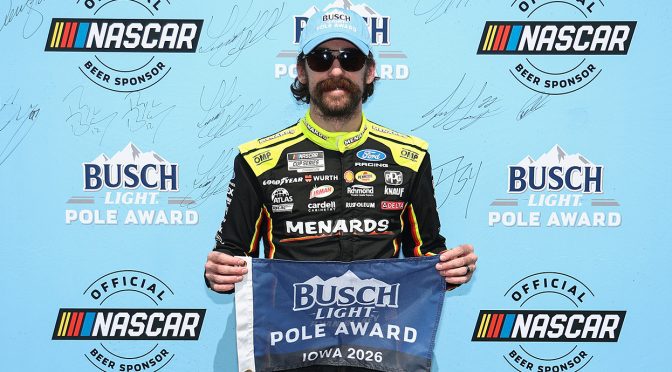
What happened: After coming to Naval Base Coronado with two finishes of 33rd or worse, Smith righted the ship with a top five at the 3.4-mile Qualcomm Circuit. The No. 38 Front Row Motorsports Ford has been extremely fast in the last several Cup Series races, but two crashes at Michigan International Speedway and Pocono Raceway derailed Smith’s progress. But after starting and finishing fourth in San Diego, Smith perfectly executed the race, which may allow the No. 38 team to build momentum as the summer heats up.
What’s next: In three Cup Series races at Sonoma, Smith’s best finish is 16th; the other two results were 27th or worse. While that does not sound too promising, San Diego proved that you should not sleep on the Front Row driver’s road-course racing abilities. He may produce another surprise performance in Wine Country.
Patrick Vallely | For NASCAR Digital Media
2. AJ Allmendinger, No. 16 Kaulig Racing Chevrolet
Started: 15th
Finished: 5th
What happened: Before the arrival of van Gisbergen, Allmendinger was often looked at as the Cup driver to beat on road courses. At Qualcomm Circuit, we saw the No. 16 Kaulig Racing Chevrolet pilot showcase his skills at turning left and right en route to his first top five of the 2026 Cup Series season. Scoring 45 points in the Anduril 250, Allmendinger moved up a spot in the standings to 20th and looks to make a run toward The Chase in the next several weeks.
What’s next: With another road-course coming up in Wine Country, Allmendinger will have the ability to shine for the second straight week. In the last four Sonoma trips, the Kaulig driver has had a pair of sixth-place finishes. Look for “The Dinger” to be in the mix for another strong result at the 1.99-mile road course.
Ethan Smith | For NASCAR Digital Media
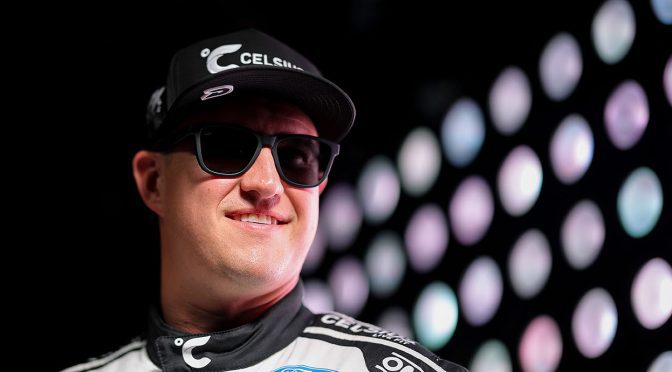
3. Ryan Preece, No. 60 RFK Racing Ford
Started: 7th
Finished: 11th
What happened: Preece finally ended a skid of four consecutive finishes of 28th or worse with a strong showing at Naval Base Coronado. The No. 60 RFK Racing Ford driver tied Kaulig Racing’s Allmendinger for most points scored (45) during Sunday’s Anduril 250 after finishing runner-up in Stage 1 and winning Stage 2. Finishing 11th in Southern California was the result that the No. 60 team has been looking for in recent weeks as Preece gained three spots in the Cup Series standings and moved into the final provisional Chase spot in 16th.
What’s next: Entering San Diego, Racing Insights had Preece sitting at a 14.2% chance of advancing to the postseason. Those odds improved to 34.4% after a strong performance in Southern California. Looking ahead to Sonoma, Preece has finished 13th or better twice in his last three trips to Wine Country. If he can put together another solid showing, Preece’s Chase percentage odds will only increase.
Rachel Horton | NASCAR Digital Media
THREE DOWN ⬇️
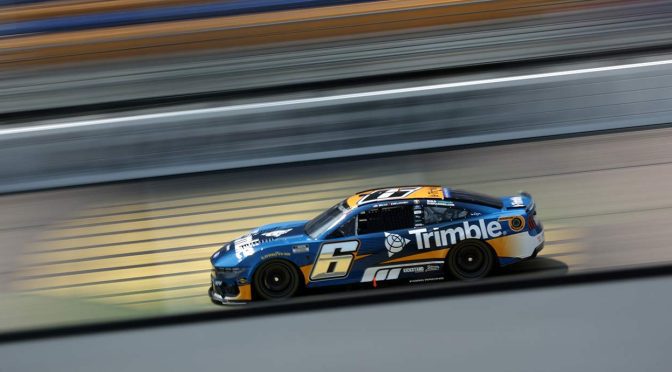
1. Brad Keselowski, No. 6 RFK Racing Ford
Started: 29th
Finished: 34th
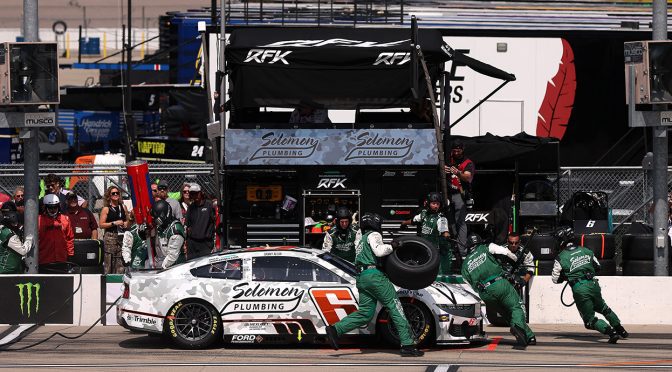
What happened: Keselowki’s race took a turn in the wrong direction after getting squeezed into the wall due to contact with Ricky Stenhouse Jr. Since the No. 6 RFK Racing driver usually struggles on road courses, these next couple of weeks with left-and-right turns were likely going to be all about survival. Unfortunately, the No. 6 Ford was not able to escape trouble at the 3.4-mile Qualcomm Circuit, which ultimately resulted in a 34th-place finish. To make matters worse, this was also Keselowski’s fourth straight finish of 34th or worse.
What’s next: Although road courses are not Keselowski’s greatest area of strength, he has finished inside the top 20 in the last 10 Sonoma Cup Series races, including 11th-place in last year’s contest. If the RFK driver can keep his No. 6 Ford out of trouble on Sunday, he can potentially trend toward The Chase cutline after dropping two spots to 19th in the Cup Series standings.
Sean Gardner | Getty Images
2. Shane van Gisbergen, No. 97 Trackhouse Racing Chevrolet
Started: 1st
Finished: 38th
What happened: After a pair of disappointing results at Michigan and Pocono, the street race at Naval Base Coronado seemed like the perfect destination for van Gisbergen to rebound. Everything was going according to plan for the Trackhouse Racing driver until he crashed out of the race during a restart on Lap 32, with his No. 97 Chevrolet suffering heavy damage alongside teammate Connor Zilisch and Richard Childress Racing’s Austin Hill. Van Gisbergen was understandably frustrated at the missed opportunity in Southern California as he finished 30th or worse for the third consecutive race.
What’s next: SVG’s race-ending Qualcomm Circuit crash hurt his chances of making The Chase, per Racing Insights. Entering San Diego, his Chase chances sat at 67%. Following the DNF, those odds dropped to 20.2%. Now, he enters Sonoma as the defending race winner and likely faces a must-win situation to keep his hopes of making The Chase alive after dropping to 17th in the Cup Series standings. Do not be surprised if the Trackhouse driver takes the San Diego loss personally and drives with determination to place the No. 97 Chevrolet on the right side of the cutline.
Ethan Smith | For NASCAR Digital Media
3. Christopher Bell, No. 20 Joe Gibbs Racing Toyota
Started: 37th
Finished: 39th
What happened: Given the bumpy, twisty nature of the 3.4-mile Qualcomm Circuit, it was a tough weekend for Bell to make left-and-right turns as the Joe Gibbs Racing driver continues to recover from a fractured left wrist suffered at Michigan. Bell struggled in qualifying after rolling off the grid from 37th. He ended up handing over his No. 20 Toyota to NASCAR O’Reilly Auto Parts Series regular Brent Crews, who intended to finish the race until a mechanical issue took him out on Lap 30, resulting in a 39th-place finish. This was Bell’s third straight finish of 26th or worse, dropping him to 12th in the Cup Series standings.
What’s next: After nursing his injured wrist at the Southern California street course near San Diego, it makes one wonder if the No. 20 team will need 18-year-old Crews to relieve Bell for the second consecutive week. If Bell can go the distance in Wine Country, he is riding a streak of three straight top 10s at the 1.99-mile road course.
After a thrilling weekend at Naval Base Coronado, the NASCAR O’Reilly Auto Parts Series remains in California to tackle another road course, this time Sonoma Raceway on Saturday (5:30 p.m. ET, The CW, PRN Radio, SiriusXM NASCAR Radio).
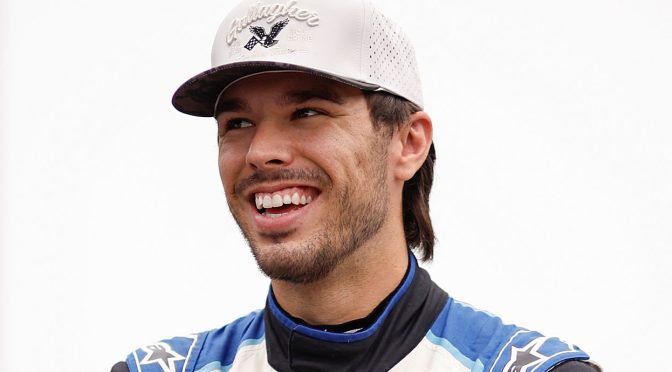
The race will act as the 19th points-paying race of the 2026 O’Reilly season. Connor Zilisch is the defending winner.
Three NASCAR Cup Series full-timers — Connor Zilisch (No. 1 JR Motorsports Chevrolet), Shane van Gisbergen (No. 9 JR Motorsports Chevrolet) and Ross Chastain (No. 32 Jordan Anderson Racing Chevrolet) — will compete in O’Reilly action this weekend.
Thirty-eight cars are entered into this weekend’s event.
After an exciting inaugural showing at Naval Base Coronado, the NASCAR Cup Series will continue the California road-course theme with a trip to Sonoma Raceway on Sunday (3:30 p.m. ET, TNT Sports, HBO Max, PRN Radio, SiriusXM NASCAR Radio).
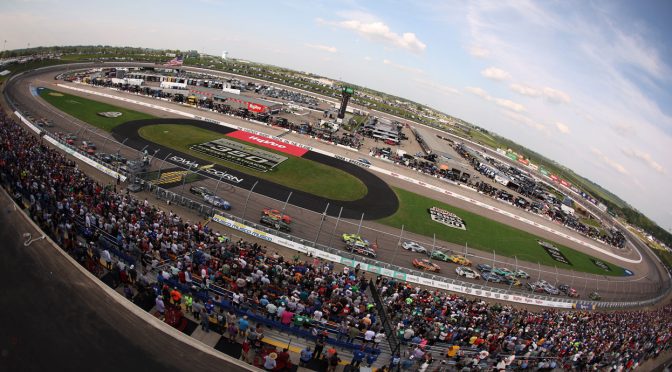
The visit to the 1.99-mile venue will act as the 18th points-paying event of the 2026 season and be the first leg of the 2026 In-Season Challenge. Shane van Gisbergen is the defending winner.
Van Gisbergen, who finished 38th at Naval Base Coronado, will look to find his road-course-winning ways once again, piloting the No. 97 Trackhouse Racing Chevrolet in the hopes of capturing his second Cup Series victory of the 2026 campaign.
Thirty-six cars are entered into this weekend’s race.
CORONADO, Calif. — Ben Kennedy, NASCAR’s chief operating officer, drove. Capt. Loren Jacobi, commanding officer of Naval Base Coronado, rode shotgun.
They zipped around Qualcomm Circuit, the purpose-built track they had spent the last two years planning and honing and fine tuning, and now, finally, they barreled across it.
They sped downhill and hung a hard left at Turn 2. What they saw when the car straightened out was unprecedented in NASCAR history: the USS Carl Vinson, 100,000 tons of diplomacy, a 1,092-foot-long aircraft carrier parked in the water just outside the race wall.
Kennedy pointed the nose of the car at the ship, and before ripping a hard left at Turn 3, he had just enough time to notice details. A giant 70 was painted on the ship’s island superstructure (which houses the bridge) like a number on a race car. An open bay door yawned before him, and inside fans mingled in the cool San Diego breeze. He was close enough to discern one person from another.
When Kennedy first pitched Jacobi about running a NASCAR race on the base, he framed it as far more than just a sporting event. He sold it as a chance to share the rich history of Naval Base Coronado with a wide audience. That hooked Jacobi. A career Navy man who is the son of a career Navy man, he loves to hear and tell the stories of his base, the Navy, and America’s servicemen and women.
As Jacobi stood on pit road on Friday, he cast his eyes around Coronado. He was smack in the middle of living a huge story and ticked off even more worth telling. Coronado (an umbrella term encompassing nine installations) houses fighter jets and three nuclear-powered aircraft carriers and Naval Special Warfare, including Navy SEALs — and if the general public knows that, it’s barely.
Having a NASCAR race here, with tens of thousands of fans, lots of media coverage and personal interactions uncountable, was a chance to change that. “There’s a lot of great storytelling here,” Jacobi said.
Those stories cover the personal and professional, embrace love and laughter, evoke the sad and sacrificial.
The same is true, of course, in NASCAR.
And after one of the most highly anticipated, memorable and, frankly, fun weekends in recent NASCAR history ended with an unbelievable finish, both organizations came away with new stories to tell — stories about an incredible first-time winner, about the vibe this gutsy idea produced, and about the 250th birthdays of the Navy and United States.
And they overlapped in surprising ways.
James Gilbert | Getty Images
The origin story — or, when old school and new school converge, magic happens
The cars purred on the last parade lap. Jacobi — call sign Wookie, because he’s as hairy as one — stood near the start-finish line with his wife and two kids, waiting, waiting, waiting for the cars to go roaring by as they took the green flag. The noise exploded and so did Jacobi’s smile. With the cars a blur and Jacobi’s summer whites sharp, a photographer snapped a family photo whose back story will make the greatest Christmas card update ever.
It’s a helluva NASCAR story, and a helluva Navy story, too.
Just as Jacobi is a career Navy man and the son of one, so is Ben Kennedy in NASCAR. Indeed, he is as old school as NASCAR gets. The great-grandson of NASCAR founder Bill France and the grandson of Bill France Jr., the man who made NASCAR into a giant, Kennedy is also a former driver who won at famed short tracks Bowman Gray Stadium and Bristol Motor Speedway.
And yet as old school as he is, he also has led a new-school revolution in the way NASCAR creates its schedule.
And nothing shows that dichotomy like the origin story of this weekend’s race.
That story starts on an airplane high over central Alabama, just east of Birmingham, in the 1960s. In that plane were France and Rev. Hal Marchman, who gave the invocation at the Daytona 500 for decades. They soared over a vast forest. “I looked down there, and I saw trees,” Marchman later told Ken Martin, director of historical content for NASCAR Studios. “Bill looked down there and saw a race track.”
That vision became Talladega Superspeedway.
In identifying the streets of Chicago and Naval Base Coronado for NASCAR to race on, Kennedy, like his great-grandfather before him, had a vision for speed where nobody else did … though Kennedy used Google Earth instead of an airplane to pick out the locations. He used Google Earth’s tools to measure the length and width of the streets before hiring iRacing to lay out details of what became the 16-turn track.
“We’re cheating a little bit,” he joked.
That same old school blending with new school theme applies to the base, too. The Navy started its first aviation squadron here, utilizing planes built by the Wright Brothers. Today some of the most sophisticated flying machines on the planet are based and/or train here.
Wearing sunglasses, a NASCAR baseball hat and comfortable walking shoes because he put miles on his feet every day, Kennedy fit right in among the throng of fans. In a 20-minute walk on Saturday — covering in real life what he first saw digitally — nobody recognized him. All around him the best kind of chaos reigned, with fans bouncing to and fro. It felt like an hour before the Daytona 500, and it was actually four hours before a June O’Reilly Auto Parts Series race.
According to Kennedy, 67 percent of those fans were attending their first NASCAR race. They were more female (plus 11 percent) and more Hispanic (triple the usual number) than a typical NASCAR race. And they were apparently more willing to spend money. Kennedy said merchandise sales the first day were double what was expected.
As he toured the grounds, he wrestled with the tension between allowing himself to enjoy the energy of the moment and obsessively taking notes about myriad details. “I try to take every opportunity that I can to soak it in,” he says.
U.S. Navy
The vibe, the osprey, and the heartfelt flag ceremony
There was something to soak in everywhere you looked.
Here was a merchandise tent as full as the fire marshal would allow, with a line 117 people deep snaking across the grounds. There was a woman halfway through that line, dancing in joy even as she waited to get in.
Here was Goodyear Race Event Operations Manager Art Clever and Craftsman Trucks Series team founder Al Niece returning to the base where they were stationed 41 and 58 years ago, respectively. There was Clever, choking up as he visited his decommissioned hangar to sign the wall.
Here was Construction Mechanic 2nd Class Shukema Wilson and CM2 Kevin Neal, winning the pit crew challenge and getting carded for beers a few minutes later. There was a NASCAR fan paying for those beers, because ain’t no way two sailors would have to buy their own drinks after winning that competition.
“Gimme Three Steps” by Lynyrd Skynyrd blared out of a speaker to the left and “You Give Love a Bad Name” by Bon Jovi rumbled out of a speaker on the right. Fans posed for photos. This exact scene unfolds every week in NASCAR. What was different this time: The Navy parked a CMV-22B, commonly known as an Osprey, right there in the fan area, one of many marvels of modern technology placed in fan areas.
Standing next to the Osprey was Lt. Cmdr. Ricky Hoyt, a lifelong NASCAR fan, former go-kart and motorcycle racer, and Navy aviator for a dozen years, including the last six flying the Osprey, which he calls “mankind’s closest thing to a transformer” because it takes off like a helicopter and flies like an airplane.
Hoyt, call sign Rabbit because he eats a lot of vegetables and runs fast, engaged fans from his Osprey post all weekend, telling the Navy’s story just as Jacobi envisioned. “How can you not love this?” Hoyt asked, his bright blue eyes framing a wide smile. “Airplanes and race cars: The two greatest things ever.”
Over the last few weeks, Hoyt watched as the airfield he typically flies out of became a race track. He wasn’t skeptical, exactly, though he would believe it when he saw it. “I fly here,” he says. “You don’t race cars here.”
And yet here he was, standing on pit lane, and he couldn’t believe his eyes … or his nose.
“Smelling rubber and gas here, the smell of NASCAR and racing, that fires you up. On par with the smell of jet exhaust is this stuff right here.”
On Sunday, Hoyt joined Capt. Kyle Thomas, commanding officer of the Navy Reserve Center on North Island, at the hauler of Austin Hill, who took over the No. 8 car after Kyle Busch died of sepsis brought on by pneumonia in May. Each driver had been assigned to a command, and the Navy Reserve Center was Busch’s.
To honor Busch, Thomas and Hoyt presented to three of Busch’s crew members a flag that had flown over the USS Makin Island (LHD-8). Its flag was chosen because of the significance of that number as the one Busch drove for Richard Childress Racing.
They did the flag presentation at Busch’s former hauler, where the back door still says 8.
Chris Graythen | Getty Images
The kid and the vet who showed him respect
Rookie driver Corey Heim will race full time for 23XI Racing next year, and he’s considered a can’t-miss talent. But rookie drivers are not supposed to win, certainly not on custom-built street courses that turn out to be nothing like the simulation their teams created. Heim toured the track on foot Thursday, and he said everything he thought he knew about it turned out to be wrong.
Nothing about the lead-up to this race suggested Heim would visit Victory Lane, especially considering last year he failed to qualify for the Chicago Street Race, which he called one of the worst days of his career. “I’ve never been a guy who gets it right away,” Heim says. “But when I get it, I get it. When it clicks, it clicks hard.”
And it clicked hard in the closing laps of the Anduril 250.
As he followed in the tracks of his teammate, Tyler Reddick, he wondered why Reddick, a four-time road-course winner and the season points leader, wasn’t disappearing ahead of him. Is he toying with me? Heim wondered.
Apparently not. Heim, making just his 13th career start, inched forward, hoping to pressure Reddick into screwing up. He did, and Heim pounced. A back-and-forth battle followed, with Reddick scooching back ahead after he slammed the right side of his car into Heim’s left side.
It looked like the vet had outmuscled the kid.
Then something amazing happened.
Reddick slammed on the brakes.
He gave the lead back to his teammate.
He didn’t want to have to tell a story about dumping his teammate for a win.
So instead, Heim gets to tell one about his first win coming in the first NASCAR race ever held on an active military base.
David Jensen | Getty Images
The view, the jump, and men who fly
Pilots are not race car drivers, and race car drivers are not pilots. But it’s a safe bet both think they can (and secretly desire to) do the other task.
“We’re pulling from the same pool of people — the same personalities that come into naval aviation are the same personality types that you end up seeing here,” says Jacobi, a former motorcycle racer. “They’re dedicated to their craft, dedicated to their trade and they’re willing to make massive sacrifices in order to get there. You take a pilot and put him in a car, and they could follow that same career path.”
The drivers got a taste for flying all weekend, as the cars went airborne coming out of Turn 1. “It’s bump, bump, bump,” says driver Zane Smith, “and then you’re floating.”
The subsequent landing (and other bumps throughout the course) led Chase Briscoe to say it felt like his brain smashed into his spine. After the jump, drivers had just enough time to catch their breath before they mashed the brakes and turned left at Turn 2 … at which point they entered the story both Kennedy and Jacobi delighted to tell — racing right at an aircraft carrier.
At slow speed the view was incredible, as the gray and muscular ship dominated your attention. Where else would you look? At high speed, a few drivers noticed the same details as Kennedy — the open bay, the 70, people on the deck.
Others were so focused on hitting their marks that they barely noticed the ship.
Jimmie Johnson saw a window into his past.
He grew up in nearby El Cajon, and when he was a boy, he walked the shores of San Diego Bay with his grandfather, Floyd “Gene” Dunnill, who told the future seven-time champion stories of his days as a Navy captain in the Korean War, during which he worked as a safety officer on an aircraft carrier much like the Vinson.
The future will tell a new story
Just as Hoyt watched the track come together in steps, so, too, has Kennedy’s willingness to change the schedule been a progression. It started with existing facilities (Road America, Nashville and Circuit of The Americas). It progressed to holding a race inside an existing facility that wasn’t a race track (Los Angeles Coliseum). The next step was a street course in Chicago, and now a street course on an active military base.
What’s next? Kennedy was non-committal when asked if NASCAR would return to Coronado. The early returns were mostly positive. It appears the only thing holding up a decision is the same thing that made this such a shock when it was announced in the first place: it’s a ton of work and a big disruption to hold a race on an active military base.
All three races were slowed by red flags. Traffic remains a thorny issue, as getting thousands of cars onto and off an island will always be difficult. Food and merchandise stands drew long lines all weekend; that’s “a good problem to have,” as Kennedy put it, and it’s also the kind of detail that he made notes about all weekend.
Whether the sport returns to Coronado or not, Kennedy will continue to seek out new places to race. His Google Earth search history shows he’s been looking at the Northeast, the Pacific Northwest and the Denver area. If he’s close to deciding on any of those, he won’t say yet. But no idea is too far out there to consider.
“I don’t think I’ve heard an idea that’s crazy enough yet,” he said. “I’m still waiting to hear it. These are the types of events that create storylines.”
If you’re a fan of Late Model Stock Car racing, Virginia’s South Boston Speedway is the place to be this Saturday night as the 2026 edition of the Virginia Late Model Triple Crown begins with the 20th running of the Thunder Road Harley-Davidson 200.
First held in 2006, the Thunder Road Harley-Davidson 200 has become a crown jewel for Late Model Stock competitors across the Southeast. Now part of the Virginia Triple Crown, a miniseries featuring three of Late Model Stock racing’s grandest events, the 200-lap event is more important than ever.
With average finish determining the champion of the Virginia Triple Crown, drivers planning to compete in all three races — including Langley Speedway’s Hampton Heat and Martinsville Speedway’s ValleyStar Credit Union 300 — will need a good start at South Boston if they hope to walk away as champion.
Connor Hall returns to South Boston Speedway as the two-time and defending winner of the Thunder Road Harley-Davidson 200. Lee Pulliam, a six-time event winner, also returns to chase another South Boston victory. Other previous winners include Drew Herring, Deac McCaskill, Philip Morris, Peyton Sellers, Bobby McCarty and Corey Heim.
Below is everything to know about Saturday’s Thunder Road Harley-Davidson 200 at South Boston.
Every year, the Thunder Road Harley-Davidson 200 at South Boston Speedway kicks off the Virginia Triple Crown. (Ted Malinowski/NASCAR)
What TV channel is the Thunder Road Harley-Davidson 200 at South Boston Speedway on?
All the on-track action for the Thunder Road Harley-Davidson 200 can be viewed live on FloRacing, the official streaming home for all NASCAR Regional properties.
The event will not be shown on a traditional television network.
Below is the complete schedule for FloRacing’s coverage of the 2026 Thunder Road Harley-Davidson 200.
This year’s Thunder Road Harley-Davidson 200 will take place Saturday, June 27.
Three support divisions will hit the track prior to the 200-lap Late Model Stock main event. The Limited Sportsman, Pure Stock and Hornet classes open the festivities before the night concludes with the Thunder Road Harley-Davidson 200.
Below is the complete race-day schedule at South Boston Speedway.
Drivers’ Meeting – Late Model Stock Car (Tech Building)
1 – 2:30 p.m.
Rotating Practice
2:30 p.m.
Backstretch & Turn 4 Trackside Parking Gates Open
2:35 p.m.
Go Halifax Pole Qualifying (Group Qualifying; Limited Sportsman & Late Model Stocks)
4:30 p.m.
Pre-Race Ceremonies & Late Model Driver Introductions
5 p.m.
Green Flag (Late Model Stock LCQ: 20 Laps / 25 Minutes … Limited Sportsman: 40 Laps / 40 Minutes … Pure Stocks: 20 Laps / 15 Minutes … Hornets: 20 Laps / 15 Minutes … Thunder Road Harley-Davidson 200: 200 Laps)
Connor Hall, driving the No. 88 for JR Motorsports, won the Thunder Road Harley-Davidson 200 in 2025. (Photo: Ted Malinowski/NASCAR)
Entry list
More than 40 drivers have filed entries to compete in Saturday’s Thunder Road Harley-Davidson 200.
Headlining the entry list is the return of five-time NASCAR Local Racing Series Powered by O’Reilly Auto Parts national champion Lee Pulliam, who has joined JR Motorsports to compete in the Thunder Road Harley-Davidson 200 for the first time since finishing second in 2019.
Also entered is two-time and defending Thunder Road Harley-Davidson 200 champion Connor Hall, who will return to the team he won the 2024 edition of the event with in Nelson Motorsports. Hall, who also captured the 2025 edition of the Virginia Triple Crown, will be teamed with veteran Late Model Stock competitor Ronnie Bassett Jr. at Nelson Motorsports.
Another returning star that has entered Saturday’s event is NASCAR Craftsman Truck Series rookie and 2025 ARCA Menards Series champion Brenden “Butterbean” Queen, who will pilot the No. 03 entry out of the Lee Pulliam Performance shop. Peyton Sellers, a three-time Virginia Triple Crown champion and South Boston regular, is entered in pursuit of his third Thunder Road Harley-Davidson 200 victory.
Other notable entrants for Saturday’s race include Kaden Honeycutt, Kyle Dudley, Sam Yarbrough, Landen Lewis, Landon Huffman and Carson Brown, among others.
The full entry list for Saturday’s Thunder Road Harley-Davidson 200 is available below.
Car No.
Driver
0
Landon Pembelton
00
Chase Burrow
1
Jamie York
01
Thomas Beane
1
Andrew Grady
2
Brandon Pierce
03
Brenden Queen
4
Parker Eatmon
4
Kyle Dudley
05
Mason Bailey
5
Carson Brown
6
Brandon Lopez
6
Bobby McCarty
7
Tristan McKee
8
Conner Weddell
8
Tate Fogleman
8
Lee Pulliam
9
Ryan Millington
9
Ayden Millette
10
Trey Crews
12
Ronnie Bassett Jr.
12
Zach Peregoy
13
Chase Murphy
16
Mini Tyrrell
17
Kaden Honeycutt
17
Jason Myers
20
Carson Loftin
22
Connor Hall
25
Devin George
26
Peyton Sellers
29
Landen Lewis
41
Woody Howard
44
Conner Jones
47
Ryley Music
50
Raymond Pittman III
51
Toby Layne
51
Michael Bumgarner
51
Donovan Strauss
57
Chase Johnson
57
Landon Huffman
63
Tyler Matthews
77
Trevor Ward
77
Blake Stallings
88
Doug Barnes Jr.
88
Caden Kvapil
95
Sam Yarbrough
Thunder Road Harley-Davidson 200 history, winners
Connor Hall has been unbeatable the last two years in the Thunder Road Harley-Davidson 200.
Driving for two different teams — Nelson Motorsports in 2024 and JR Motorsports in 2025 — Hall has won the last two runnings of the South Boston Speedway crown jewel. A win Saturday would make him just the second driver to win the race in three consecutive seasons.
During the event’s first decade, it was primarily dominated by Lee Pulliam, who put together a commanding run that saw him claim six consecutive Thunder Road Harley-Davidson 200 titles from 2011-16.
Peyton Sellers has won the race twice, as has Deac McCaaskill and Bobby McCarty. Corey Heim, the most recent NASCAR Cup Series winner at Naval Base Coronado, emerged victorious in an epic photo finish in 2022.
Below is the complete list of winners in the Thunder Road Harley-Davidson 200.
CORONADO, Calif. — Bubba Wallace has never been much of a fan of racing on road or street courses in NASCAR. In 40 prior Cup starts on such tracks, he combined to earn just one top five and four top 10s.
Enter “Bubba Hamilton,” his apparent alter ego, who showed up to play at Naval Base Coronado on Sunday, wheeling the No. 23 Toyota to an impressive second-place finish after a gritty, comeback drive in the NASCAR Cup Series’ Anduril 250 just across the bay from San Diego.
After jokingly comparing himself to Formula One great Lewis Hamilton on Saturday, one might think Wallace would be ecstatic after his best career road-course result, especially after rebounding from a detached right-front wheel at Lap 19 that forced him to pit road and earned him a two-lap penalty. Instead, Wallace couldn’t shake the thought of what could have been, settling for second as part of 23XI Racing’s first 1-2 result after his part-time teammate Corey Heim nabbed the win from Tyler Reddick — another fellow 23XI racer — in the final laps.
“It’s ‘what if?'” Wallace said. “Tired of living in that.”
Wallace did see the pros through the cons in Sunday’s outcome. The 23XI Racing driver jumped two spots to 11th in the points standings after his second top-three finish in the last three weeks. To do so on a temporary circuit on never-before-raced streets and airfields marked a notable improvement in Wallace’s development as a road racer.
“I know how much I’ve struggled in the past and continue to work, and I appreciate everybody on the team,” Wallace said. “Appreciate everybody back at Airspeed. Keegan (Leahy) and William (Lee) in the sim room, I give them so much crap for the sim and trying to get it right, but we bust our ass to get that thing right. And as far off as the sim was for all of us in the field, I really learned a lot. Don’t quote me on that. I don’t want them to hear that because they’ll sign me up for more. But it was super beneficial, so having the right people in the right space at 23XI is beneficial for us to capitalize, and you look at it — a 1-2 finish for us.”
After starting 12th, Wallace worked his way up to second place within just 10 laps of action before green-flag pit stops began. When the caution flag waved at Lap 12 when Ricky Stenhouse Jr. stalled on track, No. 23 crew chief Charles Denike had Wallace stay out, then pit under green-flag conditions at Lap 18. Front changer Austin Dickey was unable to secure the right-front wheel nut before Wallace departed the box, and one lap later, the wheel detached from the car, resulting in a penalty that forced Wallace to sit in his stall for two laps before he could resume action.
“Go figure,” Wallace said of his thoughts in the moment. “Drive your ass off on a track that you have no idea what you’re doing. Drive up to lead, then have it all taken away from you. I’m not bashing anybody. Pit crew’s been one of the best on pit road and had a mistake. We all have mistakes. Unfortunate that it cost us.
“At the end of our weekends, we fill out was it a green race or was it not? Here’s another where it’s not, so that’s a lot of not green races for us. And by green means nothing went wrong, we executed, whether that’s top five or top 20. There’s just another asterisk mark beside our finish and that’s what’s frustrating. So, good day, I guess, in second.”
Ethan Smith | For NASCAR Digital Media
Wallace was also able to step back and take a moment to praise Heim and No. 67 crew chief Bootie Barker, who previously called the shots for Wallace on the No. 23 team and led Wallace to his first two career Cup wins. Heim, who will become Wallace’s full-time teammate in 2027 as driver of 23XI Racing’s No. 35 Toyota, earned his first career win in his 13th career start.
“My body language and facial expressions will not show it, but I am really excited for Corey and Bootie, getting him back to Victory Lane,” Wallace said. “Being a winner in the Cup Series is something that, when we get there, we all want to achieve, and to be able to do that for him in his (13th) start, it’s pretty special. I know he’s put in a lot of work behind the scenes, especially the weekends that he’s not racing and it’s all paying off for him. I’ve just got to keep busting my ass too and maybe something will go my way, but guess I gotta look at it from the glass half-full.”
The next task for Wallace is to tame Sonoma Raceway, where the Cup Series returns to action on Sunday (3:30 p.m. ET, TNT Sports, HBO Max, PRN Radio, SiriusXM NASCAR Radio). Sonoma ranks as one of Wallace’s worst tracks statistically; his average finish of 24.0 is the worst at any track with seven or more starts. Perhaps that fate is set to change this time around, though, after unlocking “Bubba Hamilton” in San Diego.
“I thought about that when we’re two laps down. I’m like, maybe my Sonoma weekend will go better because that place kicks my ass,” Wallace smiled. “So having a good road-course race, I hope I don’t go from hero to zero, but I feel confident going into Sonoma and having a good weekend.”
Tempers carried from the race track to pit road Sunday after the NASCAR Cup Series’ inaugural Anduril 250 at Naval Base Coronado, with Noah Gragson confronting Kevin Magnussen after contact between the two ended Gragson’s day at San Diego’s Qualcomm Circuit.
In an exchange captured by Frontstretch, Gragson, driver of the No. 4 Front Row Motorsports Ford, confronted Magnussen after the race following multiple on-track run-ins between the two. Magnussen, making his Cup Series debut in Trackhouse Racing’s Project 91 Chevrolet entry, repeatedly told Gragson to back away during a heated, profanity-laced exchange.
“You wrecked the (expletive) out of me over here. What’s your (expletive) problem?” Gragson asked Magnussen. “You guys come over here, you (expletive) drive off into the corner just because you got fenders on it.”
Magnussen responded bluntly, telling Gragson to “get the (expletive) out of my face” and later telling him multiple times to “(expletive) off” as crew members and others mulled nearby. The confrontation was tense, but did not become physical.
The back-and-forth did shed light on Magnussen’s on-track decision, which was admittedly payback.
Gragson: “Why did you wreck me?”
Magnussen: “I told you. You were in the wrong. You found out.”
Gragson: “What does that mean?”
Magnussen: “You (expletive) around … and you found out.”
The issue appeared to stem from a pair of on-track incidents. Gragson and Magnussen first made contact on Lap 25 while racing deeper in the field, with the two banging doors as the exchange continued. Later, while battling inside the top 15 late in Stage 2, Magnussen got underneath Gragson entering Turn 4 and made contact with the right-rear of the No. 4 Ford, sending Gragson spinning into the wall with race-ending damage.
Gragson continued pressing Magnussen afterward, asking, “Or what? What are you gonna do?” Magnussen responded multiple times with: “My problem is you in my face.”
Notably, there’s also a shared Gene Haas thread between the two, though not a direct team connection. Gragson drove for Stewart-Haas Racing in 2024, while Magnussen last raced full-time in Formula One in 2024 with Haas F1 Team before joining Trackhouse’s international-focused Project 91 entry for San Diego.
CORONADO, Calif. — Maybe some of the U.S. Navy’s finest knew all along, like a group of fortune-tellers in dress whites.
Corey Heim was regarded as a bit of an underdog in Sunday’s San Diego showdown — a talented one, but still a relative rookie gaining experience in a partial NASCAR Cup Series schedule before a full-time slate awaits next year. Veteran Denny Hamlin employs him, but even as a big believer, he was struck by what unfolded.
Perhaps the service members who walked on stage with Heim during driver introductions had some level of foresight, tapping their wrists where a watch might go, joining the racing prodigy in mimicking his trademark victory gesture. The race’s setting was their home turf, after all, and this was their moment, too.
“Yeah, they were looking for something fun to do,” Heim said. “We originally wanted to swap hats, and then they said we couldn’t do that, so we had to find something better, and I thought that was cool. They don’t really know much about me or NASCAR or anything, so I was kind of telling them what the deal was, and seemed like they were having a fun time.”
Nearly 3 1/2 hours later in the warmth of the San Diego sun, it was Heim’s time again to drive home his signature celebration in one of the season’s signature events, a moment to soak in his first Cup Series win in just his 13th major-league start. His path to victory came after a daring duel with 23XI Racing teammate and series points leader Tyler Reddick, taming the demanding 3.4-mile circuit in his No. 67 Toyota with a poise that belied his 23-year-old age.
Sean Gardner | Getty Images
The Anduril 250, the sport’s first-of-its-kind race on an active military base, was almost bound to have surprises in a weekend full of so many. It’s difficult to call Sunday’s performance an arrival for Heim, especially since he blistered the record books on the way to a NASCAR Craftsman Truck Series championship last season and has been a key figure in Toyota’s developmental pipeline for years. But Heim’s vault into the ranks of Cup Series winners was pleasantly premature, considering the usual growth process often takes roughly 100 races to graduate to winning — even for some of the sport’s brightest young stars.
“I think it surprises you in the sense of it’s pretty quick, but it doesn’t surprise you when you look at his preparation, when you look at his talent and the rest of those kinds of things,” Toyota Racing Development president Tyler Gibbs told NASCAR.com after sharing some of Heim’s spoils in Victory Lane. “You look at the equipment that he’s in. I don’t want to say that he should, but again, he’s going to have these opportunities, and he’s made the most of it today. A lot of these guys don’t have as much patience in you, and we’ve talked about this over and over, him starting slowly in ARCA and then going to a full season, starting slowly in trucks and then going full time, and then starting here with only five races last year and 12 races this year, but you’re seeing that patience really pay off to be in good equipment. He’s really mature for his age and incredibly talented.”
Count Hamlin among the eyebrow raisers. Hamlin’s three-race winning streak on the circuit ended with a 14th-place finish, but it’s a stretch to call it much of a loss given his dual roles. He wore an ear-to-ear grin as he strolled into the winning team’s post-race press conference for the fourth consecutive week, this time representing the 23XI outfit that he co-owns with NBA great Michael Jordan.
The sixth-year organization savored a banner day, with all four of its cars running among the top five at one point during the race’s latter moments. Reddick stood as one of the strongest challengers until a flat tire dropped him to 25th in the finishing order, and 23XI teammate Bubba Wallace notched a career-best road-course result in second place, rallying from a detached wheel and a two-lap penalty early on.
Heim, though, was the stunner, even though his pace and composure in a pressure-packed battle with Reddick provided Hamlin with needed context.
“Really surprised. I mean, truthfully, really surprised,” Hamlin said. “Now, if you would have asked me in the middle of the race, I wouldn’t have been that surprised. I got to race around him enough to know he had plenty of speed. I knew he was on the right side of the strategy cycle. Yeah, I mean, you’ve still got to go out there and beat some of the best, have enough speed. I saw that margin of victory over second, third was like 10 seconds or something. Evidently, him and Tyler set a really fast pace there on that last run. But this was not expected by any means. I was very pleasantly surprised.”
Heim’s rapid ascent had some parallels in the No. 67 pit box, with the developmental 23XI pit crew that serviced Heim’s car also delighting in the beer-soaked celebration. Rear-tire changer Joe Carol walked away from the winner’s stage with some of the tongue-out swagger that characterized Jordan’s heyday. It wasn’t just his first win; it was his first Cup Series race, drawing some good-natured teasing from his teammates. “Retire,” they told him, knowing that the feeling of being a perfect 1-for-1 would be fleeting.
Like Heim, the No. 67 group carried the sharpness of an experienced crew in a clutch situation. When Heim made his final pit stop with 16 laps remaining, he veered to pit road at the same time as fellow contender and late-race leader Kyle Larson. The call for both teams was four tires and fuel, and Heim’s car left pit road holding serve with virtually the same margin behind the reigning Cup champ’s No. 5 Chevrolet.
“Honestly, it was a roller coaster today,” No. 67 front-tire changer Dante Johnson told NASCAR.com. “It was a close race, but me and the guys, we made sure we just stayed locked in towards the end, just making sure we give Corey a chance, really, just to make sure we all come together, be smooth, and just be there for him to the end until we finish it. It’s a great and just an amazing feeling. I’m speechless.”
Sunday was supposed to be Heim’s second road-course start in the Cup Series. Last year’s trip to the Chicago Street Race ended with a discouraging outcome before the weekend hit full stride, with the No. 67 team failing to qualify on the day Heim turned 22 — “worst birthday of all time,” he said Sunday.
The setback provided Heim with ample personal motivation to avoid a repeat, but he also found plenty of support from his 23XI peers.
“I’ll tell you what I told him after this: I have so much faith in him,” said No. 67 crew chief Robert “Bootie” Barker. “I said, ‘It’s no big deal. You shake it off, man.’ He was extremely upset, don’t get me wrong. He even mentioned it the other day that he let us down. I said, we do not look at it that way. I knew, I said, This is nothing. I said, This is a blip, because I had confidence in where we were going to be, what we do.
“Don’t get me wrong. He took it hard. It was on his birthday, as well. It was tough. I mean, it’s lingered. He remembered it coming here, so … it’s great he could redeem himself in his mind. To me, while it was a big deal, y’all got to understand, I still told him where he’s going to be is well beyond that.”
Like his Navy cohorts seemed to know in pre-race ceremonies, it was only a matter of time.
“That’s all full circle for me, going from one street course just crushing my life to probably the best day of my life here a year later,” Heim said. “Just funny how that works sometimes.”
CORONADO, Calif. — Tyler Reddick appeared in command late in Sunday’s inaugural NASCAR Cup Series race at Naval Base Coronado.
But with his young 23XI Racing teammate Corey Heim chasing him down, Reddick missed the entry to Turn 2 with three laps remaining, allowing Heim to pounce. After the duo exchanged crossovers and contact, Heim pulled away for his first victory. Reddick suffered a flat left-front tire with two laps remaining and sunk to a 25th-place finish.
Starting from the rear after unapproved adjustments were needed following a spin in Saturday’s qualifying session, Reddick still found himself in contention to win the race. But Reddick said he was too aggressive in trying to charge toward the finish, diving to Heim’s left through the sweeping, left-handed Turn 5 and sending Heim wide into the tire marbles out of the groove as Heim’s No. 67 Toyota bounced off the wall momentarily.
That only compounded Reddick’s disappointment as his lead in the Cup Series standings shrank to just eight points after Sunday’s contest.
“I’d say the only way this day could have been worse is if somehow the contact we had took him out of winning this race as well,” Reddick said. “Above all else, I made a couple mistakes and it cost me the lead. Then I made some more mistakes trying to get the lead back. So ultimately, today’s result’s on me, whether it was the spin and having to go to the back in qualifying yesterday, the disaster it was today during the race. Yeah, just wasn’t a good day.”
Reddick credited Heim for racing him cleanly but reprimanded himself for his own late-race missteps.
“I certainly overdid it and ran him in the wall and initiated the contact — everything,” Reddick said. “So yeah, just not the way you should race a teammate.”
A five-time winner in 2026, Reddick has led the points standings all year since winning the season-opening Daytona 500. Following the May 10 race at Watkins Glen International, his margin over second place was a whopping 129 points. That cushion has evaporated in the five races since. Part of that diminishing lead is credited to a 35th-place finish at Michigan International Speedway and Sunday’s 25th-place finish at Coronado.
“We’re going down the wrong path right now and we need to stop it,” Reddick said. “We’re just not getting the job done, not winning races, not having good point days. We’ve got to figure it out.”
The other reason his advantage has dwindled is the recent success of Denny Hamlin, the driver of the No. 11 Joe Gibbs Racing Toyota who also co-owns Reddick’s 23XI Racing team. Hamlin entered Sunday having won each of the past three Cup Series races. That streak ended at the San Diego course, but his 14th-place finish allowed him an 11-point gain on Reddick.
Those gains are fantastic for Denny Hamlin, the driver. And while he understood Reddick’s dejection, Denny Hamlin the owner simply hopes his driver Reddick doesn’t get blinded by the downsides.
“If I could have one wish, it would be that all of our teams be very proud of what they did today,” Hamlin said. “I mean, we had four of the top five or six inside a few laps to go. I know it’s easy to just stare at your hood pins and only think about the short-term. I guarantee you Tyler is thinking about the short-term. But he started last. He had to come from the back multiple times. (Second-place finisher) Bubba Wallace came from the back multiple times. We got our other young drivers out there in the top five.
“Everyone needs to be proud and look at the day as half-full even though I understand the result is not what he wanted. In the grand scheme of things, it’s great to see that our cars have the speed to go out there and win and all of ’em can do it.”
Turn 1 became calamity corner again at Naval Base Coronado as a Lap 32 restart in Stage 2 of Sunday’s NASCAR Cup Series race sparked a multicar incident at the front of the field.
Austin Hill slid the No. 33 Richard Childress Racing Chevrolet into Connor Zilisch in the fast opening turn, slamming the No. 88 Trackhouse Racing Chevrolet and himself into the fence. With very little room to avoid the wreck, a handful of cars stacked in a pileup, including polesitter and seven-time road-course winner Shane van Gisbergen.
Ty Gibbs, Ryan Blaney, Michael McDowell, Daniel Suárez, Riley Herbst and John Hunter Nemechek were also involved in the incident.
Teammates Zilisch and van Gisbergen saw their respective days come to an end, continuing a harrowing rookie campaign for Zilisch, who will now have finishes of 30th or worse in four of the last five races. It’s just the second road-course DNF for van Gisbergen (Chicago Street, 2024).
“It’s unfortunate for us,” Zilisch said after exiting the infield care center. “I mean, our car was really fast today, both Shane and I collectively. It stings. When you have a chance to go and win a race, and you’re in a prime spot, and you get put in a position like that, it’s extremely tough. I really hate it for everyone at Trackhouse. Red Bull — this was a huge weekend for us, and to have both cars out is really unfortunate.”
Herbst, Blaney and McDowell all rallied to score top 10s after the wreck, finishing eighth, ninth and 10th, respectively. Hill, Zilisch and van Gisbergen were credited with 36th-38th on the results sheet.