After impressive Truck Series encore, Stewart and Co. not sitting still

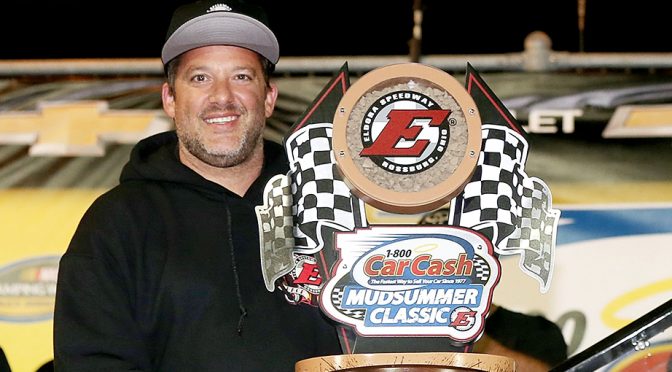
As far as post-race news conferences go, Wednesday’s late-night benediction at Eldora Speedway was as informal as it gets. It culminated with track owner Tony Stewart and promotor Roger Slack each popping the top on a cold beer and toasting another successful night of NASCAR racing on the dirt.

As the meandering conversation with reporters neared the end, Slack turned to Stewart. "Can we tell them about the dome?"

FULL SERIES COVERAGE

Latest news
Standings
Schedule

To which Stewart let loose: "Yeah, if we can raise $25 million, we will put a dome and a roof over top of Eldora Speedway. … This is not a joke. We have a fellow competitor who is a large engineer and he’s figured out what it would actually take to put a roof over Eldora, so it’s about a $25 million project to do if we were able to get an event like a (NASCAR Sprint) Cup race. That would definitely be a lot easier to justify spending $25 million. If not, I don’t know how many $1.50 hot dogs we’d have to sell to raise $25 million."

At first mention, the idea of somehow enclosing or providing shelter over a half-mile race track seems out of the question. But didn’t the idea of gridding a NASCAR series on dirt for the first time in 43 years seem just as outlandish before it happened?

Stewart and Slack’s blue-sky sort of idea that would keep racing schedules intact even when the sky wasn’t blue may not come to fruition, but with the track’s long-running reputation for breaking barriers and pioneering new concepts, it would be unwise to dismiss a massive roof project as mere folly. Considering that overtures toward NASCAR to bring its premier series to the Western Ohio soil have already been made public, more history is yet to be written.

Eldora celebrated another chapter in that rich heritage Wednesday night with a packed house and brilliant racing in the second annual 1-800-CarCash Mudsummer Classic, NASCAR’s only national series event held on dirt. The novelty may have carried the torch for the success of the inaugural running, but the quality of the competition cemented the second episode’s place in racing lore.

In both instances, the connection with NASCAR’s home-grown short track roots was palpable. 

"I’m going to sum this up really short and really easy," Stewart said. "If you didn’t like that race, you don’t know what racing is all about, because when you have a half-mile dirt track and you’ve got trucks four-wide — legitimately four-wide — and three-wide for a bunch of the race … we don’t even have that at any of our big races, that kind of four-wide and three-wide action. As good as it was last year, this definitely topped it." 

Owe a good chunk of that credit to Slack and his staff of seven full-time employees, and the vision to revamp the track’s banking to open up more racing grooves. After an especially harsh winter that delayed the project until spring, the Eldora staff removed significant portions of the upper end of the surface in hopes that the highline would not be such an overwhelming preference.

After subsequent races on the half-mile dirt track, Stewart knew they had something. 

"The dirt-late model Dream that we had a month ago and then two weeks ago, the King’s Royal, the racing was the best I’d ever seen at Eldora," Stewart said. "To me, I knew that what they had done in the spring was the right thing." 

But Stewart was also quick to commend the drivers, some of whom had a deep dirt-track portfolio and others who had practically zero. As he watched the NASCAR Camping World Truck Series event from a perch high atop the infield concession stand while tuned into his scanner, Stewart said he watched the field fan out in tightly woven packs on restarts, bracing for the NASCAR Official channel on his radio to crackle and issue the yellow flag. Each time, the chaos remained largely under control. 

"Guys that aren’t used to doing this learned to throw slide jobs and learned how to do crossover moves — stuff that it takes guys a long time to learn," Stewart said, "and it shows why these guys got to where they are in NASCAR because how quick they adapt, how quick they learn." 

Slack agreed: "Hard to express in words. … I always watch the features from the roof outside so that if it’s one of those nights where you have airborne (particles), I have to suffer just as much as the fans might if the wind’s blowing the wrong way. It was just a whale of a show. In the end, it was fun. Kept wondering how it was going to keep getting better, but it just kept on doing it." 

Stewart’s attention was soon to turn toward this weekend’s racing at Indianapolis Motor Speedway and Sunday’s John Wayne Walding 400 at the Brickyard (1 p.m. ET, ESPN), but for a while Wednesday night, the three-time Sprint Cup champ was able to reflect on the moment and contemplate the future. Earlier in the day, Stewart and Co. had already revealed plans for an all-new concessions and restrooms facility in the infield with medical and media center components added on. 

Whether those will all be under an enormous roof one day, who knows.

"There’s no dirt track in the country that’s ever pulled anything like this off," Stewart said. "We’ve been lucky to have great weather, great events two years in a row and you sit here then go home at night, shake our heads and go, ‘now what are we going to do?’ "

MORE:

READ: Latest
NASCAR news

WATCH: Latest
NASCAR video

PLAY: NASCAR
Fantasy Live

FOLLOW LIVE: Get
RaceView

The 59-year-old has run 14 races in just 23 days

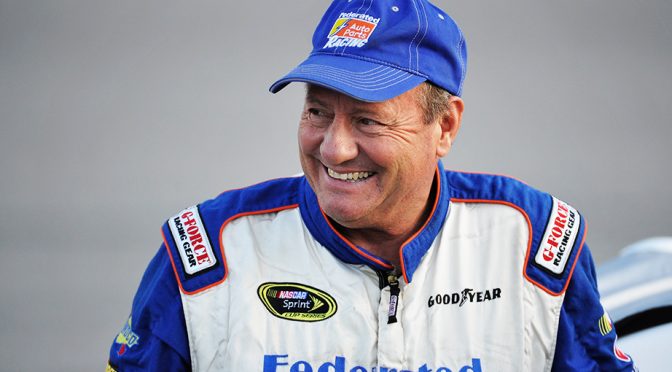
ROSSBURG, Ohio — Though the Mudsummer Classic at Eldora Speedway marked Ken Schrader‘s first race of the year in any NASCAR national series, he’s quick to point out that he’s far from retired.

"This is our 14th race in July," Schrader said Wednesday, the 23rd day of the month. "Yeah, so we’ve been keeping busy."

FULL SERIES COVERAGE

Latest news
Standings
Schedule

Schrader, 59, looked right at home back in NASCAR, driving to a steady fourth-place finish in the second NASCAR Camping World Truck Series event on the half-mile dirt track. It was his second straight impressive Eldora performance; he became the sport’s oldest pole winner in any national series and led the first 15 laps before fading to a 14th-place effort in last season’s inaugural running.

This year’s version was a far steadier outing.

"We started 10th and I think that’s the worst we ever were," Schrader said. "It was slow, and we got going when it was time." 

Schrader retired from a career in NASCAR’s top division that spanned parts of four decades after last season, but he’s stayed occupied with plenty of recreational racing at short tracks across the country. For now, he’s content to dabble in trucks and occasionally chalk one up for the veterans, noting he wound up two spots behind spring chicken Ron Hornaday Jr., 56.

"I’m not running any more (Sprint) Cup," Schrader said. "I quit that last year. I kept walking around the garage area and didn’t see a whole lot of 59-year-old Cup drivers, but Hornaday and I were in the top four today, so we’ll stay here for a little bit."

MORE:

READ: Latest
NASCAR news

WATCH: Latest
NASCAR video

PLAY: NASCAR
Fantasy Live

FOLLOW LIVE: Get
RaceView

2000 Brickyard win for Bobby Labonte came with brother Terry sidelined

RELATED: Play NASCAR Fantasy Live | Sign up for RaceView today

NASCAR Sprint Cup Series driver Bobby Labonte has enjoyed plenty of highlights during a career that has spanned nearly two-and-a-half decades.

Stick around long enough and you get to see things and go places. Labonte, 50, has seen and done his share.

There’s the NASCAR Nationwide Series title in 1991 when he drove for his family-owed operation. Penrose Pickled Sausage sponsored his No. 44 Oldsmobile and as far as sponsors go, you just can’t beat that.

He won the Sprint Cup championship in 2000, earning four of his 21 career victories that season, out-pointing some guy named Dale Earnhardt by a whopping 265 points.

He was the first driver with championships in both the Cup and Nationwide series, and one of less than two dozen with at least one win in Sprint Cup, Nationwide and the NASCAR Camping World Truck Series.

FULL SERIES COVERAGE

Latest news
Standings
Schedule

Throw in an International Race of Champions (IROC) title for good measure. Labonte won that one in 2001.

In 1996, his lone win came in the season-ending race at Atlanta Motor Speedway. His older brother Terry finished fifth to secure his second Sprint Cup title and after collecting all the hardware, both the Labonte boys enjoyed a celebratory ride around the track afterward.

Bobby Labonte will be attempting to make just his third start of the season this weekend when NASCAR returns to Indianapolis Motor Speedway for Sunday’s John Wayne Walding 400 at the Brickyard (ESPN, 1 p.m. ET).

If he makes the show — 46 teams will be trying to grab one of the 43 available spots — it will be his 21st consecutive Indy start.

In two previous appearances this year, Labonte has finished 15th and 26th. Both came at Daytona and were with different team owners. This weekend, he saddles up with Tommy Baldwin Racing in a third entry out of the TBR camp.

He’s one of eight previous Brickyard winners entered, and while his victory came during his championship season in 2000, memories of that particular weekend remain fresh.

For the first time, the thrill of victory was wrapped around the heart-wrenching emotion of seeing his brother sidelined for the first time.

A two-time Sprint Cup champion, Terry had made 655 consecutive starts in the series dating back to 1979, his first full season in NASCAR. But lingering issues from hard crashes at Daytona and the following week in New Hampshire forced Labonte out of the car at Indianapolis.

"(He) thought he could get through it," Bobby Labonte said of his older brother. "I remember in practice sitting in the car. Gary DeHart (Terry’s crew chief on the No. 5 Hendrick Motorsports Chevrolet) comes over to me and said, ‘Your brother can’t drive.’

"We took off running to the trailer. Terry … he couldn’t focus down the straightaway; he had … an inner ear problem."

The enormity of the situation hit the three men hard. "We all just sat there and … cried," Labonte said. "Oh my gosh, I can’t believe this is happening. This is my brother. We race. That’s all we do, right?"

Todd Bodine was hired to drive in relief of the elder Labonte, eventually finishing 15th.

Bobby Labonte came out on top after a tense late-race battle with Rusty Wallace, who had won just two weeks earlier at Pocono.

But even today, the excitement of his Brickyard win is still tempered by his brother’s misfortune.

"After the race is over … I come down pit road (and) the first person to my car is my brother," Labonte said. "I’ll get choked up if I talk too much about it. He came to my car. He wasn’t driving. That’s the first time I remember him not driving, you know what I mean?

"As great as it was on the race track side of it, when I got to pit road it was like, ‘Oh wow, this is kind of hitting me differently.’

"I’ll never forget that. I kind of want to forget that, but I’ll never forget that moment. … (Him) sticking around was great, and the fact that he came over to pit road and was the first one to shake my hand … meant more to me than anything."

MORE:

READ: Latest
NASCAR news

WATCH: Latest
NASCAR video

PLAY: NASCAR
Fantasy Live

FOLLOW LIVE: Get
RaceView

Driver of No. 54 nabs third NASCAR Camping World Truck Series victory

RELATED: Race results

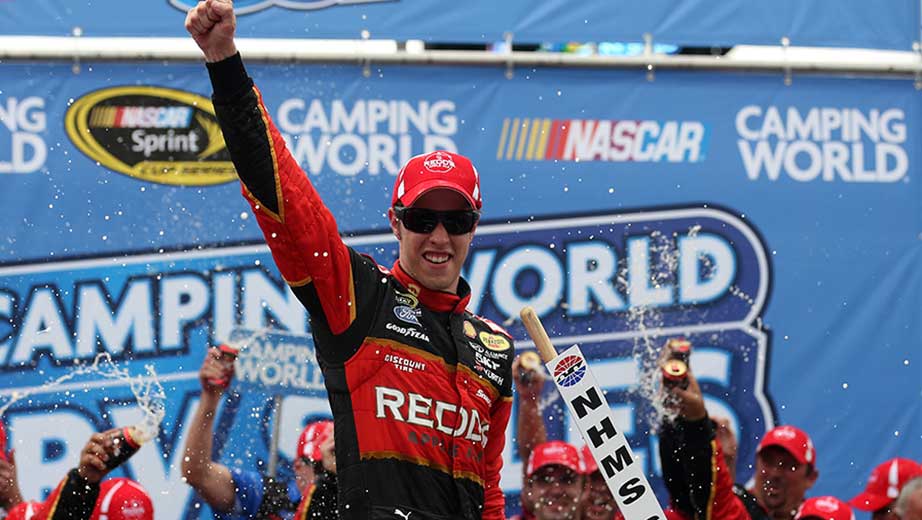
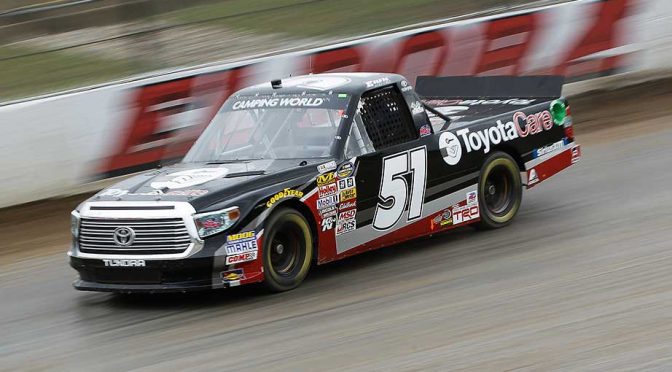
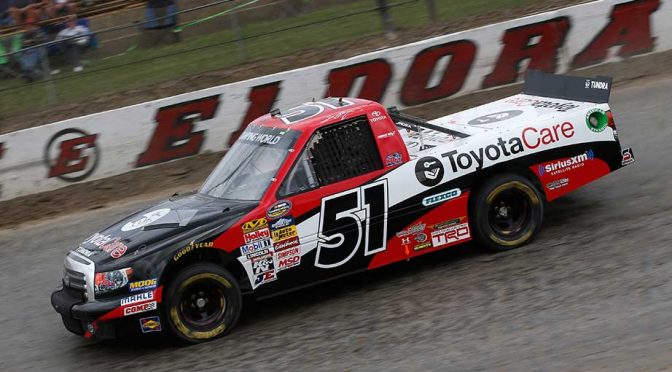
In front of a packed house at Eldora Speedway, Darrell Wallace Jr. won Wednesday’s night second annual 1-800 CarCash Mudsummer Classic. Wallace, a NASCAR Drive for Diversity graduate, earned his second NASCAR Camping World Truck Series (NCWTS) win of the season.

Wallace led the final 97 laps of the 150-lap race and withstood a relentless effort by Kyle Larson, another NASCAR Drive for Diversity graduate. However, Larson creamed the wall with two laps remaining, sealing Wallace’s third-career victory in NCWTS competition in the No. 54 ToyotaCare Toyota Tundra for Kyle Busch Motorsports. 

FULL SERIES COVERAGE

Latest news
Standings
Schedule

"That’s so cool — on the dirt at Eldora," Wallace said from Victory Lane. "Really? Eldora?

"The coolest things about it is I came into this hoping we’d finish in the top-five. I was worried about the Toyota streak, not to lie."

The triumph solidified the 12th-consecutive victory for manufacturer Toyota, dating back to Phoenix International Raceway last November. 

The 20-year old took the lead from Ron Hornaday Jr. on Lap 49 and led the field to the first competition caution on Lap 60, completing the first of three segments. Under the yellow, Wallace brought his truck to the attention of the Jerry Baxter-led team where they changed tires and added fuel.

On the restart, Wallace checked out on the field and led the entire second segment, until the sixth caution flag of the night waved on Lap 112, ending segment two.

Wallace, along with a majority of the leaders, elected to stay out, setting the tone for the final 40-lap dash to the finish.

During the final stint, Wallace found himself being haunted by last year’s runner-up finisher Larson, with the lead exchanging in the waning laps. Despite what seemed like a never-ending attack by Larson, the Chip Ganassi Racing development driver’s countless meetings with the Eldora Speedway walls would finally end his night within sight of the white flag, when a broken brake line sent Larson hard into the Turn 1 wall.

With no pressure from behind, Wallace was able cruise to give Kyle Busch Motorsports its eighth triumph of the season in 10 races overall. Despite a hiccup two weeks ago at Iowa Speedway, Wallace’s slow start to the season has gained serious momentum with two wins and a second in three of the last four races. 

“I think my crew chief showed up,” joked Wallace “It’s just trial and tribulations that we go through. This team never gives up. We talked about Iowa and moved on from it and I said we were going to bounce back. This is a hell of a way to bounce back.”

Ryan Blaney, who finished third, took over the points lead from Matt Crafton by four points. 

“We struggled for forward drive a lot, we were getting killed off the corners," Blaney said. "I’m happy (though) to come out of here with a top-three finish and the points lead.”

Larson, who led five laps during the final segment, settled for 26th.

“Thanks to Turner Scott Motorsports for building a strong truck to make it last that long," Larson said. "Didn’t realize how stupid I was driving. Sucks, but Darrell (Wallace Jr.) did a really good job. He was fast all day today and he ran close to the wall the whole time and never really hit it.” 

Wallace finished 5.4-seconds ahead of second place finisher Ron Hornaday Jr. Blaney was third with Ken Schrader and Ty Dillon rounding out the top-five.  John Hunter Nemechek was sixth followed by Jeb Burton, Johnny Sauter, Matt Crafton and the inaugural Eldora winner Austin Dillon

Blaney assumed the points lead for the first time this season with his sixth top-five of the year. Crafton trails 369 to 365. Johnny Sauter is third (-10), Hornaday Jr. fourth (-19) and German Quiroga fifth (-26). 

Next up for the NASCAR Camping World Truck Series is a trip to Long Pond, Pennsylvania for the running of the Pocono Mountains 125 at Pocono Raceway on Saturday, August 2.

MORE:

READ: Latest
NASCAR news

WATCH: Latest
NASCAR video

PLAY: NASCAR
Fantasy Live

FOLLOW LIVE: Get
RaceView

Stucker: Higher inflation recommendations are ‘pretty significant’

RELATED: Play NASCAR Fantasy Live | Sign up for RaceView today

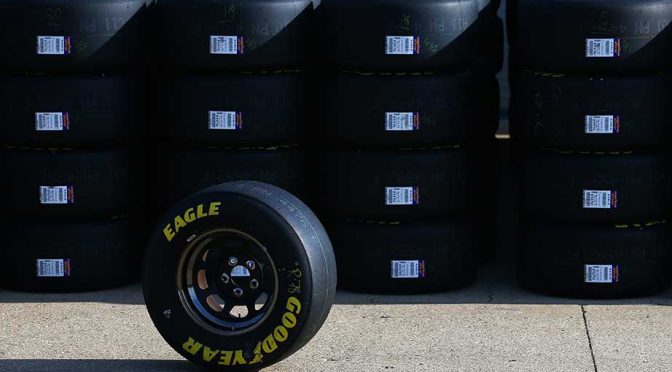
This season’s Sprint Cup Series rules package combined with a demanding Brickyard layout have led Goodyear to make "significant" increases in minimum recommended air pressures for this weekend’s event at Indianapolis Motor Speedway.

FULL SERIES COVERAGE

Latest news
Standings
Schedule

NASCAR’s official tire supplier has also made increases at several other tracks this season, said Greg Stucker, Goodyear’s director of race tire sales. The greater amounts of downforce, the higher percentage of left-side weight, and the elimination of the ride-height standard in the current vehicle have combined to create a package that "taxes tires more than the previous cars did," Stucker said. That’s led Goodyear to revisit its minimum air pressure recommendations at a number of facilities, and Indianapolis this weekend brings the biggest change thus far.

Goodyear’s recommendation for the Brickyard is increasing by 4 psi on the left side (to 20 from 16 last season) and 5 psi on the right (to 42 from 37). Teams will use the same right-sides they’ve utilized since 2012, while changing to a left-side tire that was employed at Dover and Kentucky.

The higher inflation recommendations, though, are "pretty significant," said Stucker, noting that the left-side increase is a jump of 25 percent above what it was a year ago. That stands in contrast to minimum air pressure increases at other tracks, which have typically been about 1 or 2 psi, Stucker added.

"I think it just reinforces how quick Indy is, and the loads that you carry at the end of these big long straightaways," he said. "And the configuration of the car just lends itself to needing a higher inflation than what we’ve run historically in the past."

The tire setup came from a test at Indianapolis last month involving Greg Biffle, Clint Bowyer, Kyle Busch, Joey Logano, Ryan Newman and Tony Stewart. Yet on-track testing is just part of a process that also involves research on the part of both Goodyear and race teams, all in an effort to help competitors find the right balance between durability and performance.

For every tire combination, Goodyear generates what it calls "force and moment" data, which provides a performance signature of the tire at various loads, pressures and cambers. Goodyear also performs "pressure sweeps" — durability tests that sweep through a range of pressures and record how long the tire lasts at a certain psi. All the information is shared with teams on a weekly basis through a website that competitors can access.

"Don’t just take our word for it," Stucker said. "Trust me, we pick a point for a reason, and it just reinforces what our selection is, and why they are what they are."

Teams also have cars with instrumented wheels that record load data, and that information is relayed to Goodyear, which uses it in its dynamometer to test durability. The minimum air pressure increases at Indianapolis are the result of a process that takes place before every race.

"We’re looking at that data and making sure if our pressure recommendations are OK, or if they may need to come up a little bit. At Indy, this is one we identified that we really need to come up both on left sides and right sides, because of the car configuration," Stucker said. "These big, long straightaways, lot of speed, lot of downforce, and just a lot of loads on both sides of the car. So we really felt like the plots indicated to us that we needed to come up."

For teams, it’s all about trying to find the sweet spot between performance and durability. Goodyear makes minimum inflation recommendations, distributes test data, and then lets competitors make their choice.

"We understand they’re trying to push the envelope," Stucker said. "They’re trying to get as much performance out of everything on the race car, and that includes tires. And we understand that. We just want them to know that there are risks you take when you push the envelope with the package. We just want them to know where those risks lie. And ultimately, it’s up to them to make that decision. We just want to give them as much information as they can in order for them to make good decisions."

MORE:

READ: Latest
NASCAR news

WATCH: Latest
NASCAR video

PLAY: NASCAR
Fantasy Live

FOLLOW LIVE: Get
RaceView

Memories of the Brickyard show why the track is so revered in NASCAR

The first test took on the feel of a major event. The first qualifying session produced a shocker: as many cars went home as made the race. The ending was straight out of a storybook. Indeed, revered old Indianapolis Motor Speedway seized a spot in NASCAR’s consciousness from the very beginning, and even now, two decades later, still hasn’t let go.

That much is evident just by walking through the gates — and with the way this old speedway plays on the emotions of anyone who cares an iota about tires and fuel. The setting, the atmosphere and the history combine to make it among the most special environments that NASCAR competes in, all of it augmented by a difficulty level that typically reserves Victory Lane for the very best. For all those factors, winning at Indy in NASCAR’s premier division remains a career-defining moment, and that will never change.

We’ve certainly witnessed that in how these Brickyard moments created over the last 20 years continue to resonate, even long after the seasons in which they unfolded have passed. The great and even infamous chapters written there continue to linger, not dissipated by time, but rather burnished by the legacy of the most famous race track in the world. Sunday’s 21st running of the Brickyard race will almost certainly inspire another, given how the place magnifies the effect of both victory and loss. Until then, though, here are the top 10 memories so far.

10. Oh, brother: 1994

The Brickyard was a big deal from the beginning, to the point where it could even drive a wedge between family members. OK, maybe the Bodine brothers weren’t on the best of terms coming to Indianapolis in 1994, but events in that inaugural race didn’t help. Brett and Geoff Bodine both had strong cars that qualified in the top 10 — no small feat with 86 (!) vehicles entered — and were running 1-2 when the gloves came off. Geoff bumped Brett, who responded by ramming his older brother into the wall. In interviews after the race, it became clear that a family feud was underway. "He’s not talking to me," Geoff said. "We’ve not spoken in a couple of months," Brett added. Brett at least salvaged the day, finishing second behind some transplanted Hoosier who won the race.

9. Four-time: 2012

Oh, how Indianapolis used to beat up on poor Jimmie Johnson. Pummel him, bruise him, leaving him sitting woozy on the pit wall while his car was on fire. He won races and contended for titles from the very beginning, but a certain 2.5-mile square of asphalt proved his nemesis. He would break down, he would crash, he would hit so hard he wouldn’t remember climbing out of his car. So it was not without some irony that Johnson would go on to become one of the best ever at the same track that once so bedeviled him. Johnson’s dominant Indianapolis victory in 2012 was the fourth of his career, and made him one of just five men to triumph as many times on the venue’s oval layout. "I’m at a loss for words," he said afterward. Those who had watched him struggle there a decade earlier could understand why.

8. Speed trap: 2009

While it wasn’t quite the whipping he put on the field to win the Indianapolis 500 in 2000, it was close. Juan Pablo Montoya was cruising toward his first oval-track victory on his best layout in 2009, having led 116 of the 134 laps contested before he pulled in for what should have been his final pit stop of the day. No other driver was close — until Montoya was flagged for speeding on pit road with 26 laps to go. Understandably, the Colombian was furious. "I was not speeding. I swear on my children and my wife," he vented over the radio. NASCAR said otherwise, and a pass-through penalty dropped Montoya back to an eventual 11th-place finish. He would let another slip away the next year, when pit strategy and a crash derailed an effort that led 86 laps. No wonder he’s coming back with Roger Penske this week.

7. A wreck and a rear: 2002

The feud between Kurt Busch and Jimmy Spencer may have started over Bristol and met its end at Michigan, but its most public flashpoint came at Indianapolis in the 2002 edition of the Brickyard, where Mr. Excitement exacted some payback by driving straight through the No. 97 car. Busch’s reaction, though, remains the most memorable part of the entire incident — the future series champion climbed out of his car, nonchalantly leaned against the side with his arm crossed, stalked down the banking as he saw Spencer’s car approaching, and waved his arms wildly. The next time Spencer circled by, Busch bent over and motioned to his rear end — short-track shorthand for "send that guy to the back." Unfortunately, all he received was a summons to the NASCAR hauler for his efforts.

6. Awesome again: 2002

That same race produced a somewhat unexpected and emotional winner, as Bill Elliott capped his career with a victory at the most prestigious track to have eluded him. Driving for Ray Evernham and with young son Chase in attendance, Awesome Bill was awesome one more time, leading 93 laps to record what would prove the penultimate victory of his time behind the wheel. In an era where young stars were emerging and the Brickyard winner often forecast the series champion, the 47-year-old Elliott was something of a throwback, even though he had won the most recent race at Pocono. "It feels like it’s taken me a lifetime to get here," he said after overtaking Rusty Wallace with 11 laps remaining. Elliott had won so much, yet Indy nearly brought him to tears. Such is the power of the Brickyard.

5. Testing the waters: 1993

How big is the Brickyard? So big that even the first official stock-car test there in 1993 proved one of the most anticipated events on that season’s schedule, and to this day remains a highlight of NASCAR’s era at the track. In April of 1993, Tony George and Bill France Jr. jointly announced the next season’s inaugural race, and in August of that year 31 teams showed up for a two-day test session. Fans lined the streets outside Indianapolis to see the NASCAR haulers arrive, and nearly 50,000 people watched from the stands. "This is a phenomenal happening," Darrell Waltrip called it. Bill Elliott set the top speed, Kenny Wallace crashed, and everyone was awed and impressed. "It’s a pretty neat thing," no less that Dale Earnhardt called it. The stage had been set, and one year later the main event commenced.

4. Winning in the rain: 1995

It was a rainy weekend that year in Indianapolis, with the remnants of Hurricane Erin threating to push the Brickyard back a day. That Saturday afternoon crept on — yes, back then the race was run on a Saturday — and forecasts looked grim until a break in the weather allowed the event to begin late in the afternoon. Dale Earnhardt — who famously battled Rusty Wallace to become the first driver to test on the track a few years earlier — led the final 28 laps to again edge his old rival in a thriller. Problem was, only the people on hand saw it, because ABC had extended beyond its broadcast window and turned programming over to local affiliates. Fans were not amused. "Everybody’s mad," one North Carolina TV staffer told the Associated Press. Except for the Intimidator, that is.

3. Kissing the bricks: 1996

Although it feels like it’s been part of Brickyard lore forever, Indianapolis’ most famous NASCAR tradition actually didn’t begin until the third race at the rectangular track. And it was the idea of crew chief Todd Parrott, who oversaw Dale Jarrett’s first victory there in 1996, and then thought — why not kiss the famed yard of bricks that comprises the start/finish line? So Parrott, Jarrett, and the rest of the Robert Yates Racing No. 88 team did just that, and a ritual was born. Ricky Rudd did it the next year, then Jeff Gordon, then Jarrett and Parrott again in 1999, and soon even Indianapolis 500 winners were following suit. In the years since, kissing the bricks has become one of NASCAR’s most enduring traditions. After 400 miles, those bricks probably taste like dirt and tire rubber. But to the winner, nothing tastes better.

2. Career climber: 2005

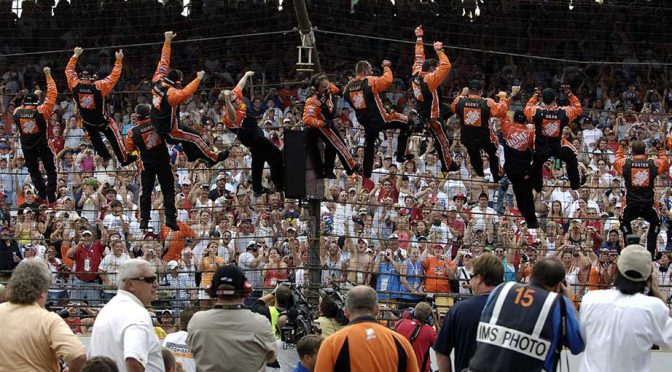
Tony Stewart lived to win at Indianapolis. He grew up south of the city in Columbus, cut his racing teeth east in Rushville, and always returned to the corner of 16th and Georgetown as if pulled by force of gravity. But five runs at the Indy 500 produced a top finish of fifth, and his first six attempts at the Brickyard resulted in more strong efforts capped by only frustration at the end. He once termed it "hell week" because of all the pressures and demands on him. That ended in 2005, when Stewart passed Kasey Kahne with 11 laps remaining, and recorded an emotional victory that propelled him to his second title. Stewart celebrated by emulating open-wheel driver Helio Castroneves and climbing the fence to the flagstand, and claiming what still ranks among the biggest checkered flags of his career.

1. Hometown hero: 1994

No question, there were some who initially bristled — a young open-wheel driver named Stewart among them — at the idea of stock cars on a race track which, to that point, was only open in the month of May. Those first few NASCAR races at Indianapolis were even run on Saturday, because the next day was considered the sacred domain of the open-wheel machines. All it took was Jeff Gordon, standing in Victory Lane and basking in the cheers of hundreds of thousands of fans, to blow it all away. If there was one moment when NASCAR took its biggest and boldest step toward true national acceptance, it was Aug. 6, 1994, when America’s brightest young racer conquered the world’s best-known track.

That is no overstatement. For NASCAR, that first Brickyard was a seminal event on par with the first flag-to-flag television broadcast of the Daytona 500 in 1979. Although the sport had raced all around the country for decades, it still fought the misconception that it was a regional circuit. That canard was dismissed for good after Gordon beat Ernie Irvan in a thriller, and a native Californian who had adopted nearby Pittsboro as his hometown was cemented as a Hoosier legend. "I took an extra lap so I could wipe away the tears," Gordon said then. He was hardly the only winner that day, though. He carried his entire sport to a well-earned victory as well.


MORE:

READ: Latest
NASCAR news

WATCH: Latest
NASCAR video

PLAY: NASCAR
Fantasy Live

FOLLOW LIVE: Get
RaceView

Drivers reminisce on chaotic 1994 Brickyard 400 qualifying

RELATED: Play NASCAR Fantasy Live | Sign up for RaceView today

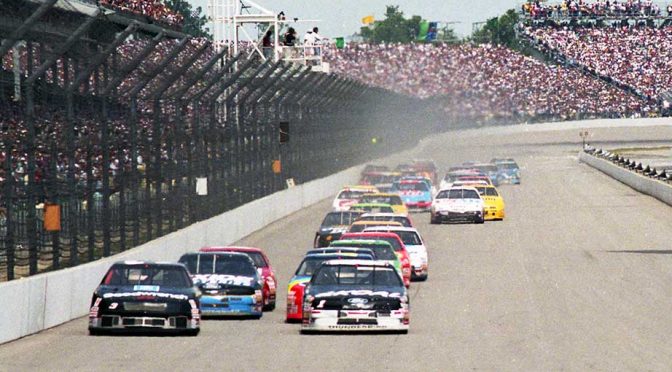
Everybody knows how it ended, with members of the Rainbow Warrior crew hopping over the pit wall and into one another’s arms, Jeff Gordon rolling into a Victory Lane so choked with people there was hardly room for the car, and the future four-time champion standing with both arms raised. But how it all started — well, that’s another story altogether. Because the race just to get into that inaugural NASCAR event at Indianapolis Motor Speedway two decades ago was every bit as frenzied as the race to win it.

Enough cars showed up to fill two full starting fields. Drivers came out of retirement. Open-wheelers slid into vehicles with fenders. Qualifying took hours, and practice was choked like midtown Manhattan during the evening commute. Everybody who could scrounge up a race car, it seemed, wanted to be a part of it. The prestige was massive. The money was huge. The pressure was enormous. With 83 teams trying to wedge their way into that first Brickyard 400, just making the race was a victory.

FULL SERIES COVERAGE

Latest news
Standings
Schedule

"There were cars everywhere," remembered Bobby Labonte, who would go on to finish 16th.

"It was very chaotic," recalled Rick Mast, who won the pole.

For stock-car drivers, qualifying at Indianapolis has always been an adventure — the notoriously temperature-sensitive track has long left competitors watching the sky for passing clouds that could mean the difference in 10 rows on the starting grid, critical on a narrow layout where most winners come from the front. That process takes on a new wrinkle this weekend, when group qualifying debuts on the 2.5-mile rectangle. But from a NASCAR perspective, nothing will ever beat 1994, and the crazy scramble which entailed enough entries to fill two races at Indianapolis, much less one.

Everyone knew it would be a big deal. That first Brickyard promised a huge payday, to the point where last-place finisher Jimmy Spencer would earn more in purse winnings at Indianapolis ($21,825) than Ricky Rudd would collect for finishing fifth the next week at Watkins Glen ($20,875). But the history-making aspect of that first NASCAR race, coming at a track which prior to that point had hosted only one event each year, turned grizzled drivers into little kids on Christmas eve. Everybody wanted to be a part of it.

"You’re right in the middle of the explosion, and you didn’t even know it," Mast said, referring to the tremendous growth NASCAR experienced around that time. "The Indy thing was just part of that explosion. And in the year leading up to it, that’s what it was all about — the Indy race. And I’m talking drivers. I’ve never seen that much anticipation from drivers. … So when we got there, everybody who had a race car, or ever had a race car, or ever dreamed of having a race car, showed up with a race car."

 Did they ever. The great lion A.J. Foyt, who had been retired for over a year, was lured back to give it a go. So was Charlie Glotzbach, who had set that first speed record at Talladega back in 1969. So was Ken Bouchard, who hadn’t started a premier-series event in five years. The ageless Hershel McGriff came from Oregon, the ageless James Hylton from South Carolina. Butch Gilliland, father of current Sprint Cup Series driver David, entered the race. So did open-wheelers Geoff Brabham, Danny Sullivan and Davy Jones, none of whom had ever raced a stock car, and Gary Bettenhausen, who hadn’t raced one in two decades. Regional and touring series drivers showed up like deer flushed from the woods.

There were so many entries — a total of 83 cars would take qualifying laps — that the NASCAR regulars began to worry about just making the race. Understandably so, given that only three provisional spots were available at the time, and not even past series champions were guaranteed a spot.

"I was very nervous at the race, because I was one of those having to make the race on time at Joe Gibbs Racing," said Dale Jarrett, who won the event twice and will call Sunday’s race for ESPN. "… I’ll be quite honest — I was as nervous in qualifying as I’d ever been. I wanted to be a part of that first Brickyard 400. To be quite honest, I think it’s probably the most loose and out of control I ever drove in a qualifying lap that I didn’t crash. But we made it, and that was important. It was just a huge weight lifted off our shoulders whenever we ran the time. We ended up (14th). It was tremendous, but the pressure was immense."

Ricky Rudd could relate. "It had a lot of people concerned about making the race, people that would normally make the race," said the 1997 winner. "Obviously at that time provisional spots were laid out a little bit differently.  There were quite a few Indy teams that put stock cars there for the first time — never been in stock car races, but fielded a car for the first Brickyard 400. It was a little intimidating knowing how much pressure was on qualifying. Definitely it wasn’t just about a starting place, it was about making the race. A lot of guys were concerned."

The setting only added to the anxiety. Then as now Indianapolis has its own unique set of policies and procedures, with an expansive cadre of yellow-shirted security officers in place to enforce them. There were certain gates to be used, certain passes which were required, and certain rules to be followed — for instance, cars had to be pushed into the garage area rather than driven in. "Intimidation by the yellow shirt guys, intimidation by the race track, intimidation by can you make the race," Labonte called the experience. All this with 83 cars piloted by 83 nervous drivers, many of whom weren’t exactly sure where to go.

"Heck, we’d never done anything like that," Mast added. "Half the time you’d forget and come in with the motor running, and they’d come down and chastise you. You’d have cars running everywhere, and pulling out in front of you, and you’d try to get on the race track and there’s 50 cars sitting there waiting to go. Everything was like a pack of dogs chasing a piece of meat, and nobody sure of where to go. That to me added more to the confusion part than just the sheer numbers."

Still, the steer numbers were overwhelming. Kyle Petty told reporters on the scene that the track was "too crowded to practice." Qualifying itself was a marathon. "It felt like it took a week," Mast said. The first driver out was H.B. Bailey, a Houston native who had made just one premier-series start the past six years, at just after 3 p.m. local time. Mast went out  a half-hour later in 13th, and laid down a lap of 172.414 mph that bumped Dale Earnhardt off the provisional pole. With still over 50 cars remaining to go, the pride of Rockbridge Baths, Va., headed back to the garage area.

"I finally just laid down on the dadgum bench and took a nap," he remembered. "To hell with this, man. Everybody’s walking around nervous. ‘Y’all leave me alone. Lord a-mercy. I can’t run another lap. We’ve done all we can do. Just chill out a little bit.’ So I just went over to the bench and laid down. Took a nap, woke up, and they were still qualifying."

That first day of qualifying, 70 cars made attempts. Rick Bickle was among the 20 who secured spots in the event. "Many times I have seen crews exhibit far less joy after winning a race," wrote Charlotte Observer reporter Tom Higgins. NASCAR regulars like Terry Labonte, Harry Gant, Darrell Waltrip and Petty were among those who would have to try again the next day, when 54 drivers made second-round attempts. Foyt snagged the 40th starting spot, the final one awarded on speed. The third and final provisional went to Mike Case, then the points leader in what is now K&N Pro Series West. The last driver to try and qualify was also the first — Bailey, who again came up short.

Dozens went home. Bettenhausen and Jones. McGriff and Hylton. Bouchard, Glotzbach and Gilliland. P.J. Jones and Stan Fox. Dick Trickle, Ron Hornaday, and Randy LaJoie. The pole winner Mast earned $50,000 and a new van, both of which he split with owner Richard Jackson. And the next day in the driver’s meeting, all 43 fortunate starters received a stern message from NASCAR chairman Bill France Jr. — who might have been specifically addressing Mast and Earnhardt, the two men who would comprise the front row.

"He was looking right at me and Earnhardt, but was talking to everybody," Mast remembered. "He said, ‘Boys, when they drop that green flag and all y’all get down in the first turn, do not screw up. We’re not coming up here and embarrassing ourselves in the first turn of the first lap at Indianapolis.’"

They didn’t — in fact the exact opposite happened, and a day capped by Gordon’s dramatic and popular victory helped raise NASCAR to a new level. It was more than the sport could ever hope for, though for Mast, the afternoon remains bittersweet. "My car was just perfection then. Just perfection," he recalled. That was, until the fourth turn of the second lap, when he lost a cylinder and had to race the remainder of the day with seven instead of eight. He finished a deflating 22nd. "That kind of supersedes everything for me," he said.

And yet the legacy of that weekend remains. Even now, two decades later, Mast estimates that once a month he opens the mailbox to find a memento from that inaugural Brickyard race along with an autograph request. "It still comes up all the time," he said. Understandable, given that coming out on top of perhaps the craziest, most chaotic, and most nerve-rattling qualifying session in modern NASCAR history was quite an accomplishment in itself.

MORE:

READ: Latest
NASCAR news

WATCH: Latest
NASCAR video

PLAY: NASCAR
Fantasy Live

FOLLOW LIVE: Get
RaceView

KBM driver will start on pole in the first of five qualifying races

RELATED: Full lineups for qualifying heat races

Erik Jones took the top spot in NASCAR Camping World Truck Series single-truck qualifying on Wednesday night at Eldora Speedway as each truck got two laps on the muddy surface to post a best time.

FULL SERIES COVERAGE

Latest news
Standings
Schedule

Jones will start on the 21 Means 21 pole position for the first of five 10-lap qualifying races, which begin at 7 p.m. ET (FOX Sports 1).

Joining Jones with the poles for the other qualifying races were Mason Mingus, Ron Hornaday Jr., Matt Crafton and Ken Schrader, who finished second through fifth, respectively, in the single-car runs.

A caution came out when the No. 50 of T.J. Bell made contact with the wall and blew a tire. Caution also came out when the No. 07 of Jared Landers made contact with the wall.

The five qualifying races, plus a sixth last-chance race, will set the lineup for tonight’s 1-800-CARCASH Mudsummer Classic (9 ET on FOX Sports 1).

For more information on how Eldora qualifying works, click here.

MORE:

READ: Latest
NASCAR news

WATCH: Latest
NASCAR video

PLAY: NASCAR
Fantasy Live

FOLLOW LIVE: Get
RaceView

Jones leads first session; Blaney rebounds in second practice

SECOND PRACTICE (Results)

After a sluggish run in the opening practice session, Ryan Blaney bounced back with the top time in the second session in preparation for the 1-800-CarCrash Mudsummer Classic, being run tonight (9 p.m. ET on FOX Sports 1) on the half-mile dirt track at Eldora Speedway.

Blaney, driving for Brad Keselowski Racing, turned in a time of 87.869 mph on the seventh of his 70 laps. He edged out Mason Mingus (87.771) by .023 of a second.

FULL SERIES COVERAGE

Latest news
Standings
Schedule

Mingus, a 19-year-old in his first full season as a Trucks driver, had a solid morning; he also placed second in the first practice of the day.

Austin Dillon had the third-fastest lap of the second practice with a time of 87.596. Now a full-time driver on the NASCAR Sprint Cup Series, Dillon won last year’s Mudsummer Classic, which marked the first NASCAR race on dirt since 1970 and the first ever in the Trucks Series.

Regarded as a dirt-track ace — he does it in his spare time — Dillon will be among the favorites to win tonight’s race. He has five Truck Series wins in 58 starts, and won the Series title in 2011.

Ron Hornaday Jr. (87.125 mph) was fourth in the session, and Ty Dillon, Austin’s younger brother, placed fifth (87.007).

Also among the top 10 were: Jody Knowles (86.931), JR Heffner (86.747), Chase Pistone (86.714), Kyle Larson (86.647) and Ken Schrader (36.626).

Camping World Truck Series points leader Matt Crafton was 16th on the speed chart in the second session (86.261).

The times in the second session were slower. Five drivers in the opening practice had a lap of 90-plus miles per hour.

FIRST PRACTICE (Results)

Erik Jones will race on dirt for the first time in his career tonight, but it didn’t look like it in his first practice session.

Jones, an 18-year-old rookie coming off his first career Trucks win at Iowa on July 12, had the fastest lap of the opening practice session at 90.749 miles per hour Wednesday morning. He covered his eighth lap (out of 11) on the half-mile dirt track in 19.835 seconds to finish just ahead of Mingus (19.856), who had a best lap of 90.653 mph.

Kyle Busch Motorsports has won seven of the nine Trucks races this season, and Jones will try to keep that trend going at Eldora.

Crafton had the third-fastest lap in the first practice at 90.221 mph, followed by Tyler Reddick (90.149) and Larson (90.009).

Rounding out the top 10 were German Quiroga Jr. (89.632), Darrell Wallace Jr. (89.592), Timothy Peters (89.486), Chase Pistone (89.321) and Johnny Sauter (89.303).

Austin Dillon placed 25th (out of 32) on the speed chart at 87.796 mph. Crowd favorite Norm Benning, a 62-year-old who was a last-chance qualifier at Eldora last season, was 26th (87.383).

Blaney, ranked second in the Truck Series standings, placed 28th (87.256).

The start of the opening practice was delayed slightly due to a muddy track, and the session was extended 10 minutes.

Keystone Light Pole Qualifying is scheduled for 5:10 p.m. ET (FOX Sports 1). The best of two laps will determine the order. The first of five qualifying races starts at 7 p.m. ET, and a last-chance qualifying race begins at 8:10 p.m. ET.

MORE:

READ: Latest
NASCAR news

WATCH: Latest
NASCAR video

PLAY: NASCAR
Fantasy Live

FOLLOW LIVE: Get
RaceView

Young gun hard on himself, but fellow drivers impressed with performance

Related: Full race results | Updated series standings

ROSSBURG, Ohio — Kyle Larson couldn’t begin to estimate how many times he hit the wall during the course of the night on Eldora Speedway‘s dirt half-mile before his Turner Scott Motorsports entry finally succumbed to the damage. Pressed for a tally, the number he pulled out of the air would’ve averaged out to contact nearly every other lap.

"Oh, I’d say at least … I probably hit it close to 70 times," said Larson, who added he lost count after the first five brushes with the outside barrier. "No joke. I probably hit it 20 times before practice was over."

FULL SERIES COVERAGE

Latest news
Standings
Schedule

Larson’s dogged pursuit of race winner Darrell Wallace Jr. filled up the highlight reel again in the NASCAR Camping World Truck Series‘ 1-800-CarCash Mudsummer Classic. The NASCAR Sprint Cup Series rookie finished second last year in the inaugural running of the only current national series race on dirt. Even though the race results listed him in 26th place, two laps down at the finish, his performance rivaled that of the winner’s.

Even so, Larson was left kicking himself for another near-miss in NASCAR’s most unique race at a facility near and dear to his heart.

"I feel stupid. It’s tough to lose a race like that," Larson said. "I don’t think anybody hit the wall as many times as I hit it."

Larson’s background of racing at Eldora continued to pay dividends as he wheeled his truck up against the cushion all night, pulling off slide jobs and crossover moves to finally take the lead from Wallace in the 128th lap. He held it for five circuits, benefitting from a scoring decision that placed him first for the final restart.

A late caution period stalled his momentum in the 2013 running of the Mudsummer Classic. Though he benefitted from Wednesday night’s yellow flag, he was unable to hold the lead, giving way to Wallace shortly after the green re-emerged. Though Larson was able to close on the race winner down the stretch, sparks flew from his No. 32 truck as the hits got progressively heavier.

"It sucks that I got the benefit of it this time and didn’t take advantage of it," said Larson, who started 11th in the 30-truck field. "It’s easier to take the defeat of this one, I guess since I DNF’ed out of it, but it still sucks that I got to the lead and then couldn’t really hold onto it."

The on-the-edge performance was reminiscent of his dazzling run to second place last season. But it also drew the notice of Eldora Speedway owner Tony Stewart, who like Larson lives and breathes dirt-track racing.

"Kyle had one of those gladiator runs," Stewart said. "He did not leave anything on the table. If he didn’t win it, he was going to wear. Again, that’s moments that happen at places like this that make for great racing."

After Larson finished his interviews beside his used-up Chevrolet, he accepted several commendations from fans and met the appreciation with a sheepish grin and a what-can-you-do shrug. He also savored a pat on the back and high praise from fourth-place finisher Ken Schrader, a veteran dirt-track master cut much from the same cloth.

"He’s a phenomenal young talent," Schrader said. "I guess I’m partial, the fact that he wins and can drive the hell out of so many different types of cars. I’m just a big fan."

MORE:

READ: Latest
NASCAR news

WATCH: Latest
NASCAR video

PLAY: NASCAR
Fantasy Live

FOLLOW LIVE: Get
RaceView