At home or on the go, keep tabs on the Nationwide Series action this weekend

RELATED: Play NASCAR Fantasy Live | Sign up for RaceView today

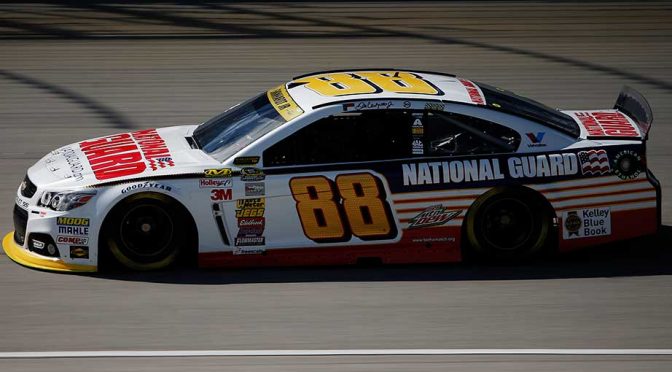
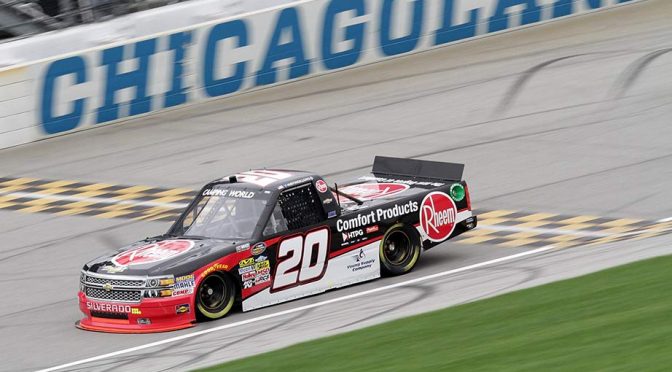
This weekend brings the NASCAR Nationwide Series to Chicagoland Speedway.

The Nationwide Series EnjoyIllinois.com 300 is on Saturday, July 19, at 8:30 p.m. ET with coverage on ESPN2.

For more information on track times, press conferences and GarageCam, you can check out this weekend’s schedule. For TV times see this week’s TV schedule.

We know you may not have the time to watch the race action without any interruptions, so if you’re on the go, here’s how to keep up at Chicagoland.

FULL SERIES COVERAGE

NASCAR.com’s Nationwide leaderboard updates in real-time and offers constant text updates of lead changes, cautions, strategies, strong runs and everything in between. On the go? Download the NASCAR Mobile app to follow the leaderboards live from your device. You can also track the Friday practices and Saturday afternoon qualifying.

Lap-by-Lap will keep you caught up even if you can only take a peek here and there. Check in now and then to read back through all the laps you’ve missed, or keep an eye on the feed for real-time race updates.

We’ll also be sending race updates via Twitter through the official @NASCAR, @NASCAR_NNS and  @NASCARStats handles.

Want to scan the radios? You can have that with RaceView Audio.

Be sure to check NASCAR.com for the latest news from Chicagoland as the action unfolds.

MORE:

READ: Latest
NASCAR news

WATCH: Latest
NASCAR video

PLAY: NASCAR
Fantasy Live

FOLLOW LIVE: Get
RaceView

Bruce: Logano’s frustration understandable, but Shepherd should be allowed to race

MORE: In-car of accident | NASCAR VP, Shepherd defend right to race
RELATED: Play NASCAR Fantasy Live | Sign up for RaceView today

It’s nice to see some of NASCAR’s best and brightest, as well as those simply along for the ride, get all lathered up about Morgan Shepherd.
 
Apparently, most just discovered that Shepherd is 72 years old and still making the occasional start in NASCAR’s Sprint Cup Series. His competitor’s license might be a little frayed around the edges, but it’s still valid.
 
Perhaps they weren’t paying attention when Shepherd drove earlier this year in Phoenix — but then again, his car lasted only 28 laps and he finished 43rd so it wasn’t as if he stuck around all day to see who wound up in Victory Lane.
 
He also was on hand at Dover, although that was in the Nationwide Series.

FULL SERIES COVERAGE

Latest news
Standings
Schedule

This past weekend, Shepherd was back in the Sprint Cup Series, competing at New Hampshire Motor Speedway. He was several laps down when he got tangled up with the guy running second, and now everyone seems to think he has no business behind the wheel.
 
Some have suggested Shepherd wasn’t maintaining minimum speed prior to the accident; after the race, however, NASCAR’s Robin Pemberton said that wasn’t the case.
 
Others described Shepherd as a rolling chicane, roadblock or some other such hindrance on the track. The same has been said at one time or another about roughly half the field in Sunday’s race. You’re either fast or you’re in the way.
 
And a few have gone so far as to suggest that should something of a similar nature happen in this year’s Chase, well, how would that look?
 
Here’s how — it would look like a wreck, pretty much like a lot of others that occur during the course of a season.
 
"Everybody’s just trying to crucify him," Joe Falk, the team owner who fielded Shepherd’s car Sunday, said a couple of days after the fact.
 
His days of contending for wins at the Sprint Cup level have passed — Shepherd hasn’t logged a top-five finish since 1997 — but he’s not the first driver that’s ever been out on the track running multiple laps down to the leaders. And he won’t be the last.
 
This isn’t parks and rec softball; there is no 10-lap slaughter rule.
 
Joey Logano, twice a winner this year and the driver knocked out of the race due to contact with Shepherd, questioned whether anyone should be allowed on the track if they can’t keep their car under control.
 
"If you can’t control your stuff, don’t even be out there," Logano said while his crew attempted to make repairs to his No. 22 Team Penske Ford. "If you’re 10 laps down, what are you doing?"
 
Logano was frustrated, and anyone that has ever been caught up in a similar incident can probably understand his stance on the situation.
 
Even Falk, who noted the handling problems Shepherd was fighting with the Circle Sport Racing entry, said his driver shared some of the blame.
 
"I think Morgan did drift up into him probably, but I think Joey cut him too tight, too," Falk said. "That’s easy to say, though. Everybody’s been taken out by a lapped car."
 
Accidents in auto racing don’t discriminate – young and old alike are just as likely to end up on the end of a wrecker at some point during the course of a season. Sometimes it’s due to a lack of experience, sometimes it’s due to an uncooperative car. Sometimes it’s both.
 
Let’s just call this particular incident what it was, an unfortunate set of circumstances, and be done with it.
 
Shepherd, a four-time winner in the series, is no longer contending for wins or racing with the leaders. But that doesn’t mean he should be denied the chance to compete.
 
And until NASCAR, or Shepherd himself, decides otherwise, that should continue to be the case.

MORE:

READ: Latest
NASCAR news

WATCH: Latest
NASCAR video

PLAY: NASCAR
Fantasy Live

FOLLOW LIVE: Get
RaceView

NASCAR Next driver had been suspended for pit road altercation at Loudon

MORE: Home Tracks look ahead to JEGS 150 at Columbus

CHARLOTTE, N.C. — When the K&N Pro Series East competes this weekend at Columbus Motor Speedway in Ohio, Ryan Gifford will be in the starting field.

Gifford had been suspended by NASCAR until the payment of a $1,000 fine stemming from a pit road altercation with another competitor after last weekend’s event at New Hampshire Motor Speedway. During a NASCAR Next event Wednesday at the NASCAR Hall of Fame, Gifford confirmed he would be competing in Saturday’s event.

"I left that in New Hampshire," Gifford said of last week’s incident. "I’m racing, so I’m looking forward to it. I kind of feel like we’ve got a shot at running good. We’ve found some things the last couple of weeks that have us running better. I guess I was running fifth whenever we got turned (at Loudon). So things have been better, and I’m looking forward to going to Columbus."

Gifford said last week’s incident was precipitated by contact on the race track. He remains on NASCAR probation until Dec. 31.

"We’re all passionate about what we do," he said. "We all want to win. We all love racing, we love this sport, and we want to win and finish as best we can. Emotions run high. It was just one of those deals — just a racing deal."

A 25-year-old native of Winchester, Tenn., Gifford is a member of the NASCAR Next class of up-and-coming drivers. He has a Pro Series East victory from Richmond in 2013, and has also made two Nationwide Series starts. Gifford has 15 career top-five finishes at Columbus, third-best in series history at the track.

"I’m excited to go to Columbus," he said. "… My focus is on winning races, so I’m just trying to put it all behind me and race."

MORE:

READ: Latest
NASCAR news

WATCH: Latest
NASCAR video

PLAY: NASCAR
Fantasy Live

FOLLOW LIVE: Get
RaceView

Early exit from Loudon brings back bad memories of tire troubles for No. 48 team

RELATED: Play NASCAR Fantasy Live | Sign up for RaceView today

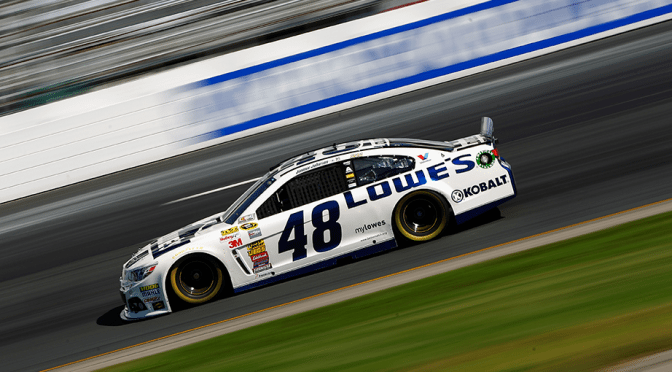
For the No. 48 team, it’s become a scene almost as common as Jimmie Johnson hoisting championship trophies above his head — the usually feared blue and white car limping to the garage area, part of its bodywork mashed and mangled, and a tire ripped to shreds.

We saw it this past Sunday at New Hampshire, where issues with two different left-rear tires in the first 11 laps knocked the six-time champion out of the race. We saw it earlier this season at Auto Club Speedway in Southern California, where a left-front problem ousted Johnson from an event, which he had dominated to that point. We saw it last year at Pocono, where Johnson suffered a right-front issue while leading. And we saw it at Phoenix in the penultimate race of the 2012 campaign, where a tire-related crash eased Brad Keselowski‘s path to that year’s championship.

There have been others along the way, including one at Bristol earlier this season. Johnson has endured at least seven races marred by tire issues since that fateful afternoon at Phoenix in the waning days of 2012 — a high rate of incidence for any elite team, much less the program that’s set the standard for excellence in the Sprint Cup Series garage area over the past decade. For perspective, consider that over the same 57-race span, the No. 48 car has been knocked out of races by mechanical failures just twice: at Michigan in 2013 due to an engine failure, and at Homestead because of a rear gear issue in the final race of 2012.

FULL SERIES COVERAGE

Latest news
Standings
Schedule

So to put it mildly, this is a program that has things buttoned down, to the point where crew chief Chad Knaus will make sure any cracks in the pit wall are taped over to ensure that an air gun hose doesn’t get snagged. The No. 48 team has been so good for so long not just because Johnson and Knaus are two of the best ever to perform their respective jobs, but because so little is left to chance. They prepare, they adapt, and they execute; and they whittle variables down to the bare minimum in the process.

All of which makes days like Sunday so difficult to understand. Johnson suffered a cut left-rear just eight laps into the race, pitted to change it, and a few laps later had an issue with the replacement send him into the wall. According to Goodyear, both tires failed in a manner consistent with low inflation pressure. "I’m expecting people to quickly point back at the team and say it’s our fault," Johnson told TNT after exiting the infield care center. "I guess if it is, we’ll accept it."

Although Joey Logano and Aric Almirola also suffered tire issues in practice at New Hampshire, the weekend was hardly rife with such problems. And while Johnson is steadfast in defending his team, the specter of tire issues clearly concerns Knaus, as he admitted after the No. 48 car’s failure at Pocono while leading in August of 2013. "We’ve had a lot of tire issues," Knaus said then. "I don’t know what’s going on, but we need to figure it out."

And if something confounds Knaus, it’s truly baffling for sure, particularly since the tire issues Johnson has suffered over the past 57 races have occurred for a number of different reasons — potential low inflation at New Hampshire, a bead issue at Pocono last year, a likely high-wear situation earlier this season at Bristol, probable air-pressure strategies at Fontana. Dropping the air pressure a tick can often help improve a car’s grip — but there’s a compromise to be made, as Kyle Busch explained after winning the March race at Auto Club in which Johnson was knocked out.

"Our team believes it’s too low of air pressure, and that’s what those (other teams) were doing to get them to wear funny and essentially blow out during the run," Busch said then. "It’s sort of like playing with fire. If you pour too much gas on it or let too much air out of it, the thing is going to go boom."

The thing certainly went boom on Johnson at New Hampshire. To be fair, "Six-Time" has been no stranger to issues like fuel mileage and tire problems, which both seem downright trifling for a driver of his caliber and a team of that capability — making incidents like Sunday’s all the more perplexing. On the surface, seven issues in 57 races certainly doesn’t sound like a lot. But for the best NASCAR program since Jeff Gordon‘s Rainbow Warriors to be dealing with this with any type of regularity is enough to leave anyone scratching their head.

Of course, there’s also likely a risk-versus-reward issue at play here, given that it’s the job of someone in Knaus’ position to push as far as he can to the edges without going over. During that same aforementioned 57-race span, Johnson has also won nine races and a championship, so clearly, whatever tactics the No. 48 team employs work in their favor the majority of the time. With three wins and a Chase for the NASCAR Sprint Cup berth all but mathematically secured this season, they can afford to play it aggressive with their setups, although no one outside the No. 48 camp knows for certain what role that may have played Sunday. And to be fair, almost all of these tire issues have occurred during the regular season, when teams are more prone to experimentation.

Except one. Johnson was coming off two consecutive victories, had a seven-point edge in the standings and appeared nothing short of bulletproof when he arrived in Phoenix for the next-to-last race of the 2012 season. But he qualified poorly, squeezed everything out of his car trying make up the difference, and ended up in the wall when he lost the right front because of what Goodyear termed a melted bead from excessive brake heat. Keselowski finished sixth, left with a 20-point lead, and clinched his first premier-series title the following week.

From a championship perspective, that’s the worst-case scenario, something the members of the No. 48 team know as well as anyone. Johnson has achieved so much in his career that any kind of setback can seem outsized by comparison, and that may certainly be the case here. But in a revamped Chase which now features an elimination format — and will definitely include a run at a record-tying seventh title — any kind of failure can loom large. With so much at stake, no one wants to witness a scene akin to Sunday’s, and the great Jimmie Johnson derailed by where the rubber meets the road.

MORE:

READ: Latest
NASCAR news

WATCH: Latest
NASCAR video

PLAY: NASCAR
Fantasy Live

FOLLOW LIVE: Get
RaceView

A victorious Warren crosses the line in a cloud of smoke with Bussa inches behind. 

Alex Warren took home his first career NASCAR PEAK Antifreeze Series Powered by iRacing.com victory in a chaotic race at New Hampshire Motor Speedway. The finish, which will go down as one of the closest and most exciting in series history, saved the race from a complete mess after several championship contenders finding trouble.

“Wanted to race him respectfully and glad I did.” — Matt Bussa

Warren crossed the line sideways in a cloud of smoke after Matt Bussa’s last-ditch effort to steal the win in the final turn came up just short. With 11 laps to go, Warren looked to have the race in the bag barring a caution, but Bussa steadily cut into his lead until he was right on the lead car’s bumper when the two took the white flag. Bussa tried the low side into Turn One, not the preferred line, and made it stick, enabling him to come off Turn Two beside Warren as the two drag-raced down the backstretch. Bussa drove hard into Turn Three but Warren hung tough on the outside and as the two battled off of Turn Four, Warren inched ahead heading for the checkers. Bussa tried giving Warren a rub to break his momentum which sent Warren sideways. Both drivers crossed the line in a shower of smoke and sparks, with Warren edging Bussa by three hundredths of a second.

While Warren was thrilled as expected, Bussa had no regrets on how he raced the last lap. “(I) got there on the final lap and got under him in Turn One.  I could have washed him up in Three but my instincts are way too clean to do that,” he said. “Wanted to race him respectfully and glad I did.”

With an attitude like that and fast cars at his disposal, Bussa has a good chance at being the next first-time winner in the NASCAR PEAK Antifreeze Series.

Nick Ottinger finished third and gained some serious ground in the championship standings as every other driver who entered NHMS in the top five found trouble at least once. Brian Schoenburg came home fourth, hoping a top five will turn his disappointing season around, and Granite State resident PJ Stergios rounded-out the top five.

Warren’s win was not without a touch of controversy.  On Lap 130 the eventual race winner got into Joey Brown, who was leading at the time, had dominated much of the race and appeared to be heading to his second straight win in the series. The contact sent Brown into a half-spin that cost him several spots and damaged his car. Brown would never recover the lost track position and wound- up twentieth at the finish after getting involved in more incidents back in the pack.

On a track where track position means everything, one could conclude the lead would be a safe place to be. That was not the case. Kenny Humpe was also spun out of the lead off the bumper of, ironically, Brown. Michael Conti was involved in the aftermath, ruining a solid race up to that point and costing him ground on Ottinger in the championship.

The one-groove racing surface led to 11 cautions and there were few cars that avoided the carnage. Ottinger was one of them and now leads the championship over Conti, who is eight points behind. Chad Laughton entered New Hampshire with the points lead, but his race quickly soured as he caused a crash on a restart early in the going. Laughton wasn’t done with trouble as he was involved in another crash that resulted in more damage than the first. He now sits 14 points back of the lead in third after finishing twenty-ninth.

Tied with Laughton on points is Ray Alfalla, who looked on his way to a top five before he too met his demise on a restart when Jake Stergios missed a shift. Alfalla sustained heavy damage to his front end but rallied for fifteenth after getting the damage fixed under the many yellows, while Jake Stergios bookends the top five in the standings.

Most of the NASCAR PEAK Antifreeze Series competitors leave New Hampshire with equal measures of disappointment and damaged racecars as the series heads to the hallowed ground of Indianapolis Motor Speedway. While the banking at The Brickyard is close to that of The Magic Mile, the similarities between the two end there. Sim racing at Indy normally gets fairly spread out, leading to long green flag runs. A new build from iRacing will also be coming which could throw a wrench into the setup-making process and further spread the field. Look for one driver or team to hit it right, though who that ends up being is anyone’s guess. Be sure to tune into iRacing Live to catch all the action!

Austin Dillon seeks another golden shovel; Schrader to defend pole

RELATED: Entry list for Mudsummer Classic

Three NASCAR Sprint Cup Series regulars, a semi-retired short-track veteran and the underdog darling of last season’s inaugural Mudsummer Classic are scheduled to be back for the NASCAR Camping World Truck Series‘ second-ever race on dirt at Eldora Speedway next week.

Austin Dillon will be back to defend his golden shovel victory from 2013 in the second-annual event, scheduled next Wednesday (9 p.m. ET, FOX Sports 1) at the historic half-mile dirt track that Tony Stewart owns in Rossburg, Ohio. He’ll be joined by his brother, Ty Dillon, in a pair of Richard Childress Racing Chevrolets.

Ken Schrader, who won the Keystone Light Pole Award last year to become the oldest pole-winner in a NASCAR national series race, was also listed on the preliminary entry list released Wednesday. He’ll be in solid equipment in the No. 00 Toyota owned by Gene Haas.

FULL SERIES COVERAGE

Latest news
Standings
Schedule

Sprint Cup rookie Kyle Larson, who dazzled the crowd with his dirt-track savvy in last year’s running, will be back in the No. 32 Turner Scott Motorsports Chevrolet entry for Wednesday’s race.

Sprint Cup rookie Michael Annett is scheduled to make his first truck series start since the 2008 season in a truck owned by NTS Motorsports. He’ll be a teammate to NASCAR Next driver Gray Gaulding and Chase Pistone.

The part-time drivers will try to make progress against a steady cast of Camping World Truck Series regulars, including defending series champion and current points leader Matt Crafton. The list of full-time drivers also includes Norm Benning, who will return after his captivating drive into the main event through the last-chance qualifying race. Benning is listed with a new truck number — No. 6 instead of his traditional No. 57.

NASCAR Next driver Erik Jones, who posted his second career victory in the series’ most recent race at Iowa Speedway, is also on the entry list in the No. 51 Toyota from Kyle Busch Motorsports.


MORE:

READ: Latest
NASCAR news

WATCH: Latest
NASCAR video

PLAY: NASCAR
Fantasy Live

FOLLOW LIVE: Get
RaceView

From garage workers to athletes, the pit stop has changed dramatically over the years

RELATED: Evolution of the pit stop through the years in photos

How far has technology progressed when it comes to pit stops in NASCAR racing? Ask walking encyclopedia Buz McKim, the NASCAR Hall of Fame resident historian, and he knows just the picture to drive the point home.

The classic black-and-white photo from the 1968 season depicts Junior Johnson‘s master mechanic Herb Nab over the pit wall and awaiting his driver, LeeRoy Yarbrough. Nab stands poised with his primitive air gun ready, but a closer inspection shows the early innovator’s preferred method of changing tires — the lug nuts are lodged in his teeth for quicker access.

Compared to today’s state-of-the-art pit stops in which the exchange of four fresh tires and the addition of 18 gallons of gas takes place in 12 seconds or sometimes less, the contrast almost makes NASCAR’s earliest crewmembers seem like cavemen before the invention of fire.

"It’s escalated now to where it’s unbelievable," said Waddell Wilson, who turned the wrenches for three Daytona 500 victories and saw decades of advances first-hand. "If you were to take these boys now, put ’em back in the early ’60s at the race track, it would blow their minds. They could not believe how far it’s come in really not that many years, in a way. … It’ll keep escalating. Technology is unreal in this day and time."

The art of performing a pit stop in NASCAR racing has grown from a rudimentary exercise with little emphasis in the sport’s infancy to the current-day orchestration with blazing speed, replete with all the pressures of big-time motorsports. NASCAR.com conducted extensive research, including interviews and the review of hours of footage to determine the turning points in the evolution of pit stops and the innovations that have stood the test of time.

UPS

Herb Nab waits to change tires, with lug nuts at the ready in his teeth. (Photo: ISC Archives via Getty Images)

The early years

Teams rarely needed pit stops in the formative years of the sport, primarily because most races were short, 100-mile affairs. The only race where pit stops truly factored in the 1950s was the ahead-of-its-time Southern 500 at Darlington Raceway.

When drivers did need to stop — usually because of tire issues or crash-related damage — their crew raised the car with old-fashioned bumper jacks and four-way tire wrenches until the mid-1950s and the advent of pneumatic air guns. Grainy footage of NASCAR Hall of Famer Herb Thomas pulling in with a flat tire at Lakewood Speedway shows that early stops to change just one tire took nearly a minute to complete.

Midway through the decade, floor jacks replaced bumper jacks with mechanical whiz Smokey Yunick believed to be the pioneer of that technology.

"Before that, they just didn’t know any better," McKim said. "Smokey had a truck repair shop in Daytona and he was used to those big floor jacks, and he thought, ‘well heck, we can just use one of them.’ It’s the old ‘necessity is the mother of invention’, more or less."

Speed on pit road didn’t take another quantum leap forward until the Wood Brothers made the earliest forays into choreographing their service. Their handiwork was showcased in the 1965 Indy 500 when they were hired to pit Jim Clark’s Lotus-Ford. Their speed assisted Clark in notching his only win in the fabled race and raised eyebrows up and down the Brickyard’s pit road, revolutionizing that series’ approach to pit stops.

The emphasis on timing and position shaved precious seconds from the time stopped in the pits, but it was still a laborious process. In the 1960s and into the 1970s — when speedways got bigger and races became longer — it wasn’t uncommon during caution periods to see teams change left-side tires, return to the track ahead of the pace car, then return to the pits to change right-side tires to avoid losing a lap.

Wilson recalled how the Mario Rossi-owned team for legendary driver Bobby Allison debuted another major time-saver in 1970 at the annual pit crew competition at Rockingham Speedway, gluing lug nuts directly to the wheel and making Nab’s iconic teeth-grinding methods obsolete.

"I thought we had it won with Pearson’s car because we were the quickest until they beat us out," said Wilson, who was with the famed Holman-Moody team at the time. "We worked on that, and that made a big difference." That practice continues today as teams participate in an every-weekend ritual of affixing lug nuts with high-tech rubber cement.

In terms of refueling, cars in NASCAR’s top series still used a gas cap attached by a lanyard until the rise of time-saving capless filler nozzles in 1974. That development, combined with advancements in ventilation and faster flow in gas cans pushed pit times even lower, down to the 30-second neighborhood. But major gains that dropped pit-stop times into the teens were just around the corner.

Moving toward modern

Andy Petree likes to tell the story about how one of his first big breaks in NASCAR came about. Junior Johnson hired him in 1981 to be a tire-changer in addition to other duties for the No. 11 driven by Darrell Waltrip, based solely on the recommendation of longtime family friend Ned Jarrett, now a NASCAR Hall of Famer.

What Jarrett was unclear of was that the extent of Petree’s training was his former employment at a tire store. Furthermore, the extent of his racing was of the weekend warrior variety in Limited Sportsman division races that were usually 25 laps with no pit stops required. The next thing Petree knew, he was riding in the team hauler to the series’ next race, all the way from North Carolina to Riverside, California.

"So the very first pit stop I ever made in NASCAR was when we were leading the race and Junior Johnson calls for four tires," said Petree, now an analyst for ESPN. "So you can’t imagine — there was no pit practice, none of that, nothing. Just show up and do it. So you talk about pressure. I mean I can’t tell you how much pressure. I had family just getting started, my wife was pregnant, and here I am with all this pressure to make this deal work. Anyway, we end up winning the race and it worked out for me … but I tell you, I was about to throw up."

Petree’s story underscores the growing emphasis on pit stops through the 1980s, but the work was still performed by mechanics and engineers whose primary duty was prepping the car for race day. Developments with lighter jacks, faster wrenches and improved fuel flow continued to offer help, but it wasn’t until the late ’80s and early ’90s that teams began to institute over-the-wall practice during the week to hone the craft.

To identify strong suits and pinpoint areas for improvement, NASCAR teams needed to review game film of their pit stops much in the way other sports teams did. Petree, who worked by then with Richard Childress Racing and the No. 3 team for Dale Earnhardt, originally began collecting footage with a cameraman standing behind pit wall but the deficiencies in showing every aspect of the team’s stops were evident. He next tried placing a cameraman in the grandstands with a long lens, but that also failed to give a complete picture.

Parallel to this, Petree had been introduced to the idea of small cameras that were the size of a lipstick or cigarette pack, mounting them on the car to gauge suspension travel and other data. When the first one arrived via courier, something clicked.

"I opened that thing up and a light bulb went off in my head and I said, ‘Uh oh, I think I got it.’ So I was the first one to put a camera on a pole above the pit stall," Petree said. "That was 1993. For the longest time, I think it was almost the entire season before anybody figured out what that thing was. We were able to record that pit stop from above, and you can’t believe the things that we could identify and work on and get better, watching the process. We would review these stops every week, so it was a huge emphasis that we’d put on pit stops. And I think that’s when it really started."

Game-changer

For all the advances in equipment, practice and timing, four-tire stops didn’t regularly dip down below 20 seconds until the revolutionary notion of shaping pit crews in the mold of a professional sports team, with each over-the-wall crewmember having their own specialty role. The pioneer was Ray Evernham, a former Modified racer who was just beginning to make his mark in the NASCAR garage.

When Evernham was paired with young phenom Jeff Gordon in the 1993 season, he formed the Rainbow Warriors, a purpose-built crew of professional athletes for the No. 24 Hendrick Motorsports team. With the "Refuse to Lose" motto on their T-shirts becoming the team’s calling card, the concept ushered in a new attitude and new era on pit road.

"I think every great crew chief sort of revolutionizes things," Gordon said of Evernham. "They’re always looking at what area can you find the most significant gain, and I think Ray really started focusing and understanding that races could be won or lost on pit road by just gaining a couple tenths of a second and being consistent with that and seeing how it was getting harder and harder to gain those positions on the race track because of aerodynamics and track position.

"Yeah, I think that pit crews evolved so much during that period of time where they were crew members or guys that worked in the shop during the week and then went to the track and were your best guys that could pit the car, where Ray said, you know what, we need to start bringing athletes in here and guys that were specialized and trained at changing tires, carrying tires, jacking the car, and I think it did revolutionize things."

Other teams eventually followed suit, and over time the practice has helped numerous athletes from more traditional stick-and-ball sports enjoy a second career in NASCAR, whether they have a stock-car racing background or not.

But all athletes require coaches, and NASCAR teams have adapted to fulfill that need. It’s what prompted Team Penske to hire Jim Beichner, the wrestling coach for 18 seasons at the University at Buffalo, to help improve conditioning and fine-tune the powerhouse operation’s crew.

"We’re looking more at ex-athletes from different sports that are very talented," Team Penske No. 2 crew chief Paul Wolfe told SiriusXM NASCAR Radio. "We just kind of get them in the door and see what aspects they’re good at and where we think they could fit in. And then you just kind of train them to do the jobs we want. Those guys that are jumping over the wall are athletes today, and that’s all they focus on. There’s no concern to them about working on the race cars. That’s what it takes to be able to be successful on pit road these days."

Better equipment has done its part as well, shaving more precious tenths of a second from stops. Jacks now require just one pump to lift the car, impact wrenches are now purpose-built tools manufactured for racing teams only, and the invention and progression of the "war wagon" pit box as a one-stop shop for race-day needs have all made crewmembers’ jobs more efficient.

But for all the advances in tools of the trade, the specialization of the men behind the wrenches has made the biggest difference.

"Now look at it," Gordon said. "We have whole training facilities and recruitment and everything else to get the best athletes we can to do that."

Safety and the future

The emphasis on speed hasn’t come without nods to safety. NASCAR officials instituted pit-road speed limits after the death of crewman Mike Rich in a pit-road accident in the 1990 season finale. Beforehand, drivers barely slowed as they pulled off the track to pit lane.

"I never thought about it, all the years I went across the wall," Waddell Wilson said. "The cars would go by you so fast especially at Daytona and Talladega, the speed of them would just about turn you around. They’d come down pit road about as fast as they were running down the race track. That’s how they’d make up time."

A pit crew’s attire has also come a long way. In the earliest days, crewmembers went over the wall with no helmets, dressed in only mechanic’s work shirts and pants. Not until later in the 1980s did teams begin using kneepads to help ease the pain in kneeling on the pavement to change tires. Now pit crews are outfitted in fireproof uniforms with full-face helmets, some with lights underneath the visors to improve visibility during night races.

Thanks to specialized pit crews and equipment, the threshold for a successful stop these days puts teams in the 12-second bracket for four tires and two cans of gas. But for all the advancements made in other racing series that have no limits on how many crewmembers can service the car, the nod to an old-school approach in stock-car racing still makes teams work for it.

"Really in NASCAR, it’s still just two air wrenches, six guys basically across the wall — that’s it. So with technology, it hasn’t really changed that much," Petree said. "It’s really these athletes and coaches and everything that have gotten this process down. That’s what makes it amazing that they can do a 12-second stop with the basic same equipment when I started and was doing 24-second pit stops."

But how much faster can pit stops go? Ten seconds? Eight? Chris Rice, competition manager for RAB Racing and a NASCAR.com analyst, said that only radical changes would push four-tire stops into the single digits on the stopwatch.

"We’re to our limit. I don’t think NASCAR wants us to be much faster," Rice said. "You know, 11, 12 seconds is all they want to see. The only way to get faster is go to one lug nut, and I don’t ever see that coming because we’re running a stock car. A stock car, you can go in the Hall of Fame and the cars have five lug nuts — some even have six. Obviously people are going to get stronger and faster, but you’re at a point now that you can’t get the gas in fast enough to be any faster."

Petree agreed, acknowledging the restrictions posed by fuel flow. But he hinted that the evolutionary nature of finding speed on pit road may still have room to grow.

"But what is the limit on a stop that doesn’t take a full load of fuel? We haven’t seen it yet," Petree said. "I would like to say it would be 11 seconds, but I know it’s not because I’ve been there when I thought a 20-second pit stop was unheard of."

First K&N Pro Series East victory for NASCAR Next driver comes in front of influential eyes

RELATED: Play NASCAR Fantasy Live | Sign up for RaceView today

Jesse Little led only one lap in the July 11 Granite State 100 at New Hampshire Motor Speedway.

Fortunately for the NASCAR Next driver, his move to the front came on the last lap.

Little, 17, earned his first NASCAR K&N Pro Series East victory by darting from third to first when race leader Nick Drake and second-place Brandon Jones tangled in Turn 3 at NHMS.

The victory came in Little’s 31st start in the series.

Little said he didn’t have a car capable of getting around the leaders, but based on what he saw taking place in front of him, knew he might have a chance.

“And when I saw them wreck, I had a big sense of relief … once I (took) the checkered flag, I felt like all the pressure was lifted off my shoulders,” he said.

FULL SERIES COVERAGE

Latest news
Standings
Schedule

“It was a really special feeling pulling into Victory Lane and finally getting everybody that supports me and sticks behind me their first win.”

Little is the son of former NASCAR Sprint Cup Series driver Chad Little and has been around racing his entire life. He is one of 12 NASCAR Next drivers and is competing in his second full season in the K&N Series.

“I grew up in the racing world, and that’s really all I know,” Little said. “I don’t really know that many people outside of it … just people that have been close to my dad and have helped him through his career, that he’s stayed close with and now I’m beginning to build relationships with.”

The K&N Series travels to Columbus (Ohio) Motor Speedway this week for the July 19 Jegs 150. Three different winners have emerged in the three previous K&N stops at Columbus — Darrell Wallace Jr. (2011), Cale Conley (‘12) and Daniel Suarez (‘13). Little, now fourth in points, has one career start at the 0.333-mile oval, finishing 12th a year ago.

The New Hampshire win was Little’s third consecutive top-10 finish and his fifth in this year’s 10 races.

“It was a huge win for us, being at New Hampshire and being with the Sprint Cup guys,” Little said. “I put it … New Hampshire as one of our biggest races of the year, and to get the win there, I think it couldn’t have come at a better place.

“It was right in our mid‑season where we had just started to build back and had some good top-10 finishes, and to go out and get the win, it definitely gave my guys a ton of confidence, including myself, and it was really gratifying the way we did it.

“We ran up front all day, and the teams know how hard we work, and even though we’re under-sourced and under-funded, it’s just really gratifying that we can go out at a track like that and prove ourselves and I can prove to other people that myself as a driver, I’m there to contend and I want to win.”

Ben Rhodes, a winner of four consecutive races heading into NHMS and five overall this season, remains the series points leader.

MORE:

READ: Latest
NASCAR news

WATCH: Latest
NASCAR video

PLAY: NASCAR
Fantasy Live

FOLLOW LIVE: Get
RaceView

See the full list of participants for Eldora

Entry # Driver Owner Crew chief Manufacturer Sponsor

1

0

Ryan Ellis(i)

Kenneth Grimes

Jeremy Nowak

12 RAM

Koma Unwind Relaxation Drink

2

00

Ken Schrader

Gene Haas

Donald Richeson

13 Toyota

Federated Auto Parts

3

02

Tyler Young

Randy Young

Bryan Berry

14 Chevrolet

Randco/Young’s Building Systems

4

2

Austin Dillon(i)

Richard Childress

Nick Harrison

12 Chevrolet

AMERICAN ETHANOL

5

3

Ty Dillon(i)

Richard Childress

Danny Stockman Jr

13 Chevrolet

TBD

6

05

John Wes Townley

Tony Townley

Mike Beam

14 Toyota

Zaxby’s

7

6

Norm Benning

Norm Benning

Kevin Dargie

14 Chevrolet

TBA

8

07

Ray Black Jr

Ken Smith

Tam Topham

13 Chevrolet

TBA

9

08

Jimmy Weller

Bobby Dotter

Jason Miller

13 Chevrolet

TBA

10

8

John Hunter Nemechek

Sidney Mauldin

Jerry Babb

14 Toyota

TBD

11

9

Chase Pistone

Joe Denette

Ryan McKinney

14 Chevrolet

NTS Motorsports

12

10

Jennifer Jo Cobb

Jennifer Jo Cobb

Steve Kuykendall

12 RAM

Koma Unwind Relaxation Drink

13

13

Jeb Burton

Duke Thorson

Jeriod Prince

14 Toyota

Estes-Carolina Nut Company

14

14

Michael Annett(i)

Bob Newberry

John Monsam

13 Chevrolet

TMC Transports

15

17

Timothy Peters

Tom Deloach

Marcus Richmond II

14 Toyota

Red Horse Racing

16

19

Tyler Reddick

Brad Keselowski

Doug Randolph

14 Ford

Broken Bow Records

17

20

Gray Gaulding

Bob Newberry

Jeff Hensley

14 Chevrolet

Gemini Southern

18

21

Joey Coulter

Maurice Gallagher Jr

Jeff Stankiewicz

14 Chevrolet

TBA

19

29

Ryan Blaney

Brad Keselowski

Chad Kendrick

14 Ford

Cooper Standard

20

30

Ron Hornaday Jr

Steve Turner

Doug George

14 Chevrolet

Exide

21

31

Ben Kennedy

Steve Turner

Michael Shelton

14 Chevrolet

heater.com

22

32

Kyle Larson(i)

Harry Scott Jr

Mike Hillman Jr

14 Chevrolet

Glad

23

35

Mason Mingus

Kevin Cywinski

Mark Rette

14 Toyota

Call 811

24

50

T J Bell

Mark Beaver

Ken Evans

14 Chevrolet

American Linemen

25

51

Erik Jones

Kyle Busch

Eric Phillips

14 Toyota

ToyotaCare

26

54

Darrell Wallace Jr

Kyle Busch

Jerry Baxter

14 Toyota

ToyotaCare

27

63

Jr Heffner

Michael Mittler

Michael Mittler

13 Chevrolet

TBA

28

77

German Quiroga

Tom Deloach

Butch Hylton

14 Toyota

NET10 Wireless

29

180

Jody Knowles

Tracy Wallace

Wayne Hansard

13 Ford

Clayton Signs

30

182

TBA

John Corr

Michael Cheek

13 Chevrolet

Performance Auto

31

88

Matt Crafton

Rhonda Thorson

Carl Joiner

14 Toyota

Ideal Door-Menards

32

98

Johnny Sauter

Mike Curb

Dennis Connor

14 Toyota

Smokey Mountain-Curb Records

33

99

Bryan Silas

Chris Baluch

Cal Boprey

14 Chevrolet

TBA

MORE:

READ: Latest
NASCAR news

WATCH: Latest
NASCAR video

PLAY: NASCAR
Fantasy Live

FOLLOW LIVE: Get
RaceView

New color schemes celebrate members of the Chase Grid

MORE: Current Chase standings
RELATED: Full coverage of the Chase for the NASCAR Sprint Cup format changes | Official news release | Changes explained | Chase Facts and FAQ

DAYTONA BEACH, Fla. (July 15, 2014) — Celebrating the accomplishments of those drivers who will contend for the 2014 NASCAR Sprint Cup Series championship, NASCAR has released several new elements to the paint schemes of race cars making the 16-driver Chase Grid.

Chase for the NASCAR Sprint Cup-eligible cars will have the roof number, the front splitter / front fascia and the windshield header colored yellow, as well as have a Chase for the NASCAR Sprint Cup logo affixed to the front-quarter panel of their race car.

As part of NASCAR’s emphasis on winning races all season long, this celebratory paint scheme will be placed on a driver’s car to begin the Chase for the NASCAR Sprint Cup, at Chicagoland Speedway on Sept. 14. Once a driver is eliminated after one of the Chase’s first three rounds, the paint scheme will be removed from the car. Please refer to the graphic for a visual representation of these changes.

These changes serve as a visible symbol of the new Chase format. In addition, the paint scheme elements will ensure that fans are able to easily identify each championship contender as NASCAR’s playoffs progress.

Announced by NASCAR Chairman and CEO Brian France in January, the new championship format expands the Chase field to 16 drivers, up from 12 in previous years, and implements a new round-by-round advancement format that ultimately will reward a battle-tested, worthy champion.

A victory in the first 26 races all but guarantees a berth in the 10-race Chase, which will air exclusively on the ESPN family of networks. The number of championship drivers in contention for the championship decreases after every three Chase races with four drivers racing for the title at Homestead-Miami Speedway in the NASCAR Sprint Cup Championship, scheduled for November 16.

MORE:

READ: Latest
NASCAR news

WATCH: Latest
NASCAR video

PLAY: NASCAR
Fantasy Live

FOLLOW LIVE: Get
RaceView