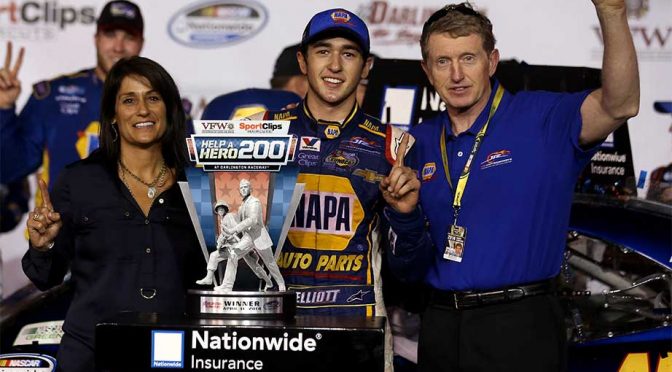
Georgia town celebrates Chase’s victories in similar fashion to Bill’s wins

RELATED: Play NASCAR Fantasy Live

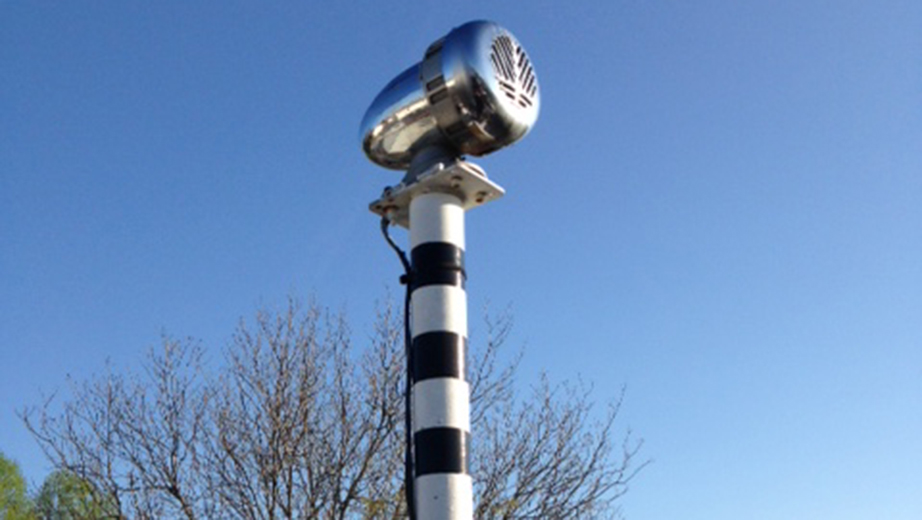
The siren is a 12-volt model out of a former highway patrol car, but these days it sits atop a pole striped black and white like a checkered flag. And when it emits its ear-splitting howl, people in Dawsonville, Ga., know exactly what it means — local son Chase Elliott has won another race.

For two consecutive Friday nights, the siren perched on the roof of the Dawsonville Pool Room has sounded its mighty shriek, and for two consecutive Friday nights the locals have streamed outside to honk car horns and celebrate as if it were midnight on New Year’s Eve. Elliott’s back-to-back victories in the Nationwide Series have not only cemented the 18-year-old as a rising star, they’ve also helped to revive a unique tradition in his hometown. When an Elliott wins, the siren above the Pool Room blows. It was that way during Bill’s glory days, and it’s that way again now with his son Chase.

"It’s been so good for this community," said Gordon Pirkle, the Pool Room’s longtime owner and a family friend of the Elliotts. "Everybody’s spirits are up. It’s back like it was in the mid-80s."

Everyone knew about Dawsonville in the 1980s, when Bill Elliott — his nickname, "Awesome Bill from Dawsonville," said it all — put this town on the map. Back then the siren atop the Pool Room rang out with regularity, to the point where Pirkle affixed it to the roof. That siren, which came from a volunteer fire department, is still up there, and the Pool Room’s 77-year-old owner jokes that he hopes to one day sound it one more time.
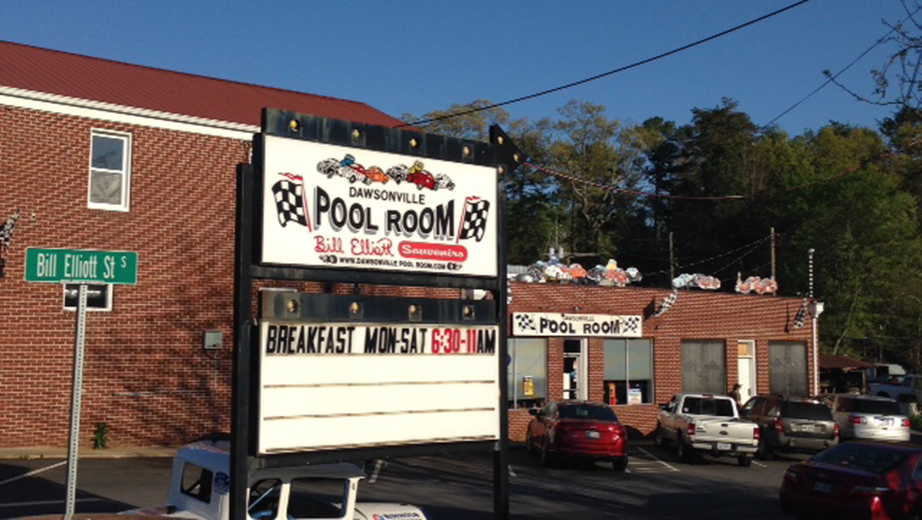


(Photos courtesy of Michael Garrett)

Barring an unforeseen comeback by the 1988 NASCAR champion, that appears unlikely — Bill hasn’t raced at the sport’s top level in two years, and his siren has remained quiet since his last victory, in 2003 at Rockingham, N.C. So for the better part of a decade the sirens fell silent, and despite its legacy Dawsonville became a sleepy north Georgia town halfway between Atlanta and the Tennessee line. And then Bill and Cindy Elliott moved back because their son Chase wanted to pursue racing, and then everything started to change.

Or perhaps more accurately, everything started to return to the way it used to be. Back in 1983, Pirkle had a shop next to the Pool Room that housed the machines for the coin-operated amusement business he’s also involved in. "The boys fixed up a back room there so they could watch the races," Pirkle remembered, and when a caution flew late in the 1983 season finale at Riverside International Raceway, the locals realized their man Elliott was about to win in NASCAR for the first time. "We had to do something," Pirkle said, and there happened to be this old fire station siren sitting on the floor.

He found an extension cord, plugged it in, took the siren outside and let it roar, beginning a tradition in the process. "Of course, the deputy sheriff pulled up wanting to know what was going on," Pirkle remembered, "and we told him Bill Elliott won the race."

The enthusiasm was understandable. Pirkle had been a friend of Elliott’s father George, and all the Elliott boys were regulars in the Pool Room when they weren’t working at the race shop eight miles away. "They just seem like family to me," Pirkle said. By 1984, when Bill won three times, Pirkle had the siren atop the cab of a pickup truck. By 1985, when Elliott won 11 times, it had a permanent position on the roof. There was no cable television in Dawsonville then, and the Pool Room was one of the few places in town with a satellite dish. Pirkle — who originally didn’t even open the joint on Sundays — would pack them in, putting out folding chairs so everyone could crowd around a 21-inch television.

Now, everyone watches Chase race on a 24-foot projection TV set up down the street in city hall, the same building that houses the Georgia Racing Hall of Fame. But the siren still screams from atop the Pool Room, though the model used to celebrate Chase’s victories is louder than the one which honored his father. People on the outskirts of town can hear it from their back porch. "It’s as loud as our emergency tornado warning," said Michael Garrett, Pirkle’s grandson, who manages the Pool Room’s social media accounts. "It’s no little siren."

At 20, Garrett is too young to remember Bill Elliott’s heyday, although he does remember hearing the siren call out for the final few victories of the driver’s career. The success of Chase Elliott, though, has allowed Garrett and others of his generation to experience the tradition all over again. Although Pirkle would sound the siren for big victories in Chase’s late model days — like last year’s Snowball Derby, which the younger Elliott later had taken away due to an inspection violation — nothing has galvanized Dawsonville quite like his Nationwide triumphs of the past few weeks.

"A bunch of people that didn’t know they used to do it for Bill, like people who have recently moved in, are realizing it’s for Chase now," Garrett said. "I heard it back in early 2000s when Bill won his last race. But I really don’t remember it as much as I know now that Chase is winning, and Papa is blowing the siren again. A younger generation like me, we can fall in love with that tradition now because of Chase. We weren’t able to do it back in Bill’s day. It’s a really neat thing."

And it continues a long NASCAR tradition in Dawsonville, where the Pool Room has been a fixture for over 50 years. Bill still pops in a few times a week to eat lunch, when the specials are comfort food staples like chicken and dressing or hamburger steak. Pirkle’s daughter Hayley is a former Miss Atlanta Journal 500 who appeared in Victory Lane on the day when Elliott clinched his championship in Atlanta in 1988. And Chase even worked at the Pool Room one summer when at 13, his parents thought their son should experience what it was like to hold down a job.

Pirkle chuckles when he tells the story. Chase was already racing at the time, and concerned about how he’d fit a part-time job into his schedule, so Pirkle agreed to let him work the early shift and then leave to go work on his race car with the race team employees who would come in every day for lunch. Pirkle had hired plenty of kids involved in sports, and had always found them to be industrious and responsible employees, but he had one rule — anyone who had to leave early had to make sure all the dishes were washed first. Chase would be no different.

"About a week or so went by, and my help was just really loving that kid," Pirkle said. "Every little break he’d get, he’d run back there to that sink and get the dishes washed up. He didn’t want to be late getting to that shop, is what it was. I don’t think the rest of my staff ever washed any dishes on the breakfast shift. He kept them washed up. I can’t believe what a level head that boy’s got on him, and how polite he is. He’s just a good kid."

All of which makes Pirkle quite happy to sound the siren for one of his former dishwashers, as he’s done after Chase claimed back-to-back victories at Texas and Darlington. "Everybody in Dawsonville loves Chase, and loves the Elliotts," Garrett said. "We get so excited. Right as he’s crossing the finish line they’re saying, ‘Sound it! Sound it!’ We don’t even have time to hook anything up or anything. People get so excited."

And with it, Dawsonville comes to life, much like it did in the 1980s when another Elliott was winning races in NASCAR. Chase’s victories clearly resonate with those at the Pool Room, where the sign out front features images of checkered flags, and is topped by a row of cartoon race cars. But people in Dawsonville are equally as proud of the fact that the younger Elliott hasn’t forgotten where he came from — as he showed Wednesday, when he signed autographs for two hours at city hall.

"He’s been raised up in those cars all his life," Pirkle said. "He’s known nothing but racing, from the time he was little and Bill and Cindy took him to all the races, and then he’s worked in the shop up there. And I can tell, he genuinely loves this. I used to kid Bill and them, ‘I guess you picked the wrong one up at the hospital, he’s so polite.’ But then he started racing. I know he’s his boy."
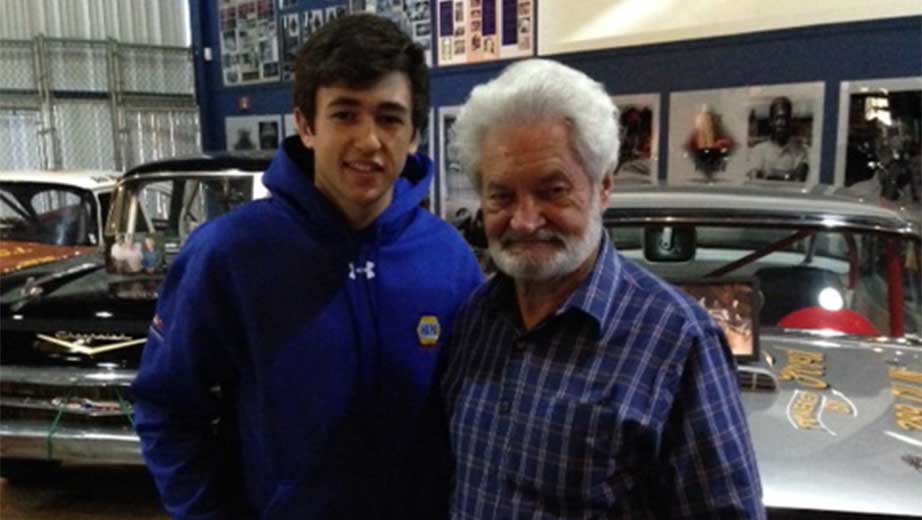
Chase Elliott with Gordon Pirkle

READ MORE:

READ: Latest
NASCAR news

WATCH: Latest
NASCAR video

PLAY: NASCAR
Fantasy Live

FOLLOW LIVE: Get
RaceView

Young drivers touch on how the NASCAR Next experience benefitted them

RELATED: Play NASCAR Fantasy Live

Officially they are known as NASCAR’s "Next" but the reality is more like NASCAR’s "Now."

Dylan Kwasniewski, Ben Kennedy and Darrell Wallace Jr. led a crop of young, up-and-coming talented identified by NASCAR as future stars but the future turned out to be a lot closer to the present.

The two-time K&N Pro Series champ Kwasniewski, 18, won the pole position in his very first Nationwide Series start at Daytona International Speedway in February.

Kennedy, great-grandson of NASCAR founder Bill France Sr., was on pole at his family’s Daytona track in his first Camping World Truck Series start there in February.

And Wallace, 20, is already a NASCAR national series winner, with a victory at the super tough Martinsville, Va. half-miler lastseason in only his second Camping World Truck Series start there.

No pressure or anything on the new NASCAR Next Class that will be announced next Friday at Richmond International Raceway.

"I’m sure when they come out . ..with a new lineup, I’m sure that class will have a ton of potential," said Kennedy, who drives the No. 31 Chevrolet for Turner Scott Motorsports.

Wallace said he’s already "pulling for" the new class, wishing them the kind of success, fun and exposure that these three experienced over the last year-plus.

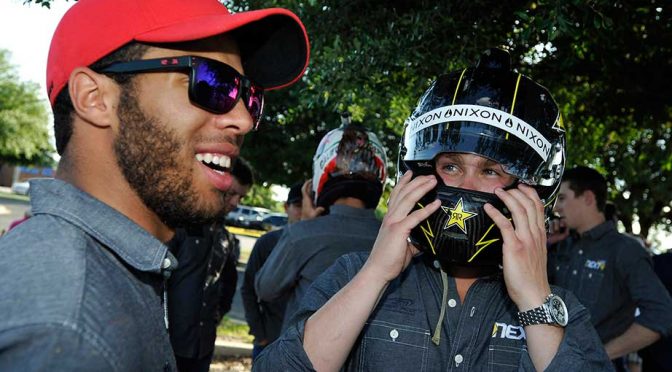
The trio spoke this week about their time representing the program, how they’ve fared under the spotlight, their greatest struggles to date and what advice they have for the incoming group of NASCAR Next.

"I think the biggest thing. .. is getting used to the cameras, being more acclimated to talking with everybody [in the media] and kind of just getting used to being in the spotlight because hopefully we will be in it in the future to come," Kwasniewski said.

Added Kennedy, "Being able to work with all these great drivers, it made a really good bond with everyone throughout the whole program."

This group of drivers in particular made the talent scouts look good.

Kwasniewski, the only driver to ever win both the NASCAR K&N Pro Series East and West division titles, not only became the youngest Nationwide Series pole-winner in Daytona history, but answered his impressive start with a top-10 finish (eighth).

A month later, team owner Chip Ganassi signed him to a driver development deal with the idea of eventually moving him up to the Sprint Cup Series ranks — exactly what the NASCAR Next platform was designed to yield.

Wallace, also a graduate of NASCAR’s Drive for Diversity program, is the first of the group to hoist a national series trophy – or in his case to bring home a grandfather clock as is the Martinsville, Va. track’s traditional victory award.

"Bubba" – the name he prefers to go by – immediately lived up to his billing, scoring three top-10s in four Nationwide starts as an 18-year old in 2012.

Last year the Kyle Busch Motorsports truck series driver became the first African American since Wendell Scott in 1963 to win a NASCAR national series race and returned this year to make a real run at the truck championship. Two weeks ago at Martinsville he won the pole and finished runner-up and is ranked eighth in points right now.

He says it was a drastic step up to the big time and the next group of NASCAR Next can expect that as well.

"The quickest thing I had to learn was the new tracks that we’ve been to," Wallace said, recounting a vivid example of a high speed "schooling" that still sticks with him.

"A prime example for me was Kansas [last year] when Kyle [Busch] spun out early in the race, I was running 12th or something. I looked back to see where he was and he was next to last. No lie, two laps later he’s passing on the outside line and I was sitting on jack stands.

"It was incredible to see how much experience and talent plays out once you get up to the top three series because it’s a huge jump."

Kennedy, 22, who graduates with a sports management degree from the University of Florida next month, agrees that there is no replacement for experience when it comes to competing in a national series.

"You’ve seen it on TV and everything, but I feel you can only get so much out of watching races until you actually get out there and drive hard in the corner [and] you feel the bumps and everything," Kennedy said, who finished third in the truck race at Martinsville — right behind Wallace — and has a pair of top-five finishes in seven truck starts in 2013-14. He’s ranked sixth in the championship entering the next race, May 9 at Kansas.

All three of these drivers repeatedly spoke about he camaraderie they established as one of the best points of the NASCAR Next experience. They have high hopes for the next group.

"It will be exciting to see who is in the new class now and what they can do out there on the race track. … it’ll be fun to watch for sure," Wallace said.

Advice for the incoming class?

"It’s a cool program to be a part of," Wallace said, "Just got to stick with it."

READ MORE:

READ: Latest
NASCAR news

WATCH: Latest
NASCAR video

PLAY: NASCAR
Fantasy Live

FOLLOW LIVE: Get
RaceView

‘Drivin for Linemen 200’ marks return of NASCAR racing to St. Louis area

RELATED: Play NASCAR Fantasy Live

Gateway Motorsports Park and MAKE Motorsports annouced Friday that the NASCAR Camping World Truck Series race on June 14 will be named the "Drivin’ for Linemen 200." The event, held over Father’s Day weekend, marks the return of the Camping World Truck Series to the St. Louis area for the first time since 2010.

FULL SERIES COVERAGE

View all articles
View all videos
View all photos

The race name is intended to bring awareness to the Linemen of America and the electrical industry.

The Linemen were recognized by the U.S. Congress on Friday for their efforts as first responders during natural disasters and the race will pay tribute to the past, present, future and fallen Linemen. 

"Gateway Motorsports Park is honored to be associated with the Fallen Linemen Organization and the International Lineman’s Museum," Curtis Francois, CEO and owner of Gateway Motorsports Park said. "With the sporadic and dangerous weather we experience here in the Midwest, our fans understand the critical role electrical linemen play in assisting other first responders in their efforts to save lives. Our goal with this event partnership is to recognize these heroes and their families, and pay tribute to the men and women who have sacrificed their lives helping others."

The "Drivin’ for Lineman 200" will be televised on FOX Sports 1 on June 14 with the race set to start at 8:30 p.m. ET. Coverage will begin at 8 p.m. ET.

For additional information on the Fallen Linemen Organization, please visit www.fallenlinemen.org

READ MORE:

READ: Latest
NASCAR news

WATCH: Latest
NASCAR video

PLAY: NASCAR
Fantasy Live

FOLLOW LIVE: Get
RaceView

Longtime team owner shares thoughts on reducing horsepower in top series

RELATED: Play NASCAR Fantasy Live | Sign up for RaceView today

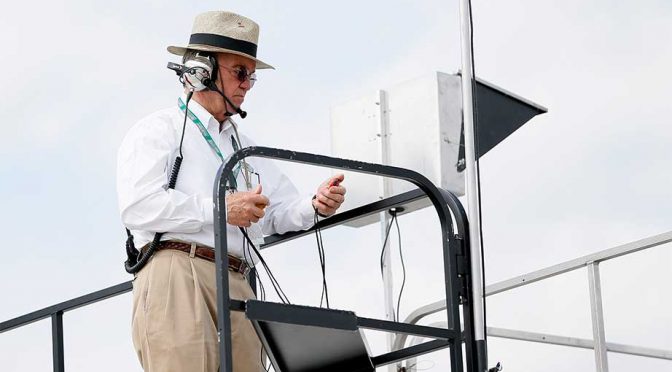
With NASCAR officials focusing on engine changes in the Sprint Cup Series for 2015 that will result in a reduction of horsepower, such a move should involve "a restriction on the intake side," according to Sprint Cup Series team co-owner Jack Roush.
 
Roush, an owner in the series since 1988, isn’t suggesting the use of restrictor plates similar to those used at Daytona and Talladega.
 
Instead, he said, a reduction of the throttle bore size "without a plate underneath" would accomplish the objective.

"(It is) straightforward and it is easily reversible if you decided that the quality of the racing was hurt by it," Roush told NASCAR.com during the Sprint Cup Series stop at Darlington Raceway on April 12.
 
"If they want to take 100 horsepower off … reduce horsepower significantly, the least expensive and most palatable way to do that is with a restriction on the intake side."
 
Earlier this month, NASCAR Chairman and CEO Brian France told Sirius XM NASCAR Radio that changes to the current engine packages used in the Cup Series are coming, perhaps as soon as next season.
 
France said such a move would be "part of the overall rules packages that we design that hopefully control costs, hopefully make the racing better."
 
Today’s Cup engines, limited to 358 cubic inches, produce approximately 850 horsepower. Speeds have increased, in part due to a new rules package and the continued development of the Generation-6 car, now in its second year.
 
While officials with the three auto manufacturers currently involved at the series’ top level, Chevrolet, Ford and Toyota, have been a part of the discussions, they say it is too early in the process to respond to potential engine changes.
 
Roush, who turns 72 on April 19, is the co-owner of Roush Fenway Racing. The organization has won the NASCAR Cup title twice – with former drivers Matt Kenseth in 2003 and Kurt Busch in ’04. The organization’s 134 victories rank Roush Fenway fourth highest overall and No. 3 among current teams in the series.
 
He is also co-owner of Roush Yates Engines, which supplies engines to more than one dozen Sprint Cup Series teams.
 
"From an owner’s standpoint, NASCAR has got to be mindful of  … what it costs," Roush said. "The race teams can only afford to change so many things at a time. With the expanding technology and the engineering costs that everybody has with the pressure for sponsorship and investment in the sport, a dramatic or unnecessary engine change would not be welcome in my world."
 
Roush said previous conversations with NASCAR officials have focused on two considerations.
 
"One of them is not a big-cost problem and the other one is," he said. "If NASCAR comes back and redefines the engine right away, says we’re going to a 4-valve, twin overhead cam package, that would be a death knell for a lot of teams in terms of what it would cost to re-power these things.
 
"I don’t think it would materially impact the competitiveness of the cars, or the quality of the product that the consumers buy either from watching it on TV or from buying a seat in the stands.
 
"The thing that NASCAR has talked about, that they’ve brought to my attention, is changing the displacement of the engine in an effort to reduce 100 horsepower; that gets thumbs down from me because the cost of crankshafts, and the obsolescence that are involved and the development that follows that are going to cost the teams millions of dollars.
 
"I think NASCAR has asked ‘what about that?’ but I don’t think they are serious in wanting to push that."
 
Roush said it appears more likely that the change will involve lowering the engine RPM, "which would be less hard on the engine," and could include "a requirement that you use the engine for two races.
 
"I think that’s more likely where they will wind up," he said.
 
Both the Nationwide and Camping World Truck Series currently operate with a "sealed engine" program.
 
Such a move at the Cup level would mean higher initial costs due to development and construction, but by making the engine last for two races a net savings could be realized.
 
"By reducing the RPM, you reduce the power available for the car without changing its restriction or changing its displacement," said Roush. "By making the requirement that an engine be run twice before it was subject to rebuild, we would have that opportunity to reduce costs to the teams."
 
Roush said there is also talk of moving away from flat tappet camshafts in Cup engines to a roller camshaft similar to what is currently used in the Nationwide and Truck series.
 
"Right now you have to search the world for the best steel and best coating process to be able to have the friction characteristics that will allow you to run a flat tappet camshaft competitively," he said.
 
"The roller camshaft lifter arrangement will be much easier to source from a component point of view and much easier for the marginal teams to be able to get camshafts in their engines that will be durable."

READ MORE:

READ: Latest
NASCAR news

WATCH: Latest
NASCAR video

PLAY: NASCAR
Fantasy Live

FOLLOW LIVE: Get
RaceView

From Waltrip to Baker and more, counting down the top 10 NASCAR TV analysts

RELATED: Play NASCAR Fantasy Live | Sign up for RaceView today

At its best, auto racing doesn’t just translate via television — it bursts through the screen and into your living room, leaving little bits of rubber on the sofa. That’s often certainly the case with NASCAR, whose sound and fury and kaleidoscopic colors have made for compelling viewing ever since CBS cameras caught Cale Yarborough and Donnie Allison slugging it out at Daytona in 1979.

And explaining it all are the personalities on the other side of the camera, who to longtime viewers have become like an extended family — though one where the members don’t always get along. Race announcers, broadcasters such as Ken Squier and Mike Joy, are like the uncles who regale us with stories each time they visit. Analysts, like Darrell Waltrip and Kyle Petty, are like the uncles we argue with across the dinner table. Just like back in the day at the race track, sometimes a few chicken bones get thrown.

Oh, do race fans love their television analysts. Oh, do race fans hate their television analysts. Oh, do race fans love to hate their television analysts, something Jeff Burton and Steve Letarte will surely discover next season when they don headsets for NBC. Regardless of the network, that complicated yet committed relationship is always there, with both sides rushing back to one another each week. Well, except for this one. With NASCAR on a rare hiatus, it’s time to turn the channel back through history, and run down the sport’s top 10 television analysts.

10. David Hobbs
There was something about that British accent, which seemed both so out of place and so enchanting all at the same time. A former driver who raced just about everything — he made six Formula One starts, and two in what is now NASCAR’s Sprint Cup Series — Hobbs worked for more than a dozen years as a color commentator and pit reporter for CBS telecasts of NASCAR. It was Hobbs who sat in the motorhome with Teresa Earnhardt when her husband Dale lost a tire, and ultimately the Daytona 500, to Derrike Cope in 1990. Later, it was Hobbs who asked the Intimidator the question everyone was thinking: What the heck happened?

9. Dale Jarrett

As smooth behind the microphone as he was behind the wheel, Jarrett moved effortlessly into the broadcast booth after his racing days ended, and in recent years has been a regular on ESPN broadcasts. The son of Ned Jarrett, another champion driver who made a successful transition into television, the three-time Daytona 500 winner has been working select broadcasts for ESPN since 2007. The 1999 NASCAR champion and newly-minted Hall of Famer has an even-keeled style that helps to see through the clutter, which viewers seem to appreciate in a medium that can easily be overtaken by shouting and noise.

8. Buddy Baker

The Nashville Network was a NASCAR broadcast partner throughout the 1990s, and Baker was in many ways TNN’s voice. A 19-time winner on the sport’s premier circuit as a driver, Baker brought his gregariousness and enthusiasm straight into the broadcast booth, even though he was still competing part-time. Never at a loss for words, Baker was one of many former drivers who not only found a second career behind the microphone, but discovered that the experience enhanced his career as a whole. He’s still at it today on SiriusXM radio, and his broadcast work is likely one reason he’s earned a nomination for the NASCAR Hall of Fame.

7. Chris Economaki

OK, so maybe he wasn’t technically an analyst. But he wasn’t really a pit reporter, either, at least not in his later years. Economaki was simply an original, and every race broadcast was improved by his presence. Part commentator and part essayist, the Dean of American Motorsports opined on all things racing during his stint with CBS, which coincided with the network’s golden age of NASCAR coverage and exposed him to a new audience. His voice was unmistakable, his depth of knowledge was unfathomable, and he could own the TV screen even when sharing it with championship drivers. So no, he wasn’t really an analyst. He was a legend.

6. Benny Parsons

The 1973 champion was a big personality, but he brought an ease to the broadcast booth when he transitioned from behind the steering wheel to behind the microphone. A former Detroit taxicab driver who knew how to relate to people, Parsons often analyzed races in a relaxed, almost professorial tone that struck a chord with race fans. After winning 21 races as a driver, he became a ubiquitous media personality, calling races for ESPN, NBC and TNT. Parsons won an Emmy award for his work with ESPN in 1996, and was still a presence in his sport when he was lost to lung cancer in early 2007.

5. Ray Evernham

The three-time championship-winning crew chief was intense and detail-oriented as a crew chief, and brought that same work ethic to his job as an analyst for ABC and ESPN. Befitting someone who won 47 races atop the pit box, Evernham’s specialty was drilling down to the core of any issue involving car setup or pit strategy, and making it easier for the viewer to understand. He took the job seriously, and it showed — early this year Evernham stepped away from his television work, to avoid any conflict of interest after his role as an advisor to Rick Hendrick expanded into the motorsports realm. That’s a pro’s pro.

4. Andy Petree

He may have an understated tone, but his words can carry plenty of punch. A championship-winning crew chief with Dale Earnhardt before becoming race-winning car owner with a smaller, out-of-the-way team, Petree is as good as any analyst working today at forecasting what’s about to happen on the race track. A part of ESPN’s coverage since 2007, he can also scold with the best of them, in a flat voice that can convey plenty of disappointment. His Earnhardt connection gives him credibility with old-school race fans, while his delivery and underrated knack for outspokenness do the rest.

3. Kyle Petty

On the subject of outspokenness — meet the man who redefined the practice. An eight-time winner in NASCAR’s premier series who has been a mainstay of TNT’s coverage, Petty is far from shy about sharing opinions that are sometimes brutally honest and occasionally inflammatory. The latter was certainly the case when it came to his comments last year about Danica Patrick, but anyone who’s been paying attention realized that was nothing new. In a sport where too many competitors are perhaps too friendly with one another, it’s almost refreshing to have an analyst not afraid of hurting feelings, and that’s what makes Petty so good.

2. Darrell Waltrip

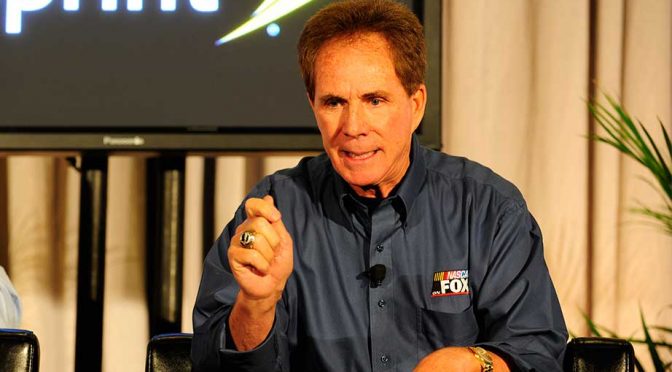
As an analyst, ‘ol D.W. can so rankle some people, that they even questioned whether the three-time champion deserved to be in the Hall of Fame. That’s crazy talk. What’s not, though, is the indisputable fact that since joining the Fox booth in 2001, Waltrip has become the face of his sport on television, and he’s earned that position through sheer enthusiasm and goodwill. Sure, the "boogity" thing may have run its course, and maybe the Fox guys get a little excitable sometimes. But goodness, does Darrell Waltrip love NASCAR, and that passion comes charging right through the television, and it all makes him as engaging and as watchable as any racing analyst there’s ever been.

1. Ned Jarrett

There may be many younger viewers who aren’t familiar with Jarrett’s work on television, given that the two-time champion hasn’t called a race since 2007. But he essentially invented the idea of a former driver moving into the booth, and quickly became a master of the craft. Best known for his work on CBS and ESPN, Jarrett was very much a professional broadcaster, using a concise style that let the race tell the story. But he was human, after all, and his call of son Dale’s 1993 Daytona 500 victory will choke you up even today. When he was inducted into the NASCAR Hall of Fame, his broadcast work was cited as much as his racing triumphs, and with good reason. For decades, he wasn’t just an analyst. He was the analyst.

READ MORE:

READ: Latest
NASCAR news

WATCH: Latest
NASCAR video

PLAY: NASCAR
Fantasy Live

FOLLOW LIVE: Get
RaceView

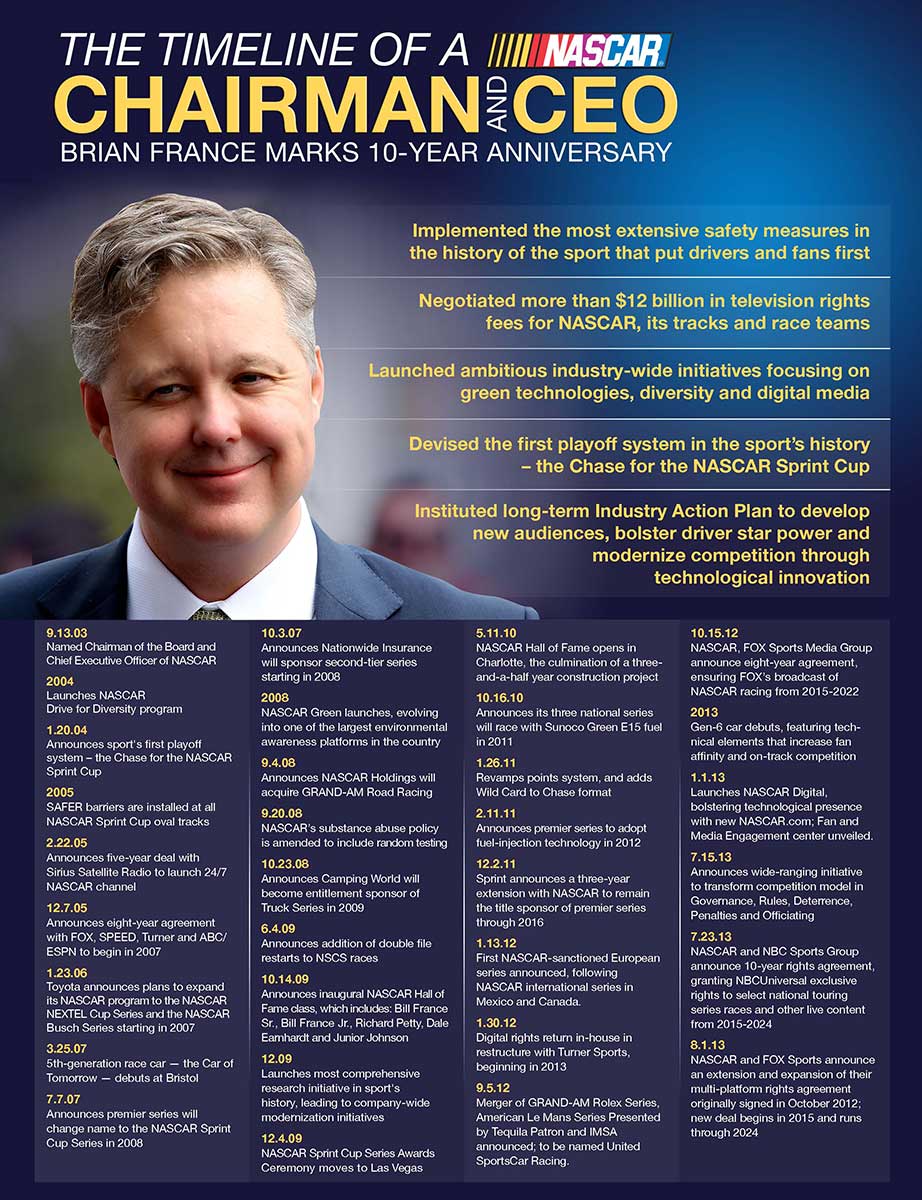
NASCAR Chairman and CEO receives Vision Award

RELATED: Play NASCAR Fantasy Live | Sign up for RaceView today

NASCAR Chairman and CEO Brian France and NASCAR Fuel for Business were honored at the Cynopsis Sports Awards Thursday at the Yale Club in New York City.

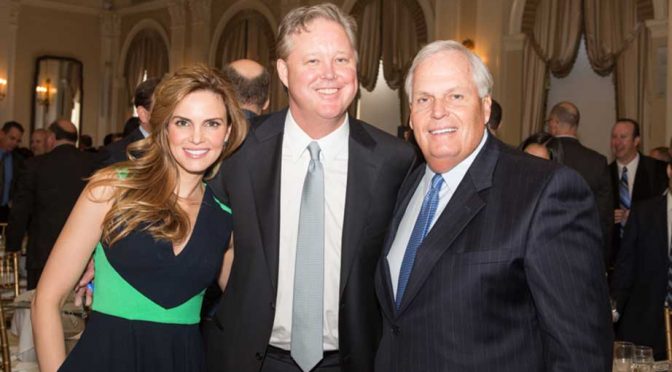
NASCAR Sprint Cup Series team owner Rick Hendrick presented France with the Vision Award, which recognizes the executive of the year from a sports league or organization who has demonstrated innovation and transformed an industry.
 
"With all the stakeholders involved in our sport, it takes a leader who is willing to stand tall," Hendrick said. "Brian has revolutionized the sport of NASCAR, working with the entire NASCAR industry — the teams, tracks and sponsors."

France became NASCAR Chairman and CEO in 2003, achieving unprecedented growth in the value of the sport’s broadcast rights. Among numerous initiatives noted at the bottom of the article, France spearheaded the launch of NASCAR Green. Also, nearly one company out of four in the Fortune 500 participates in NASCAR.

"Brian has the vision to take us into the next generation and where we need to go in the future," Hendrick said.

Accepting the award, France said, "One thing that is never lost on me at these types of sports industry gatherings is how lucky we all are to be working in an industry that evokes so much passion from people across the world."

NASCAR Fuel for Business (NFFB) earned two awards for B2B Program and Proprietary Asset. Celebrating its 10th anniversary, the NFFB Council is a business-to-business platform that brings together an exclusive group of more than 50 Official NASCAR Partners to buy and sell products and services. Since its inception in 2004, the quarterly meetings have facilitated more than 1,000 "speed meeting" sessions where Official NASCAR Partners meet and do business with one another.

NASCAR earned Honorable Mentions for Brand Activation at Live Events for its NASCAR After the Lap Sponsored by Ford and Coca-Cola; Brand Extensions/Licensing for Touch by Alyssa Milano and Mobile App – Live Streaming for NASCAR Digital Media’s NASCAR RaceView Mobile ’13.

The Cynopsis Sports Media Awards recognize the most outstanding work in the sports industry from the past year with categories that span television, digital, marketing and more.

(Graphic by: NASCAR Integrated Marketing Communications)

READ MORE:

READ: Latest
NASCAR news

WATCH: Latest
NASCAR video

PLAY: NASCAR
Fantasy Live

FOLLOW LIVE: Get
RaceView

Meet the field of voting hopefuls and find your favorite All-Star

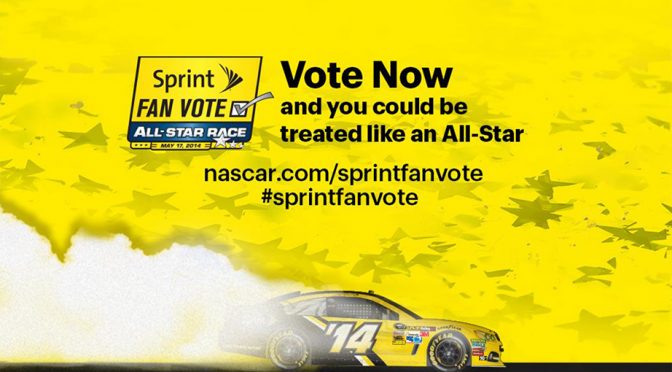
Vote Now! Pick your favorite drivers for the Sprint All-Star Race

There are plenty of ways for drivers to qualify for the 30th annual NASCAR Sprint All-Star Race:

Win a race in the current and preceding season.
Possess a Sprint Cup championship or All-Star Race win in the last 10 years
Finish first or second in the Sprint Showdown qualifying race
Bribe Miss Sprint Cup

OK, so only three of those four are true. But there is one alternate way to gain entry into the non-points invitational event, scheduled May 17 at Charlotte Motor Speedway. The top vote-getter in the Sprint Fan Vote will advance into the NASCAR Sprint All-Star Race to complete the field.

Fans may cast their ballots three ways — through the NASCAR MOBILE app (which counts double), here at NASCAR.com/SprintFanVote or at The Sprint Experience exhibit at the track each week.

As of the early season break for Easter weekend, 19 competitors have already locked into the field of the main event, but 30 eligible drivers who haven’t yet qualified are just as eager to get their shot at a $1 million payday.

Torn about who should get your vote? Are your allegiances all askew? We present a friendly guide for why each of the 30 (listed alphabetically) should be your choice at the ballot box:

***

Justin Allgaier — "Li’l Gator" will be entering his first invitational as a Sprint Cup regular, but he’s not the first Allgaier to participate in an all-star challenge. His wife, Ashley, posted a third-place finish in a Legends Car in the 2011 Better Half Dash, meaning he’ll need to do his part in May to carry the Allgaier banner at Charlotte.

AJ Allmendinger — Much like Allgaier, you can’t spell All-Star without All … mendinger. He’s a former Sprint Showdown winner (2008) ready to better his 11th-place showing in his best All-Star appearance (in 2012) and has exceeded expectations thus far in 2014.

Aric Almirola — If there was a Hall of Fame just for car numbers, Richard Petty Motorsports’ No. 43 would be in it. It’s long overdue for the storied number to return to the Sprint All-Star Race.

Marcos Ambrose — The Aussie has two previous All-Star appearances, both earned by victories at Watkins Glen International‘s twisty circuit. If Charlotte Motor Speedway opted to revive their infield road course in the latest tweak to the All-Star rules, Ambrose would be a shoo-in.

Michael Annett — Before starting his driving career and joining the heralded Sunoco Rookie of the Year class in 2014, Annett was a successful youth hockey player who once led his league in penalty minutes. If tempers rise on All-Star weekend, his rivals might think twice before dropping the gloves with the driver of the No. 7 car.

Trevor Bayne — An All-Star vote for Bayne could mean the 2011 Daytona 500 champ reprising his cool-down lap astonishment and humility — "Are you kidding me? What?" — after winning the Great American Race.

Dave Blaney — A Sprint All-Star Race on a 1.5-mile track covered in dirt. Sounds like a dream come true for the Buckeye Bullet (see: Ambrose).

Alex Bowman — In his Twitter bio, Bowman claims to be a "wannabe drifter," and it’s presumed he means the form of motorsport and not a pursuit of a life of aimless wandering. Either way, a vote into the All-Star race will give him a chance to pitch his NASCAR-prepped ride sideways under the lights.

Clint Bowyer — Hard to believe that Bowyer missed out on winning a race in 2013. He still has a few chances to come through on the race track before All-Star weekend, but if not, a landslide at the ballot box would help the circuit’s favorite "aw, shucks" Kansan.

Landon Cassill — The Iowa native lists "rounds of mini-golf" first among his hobbies on his personal website. If only the All-Star course involved obstacles such as windmills and tunnels, and was conducted on AstroTurf.

Austin Dillon — The No. 3 back in the NASCAR Sprint All-Star Race. That is all.

David Gilliland — It’s been eight years since Gilliland burst onto the scene with one of the biggest upset wins in NASCAR Nationwide Series history. Looking for an underdog? It’s worth a ballot nod.

Parker Kligerman — As an entertaining contributing author at Jalopnik, a leading motoring website, Kligerman could probably find room in his next story for how he won the Sprint Fan Vote. Hint.

Bobby Labonte — Labonte won the All-Star Fan Vote in 2012, right on the heels of previously ineligible Dale Earnhardt Jr. — the 11-time Most Popular Driver in NASCAR — clinching a spot by winning the Sprint Showdown qualifier. He hasn’t competed this season since finishing 15th in the Daytona 500, but his absence is nothing a Sprint Fan Vote victory couldn’t fix.

Terry Labonte — The Iceman, a two-time All-Star winner, once lamented a Darlington crash by saying "it seemed an invisible hand came out from the wall and smacked our cars into one another." Labonte won’t see your hand when it votes for him, either — all the more reason to add to the mystique.

Kyle Larson — The finishes in the heralded rookie’s first season have been mainly up and sometimes down, but the kid has seemed to always put on a show. Place him in the Sprint All-Star Race where points don’t matter, and the field may have the ultimate scene-stealer.

Eric McClure — Came up just short of qualifying for the season-opening Daytona 500, but it shouldn’t stop fans from giving the likeable Nationwide Series regular another shot at Sprint Cup glory.

Michael McDowell — It’s hard to type "Michael McDowell" into a search engine without it automatically fleshing out to say "Michael McDowell crash." A Sprint Fan Vote win would help McDowell, who’s driven a little bit of everything in his career, potentially make a defining highlight other than his spectacular Texas wreck in 2008.

Casey Mears — An overachiever for much of the season so far, Mears already has some Charlotte success in his portfolio — a Coca-Cola 600 victory in 2007.

Paul Menard — With top-10s in half of the first eight races, all Menard needs is a fighting chance to punch his All-Star ticket. While his on-track prowess is enough to win most over, it’s the rock-solid chops of facial hair that seal the deal. If Menard were a character on "The Simpsons," he’d be Mr. Burns.

Joe Nemechek — It’s been since April 2008 that the driver named "Front Row Joe" actually qualified on the front row for a NASCAR Sprint Cup Series event. A vote into any row of the Sprint All-Star Race would give the Florida veteran a shot in the arm.

Danica Patrick — The Sprint Fan Vote’s defending champ might have the inside line on clinching her second straight All-Star Race berth, but the democratic process still needs to play out to make that happen.

Brian Scott — The most recent driver we know of to be hit with the well-worn putdown of "dart with no feathers" (from Aric Almirola), Scott has the chance to hit the All-Star bull’s-eye with the right amount of votes.

Morgan Shepherd — The only driver among the 30 whose career began during the Nixon administration, Shepherd has a chance to rewrite the history books (at least those written after his birth year of 1941) with an All-Star berth at age 72.

Reed Sorenson — As a five-time bridesmaid in All-Star qualifying races and never a bride in the main event, Sorenson may be the hungriest driver in the field (but not literally, thanks to his Golden Corral sponsorship).

Ricky Stenhouse Jr. — Stenhouse drove his way into the Saturday night feature with a strong runner-up finish in the Sprint Showdown qualifier. If he’s able to count on the fans’ votes coming in abundance, perhaps he can skip the preliminary event to make a food run to Sonic, as he did last year during a rain delay at Chicagoland Speedway.

Ryan Truex — As part of BK Racing’s new-look, two-rookie lineup for 2014, Truex hopes voters will take his team’s approach. Time for some fresh faces in the All-Star Race mix? Vote here.

Michael Waltrip — The two-time Daytona 500 winner will be at the NASCAR Sprint All-Star Race regardless, be it in the TV broadcast booth or behind the wheel. Voting for Waltrip could decide if he performs his patented grid walk in a fire suit or regular suit.

Cole Whitt — Probably 50 Cent’s favorite redhead after their chummy experience at Daytona in February. A vote here could put Whitt among the All-Star starters and have him back on a first-name basis with the rapper ("Fitty" instead of "Mr. Cent").

Josh Wise — This man completed an Ironman Triathlon in the offseason, meaning the Sprint All-Star Race should be a piece of cake. The 90-lap event equals 135 miles, or just 5.6 fewer miles than he covered through swimming, biking and running last December.

MORE:

READ: Latest
NASCAR news

WATCH: Latest
NASCAR video

PLAY: NASCAR
Fantasy Live

FOLLOW LIVE: Get
RaceView

Two-car team says it is ‘unable to secure the kind of sponsorship’ needed

MORE: Watch: Cole Whitt‘s Daytona 500 challenge
RELATED: Play NASCAR Fantasy Live | Sign up for RaceView today

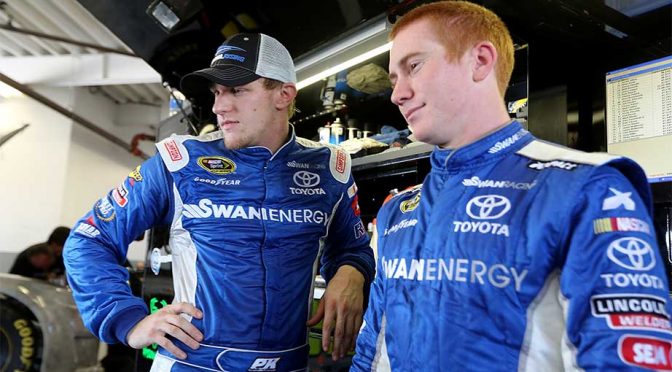
Due to an inability to secure the necessary funding, Swan Racing officials say they are reviewing the organization’s financial situation and its ability to continue to field two full-time teams in the NASCAR Sprint Cup Series.

Whether the organization returns to competition when the series is back on track next weekend at Richmond International Raceway has yet to be determined.

"The team has been unable to secure the kind of sponsorship required to effectively operate the team," the team said in a statement issued Thursday. "As a result, the team management is exploring every available option. We hope to be in a position to provide a detailed update in the near future."

Swan Racing debuted in 2012 as a single-car operation with owner Brandon Davis and driver David Stremme.

For 2014, the group expanded to two teams, fielding the No. 30 Toyota for driver Parker Kligerman as well as the No. 26 with driver Cole Whitt.

Kligerman and Whitt are two of eight drivers vying for Sunoco Rookie of the Year honors.

Davis is CEO of Swan Energy, an independent oil and gas company based in Denver. The group added minority owner Bill Romanowski, a former NFL linebacker, prior to the start of the 2013 season while Anthony Marlowe, co-founder of business process outsourcing company TMone, came on board earlier this year.

Minutes after the team release came out, Marlowe tweeted:

Whitt has a top finish of 18th this season at Auto Club Speedway, and is 33rd in points through the season’s first eight races. His team, led by crew chief Randy Cox, carried sponsorship from Speed Stick Gear for the opening four races while Swan Energy has funded the entry for the past four events.

Lending Tree sponsored Kligerman’s No. 30 Toyota for the season-opening Daytona 500 and Aria Hotels/Black Clover apparel at Las Vegas. The entry was self-funded through Swan Energy for four races while SMS Audio, of which rap artist 50 Cent is majority owner, was on the car for the last two events.

Kligerman has a best finish of 29th at Daytona, and is 38th in points. Steven Lane, competition director for Swan Racing, has served as crew chief for the No. 30 entry.

On Friday, Kligerman didn’t address the situation specifically on Twitter but said that he was "focused forward."

Swan Racing competed full time in 2013, with five drivers behind the wheel for at least one race — Stremme (25), Whitt (7), Kligerman (2), Michael Waltrip (1) and Kevin Swindell (1).

MORE:

READ: Latest
NASCAR news

WATCH: Latest
NASCAR video

PLAY: NASCAR
Fantasy Live

FOLLOW LIVE: Get
RaceView

Bruce: Vickers’ results admirable under trying circumstances

RELATED: Play NASCAR Fantasy Live | Sign up for RaceView today

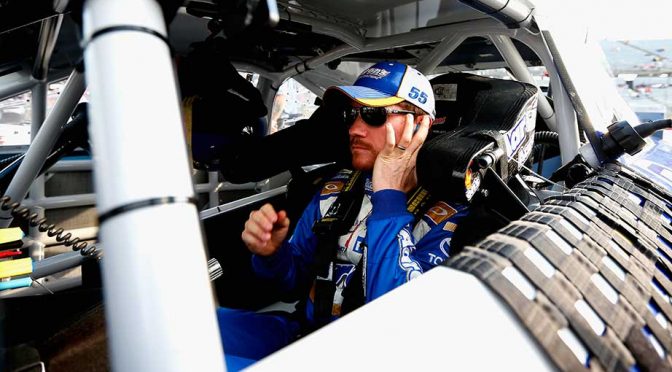
He says he pays no attention to what the media churns out each week, which might make it sound as if he could be a difficult interview. But that’s not the case.

"If it’s bad and you believe it, that’s bad," Brian Vickers said on the heels of a 26th-place finish in Saturday night’s Bojangles’ Southern 500 at Darlington Raceway. "And if it’s good and you believe it, that’s probably bad, too."

The fact that he is a part of the NASCAR equation today carries more weight than what is written or said about Vickers and his No. 55 Aaron’s Dream Machine team, fielded by Michael Waltrip Racing

Two health scares and the business of rebuilding a career as a full-time driver in the NASCAR Sprint Cup Series can reshape one’s perspective.

Perhaps the bad days aren’t so bad and maybe the good days are a little more special for the 30-year-old.

Perhaps, but Vickers competes with more than a "just happy to be here" attitude. He can, and does, get riled when the occasion warrants.

Such was the case at Darlington this past weekend, when he was penalized for missing the commitment cone at the entrance to pit road just beyond the 300-lap mark of the race.

"I hit the wall at 170, 180 mph with a blown right front (tire); the cone was the least of my concerns," Vickers said of the incident. "How about a little consideration? I think that was a bad call. 

"Obviously, I know the rule. But we’ve got enough problems right now. I’m sitting backwards on pit road with a blown right front, my shoulder is killing me because I hit the wall at 170, and we’re worried about penalizing us another lap for missing the cone? I just think that’s absurd."

The accident cost Vickers and his team two laps; a second blown tire a short time later put him three down by the time the checkered flag appeared. 

It was a disappointing ending in a race that had seen him lead twice for 30 laps. Ninth in points heading into the race, he fell four spots to 13th.

A three-time winner at the Cup level, including last season at New Hampshire Motor Speedway, Vickers is getting re-acquainted with running a full Cup schedule. In 2013, he raced full time in the NASCAR Nationwide Series for Joe Gibbs Racing while sharing seat time in the No. 55 with Mark Martin and team co-owner Michael Waltrip

A blood clot issue that returned late in the year cut his season short in both series; the unexpected finding surfaced soon after MWR officials had named him to drive for the team full time in 2014. 

The announcement of his setback also came at a time the organization was already embroiled in controversy stemming from the finish of the Federated Auto Parts 400 at Richmond International Raceway. Fallout from that incident eventually resulted in the downsizing of MWR from three to two full-time Cup teams and the loss of longtime sponsor NAPA. 

Nearly half a year later, the opening weeks of the 2014 season have been not only about the resumption of Vickers’ Cup career but MWR’s attempt to rebuild its credibility within the sport as well. 

Vickers, the 2003 Nationwide Series champion, appears to be taking it all in stride.

"Considering the circumstances and what this team has gone through the last couple of years, what I’ve been through in my life, the fact that we’re out here leading laps and contending for wins is pretty frigging awesome," he said. "To think a couple of years ago I wasn’t sure if I would ever race again; and again last year I wasn’t sure if I would ever race again. 

"We lost a team at MWR, (we) lost a lot of good people, unfortunately, losing a sponsor. But the team is resilient; no one gave up."

Least of all Vickers. 

Former lead engineer Billy Scott now serves as crew chief, replacing Rodney Childers. Vickers has posted three top-10s this year, including a best of fourth at Texas Motor Speedway

"We’re still contending for top-fives … and contending for a Chase spot," Vickers said. "I’m really proud of what this team has done."

Getting back into the winner’s circle would be a big deal.

Given everything they’ve overcome, in some ways they’re already there.

MORE:

READ: Latest
NASCAR news

WATCH: Latest
NASCAR video

PLAY: NASCAR
Fantasy Live

FOLLOW LIVE: Get
RaceView

Harvick in elite company with wins in four of the biggest races in the sport

MORE: Harvick’s crew chief and his eventful path to NASCAR
RELATED: Play NASCAR Fantasy Live | Sign up for RaceView today

He may be 38 years old and every bit the cagey veteran, but in some ways Kevin Harvick may just be getting warmed up. With two victories in his first eight races, he’s off to one of the best starts of his career. His cars are fast every week, even if they’ve been sometimes hampered by mechanical issues that have the driver a deceptive 22nd in points. His crew chief has been called the next Chad Knaus. He’s perhaps never been in a better position to not just contend for the Sprint Cup Series championship, but to actually win it.

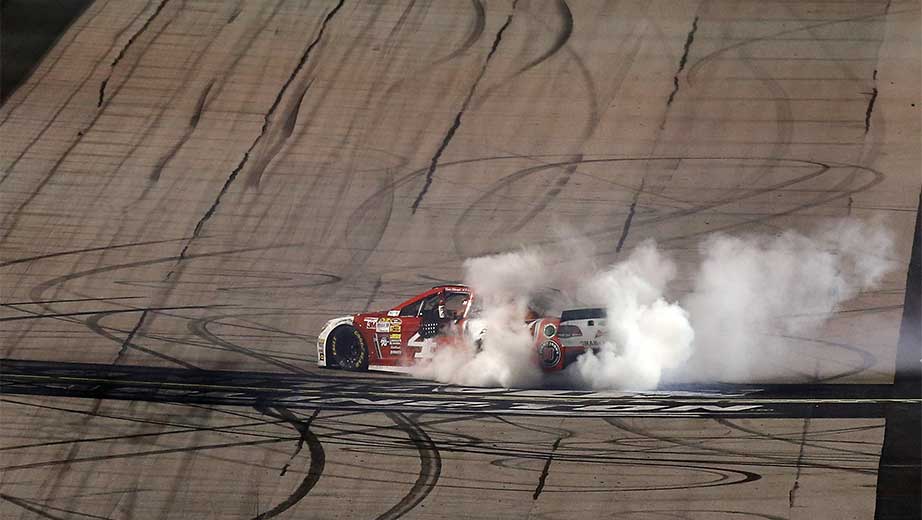
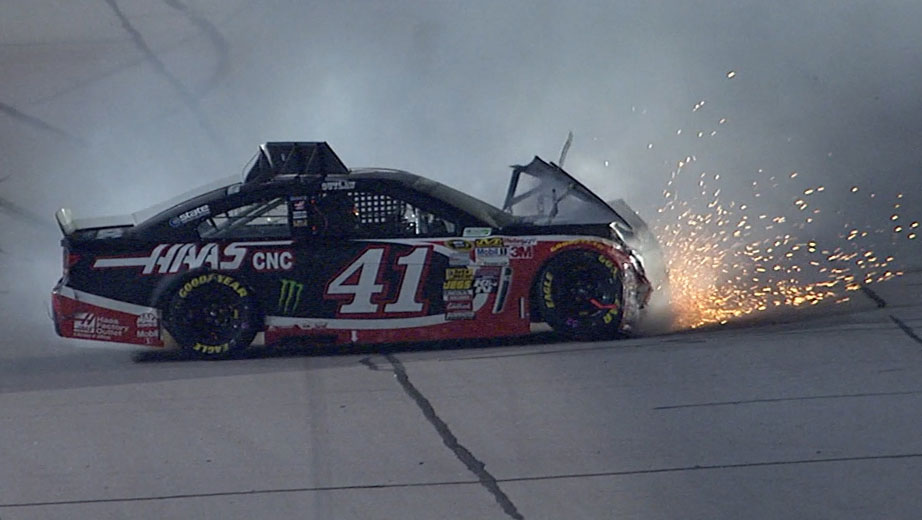
And after Saturday night, that season-long title is the lone remaining major trophy that Harvick has yet to collect. His effort at Darlington Raceway — a dominant 238 laps led, and the track’s first winner from the pole since Dale Jarrett in 1997 — was everything we’ve come to expect from a driver and a team that have been the ones to watch ever since preseason testing. Sure, parity has abounded early in this 2014 campaign. But for a broken wheel hub while leading at Las Vegas, Harvick might have three victories. But for a crash while running fourth late at Bristol, he might have four.

Regardless, this No. 4 team continues to look like the most formidable force in the garage area right now when all the parts and pieces hold up. No question, Harvick enjoyed some tremendous seasons at Richard Childress Racing, where he finished third in final points in three of the past four seasons. But this is different. Consider that Harvick has already led 515 laps, more than in any of his full campaigns since 2006, and just 10 fewer than all the laps he’s led in the past two seasons combined. At RCR Harvick became known as "the Closer," but it was out of necessity — his cars didn’t run at the front consistently enough, often forcing him to win by making big pushes toward the end.

No more. At Stewart-Haas Racing, Harvick is clearly capable of going out and dominating races with a ruthlessness once reserved for the likes of Jimmie Johnson. That was clearly the case at Darlington, where the California native added his name to an exclusive list of drivers who have claimed the four biggest events of their era — the Daytona 500, the Brickyard 400, the Coca-Cola 600 and the Southern 500. In the two decades since Indianapolis Motor Speedway was added to the schedule, only four drivers have swept that quartet: Dale Earnhardt, Jeff Gordon, Jimmie Johnson, and now Harvick.

The playing field here isn’t completely level, or course, given that the likes of Richard Petty or David Pearson never had the opportunity to win at Indy in a stock car, and that the Southern 500 inexcusably disappeared from the schedule for four years after Darlington scaled back from two annual race weekends to one. But it’s still exclusive company, to say the least.

Bill Elliott doesn’t have all four — he lacks the 600. Neither does Bobby Labonte, who’s missing the Daytona 500. Or Dale Jarrett, who’s missing the Southern 500, because all three of his Darlington victories were in the track’s former 400-miler. Matt Kenseth lacks the Brickyard. Many other racing luminaries of the modern era aren’t even close.

So indeed, for Harvick to own the full collection is quite a statement. "HoF clincher IMO," 2012 champion Brad Keselowski wrote in Twitter shorthand, stating his belief that Harvick is now a lock for eventual inclusion in the NASCAR Hall of Fame. While Harvick may not quite be there yet — consider that Mark Martin, with 15 more career victories and also lacking a title, didn’t even make the cut for consideration in his first year of eligibility — he’s certainly put himself in position, especially considering he might just be peaking in his 14th full-time season at the sport’s top level.

"This is what I used to do for a hobby," Harvick said after his Darlington victory. "… You used to do this as your hobby, and pay to do it. We’re fortunate to be able to do this for a living, but to be able to have celebrated a lot of the race wins, whether it be Indy or Daytona or Charlotte or the All‑Star Race or the Southern 500 now is something that some people don’t get to experience at all in their careers, but to celebrate them all is something that’s pretty phenomenal. I just feel lucky.  I’m glad to be here. I love my job, and looking forward to racing every week."

In some ways it’s amazing he ever got there at all. Harvick always exuded driving talent, and was slated to take the step up to the Cup Series with RCR in 2002. But everything changed when NSCAR President Mike Helton stood before the cameras and told the world we’d lost Dale Earnhardt. Suddenly the 25-year-old wasn’t just being rushed into the sport’s premier series, he was being thrust into the position of having to carry one of the sport’s more storied organizations on his shoulders. Looking back, you wonder how it all didn’t overwhelm him. Certainly, there had to be times when even he feared it might.

Those who didn’t experience it firsthand will never be able to understand what a raw, turbulent, and emotional time that was. And in the middle of it all was Harvick, sitting next to Childress under a tent on a freezing cold day in Rockingham, N.C., where RCR announced it would carry on with a different number on the car and a different driver in the seat. "This is undoubtedly the hardest thing I’ve ever had to do in my life," Harvick said then. Grief, instability, pressure and expectation all hung over that Goodwrench car like the pall that hung over the sport, and it was now Harvick’s job to perform despite it all.

To say he succeeded would be a vast understatement. Harvick not only helped rebuild RCR into a team that once again could contend for championships, he built his own identity as a competitor in the process, and he did it all under some of the more adverse circumstances imaginable. That time will always be part of Harvick’s legacy, as indelible and as impressive as his victories at Daytona and Indianapolis, as much a part of him as his sarcastic smirk. But his move to Stewart-Haas brings with it the rise of a Harvick 2.0, an updated edition that comes with a new team and a new number and a new narrative, this time one the driver is able to create for himself.

It hasn’t been without a few bugs — all those mechanical issues remain concerning, even though the No. 4 car looks untouchable when everything holds together. But here is Kevin Harvick, already with multiple victories and a virtually secure Chase for the NASCAR Sprint Cup berth in his first season with a new team. Here is Kevin Harvick, pushing 40 yet looking as formidable as ever. Here is Kevin Harvick, leading laps by the bushel, not just a closer but a starter and a finisher, and perhaps with his best shot yet of being champion.

READ MORE:

READ: Latest
NASCAR news

WATCH: Latest
NASCAR video

PLAY: NASCAR
Fantasy Live

FOLLOW LIVE: Get
RaceView