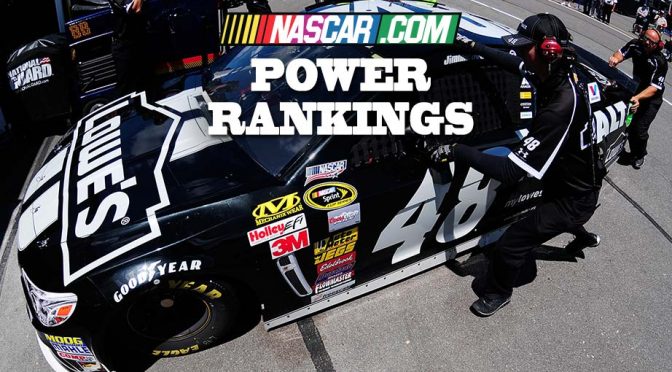
Busch talks about his choice of Hornish in NNS and his relationship with Joe Gibbs

RELATED: Play NASCAR Fantasy Live | Sign up for RaceView today

Q: Why did you pick Sam Hornish Jr. to be your secondary driver in the 2014 Nationwide Series? 

A: There was a point during the end of the year last year when Samantha and I actually sat down, and we were talking about how we were coming too close to winning or losing the championship. And for having 12 wins, we should have been further out in points and didn’t have to worry about it. But we had some mistakes through the year, whether it was my fault or the younger rookies’ fault that drove for us, and we decided that having an experienced guy drive for our team as a second driver in the races, that I couldn’t make, would be more beneficial to the team and maybe perhaps would make up points. And (he) wouldn’t get himself in bad situations and get crashed out or moved out of the way, whatever it might have been.

FULL SERIES COVERAGE

• Latest news
• Standings
• Schedule

Q: How does losing the Nationwide owners’ championship last year by such a close margin sit with you? 

A: I mean it’s not fun when you race in the Nationwide Series as much as you do — 25 races throughout the year — and you have the opportunity to or should win an owners’ championship every year. That’s what you strive for. That’s what you do, and that’s what we’re there for. We win 12 races and race 25 of them — that’s (more than) 50 percent. There is no reason why we shouldn’t be close enough to winning the championship by a bigger margin than coming up one point short. So the accolade means a lot to us.

Q: How did you win 12 Nationwide races in 2013?

A: I feel like we were able to win 12 races through the year because of a lot of things. Whether it’s (crew chief) Adam Stevens and myself, the communication we have with each other, the pit crew we have, the cars I drive. It’s just all of it put together. It’s why we are there. The Nationwide Series is a little less competition than the Sprint Cup Series, but you know you are still racing against the Sprint Cup Series guys. It could be five; it could be 10 of them that are out there racing in that race. So if you can beat them, then you are doing your job.

Q: What is the most difficult thing about driving stock cars?

A: I think (one) of the toughest things about driving a Cup car is just the horsepower that it has and the speeds you carry down the straightaways and into the corners and yet you are trying to make a 12-inch tire go around the corner at 190 mph at some tracks. The Sprint Cup cars and the Nationwide cars are kind of the same but yet quite different in a lot of respects. Horsepower wise — just the power of the engines, the torque of the engines are way different. The aerodynamics of both cars are way different, and the setups are way different the way the chassis is. It is the same, but the components you use to set up the chassis to make your car go around the racetrack are quite different. So they have a lot of different driving techniques.

Q: Does Coach Joe Gibbs ever get mad at you? 

A: Ya, Coach gets mad at me sometimes. It’s never really that big of a deal, but there are times where he says I could have done certain situations differently. All in all, he’s fun. He’s a great guy to talk to, (we have) a great relationship, so when he talks I tend to listen.

MORE:

READ: Latest
NASCAR news

WATCH: Latest
NASCAR video

PLAY: NASCAR
Fantasy Live

FOLLOW LIVE: Get
RaceView

Road course racing lends itself to thrilling finishes and heated tempers

RELATED: Play NASCAR Fantasy Live | Sign up for RaceView today

Ah yes, another trip to Northern California wine country. What a fine place to sit on a caramel-colored hillside, loosen your ascot, dip into a wicker picnic basket, and take in those Pacific breezes with a little vino and brie. More cabernet sauvignon? Well, don’t mind if I do.

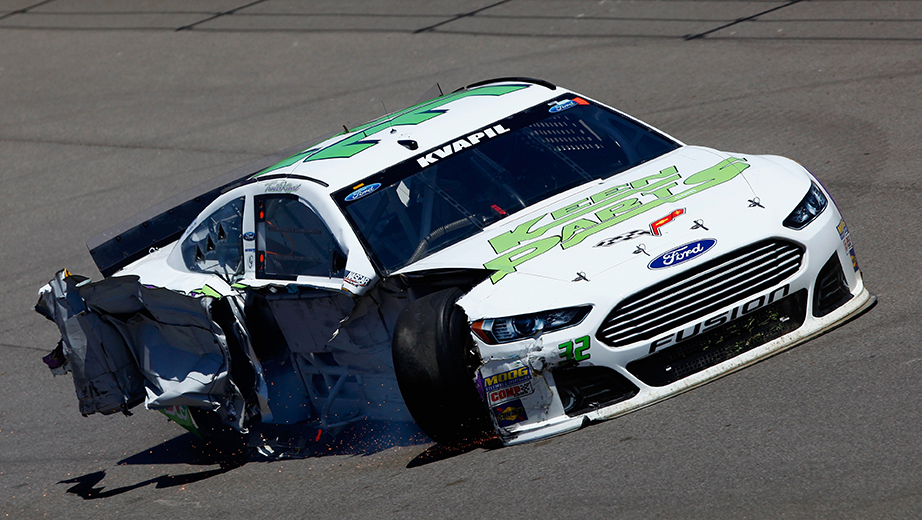
That’s the ideal, at least, and for many people that does sound like the perfect Northern California vacation — OK, maybe minus the ascot. But for a week each year people descend on the Sonoma Valley for a very different reason, one where wine tours and sightseeing take a back seat to horsepower and speed. Indeed, NASCAR’s annual visit to Sonoma Raceway has become a must-watch event, given that more recent races there have resulted in groundbreaking victories, seething tempers, and even a car hanging from a tire barrier.

The old canard about road courses being unfit for stock cars? It’s literally been run over by a Sonoma layout that these days behaves like a short track with 12 turns. And now the stakes are even higher, given the win-and-likely-in nature of this revamped Chase for the NASCAR Sprint Cup. Some teams are viewing Sonoma as perhaps their sole ticket to the 16-driver playoff, so make sure to keep a tight grip on your pinot noir.

And yet, the 44-year-old track has created plenty of moments as it is, particularly since NASCAR’s top series first arrived in 1989. There have been flips worthy of Talladega, dramatics worthy of Daytona and arguments worthy of a San Francisco saloon. There may very well be more created this weekend, when defending winner Martin Truex Jr. — as desperate for a victory as anyone — and the rest of the Sprint Cup Series return to the hillside road course for the 26th time. Until then, here are the top 10.

FULL SERIES COVERAGE

• Latest news
• Standings
• Schedule

10. Big W for Big E, 1995

The Intimidator was a better road-course racer than his stats may indicate — his first pole came at Riverside, and he famously won the pole at Watkins Glen while suffering from a broken sternum in 1996. But Dale Earnhardt didn’t have a road course victory until Sonoma in 1995, a race dominated by another driver. Mark Martin led 66 of the first 72 laps, but Earnhardt passed him with two to go. He didn’t just see the air — he could also smell oil dropped on one part of the track, and timed his winning pass accordingly. "I dodged it, he hit it, and I slipped by before he got out of it." Earnhardt said then. Although he came close a few times at Watkins Glen, his first road-course victory would also prove his only one.

9. Upside down, 1999

The 1999 NASCAR event at Sonoma would be remembered as the second of Jeff Gordon‘s three straight victories at the facility, but it also contained a pair of high-flying crashes which reminded everyone that road courses aren’t always as benign as they sometimes appear to be. The first involved Steve Park, who spun off course, backed into a tire barrier at high speed, hit an embankment and flipped completely over and around before landing on all four tires. The next involved Ken Schrader, who also slid backward into a tire barrier and up an embankment, and rolled twice before landing on his roof. Both drivers thankfully emerged unhurt, but everyone might have needed a glass or two of merlot to settle nerves after that one.

8. Rudd sets the standard, 1989

The track first known as Sears Point began as a facility for sports cars, and then motorcycles. But after it was bought by Speedway Motorsports Inc. chairman Bruton Smith, it was only a matter of time before NASCAR came to the Sonoma Valley. In 1989, the Sprint Cup Series rolled in, and Ricky Rudd led 61 of 74 laps in a dominant performance on the old 2.5-mile layout, which was eventually shortened to the current 1.9-mile version by cutting off the inner carousel. Rudd’s win was no fluke — he would go on to prevail again 13 years later, and his career top-fives trail only Gordon on the track’s all-time list.

7. Grabbing big air, 1994

The airborne crashes endured by Park and Schrader in 1999 have nothing on another which unfolded five years earlier, and should make everyone thankful for modern barriers and fencing. Derrike Cope and John Krebs, the latter a regional racer from California, were racing side-by-side when both slid off the course. Again, there was one of those earthen embankments that passed for a barrier back then, and both drivers hit it hard enough to launch them into the air like stunt riders off a ramp. While Cope’s car simply went up and over, Krebs’ vehicle did one full-on nose-over-tail flip, and then another after hitting the grass. Again, both drivers ultimately climbed out of their wrecked cars unhurt. Merlot all around, boys.

6. Montoya’s moment, 2007

Before his No. 42 team slid into a three-year slump that led the former Indianapolis 500 champ to return to open-wheel racing, Juan Pablo Montoya exuded promise in NASCAR. That was never more evident than 2007, when he saved his tires, stretched his fuel, and became the first rookie ever to win a Sprint Cup race at Sonoma. "The biggest thing I’ve done," Montoya called it at the time, and that was easy to believe as fans chanted "Co-lom-bia!" and waved the flag of Montoya’s home country in Victory Lane. Just the third foreign-born driver to win at NASCAR’s top level, Montoya would prevail again three years later at Watkins Glen. But in the context of his full-time NASCAR career, that moment in Sonoma was the apex.

5. Pass under yellow, 2003

As talented as he was, particularly on road courses, Robby Gordon always possessed the ability to tick people off. Well before his on-course outburst in that infamous Nationwide Series event at Montreal solidified his reputation as an outlaw, there was an incident at Sonoma in 2003 when he drove right through a loophole in the "gentlemen’s agreement" which discouraged racing back to the yellow before it was formally banned. Gordon used a caution with 31 laps remaining to pass then-teammate Kevin Harvick, and led the rest of the way for his second career victory. "You just don’t do that," runner-up Jeff Gordon fumed after the race. Robby’s response to the other Gordon? "He’s won enough races," he said.

4. Third straight, 2000

Of course, Jeff Gordon has won plenty of races at Sonoma — a track-record five of them to this point. But he cemented his legendary status at the facility in 2000, when he finished the final leg of an unprecedented three-peat. Gordon started fifth, managed his fuel, and led the final 26 laps to lay a beating on the field, outdistancing runner-up Sterling Marlin by over four seconds. It was the culmination of an astounding six consecutive wins by Gordon on Sprint Cup road courses, a streak that had begun at Watkins Glen in 1997 and would end when Park prevailed at the same New York layout in 2000. But during his streak, Gordon was better than anyone at Sonoma, or on any track where drivers turned right as well as left.

3. Frontier justice, 2011

By the late 2000s, Sonoma had become as vicious as any short track. With more drivers in the hunt to win, and more corners in which to lean on one another, every race in wine country was an automotive fistfight. Wrecked cars limped to the garage as if caught in a Big One on a restrictor-plate track. But nothing topped the clash between Brian Vickers and Tony Stewart in 2011, which started when the three-time champ punted Vickers for what he perceived as blocking. Vickers responded by laying the perfect trap — slowing to allow Stewart to pass just before the hairpin, and then unleashing a blow that left the No. 14 car dangling from a tire barrier. A driver —  then called "the Sherriff" — had delivered some frontier justice of his own.

2. Stalled out, 2010

As had been the case with so many Sonoma races before, it was all coming down to fuel. So Marcos Ambrose did what so many drivers have done — he switched off his engine under caution, trying to save gas. Except he couldn’t get it started again, and as his car stalled out, he fell back from first to seventh. Since NASCAR ruled he hadn’t maintained reasonable speed, he had to stay there — which meant a driver who had been leading the race was suddenly back in traffic with five laps remaining. Ambrose, who had led 35 laps, settled for sixth while Jimmie Johnson went on to record the only road-course victory of his career to this point. "I don’t agree with it, I don’t like it," Ambrose said of the ruling, "and that’s only because I lost the race."

1. Black flag, 1991

Perhaps no ruling in NASCAR’s modern history, though, was as controversial as one levied in the wake of a 1991 Sonoma race as riveting as anything you’ll see at any track. Even without the storm that followed, the finish was electric — Tommy Kendall, substituting for an injured Kyle Petty and seeking to become only the second ringer ever to win at NASCAR’s top level, leads with four to go. Martin tries to muscle past but spins out, and in the process cuts down one of Kendall’s tires, knocking the road racer out of the running. Suddenly it’s Davey Allison zooming into the lead with three laps remaining, with Rudd right behind him — and then things really get interesting.

Coming to the white flag, Rudd did what plenty of drivers have done before and since — he put the bumper to the guy in front of him. Allison spun and Rudd took the lead, charging around the course one last time toward an apparent victory. The shocker came when Rudd passed under the flagstand, and was shown not the checkered, but a black flag. The checkered was instead shown to Allison, who came across second, but was awarded the win. More than two hours later, NASCAR ruled Rudd had been given a 5-second penalty for rough driving which made him the runner-up. "A judgment call," Les Richter, then series vice president for competition, called it at the time. "Just hard racing," Rudd termed it. Even 23 years later, the debate continues.

MORE:
READ: Latest
NASCAR news

WATCH: Latest
NASCAR video

PLAY: NASCAR
Fantasy Live

FOLLOW LIVE: Get
RaceView

Caraviello: The Hendrick teammates stand above anyone else of their generation

RELATED: Play NASCAR Fantasy Live | Sign up for RaceView today

When the smoke finally cleared from Jimmie Johnson’s burnout this past weekend at Michigan International Speedway, it revealed not only a first victory in over two dozen attempts at one of the few tracks that have bedeviled the six-time champion of NASCAR’s premier series. It also saw Johnson creep a little closer to another career milestone — and he’s not alone.

FULL SERIES COVERAGE

• Latest news
• Standings
• Schedule

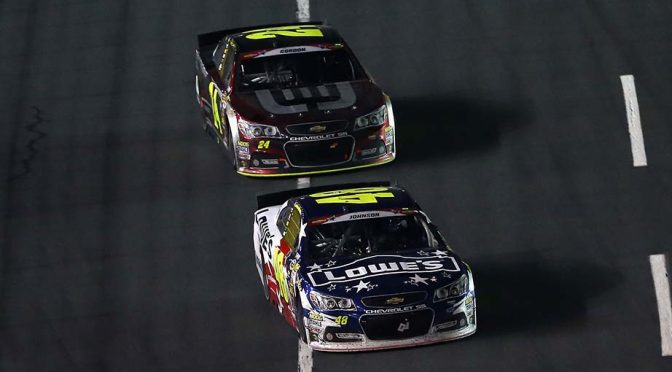
So much of the focus this season will be on Johnson’s pursuit of a potential record-tying seventh championship, an undertaking that gained even more traction Sunday when the Hendrick Motorsports driver vaulted to the Sprint Cup Series lead in victories. But there’s something else going on right now that we haven’t seen in a long time, and we may not witness again for decades: Johnson and teammate Jeff Gordon both pursing landmark victories at the same time.

Johnson’s win Sunday at Michigan was his 69th at the sport’s top level, and his next one will be a nice round number surpassed by just seven other men in the sport’s history. At the same time, Gordon’s most recent victory on May 10 at Kansas Speedway was his 89th, putting him within striking distance of a milestone no driver has reached since Gerald Ford was president. The fact that these two pursuits are occurring at once makes them all the more remarkable — the way they’re running this season, no one would be surprised to see Mr. 70 and Mr. 90 crowned in successive weeks.

Much like Johnson’s march toward seven championships, we’re witnessing something very special here, and something that likely won’t occur again for a very long time. Watching NASCAR in the era of Johnson and Gordon is like watching golf at the height of Jack Nicklaus — we’re spoiled by the ability to see two of the best ever climb the career victory ladder with relentless persistence. Yes, Jimmie wins a lot. Yes, Jeff doesn’t win quite as often as he used to. None of that detracts from the fact that these two drivers, who also happened to be linked by team affiliation, have displayed degrees of longevity and consistency which transcend the age in which they compete.

Being able to watch it unfold on parallel tracks is akin to seeing Halley’s comet streak by on back-to-back nights. They may rank first and second respectively on NASCAR’s career victory list, but Richard Petty recorded his 100th career victory a decade before David Pearson — who didn’t run the full schedule nearly as often as the King did — got his. They may have been close friends and fierce rivals, but Dale Earnhardt far outdistanced Rusty Wallace in terms of career victories, earning his 50th a decade before his Hall of Fame counterpart won his.

So no, when it comes to milestones of this magnitude being chased by two drivers at the same time, we really haven’t seen anything like this since the early 1980s, when Darrell Waltrip, Bobby Allison and Cale Yarborough were scrapping it out on a weekly basis. But even then, there was separation — Yarborough got to No. 70 in the spring of 1981 at Atlanta, a year before Allison got there at Daytona in the summer of 1982, and well before Waltrip did the same at North Wilkesboro in 1986. Yarborough got to 80 a decade before Allison did, and when the younger Waltrip — who succeeded the South Carolina legend in Junior Johnson’s powerhouse car — was still well behind.

That kind of historical context only serves to further illuminate what we’re seeing now: two drivers both chasing milestones that not only cement their own positions among the sport’s all-time greats, but continue to separate them from their contemporaries. Because when it comes to career wins by active drivers, it’s Jeff, Jimmie, and everyone else. Nothing sets these parallel pursuits apart quite like the fact that there are no other active competitors really in a position to give chase.

Gordon is all by himself in third behind Petty and Pearson, Johnson is eighth with a bullet, and the next-highest active driver is Tony Stewart with 48 career victories and tied for 13th place. While we all learned to never underestimate the three-time champion in the 2011 Chase for the NASCAR Sprint Cup, his winning pace has been slowed of late by his leg injury and inconsistencies on his race team. But even at full speed, Stewart would still be pressed to keep up with the likes of Johnson, or match the kind of blockbuster seasons that propelled Gordon to legendary status earlier in his career.

And below that, things get slim in a hurry — Matt Kenseth in 22nd place with 31 career wins, Kyle Busch in 23rd place with 29 wins, Kurt Busch tied for 26th with 25 victories. All of them are championship-caliber drivers who may very well end up in the NASCAR Hall of Fame one day; none of them will likely ever challenge the milestones being posted today by Johnson and Gordon. If anything, the next potential Mr. 70 and Mr. 90 are in much earlier stages of promising careers, raising the distinct prospect that it will be a very, very long time indeed before we ever again see something like what Johnson and Gordon are doing now.

For comparison’s sake, look at Brad Keselowski, who by any standard has had a fantastic start to his NASCAR career with a championship and 11 victories by age 30. When Johnson hit 30, he’d already won 16 times. When Gordon hit 30, he already owned three titles and 55 victories, which in this day and age boggles the imagination. Denny Hamlin has shown potential with 24 wins at age 33, but Johnson had been to Victory Lane 37 times by the same age, and Gordon an astounding 68. Many have pointed to rookie Kyle Larson, and with good reason, though remember that through the first 15 races of his rookie campaign, Johnson had already won twice.

The Hendrick teammates simply stand head and shoulders above everyone else of their generation. Any other active driver is going to need a few explosive seasons — akin to Gordon from 1996-98, or Johnson from 2007-09 — to even approach what they’ve done. In the meantime, sit back and appreciate a rare moment created by two of the best ever chasing career milestones at the same time. Because a potential Mr. 90 and Mr. 70 don’t come along every day.

MORE:

READ: Latest
NASCAR news

WATCH: Latest
NASCAR video

PLAY: NASCAR
Fantasy Live

FOLLOW LIVE: Get
RaceView

Laughton had what it took to get to the front — and stay there — at Michigan.

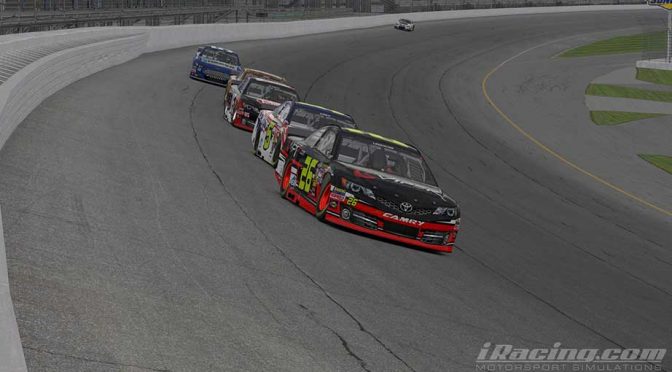
With the way Chad Laughton’s 2014 season has been going, everyone knew it was only a matter of time before he would find victory lane.  The time finally came last night.  Laughton won his first race in the NASCAR PEAK Antifreeze Series Powered by iRacing at Michigan International Speedway after passing series points leader Michael Conti during the final round of stops with 30 laps to go.

“Coulda, shoulda, woulda . . .” – Michael Conti

Conti finished second after a late-race try for the lead followed by Nick Ottinger and Mitchell Hunt with Justin Bolton recording a strong fifth place finish.

After the final round of stops was completed, Conti appeared to hold back and ride in line behind Laughton, biding his time. The two were joined by Ottinger, Hunt and Kenny Humpe in a five car lead draft.

By the end the draft was cut to three cars as both Humpe and Hunt experienced “self-inflicted” difficulties with their cars.  With 13 laps to go, Humpe got loose off of Turn 4 and hit the wall. The damage took its toll on Humpe’s handling and he started to slide back. Two laps later Hunt too was bitten by Turn 4 and had to lift, dropping him too far behind the front three to make a charge.

After riding around behind Laughton for nearly 30 laps, Conti made his move down the backstretch with two laps to go. He got a strong run off Turn 2 and began to draft up on Laughton as they approached Turn 4. Conti dove to the bottom, but Laughton made a bold move and shut the door on him. Conti, unwilling to use the very bottom of the track, fell back in line behind the race leader but did not have another shot at the win. Instead, his focus shifted to defending second from Ottinger, which he managed to do.

Despite falling short on picking up another victory, Conti remained positive. “Coulda, shoulda, woulda, all that matters is that we are still leading the points, finished second in a great field of cars, and have a lot of momentum heading into the second half of the year,” he said.

Ottinger was also pleased to come home third, knowing how important consistency is in the quest for the NASCAR PEAK Antifreeze championship. “Smart racing up front and thoroughly enjoyed it,” he said.  “Tried waiting for the 5 to make his move and it just was not happening.”

The race was briskly run and competitive with 13 lead changes among six drivers. Only two cautions slowed the pace, both of which occurred before Lap 25. Unfortunately for some drivers, they could not make it a lap before chaos broke out entering Turn Three. Brian Day did not realize he was three wide and came up slightly into Thomas Lewandowski, setting off a melee that collected several strong cars including those of Ray Alfalla and Brian Schoenburg.

With all of the top five in the series point standings having good runs, there was not much movement at the top of the leaderboard. Conti still leads with a nine point gap back to Ottinger. Laughton inched closer with his win and now is 18 points out of the lead. Jake Stergios is fourth after a mediocre eighteenth place showing at MIS and Alfalla is fifth after rallying for a tenth place finish following his early trouble.

With half the 2014 season in the rear-view mirror, the NASCAR PEAK Antifreeze Series heads to Kentucky Speedway to kick-off the second half under the lights. Kentucky is known for being one of the most challenging 1.5 mile tracks on the schedule thanks to its narrow groove and numerous bumps. A setup that is not only fast but can handle the bumps without losing grip is key to a strong result.

There is plenty of sim racing remaining in this season, but the trio of Conti, Ottinger and Laughton have looked nearly unbeatable in recent weeks. If anyone can unseat them it might be Alfalla, who is still without a win in 2014 but who has looked much better in recent weeks. Can Alfalla or someone else steal the show, or will a familiar face taste victory once again? Find out in two weeks’ time on iRacing Live!


NASCAR Chairman and CEO provides examples of innovation, validation in the sport

RELATED: France champions social media | France puts fans first at industry summit

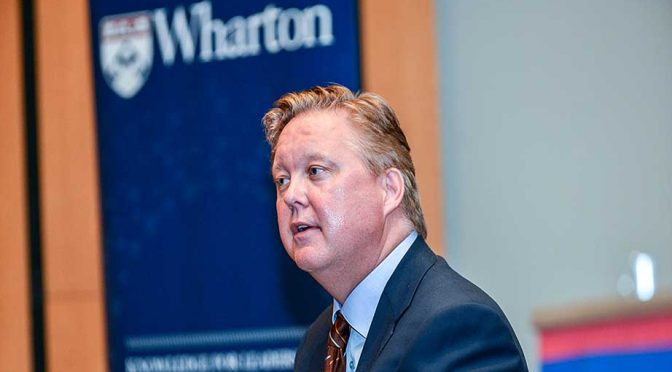
NASCAR Chairman and CEO Brian France spoke Wednesday in Philadelphia on leading a sports and entertainment industry during the 18th annual Wharton Leadership Conference.

In front of an audience of 300 established and emerging leaders in a variety of disciplines and industries from private, public and non-for-profit organizations, France addressed the conference’s underlying topic: Preparing for a Complex and Uncertain World.

Sponsoring partner, Accenture, noted in an @AccentureStrat tweet that NASCAR is a family-run business, and France spoke about the challenge of balancing interests to ensure the best product with Peter Cappelli, Director of Center for Human Resources, Wharton and George W. Taylor Professor of Management.

"Healthy self-criticism is vital for keeping leadership accountability in check," France said, noting that all successful family-owned businesses strike the right balance between interdependence, collaboration and constructive conflict.

"What I look for in leaders is high energy, a fit within our culture, and a willingness to take calculated risks," France said. "Good leaders can’t survive if they don’t innovate."

FULL SERIES COVERAGE

• Latest news
• Standings
• Schedule

France gave a concrete example of innovative leadership when he discussed the Daytona Rising initiative, the $400 million reimagining of an American icon, the Daytona International Speedway. To appeal to millennial fans, the World Center of Racing will include 11 football-field-size areas for social media engagement.

The NASCAR Air Titan was highlighted by France as another example of innovation. The cutting-edge technology behind the new NASCAR Air Titan 2.0 can dry a football field in 20.5 seconds, reducing track-drying time by up to 80 percent and elevating a fan’s race-viewing experience to an even greater level.

"Innovation is another term for risk taking, and is one that used to be reserved for Silicon Valley and technology entities," France said of NASCAR Air Titan. "We had a big issue… and we tackled it with innovative thinking. The result has been a dramatic reduction in track drying time. So much so, that other sports and industries are coming to us to inquire about our technology."

In his 11th year as chairman and CEO, France spoke of collaboration other sports as opportunities to grow NASCAR.

"We encourage it," France said. "I’m the biggest sports fan in our company. I go to other sports events when I’m in another market. We’re big into that. Our L.A. office does a great job promoting sports and entertainment crossover marketing integrations. That can only help us."

"When you go around the world, there are really only one or two major sports in every country," France said. "More often than not: soccer and auto racing, with a few exceptions like cricket in India.

"Here in the U.S., there are a few predominant sports like ours, plus big events like the Kentucky Derby and Masters. All the leagues are all so well managed now. Years ago, we were primarily were rights sellers; but over the last 20 years, the leagues have become great marketers. We’ve hired classically trained marketers, digital leaders, and we’re reaching out to fans — existing and new — in entirely different ways."

When asked whether or not electric cars would be run in any NASCAR series in the future, France identified the importance of working with original equipment manufacturers in the NASCAR Sprint Cup Series, NASCAR Nationwide Series, NASCAR Camping World Truck Series and the IMSA-sanctioned TUDOR United SportsCar Championship. He also noted opportunities in regional touring series in the U.S. and international series, including the NASCAR Canadian Tire Series, NASCAR Mexico Toyota Series and the NASCAR Whelen Euro Series.

"NASCAR’s national series run a bio fuel today," France said of Sunoco Green E15, a biofuel blended with 15 percent American Ethanol made from American-grown corn, which surpassed five million miles of competition last November. "We are — and will continue to be — a great validator of green technologies. There is a huge commercial opportunity with our national, regional and international series as well as with our IMSA series when it comes to sustainability. All of the auto manufacturers have these technologies, so we must be in step with them."

The conference at the Wharton School of Business on the campus of the University of Pennsylvania was named one of the top 10 "Executive Conferences CEOs Love Best" by Weber Shandwick, and Burson-Marsteller rated the event one of the "Most Valued Podiums" for CEOs and senior executives. Forbes.com’s Matthew Kirdahy reported that the Wharton Leadership Conference was second only to the Fortune Innovation/iMeme conference in the number of high-level speaker participants.

This year’s speaker faculty included Ajay Banga, president and CEO of MasterCard; Gen. Mark Welsh III, chief of staff, U.S. Air Force and Sandy Ogg, operating partner, Blackstone.

MORE:

READ: Latest
NASCAR news

WATCH: Latest
NASCAR video

PLAY: NASCAR
Fantasy Live

FOLLOW LIVE: Get
RaceView

The deal will marks 10 years of sponsorship with the Sonoma track

RELATED: Play NASCAR Fantasy Live | Sign up for RaceView today

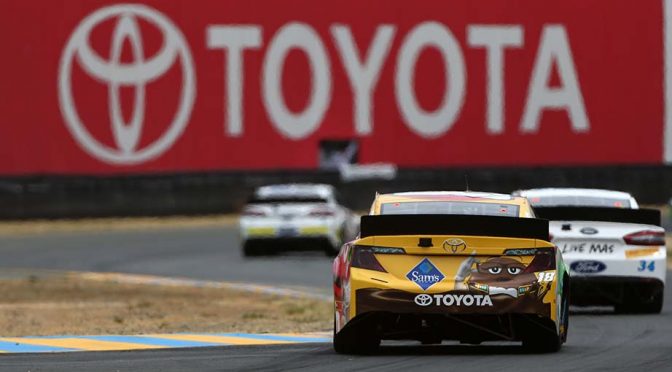
Toyota, which has served as co-title sponsor of the annual Sprint Cup Series race at Sonoma Raceway since 2007, will continue in that capacity for at least three more years, the track announced Wednesday.

The multi-year extension is with Toyota Motor Sales USA and the Northern California Toyota Dealers, and will mark 10 years of sponsorship with the Sonoma, California track, which hosts NASCAR’s premier division once again Sunday.

FULL SERIES COVERAGE

• Latest news
• Standings
• Schedule

"Sonoma Raceway is one of the premier motor-sports venues on the West Coast and our partnership enables us to showcase the freshest line up of cars, trucks and SUVs in the industry," Henry Hansel, president of the Northern California Toyota Dealer Advertising Association, said in the release announcing the extension.

The agreement also includes hospitality, extensive signage, promotional rights and other assets during major event weekends in Sonoma, including comprehensive, interactive displays for race fans during the June NASCAR event.

"We could not be more proud of our association with the Toyota brand, their terrific lineup of cars and trucks and the outstanding group of dealers in our region," said Steve Page, Sonoma Raceway president and general manager. "We are grateful for their support of the raceway and the NASCAR event and look forward to working together for many years to come."

The 2014 season marks Toyota’s 10th anniversary participating in NASCAR national series competition. In 2004, the manufacturer entered the NASCAR Camping World Truck Series with the Tundra and moved into the NASCAR Sprint Cup Series and NASCAR Nationwide Series with the Camry beginning in 2007.  Toyota has won nine manufacturers championships — three in the NNS and six in the NCWTS, as well as five driver’s championships. 

MORE:

READ: Latest
NASCAR news

WATCH: Latest
NASCAR video

PLAY: NASCAR
Fantasy Live

FOLLOW LIVE: Get
RaceView

With regular season waning, Sonoma, Watkins Glen are opportunity races

RELATED: Play NASCAR Fantasy Live | Sign up for RaceView today

When NASCAR announced its innovative change to the 2014 Chase for the NASCAR Sprint Cup postseason eligibility — essentially creating a win-and-you’re-in scenario — there were more than a few drivers who eagerly looked forward to a summer of right-hand turns.

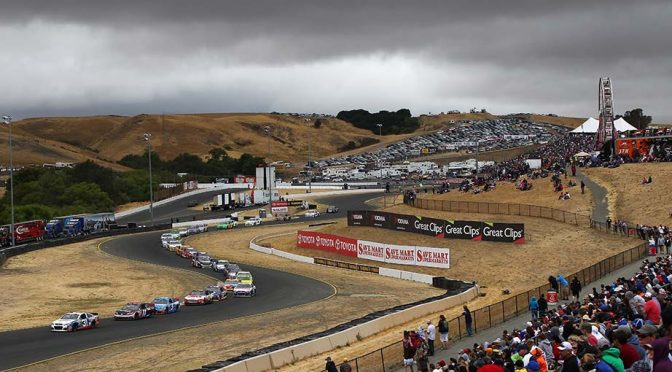
For those who especially revel and thrive on the schedule’s two road course events, this week’s Toyota-Save Mart 350 in Sonoma, California represents a primo potential ticket to the championship party.

FULL SERIES COVERAGE

• Latest news
• Standings
• Schedule

Of all the implications and possible scenarios the new championship format has created, nowhere is it more impactful than the road course events where that specific skill set could very well be enough to land a driver like Marcos Ambrose, A.J. Allmendinger or Danica Patrick in the Chase.

There are only 11 races left to establish the 16-driver Chase field, and surprisingly drivers such as three-time champ Tony Stewart and perennial contender Kasey Kahne are still on the outside needing a victory or at least several more solid points days.

Matt Kenseth, Sunoco Rookie of the Year contender Kyle Larson and Ryan Newman are currently ranked high enough in points to qualify for the Chase, but still lack the security of a win.

And then there are those such as Ambrose and Allmendinger, who have circled Sonoma on their calendar in bold and bright colors.

For these Richard Petty Motorsports and JTG Daugherty Racing road course experts, Sunday could be a season-maker.

Yet, when it comes to Sonoma’s 12-turn, 1.99-mile winding circuit through the Northern California hillsides, the "road course ringers" — interestingly enough — have some work to do.

For all the hype and high expectations for Ambrose and Allmendinger here, neither has ever won at Sonoma, despite in Ambrose’s case having the third-best average finish (11.8) among active drivers, thanks to five consecutive top-10 outcomes.

The last two Sonoma winning drivers having come from an open-wheel, road course background, were Robby Gordon and Juan Pablo Montoya way back in 2003 and 2007, respectively.

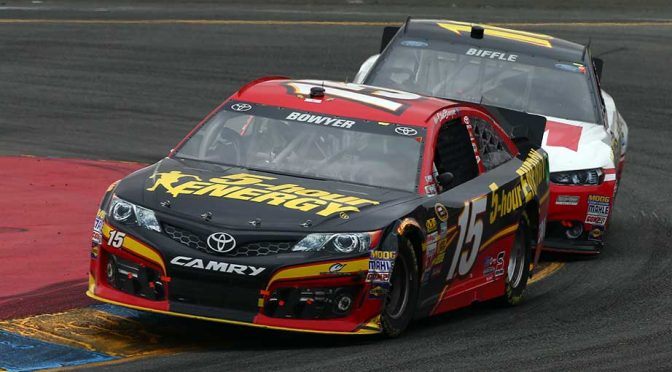
The two most recent Sonoma winners — Martin Truex Jr. and Clint Bowyer — made their first ever visits to a road course Victory Lane, and both are seeking their first wins of the season.

That’s a trend drivers such as Kenseth, Newman and Larson would like to see continue.

For the 2003 Cup champ Kenseth, road course races have proven to be real road block.

Not only is he winless in 28 combined starts at Sonoma and the other road course circuit in Watkins Glen, New York, he doesn’t have a single top-five finish and has led only one lap. His lone top-10 finish at Sonoma (eighth) came six years ago.

Newman is also winless on the road course circuits, but has a respectable three two-five finishes and 13.1 average finish, compared to Kenseth’s 20.7 at Sonoma.

Larson, of nearby Elk Grove, California will be making his Sonoma debut. He has only three Nationwide Series road course races under his belt — with widely varying results. His best showing last year was seventh at Road America, followed by a 30th at Watkins Glen then a 14th at Mid-Ohio.

Sonoma represents a good opportunity to punctuate a season resurgence for Stewart, whose seven road course wins trails only Jeff Gordon (nine) on the all-time list. The Stewart-Haas Racing owner/driver has improved five positions in the championship standings (16th) during the last four weeks and arrives in California’s wine country as a two-time former winner here.  

Likewise, Kahne is a former winner (2009), who could stand a victory and a boost in the rankings — he’s currently 19th and coming off only his second top-five of the season, a fifth-place finish at Michigan.  

With nine different winners in the last nine races at Sonoma, the only thing predictable is that nothing seems to be anymore. Which isn’t a bad thing.

With so much on the line and time getting tight, expect a no-holds-barred short track race to break out on the road course, where aggression meets skill and even championship long-shots could score an invite to NASCAR’s most coveted and elite event, the Chase for the NASCAR Sprint Cup.

MORE:

READ: Latest
NASCAR news

WATCH: Latest
NASCAR video

PLAY: NASCAR
Fantasy Live

FOLLOW LIVE: Get
RaceView

Goodyear tire with more grip to be run on all four wheels

RELATED: Play NASCAR Fantasy Live | Sign up for RaceView today

NASCAR Sprint Cup Series teams will be using a new compound on all four tires this weekend at Sonoma Raceway.

According to Goodyear, the new tire provides superior grip over the compound employed at the Northern California road course a year ago. The compound was chosen after a late March tire test at Sonoma that involved Marcos Ambrose, Tony Stewart, Kyle Busch, Jeff Gordon and Brian Vickers. The same compound will be used on all four wheels, different from ovals where separate tires are used on right and left sides.

Nationwide Series teams at Road America in Elkhart Lake, Wisconisn, will use the same tires employed on the road course a season ago, again on all four wheels. Goodyear will also bring its wet-weather radials for use at Road America, should NASCAR determine that conditions warrant them.

MORE:

READ: Latest
NASCAR news

WATCH: Latest
NASCAR video

PLAY: NASCAR
Fantasy Live

FOLLOW LIVE: Get
RaceView

Josh Berry has four Late Model wins in 2014 for JR Motorsports

RELATED: Play NASCAR Fantasy Live | Dale Jr.’s late-night Twitter chat

One night after taking on a variety of questions from fans, Dale Earnhardt Jr. made news again on Twitter.

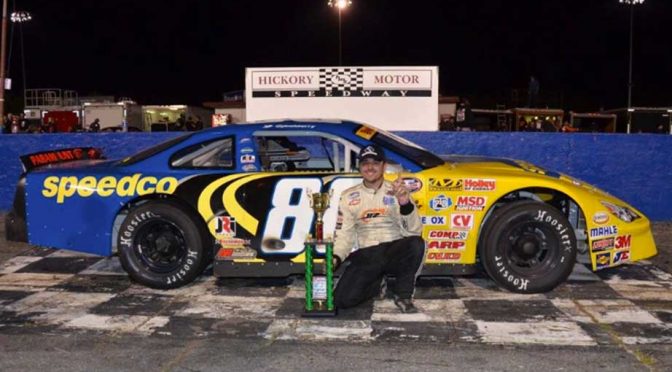
In his role as owner of NASCAR Nationwide Series team JR Motorsports, Earnhardt Jr. named his Late Model driver, Josh Berry, as the driver for his No. 5 ride on Aug. 2 at Iowa Speedway.

Berry won his fourth race of the season at Hickory Motor Speedway on Saturday night for the No. 88 Speedco team, which earned its eighth pole of the year.

The 23-year-old Hendersonville, Tennessee native earned JR Motorsports’ first overall championship in 2012 when he took home track champion honors in the NASCAR Whelen All-American Series at Motor Mile Speedway in Radford, Virginia. In 2011, Berry was named 2011 Late Model Most Popular Driver by a Speed51.com vote.

Berry was excited about to receive the news on Twitter and responded in kind.

The No. 5 JR Motorsports Nationwide team is 11th in owner points and has been driven by Kevin Harvick, Kasey Kahne and Austin Theriault in 2014. Harvick has recorded a win, a pole, six top-fives and seven top-10 finishes in the ride this year.

MORE:

READ: Latest
NASCAR news

WATCH: Latest
NASCAR video

PLAY: NASCAR
Fantasy Live

FOLLOW LIVE: Get
RaceView

Third win in last four races secures clean sweep of first-place votes

RELATED: Photo gallery: Memorable moments from Michigan

MORE:

READ: Latest
NASCAR news

WATCH: Latest
NASCAR video

PLAY: NASCAR
Fantasy Live

FOLLOW LIVE: Get
RaceView