BROOKLYN, Mich. — Denny Hamlin is still on baby watch entering Sunday’s NASCAR Cup Series race at Michigan International Speedway.
Hamlin and fiancée Jordan Fish are awaiting the birth of their third child at any moment, and Hamlin is prepared to head back to North Carolina if he gets the call ahead of Sunday’s FireKeepers Casino 400 (2 p.m. ET, Prime Video, MRN Radio, SiriusXM NASCAR Radio).
The couple was anticipating the newborn’s arrival last week when Hamlin was racing at Nashville, but that wait continues.
“Just patiently waiting,” Hamlin said Saturday. ‘Thought we’d be almost a week in by now, but just patiently waiting.”
Though Hamlin is ready to head back east at a moment’s notice, the driver of the No. 11 Joe Gibbs Racing Toyota wasn’t quite sure of his imminent Saturday plans.
“We’re gonna wait to see where her symptoms are at,” he said. “I’ve got some meetings and whatnot here first. So after that’s over, see where her symptoms (are) at and if she has any then certainly we’ll go back.”
If Hamlin is back east by the start of Sunday’s race, three-time Xfinity Series race winner Ryan Truex is prepared to step in as Hamlin’s reserve driver. Truex has made 102 Xfinity starts, including in this year’s season opener at Daytona, in addition to 26 Cup Series starts, though none since 2014.
“He’s been working in the sim to get acclimated,” Hamlin said of Truex. “I was worried about him reaching my pedals first of all. But it sounds like he fits fine. If they had overnight to adjust it, if that’s the case, if I get called tonight, they’ll be able to move the pedals back to make it all fit right for him. But overall, we’re basically the same kind of body size, so he’ll take over.”
The plan is for the baby to arrive ahead of next weekend’s inaugural Cup race in Mexico City, but also clarified any decisions made are dependent on the urgency of the situation and is leaving the calls to his pregnant fiancée — including the option of missing next week’s race in Mexico “if I had to,” Hamlin said.
“I’m gonna leave the call entirely up to her,” he said.
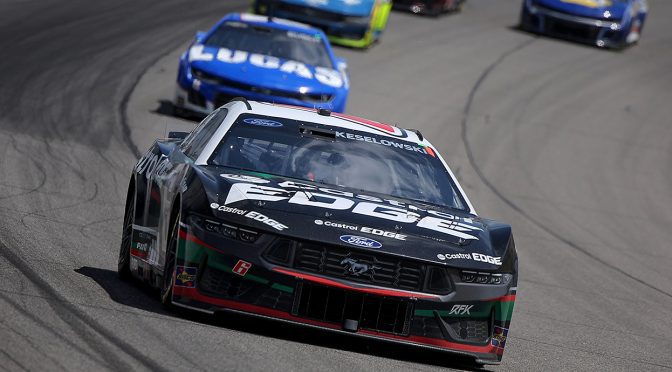
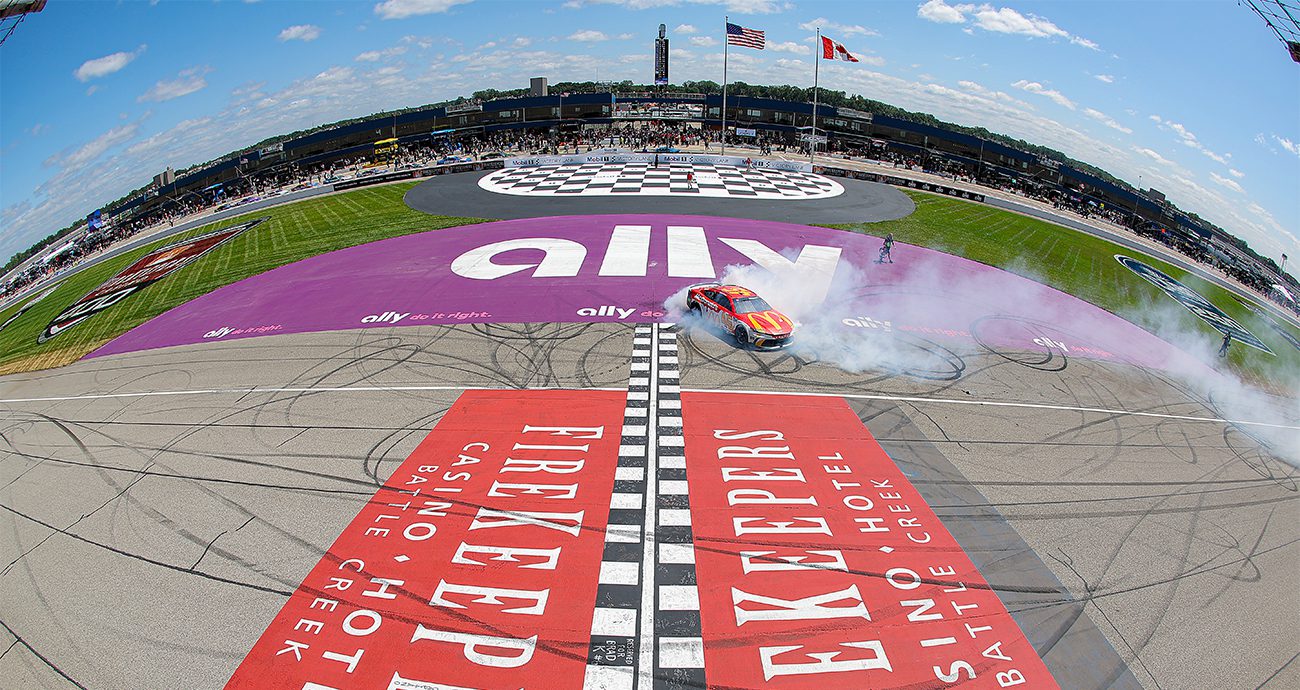
Chase Briscoe claimed his third consecutive NASCAR Cup Series pole position Saturday morning, with the Joe Gibbs Racing driver taking top honors at Michigan International Speedway for Sunday’s FireKeepers Casino 400 (2 p.m. ET, Prime Video, MRN Radio and SiriusXM NASCAR Radio).
Briscoe’s No. 19 JGR Toyota turned a lap of 195.514 mph for his fourth pole of the season — just besting Richard Childress Racing’s Kyle Busch, who will start alongside with a lap of 195.317 in the No. 8 Chevrolet. This equals Busch’s best start of the season (also second at Talladega Superspeedway).
Briscoe’s work marks the first time a driver has won pole positions at three consecutive races since Hendrick Motorsports’ Kyle Larson did it last April at Richmond, Michigan, and Texas. Briscoe, in his first season with the Gibbs organization, won the pole for the season-opening Daytona 500. In the last three weeks, he’s claimed the Busch Light Pole Award at Charlotte, Nashville and now Michigan.
“I was surprised truthfully it held on,” the 30-year-old Indiana native said of his fast lap. “It was not as easy as I thought it was going to be just holding it wide open. But our Bass Pro Shops Toyota has been pretty fast in race trim and I thought we could have been even better. It will be nice starting up front and we’ve been able to do that now three weeks in a row but haven’t been able to execute with it, so hopefully third time is a charm and hopefully we can finally get one on Sunday.”
Briscoe’s Joe Gibbs Racing teammate, Denny Hamlin, was third quickest in the No. 11 Toyota and will start alongside the current NASCAR Cup Series points leader, William Byron in the No. 24 Hendrick Motorsports Chevrolet. Interestingly, neither of those two championship organizations has won on the 2-mile Michigan oval in a decade. The last win for Hendrick came in 2014 and the last for Gibbs in 2015.
However, Hendrick’s lineup now boasts a three-time Michigan winner in Larson, who scored his first series victory at the track in 2016 while driving for Chip Ganassi Racing. The 2021 NASCAR Cup Series champion Larson will roll off fifth Sunday alongside another former Michigan winner (2023) RFK Racing’s Chris Buescher.
“I feel fine, that was an unfortunate part failure there,” Larson said, assuring he was OK after flipping his car in a World of Outlaws race Friday night. “Felt good there today and held it wide open in qualifying, as did the whole field. Hopefully, we can find a little more turn tomorrow. I think all of us being very similar on speed, it will be difficult in traffic so having some turn will be a benefit. That’s our main objective at this point.
“But overall happy to qualify fifth there. That’s honestly a little bit better than I thought we would be. Now we’ll rest up and study and try to be ready for tomorrow.”
Defending race winner 23XI Racing’s Tyler Reddick was 12th in qualifying. Like last week’s Nashville race winner, Team Penske’s Ryan Blaney, he suffered a tire problem in practice. Blaney will roll off 13th.
Briscoe tops practice, too; tire issues snag three teams
Chase Briscoe led a 1-2 performance by Joe Gibbs Racing drivers in Cup Series practice at Michigan International Speedway.
Briscoe set a best lap of 195.482 mph in his No. 19 JGR Toyota. He was just 0.016 seconds ahead of teammate Christopher Bell’s No. 20 Toyota, which clocked in with a second-fastest speed of 195.397 mph.
Chris Buescher (195.207 mph) was third in the fastest Ford, followed by a pair of Chevrolet drivers — Alex Bowman (194.985) and Austin Dillon (194.974) — who completed the top five.
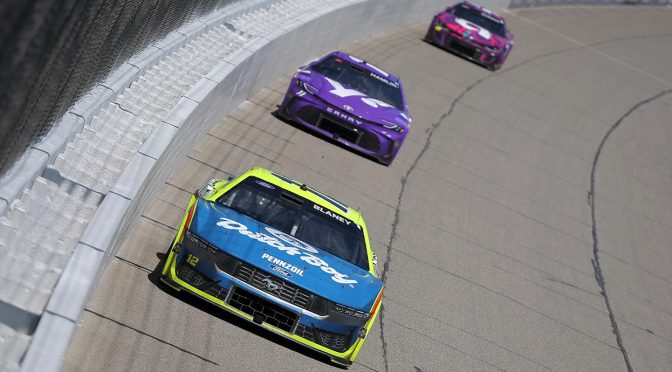
A trio of drivers found trouble with flat tires during practice. Ryan Blaney, last weekend’s winner at Nashville Superspeedway, stopped on the backstretch after a loss of pressure on the left-front tire of his No. 12 Team Penske Ford nearly halfway through Group 2’s 25-minute session. The car was towed back to the garage and Blaney was 26th-fastest in practice.
Tyler Reddick’s No. 45 23XI Racing Toyota sputtered with a flat left-rear tire just moments later, coming to a stop on the Turn 3 apron before he guided the car back to the pits, where his crew went to work on the rear diffuser. Reddick, who won this race a year ago, was seventh-best on the practice list.
Shane van Gisbergen encountered an issue in the final minute of practice for the opening group, slowing his No. 88 Trackhouse Racing Chevrolet with a flat left-rear tire. Van Gisbergen limped back to pit road and ended up 31st on the speed chart.
BROOKLYN, Mich. — Carson Hocevar has made amends with Ricky Stenhouse Jr. after their run-in last weekend at Nashville Superspeedway.
Stenhouse said Hocevar called him Wednesday afternoon to discuss their on-track collision, which came after Hocevar bumped Stenhouse entering Turn 3 at Lap 106 of last week’s Cracker Barrel 400, spinning Stenhouse’s No. 47 Chevrolet into the wall and ending his day prematurely.
Saturday at Michigan International Speedway, both drivers described their conversation as “productive” heading into Sunday’s FireKeepers Casino 400 (2 p.m. ET, Prime Video, MRN Radio, SiriusXM NASCAR Radio).
“I felt like we had good conversations,” Stenhouse said. “I let him know how I felt about it. He kind of walked through the scenario of what he was thinking during that situation and how he basically wishes he could have changed that. So, yeah, I thought it was productive.”
Though Stenhouse is in his 13th season and Hocevar only in his second, each have found themselves in the crosshairs of disagreements with other competitors. The two utilized that common ground in the process of smoothing things over.
“Me and him both have the reputation, I guess, of both being aggressive at times,” Hocevar said. “So at one point, we both reminded each other that even with those reputations, obviously we’ve raced each other very well together. We’ve had no issues before, as he had said, and feel like we’ve had a decent relationship leading up to this, so I thought it was productive. And based off his comments, I felt like it was received (well).”
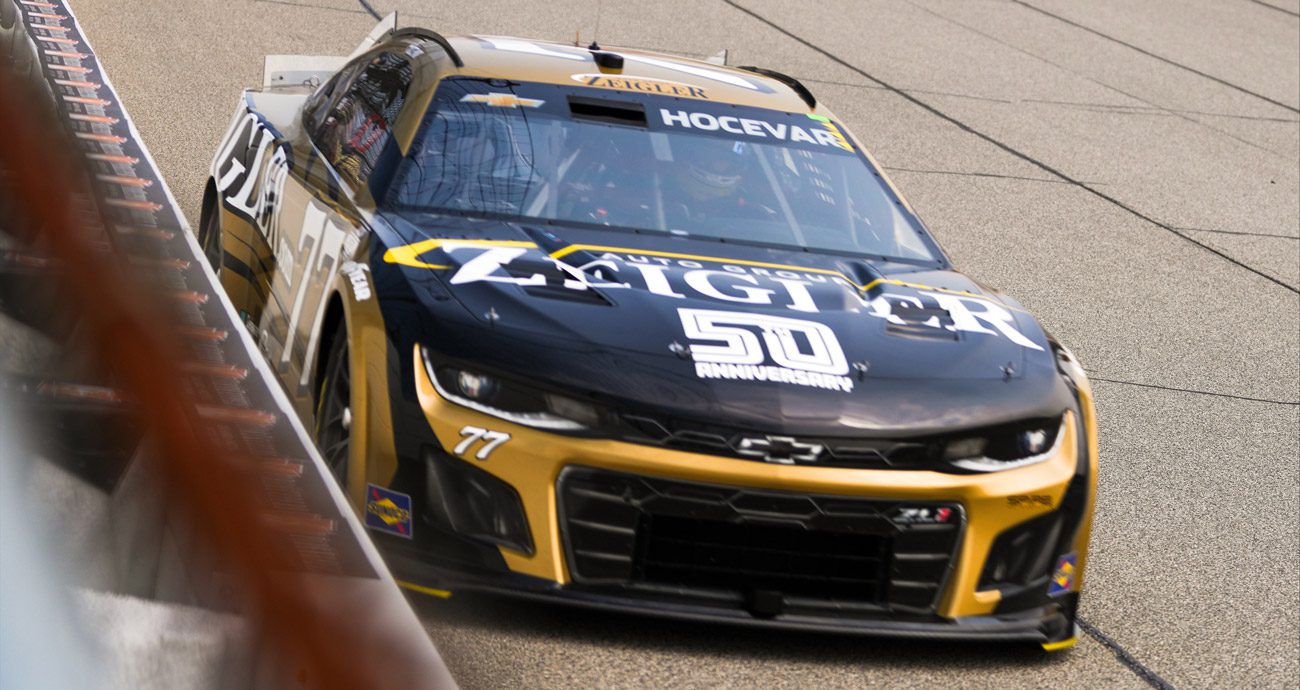
Mired behind the confrontation was a career day for Hocevar, who finished second to race winner Ryan Blaney and tied his career-best finish. The No. 77 Spire Motorsports Chevrolet has been fast all year, evidenced in part by its 12th-most stage points this season. But one moment, one-third of the way into the race, has dominated the conversation around the 22-year-old this week.
That hasn’t bothered Hocevar much, who knows the “1,000 decisions a race” he makes will be overshadowed by the one or two that cause a caution.
“It’s cool to just be talked about,” he said. “Obviously, you want to be talked about maybe in a different light, but, I mean, at least they’re talking, right? I think that’s big for me. And you consume it. You see it all. As [Spire co-owner] Jeff Dickerson had mentioned before, we’re trying to round the edges, and then you have your heroes texting you, ‘Just don’t change,’ right? He’s like, ‘Hold on. We need at least something a little different.’
“But yeah, ultimately, it’s fun to be in the news. I mean, it’s what I’ve dreamt of my whole life, of just at least being topic of conversation. Yeah, so, I mean it’s cool from that aspect, but obviously, you want it to be when you just dominate a Cup race and they can’t stop talking to you. That’s probably ultimately the next goal.”
Alex Daus | NASCAR Digital Media
Stenhouse and Dickerson have a close relationship. Dickerson previously worked as a driver manager and agent for Stenhouse through Motorsports Management International and was integral in getting Stenhouse first in a USAC sprint car and Silver Crown race car before aiding his rise to Roush Fenway (now RFK) Racing, working hand-in-hand with Stenhouse through 2019. Knowing Hocevar had Dickerson to lean on left Stenhouse optimistic that Hocevar would call to discuss their recent run-in.
It’s all part of Hocevar’s learning process as an up-and-coming frontrunner.
“Over the last month, he’s had cars capable of running in the top five,” Stenhouse said of Hocevar. “And I think that was more of what I was telling him is, like, you’re plenty fast. Just go around me, right? Like you don’t have to put yourselves in those spots. When you’re slow and struggling to pass people, that’s when you end up needing to take risks every now and then, whether it be calculated or not.
“So I mean, I guess he’ll learn over time. With all the texts I got this week about what people wanted me to do to him, I would say he hasn’t learned very quickly. But again, it’s the first time anything has come my way. Him and I, we raced around each other a lot the last couple years. So this is the first time we’ve had any issues. … I’m pissed about what all transpired, but I can’t just go wreck him or do what I wanted to do during the race.”
Blaney is another driver who previously spun off the front bumper of Hocevar, most memorably at EchoPark Speedway (formerly Atlanta) in February.
“In my mind, hard racing is fantastic,” Blaney said Saturday. “Everyone races hard. Contact is going to happen. I think it’s an issue if it happens repetitively, like a lot. I think that’s when it starts becoming an issue. Like, do you learn from your mistakes? You can say you’re sorry all you want, but if you don’t learn from them and make a change, then everyone thinks you’re lying and you don’t feel sorry about that.”
Blaney, the 2023 NASCAR Cup Series champion, clarified he isn’t critiquing Hocevar as much and is rather conscious of how Hocevar improves from past incidents.
“I mean, hey, he’s a young guy,” Blaney said. “All of us have been young. We’ve all been aggressive. Everyone has a heavy right foot when they get going and that’s good. I think he’s a very, very talented race car driver. Like, he’s one of the best guys out there. It’s hard to teach speed. I think it’s just that he has to refine a little bit what he does. I don’t think he has to change who he is because this is what got him here. But I think he’s got to possibly think of some situations that he’s been in and just try to learn from them.”
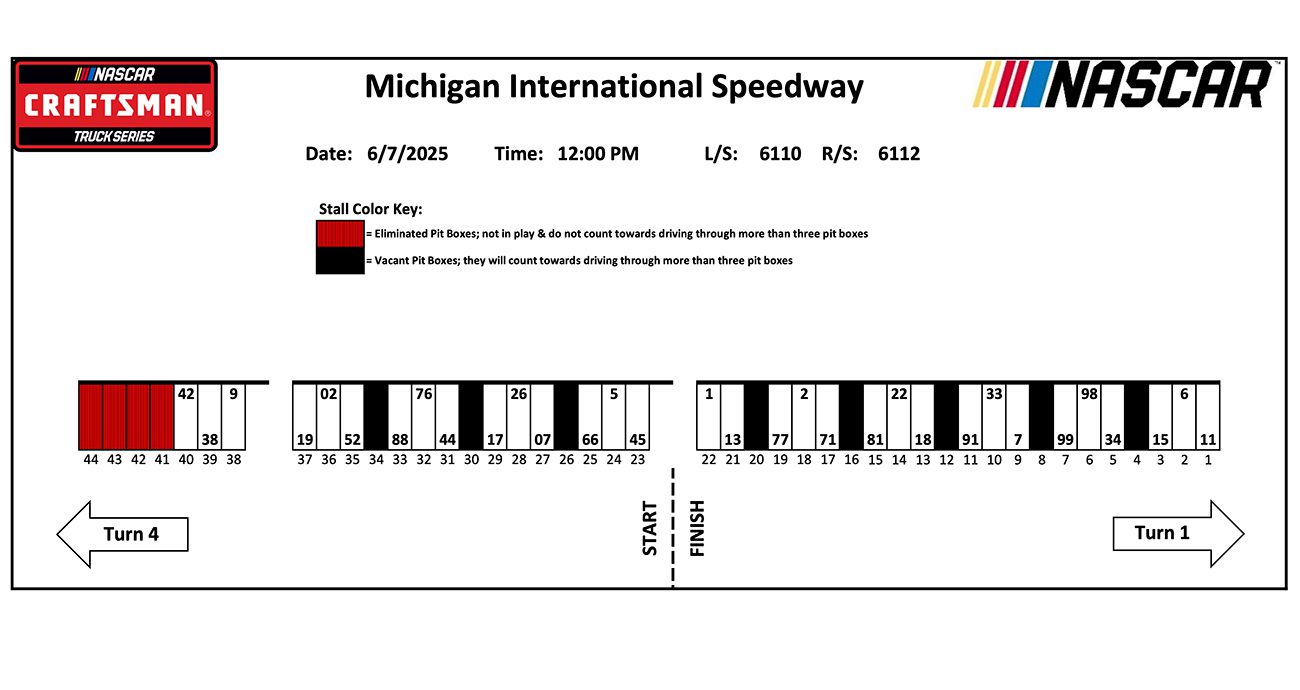
See where your favorite NASCAR Craftsman Truck Series driver will pit for the DQS Solutions & Staffing 250 Powered by Precision Vehicle Logistics at Michigan International Speedway on Saturday (Noon ET, FOX, NRN Radio, SiriusXM NASCAR Radio).
In less than two weeks, the NASCAR Cup Series will race for points in an international land for the first time in nearly 67 years. The name of the track won’t end in Speedway, Raceway, Motor Speedway, International Speedway or be called Circuit of fill-in-the-blank. The metropolitan Mexico City road course is an autodrome — autódromo in the local language — and it forever pays tribute to two national motorsports heroes.
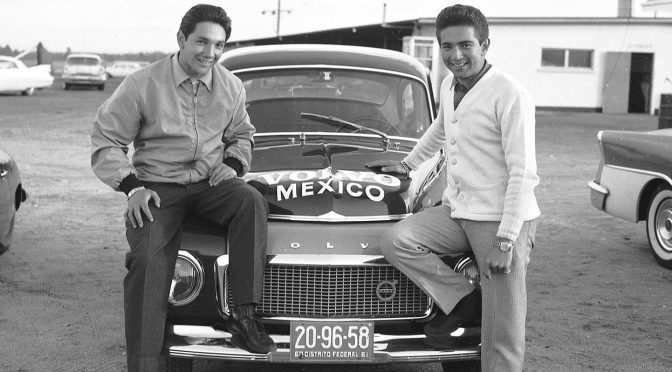
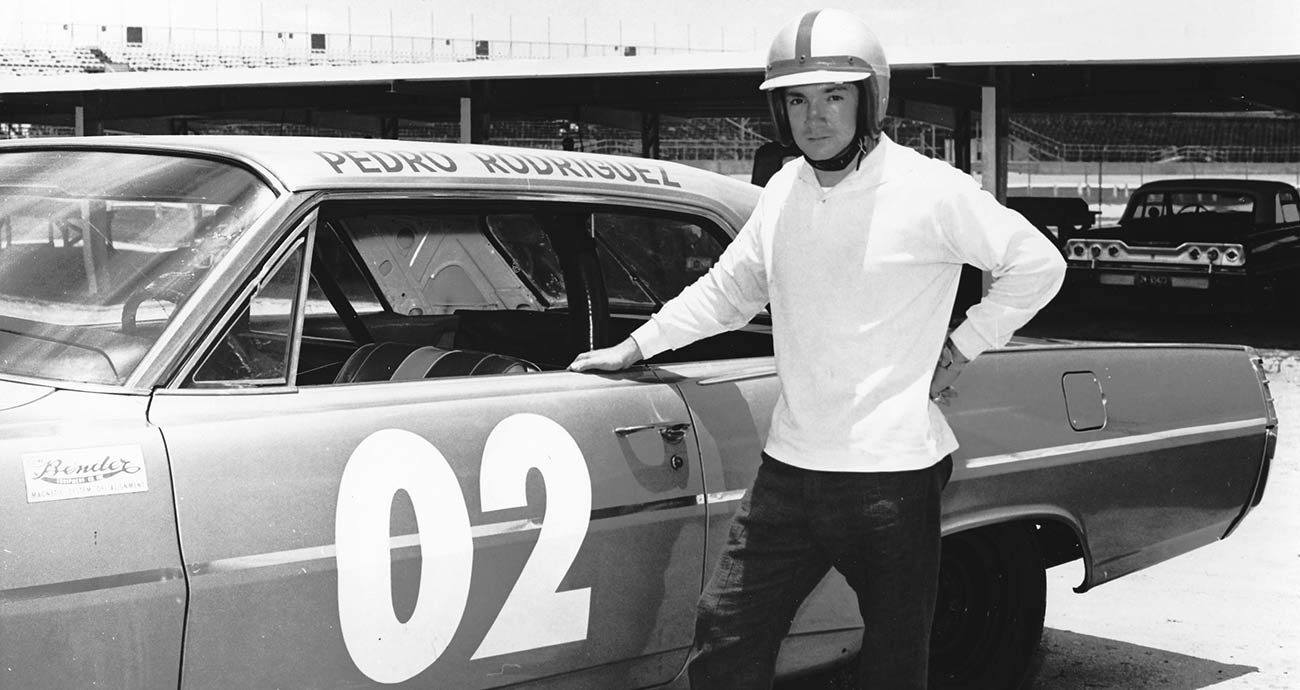
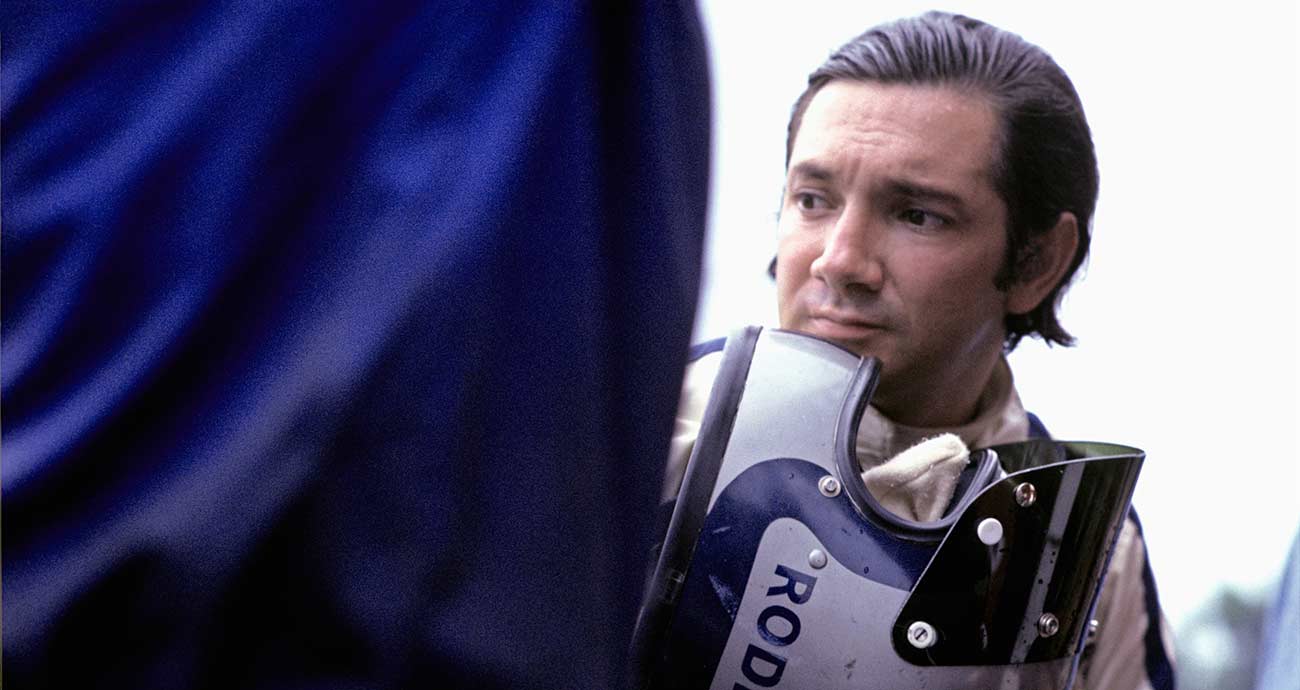
The Autódromo Hermanos Rodríguez takes its name from the two racing brothers — Ricardo and Pedro Rodríguez — who rapidly rose to speed-soaked stardom in a host of motorsports disciplines, including a brief involvement with NASCAR. Mexican pride soared with each accomplishment in their brief careers, which were tragically cut short in a pair of fatal crashes nearly nine years apart.
The national pride was a shared sensation. When the brothers — Pedro, 21, and Ricardo then just 19 — paired up in the 1,000 Kilometers of Paris in 1961 to clinch one of their first major grand-touring victories, a trio of festive mariachi muchachos serenaded their steel-gray Ferrari at the finish, strumming guitars in their sombreros as they straddled the straw-bale trackside barrier.
Years later, Pedro Rodríguez became the first Mexican driver to win a Formula One race, realizing one of his lifelong dreams in the 1967 South African Grand Prix. The triumph was a singular feat for decades until countryman Sergio Pérez’s F1 breakthrough in 2020. “I felt an immense satisfaction for Mexico,” Pedro Rodríguez, the elder of the two brothers, said post-race. “On the victory lap, tears started to flow from my eyes.”
What happened next amid the fanfare nearly prompted Rodríguez to choke on his victory champagne. After the young driver rose to the top step of the podium, the band assembled trackside realized it did not know the Mexican national anthem. Instead, the musicians improvised by playing a tune called Jarabe Tapatío, or as it’s known in English, the “Mexican Hat Dance.” According to legend, Rodríguez always traveled with a recording of Himno Nacional Mexicano from that point forward.
That pride lives on in the circuit that bears their names.
* * *
NASCAR Research & Archives Center | Getty Images
Both brothers were prodigies, following the love of their father, Pedro Sr., into motorcycle racing. Don Pedro’s success in the railroad industry and his later expansion into manufacturing and the hotel business afforded the family access to rare and sinewy sports cars, which became the children’s gateway into four-wheeled motorsports. He carried his young sons on the handlebars of his bikes before they were able to ride on their own.
The two became motorcycle champions in their mid-teens, setting youth records as they explored other racing disciplines. Ricardo was just 18 when he teamed with Andre Pilette to finish second in the 24 Hours of Le Mans in 1960. The following year, Pedro joined him for the French endurance classic. The brothers led the race until an ignition short cost them precious time; after repairs, they rallied to second place before the Ferrari 250 they co-piloted expired with just two hours to go.
Undaunted, Ricardo established another benchmark later in 1961, becoming the youngest front-row starter in Formula One history. The 19-year-old started second for Ferrari in that year’s Italian Grand Prix before a fuel-system failure sidelined him.
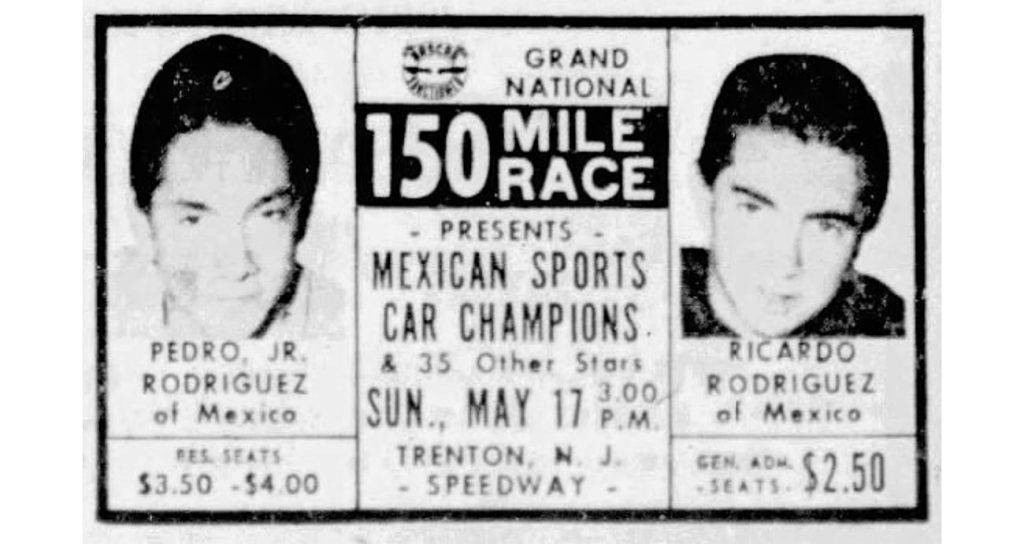
Wherever their travels took them, questions rarely focused on how they would perform, but whether they’d meet the minimum age requirements set by the racing commissions in each country or state. It’s the hurdle they faced with their introduction to the NASCAR world in the spring of 1959 — 19-year-old Pedro was allowed to compete against stock-car racing’s older guard at Trenton (N.J.) Speedway; Ricardo — then 17 — was forced to manage the team from the pits.
Race promoter Sam Nunis took the youngsters on a sweeping publicity tour before the event, visiting television and radio stations and a host of newspapers’ sports departments. Shortly after their entry was filed, the Paterson (N.J.) News reached out to veteran Lee Petty — on his way that year to his third premier series title — for comment. “I’m happy to hear the boys will race at Trenton in that 150-miler,” the 45-year-old Petty said. “The more competition, the better. I don’t reckon they’ll beat me.”
They nearly did, with the NASCAR Hall of Famer coming in fourth behind first-time winner Tom Pistone. Pedro Rodríguez’s name was listed two spots behind Petty in sixth on the Trenton results sheet, ahead of such luminaries as Junior Johnson and Lee’s son, Richard.
Their experience in NASCAR was limited, with the elder Rodríguez brother making just five more Cup Series starts, including a 13th-place outcome in the 1971 Daytona 500. Pedro’s most distinguished effort, however, came in NASCAR’s longest race in a deal that NASCAR founder Bill France Sr. helped facilitate.
Pedro Rodríguez arrived fresh from London on the Tuesday before the Charlotte event, telling reporters he had “heard a lot about the World 600 and had wanted to drive in it since it started.” Holman-Moody hastily prepped a No. 51 Ford that Rodríguez drove to an impressive fifth-place run behind race-winning teammate Fred Lorenzen.
The result made an impression on the good-ol’-boy crowd, which had poked good fun at the perception of Rodríguez’s nobility-class racing background. Rodríguez, however, poked right back.
“If you people don’t quit calling me a sporty car driver,” he joked, “I’m going to start calling you stocky car drivers.”
* * *
The Rodríguez brothers’ story, however, was interrupted by dual tragedies that left the nation mourning. Ricardo’s signing as a Ferrari factory driver for the Grand Prix circuit had raised the younger brother’s profile for the 1962 season. But the siblings were still regarded as a daredevil collective for their aggressive but fleet-footed style.
“If he lives, I’ll be surprised,” one fellow F1 driver confided with anonymity to The New York Times in May of that year, singling out Ricardo’s approach in an era when racing’s inherent danger was magnified. That eerie premonition came true just months later.
Ferrari opted out of that year’s Mexican Grand Prix, which did not count toward the Formula One standings back then. Ricardo instead piloted a Lotus, which faltered in a high-speed section during practice runs, flipped over a barrier and burst into a fireball. He was just 20 years old.
Their father ran to the crash scene and fainted, declaring later: “Racing is over for all the family. This is the end.” Ricardo had contemplated making the Mexico City event his final race, ending his motorsports career to start a family with his new bride and take a role in his father’s industrial empire. Pedro considered the same path in the wake of his brother’s death, but the lure of racing remained strong and his absence from the circuit was brief.
“The loss of my brother hurt me a great deal when it happened, but racing is my profession and I decided to continue,” Pedro said years later, before his World 600 debut. “I try not to think about his death before races and when I’m driving now.”
NASCAR Research & Archives Center | Getty Images
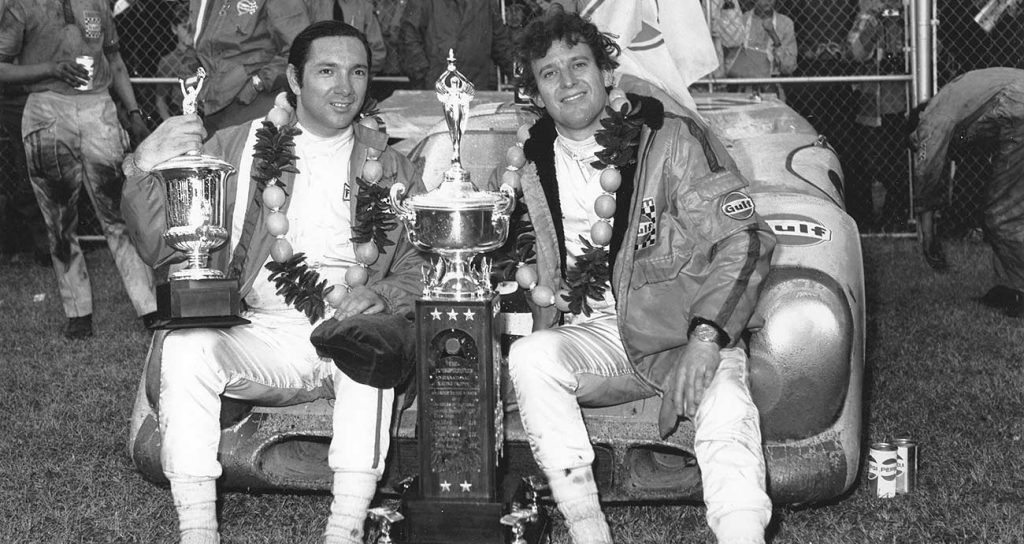
His career blossomed in the years that followed. Besides his two Formula One victories, Pedro Rodríguez won the 24 Hours of Le Mans in a Ford GT40 in 1968, adding a 24 Hours of Daytona triumph for Porsche to his portfolio three years later. Pedro was once considered to be the less polished of the two brothers, mainly for his knack at flinging his cars through tight corners. But he became known as “Ojos de Gato” — “cat’s eyes” — for his extraordinary speed and composure while racing in rainy and nighttime conditions.
Pedro said a Grand Prix driver “probably feels about the same thing before a race that a matador does before he goes into the ring. It’s fear that can make you crash. Before a race, I always think of something else. I never think about what could happen.”
Just months after his Daytona Rolex win, Rodríguez had entered a lower-level sports-car race in Nuremberg, Germany, in part because he regarded the technical Norisring course’s configuration as one of his favorites. “Some drivers like the shorter tracks they can become familiar with,” he told The Associated Press. “I prefer the many curves. It’s a challenge and I think it helps me.”
But the course also challenged the limits of the Ferrari he was driving. In the 12th lap, his right-front tire detached from the rim, sending the car skidding into a barrier and a fiery end. Pedro Rodríguez was just 31.
Don Pedro spoke to the nation at his son’s funeral: “You shared the triumphs of my son with me and now we are sharing the tragedy together.”
Their legacy lives on five decades later, both in Mexico’s history and in the Magdalena Mixhuca Sports City circuit that now honors their names. The NASCAR Mexico Series races that will be preliminaries to the Cup and Xfinity Series next week will be named the Pedro Rodriguez 100 and Ricardo Rodriguez 120 in tribute.
In their brief racing careers, the Rodríguez brothers created a lasting international legacy that reached beyond Mexico’s borders. When NASCAR arrives next week for its first Cup Series race in the country, a new group of international visitors will experience that spirit.
“Motor racing is something that comes out of you,” Pedro Rodríguez once said. “You have something — something in the blood — and it comes out. Nobody can teach you how to drive. You learn it.”
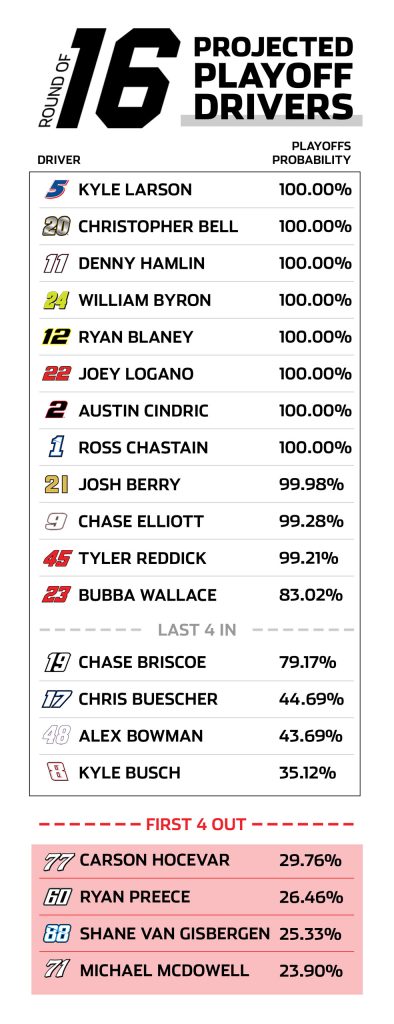
As summer rapidly approaches, it signals the push to the Cup Series Playoffs. While 12 weeks feels like plenty of time to punch a ticket to the 2025 postseason, the Southern 500 at Darlington Raceway will be here before we know it.
To help build the picture leading to September, the Field of 16 playoff predictor returns to take a look at where Cup drivers shake out from week to week until the 16-man postseason grid is set at Daytona International Speedway at the end of August. Nine drivers have already secured a spot in the playoffs, but let’s take a look at who is in a good spot heading to Michigan on Sunday (2 p.m. ET, Prime Video, MRN Radio, SiriusXM NASCAR Radio) and who could be on the clock during the 400-miler in the Irish Hills.
Playoff Probabilities provided by Racing Insights (entering Michigan)
Tyler Reddick (99.21% playoff probability) snapped a nine-race win streak by Ford at the two-mile oval last season. I’d expect the No. 45 driver to be a player to defend his win, but I’m all in on Ford getting back to Victory Lane and the manufacturer’s home track.
This is the race all of RFK Racing should have circled to get one of their cars into the winner’s circle. Chris Buescher (44.69% playoff probability) won at Michigan in 2023 while owner/driver Brad Keselowski (17.54% playoff probability) has scored the second most points in the three Gen 7 races at the track (117). Ryan Preece (26.46% playoff probability) has also been steady on bigger ovals this year with top 10s at Las Vegas, Homestead, Kansas and Charlotte.
Two major wild cards I’m watching this weekend are Michigan natives Carson Hocevar (29.76% playoff probability) and Erik Jones (4.22% playoff probability). With both coming off top 10s at Nashville, a bit of home track buzz could really put one of these two rising contenders in the right opportunity to cash in Sunday. The No. 43 has two top 10s in the last three Michigan races, while Hocevar was 10th in his lone Cup start at the track last year.
YELLOW FLAG [Drivers in a good spot, but have poor Michigan stats]
Chase Briscoe enters this weekend with a 79.17% playoff probability. However, a pole win at Nashville did little to nothing to improve the No. 19 driver’s playoff hopes as he finished down in 17th. While Briscoe was in a different car in prior outings at Michigan, he’s finished 31st in the last two Cup races there and has said this season how much he’s had to adapt at Joe Gibbs Racing.
No matter if he wins or not before the Southern 500, Chase Elliott will likely make the playoffs. He’s got a whopping 153-point cushion to the provisional elimination line and his consistency can’t be argued with the third-best average finish in the field this season (11.5). But the summertime has been known to stifle Hendrick Motorsports over the years, minus the organization’s most recent champion Kyle Larson, and Elliott’s last three outings at Michigan have left a lot to be desired, with a best finish of just 11th in 2022.
RED FLAG [Drivers I’m concerned about heading to Michigan]
Back to Hendrick Motorsports, Alex Bowman (43.69% playoff probability) looked like a playoff lock early in the season with top 10s in five of the first six races. But the No. 48 driver has gone ice cold since Martinsville with finishes of 27th or worse in six of the last eight races. The positive? Bowman has top fives at Homestead and Kansas this season. However, the Tucson, Arizona native only owns one Michigan top 10 in his last six starts.
Owning a slim two-point buffer with the last playoff spot at the moment, Kyle Busch (35.12% playoff probability) will have eyes plastered on him all weekend. The problem hasn’t been the speed in the No. 8 Richard Childress Racing Chevrolet, it’s been being on the wrong side of luck for the last two years. Busch finished fourth at Michigan last year and he’s been tenacious, maximizing results in the last two weeks, but the team needs to put the speed in the car to be a factor this weekend.
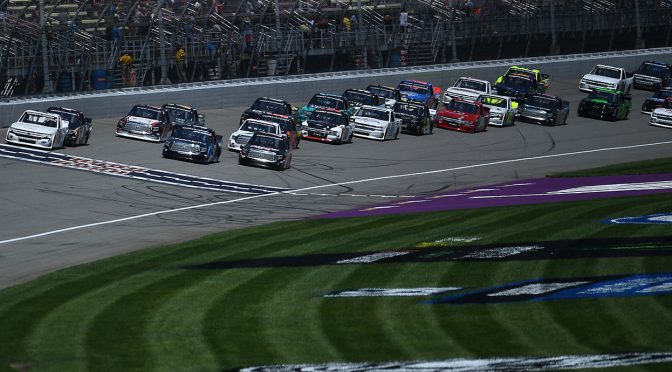
The NASCAR Craftsman Truck Series wraps up a busy six consecutive weeks of competition on Saturday afternoon at Michigan International Speedway with the DQS Solutions & Staffing 250 Powered by Precision Vehicle Logistics (Noon ET, FOX, NASCAR Racing Network Radio, SiriusXM NASCAR Radio).
This marks the first time since 2020 that the series has raced at the two-mile track nestled just outside Detroit. Zane Smith — now a NASCAR Cup Series regular — claimed his first-ever win in the Truck Series the last time the trucks raced at Michigan. No current full-time drivers have won there, but plenty have competed there. ThorSport Racing is the only team with a previous win.
The track has historically been ultra-competitive, with 15 winners in the last 16 races. And qualifying has shown to be important, with the race winner starting 10th or better in the last 11 Michigan races.
The season’s four-time race winner, Tricon Garage’s Corey Heim, leads the championship standings — extending his advantage to 122 points over McAnally-Hilgemann Racing’s Daniel Hemric. Front Row Motorsports’ Chandler Smith and Hemric’s teammate Tyler Ankrum round out the top four in the driver standings.
The last four races before Michigan have been won by four different drivers — Cup Series regular Carson Hocevar, Smith, Heim and Rajah Caruth, last week.
Five of the 10 playoff positions have been claimed by virtue of a victory with six races remaining to set the final playoff field. Reigning series champ Ty Majeski is still racing for his first win of the season and sits in that 10th and final transfer position – 48 points up on rookie Giovanni Ruggiero.
Practice is set for 1 p.m. ET Friday with Kennametal Pole Qualifying scheduled for Saturday at 8 a.m. ET on FS1.
Every Cup Series track has its own special distinction — the attribute that separates it from every other stop on the schedule. Martinsville has its paperclip turns; Bristol, its bump-and-run battles. Daytona and Talladega (and now Atlanta) are all about the draft. And at Michigan International Speedway, they worship at the altar of speed — pure, blistering, full-throttle speed.
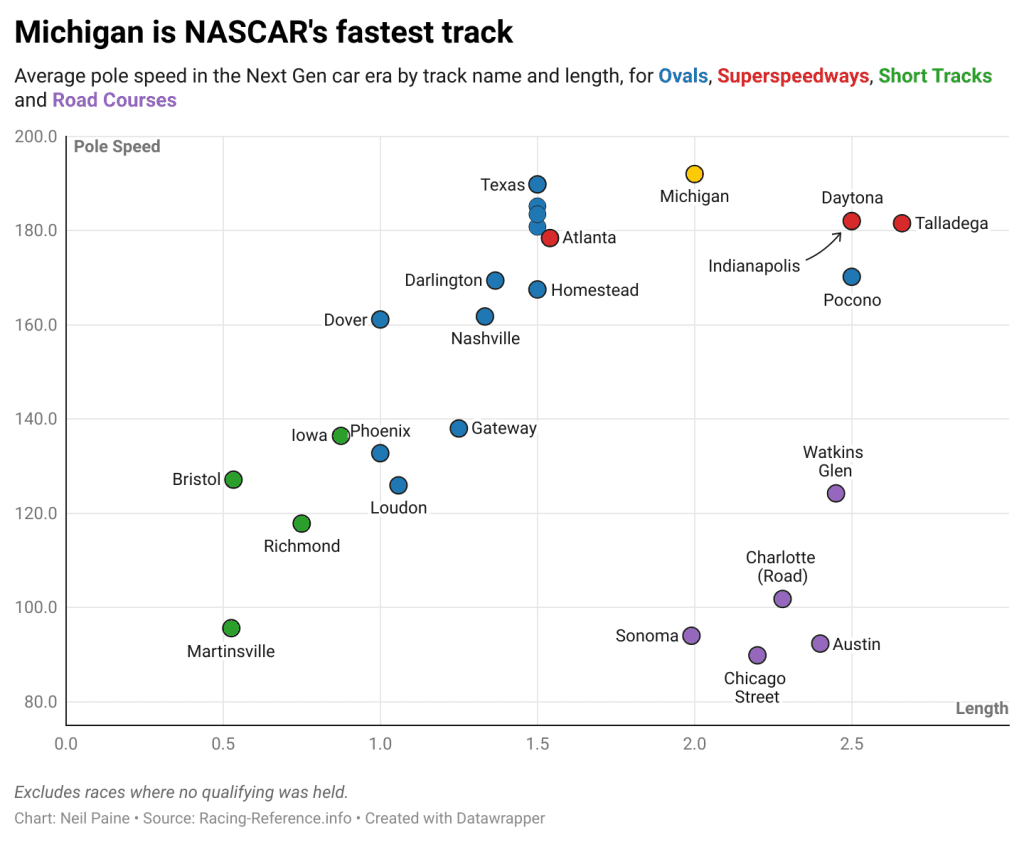
Exactly how fast do things get at Michigan? In the Next Gen era, the average pole-winning lap has seen a speed of 192.04 miles per hour, easily the fastest of any track on the 2025 schedule — beating out Texas (189.84 mph), Las Vegas (185.19), Charlotte (183.50) and Daytona (182.09):
And even that is a bit slower than it used to be. The typical Michigan pole in the Gen-6 era (2013-2021) was 200.5 mph, which rivaled the fastest qualifying laps ever put down at any NASCAR track. For comparison’s sake, the average Talladega pole in the Gen-3 era — run mostly before restrictor plates became mandatory at superspeedways following Bobby Allison’s harrowing catchfence crash at the 1987 Winston 500 — was only slightly faster, at 200.8 mph.
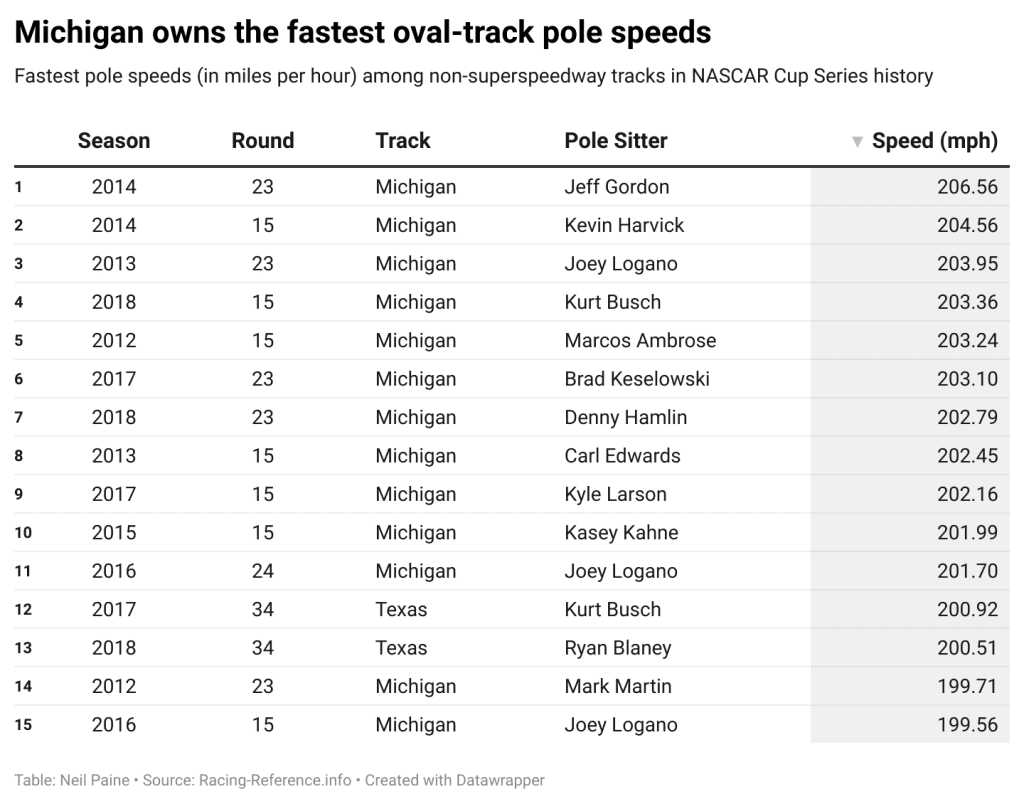
While the fastest pole speed in Cup history came for that very race (212.81 mph by Bill Elliott), and Daytona and Talladega make up each of the top six fastest pole-winning laps ever, Michigan is home to 13 of history’s 15 fastest non-superspeedway pole speeds — and 11 of the 13 to ever break 200 mph:
Michigan’s combination of long straightaways — it’s a 2-mile track — with low tire wear and sweeping 18-degree turns creates ideal conditions for cars to build and sustain speed, especially on corner exit. Among ovals on the schedule, only Pocono and Indianapolis are longer (at 2.5 miles apiece), and both feature significantly flatter corners than Michigan does. (Indy’s turns are banked at 9 degrees, while Pocono’s three corners are banked at 14, 8 and 6 degrees.)
The result is a speed factory all its own, even by the standards of a sport where going fast is kind of the whole point.
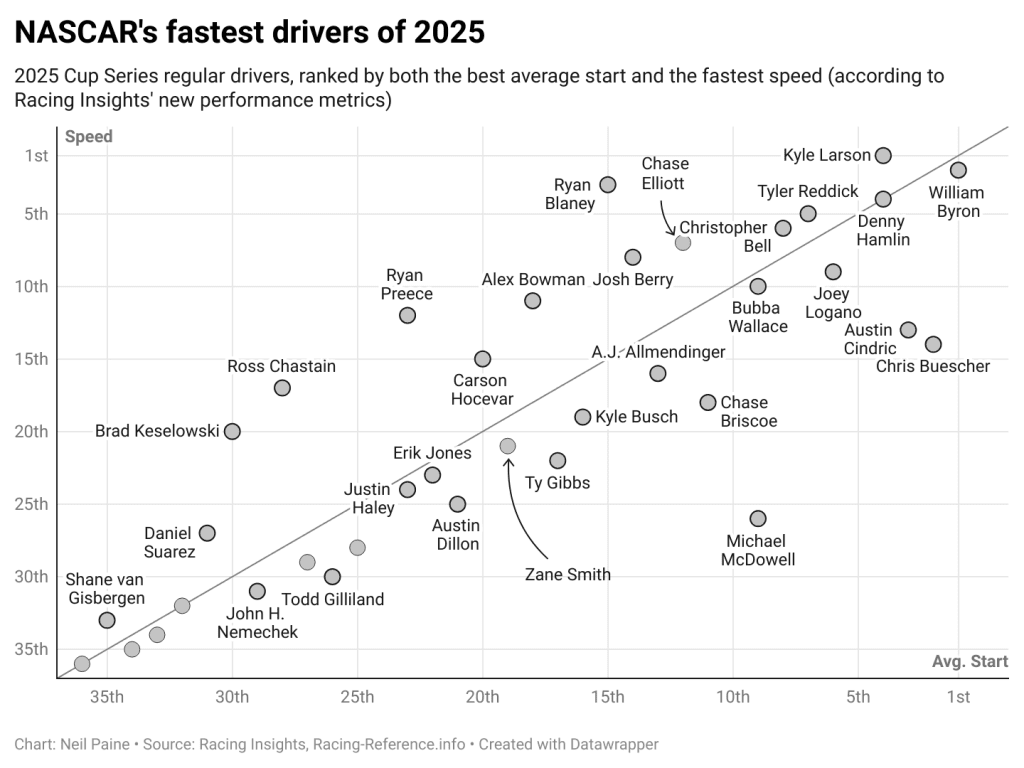
So, given Michigan’s identity as a temple of top-end speed and engine power, it’s only natural to ask: Who are the fastest drivers in the Cup Series this season? According to a combination of conventional stats and Racing Insights’ new performance metrics, here’s how the 2025 regulars stack up on both average qualifying position and pure speed:
Of particular note is the NASCAR Insights speed stat, which measures a driver’s pace throughout a race — factoring in short-run bursts of speed on new tires, long-run tire management (avoiding fall-off) and performance in both clean and dirty air. Kyle Larson has been the fastest by that accounting, which is no surprise considering that just last Sunday he battled from the back of the field after an early mishap to notch an eighth-place finish. Others who are faster than their grid position gives them credit for include Ryan Blaney (15th in average start but third in speed), Ross Chastain (17th/28th), Ryan Preece (12th/23rd) and Brad Keselowski (20th/30th).
But there’s also nothing wrong with good, old-fashioned qualifying speed, either. And when it comes to laying down lap times in spite of his car’s potential limitations, nobody has done more than Michael McDowell (26th in speed but ninth in average starting position), Chris Buescher (14th/2nd) and Austin Cindric (13th/3rd). With Fords at both ends of the spectrum — fast cars but also guys who qualify well in spite of slower overall speed — the Mustangs should be galloping at Michigan once again this year.
Because at Michigan, it really does always come back to speed: Who has it, who can hang onto it and who can harness it when it matters most.
The NASCAR Cup Series and Craftsman Truck Series are in action this weekend at Michigan International Speedway. Bookmark this page and come back often for your race-week essentials — from links to qualifying order, average practice speeds, results and more.
NASCAR Cup Series
Race day: Sunday at 2 p.m. ET on Prime Video. The categories listed below will be filled out with links as the information is available.
Tires: Seven sets for the race, plus one set for practice and one set for qualifying. The qualifying set rolls over into the race.
Here’s what’s happening in NASCAR with the Cracker Barrel 400 at Nashville Superspeedway in the rearview and the FireKeepers Casino 400 at Michigan International Speedway (Sun., 2 p.m. ET, Prime Video) up next.
1. Did 23XI Racing rediscover its speed at Nashville?
After an abysmal month of May, the Toyota-backed organization’s veterans looked like the title hopefuls they entered the season as, with a strong showing in Tennessee. A sign of things to come, perhaps?
23XI Racing stopped the on-track bleeding this past Sunday at Nashville Superspeedway.
No, neither of the team’s two playoff contenders walked out of the Tennessee track with the trophy. But after a May that saw both Tyler Reddick and Bubba Wallace mired in an all-you-can-do-is-laugh degree of bad luck and inconsistency, the team’s veterans delivered the kind of poised, top-10 performances that reminded everyone why the duo entered 2025 as championship contenders and looked the part early on.
Reddick and Wallace each touted top-10 speed throughout the event, according to NASCAR Insights, with both corralling much-needed top-10 results to match and Reddick nearly nabbing the win in Stage 1, snapping a five-race streak where he’d finished 14th or worse in the process. Wallace, who’d suffered three consecutive DNFs, rebounded from an early pit-road speeding penalty to finish sixth, his best result since March. Wallace, despite ranking among the top six in stage points through 14 races, has struggled to close strong, with an average finish just barely inside the top 20 (19.7).
Neither landed in the top five, and they combined to lead just seven laps and failed to even win the race … so why was this a statement? Well, only twice in 2025 has 23XI placed multiple cars in the top 10 — this was the first time it’d happened since Homestead — and it happened on the heels of one of the worst months in team history.
Combine Nashville’s turnaround on the results sheet with the raw speed the data indicated, along with the resilience each showed in clawing their way back to the top 10? There’s something here.
Wallace’s post-race comments reflected both relief and renewed confidence, too.
“We had (expletive) luck the last month, so I’m glad May is over with,” he said. “I have the utmost confidence in this team to continue getting finishes like this on a consistent basis, not the bouncing back and forth that everybody is used to out of the No. 23.”
That sounds like stability to me.
Reddick, meanwhile, has kept his focus on execution over results — something team co-owner Denny Hamlin also stressed over the weekend — and it’s a mindset that could be showing early signs of paying off, perhaps in the long term.
Lest we forget — this is an organization that upgraded to a three-car stable in the offseason, with a handful of races even fielding a fourth. Wallace is also still just 14 races into a relationship with new crew chief Charles Denike, and these things just, more often than not, take some time to stabilize. They’re getting there.
And as the series heads to Michigan, the timing couldn’t be better. Reddick returns as the defending winner, while Wallace (a past Michigan Truck Series winner) has proven speed at the 2-mile oval, with a Cup Series runner-up finish in 2022. Both drivers are comfortably above the playoff elimination line (though Wallace was likely starting to sweat a bit before Nashville), but a strong Michigan run would further cement the ‘Music City’ success as the point where it all turned around.
With the 23XI’s recent slump, some were starting to question the legitimacy of the team’s 2025 title hopes, having made its maiden voyage in the Championship 4 with Reddick a season ago. The team proved, however, that it can still deliver elite performances under pressure. And what wins championships?
If Nashville was the spark, Michigan could be the fire that reignites 23XI’s contenders, if not the team as a whole. And perhaps the question isn’t whether 23XI’s drivers are back — it’s whether they’re here to stay.
Sean Gardner | Getty Images
2. With slew of remaining wild-card races, will Michigan be one of them?
The remaining regular-season schedule is a mishmash of road racing, drafting and short-track beating and banging. Michigan may appear to be one of the “tame” races of this 12-race stretch — but is it?
Welcome to the gauntlet.
Playoff spots are being gobbled up left and right all of a sudden, and Sunday marks the beginning of a grueling 12-race stretch to determine the 16 drivers that will compete for the Bill France Cup a handful of months from now at Phoenix Raceway.
After an entire month of nonstop intermediate tracks (which, don’t get me wrong, rocked), the final leg to the postseason is nothing but unpredictable: four road courses (one of which is new and in a different country), two drafting tracks and two short-track slugfests. Three of the four other “routine” stops? Oh, just some of the most unique race tracks NASCAR visits, in Pocono Raceway, Indianapolis Motor Speedway and Dover Motor Speedway.
The fourth? Michigan.
On paper, Sunday’s 400-miler in the Irish Hills might look like the most straightforward race left in the regular season. History and the current season’s wild swings suggest, however, it could be anything but.
The numbers tell a story of both steadiness and surprise. Only one of the last 12 Michigan races was won by a driver getting his first win of the season, which might suggest it’s a bad bet for a wild-card winner. The season started with many of the same faces in Victory Lane, but now nine different drivers have won in 2025, and four of the last five races have been taken by first-time 2025 winners. On the surface, it may look like we could see one of those nine collect another Winner’s Sticker, but dig deeper: Eight drivers have snapped winless streaks of at least 41 races at Michigan. And eight Cup drivers are riding a streak of at least 41 currently, with one very popular name sitting exactly on that number (who also happened to finish runner-up in his first three Michigan starts.)
The many Chase Elliott fans out there may have to wait another week, though — Ford has dominated the track recently, winning nine of the last 10 races. Plus, Chevrolet’s last three Michigan wins all belong to his teammate Kyle Larson … but those all came last decade, with a team that no longer exists. Still, Elliott has been incredibly consistent this year, and it’s only a matter of time before a race breaks favorably enough for him to win. Or he just flat dominates.
Meanwhile, Michigan has only produced two first-time Cup winners in its 107-race history: Dale Jarrett in August 1991 and Larson in August 2016. (Which, unfortunately for Carson Hocevar, likely points to the future superstar’s potential first Cup Series win not coming at the Michigander’s home track. Since when does that guy pay heed to norms, though?)
This season, the playoff picture is already full of surprises. Team Penske has all four associated cars tentatively locked into the playoffs, a stark contrast to 2024, when none had even won by this point. Legacy Motor Club, an afterthought in its initial years of infancy, has three top-fives in 2025 — more than its last two seasons combined — and seven top-10s, already surpassing its 2024 total. Not to mention Erik Jones, another Michigan native, is coming off his best race in recent memory.
With so many wild-card races left, Michigan could be slept on big time for any drama. And while it’s not the most likely place for a first-time winner, it’s at least a proven stage for breaking slumps and big moments.
Michigan may not be the most obvious wild-card race left, but sometimes it’s the ones you don’t see coming that leave the biggest impact.
From Dale Earnhardt to Kyle Busch, there have been plenty of “feather-rufflers” in NASCAR. Kyle Petty dissects the newest “feather-ruffler” in the sport: Carson Hocevar.
4. Fresh faces at the front of the field at Michigan
The past two seasons have offered some of the most competitive races the Irish Hills have ever seen, with nearly half the field leading a lap in each. (Credit: Racing Insights)
Date
Leaders
Winner
8/18/24
16
Tyler Reddick
8/6/23
16
Chris Buescher
6/20/82
15
Cale Yarborough
6/17/12
14
Dale Earnhardt Jr.
8/16/09
14
Brian Vickers
6/15/86
14
Bill Elliott
8/16/81
14
Richard Petty
5. Catch the pack — news and notes from around the garage