Chase history has proven each year is a clean slate for drivers

A champion isn’t the only thing the Chase for the NASCAR Sprint Cup produces. Each year since the format’s inception in 2004, drivers have had breakthrough seasons and continued to shake up the postseason field. Change is constant, whether it’s a relative unknown charging toward championship contention or a field of drivers totally different from the previous year.

Since 2005, an average of 4.4 drivers each season qualified for the Chase after not making it the previous year. In seven of those nine seasons, a driver has finished in the top three of the final standings after failing to make the Chase the previous year.

So not only does the Chase field get shuffled every year, those who are reintroduced to the postseason consistently compete for championships.

Here are five drivers — broken down by category — most likely to join the 2014 Chase field after missing out last year.

The rookie: Austin Dillon

The 2013 NASCAR Nationwide Series champion joins a three-car Richard Childress Racing stable that should produce a competitive ride early. Dillon ran more Cup races last season than any other Sunoco Rookie of the Year contender, making 11 starts for three different teams. He was running third when the white flag dropped at the fall Talladega race, but was involved in a last-lap wreck while making a move for the win.

Considering that performance, an 11th-place run in June’s Michigan race and a session-leading speed at Preseason Thunder testing in January, Dillon seems advanced enough on the big tracks to be in contention for a victory or two. That would put him in position to join Denny Hamlin and Carl Edwards as the only drivers to make the Chase in their rookie seasons.

The first-timer: Ricky Stenhouse Jr.

The last time we saw Ricky Stenhouse Jr. teamed with crew chief Mike Kelley, the two were obliterating the Nationwide Series field en route to consecutive championships in 2011 and 2012. Kelley stayed with Roush Fenway Racing’s No. 6 Nationwide Series program when Stenhouse got the call to drive the 17 Cup car last year, but the two are back together in 2014.

Having that familiarity in the garage and at the shop benefits Stenhouse, but it’s only part of the puzzle. Something clicked for the 2013 Sunoco Rookie of the Year late last season. In Stenhouse’s first 25 starts, his average finish was 19.7. That improved to 16.9 over the final 11 races. Stenhouse earned his lone top-five and each of his three top-10s in the final 11 races as well, his season reaching a crescendo with a third-place run in October at Talladega.

A driver can be dangerous when he’s more comfortable both on the track and in the garage, all of which points to the possibility of a breakthrough for the 26-year-old.

The fresh start: Martin Truex Jr.

Truex was on the cusp of qualifying for his second consecutive Chase before being mired in a race scandal at the regular-season finale at Richmond. The eventual penalties handed down to Michael Waltrip Racing were so severe that not only did Truex lose his postseason spot, the sponsor of his No. 56 Michael Waltrip Racing Toyota pulled its support, eventually costing the driver his ride with the team.

Truex, now with Furniture Row Racing, earned his second career victory in 2013 and ended the season with an average finish of 15.1, the second-best of his career. His average finish on the two road courses was 2.0 — with a win at Sonoma — and Truex had three top-fives and six top-10s in the six races at 1.5-mile tracks prior to the Chase field being set.

The 33-year-old knows how to perform, and so does his Furniture Row team, which made the Chase for the first time in team history last season.

The recovered: Denny Hamlin

A broken vertebra in his lower back sidelined Hamlin for the better part of five races last year and robbed him of valuable track time in the new Generation-6 vehicle. That injury combined with the specter of his feud with Joey Logano contributed to a malaise that never lifted. The result: Hamlin missed the Chase for the first time in his career, while Joe Gibbs Racing teammates Matt Kenseth and Kyle Busch enjoyed career years.

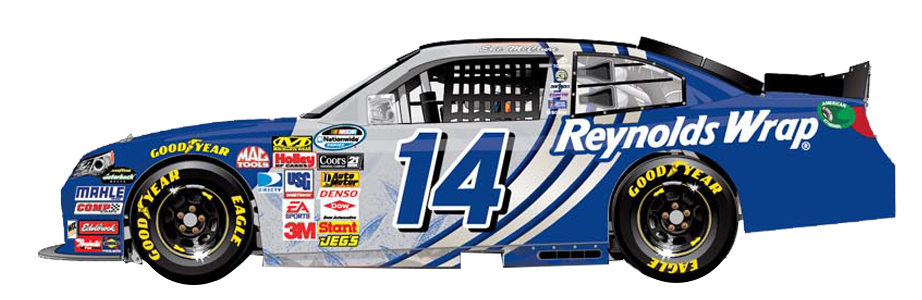
Hamlin’s outlook is more hopeful than another driver returning from injury, Tony Stewart. Stewart shattered his right leg in an August sprint car crash, and until ‘Smoke’ climbs into his No. 14 Chevrolet and circles the high-banks of Daytona, it is hard to know if he’ll be racing at 100 percent for the season-opening Daytona 500.

Hamlin, meanwhile, earned his only victory of 2013 at Homestead in the season finale. The previous time he won at Homestead was in 2009, and Hamlin followed that up with a championship run the next season.

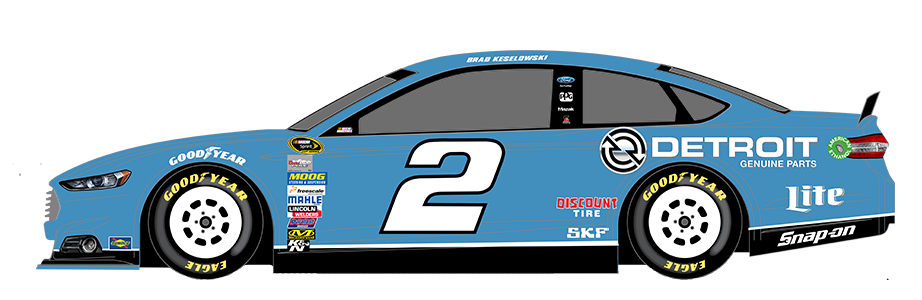
The veteran: Brad Keselowski

In 2013, Keselowski became the second champion under the Chase format to not qualify for the postseason one year after winning the title. Tony Stewart missed out in 2006, but drove in the postseason for the next six seasons — and won another title. There’s no reason to think Keselowski won’t enjoy a similar resurgence.

The 2013 season feels like an aberration, one in which the outspoken champ was forced to overcome bad break after bad break. Keselowski opened the year with four consecutive top-fives, driving some battered cars across the start/finish line in the process that would have sent most drivers toward the middle of the pack. He was undone by a rare midseason slump that saw the Team Penske driver finish outside the top 10 nine times during a 10-race stretch, as well as garnering 31 points worth of penalties after two failed inspections.

More than anything, Keselowski has come off as cool and confident during his postseason interviews. Perhaps being out of the spotlight over the winter has refreshed and renewed the driver. If Keselowski’s not doubting himself, why should we?

MORE:

WATCH: NASCAR ’14 trailer:
Stewart’s comeback

READ: Kurt Busch compares
new, old teams

READ: Twitter crew:
Favorite NASCAR follows

READ: Top 10
rookie campaigns

Jones to drive in 12 races, Busch takes 10; Wallace Jr. expected to return

The youngest winner in the history of NASCAR’s Camping World Truck Series will have plenty of chances to add to his growing resume in 2014.

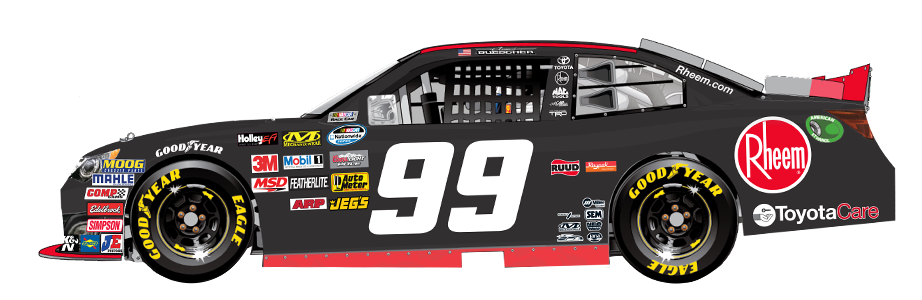
Erik Jones, the 17-year-old who became the circuit’s youngest winner by prevailing last fall at Phoenix, will share a Truck Series ride this season at Kyle Busch Motorsports with the team owner, the organization announced Friday. Busch and Jones will split the No. 51 truck, the vehicle that won the owners’ championship in the series last year.

FULL SERIES COVERAGE

View all articles
View all videos
View all photos

Jones is slated to be behind the wheel for 12 races in the vehicle, including the dirt-track race at Eldora Speedway. Busch will drive in 10, including the Feb. 21 season-opener at Daytona International Speedway. ToyotaCare returns as primary sponsor and will adorn the hood of the No. 51 for 14 races, seven with each driver.

KBM is also expected to once again field the No. 54 truck of Darrell Wallace Jr., who last fall at Martinsville Speedway became the second African-American driver to win a national-series event in NASCAR. Wallace, 20, finished eighth in final series points in 2013.

Jones made history last November at Phoenix when at 17 years, five months and nine days old he led a race-high 84 laps en route to becoming the youngest winner in Truck Series history. The Phoenix win was the culmination of a five-race schedule which saw the youngster finish inside the top 10 in each of his outings, including a ninth-place finish in his debut in March at Martinsville, where he became the first 16-year-old to start a Truck Series event since Busch in 2001.

"I really learned a lot last year from Kyle and everyone at KBM," Jones said. "I felt like each time out we all grew as a team and at the end of the season I was able to fulfill a lifelong dream by winning in one of NASCAR’s top three divisions. Going into this season, I feel like we have a great chance to get back to Victory Lane and go out and defend our owner’s championship."

In addition to his Truck Series schedule, Jones made three starts behind the wheel of KBM’s No. 51 super late model in 2013, winning the Winchester 400 at Winchester (Ind.) Speedway in October, and the Snowball Derby at Five Flags Speedway in Pensacola, Fla. in December. The racing prodigy also earned his first ARCA Racing Series victory in August at Berlin (Mich.) Raceway driving for Venturini Motorsports.

"Erik did a tremendous job for us last year picking up wins in both the truck and the super late model while running a very limited schedule," Busch said. "At just 17 years old, he shows a lot of poise behind the wheel, provides great feedback to the crew chiefs and he has already proven that he can win on some of the biggest stages."

Crew chief Eric Phillips, a 27-time winner in the Truck Series, will call the shots for the No. 51 team in 2014. Jones’ first race in the vehicle will be at Martinsville on March 29.

MORE:

WATCH: NASCAR ’14 trailer:
Stewart’s comeback

READ: Kurt Busch compares
new, old teams

READ: Twitter crew:
Favorite NASCAR follows

READ: Top 10
rookie campaigns

Allmendinger, Larson and McMurray expect added excitement

RELATED: More on the changes | Official release | Changes 101 | Reaction | Tracks pleased

DAYTONA BEACH, Fla. — There was plenty of buzz in the Daytona International Speedway garage Friday morning, and it wasn’t limited to the huge turnout and high expectations for the Rolex 24 At Daytona or the new TUDOR United SportsCar Championship.

Even as the three-driver NASCAR Sprint Cup Series contingent here was preparing for a weekend of sports car racing in the traditional Daytona Speedweeks opener, they were enthusiastically discussing this week’s change to NASCAR qualifying.

"I think it’s really cool because the qualifying will be exciting for the drivers and the fans," said 2010 Daytona 500 winner Jamie McMurray, who will compete in the Rolex 24 At Daytona for his Sprint Cup team owner, Chip Ganassi. "I haven’t heard one guy say anything negative about it."

The new format — announced Wednesday — will incorporate group qualifying sessions with an elimination-style concept. At tracks 1.25 miles or longer, all entrants will have 25 minutes to put up a fast lap. The quickest 24 cars will move onto the next round, which will be 10 minutes long. The fastest 12 from that session will move onto a five-minute final round with the front of the grid set from there. There will be five minutes between each round for adjustments, but teams can’t put the cars/trucks on jacks or open the hoods.

On tracks less than 1.25 miles in length, there will be a 30-minute opening session for the field with the fastest 12 moving on to a final 10-minute round.

The traditional Daytona 500 qualifying format will remain the same as will qualifying for the NASCAR Camping World Truck Series dirt track race at Eldora Speedway.

"With this new format, I think it’s really cool because you get a lot of cars on the race track which is what qualifying needs to keep the fans excited," said AJ Allmendinger, driver of the No. 47 JTG Daugherty Chevrolet. "One car on track just doesn’t do it, and it’s not just that way for NASCAR. When Formula One tried it, it was bad, same with IndyCar, it doesn’t matter.

"This way leaves the suspense. You don’t know until the last second who’s going to move on, who’s on pole. I’m a huge fan of it."

And, he added, it creates a more even playing field.

"The biggest thing for me is that it eliminate conditions," Allmendinger said. "You can’t say, ‘oh, I drew first, I’m at a disadvantage.’ Now it’s your own doing. Go out when you want and go get your lap. Maybe you don’t hit the lap you want, but it’s still just good enough (that) you get to move on and maybe you hit it next time."

"It’s all about trying to keep it exciting for the fans, exciting for the teams."

McMurray’s Ganassi teammate, Cup rookie Kyle Larson, conceded he doesn’t know any different. In fact, he thinks the group style may benefit him.

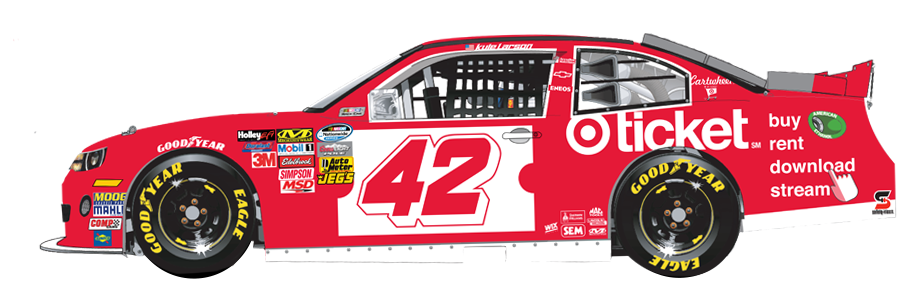
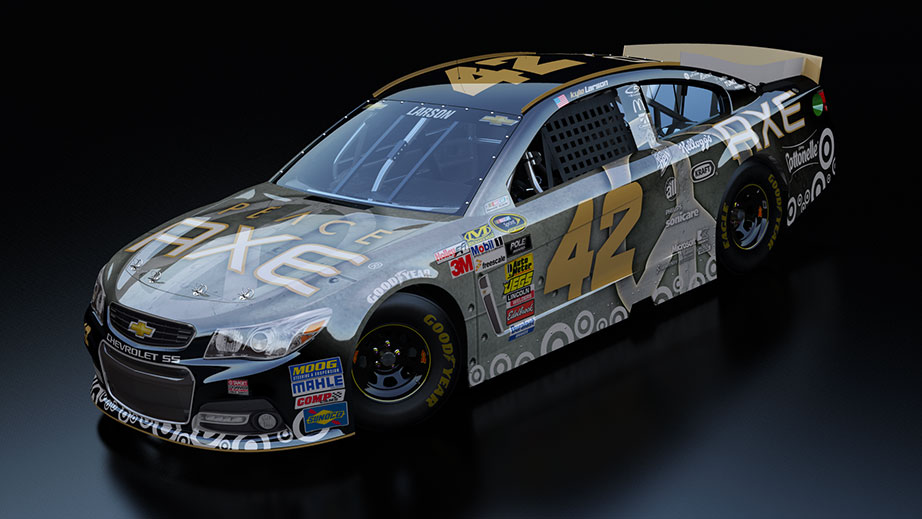
"It may give me a better chance at qualifying actually," said Larson, who will drive the No. 42 Target Chevrolet for Ganassi. "For me, I do the single car stuff and I don’t have anyone to judge off of. In all the racing I’ve done, any time I’ve done group qualifying, I’ve done better so that’s exciting for me. It seemed like whenever there was the group (format), I’d have that person in front of me to chase and it seemed to help."

All three drivers seemed to like the idea of the extra element of suspense the new format creates, but also the additional strategy it will force teams to use.

"When I first heard of this all I could think about was how many times someone has pulled out in front of you at practice, not on purpose but on accident and ruined your lap or you’ve done that to someone else," McMurray said.

"Sometimes when you’ve pulled out in front of someone when you’re going down the backstretch, typically you’ll get out their way because you know you’ve blocked their lap. But now if it’s qualifying, you can’t (pull out of the way), you just have to go.

"So I think there will be some tensions sometimes between teams and spotters. I think there will be a story sometime before a race."

On a larger scale, Allmendinger, Larson and McMurray expressed support for NASCAR’s willingness to mix things up in the name of competition and a better show for fans.

"All of us as a group want to make things better," McMurray said. "I think we’re all more open-minded that we were even 10 years ago to try things that we think will make it better.

"It’s okay to make things more exciting."

MORE:

WATCH: NASCAR ’14 trailer:
Stewart’s comeback

READ: Kurt Busch compares
new, old teams

READ: Twitter crew:
Favorite NASCAR follows

READ: Top 10
rookie campaigns

Transportation company will be primary sponsor for four races

David Ragan and his No. 34 Front Row Motorsports Ford will again bear the message of sponsor CSX in 2014.

The transportation company will serve as the primary sponsor at the season-opening Daytona 500, as well as at Darlington Raceway in April, at Michigan International Speedway in August and at Richmond International Raceway in September for the regular-season finale.

CSX will also be an associate sponsor at Pocono Raceway in August and Charlotte Motor Speedway in October, and the "I Brake for Trains" bumped sticker will again adorn the back of Ragan’s car for every race.

"We developed a great relationship with CSX last year, and we actually grew together as the season went on," team owner Bob Jenkins said in a release. "We celebrated our first team win at Talladega with the 34 car, and CSX jumped on the opportunity to celebrate that win by joining us for the All-Star race. And this year the program is even bigger. We’re proud to be partnering with a successful Fortune 500 company and helping to spread their message."

Ragan earned Front Row Motorsports’ first win in team history in the spring Talladega race, getting a shove from teammate David Gilliland to roar past the field and take the checkered flag. Earlier this week, Front Row announced that Love’s Travel Stops had expanded its sponsorship for Gilliland’s No. 38 Ford.

Earlier this week, the team announced that Farm Rich — which sponsored Ragan’s victory at Talladega– would return in 2014.

MORE:

WATCH: NASCAR ’14 trailer:
Stewart’s comeback

READ: Kurt Busch compares
new, old teams

READ: Twitter crew:
Favorite NASCAR follows

READ: Top 10
rookie campaigns

Relocation to coincide with completion of Daytona Rising

In the midst of a massive $400 million renovation, Daytona International Speedway is undertaking another project.

The Motorsports Hall of Fame of America announced Friday it will relocate from the Detroit area to the famed World Center of Racing by January 2016. The Daytona Rising transformation is also scheduled to conclude in January 2016.

The collection for the Hall of Fame includes vehicles and artifacts from a variety of organizations and will be exhibited year-round as part of the regular tour admission at DIS.

"The partnership between Daytona International Speedway and the Hall of Fame is a match made in racing heaven," President of the Motorsports Hall of Fame of America Ron Watson said in a news release. "The Hall gets a home within one of America’s most famous and best-loved sports venues. Race fans and tourists who come to Daytona will have another great attraction to visit throughout the year."

The reimagined Daytona, through the Daytona Rising project, will have five expanded, redesigned entrances that will lead fans to a series of neighborhoods along the nearly mile-long frontstretch.

Now, even more history will be added to the most historic track in NASCAR.

"Daytona International Speedway is an iconic racing venue and will be a fitting home to the Motorsports Hall of Fame of America," Daytona International Speedway President Joie Chitwood III said in a release. "Having the Motorsports Hall of Fame of America right here in Daytona will complement Daytona Rising and provide another reason for race fans to visit Daytona International Speedway."

Bobby Allison, Buck Baker, Dale Earnhardt, Bill France, Junior Johnson and Richard Petty are among the NASCAR figures enshrined in the Motorsports Hall of Fame.

MORE:

WATCH: NASCAR ’14 trailer:
Stewart’s comeback

READ: Kurt Busch compares
new, old teams

READ: Twitter crew:
Favorite NASCAR follows

READ: Top 10
rookie campaigns

Soon to be inducted Hall of Famer thinks changes will produce a ‘whole different mindset’

RELATED: More on the changes | Official release | Changes 101 | Reaction | Tracks pleased

CHARLOTTE, N.C. — Former NASCAR Sprint Cup Series champion Dale Jarrett says qualifying is still an important part of the sport, and believes the new format unveiled by the sanctioning body Jan. 22 will help rekindle interest in the process of determining the starting lineup.
 
"I think it’s pretty cool," Jarrett, one of this year’s five NASCAR Hall of Fame inductees, said during a stop at the Hall on Thursday. "It will be pretty interesting the first few times to watch it all unfold. I understand the concept, and had talked to NASCAR (officials) last year about it. Something needed to be done to make it a little more exciting and I think this will do that."
 
The change, which will be in effect for the majority of this year’s Sprint Cup, Nationwide and Camping World Truck Series events, will feature timed rounds with a predetermined number of those posting the fastest laps advancing. At tracks 1.25 miles in length or greater, the format will consist of three rounds; at those less than 1.25 miles, two rounds will be used to determine the lineup.
 
From 2001 through this past season, NASCAR’s qualifying format consisted of single-entry, timed laps at the majority of its venues.
 
Prior to 2001, NASCAR events often featured two rounds of qualifying, but under a different format. The quickest 25 on the opening day locked in their spots, while those outside the top 25 could either stand on their first time or choose to re-qualify a day later.

Jarrett, the 1999 Cup champion and currently a booth analyst for ESPN’s NASCAR coverage, said he remembers the former format as well as the pressure that came with it.
 
"Guys today don’t understand what that second-round qualifying was about, just everything that went into that," he said. "What were you going to do and just how stressful that was. You couldn’t even begin to think about the race until you had made the race, and then deciding if you were going to have to run second round qualifying and all that.
 
"I think the interesting part (now) will be how the teams and drivers embrace it and how much they put into it. I think we will see a whole different mindset with qualifying and making speed out of your cars."
 
Although NASCAR doesn’t award points to drivers who qualify on the pole, there are benefits to posting a fast qualifying lap. Not only does the pole winner start the race free and clear of traffic, but pit stall selection can have a significant impact on race day. The widths and lengths of pit roads at the various tracks differ, as do the sizes of the pit boxes. Openings to the garage area can provide easy access out of one pit box, and easy access into another.
 
"I think (qualifying) is still important, because of the level of competition today," Jarrett said. "The confidence of getting your weekend started off right, that’s always been important. And as competitive as things have become, picking where you want to be on pit road, where you feel comfortable as a driver and where the crew chief feels good, that goes into it as much as anything, and that’s still going to be determined by how you qualify.
 
"If you have a poor effort and that box is narrowed down to just a few choices, it makes your weekend more difficult on top of the fact that you realize your car is not as fast as you want it to be."
 
Pit stall selection isn’t done until after qualifying has been completed, and the order of selection is based on those results (from fastest to slowest).
 
In his career, Jarrett won 32 races in Cup and 16 poles. He also finished sixth or higher in points from 1982 through 1987 and won 11 times in what is now known as the Nationwide Series.
 
He is part of a 2014 NASCAR Hall of Fame class that also includes Glenn "Fireball" Roberts, Maurice Petty, Jack Ingram and Tim Flock. The five will be inducted into the Hall on Jan. 29.
 
Ned Jarrett, Dale’s father and a two-time NASCAR champion in Cup, was inducted into the Hall in 2011.

MORE:

WATCH: NASCAR ’14 trailer:
Stewart’s comeback

READ: Kurt Busch compares
new, old teams

READ: Twitter crew:
Favorite NASCAR follows

READ: Top 10
rookie campaigns

Discuss the latest news from media week with writers Kenny Bruce and Zack Albert

As teams begin to make their first big appearances of the season at the Sprint Media Tour, our writers are ready to be your eyes and ears. Leave your questions below, and during media week, our writers will answer as many as they can. Check back here Tuesday at 11 a.m. ET, when NASCAR.com’s Kenny Bruce and Zack Albert will be live in the comments below answering your questions.

Enter Aticle’s Bottom Body

Son of legendary driver Dan Gurney looks for first Rolex 24 win

DAYTONA BEACH, Fla. — The urge to merge has evolved into a compulsion to compete, and Thursday marked the first day of actual competition for the new TUDOR United SportsCar Championship, with qualifying for this weekend’s Rolex 24 At Daytona.
 
The 52nd running of the Rolex 24 opens the first season for the TUDOR Championship, which resulted from the highly anticipated merger of two formerly competing sports car organizations — the American Le Mans Series and the GRAND-AM Rolex Series. A total of 67 cars are slated to take the green flag Saturday at 2:10 p.m. ET, for the 24-hour endurance classic; Thursday, four cars claimed respective class pole positions on the 3.56-mile Daytona International Speedway road course.

Start with the headlining Prototype (P) class, an amalgam of the ALMS’ exotic P2 and DeltaWing cars and the Rolex Series’ Daytona Prototypes, where a history-rich name took center stage on a day that was so much about the future.
 
Alex Gurney, son of legendary driver Dan Gurney — who won the first incarnation of the Rolex 24, a three-hour event in 1962 called the Daytona Continental — put the No. 99 Corvette DP on the overall pole with a fast lap of 1 minute, 38.270 seconds (130.416 mph). Gurney and his longtime co-driver Jon Fogarty — two-time champions in the Rolex Series — are joined this week by Memo Gidley and Darren Law. Somewhat surprisingly, the Gurney-Fogarty combination has never produced a Rolex 24 win.
 
Gurney acknowledged the satisfaction a victory this weekend would provide, saying, "it would be the biggest thing in my career, I think. But yeah, for me personally, this is the biggest race we do [in North America]. It’s the one we all want to win."
 
Daytona Prototypes dominated the P class qualifying, taking nine of the first 10 positions. The fastest P2 car was 11th overall, the No. 6 Nissan ORECA driven by Klaus Graf, at 1:39.829 (128.380).
 
Other class poles:
 
· In the Prototype Challenge (PC) class, former NASCAR driver Colin Braun put the No. 54 ORECA FLM09 on point, with a lap of 1:41.777 (125.922), good for 14th overall.

· In GT Le Mans (GTLM), Marc Goossens turned a pole-winning lap of 1:44.506 (122.634) in the No. 91 SRT Viper GTS- R. The car will start 25th overall.

· In GT Daytona (GTD), the No. 48 Audi R8 claimed the top spot in the class — and 34th overall — via Christopher Haase’s lap of 1:46.973 (119.806).

MORE:

WATCH: NASCAR ’14 trailer:
Stewart’s comeback

READ: Kurt Busch compares
new, old teams

READ: Twitter crew:
Favorite NASCAR follows

READ: Top 10
rookie campaigns

Strategy, gamesmanship come into play under new procedure

RELATED: More on the changes | Official release | Changes 101 | Reaction | Tracks pleased

You can almost hear the buzz building now, coursing over those high banks, storming through the turns and heading toward the start/finish line. Gone is the agonizing three-hour wait as one car after another makes individual laps around NASCAR’s biggest race track. Qualifying at Talladega Superspeedway — along with everywhere else — has been transformed by virtue of a single rule change.

Now it will be an absolute storm, with drivers almost certainly working the draft in an effort to secure the top starting position (and its accompanying first pit stall selection) in the frantic final session that caps the new group qualifying format announced Wednesday across all three of NASCAR’s national series. No place stands to benefit from the change more than big, bad Talladega, where the issuing of one news release has changed the track’s qualifying process from a grind into 50 minutes of must-see-TV.

Although NASCAR refers to the new process simply as a group qualifying format, other circuits like Formula 1 that have successfully utilized similar concepts call it "knockout" qualifying — and in many places, the new procedure could prove to be just that. Beginning with this coming season, all cars will qualify on the track at the same time in an atmosphere that more closely simulates race conditions. The faster vehicles advance through two or three sessions, depending on the track’s size, always culminating with the quickest 12 cars deciding the top spot among themselves.

After year upon year of single-car qualifying, this is a revolutionary change for NASCAR. While the old format had its merits — the can-you-top-this element of single-car qualifying occasionally had its own knockout feel — the sheer duration it took for all those cars to make all those laps on their own often dragged the session down. Weather was always a concern. Now, the process has been standardized — qualifying in one hour, everywhere, under a format that will surely ratchet up the entertainment value and have track promoters giddy over the prospect of better Friday afternoons at the gate.

From a competitive standpoint, it’s going to be interesting to see how strategy and timing play a part. The opening session of group qualifying — mark your calendars, it’s Feb. 21 when the NASCAR Nationwide Series and NASCAR Camping World Truck Series qualify at Daytona — won’t begin with all entered vehicles charging toward the green flag, but instead starting from pit road. They can exit pit road at any time, and drivers can make as many laps as they want during the course of the session. Crews can even make minor adjustments between segments, though the cars can’t be jacked and the hoods can’t be raised. Go to the garage area, you’re done.

The format will debut in the NASCAR Sprint Cup Series at Phoenix in the second race of the season. Needless to say, there are a lot more variables at play here than just holding down the accelerator for two laps, and that’s without mentioning the random draw that will decide the order in which cars are lined up on pit road prior to the session. No question, that draw could loom large, depending on the track and the situation — say for instance you’re Jimmie Johnson in the thick of the championship hunt, and you arrive at Martinsville Speedway with four races remaining, and you draw pill 45 on a tight half-mile track. Stranger things have happened.

That cars will start on pit road, able to come and go as they please over the length of the session, and makes you wonder — will teams with poor starting draws try to game the system, staying put and gambling that a few cars will come back in or head to the garage area, easing the traffic just enough to rip off that one good qualifying lap? Or will everyone make a mad dash for it from the start, since the first qualifying laps are usually the best ones? Since all vehicles will begin with a full fuel load and use just one set of tires, will some teams stay out longer trying to trade tire wear for weight? Will teams tape off the front end, wait until the final minutes, and make one bomber run with the clock running down?

"It’s hard to anticipate what they’ll do. But I would imagine that many of them will think that their first couple laps on the race track, engines will be cold, things of that nature, will be their best laps in that first segment. But it’s hard to imagine what strategies these guys will work on and have play out over the course of the qualifying session," said Robin Pemberton, NASCAR’s vice president for competition and racing development, and a longtime crew chief at the sport’s top level.

"I think as we move through the season it will take on a life of its own at different places where they will have different strategies, whether it’s working on the race setups, or if they want to be aggressive in one round or kind of lay‑up in the other round, saving tires to just squeak into the final round and have the best tires. Comes to mind what you would have to do with tire management for (Auto Club) Speedway or Atlanta, Homestead and some others. I think there are opportunities there for different crew chiefs to take advantage of some of these situations."

Either way, we’re guaranteed to have multiple cars on the track at the same time, which means we’re guaranteed to have incidents at some point. Get wrecked, by the way, and your qualifying time is the best one you posted in the most recent session you were a part of. While it wasn’t unheard of for teams to unload backup cars because of qualifying accidents under the single-car format — particularly on fast, slick intermediate layouts — that prospect certainly looms larger under this new procedure. And then there’s the question of the draft, and how much teams will use it for qualifying at Talladega and the summer Daytona event, and whether somebody will jump out of line and go for that pole position just as if they were going for the win.

Indeed, there are a lot of moving parts to this, a qualifying format that’s more complicated yet more concise all at the same time. None of this should be a surprise to competitors, who were made aware in a meeting last fall that NASCAR was considering such a shift for all points events outside of the Daytona 500 and the Truck Series race at Eldora Speedway. Two weeks ago at Preseason Thunder testing, Pemberton effectively said a move was forthcoming, although he didn’t specify the Sprint Cup Series at the time. If there were voices of dissent coming from the garage area, surely we would have heard them by now.

If anything, the reaction among fans and competitors has been almost universally positive, save those malcontents who lurk on the fringes of social media and are never happy about anything. "I really like what NASCAR is doing to add more excitement," wrote Kasey Kahne on Twitter, and he was far from alone in that sentiment. Track operators get a better product, television networks get a more manageable window, officials get more flexibility in dealing with weather. Certainly, May 2 at Talladega now shapes up as a far more interesting day on the NASCAR calendar. As does every qualifying session, thanks to a new format that promises to be a knockout indeed.

MORE:

WATCH: NASCAR ’14 trailer:
Stewart’s comeback

READ: Kurt Busch compares
new, old teams

READ: Twitter crew:
Favorite NASCAR follows

READ: Top 10
rookie campaigns

Norris had been suspended following events of Richmond race

Michael Waltrip Racing executive Ty Norris was reinstated by NASCAR on Thursday after serving a five-month suspension for his involvement in a controversial race outcome during the Sept. 7 NASCAR Sprint Cup Series regular-season finale at Richmond International Raceway. He remains on indefinite probation, however.

"I appreciate NASCAR’s action today and respect their position," Norris said in a statement. "I am focused forward and dedicated to the success of Michael Waltrip Racing and the continued growth of a sport that has been my home for the past 24 years."

NASCAR suspended Norris, the executive vice president for MWR, for actions he took while serving as spotter for the No. 55 MWR Toyota driven by Brian Vickers at Richmond.

NASCAR found evidence that Norris had sacrificed the integrity of the race outcome by telling Vickers to pit unnecessarily so that driver Joey Logano would gain a position on track. The result was that Logano qualified for the Chase for the NASCAR Sprint Cup based on points, giving MWR driver Martin Truex Jr. one of two Wild Card berths.

After reviewing in-race, in-car audio recordings and consulting with race officials and team members, NASCAR took the unprecedented action to severely penalize MWR for the incident. In addition to Norris’ suspension, the team was given the largest monetary fine in NASCAR history of $300,000, all three of MWR’s teams were penalized 50 driver championship points and each team was docked 50 owner’s points.

Additionally, Truex was removed from the Chase and replaced with Ryan Newman, who had lost the Wild Card to Truex on a tiebreaker.

And NASCAR CEO and Chairman Brian France later added Jeff Gordon as a 13th member of the traditionally 12-driver field.

"This naturally is a very significant reaction from NASCAR," NASCAR President Mike Helton said Sept. 9 in announcing the disciplinary actions two days after the race. "As multiple car owners have become a very positive, integral part of our support, also comes with it, though, responsibility from NASCAR and as well the car owners, to maintain a fair and level playing field.

"It’s not an easy decision to make. Conversations about it were deep. We feel like we researched it extremely well, talked at great length with the folks from Michael Waltrip Racing to try to get to the right spot and make the correct decision, and that’s what we feel like we have done."

Norris has not publicly commented since the incident. But when informed of his team’s penalties, Waltrip accepted responsibility on behalf of the team while expressing continued support of Norris, who has been with the team since it was founded.

"What occurred on the No. 55 radio at the end of Saturday night’s race in Richmond was a split-second decision made by team spotter Ty Norris to bring the No. 55 to pit lane and help a teammate earn a place in the Chase," Waltrip said in a statement. "We regret the decision and its impact. We apologize to NASCAR, our fellow competitors, partners and fans who were disappointed in our actions. We will learn from this and move on.

"As general manager, Ty Norris has been an integral part of Michael Waltrip Racing since its founding and has my and (co-owner) Rob Kauffman’s full support."

Even with the points penalty, Clint Bowyer still qualified for the Chase and finished seventh in the championship. The consequences were greater for Truex. Not only was he removed from the Chase, his car’s longtime sponsor NAPA Auto Parts announced it would pull its longtime sponsorship of MWR at the end of the 2013 season in light of the unfavorable publicity surrounding the incident.

With no funding for the car Waltrip was forced to downsize his team. Truex was free to look for work elsewhere and in November announced that he would race for Denver-based Furniture Row Racing in 2014, which qualified for its first Chase last season with driver Kurt Busch.

MORE:

WATCH: NASCAR ’14 trailer:
Stewart’s comeback

READ: Kurt Busch compares
new, old teams

READ: Twitter crew:
Favorite NASCAR follows

READ: Top 10
rookie campaigns