Change will be in effect for all three national series but does not include Daytona 500

RELATED: NASCAR official release | Changes FAQ

NASCAR’s qualifying process will undergo a significant change for the 2014 season, as officials have announced a group qualifying format to replace the single-entry attempts previously used to determine the starting grid for each race.
 
The change will be in effect for all three national series — Sprint Cup, Nationwide and the Camping World Truck Series.
 
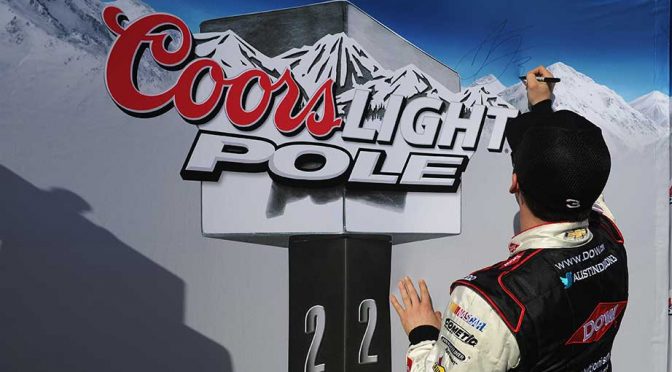
The Coors Light Pole Award Qualifying will now consist of three rounds at tracks measuring 1.25 miles or longer, and two rounds at those tracks measuring less than 1.25 miles.

Under the three-round qualifying format:

Round 1 — All entries will have 25 minutes to post a qualifying time, after which the 24 registering the fastest laps will advance to the second round.
 
Those failing to advance will be sorted based on first-round times in descending order (from fastest to slowest).
 
Round 2 — The 24 fastest from the first round will have 10 minutes to post a second-round qualifying time, with the 12 fastest advancing to a third round.
 
Those not advancing will earn starting positions 13 through 24 based on time, again in descending order.
 
Round 3 — The final round will be five minutes in length. The fastest times from this session will determine the first (Coors Light Pole Award) through 12th starting positions.
 
There will be a five-minute break between each round; teams may make adjustments to their entries only during the individual breaks.
 
They will not be allowed to jack the vehicle or raise the hood, and once the car or truck enters the garage, it will no longer be permitted to return to the track for additional qualifying attempts.

This format will be used at the following tracks: Atlanta Motor Speedway (1.54 miles); Auto Club Speedway (2 miles); Canadian Tire Motorsport Park (2.46 miles); Charlotte Motor Speedway (1.5 miles); Chicagoland Speedway (1.5 miles); Darlington Raceway (1.37 miles); Daytona International Speedway (2.5 miles) (except for the Daytona 500); Gateway Motorsports Park (1.25 miles); Homestead-Miami Speedway (1.5 miles); Indianapolis Motor Speedway (2.5 miles); Kansas Speedway (1.5 miles); Kentucky Speedway (1.5 miles); Las Vegas Motor Speedway (1.5 miles); Michigan International Speedway (2 miles); Mid-Ohio Sports Car Course (2.4 miles); Pocono Raceway (2.5 miles); Road America (4.05 miles); Sonoma Raceway (1.99 miles); Talladega Superspeedway (2.66 miles); Texas Motor Speedway (1.5 miles); Watkins Glen International (2.45 miles)
 
For the two-round qualifying format, the following changes will be made:
 
Round 1 — All entries will have 30 minutes to post an official qualifying time, with the fastest 12 advancing to the second and final round. Those not advancing will be sorted based on qualifying times.
 
Round 2 — Ten minutes of track time for the fastest 12 remaining cars or trucks, with positions 1 (pole) through 12 determined based on qualifying times.

There will be a 10-minute break between each round.

This format will be used at the following tracks: Bristol Motor Speedway (0.53 miles); Dover International Speedway (1 mile); Iowa Speedway (0.88 miles); Martinsville Speedway (0.526 miles); New Hampshire Motor Speedway (1.06 miles); Phoenix International Raceway (1 mile); Richmond International Raceway (0.75 miles)

"We believe the timing is right for a new Coors Light Pole Award Qualifying format across our three national series," Robin Pemberton, NASCAR vice president for competition and racing development, said. "This style of group qualifying has all the making of being highly competitive and more engaging to our fans in the stands and those watching on television and online.
 
"For the drivers and teams, we believe this new qualifying will fuel even greater competition leading into the events."
 
Before the start of qualifying, cars or trucks will be lined up on pit road based on a random draw and may exit pit road at any time while the green flag is displayed. Each driver may complete as few or as many laps as he or she chooses during the allotted time period for each segment. Pit road speeds will be enforced during each session.

Pemberton said conversations with drivers and crew chiefs helped determine what types of changes teams would be allowed to complete during the breaks in between the sessions.

“And what we surmised from that,” he said, “is you should be able to adjust wedge and track bar, tire pressures and tape strategies.

“The consensus was to not go under the hood and make other extreme adjustments. And the adjustments … can only be made during the breaks.” 
If all rounds are not completed due to weather or other circumstances, starting positions will be set based on the last official completed round. If no rounds are completed, starting positions will be determined per the NASCAR rule book.
 
According to officials, NASCAR’s provisional system will remain in place with those positions being awarded following the first round of each qualifying session.
 
The qualifying format does not apply to the Daytona 500, which features single-car runs and two qualifying races to set the lineup for the season-opening race. Heat races to determine the lineup will still be used at Eldora Speedway as well.
 
NASCAR went to a one-round qualifying format in 2001. Before that, two rounds of qualifying were used to determine the starting lineup with positions 1-25 locked in during the first round. Teams outside the top 25 could participate in a second round or stand on their first-round time.

See the graphic below for an explanation of the changes:

Frequently asked questions about NASCAR’s new qualifying rules

RELATED: Breaking down the changes | NASCAR official release | VIDEO: New format explained

 Q. How does this new qualifying impact the Coors Light Pole Award or Keystone Light Pole Award? 

A. The fastest driver in the final round of NASCAR Sprint Cup Series and NASCAR Nationwide Series qualifying will earn the Coors Light Pole Award. The fastest driver in the final round of NASCAR Camping World Truck Series qualifying will earn the Keystone Light Pole Award. 

Q. How will the cars/trucks be chosen in the first round of qualifying? 

A. Cars/trucks will be lined up on pit road based on a random draw. 

Q. Where will the cars/trucks that advance go between rounds? 

A. Cars/trucks that advance return to their respective pit stalls in preparation for the next round of qualifying. 

Q. What kind of adjustments can be made on pit road during qualifying? 

A. Teams can make wedge, track bar, tire pressure and tape adjustments and also plug in oil on pit road, but only between each qualifying round. A team cannot jack up the vehicle or raise the hood. 

Q. What happens if a car/truck is involved in an on track incident during one of the qualifying rounds? Are they permitted to return to pit road and/or the garage to make repairs? 

A. Repairs are not permissible on pit road or in the garage during qualifying. Once a vehicle returns to the garage, it will not be permitted to return or compete in that qualifying round or any future qualifying rounds for that event. 

Q. Will vehicles’ top lap speeds carry over between rounds? 

A. No. Top lap speeds are reset after each round. 

Q. Will NASCAR stop the clock during a qualifying round because of an incident? 

A. The clock will stop if the red flag is displayed and it can also be stopped at the discretion of the managing director of the series. 

Q. What happens when the clock strikes zero at the end of a round? 

A. Vehicles are allowed to cross the start/finish line one time. 

Q. Does a car/truck have to compete for the entire duration of a session? 

A. No, but the vehicle must complete one lap in order to record a qualifying time. 

Q. Does the new qualifying format impact provisionals? 

A. No. NASCAR’s provisional system remains intact and provisionals will be assigned at the end of the first round of qualifying. 

Q. What if two or more vehicles finish tied with the same top lap speed? 

A. If multiple vehicles are tied with the same top lap speed, their starting position will be determined by the owner point standings. If owner points cannot break the tie, the driver setting the duplicate time first would start in front of the other. Note: Owner points from the previous season will be used to break ties until the completion of the third championship event of the current season. 

Q. What happens if qualifying can’t be completed because of weather or other adverse conditions? 

A. If one or more qualifying sessions are completed, the starting positions will be determined based on the most-recently completed qualifying sessions. 

Q. What happens if qualifying is canceled because of weather or other adverse conditions? 

A. Starting positions will be determined per the rule book. 

Q. Will this format also be used for road courses? 

A. This format will be used at all NASCAR tracks across all three national series, with the exception of the Daytona 500 and non-points NASCAR Sprint Cup Series events and the NASCAR Camping World Truck Series race at Eldora Speedway. 

Q. Will pit stall selections be handled as they have been previously, with the No. 1 qualifier getting first choice, No. 2 qualifier getting the second choice, etc.? 

A. The pit stall selection process post-qualifying will remain the same. 

MORE:

WATCH: NASCAR ’14 trailer:
Stewart’s comeback

READ: Kurt Busch compares
new, old teams

READ: Twitter crew:
Favorite NASCAR follows

READ: Top 10
rookie campaigns

2012 NASCAR Sprint Cup Series champion looking forward, not backward

Brad Keselowski may have grown up in a family of racers, but he lost his grandparents before he ever got to know them. He never really had a grandfather figure in his life — until he went to work for team owner Roger Penske.

"He’s more than a boss to me. He’s a friend," the 2012 NASCAR Sprint Cup Series champion said. "I lost my grandparents before I got to know them, and he in some ways reminds me of what I wish I had in that relationship. Because he could be. … He treats me like a grandfather would treat someone, where you almost feel like kin. He doesn’t do the ‘Brush your teeth’ thing, but he’ll take you out and go play with you. That’s how I feel our relationship is."

That much is evident whenever the 29-year-old Keselowski and the 76-year-old Penske are together, and the exuberance of one and the meticulousness of the other combine to make it seem like yes indeed, these two Michiganders could indeed be blood. But it’s also evident when Penske isn’t around, and Keselowski is standing in his transporter at Daytona testing talking about the reasons why the No. 2 team will be better in 2014, and one of them is because the driver wants to succeed for his car owner as much as himself.

"When situations come up like the Rusty deal, or winning the Nationwide owners’ championship, winning the (Sprint) Cup championship, or whatever it might be," Keselowski said, "when I see him really get excited — that makes me feel good."

No wonder, then, Keselowski was so willing to step out of his car for a stretch of Daytona testing and let retired Penske legend Rusty Wallace take a few laps in a No. 2 car bearing a retro paint scheme. No wonder he seems more and more like Penske, from his attention to detail to the rhythm of his speech. And no wonder Keselowski takes such a pragmatic, almost clinical approach to rebounding from last season, when he became only the second sitting champion to miss the Chase for the NASCAR Sprint Cup.

Ah yes, last season. A campaign where Keselowski posted top-fives in each of the first four races — something last achieved by Jimmie Johnson eight years prior — closed strong in the final handful of events, and had everything go wrong in between. Penalties, a crew chief suspension, crashes, mechanical malfunctions and an untimely slump right at the end of the regular season — it all combined to leave Keselowski on the outside in, and Joey Logano as the only Penske driver to make the playoff. Traipsing on the Wild Card tightrope for weeks on end, Keselowski didn’t get the victory he sorely needed until Charlotte in October, by which time it was too late.

"I think if you took last year and you took probably our first six or seven races, and then our last six or seven races, we were a top-two or three team," Keselowski said. "Just the in-between, we weren’t at that level."

In the end, Keselowski joined Tony Stewart in 2006 as only the second defending champion to miss the Chase. The No. 2 team has made some changes as a result, including shuffling the over-the-wall crew. And yet, speaking with Keselowski, there are no signs of teeth-gnashing or self-pity. He hasn’t spend the winter beating himself up. This offseason hasn’t felt much different from the previous one, really, despite the stark contrasts in the campaigns that preceded them. "The pressure to perform is the same whether you’ve been successful last year or not," Keselowski said.

Besides, he’s been through this before — kind of. All the misfortune the No. 2 team battled last season reminds Keselowski somewhat of the summer of 2011, when "everything hit us," he recalled. Contact and a cut tire ruined a chance to win the Coca-Cola 600. A cut tire and heavy impact with the wall at New Hampshire put a painful exclamation point on a slump that dropped him to 23rd in points that year. Then, he went out and broke his left ankle in another crash, this one during a test session at Road Atlanta.

The result? He won the next week at Pocono, won again two weeks later at Bristol, and completed a memorable surge to make the Chase. "I knew we were good enough to go on a streak like that, we just had to execute. And just that like, the execution came," he said. "I never felt like I got better because I broke my ankle, I can tell you that. I just felt it was a great coincidence of events where we started executing as a team at a very high level, to go with the speed and performance we had before that, just lacking the execution."

The key is the same, he believes, to bouncing back from 2013. "I feel confident. I feel like the burden is on us. We have to do our jobs," Keselowski said. "We do our jobs, and we’ll perform. If we don’t, we won’t. But the tools are here for us to be successful, and I’m going to push everyone around me to use those tools to our full advantage."

Befitting his status as a social media leader within the garage area, Keselowski is well aware of what some will make of a first-time champion winning the title one year and then missing the Chase the next. "Anybody who ever tells you they never worry what other people think is lying," he said. "It’s to what extent that it bothers you." Toward that end, Keselowski leans on history, and drivers who had to wait a while until their second title, or their next best shot at it. "That’s what makes me feel all right," he added.

Case in point: "I was thinking the other day about how Dale (Earnhardt) had won his first championship in ‘80 — and I’m not trying to compare myself to him, but you can see parallels. And he didn’t win his next one for five or six years. I looked at Matt Kenseth last year, and he won his championship in 2003, and you could easily say last year he was one of the best drivers, if not the best driver. Then you look back and say, why?" Keselowski asked.

"Because it’s more than just an individual effort. It’s a team sport. At that level, they slipped, his team or whatever it may be. When they got back, he got back. He’s a part of that just like I am, too, and maybe he had a dip in his own personal cycle, it’s hard to say. But I feel the same way. I feel if we put everything together, I’m motivated, and if the car fits me well enough, we can go out and win races and win another championship."

No doubt, Penske — who spent 15 years pursuing a premier-series championship in NASCAR with Wallace, to no avail — would agree. And no doubt, the driver wants to bounce back for his team owner as much as he does for himself. "He definitely makes me feel that way," Keselowski said. Indeed, the two of them could be kin after all.

MORE:

READ: Dale Jr. not surprised
by Letarte’s decision

READ: Complete schedule
for Preseason Thunder

WATCH: Stewart: ‘It’s nice
to be back’

READ: Latest news
from Preseason Thunder

NASCAR drivers have made a mark in sports car racing’s biggest race

NASCAR’s best stock car drivers have always maintained a strong presence in sports car racing’s season-opening, star-studded Rolex 24 at Daytona. NASCAR Sprint Cup Series champions from Bill Elliott and Dale Earnhardt to Tony Stewart, Jeff Gordon and six-time champ Jimmie Johnson have made the twice around-the-clock event a priority on their bucket list.

It’s an eclectic list of NASCAR competitors who have tried to earn a Rolex watch by testing their skills against the best road racers on the planet. However, the list of those stock car stars that actually earned a watch or hoisted a trophy may surprise fans.

Three Cup drivers — 2010 Daytona 500 winner Jamie McMurray, rookie Kyle Larson and veteran AJ Allmendinger — will give it a try this weekend, competing on the challenging 3.56-mile Daytona International Speedway course made up of the speedway’s high-banks and infield’s winding road course when Daytona Speedweeks’ first official green flag drops Saturday afternoon.
 
Here are the top 10 NASCAR moments in the Rolex 24:

10. A pair of NASCAR champions from the 1980s — future NASCAR Hall of Famer Bill Elliott (1988 Sprint Cup champ) and recently inducted Hall of Famer Rusty Wallace (1989 Cup champ) — each added the renowned sports car race to their book of achievements. Their outcomes, however, differed greatly. Elliott won the GTO class in 1987, while Wallace — who teamed with then-IndyCar driver Danica Patrick and sports car legends Allan McNish and Jan Lammers — had to retire early in his only race entry in 2006 when his car overheated while running third overall.
 
9. When it comes to racing, there seems nothing that Kurt Busch won’t try. So it was of little wonder that Busch, who has competed in an NHRA Pro Stock car, wanted to give sports cars a try in the sport’s biggest race. He ran the 2005 Rolex 24, months after accepting the 2004 Sprint Cup Series trophy, finishing 15th in the DP class during his debut. He answered that showing with an impressive third place overall with the Penske Taylor Racing joint effort in 2008 teaming with three-time Indy 500 winner Helio Castroneves and Ryan Briscoe.
 
8. Four-time Cup champ Jeff Gordon is batting a thousand when it comes to Rolex 24 trophies. He teamed with sports car championship-winner Wayne Taylor Racing in 2007, co-driving with team owner Wayne Taylor, as well as sports car talents Max Angelelli and Jan Magnussen. The team finished on the podium (third place overall), giving Gordon a trophy in his only start.

7. Fans may not realize it, but six-time Sprint Cup Series champ Jimmie Johnson is a seven-time starter in the Rolex 24, with two runner-up finishes (in 2005 and 2008) driving a Pontiac. Perhaps the most newsworthy Rolex outing for Johnson had less to do with his driving talent than a freak accident, however. In 2009 he had to get stitches on the middle finger of his left hand after he cut himself trying to modify his driver’s suit with a knife. He had healed by the time the Sprint Cup season started two weeks later, and went on to win his fourth NASCAR championship.
 
6. Three-time Cup champ Tony Stewart competed in five Rolex 24 races and twice finished in the top five, but the race that stands out for him — and for fans — occurred in 2004 when he teamed up with Dale Earnhardt Jr. and sports car champion Andy Wallace. In the 24th and final hour, with Stewart behind the wheel and the field solidly behind the car for the previous 17 hours, the left rear tire suddenly came off the rim nearly spinning Stewart into the wall with 17 minutes remaining. Because the car had held such a big lead, the trio still earned a podium position in third place in their group. Stewart equaled the finish the next year, though in less dramatic fashion.
 
5. Hall-of-Famer Dale Earnhardt only competed in the Rolex 24 one time, but his 2001 debut was worth his while. Teaming up with his son Dale Jr. and sports car veterans Andy Pilgrim and Kelly Collins, the group’s No. 3 factory Corvette finished runner-up in the GTS category. Heavy and frequent rain tormented the competitors throughout the two days of racing, but Pilgrim insisted that the seven-time champ Earnhardt was as quick as his experienced teammates after only a couple stints on the challenging track. Pilgrim fondly recalls a moment on the podium while the drivers were awaiting their trophy, when Earnhardt leaned over to him and whispered, "Second sucks, don’t it, son?"
 
4. Fan favorite Mark Martin has come heartbreakingly close to winning the Daytona 500, but the certain NASCAR Hall-of-Famer owned Daytona International Speedway’s Victory Lane in the 1990s, winning four GT class titles for Ford Racing in the Rolex 24. Perhaps the most memorable victory came in 1995 when he co-drove with Academy Award-winning actor Paul Newman and sports car veterans Tommy Kendall and Michael Brockman. The Ford Mustang wore No. 70 in honor of Newman’s age and he became the oldest winner in the event’s history, taking the title for the GTS-1 class.
 
3. In 2012, only weeks before he would make his debut as driver of Penske Racing’s No. 22 in the Sprint Cup Series, AJ Allmendinger helped underdog Michael Shank Racing pull one of the biggest upsets in Rolex 24 history, beating factory-backed teams to earn first place overall in the 50th anniversary of the event.
 
2. One-time Sprint Cup winner Casey Mears wisely joined sports car’s mighty Ganassi Racing team for the 2006 Rolex 24 and promptly made history as the first full-time NASCAR driver to win overall.     
 
1. A year after Mears’ win with the team, Juan Pablo Montoya helped Ganassi continue the historic theme through the following two years (2007-08). Not only did the former Cup Rookie of the Year Montoya become the first NASCAR driver to win multiple Rolex 24 titles, but Ganassi’s stellar driver lineup made the team the first — and only — to win three consecutive Rolex 24 titles.

MORE:

WATCH: NASCAR ’14 trailer:
Stewart’s comeback

READ: Kurt Busch compares
new, old teams

READ: Twitter crew:
Favorite NASCAR follows

READ: Top 10
rookie campaigns

Roush Fenway Racing driver kicks career into high gear in spite of health obstacles

RELATED: Miss USA contestants model NASCAR gear

CHARLOTTE, N.C. — Doctors told him he’d never be able to race again.

Ryan Reed didn’t care.

At just 17-years-old and fresh off of being named the Super Late Model Division Rookie of the Year and after becoming the youngest winner at Toyota Speedway at Irwindale in his series, the California native was diagnosed with Type 1 Diabetes, a disease that — if left untreated — can be fatal.

Doctors advised against getting back behind the wheel.

Again, Reed didn’t care.

Nationwide Series driver Ryan Reed guides the Miss USA and Miss Teen USA contestants through an iRacing practice session.

Along with the help of a second opinion in Anne Peters, MD, of USC’s Clinical Diabetes Program in California, Reed developed some lifestyle changes that included a strict diet and exercise program, the use of devices to provide data while he’s in the race car, and the reporting of all this information to his medical team in California to ensure he’d be back on track with no complications.

Fast forward to 2014 and Reed is preparing for his first full-time season in NASCAR’s Nationwide Series in a No. 16 Roush Fenway Racing Ford Mustang adorned with awareness-promoting sponsors in the American Diabetes Association’s Drive to Stop Diabetes and Lilly Diabetes, and things are looking up for the now-20-year-old, despite the obstacles in his life.

Reed explaining the ins and outs of how to manuever a virtual Charlotte Motor Speedway.

Combine this with the events of Friday afternoon and it’s easy to see why Reed is on cloud nine these days. The lucky son-of-a-gun was chosen to guide this year’s Miss USA and Miss Teen USA contestants around the NASCAR Hall of Fame, teaching them how to do pit stops, giving a tour of the newly-revamped Glory Road 2.0 and then smoking them on a virtual Charlotte Motor Speedway in a friendly iRacing competition. (Miss North Carolina Teen USA Pammy Peters finished second in the 10-person group, for what it’s worth.)

But why’d they pick him, exactly?

"Some girls will get that celebrity status and it’s important to keep them humble," said Anna Boyce, VP of RPM Productions Inc., the company that handles Miss USA and Miss Teen USA contestants from Alabama, Louisiana, North Carolina and South Carolina. "To have someone like Ryan, he can definitely help with that.

"You never know what you’re going to have to overcome and you know what? Life gives you a curveball? You’ve got to figure out how to deal with it. Open a door. If you don’t like what’s behind it, learn from it and move on."

And that’s exactly what Reed did.

Miss Louisiana USA managed to lead her pit crew to a respectable change in just over 16 seconds while Miss South Carolina USA gets a chuckle out of the whole thing.

His challenges have given him a much deeper perspective on life, one that has taught him to be thankful for what he has, what he’s capable of doing and where he can go from here. He passed on this advice to the Miss USA and Miss Teen USA hopefuls.

"I told them to just try to stay humble no matter how much their careers take off," said Reed, whose best finish in six 2013 RFR starts was ninth, at Richmond. "Remember your roots; remember where you came from. I’m sure they will. "When I was 17 and I was racing, I thought I was on top of the world and nothing could touch me. And then when I got diagnosed with Type 1, it really humbled me and took me back. It made me realize that I wasn’t infallible and that at the end of the day, it’s all up to God and whatever he has in store for you. That was a big reality check for me and now I’m able to do things like this and give back to the community and it’s put a much better head on my shoulders."

The inclusion of Reed to the team makes for a very unique set of teammates in Roush Fenway’s Nationwide stable, as former Daytona 500 winner Trevor Bayne, who drives the team’s No. 6 car, was recently diagnosed with multiple sclerosis, an autoimmune disease that affects the brain and spinal cord.

How the two will play off of and lean on each other during the course of the season as they bond as teammates on the track, for one, but perhaps more importantly as friends off of it, going through similar challenges will add an interesting dynamic.

So far, the two are hitting it off.

"Trevor’s awesome; even last year he was so supportive of me and any questions I had." Reed said. "Trevor’s always one of the first ones I went to for advice and I think that was reflected down in Daytona at the test. I felt like we really bonded as teammates over the offseason and I felt like we were able to really lean on each other in the test. We drafted a lot together and I felt like we were some of the fastest drafting partners out there. We could make some moves and get up front and lead the pack for a little while.

"As far as me and Trevor both having challenges with our health, I think we’re both such dedicated individuals and our health and fitness is important to us regardless of the challenges we have in front of us so I’m not worried about (diabetes affecting my racing career) at all … come Saturday I promise you I’m going to compete just like every other race car driver regardless of health concerns or any challenges in front of me."

The Miss USA and Miss Teen USA hopefuls work on their pit crew skills at the NASCAR Hall of Fame.

MORE:

READ: Dale Jr. not surprised
by Letarte’s decision

READ: Complete schedule
for Preseason Thunder

WATCH: Stewart: ‘It’s nice
to be back’

READ: Latest news
from Preseason Thunder

Ingersoll Rand will serve as primary sponsor for Kimmel’s five NNS starts

Will Kimmel will pilot the No. 44 Toyota for TriStar Motorsports in five NASCAR Nationwide Series races in 2014.

Kimmel, the nephew of 10-time ARCA Racing Series champion Frank Kimmel, will make his first start of the 2014 season at Phoenix International Raceway on March 1. Just like his uncle, Will Kimmel mostly races in the ARCA Racing Series.

Ingersoll Rand will be the primary sponsor for the five races in which Kimmel is behind the wheel of the No. 44 car. The company will also serve as an associate sponsor on all of TriStar Motorsports Toyota Camrys for the 33-race schedule in the Nationwide Series.


"To say I’m excited is an understatement," Kimmel said in a team release. "I greatly appreciate the opportunity Ingersoll Rand and TriStar Motorsports have presented to me. I look forward to continuing the Kimmel family impression in racing, now in the NASCAR community."

In addition to the Phoenix race in March, Kimmel will also be in the Nationwide Series race at Bristol Motor Speedway later that month. His other three starts are still to be determined.

Kimmel has made one Nationwide Series start in his career and that came in 2011 at Kentucky, where he finished 35th.

MORE:

WATCH: NASCAR ’14 trailer:
Stewart’s comeback

READ: Kurt Busch compares
new, old teams

READ: Twitter crew:
Favorite NASCAR follows

READ: Top 10
rookie campaigns

Alliance Truck Parts to sponsor eight races in 2014, turn ‘Blue Deuce’ yellow

Photo Credit: @allianceparts, the official Twitter handle for Alliance Truck Parts

Brad Keselowski has added a new sponsor for select 2014 NASCAR Sprint Cup Series races.

Team Penske announced Tuesday that Alliance Truck Parts will serve as the No. 2’s primary sponsor for eight races, beginning with the Cup race at Phoenix International Raceway on March 2. Keselowski’s No. 2 Ford Fusion will adorn Alliance Truck Parts’ bright yellow colors.

The Phoenix race will mark Alliance Truck Parts’ first foray into sponsoring a driver in a Sprint Cup Series race, according to the release from the team.

"This is a great opportunity for a strong new partner to join the No. 2 Team Penske Ford as Alliance Truck Parts increases its presence in NASCAR," Keselowski said in a team release. "This is a natural partnership as Penske and Alliance Truck Parts are both strong transportation-based companies. We’re anxious to see the prominent yellow No. 2 Alliance Truck Parts Ford Fusion on the track this year."

Alliance Truck Parts will also serve as a prominent associate sponsor on the No. 2 Ford throughout the 2014 season, according to the release. The company has partnered with Penske since 2010 in the NASCAR Nationwide Series.

Last October, Penske announced that Keselowski, the 2012 Sprint Cup Series champion, and sponsor MillerCoors had agreed to contract extensions that would keep both sides together for the next several years. Miller Lite will adorn the side of the No. 2 for 24 races in 2014.

MORE:

WATCH: NASCAR ’14 trailer:
Stewart’s comeback

READ: Kurt Busch compares
new, old teams

READ: Twitter crew:
Favorite NASCAR follows

READ: Top 10
rookie campaigns

Partnership with Front Row Motorsports grows to 14 races in 2014

David Gilliland and Front Row Motorsports continue to reap the benefits of the driver’s career-best second-place finish in the 2013 spring Talladega race. 

Gilliland finished second in that event in his No. 38 Love’s Travel Stops Ford, pushing teammate David Ragan to victory. Now the company that sponsored him in that race has expanded its partnership with Front Row Motorsports to 14 races in 2014, including the season-opening Daytona 500.

"This partnership with Love’s is a perfect example of how our program works and why it’s so successful," team owner Bob Jenkins said. "They got their feet wet last season, saw the benefits of a partnership with Front Row Motorsports, and now they’re expanding their involvement. And we couldn’t be happier that the No. 38 car has a principal sponsor who will be with us throughout the season." 

Last year was Love’s Travel Stops first foray into NASCAR, and it sponsored three races.

Gilliland enters his fifth year with Front Row Motorsports. Last year’s runner-up at Talladega was the best finish of his career; he also finished third in the 2011 Daytona 500. In 258 career NASCAR Sprint Cup Series starts, Gilliland has four top-fives and eight top-10s. 


MORE:

READ: Dale Jr. not surprised
by Letarte’s decision

READ: Complete schedule
for Preseason Thunder

WATCH: Stewart: ‘It’s nice
to be back’

READ: Latest news
from Preseason Thunder

Allgaier started four NASCAR Sprint Cup Series races last season

Justin Allgaier will drive the No. 51 Chevrolet SS for Phoenix Racing in the NASCAR Sprint Cup Series for the 2014 season, the team announced Tuesday.

Allgaier, 27, will be a candidate for 2014 Sunoco Rookie of the Year award and will work with crew chief Steve Addington.

"This is an opportunity of a lifetime and I intend to make the most of it," Allgaier said in a team release. "I am very grateful to Harry Scott and BRANDT for having faith in me to compete against the best drivers in the world."

Last season, Allgaier finished fifth in the NASCAR Nationwide Series point standings. He also ran four races in the Sprint Cup Series last season, making his debut last September at Chicagoland. His best outing was a 24th-place finish at Talladega in October.

"Justin has worked extremely hard to get to this level and he is ready to take the next step," team owner Harry Scott Jr. said in a release. "Working with competition director and crew chief Steve Addington, I think the No. 51 can turn some heads this year."

BRANDT will be the primary sponsor for 21 races in 2014. The company also served as the sponsor for all of Allgaier’s Sprint Cup races last year.

As previously announced, Bobby Labonte will drive several races in the No. 52 Chevrolet for Phoenix Racing, including the season-opening Daytona 500.

MORE:

READ: Dale Jr. not surprised
by Letarte’s decision

READ: Complete schedule
for Preseason Thunder

WATCH: Stewart: ‘It’s nice
to be back’

READ: Latest news
from Preseason Thunder

Stewart, Johnson among drivers with strong first season in NASCAR’s premier series

As has proven the case in recent seasons, rookie classes at NASCAR’s highest level can be cyclical. Year upon year can turn out freshmen drivers who will go on to vie for races and championships, and year upon year can debut competitors who eventually fade away. But if the lineup of first-year drivers for 2014 is any indication, that cycle is again nearing a crest.

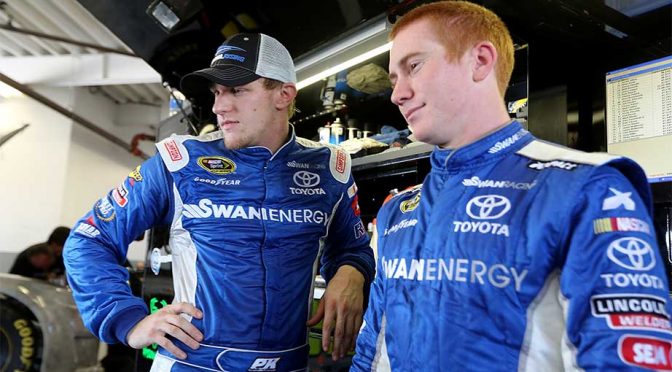
One season after Danica Patrick and two-time NASCAR Nationwide Series champion Ricky Stenhouse Jr. moved up to the sport’s highest level, the NASCAR Sprint Cup Series welcomes a rookie class that shapes up as one of its best in years. Austin Dillon is bringing back the No. 3 car for Richard Childress Racing, while Kyle Larson is moving into Chip Ganassi’s No. 42. Parker Kligerman and Cole Whitt move up for Swan Racing, Michael Annett moves to Tommy Baldwin’s car, and Justin Allgaier will be driving for Phoenix Racing.

It’s a deep, promising class, one with the potential of producing the kind of rookie season that makes everyone take notice. And it harkens back to the glory days of NASCAR rookie seasons, that era in the early- to mid-2000s when first-year drivers won with regularly, and permanently altered expectations for those breaking into the circuit. Perhaps Larson, Dillon, or someone else can become the first Sunoco Rookie of the Year candidate to win a Sprint Cup race since Joey Logano in 2009.

For the time being, though, here are top 10 rookie campaigns at NASCAR’s highest level.

10. Kasey Kahne, 2004

The former sprint-car star out of Washington State didn’t win a race his rookie season, and he didn’t qualify for the Chase for the NASCAR Sprint Cup. What he did do, though, was awe everyone, particularly on an afternoon in Rockingham, N.C., where he battled reigning champion Matt Kenseth wheel-to-wheel in a riveting finish on the old Sand Hills track. Kahne finished second that day, but the message was clear — the kid had arrived. He ran second again the next week at Las Vegas, and went on to accumulate 13 top-five finishes, a handful of poles, and narrowly miss that inaugural playoff thanks in part to Jeremy Mayfield’s miracle at Richmond. By the end of that season, though, it was evident that car owner Ray Evernham had unearthed a gem.

9. Shorty Rollins, 1958

Who won the first stock-car race on the high banks of Daytona International Speedway? It wasn’t Lee Petty — it was a Texan named Shorty Rollins, who claimed a convertible race on the big track two days before the inaugural Daytona 500 in 1959. Rollins earned NASCAR’s second official Rookie of the Year award the previous season, after winning his first and only premier-series race at State Line Speedway in Busti, N.Y. The field that day was less than star-studded — in addition to Shorty, it included drivers named Clyde, Jug, Bud, and Squirt — but Rollins notched top-10s in 22 of his 29 starts that season, and placed fourth in final points in an era where full-time campaigns were rare. It was the highest finish for any rookie to date, and Rollins’ mark stood as a record for eight years.

8. Ryan Newman, 2002

The driver they’d soon call "Rocket Man" didn’t take long to launch. After prepping for NASCAR’s top level with an "ABC" schedule — a little ARCA, then-Busch Series, and Cup — for Penske Racing, Newman burst out of the gate quickly as a rookie and was second in points three weeks into the 2002 campaign. He won just once that year, but set modern-era rookie records for poles (six), top-fives (14) and top-10s (22), and placed sixth in final points. It all laid the groundwork for his breakout sophomore season, when Newman won eight times and claimed 11 pole positions. And Newman can claim to be one of the few people who has beaten Jimmie Johnson — indeed, it was the Indiana native who was awarded top rookie honors in the same season the future six-time champion made his debut.

7. James Hylton, 1966

The pride of Inman, S.C., is still racing — he started 21 ARCA events last year despite turning 79 in August. Hylton may be viewed by many these days as something of an ageless novelty, but back in 1966 he was among the best rookies NASCAR had ever seen. The highest any rookie driver has ever finished in the points is second, a mark Hylton claimed in 1968 when he finished 1,950 points behind champion David Pearson. Hylton didn’t win that season — he won just twice in his career, and the first one didn’t come until 1970 — and he was a fierce independent, which likely hurt his chances against bigger teams with better funding. But the proud Palmetto State resident finished third or better in the standings seven times, the first of those coming in his rookie year.

6. Dale Earnhardt, 1979

He may not have been in a black No. 3 car — back then, he drove Rod Osterlund’s blue and yellow No. 2 — but he was an Intimidator from the very beginning. Earnhardt finished eighth in the Daytona 500 as a rookie, scored his first career victory six weeks later at Bristol, and averaged just over a 10th-place finish in an amazingly consistent freshman campaign at NASCAR’s top level. He saved his best for last, swiping a handful of poles over the second half of the season and finishing with five straight top-10s that lifted him to seventh in final points. Despite missing four races with a broken collarbone, he earned top rookie honors in a strong class that also included Harry Gant and Terry Labonte. It all set the table for the following season, when Earnhardt broke through to win the first of his seven titles.

5. Davey Allison, 1987

In an era when young drivers simply didn’t get many chances in great cars — they usually had to prove themselves in inferior equipment first — Allison was an exception. He was fast from the start, when he became the first rookie ever to sit on the front row for the Daytona 500, in a car that didn’t yet have sponsorship. Later at Talladega, where his dad Bobby’s car would go airborne and usher in the restrictor-plate era, Davey became the first rookie to win a race since Ron Bouchard six years earlier. Two weeks later he prevailed at Dover, and became the first rookie to win twice. Allison didn’t race the full season because of funding issues on his Ranier-Lundy race team, but his spectacular rookie year raised the bar, and cracked open the door for other young drivers like Jeff Gordon to kick it down later on.

4. Denny Hamlin, 2006

Looking to bring stability to a No. 11 team that had struggled to get off the ground, Joe Gibbs Racing hired a little-known former late model ace who got his shot by shaking down equipment for the organization’s diversity program. By the end of his first season, though, everyone would know Hamlin. The first and still only rookie driver to make the Chase, Hamlin swept Pocono in 2006 to anchor perhaps the most unexpected great rookie campaign in recent memory. Thirty-first in points after the Daytona 500, Hamlin gradually climbed the standings to easily make the playoff, and stood second with seven weeks left in the season. He wound up third, the best points finish by any first-year driver since Hylton had been runner-up four decades earlier.

3. Kevin Harvick, 2001

Many rookies have won races, and a few have secured high points finishes, but none did it under the adverse circumstances Harvick faced. Expecting to run the full Nationwide Series schedule, he was rushed up to the Sprint Cup tour immediately following Earnhardt’s fatal crash in the Daytona 500. And Harvick did nothing less than shine under tremendous duress, scoring a triumph two weeks later at Atlanta that brought grown men to tears. He added another victory at Chicagoland, and finished eighth in points. Even more than his on-track achievements, he brought needed stability to a team that was reeling in the wake of the Intimidator’s death. There were plenty of things for Richard Childress to worry about in those days, but the man behind the wheel wasn’t one of them.

2. Jimmie Johnson, 2002

Strangely enough, the Rookie of the Year title is one of the few Sprint Cup honors the six-time champion hasn’t won. That prize in 2002 went to Newman, whose consistent finishes swayed voters who had the final say on the award. Meanwhile, some guy who spelled his first name the wrong way won three times (to Newman’s one), becoming only the second freshman driver to reach that mark. One week after his third victory, he finished 10th at Kansas to become the first rookie ever to lead the points. With four races remaining, he was second, 82 points off the lead. Stewart won that title, and Newman won the rookie award. Johnson finished fifth, but served notice that he was capable of winning much, much more.

1. Tony Stewart, 1999

In fairness, the "Rushville Rocket" was far from your ordinary rookie driver. By the time Stewart broke into NASCAR’s top circuit, he was 28, and had already won an IndyCar championship and the U.S. Auto Club triple crown. Still, no one expected him to rewrite the rookie record book — but that’s just what he did, thriving under crew chief Greg Zipadelli and displaying a late-season surge that would become his trademark. He started slow, but found his footing by summertime, and then won three of the season’s final 10 races — boy, does that sound familiar — to finish off the best rookie season ever.

Stewart’s three victories — at Richmond, Phoenix and Homestead — broke Allison’s record of two wins from 1987. The mark still stands, although Johnson knotted it in 2002. His fourth-place finish in points was, at the time, the highest by a freshman driver since Hylton’s runner-up appearance in 1966.

Aided by Gordon’s rise, Stewart’s debut fully ushered in the golden age of rookies at NASCAR’s highest level — Dale Earnhardt Jr. and Kenseth would follow the next year, then Harvick and Kurt Busch, then Johnson and Newman, then Jamie McMurray and Greg Biffle and Kahne. Car owners, once wary of turning championship-caliber equipment over to young drivers, suddenly had no qualms about doing just that. All it took was a little "Smoke" in their eyes.

MORE:

READ: Dale Jr. not surprised
by Letarte’s decision

READ: Complete schedule
for Preseason Thunder

WATCH: Stewart: ‘It’s nice
to be back’

READ: Latest news
from Preseason Thunder