Name change takes effect immediately

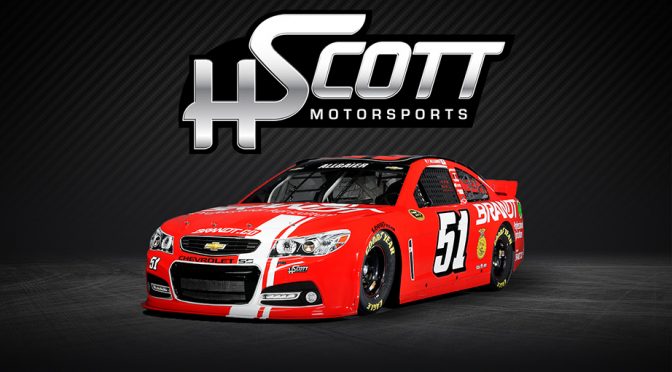
Five months after Harry Scott Jr. purchased Phoenix Racing from James Finch, the owner has officially changed the team name to HScott Motorsports.

The move was announced Wednesday, and rebranding efforts come in the form of a new logo, website and social media accounts.

"I am truly looking forward to the 2014 season," Scott said in a team release. "We have two great drivers in place with Justin Allgaier and Bobby Labonte, we’ve partnered with great sponsors and the team is ready and excited for Daytona. Now that we have launched the HScott Motorsports brand, everything is in place. We can’t wait for the season to get started and to get back to racing."

Earlier this year, the team announced that Allgaier would be the full-time driver for the team’s No. 51 Chevrolet. Steve Addington will serve as his crew chief, as well as the organization’s competition director. Labonte will drive the No. 52 Chevrolet for a select number of races, according to the team, including the Daytona 500.

HScott Motorsports has also expanded its relationship with Hendrick Motorsports, which has provided engines to the team in the past.

New social media information includes:

Website: www.HScottMotorsports.com
Facebook: www.Facebook.com/HScottMotorsports
Twitter: @TeamHSM51 and @TeamHSM52
Instagram: TeamHSM51

MORE:

READ: Expansion, eliminations
highlight Chase changes

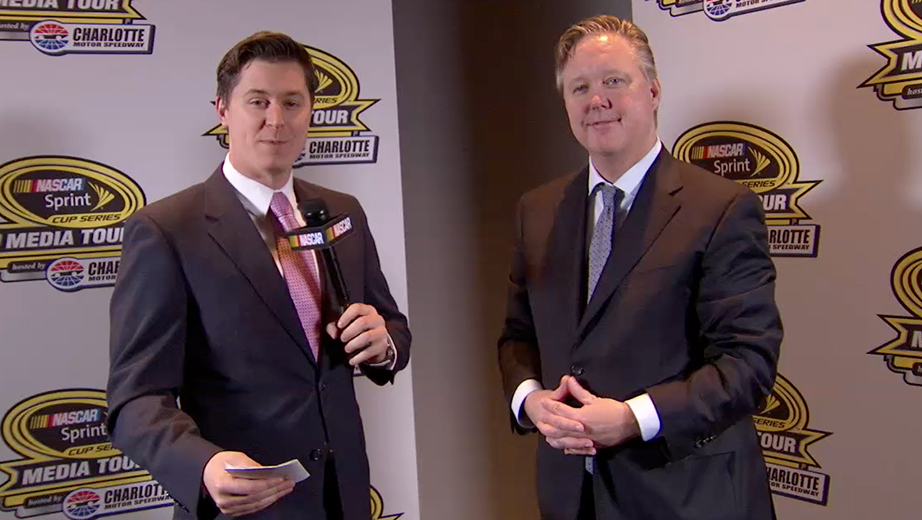
WATCH: Brian France breaks
down Chase changes

READ: Coors Light qualifying
changes announced

WATCH: Qualifying: One-on-one
with Robin Pemberton

20-year-old driver made seven Nationwide starts last season

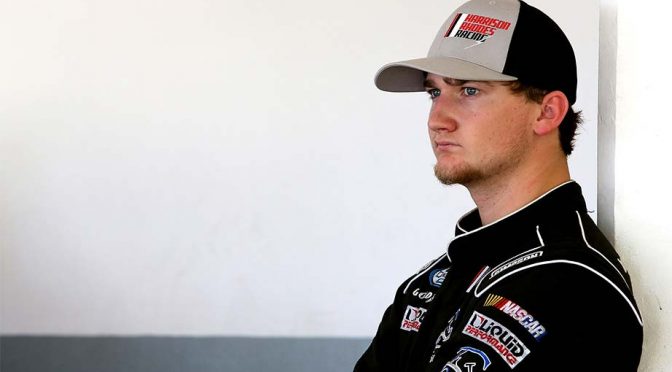
Harrison Rhodes will drive for the No. 24 Toyota for SR2 Motorsports at Daytona International Speedway in the NASCAR Nationwide Series opener, the DRIVE4COPD 300 on Feb. 22.

The race will be Rhodes’ first at Daytona and also his first restrictor-plate race. He took part in Preseason Thunder testing at Daytona last month.

HOODZ Kitchen Exhaust Cleaning and DUCTZ Air Duct Cleaning and HVAC Restoration have teamed up to partner with Rhodes for the race weekend.

"I am extremely excited for the opportunity to drive the No. 24 HOODZ & DUCTZ Toyota at Daytona," Rhodes said in a team release.

Rhodes, 20, made his Nationwide debut last season at Phoenix in March. He posted a 25th-place finish. In 2013, Rhodes made seven starts, with his best result (23rd) coming in the June race at Iowa Speedway. 


"Harrison is a great young driver that I have been watching a lot this past season," team owner Jason Sciavicco said. "He shows great poise behind the wheel, has shown significant improvement in the Nationwide Series car and is excellent working with his marketing partners."

MORE:

READ: Expansion, eliminations
highlight Chase changes

WATCH: Brian France breaks
down Chase changes

READ: Coors Light qualifying
changes announced

WATCH: Qualifying: One-on-one
with Robin Pemberton

After strong Truck Series season, veteran driver moves to Nationwide Series

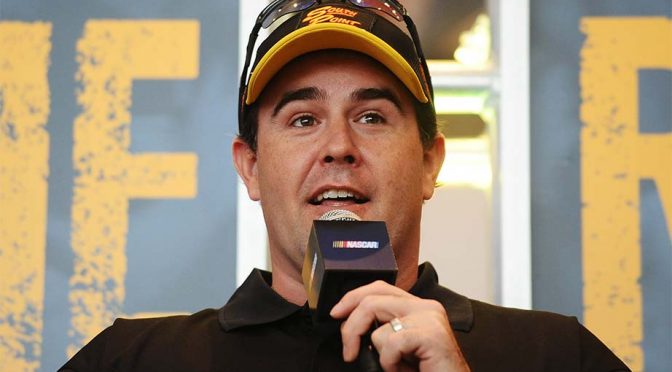
When Brendan Gaughan showed up for NASCAR Preseason Thunder testing last month at Daytona International Speedway, he was sporting a retro mustache that seemed fitting for either a 1970s album cover or a Mario Brothers cartridge.

The soup strainer, Gaughan explained, was a tribute to a long-ago photo of his father, a picture he recreated 25 years later with "rather frightening" results.

"My father had a famous picture of him the day the Barbary Coast (Hotel & Casino) opened in 1979, and we used it for a PR campaign last year," Gaughan said. "Everybody would look over the mustache and say, ‘Man, you look like your dad.’ And I went, ‘I can grow that mustache,’ and they went, ‘No, you can’t.’ … So I grew the mustache."

By the time the Sprint Media Tour rolled around the last week of January, the mustache was only a memory for the clean-shaven Gaughan, but his bubbling excitement for the season ahead remained. The Las Vegas native, a veteran in all three NASCAR national series, is making the move up to the Nationwide Series for 2014, bringing the core of his truck team from last year with him. 

For Gaughan, the shift from Silverados to Camaros in the Richard Childress Racing Chevrolet stable isn’t expected to be a drastic change. 

"It’s the same team. It’s a race car," Gaughan said. "It’s not like I haven’t been in the Nationwide Series before. To me, it’s a windshield that’s a little bit more slanted back, same seat, same steering wheel, same gas pedal, and a lot of the same drivers. All it means to me is that I’ve got to go out there and do the same thing that I was doing in the truck. Have that mentality, go try to win races, keep the championship killer mentality in me, and we’ll get it done." 

Helping smooth the transition is the carry-over of veteran crew chief Shane Wilson, who has a deep history of working with the 38-year-old driver. Wilson, who was atop the pit box for all eight of Gaughan’s career victories in the NASCAR Camping World Truck Series, rejoined the driver-crew chief combination last season. The pairing paid dividends — Gaughan’s 10 top-five finishes were the most of any driver in the series. 

Communication came easy between Wilson and the jocular Gaughan, who typically manages to keep the mood light, even in such a results-oriented business. 

"In these days where there’s a lot more pressure, we approach it in a lot more relaxed manner," Wilson said. "It helps us probably get a little better results. The grind of the year is a lot easier because there’s just no BS. We go to the deal, we have some fun; if we have a bad race, we regroup and we don’t carry that to the next one. I like that, so it’s kind of a relief for me." 

It’s a feeling shared by teammate Ty Dillon, who is also making the move from trucks to Nationwide under the RCR umbrella. 

"Having a guy with that much experience in all three series is huge," Dillon said. "He’s such a positive person to be around. He brings up everybody’s team morale just being around him. Just a great guy, always there to give you a helping hand with whatever you need, and he’s been a great teammate the last couple of years. Looking forward to what we can do together in the Nationwide Series." 

Gaughan ran as high as third in the Truck Series standings last season before issues at Kentucky and Iowa sent him on an early summer swoon that dropped him six places in the points race. Gaughan eventually finished seventh, but the subpar results may have belied the team’s ability to perform. 

"There were three races that cost us 70 points with mechanical failures. You take those three races out and we’re 14 points out of the championship," Gaughan said. "You can’t look back and cry over spilled milk. You have to play the cards you were dealt, but those three races are what really cost us the biggest chunk of points. After that, you never know what’s going to happen." 

Childress’ Nationwide program takes on a new look this season with Gaughan and Dillon as the newcomers, joining Brian Scott, who wound up seventh in the Nationwide drivers’ standings last season. RCR scored two victories last season — one each for Sprint Cup standouts Tony Stewart and Kevin Harvick — and corralled the Nationwide drivers’ crown with a winless, super-consistent year from Austin Dillon, who has joined NASCAR’s premier series for 2014. 

With another year together with Wilson, Gaughan says a revival for RCR’s Nationwide regulars isn’t far away.

"There’s no reason this team can’t win," Gaughan said. "But if it can’t, I’m going to do my best Austin Dillon impersonation and top-five ’em to death and win a championship."

MORE:

READ: Expansion, eliminations
highlight Chase changes

WATCH: Brian France breaks
down Chase changes

READ: Coors Light qualifying
changes announced

WATCH: Qualifying: One-on-one
with Robin Pemberton

Cites potential conflict of interest as reason for vacating from TV job

Ray Evernham, one of NASCAR’s most successful crew chiefs, is returning to the competition side of the sport in an expanded role with Hendrick Motorsports.

The former championship-winning crew chief will work closely with Hendrick Motorsports management and the organization’s four NASCAR Sprint Cup Series teams featuring drivers Dale Earnhardt Jr., Jeff Gordon, Jimmie Johnson and Kasey Kahne.

Evernham stressed that his new role is that of an advisor and not a participant, although he expects to attend a dozen or more races.

"Will I be building cars? No," he told NASCAR.com. "Will I be meeting with crew chiefs and trying to help them? Yes. …

"And I stick to the point — you will not see me be a crew chief; you will not see me have an active role. You will see me at the race track because that’s about the same number of races I went to last year (while working with ESPN). And I think if I’m going to interact and really understand and help the guys, I’ve got to dig down and see what they’re going with at the race track.

"I look at myself as being a good textbook, a good resource, not only for the management team, but the guys as well and in order to do that I’m going to have to be at the track sometimes."

Evernham, 56, won three Sprint Cup titles and 47 races while paired with driver Jeff Gordon at Hendrick between 1993 and 1999. He left to form his own team, Evernham Motorsports, collecting 13 wins as an owner with drivers Bill Elliott, Kahne and Jeremy Mayfield.

Since 2011, Evernham has worked for Hendrick Companies, a management group that oversees strategic initiatives for chairman Rick Hendrick. Because his duties did not include Hendrick Motorsports at that time, Evernham also served as a race analyst for ESPN during its coverage of NASCAR events.

"I don’t want to say nothing’s really changed because obviously something has changed," Evernham said. "I’ve been doing a lot of work with the Hendrick Automotive group, I did a lot of work with General Motors and Chrysler and all the things that Rick has going on. This year, he’s asked me to come over and help on the management side of motorsports. I’ll be working closely with Doug Duchardt (executive vice president and general manager), Ken Howes (vice president of competition) and Marshall Carlson (president and CEO)."

Because he chose to re-join the competition side of the company, Evernham said he decided to relinquish his duties with ESPN.

"I can’t put Hendrick in a compromising position, or ESPN," he said. "What do I want to do? Where do I want to be five years from now? I enjoyed (working at ESPN) a lot. But when I looked out to the future, I didn’t see a spot for me."

ABC/ESPN is in the final year of an eight-year contract with NASCAR and is not a part of the new TV package that begins in 2015.

In a statement provided by ESPN, network officials said, "We appreciate the contributions Ray has made to our NASCAR coverage and have enjoyed having him as part of our team. We wish him all the best."

"I’ve been working for Hendrick Companies management for three years now but my umbrella got bigger," Evernham said. "And when that umbrella got bigger to assist with motorsports management, that automatically in my opinion would take away some of my credibility as an analyst and a media representative, and I had to make a choice."

Evernham will continue his duties with Hendrick Companies, as well as his "AmeriCarna" television series that recently debuted on Velocity TV.

"Ray has a unique combination of business, racing competition and media experience," Hendrick said in a statement provided by HMS. "We’re having a lot of fun with the ‘AmeriCarna,’ and I’m excited about how he can continue to contribute to the organization in a variety of ways. We have a great friendship, and he’s a valuable resource on a professional level."

Evernham said the goal isn’t to sit down and discuss chassis setups with the various crew chiefs.

"This is more about philosophy and systems and helping continue that winning culture that Mr. H has got over there," he said. "Being an assistant to guys like Marshal and Doug, the guys that are really, really smart that don’t have that race experience, crew chief experience.

"I’m there to help add to the systems they already have and help with that communication. … I’m not going to go in there and make the car go faster by rubbing on a template. … Those days are over. They’ve got a tremendous amount of resources. I need to be able to help them organizationally and philosophically use the people and tools that they have in place better."

Hendrick Motorsports teams have won 11 Cup titles and 218 races since debuting in 1984. Johnson accounts for six of those titles and is the defending Cup champion.

Gordon (four) and Terry Labonte (one) also won championships for HMS.

Evernham said is he is looking forward to helping keep the group at the forefront of the series.

"I said to them the other day, ‘you know what’s really cool about this? You all have dominated the sport for the past 20 years and we’re sitting in here today talking about how to get better,’ " he said. "And to me that’s why I want to go back there, because it’s never good enough."

MORE:

READ: Expansion, eliminations
highlight Chase changes

WATCH: Brian France breaks
down Chase changes

READ: Coors Light qualifying
changes announced

WATCH: Qualifying: One-on-one
with Robin Pemberton

NASCAR’s Deterrence System classifies six different levels of penalties

No more guessing what penalty a technical violation might bring — under a revised and stratified system unveiled Tuesday by NASCAR, specific offenses will now carry specific sanctions, ranging from a loss of practice time for minor infractions to 150-point deductions for the most serious.

NASCAR’s revamped Deterrence System classifies six different levels of penalties, with fines and point deductions increasing as infractions become more severe. The structure also allows the sanctioning body to hit repeat offenders with a multiplier that could increase penalties by 50 percent. The new system brings with it a new Final Appeals Officer — Bryan Moss, president emeritus of Gulfstream Aerospace, who replaces former General Motors executive John Middlebrook as the final decision on penalty disputes.

"It’s never our intent to penalize, but in order to keep the playing field fair for everyone, we recognize that strong rules need to be in place," said Steve O’Donnell, NASCAR’s executive vice president for racing operations. "We certainly believe we’ve done a good job governing the sport in the past, but always believe we can get better and benefit everyone involved, especially as we went out and talked to the industry. The new Deterrence System is going to provide a clear path for our competitors to fully understand the boundaries while shoring up some gray areas which may have been in existence, again, all in an effort to be as transparent as possible."

Under NASCAR’s former penalty system, there were no specific sanctions tied to certain offenses. Series executives hinted a new deterrence model was coming last year, when the series rolled out plans for a wide-ranging transformation of its competition model. The changes, which come on the heels of discussions within the industry, will be incorporated into the 2014 rule books for all three national series. The revised system is for technical infractions only, with behavioral offenses still handled on a case-by-case basis.

"We believe the new system is easily understood," said Robin Pemberton, NASCAR’s vice president for competition, "and especially lays out exactly what disciplinary actions will be taken depending on the type of technical infraction."

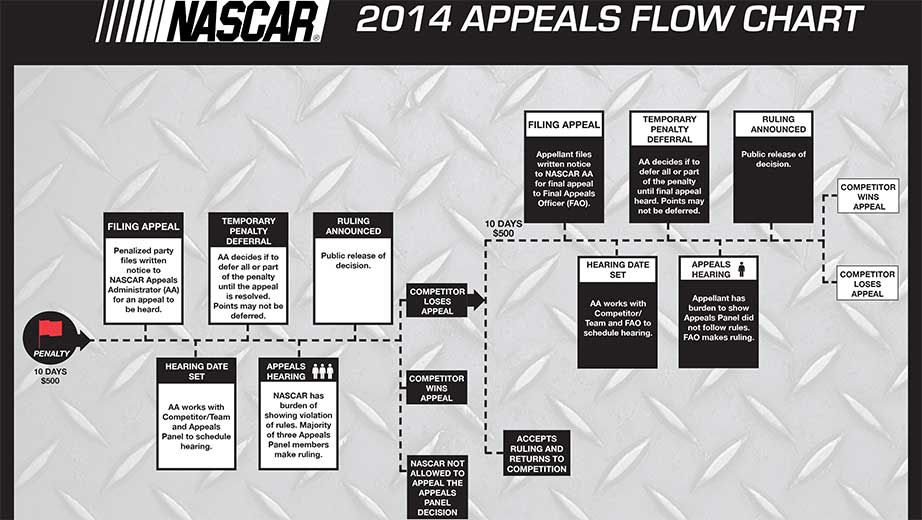
Initial appeals will still be heard by three members of the National Motorsports Appeals Panel, although going forward that body will consist of fewer race track operators and more experts with technical backgrounds. The final arbiter is now Moss, a Georgia Tech graduate and motorsports enthusiast, who has worked in a variety of capacities within the aerospace industry since starting out with Lockheed’s engineering administrative group in 1966.
"Really, when we talked in the industry, his business credentials we believe are impeccable," O’Donnell said. "A strong background in engineering and research, and as you all know, the sport is going more and more toward engineering. … We felt like he was the right choice for this position."

During his tenure as final appeals judge, Middlebrook made a habit of amending NASCAR sanctions — most famously overturning a 25-point penalty to Jimmie Johnson and six-week suspension to crew chief Chad Knaus for alleged body modifications made to the No. 48 car prior to the 2012 Daytona 500. O’Donnell said Moss’ appointment is "not a result of recent appeals decisions." Changing the appeals board, though, reflects the more technical nature of the sport and the desire to avoid potential conflicts of interest.

"I think when you look at a track operator, as an example I would use Brandon Igdalsky at Pocono, who comes in, does an appeal, and he sits on the Penske appeal and tells you the day before that, ‘Boy, you’re putting me in a tough position, I’ve got an IndyCar race and I need Roger to do a promotion for me, why did you put me on this?’ We hadn’t thought through some of those things," O’Donnell said. "I think it’ll certainly be very similar to substance abuse, where you have the industry experts we’ll pull from the right people, and we’ll pull from folks … with that engineering and technical background as the sport becomes more and more innovative."

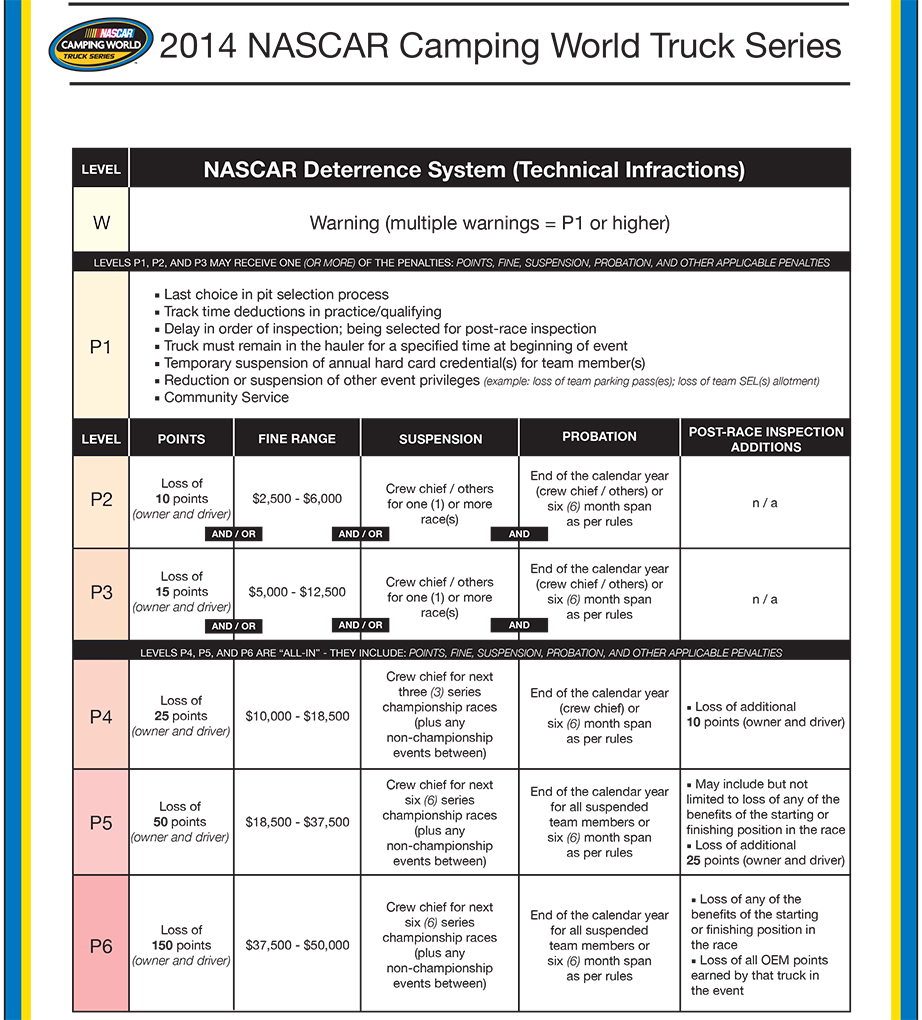
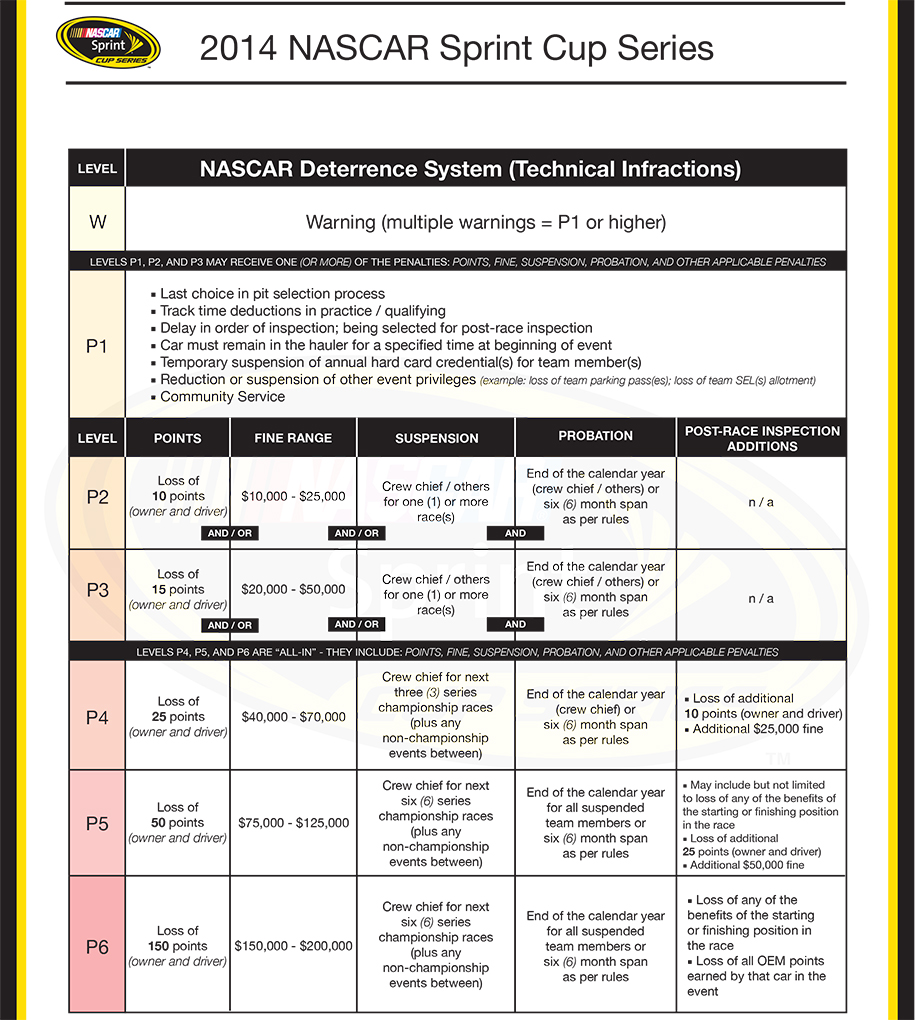
The new Deterrence System allows for a warning, and then escalates through six categories of penalties, with the sanctions growing more severe with each step. The lowest level of offense, or "P1," brings penalties ranging from a loss of track time during practice to community service. In the Sprint Cup Series, the P2 and P3 levels carry point penalties and/or fines and suspensions, ranging from deductions of 10-15 points, fines from $10,000-$50,000, and crew chief or other team members sidelined for one or more races. Penalties at those levels also carry probation for six months or through the end of the calendar year.

The highest levels of penalties — P4, P5 and P6 — are all-inclusive, involving point deductions, fines, suspensions and probation. A P4 infraction would bring the loss of 25 driver and owner points, a fine of $40,000-$70,000, and a three-race crew chief suspension. At P5, the penalties increase to 50 points, fines of $75,000-$125,000, and a six-race suspension. The highest level of penalty, P6, carries a 150-point deduction along with a fine of $150,000-$200,000, and a six-race suspension to the crew chief.

The new system also allows NASCAR to come down hard on repeat offenders. If a team is penalized, and later that same season is busted for another infraction at the same level or higher than the previous offense, the subsequent penalty increases by 50 percent.

NASCAR has issued warnings before, but they’ve been informal and not made public. That will change now, with the emphasis on getting cars through inspection on time due to new inspection and qualifying models. The scale of violations escalates through P2 offenses such as hollow components and bracket violations, P3 offenses such as unauthorized parts or coil spring violations, P4 offenses such as unapproved additional weight or devices that circumvent templates, P5 offenses such as oil additives or devices that effect normal air flow, and P6 offenses such as engine modifications or use of nitrous oxide.

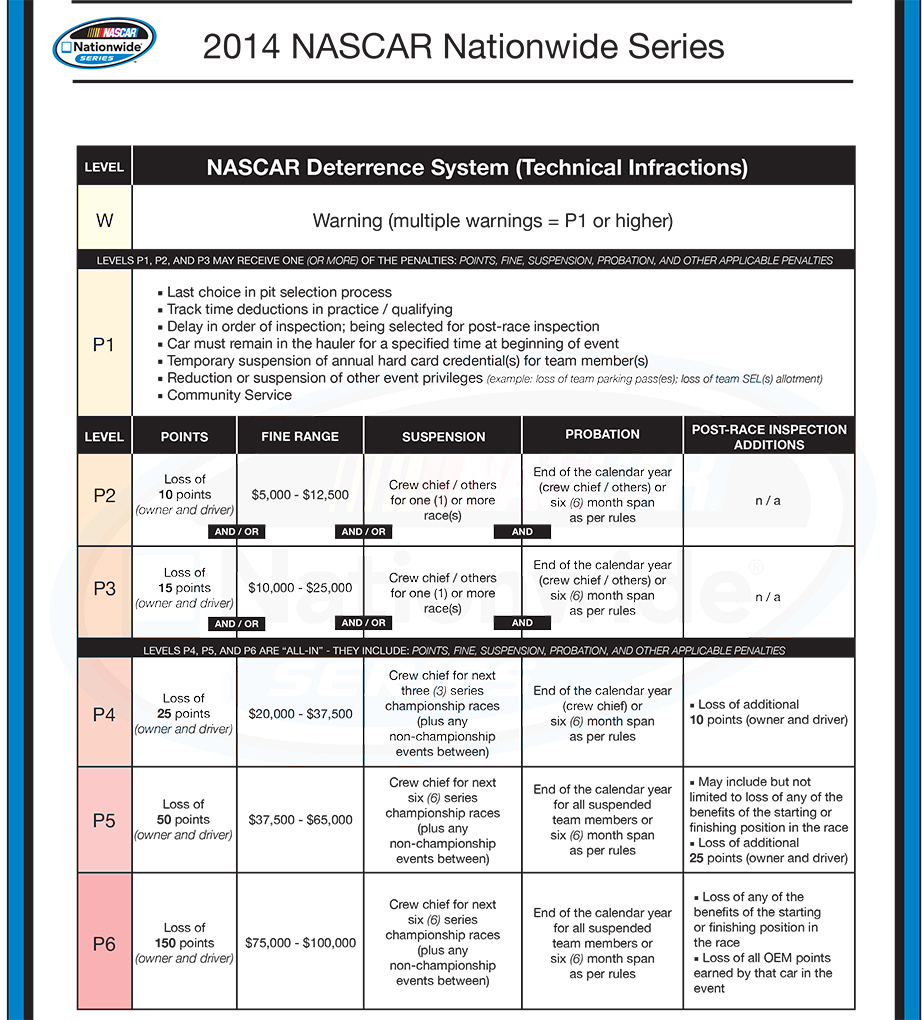
Major infractions also bring probation for six months or through the end of the calendar year. NASCAR also reserves the right to tack on additional sanctions such as extra fines and point deductions, or — for the most egregious offenses — the loss of bonus or manufacturer points gained in the course of an event. The revised system is the same for all three national series, although potential monetary fines top out at $100,000 in the NASCAR Nationwide Series and $50,000 in the NASCAR Camping World Truck Series.

NASCAR has taken away bonus points before — it did just that to Carl Edwards‘ team in 2008, after an oil tank violation was found on the winning No. 99 car at Las Vegas. Taking away a victory from a race team later found guilty of a major penalty remains a step the sanctioning body is hesitant to take.

"That’s always a topic of discussion, and at this point in time we always feel that when the fans leave the race track they know who won the race, and so right now we just will take away that opportunity for seeding or advancement based on wins if somebody violates the rules," Pemberton said.

"And this part of it isn’t new. We have leveled a penalty against a team a few years ago … and they weren’t allowed to carry those points over for seeding into the Chase. So it’s not new. It’s in print now. People can see it. And they’ll understand that part of it. You know, it’s always an age‑old question, why you don’t take away the win, and the timing right now is we’re going to move forward like we have over the 65 years, and we will address things on a year‑to‑year basis and see where it takes us."
MORE:
READ: Expansion, eliminations
highlight Chase changes

WATCH: Brian France breaks
down Chase changes

READ: Coors Light qualifying
changes announced

WATCH: Qualifying: One-on-one
with Robin Pemberton

SMS Audio to serve as associate sponsor for both of team’s entries

They may hail from different parts of the country and work in vastly different fields, but Brandon Davis sees plenty in common between him and his new partner Curtis Jackson — better known as 50 Cent.

"I’m an entrepreneur, 50’s an entrepreneur. That piece is it, is the synergy that pulled it all together," said Davis, the owner of Swan Racing. "You have two entrepreneur-minded people coming together. … NASCAR’s structure, it really allows for and opens the door for entrepreneurs to come in and use this platform for different kinds of marketing opportunities, and this is one of them."

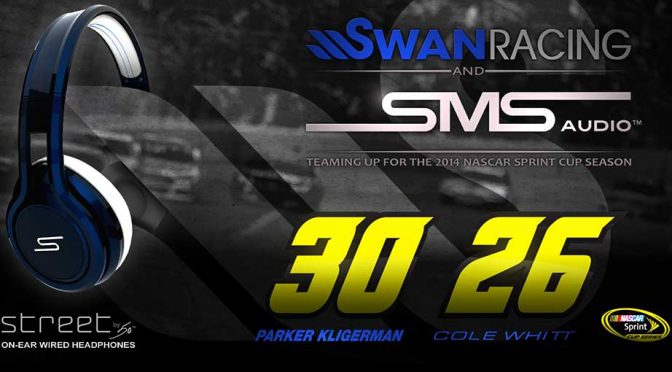
Davis’ two-car entry in the NASCAR Sprint Cup Series has a new partner in a company owned by 50 Cent, the rapper whose business interests have expanded into beverages, boxing promotion, film production and beyond. SMS Audio, a line of headphones and accessories founded by Jackson in 2011, will appear as an associate sponsor this season on the cars of Swan Racing drivers Parker Kligerman and Cole Whitt.

Davis said the deal is for multiple years, and envisions it expanding to eventually become a primary sponsor. The scope of it all, though, exceeds the logos that will appear on Swan Racing’s two cars.

"It’s huge. Absolutely, it’s by far the biggest deal that we’ve ever had," Davis told NASCAR.com by telephone.

"My vision when I started this team was to build a marketing machine. And having this relationship is a key component in that," he added. "Whether it turns into a primary for a car for the full season, which is what we’re shooting for, or not, the marketing power that this gives us, and the diversity it gives us from a marketing standpoint, it’s huge for our team."

For 50 Cent, car sponsorship in NASCAR is another step in a career built on breaking from the predictable. His early investment in the brand that became Vitamin Water netted him millions, and funded his growth into other areas such as clothing and audio equipment. A former crack dealer who was once shot nine times, the native of Queens, N.Y., has branched out into an entertainer and businessman whose interests go well beyond the music that launched his career in 2003.

The relationship between Swan Racing and SMS Audio was conceived and negotiated by Pegasus Marketing Group of Lake Forest, Ill. Although Davis and Jackson have spoken only over the telephone — conflicting schedules have prevented a face-to-face meeting to this point — Davis said the rapper plans to be at the Daytona 500. Jackson attended the Great American Race last season, when he famously attempted to kiss television personality Erin Andrews on pit road prior to the event.

In a statement announcing the deal, Jackson called Swan Racing "the perfect match" for his audio company. The official release also said 50 Cent would be making appearances at races throughout the season in support of the drivers and the partnership.

Kligerman, 23 and a professed hip-hop fan, is "pumped up for this partnership to say the least," he said, adding that being part of the deal is "an honor." Davis, who is chairman of an oil and gas exploration company based in Denver, said the agreement shouldn’t come as a surprise.

"He’s a car guy," Davis said of Jackson. "He’s into cars, into muscle cars, into fast cars, high-end cars, exotic cars. And one thing I’ve learned with people in different areas is, once they experience a race, if they’re already into cars and speed, you go to a NASCAR race and you’re hooked. I’m sure that had something to do with it."

Founded in late 2012, Swan Racing competed last season as a one-car team with David Stremme primarily behind the wheel. The team recorded five top-20 finishes last year, the best being 12th in the spring race at Talladega. The organization expanded to two full-time entries for the 2014 campaign, and Davis summed up the growth process so far in one word.

"Hard," he said. "It’s going the way I expected it to. We’re pulling our hair out. Hopefully everything goes smoothly and we’re over prepared. At the least we’ll be prepared for Daytona. But it’s been difficult. It’s a lot more work than it was."

MORE:

READ: Expansion, eliminations
highlight Chase changes

WATCH: Brian France breaks
down Chase changes

READ: Coors Light qualifying
changes announced

WATCH: Qualifying: One-on-one
with Robin Pemberton

Sports-car series conducts investigation at R&D Center; Gidley still hospitalized

Having America’s two premier sports car series unified under the TUDOR United SportsCar Championship was promising enough for road racing, but being part of the NASCAR family has also already created some tangible benefits for the newly merged series.

Even as its inaugural unified event, the Rolex 24 at Daytona, was still completing its final laps two weeks ago at Daytona International Speedway, the USC was making use of some big-time NASCAR resources.

The International Motor Sports Association (IMSA) which sanctions the TUDOR series, loaded two badly wrecked cars up and transported them to NASCAR’s Research and Development Center in Concord, N.C. for analysis by top NASCAR engineers.

The accident — replayed on national television broadcasts  — happened three hours into the 24-hour race when a Chevrolet prototype driven by veteran Memo Gidley collided at speed with a GT-class Ferrari that had slowed on track.

Gidley remains hospitalized in Daytona Beach after three surgeries to repair a broken lower back, and fractures to his left elbow, and left foot and heel. Malucelli was discharged two days after the accident and flew home to Italy.

In the meantime, IMSA and NASCAR are examining the cars in the first joint venture between the series.

"It made a lot of sense for us to use the resources we had at the NASCAR R&D Center, the guys there and the ability to do somestudy of the cars after the incident,’" said Scot Elkins, IMSA’s Vice President for Competition and Technical Regulations. "It’s really the first time we’ve taken advantage of that resource.

"In this instance, NASCAR engineers are taking a look at the car. The prototype car is quite similar in nature to what they’ve been looking at because it is a tube frame car. It made a lot of sense to have NASCAR engineers take a look and give us some feedback in regards to the incident. And I’m sure going into the future we’ll be working even more closely together with the technical staff and engineers at R&D there’s some expertise we’ll have that they won’t with some of the other type of cars, so it’s an ongoing process but one that should be pretty incredible going forward."

Elkins said there is no timeline on completing the results and there wasn’t a rush on the report.

“They are a little different cars than what the guys are used to looking at so we’re taking a little more time and being a little more thorough that we get all the data we need," Elkins said.

"The whole purpose was to send the cars there and take a look and see if there was anything we could do in the future or if we need to change something. We don’t know until we get the results."

As for the drivers, it was good news that Malucelli was able to leave the hospital. Gidley, a hugely popular driver in the paddock, is hopeful to be transferred from Halifax Health to a rehabilitation facility in his native California soon – possibly this week, according to his team.

A third surgery was performed Friday to repair a fracture on his left heel.

"Memo is a competitive person and a fighter," said Bob Stallings, who owns the prototype Gidley was co-driving in the Rolex 24. "Clearly he is drawing on those strengths as he makes his way through this ordeal."

Stallings said the team has received a huge outpouring of well wishes and that doctors are optimistic Gidley will make a "substantial recovery."

In the meantime IMSA is using all its resources — which now includes NASCAR’s state-of-the-art R&D facility — to ensure the cars are as safe as possible.

"It’s the first time we’ve done this and just now starting to define our relationship with guys at R&D and it’s only going to grow from here," Elkins said.

MORE:

READ: Expansion, eliminations
highlight Chase changes

WATCH: Brian France breaks
down Chase changes

READ: Coors Light qualifying
changes announced

WATCH: Qualifying: One-on-one
with Robin Pemberton

Changes aimed toward better effectiveness, more transparency

DAYTONA BEACH, Fla. (Feb. 4, 2014) – As part of its wide-ranging initiatives to transform its competition model, NASCAR today announced enhancements to its penalty structure and appeals process beginning this season. In addition to these changes, NASCAR also announced the appointment of a Final Appeals Officer for the sport.

"NASCAR’s Deterrence System is designed to help maintain the integrity and competitive balance of our sport while sending a clear message that rules violations will not be tolerated," said Steve O’Donnell, NASCAR executive vice president of racing operations. "This is a more transparent and effective model that specifically spells out that ‘X’ infraction equals ‘X’ penalty for technical infractions.

"At the same time, we believe the Appeals process allows a fair opportunity for our NASCAR Members to be heard, and have penalty disputes resolved by an impartial, relevant group of people with the ability to handle the complexities inherent in any appeal. This system has been tailored specifically to fit the needs of our sport."

Bryan Moss, former president at Gulfstream Aerospace, has been selected as the Final Appeals Officer. Moss will hear matters on appeal from the lower three-member Appeals Panel, and serve as the last decision on penalty disputes for the sport.

NASCAR’s Deterrence System

NASCAR’s Deterrence System is easily understood and specifically lays out exactly what disciplinary action will be taken depending on the type of technical infraction listed from warnings to six penalty levels in ascending order. Some of the Deterrence System elements include:

•  The system starts with warnings (W) issued for very minor infractions, then are grouped into six levels – P1 (least significant) to P6 (most significant).
•  Lower P levels list penalty options from which NASCAR may select (fines or points) while higher P levels are an all-inclusive combination of multiple penalty elements (points and fine and suspension, etc.).
• At the highest three levels of the system, if a rules infraction is discovered in post-race inspection, the one or more additional penalty elements are added on top of the standard prescribed penalty.
• Repeat offenses by the same car are addressed via a "recurrence multiplier," i.e. if a P4 penalty was received and a second P4 or higher infraction occurs in the same season, the subsequent penalty increases 50% above the normal standard.
• Suspensions are explained in greater detail.
• Behavioral infractions are still handled on case-by-case basis and are not built into the W, P1-P6 structure.

The 2014 Rule Book will explain how and why NASCAR issues penalties as well as the factors considered when determining a penalty. The Rule Book also will detail the types of infractions that fall within each level by citing examples that are included but not limited to:

• Warnings are issued instead of penalties for certain types of minor, first-time infractions.
• P1 penalties may result from multiple warnings to the same team.
• P2 penalties may include but are not limited to violations such as hollow components, expiration of certain safety certification or improper installation of a safety feature, or minor bracket and fasteners violations.
• P3 penalty options may include but are not limited to violations such as unauthorized parts, measurement failures, parts that fail their intended use, or coil spring violation.
• P4 level infractions may include but are not limited to violations such as devices that circumvent NASCAR templates and measuring equipment, or unapproved added weight .
• P5 level may include but are not limited to violations such as combustion-enhancing additives in the oil, oil filter, air filter element or devices, systems, omissions, etc., that affect the normal airflow over the body.
• P6 level may include but are not limited to violations such as affecting the internal workings and performance of the engine, modifying the pre-certified chassis, traction control or affecting EFI or the ECU.

The National Motorsports Appeals Panel

The new Appeals process continues to provide two tiers for resolving disputes. On the first level before a three-member Appeals Panel, NASCAR has the burden of showing that a penalty violation has occurred. On the second and final level, only a NASCAR Member is allowed to appeal and they have the burden of showing the Final Appeals Officer that the panel decision was incorrect.

Some other Appeals changes include:

• Clearly identifying the procedural rights of NASCAR Members
• Detailing responsibilities of parties throughout the process
• Allowing parties the option to submit summaries on issues before the Appeals Panel
• Allowing NASCAR Members named in the penalty to be present during the entire hearing
• Appeals Administrator is not allowed to be present during panel deliberations
• Creating a clear Expedited Appeals Procedure when necessary
• Changing the name of the Appeals Panel to The National Motorsports Appeals Panel

For Deterrence System charts per national series and an Appeals process flowchart, please visit NASCARMedia.com or NASCAR.com.

MORE:

READ: Expansion, eliminations
highlight Chase changes

WATCH: Brian France breaks
down Chase changes

READ: Coors Light qualifying
changes announced

WATCH: Qualifying: One-on-one
with Robin Pemberton

Frenchman to make NASCAR national series debut at Daytona

Michel Disdier will make his NASCAR national series debut at Daytona International Speedway for the NASCAR Camping World Truck Series‘ NextEra Energy Resources 250 on Feb. 21.

Disdier will drive the No. 07 Chevy Silverado for SS Green Light Racing.

FULL SERIES COVERAGE

View all articles
View all videos
View all photos

"I have been racing for many years and it is my passion," Disdier said in a team release. "Since I was a boy I have dreamed of racing in NASCAR and everything I have done since has been directed at realizing my dream. In a few weeks my dream will come true and to describe the excitement I now feel is impossible."

Team owner Bobby Dotter will serve as the crew chief for the No. 07 truck, according to the release.

Disdier did test the truck at last month’s Preseason Thunder.

The 39-year-old native of France has raced throughout Europe in his racing career. He has also made a start in the NASCAR Canadian Tire Series and 11 starts in the ARCA Racing Series in his career.

MORE:

READ: Expansion, eliminations
highlight Chase changes

WATCH: Brian France breaks
down Chase changes

READ: Coors Light qualifying
changes announced

WATCH: Qualifying: One-on-one
with Robin Pemberton

Move comes a day after announcing the hiring of crew chief Todd Parrott

A day after announcing that they’ve hired Todd Parrott to crew chief the No. 36 Chevrolet SS Sprint Cup Series ride, Tommy Baldwin Racing announced Tuesday that veteran Reed Sorenson will be behind the wheel.

Baldwin brought the 27-year-old seasoned NASCAR driver on board to assist in building the team and taking it to the next level.

"It’s cool to have Reed on board driving the No. 36," said Baldwin in a team release. "I’ve looked at his statistics and was really surprised at how well he’s done. It’s taken six years to get where we are now and the No. 36 car is only two or three years into it, so we’re slowly building that and we’re excited to have Reed on board with his experience at such a young age and ability to provide sound feedback to help us do that."

While most of his national series success has come at the Nationwide level (four wins), Sorenson has five top-five finishes in 189 Cup starts over nine years. His last full-time season in NASCAR’s premier series came in 2009, driving the No. 43 Richard Petty Motorsports Ford, currently driven by Aric Almirola.

"I will give them everything I’ve got to perform well," Sorenson said. "I’m confident with Todd’s winning resume along with Tommy’s accomplishments; it’s going to lead to great things for this team. I’m thankful for TBR and all of their partners for allowing me to be their driver. I’m looking forward to helping TBR build on what they have already achieved and to help make the team better than they ever have been."

MORE:

READ: Expansion, eliminations
highlight Chase changes

WATCH: Brian France breaks
down Chase changes

READ: Coors Light qualifying
changes announced

WATCH: Qualifying: One-on-one
with Robin Pemberton