Rookie won at Texas Motor Speedway in June, finished fifth in final standings

This is the second in a series of 2013 Camping World Truck Series driver recaps that will be featured on NASCAR.com.

Rookies don’t typically expect to contend for championships, but for much of Jeb Burton‘s first season in the NASCAR Camping World Truck Series, he was right in the mix.
 
A fifth-place effort in the season standings, highlighted by a series-high seven pole positions and a breakthrough victory at Texas Motor Speedway in June, would be enough to satisfy most drivers in their first go-round at the national-series level. But being so close at so many tracks over the 22-race schedule has only made Burton more motivated to contend in 2014.
 
"Definitely pleased and happy — just hungry and wanting more," Burton said Nov. 18, as the truck and NASCAR Nationwide Series held their annual awards banquet."… This was our building year, just building a notebook. Just next year, we need to win those races when we have the opportunities."
 
The 21-year-old member of the NASCAR Next class had already gotten his feet wet in the Truck Series with a five-race schedule in 2012 to prep for his first full season with Turner Scott Motorsports. When he won his first Keystone Light Pole Award in just the second race of the year at Martinsville Speedway, not far from his hometown of Halifax, Va., it unleashed a swell of emotions.
 
That pole position foreshadowed strong showings in qualifying yet to come. Burton topped the pole qualifying leaderboard three times in the first five races and was the fastest qualifier at intermediate tracks, a short track and a superspeedway once 2013 was in the books.

FULL SERIES COVERAGE

View all articles
View all videos
View all photos

SEASON IN REVIEW

"Qualifying, I feel like, has been a strength for me in my career," Burton said. "All the guys at the shop provided me with fast trucks, right off the truck. It just was easier to be fast when you unload and have good equipment. All the guys back at Turner Scott did a good job for us."
 
On June 7 in Fort Worth, Burton cashed in on the stout qualifying efforts with the first triumph of his career, sharing a stirring Victory Lane with his father, former Daytona 500 winner Ward Burton. Not only did the Texas win validate the younger Burton’s racing pedigree, it also came in the heart of a lengthy 11-race span where he ranked second in the series standings.
 
"It means a lot. I’m just a little frustrated that that’s the only one we got," Burton said. "I felt like Martinsville, we let that one go, and then there were three or four others we could’ve won. We’ve got to capitalize on that if we want to be champions next year and just got to keep getting better every week."
 
Burton was second in the points as late as mid-August, but a six-race stretch with just two top-10 finishes allowed eventual series champion Matt Crafton to build an insurmountable lead. Burton’s rough patch was marked by a last-lap crash at Bristol Motor Speedway that dropped him to third place in the truck standings. Just 11 days later, a transmission issue at Canadian Tire Motorsport Park knocked the rookie to fourth.
 
Though he was removed from championship contention by the season finale at Homestead-Miami Speedway, Burton may have saved his best drive for last. While reeling in eventual race winner Kyle Busch, Burton scraped the wall in the closing laps and seemed destined for a finish in the back of the pack. But the rookie stormed from 25th position to a third-place result, masterfully picking his way through traffic to cap his season with a brilliant top-five. The result also rounded out his first experience with all the tracks on the schedule, something that bodes well for next season.
 
"I think just going to these tracks where I know what I need and I know what to expect before I get there," Burton said. "I feel like that’s going to make us better all around the board. Going to Homestead the other day was the first time I’ve seen the place, so next year we’ve already got a good notebook and we know what we can run and what we can’t run."
 
Burton also made a solid debut in the NASCAR Nationwide Series, taking a Turner Scott Chevrolet to an eighth-place finish at Kentucky Speedway in September. Even as he prepares to return for another full schedule on the truck tour with Turner Scott, Burton made it clear that he has a longer-reach plan for more Nationwide starts with an ultimate goal of competing in the top-level NASCAR Sprint Cup Series in the near future.
 
"I’m definitely thinking that far ahead," Burton said. "We’ve got a plan set and trying to find Nationwide sponsors to run for next year. I’m going to run full truck and as many Nationwide races as I can next year and the following year to try to go full-time Nationwide. Run that about two years and I want to be in a (Sprint) Cup car.
 
"We’ve just got to keep winning. I feel like if I don’t succeed and do well and run good, I won’t make it in this sport and I’ve just got to keep getting better."

MORE:

WATCH: Drivers and fans
play the odds in Vegas

READ: Stewart wins NMPA’s
Myers Brothers Award

READ: Dale Jr. nabs
Myers Brothers Award

READ: France discusses
key issues in season wrap

While 2013 didn’t end the way Kahne would have liked, he’s optimistic about 2014

This is the second in a series of 2013 NASCAR Sprint Cup Series driver recaps that will be featured on NASCAR.com.

For all the success that visited Kasey Kahne in 2013, it was hard to call his second season with Hendrick Motorsports a sophomore slump. Yet for all the potential after his career-best fourth-place finish in the NASCAR Sprint Cup Series standings the year before, a 12th-place result had all the markings of opportunities missed.

With two wins and six runner-up finishes over the course of the year, Kahne qualified for the Chase for the NASCAR Sprint Cup postseason and early on seemed to be living up to his preseason billing as a championship contender. But inconsistency — in the form of several crashes not of his making, and a slight drop-off in performance in the latter stages of the season — proved to be his undoing.

FULL SERIES COVERAGE

SEASON IN REVIEW

"Any time you can win and beat Jimmie (Johnson) and (Matt) Kenseth, Kyle Busch and Dale Jr. … I mean, when you can do that, those are the highlights every year," Kahne said of his pair of victories. "To pull that off, we also ran second five times, six times, something like that, so we were right there other times as well. I just think on those days that you’re as strong as any other guys out there. To me, those are the nice times. Other than that, we didn’t quite have the season we needed to compete." 

The wild fluctuation in success bore out in Kahne’s results column. Offsetting the nine finishes that Kahne had in the top three were nine finishes of 30th or worse, which included all four restrictor-plate races. 

In two of those restricted events at Daytona and Talladega, Kahne’s No. 5 Chevrolet was the victim of a crash after nudges from rival Kyle Busch. Add in another late-race run-in with Busch during a contest for the lead at Darlington Raceway in May and an August crash at Watkins Glen International triggered by Kenseth, Busch’s Joe Gibbs Racing teammate, and it was enough to have Kahne tweeting that he was headed to JGR headquarters to "talk to whoever will come out front" — making it clear that he was keeping count of the offenses.

Those crashes, none of which were his fault, were part of the reason Kahne’s frustration level was as erratic as his results. 

"It was up and down," Kahne said. "I felt like there were times when it was really good and I was pretty happy with things, but getting crashed four or five times, just doing nothing wrong and getting taken out … those were times where the frustration was really high. We lost a good bit of points, lost opportunities to win big races — Darlington being the one that still gets me the most, because that was a track that I really felt like we had the best car at the end of that race and we were going to check out on ’em, easily. That was upsetting, but you have that. 

"I mean, it’s racing and things don’t always go your way. So you just get through it, move on and try to do better the next time." 

The regular-season victories at Bristol Motor Speedway and Pocono Raceway wound up being pivotal to Kahne’s ability to separate himself from a host of one-win drivers and seal a Wild-Card berth in the Chase. Once in the playoffs, however, Kahne’s ship ran aground after a crash-related 37th place in the Chase’s second round at New Hampshire and he never ranked higher than 12th in points the rest of the way. 

Even with the setbacks, Kahne has reason to be optimistic for 2014 based on his team’s resources and proven ability to rebound.

"We had good things, too. We had fast cars, especially the first half of the season. We battled for wins, won a couple of races," Kahne said. "I have a great team and awesome teammates. It was a great year and the Chase didn’t go our way. Too many mistakes early on, but I think we have a solid team and (crew chief) Kenny Francis does a good job. I know we’ll have fast cars again next year, so I’ll start getting excited for that real soon."

MORE:

WATCH: Drivers and fans
play the odds in Vegas

READ: Stewart wins NMPA’s
Myers Brothers Award

READ: Dale Jr. nabs
Myers Brothers Award

READ: France discusses
key issues in season wrap

Fans flocked from all over the country to participate in the charitable event

MOORESVILLE, N.C. – It started out as a car show held in the local armory, a way to collect toys for abused children and perhaps raise a little money for their cause.

Now, 25 years later, the annual Stocks For Tots event has grown into an incredibly popular affair, drawing fans from several states and featuring numerous drivers from several different racing arenas.

"Each year it just grew and grew," Don Miller, the former Penske Racing official who helped guide the careers of Rusty Wallace and Ryan Newman, said Dec. 10 as fans filed in and out of the autograph area inside the NASCAR Technical Institute. "We started right here in Mooresville (in 1989) … so far we’ve raised about $1 million in cash and collected more than 100,000 toys for children."

The gift shop saw a steady stream of customers wandering through, eyeing everything from race team crew shirts and race tires to books and posters. 

Items up for bid in the silent auction lined the hallway – a 20-piece Dale Earnhardt train set, various pieces of sheet metal, and autographed shirts and hats among the many items up for grabs. 

It all had the feel of a pit stop, that organized chaos that looks all askew until it’s completed and you realize how perfectly everything came together. 

Fans packed the halls, some sporting the most recent colors of their favorite drivers, others still wearing those more popular in years past. A Dale Earnhardt Jr. No. 88 hoodie here, a Kurt Busch 2004 championship jacket there. Sweatshirts emblazoned with the Miller Lite logo, jackets touting Ford Quality Care and Pennzoil. T-shirts featuring dirt racers, drag racers and favorite race tracks. 

Volunteers appeared around every corner to provide information and assistance. 

But it’s the autographs that provide the big draw, those brief opportunities to connect with a favorite driver or legend in the sport. 

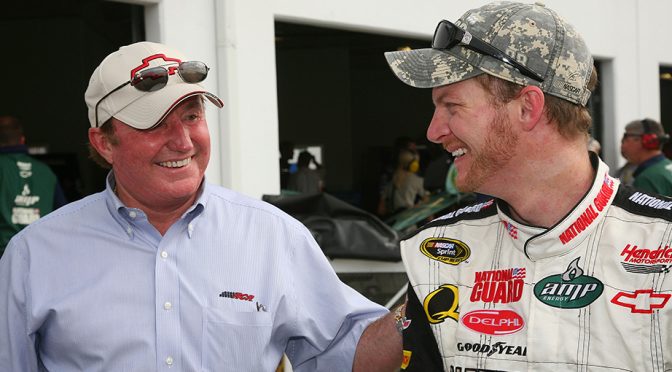
Stocks For Tots doesn’t lack for star power – seven-time NASCAR champion Richard Petty and Dale Earnhardt Jr., the fan favorite, were just two of dozens that turned out for the event. 

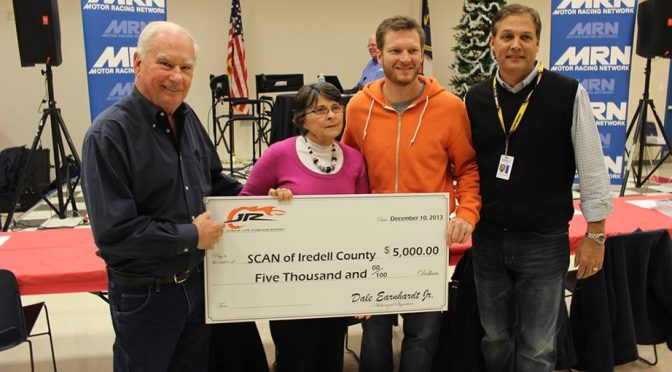
Earnhardt Jr. and the Dale Earnhardt Jr. Foundation even made a generous donation of $5,000 to Iredell SCAN – Stop Child Abuse Now.

"It’s not just the NASCAR guys," Miller said. "It’s drag racers, road racers, dirt racers; it’s just been amazing. And each year we try to get a couple of guys from each of those segments of motorsports … and of course the legends, 40 or 50 former champions from North and South Carolina, Virginia, Kentucky, all over the place."

Not everyone comes just for the autographs – "A lot of people come here just to support the event; they’ll come here pay the $10 and don’t even get an autograph," he said. "Maybe go to the silent auction … so it really serves a lot of different purposes. 

"There was a guy who came in here today from New York and brought a small truckload of toys. Another guy came from Kentucky and brought like 300 toys; a man from Pennsylvania and his daughter brought a couple of hundred toys. It’s unbelievable what people do."

Funds raised through the event benefit Stop Child Abuse Now (SCAN), a local non-profit organization.

MORE:

WATCH: Drivers and fans
play the odds in Vegas

READ: Stewart wins NMPA’s
Myers Brothers Award

READ: Dale Jr. nabs
Myers Brothers Award

READ: France discusses
key issues in season wrap

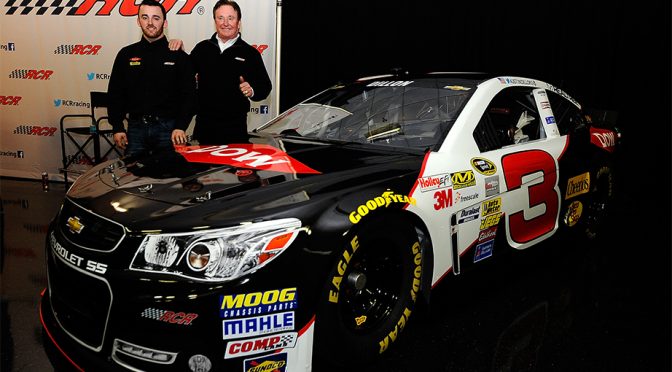
Austin Dillon’s grandfather Richard Childress drove the No. 3 during his racing career

RELATED: Full coverage of RCR ‘3’ announcement

CONCORD, N.C. — These days, Richard Childress jokes it was the most expensive telephone call he ever received. He had always told his young grandsons, Austin Dillon and Ty Dillon, to let him know if they felt the urge to race. When the inevitable request finally came, Childress asked the tykes what numbers they wanted. Ty Dillon asked for the No. 2, which his father Mike Dillon had often employed during his racing days.

Austin asked for the No. 3.

"Austin," Childress replied, "you know that’s a famous number with Dale Earnhardt."

"But it’s your number," the youngster replied.

Recalling that conversation makes Childress beam like the proud grandfather he is.

"It made me proud," he said Wednesday. And at its essence, that connection from grandfather to grandson was at the root of the announcement made at Charlotte Motor Speedway, when Richard Childress Racing unveiled a No. 3 car that Dillon will return to competition at NASCAR’s highest level for the first time since Earnhardt’s fatal accident at Daytona in 2001.

It’s impossible to remove Earnhardt from the equation, given that he elevated the No. 3 to iconic status, winning six of his seven championships and 67 of his 76 races in a vehicle that would become the most famous in NASCAR. Ever since that terrible day at Daytona in 2001, Childress has paid NASCAR for the rights to the No. 3 just as he has his other numbers, but in this case to set it aside. He has long said it would only return for family — either his, or Earnhardt’s.

Which is exactly what happened as Dillon climbed the ladder, winning championships at the Camping World Truck and Nationwide levels, marching inevitably toward the Sprint Cup Series, and carrying the No. 3 with him all the way. Childress laid the groundwork, receiving the blessing of Dale Earnhardt Jr. and Kelley Earnhardt Miller, old Earnhardt crewmen like Danny "Chocolate" Myers, and old Earnhardt confidantes like Don Hawk and J.R. Rhodes.

Childress was diligent, he was patient, and in the end he was true to his word.

"It would have to be an Earnhardt or one (member of) the Childress family that we would put in behind that," he said. "We’re not in the Trucks next year. Unless I can get Jeffrey Earnhardt some sponsorship, we won’t be running the 3 in the Trucks. It will just be family. … I feel good about it. I had some of my friends in the press put the word out in January that we might do it, and the first time it was around 85 percent (positive) and the next time it was around 90. That was a sign (to do it) if Austin wanted it. It was his choice."

And to Austin, there was no other number.

"When I played sports, I was the No. 3. When I played baseball, basketball, football, soccer, that’s the number I chose," he said. "Even in football when I was a cornerback, I took the No. 3. I have pictures of every sport I’ve ever played with that number. It was just my favorite number, because of family. That’s the number I wore on my jerseys when I played sports, and I want to run it on the cars."

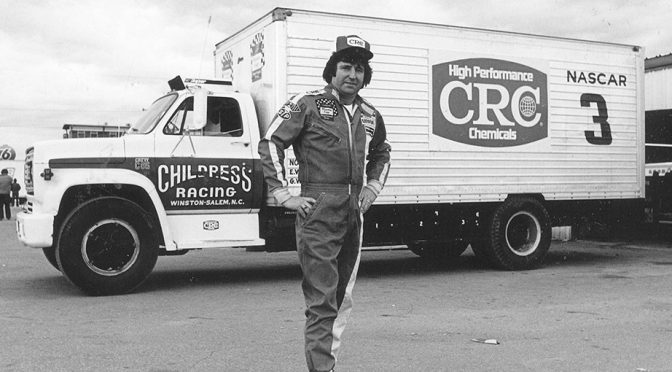
Childress used the number for six years as a driver, recording his best career finish — third, appropriately, at Nashville in 1978 — in the vehicle. He had primarily run the No. 96 car at the start of his career, but another driver named Ray Elder wanted it, so Childress switched to the No. 3. His hero Junior Johnson had won nine times in the vehicle, so there was an inherent connection there between two racers from the foothills of North Carolina. It also didn’t hurt that using only a single digit would make the car less expensive to paint.

Austin gravitated to it naturally, seeing photos of his grandfather’s old cars as a child, and learning more about Childress the driver as he got older. Growing up he would watch races on the couch with his grandmother, rooting for the No. 3. At the time, he had an ulterior motive — when Earnhardt won, Childress would bring home pizza for the grandkids. As he grew older, the number stuck with him, as much a part of Dillon as his last name.

"As a kid, he was a big Dale Earnhardt fan," Childress remembered. "I’ve got pictures of him as a kid in a Goodwrench uniform with Chocolate holding him, Dale holding him as a baby. He’s just always been like that. He used the No. 3 when he played in the (Little League) World Series. He had it on his go-karts. I’ve got these little cars, I just found them yesterday cleaning out the barn. They’re these little go-karts, and both of them have the No. 3 on them, and they’re beat all to pieces. He’s always loved that number, and it’s always what he wanted to use."

Plain and simple, for Austin Dillon the No. 3 has long been the family car. Even those from the outside can see the connection.

"It’s a family story," said Gregg Dorazio, manager of shopper marketing and motorsports for General Mills, whose Cheerios brand will sponsor the car along with Dow Chemical. "…  Through the years, it’s been the Childress family, the Earnhardt family, and now the Dillon family. That’s where it starts. And if you spend any time with these people, you see what it means to them just from that perspective. It’s not to do with anything else. That’s a family thing, and it’s something very personal, and we’re just proud and honored to be a part of that."

Still, Childress knew it could be a polarizing decision. "Are you sure this is what you want to do?" he asked his grandson before the move was made official. Austin replied in the affirmative, saying he’d never driven anything else, and that he wanted to take the number — his grandfather’s number, now his number — up to Sprint Cup. "We had quite a few discussions on it. Sure, there’s pressure," Childress added. "But I think the pressure from the number drives him."

And in truth, he knows how to handle it. Dillon has lived with the No. 3 at the national level for more than four full-time seasons now, so he’s used to this. No question, taking it to the Sprint Cup level for the first time in over a decade raises the attention level, and many will experience a swirl of emotions when the No. 3 returns to the track at Daytona. But the naysayers were there when he returned it to the national level in a truck, and were there when he returned it in a black car, and they’ll be there when he returns it to the Daytona 500.

But he knows they’re outnumbered by the more silent majority that has been waiting for the No. 3 to come back. He knows he has the blessing from the people who matter most. And he knows how to handle this situation just as he has the others before it.

"Approach it with grace," he said. "I had the peoples’ approval that I felt I needed to be in the seat with the number. I’ve been able to run it for four years now, and have (had) so many good times with it. And to see the fans light up at every autograph session, to see if we’re going to being it back, asking us questions. I might hear a jeer as I’m driving away down the track or something. But I never had anybody not positive about it. If I were getting beat up every time in went to an autograph session because we were thinking about it, it would definitely change your mind. But they were so excited about it. … They’d tap your card while you’re signing it and tell you that. That’s what you remember at autograph sessions, people telling you things like that."

And that’s why the No. 3, a number handed down from grandfather to grandson like the keys to the family sedan, will ride again.

MORE:

WATCH: Drivers and fans
play the odds in Vegas

READ: Stewart wins NMPA’s
Myers Brothers Award

READ: Dale Jr. nabs
Myers Brothers Award

READ: France discusses
key issues in season wrap

Long-time auto industry executive helped develop innovative competition plan


Related: Official news release

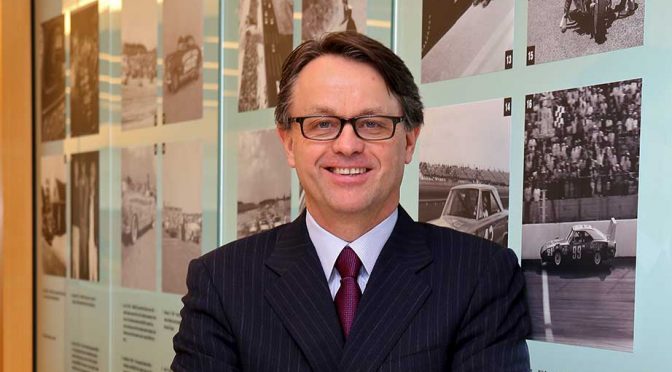
Brent Dewar watches NASCAR races with his 7-year-old daughter, and always finds it interesting to see what parts of the sport interest her the most. In his new position, he’ll have an opportunity to examine similar feedback — although much larger in scope.


NASCAR Chairman and Chief Executive Officer Brian France announced Wednesday that the longtime General Motors executive would be NASCAR’s new chief operating officer, part of a restructuring of the sport’s executive team. Steve Phelps, senior vice president and chief marketing officer, has been promoted to executive vice president. Steve O’Donnell, senior vice president of racing operations, has also been promoted to executive vice president. Gary Crotty, general counsel, has added the title of chief legal officer.

The new face among the changes belongs to Dewar, who isn’t really new to NASCAR at all — he was very active in the motorsports side during his tenure at GM. More recently, as a consultant, he helped shape the innovative changes announced this past summer within NASCAR’s competition department. He begins at NASCAR in January, and will be based in Daytona Beach, Fla.


"Brian and the leadership have really set a vision for growth and change," Dewar said. "I’ve had a chance through my consulting practice to be up close and personal with that. So the role I’m going to play is to work with this great team of folks they’ve put in place and try to accelerate the change process."


Although Dewar helped review NASCAR’s competition department as a consultant, his background is more specifically in marketing and brand management. As chief operating officer, he’ll work in a number of areas that have become a priority for NASCAR, such as increasing the star power of drivers, appealing more to the youth market, and putting the best possible product on the race track.


"In Brent Dewar, we will add a seasoned leader with deep experience in the automotive sector, plus intimate knowledge of and passion for NASCAR as well as various other forms of motorsports," France said. "Brent brings creativity, drive, intelligence, operational acumen and a clear understanding of our assets and challenges to NASCAR."

Dewar’s most recent position was managing partner at the consulting firm Whitby Advisors. The transition from consultant to chief operating officer for NASCAR happened naturally, he said.


"Because of the heavy involvement of technology — and that’s something I’m personally passionate about, technology — it just kind of evolved," Dewar said. "I could see how committed they were to the change process and what’s going on. How can you say no? It’s a great company and a great brand, and at the end of the day, it’s about racing. I’ve been a fan of all forms of racing since I was about 9."


A native of Vancouver, Canada, Dewar first became hooked on racing after watching clips on the old ABC program "Wide World of Sports." He met a friend who was into drag racing, and soon enough was a regular at the drag strip in a nearby town. His passion for cars and racing led him to GM, where his assignments spanned everything from operation and product development to marketing and media. His final position there was a global one, which made him responsible for four regions and 130 markets.


"It’s hard to get into the auto business from the West Coast," said Dewar, who is now a United States citizen, and most recently made his home in New York. "But I think it’s part of fate and destiny that made it happen."


Dewar is the second recent executive hire made by NASCAR with strong ties to automotive manufacturers. In April, longtime GM executive Gene Stefanyshyn was hired as vice president for innovation and racing development, and tasked with driving improvements in racing performance. Although Dewar and Stefanyshyn were familiar with one another during their respective long tenures at GM, they worked in different areas and were often stationed in different countries.


NASCAR has worked to enhance its relationship with the manufacturers that compete in the sport, an effort that produced the more brand-identifiable Generation-6 car, which debuted this past season. It all goes to show, Dewar said, that there are racing enthusiasts on both sides.


"At the end of the day, they’re cars on the race track," Dewar said. "My entire career was designing, building cars, the marketing input into cars. And the brand that I came from, racing was important to the brand in a variety of different forms, and NASCAR was a great venue to showcase our product.”

MORE:

WATCH: Drivers and fans
play the odds in Vegas

READ: Stewart wins NMPA’s
Myers Brothers Award

READ: Dale Jr. nabs
Myers Brothers Award

READ: France discusses
key issues in season wrap

Driver-turned-analyst sees nothing but positive impact

RELATED: Full coverage of RCR ‘3’ announcement

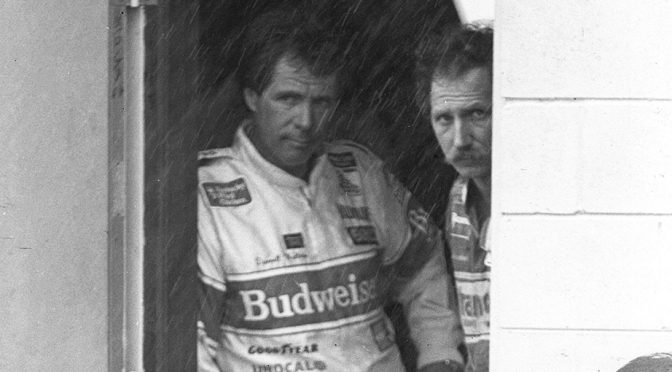
When he sees the No. 3 car driven by Austin Dillon roll onto the race track next season in the NASCAR Sprint Cup Series, Darrell Waltrip will be thinking of one person — Dale Earnhardt.

And the three-time NASCAR champion and Hall of Famer doesn’t think he’ll be alone.

"I think when I see that 3 car on the track, and I see Austin driving it, it’s a Childress car, it’s going to bring back all kinds of Dale Earnhardt memories — the fun things he did, the crazy things he did, whether it was rattling someone’s cage or driving off to victory in the Daytona 500," said Waltrip, who won 84 races and is now an analyst for FOX television. "Those will just be great memories."

Richard Childress Racing has announced that Dillon will compete next year at NASCAR’s highest level in a No. 3 car, returning that numeral to competition in the Cup Series for the first time since Earnhardt’s final race more than 12 years ago. It’s a decision sure to stir strong emotions on either side, among those who believe the number should be forever set aside, and others who believe it’s been on the shelf long enough.

As a former rival to Earnhardt on the race track and now NASCAR’s foremost television analyst, Waltrip can understand both arguments. But to him, the return of the No. 3 doesn’t diminish Earnhardt’s legacy — rather, it’s a tribute to all the Intimidator achieved, on and off the track.

"There’s a lot of emotion involved with that number and that team," Waltrip said. "I’ve always felt like I’m not a fan of returning numbers. I think a number like the 3 — or even the 28, a number we don’t see anymore — I think they’re tributes.

"Dale was such an icon. But I think it’s time to bring it back. We see it in the Camping World Truck Series, we see it in the Nationwide Series, and I think it’s time to bring it back to the Cup Series. I think it’s really going to generate some excitement."

Earnhardt won six of his seven championships in RCR’s No. 3, a number that’s gone unused in the sport’s top series since his fatal crash on the final lap of the Daytona 500 in 2001. But Childress also drove a No. 3 car for six years during his days as a driver and owner, and his best-career finish — third at Nashville in 1978 — came in that car. When his grandsons Austin and Ty Dillon began their racing careers, they chose the family number for their vehicles.

Austin drove the No. 3 back to prominence at the national level first in the Camping World Truck Series, where he capped his two-year run with a championship, and then with a pair of strong campaigns on the Nationwide tour, including this year’s championship. Throughout it all he’s displayed a reverence toward the number and its legacy, something not lost on Dale Earnhardt Jr., who has given his blessing to Dillon’s use of the No. 3.

Waltrip can see why. "I think that if that number was going to be used again, it’s Childress’ number. Childress drove the 3 car. It belongs to the Childress family. And I think having his grandson drive the 3 car, I think it’s going to be exiting," he said during an appearance on behalf of M&Ms.

"I think it’s something the sport needs to bring back some of those kinds of things, those elements of excitement, and I think Austin is the right guy to do it. He’s a great kid, he’ll be a great representative, he’s respectful of the sport, he understands the importance of the number, and I think he’ll do a really good job of representing the memory of Dale Earnhardt."

And the memory of Dale Earnhardt, Waltrip added, isn’t going away just because someone else will soon be driving the car number he made famous. If anything, the three-time champion believes reviving the No. 3 at NASCAR’s highest level will revive Earnhardt’s legacy as well.

"The memory of Dale Earnhardt, it’s with us. We talk about Dale every day. I do as a former competitor, I do as a broadcaster, race fans talk about Dale. We see commercials, for heaven’s sake, right now, with the image of Dale Earnhardt standing on pit road, and Jimmie Johnson walking by," Waltrip said.

"Dale Earnhardt has left a long-lasting impression upon this sport. I just believe that if you have a 3 jacket you’ve been saving, you can bring it out and wear it again. I just think from a fan’s perspective, even if some of them don’t want to see it on the track anymore, I think once they get over that, they’ll be excited about it. I think it’s a very, very wise move — not only a wise move for Childress, but also for the sport."

MORE:

READ: Homestead
Weekend Schedule

READ: Power Rankings:
Busch, Gordon out

READ: Bayne diagnosed
with multiple sclerosis

READ: Earnhardt
lacking a win

Richard Childress, NASCAR Hall of Famers among the many

RELATED: Full coverage of RCR ‘3’ announcement

It made its debut in the third race of NASCAR’s inaugural season, and was in use for every campaign after that until the Daytona 500 in 2001. It’s been driven by eight men elected to the sport’s Hall of Fame, and three others nominated for it. It’s been piloted by a promoter, a car builder, a team owner, an open-wheel legend — and of course, an Intimidator.

Dale Earnhardt may have made the No. 3 famous, but the seven-time champion is far from the only driver to have wheeled a car bearing one of NASCAR’s most magical numbers. When he moves up to the Sprint Cup Series next season, Austin Dillon will become the 74th driver to wheel a No. 3 car at the sport’s premier level, joining a long list of luminaries that spans well beyond his beloved immediate predecessor.

The No. 3 has been around since almost the very beginning — Bill Snowden drove it in just the third "Strictly Stock" event ever, at Occoneechee Speedway in Hillsboro, N.C., in 1949. Joe Littlejohn, one of the sport’s foremost early promoters, won the pole with it at the Daytona Beach beach-road course in 1950. Ralph Moody, who would later become half of the Holman-Moody empire, won in it at Richmond in 1957. Al Unser, four-time winner of the Indianapolis 500, drove it in one of his few NASCAR starts, this one at Riverside in 1968.

That barely scratches the surface of a car that made 1,134 starts and won 97 races until it was put aside indefinitely following Earnhardt’s fatal crash at Daytona in 2001. It returns to the track next season with Dillon, who will try to join this list of the 20 most notable NASCAR drivers to have ever piloted the No. 3.

Hershel McGriff: Now 85, NASCAR’s ageless wonder was supposed to have retired following the 2002 season, but he returned and ran a race in the K&N Pro Series West as recently as last year. He won four events at NASCAR’s top level, mostly notably at Charlotte in 1954. And he made two starts in the No. 3, both in the 1952 season for owner Beryl Jackson, with a best finish of seventh at the Michigan State Fairgrounds in Detroit.

Dick Rathmann: An open-wheel racer who enjoyed far more success in NASCAR, Rathmann scored 13 victories at the sport’s top level, including the 1952 Southern 500 at Darlington. The next year he finished third in the standings behind Herb Thomas and Lee Petty. The Southern Californian drove the No. 3 for most of the 1954 and ’55 seasons, and scored the final three victories of his career — at Oakland, North Wilkesboro and Willow Springs — with that number on his door.

Paul Goldsmith: A former motorcycle racing great who remains the only man to win at Daytona on both two wheels and four, Goldsmith was regular in the No. 3 car in the late 1950s while competing for Smokey Yunick. The West Virginia native won nine times on NASCAR’s premier series, and perhaps his most notable victory was the final event on the Daytona Beach beach-road course in 1958, before the event moved to the big track. Of course, he was driving the No. 3.

Tim Flock: One of the absolute greats of NASCAR’s early years, Flock earned two championships and a 39 race victories in a stellar career that would land the Atlanta resident a place in the NASCAR Hall of Fame. Eighteen of his wins came in one dominant season driving for marine magnate Carl Kiekhaefer, who had Flock pilot the No. 300 to mirror the model of the Chrysler he fielded. Flock drove the No. 3 for Yunick in one event — a 1956 race at Pennsylvania’s Langhorne Speedway, where he appropriately finished third.

Tom Pistone: One of the premier-short track racers of his day, "Tiger" Tom was indeed a terror on bullrings around his native Chicago. He claimed premier-series victories at Trenton and Richmond in 1959, but enjoyed most of his success at Soldier Field, the football stadium that was once the city’s foremost racing venue, and where he won a record 38 features including a NASCAR convertible event. It was at Soldier Field where Pistone made his lone start in the No. 3, finishing 22nd after his brakes went out.

Cotton Owens: A mechanical mastermind, a championship owner, a winning driver, the one-time King of the Modifieds — Owens did it all, often gazing out from the beneath the brim of a white cowboy hat. The NASCAR Hall of Famer won a title as a car owner with David Pearson and nine premier-series races behind the wheel himself, including the 1957 event on Daytona’s beach-road course. He drove a handful of events in the No. 3 for Jim Stephens in 1958, with a best finish of third in Salisbury, N.C., in 1958.

Fireball Roberts: One of the biggest stars of his era, Roberts won 33 races — including a sweep of both Daytona races in 1962 — and might have won many more if not for his untimely death from burns suffered in a crash at Charlotte. Elected to the NASCAR Hall of Fame in 2013, Roberts didn’t win a championship, but he won just about everything else, including the Fourth of July race at Daytona in Stephens’ No. 3 car in 1959.

Jim Paschal: A successful short-track racer from the North Carolina heartland, Paschal won 25 premier-series races over a long career than began with the circuit’s first race at Charlotte in 1949, and ended after an event at the same track in 1972. Paschal made a pair of starts in the No. 3 car at Daytona in 1961, carrying the city’s dog racing track as his primary sponsor. In the 500, he finished 49th in a 58-car field after his vehicle busted a seal.

Marvin Panch: The Wisconsin native earned 17 career victories including the 1961 Daytona 500, but Panch is as well-remembered for one he didn’t win — the Great American Race in 1962, which he missed after crashing in a sports-car event. Tiny Lund, who pulled him from the wreckage, got the ride as a sign of gratitude and went on to win the race. In 1961, Panch also made two of starts in that No. 3 Daytona Kennel Club car, finishing sixth at Atlanta and Darlington.

Junior Johnson: Moonshiner, driver, jack man, crew chief, car owner, engine builder — Johnson did it all over the course of a varied and unparalleled career that would make him part of the inaugural class of the NASCAR Hall of Fame. As a driver, Johnson spent parts of the 1962, ’63, and ’64 campaigns driving a No. 3 car for Ray Fox, making 49 starts total in the vehicle. He won in the car nine times, with a pair of those triumphs coming at Charlotte.

Buck Baker: Founder of a prominent driving school and father of a son who would become a successful racer in his own right, Baker was a force, winning 46 races and a pair of premier-series championships in a career that spanned four decades and earned him election to the NASCAR Hall of Fame in 2013. Like Johnson, he piloted Ray Fox’s No. 3 regularly in the middle 1960s, making 22 starts in the vehicle and recording the final two victories of his career in the car, at Darlington and Valdosta, Ga., in 1964.

David Pearson: On the very short list of the greatest drivers ever, Pearson’s 105 victories at NASCAR’s top level rank second all-time. The NASCAR Hall of Famer won three titles, and likely would have won more had be competed in more full seasons. Early in his career Pearson did two stints in the No. 3, one in owner John Masoni’s Daytona Kennel Club car in 1961, and another the next year with Fox. He made just 13 starts in the car, recording the first three wins of his career in the vehicle, beginning with the World 600 at Charlotte in 1961.

Lee Roy Yarbrough: The native of Jacksonville, Fla., won 14 times at NASCAR’s top level, and has a Southern 500 and a World 600 to his credit. His best season was 1969, where he won seven times racing for Junior Johnson. Yarbrough — no relation to Cale Yarborough, whose last name is spelled differently — made six starts in 1965 in Fox’s No. 3 car, and his best finish was fifth at Charlotte.

Buddy Baker: He was born to go fast, and the son of Buck Baker did just that in becoming the first NASCAR driver to crack 200 mph on a closed oval, in a test at Talladega. Baker won 19 times in a long career that spanned parts of five decades, claiming the 1980 Daytona 500 among his most notable triumphs. And early in his career he was another driver in Ray Fox’s stable, making many starts in the No. 3 car during the late 1960s. Baker won in the car twice, both times at Charlotte, the latter victory in the 1968 World 600.

Fred Lorenzen: Another product of Soldier Field and the Chicago-area short tracks, Fast Freddie Lorenzen was a star of the 1960s driving cars fielded by the Holman-Moody juggernaut. He won 26 times in his career, all of them in Holman-Moody equipment, and finished third in points in 1963. A past nominee for the NASCAR Hall of Fame, Lorenzen made just one start in the No. 3 car, for Fox at Charlotte in the fall of 1970. Once again, the No. 3 car came home in third.

Cale Yarborough: A bulldog of a driver who rose from humble beginnings to enjoy a Hall of Fame career, Yarborough’s 83 career victories rank ninth all-time in NASCAR. He was the only driver to win three consecutive championships until Jimmie Johnson tied and then surpassed him. And he did his time in the No. 3, making four starts in Fox’s vehicle in the early 1970s, and recording a best finish of sixth in the 1972 Daytona 500.

Bobby Isaac: Another nominee for the most recent class of the NASCAR Hall of Fame, Isaac won 37 races and the 1970 premier-series championship in a career that would become synonymous with the No. 71 K&K Insurance car and crew chief Harry Hyde. Toward the end of his career he made three starts in a No. 3 car owned by Ed Gibson, all of them in the fall of 1975. His best finish in the vehicle was seventh, at North Carolina Speedway in Rockingham.

Richard Childress: Long before he was a car owner nominated for the NASCAR Hall of Fame, Childress was a driver, and behind the wheel he made the No. 3 his own. Childress got his start in the boycotted 1969 Talladega race, and eventually raced as an independent driver/owner. He drove the No. 3 car from 1976 through the 1981 season, never winning but often proving competitive despite his independent status. Childress’ best finish came at Nashville in 1978, where he finished third.

Ricky Rudd: The driver who would become NASCAR’s all-time consecutive start leader took over the No. 3 in 1982, after Childress exited the car for good and Dale Earnhardt had made his first, brief stint in the vehicle. Rudd enjoyed a successful career, winning 23 times at NASCAR’s top level, and notched at least one victory 16 years in a row. The Ironman scored his first two career wins in the No. 3, at Riverside and Martinsville in 1983, snapping a winless streak in the vehicle that dated back to Charlie Glotzbach in 1971.

Dale Earnhardt: No one is more synonymous with the No. 3 than the most recent man to drive it. The NASCAR Hall of Famer piloted the vehicle into the history books, winning six of his seven titles and 67 of his 76 race victories in the No. 3. After stints with Rod Osterlund and Bud Moore, Earnhardt returned to Childress and the No. 3 car for good in 1984, winning twice and finishing fourth in the standings. Two years later, he was a champion. Soon after that, he was a legend.

MORE:

READ: Homestead
Weekend Schedule

READ: Power Rankings:
Busch, Gordon out

READ: Bayne diagnosed
with multiple sclerosis

READ: Earnhardt
lacking a win

Dale Jr.: ‘The number is more of a bank that you just deposit history into.’

RELATED: Full coverage of RCR ‘3’ announcement

The No. 3 will ride again in NASCAR’s premier series, and the son of the driver who made it famous is just fine with the return of one of NASCAR’s most iconic car numbers.

Richard Childress Racing has announced that NASCAR Nationwide Series driver Austin Dillon will make the jump to the NASCAR Sprint Cup Series next year, and bring with him the No. 3 he’s used at the national level to this point. That means the number will return to competition at NASCAR’s highest level for the first time since the Daytona 500 in 2001, Dale Earnhardt’s final race.

Earnhardt also drove for Childress, who used the number himself before the Intimidator took it over in 1984. Dillon, who is Childress’ grandson, has used the No. 3 throughout a career that’s included two full seasons on the NASCAR Camping World Truck Series as well as a pair of campaigns on the Nationwide tour. Now he’ll carry it to the Sprint Cup level, and there’s been no bigger proponent of such a move than Dale Earnhardt Jr.

NASCAR’s most popular driver has said more than once that he’s OK with the idea of his father’s former number returning to the Sprint Cup ranks under Dillon’s stewardship.

“I think it will be great. It was an iconic number for my father and it means a lot to a lot of his fans. This sport doesn’t really retire numbers, and all the numbers have history tied to them for several different reasons. The No. 3 is no different," Earnhardt said this past July at Daytona International Speedway.

"(Dillon) came up through the ranks and he drove the No. 3 in dirt racing and he drove the No. 3 in his Truck Series and Nationwide Series. He has earned the right to run that number as long as he wants. He wants to run it. I think it’s not really fair to deny somebody that opportunity. I’m OK with it. I know that might not be the way a lot of people feel or some people feel, but I’m sure it’s the minority that feels that way. I think that a lot of people will be telling Austin positive things about it.”

Dale Earnhardt made the No. 3 famous, driving it in six of his seven championship campaigns at NASCAR’s top level and cultivating a legion of passionate fans in the process. No one has driven a No. 3 car full-time at the Sprint Cup level since Earnhardt was killed on the final lap of the Daytona 500, now more than 12 years ago. At Homestead-Miami Speedway prior to the final race of the 2011 season, Earnhardt Jr. pointed out that the number predated his father.

"Dad did great things," Earnhardt said then. "He was a great ambassador for the sport, and we’re still as a whole reaping the benefits of what he did and what he accomplished. He put us in front of a lot of people. But even before that, that number was Richard’s. Richard drove it; somebody else drove it before then. There’s a lot of guys in the ’50s and ’60s that ran that number with success. … When you put the color and the style with it, it’s a little iconic to the sport.’

He added: "Austin’s ran that number. I just look at it differently. I don’t look at the numbers tied to drivers as much as the history of the number. The number is more of a bank that you just deposit history into, and it doesn’t really belong to any individual."

To his credit, Dillon has embraced the history of the number, and shown nothing but respect for its history. Earnhardt Jr. recognizes that.

"Austin’s a good kid," Earnhardt in 2011. "He seems to have a great appreciation for what’s happening to him and what’s going on around him. I would be happy if he wanted to keep (driving the 3). He kind of had to know when he first started that running that number — if he got this far into the deal, he would have to cross a few bridges like that. That was a tough decision I guess at first, to start running the number for him, knowing what pressures he might face down the road. But I think it would be fine by me for him to do that. I think it’s got to get back on the race track one of these days. It can’t be gone forever."

MORE:

READ: Homestead
Weekend Schedule

READ: Power Rankings:
Busch, Gordon out

READ: Bayne diagnosed
with multiple sclerosis

READ: Earnhardt
lacking a win

NASCAR and teams step closer to 2014 competition packages

DAYTONA BEACH, Fla. – NASCAR was back on track at Charlotte Motor Speedway on Wednesday to gather valuable data for the development of the NASCAR Sprint Cup Series intermediate-track package for 2014. Thirty race teams were onsite in Concord, N.C., to confirm several changes to the Gen-6 car in an effort to improve racing at intermediate tracks in 2014. 

"We accomplished our goal today," said Gene Stefanyshyn, NASCAR vice president of innovation and racing development. "We wanted to take the results from October and get more data and feedback that will ultimately allow us to arrive at a final setup for our intermediate tracks. With more cars and teams here today, we were able to learn a great deal that will benefit the racing next year and beyond."

The test included several physical changes to the car such as ride heights, splitters, skirts and spoilers that were established during the October test. NASCAR, the manufacturers and the teams worked cohesively to identify and implement each of the potential changes. The overall goal for the new package is to help promote more side-by-side racing and passing throughout each race.

"We saw progress today in terms of passing with each of the new configurations,” Stefanyshyn said. “We want to arrive at more green-flag passing at intermediate tracks next season with our new setup. From the results in October and today’s test we are very excited at the prospects."

Stefanyshyn and team were able to test various setups on the Gen-6 car, each supported by data-driven research with specific effects. The 2014 changes will build on a very successful rollout of the Gen-6 race car in 2013. The new car had notable gains in passing throughout the year, shattering 19 track qualifying records and guiding 17 different drivers to victory.

Sixteen teams and 30 drivers were onsite at the track for the final NASCAR test of 2013. More than 140 race-replicating laps were run throughout providing key data to finalize the decision on changes to the Gen-6 car.

The 2014 NASCAR season officially gets underway with the 56th annual Daytona 500 on Sunday, Feb. 23 at Daytona International Speedway. The Great American Race will air live on FOX, Motor Racing Network Radio and SiriusXM NASCAR Radio, with additional coverage on NASCAR.com.

MORE:

WATCH: Drivers and fans
play the odds in Vegas

READ: Stewart wins NMPA’s
Myers Brothers Award

READ: Dale Jr. nabs
Myers Brothers Award

READ: France discusses
key issues in season wrap

Along with appointment of COO, three other prominent executives promoted

DAYTONA BEACH, Fla. — NASCAR Chairman and Chief Executive Officer Brian France has announced the appointment of long-time auto industry executive Brent Dewar as Chief Operating Officer of NASCAR to strengthen its executive management team and accelerate a number of key growth initiatives. Dewar begins at NASCAR on January 6, 2014.

Concurrently, NASCAR announced that Steve Phelps, senior vice president and chief marketing officer, has been promoted to executive vice president, while Steve O’Donnell, senior vice president, racing operations, has also been promoted to executive vice president. The company’s general counsel, Gary Crotty, has been elevated to chief legal officer/general counsel. Mike Helton continues as NASCAR President with continued oversight of all racing operations.

NASCAR’s executive leadership restructuring reflects France’s effort to make bold resourcing decisions that accelerate progress as the company focuses on announced changes in competition, research and development and on-going efforts to serve the current fan base and grow audience. The addition of Dewar, who has been consulting with NASCAR over the past year, will balance the responsibility across the executive leadership team and allow France to focus on setting the vision for NASCAR and driving key strategic growth initiatives and innovation across NASCAR.

"In Brent Dewar, we will add a seasoned leader with deep experience in the automotive sector, plus intimate knowledge of and passion for NASCAR as well as various other forms of motorsports," France said. "Brent brings creativity, drive, intelligence, operational acumen and a clear understanding of our assets and challenges to NASCAR. He’s a leader who’s naturally collaborative, an essential trait as we work more closely with the OEMs, teams, tracks, broadcast partners and others to grow the sport over the next decade.

"Steve Phelps and Steve O’Donnell have led critical evolutions in key areas of our business over the last several years with great success, and Gary Crotty continues to lead one of the best legal teams in all of sport," said France. "Their promotions are reflective of their achievements and the increased role they’ll play in 2014 and the years ahead."

In recent years, Dewar has worked in senior executive consulting roles at GreenOrder, Courland International and most recently has been managing partner at Whitby Advisors, the company through which he has consulted NASCAR on its wide-ranging initiative to transform its Competition model in the areas of governance, rules, deterrence / penalties and officiating / inspection.


MORE:

WATCH: Drivers and fans
play the odds in Vegas

READ: Stewart wins NMPA’s
Myers Brothers Award

READ: Dale Jr. nabs
Myers Brothers Award

READ: France discusses
key issues in season wrap