Race-day engagement and mobile capabilities lead to monthly increase in ’13

DAYTONA BEACH, Fla. — NASCAR Digital Media entered uncharted territory on Jan. 3, 2013, when it flipped the switch on a brand new digital experience and suite of mobile apps. Now, nearly 11 months and a full NASCAR racing season later, the new digital platform is registering an 11 percent year-over-year increase in monthly unique visitors, highlighted by the platform’s mobile capabilities.

"NASCAR has made a concerted effort to leverage technology in everything we do in an attempt to enhance competition and bring fans closer to the sport they love," said Marc Jenkins, vice president of NASCAR Digital Media. "We designed and built our new digital platform with this in mind, utilizing cutting edge technology to enhance the user experience and maximize engagement. In just one year, the numbers reflect that NASCAR’s digital platform has become a destination our fans are able to enjoy regardless of where they are and what device they are using."


Furthermore, NASCAR Digital Media’s two new mobile apps, NASCAR Mobile ’13 and NASCAR RaceView Mobile ’13, saw a total of 2.4 million downloads worldwide.

Through its first full season, the new digital platform also boasts:
• 7.2 million average monthly unique visitors;
• An increase of 24 percent in race-day visits year-over-year;
• An increase of 35 percent in race-day visits during the Chase for the NASCAR Sprint Cup yearover-year;
• More than 34 percent of NASCAR.com traffic via mobile devices;
• More than 50 percent increase in NASCAR FANTASY LIVE registrations year-over-year; and
• Nearly 60 million total cross-platform video views.

With the 2013 season now in the rearview mirror, NASCAR Digital Media has shifted its focus to finding new ways to enhance and optimize the digital platform for 2014.

"One of our primary goals in year one was to maximize the fan experience throughout the race weekend, and we believe we made significant strides toward that in 2013," Jenkins said. "Moving forward, we’ll be sharpening our focus on how to further engage and more deeply interact with fans, as well as make content easier to find during the week."

NASCAR.com has already been fitted with a new navigation bar, which houses top news, videos and race information all in one place, allowing fans to more easily find the content they are looking for.

In 2013, the News and Media section, located just below the fold on the homepage, will also undergo major changes this offseason. Changes will include a reorganization and reprioritization of the latest and most popular news, stories, social media information, race highlights and short-form video features. In addition to a cleaner look, the News and Media page will group content vertically by sections. Once re-launched, this highly trafficked section will feature a more user-friendly design for easier navigability, allowing for deeper engagement of the very best NASCAR content.

Other changes coming before 2014 Speedweeks include an enhanced ‘hero’ (main image and accompanying story link on the homepage), appointment viewing of original content, better interactivity between stories and video and new versions of both mobile apps.

The 2014 NASCAR season officially gets underway with the 56th annual Daytona 500 on Sunday, Feb. 23 at Daytona International Speedway. The Great American Race will air live on FOX, Motor Racing Network Radio and SiriusXM NASCAR Radio, with additional coverage on NASCAR.com.

MORE:

READ: Drivers excited
for Gen-6 evolution

READ: Manufacturers give
Gen-6 debut high marks

WATCH: Gen-6 Top 10:
Nos. 9-10

WATCH: Gen-6 Top 10:
Nos. 7-8

Veteran will also test for recovering Brian Vickers at Daytona in January

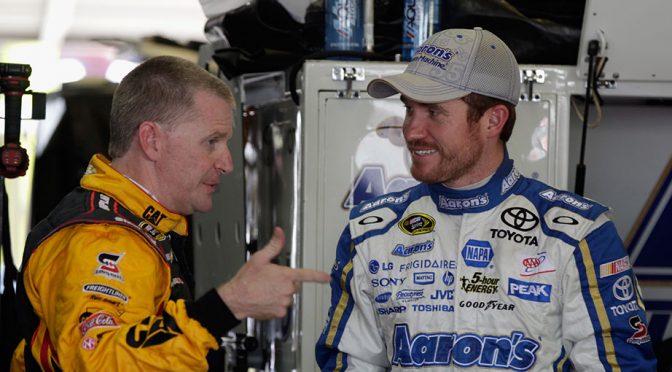
Jeff Burton will compete for Michael Waltrip Racing in a select number of NASCAR Sprint Cup Series races in 2014, according to a news release from the Cornelius, N.C. organization.

Burton, 46, is scheduled to participate in the Dec. 9 test at Charlotte Motor Speedway as well as Preseason Thunder testing at Daytona in January.

Officials declined to specify the number of points races in which Burton will compete next season, but did say his first start would come March 9 at Las Vegas Motor Speedway.

MWR will field two full-time teams in Cup next season — the No. 15 of Clint Bowyer and the No. 55 of Brian Vickers. The third team, which will carry the car number 66, will run a partial schedule with team co-owner Michael Waltrip slated to make the start in the season-opening Daytona 500 in February.

"I’ve heard all good things from the drivers who raced at MWR over the last couple of years and I certainly have seen how fast their cars have been," said Burton, a winner of 21 Cup races. "These are great people who have dedicated themselves to become winners at the highest level. Michael and Rob (Kauffman) are so committed to success and I wanted to be a part of that."

Burton announced earlier this year that he would not return to Richard Childress Racing where he had spent the past nine years driving that team’s No. 31 Chevrolet. His last Cup win came in 2008 at Charlotte.

Kauffman said Burton and the third team would play a key role in helping the two full-time teams contend for the 2014 championship.

"We were extremely fortunate to have a driver as experienced and respected as Jeff Burton come available," Kauffman said. "He will be able to have an immediate impact as we continue to strive for that last one percent that separates champions from contenders."

Vickers, who won once in 17 starts this past season for the group, has been on medical leave due to a blood clot in his right calf and is unable to participate in on-track testing. He is expected to be back in time for the start of the racing season.

MWR fielded three full-time teams this past year, but lost sponsor NAPA in the wake of a race-fixing scandal following the finish of the Chase cutoff race at Richmond International Raceway in September.
 
With his sponsor leaving, driver Martin Truex Jr. also departed at season’s end. He will compete for Furniture Row Racing in 2014.

MORE:

READ: Drivers excited
for Gen-6 evolution

READ: Manufacturers give
Gen-6 debut high marks

WATCH: Gen-6 Top 10:
Nos. 9-10

WATCH: Gen-6 Top 10:
Nos. 7-8

Richard Petty Motorsports picks Trent Owens to take over as crew chief for the No. 43

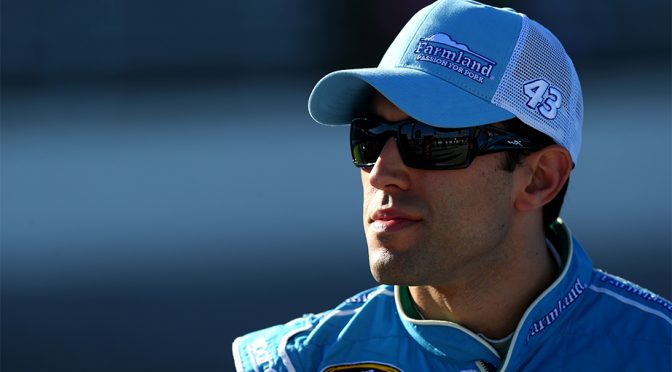
Richard Petty Motorsports officials named Trent Owens crew chief for the No. 43 Ford NASCAR Sprint Cup Series team and driver Aric Almirola, according to a statement from the organization.
 
Owens, 38, was crew chief for Turner Scott Motorsports driver Kyle Larson this past season in the NASCAR Nationwide Series. Larson, the series’ Sunoco Rookie of the Year and headed to Earnhardt Ganassi Racing for a Cup ride in 2014, scored 17 top-10s in 33 starts en route to an eighth-place points finish.

"This is a great opportunity to join a Sprint Cup organization and a race team that can win," Owens said in a team release. "The No. 43 team has proven they can race up front. We just need to find a little more consistency to make the Chase. I believe we can put ourselves in contention for a Chase spot in 2014."

The nephew of seven-time NASCAR champion Richard Petty, Owens made seven starts as crew chief at the Cup level between 2010-12 with drivers Mike Bliss, Jason Leffler, Reed Sorenson, Jacques Villeneuve and Bill Elliott.
 
Owens has five career wins as a Nationwide Series crew chief in 247 starts, collecting victories with drivers Dave Blaney, Mark Martin, Sorenson, James Buescher and Nelson Piquet Jr. Owens also has a win in the NASCAR Camping World Truck Series — teaming with Larson to win earlier this year at Rockingham in another Turner Scott Motorsports entry.
 
RPM officials began the search for a crew chief for Almirola after former crew chief Todd Parrott was suspended in mid-October for violations of NASCAR’s substance abuse policy.
 
Sammy Johns, director of operations at RPM, stepped in to act as crew chief for Almirola and the No. 43 team following Parrott’s suspension and eventual dismissal. Greg Ebert, car chief for the team, took over the crew chief duties for the final four races of the season.
 
Almirola, completing just his second full season of Cup competition, finished 18th in the points standings. His fifth-place finish at New Hampshire Motor Speedway was his lone top-five of the year.

"I have known Trent for a while," Almirola said. "When I competed in the Nationwide Series, we raced against him every week. He’s a very talented crew chief who has accomplished a lot, but he’s still very hungry to do a lot more. Our team is the same. We’re getting better, but we need more top-10s, top-fives and wins. I believe Trent can help us do that and he’s a positive addition to the team."

MORE:

READ: Drivers excited
for Gen-6 evolution

READ: Manufacturers give
Gen-6 debut high marks

WATCH: Gen-6 Top 10:
Nos. 9-10

WATCH: Gen-6 Top 10:
Nos. 7-8

Dollar General adds 10 events in 2014, will serve as sponsor for 27 total races

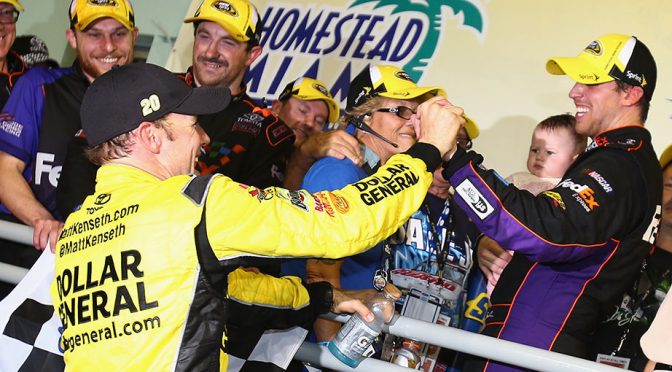
Dollar General will increase its sponsorship with Joe Gibbs Racing by 10 races in the 2014 NASCAR Sprint Cup Series season and will again be the primary paint scheme for the No. 20 of Matt Kenseth in the season-opening Daytona 500. The additional 10 races bring the Dollar General-Joe Gibbs Racing partnership total to 27 events.

Other races in which Dollar General will serve as the primary sponsor for the No. 20 include the season finale at Homestead-Miami Speedway, Talladega Superspeedway in May, Indianapolis Motor Speedway, the regular-season finale at Richmond International Raceway, the Chase for the NASCAR Sprint Cup opener at Chicagoland Speedway and the Chase race at Charlotte Motor Speedway.
 
"Dollar General has a tremendous enthusiasm for our sport, and as a driver, it’s great to have such a supportive sponsor behind you," Kenseth said in a JGR release. "In our first year together, the No. 20 team had such an unbelievable season. I’m really looking forward to getting back out on the track and representing Dollar General again in 2014."
 
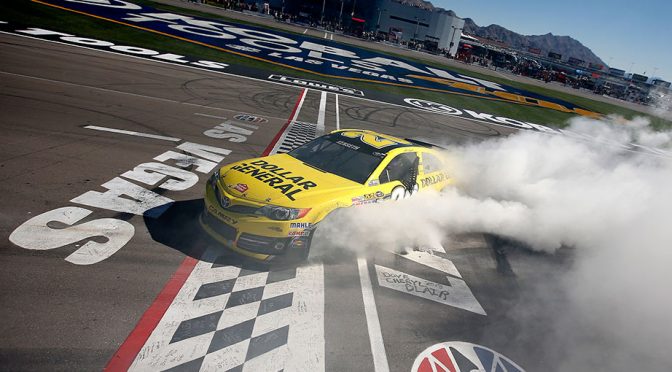
Kenseth finished second in the final 2013 points standings. He was the top seed in the Chase and won a series-best seven races. Four of Kenseth’s seven wins came in the yellow Dollar General-dominated scheme — at Las Vegas, Kentucky, the Bristol night race and the Chase opener at Chicagoland.
 
"Having the talent and passion in a driver like Matt and the way he represents our brand is a dream come true for a sponsor," said Rick Dreiling, Dollar General’s chairman and chief executive officer. " … NASCAR is key to connecting with our customers, many of whom are loyal race fans, and we look forward to a continued partnership with JGR to further our business."

MORE:

READ: Drivers excited
for Gen-6 evolution

READ: Manufacturers give
Gen-6 debut high marks

WATCH: Gen-6 Top 10:
Nos. 9-10

WATCH: Gen-6 Top 10:
Nos. 7-8

Industry veteran Jeff Behnke named Charlotte-based VP of NASCAR production

NBC is in the initial stages of assembling the team that will begin broadcasting NASCAR events in 2015, and the first major addition is someone well familiar with the world of stock car racing.


Jeff Behnke, who worked in NASCAR production for over two decades during a long tenure at Turner Sports, on Monday was named to head the day-to-day operations of the group that will air races on NBC and NBC Sports Network. Behnke, who will carry the title of vice president of NASCAR production, will operate out of Charlotte, N.C., marking the first time the head of a network’s NASCAR production team will be based in the sport’s hub.

"Jeff Behnke’s talent, creativity and experience make him the kind of leader that we want on our team," Sam Flood, executive producer of NBC Sports and NBC Sports Network, said in a release. "Jeff is going to add a great deal to our partnership with NASCAR, and I am thrilled to welcome him to the NBC Sports family."

Behnke’s expertise covers all aspects of production, including live remotes, studio broadcasts and on-air talent acquisitions. Behnke, who has amassed a record of leading production teams covering NASCAR as well as several other sports, will work closely with Flood during the lead-up to NBC Sports Group’s highly anticipated return to NASCAR. 

"It’s an honor and a privilege to join NBC Sports," said Behnke, an Emmy Award winner who will start in his new position in January. "I’m looking forward to this opportunity to be a part of NBC’s history of excellence in sports television and unmatched leadership."

Prior to joining NBC Sports Group, Behnke served as executive producer of Turner Sports for seven years, where he coordinated and provided strategic direction for all productions and personnel covering NASCAR, NBA, Major League Baseball and several of golf’s major championships. Behnke’s appointment to executive producer was the culmination of a 27-year run at Turner that included more than two decades of NASCAR production experience. Behnke began his production career at ABC, where he worked on a variety of events including the Indianapolis 500.

This past July, NASCAR and NBC Sports Group reached a comprehensive agreement that grants NBC Universal exclusive rights to the final 20 NASCAR Sprint Cup Series races, final 19 NASCAR Nationwide Series events, select NASCAR Regional and Touring Series events, and other live content beginning in 2015.

With this partnership, NBC’s 20 Sprint Cup race schedule includes a designation as the exclusive home to the Chase for the NASCAR Sprint Cup. The season finale will return to network television in 2015 for the first time since 2009. Of NBC Sports Group’s 20 NASCAR Sprint Cup Series events, seven will be carried on NBC annually, with 13 airing on NBC Sports Network. Four of NBC Sports Group’s 19 NASCAR Nationwide Series races will air on NBC, with 15 airing on NBC Sports Network.

MORE:

READ: Drivers excited
for Gen-6 evolution

READ: Manufacturers give
Gen-6 debut high marks

WATCH: Gen-6 Top 10:
Nos. 9-10

WATCH: Gen-6 Top 10:
Nos. 7-8

The past year saw drivers inch closer to major milestones in the sport’s history

While the crowning achievement of the 2013 NASCAR Sprint Cup Series season was Jimmie Johnson capturing his sixth Cup championship, that impressive accomplishment wasn’t the only notable feat that took place on the track.
 
As NASCAR prepares to head to Las Vegas for this week’s season-ending awards ceremonies, here’s a look back at some of the more significant marks left by teams and competitors this past year.

Milestone starts

Richard Petty’s mark of 1,184 career starts wasn’t threatened. However, two drivers inched closer to the all-time mark when they recorded career start No. 700 this past season.
 
Bobby Labonte rolled off the starting grid for the 700th time at Talladega Superspeedway, eventually finishing 20th in the track’s spring race. Jeff Gordon made his 700th start a week later at Darlington Raceway, where he finished third in the Bojangles’ Southern 500.
 
To reach the King’s total, Labonte and Gordon would need to continue running the full 36-race schedule for approximately 13 more seasons. A 2026 Retirement Tour, perhaps?
 
"To have the seven wins here … I couldn’t think of a better place to come to and get the 700th start," Gordon said after his top-five finish. "I wanted the 700th to be a memorable one, and I’m glad it wasn’t like last year’s memory where we blew two left rear tires back-to-back. This was much better than that. Top three, that’s fantastic."
 
Other drivers who crested one hill or another in 2013:
 
Dale Earnhardt Jr. and Matt Kenseth (500 career starts); Greg Biffle, Johnson and Jamie McMurray (400 career starts); Kyle Busch (300 career starts); Paul Menard, David Reutimann and J.J. Yeley (200 career starts); Aric Almirola and Landon Cassill (100 career starts).
 
Of course, you can’t get to 100, 200 or more without first getting No. 1 in the books. And there were several drivers that made their Cup debuts this past season: Justin Allgaier, Victor Gonzalez Jr., Paulie Harraka, Owen Kelly, Alex Kennedy, Parker Kligerman, Kyle Larson, Justin Marks and Ryan Truex.

Milestone wins 

Overall, 17 drivers won at least one Cup points race this past year, an impressive feat when one considers that Johnson and Matt Kenseth combined to win a third of the races between themselves.
 
Except for 2011, when 18 different drivers visited Victory Lane, this year’s total was the highest number of winners since 2003.
 
On the individual front, Kenseth’s victory at Loudon, N.H., came in his 500th start. Previously, Petty had been the only driver to register a victory in career start No. 500.
 
Kenseth became just the 22nd driver to reach 30 career victories when he captured the Geico 400 at Chicagoland Speedway.
 
Johnson became the sixth competitor to win in career start No. 400 when the Hendrick Motorsports driver won the Daytona 500. Others who won in their 400th Cup start were Lee and Richard Petty, David Pearson, Dave Marcis and Dale Earnhardt.
 
Kyle Busch celebrated his 300th career Cup start with a win at Texas Motor Speedway.
 
David Ragan‘s victory in the Aaron’s 499 at Talladega Superspeedway wasn’t the first win for the Unadilla, Ga., native, but it was the first for the Front Row Motorsports organization.
 
"I can only imagine what it felt like back in 1988 when Mark Martin got that first win for Jack Roush, or when Geoff Bodine won that first race for Hendrick Motorsports," Ragan said afterward. "I’m sure it was just as special. A lot of these guys have been to Victory Lane … but to do it here at Talladega in 2013 … it’s a true David vs. Goliath story. I couldn’t be more proud to play my own role."

Milestone moments

• Danica Patrick became the first female driver to start on the pole, the first to score a top-10 finish (placing eighth) and the first female driver to lead the Daytona 500, pacing the field for five laps.
 
Kenseth’s Las Vegas victory came on his 41st birthday. Only Cale Yarborough (twice) and Kyle Busch had previously won Cup races when celebrating birthdays.
 
Gordon’s third-place finish at Darlington was the 300th top-five finish of his career. Only three other drivers — Pearson, Allison and Richard Petty — have as many top-five finishes in the series.

Manufacturer milestones

There were at least two noteworthy Cup marks for automakers this past year. Kenseth’s Kobalt Tools 400 win in Las Vegas was the 50th Sprint Cup victory for Toyota.
 
Greg Biffle‘s win in the Quicken Loans 400 at Michigan International Speedway was the 1,000th NASCAR victory for Ford Motor Company across all three national series (Cup, Nationwide and Camping World Truck Series).

Track milestones

While track qualifying records fell often, race records proved to be a little more durable. In fact, only the Southern 500 mark was surpassed this year. Kenseth’s 141.386 mph average is now the standard for the series’ oldest superspeedway.
 
The 25 lead changes among 16 different drivers were series records at Chicagoland Speedway.
 
The 15 cautions and 71 caution laps in this year’s Hollywood Casino 400 at Kansas were track records.
 
And proving that no driver can dominate at New Hampshire for more than a single race, the last 12 races at the track have been won by 12 different drivers.

Sweeps, streaks and whatnot

When Kurt Busch and Furniture Row Racing qualified for this year’s Chase for the NASCAR Sprint Cup, they became the first single-car team to make the 10-race Chase since the format debuted in 2004.
 
Johnson became the first driver since Bobby Allison in 1982 to win the Daytona 500 and Coke Zero 400 at Daytona in the same season.
 
Edwards’ Phoenix victory in March snapped a winless streak of 70 races for the Roush Fenway Racing driver.
 
"That’s one of the longest years of my life, to work that hard and to not get the victories, so I’m very, very happy to be back in the mix," Edwards said of ending the drought. "A victory is huge for so many reasons.  … It just feels good to win."
 
Martin Truex Jr. ended a streak of 218 races without a win when he captured the Toyota/Save Mart 350 at Sonoma Raceway.
 
Brian Vickers‘ Camping World RV Sales 301 win was his first in 75 starts.
 
Gordon kept his pole-winning streak alive, now having won at least one pole for 21 consecutive years.

Tony Stewart has never gone winless for an entire season in Cup competition, now having won at least one points race for 15 consecutive years.
 
Johnson has now won three or more races for the 11th time in 12 full-time seasons of competition. He has won at least one points race every year since 2002, his first full season.
 
Kenseth’s seven victories were a career-best for the Cambridge, Wis., native, eclipsing his five wins in 2002. Win No. 7 came in his 500th start, at New Hampshire.
 
"I don’t really know what to say except praise the Lord, this is an incredible opportunity," said Kenseth. "For me to win at Loudon first of all is more than a stretch and more than a dream — this is probably one of my worst places.
 
"I kind of didn’t want this (special) paint job with the 500 starts because it makes me feel old, so I’m glad we did something with it and won. It’s just awesome to be standing here."
 
Kyle Busch has now won at least one race each season since 2005, his first year as a full-time Cup competitor.
 
Denny Hamlin has won at least one race each season since 2006, his first as a full-time driver in the series. Hamlin cut it close, registering his lone victory in the season’s final event.

MORE:

READ: Drivers excited
for Gen-6 evolution

READ: Manufacturers give
Gen-6 debut high marks

WATCH: Gen-6 Top 10:
Nos. 9-10

WATCH: Gen-6 Top 10:
Nos. 7-8

Three-time Sprint Cup Series champion on the road to recovery from leg injury

There are nights when Tony Stewart swears the pain in his right leg feels as if someone is hammering in a 100 carpenter nails.


When this happens, sleeping isn’t an option, although doctors have assured him the sensation he’s feeling are the nerves working overtime internally to heal the shattered leg — the tibia and fibula bones he cracked in a sprint car accident on Aug. 5 in Iowa which have required three surgeries since.


So, it’s on those especially tough and painful nights that Stewart pulls out his cell phone and resumes his quest to answer each and every one of the 850 text messages of support and concern he got within the first 24 hours of his accident.


"I have to do it in the middle of the night so that someone isn’t as likely to text me right back and it just adds to the list," Stewart says, breaking into a smile.


A few moments earlier NASCAR’s mighty three-time Sprint Cup Series champ had leaned on a black cane to help amble up the steep steps of his motor coach parked in the infield of Homestead-Miami Speedway.


He sat down on a couch immediately and then grimaced slightly as he leaned back.

Speaking in soft, measured tones Stewart hardly sounded like the same guy whose sarcastic and quick-witted one-liners make him the best television sound bite in NASCAR.


If you know Stewart, this quiet demeanor is a little disarming.

But, he is quick to reassure you, some days are just tougher than others. And, of course, that makes sense considering he had just finished his fourth round of intensive physical therapy of the week — his therapist travels to races with him.


It takes great effort for Stewart to simply get comfortable. The guy who tussled with Joey Logano on pit road this March and heaved a helmet at Matt Kenseth’s car last season struggled to just cautiously extend his leg outward.


Meanwhile nearby, the drivers of his three Stewart-Haas Racing cars – Ryan Newman, Danica Patrick and Stewart’s fill-in, Mark Martin (who has indicated that Homestead was his final Sprint Cup Series race) — were preparing to mash the gas pedal in the final 2013 race.


As far as Stewart’s concerned, the best thing about Homestead being the last race is that he’s planning to be driving his No. 14 Bass Pro Shops/Mobil 1 in the next race, the season-opening Daytona 500. on Feb. 23.

"They [doctors] say we’re on schedule and they haven’t flinched from it, even after the third surgery," Stewart explained. "That one was a three-week setback, but we were a little ahead at that time so it just kind of put us back to being on time. Right now, there’s no drama. Barring any new infection or something stupid we have to go in and fix… everything should be fine.


"To me, it’s more about getting healthy again. If we get healthy the rest will come."

Despite the slow movement and apparent pain on this day, Stewart said there is improvement even he can’t always see it. It’s only in the last few weeks that he is walking on his own, depending less and less on the cane. You can imagine, that for a guy who makes a living on speed, it just doesn’t feel fast enough.


"I’m getting around better than I was but I’m not getting around like normal by any means," he said. "It’s kind of like an hour glass at the beginning of the day. When you get up and start moving, you turn the hourglass over. You stop and take a break and it’s like turning it on its side for a while.


"But once it’s out, whether it’s five o’clock in the afternoon or 11 o’clock at night, when it’s done, it’s done. Your leg tells you when it’s had enough for the day. It’s just learning what you can and can’t do. Knowing it’s going to be sore the next day if you’re up on it too long.

"Part of this is just not knowing. I’ve never been through this I’ve don’t know what to expect. I’ve never been around someone directly that’s had to go through it. So every day I don’t know what to expect from one day to the next."


To best cope with the pain, the unknowns, the timeline and his own expectations, Stewart has adopted his own philosophy on the healing process.

"Tell me where I’m supposed to be, give me a goal for the week, a goal until I see you [doctor] next time," Stewart explains, gesturing with his hands. "And that’s made it easy for me not to push myself into a setback because I don’t know what I’m supposed to do [three weeks out]. I’m just doing what they tell me.


"Until the therapist and the doctor and the surgeon tell me we’re in trouble then we’re on the same page, and I’ll be fine for Daytona. It’s more about getting healthy so I can do the day-to-day stuff and I don’t have to think about this [leg] anymore."


Despite the physical discomfort and daily inconveniences of the last four months, Stewart has remained determined to run his race team, which will expand to four cars in 2014 adding drivers Kurt Busch and Kevin Harvick to go with Stewart and Patrick.

At Homestead – as is the case whenever he’s at a race — that meant Stewart dutifully spent valuable pre-race time with team VIPs and sponsor reps. He has maintained his role outside the car.


Stewart laughs thinking about his first meeting with the other team executives post-accident.


"Seven days after I got hurt, Eddie (Jarvis), Gene Haas and Joe Custer are sitting on dining room chairs around my bed and we’re discussing the Kurt (Busch) deal," Stewart said, shaking his head and smiling at the memory.

"There’s a lot of stuff going on and none of it stopped because of this, which is great because it shouldn’t stop.


"I guess I’m one of those people – I did it even when I got hurt in the IndyCar in 1996 – this is your scenario and this is what you’ve got to do and that’s it. You just do it. It wasn’t anything to get mad about from my standpoint, that wasn’t going to make it better. Getting frustrated wasn’t going to make it any better.
"

When Stewart made his first major public appearance in September, a news conference at SHR’s team headquarters, he was upbeat, funny, appreciative and philosophic.


He was of similar morale at Homestead, balancing healthy doses of realistic expectation and passionate anticipation. Not too long ago he was still getting nauseous just looking at photographs of his own injury.


"It went from being a million miles an hour to zero," Stewart said. "It’s like when you go in the garage area every day and the cars are up on jack-stands. That’s what I was for two and a half weeks, stuck in bed."


Stewart says the most comforting aspect of the whole ordeal has been a faith-stirring lesson in people and compassion.  

"There’s still people to this day checking every day with Eddie [Jarvis] to see how I’m doing and they have since day one,’’ Stewart says with some amazement in his voice.


"It shows you how many people respect who you are and what you mean to them in whatever capacity it is, whether it’s NASCAR, your friends, the sprint car community. There’s always people checking on us."


Stewart’s continued rehabilitation will be simultaneous with a renewed effort at SHR as a whole. Not only is the team in the frantic midst of expansion but it announced several key personnel moves earlier this month, including a new crew chief for Stewart – Chad Johnston, who will be his third in four seasons.

SHR’s 2013 season did not live up to expectations although there was an enviable highlight reel including Patrick’s historic pole win and eighth-place finish in the Daytona 500, Newman’s win from the pole at Indianapolis and berth in the Chase for the NASCAR Sprint Cup as well as Stewart’s own win at Dover in June, which helped put him on pace to earn a position in the Chase as well before his season-ending injury.


And his newly-honed, wider-perspective outlook has also come in handy with his race team.


"The good thing is, I was proud of our team," Stewart says emphatically. "They took Austin (Dillon) to Michigan that weekend [two weeks after the accident] and ran well.


"Honestly, I’m a little disappointed in our season. I thought we’d be better as a group than what we were. It shows us, that we, as an organization need to be better. All of us struggled. It wasn’t like one car got to going great and the rest didn’t. That shows it’s the whole organization. But it’s been good experience to show us our weaknesses and what we need to work on."


Stewart continued, reflecting on the broader picture.

"I think you’re always going to learn in scenarios like this," he said. "You learn what you mean to a lot of people.


"It’s a good balance in all reality. Joe Gibbs is parked next door and if not for him, I wouldn’t be in a position to do this at all. I’ve learned from him and from Eddie [Jarvis] to always have good people around us. And if you do that, you’re already prepared for scenarios like this.

"It tells you how good the people are around us.

"It allows you, when there’s days where my leg is really bothering me, to know I don’t have to think about anything but my leg."


And then, summoning the same grit and gumption that has made Stewart one of the greatest champions of all-time, he raised his voice and delivered the bottom line.

"Okay, this is the hand I’m dealt, how do I play this hand?" Stewart said. "You do what you’ve got to do."

MORE:
READ: Drivers excited
for Gen-6 evolution

READ: Manufacturers give
Gen-6 debut high marks

WATCH: Gen-6 Top 10:
Nos. 9-10

WATCH: Gen-6 Top 10:
Nos. 7-8

Looking at the numbers from the debut season of the Gen-6 car

Editor’s note: This story is the fifth of a weekly series about the Gen-6 debut.

1.267  In seconds, the average margin of victory in 2013. It’s the lowest average MOV since 2005.


3  The number of track qualifying records broken by Jimmie Johnson this season, the most in the NASCAR Sprint Cup Series.

5  The number of drivers who won in 2013 after going winless in 2012: Brian Vickers, Carl Edwards, David Ragan, Jamie McMurray and Martin Truex Jr.

10 The average number of leaders per race, up from 9.39 in 2012.

11 The number of drivers who broke a track qualifying record this season. They are Johnson (three), Denny Hamlin, Kyle Busch, Joey Logano, Ryan Newman, Dale Earnhardt Jr., Matt Kenseth (two each), Jeff Gordon, Kurt Busch, Brad Keselowski, and Marcos Ambrose (one each).  


17 The number of different winners this season, up from 15 different winners last season. The modern era record for different winners in a season is 19.

19  The number of track qualifying records broken this season.


19.4 The average number of lead changes per race, up from 18.9 last season.


20  The number of races that ended with a margin of victory less than one second, up from 17 races last season.

46  The number of drivers who led at least one lap, up from 42 last season.


51.2  The percentage of cars that finished on the lead lap, the highest mark since 2009.


76 – The perception that the race cars in the NASCAR Sprint Cup Series "are cars that I would be interested in buying" increased from 49 percent to 76 percent.**

83 – The perception that the race cars in the NASCAR Sprint Cup Series "look similar to new cars in the showroom" increased from 28 percent to 83 percent.**


83.1 The percentage of cars that were running at the finish of races, up from 74.7 percent in 2012.

86 – The perception that the race cars in the NASCAR Sprint Cup Series "have distinctive body styling" increased from 35 percent to 86 percent.**


88 – Appeal (likeability) of the race cars in the NASCAR Sprint Cup Series increased from 65 percent to 88 percent.**


971 The number of Green Flag Passes for the Lead, an increase from the 946 Green Flag Passes for the Lead in 2012.

127,306  The number of Green Flag Passes, the second highest total since the inception of Loop Data in 2005 — and 17,398 more passes than 2012.

** Source: Official NASCAR fan Council, NASCAR Sprint Cup Series Gen 6 Car Tracking Survey

MORE:

READ: Drivers excited
for Gen-6 evolution

READ: Manufacturers give
Gen-6 debut high marks

WATCH: Gen-6 Top 10:
Nos. 9-10

WATCH: Gen-6 Top 10:
Nos. 7-8

From Bristol to Phoenix, track standards fell quickly in 2013

RELATED: Complete list of Gen-6 qualifying records

Editor’s note: This story is the fourth of a weekly series about the Gen-6 debut.

It was built with brand identity in mind, to further strengthen the bonds between the vehicles raced on the track and those driven on the street. In the process though, something else happened — the Generation-6 car became one fast machine.

That much was evident in a test last December at Charlotte Motor Speedway, where Kasey Kahne was turning laps that would have broken the track qualifying record. And it was realized in a breakthrough season for the new NASCAR Sprint Cup Series car, one in which lighter overall weight and increased rear grip helped the vehicle set new track records in 19 of the 32 qualifying sessions conducted this past season at NASCAR’s top level.

Of the 23 tracks on the Sprint Cup circuit, 16 now have new track records thanks to the Gen-6 car. Of the seven tracks that retained their existing marks, two (Daytona and Talladega) are restrictor-place venues with records out of reach, and another (Las Vegas) had its qualifying session rained out. That means the Gen-6 car broke records at 16 of 20 facilities where it had the opportunity, a sparkling batting average straight out of the box. Even Danica Patrick‘s pole speed for the Daytona 500 was among the fastest of the restricted era.

Yes, NASCAR’s new car proved to be a speed racer indeed. And some of the marks it set proved more notable than others, given the circumstances or the dramatics involved. So as we zoom from Thanksgiving and toward Champions Week, chew on a helping of the top 10 track records set by the Gen-6 car.

10. Darlington: 181.918 mph

Ten years after his historic duel to the finish with Ricky Craven, and at the same track where his Furniture Row Racing team notched its only victory to date, Kurt Busch showed flashes of what he might be capable of in the No. 78 car by turning a qualifying lap at Darlington that easily surpassed Kasey Kahne’s previous mark from two seasons earlier. It was the first pole since 2011 for Busch, who regained his competitive footing with Furniture Row for the first time since his split with Penske Racing. "A great surprise," said Busch, who would go on to amass nine front-row starting spots and get the No. 78 team into the Chase for the NASCAR Sprint Cup for the first time.

9. Watkins Glen: 128.241 mph

There had been no track record at Sonoma Raceway, the first road course in which the Sprint Cup field used group qualifying at NASCAR’s top level. That would change a few months later at Watkins Glen International, when Marcos Ambrose would smash the track record despite a slight bobble in the esses during his best lap on the high-speed course. Ambrose’s lap easily bettered the one-year-old previous record held by Juan Pablo Montoya, with the Australian over a full mile per hour faster than the Colombian had been. It was a brisk qualifying session in total, with all but 10 cars breaking the old mark.

8. Dover: 161.849 mph

Dale Earnhardt Jr. isn’t necessarily known for his qualifying prowess, but you wouldn’t have known that in qualifying before the Chase race at Dover. NASCAR’s most popular driver broke the nine-year-old track record previously held by Jeremy Mayfield, and in the process earned multiple poles in a single season for the first time since 2002. "I think we’re a better team that we were last year," said Earnhardt, who had also won the pole in a track-record effort at Kentucky.

7. Bristol: 129.535 mph

At Daytona, there were the restrictor plates. At Phoenix, everyone was still adjusting to a new pavement and new configuration. At Las Vegas, there was rain. So the long-awaited first track record to be set by the Gen-6 car had to wait until the season’s first short track, and Kyle Busch delivered at half-mile Bristol in the form of a 14.813-second lap that broke the existing mark set a decade earlier by Ryan Newman. "A great, crazy-fast lap," second-place starter Kasey Kahne called it. To Busch, who would also win the NASCAR Camping World Truck and NASCAR Nationwide Series events that weekend, it was another accomplishment at perhaps his best track.

6. Charlotte: 195.624 mph

Denny Hamlin‘s comeback from a broken vertebra suffered in a crash started so well — first with a runner-up performance at Darlington, and then with a record qualifying lap at Charlotte that broke the mark Greg Biffle had set the previous October. "These small victories give me confidence I’m still capable," he said then. Hamlin admittedly pushed himself right to the edge in qualifying, trying to make up for what he missed due to the injury. But such high hopes were short-lived — the layoff, combined with struggles with his race cars, led him to miss the Chase for the first time in his career.

5. Richmond: 130.334 mph

The guy who hardly ever wins poles took his second in as many race weekends — kind of. Matt Kenseth earned the first back-to-back poles of his career in track record efforts at first Kansas and then Richmond, although the former was initially stripped of Sprint Unlimited qualification due to engine penalties that would be largely overturned on appeal. "One of our goals this weekend was to come here and sit on the pole and try to quiet down some of the noise," he said after a lap at Richmond that broke a nine-year-old record previously held by Brian Vickers. "I was pretty glad we were able to accomplish that." And even better, he got to keep it.

4. Phoenix: 139.222 mph

Leading Matt Kenseth by eight points entering the penultimate race weekend of the season, Jimmie Johnson made a statement by dropping a track-record run on the competition at a track he’s all too often used as the staging ground for a championship. While Kenseth qualified 14th, Johnson broke the old mark set by Kyle Busch the previous November. "Track records are awesome," Johnson said. "I don’t qualify on the pole all that often, so I take great pride in them." It was a session that underlined the disparity in how the two leading contenders would run that weekend, with Kenseth struggling deep in the pack and Johnson motoring toward title No. 6.

3. Michigan: 203.949 mph

No single day emphasized the speed in the Gen-6 car better than one August afternoon in Michigan, where Joey Logano broke a blistering record that Marcos Ambrose had set only the season before. Logano’s lap bettered Ambrose’s mark of 203.241 set the previous June, and became the ninth-highest speed ever recorded by a NASCAR pole winner. "I don’t know how fast it is, but it feels freaking fast," Logano said afterward. No surprise — that day at Michigan produced the fastest pole speed since Bill Elliott went 212.809 mph at Talladega, on the weekend in 1987 that ushered in the use of restrictor plates at the sport’s two largest tracks.

2. Indianapolis: 187.531 mph

Jimmie Johnson posted an early provisional pole speed at the Brickyard and waited as more than 30 other drivers tried to knock him off. One by one, they came up short — until the last man to go in the qualifying order. In one fell swoop, Ryan Newman bumped Johnson, broke Casey Mears‘ nine-year-old track record, and notched his 50th pole. It was a big moment for the driver once called "Rocketman," who hadn’t won a pole since 2011, and had recently learned he was losing his ride at the end of the year. "People ask me if I’ve run out of fuel for the rockets," Newman joked. Certainly not that day at Indianapolis.

1. Richmond: 130.599 mph

For Jeff Gordon, the pressure was on. The four-time series champion came to Richmond in September six points out of the 10th and final Chase berth decided on the standings, and needing a strong run to bridge that gap. Gordon left no doubt that he would be in the mix for a playoff spot, seizing the pole for the crucial regular-season finale with a lap that broke the track record set by Matt Kenseth only a few months earlier. "There’s no doubt," Gordon said that night, "we all recognize what’s on the line here."

What happened since is well-known. Gordon finished eighth in the event, and fell just shy of the a Chase berth — until NASCAR took the unprecedented step of adding him as a 13th driver in the wake of a race manipulation scandal that had unfolded that night in Richmond. But before that, there was clear satisfaction in a pole that not only established Gordon as a contender, but also extended his record string of consecutive seasons with a pole to 21, breaking a tie with David Pearson. "I didn’t think it was going to come this year, I’ll be honest," Gordon said that night. "… Very proud of this one. Boy, it comes as a great time."

MORE:

READ: Drivers excited
for Gen-6 evolution

READ: Manufacturers give
Gen-6 debut high marks

WATCH: Gen-6 Top 10:
Nos. 9-10

WATCH: Gen-6 Top 10:
Nos. 7-8

Cars are safer than ever before, but auto racing still rife with risks

It was a single snapshot that captured two of the dominant themes from this past season, as contradictory as they might seem. In Victory Lane, there was Denny Hamlin celebrating his first race win in a season interrupted by a fractured bone in his back. And up on the championship stage at Homestead-Miami Speedway, there was Tony Stewart — he of the broken leg suffered in a sprint-car accident — leaning on a cane while congratulating Jimmie Johnson on his sixth NASCAR title. Taken in sum, there was pain, joy, recovery and triumph, all present at the same time.

There was plenty of all of that this year, in a season that cast both the risks and rewards of auto racing in stark detail. On one side is Johnson, creeping to within a single title of tying the sport’s all-time record; on the other is Stewart, a multiple-time champion in his own right, missing the final third of the season with injuries to his right leg that were more than just mere broken bones. On one side is Matt Kenseth, enjoying the best year of his career; on the other is his teammate Hamlin, missing four races due to his back injury, and falling short of the Chase for the NASCAR Sprint Cup for the first time.

It was a season that reminded everyone there are no absolutes in terms of safety — just ask Michael Annett, who missed nearly three months after fracturing his sternum in a crash during the NASCAR Nationwide Series opener at Daytona. It was a year that reminded us that drivers are indeed human, as the off-track health battles fought by Brian Vickers, Eric McClure and Trevor Bayne do attest. It was a campaign that illustrated the gap in safety systems between NASCAR and many lower circuits, brought home in the sprint-car crashes that injured Stewart and took the life of former NASCAR driver Jason Leffler.

"I think the whole motorsports industry has gotten better and safer," Mike Helton, NASCAR’s president, said the day after Stewart broke his leg racing at an Iowa short track. "But it’s still a dangerous sport, and you have occurrences like we’ve been reminded of."

No question, this was a year in which a lot of drivers battled a lot of pain, perhaps more than we’re accustomed to witnessing in a sport that’s been transformed by breakthroughs like head-and-neck restraints, impact-absorbent walls and race cars that protect their inhabitants better than ever before.

NASCAR has come so far over the last 15 years in terms of safety, it feels like a completely different and far more modern sport. The work being done in that area at the Research & Development Center is downright heroic, something that’s evident every time a driver walks away from a hard crash.

And yet, as Helton’s words and the events of this past season clearly illustrate, the risk is never removed completely from the equation. Race cars at high speeds are still going to sometimes act unpredictably, vehicles are still going to crash, a few drivers are still going run off and race midweek at short tracks that may not feature the most modern of safety advances. But NASCAR manages all of it better than it ever has, and nothing will bear that out more than the sight of the three drivers whose injuries partially defined this season — Stewart, Hamlin, and Annett — all in the starting field for the 2014 Daytona 500.

Not that those returns will occur easily — Stewart in particular is traversing a rough road that’s already seen the guy endure three surgeries and battle one infection, all of which speaks to how badly hurt he was in the first place. Mark Martin will do all the preseason testing in the No. 14 car, but the plan is for Stewart to be in the seat for the Great American Race. While Annett never recaptured the form that saw him finish fifth in final Nationwide points in 2012, he got better as he went along this past season, and is moving to the Sprint Cup level with Tommy Baldwin Racing in 2014.

And then there’s Hamlin, who opened this year as a legitimate championship contender and was sixth in points at Auto Club Speedway, where he and Joey Logano tangled on the final lap and the No. 11 car slid hard into an inside wall. The resulting compression fracture of a lumbar vertebra kept Hamlin out all of four races effectively scuttling his title hopes. His return became a physical and mechanical slog, one in which Hamlin battled back pain and balky race cars at the same time, leading many to question which one was really behind his uncharacteristically poor results.

His victory in the finale at Homestead helped quell some of that, for certain. And even better news was that Hamlin wouldn’t require surgery on his back, something that had concerned him because of both the unpredictability of the procedure as well as the prospective timetable for recovery with Speedweeks 2014 just over the horizon. A system of injections and rehabilitation therapy has provided him with relief from the "lightning bolts of pain" he said he was feeling when his back was at its worst, and led to improved performance inside the car.

"Luckily now things have really taken a turn, and every day continues to get better," he said at Homestead. "Looking forward to this offseason, staying hard at it, coming back strong."

Which, for any of the drivers touched this year by injury or illness, is all anyone can hope for. Hamlin is a winner again, and despite his difficulties Stewart has progressed from a bed to a scooter to a cane. On the final race weekend of the 2013 season, they were each supporting players in a larger celebration that centered on Johnson, hoisting that silver trophy once again. On the final race weekend of the 2014 season, it could very well be one of them on that championship stage, turning the page from recovery to rejoicing. They’ll certainly have the opportunity, at least, and this week especially that is reason for thanksgiving indeed.

MORE:

READ: Johnson wins
2013 Sprint Cup Series title

READ: HOF-worthy career
in the books, Martin bows out

READ: Finale represents
end of a chapter for some

READ: Kenseth won’t dwell
on coming up short