Junior holds off Hamlin, Keselowski in green-white-checkered thriller

RELATED: Dale Jr.’s Daytona ‘selfie’ | Full race results | Series standings

DAYTONA BEACH, Fla. — It took most of a day to get it in, but only one short slice of a moment to determine the outcome.

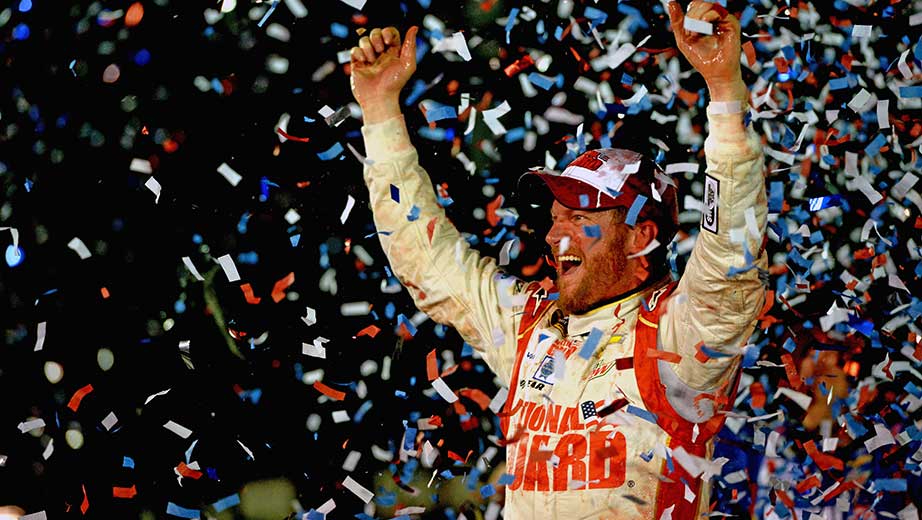
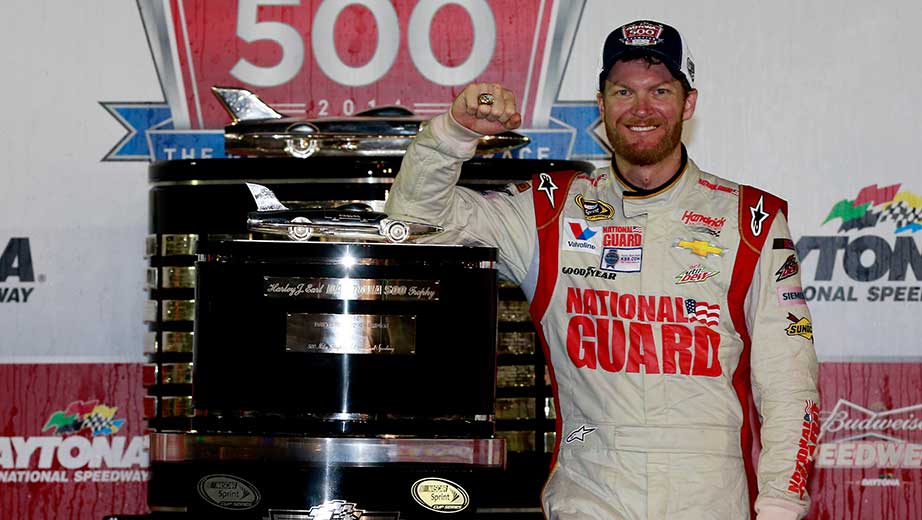
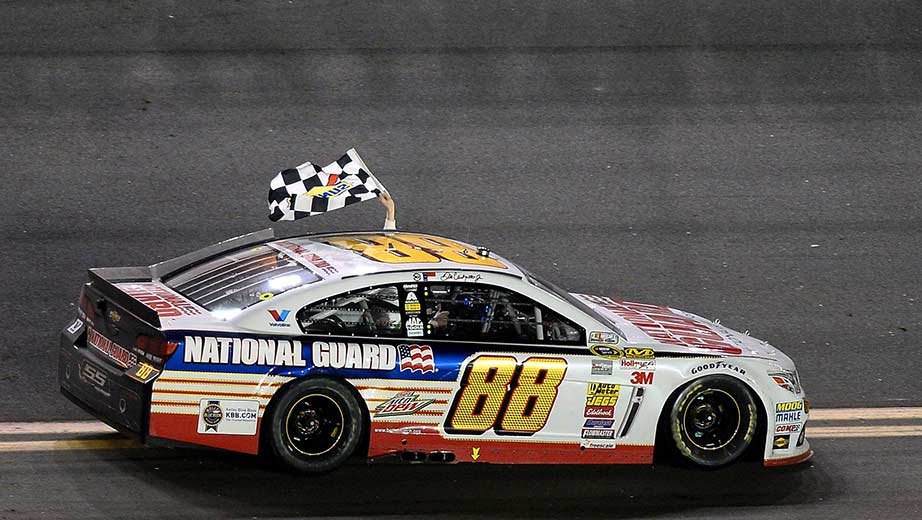
In a race that was delayed more than six hours by rain, Dale Earnhardt Jr. won the 56th running of the Daytona 500 at Daytona International Speedway.

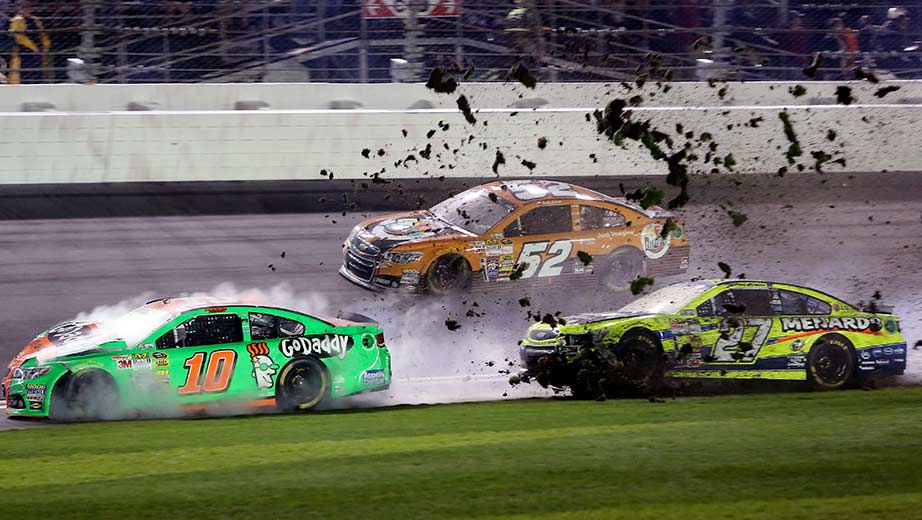
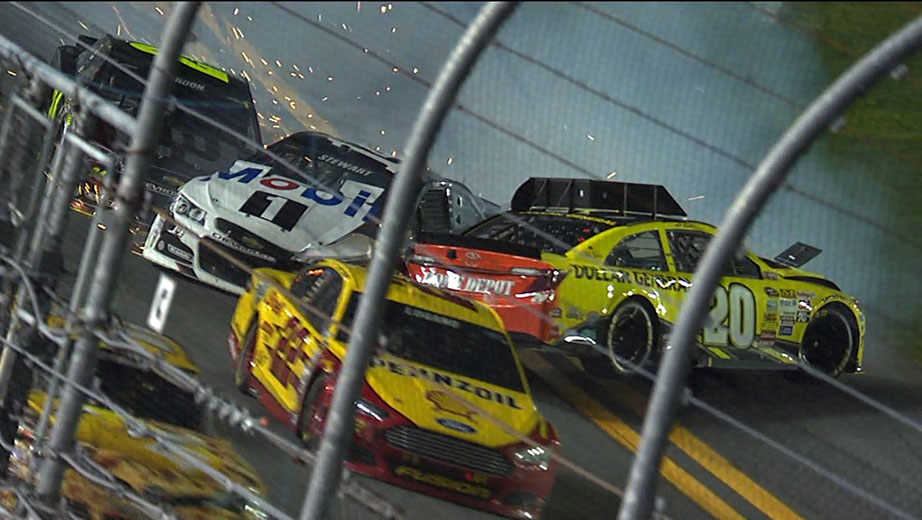
The 39-year-old led six times for 54 laps in the 200-lap event, holding off Denny Hamlin for the victory in a two-lap dash set up after a multicar crash in Turn 3.
 
A winner of the NASCAR Sprint Cup Series’ premier event in 2004, Earnhardt Jr. had finished second in three of his last four Daytona 500 attempts. Sunday’s victory was his first win in his last 56 starts.
 
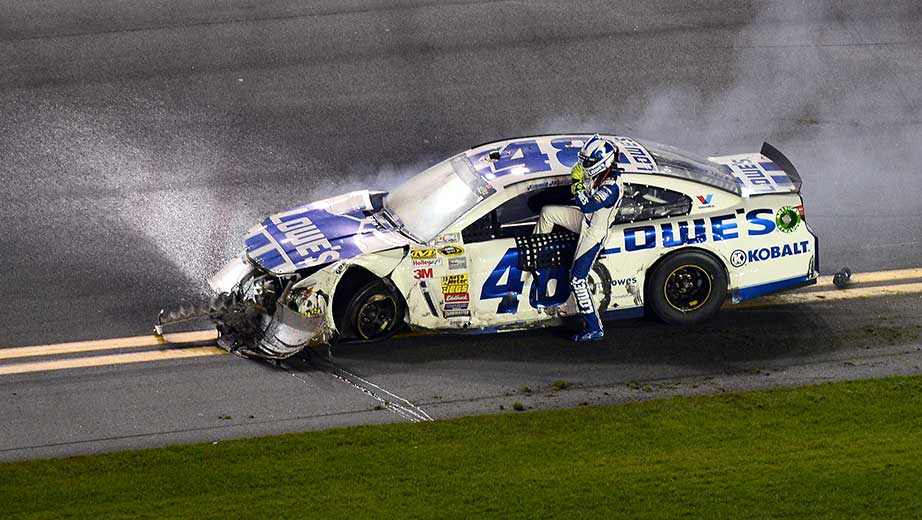
Another crash erupted on the final lap, forcing the race to end under caution, but the mayhem was in the leader’s rear-view mirror.

“Winning this race is the greatest feeling you can feel in the sport, aside from … accepting the trophy for the championship,” Earnhardt Jr. said in the winner’s circle.
 
“I didn’t know if I’d ever get a chance to feel that again and it feels just as good if not better than the first because of how hard we tried year after year, running second all those years and wondering why and what we needed to do.
 
“We got a little help from Jeff (Gordon) to get away on that restart and tried to take care of if from there. This is amazing. I can’t believe this is happening. I’ll never take it for granted because this just doesn’t happen twice.”
 
It was a popular victory, both among the fans and fellow competitors.
 
“The world is right, right now,” said Gordon, a teammate at Hendrick Motorsports. “Dale Jr. just won the Daytona 500 to kick off 2014. That is a sign that the NASCAR season is going to be a good one.”
 
“He has been knocking on the door here at the 500 for a lot of years and got it done tonight,” Johnson said. “He did an awesome job.”
 
“I’m glad Dale got the win – he needed that,” said Joe Gibbs Racing driver Matt Kenseth, sixth in the final rundown. “He needed that. That was good for him and Denny — Denny was super fast all week and it looks like he almost pulled it off, too.”
 
Hamlin, eyeing a sweep of events at DIS  — he won last week’s Sprint Unlimited and one of Thursday’s two Budweiser Duel races — rallied from sixth to second in the closing laps.
 
Brad Keselowski, Gordon and Johnson completed the top five in the season’s season-opening event.
 
An early push on the final restart from Gordon shoved Earnhardt Jr. out front and away from the frantic two-by-two battles. Keselowski was second when the field took the white flag, signifying one lap remaining, while Hamlin rode in third.
 
“I’m so 50/50 on whether I’m pissed off or I’m happy,” Hamlin said after his career-best finish in the 500. “I just don’t know.
 
“Any other year I probably would have been like jumping up and down. We can hardly finish these races, much less have a shot at a victory.”
 
Hamlin said radio issues that surfaced after the long rain delay returned late in the race, and left him acting as his own spotter.
 
“I felt like our car wasn’t as strong as the week progressed. The competition definitely caught up for sure. Then … me not being able to drive to my ability because I was being conservative, trying to spot for myself, that’s not a way to race.”
 
Only 38 laps had been completed when the race was halted for rain. Officials red-flagged the race at 2:13 p.m. ET. Although the rain intensified – severe weather warnings were issued for the surrounding region and lightning streaked against the gray sky – after nearly six and one half hours, the cars were back on the race track.
 
Kyle Busch was on point when the race was stopped with Kasey Kahne, Hamlin, Brian Vickers and Paul Menard completing the top five.
 
Earnhardt Jr. didn’t take the lead for the first time until lap 131, but once there his No. 88 Chevrolet proved to be stout. Others were equally strong.
 
A power move coming out of the fourth turn with 21 laps remaining pushed Carl Edwards into the lead, with Earnhardt Jr. Kenseth, Johnson and Greg Biffle rounding out the top five.
 
Kenseth moved into second a lap later, with just 20 laps remaining.
 
With 18 to go, it was Earnhardt Jr. showing the power, pulling the outside line around Edwards and into the lead. Johnson, Kevin Harvick, Reed Sorenson and Keselowski were second through fifth as Edwards was shuffled back to seventh.
 
The fifth caution of the race flew on the ensuing lap, however, as 2011 Daytona 500 winner Trevor Bayne spun and careened off the wall to set up a 13-lap shootout.
 
With 10 laps remaining, Earnhardt Jr. remained out front with Johnson, Gordon, Harvick and Keselowski trailing. Kurt Busch spun coming to the tri-oval and momentarily became stuck in the grass at the entrance to pit road. But no caution appeared, and the race remained under green.
 
The yellow did appear at lap 195 when a six-car melee unfolded in Turn 3. Ryan Newman, Justin Allgaier, Parker Kligerman and Cole Whitt were among those involved.
 
Earnhardt Jr.’s 2004 victory came while he was driving for Dale Earnhardt Inc., the company founded by his late father, seven-time champion Dale Earnhardt.
 
“It’s hard to put into words what winning this race really means to you,” Earnhardt Jr. said. “I felt lucky (in 2004) because I was with a lot of family back then. What makes this (race) special is the people that you have with you when it happens.
 
“It just seems like it’s too good to be true, really.”

MORE:

READ: Earnhardt Jr. wins
wild Daytona 500

WATCH: Dale Jr.
in Victory Lane

WATCH: Danica, a dozen
others in Daytona pileup

READ: Official Daytona 500
race results

Get up to speed quickly for the Great American Race with schedule, stats and more

RELATED: Play NASCAR Fantasy Live | Sign up for RaceView today

What: 56th annual Daytona 500
Where: Daytona International Speedway
When: Sunday, Feb. 23, 2014
TV/Radio: FOX/MRN/SiriusXM

Distance: 500 miles/ 200 laps
Average Race Time: 3:22:13
Fuel Window: 42 laps
Pit Road Speed: 55 mph
Caution Car Speed: 70 mph
Minimum Speed: 50.51 seconds

Driver Introductions: 12:30 p.m.
Remove Generators/Service Tire Pressure: 12:45 p.m.
Invocation: 1:10 p.m. by Sonny Gallman, Central Baptist Church of South Daytona
National Anthem: 1:11 p.m. by Aloe Blacc
Command: 1:18 p.m. by "Captain America: The Winter Soldier" star Chris Evans
Green Flag: 1:30 p.m. waved by actor Gary Sinise

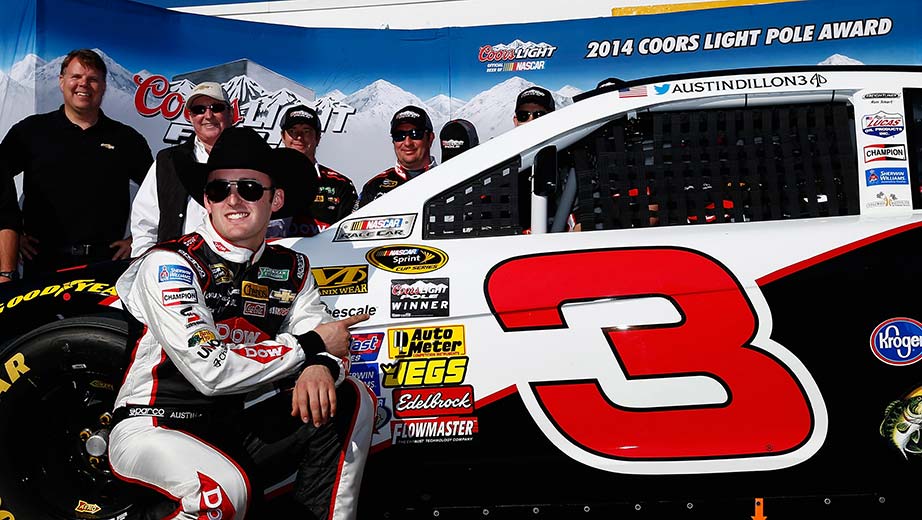
On The Front Row: Austin Dillon, Richard Childress Racing No. 3 Chevrolet (196.019 mph); Martin Truex Jr., Furniture Row Racing No. 78 Chevrolet (195.852 mph).

Notable: The Daytona 500 pole is the first Coors Light Pole Award for Dillon and came in his 14th career attempt. … At 23 years, nine months and 21 days, he is the youngest Daytona 500 pole winner. … The Daytona 500 has been won nine times from the pole, most recently in 2000 (Dale Jarrett).
 
To The Back: Nine drivers will drop to the back of the field before the start of today’s race, including No. 2 qualifier Truex Jr. Others are Jamie McMurray, Clint Bowyer, Michael Waltrip, Jimmie Johnson, David Ragan (backup cars); Danica Patrick, Tony Stewart and Bobby Labonte (engine changes).
 
Notable II: Officially, the deepest in the field a Daytona 500 winner has started is 39th (Matt Kenseth, 2009).
 
Defending Daytona 500 Winner: Jimmie Johnson, Hendrick Motorsports No. 48 Chevrolet.
 
Notable III: Only three drivers, Richard Petty (1973-’74), Cale Yarborough (’83-’84) and Sterling Marlin (’94-’95) have won back-to-back Daytona 500 titles.
 
Budweiser Duel Winners
Race No. 1
Winner: Matt Kenseth (Joe Gibbs Racing No. 20 Toyota).
Who Raced Their Way In: Cole Whitt, Parker Kligerman (Swan Racing Toyota), Alex Bowman (BK Racing Toyota).
Who Failed To Transfer: Michael McDowell (LFR Ford), Joe Nemechek (Nemco Motorsports Toyota).

Race No. 2
Winner: Denny Hamlin (Joe Gibbs Racing No. 11 Toyota).
Who Raced Their Way In: Landon Cassill (Hillman Racing Chevrolet), Bobby Labonte (HScott Motorsports Chevrolet), Terry Labonte (Go FAS Racing Ford).
Who Failed To Transfer: Ryan Truex (BK Racing Toyota), Morgan Shepherd (BK Racing Toyota), Eric McClure (Front Row Motorsports Ford).
 
Fastest In Practice
First Practice: Paul Menard, Richard Childress Racing No. 27 Chevrolet (195.042 mph).
Second Practice: Ryan Newman, Richard Childress Racing No. 31 Chevrolet (195.346 mph).
Third Practice: AJ Allmendinger, JTG Daugherty Racing No. 47 Chevrolet (199.574 mph).
Fourth Practice: Denny Hamlin, Joe Gibbs Racing No. 11 Toyota (199.574 mph).
Fifth Practice: Ricky Stenhouse Jr., Roush Fenway Racing No. 17 Ford (197.027 mph).
Sixth Practice: Kurt Busch, Stewart-Haas Racing No. 41 Chevrolet (197.624 mph).
 
Former Daytona 500 Winners In Field:
Jimmie Johnson (2013; ’06); Matt Kenseth (2012; ’09); Trevor Bayne (2011); Jamie McMurray (2010); Ryan Newman (2008); Kevin Harvick (2007); Jeff Gordon (2005, ’99, ’97); Dale Earnhardt Jr. (2004); Michael Waltrip (2003; ’01).


Fantasy Sleeper Pick (powered by Rotowire.com)
: Austin Dillon: With the return of the No. 3 Chevrolet to action in NASCAR’s top division comes a lot of pressure, but Dillon can handle it. The young driver has three career top-five finishes in four Nationwide Series starts at Daytona International Speedway. Richard Childress Racing has prided itself on its restrictor-plate racing program for years, so Dillon has home run potential in this race. (Click here for more fantasy advice or to sign up for NASCAR Fantasy Live.)

MORE:

READ: Austin Dillon wins
Daytona 500 pole

WATCH: Big wreck ends
Budweiser Duel 2

WATCH: Massive wreck
in Sprint Unlimited

READ: Official Daytona 500
starting lineup

Plan your NASCAR weekend with these on-track times for Phoenix

All times ET/ BUY TICKETS/ WEEKEND TRACK EVENTS

SUNDAY, MARCH 2:

RACE-DAY SCHEDULE
2:25 p.m.:
Official welcome by Bryan Sperber, president of Phoenix International Raceway
2:26 p.m.: Beginning of honorary race officials’ introductions, including A.J. Foyt and Bobby Allison
2:29 p.m.: Grand Marshal and Honorary Starter: Marcus Lemonis, chairman & CEO of Camping World and Good Sam and star of CNBC’s "The Profit."
2:29:30 p.m.: Introduction of Miss Sprint Cup
2:30 p.m.: FOX on air
2:30 p.m.: Driver introductions
2:50 p.m.: Miss Sprint Cup interviews polesitter Brad Keselowski.
2:52 p.m.: Phoenix International Raceway presentation
3:00 p.m.: Intro Presentation of Colors: Luke Air Force Base Color Guard
3:00:20 p.m.: Invocation by: PIR Chaplain Ken Bowers
3:00:45 p.m.: Intro National Anthem
3:01 p.m.: National Anthem: Emmy winner and PIR favorite: Dr. Jesse McGuire
3:02:45 p.m.: Fly-By (KC Flight Team)
3:08 p.m.: "Drivers, start your engines" command by Marcus Lemonis
3:15 p.m.: Green flag (312 laps, 312 miles)

 ON TRACK
— — 3 p.m.: NASCAR Sprint Cup Series The Profit on CNBC 500, Presented by Small Business Fueling America, FOX on air at 2:30 p.m. ET (Get results)

NEWS CONFERENCES
— 12 p.m.: Bobby Allison
— 12:30 p.m.: A.J. Foyt
— 1 p.m.: Marcus Lemonis, Chairman & CEO of Camping World and Good Sam Enterprises and star of CNBC’s The Profit
— Approx. 6 p.m.: NSCS post-race (Watch live)

————-

WEDNESDAY, FEB. 26:

ON TRACK
— 8-8:45 p.m.: Mexico Toyota Series practice
— 9:15-10 p.m.: Mexico Toyota Series practice

THURSDAY, FEB. 27:

ON TRACK
— 11 a.m.-noon: K&N Pro Series West practice
— 12:30-1:30 p.m. ET: K&N Pro Series West final practice
— 3:30 p.m.: K&N Pro Series Coors Light Pole Qualifying
— 5:05-6:30 p.m.: Mexico Toyota Series practice
— 7 p.m.: K&N Pro Series West Talking Stick Resort 75 (75 laps, 75 miles)

NEWS CONFERENCES
— 3 p.m.: Abraham Calderon, Daniel Suarez and Rodrigo Peralta, NASCAR Mexico Toyota Series

FRIDAY, FEB. 28:

ON TRACK
— Noon-12:50 p.m.: Mexico Toyota Series practice
— 1-1:50 p.m.: Nationwide Series practice, FOX Sports 1 (Get results)
— 2 p.m-3:30 p.m.: Sprint Cup Series practice, FOX Sports 1 (Get results)
— 3:40 p.m.: Mexico Toyota Series qualifying
— 5 p.m.-6:25 p.m.: Nationwide Series final practice, FOX Sports 1 (Get results)
— 6:40 p.m.: Sprint Cup Series qualifying, FOX Sports 1 (Get results)
— 9 p.m.: Mexico Toyota Series Toyota 120 (120 laps, 120 miles), mun2

GARAGECAM, PRESENTED BY MOBIL 1
— 12:30 p.m.: NNS Garage Cam presented by Mobil 1
— 1:30 p.m.: NSCS GarageCam presented by Mobil 1

NEWS CONFERENCES
— 11:30 a.m.: Kurt Busch
— 11:45 a.m.: Gillian Zucker, Auto Club Speedway
— 12:15 p.m.: Regan Smith
— 12:30 p.m.: Jeff Gordon
— 1 p.m.: Jimmie Johnson
— 1:15 p.m.: Dale Earnhardt Jr.
— 4 p.m.: Denny Hamlin
— 4:45 p.m.: Steve O’Donnell, NASCAR executive VP of racing operations, Federico Alaman, NASCAR Mexico Toyota Series managing director, Daniel Suarez
— Approx 7:40 p.m.: NSCS post-quals

SATURDAY, MARCH 1:

ON TRACK
— 11-11:55 a.m.: Sprint Cup Series practice, FOX Sports 1 (Get results)
— 12:10 p.m.: Nationwide Series qualifying, FOX Sports 1 (Get results)
— 2-2:50 p.m.: Sprint Cup Series final practice, FOX Sports 1 (Get results)
— 3:45 p.m.: NASCAR Nationwide Series Blue Jeans Go Green 200 presented by Cotton, The Fabric of Our Lives (200 laps, 200 miles), ABC on air at 3:30 (coverage to resume on ESPNEWS after rain delay) (Get results)

NEWS CONFERENCES
— 11:45 a.m.: Andrea Samber, Cotton Inc.
— Approx. 5:30 p.m.: NNS post-race

MORE:

READ: Earnhardt Jr. wins
wild Daytona 500

WATCH: Dale Jr.
in Victory Lane

WATCH: Danica, a dozen
others in Daytona pileup

READ: Official Daytona 500
race results

NASCAR Sprint Cup teams to recognized following victories, beginning with Daytona 500

RELATED: Play NASCAR Fantasy Live | Sign up for RaceView today

Last month, NASCAR Chairman and CEO Brian France announced that the NASCAR Sprint Cup Series would change its championship format to put an increased emphasis on winning each and every week.

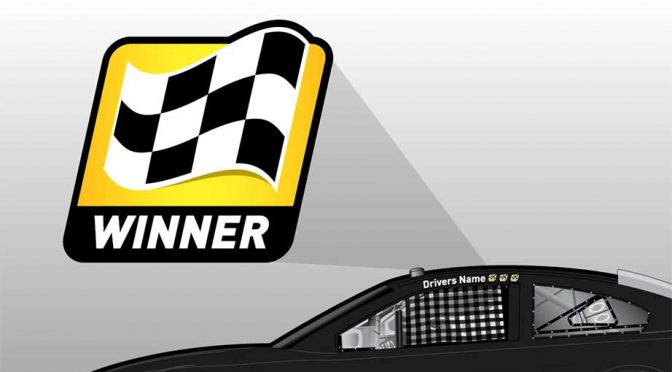
Along with the spoils of victory — including a likely spot in the Chase for the NASCAR Sprint Cup — the winning driver / team will receive a WINNER decal to display on their car.

All NASCAR Sprint Cup Series winners now will receive the decal, to be placed next to the driver’s name above the door, following a victory.

The first recipient will be the winner of the 56th annual Daytona 500 on Sunday at 1 p.m. ET on FOX.

MORE:

READ: Austin Dillon wins
Daytona 500 pole

WATCH: Big wreck ends
Budweiser Duel 2

WATCH: Massive wreck
in Sprint Unlimited

READ: Official Daytona 500
starting lineup

Driver of the No. 99 car perplexed by penalty call

RELATED: Full race results | Series standings

DAYTONA BEACH, Fla. — James Buescher knew someone would have to be the first driver penalized under NASCAR’s new rule against tandem drafting in the Nationwide Series — he just hoped it wouldn’t be him.

But that’s what happened Saturday at Daytona International Speedway, when the RAB Racing driver was black-flagged for apparently staying hooked up too long with Brad Keselowski, and forced to make a pass-through penalty as a result. Buescher was running eighth at the time of the penalty, and was able to stay on the lead lap and finish 16th, but afterward was unclear as to what he had done wrong.

"When they made the rule at the test, NASCAR said no locking of bumpers, front or rear," said Buescher, who won this race two seasons ago. "… They said if you bounce off the car in front of you, there’s no call. As far as I’m concerned, there was only bouncing. Never locked the bumper. I haven’t seen a replay, so I don’t know exactly what they’re saying was the time I got called on, but we had been bouncing off everybody’s bumpers all day. Everybody had."

In a move to eliminate tandem drafting, NASCAR told Nationwide and Camping World Truck Series teams during January testing that locking bumpers would henceforth be a penalty at Daytona and Talladega Superspeedway, the sport’s two restrictor-plate tracks. Buescher became the first driver to receive a penalty under the new rule.

"We felt that the 99 was more the aggressor in the situation," said Robin Pemberton, NASCAR’s vice president for competition, referring to Buescher’s car number. "That’s why the 99 got the penalty."

Although NASCAR has the option to penalize both drivers in a tandem drafting situation, Keselowski did not receive a black flag. "I believe we said we could penalize both if we wanted to, or either one," Pemberton added. "And we chose to do the 99."

In the immediate aftermath of the penalty, Buescher was dumbfounded. "I never locked bumpers," he told crew chief Chris Rice over the radio. "I thought I was doing a legal thing." Buescher pointed to the evidence from the television camera mounted on the rear of Keselowski’s car, which appeared to show the No. 99 bumping rather than pushing. But race control at Daytona has 36 different cameras at its disposal, and what viewers saw and what NASCAR deemed worthy of a penalty may not have been the same thing.

"It all depends on what lap you were looking at, and where you were looking at in the lap," Pemberton said. "That wasn’t the camera we had, and I don’t know what lap or where on the race track that was taken."

Added Buescher: "There was a lot of bumping going on out there, and there’s no telling which time they’re saying I’m black-flagged for," said the former Truck Series champion, who moved into Nationwide this season. "It’s really unfortunate, because we had a solid, solid car."

The rule against tandem drafting forced many drivers to adapt. Given there was only one black flag in the event, "everyone handled themselves pretty well," said race winner Regan Smith. Still, the change required an adjustment.

"We were being very intentional about not hooking up," said Trevor Bayne, who finished third. "I really had to think about that. There are a lot of times that I just wanted to get to somebody’s bumper and stay there, or have someone pushing me. Just like at the end of that race on the backstretch, when the 11 car (of Elliott Sadler) was bumping me, it would have been very easy to stay on the back of that 7 car (of Smith), but I had to have at least a paper-thin air gap between us, or we could be in trouble."

Buescher was able to stay on the lead lap after making his pass-through, and got back up to 15th. He was aiming to get back in the top 10, but he was in a low line of traffic that became stacked up at the end. Afterward, Buescher said he planned to seek out Nationwide Series director Wayne Auton and ask for further explanation on the penalty.

"Obviously, they’re going to make calls," he said. "They had to make an example out of somebody. I saw people that actually had their bumpers locked on and not get penalties. I’m still a little bit baffled by it."

MORE:

READ: Austin Dillon wins
Daytona 500 pole

WATCH: Big wreck ends
Budweiser Duel 2

WATCH: Massive wreck
in Sprint Unlimited

READ: Official Daytona 500
starting lineup

Junior’s breakthrough came 10 years ago, but still stays with driver today

RELATED: Delay at Daytona | Daytona 500 Race Center | Full lineup

DAYTONA BEACH, Fla. — Did it really all happen 10 years ago?

Difficult to believe, given how vividly the details still stand out. That red and white car with the No. 8 on the side, pulling away over the final 20 laps. The vehicle spinning through the infield grass and parking at the start/finish line. The driver sitting on the ledge of his window opening, facing the crowd and thrusting his arms skyward before being swallowed by a tide of crewmen sprinting over from pit road. The President of the United States, who earlier in the day had given the command to start engines, calling to offer congratulations.

A decade ago? Really?

"You never forget exactly what that day is like," Dale Earnhardt Jr. said of his Daytona 500 triumph in 2004. "We come here every year and it all floods back to you as soon as you come back for Speedweeks each season. It’s very fresh, and you’re constantly reminded, I think, by just what goes on during Speedweeks, how important that victory is and how much you would like to get it again. It’s definitely fresh."

And yet, not even NASCAR’s most popular driver can halt the unstoppable march of time. Indeed it was 10 years ago when Earnhardt scored — to this point — his lone win in the Great American Race, a watershed moment for someone who carried the weight of expectation and family history along with him each time he slid behind the wheel. Driving one of the best restrictor-plate cars in recent memory, battling a string of mishaps that had denied him victory, competing in the inescapable shadow of his father’s triumphs and tragedy on the same 2.5-mile track — it all reached a crescendo in 2004, when Earnhardt Jr. at last broke through and recorded the biggest victory of his career.

Given all that, the emotion that followed was inevitable. As Earnhardt dropped his window net and gave a thumbs-up to the crowd, crew chief Tony Eury Jr. fought back tears in a television interview. Crewman Jay Guarneri, who now works for Danica Patrick‘s team at Stewart-Haas Racing, was the first member of the Dale Earnhardt Inc. crew to embrace the driver in what quickly became a group bear hug. Later in the press box, Earnhardt told the media that he felt his father — who had won his own Daytona 500 six years earlier to the day, and had perished in a final-lap crash at the same facility in 2001 — had been riding along with him.

It was joy, wistfulness and relief all rolled into one. It’s easy to forget now, but to that point Earnhardt Jr. had battled the perception that he wasn’t mature enough or focused enough to be a serious contender at NASCAR’s top level. Among the fan base, there was talk of too many magazine covers, too many MTV appearances, too many parties in the basement bar known as Club E. His Daytona 500 victory was the beginning of the end of all that, kicking off a six-win season that remains one of the best of his career.

"I think anytime you win at Daytona it’s special, but I think for him, with the memory and the history of his family, it was definitely special," said Richie Gilmore, chief operating officer at Earnhardt Childress Engines who was an executive at DEI a decade ago. "But I do think it took pressure off him. He was kind of following his dad’s footsteps a little bit — he was winning everything here, the Shootout, the 150s, and not getting that win in the 500. … And then we came back and won that race in 2004, and that took pressure off him. You could see it, from just the media side and getting that behind him. It was a big load."

Indeed, entering 2004, Earnhardt Jr. had built a litany of frustration at Daytona that was beginning to resemble that of his father, who weathered 20 years of close calls and mishaps before winning the Great American Race. In 2002, Earnhardt Jr. had one of the strongest vehicles in the field until running over a piece of debris from teammate Michael Waltrip‘s car and shredding a tire. In 2003 he looked unstoppable, winning what is now the Sprint Unlimited, his qualifying race and the NASCAR Nationwide Series event, putting himself in position to become the first driver ever to sweep Speedweeks — until a faulty alternator drained his battery in what proved a rain-shortened Daytona 500.

The next season, though, the stars finally aligned. Earnhardt was edged by Dale Jarrett in the season-opening exhibition, but won his qualifying event and once again asserted himself as the driver to beat in the 500. On race day the atmosphere was charged by the presence of George W. Bush, the first sitting president to attend a NASCAR event since Ronald Reagan had been in Daytona for Richard Petty’s 200th career victory in 1984. Air Force One swooped down over the backstretch to land at an adjacent airport, and amid a notable security presence, the commander in chief gave the order to start engines.

This time there were no mishaps, and with 20 laps remaining Earnhardt surged past Tony Stewart to the front. "It was just a matter of time," Stewart, still looking for his own Daytona 500 victory, said that day. "When he decided he was ready to go, he went." Earnhardt stayed out front for the rest of the race, taking the checkered flag before a jubilant sellout crowd. The Earnhardts became the third father-son combination to win the Daytona 500, following Lee and Richard Petty and Bobby and Davey Allison. For good measure Earnhardt Jr. went out and claimed the rain-postponed Nationwide race the next morning.

But it was the 500 that had everyone buzzing, including the champion. "I wanted to come down here and win," Earnhardt said that day. "Maybe all those things that happened in the past is what made us work harder, to try to win this race more than any other. I’m not ashamed to say I put more emphasis on coming down here and winning this race, just because of what I’ve been through down here."

Perhaps no one would have understood that more than his father, who placed his own emphasis on restrictor-plate races even though there were just four each season. The Intimidator and car owner Richard Childress had made plate racing their specialty, fine-tuning superspeedway cars months in advance, and compiling a record of success at Daytona and Talladega Superspeedway as a result. When the elder Earnhardt formed his own team, he carried that same importance with him — and built DEI into a restrictor-plate powerhouse no team has been able to replicate since. The foundation of Earnhardt Jr.’s Daytona 500 victory was his father’s unshakable belief that restrictor-plate races were the events that mattered most.

Between 2001 and 2004, Earnhardt Jr. and Waltrip combined to win an astounding 11 of 16 points races on plate tracks. "Counting qualifying races and 500s and 400s, the (finishes at Daytona) are staggering," Waltrip remembered. "It’s like 1-1-1-2-1-3. They’re numbers that you just don’t see. And the reason behind all that, in my opinion is, that’s Dale. He knew the importance of a fast car at Daytona, and that was the culture he built at DEI. We were going to have the best speedway cars, and anything else was unacceptable. When he left us, everybody just took that to heart."

How did they do it? This was the era before the Chase for the NASCAR Sprint Cup, after which the focus of many teams shifted more toward the final 10 events of the season. Gilmore said DEI had a dedicated restrictor-plate program, which not every team did. And Earnhardt, Childress and fellow team owner Andy Petree were ahead of their time in forming a technical alliance — known as "RAD," combining the first initials of the three men involved — to share aerodynamic information. Although such things are commonplace in the garage today, a coalition like RAD was a groundbreaking concept in the early 2000s.

"It was almost, at that time, like some of the mega-teams do now," said Petree, now an analyst for ESPN. "You see Hendrick now has a relationship with Tony Stewart. They bring all that stuff in‑house. So they’re doing a little bit of that now, but back then we were really the biggest game in town when it came to aerodynamic development, and DEI, they applied it probably better than most. … I think that was a big part of it, and they had the other pieces of the puzzle that really enhanced their effort, I think mainly in the engine department."

And then there were the drivers involved. "No matter where they were on the race track, they found each other and were dedicated to each other," Gilmore said of Earnhardt Jr. and Waltrip. "We put all those things together, and it was such a dominant force when we came to Daytona and Talladega. No matter what differences we had as a company, those two were teammates no matter what. And they stuck together, and it was unreal."

The connection was instinctive. "During that whole run, Dale Jr. and I never sat down and said, ‘All right, what’s the plan?’ And I’m not exaggerating. We never had one conversation," Waltrip remembered. "We knew that we knew how to get to the front, and we knew that when we got to the front, what our responsibility was. And we just did it. … There was no plan for us. We just winged it."

Earnhardt Jr.’s 2004 campaign represented DEI at its peak. But in a sport where the competitive balance is constantly in motion, no organization can stay on top forever — and indeed, Hendrick Motorsports took the lead in the restrictor-plate game beginning the next season, while DEI eventually fragmented amid a power struggle. Earnhardt joined the Hendrick organization in 2008, but has yet to recapture the magic on plate tracks that he enjoyed at DEI. Although he’s finished second in the Great American Race in three of the past four years, Earnhardt hasn’t won a plate event since that 2004 season, when he followed his Daytona triumph with one at Talladega in the fall.

"He hasn’t lost anything as far as his ability to race these restrictor plates," said former crew chief Larry McReynolds, now an analyst for FOX Sports, "… but we have so many more drivers today that I think are truly good restrictor-plate racers."

Indeed, "it’s so hard to win in this sport, and we’re all so close together. I can’t say it’s surprising," Roush Fenway driver Greg Biffle said of Earnhardt’s drought. And in fairness, Earnhardt has remained a perennial contender at Daytona, his savvy in the draft evident each time his No. 88 car competes on the high banks, his confidence still strong each time he drives through the tunnel. He led 14 laps in his qualifying race Thursday, and will start ninth in the Daytona 500.

"Nothing to be ashamed of," Earnhardt said of his recent record. "I still feel like that we run well enough at these tracks for me to continue to come into them with confidence, and just in myself regardless of the car. I still feel like I do restrictor-plate races well, understand how the draft works rather well, and enjoy racing at them. You know, I hope that is always the case. It’s a different challenge every time you come back, and that makes it enjoyable."

For the time being, though, it’s that 2004 victory that continues to stand out. It was one of those special days at Daytona, and it continued up in the press box during the winner’s media session, when Earnhardt was unexpectedly handed a cell phone. On the other line was President Bush, who had left the track just past the halfway point of the event. Earnhardt casually chatted with the leader of the free world as a few hundred reporters eavesdropped on one end of the conversation. "Most exciting race of my life," Earnhardt told the president. "Glad to see you today. Take it easy."

And with that, all the misconceptions about the younger Earnhardt — that he didn’t take his career seriously enough, that he lacked focus, that he was resigned to battle the same demons at Daytona his father once did — vanished into the Florida night. The Dale Earnhardt Jr. who finished that Daytona 500 was not the same driver who started it, and even 10 years later, the emotions generated by his biggest career victory still feel familiar today.

"I had a lot of satisfaction, a lot of relief, and a lot of pride," Earnhardt remembered. "Certainly, definitely walked around with my chest out for a while. And you still carry that with you after all these years. That will last forever. You never forget about it."

MORE:
READ: Austin Dillon wins
Daytona 500 pole

WATCH: Big wreck ends
Budweiser Duel 2

WATCH: Massive wreck
in Sprint Unlimited

READ: Official Daytona 500
starting lineup

JR Motorsports driver avoids repeat, edges Keselowski by inches

RELATED: Full race results | Series standings

DAYTONA BEACH, Fla. — Regan Smith got the bump-drafting help he needed from Trevor Bayne and beat Brad Keselowski to the finish line by .013 seconds to win Saturday’s season-opening NASCAR Nationwide Series DRIVE4COPD 300 at Daytona International Speedway.

In a race that went one lap beyond its posted distance of 120 laps because of a late caution involving Chad Boat and Eric McClure, Smith got help from Bayne in the outside lane and arrived at the stripe in his No. 7 JR Motorsports Chevrolet less than three feet ahead of Keselowski, who was drafting with fourth-place finisher Kyle Busch.

Bayne ran third, as he and Smith side-drafted Keselowski and Busch in the inside lane just enough to give Smith a miniscule advantage.
 
The victory, Smith’s fourth in the series and his first at Daytona, was a race of redemption for the 30-year-old driver, who was right in the middle of the last-lap crash in the 2013 season opener.
 
At dinner with team owner Dale Earnhardt Jr. the evening of the wreck, Smith got a pep talk, but the memory of the crash and its aftermath lingered.
 
"I’m fortunate that I’ve got a boss who’s been in a lot of situations in the sport and understands a lot of different things over the years in Dale," Smith said. "We went to dinner Saturday night — we were both getting ready to run the 500 on Sunday…
 
"He just basically said, ‘You’ve got to shake it off. It’s racing. It’s no fault of anybody’s. Things happen. Circumstances sometimes happen.’ He offered up a lot of good advice through that situation. And it did bother me. I’d be lying if I said it didn’t."
 
Smith, however, didn’t allow the memories to intrude on the final lap as he was making the decisive run to the checkers.
 
Keselowski and Busch couldn’t make enough headway in the inside lane to counteract the efforts of Smith and Bayne up top, as drivers tested the limits of NASCAR’s edict against push-drafting, a ban communicated to NASCAR Nationwide and NASCAR Camping World Truck Series drivers during Preseason Thunder testing at Daytona in January.
 
"We kind of got boxed in there late," Busch said. "The 7 had a good run on the outside with the 6 (Bayne) pushing him. Me and Brad were trying to get going on the bottom, and the 7 was holding us so tight I was rubbing his door and hitting the apron at the same time through the corners. He was really on us pretty tight there.
 
"It was interesting the way the lap played out and how much bumping was going on and what you could do and how far was too far — you’re essentially playing with fire."
 
Keselowski offered a similar perspective.
 
"We cleared the 7 on the restart, and he got a really strong push from the 6 and that was too much for me to be able to hold off," Keselowski said. "Coming off of (Turn) 4, we were all real tight there, and Kyle wasn’t able to stay with me and push, and that was enough to get Regan the win."
 
Saturday’s race saw the first enforcement in a points event of the "no-pushing" rule. In the sanctioning body’s view, James Buescher was bump-drafting too aggressively and was hit with a pass-through penalty that cost him a top-10 running position
 
Buescher, however, made up the lost ground after NASCAR called the third caution on Lap 94 because of debris on the backstretch. He finished 16th.
 
After the field took the checkered flag Earnhardt triggered a multi-car wreck by turning the No. 42 Chevrolet of 10th-place Kyle Larson. In typical fashion, Earnhardt offered no excuses.
 
"We were coming to the finish line," Earnhardt explained. "The 42 (Larson) was shoving me pretty good. I really didn’t have anywhere to go. I got down on the apron. I was trying not to come back up on the race track, get quarter-paneled, have a big wreck there.
 
"We were slowing down. I was looking all around trying to figure out where everybody was at. Ran into the back of the 87 (Joe Nemechek) and 39 (Ryan Sieg). Totally my fault. Really wasn’t paying attention. I hate it for Joe and those guys ’cause they don’t need to be tearing up race cars."
 
Notes: The finish was the seventh closest in NASCAR Nationwide Series history and second closest at Daytona. The closest finish at the 2.5-mile superspeedway was Tony Stewart‘s victory by .007 seconds in 2011… Rookie polesitter Dylan Kwasniewski ran eighth in his Daytona debut.

MORE:

READ: Austin Dillon wins
Daytona 500 pole

WATCH: Big wreck ends
Budweiser Duel 2

WATCH: Massive wreck
in Sprint Unlimited

READ: Official Daytona 500
starting lineup

Engine failures, wrecks cause nine drivers to move to the rear

RELATED: Daytona 500 lineup | Race Center

DAYTONA BEACH, Fla. — The Daytona 500 has historically delivered on the excitement and hype leading up to NASCAR’s biggest Sunday afternoon of the year with thrilling last-lap passes and unexpected winners.

This year there will even be massive passing on the pace laps.

Per NASCAR rules, six drivers — including outside polesitter Martin Truex Jr. — will slow and drop to the rear of the field during the ceremonial pace laps after having to switch to back-up cars for the race. Three other drivers– including last year’s Daytona 500 pole-winner Danica Patrick and her team owner Tony Stewart — will fall back on the grid for having to replace their engines before qualifying, bringing the total number of drivers moving to the rear to nine.

Three others — Paul Menard, Brian Vickers and Parker Kligerman — will race back-up cars but keep their starting positions because their car swap was made before the qualifying races.

It’s a significant grid shape-shift that left many in the NASCAR Sprint Cup Series garage shaking their heads at its magnitude and quality.

"I thought about that a lot last night, I was having trouble sleeping," said Carl Edwards, who will line up in 30th but improve six positions on the grid after the others are relegated to rear. "But I think this race is so chaotic that anything can happen and there is no safe place. You can wreck leading, you can wreck riding around in the back. You just have to do the best you can to make good decisions. Hope for the best, make sure you’re living right and praying to the right god."

Truex is one of those drivers Edwards will pass before the green flag falls, a disappointing circumstance for the front-row qualifier.

But Truex is taking it in stride, considering the usual run of the race.

"We really felt like our back-up car was just as good," said Truex, who is in his first season with the single-car Furniture Row Racing team. "(Crew chief) Todd (Berrier) told me it was just as good as the primary so I believe him, because so far everything he’s told me has been right. Honestly starting in the back isn’t a big deal.

"The cool part for the team is we still get our picture on the front row, we still roll off the front row and that’s the main thing. They earned that. They still had the second-fastest car here. Unfortunately, we just can’t race that car."

For Patrick, it may be a case of misery loving company. She, Stewart and Bobby Labonte knew last week when their engines blew in practice they were going to be penalized on the grid. She just didn’t expect she would be surrounded by so many other good teams and experienced drivers.

"There’s definitely a security blanket having those fast cars back there to help (move up and) get into the thick of things," Patrick said. "As we’ve seen, the danger is being on the back end of the line and possibly losing the draft. I think definitely shuffling up the order, the advantage of having them back there with me is making progress and moving forward. But, on the other hand, it makes for a lot of movement with people passing and shuffling around, more opportunity for things to happen when you need to get to the end to have a shot.

"It’ll be about picking and choosing your moments like always, and hope for a little luck out there."

Stewart, who will make his first Sprint Cup start in six months after breaking his leg, insisted it made absolutely no difference to him where he started this race.

"Listen, if you can’t get to the front in 500 miles, you’re not going to get there anyway, so it doesn’t matter where you start," Stewart said last week after his team made the initial engine change in his No. 14 Bass Pro Shops Chevy. "I feel like I’ve got a car that can go up and win the 500 anyway no matter where we start. … They could start me a lap down and I don’t care. We could get back on the lead lap and win the race.

"I always like my chances here. You can’t look at record books and say we have a great shot at it because we’ve never (won the 500) before. But you can’t win 19 (other) races here and not win the big one at some point in the deal. I don’t have any reservations about where we start. It’s no drama to me, just focusing on what we have to do to go fast."

And if all that starting-grid shuffling didn’t make a typically unpredictable race more unpredictable, here’s another variable of volatility: 10 drivers — nearly a quarter of the field — will make their first or second Daytona 500 start. Seven drivers are making their Daytona debut, the largest group of first-time starters in recent memory.

Like a lot of other veterans, Edwards said he didn’t realize the large size of the newbie entry list.

"It’s not a knock on those guys but this place has a way of teaching you things that you can only learn with experience," Edwards said. "I talked to (first-time starter) Brian Scott about it last night. He did an awesome job (in the qualifying race), but the way he saw that race and the way I saw that race were completely different. He didn’t think there were risks and I thought there were at certain times and that’s only because I’ve seen things go wrong in these Cup cars that he hasn’t seen yet. But you have to go through it. I know no one could tell me."

Truex, however, said he was less concerned about the newcomers than the veterans.

"They’ll be fine," a smiling Truex said of the inexperienced drivers. "It’s like a meteor falling out of the sky. The ‘Big One’ could happen at any time. It seems like to me, the veterans cause the crashes more than anyone else because they’re the ones being aggressive. They want to get to the front, look like heroes and make the big moves then all of a sudden they screw up.

"At some point in this race everyone is going to be mid-pack. That’s just the way it works. You get shuffled out, take four tires when others don’t, the only concern is getting through the first couple laps when the field gets itself lined up and then the chaos comes.

"Typically in the last couple years we’ve had an early ‘Big One’ and that’s what you worry about. If we can get through that it’s not a concern at all."

MORE:

READ: Austin Dillon wins
Daytona 500 pole

WATCH: Big wreck ends
Budweiser Duel 2

WATCH: Massive wreck
in Sprint Unlimited

READ: Official Daytona 500
starting lineup

Richard Petty says Patrick could win Daytona 500, ready to race her

RELATED: Play NASCAR Fantasy Live | Sign up for RaceView today

On the eve of the Daytona 500, Sunday at 1 p.m. ET on FOX, Tony Stewart sounded optimistic that Richard Petty might race Stewart-Haas Racing driver Danica Patrick.

A guest on "Daytona 500: Bash at the Beach" on FOX, which aired on Saturday night, Stewart reiterated his challenge to the seven-time NASCAR premier series champion to take on last year’s Coors Light Pole Award winner and eighth-place finisher in the 2013 Daytona 500.

"I said they need to have a match race," Stewart said as he had on Wednesday’s edition of "Fast Talk" on the Performance Racing Network. "I said I would supply the cars, and I think he might be accepting."

"I think it’s pretty cool. I think it’d be pretty exciting to see Richard Petty back in a stock car again. I think that would settle the debate once and for all."

In response to a question about his remark at a Toronto auto show that Patrick could win a race "if everybody else stayed home," Petty told "FOX & Friends" on Friday morning that he is up for the race.

"I’m 76 years old, and it’s been 25 years since I’ve been in a race car," the NASCAR Hall of Famer said. "But I’ll take that challenge. When’s this going to happen?"

The seven-time Daytona 500 winner also said on Friday that Patrick could win the Great American Race.

"She could even win the race here if somebody gets behind her and pushes her through the crowd so again it’s a wide-open deal," Petty said. "There’s been a bunch of people that’s won one race and that’s a restrictor plate race, either Daytona or Talladega."

MORE:

READ: Austin Dillon wins
Daytona 500 pole

WATCH: Big wreck ends
Budweiser Duel 2

WATCH: Massive wreck
in Sprint Unlimited

READ: Official Daytona 500
starting lineup

Teams play it safe with light participation in last practice

RELATED: All Daytona 500 practice speeds | Daytona 500 race lineup

Kurt Busch topped the final NASCAR Sprint Cup Series practice session Saturday for Sunday’s Daytona 500 as several teams opted to sit out the last opportunity for track time at Daytona International Speedway ahead of the season opener.

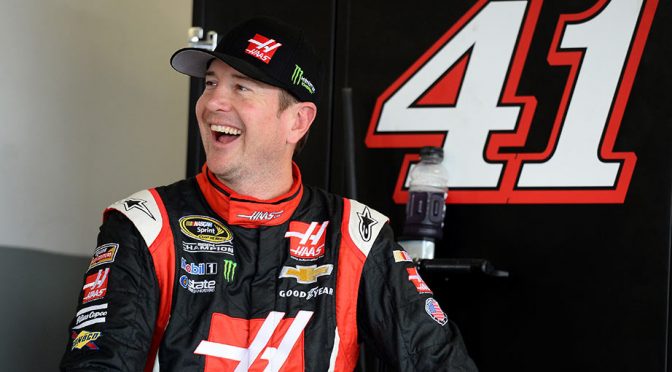
Busch, driving the No. 41 Stewart-Haas Racing Chevrolet, turned a lap of 197.624 mph. He was just ahead of the No. 5 Hendrick Motorsports Chevy of Kasey Kahne, who ran 197.490 mph. Former Daytona 500 winner Jamie McMurray was third for Chip Ganassi Racing with Felix Sabates in a 1-2-3 sweep of the leaderboard for Chevrolets.

"It feels great," said Busch, who completed 18 laps in final practice for his 14th appearance in the Great American Race. "This is one of the best chances I’ve ever had to win the Daytona 500."

Carl Edwards was fourth-fastest in the No. 99 Roush Fenway Racing Ford. Second-fastest qualifier Martin Truex Jr. was fifth, making the first laps in his backup No. 78 Furniture Row Racing Chevy after a crash during the final lap of the second Budweiser Duel qualifying race Thursday night.

Only 27 drivers in the 43-car field participated in the practice session as several teams chose not to risk an accident before the season’s first and most prestigious race. Among those sitting out: Coors Light Pole Award winner Austin Dillon, former Sprint Cup champions Tony Stewart and Brad Keselowski, former Daytona 500 winner Dale Earnhardt Jr., and Denny Hamlin and Kyle Busch — each winners of preliminary events during this year’s Speedweeks at Daytona.

The practice session was delayed from its original 10 a.m. ET start time by rain. Cars took to the track by 10:55 a.m. ET, and NASCAR officials extended the practice’s end time from 11:30 a.m. to noon ET to give teams more opportunity to make final preparations.

Two-time Daytona 500 winner Michael Waltrip experienced the only incident of the 65-minute session, when the optional roof hatch on his No. 66 Toyota flew open as he drove through the third and fourth turns of the 2.5-mile track. Waltrip’s crew was working to repair the roof damage before Sunday’s main event.

MORE:

READ: Austin Dillon wins
Daytona 500 pole

WATCH: Big wreck ends
Budweiser Duel 2

WATCH: Massive wreck
in Sprint Unlimited

READ: Official Daytona 500
starting lineup