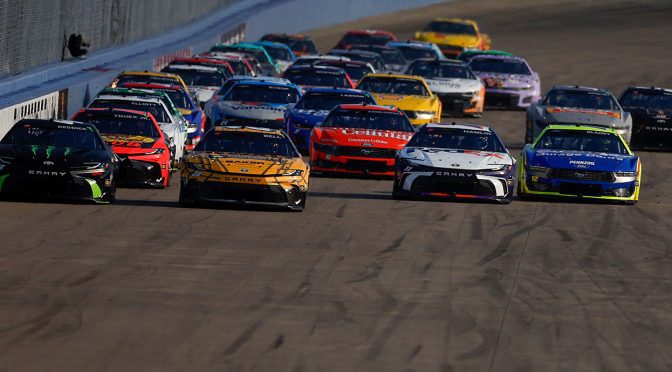
With a thrilling Coca-Cola 600 in the books, the NASCAR Cup Series next sets its sights on Nashville Superspeedway for the Cracker Barrel 400 on Sunday (7 p.m. ET, Prime Video, PRN Radio, SiriusXM NASCAR Radio).
Corey Heim makes his second Cup start of 2025 this weekend, driving the No. 67 23XI Racing Toyota with Bootie Barker as crew chief as one of three Open entries.
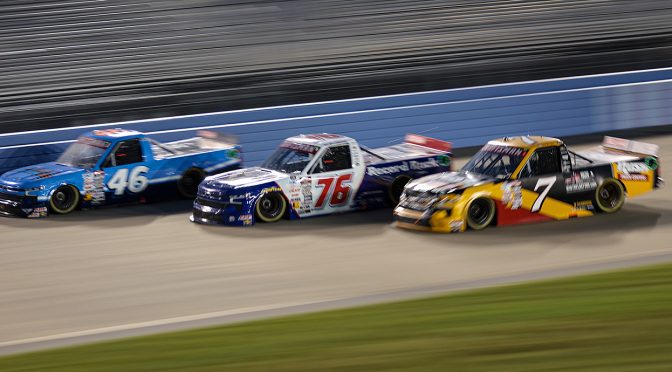
The NASCAR Craftsman Truck Series returns to Nashville Superspeedway for action under the Friday night lights (8 p.m. ET, FS1, NASCAR Racing Network Radio, SiriusXM NASCAR Radio).
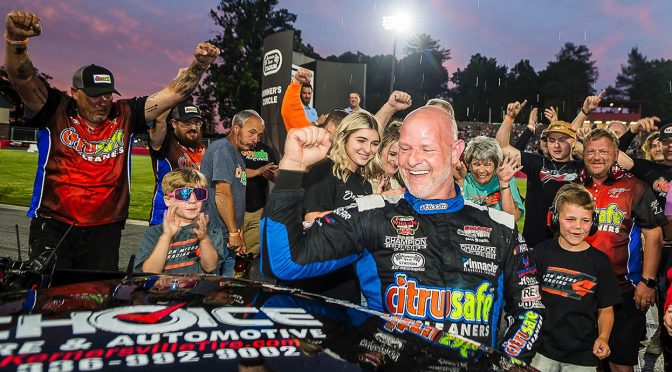
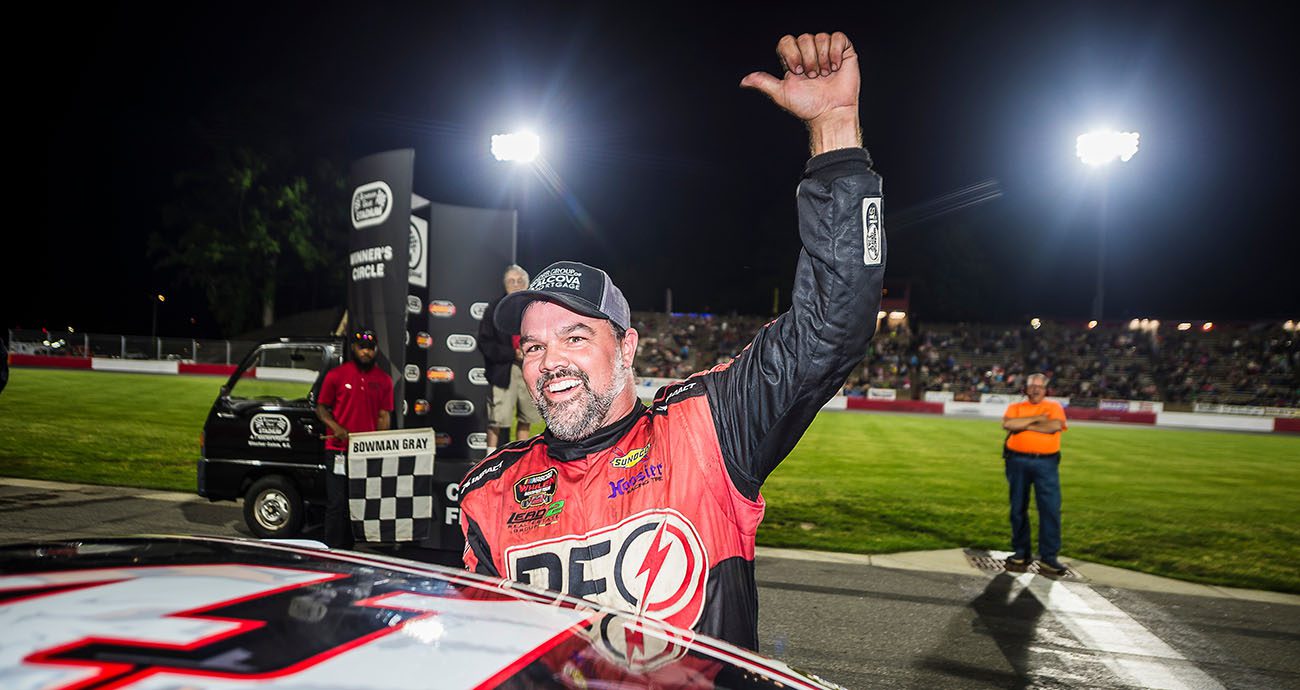
After picking up his 99th career win in the Brad’s Golf Cars Modified Series at Bowman Gray Stadium last week, Burt Myers didn’t take long to hit the century mark.
He came from second to pass Brandon Ward around turn 4 on the 22nd of the 25 laps. Myers was able to hold off Ward to pick up his 100th win in the first 25-lap Modified race on double points night in all divisions.
“How about that, man,” Myers said. “It’s still, you know I keep saying it, 100 wins, 100 wins, 100 wins, but I don’t think it’ll set in until we leave here tonight, and it all dies down. It’s hard to believe. It’s hard to believe.”
Burt Myers and his family have a long history at Bowman Gray.
“To think how long I’ve been coming here and have been racing here, and I’ve never really looked at like milestone wins,” he said. “I’m still the youngest featured-winner champion. And they talk about that, but at the same time I don’t really think about, you know me, I don’t think about, we think about next week, next week, next week. But I think this one might be a little special.
“It might be a little bit different. This one will be a little different. I think we’ll relish this one just a little bit because it’s such a landmark.”
Not only does Myers have 100 wins, but he also has 11 Modified championships.
“It’s like tonight, you know in double-points night you’re really better to finish second and you’ll get the most points,” Myers said. “That’s what Brandon did.”
Ward finished runner-up in the first 25-lap race and fifth in the second race.
“But we’ve talked about it, we’ve won three weeks in a row,” Myers said. “Should’ve won the first week, had a shot to win the next week. We are just a couple bad breaks from being five in a row. So, we’ve got a good car, we’ve got a great team, but this is still Bowman Gray.”
Myers is in second place in total wins to Tim Brown’s 101, and Myers is also second to Brown’s 12 championships.
“At the same time, we’ve talked about for years, you know to win 12 championships would be great, but if we can keep racking up these wins and celebrating the moment and help support the people who have supported us to get to this point that’s what it’s about for us right now.”
Myers just harkened back to when he was a child and sat along the front stretch of Bowman Gray Stadium for the races on Saturday night.
“Not in a million years did I think that I think it would even be talked about,” Myers said. “You know, to even think about Tim doing it, to think about a driver winning 100 races at Bowman Gray. But me and Tim have dedicated our lives, so to think about me and Tim have dedicated our lives over here, and we’ve got 100 and 101, and we’ve got 11 and 12 championships.
“That’s what it takes is dedication and hard work, and that’s what we’ve both put into this place. And for us tonight, we got 100, man.”
Myers was in second for most of the first race, but he kept trying to slide underneath Ward to take the lead. Myers surged ahead with just over two laps remaining. It was reminiscent of the first race of season in the Hayes Jewelers 200 after Ward overtook Myers to win.
“The way that me and Brandon raced each, or the way that first week went, I told Brandon, I said, ‘I’m not mad at you. You know, you didn’t wreck me. You moved me for the win in a big race,’” Myers said. “It was only a twin-25, but for me this was a big race. So, it was just a flip of what happened that first week.”
Lee Jeffreys finished third, Chris Fleming was fourth, and Riley Neal finished fifth.
“But Brandon gave me thumbs up as he drove by. I don’t think he’s upset, no more than I was the first race. But at the same time to me that was just good, hard Bowman Gray racing. You know, we did it with respect both times.”
To Myers it came down to situational racing.
“We didn’t wreck each other. We didn’t put each other in the wall. But at the same time with the car, I had tonight and the situation i was in it was going to be hard pressed to keep me from winning that race.”
After the first 25-lap Modified race Myers drew 8 in the “Madhouse Scramble,” which meant the field for the second race was inverted with Myers starting eighth.
Bobby Measmer, Jr. started on the pole for the second 25-lap race, with Brown just behind him.
There were three cautions, and Chris Fleming, who finished second to bump Measmer and slide underneath. Measmer withstood his ground and fended off Fleming for the win.
It was Measmer’s third career win.
“I’ve got to thank Chris,” Measmer said. “He could’ve ran me a lot worse. But he was doing what he needed to do trying to rattle my cage, and I was able to hold him off.”
Bobby Measmer Jr. took the second 25-lap Modified feature at Bowman Gray Stadium on Saturday, the third win of his career. (Photo: Erick Messer/Bowman Gray Stadium)
The win was special for Measmer.
“I’ve got to thank my crew,” he said. “I took a whole year off last year to race with my son, and tonight he was spotting for me. He did it last week, and I tell you what, that’s pretty special. My dad used to spot for me, and went through a bunch of other people, but to have my son spotting for me, that’s pretty cool.”
Brown finished third, Neal was fourth, and Ward was fifth.
Chase Robertson proved to be too good down the stretch of the 100-lap Sportsman Series race, which went to 103 laps because it went to overtime.
It was Robertson’s third win of the season, and it was his 15th career win.
Robertson qualified fifth, but after a redraw for the top six drivers, he started fourth.
Robertson kept weaving through the pack and used to cautions to his advantage. Robertson took the lead at about the 70-lap mark.
After a caution on lap 86, and a double-file restart on lap 90, Dylan Ward, who was second at the time, had a flat tire and slid into the fence.
Ward qualified first and started second, and Connor Branch, who qualified fifth, started on the pole.
“It was a good battle,” Robertson said. “I slipped up a little bit in Q (qualifying), but I don’t know if I had anything for Dylan in qualifying…I knew if draw good and get the lead early that was really my plan.”
Zack Ore spun out Tommy Neal at lap 96, which set off a five-car crash around turn 1. That moved Ryan Robertson to second behind his brother, Chase.
After the caution, the race resumed at lap 101, but after two laps of racing, Chase Robertson withstood the charge from his brother, Ryan.
Ore finished third, followed by Zack Clifton and Justin Taylor.
In the 20-lap race in the QRC HVAC & Refrigeration Street Stock Series, Kyler Staley won after holding off Bryant Robertson.
Staley led wire-to-wire, but on turn 4 of the final lap Roberson bumped him and tried to get underneath Staley. Robertson did get underneath, but Staley won by about one-half of a car length.
“I don’t know, man,” Staley said. “So, my spotter…he drawed the pole. He drawed the 1 and I walked. I didn’t know who drew where. Bryant told he wasn’t going to wreck me…I appreciate him running me clean.”
Brian Sykes Jr was third, followed by Kevin Gilbert, and Emilee Lewis.
In the first 15-lap race in the Q104.1 Stadium Stock Series, Brandon Brendle won the first 15-lap Stadium Stock race, defeating runner-up Brad Mickalowski.
Mickalowski finished third, followed by Tyler McDonald, Grayson Keaton, and Austin Cates.
In the second 15-lap Stadium Stock Series race, A.J. Sanders won followed by Connor Keaton.
Sanders had to withstand a push from Keaton and Levi Holt throughout much of the race.
“I knew what I had to do and not overdrive the car there because he was giving me shots,” Sanders said. “If I overdrove the car he was going to turn me around.”
Luke Smith finished third, Robert Strmiska was fourth, and Holt was fifth.
Next week’s racing is highlighted by the Elite Underground Utility 100, which is a 100-lap race in the Brad’s Golf Cars Series. Because it’s a 100-lap race, the top four qualifiers will have a chance to accept the Fans’ Challenge. Even though there is a full-field redraw, if one or more of the top four qualifiers elects to take the Fans’ Challenge, they will automatically go to the back of the field.
If one or more of those four drivers that elects to go to the rear and finishes in the top four, that driver or drivers will have a chance to win all or part of the Fans’ Challenge. Since no racer won previous $3,000 Fans’ Challenge earlier this season the Challenge jumps to $6,000.
In addition to the Elite Underground Utility 100, there will be twin 25-lap races in the Law Offices of John Barrow Sportsman Series, a 20-lap race in the QRC HVAC & Refrigeration Street Stock Series, and there will be either one or two 15-lap races in the Q104.1 Stadium Stock Series.
Following an electric Coca-Cola 600 at Charlotte Motor Speedway, only one NASCAR Cup Series race remains before the 32-driver field is set for the inaugural NASCAR In-Season Challenge.
Upon the conclusion of this Sunday’s Cracker Barrel 400 at Nashville Superspeedway (7 p.m. ET, Prime Video, PRN Radio, SiriusXM NASCAR Radio), the 32-driver grid will be cemented, and with it, the pool vying for the $1 million prize. As such, a handful of drivers will look to the 1.33-mile Tennessee facility as one final opportunity to show enough speed and savvy strategy to clinch a coveted berth.
Similarly to last week, four drivers in particular — Brad Keselowski, Shane van Gisbergen, Riley Herbst and Cole Custer — are the immediate contenders in play for the 32nd and final challenge spot. However, compared to the week prior, a new driver among the quartet currently holds onto that final position.
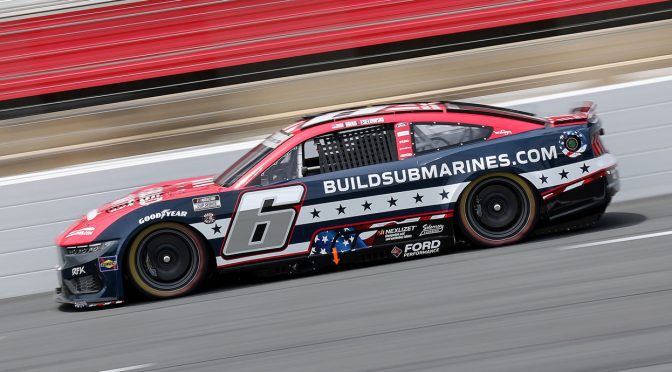
Following a fifth-place finish in the Coca-Cola 600, Keselowski’s No. 6 RFK Racing Ford now sits 32nd in the driver standings, taking the position from Herbst, who held it going into the race weekend. Of the quartet, Keselowski’s fifth-place result was the highest, with van Gisbergen (14th), Custer (21st) and Herbst (28th) rounding out the order of Charlotte finishes. With these results, van Gisbergen trails Keselowski by 19 points in 33rd, with Herbst one point behind the No. 88 Trackhouse Racing pilot for 34th. Custer rounds out the four, sitting five points behind Herbst in 35th.
Enter Nashville, where all four drivers will look to find just enough speed to pull away from their competitors and clinch an In-Season Challenge berth. The playing field will be relatively even, given the four drivers haven’t found success — or, in some cases, experience — at the track in NASCAR’s premier series.
Of the four, Keselowski holds the most Cup Series starts at Nashville, with four to his name. However, none of the four starts have yielded a top-10 finish. In fact, in only one of those four races did Keselowski finish inside the top 20 (11th in 2023). Custer, meanwhile, has two Cup starts at the Tennessee track, which came in 2021-22 as a member of Stewart-Haas Racing. Despite starting seventh in 2021 and 17th in 2022, Custer finished both races outside the top 25, placing 30th in 2021 and 26th in 2022. Custer’s Nashville luck fared better in the Xfinity Series, where, in two starts spanning 2023-24, he finished ninth both times and started on the pole in 2023.
While Herbst possesses no Cup experience at Nashville, he, too, has compiled Xfinity reps, finishing inside the top 10 in all four career starts there, with a 2022 pole position to boot. Van Gisbergen, on the other hand, carries no Cup experience at Nashville and only one start in Xfinity action there, tallying a 15th-place finish in 2024.
In other words, experience is, collectively, relatively light when speaking about the quartet and Nashville in the same sentence, which in turn should create plenty of intrigue as they — and perhaps additional dark horses — contend for In-Season Challenge positioning.
The NASCAR In-Season Challenge will consist of five races, beginning on June 28 at Atlanta Motor Speedway. Following Atlanta, the challenge will move to the Chicago Street Course on July 6, then to Sonoma Raceway on July 13, Dover Motor Speedway on July 20 and conclude at Indianapolis Motor Speedway for the annual Brickyard 400 on July 27. The winner will receive a $1 million prize.
The seeding for the 32-driver bracket will be determined by the results of the final three races aired on Prime Video before the challenge begins (Michigan, Mexico City, Pocono). Drivers will be seeded based on their best finish in the three races, with tiebreakers determined by the next-best finish, followed by the season points position.
Throughout the challenge, drivers will compete head-to-head in a bracket-style competition, with the highest-finishing driver in each matchup advancing to the next round. The field will be narrowed down from 32 drivers in the opening race to 16 in the second, eight in the third, four in the fourth, and finally, two drivers battling for the challenge win in the fifth and final contest at The Brickyard.
In NASCAR’s marathon event, Noah Gragson and the No. 4 Front Row Motorsports team delivered one of its best performances of the season.
With a 10th-place finish (his third top 10 of the season), Gragson now sits 28th in the driver standings. The result was also the first time in Gragson’s Cup career where he completed all 600 miles at Charlotte (in four starts), solidifying the finish as his best in “America’s Home for Racing.”
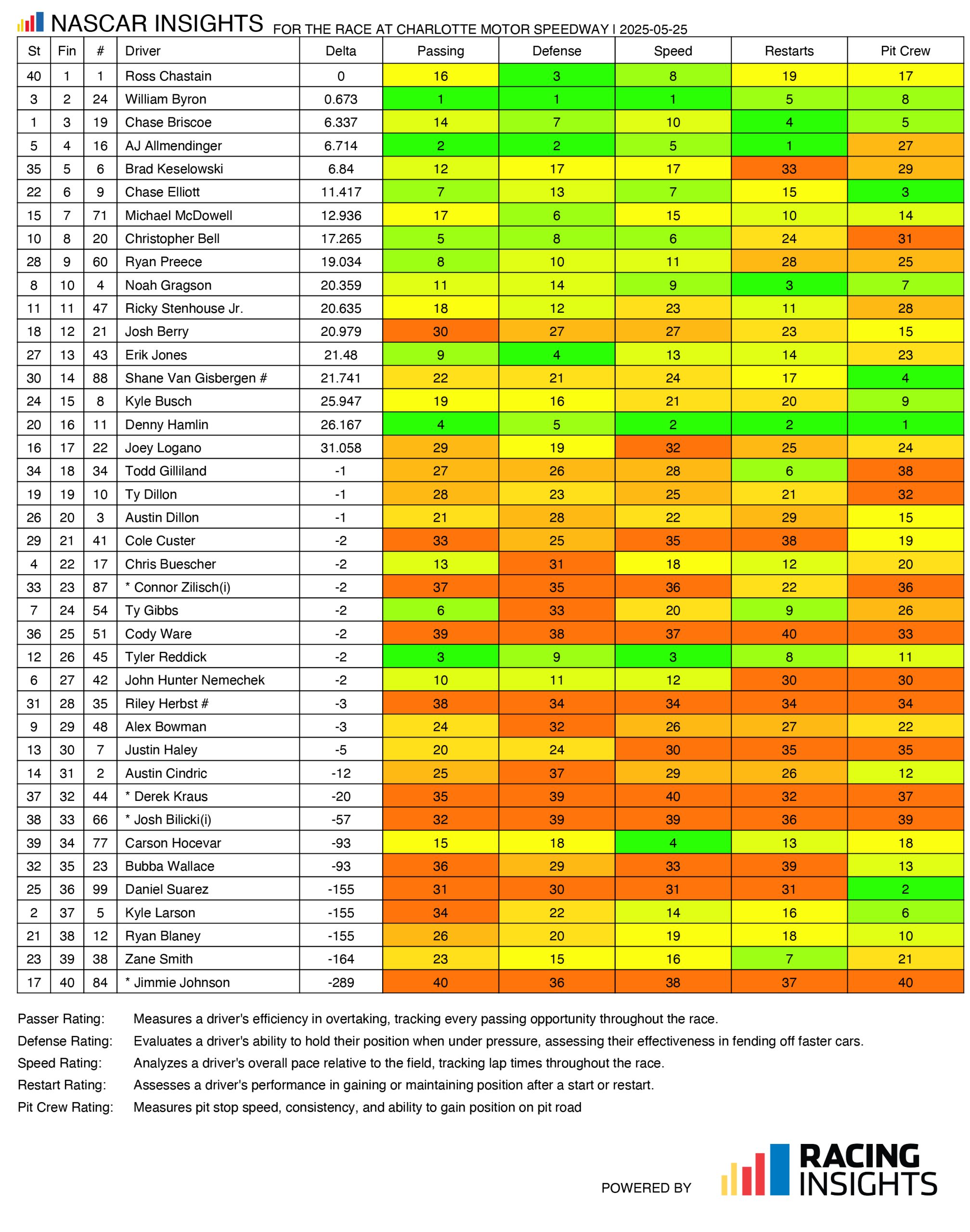
According to NASCAR Insights, the statistics back up Gragson’s performance as a solid one across the board. On Sunday, he was third-best in Restart Rating, which was crucial given there were five restarts in the second half of the 400-lapper. Having the ninth-best Speed Rating didn’t hurt either, but Gragson’s 11th-ranked Passer Rating and 14th-best Defense Rating proved vital as these areas improved as the race reached the middle stages. This, in turn, allowed him to remain a top 10 car for most of the evening and collect critical stage points.
But the valiant performance didn’t just come from Gragson; his crew on pit road also met the moment, ranking seventh-best in Pit Crew Rating, which was nine spots better than the team’s season average. In other words, the No. 4 team was zeroed in on all the details this past week for the crown-jewel race, and a top-10 finish was the reward for such an effort.
All in all, Gragson walked away from Charlotte moving up from 31st to 28th in the regular-season standings, which firmly puts him inside the 32-driver grid for the looming NASCAR In-Season Challenge, with the field being cemented following this Sunday’s Cup race at Nashville Superspeedway (7 p.m. ET, Prime Video, PRN Radio, SiriusXM NASCAR Radio).
As such, Nashville will be on tap for Gragson and the No. 4 Ford team. He only has two Cup starts on the 1.33-mile concrete oval, but finished 10th there last year after a record-breaking five overtimes, which gives him a chance to build off the momentum he has already gained.
Other notables from Sunday:
— Todd Gilliland and Zane Smith — Gragson’s Front Row teammates — ranked seventh or better in Restart Rating.
— Carson Hocevar’s No. 77 Spire Motorsports Chevrolet had the fourth-best Speed Rating.
— Brad Keselowski finished fifth despite not ranking top 10 in any of the five categories.
In early November, the historical high temperature in Concord, North Carolina, is 66 degrees Fahrenheit.
Why is that statistic relevant to stock car racing?
NASCAR is considering possible venues for its season-ending Championship Weekend, which will start to move in rotation next year with a return to Homestead-Miami Speedway.
Phoenix Raceway, which has hosted championship races in all three of NASCAR’s national series for the past five years, will remain in the mix.
With weather a major consideration in the placement of the title races, Las Vegas is another city that immediately comes to mind. The average high temperature in November in Sin City is 66 degrees.
In determining the rotation for the Championship 4 races, weather clearly is a major consideration, but it isn’t the only one. The quality of the product on the track should also be an important element in the selection.
And if what fans saw in Sunday night’s Coca-Cola 600 is an indication, Charlotte Motor Speedway deserves a place in the championship lineup.
After William Byron dominated the first two stages of the race in fading daylight, the track changed, as it always does. Denny Hamlin arrived at the front of the field to challenge Byron, who won the second stage by more than seven seconds.
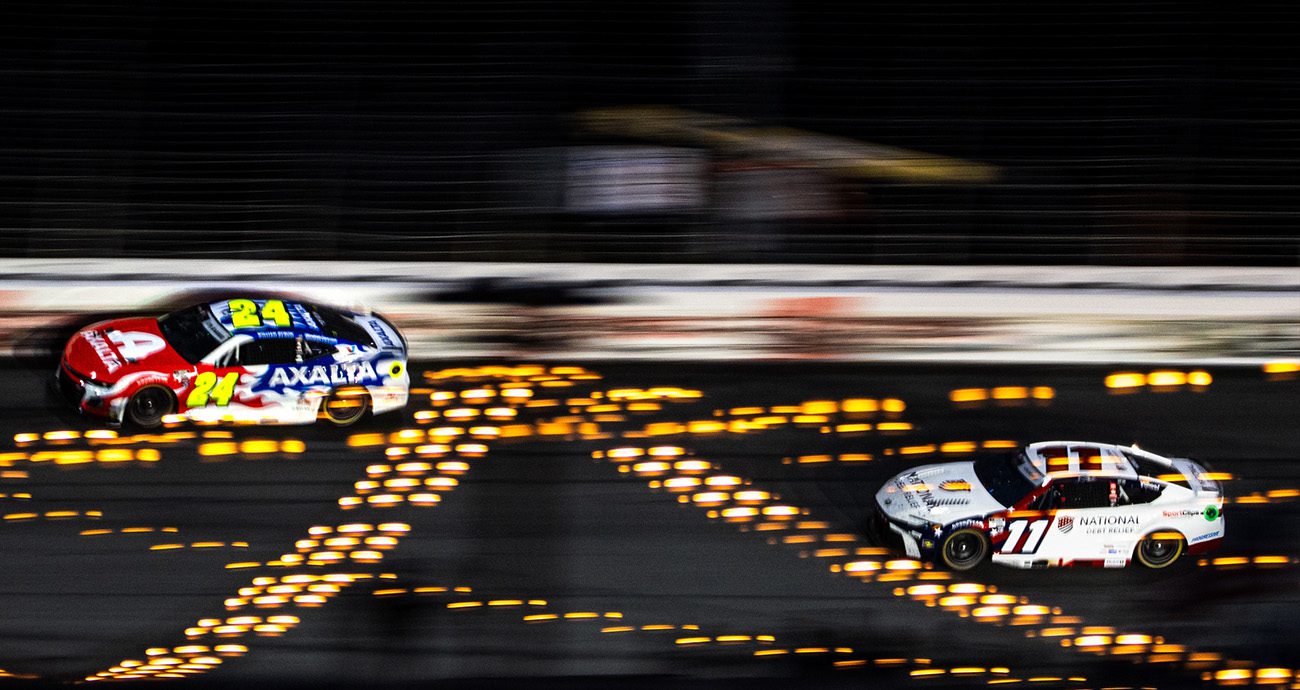
Over the last 300 miles of NASCAR’s longest race, Byron and Hamlin battled back and forth, swapping the lead 15 times over the contest’s entirety.
Hamlin would attack. Byron would defend. Hamlin would edge ahead at the start/finish line by thousandths of a second. Byron would charge through the first two corners and regain the top spot. It was sustained, close competition at the highest level.
And then, seemingly out of nowhere, crew chief Phil Surgen made an adjustment to Ross Chastain’s No. 1 Trackhouse Racing Chevrolet that brought the car to life for the final run.
With Hamlin out of fuel and out of the picture after an unscheduled pit stop, Chastain was relentless in his pursuit of Byron, who led 283 of the 400 laps. On Lap 394, Byron’s car tightened up in Turns 3 and 4.
Seizing the opportunity, Chastain carried his momentum into Turns 1 and 2, dived to the inside and cleared Byron’s Chevrolet off the corner. Chastain went on to win one of the most memorable races of the last four years.
Notably, the Coca-Cola 600 produced some of the most compelling racing of the Next Gen era, and it happened in front of a packed house.
Perhaps that performance puts it into possible championship consideration in the future.
CONCORD, N.C. — Denny Hamlin and William Byron were sensational Sunday, fighting tooth and nail for the lead in a thrilling duel for Coca-Cola 600 glory.
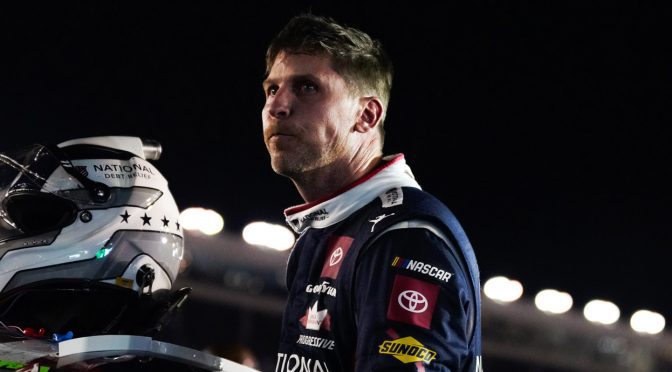
But a misstep on what should have been Hamlin’s final pit stop eliminated the No. 11 Joe Gibbs Racing Toyota from contention late in the going at Charlotte Motor Speedway.
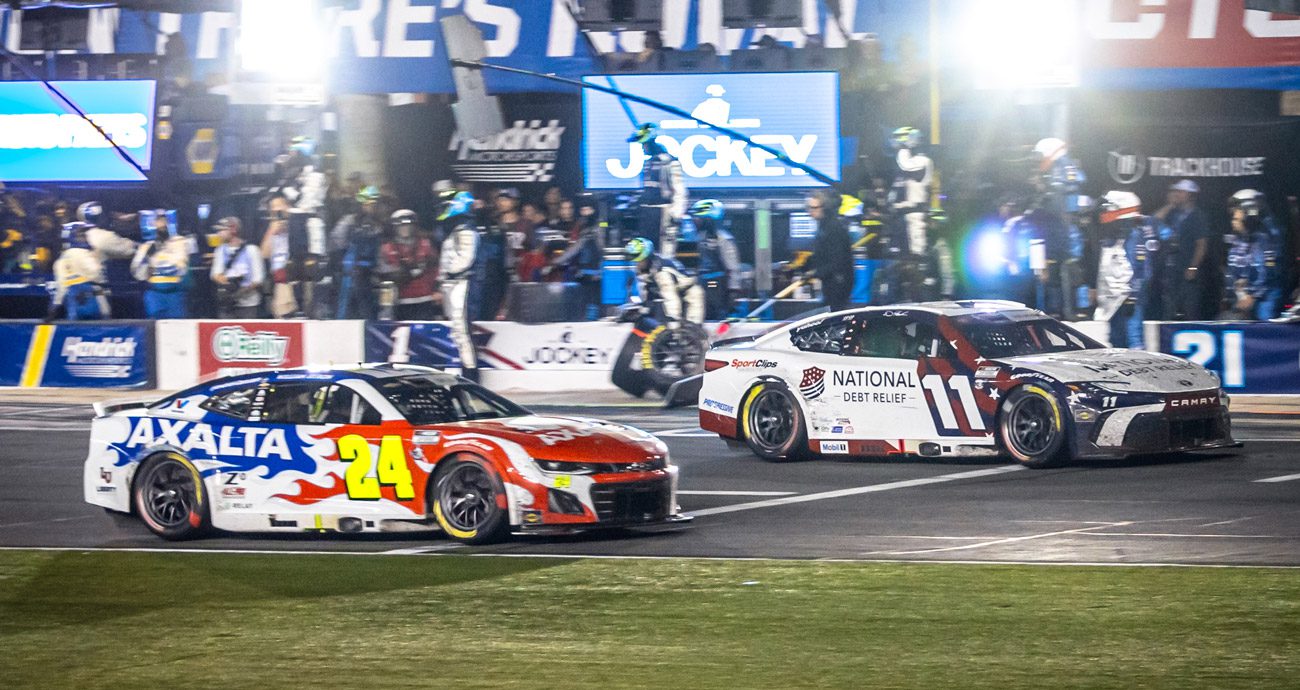
Both drivers hit pit road on Lap 348 of 400 Sunday night, setting the clear premise that the winner of the race off pit road may be the victor of the race. All looked normal at first — Byron barely beat Hamlin back to the race track and built an advantage. But crew chief Chris Gayle and the rest of his No. 11 team quickly realized a fueling issue prevented approximately four gallons from getting into their Toyota’s fuel tank, leaving Hamlin 12 laps short of the checkered flag.
Instead of fighting with Byron and eventual race winner Ross Chastain for victory, Hamlin hit pit road on Lap 389 to refuel and instead finish 16th, the penultimate car on the lead lap.
“I feel good about our performance. I feel crappy about how we finished,” Hamlin said. “That’s been the story of the last month, and not much has changed.”
After two straight DNFs due to mechanical failures, Hamlin appeared primed to put those demons to rest in NASCAR’s debut broadcast on Prime Video. Instead, the fuel can of Hamlin’s fueler Kenneth Purcell either malfunctioned or was not engaged properly, upending any positive momentum.
“Once we had gotten to the front and had the lead for a little bit, the mileage was a little worse than what we anticipated,” Gayle explained. “We had one can that was gonna be close, and then the mileage was a little worse, and we knew, ‘OK, if we get the lead here, we’re going to need a little bit of a second can.’ So we just needed an extra half a gallon from a second can. And so they normally split that.
“So I knew the total plug time I needed to get that amount of fuel, right? And I thought we were plugged in for that, per the stopwatch, per the video I watched. But for whatever reason, the second can, when they plugged, it barely took any fuel out at all — like there was a problem. I can’t tell from the view right now if it’s a bad plug, like open on the bottom — we saw a bunch of fuel coming out of the bottom. But it got about four gallons less than we expected in it. I would have needed to sit there for another two seconds to get four gallons in it.”
Justin Potter | For NASCAR Digital Media
Once Gayle relayed the bad news, Hamlin, 2022 winner of the Coke 600, knew his chances were done. He still fought for his best finish since a runner-up effort at Bristol Motor Speedway — way back on April 13 — but the hunt for Byron’s No. 24 Chevrolet had been neutralized.
“We were really fast, obviously,” Hamlin said. “Us and the 24 were the class of the field for most of the day, and then the 1 (Chastain) came on really strong there at the end. Would have loved to see that battle through, but obviously, once they told me that I was short on fuel, at that point, I kind of stopped chasing the 24 just because I’m not going to risk trying to get in the fence when I’m too short on fuel anyway.”
In all, according to Racing Insights, the Nos. 11 and 24 cars traded the lead 15 times among themselves. When one cleared the other, the trailing car reeled back the leader, playing the aero game by manipulating the air traveling around their opponent and striking with a pass.
“It was fun battling up front,” Hamlin added. “Nobody could lead because everyone would get too loose. My car was better in second but fast enough to lead. But once I led, it was too loose, so we were just back and forth, and obviously put on a great show.”
The result will not represent the speed the No. 11 car carried Sunday, but the stats provided by NASCAR Insights do. As fate would have it, the No. 11 crew was ranked best of the night in Pit Crew Rating. Their driver then did his job on the race track, ranking second in Speed Rating (only behind Byron), second in Restart Rating, fourth in Passer Rating and fifth in Defense Rating.
No one left with any doubts the No. 11 team is dangerous — it just needs results to show it after a 21st-place finish at Talladega Superspeedway was followed by two mechanical failures and a poor showing at the exhibition NASCAR All-Star Race at North Wilkesboro Speedway on May 18.
“Yeah, we didn’t have the results,” Gayle said. “I think we were gonna be strong at Texas (Motor Speedway). I think we had really good pace at Kansas (Speedway). We just had mechanical issues take us out. And then we weren’t very good at North Wilkesboro. That’s the one we 100% missed it on, and we had a plethora of issues that weekend that plagued us. But it’s good to keep running well.
“We were much better today than we were in practice, so you can hang your hat on that. We were able to make changes overnight that really got us to be a contending car when we weren’t that way in practice, so I think I just lean on those positives at this point, because that’s all you can do, right? We’re all disappointed with the ultimate finish at the end of the race, but the rest was positive.”
Hamlin and Co. will look to rebound at Nashville Superspeedway on Sunday (7 p.m. ET, Prime Video, PRN Radio, SiriusXM NASCAR Radio), where he has two top 10s in the past three races and was in position to contest the victory in 2024.
CONCORD, N.C. — A sweep of three stages in NASCAR Cup Series points races means victory for a driver except one — the Coca-Cola 600.
The ultimate endurance test of man and machine in NASCAR’s longest event holds four equal stages of 100 laps, and while William Byron stumped the field for the first 300 laps, the flames of the No. 24 Hendrick Motorsports Chevrolet were fanned in the final laps as Ross Chastain snuck by Byron with six laps to go to steal the crown-jewel trophy in the Queen City.
“It’s just frustrating,” a dejected Byron said shortly after exiting his vehicle. “Don’t really have the words for it.”
Byron did everything right Sunday night at Charlotte Motor Speedway.
On top of snagging three playoff points, he led a whopping 283 laps; the most in this event since his Hendrick teammate Kyle Larson led 327 circuits in his 2021 Coke 600 triumph.
With Byron’s toughest challenger, Denny Hamlin, fading and eventually having his night derailed after a fueling issue on the No. 11 team’s final stop, it looked like the No. 24 was ready to become just the seventh driver to win both the Daytona 500 and Coke 600 in the same season.
But pitting a few laps later on the money stop, Chastain had the fresher tires and the better car in the final 10 laps to get by Byron.
“He was catching me, and I was trying to defend. I felt like I put a couple good defensive moves on and then just really didn’t get through [Turns] 3 and 4,” Byron said. “Got really loose over there and that was really it. He had a huge run down the frontstretch, tried to protect against that, but it was too much.”
Byron’s dominance wasn’t a cruise by any stretch of the imagination. He was passed by Larson in the opening frame of the race before the No. 5 wheelman hit the wall and ultimately spun on Lap 46.
Then came a heavyweight tilt from Stage 2 onward with Hamlin as the two swapped the lead in a quintessential NASCAR battle in front of a sold-out crowd.
Alejandro Alvarez | NASCAR Digital Media
The two Cup Series stars exchanged the lead 15 times before the final pit stop separated the two for the home stretch.
Trying to hold the lead while skirting through lapped traffic, Byron had a close call with Tyler Reddick after the No. 45 got loose off Turn 2 and hit the outside wall just in front of the No. 24.
Then, Joey Logano, who was fighting to stay on the lead lap, gave Byron fits as he tried to get around the defending series champion.
“He was doing the usual,” Byron said of Logano’s defending. “What I didn’t like is he just kept moving around in 3 and 4. I don’t know what he was doing. I think just was in traffic a lot that run. The 45 was running hard, and then lost a chunk there when he got loose. I think just it all kind of added up.”
A former Cup driver who knows a thing or two about the ups and downs of a 600-mile race happens to be Hendrick Motorsports vice chairman Jeff Gordon, whose first Cup win came at Charlotte in 1994.
The four-time series titleholder was straightforward on Byron’s result, but was satisfied with the No. 24 team’s performance and what it equates to in the standings.
“Overall, it was a really good race,” Gordon told NASCAR.com. “Disappointed when you dominate and run that well and don’t get it done. So I feel for William and the team, but also, there’s a ton to be proud of him. I thought he just drove a super impressive race today.
“I’m pretty sure he probably has the points lead now, and, you know, it’s like points leads great, and there’s points for that. But you want to win races and get those playoff points. I think overall, you just take away how strong they were in the toughest race, and I feel like because of that, they’ll continue to build some momentum.”
Byron will indeed leave Charlotte with a 29-point buffer atop the Cup Series standings after previous leader Larson failed to score stage points and had an early exit from the Coke 600 after getting caught up in a multicar wreck on Lap 247.
For at least the next week, however, the points lead is only a consolation to what could’ve been another feather in the cap for Byron, who is already building quite the resume in his Cup Series career at just 27 years old.
“I’m sure there’s a bigger plan in the future, so just got to understand what that is,” Byron said. ” Keep working. I feel like our team’s ability and my abilities is really good right now. We just got to capitalize. It sucks. All you can do is just keep learning from it and move forward.”
After crashing his primary car in practice Saturday, Ross Chastain drove from dead last and passed William Byron with six laps remaining to win Sunday’s Coca-Cola 600 at Charlotte Motor Speedway. The watermelon farmer from Alva, Florida earned his sixth career NASCAR Cup Series victory — marking four consecutive winning seasons — as he earned his first career crown jewel win.
However, for the other 39 drivers, some will leave Charlotte with momentum, while others head to Sunday’s race at Nashville Superspeedway (7 p.m. ET, Prime Video, PRN Radio, SiriusXM NASCAR Radio) scratching their heads. Every race matters, and Nashville marks the start to the second half of the regular season.
THREE UP ⬆️
1.AJ Allmendinger
Started: 5th
Finished: 4th
What happened: Allmendinger had arguably one of the best non-road course races of his Cup Series career, earning points in each stage and coming home with his first top-five finish of the 2025 campaign. He recorded his best result since finishing fifth at Homestead-Miami Speedway in October 2023, and while he didn’t run full time last year, the finish is a massive step in the right direction for the No. 16 Kaulig Racing Chevrolet.
What’s next: Allmendinger has a best finish of 10th (2023) in three career starts at Nashville and also owns an Xfinity Series victory at the 1.33-mile concrete oval. Sitting 17th in the Cup Series standings (after an eight-spot jump at Charlotte), another strong race could be the momentum the Los Gatos, California native needs as the playoff push ramps up.
Logan Riely | Getty Images
2.Brad Keselowski
Started: 35th
Finished: 5th
What happened: Keselowski can finally begin to exhale. He earned his first top-five (and top-10) finish of the season Sunday at Charlotte, putting an end to a long stretch of poor races and miscues to open 2025. Keselowski earned the pole and showed contending speed last week in the All-Star Race at North Wilkesboro Speedway, so maybe the 41-year-old has truly started to hit on something with his No. 6 RFK Racing team.
What’s next: Nashville hasn’t treated Keselowski kindly in the past, as he’s finished 23rd or worse in three of his four starts there. He’s still buried in points, sitting 32nd, but maybe this newfound speed and execution could lead to a solid outing in Music City.
David Jensen | Getty Images
3.Michael McDowell
Started: 15th
Finished: 7th
What happened: Intermediate-track racing had never been a strength for McDowell in the past, but it seems like he’s hit on something in his first year with Spire Motorsports. After a near-win at Texas Motor Speedway three weeks ago, the 40-year-old fired back with a quiet top 10 Sunday at Charlotte. It’s his best finish of the season and the best of his career in Queen City.
What’s next: McDowell hasn’t finished better than 13th in four starts at Nashville, but all of those races came while he was still at Front Row Motorsports. While Nashville is a bit shorter, it races like an intermediate track, meaning another strong performance could be in the cards next weekend as McDowell looks to continue chipping into his points deficit. He’s 19th in the standings, 21 points behind Ryan Preece for the final provisional playoff spot.
David Jensen | Getty Images
THREE DOWN ⬇️
1.Denny Hamlin
Started: 20th
Finished: 16th
What happened: Hamlin spent much of Sunday’s race contending for the victory until a mishap during his final pit stop. Coming for service at Lap 348, his No. 11 Joe Gibbs Racing team didn’t fully fuel the car as the second gas can was never fully engaged. Hamlin and crew chief Chris Gayle had to bank on a late caution, which never came, meaning the Toyota had to surrender third place for a splash of fuel with 11 laps to go.
What’s next: Hamlin has a pair of poles and top 10s in four trips to Nashville, nearly winning last year’s five-overtime marathon before ultimately running out of fuel. Intermediates haven’t been kind to him in 2025 with just one top 15 in five starts (Homestead-Miami, 5th), but his 56 career Cup victories prove that he can win just about anywhere.
David Jensen | Getty Images
2.Tyler Reddick
Started: 12th
Finished: 26th
What happened: After finishing fourth or better in each of the first three stages, Reddick’s night got derailed with a pit road speeding penalty at Lap 348. Adding salt to the wound, Reddick fenced the No. 45 23XI Racing Toyota on the backstretch in the closing laps — directly in front of then-leader Byron — suffering front-end damage en route to a finish two laps off the pace.
What’s next: Reddick finished third last year at Nashville; his only positive in four starts at the track. He’s riding a stretch of five finishes of 14th or worse — oddly uncharacteristic for the reigning regular-season champion. As he’s still searching for his first win of the 2025 campaign, maybe Reddick and crew chief Billy Scott can build off the positives from Sunday and last year’s Nashville race to finally return to Victory Lane.
Jared C. Tilton | Getty Images
3. Ryan Blaney
Started: 21st
Finished: 38th
What happened: Blaney’s day ended prematurely after suffering terminal damage in a crash at Lap 245. Exiting Turn 4, Chase Briscoe made contact with Blaney, the 2023 Coca-Cola 600 winner, sending him into the wall and receiving a blow from Daniel Suárez, who Briscoe also clipped. Blaney didn’t score any stage points on the evening, but he was trending in the right direction after a less-than-ideal mid-pack starting position.
What’s next: The 31-year-old remains Team Penske’s final driver without a win in 2025, and Nashville could be the perfect place to turn his luck around. Blaney has a pair of top 10s in four starts — the two blips were crashes in races where he showed contending speed. Teammate Joey Logano won the race last year to kickstart his championship campaign, so who knows, maybe the same could be in store for Blaney.
Editor’s Note: After initially finishing 27th, Larson has now been scored with a 24th-place result in the 2025 Indianapolis 500 following post-race inspection.
CONCORD, N.C. — The logistics of a 1,100-mile day of racing for Kyle Larson have ultimately proven nearly impossible to accomplish.
The results of his Sunday crashes — in both the Indianapolis 500 and the Coca-Cola 600, six and a half hours apart — bear that out.
Larson’s second straight attempt to accomplish the Memorial Day Weekend Double ended in bent car parts and disappointment as the 2021 NASCAR Cup Series champion fell out of both storied events prematurely.
Weather delays in Indianapolis put his chances of completing the Double in jeopardy before he even rolled off pit road. After finally taking the green flag there at 1:35 p.m. ET — 50 minutes later than scheduled — his crash at Lap 92 ended the open-wheel portion of the endeavor before halfway, propelling him back to Charlotte Motor Speedway for the 600, where he arrived at 5:22 p.m.
Starting second in NASCAR’s longest race of the year, Larson scooted to the lead by Lap 10, but early wall contact and a subsequent spin derailed the No. 5 team’s day. While on the rebound, everything hit rock bottom when contact from a sliding Daniel Suárez destroyed the right-rear suspension of Larson’s Chevrolet, putting an end to a tumultuous and trying day at 9:29 p.m.
“The Double is just a tough undertaking,” a dejected Larson said after he was checked and released from the infield care center at Charlotte. “I think the window of time is too tight. Even if I didn’t wreck (at Indy), I don’t think I would have made it here in time and probably would have had to end that race short anyway.”
“I just don’t really think it’s worth it, but I would love to run the Indy 500 again. Just doing the Double, I think, is just logistically too tough.”
Twice in consecutive years, Mother Nature played a role in upending the best-laid plans by Larson, Hendrick Motorsports and IndyCar’s Arrow McLaren. This year’s effort was a step in the right direction: In 2024, rain in both Indianapolis and Charlotte wreaked havoc, with Larson completing the full, rain-delayed Indy 500, missing the start of the Coca-Cola 600 and ultimately arriving in Concord just as more rain curtailed the 600.
In 2025, Larson at least got to compete in both events in the same day. The residual emotions, though, aren’t much different.
“What I’m feeling at the end of the night feels very similar,” Larson said. “Just very bummed and sad about how it all went. Just wasn’t meant to be, I guess.”
Larson looked exceptionally fast early in Sunday’s stock-car feature, leading 34 of the opening 41 circuits at Charlotte. No. 5 slid loose at the top of Turns 3 and 4, however, contacting the wall first with the right rear, then the right front.
Crew chief Cliff Daniels spent the next 200 laps orchestrating a series of repairs while simultaneously keeping his driver’s head in the game. After the first frame of initial fixes were implemented, the team discovered the front toe was “way off,” but wound up going too far on their adjustments; a result, in part, of a suspected offset steering rack.
The No. 5 team managed to stay on the lead lap until a cycle of green-flag pit stops in Stage 2 but fell one lap down to teammate William Byron. After earning the free pass to return to the lead lap at the start of Stage 3, Larson charged from 26th to 22nd, then launched to 17th after another round of pit stops under caution.
With just four laps after the ensuing restart, though, Chase Briscoe bounced off Ryan Blaney and into Suárez, who spun first into Justin Haley and then directly into Larson’s right wheel.
“I thought our team was doing a good job to get the car back in better shape there to just chip away at it and contend for a decent finish,” Larson said. “But yeah, just hate the way that the day went. I wish I could just hit reset and try again tomorrow, but the reality is that’s not gonna happen.”