Innovative Air Titan track drying technology at every Sprint Cup race next season

DAYTONA BEACH, Fla. — NASCAR announced today the NASCAR Sprint Cup Series schedule for the 2014 season, the 66th year of racing for the sport’s premier series.

In addition to the schedule unveiling, NASCAR announced that its revolutionary Air Titan track drying system will be available at every NASCAR Sprint Cup Series race weekend throughout the 2014 season.

For the 13th consecutive year, the NASCAR Sprint Cup Series schedule will consist of 36 points races as well as two additional weekends featuring non-points events. The Sprint Unlimited (Feb. 15) and two Daytona 500 qualifying races (both on Feb. 20) will take place before the season officially gets underway. The NASCAR Sprint All-Star Race at Charlotte Motor Speedway will take place on May 17, broadcast on FOX Sports 1.

“This season has delivered plenty of drama and excitement, and we’re anticipating even more for our fans in 2014 now that the Gen-6 car has competed at every track,” said Steve O’Donnell, senior vice president of racing operations. “Having the Air Titan at each NASCAR Sprint Cup Series weekend allows us to meet a very important goal set by our Chairman and CEO, Brian France: to drastically decrease track-drying time to the best of our ability and ensure our fans in the stands and those watching on TV get to see each race on its scheduled day.”

The season will open with the 56th running of the Daytona 500 live on FOX on Feb. 23 before moving west to Phoenix International Raceway (March 2) and Las Vegas Motor Speedway (March 9). Four tracks will undergo spring date changes: Texas Motor Speedway will hold its event one week earlier and move from Saturday to Sunday (April 6). Darlington Raceway will feature its race on April 12. Kansas Speedway will hold its first NASCAR Sprint Cup Saturday night race, with its event shifting to May 10, while Martinsville Speedway will host the series on March 30, a week earlier than in 2013. 

For the fourth consecutive season, the Chase for the NASCAR Sprint Cup will start at Chicagoland Speedway (Sept. 14) and conclude live on ESPN on Nov. 16 at Homestead-Miami Speedway.

Developed in-house at NASCAR’s R&D Center, the Air Titan progressed quickly following France’s directive to improve the racing product and fan experience in every form. Following testing in the summer and fall of 2012, Phase 1 of the technology was on-site at Daytona International Speedway in February. The 2012 Daytona 500 was the first to be postponed to the following day because of inclement weather.

Its race event debut was in April at Martinsville where it successfully decreased drying time in order to hold NASCAR Sprint Cup practice rather than have it cancelled. Air Titan’s biggest save to date was at Talladega Superspeedway’s rainy spring races where it shaved nearly an hour off drying time for both the NASCAR Nationwide and NASCAR Sprint Cup Series races, allowing those events to be completed on their scheduled days. It also was in use Oct. 3 at Kansas for track conditioning purposes while also trimming nearly 45 minutes from drying time prior to the Goodyear zone tread tire test.

MORE:

READ: Keselowski fills
winless void at Charlotte

WATCH: Final Laps:
Keselowski outruns Kahne

WATCH: No. 2 car exits
pits with jack along for ride

WATCH: Post-race
reactions from Charlotte

NASCAR Air Titan at every race; Kansas, Daytona Duels go under the lights

RELATED: Full Sprint Cup Series schedule

After much speculation and anticipation, NASCAR announced the 2014 Sprint Cup Series schedule on Tuesday, and it is highlighted with a push to primetime for several events and a previously announced move for one of the sport’s most historic races.

Next year’s slate of Sprint Cup races — the 13th consecutive year with 36 points races and two additional non-points events — features more tweaks in time than wholesale changes to established venues and events. An important addition for 2014 will find the NASCAR Air Titan track-drying system at every Sprint Cup race weekend.

"This season has delivered plenty of drama and excitement, and we’re anticipating even more for our fans in 2014 now that the Gen-6 car has competed at every track,” said Steve O’Donnell, NASCAR’s senior vice president of racing operations. "Having the Air Titan at each NASCAR Sprint Cup Series weekend allows us to meet a very important goal set by our Chairman and CEO, Brian France: to drastically decrease track-drying time to the best of our ability and ensure our fans in the stands and those watching on TV get to see each race on its scheduled day."

Appropriately, the Feb. 20 Budweiser Duel at Daytona makes its inaugural start under the lights to kick off a new round of primetime weekends.

Other NASCAR Speedweeks activity includes the Feb. 15 Sprint Unlimited and the Feb. 23 Sprint Cup Series season-opening Daytona 500.

RELATED: Buy Tickets

As previously announced, Texas Motor Speedway will move its annual spring night race from Saturday to Sunday this year — April 6 — optimizing its schedule with the NCAA Final Four Men’s Basketball tournament in Dallas.

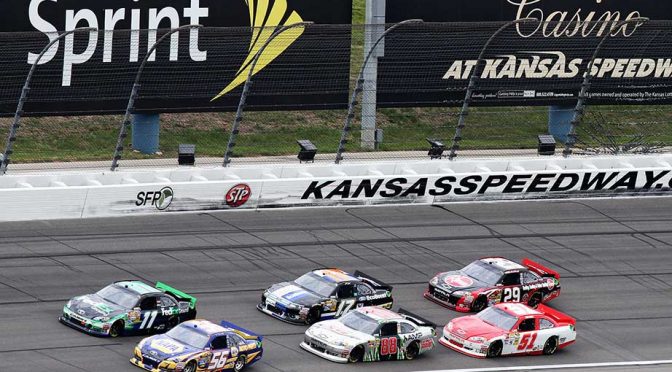
And Kansas Speedway will host its first ever Cup race at night on May 10 — swapping with Darlington (S.C.) Raceway for the Mother’s Day weekend event. Darlington, in turn, will host NASCAR’s historic Southern 500 on April 12.

Another notable shift in the schedule includes a one-week move forward – March 30 — for Martinsville (Va.) Speedway‘s annual spring race.

Other notable dates include the May 17 NASCAR Sprint All-Star Race at Charlotte Motor Speedway, July 27 at Indianapolis Motor Speedway and the Sept. 6 regular season finale at Richmond (Va.) International Raceway The two off-weekends are April 20 (between Darlington and Richmond) and July 20 (between New Hampshire Motor Speedway and Indianapolis).

The 10-race Chase for the NASCAR Sprint Cup begins again at Chicagoland Speedway on Sept. 14 and will feature the same 10 venues in the same order as 2013, ultimately crowning a new champion on Nov. 16 at Homestead-Miami Speedway.

The television partners remain the same as well with FOX Sports handling the first half of the season, TNT doing six summer races then ESPN/ABC handing the final 17 races in the final year of its contract. FOX Sports 1 will televise events formerly on the SPEED network — the Duels ad the NASCAR Sprint All-Star Race – while adding the Sprint Unlimited.

2014 NASCAR Sprint Cup Series schedule

Date Site Network
Feb. 15 Daytona International Speedway (Sprint Unlimited) FOX Sports 1, MRN, SiriusXM
Feb. 16 Daytona International Speedway (Daytona 500 qualifying) FOX, MRN, SiriusXM
Feb. 20 Daytona International Speedway (Duels) FOX Sports 1, MRN, SiriusXM
Feb. 23 Daytona International Speedway (Daytona 500) FOX, MRN, SiriusXM
March 2 Phoenix International Raceway FOX, MRN, SiriusXM
March 9 Las Vegas Motor Speedway FOX, PRN, SiriusXM
March 16 Bristol Motor Speedway FOX, PRN, SiriusXM
March 23 Auto Club Speedway FOX, MRN, SiriusXM
March 30 Martinsville Speedway FOX, MRN, SiriusXM
April 6 Texas Motor Speedway FOX, PRN, SiriusXM
April 12 Darlington Raceway FOX, MRN, SiriusXM
April 26 Richmond International Raceway FOX, MRN, SiriusXM
May 4 Talladega Superspeedway FOX, MRN, SiriusXM
May 10 Kansas Speedway FOX, MRN, SiriusXM
May 17 Charlotte Motor Speedway (NASCAR Sprint All-Star Race) FOX Sports 1, MRN, SiriusXM
May 25 Charlotte Motor Speedway FOX, PRN, SiriusXM
June 1 Dover International Speedway FOX, MRN, SiriusXM
June 8 Pocono Raceway TNT, MRN, SiriusXM
June 15 Michigan International Speedway TNT, MRN, SiriusXM
June 22 Sonoma Raceway TNT, PRN, SiriusXM
June 28 Kentucky Speedway TNT, PRN, SiriusXM
July 5 Daytona International Speedway TNT, MRN, SiriusXM
July 13 New Hampshire Motor Speedway TNT, PRN, SiriusXM
July 27 Indianapolis Motor Speedway ESPN, IMS, SiriusXM
Aug. 3 Pocono Raceway ESPN, MRN, SiriusXM
Aug. 10 Watkins Glen International ESPN, MRN, SiriusXM
Aug. 17 Michigan International Speedway ESPN, MRN, SiriusXM
Aug. 23 Bristol Motor Speedway ABC, PRN, SiriusXM
Aug. 31 Atlanta Motor Speedway ESPN, PRN, SiriusXM
Sept. 6 Richmond International Raceway ABC, MRN, SiriusXM
Sept. 14 Chicagoland Speedway ESPN, MRN, SiriusXM
Sept. 21 New Hampshire Motor Speedway ESPN, PRN, SiriusXM
Sept. 28 Dover International Speedway ESPN, MRN, SiriusXM
Oct. 5 Kansas Speedway ESPN, MRN, SiriusXM
Oct. 11 Charlotte Motor Speedway ABC, PRN, SiriusXM
Oct. 19 Talladega Superspeedway ESPN, MRN, SiriusXM
Oct. 26 Martinsville Speedway ESPN, MRN, SiriusXM
Nov. 2 Texas Motor Speedway ESPN, PRN, SiriusXM
Nov. 9 Phoenix International Raceway ESPN, MRN, SiriusXM
Nov. 16 Homestead-Miami Speedway ESPN, MRN, SiriusXM

MORE:

READ: Keselowski fills
winless void at Charlotte

WATCH: Final Laps:
Keselowski outruns Kahne

WATCH: No. 2 car exits
pits with jack along for ride

WATCH: Post-race
reactions from Charlotte

Nationwide Series regular to get in a Sprint Cup Series ride at Texas

RELATED: Full Chase for the NASCAR Sprint Cup coverage

Parker Kligerman will make his NASCAR Sprint Cup Series debut in the No. 30 Swan Energy Toyota on Nov. 3 in the AAA Texas 500 at Texas Motor Speedway, the team announced Tuesday.

"Since I started racing, my dream like many young racers, was to get to the top, which means competing in the NASCAR Sprint Cup Series," Kligerman in a team release. "Now that Swan Racing has given me that opportunity, I hope to make the most of it. I am truly grateful for the opportunity and to Swan Racing."

Kligerman is a fulltime competitor in the NASCAR Nationwide Series, driving for Kyle Busch Motorsports in the No. 77 Toyota. He is currently 10th in points with three top-five finishes and 12 top-10s. In 2012, Kligerman finished the season fifth in points in the NASCAR Camping World Truck Series where he had one win, eight top-fives and 15 top-10 finishes.

"Parker is one of the truly gifted young drivers that will be winning races in the NASCAR Sprint Cup Series in the near future," said owner Brandon Davis. "We are really looking forward to evaluating him at the AAA Texas 500 at Texas Motor Speedway."

MORE:

READ: Keselowski fills
winless void at Charlotte

WATCH: Final Laps:
Keselowski outruns Kahne

WATCH: No. 2 car exits
pits with jack along for ride

WATCH: Post-race
reactions from Charlotte

Goal is to reduce track-drying times next season

RELATED: Full Chase for the NASCAR Sprint Cup coverage

NASCAR’s Air Titan track drying system, which made its debut this season, will be available for use at every Sprint Cup Series stop in 2014.
 
The announcement was made today in conjunction with the release of the 2014 Sprint Cup Series schedule.
 
"Having the Air Titan at each NASCAR Sprint Cup Series weekend allows us to meet a very important goal set by our Chairman and CEO, Brian France," said Steve O’Donnell, senior vice president of racing operations, "to drastically decrease track drying time to the best of our ability and ensure our fans in the stands and those watching on TV get to see each race run on its scheduled day."
 
The system, which was developed by officials at the NASCAR Research and Development Center in Concord, N.C., uses compressed air to force water off the racing surface and onto the track apron where it is then removed by vacuum trucks.

The goal is to reduce the time it takes to dry a track by as much as 80 percent, according to officials.
 
In May at Talladega Superspeedway, use of the system decreased track-drying time by approximately one hour for both NASCAR Nationwide and Sprint Cup Series races.
 
In April at Martinsville Speedway, the Air Titan shaved enough time off the track drying process to allow Sprint Cup teams to get in a practice session, while it also shortened drying time by 45 minutes at Kansas Speedway recently before an open test leading into that track’s Cup weekend.
 
Officials have also discovered that lessening the time it takes to dry a track surface is not the only benefit of the Air Titan system. It also does a very efficient job of preparing the racing surface for use — for competition as well as testing.
 
"It looks like it’s got some real value in actually cleaning the race tracks before we get to them," Robin Pemberton, NASCAR vice president of competition, said.  "There have been a couple times this year that we had taken Air Titan to a facility and it actually does a really nice job of cleaning the pores of the track — it gets the sand, the silt, the dirt and the grime that’s out of it, the oil that’s saturated and baked in there."
 
The system was used for track preparation at Chicago and Richmond, Pemberton said, noting "those tracks appeared … better when we opened up. The grip level was. And then there’s the opportunity for the track to take on the natural rubber of the tire that’s going to be raced."
 
Although there was some question initially that use of the system could prematurely "age" the track surface by repeated use, officials have found that not to be the case.
 
"We’ve analyzed some of the residue that’s come off of it," Pemberton said, "and while there might be some small particles that are track surface related, the reality of it is a lot of it is dirt and grime and oil and mold and mildew and things like that."
 
Goodyear officials said they confirmed as much last month when they traveled to Phoenix International Raceway for a tire test. The Air Titan system was used to prep the track before the tire test got underway.
 
"We actually measured it before and after (it was cleaned)," said Goodyear’s Greg Stucker, and we did not see a huge amount of difference (in surface wear).
 
"The one thing we have noticed — at a place like Phoenix, the track gets dirty because of where it is; we were able to get out and start testing almost right away.
 
"The track came in much quicker than what it would typically. You normally could go out there and run the whole day before you start running constructive laps. It definitely cleans the surface off."

O’Donnell said the goal for the program would be to not only have the Air Titan available at all tracks hosting Cup, Nationwide and Camping World Truck Series events, "but every All American Series track.

"We suffered more than ever before this year with rain‑outs at our weekly series tracks," he said. "Our goal is to develop this so that it’s feasible for a short track to be able to purchase one of these or be given the technology and use that for their tracks as well.

MORE:

READ: Keselowski fills
winless void at Charlotte

WATCH: Final Laps:
Keselowski outruns Kahne

WATCH: No. 2 car exits
pits with jack along for ride

WATCH: Post-race
reactions from Charlotte

Despite six wins at Talladega, Gordon has not won there since 2007

Jeff Gordon has the most wins among active drivers in the NASCAR Sprint Cup Series at Talladega Superspeedway with six victories. Despite his great success at Talladega, Gordon has not won at the track since 2007. Will he be able to get his first win of the 2013 season at a track he has a strong history at?


Bowyer makes small gain, but Talladega looms for Chase drivers

RELATED: Full Chase for the NASCAR Sprint Cup coverage
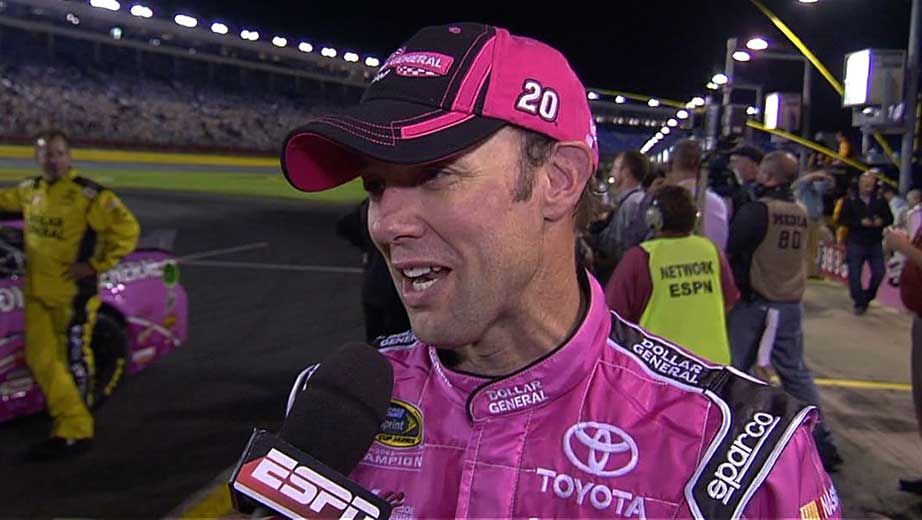
1. Matt Kenseth (No. 20)

Joe Gibbs Racing, Toyota 

Where he stands: Kenseth leads the NASCAR Sprint Cup Series standings with 2,225 points.
Last week: It took the No. 20 team some time to get the Toyota at a setup that suited the driver. Good thing Saturday night’s race was 500 miles. With time to get the car right, Kenseth’s machine was running well just in time to make a late charge through the field. After starting 20th, Kenseth extended his points lead over by Jimmie Johnson by one after finishing third. He has a four-point edge midway through the Chase for the NASCAR Sprint Cup.
What he said: "In the big picture, it was a great night. We have to be able to run in the top five every night, and tonight we definitely had a top-five car … and it just took all night to get there. We just need to get out of Talladega and then hopefully we can go to Martinsville and qualify a little better and have some better track position to work with."
Outlook: In 27 career starts at Talladega Superspeedway, Kenseth has one win, five top-fives and nine top-10s. In the past eight years at Talladega, Kenseth ranks first out of 60 drivers with an average place of 14.1. He finished eighth in the first 2013 race at Talladega.
2. Jimmie Johnson (No. 48)

Hendrick Motorsports, Chevrolet

Where he stands: Johnson is second in the standings with 2,221 points.
Last week: A late caution Saturday night at Charlotte cost Johnson a chance at the points lead. The No. 48 Chevrolet had led 129 of the past 130 laps when the race’s fourth caution came out on Lap 308. Johnson was third off pit road after stops, and spun his tires on the restart. He rallied to finish fourth, but missed out on potential bonus points for winning the race and leading the most laps (Johnson led 130, Kasey Kahne led 138).
What he said: "If we could have come out second (off pit road) and start on the front row, I think it would have been a much different result for us, but it didn’t happen."
Outlook: In 23 career starts at Talladega Superspeedway, Johnson has two wins, six top-fives, 10 top-10s and one pole. In the past eight years at Talladega, Johnson ranks 11th out of 60 drivers with an average place of 17.5. He finished fifth in the first 2013 race at Talladega.
3. Kevin Harvick (No. 29)

Richard Childress Racing, Chevrolet 

Where he stands: Harvick is third in the standings with 2,196 points.
Last week: One week removed from his third victory of the season, Harvick steered his No. 29 Chevrolet to a sixth-place finish. Prior to the race, he nearly won his second consecutive Coors Light Pole after having a seven-year gap before taking P1 at Kansas last week. But Jeff Gordon knocked off Harvick’s best time, relegating the Richard Childress Racing driver to starting second. Harvick didn’t gain or lose much ground in the points standings, considering nine of the top 11 finishers were Chase drivers.
What he said: "We got a decent finish, but our car was terrible all night. The restart went our way there at the end and we were able to get a decent finish out of it. We survived."
Outlook: In 25 career starts at Talladega Superspeedway, Harvick has one win, six top-fives, 10 top-10s and one pole. In the past eight years at Talladega, Harvick ranks 21st out of 60 drivers with an average place of 19.0. He finished 40th in the first 2013 race at Talladega.
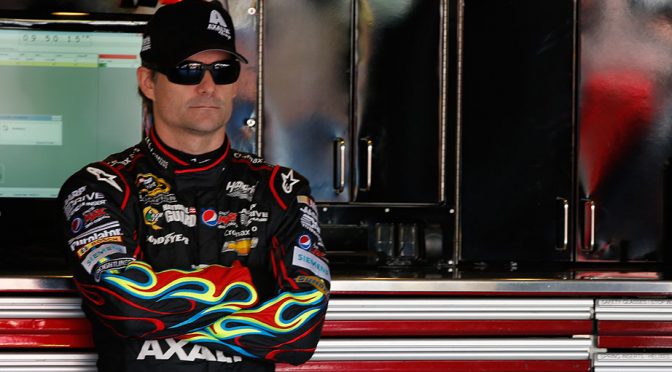
4. Jeff Gordon (No. 24)

Hendrick Motorsports, Chevrolet 

Where he stands: Gordon is fourth in the standings with 2,189 points.
Last week: Starting from the Coors Light Pole position, Gordon gave himself a chance to challenge for a win during his final pit stop Saturday night. The No. 24 team took two tires, which lined Gordon up second for the final restart on Lap 312 (of 334). The veteran lost ground over the final 22 laps, though, as he struggled with grip. His seventh-place finish marked his fourth top-10 in five Chase races.
What he said: "You want to take advantage of that No. 1 pit stall but we didn’t have enough cautions to do that. We need more cautions. We needed more cautions because when we had the track position, we seemed to be able to maintain it, but once we lost it there was no getting it back. And all those green flag stops just didn’t really suit us."
Outlook: In 41 career starts at Talladega Superspeedway, Gordon has six wins, 15 top-fives, 19 top-10s and three poles. In the past eight years at Talladega, Gordon ranks 18th out of 60 drivers with an average place of 18.4. He finished 11th in the first 2013 race at Talladega.
5. Kyle Busch (No. 18)

Joe Gibbs Racing, Toyota 

Where he stands: Busch is fifth in the standings with 2,188 points.
Last week: With the stain of Kansas behind him, Busch righted his No. 18 team at Charlotte. The driver was coming off a terrible weekend, where he wrecked and finished 34th, dropping him well off the pace for the championship. So Saturday’s fifth-place effort certainly helped to right the ship, although that finish was still behind points leader Matt Kenseth and second-place Jimmie Johnson. Still, Busch had to rally with a car that seemed ill-handling at times — and appeared to be blowing up on the final laps, as Busch radioed to his team. The team also overcame a miscommunication on a pit stop, which you can watch below.
What he said: "It’s good to finish in the top five, but it certainly stinks. We’re not good enough. It’s frustrating, man. I’m beating myself up every week trying to figure out what I got to do to be better, and I don’t know what it is. I work hard through practice. I work hard through the week. I study film. I do everything I need to do — but it’s not paying off."
Outlook: In 17 career starts at Talladega Superspeedway, Busch has one win, three top-fives and four top-10s. In the past eight years at Talladega, Busch ranks 22nd out of 60 drivers with an average place of 19.1. He finished 37th in the first 2013 race at Talladega.
6. Greg Biffle (No. 16)

Roush Fenway Racing, Ford 

Where he stands: Biffle is sixth in the standings with 2,167 points.
Last week: Biffle was among the drivers to struggle with tight handling at the Bank of America 500, and he limped to a 16th-place finish. It was the opposite from what happened the week before at Kansas, where Biffle qualified horribly and managed to finish better than expected. At Charlotte, the Biff qualified third before staggering down the stretch. He’s 58 points back of leader Matt Kenseth with five races to go. | Click here to read a roundup on the six members of the Coca-Cola Racing Family
What he said: Biffle was unavailable for comment.
Outlook: In 21 career starts at Talladega Superspeedway, Biffle has two top-fives and five top-10s. In the past eight years at Talladega, Biffle ranks 28th out of 60 drivers with an average place of 21.4. He finished 36th in the first 2013 race at Talladega.

7. Kurt Busch (No. 78)

Furniture Row Racing, Chevrolet 

Where he stands: Busch is seventh in the standings with 2,166 points.
Last week: Chase drivers claimed nine of the top 11 spots Saturday night, but Kurt Busch was not among that group. Instead, the driver of the No. 78 Chevrolet took home 14th. The 30-point effort was extra frustrating due to Busch’s most recent finish at Charlotte (third in the Coca-Cola 600) and his performance last week at Kansas (second). The Outlaw maintained his hold on seventh in the standings, but he lost ground on everybody — except Greg Biffle — above him. And now, Clint Bowyer is just four points behind Busch in eighth place.
What he said: "We lost the handling of the car and it was a struggle the entire night. We had an upbeat feeling after two strong practices on Friday but nothing really materialized for us to make a charge. It’s disappointing to finish where we did (14th) after having a number of solid runs on the mile-and-a-halfs."
Outlook: In 25 career starts at Talladega Superspeedway, Busch has six top-fives and 13 top-10s. In the past eight years at Talladega, Busch ranks third out of 60 drivers with an average place of 15.1. He finished 30th in the first 2013 race at Talladega.
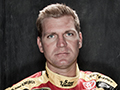
8. Clint Bowyer (No. 15)

Michael Waltrip Racing, Toyota 

Where he stands: Bowyer is eighth in the standings with 2,162 points.
Last week: With the top seven in the standings unchanged, Bowyer’s ascension from ninth place to eighth place in the points race makes for one of just four changes in this week’s points picture. Bowyer moved up one spot thanks to his 11th-place effort at Charlotte, passing Dale Earnhardt Jr., who finished 15th. In a 334-lap race largely free of incidents, Bowyer mainly stayed out of the way, although he ran in the top 10 from Laps 200-300.
What he said: "Man, when it isn’t your day it just isn’t your day. We should have had a top-five, but something happened under the hood with about 30 (laps) to go and it just killed us. We were looking so good. I nursed it there at the end."
Outlook: In 15 career starts at Talladega Superspeedway, Bowyer has two wins, four top-fives and seven top-10s. In the past eight years at Talladega, Bowyer ranks 18th out of 60 drivers with an average place of 21.2. He finished 18th in the first 2013 race at Talladega.
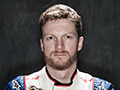
9. Dale Earnhardt Jr. (No. 88)

Hendrick Motorsports, Chevrolet

Where he stands: Earnhardt Jr. is ninth in the standings with 2,159 points.
Last week: When Earnhardt Jr. surged to the lead of the Bank of America 500 on Lap 30, the Charlotte crowd roared its approval. That same cheer shot up when Junior took the lead a second time on Lap 91. Those two moments were the highlights of the night for the popular driver, who struggled with command of his car late Saturday and finished 15th. The other notable Junior moment came during his first time leading, when his temperatures soared due to debris on his grille, forcing the driver to give up the lead to Kasey Kahne and try to get the debris off during the pass.
What he said: "The car just got really tight. Something in the setup moved, but the car was real quick at the start of the race. We were just kind of real happy with the speed. I don’t know what happened. We lost a rubber out of the right-rear spring or something like that. We are just kind of trying to figure out what is going on."
Outlook: In 27 career starts at Talladega Superspeedway, Earnhardt Jr. has five wins, nine top-fives and 13 top-10s. In the past eight years at Talladega, Earnhardt Jr. ranks second out of 60 drivers with an average place of 15.1. He finished 17th in the first 2013 race at Talladega.
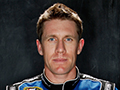
10. Carl Edwards (No. 99)

Roush Fenway Racing, Ford 

Where he stands: Edwards is 10th in the standings with 2,158 points.
Last week: It’s tough to imagine Edwards rebounding from his Dover disaster to challenge for the championship. So although his Charlotte run produced a 10th-place finish, the benefit of that is more momentum for the 2014 season, or learning something for the Roush Fenway Racing driver’s 1.5-mile track package. A small bright side is that, with the showing, Edwards moved up from 11th place to 10th.
What he said: "It was a long night. We’re fortunate to finish 10th. I hate to say that, but we just weren’t very good. It was really hard to pass, but not for everybody. This is my kind of race track. It’s aging, but we just couldn’t make anything happen."
Outlook: In 18 career starts at Talladega Superspeedway, Edwards has two top-fives and five top-10s. In the past eight years at Talladega, Edwards ranks 39th out of 60 drivers with an average place of 24.0. He finished third in the first 2013 race at Talladega.
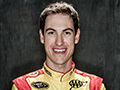
11. Joey Logano (No. 22)

Penske Racing, Ford 

Where he stands: Logano is 11th in the standings with 2,150 points.
Last week: Logano’s night started going wrong when, following the second caution on Lap 84, the driver left the pit box with missing lug nuts. He had to come back down pit road the next go-round. Considering there were only two more cautions in the 334-lap race, Logano never got the chance to make up those lost laps. He finished 18th, the worst showing among Chase drivers, and was two laps down. | Click here to read a roundup on the six members of the Coca-Cola Racing Family
What he said: "It seems like you end up saying this a lot sometimes, but we really had a car that was better than where we finished. I think we had about an eighth to 10th-place car tonight and we finished 18th with it. That is frustrating and we need to work on making these days better. We were just too far off at the start of the race and by the time we were able to get the car to my liking, we were already a couple of laps down. Then, you get no cautions and you just don’t have the chance to make those laps up."
Outlook:
In nine career starts at Talladega Superspeedway, Logano has two top-fives and four top-10s. In the past eight years at Talladega, Logano ranks 14th out of 60 drivers with an average place of 17.8. He finished 35th in the first 2013 race at Talladega.
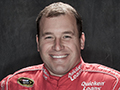
12. Ryan Newman (No. 39)

Stewart-Haas Racing, Chevrolet 

Where he stands: Newman is 12th in the standings with 2,147 points.
Last week: Newman’s No. 39 Chevrolet was great on the long runs, and there were plenty of those Saturday. His machine was so bad on the short run, though, that the ground lost during those restarts was difficult to make up once his car was humming. Newman finished eighth after starting seventh. | Click here to read a roundup on the six members of the Coca-Cola Racing Family
What he said: "We struggled all night on the short run. Our Quicken Loans Chevrolet was really good as the run went on; it would come to life 20 or 25 laps into the run. But by then, we’d lost track position and couldn’t get it back. We weren’t able to capitalize on the speed we had in the car."
Outlook: In 23 career starts at Talladega Superspeedway, Newman has four top-fives and eight top-10s. In the past eight years at Talladega, Newman ranks 30th out of 60 drivers with an average place of 21.6. He finished 32nd in the first 2013 race at Talladega.
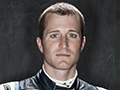
13. Kasey Kahne (No. 5)

Hendrick Motorsports, Chevrolet

Where he stands: Kahne is 13th in the standings with 2,144 points.
Last week: Another 1.5-mile track, another runner-up finish for Kahne. He’s so far removed from the championship battle that race wins are the next logical goal, and he nearly picked one up at Charlotte. But a thrilling late battle with Brad Keselowski (see video below) saw Kahne slip from the lead, back to second, up front again and then into second for good on Lap 326. Kahne also finished runner-up in the Coca-Cola 600 at Charlotte, and again at Las Vegas and Kansas.
What he said: "Yeah, we had a great race. I was on two (tires) and (Keselowski) was on four and he could just move around a little bit better. I was trying to move around, but I was just a little bit on the tight side with the front end, then I would get loose if I got the front working. I was doing all I could and felt pretty good, but he made some nice moves and just really had some speed there late in the race and was able to get by me."
Outlook: In 19 career starts at Talladega Superspeedway, Kahne has four three top-fives, four top-10s and one pole. In the past eight years at Talladega, Kahne ranks 26th out of 60 drivers with an average place of 21.1. He finished 42nd in the first 2013 race at Talladega.

MORE:

READ: Keselowski fills
winless void at Charlotte

WATCH: Final Laps:
Keselowski outruns Kahne

WATCH: No. 2 car exits
pits with jack along for ride

WATCH: Post-race
reactions from Charlotte

Officials focused on ‘continuous improvement’ of current product

RELATED: Full Chase for the NASCAR Sprint Cup coverage

CONCORD, N.C. — NASCAR officials and six teams (two from each of the three manufacturers) broke out their tool boxes Monday at Charlotte Motor Speedway to test various aerodynamic packages that may be put into play for the 2014 NASCAR Sprint Cup Series season.

Gene Stefanyshyn, vice president of innovation and racing development for NASCAR, described the effort as "an exercise in continuous improvement."  

"I don’t want people to think this is some super special … event," he said during a break in on-track testing. "It will be part of our standardized work" as the sanctioning body attempts to hone in on a rules package aimed at improving the product on the track.  

The focus of Monday’s test was "seven specific changes we are trying that have been bundled into three specific configurations … all with an eye to try and work on the aerodynamics of the car," he said. 

The six drivers that participated were: Jeff Burton (Richard Childress Racing/Chevrolet), Jamie McMurray (Earnhardt Ganassi Racing/Chevrolet), Brad Keselowski (Penske Racing/Ford), Trevor Bayne (Wood Brothers Racing/Ford), Denny Hamlin (Joe Gibbs Racing/Toyota) and Brett Moffitt (Michael Waltrip Racing/Toyota).

Moffitt, a NASCAR K&N Pro Series East regular and MWR test driver, replaced Brian Vickers, who was supposed to take part in the test. Earlier on Monday, it was announced that Vickers would miss the rest of the 2013 season with a blood clot in his right leg.

Although many of the configurations have been tested off the track through the use of simulations and wind-tunnel testing, putting six cars together on the track provides a more realistic picture.

In the Charlotte garage area, teams were experimenting with several variables including a static ride height, vents in the rear fascia, a strip across the roof, a larger rear spoiler, and a stepped-down front splitter. Burton had high hopes for the elimination of the ride-height minimum.

"It makes a lot of sense when you think about it, being able to hold the ride height more safe and more secure," the Richard Childress Racing driver said. "I don’t think it’s night and day on the track. I don’t think it’s going to be some crazy difference in how you drive behind other cars. But a little bit here and a little bit there adds up. I think it has potential to be better."

Travis Geisler agreed. The competition director for Penske Racing said the trailing car is at a deficit in terms of drag — leading drivers to often hit a metaphorical wall when they try to pass on the straightway. Some of the packages being tried Monday seemed capable of alleviating that to a degree.

"What they’ve come up with, they feel, is in the neighborhood of a major impact from a drag perspective on the rear car," Geisler said. "You’re not going to have an advantage, but you’re at least not going to have the disadvantage that you’ve had. Hopefully that will take care of it. I know all of us want to see more passing for the lead. That’s what everybody comes to watch, and we’re all here to do everything we can to make that a reality for us."

Geisler added that with the cars more equal than ever, the difference between one and another can often come down to position in the air. "To overcome that, you’re going to have to defy physics a little bit," he said. "… I think that’s what they’re trying to do with some of the packages here, trick the system and make it think the trail car has a fighting chance, I guess, of overcoming that disadvantage of the air position."

Toward that end, teams were also experimenting with vents in the rear fascia — or in layman’s terms, the back bumper — that may allow more air to pass cleanly beneath a car, making for a less-disturbed path for the vehicle behind it. "The vents out of the back are sort of a no-brainer," Burton said. Geisler called the change a step in the right direction.

"I think it will allow for air to flow through better," he added as Keselowski and his crew chief Paul Wolfe looked over data from the No. 2 car. "Anything we can do to allow more underbody air flow to the car behind is probably going to help us, so I think that one’s got a good shot at being an advantage."

Geisler said most of the potential changes being tried Monday would require only minor alterations on 2014 vehicles that teams are already building. That’s a stark comparison to last year’s first tests of the Generation-6 car, which teams undertook while body panels were still being stamped and rules packages were still being determined.

"I don’t think any of the stuff they’re discussing from a body standpoint is a major impact," he said. "A bolt-on strip, you cut some holes in the fascia, you’ve got a different splitter. Now, what we do with our aero map and how Paul and Brad and all the guys figure out how to race with it — yeah, it’s a pretty big change for that. But that’s what those guys do. That’s what their job is. From a manufacturing standpoint, we’re so far ahead sitting here now than we were last year at this point, I feel pretty safe."

Stefanyshyn said the packages tested were determined from a mix of ideas developed by NASCAR, the manufacturers (Chevrolet, Ford and Toyota) as well as various teams.
 
"We took everybody’s ideas, put them together and came up with these configurations for the test," he said. "They are our ideas as an industry and how we can improve the product on the track.
 
"It’s a complex problem. We do a lot of work in math-based analytical tools such as CFD, computational fluid dynamics; we can put one car, two cars in there so we do the theoretical piece. We also go in the wind tunnel.
 
"Because there are no wind tunnels in the world where you can put six cars in … we really need to put real-world testing into our partner solutions steps, so that’s basically what we’re doing here today."
 
While some form of the ideas have been discussed and even made it on the track for initial testing late last year, most were put on hold before the 2013 season as teams began preparations for the rollout of the new Generation-6 car.
 
The emphasis at the end of 2012 was on the ’13 model and making sure teams were adequately prepared for the change. Robin Pemberton, NASCAR vice president of competition, said now that the transition to the new piece had been completed, the focus could turn to improving the current product.
 
"It was a big undertaking on our part, the manufacturers, the teams," Pemberton said. "As everyone knows, we did an unbelievable amount of miles last year testing many different configurations. And our goal was to hand the car off to the teams better than the one that they ended the 2012 season with. We feel like we achieved that goal; we feel like the cars performed well, the drivers like the way the car drives. From that standpoint, it was a successful year.
 
"One of the things we said … was that we will always continue to evaluate our competition … and this is one of those programs that’s coming together."
 
Although rain delayed the start of the test, drivers were on the track making single-car runs by noon ET. Pack racing was expected to wrap up the session later in the day.
 
While the concern was on the 1.5-mile package, some of what was gleaned from Monday’s effort could impact competition on larger or smaller tracks. While the bulk of the Sprint Cup Series’ races are held on 1.5-mile tracks, teams also race on tracks as large as Talladega Superspeedway (2.66 miles) and as small as Martinsville Speedway (0.526 miles).
 
"Our focus is intermediate tracks. However, some of these learnings, if they make sense, we could apply to other tracks," Stefanyshyn said. "But I would say that is our focus. It’s 50 percent of our products so we’re looking at that first. Then … when we step back … does it make sense for any … road course, superspeedway, that type of thing?
 
"We have to look at the metrics at each of those venues and what they are telling us."

MORE:

READ: Keselowski fills
winless void at Charlotte

WATCH: Final Laps:
Keselowski outruns Kahne

WATCH: No. 2 car exits
pits with jack along for ride

WATCH: Post-race
reactions from Charlotte

Out for health reasons, team expects driver to resume activity before 2014 season

RELATED: Full Chase for the NASCAR Sprint Cup coverage

MORE: MWR co-owners confident about team’s outlook

CONCORD, N.C. — Michael Waltrip Racing suffered another setback Monday, when the team lost driver Brian Vickers for the remainder of the 2013 season after doctors discovered a blood clot in his right leg.

Vickers missed most of the 2010 season with blood clots found in his lungs and his left leg. He recovered from that setback and returned to NASCAR, and is slated to be the full-time driver of MWR’s No. 55 Toyota next season. An examination Monday morning revealed a blood clot in Vickers’ right calf, and Dr. William Downey placed him on blood-thinning medication.

The medication will keep Vickers out of the No. 55 car effectively immediately. According to MWR, Vickers and his physicians are confident he will be able to resume activity before the 2014 season begins.

"It sounds like it’s an abundance of caution," team co-owner Rob Kauffman
told NASCAR.com. "They (medical team) say it’s a very modest issue, more
that his taking medication is why he can’t race and they remain
confident for 2014. I’m not a doctor or medical expert so have to defer
to them but it sounds like it’s an abundance of caution on the doctors
standpoint.”

Vickers’ No. 55 team was one of six participating in a test Monday at Charlotte Motor Speedway trying potential changes on the NASCAR Sprint Cup Series cars for next season. Brett Moffitt, a regular competitor on the K&N Pro Series East and a test driver for MWR, was at the track Monday instead of Vickers.

"If there’s anything to be positive about with today’s news it’s that this is only a temporary setback," Vickers said in a statement released by the team. "The timing for this is never good, but I’m glad we’ll get it out of the way now and be ready to run for a championship with the Aaron’s Dream Machine in 2014."

Vickers began this season racing a limited schedule for MWR in the No. 55 car, one which became essentially full-time ride in August after Mark Martin moved over to the No. 14 to replace Tony Stewart, out for the remainder of the year with two broken bones in his right leg suffered in a sprint-car crash. The one race Vickers wasn’t scheduled to compete in comes this weekend at Talladega Superspeedway, where Waltrip is slated to drive the car.

According to MWR, a replacement driver for Vickers’ remaining scheduled events will be named at a later date. "We were just informed this morning and our concern is for Brian’s health," Kauffman said in a statement. "Anything else will be worked out in due course."

A 29-year-old native of Thomasville, N.C., Vickers also competes full-time in the No. 20 car of Joe Gibbs Racing in the NASCAR Nationwide Series, which is off both this week and next. JGR said a replacement in the vehicle will be named at a later date.

"We are praying Brian will have a quick and full recovery from this latest issue," team owner Joe Gibbs said in a statement. "Everyone at JGR appreciates all the hard work and effort he has given to our Nationwide Series program this year. He is a great competitor and we look forward to seeing him back on the track in 2014."

The news was another blow to a MWR team still reeling from its involvement in a race manipulation scandal in the final regular-season race last month at Richmond. That episode led to record NASCAR penalties against MWR, which knocked Martin Truex Jr. out of the Chase for the NASCAR Sprint Cup. NAPA, the sponsor of the team’s No. 56 car, later announced it would leave the team after this season, putting the status of the organization’s third car in jeopardy.

In 17 races this season for MWR, Vickers has six top-10 finishes, including a victory at New Hampshire in July. He was driving for the defunct Red Bull Racing team in May of 2010 when a hospital visit for chest pains discovered the blood clots in his chest and left leg that sidelined him for the remainder of that season. A clot was later found in a finger on his left hand, and Vickers eventually had surgery to repair a hole in his heart that put him at risk for the condition.

"I truly hate it for him," Jeff Burton said Monday at the Charlotte test. "That guy’s busted his ass to be here and appreciates the opportunity. I feel really bad for him. I thought we had the best car at New Hampshire where he won the race, and I was heartbroken we didn’t win, but I was really happy to see him win. I really was. When you have something and lose it and get it back, that’s a hell of a thing. Not many people experience that. He really wants to be here, and he puts a ton of effort into it, and it’s really depressing. It really is."

MORE:

READ: Keselowski fills
winless void at Charlotte

WATCH: Final Laps:
Keselowski outruns Kahne

WATCH: No. 2 car exits
pits with jack along for ride

WATCH: Post-race
reactions from Charlotte

Despite leading 19 laps at Charlotte, Dale Jr. finished in 15th place

RELATED: Results | Standings | Full Chase for the NASCAR Sprint Cup coverage

CONCORD, N.C. — It was as if Dale Earnhardt Jr. was driving two different race cars Saturday night.

One surged out front and looked capable of dominating the field at Charlotte Motor Speedway. The other labored in traffic and struggled to maintain position on the lead lap.

Unfortunately for NASCAR’s most popular driver, he got more of the latter than the former on the 1.5-mile race track. Earnhardt led 19 laps early in the Chase for the NASCAR Sprint Cup event and maintained a spot in the top five for two-thirds of the race, but fell back over the latter stages and wound up 15th and one lap down in an event that marked the halfway point of the playoff.

"The car just got really, really tight," Earnhardt said. "We’ve got to take it back. Something moved. Something in the setup moved, but the car was real quick at the start of the race. We were just kind of real happy with the speed. … I don’t know what happened. We lost a rubber out of the right-rear spring, or something like that. It just would not turn at all the last half of the race, pretty much. We are just kind of trying to figure out what is going on. We will get it back and figure it out when we get to the shop on Monday."

It was an adventurous night even when the No. 88 car was leading. Very early in the event Earnhardt noticed his temperatures climbing due to debris on the front grille, and numerous attempts to close up to Hendrick Motorsports teammates Kasey Kahne or Jimmie Johnson failed to remove the trash from the front. 


"Too hot for this early in the race," crew chief Steve Letarte said over the radio. Soon afterward, the call came to pit and have it removed, even though Earnhardt was near the front.

Right before the car ducked onto pit road, though, the debris flew off and allowed Earnhardt to maintain his track position. But things would only get more trying from there, first with a vibration whose source the driver struggled identify, and later with issues that caused the vehicle to labor in traffic.

"Slow," Letarte explained afterward. "I don’t know. We freed it up and it kept going slower. We’ll talk about it this week and see what we think happened."

It didn’t help that the event contained just four cautions, the final two separated by a 130-lap green flag run that left only 11 cars on the lead lap at the time. In Letarte’s eyes, the difference between Earnhardt’s good car early and balky car late came down to one simple factor.

"Track position," the crew chief said. "We lost a little tack position, and every two rows we went back it got tighter, it got worse. Just with that long green-flag run, there wasn’t anything we could do. We needed a yellow somewhere in there. If we’d have gotten a yellow in there, we’d probably have been able to salvage something."

The finish dropped Earnhardt one position to ninth in the Chase standings, 66 points behind leader Matt Kenseth. He’s now three points behind Clint Bowyer in eighth, and one point ahead of Carl Edwards in 10th. As has been the case so often this season, Earnhardt seemed to have a good car, only to have some unfortunate circumstance befall it.

"We are having some pretty good cars, we just had something happen tonight," he said. "We are not quite sure what it was. We will find something, I’m sure. The car just doesn’t get that tight from running that good without any adjustments. We were freeing it up, moving the track bar, taking wedge out and just getting tighter and tighter. Something wrong with it.”

MORE:

READ: Junior celebrates
birthday, 500th start

WATCH: Travis Kvapil
’embarrassed’ after arrest

WATCH: Gordon wins
Charlotte pole

EXPLORE: Charlotte race
goes pink