For second consecutive year, driver teams with Turner-Scott Motorsports for opener

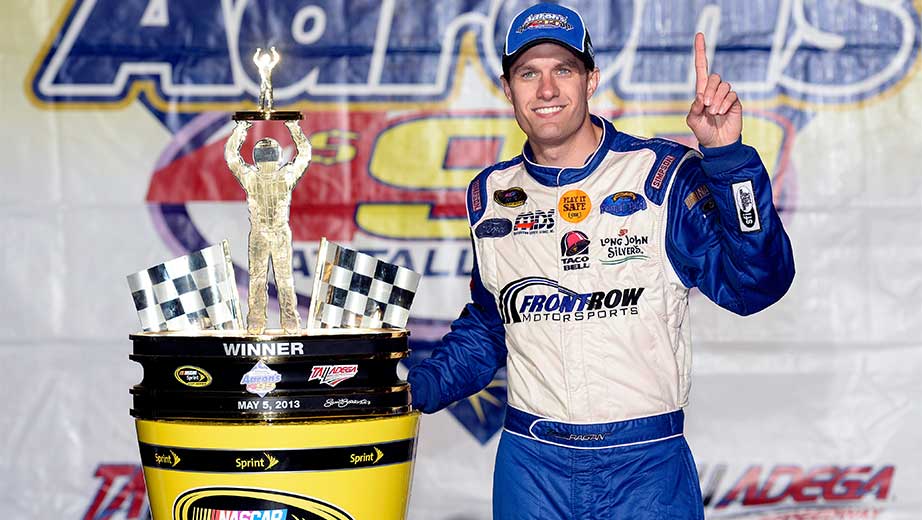
Joining Turner Scott Motorsports for the NASCAR Camping World Truck Series opener, Ryan Truex will pilot the No. 32 Chevrolet at Daytona International Speedway for the NextEra Energy Resources 250 on Feb. 21.

A two-time NASCAR K&N Pro Series East champion, Truex will make his second career start for TSM after making his debut for the team in 2013 at Daytona. Truex finished 28th in that race after a blown tire sent him to the garage with nine laps remaining.

FULL SERIES COVERAGE

• View all articles
• View all videos
• View all photos

"I’m really excited to be running for Turner Scott Motorsports again this year," Truex said in a team release. "Last year was a lot of fun and we had a really good truck. Unfortunately, we had a tire go out in the end, but we were making our way toward the front. I’m looking to do the same thing again this year and stay up front this time. I think it’s really cool that Bass Pro Shops is coming on board again and helping me out. I appreciate that they wanted to do this again after doing this race with me last year."

TSM had a strong showing last year at Daytona with all four of the team’s entries securing starting positions in the top 10. Jeb Burton had the team’s best finish of fifth, followed by Miguel Paludo (seventh) and James Buescher (13th).

Truex has two other starts in the Truck Series and earned a best finish of ninth in 2012 at Phoenix International Raceway. He will compete full-time in the NASCAR Sprint Cup Series in 2014 with BK Racing.

"I’m very excited to have Ryan back in our truck this season," team co-owner Harry Scott Jr. said. "He ran a heck of a race for us last year and was competing for the win until the very end. I’m glad that he’s going to have a chance to come back and have a shot at the win that eluded him last year. I’m hoping that he and Ben (Kennedy) will work well together and that Ben will be able to learn from Ryan and his experience from last year."

MORE:

READ: Expansion, eliminations
highlight Chase changes

WATCH: Brian France breaks
down Chase changes

READ: Coors Light qualifying
changes announced

WATCH: Qualifying: One-on-one
with Robin Pemberton

Check out the statistics for eligible drivers in Saturday’s race at 8 p.m. ET on FOX Sports 1

RELATED: Cast your vote today

Below is a look at some of the top statistical performers at Daytona International Speedway in Daytona Beach, Fla. going into The Sprint Unlimited on Feb. 15. A total of 20 drivers are eligible to participate in the annual preseason, non-points race.

2014 Sprint Unlimited at Daytona Entry List
Denny Hamlin (5 Coors Light poles), Kyle Busch (3), Jimmie Johnson (3), Matt Kenseth (3), Joey Logano (2), Ryan Newman (2), Dale Earnhardt Jr. (2), Jeff Gordon (2), Carl Edwards (2), Marcos Ambrose (1), Kurt Busch (1), Kevin Harvick (1), Brad Keselowski (1), Jamie McMurray (1), Danica Patrick (1), Ricky Stenhouse Jr. (1), Tony Stewart (Winner: 2001, ’02, ’07), Terry Labonte (Winner: 1985)

Eligible Drivers Performance
Marcos Ambrose – No. 9 Stanley Ford             Times Laps
Year Fin St Car Laps Led Led Status
2012 3 21 9 82 1 1 Running
2013 11 10 9 75 — — Running
Kurt Busch – No. 41 Haas Automation Chevrolet             Times Laps
Year Fin St Car Laps Led Led Status
2002 14 1 97 70 1 3 Running
2003 11 3 97 70 1 11 Running
2005 6 6 97 70 — — Running
2007 3 19 2 70 2 6 Running
2008 18 1 2 70 — — Running
2009 9 12 2 78 — — Running
2010 23 22 2 32 — — Accident
2011 1 17 22 75 3 3 Running
2012 17 6 51 82 — — Accident
2013 13 18 78 15 — — Accident
Kyle Busch – No. 18 M&M’s Toyota             Times Laps
Year Fin St Car Laps Led Led Status
2006 15 14 5 72 2 4 Running
2007 7 6 5 70 3 39 Running
2009 10 10 18 78 2 6 Running
2010 4 17 18 76 — — Running
2011 16 21 18 41 2 2 Accident
2012 1 2 18 82 2 3 Running
2013 16 13 18 14 — — Accident
Dale Earnhardt Jr. – No. 88 National Guard Chevrolet             Times Laps
Year Fin St Car Laps Led Led Status
2001 6 10 8 70 — — Running
2002 2 16 8 70 1 20 Running
2003 1 19 8 70 4 13 Running
2004 2 19 8 70 — — Running
2005 7 12 8 70 — — Running
2006 2 19 8 72 1 1 Running
2007 14 17 8 70 — — Running
2008 1 7 88 70 7 47 Running
2009 18 9 88 64 4 23 Accident
2010 11 11 88 76 — — Running
2011 19 1 88 27 3 4 Accident
2012 20 8 88 54 2 12 Accident
2013 8 16 88 75 0 0 Running
Carl Edwards – No. 99 Fastenal Ford             Times Laps
Year Fin St Car Laps Led Led Status
2006 16 11 99 71 — — Running
2008 12 20 99 70 1 1 Running
2009 7 11 99 78 2 11 Running
2010 17 1 99 74 2 42 Accident
2011 21 3 99 33 — — Accident
2012 9 11 99 82 — — Running
2013 12 1 99 75 — — Running
Jeff Gordon – No. 24 Drive To End Hunger Chevrolet             Times Laps
Year Fin St Car Laps Led Led Status
1994 1 6 24 20 1 2 Running
1995 4 5 24 20 — — Running
1996 9 7 24 20 — — Running
1997 1 3 24 20 — — Running
1998 14 5 24 25 — — Engine
1999 15 8 24 25 — — Running
2000 2 6 24 25 — — Running
2001 11 6 24 70 — — Running
2002 3 22 24 70 — — Running
2003 2 18 24 70 2 31 Running
2004 5 2 24 70 2 16 Running
2005 3 11 24 70 — — Running
2006 19 10 24 23 — — Accident
2007 21 11 24 31 — — Electrical
2008 4 22 24 70 1 1 Running
2009 4 28 24 78 2 2 Running
2010 6 23 24 76 — — Running
2011 6 12 24 75 1 1 Running
2012 15 14 24 73 3 16 Accident
2013 17 7 24 14 — — Accident
Denny Hamlin – No. 11 FedEx Express Toyota             Times Laps
Year Fin St Car Laps Led Led Status
2006 1 15 11 72 3 16 Running
2007 17 21 11 70 — — Running
2008 9 12 11 70 — — Running
2009 13 5 11 78 2 4 Running
2010 5 24 11 76 — — Running
2011 12 4 11 75 — — Running
2012 5 16 11 82 — — Running
2013 15 5 11 14 — — Accident
Kevin Harvick – No. 4 Jimmy John’s Chevrolet             Times Laps
Year Fin St Car Laps Led Led Status
2003 9 16 29 70 — — Running
2004 3 5 29 70 2 10 Running
2006 20 18 29 15 — — Engine
2007 5 20 29 70 2 11 Running
2009 1 27 29 78 1 1 Running
2010 1 2 29 76 5 21 Running
2011 7 18 29 75 — — Running
2012 22 22 29 54 3 4 Accident
2013 1 17 29 75 3 37 Running
Jimmie Johnson – No. 48 KOBALT TOOLS Chevrolet             Times Laps
Year Fin St Car Laps Led Led Status
2003 7 2 48 70 1 4 Running
2004 9 17 48 70 — — Running
2005 1 17 48 70 1 16 Running
2006 5 2 48 72 3 12 Running
2007 4 8 48 70 — — Running
2008 3 18 48 70 — — Running
2009 14 21 48 77 1 2 Accident
2010 13 16 48 76 — — Running
2011 4 23 48 75 2 7 Running
2012 14 18 48 74 1 1 Accident
2013 14 11 48 14 — — Accident
Matt Kenseth – No. 20 Dollar General Toyota             Times Laps
Year Fin St Car Laps Led Led Status
2003 3 5 17 70 3 6 Running
2006 6 16 17 72 — — Running
2009 8 25 17 78 1 1 Running
2010 16 8 17 74 — — Accident
2011 13 19 17 74 — — Running
2012 21 23 17 54 — — Accident
2013 5 12 20 75 2 25 Running
Brad Keselowski – No. 2 Miller Lite Ford             Times Laps
Year Fin St Car Laps Led Led Status
2012 4 3 2 82 — — Running
Terry Labonte – No. 32 C&J Energy Services Ford             Times Laps
Year Fin St Car Laps Led Led Status
1982 2 1 44 20 — — Running
1983 10 11 44 19 — — Accident
1984 9 11 44 20 — — Running
1985 1 11 44 20 1 16 Running
1986 5 8 11 20 — — Running
1987 9 5 11 0 — — Accident
1988 9 5 11 20 — — Running
1989 3 4 11 20 — — Running
1992 13 7 94 20 — — Running
1996 4 11 5 20 — — Running
1997 11 1 5 20 1 10 Running
2001 15 12 5 69 — — Running
2002 7 7 5 70 — — Running
2003 14 17 5 70 — — Running
2004 8 6 5 70 3 17 Running
2013 19 19 32 2 — — Accident
Joey Logano – No. 22 Shell Pennzoil Ford               Times Laps
Year Fin St Car Laps Led Led Status
2009 28 19 20 3 — — Accident
2010 7 21 20 76 — — Running
2011 18 22 20 27 — — Accident
2012 18 10 20 54 1 1 Accident
2013 3 9 22 75 — — Running
Jamie McMurray – No. 1 Cessna Chevrolet             Times Laps
Year Fin St Car Laps Led Led Status
2004 17 3 42 69 2 8 Accident
2006 8 17 26 72 1 1 Running
2008 22 4 26 24 — — Accident
2009 2 15 26 78 4 16 Running
2010 3 9 1 76 2 2 Running
2011 2 14 1 75 — — Running
2012 16 4 1 73 5 11 Accident
Ryan Newman – No. 31 Caterpillar Chevrolet             Times Laps
Year Fin St Car Laps Led Led Status
2002 15 8 12 70 — — Running
2003 4 15 12 70 — — Running
2004 16 16 12 69 1 4 Accident
2005 2 7 12 70 1 4 Running
2006 17 7 12 68 — — Accident
2007 20 9 12 46 — — Engine
2008 23 17 12 70 — — Running
2010 19 4 39 74 — — Accident
2011 3 8 39 75 3 18 Running
2012 7 13 39 82 — — Running
Tony Stewart – No. 14 Mobil 1/Bass Pro Shops Chevrolet             Times Laps
Year Fin St Car Laps Led Led Status
2000 4 3 20 25 — — Running
2001 1 7 20 70 — — Running
2002 1 3 20 70 2 31 Running
2003 15 12 20 70 — — Running
2004 7 18 20 70 — — Running
2005 4 8 20 70 — — Running
2006 3 3 20 72 3 7 Running
2007 1 14 20 70 2 11 Running
2008 2 10 20 70 2 9 Running
2009 3 6 14 78 1 4 Running
2010 9 13 14 76 2 6 Running
2011 11 2 14 75 3 4 Running
2012 2 15 14 82 1 7 Running
2013 4 15 14 75 2 5 Running

—

Sprint Unlimited Tidbits

The number of participants has ranged from a low of seven in 1981 to a high of 28 in 2009 (18 are entered in this year’s event).

The drivers with the most Sprint Unlimited appearances:

—- * Mark Martin (24)

—- * Bill Elliott (23)

—- * Jeff Gordon (20)

—- * Ken Schrader (19)

—- * Rusty Wallace (19)

Mark Martin and Jeff Gordon have appeared in the most consecutive Sprint Unlimited races, competing in 20 consecutive events. Martin from 1989-2008 and Gordon from 1994-2013.

There have been eight multiple winners in the Sprint Unlimited:

—- * Dale Earnhardt won six events, most all-time (1980, 1986, 1988, 1991, 1993, 1995).

—- * Dale Jarrett won in 1996, 2000 and 2004.

—- * Kevin Harvick won in 2009, 2010 and 2013.

—- * Tony Stewart won in 2001, 2002 and 2007.

Other multiple winners: Neil Bonnett (1983-1984), Ken Schrader, (1989-1990), Jeff Gordon (1994 and 1997) and Dale Earnhardt Jr. (2003 and 2008).

Bonnett, Schrader, Stewart and Harvick are the only drivers to win back-to-back Sprint Unlimited races. No driver has won three consecutive Sprint Unlimited events.

Buddy Baker (1979), Dale Earnhardt (1980), Jeff Gordon (1994), Dale Jarrett (1996) andDenny Hamlin (2006) all won the first Sprint Unlimited in which they competed.

Only five times in the 32-year history of the race has the winner gone on to win the Daytona 500:

—————- * Bobby Allison (1982)

—————- * Bill Elliott (1987)

——————* Dale Jarrett (1996 and 2000)

—- * Jeff Gordon (1997)

There have been three winners from the pole: Darrell Waltrip (1981), Bill Elliott (1987) and Ken Schrader (1989).

Two drivers have swept the Sprint Unlimited, Daytona 500 pole and Daytona 500 from 1979-2013: Dale Jarrett (2000) and Bill Elliott (1987).

One driver has swept the Sprint Unlimited, Daytona 500 and the Coke Zero 400 from 1979-2013: Bobby Allison (1982).

Seven drivers have won the Sprint Unlimited (1979-2013) and the same season’s championship. Dale Earnhardt is the only one to have accomplished it multiple times – four times.

—- * Tony Stewart (2002)

—- * Jeff Gordon (1997)

—- * Dale Earnhardt (1993)

—- * Dale Earnhardt (1991)

—- * Dale Earnhardt (1986)

—- * Darrell Waltrip (1981)

——* Dale Earnhardt (1980)

Four drivers have won consecutive Sprint Unlimited races (1979-2013). None went on to win that year’s Daytona 500.

—- * Kevin Harvick (2009-10)

—- * Tony Stewart (2000-01)

—- * Ken Schrader (1990-91)

—- * Neil Bonnett (1983-84)

The format for the Sprint Unlimited has changed 12 times since its inception into the NASCAR Sprint Cup Series in 1979.

The second starting position is the most proficient starting position in the field resulting in five wins over the 35 races.

Sprint Unlimited Manufacturer Recap

—

Manufacturer Victories Last Victory – Driver
Chevrolet 20 2013 – Kevin Harvick
Ford 7 2004 – Dale Jarrett
Buick 2 1982 – Bobby Allison
Oldsmobile 2 1980 – Dale Earnhardt
Pontiac 2 2002 – Tony Stewart
Dodge 1 2011 – Kurt Busch
Toyota 1 2012 – Kyle Busch

—

By the Numbers: Sprint Unlimited

.013 –Margin of victory in seconds by Kyle Busch over Tony Stewart in 2012, the closest margin in Sprint Unlimited history.

.058 –Margin of victory in seconds by Kurt Busch over Jamie McMurray in 2011, the second closest margin in Sprint Unlimited history.

.08 –Margin of victory in seconds by Dale Earnhardt over Sterling Marlin in 1995, the third closest margin in Sprint Unlimited history.

1 – Laps led by Rusty Wallace (1998), Neil Bonnett (1983-84), Dale Earnhardt (1980), Dale Jarrett (2000 and 2004) and Kevin Harvick (2009) in the Sprint Unlimited races they won.

2 – The starting position that has produced the most Sprint Unlimited wins (five).

2.75 – Average finish by Dale Earnhardt, best by any driver with multiple starts.

5 – Drivers who have won the event in their first appearance (Buddy Baker, 1979; Dale Earnhardt, 1980; Jeff Gordon, 1994; Dale Jarrett, 1996; Denny Hamlin, 2006).

6 – Number of Sprint Unlimited wins by Dale Earnhardt, the series leader.

7 – Number of fewest starters in the field for the Sprint Unlimited (1981).

9 – Number of races led, most since race began in 1979 (Dale Earnhardt Jr.)

11 – Number of starts before winning, most since race began in 1979 (Rusty Wallace and Mark Martin).

14 – Number of different leaders in the 2009 event, most since race began in 1979.

20 – Number of wins by Chevrolet in the Sprint Unlimited, leads all manufacturers.

20 – Most consecutive starts in the Sprint Unlimited by Mark Martin (1989-2008) and Jeff Gordon (1994-2013).

27 – Kevin Harvick’s starting position in 2009, the lowest by a race winner in the event’s history.

28 – Number of lead changes in the 2011 event, highest number since race began in 1979.

44 – Laps led by Greg Biffle in 2005, the most by a driver who did not win the event.

47 – Laps led by Dale Earnhardt Jr. in 2008, the most in a single Sprint Unlimited.

124.095 mph – The slowest average speed of the race for the Sprint Unlimited was last season’s event won by Kyle Busch.

197.802 mph – The fastest average speed of the race for the Sprint Unlimited was in 1987 won by Bill Elliott.

MORE:

READ: Year in Review
driver profiles

READ: A season defined
by a night in Richmond

READ: Top 10 on-track
moves of 2013

WATCH: Handing out the
2013 Loopie Awards

Petty holds the record of all-time wins with seven

Richard Petty claimed his first Daytona 500 win at Daytona International Speedway in 1964 and didn’t stop there. Petty would go on to win at the crown jewel of stock car racing six more times, earning himself the most all-time wins in NASCAR’s most historic race. As for the most wins for an active driver, veteran Jeff Gordon holds that distinction with three 500 victories.


Lee Petty was the first driver to win Daytona 500, Cup championship in same season

In 1959, Lee Petty set a trend that four other drivers have since followed — winning the Daytona 500 and the Cup championship in the same season. Following Lee Petty was son Richard Petty, who accomplished the feat four times (1964, 1971, 1974, 1979). Cale Yarborough broke through in 1977, Jeff Gordon got his double in 1997 and Jimmie Johnson has accomplished it twice, in 2006 and 2013. 


Coors Light Pole Award was first for a woman

At the NASCAR Sprint Cup Series season-opener in 2013 at Daytona International Speedway, Sunoco Rookie of the Year candidate Danica Patrick made history. Patrick set the stage early in qualifying with a top speed of 196.434 mph and ultimately outran her competitors and secured the pole position for the race, making her the first woman in NASCAR history to do so. Patrick went on to finish eighth in the Daytona 500 and led five laps.


Kevin Harvick won both events last year and finished 42nd in the Daytona 500

A total of 13 drivers have won both the Sprint Unlimited, which began in 1979, and one of the Daytona Duels in the same year. Out of those 13 drivers, none have pulled off the sweep and also won the Daytona 500. Last year, NASCAR Sprint Cup Series veteran Kevin Harvick won both the Unlimited and one of the two duel races, but finished 42nd in the 500. Two years before that, Kurt Busch won both events, but finished fifth to Trevor Bayne, the youngest Daytona 500 winner to date. 


29-year-old to run 20 Sprint Cup Series races in the No. 95 car

He’s never won a race at the national level, and his most famous moment in NASCAR was when his car barrel-rolled down the frontstretch during a qualifying attempt at Texas. For the past five years, he’s driven almost exclusively vehicles that have rolled into the garage reporting mechanical issues only a few dozen laps into the race.

Through it all, Michael McDowell has managed to become something else — a survivor. He’s lost a high-profile ride, been resigned to squeeze go-or-go-home cars into races, even driven his own motorhome to tracks to cut down on travel costs. But he’s hung on long enough to snare a new job with Leavine Family Racing, which will attempt 20 Sprint Cup Series races in 2014, with what team officials believe can be a competitive No. 95 car.

"For me, it’s not so much about the things I don’t have, but I’m fortunate to have the opportunities I do have," McDowell said. "You look, there are a lot of great drivers that are a lot more talented than I am who are not in this sport any longer. So I feel very fortunate to still be in the sport, and I feel that perseverance, almost, has given me the opportunity to see a lot of different aspects and elements of the sport, which helps me bring a little bit to the program with LFR being a smaller program trying to grow."

McDowell has seen it all, all right, even though he’s just 29. The Phoenix native and former ARCA star broke through in 2008 in Michael Waltrip Racing’s No. 00 car, but back when MWR often struggled to just make races, and had not yet transformed itself into the winning organization is it now. Although he often showed speed — too much of it in that epic qualifying crash at Texas — the results never came, and one year later McDowell was making his living sneaking less-than-competitive cars into races.

He’s been doing that basically ever since, despite a dozen runs in Joe Gibbs Racing Nationwide Series equipment where he’s consistently finished inside the top 10 and even had a few chances to win races. It’s those performances — like a runner-up finish at Mid-Ohio last season, and another at Road America in 2012 — that give him confidence that he can make it in NASCAR.

"Really, those Gibbs races gave me the opportunity to show myself whether I could or couldn’t do it. As a driver, that’s really all you want," McDowell said. "You fight your entire career to see if you have the stuff, you know? You think you have the stuff, and you’re confident you do, and then you get to this level, and everybody does. It’s so difficult. And without the right opportunities, you just never know. So a lot of it was my own stubbornness, me saying, ‘I’ve got to stay in this thing long enough to see if I can do it.’"

McDowell remembers a race for Gibbs at Iowa in 2012, where he was racing Kurt Busch for third on the final lap. McDowell challenged Busch for the spot and it ended with Busch in a sideways slide and a fifth-place finish, while McDowell took third place.

"That’s not a highlight," said McDowell, who expects to have more Nationwide starts for JGR this season. "But the fact of the matter was, I was racing Kurt Busch for third place on the last lap. Which sort of re-sparks that — hey, I want to be here, I want to do this. And with the opportunity I have now in the 95, I think we’ll have runs where people go — wow, they are serious."

That’s certainly the hope. LFR has one top-10 finish in its three-year history — ninth at Talladega last spring with Scott Speed, who has left to pursue rally racing. McDowell filled in for Speed during last year’s Sprint Showdown, and the relationship with LFR owner Bob Leavine proved fruitful when the ride became open for 2014. Thanks in part to sponsorship from the Christian radio network K-Love, McDowell will once again have the opportunity to actually race at NASCAR’s highest level.

"Obviously, we’re all very competitive," McDowell said. "Being one of 43, you don’t get there just by enjoying the ride and not being intense. That part’s definitely hard. And then especially when you have a good car and a good week, you know you can’t run. Now with this new program, we know every weekend when we show up, we’re going to have an opportunity to compete. We’re going to have good pit stops, we’re going to have tires, we’re going to have all the things we need to need to be competitive."

The team will field a Ford and use Roush-Yates engines in its 20-race schedule, which will begin with the Daytona 500. McDowell finished a career-best ninth in the event last year, getting a rare chance to compete for the full race in a vehicle fielded by Mike Curb. This season, he’ll be able to do the same thing every time he rolls onto the track.

"The biggest thing was, for me it was an opportunity to race," he said, "and that’s all I want to do."

MORE:

READ: Expansion, eliminations
highlight Chase changes

WATCH: Brian France breaks
down Chase changes

READ: Coors Light qualifying
changes announced

WATCH: Qualifying: One-on-one
with Robin Pemberton

Trevor Bayne will run in 12 Sprint Cup Series events with team

In the mid-2000s, when a sponsorship squeeze led some race teams to merge with one another or take on partners in order to survive, one of the sport’s oldest organizations took the opposite approach. In a move urged by its manufacturer partner, Wood Brothers Racing scaled back to part-time — a decision that’s kept the historic franchise on the race track, and netted a Daytona 500 victory three years ago.

The Woods will continue that trend in 2014, where the team’s famous red and white No. 21 car will compete in 12 Sprint Cup Series events with Trevor Bayne once again behind the wheel. But the 64-year-old organization continues to make inroads toward returning to full-time status, something it might find itself forced to consider should Bayne pull another shocker in The Great American Race.

"We would be really love to be back full-time," said team co-owner Eddie Wood. "With so much emphasis now on the championship with the Chase … we work toward getting back full-time all the time. My kids Jon and Jordan, they do a lot of research and try to generate marketing strategies, and we’re open to anything to find more funding."

Particularly given NASCAR’s move to revamp the Chase for the NASCAR Sprint Cup, which has been expanded to 16 drivers, and will almost certainly accommodate everyone who wins a race. Since playoff hopefuls must attempt to qualify for all 36 points races and remain in the top 30 in the standings to be eligible, a potential sixth Daytona 500 victory for the Woods would demand some hard decisions about whether to accelerate full-time plans.

"That would change the game a little bit," Wood said. "If you’re fortunate enough to say, win the Daytona 500, then you’d figure out a way to do it. But that would be huge."

As far as infrastructure and support, Wood said the team is more prepared for an expanded schedule than its current limited slate might indicate. The Woods have 30 people working in their Charlotte-area shop, and receive cars from Roush Fenway Racing and engines from Roush-Yates. With support from Ford and its Motorcraft brand, the team has purchased four new race cars. Its over-the-wall crew will be the group that pits the No. 43 Nationwide Series car each weekend at Ford stable mate Richard Petty Motorsports, and crew chief Donnie Wingo receives technical information from Roush whether he’s at the track or not.

"The engineering and data that happens on a particular weekend, Donnie has that live whether it’s in the shop, or on his phone, or at home," Wood said. "So we’re the same as being there, we’re just not there. We’ve got all the information and all the input, and know what’s going on live. It’s like real-time. So it’s really not a disadvantage in that sense. You just don’t get to go."

The missing piece is funding. Wood said the team is open to using other drivers in the No. 21 car beyond Bayne, should they bring some sponsorship to the table that would help Wood Brothers expand its schedule. Jon and Jordan Wood send out "half a dozen proposals a week," to prospective sponsors, he added, some of which have shown interest.

"We’re getting calls back," Eddie Wood said. "It’s getting better, and there are some new sponsors coming in. But for us, people are calling back now, and asking questions, and asking for more information. We’ve got a couple of things working, knock on wood. They may or may not happen, but we got close to some things in the offseason for half a dozen more races or something like that. We couldn’t go jump right back into all the races in one year like right now. If you knew you had the funding to do it in ’15, yeah, you could. You’d need a lot of buildup time. But we could run 20 to 25 races easily with the people we’ve got."

For now, though, a team with 98 career victories remains a part-time competitor, limiting its schedule to the restrictor-plate tracks and fast intermediate venues where it has the best chance for success. Although Bayne also races the full Nationwide slate for Roush, the limited Sprint Cup schedule brings some challenges from a driver’s perspective. After Daytona, he’ll be in the No. 21 car just twice — at Las Vegas and Texas — before the next plate race at Talladega. Late in the year, he’ll go nine weeks at one point in between starts.

Drivers who compete on a weekly basis are able to lean upon trends that help them better identify what setup packages fit them best. For Bayne, those trends don’t necessarily exist, so he has to use practice time to find comfort levels that full-time drivers might have established weeks ago. And because the No. 21 car usually has to make the event on speed, the Woods must carve out even more practice time for qualifying, all while the competition is working on getting better for the race.

"We spend the majority of our practice doing one-lap, two-lap runs, and then when it gets to race practice time, we kind of have to rely on the information we have, which makes it extremely tough," Bayne said. "If we have a little more speed this year and don’t have to worry about qualifying as much, especially with the new (group) format, if that plays to our advantage them we could spend more time in race practice, and that would extremely help our races."

And yet, every week the Woods are at the race track, Eddie Wood said, they’re there operating as if they’re running every race. The limited schedule doesn’t lower the team’s competitive goals, as evidenced by a test the No. 21 car took part in this past week at Talladega.

"We still have an opportunity to win races," Bayne said. "These guys really believe in our superspeedway program. … It’s kind of an even playing field there. The thing that Donnie and I will work on is just communication, because we pretty much race once a month, and that makes it a little bit more challenging. But we know that. We know what we’re up against, and we know our strengths and our weakness, and we’ll try to make more of this season to where we can contend for those top-10s and top-15s, and then that leads to those top-fives and wins that you’re looking for."

MORE:

READ: Expansion, eliminations
highlight Chase changes

WATCH: Brian France breaks
down Chase changes

READ: Coors Light qualifying
changes announced

WATCH: Qualifying: One-on-one
with Robin Pemberton

Veteran driver looks to improve off ninth-place finish in final standings of 2013

MORE: Chemistry key for Stenhouse Jr.

Uncharacteristically, short tracks became one of Greg Biffle‘s stronger suits last season. But increased performance on NASCAR’s bullrings came at a cost, specifically on the intermediate-sized speedways that used to be his Roush Fenway Racing team’s safe haven.
 
Was the trade-off worth it? Biffle isn’t so sure.
 
"We had a stranglehold a little bit on those (intermediate) type of race tracks," Biffle said during late January at the annual Sprint Media Tour. "Last year, we were just average. It felt like we lost our edge. We weren’t really sitting below those other guys, we just lost that stranglehold, it felt like, on those tracks. Although: Better at Richmond, better at Martinsville, better at Loudon, but I don’t know if I want to trade that for the dominance we had on the intermediate tracks.
 
"And it seems like you can never have both. It’s like, take your pick, you’re only allowed to have one. That’s been so hard of a balance."

The focus shifts back to regaining the intermediate-track advantage this year as Biffle embarks on his 12th season driving Roush Fenway’s No. 16 Ford. From a personal standpoint, Biffle enters a contract year with optimism about an extension with longtime sponsor 3M. From a team view, Biffle was the head of the Roush Fenway class last season with a ninth-place result in the NASCAR Sprint Cup Series points, but the team made it clear that finishes of ninth, 13th and 19th in the final standings were not acceptable.
 
Biffle has had brushes with the Sprint Cup crown before — a runner-up finish in a six-win season in 2005, third place in 2008, and fifth as recently as 2012. For the 44-year-old veteran to have a chance at becoming the first driver to win championships in all three NASCAR national series, Roush Fenway’s general manager Robbie Reiser said the team has to hold up its end of the partnership.
 
"I believe on Greg Biffle’s part, it’s a little more on our shoulders to be able to help support what he’s doing there," Reiser said. "Greg’s got all the ability in the world to win the championship and we’ve got to supply a team, and parts and components around him that can go out and do that. We’ve got to look in the mirror on that one and be able to understand that we’ve got to build a better company for Greg to be sitting at the head table at the end of the year."
 
Biffle, who has driven for team owner Jack Roush in all but three of his 55 NASCAR national series wins, isn’t quite ready to assign blame — not when he watches his crew grind through double shifts and manage the rigors of an extensive testing schedule to get ready before the season-opening Daytona 500 on Feb. 23.
 
"You’re never going to have the fastest car all the time. So to say they need to provide better cars or wish we had faster cars or this or that, it’s hard to point fingers," Biffle said. "Yeah, do we wish we had the fastest car all the time? Sure. The one thing I bring out of that is, the second that you feel like the team or the organization is not doing every single thing possible,that’s when you get upset. …
 
"That’s never the case with us. … We’re doing everything we can to have the fastest cars, so that’s all I can ask of them."
 
Biffle led just three laps all last season at the intermediate-sized 1.5-mile tracks that used to be the team’s best venues. The flip side to the performance trend was finding himself among the top 10 cars on a more consistent basis on short tracks.
 
The key to improvement this year will be transforming the top-10 efforts into top-five finishes, and not just on a certain style of track.
 
"We want to run in the top five the whole race, but then again, so do 42 other guys. Only so many of us are going to," Biffle said. "For us to be running in the top 10 at those races, that’s not far from being in the top five. Like I say, it’s stepping stones. You’re not going to win unless you’re running in the top five, right? You’re not going to win from 12th, normally. You’re not going to win from ninth or eighth. You’re going to win from fourth, third, second, fifth — you’re going to win from there. So that’s the progression."

MORE:

READ: Expansion, eliminations
highlight Chase changes

WATCH: Brian France breaks
down Chase changes

READ: Coors Light qualifying
changes announced

WATCH: Qualifying: One-on-one
with Robin Pemberton