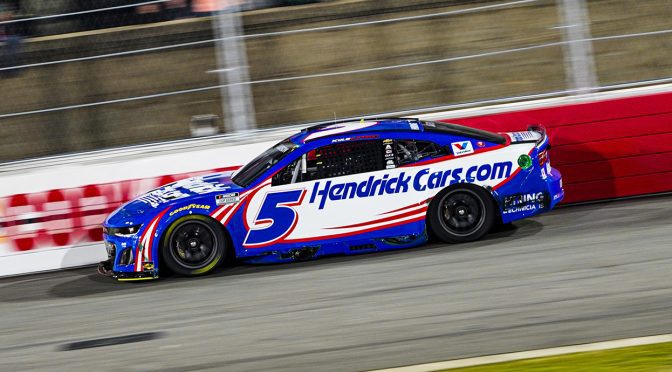
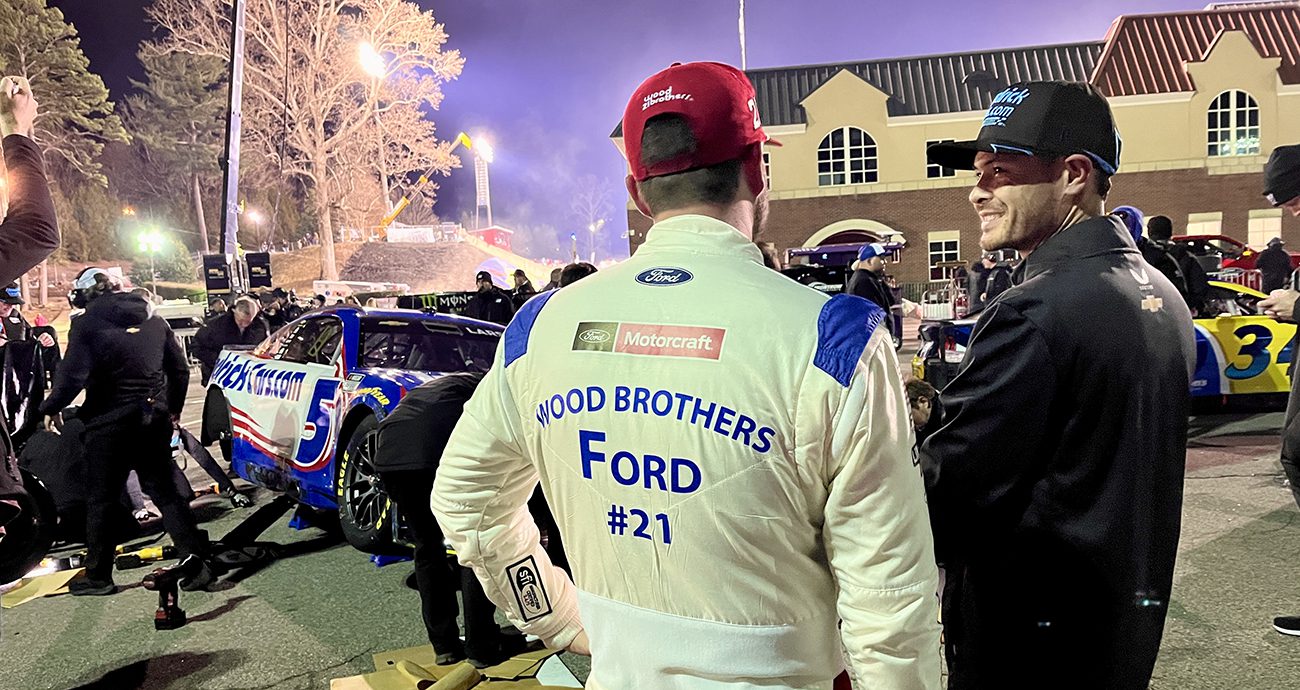
Kyle Larson stormed from a 10th-place starting position to win Sunday night’s Last Chance Qualifier, joining Josh Berry to collect the final two open spots in the Cook Out Clash at Bowman Gray Stadium.
Larson, the 2021 NASCAR Cup Series champion, struggled in Saturday’s heat race, finishing eighth of 10 drivers in Heat 2, sending him to the 75-lap LCQ rather than the big show immediately. Those Saturday struggles vanished Sunday as he wheeled his No. 5 Hendrick Motorsports Chevrolet through the field Sunday. With his finish in the LCQ, Larson will start 21st in The Clash (8 p.m. ET, FOX, MRN Radio, SiriusXM NASCAR Radio).
“I thought if I take the outside front row, there’s a higher percentage of a chance that I’m gonna get wiped out whenever I either get down or somebody shoves somebody into me,” Larson said of his lane choice on restarts. “So I just thought my safest thing was to choose inside second row, and thankfully, it worked out.”
“My car felt like a totally different race car, so I was happy with that,” Larson said in regard to the No. 5 team’s adjustments before the LCQ. “It really allowed me to get to the front pretty quickly. Hopefully, they can get it repaired here, and we’ll have a decent shot here, I think, in this race.”
Though his speed was fast enough for fourth-quickest in Saturday’s opening practice sessions, Larson qualified just 22nd of the 39 entrants, setting him up for a sixth-place start in Heat 2. Once the 25-lap preliminary began, Larson was trapped on the outside behind Zane Smith as Smith ran side-by-side with Bubba Wallace and Daniel Suárez. Smith eventually worked his way to the bottom, but Suárez shunted him out of the way and back into Larson’s path. Larson bounced off Smith’s No. 38 Ford and nearly turned sideways across the front bumper of Cody Ware’s No. 51 machine. Larson couldn’t recover in the remaining 18 laps and was forced to settle for his spot in the LCQ.
Ryan Blaney earned the provisional spot for Sunday’s main event based on his points finish last year (2nd) after exiting early due to a mechanical issue found before the race.
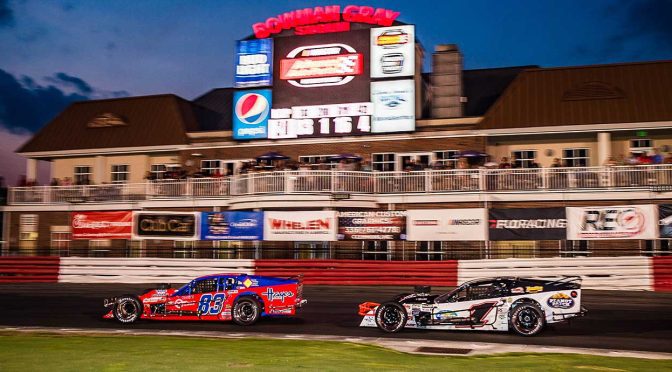
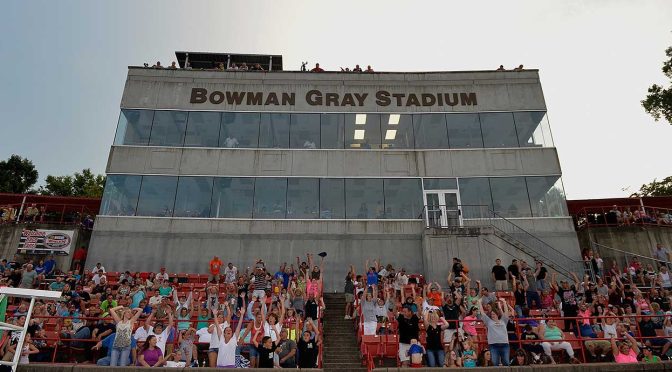
WINSTON-SALEM, N.C. — Tim Brown and Burt Myers both grew up at Bowman Gray Stadium, both part of families with rich racing history here. Brown’s earliest memories, he said, date back to when he was 5 or 6 years old, back when he joined Myers and other youngsters to play along the tree-lined pit area on Saturday nights while their older relatives tuned, wrenched and prepped.
Their paths never strayed very far from there, but now their memories include record-breaking statistics that vet them as stadium legends. This was, and is still, their playground.
“That’s what makes it even more special to get to make a Cup debut here,” Brown says.
Brown and Myers will attempt to put some local flavor into the main-event field as the lone double-duty drivers for Sunday’s Cook Out Clash (8 p.m. ET, FOX, MRN Radio, SiriusXM NASCAR Radio), which will stage its first edition at the quarter-mile track. They’ll be vying for the two open spots on the 23-car starting grid in the 75-lap Last Chance Qualifier (6 p.m. ET), hoping their hometown advantage as Bowman Gray regulars holds sway.
Those early childhood memories have evolved into one of the track’s most competitive rivalries. Brown and Myers have combined (in a near-even split) for 23 championships and 198 wins in the featured Modified Division, and their tendency to find each other’s cars at the front of the pack has created fierce racing between them through the years. Myers says at Bowman Gray, the roots typically run deep — to a lifelong level, in some cases — so it’s natural that altercations would sometimes flare.
“Me and Tim Brown been racing together for almost 30 years,” Myers says. “What do you think is going to happen at least three or four times throughout our careers, racing against each other and battling for wins and championships every Saturday night? That’s what creates rivalries.”
So it was also natural that both Modified standouts landed a call-up to the majors for the Cup Series’ return to Bowman Gray. Brown will drive the No. 15 Ford for Rick Ware Racing, where he works full-time as a suspension and drivetrain specialist. Myers reached a deal with AmeriVet Racing’s No. 50 Chevrolet team for a potential Clash debut.
When Brown was presented with the suggestion that he might also hope for the best for Myers in a show of stadium solidarity against the Cup Series stars, he didn’t exactly throw water on his competitive fires. But he was also quick to recognize the importance of this moment for a pair of Bowman Gray lifers.
“That’s a tough question to answer because the racer in me says no, but I think it’s good that both of us got this opportunity to do this and thanks to everybody involved that thinks the same way,” Brown says. “At my age, just to get the opportunity to do this is overwhelming and it’s super special.”
Brown’s age is 53, which makes him the oldest driver on this weekend’s entry list. Myers’ age is 49, second-oldest in the Cup garage this weekend, but he cautions not to take that number at face value.
“Don’t make a mistake now, I’m in my prime,” Myers says with a laugh. “That’s what I tell people. I’m like Doc Holliday, I’m in my prime.”
As reigning track champion, Myers has some truth behind the statement. A whopping 15 of the last 17 Modified titles have gone to either Brown or Myers, and both are still winning races on a regular basis.
The track that’s greeting them this weekend has undergone a transformation, with new SAFER barriers lining the oval and bright, Musco lights illuminating the action. For Brown and Myers, those changes are particularly personal.
“I mean, it’s a double-edged sword,” Myers says. “The old-school Burt Myers, I love the nostalgia of it, of the old track with the red and white guardrail, and I like the fact that it was the old Bowman Gray. So I was sad to see that go, but at the same time, what they’re doing and what they’ve done only speaks of the future of Bowman Gray. In other words, I think we can all agree that Bowman Gray is probably going to still be there racing in another 100 years. They’re not going to do all this just to run one show. This is for the Cup show, but at the same time, this is for the longevity of the short-track series that has been so successful there for so long.”
Says Brown: “Cosmetically, it’s beautiful and that’s important, too, for the fans that come, for sponsors to spend money to come. If you say, ‘Hey, we’re partners with teams that race here’ and you show them this race track now, they’re gonna be impressed. Now, it did have some history with the old guardrails laid over and painted and things and had some character and very historical, but it’s just a new chapter, so it’ll still have the same persona, it’ll still have the same passion of fans and it’ll still put on a great race, but it just looks great now.”
The hometown crowd that will pack the place Sunday evening will have a local rooting interest, but it’s also a shot at the big leagues for two homegrown heroes.
“It means everything to me, not just to me but my family and all of our partners and sponsors that have been with me through this journey for many years,” Brown says. “Just to be at this level to get to shine is just outstanding and I can’t wait to make the best of it.”
In some aspects, the NASCAR Cup Series’ takeover of the Bowman Gray garage is a long way from the spring and summer nights that Brown and Myers spent growing up around the stadium fieldhouse. The complexion might be different, but for both, it still feels like home.
“It’s so cliche, and we joke about it, and I say it all the time: Our lives are planned around racing — vacations, parties, birthdays, childbirth, everything we do is planned around racing,” Myers says. “Me and (brother) Jason were born in November and December. I don’t think that was coincidence. I really don’t, and it’s because of drivers and teams who are so engulfed in racing, and when you add in the spectacle of Bowman Gray Stadium and how special that place is to NASCAR and to us, that’s all we know.”
WINSTON-SALEM, N.C. — It was a great night for NASCAR’s seven-time Most Popular Driver Award winner.
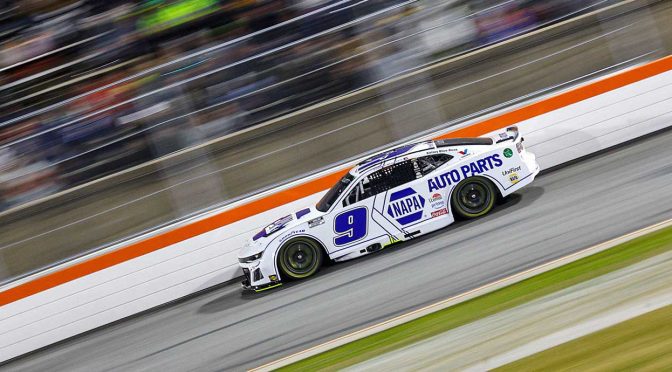
After setting the fastest time in the final four-minute practice session and earning the top starting spot in the first qualifying heat, Chase Elliott won that heat wire-to-wire to win the pole position for Sunday’s Cook Out Clash at Bowman Gray Stadium (8 p.m. ET, FOX, MRN Radio, SiriusXM NASCAR Radio).
Elliott described track position at the tight quarter-mile track as critical to success.
“It’s going to be tough to win from the third or fourth row,” said Elliott, who will share the front row with Heat 2 winner Chris Buescher, who led every lap of the qualifier and held off new Joe Gibbs Racing hire Chase Briscoe to claim the second starting spot in the 200-lap exhibition race.
“I think the first couple of rows certainly have a massive advantage on the rest of the field. Obviously, anything can happen. You all have been watching long enough to know that anything can happen, and I’m well aware of that. But I think just in a normal circumstance of people not totally crashing each other or whatever — yeah, I certainly would want to be on the first couple of rows and, fortunately, we are. We’ll try to take advantage of that.”
Heat 3 and 4 winners Denny Hamlin and Tyler Reddick will start from third and fourth on the grid, respectively. To underscore just how important starting position is, all four heat winners won wire-to-wire after posting the four fastest laps in the final practice sessions to earn their pole positions for the qualifiers.
The top five drivers in each heat advance to Sunday’s Clash. The remaining 19 drivers will compete for two spots in a Last Chance Qualifier (6 p.m. ET, FOX, MRN Radio, SiriusXM NASCAR Radio) that precedes Sunday’s main event. The 23rd spot in the field goes to the driver with the highest number of 2024 championship points not otherwise qualified for the Clash.
That provisional belongs to Ryan Blaney, who finished 10th after starting third in a wild first heat that featured three cautions in 25 laps. Should Blaney finish top two in the LCQ, the provisional will be handed to Kyle Larson, who started sixth and finished eighth in the second heat and will have to race his way into the main event.
After battling a loose condition in his No. 17 Roush Fenway Keselowski Racing Ford in the opening eight-minute practice session, Buescher benefited from adjustments made to the car based on considerable preparation time in the simulator.
“We had the changes ready, so when we got there and realized we were just way too loose, we were able to make quick adjustments to get in the ballpark,” said Buescher, who had failed to qualify for the main event in the last three Clash events at the Los Angeles Memorial Coliseum.
Joining Elliott in the main event from Heat 1 were Brad Keselowski, Noah Gragson, Kyle Busch and Ross Chastain. Heat 2 qualifiers included Buescher, Briscoe, Shane van Gisbergen, Bubba Wallace and Daniel Suárez.
Advancing from Heat 3 in addition to Hamlin were reigning Cup Series champion Joey Logano, William Byron, Carson Hocevar and Alex Bowman. Joining Reddick from Heat 4 were Christopher Bell, Ryan Preece, Austin Cindric and Todd Gilliland.
WINSTON-SALEM, N.C. — In what surreal, alternate reality does former Cup Series champion Kyle Larson race alongside 12-time track champ Tim Brown at Bowman Gray Stadium? In what dream state would brothers Austin and Ty Dillon race bumper-to-bumper at the same arena where their grandfather, Richard Childress, famously sold popcorn and peanuts from the grandstands as a youth? And where else would fans jam in to fill 30 sections of bleachers for practice?
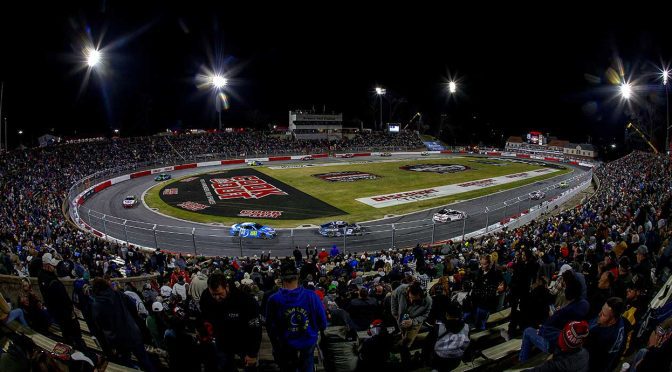
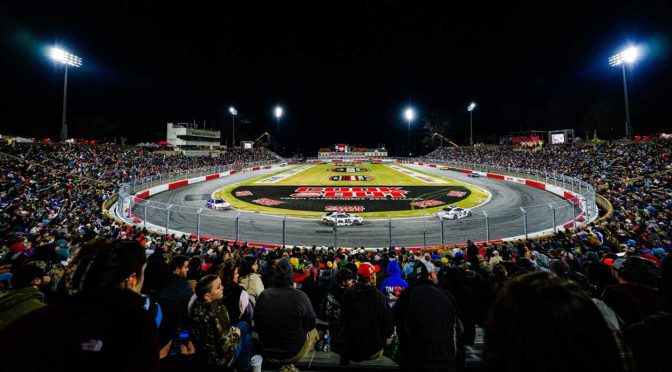
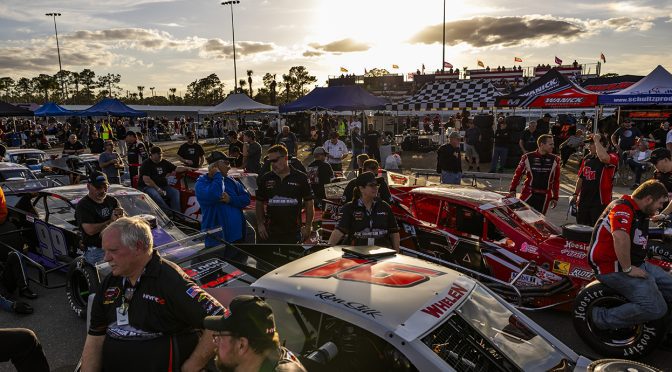
The mythical “Madhouse” is the very real answer, as NASCAR’s top division held official on-track sessions at Bowman Gray Stadium for the first time since the dog days of August 1971. Saturday evening’s preliminaries were a tantalizing preview on the eve of a full-fledged return in Sunday’s Cook Out Clash (8 p.m. ET, FOX, MRN Radio, SiriusXM NASCAR Radio), the non-points season opener that’s making its eagerly awaited debut at the quarter-mile track.
Fans cheered the brimming sense of nostalgia as Cup Series cars rolled back onto the historic track shortly after the stroke of 6 o’clock. More history is yet to be made.
“It’s really special,” said Richard Childress Racing’s Austin Dillon, whose Welcome, North Carolina, hometown is just 15 miles south. “I remember leaving Truck (Series) races on Friday night, flying home and excited about coming to Bowman Gray on a Saturday night, sit in the beer garden and watch the wrecks — and the race that happens around the wrecks.”
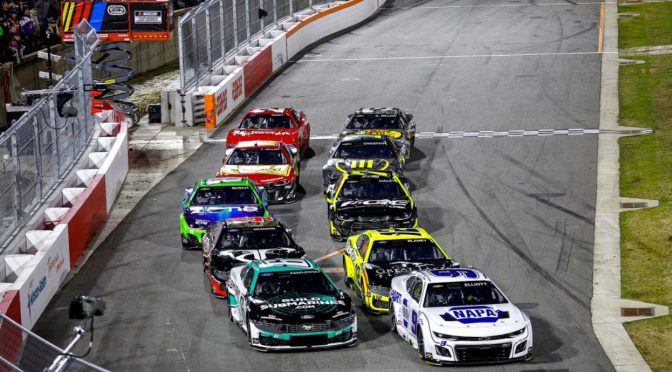
And then there’s that. The lore that’s existed for decades around Bowman Gray — the fights, the carnage, the preadolescents giving drivers middle-finger salutes that somehow qualify as a family activity — is getting an elevated profile from the local/regional/weekly level to the national spotlight. That tradition popped up early Saturday with a first-lap crash in the Modified Division Madhouse Classic event that prompted that driver-to-driver gesture by mid-afternoon. It continued with a slam-bang vibe in the Cup Series’ qualifying heats later Saturday evening.
That passion from those confrontations has typically been heated through the years, but the pre-race chatter about those time-worn Madhouse customs has come with a wink and a nod.
“No, we already met in the NASCAR trailer, and they already gave us the list of who’s supposed to fight with who,” cracked Kyle Busch, who scrapped with Ricky Stenhouse Jr. in the most recent non-points Cup event — the 2024 All-Star Race at North Wilkesboro Speedway. “So yeah, that’s already done. I can’t disclose names, so just wait and see.”
The crew chiefs will be fighting some of their own unknowns. The Clash has been held for the last three years at the Los Angeles Memorial Coliseum, where the temporary quarter-mile track was roughly modeled on Bowman Gray’s configuration. The differences lay in the lack of an infield wall, the unique contours that border the horseshoe-shaped seating area, and the smaller, more intimate setting.
A couple of weeks back, crew chief Paul Wolfe told his driver, Joey Logano: “Hey, let’s take a ride up there one day for a little field trip.” With two engineers from the No. 22 Team Penske Ford crew, that road trip included a stop for lunch and an informal walk around the track.
“Obviously, there’s a lot of similarities to LA, sure. It’s not drastically different from a track layout standpoint,” Wolfe said. “Yeah, it’ll be exciting. How the racing plays out, you have this small strip of what you’d call a curb or whatever, then into the grass. At least at LA, there was like an inside wall. Where here it’s just, I don’t know if it’s just free game, so it could get interesting. It was cool, though. I mean, I’m excited to go do it. I like change, and I think we’ve had a lot of that, and continue to do it. It definitely keeps things exciting, keeps you on your toes.”
Local media outlets have celebrated the return of NASCAR’s top series to Winston-Salem with wall-to-wall coverage and reporters marveling — privately and publicly — about Bowman Gray’s next-level sprucing up. Fresh paint, new lighting and just-installed SAFER barriers have done plenty to modernize the facility that’s been here since the Depression Era, but bringing the stadium up to code has been done with care, faithfully keeping the character and old-school feel intact.
A recent Cup Series revival at North Wilkesboro was done with similar mindfulness. But as Busch noted, the capital improvements aren’t just a premier-series phenomenon.
“The fact of us going somewhere to reinvest into the future for other racing, the local-level racers, to be able to see a better venue to be able to go enjoy and bring their sponsors and have fun and race and compete is only going to benefit from the top,” Busch says. “So bringing that down here to Bowman Gray, seeing the upgrades here, looking at other tracks around the country that we could do some of the same stuff.”
Busch noted grassroots tracks in Alabama and Florida that might benefit from a similar treatment. “So that could be a really cool thing down the road, that this continues to kind of float around,” he said. “Now return on investment? I don’t know, but I think the return on investment is the younger generations and the younger racers that want to be somebody (can) get to race at a cool place, and then can move up the ladder and someday, one day, go back and race at their home track as a pro.”
Hendrick Motorsports driver Chase Elliott topped the leaderboard in a combined practice and qualifying session on Saturday ahead of Sunday night’s Cook Out Clash at Bowman Gray Stadium (8 ET, FOX, MRN Radio, SiriusXM NASCAR Radio).
The driver of the No. 9 Chevrolet set the pace at 63.762 mph over Chris Buescher (63.622 mph), Denny Hamlin (63.600 mph) and Tyler Reddick (63.546 mph).
Those four drivers started on the pole in their respective 25-lap heat races later in the evening at the “Madhouse.”
Brad Keselowski (63.515 mph) rounded out the top five.
Chase Briscoe (63.501 mph), Christopher Bell (63.407 mph), Joey Logano (63.407 mph), Ryan Blaney (63.313 mph) and Shane van Gisbergen (63.305 mph) completed the top 10.
In this practice session, the field was broken up into separate groups and each group got to take the track three times. In each driver’s third and final time on track, their fastest lap time determined the starting lineup for the heat races.
Ty Gibbs set the quickest overall time at 64.199 mph in Group 1 of practice but ended up 24th fastest (62.994 mph) after 39 drivers set a qualifying time in the final practice session.
It’s time to kick off a new NASCAR season with the annual Cook Out Clash on Feb. 2 (8 p.m. ET, FOX, MRN Radio, SiriusXM NASCAR Radio) — but in a new location. After running the Cup Series’ preseason exhibition at the Los Angeles Memorial Coliseum for three years, the race shifts to a new venue in historic Bowman Gray Stadium in Winston-Salem, North Carolina.
Here’s how it works: The field of 39 entrants are split into three practice groups Saturday, with each group receiving three sessions. The final practice session also serves as qualifying, with each driver’s fastest lap determining the heat race lineups in order of speed. Each heat race is 25 laps (only counting green flag laps and no overtime), with the top five in each locking into Sunday’s main event.
Those who don’t transfer into the main event from the heat races will compete in Sunday’s Last Chance Qualifier Race, spanning 75 laps. The top two finishers will then tag the back of the field for the 200-lap feature. The 23rd and final spot in the Clash is reserved for the driver who finished the highest in the final standings from the 2024 season and didn’t race into the main event.
Follow along below for updated lineups and results for all of this weekend’s on-track action, including the heat races, last chance qualifier and the main event.
Editor’s note: Saturday’s practices and heat races air on FS1. Sunday’s Last Chance Qualifier and Cook Out Clash air on FOX.
The season-opening Cook Out Clash exhibition race will star 23 drivers in a 200-lap feature event on Sunday, Feb. 2 at 8 p.m. ET (FOX, MRN Radio, SiriusXM NASCAR Radio) — and, like previous iterations, will have a unique qualifying method to make the field.
The tight confines of the 0.25-mile Bowman Gray oval set up for an event similar to that hosted by the Los Angeles Memorial Coliseum from 2022 through 2024.
The weekend’s on-track action begins Feb. 1 with live practice sessions on FS1 (6:10 p.m. ET). The entrants will be split into three practice groups, with each group getting three practice sessions. Each competitor’s fastest lap from their final practice session will determine the starting lineup for all of four 25-lap heat races. The practice groups are assigned based on 2024 owner points, starting with Joey Logano in Group 3 and moving across to William Byron in Group 1, then Tyler Reddick, Christopher Bell and so on.
PRACTICE GROUPS
Group 1
Group 2
Group 3
William Byron
Ryan Blaney
Joey Logano
Kyle Larson
Christopher Bell
Tyler Reddick
Alex Bowman
Denny Hamlin
Chase Elliott
Daniel Suárez
Austin Cindric
Chase Briscoe
Ty Gibbs
Shane van Gisbergen
Brad Keselowski
Bubba Wallace
Chris Buescher
Josh Berry
Carson Hocevar
Kyle Busch
Ross Chastain
Riley Herbst
Todd Gilliland
Zane Smith
Noah Gragson
Cole Custer
Ricky Stenhouse Jr.
Ty Dillon
Erik Jones
AJ Allmendinger
Austin Dillon
Justin Haley
Michael McDowell
Ryan Preece
John Hunter Nemechek
Cody Ware
Tim Brown
Burt Myers
Garrett Smithley
FINAL PRACTICE/QUALIFYING GROUPS
Group 1
Group 2
Group 3
Carson Hocevar (1A)
Kyle Busch (2A)
Ross Chastain (3A)
Riley Herbst (1A)
Todd Gilliland (2A)
Zane Smith (3A)
Noah Gragson (1A)
Cole Custer (2A)
Ricky Stenhouse Jr. (3A)
Ty Dillon (1A)
Erik Jones (2A)
AJ Allmendinger (3A)
Austin Dillon (1A)
Justin Haley (2A)
Michael McDowell (3A)
Ryan Preece (1A)
John Hunter Nemechek (2A)
Cody Ware (3A)
Tim Brown (1A)
Burt Myers (2A)
Garrett Smithley (3A)
William Byron (1B)
Ryan Blaney (2B)
Joey Logano (3B)
Kyle Larson (1B)
Christopher Bell (2B)
Tyler Reddick (3B)
Alex Bowman (1B)
Denny Hamlin (2B)
Chase Elliott (3B)
Daniel Suárez (1B)
Austin Cindric (2B)
Chase Briscoe (3B)
Ty Gibbs (1B)
Shane van Gisbergen (2B)
Brad Keselowski (3B)
Bubba Wallace (1B)
Chris Buescher (2B)
Josh Berry (3B)
The final practice sessions will be a bit different, acting as a qualifying session that will determine the grid for each heat race. Each group will stage in the pit area and then split into two smaller groups of 6-7 cars. From there, the A and B groups will each get 4 minutes to set a fast time.
The overall fastest driver in final practice will start from pole position in Heat 1; the second-fastest driver will start from the pole in Heat 2; the third-fastest driver will start from the pole in Heat 3, and so on. Only green-flag laps will count in each heat with no overtime in play. The top five finishers in each heat will advance to Sunday night’s feature event.
Those who do not advance will have one more chance to advance courtesy of a 75-lap Last Chance Qualifier, or LCQ, on Sunday afternoon. Like the heat races, only green-flag laps will count toward the lap total with no overtime in play. The top two finishers in the LCQ will advance to the feature race, where they will start 21st and 22nd, respectively. The 23rd and final starting position in the Clash will be awarded to the driver who finished highest in the 2024 driver points standings who did not already transfer into the main event.
Sunday night’s 200-lap feature starting lineup will be set by the results of the heat races. Heat 1’s winner will start on pole for the main event while Heat 2’s victor will start second in the feature. A timed break will be observed at the race’s halfway point at Lap 100. Like the preliminary events, only green-flag laps will count and the event must finish under the green flag.
The 2025 Cook Out Clash marks the Cup Series’ first return to the historic Bowman Gray Stadium since 1971, when Bobby Allison scored the victory in the last of 29 points-paying races at the quarter-mile venue in Winston-Salem, North Carolina.
Editor’s Note: This marks the second story in a three-part series as Spire Motorsports allows NASCAR Digital Media to cover its preparation for the 2025 Daytona 500.
MOORESVILLE, N.C. — Rodney Childers walks the shop floor at Spire Motorsports feeling invigorated. There’s a rekindled spark in his eye.
The hallways he strolls today are starkly different than those he patrolled 12 weeks ago at Stewart-Haas Racing. When he walked into SHR in the fall of 2013, the organization had already won 20 NASCAR Cup Series races, among them a Brickyard 400 and a Cup championship.
Pacing the pristine white floors of Spire, Childers joins a team that has just one Cup victory to its name, courtesy of Justin Haley in 2019. And yet, to Childers, the echoes of those SHR memories aren’t quite so distant. There’s a striking familiarity, in fact, that he could be building his next title contender in Mooresville, some 18 miles north of the Kannapolis shop in which he forged himself into a Hall-of-Fame-caliber crew chief. He joins Haley and the No. 7 Chevrolet team at Spire for the 2025 Cup campaign.
“It feels more like SHR in the beginning, honestly, not the end — which is a good thing,” Childers said Wednesday.
Coming from the guy who led Harvick to a Cup Series championship in their first year together at SHR, perhaps the series should enter on high alert.
At his previous place of employment, Rodney Childers built a championship-winning team from the ground up as a crew chief. With a legendary driver behind the wheel in Kevin Harvick, Childers established himself as Hall-worthy with an astounding 37 wins at Stewart-Haas Racing over a record-setting decade in the NASCAR Cup Series.
Those were the good days — the great days — that became the standard for his way of operating. Today, Childers stands before the 2025 season winless across the past two seasons, dating back to Harvick’s final celebration in August 2022. An internal downturn and eventual closing of the doors at Stewart-Haas Racing dimmed both the success and the fun from Childers’ run in the sun until the doors shut in November.
That’s where the people at Spire have made their impact already. Childers is surrounded by a group of racers with optimism and experience, all looking forward at what opportunities lie ahead as part of what could be a bright future.
“You can stand here on a 7 o’clock meeting in the mornings and you look around the room, and it’s all A-plus people,” Childers said. “There’s not C people standing around, and that’s really hard to come across right now. It’s hard to find good help. It’s hard to find good engineers and good mechanics in every single position. And here, I haven’t come across anybody that’s not an A-plus guy or A-plus woman.”
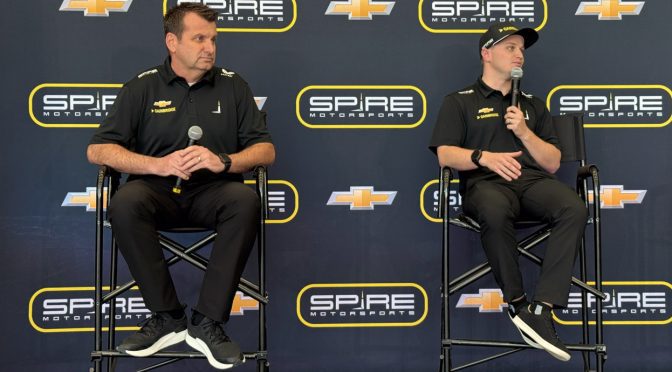
Sitting on a grand stage centered along the wall in Spire Motorsports’ lobby as the team hosts a well-attended media day event, Childers estimates 18 people from Stewart-Haas made the pilgrimage to Spire for the 2025 season. Of those 18, one of the most important was Robert “Cheddar” Smith, who follows Childers as his car chief after 11 years serving the same role on the SHR No. 4 car. Former lead engineer Dax Gerringer now serves as Spire’s technical director. But the new journey isn’t about Spire becoming SHR Lite — though with just one win to its name, Spire would love to chip into SHR’s 70-win total. It’s about utilizing everyone’s strength at an organization that took tangible steps forward in 2024.
“How do we become better teammates with each other? How do we work together better?” Childers said. “There’s just so many sides of it. And right now, we’re extremely fortunate for what we have. I can’t wait to go racing.”
NOT-SO-SECRET WEAPON
Championship experience is not something deeply engrained in Spire Motorsports’ pre-existing fiber. That is no slight on a still-blooming organization and instead the reality of the runway that remains ahead of it.
Childers, on the other hand, carries that pedigree with him wherever he goes. His expectation to win is part of what separates him from those who merely want to.
The level of preparation that comes with that is new for Haley, who returns to the No. 7 Chevrolet in 2025 after a reacquainting appetizer of seven races in 2024.
“I’ve quickly realized what Cup racing is through Rodney and Cheddar, and nothing is ever good enough for them,” Haley said Wednesday. “And that’s been refreshing to me, that there’s nothing overlooked, no stone unturned. If you need something done, it is done five minutes ago. It’s truly been incredible to go through the process of the offseason with the two of them, and then Matt McCall, Ryan Sparks, and obviously (Michael) McDowell and Travis (Peterson) as well.
“I guess I didn’t quite understand what level they were racing on. I feel like I was living on a different planet, honestly. And that’s nothing against where I’ve been. It’s just to compete at a high level and win races like Rodney, Cheddar, all those people have done, it requires something else.”
Zach Sturniolo | NASCAR Digital Media
For example, Haley’s seat position in prior Cup cars was set in such a way that his core and spine were negatively impacted, leaving his tailbone incredibly uncomfortable after races. Childers prioritized recalibrating that position so that Haley sits as comfortably as possible moving forward and can simply focus on driving.
What comes with someone with Childers’ caliber is the desire of others to be a part of what he builds. Mechanics, engineers and other crewmen know the expectation that pairs with working for Childers. They want to be part of that journey.
“It’s the people that Rodney brought with him too and the people that were already here that have been here since the inception of Spire Motorsports that have lived every moment of it,” Haley told NASCAR.com. “So yeah, Rodney obviously is a huge plus to us — having him and having that confidence, knowing that he’s going to take care of it. I think that’s what’s given me a lot of confidence, too, is there’s nothing that I can ask that’s too much for them that they aren’t going to take care of. It’s just been refreshing it’s honestly. Just been a whole change of lifestyle.”
Jeff Dickerson, co-owner of Spire, has seen that injection of life from Childers, McCall, McDowell and Peterson firsthand — but in a way that has been complementary rather than earth-shattering.
“I think it’s been more additive,” Dickerson said. “What I really appreciate about those guys is that when they got here, they didn’t look at us as a problem that needed to be solved. They weren’t coming in being like, ‘Look at these idiots. We gotta fix this and fix that.’ They’ve really just come in with an additive kind of tone where it’s like, ‘Hey, you guys are already have done this. We’re not trying to reinvent the wheel here. How do I just take you to another step?’
“Certainly, when somebody like Rodney Childers talks, he has the legitimacy of all those wins and championships that you listen, right? So I mean, he carries a lot of weight.”
SEEKING DAYTONA GLORY
Childers has accomplished plenty in his career — two Brickyard 400 victories at Indianapolis, two Southern 500s at Darlington, the Coca-Cola 600 at Charlotte among them.
Notably absent from that list of crown jewels, though, is the Daytona 500.
“It just kind of hangs over my head every year,” Childers told NASCAR.com.
Many of the sport’s greats never get to experience Daytona’s most glorious victory. Mark Martin’s decades of unsatisfied journeys remain prominent in Childers’ mind, as does Dale Earnhardt’s 20-year wait.
“We’ve always been in contention,” Childers said. “We’ve been leading on the last maybe two laps or last lap. I mean, counting all the speedways, it’s 10 times we’ve been leading on the last lap. And then it just doesn’t work out.”
There is a budding optimism for Daytona that runs parallel to his season-long hopes. Childers felt the No. 4 car he prepared for Josh Berry in the August 2024 Daytona race was the best vehicle in show until it crashed from the lead late. This year, he also brings on lead engineer Jonathan Branzelle, who previously served as McCall’s engineer on the No. 6 RFK Racing entry with Brad Keselowski — another superspeedway powerhouse.
“I think we have a lot going for us,” Childers said. “In reality, I think Justin might be the best speedway racer we’ve ever went to a speedway race with. So I think that’ll be key for all of us to go down there and perform well.”
Zach Sturniolo | NASCAR Digital Media
On Jan. 29, just two weeks before cars will unload at Daytona for a 10 a.m. ET practice session, the shell of the No. 7 Chevrolet that Haley will pilot sits unwrapped on jack stands. This is an improvement, however, from the last check-in, when Daytona cars were yet to be clipped together. The chassis are built, body panels installed, but no engines yet in place.
Still, there remains no anxiety of running behind schedule. All is on track for the three-car operation, and Childers has no worries.
“To be honest, I felt like at Stewart-Haas, we pushed that too far out all the time,” Childers said. “They wanted to start building the Daytona cars two months before and then they would just sit around. It was different over there too because we had like a speedway guy that, kind of like (Jimmy) Fennig does at Roush is like, you know, if you had somebody to sit there and just baby them to death, then yeah, maybe start building them earlier. But right now, we don’t really have that person.
“But, yeah, they’re in good shape. I feel like they’re coming together well. They look nice, down to just the detail stuff. If you were to open the hood on one of them six months ago compared to now, it looks way nicer. So everybody’s doing a really good job with all of it and feel good about it.”
What’s next is performing immediately when the car rolls onto the race track.
“Going to the Daytona 500 is really what matters,” Childers said. “We want to go down there and qualify well. We want to race well in the duels and then have a shot at it in the 500.”
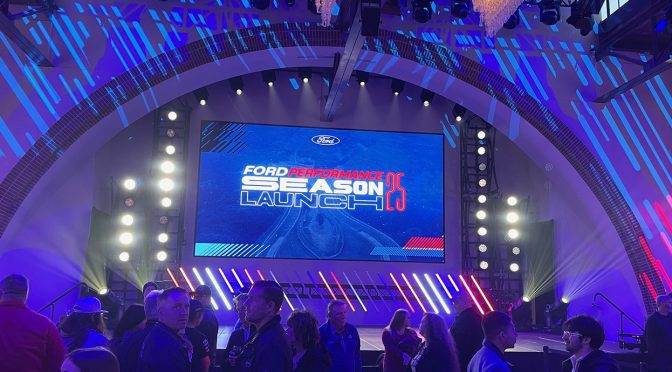
CHARLOTTE, N.C. — A perfect depiction of how far Ford’s ingenuity and innovation stretches can be seen in its car lineup at Ford Performance’s 2025 season launch party in Charlotte.
An array of race-worn vehicles — and a few stock — that have competed in vast motorsports disciplines across the globe sit on opposite sides of the event hall. From the Mustang GT3 right off the heels of winning the GTD Pro class in this year’s Rolex 24 at Daytona to the hulking Broncos and Raptors built for podiums in off-road racing. It was a sturdy stable of decorated Blue Ovals all gathered for one night only.
Last year, Ford competed in 28 countries using 16 unique vehicles, winning 81 races. Proving NASCAR isn’t the only racing series where Ford is setting its sights high in 2025, Ford Performance’s DNA runs deep in every motorsports facet. From drag racing, drifting and off-road challenges to making its return as an engine supplier with Red Bull’s Formula One team, Ford continues to expand its international brand. NASCAR, however, remains one of its flagships, with a collection of historic, title-winning teams under the manufacturer’s banner.
Ford’s rich NASCAR legacy, spanning from the early days with Wood Brothers Racing to its modern-era dominance with Team Penske, was vividly showcased at the event, with the Bill France Cup and Craftsman Truck Series trophies proudly welcoming guests.
While Chevrolet has had a stronghold on the manufacturers’ championships the last four seasons, Team Penske’s Fords have come up clutch and wheeled in the Cup crown the last three campaigns. Ford Performance isn’t just diversifying into different motorsports for the thrill — it’s fully committed to the pursuit of victory and championships wherever the green flag waves.
Another highlight was the honor bestowed upon the Wood Brothers Racing team as they gear up for its 75th season in Cup. Wood Brothers have been synonymous with Ford since the very beginning of its journey, marking an extraordinary partnership that has yielded 100 victories. The team’s dedication to Ford, spanning multiple generations, underscores the deep bond between the brand and one of the sport’s most respected teams.
Tucked to the side in one row, you could see the striking evolution of how far Ford has grown in the Cup Series with David Pearson’s 1972 Mercury Cyclone sitting next to a freshly wrapped version of Chris Buescher’s 2025 Mustang Dark Horse. The cutting-edge design of the Dark Horse contrasted sharply with the classic charm of Pearson’s Cyclone, offering a visual narrative of Ford’s progress and commitment to success in NASCAR, past, present and future.
The 2025 launch event wasn’t just a celebration of Ford’s past accomplishments but a clear signal of the brand’s ambitious plans for the future — including an LMDh entry to compete in the 2027 FIA World Endurance Championship and fight for the overall win in the 24 hours of Le Mans. As technology evolves and new challenges emerge, Ford is setting the bar even higher for the entire motorsports industry. Whether it’s the relentless pursuit of speed in NASCAR or expanding its global footprint in Formula One and beyond, Ford Performance is poised to continue its legacy.
As the 2025 NASCAR season kicks off, Ford’s commitment to performance and tradition remains unwavering, and the Blue Oval is more entrenched than ever in the sport’s fabric, supporting some of the most competitive and successful teams on the grid.