2013 season looking a lot like 2012 for the No. 31 Rheem team

It’s beginning to look a lot like 2012 for James Buescher. Considering the 23-year-old won the NASCAR Camping World Truck Series championship last year, that’s a good thing.
 
At Iowa Speedway last week, Buescher logged his best Truck Series finish for the second consecutive race and continued to tighten the gap on points leader Matt Crafton while moving up in the standings.
 
Through nine of the scheduled 22-race season, Buescher is third in points with 317. He’s 40 points behind Crafton.
 
At this point in the 2012 season, Buescher was fourth in points with 313. He was exactly 40 points behind leader Timothy Peters.

"I feel like we’re clicking on all eight cylinders right now."

— James Buescher

“I do feel really good about where we’re at,” said Buescher, following his third-place showing in the American Ethanol 200 presented by Enogen on Saturday. “I feel like we’re clicking on all eight cylinders right now.”
 
Buescher had not been a factor in the points race until recently, opening the year with three consecutive finishes of 13, 14 and 14. In the six races since, he has five top-10s, the most recent of which were top-fives.
 
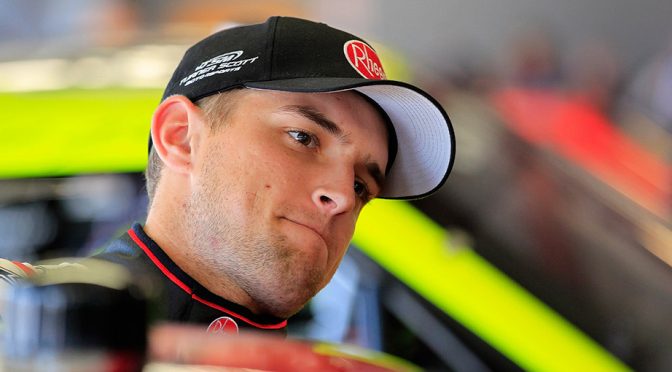
In the No. 31 Rheem Chevrolet of Turner Scott Motorsports, Buescher worked his way up from 12th in the field at Iowa to lead 39 laps. It was the first time he ran P1 since the fourth race of the year at Kansas.
 
After pitting during a caution on Lap 191 (of 200), Buescher’s team was among the few that took four tires instead of two. Falling back from third place to sixth, the driver passed three trucks on the restart and hung onto his position when it went three-wide to finish third.
 
“Once we get bunched up in a restart, it’s an opportune time to pass more trucks,” Buescher said. “It might take 10-15 laps to get around one truck here on a long run. On the restart, you might get a really good restart and get lucky and get three or four in one corner.”
 
Prior to Saturday’s showing, Buescher finished fourth at Kentucky. He had no top-fives in the first seven races, although he did have consecutive sixth-place outings at Kansas and Charlotte.
 
The momentum his team currently owns was developed, in part, in a different series, too.
 
With the Truck Series having one week off between the races at Kentucky and Iowa, Buescher drove the No. 34 Chevrolet in the NASCAR Nationwide Series race at Daytona.
 
Buescher not only led a lap, but he stormed through the field from his starting spot of 17th to finish second, the third time he’s been runner-up in that series since 2011.
 
The entire No. 31 truck team became Buescher’s No. 34 car crew, so the positive outcome wasn’t solely something for Buescher to celebrate. Crew chief Michael Shelton, as well as the others in the pits, got to feel the glow.
 
That’s helped the team get closer and be able to overcome minor mistakes — like when Buescher missed a shift during the opening practice session at Iowa, destroying his engine.
 
“We still need to finish eliminating those small mistakes, but we’re definitely heading in the right direction,” Buescher said. “I think we’re setting ourselves up to go back up our championship.”

READ MORE:

READ: Danica, Ricky
tangle at Loudon

READ: Standings Shuffle:
Burton in the mix

WATCH: Kurt Busch,
Newman wreck

READ: Complete coverage
from New Hampshire, Iowa


Simplified rule book with increased objectivity, consistency the goal

CONCORD, N.C. — One day soon, when teams are caught with a modified rear-end housing or a connecting rod lighter than the minimum allowable weight, they won’t have to wait days to find out what the penalties might be — they’ll be able to look them up in the rule book.

One facet of the planned modernization of NASCAR’s competition department announced Monday is a penalty structure, which will end the somewhat subjective process in place now. Eventually, a revised rule book will spell out the potential penalties for each infraction — and any appeals would be heard by industry experts with more expertise in the areas in question.

FOUR KEY AREAS

Governance
Move rule-making from Officiating to R&D / Innovation
Enhance effectiveness of appeals process by redefining process and appeals board member criteria

Rules
Simplify rule book and increase objectivity by replacing written rules with CAD designs
Enhance parts approval by formalizing submission and approval process
Increase consistency of rule interpretation across National Series

Penalty/Deterrence
Strengthen deterrence model to reduce inspection required to ensure competitive racing

Officiating / Inspection
Increase use of technology on pit road
Maintain rigor of inspection while creating greater efficiency in the entire process
Improve efficiency of process by creating race team inspection scheduling system
Enhance effectiveness of inspection through data collection and trend analysis
Create unified inspecting and officiating model across National Series

A more defined penalty structure, and an appeals process more relatable to each offense, were among a number of initiatives NASCAR plans to implement in its competition department before the Daytona 500 in 2015. In the future, the mystery will be removed from the equation — look up the offense in the rule book, and you’ll also find the applicable penalty.

It’s all part of a movement in which the rule book will also be revised and made available to teams in real-time electronic form, one more compatible with the computer-aided design (CAD) tools employed in many race shops today.

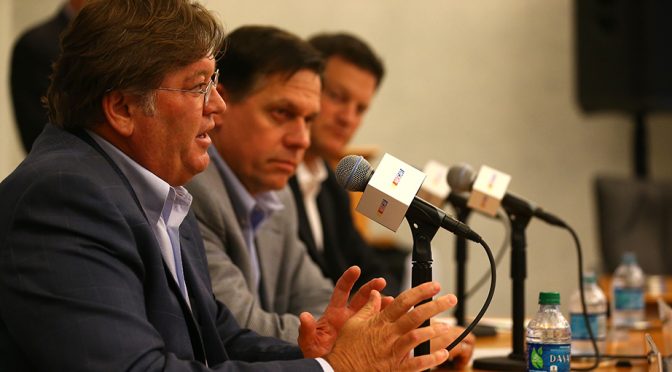
“NASCAR has been criticized sometimes for being somewhat subjective. And when we look at the rule book in the future, we want to categorize penalties so they’re listed out in the rule book. So when you look at parts that are approved, when you look at CAD drawings, the next step for us is for teams to clearly understand what’s right and what’s wrong,” Steve O’Donnell, NASCAR’s senior vice president for racing operations, said at the NASCAR Research and Development Center.

“You’re going to see in the rule book, X penalty or X infraction equals X penalty. Therefore, when you look at the part, you look at the CAD drawing, you look at the potential penalty, and ultimately, you look at the appeals process,” O’Donnell said. “… it will be much more clearly defined, not only for us and our competitors, but also for the race fans as well. Ultimately, all this we’re looking at is to make it more clear. We still want our teams to innovate. That’s not something we’re going away from. But we just want to paint a clearer picture.”

Now, penalties are not typically announced until days after the violation has occurred. And while there is some loose structure to their severity — anything involving tires, fuel or engines is usually treated harshest — the penalties are not defined on paper. O’Donnell said that that will change, although just what penalty equates to what offense is still being determined.

“We’re still working on it, but … our initial thoughts are to break it down into categories,” he said. “Maybe one through five, one through six have certain levels, some obviously that you see that are day‑to‑day. If you go back and look at our history, there’s some pretty standard ones that people expect, so that’s just really formalizing that.

“Others that you’ve seen, you mess with engines, you mess with tires, those are the big ones, and so we’re going to lay that out more specifically to the race teams so they know. So we’ll list those out in the rule book so everyone can see if you do X, here’s the penalty or here’s the fine or potentially the points.  We’re still working through that, and that’s what we’re going to the teams with. They like the transparency, it’s just how we categorize those, and that’s what we’re working through right now."

The appeals process also will change. At present the National Stock Car Racing Appeals Commission has a pool of 48 voting members from all areas of the industry, and any three are chosen to hear a given appeal. The appeal members are not always chosen by areas of expertise, leading to situations where members like track promoters have heard appeals regarding issues like engine offenses. Going forward, that won’t be the case.

“I think we’ve put some people in some tough positions with the emerging technologies and all the science behind our parts and pieces in the car. We owe it to the industry to have industry experts sit in on that and make proper rulings,” O’Donnell said.

“… we’ve got the most independent process in all of sports. We’re proud of the fact that that’s in place. We thought it was a very fair process, but as with anything, you can always improve on it. … When you look at track promoters who maybe need to work with a race team or a race owner or a team owner … and you’re asking them to come in and make a rule on a carburetor or EFI or something new that they have never heard about, and they’re not experts in that, it puts them in a tough position,” he added.

“… that’s one area we really felt like we could bring in people who have a better understanding of the emerging technology that’s in the race cars.”

READ MORE:

READ: Danica, Ricky
tangle at Loudon

READ: Standings Shuffle:
Burton in the mix

WATCH: Kurt Busch,
Newman wreck

READ: Complete coverage
from New Hampshire, Iowa


Wide-ranging initiative will transform competition division

CONCORD, N.C. — A revised rule book that teams can reference in a real-time, electronic format. An officiating corps standardized across all three national series. Streamlined inspection and parts-approval processes. Penalties spelled out based on the infraction. Pit road or in-race data that can be consumed by fans following on their tablets or smartphones.

Welcome to NASCAR, year 2015.

The 2015 Daytona 500 will mark a landmark shift for the now 65-year-old series, which is reinventing its competition department in an effort to add more technology to the sport. NASCAR officials on Monday announced a series of sweeping changes that will be implemented over the next year and half, with the aim of having all of them in place by the season opener in 2015. The goals are to make NASCAR more proactive in areas such as rules enforcement, more transparent to its fans and competitors, and more relatable to participants such as race teams and manufacturers.

FOUR KEY AREAS

Governance
Move rule-making from Officiating to R&D / Innovation
Enhance effectiveness of appeals process by redefining process and appeals board member criteria

Rules
Simplify rule book and increase objectivity by replacing written rules with CAD designs
Enhance parts approval by formalizing submission and approval process
Increase consistency of rule interpretation across National Series

Penalty/Deterrence
Strengthen deterrence model to reduce inspection required to ensure competitive racing

Officiating / Inspection
Increase use of technology on pit road
Maintain rigor of inspection while creating greater efficiency in the entire process
Improve efficiency of process by creating race team inspection scheduling system
Enhance effectiveness of inspection through data collection and trend analysis
Create unified inspecting and officiating model across National Series

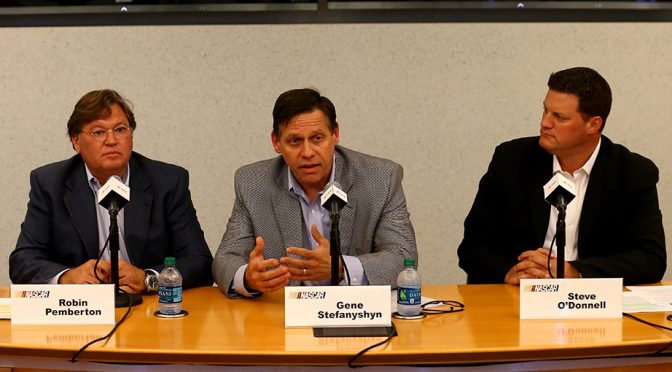
“In general if you look at it, it’s a little bit of a culture shift in how we’ve done business,” Steve O’Donnell, senior vice president of racing operations, said at the NASCAR Research and Development Center. “… our goal is really to take a lot of the assets available to us, and really reinvest, and put even more money back into our R&D efforts. What that will allow us to do is get ahead of things in a much more advanced way.”

The initiative follows an eight-month review of NASCAR’s competition department overseen by a five-person steering committee led by NASCAR President Mike Helton, O’Donnell, NASCAR Vice President of Innovation and Racing Development Gene Stefanyshyn, NASCAR Vice President of Competition Robin Pemberton and NASCAR Chief Marketing Officer Steve Phelps, along with the consulting firm McKinsey & Co. and former Chevrolet executive Brent Dewar. The plan is for full adoption of 11 key points by the 2015 Daytona 500, although some will be implemented before then.

“We’re entering as new time, a new era,” said Robin Pemberton, NASCAR’s vice president for competition. “It’s exciting for all of us.”

Many things will change, beginning with the rule book, which eventually will be made available to teams in an electronic form that will not only fall in line with the computer-aided designs (CAD) used in shops, but tighten up gray areas by using more detailed images in the place of text. That job falls to Stefanyshyn, the former General Motors executive who was hired in April as NASCAR’s Vice President of Innovation and Racing Development, and will take over rule-making from the sport’s officiating group.

“The foundational element of this is for us to migrate from a rule book that is largely text-based, to one that is largely math-based,” Stefanyshyn said. “… it will be computer-aided designed drawings, or CAD drawings. I think this is absolutely critical. We know … most manufacturers do have engineering drawings, and most of these are now in a math-based world. We need to migrate to that.”

That effort will require a line-by-line review of the rule book — the Sprint Cup version of which encompasses 192 pages — before it can be translated into electronic form.

“We’ll need to walk to each part of the car,” Stefanyshyn said. “We’ll need to translate the written text into drawings. We’ll also need to be careful with those.  Some of those words have a long history and (have) found their way into the rule book, so we need to make sure the ones that are really relevant and important remain on the drawings. … it will be a fairly significant undertaking for us to get to the other side. Having said that, once we get to the other side, as we go on, it’ll be much easier to work off of that base, so there is a big chunk of work ahead of us.”

Part of that process involves scaling penalties in direct proportion to violations, with both clearly listed in the rule book. At the race track, Pemberton said officials across the national divisions eventually will be designated as NASCAR officials, rather than divided by series. There are also potential changes in the sport’s qualifying procedure, although Pemberton said what those might be had not yet been decided.

One aim of this reinvention is to promote more fan engagement. O’Donnell envisions an at-track inspection process in which teams are scheduled, so spectators know what times their favorites are rolling through the technical bay. There’s the possibility that technology will allow fans to receive more real-time data from either inside the cars or on pit road, all of it available at the touch of a screen.

“Ultimately, we want to put the fan in the driver’s seat,” O’Donnell said, “seeing that data, seeing what happens in the race.”

O’Donnell characterized the movement as a reinvestment in technology directed by NASCAR Chairman and CEO Brian France, who during his tenure has made a priority of bringing science to the forefront. The further modernization of NASCAR’s competition department will require “a big spend on our part,” O’Donnell said, but he believes the benefits will be worth it.

“We want to be a proving ground,” he added. “When you look at NASCAR, we feel that no sport is better positioned to really take technology and showcase it in front of some of the toughest conditions that exist in the world.”

The modernization effort continues a movement that picked up momentum with the introduction of the Generation-6 car, which debuted in the Sprint Cup Series this year. A more brand-identifiable vehicle, it tightened the bond between passenger cars and their brethren on the race track. As part of this new initiative, NASCAR hopes to strengthen those ties over successive generations, and bring the vehicles closer together, both inside and out.

“We rolled out the Gen-6 car, which obviously mirrors the body of that car. As we go forward, … the new Chevrolet car that gets rolled out three, four years from now, that technology that’s in the car,” O’Donnell said, “NASCAR (will have) delivered on some of those technologies in partnership with GM. … It looks not only like the car on the outside, but on the inside as well.”

It’s all a sweeping initiative, and dialogue continues between NASCAR, teams and tracks on the details of the plan. O’Donnell said the effort is a “long-term play” that has received positive early reviews from competitors.

“It’s very similar to the way (the teams) operate — they have their team that goes to the race, while there’s a ton of work going on for the race six months out, and preparing cars and getting ready,” he said. “Those engineers who are working in advance now should be a direct link to our R&D Center. We’ve got to open those lines of communication. … the Gen-6 was a really good start to that, and we’ve got to expand upon the success of that … and really, for lack of a better term, formalize that process in everything we do.”

And that process seems unlikely to change, even once the target date of the 2015 Daytona 500 finally arrives. This more technologically-minded way of thinking could alter even deep-seated traditions like the ban on telemetry inside cars during event weekends. Pemberton admitted opening things up in that area, which in turn could lead to more real-time data for spectators watching at home or in the grandstands.

“We are looking at that,” he said, “and we feel like that’s the direction we need to head into sooner than later in order to give a good experience for the fans.”

Even the revered V-8 engine may be reconsidered one day as NASCAR moves to stay more in line with technologies coming down the assembly line. As it did with the introduction of electronic fuel injection in the Sprint Cup Series, the sport is trying to become more nimble, more responsive, and more relevant to the next generation of fans.

“… our objective is to have a plan that spans many years from short‑ to long‑term, and develop technologies that … are going to be relevant to our fans,” Stefanyshyn said. “… the car on the track needs to have some commonality with the cars people drive. We need to move in a direction that the rest of the world is moving. To that extent, if we don’t, we essentially will disenfranchise ourselves with our next generation of fans. So yes, we need to migrate in that direction. The speed at which we move will be important.”

READ MORE:
READ: Danica, Ricky
tangle at Loudon

READ: Standings Shuffle:
Burton in the mix

WATCH: Kurt Busch,
Newman wreck

READ: Complete coverage
from New Hampshire, Iowa


New Hampshire reinforces season’s unpredictability; plus news, quotes and video

With 20 laps remaining Sunday at New Hampshire Motor Speedway, it was no surprise that Tony Stewart was out front. The three-time NASCAR Sprint Cup Series champion has a trio of victories at the Magic Mile, and often has used a triumph in the Granite State as a springboard into one of his patented summertime streaks.

No, the real surprise was who was behind him — Brian Vickers, Aric Almirola, Jeff Burton and Bobby Labonte, all in the top seven, an unlikely cast of contenders in the final stages of an event on a highly technical track. There was Vickers, a NASCAR Nationwide Series title contender in a part-time Sprint Cup schedule; Almirola, who’s shown promise but led only a single lap all year; Burton, the forgotten man at Richard Childress Racing; and Labonte, who a few weeks ago was watching someone else drive his car.

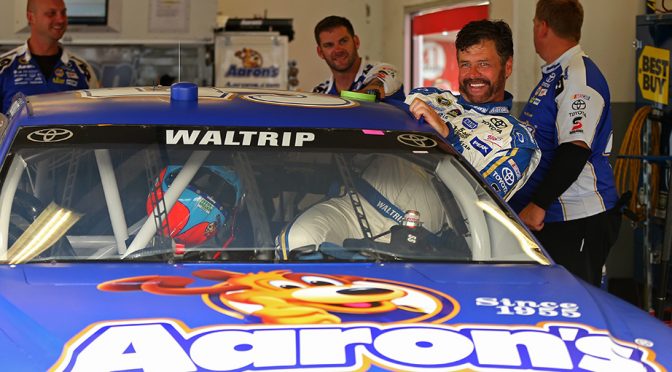
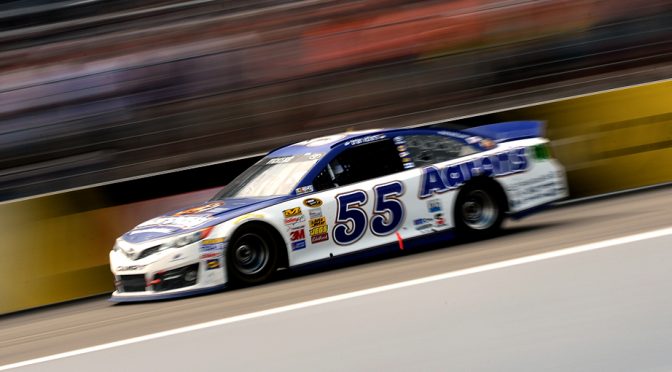
That Vickers won the race shouldn’t have come as a shock. Under crew chief Rodney Childers, that No. 55 car has been competitive almost every week — remember that Michael Waltrip finished fifth in the same vehicle the previous weekend at Daytona, and that Vickers was a stout contender at Bristol early in the year. The others, though, haven’t exactly been regular players at the front, lending further credence to a level of tight competition that’s also reflected in the point standings.

As race tracks go, New Hampshire is an interesting beast — it rewards setup as much or more than any facility on the circuit, and teams who hit on something can check out and leave field behind. While Labonte used a fuel gamble (ultimately, an unsuccessful one) to get to the front, and Almirola took two tires for track position, the fact they were able to hold their positions as long as they were speaks well in a season where every advantage or misstep is magnified.

How else to explain how Stewart can jump six spots — six! — and Kurt Busch five in one race at Daytona, almost unheard-of gains at this point in the season. Drivers are rising and falling like a barometer during hurricane season, to the extent that all of seven points separate the first four drivers out of the top 10. Beyond the few championship locks, it’s all so unpredictable that even Burton — now 17th in points after his second top-five of the season — believes he still has a chance.

“Don’t get me wrong, I’m not saying we are the class of the field, but we are definitely making progress and we feel like we are starting to build on something, and we understand what we’re looking for now,” he said after finishing third. “… And we don’t think we are out of the Chase. I know everybody else in the world does, but we don’t. We feel like we can still do it. There’s a lot of stuff that’s going to happen between now and Richmond. It’s so competitive, so tight. Today is a good example.”

FULL SERIES COVERAGE

View all articles
View all videos
View all photos

Tear down


Silver lining:
It was a brutal result for Kurt Busch, who led a race-best 102 laps before being caught up in the logjam that sent him spinning into the wall. He finished 31st Sunday, giving back all of the positions he had gained the week before. If there was a solace, it was that he had an outstanding car at a track that demands it. The guys on the No. 78 team are turning out great vehicles every week, and it’s seeming more and more likely that Busch will be a player through Richmond. Watch out for these guys at Indianapolis.

Guessing game: Now that we know Ryan Newman won’t return to Stewart-Haas Racing, the speculation begins on where he will land for 2014. Richard Childress clearly seems interested, but that may hinge on whether any of Newman’s current sponsors follow him to what would be a fourth program at RCR. Austin Dillon is moving up from the Nationwide tour, but what that team will look like is still an unknown. Remember, when Dillon moved up from the NASCAR Camping World Truck Series, Childress promoted the program as a whole.

That’s a relief: Did anyone need Sunday’s result as badly as Brad Keselowski? The reigning Sprint Cup champion may still not have a race victory, but he is back in the top 10 after just his second top-five since the whole Texas-rear-end-housing deal. Of course, given how tight everything is, he’s only eight points from again being outside looking in — particularly perilous given that two drivers with race victories are right behind him. Keselowski still needs a victory before the Chase to bolster his position. Bristol, anyone?

Give ‘em a high-five: Nice job by TNT giving us a long, good look at Vickers celebrating with fans who had their arms stuck through the catchfence. It was a wonderful visual, and the gusto with which the driver traded high-fives with spectators gave us all a real sense of how much the win meant to him. A great way for TNT to bow out this season, since Loudon was the network’s last race before turning things over to ESPN.

Inside the numbers


11:
The number of different winners in the last 11 Sprint Cup races at New Hampshire. Vickers’ victory kept alive a streak that dates back to Kurt Busch’s victory there in the summer of 2008. Of course, who knows if the streak would still be intact had Busch’s car not spun into the wall.

75: The number of Sprint Cup starts since Vickers’ last victory, at Michigan International Speedway in August of 2009. That win came with a Red Bull team that’s since shut down and sold off its assets to BK Racing. Vickers’ best finish in between was fourth, at Sonoma last season and Bristol earlier this year, both times in that Michael Waltrip Racing No. 55 car.

14: The number of top-10 finishes Burton now has in 37 career Sprint Cup starts at New Hampshire. The RCR veteran may have experienced some tough times this year, but he’s almost always stout at Loudon, where his four wins remain a track record. He led wire to wire — yes, all 300 laps — in a 2000 event that featured restrictor plates as a one-time safety measure.

They said it

“I’m bringing in another one of my friends to the organization, but also knowing that I’m losing a friend at the end of the year to the organization. The number one thing when Ryan and I spoke is that our friendship will not change. This was a business decision.” — Tony Stewart, in announcing that Kevin Harvick would be with SHR next season, and Ryan Newman would not.

“We talk about how amazing it is to see Mark Martin out there being competitive over 50 years old, but to just go out there and do what he does as far as Morgan is concerned at 71, that’s amazing. And no, you will not see me out there doing that at 71.” — Jeff Gordon, on Morgan Shepherd running New Hampshire and becoming the oldest starter in Sprint Cup history.

“I was also asked to do the painted section of the (Sports Illustrated) swimsuit issue. I was asked to do that the second year after I was in it the first time. I asked one of my most liberal friends if I should do it and she was like, ‘Um, that’s naked right? Last I checked that’s naked.’ … That’s just pushing the limit a little bit.” — Danica Patrick, on her personal guidelines for … well … um … you know.

Chase watch


It’s a wild, wild, Wild Card:
Coming out of New Hampshire, Martin Truex Jr. and Tony Stewart own the top two potential Wild Card positions. Jeff Gordon is ranked a spot higher than Stewart in the standings (12th), but he doesn’t yet have a race victory to help his cause. Stewart won earlier this year at Dover, Truex at Sonoma.

Staying in line: In a rare show of stability, the top eight drivers in the Chase race all held their positions coming out of Loudon. The big mover was Keselowski, who jumped four spots to ninth. Gordon also inched up a pair of spots to crack the top 12.

Opposite directions: Keselowski’s teammate at Penske Racing isn’t faring as well. Joey Logano’s free fall continued with a 40th-place finish at New Hampshire, which followed a 40th-place finish at Daytona. He’s dropped from 10th to 18th in points over that span. “We may be down, but we aren’t out,” he wrote on Twitter.

Coming up

After 14 consecutive weekends on the race track, NASCAR’s premier series takes a well-deserved week off to regroup for one of the most anticipated weeks of the season: the 20th running of the Sprint Cup Series at Indianapolis Motor Speedway on July 28, preceded four days earlier by NASCAR’s return to dirt in the Camping World Truck Series event at Eldora Speedway. This coming weekend belongs to the Nationwide Series, which will prep for the Brickyard with a 300-mile event Sunday afternoon at Chicagoland Speedway.

READ MORE:

READ: Danica, Ricky
tangle at Loudon

READ: Standings Shuffle:
Burton in the mix

WATCH: Kurt Busch,
Newman wreck

READ: Complete coverage
from New Hampshire, Iowa


Michael Waltrip, Mark Martin and now Brian Vickers have all had success; what’s next in 2014?

LOUDON, N.H. — It’s been a good summer for Michael Waltrip Racing. Happy times.

Brian Vickers’ victory Sunday at New Hampshire Motor Speedway was the organization’s second NASCAR Sprint Cup Series win in the last four races. Martin Truex Jr. won at Sonoma on June 23. And MWR driver Clint Bowyer sits second in the championship standings.

All of the team’s cars are championship caliber in one way or another.

Vickers’ winning effort Sunday gave the No. 55 Toyota — driven by Vickers, Waltrip and Mark Martin — a Wild Card position in the owner’s points standings. And with seven races left to set the 12-driver Chase for the NASCAR Sprint Cup field, Truex currently holds the first of two Wild Card berths.

FULL SERIES COVERAGE

View all articles
View all videos
View all photos

In the moments following Sunday’s Victory Lane celebration, both Vickers and team officials took time to note how much this latest achievement means to both driver and team.

“Our organization is ready to win consistently, and we have won two of the last four, and so I would say if we can keep that 50 percent streak going, we’ll be all right,’’ MWR Executive Vice President and General Manager Ty Norris said.

Norris smiled when he told reporters that, but he also realizes his team is absolutely holding its own with the larger, longer-tenured organizations. Only Hendrick Motorsports has more drivers (four) ranked among the top 12.

And at a time when sponsorship is at a premium, it’s the kind of momentum the organization needs — especially as it tries to lock down sponsor and driver plans for 2014.

While Norris stopped short of confirming Vickers for a full-time job in the No. 55 next year, the performance at New Hampshire sure didn’t hurt.

In addition to a part-time program with MWR, Vickers is currently competing full time in the NASCAR Nationwide Series for Joe Gibbs Racing, his first full season of competition since serious health problems — blood clots in his leg and lungs and surgery for a hole in his heart — sidelined him in 2011.

This is his first Cup win since and is remarkable when you consider what he’s overcome personally and what it says about the team that fields and prepares cars for three different drivers alternating almost weekly.

“Michael (Waltrip) has made no bones about it; in the last 30 to 45 days, he talks about Brian (Vickers) a lot as being that candidate that we want to go ahead and try to get moving forward with,’’ Norris said. “All I can tell you is wins help a lot of business issues, and so this was a great day for that.’’

As for the team, the last month is at the very least a vivid testament to progress. 

“If we for one second decided to sit back in our chairs and kick our feet up on the desk, (crew chiefs) Rodney (Childers) and Brian Pattie and Chad Johnston, all the drivers would be over there kicking them off and saying we have to get busy,’’ Norris said. “We raced in Pocono, what, a month ago, and we race there in three or four weeks; we won’t come back the same. By the time the Chase happens, we’ll have another version of our next iteration of our car.

“We are right dead in the beginning of our third performance improvement plan, which was put in place ‑‑ the first one was put in place in 2011. And Toyota continues to bring out more steps on the engine side, so there’s absolutely more to come.

“So,” he added, “I’m happy ‑‑ I’m probably happiest for those guys, because Michael’s got his whole life in this and co-owner Rob (Kauffman)’s got a lot of passion for it, so it’s cool.

“Michael always tells us, you’d better wake up every morning like you’re behind. I know Rodney and those guys will do that, we’re going to the next race. He feels like we’re behind and we have to do more and we have to work harder.’’

But first there’s a victory to celebrate.

READ MORE:

READ: Danica, Ricky
tangle at Loudon

READ: Standings Shuffle:
Burton in the mix

WATCH: Kurt Busch,
Newman wreck

READ: Complete coverage
from New Hampshire, Iowa


Steady Biffle leads rough outing; Hamlin next best

New Hampshire Motor Speedway is one of the most technical tracks on the circuit. Setups are at a premium, and one slight misfire on the 1-mile oval can set a driver back laps.

Even beyond that, other incidents come into play. Other drivers wrecking and fuel strategy, for example, are amplified in Loudon.

With that in mind, it was a pretty rough day for the Coca-Cola Racing Family on Sunday.

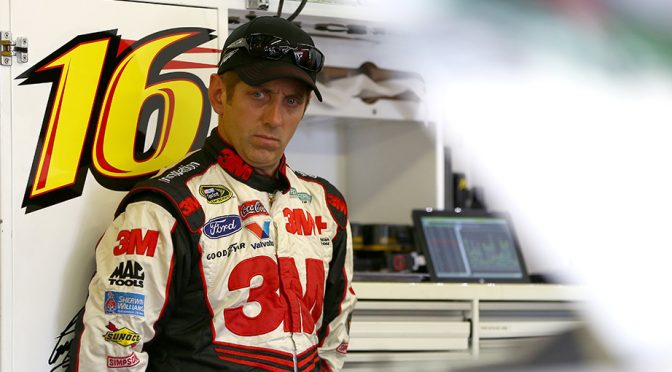
In the No. 16 Ford, Greg Biffle finished in 15th place, the best in the six-driver group. Every other driver ran into some sort of incident, although most were having pretty good days up until that point.

A roundup on the Coca-Cola Racing Family in order of how they finished at Loudon:

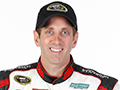
Greg Biffle (No. 16)

Roush Fenway Racing, Ford 

Recap: Biffle was the highest-placing Coca-Cola Racing Family driver because he stayed in the middle of the pack and avoided trouble. He started the race 22nd and, while never cracking the top 10, finished a respectable 15th. On this day, it was more than enough.
Quotable: Biffle was unavailable for comment.
His standing:
Biffle is eighth in the standings with 545 points.
Outlook: Biffle is firmly entrenched in eighth place right now. It’d take a disastrous result (like finishing last) for either him or seventh-place Kyle Busch and ninth-place Brad Keselowski for the Biff to gain or lose spots in the next race, which is at Indianapolis following the last open week of the season.

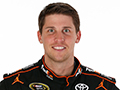
Denny Hamlin (No. 11)

Joe Gibbs Racing, Toyota 

Recap: For a while at Loudon, Hamlin looked like the Hamlin of old. His qualified seventh and had his No. 11 Toyota in the top five soon thereafter. Then it got bad. First, he was assessed a pit-road penalty due to a missing lug nut, putting him a lap down. He spent the next chunk of the race fighting to get back on the lead lap, which he eventually did and got into the top 10. When the final caution came, Hamlin elected to pit for fuel and fell to 19th. He avoided an out-of-fuel Tony Stewart on the green-white-checkered restart, but that set him back and he finished 21st.
Quotable: Hamlin was unavailable for comment.
His standing:
Hamlin is 25th in the standings with 361 points.
Outlook: With seven races left before the Chase for the NASCAR Sprint Cup, perhaps it’s time for Hamlin to put the brakes on the 2013 season and look forward to next year. He almost certainly won’t be driving for a title, but it could be a good time for his team to experiment.

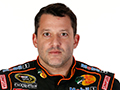
Tony Stewart (No. 14)

Stewart-Haas Racing, Chevrolet 

Recap: There was good, then there was bad for Stewart. The good is that, in the No. 14 Chevrolet, Stewart put himself in position to win the Camping World RV Sales 301. He led 84 consecutive laps near the end of the race and, although he had given up the lead, was still running second. The bad was that, on the final lap after a green-white-checkered restart, Stewart ran out of Sunoco fuel and finished 26th, the last driver on the lead lap.
Quotable: “It’s hard to calculate how much you’re saving on the cautions. Thought we were about three quarters of a lap to the good before that last caution. Obviously, didn’t get as much gas saved as I thought we would. We had a good car all day. I was pretty excited because we were much better than we were yesterday (in practice). We got caught in traffic early on, but with some pit strategy, we got up front and stayed there. Track position was pretty important. We didn’t have the best car, by any means. Even the ones who had the best cars, it looked like they had trouble passing, so track position was key. We weren’t going to win the race, but if we hadn’t run out of fuel, we were going to run second.”
His standing:
Stewart is 13th in the standings with 518 points.
Outlook: Stewart slipped out of the top 10 in the standings, but he still has a win to fall back on in the Wild Card chase. Still, his postseason hopes aren’t a lock. In fact, they’re up in the air with things so tight. The remaining tracks until the postseason, though, are ones where Stewart typically fares well.

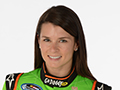
Danica Patrick (No. 10)

Stewart-Haas Racing, Chevrolet 

Recap: Not only was Patrick involved in an on-track incident when she was spun by AJ Allmendinger, she later caused a wreck by misjudging her brakes. The result was sending Ricky Stenhouse Jr., her boyfriend, and Travis Kvapil into the wall.
Quotable: “What it felt like was either I misjudged the braking or everyone jammed up a little bit. I got sideways trying to slow down so that I didn’t drive up into the back of anyone. I just got sideways and there is nothing you can do. The worst part is that you know, obviously, I didn’t want to take anybody with me. I feel bad. What can I say? We were having a reasonable race and just didn’t mean to do it.”
Her standing:
Patrick is 27th in the standings with 350 points.
Outlook: History will collide in Indianapolis when Patrick, as a female driver, takes the road at the Brickyard, one of the sport’s most iconic tracks. The wide, long track suits Danica’s abilities, too.

Ryan Newman (No. 39)

Stewart-Haas Racing, Chevrolet 

Recap: It was a tough week all the way around for Newman. First, he learned that Stewart-Haas Racing was bringing on Kevin Harvick, leaving Newman without a ride for 2014. Then the driver actually began the race and didn’t fare much better. A four-car incident on Lap 226 (of 302) dinged Newman’s No. 39 Chevrolet enough to send him out of the race in 39th place.
Quotable: “We just got whacked by a bunch of guys — the No. 18 (Kyle Busch) hit me first, the No. 2 (Brad Keselowski) hit me next and then I guess it was Kurt (Busch) who went underneath three-wide and bypassed the No. 20 (Matt Kenseth, who) came and clipped us and knocked us into the fence and took himself out. That was the best I could tell. I don’t know. I guess the No. 20 had a little influence on it. We kind of were in a bad spot, having a little bit older tires. We didn’t have the greatest car, but have to thank WIX Filters for jumping on board and sponsoring us. That is not the press we wanted to give them, but just a lot of disrespect from a bunch of guys on restarts. What comes around goes around.”
His standing:
Newman is 19th in the standings with 487 points.
Outlook: Newman is out of the postseason picture for now, and his spot in the standings is more dire than it was two weeks ago. Seven races remain in the race to the Chase, and the veteran certainly needs at least one win to get in — and maybe two.

Joey Logano (No. 22)

Penske Racing, Ford

Recap: For the second consecutive week, Joey Logano blew a tire. For the second consecutive week, it resulted in a 40th-place finish. Those consecutive four-point showings dropped Logano from 10th in the standings to 18th.
Quotable: “We had a tire failure. That is two weeks in a row. I don’t know. It is the same thing that happened to the 1 car (Jamie McMurray) in practice. The left rear tire blew out. It is something they need to look into because that is two cars this week and I am surprised it happened. It isn’t like we touched anyone and rubbed it to make it go down, it just blew out. It is unfortunate for our Shell Pennzoil team. That is two weeks in a row we are going to have probably 43rd-place finishes. I am just mad right now.”
His standing:
Logano is 18th in the standings with 487 points.
Outlook: All the work Logano and his team put forth in getting into the top 10 was undone by issues beyond their control. Don’t count him out yet, though.

Recent strength and close points standings give No. 31 team hope

LOUDON, N.H. — Jeff Burton is 17th in NASCAR’s Sprint Cup Series points standings and winless in 2013.
 
He is, in fact, winless since 2008, a span of 168 races.
 
That doesn’t mean that he and his Richard Childress Racing team think they’re out of this year’s playoff picture, the 10-race Chase For The Sprint Cup that begins Sept. 15 at Chicagoland Speedway.
 
Six drivers and a deficit of 25 points stand between the 45-year-old Burton and 10th place in the standings, the initial cutoff for the Chase field.
 
Two of those drivers, Martin Truex Jr. and Tony Stewart, each have one Sprint Cup victory this year, putting them in the driver’s seat for the two Wild Card positions that will round out the 12-team Chase lineup.
 
Burton’s been around, with more than two decades in Cup, so he knows just how difficult the task ahead will be. He’s a realist. But he also knows what his team can achieve.

"Don’t get me wrong, I’m not saying we are the class of the field, but we are definitely making progress…"

— Jeff Burton

Sunday’s third-place finish in the Camping World RV Sales 301 at New Hampshire Motor Speedway vaulted Burton four points positions, from the periphery of the Chase picture into something a bit more legitimate.
 
Burton said he thinks the Chase is more than a possibility, but even he uses the term “long shot.”
 
“We have been running a lot better the last two months,” said Burton, after he gained 11 spots on the track during the final 70 or so laps at NHMS.
 
“Don’t get me wrong, I’m not saying we are the class of the field, but we are definitely making progress and we feel like we are starting to build on something — and we understand what we’re looking for now.”
 
Others may scoff the mentions of Burton and Chase contention, but Burton’s a believer. Sometimes long shots pay off.
 
“We don’t think we are out of the Chase. I know everybody else in the world does, but we don’t,” he said. “We feel like we can still do it.
 
“There’s a lot of stuff that’s going to happen between now and Richmond (the final regular-season race). It’s so competitive, so tight. Today is a good example: Everybody is racing each other that’s racing for those spots, and if we can knock off some — get on one of those streaks that I used to get on, we can make it and we intend to.”
 
Given the ebb and flow of the points picture this year, it could happen. A week ago, Kurt Busch gained five spots and Tony Stewart six to find themselves in the top 10.
 
On Sunday, Brad Keselowski and Kasey Kahne were the ones on the move, dispatching Busch and Stewart. While no positions in the top eight changed, there was movement at eight of the 10 spots between 11th and 20th.
 
And Burton says his team has the potential to continue to improve. A four-race stretch from Charlotte through Michigan saw the South Boston, Va., native finish 12th or better, due in part to changes that were “completely different than we had done going into any other race.”
 
“And from then on, we’ve been (on) go,” he said. “I won’t go into specifics about what we did, but it taught us what we could do to be better and since then we have been pretty good.
 
“Now, again, we have not been the best car but we have been a solid top‑10 car.”
 
The team, headed up by crew chief Luke Lambert, is young and unproven. Lambert had only 17 races under his belt at the Cup level before the start of the season. And the team engineers, for the most part, are no more experienced.
 
That newness, combined with a sluggish start to the year, had the group playing catch-up early on.
 
“And if there was a wreck on the race track, I was in it,” Burton said. “I couldn’t miss a wreck to save my life.”
 
But now, he said, “we are starting to learn each other.”
 
“We have a lot of things going on; it’s not one thing, but I think the main thing is just having time together and understanding each other.”

READ MORE:

READ: Danica, Ricky
tangle at Loudon

READ: Standings Shuffle:
Burton in the mix

WATCH: Kurt Busch,
Newman wreck

READ: Complete coverage
from New Hampshire, Iowa


See the entry list for this weekend’s race at Chicagoland Speedway

Click here to see the entry list for this weekend’s race at Chicagoland Speedway.

READ MORE:

READ: Danica, Ricky
tangle at Loudon

READ: Standings Shuffle:
Burton in the mix

WATCH: Kurt Busch,
Newman wreck

READ: Complete coverage
from New Hampshire, Iowa


Shared Michael Waltrip Racing ride has No. 55 car in hunt for Owners’ Championship

Related: Owner standings | Driver standings

FULL SERIES COVERAGE

View all articles
View all videos
View all photos

For the first time since the Chase for the Sprint Cup format was introduced in 2004, there’s a distinct possibility that there might be different players in the drivers’ and owners’ championships.

With Brian Vickers’ win at Loudon, the No. 55 Michael Waltrip Racing Toyota — driven by Mark Martin, team owner Michael Waltrip and Vickers this year — moved into the second provisional wild card spot for the owners’ Chase, two points ahead of Tony Stewart’s No. 14 car (owned by Margaret Haas).

Since the three drivers all run part-time schedules, they’re not a factor in the drivers’ championship, but the car could win the owners’ title since it’s active in every race.

MWR executive vice president Ty Norris said MWR and No. 55 crew chief Rodney Childers have had their eyes on the owners’ prize for a long time.

“Rodney Childers deserves to run for a championship as a crew chief,” Norris said. “About a year and a half ago, we told him that we were going to run Mark Martin in 24 races and Michael in the speedway races, and we were not even sure who was going to drive the other races at that point. And Rodney has everybody knocking on his door, always, and we respect that. But he made the choice to stay, and that was a big choice for our organization.

“One of the very first things we talked about was racing for an owner’s championship; let’s shake up the system. We’ll have multiple drivers but if we can win some races and be in a situation where we can run for an owner’s championship, that can be just as remarkable as running for a driver’s championship.”

During the first nine years of the Chase, no car has been eligible for the owners’ title without a full-time Chase driver behind the wheel. That could change this year.

READ MORE:

READ: Danica, Ricky
tangle at Loudon

READ: Standings Shuffle:
Burton in the mix

WATCH: Kurt Busch,
Newman wreck

READ: Complete coverage
from New Hampshire, Iowa


Part-time driver breaks years-long winless streak

Related: Race results | Standings

LOUDON, N.H. — Surprise! The Michael Waltrip Racing driver almost everyone expected to win at New Hampshire Motor Speedway wasn’t in Victory Lane.
 
But his part-time teammate was. Making the most of his limited stint in MWR’s No. 55 Toyota, Brian Vickers solidified his claim to a permanent seat in the car with a stunning victory at the Magic Mile.
 
In a green-white-checkered-flag finish, Vickers sped away from Kyle Busch in overtime and took the checkered flag .582 seconds ahead of Busch to win Sunday’s Camping World RV Sales 301.
 
And he did so despite losing a lap because of a pit road penalty incurred when he drove away from his pit stall with a wrench on the deck lid of the 55 Camry — a lap he later regained with a wave-around just past the midpoint of the race.

The victory was a strong signal that Vickers has come all the way back from blood clots in his legs and lungs that threatened his life and sidelined him for the second half of the 2010 season. After recuperating, Vickers ran a full Cup season for Red Bull Racing in 2011 but lost his ride when Red Bull left the sport.
 
The third victory of Vickers’ career was his first since August 2009 at Michigan. Jeff Burton ran third — his first podium finish since July 2012 at Daytona — followed by pole-sitter Brad Keselowski and Aric Almirola. Series leader Jimmie Johnson, whose qualifying time was disallowed because of a ride-height violation on Friday, rallied to finish sixth.
 
In the closing laps, Vickers tried to avoid thoughts of what a win would mean for his career, but as he walked to Victory Lane, the importance of his accomplishment began to register.
 
"It was difficult not to think about that those last 50 laps or 30 laps or whatever it was," Vickers said. "I just tried to live in the moment as much as possible, turn by turn and not think about the past or the future or what could or couldn’t happen.
 
"But once it was over, it was… I think it was a sigh of relief with everything that had happened, to finally, clinch another victory after so long and after so much, and it was a lot of thankfulness. I don’t know if that’s the best… that’s definitely the feeling I have. I just don’t know if that’s the right word to articulate it.
 
"Just thankful for everything that had happened and everything that didn’t happen; that I was able to get back into a race car, and that I had the support of family and friends to get through everything and to get back in the car."
 
Kevin Harvick, Carl Edwards, Matt Kenseth and Jeff Gordon completed the top 10. Tony Stewart led 84 laps but ran out of fuel on the next-to-last circuit and finished 26th. Pre-race favorite Clint Bowyer, a two-time New Hampshire winner and the MWR driver expected to be first to the checkered flag, wound up 13th but held second place in the series standings, 56 points behind Johnson.
 
Though Busch had one of the strongest cars in the field, he wasn’t brimming with confidence when he lined up in third in the inside lane for the final restart on Lap 301.
 
"We didn’t have a chance," Busch said. "Vickers taking the outside (lane for the restart) was going to be the car to beat, and Tony obviously running out of gas there–almost wrecked with him. Just wish the race was two laps longer maybe and Vickers would have run out and maybe we would have been able to win the thing. "
 
Stewart was leading and in full fuel-conservation mode when contact between the Chevys of Paul Menard and Gordon sent Gordon spinning in Turn 2 on Lap 258. NASCAR called the 11th caution of the race because of the accident, leaving Stewart and Busch to restart side-by-side on Lap 263.
 
Stewart held the top spot for 24 laps, but Vickers showed his muscle late in the race, passed Kyle Busch for second on Lap 283 and powered past Stewart on the frontstretch four laps later. Vickers was cruising toward his first victory in four years when NASCAR called a caution on Lap 297 of 301 and sent the race to overtime.
 
But the caution only forestalled Vickers’ triumph for one extra lap, as he beat Busch to the finish in the two-lap Sprint.
 
Notes: With his fourth-place finish, Keselowski gained four spots to ninth in the Cup standings… The No. 55 MWR Toyota, which has been driven by Mark Martin, team owner Michael Waltrip and Vickers this year, moved into a wild-card position for the owners’ Chase… Running out of fuel cost Stewart three positions in the standings. He’s now 13th but holds the second provisional wild card spot… Vickers is the 11th different winner in the last 11 Cup races at New Hampshire.

READ MORE:

READ: Danica, Ricky
tangle at Loudon

READ: Standings Shuffle:
Burton in the mix

WATCH: Kurt Busch,
Newman wreck

READ: Complete coverage
from New Hampshire, Iowa