Will roll off last in Coors Light Pole Qualifying at 3:35 p.m. ET on SPEED

RELATED: Kentucky practice results

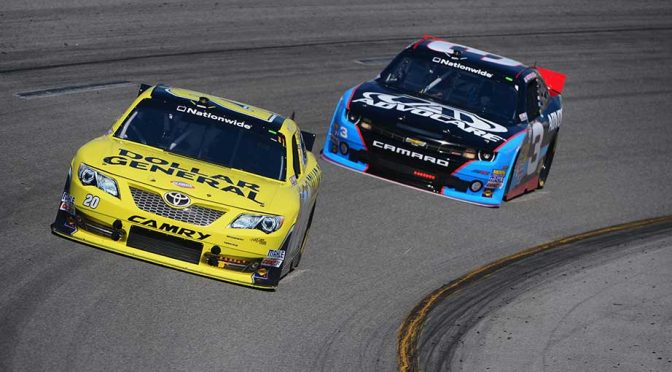
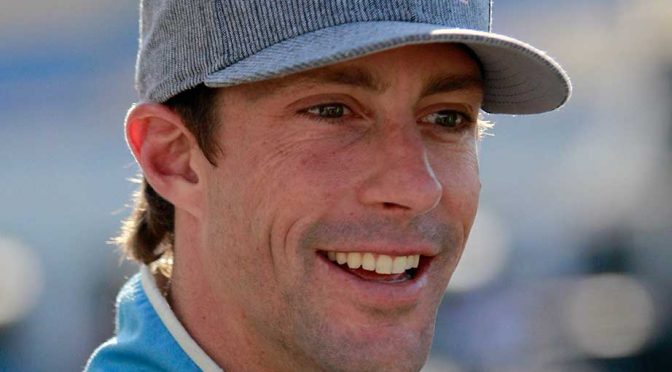
Travis Pastrana turned the fastest lap in final practice for tonight’s NASCAR Nationwide Series Feed The Children 300 at Kentucky Speedway (7:30 p.m. ET on ESPN).

FULL SERIES COVERAGE

View all articles
View all videos
View all photos

Pastrana’s 175.970 mph and 30.687-second lap was .018 seconds faster than Matt Crafton, who was fastest in Thursday’s opening practice. NASCAR Camping World Truck Series driver Crafton finished 10th in Thursday’s UNOH 225 Truck race and will make his first start in the Nationwide Series this evening.

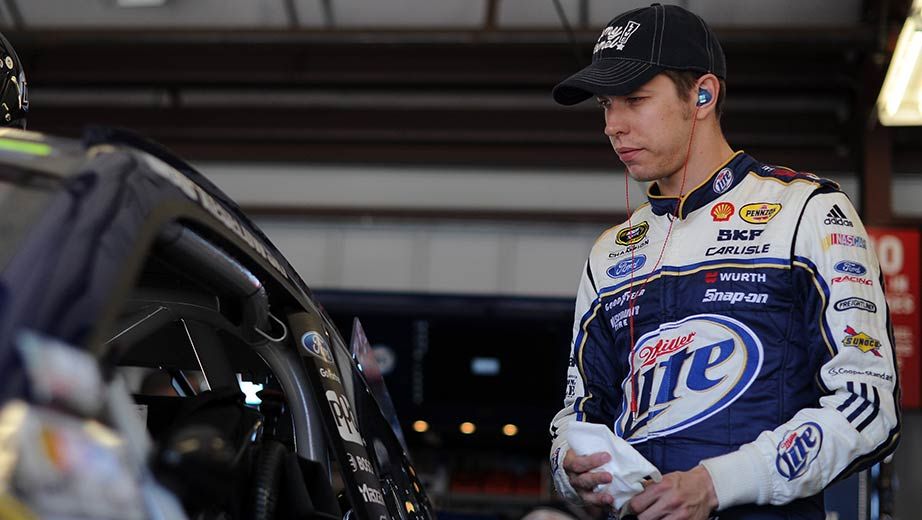
Series regulars Alex Bowman and Austin Dillon had the third and fourth fastest laps respectively with former Nationwide champion and reigning Sprint Cup champ Brad Keselowski fifth. Keselowski will run all three national series races this weekend, finishing second in the weekend-opening Truck race.

Like Keselowski, Kyle Busch is scheduled to run all three races at Kentucky. After finishing third last night in his Kyle Busch Motorsports truck, he was 16th fastest in final Nationwide practice for Joe Gibbs Racing.

Nationwide Series points leader Regan Smith was 10th in practice with a 173.299 mph lap. Justin Allgaier, who trails Smith by 31 points for second in the season standings, was eighth fastest at 173.891 mph. Sam Hornish Jr., who fell to third in the standings last week at Road America, was ninth quickest at 173.773 mph.

Two drivers made 10 consecutive laps with Bowman’s average speed of 170.605 mph bettering Landon Cassill’s 166.438 mph average.

Pastrana will roll off last in Coors Light Pole Qualifying at 3:35 p.m. ET on SPEED as he attempts to win his second pole of the season. He started on the point at Talladega last month.

READ MORE:

READ: Kentucky Paint
Scheme Preview

READ: Power Rankings
Week 16

READ: Pre-Kentucky
Driver Reports

READ: Complete coverage
from Kentucky


Vickers, Dillon, Sadler, Larson eligible next week after Kentucky showings

Related: Dash 4 Cash page

SPARTA, Ky. — Elliott Sadler, Brian Vickers, Austin Dillon and Kyle Larson will be racing for a $100,000 bonus when the NASCAR Nationwide Series returns to Daytona International Speedway next weekend.

The four drivers were the highest finishing eligible competitors Saturday night at Kentucky Speedway in the Feed the Children 300, the qualifying event for this year’s Nationwide Series Dash 4 Cash program.

As a result, the driver that finishes highest in the July 5 Subway Firecracker 250 at Daytona will earn the six-figure bonus and be automatically qualified for the second week of the four-week program.

"Nationwide really hit a home run, in my opinion, with this Dash 4 Cash (program)."

Elliott Sadler

“It is great for our sport, it is great or our team, it puts a lot of focus on our sponsors and on … the drivers,” said Sadler, who finished second to race winner Brad Keselowski in the rain-shortened Kentucky race. “Nationwide really hit a home run, in my opinion, with this Dash 4 Cash (program).”

In addition to the Daytona bonus winner, the three highest finishing eligible drivers in that event will qualify for the program’s next stop, at New Hampshire on July 13. The format will remain the same for subsequent stops at Chicago (July 21) and Indianapolis (July 27).

If the same driver earns the bonus in the first three events and wins the Indy race outright, he will earn an additional $600,000, bringing his total winnings to $1 million.

Four races, four very different venues.

“Four straight weeks, which is very stressful,” Sadler said. “But if you can keep your momentum going … it’s a lot of fun to be a part of.”

Vickers, fourth at Kentucky, said kicking the program off at the 2.5-mile Daytona track was a mixed blessing.

“Of all places that I’d want to go into the Dash 4 Cash, I think (Daytona) is the best and the worst,” he said. “There’s a chance we could finish … 30th and win this thing. But hopefully we win the race and win (the bonus). That’s the goal.”

Dillon finished sixth at Kentucky while Larson was seventh.

“It’s awesome,” Dillon said of the program. “We had a heck of a battle last year with Ricky Stenhouse Jr. at New Hampshire to win the first (bonus). Really looking forward to it.”


READ MORE:

READ: Kentucky Paint
Scheme Preview

READ: Power Rankings
Week 16

READ: Pre-Kentucky
Driver Reports

READ: Complete coverage
from Kentucky


Patrick says she doesn’t care what critics like Petty think

Related: Complete Danica Patrick transcript | Kyle Petty’s comments | Junior defends Danica

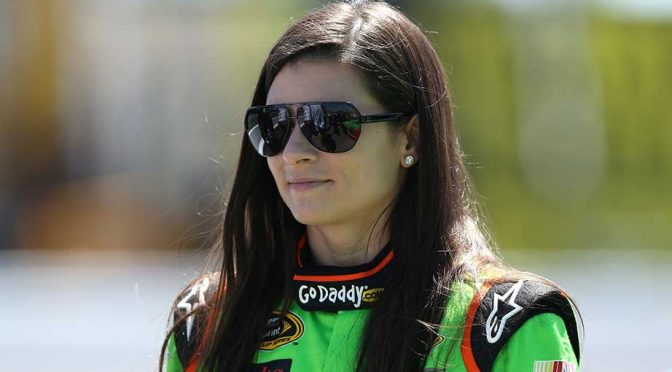
SPARTA, Ky. – Danica Patrick succinctly summed up her feelings about remarks made a day earlier by Kyle Petty, as well as negative comments in general, Friday at Kentucky Speedway.

“I really don’t care,” the diminutive Patrick, driver of the No. 10 GoDaddy.com Chevrolet for Stewart-Haas Racing, said during a scheduled media appearance.

“I don’t. It’s true that there are plenty of people who say really bad things about me; I hear about them or I read about them or I read them on Twitter. People want me to die.

“At the end of the day, you just get over that kind of stuff and all you can do is trust that you’re doing a good job and that’s all that matters and the people around you believe in you.”

FULL SERIES COVERAGE

View all articles
View all videos
View all photos

Petty, an eight-time winner in NASCAR’s Sprint Cup Series, currently works as an analyst with NASCAR on FOX/SPEED. During an interview that aired June 27, Petty commended Patrick for her marketing success, but said the former open-wheel competitor was “not a race car driver.”

“Danica has been the perfect example of somebody who can qualify better than what she runs,” Petty said. “She can go fast, but she can’t race.”

Patrick said she thought “it was funny how (Petty) said that I could qualify, but I can’t race, because those … that actually watch what I do would know that I can’t qualify for crap. In the race things go much better.”

Patrick, one of three Sunoco Rookie of the Year candidates in NASCAR’s Sprint Cup Series this season, became the first female to qualify No. 1 for a Cup race when she captured the pole for the season-opening Daytona 500.

Her qualifying average through the season’s first 16 events is 32.0; her average finishing position is 25.8

“The most important thing to me is that I can keep my team happy, we’re moving in the right direction, that (primary sponsor) Go Daddy is happy and that when you walk out of the garage or walk around the track and meet a little girl that wants to grow up to be like you then you’re doing something right — those are the things that feel right,” she said.

Following a fulltime career in IndyCar, Patrick began the transition into NASCAR in 2010 when she drove a limited Nationwide Series schedule for JR Motorsports. She did the same in 2011 before running a full Nationwide schedule in 2012 while also running 10 Cup races for Stewart-Haas.

She finished 10th in the Nationwide Series points standings last year while her best Cup finish came in the fall at Phoenix where she was 17th.

An eighth-place finish at Daytona has been her best finish to date in Cup competition, and her only top 10. She is 27th in points heading into Saturday night’s Quaker State 400 at Kentucky (8 p.m. ET, TNT).

Four-time Cup champion Jeff Gordon said expectations for what Patrick might accomplish were “way too high, especially after Daytona.”

“I think she’s a good race car driver and she’s with a good team but unfortunately she’s under an incredible microscope to live up to higher expectations than I think are realistic,” he said.

“Based on that I would say that everybody puts too much pressure on her, including herself. But then she goes to Michigan and has a great result on a very difficult track; Martinsville, does very well on a very difficult track.

“She’s impressed me at times, but at the same time, any time I see anybody come from open wheel I always feel like they’re going to struggle. And it’s going to take them a while.”

Fellow driver Kevin Harvick said he “couldn’t imagine” attempting to compete in Cup with less than three years of stock car experience.

“It’s hard. And it’s not going to get easier,” the Richard Childress Racing driver said.

“I don’t know that I would go as far as calling her not a racer because she has raced her whole life, and I think on a continuous learning curve. She’s obviously dedicated at what she does to try and get better, and knows she has a lot of hurdles to overcome in a short amount of time.”

Patrick said the move into Cup was “definitely jumping into the deep end on some level,” but noted that the learning curve “is different for everybody.”

“At times on some level I think I am ahead of it and at times I feel like I am behind it. … And I don’t know at what time it flattens out and you are where you are.”

READ MORE:

READ: Kentucky Paint
Scheme Preview

READ: Power Rankings
Week 16

READ: Pre-Kentucky
Driver Reports

READ: Complete coverage
from Kentucky


Earnhardt Jr. defends Danica’s work ethic and on-track performance

Related: Complete Danica Patrick transcript | Kyle Petty’s comments | Danica responds

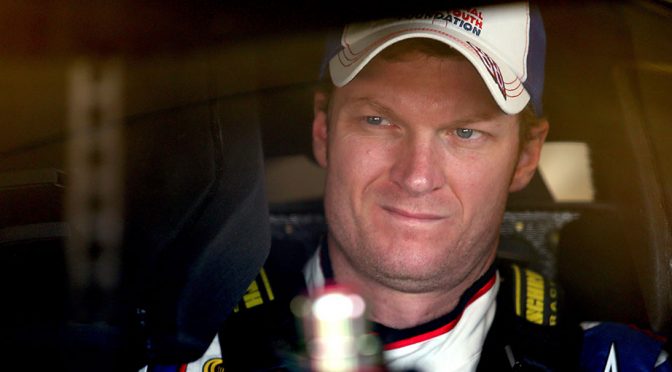
SPARTA, Ky. — Dale Earnhardt Jr. said he disagrees with Kyle Petty’s assessment of Danica Patrick as a race car driver, coming to the defense of the NASCAR Sprint Cup Series rookie of the year candidate Friday at Kentucky Speedway.
 
Patrick, who competes for Stewart-Haas Racing, drove for Earnhardt Jr.’s JR Motorsports team in the Nationwide Series full-time last season while running a limited Cup schedule for SHR. She ran a limited Nationwide schedule with JRM from 2010-11 while making the transition from IndyCar to NASCAR.
 
“I think she’s a tough competitor,” Earnhardt Jr. said. “She works really hard at what she does. She has run some really good races. On every occasion she’s outrunning several guys out on the circuit. If she was not able to compete and not able to run minimum speed or finishing in last place every week, I think you might be able to say Kyle has an argument. But she’s out there running competitively, running strong on several accounts.”

FULL SERIES COVERAGE

View all articles
View all videos
View all photos

In a piece that aired on NASCAR Race Hub on Thursday, Petty said Patrick was a “marketing machine,” but that the 31-year-old was “not a race car driver.”
 
“Danica has been the perfect example of somebody who can qualify better than what she runs,” Petty said. “She can go fast, but she can’t race. I think she’s come a long way, but she’s still not a race car driver. And I don’t think she’s ever going to be a race car driver.”
 
Patrick, 27th in points, became the first female to start on the pole for a Sprint Cup Series race earlier this year when she qualified No. 1 for the season-opening Daytona 500. She finished eighth in that race, her only top 10 thus far in 26 career Cup starts.
 
“I think she’s got a good opportunity … to keep competing and she just might surprise even Kyle Petty,” Earnhardt Jr. said.

READ MORE:

READ: Kentucky Paint
Scheme Preview

READ: Power Rankings
Week 16

READ: Pre-Kentucky
Driver Reports

READ: Complete coverage
from Kentucky


Follow Nationwide qualifying LIVE, here

READ MORE:

READ: Kentucky Paint
Scheme Preview

READ: Power Rankings
Week 16

READ: Pre-Kentucky
Driver Reports

READ: Complete coverage
from Kentucky


Click here to watch GarageCam and get closer to the action.

Join us at 1 p.m. ET on Friday, June 28, for GarageCam from the Sprint Cup Series garage at Kentucky Speedway. Log in to the chat accompanying GarageCam and ask our cameraman to find the driver or car that you want to see.

READ MORE:

READ: Kentucky Paint
Scheme Preview

READ: Power Rankings
Week 16

READ: Pre-Kentucky
Driver Reports

READ: Complete coverage
from Kentucky


Watch Press Pass live here

Friday, June 28:

Jimmie Johnson | 10:30 a.m.

Dale Earnhardt Jr. | 10:45 a.m.

Martin Truex Jr. | 12:45 p.m.

Jeff Gordon | 3:45 p.m.

Post-NSCS Qualifying | Approx. 6:30 p.m.

Post-NNS race | Approx. 10 p.m.

Saturday, June 29:

Post-NSCS race | Approx. 10:30 p.m.

 READ MORE:

READ: Sonoma, Road America
weekend recap

READ: Toyota/Save Mart 350
highlights

READ: Standings Shuffle
Sonoma shakes it up

READ: Allmendinger wins
Road America


Follow Nationwide practice, 9-10:30 a.m. ET

READ MORE:

READ: Kentucky Paint
Scheme Preview

READ: Power Rankings
Week 16

READ: Pre-Kentucky
Driver Reports

READ: Complete coverage
from Kentucky


READ MORE:

READ: Kentucky Paint
Scheme Preview

READ: Power Rankings
Week 16

READ: Pre-Kentucky
Driver Reports

READ: Complete coverage
from Kentucky


From one extreme to another, action sports legend has passion to get faster

Related: Feed the Children 300 lineup | VIDEO: Travis Pastrana’s greatest hits in NASCAR

SPARTA, Ky. — Lock it down. Lock it down. Lock it down.

From deep in his brain, Travis Pastrana knew what he needed to do the instant his car began sliding through the turn — lay hard on the brake, get his vehicle back under control and live to race some more. But he was battling for the free pass position. He was worried the caution might come out at any moment. And he had a much different thought on his mind.

I got this. I got this. I got this.

“For the most part, you can almost always lock it down,” Pastrana explained at Kentucky Speedway. “You’ll hit the wall a little bit. Or, you can try to save it. And I always try to save it. And the guys who try to save it always end up hitting the wall a lot harder.”

FULL SERIES COVERAGE

View all articles
View all videos
View all photos

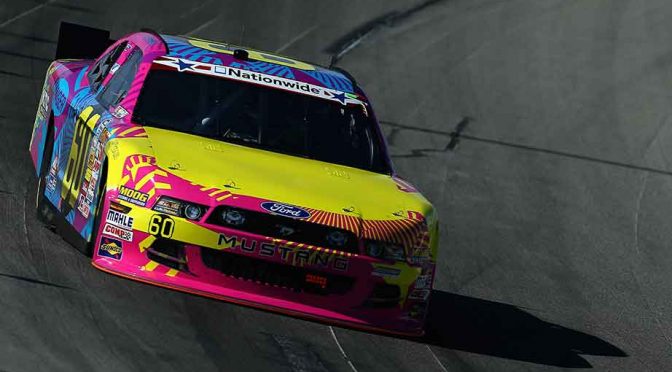
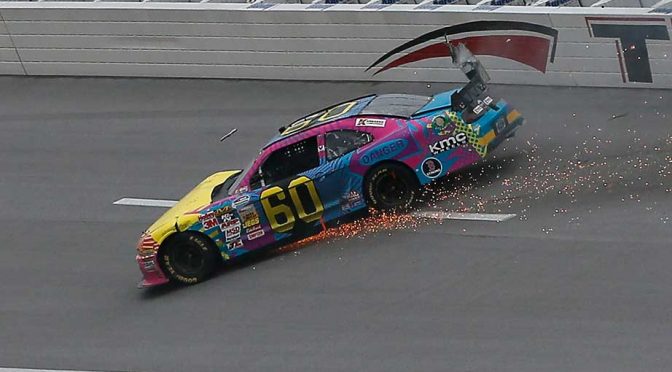
Which is exactly what happened last month at Charlotte Motor Speedway, when the red, white, and blue No. 60 car veered down the track and slammed into an inside wall, thankfully protected by a SAFER barrier. The impact was so violent, it collapsed the front end of Pastrana’s vehicle and lifted the rear wheels completely off the ground. The next morning, his neck was so stiff he found it difficult to turn his head from side to side.

“I knew I didn’t have it,” he remembered. “But I was pushing over my head.”

To Pastrana, crashing is nothing new. It’s been a part of his life for almost as long as he can remember, from his days as a tyke on a motocross bike, and into his later years, racing rally cars, competing in X Games and performing stunt jumps. He’s been hurt in crashes so many times, he can’t remember them all. When he was 14, a spine injury suffered in a motorcycle crash forced him to spend three months in a wheelchair. The start of his NASCAR career was put on hold when he broke his ankle attempting a jump.

So Pastrana is no stranger to hitting hard surfaces at a rapid rate of speed. But even by his standards, his first full season on the Nationwide Series has been an adventurous one — the Roush Fenway Racing driver has walked away from a trio of bone-jarring impacts at Talladega, Charlotte and Iowa that have left his vehicle crumpled and the competitor behind the wheel steaming as much as the engine pieces under the hood. In the process, he’s learning that the only similarity between crashes in his old life and this new one is that both can hurt.

In motocross, the discipline in which Pastrana got his start, the line is pretty clear — you’re either hurt in a crash, or you’re not. If it’s the latter, you get back on the seat and keep going. “The bike may be a little bent, but you’re going to break before it does,” he said. “Part of motocross is being able to take a hard fall — wind knocked out of you, thinking you’re broken. My dad always said, ‘Get up. If you’re broken, you’ll fall back down.’”

Which is what happened in July of 2011, days before his scheduled NASCAR debut at Indianapolis, when Pastrana crashed attempting a jump during the X Games, tried to get up — and went right back down to the dirt, the fractured bones in his ankle grinding through his skin. In NASCAR, cars and safety systems provide a more substantial margin for error and an opportunity for everyone to be aggressive. Drivers aren’t ignorant of the risks, especially in a season where Denny Hamlin and Michael Annett have both missed time with injuries suffered on the track. But they’re also not easing up, either.

“No one really gives you a hard time in motocross for crashing because it’s your body that’s on the line. It hurts really bad,” Pastrana said. “If you’re tough — you’re mentally tough, you’re physically tough, if you can deal with pain, you’re going to be a better racer. You’re going to be able to put yourself on the line, you’re going to be able to take those risks to win races and get out front.”

But: “In motocross, a lot of people will step back from the plate because they’re not willing to take that risk,” he added. “In NASCAR, 99.9 percent of the guys, if they’re at this level, they’re willing to take whatever risk that there is. So you can’t make up time in NASCAR by being more aggressive, by trying to take more chances. You’re already on that edge. You take more of a chance,you’re going to crash the car. And for a lot of the guys, for me, you’ve got to deal with sponsors. It’s not cheap to crash a car. It’s not like, ‘Oh, I’m tough; I can crash.’ It’s not my money I just put against the wall.”

As a high-profile, first-year driver, Pastrana seems acutely aware of that. He’s even developed tendonitis in one elbow from gripping the wheel so hard, a nervous habit that arises whenever he thinks of potentially missing laps or having to explain to owner Jack Roush why he wrecked a car. In fairness, two of the big crashes he’s been involved in this season have started with other drivers — Reed Sorenson slid into him at Talladega, where Pastrana rebounded into the outside wall like a guided missile, and two cars turned in front of him at Iowa, where the onrushing vehicle of Max Papis sheared off the front of the No. 60.

“Your heart just stops for a second,” Pastrana said of the latter impact. “If I were four feet further, we’d be talking a whole different scenario. I probably wouldn’t be racing right now.”

In each case, though, regardless of the cause, he was ultimately angry only at himself. “You always put yourself in position,” Pastrana said. At Talladega, he was well ahead of the vehicles behind him, and afterward was furious at himself for pushing it so hard so early in a pole-winning car. At Iowa, his mind uttered a familiar refrain — lock it down. No surprise, he ignored it. Pastrana was fighting to stay on the lead lap, and he didn’t want to risk flat-spotting the tires and making an unscheduled pit stop so instead, he slowed and dropped down the race track and had the entire front end of his car mowed off.

Again, it’s all about positioning. In retrospect, Pastrana understands he’d have been better off at Talladega had he backed it down, and at Iowa, had he locked it up. Now he needs to realize that in the moment, that’s something substantially easier said than done, particularly for a driver with all of 24 national NASCAR races to his credit entering Friday night’s event.

Carl Edwards, he rarely has a mark on his car,” Pastrana said. “OK, so he went to Daytona this year and wrecked three cars. There’s some luck involved. Chris Buescher made it through an entire season last year without one crash in ARCA. … That’s what I’m learning. That’s why I’m beating myself up. In motocross, I knew what was going to happen. Here, I feel like I’m blind until it’s too late. I‘m getting there.”

Back in his motocross days, Pastrana was so familiar with his competition that he could tell when accidents were brewing. “I knew about a half a lap before every collision happened,” he said. The goal is to develop that kind of foresight in NASCAR, to recognize who’s on fresher tires, who’s better on restarts, who’s more aggressive and apt to go sideways in front of him. “Just be a student of the sport,” he said.

“I feel like these guys, especially the Cup guys, have a very good understanding of the guys because they drive against the same ones every weekend,” Pastrana added. “They know who’s aggressive; they know who’s going to give. It doesn’t always happen, some people make mistakes. But I feel like with my little experience in circle-track, racing, I’ve got a lot to learn. That’s why I’m beating myself up. I’m like, I should have seen that coming. I could have prevented it. Not that I could have done anything once I was there, but I should have never been in that position.”

For Pastrana, 14th in Nationwide points, it’s all part of a learning process that includes things like getting on and off pit road — something that cost him five seconds on one lap in a race earlier this year. “I feel like I can drive the car,” he said. And clearly, his No. 60 has speed. Now it’s just a matter of putting the pieces together, of getting more familiar with other competitors, of thinking more proactively rather than reactively. And maybe, instead of trying to save it, occasionally locking it down.

“It’s not that I’m disappointed or frustrated. … I want to be where I have been,” Pastrana said. “I want to get wins, I want to be in contention. Even if we’re not winning, be in contention for the win. A lot of the motocross fans and stuff are like, ‘I don’t understand. Why aren’t you there?’ … We’re doing all we can to get better. My wife’s like, ‘It looks every weekend like somebody killed your dog.’ And I don’t have a dog. I’m like, ‘I love this.’ She’s like, ‘Are you sure?’ You wake up every morning, every night, and all you’re thinking about is how to get faster. You’ll jump on the iRacing until 2 in the morning and she’s like, ‘What are you doing?’ I enjoy that. It’s a passion.”

READ MORE:
READ: Kentucky Paint
Scheme Preview

READ: Power Rankings
Week 16

READ: Pre-Kentucky
Driver Reports

READ: Complete coverage
from Kentucky