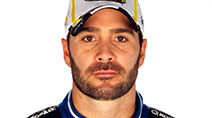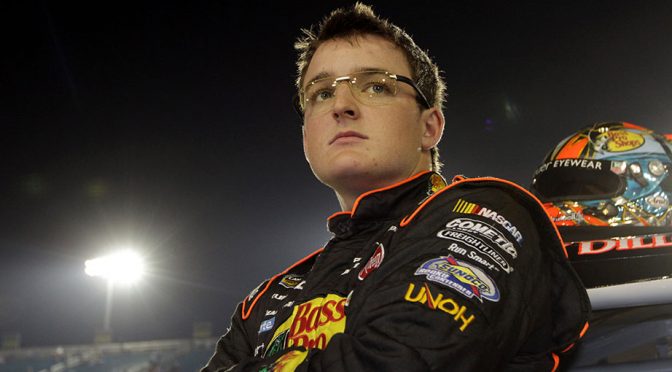
Driver thinks he’s learned from last year’s close call

The 2013 NASCAR Camping World Truck Series season won’t get under way for another five weeks, but Ty Dillon already has a plan in place. And a strategy that’s as sound as it is simple.

“My plan is to not make it a close race by the end of the year,” the Richard Childress Racing driver said. “Not make the last race close, so nobody has a chance to beat us.”

Dillon, 20, has been in the series for only one full season, but he made sure the competition knew he was around. He won for the first time (at Atlanta), won three poles and led the points battle late in the year en route to winning Rookie of the Year.

"I think the only way we can follow (last year) up is to win a lot more races."

 Ty Dillon

The opportunity to win a championship, however, slipped from his grasp in the waning laps of the final race of the season.

“Even going into that last race (at Homestead) we had a chance; almost down to the last lap we had a chance at winning the championship before a little bit of misfortune there,” Dillon said.

Contact from Kyle Larson’s truck inside of the final five laps sent Dillon into the wall, ending his title hopes. For the third time in the final four races, Dillon finished 15th or worse.

The closeness of the heated battle left its mark. Lessons were learned.

“We just made too many dumb mistakes that kept the championship too close,” he said. “Dumb mistakes that could have been avoided.”

Crew chief Marcus Richmond returns, having taken over the duties after the 2012 season had already begun. The two meshed quickly and the results continued to improve as the season wore on.

“We weren’t running too bad,” Dillon said of the crew chief change. “But we thought we could be better. As soon as we put Marcus in there we definitely did pick up our finishes — from top-10 finishes we started getting top fives. Then getting our first win. … I think it was the right move. It was tough, but sometimes that’s what you’ve got to do to stay on top.”

Richard Childress has a unique relationship with both Ty and older brother Austin, who competes in the Nationwide Series. Not only is Childress the owner of their respective teams, he’s also their grandfather. Austin won the NCWTS title in 2011 before making the move up to the Nationwide Series at RCR last season.

“I think he had a good season for his rookie season, winning a race and winning Rookie of the Year,” Childress said of Ty. “He was three laps from having a chance at the championship. He was right there all year long.”

Dillon will likely compete in 10-12 Nationwide races this season as well. He made three Nationwide starts last year, finishing in the top 10 in all three.

But his focus, he said, is the Truck Series crown. And after a solid rookie campaign, Dillon appears ready for what lies ahead.

“I think the only way we can follow that up is to win a lot more races and win the championship,” he said. “That’s definitely what we have our mind set on. I think we were so close last year to winning the championship anything less would be a failure to us.

“Still, it’s going to be a tough year; you never know what’s going to happen. But I think we’re very capable of winning the championship.”
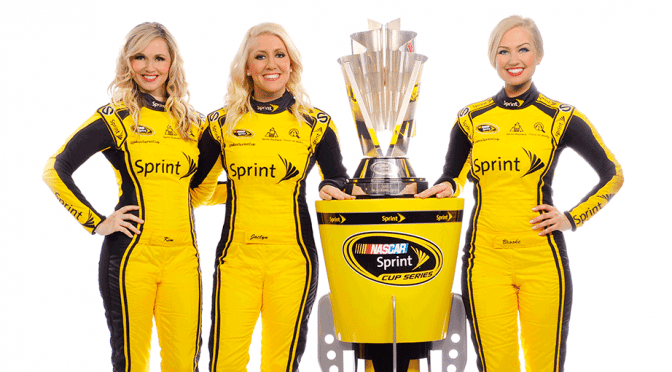
Newcomer Brooke Werner joins returning members Kim Coon, Jaclyn Roney

HUNTERSVILLE, N.C. — With only 28 days left until the green flag drops for The Sprint Unlimited At Daytona, Sprint today unveiled the complete 2013 Miss Sprint Cup lineup to the more than 1 million Miss Sprint Cup followers on Facebook and Twitter. Newcomer Brooke Werner (Granville, Vt.) will join returning members Kim Coon (Orlando, Fla.) and Jaclyn Roney (Ann Arbor, Mich.) this season.

Miss Sprint Cup represents the Sprint brand around the track and in Victory Lane wherever the NASCAR Sprint Cup Series competes. The three representatives also serve as the fans’ “friend on the inside,” delivering behind-the-scenes updates, pictures and videos via Facebook and Twitter, while highlighting Sprint products and offers.

Hailing from the “Green Mountain State,” Werner adds a Northern charm to the Miss Sprint Cup lineup. The former Miss Vermont USA stuck to her hometown roots while growing up by hiking the Green Mountains and listening to bluegrass music. When she isn’t at the racetrack, Werner enjoys snow skiing, antiquing and watching old movies. After receiving her degree in public relations from Champlain College, Werner worked at a nationally recognized youth-marketing agency, where she served on the community committee, helping to coordinate donations to regional non-profit organizations.

“It’s truly an honor to be selected to wear the Miss Sprint Cup fire suit this year,” said Werner. “Kim, Jaclyn and the rest of the Miss Sprint Cup legacy have done an amazing job of bringing fans closer to the sport, and the opportunity to be a part of that is incredibly exciting. I’m looking forward to meeting all of the race fans at The Sprint Unlimited Experience and, of course, my first Victory Lane!”

Coon returns for her third season as Miss Sprint Cup, which makes the former marketing and public relations professional the veteran member of this year’s lineup. 

“Last year was such a great season, filled with lots of fun and exciting experiences,” said Coon. “I went skydiving, hunted for rattlesnakes, drove on an off-road course, helped host NASCAR After The Lap and met tons of amazing fans. I’m looking forward to making many more memories this season.”

Rounding out the 2013 lineup is Roney, who is entering her third season as Miss Sprint Cup. The Eastern Michigan University grad joined the program in July 2011 and is looking forward to another thrilling season of racing.

“Being Miss Sprint Cup for the past two seasons has allowed me to encounter such amazing opportunities,” Roney said. “Each race weekend is so different and I count my blessings each morning when we head to the track. There are only three tracks I haven’t been to yet — Kentucky, Watkins Glen and Darlington — and I hope to mark those off my NASCAR bucket list this season.” 

The program has gained tremendous recognition among race fans and industry members, with the Miss Sprint Cup representatives greeting thousands of fans every race weekend at The Sprint Unlimited Experience, Sprint’s mobile marketing display.

Thanks to their engaging personalities and knowledge of the sport, the Miss Sprint Cup lineup serves as popular interview subjects among local media looking to get an insider’s view on the activities surrounding race weekends. As the Miss Sprint Cup program’s popularity has grown, they now regularly participate in charity events and appear at other NASCAR sponsors’ events. In all, the Miss Sprint Cup representatives took part in more than 900 media interviews and appearances in 2012.

Follow Miss Sprint Cup on Facebook at Facebook.com/MissSprintCup or Twitter @MissSprintCup.

National Motorsports Press Association Hall of Fame welcomes three

CHARLOTTE, N.C. — Track owner Dr. Joseph Mattioli, broadcaster Ken Squier and NASCAR official Jim Hunter were inducted into the National Motorsports Press Association’s Hall of Fame during ceremonies Saturday, Jan. 19.

Mattioli, the founder of Pocono (Pa.) Raceway, gave NASCAR a formidable presence in the Northeast when he built the unique, three-turn, 2.5-mile speedway. The track hosted its first 500-mile NASCAR event in 1974, and it has been a staple on the series’ schedule ever since.

Mattioli cut an imposing figure, yet he was warm and caring, not only seeking what was best for his facility, but for the surrounding region as well. Those traits made him a beloved and respected figure inside and outside the sport.

Squier, who began his broadcast career at just 14 years of age, continues his work behind the microphone today. One of the original members of the Motor Racing Network, Squier eventually made the transition to television where he became a fixture in the broadcast booth for telecasts of the Daytona 500. To this day, he has maintained his ties to his Northeastern roots through ownership of radio stations and the popular Thunder Road racefacility.

Hunter began his career in the sport as a journalist, but soon found himself working for the sanctioning body in a number of different capacities, including president of Darlington Raceway. With a keen understanding of the inner workings of the sport, Hunter helped craft decisions that impacted its growth in a variety of areas. In his later years, he became a guidance counselor of sorts for drivers as well as members of the media, often providing advice and friendship in equal doses.

The National Motorsports Stock Car Racing Hall of Fame was founded in 1965 to recognize excellence and leadership in the sport of autoracing. To date, there are 94 members in the Hall. It is located on the grounds of Darlington Raceway in Darlington, S.C. 

Members, with date of induction in parenthesis, include: 

-A-

Bobby Allison (1993); Davey Allison* (1996); Sam Ard (1999)

-B-

Buck Baker* (1982); Buddy Baker (1997); Cannonball Baker* (1966); Neil Bonnett* (1997);Harold Brasington* (1992); Red Byron* (1966)

-C-

Bob Colvin* (1969); Jerry Cook (1989); Richard Childress (2012)

-D-

Darel Dieringer* (1988); W.C. “Junie” Donlavey (2009)

-E-

H. Clay Earles* (2000); Dale Earnhardt* (2001); Ralph Earnhardt* (1989); Chris Economaki* (2009); Richie Evans* (1986)

-F-

Bob Flock* (1981); Fonty Flock* (1965); Tim Flock* (1973); Ray Fox (1985); A.J. Foyt (2001); Bill France Sr.* (1976); Bill France Jr.* (2001)

-G-

Harry Gant (2003)

-H-

Barney Hall (2007); Ray Hendrick* (1993); Tom Higgins (2011); John Holman* (1980); Tommy Houston (2008); Jim Hunter* (2013); Harry Hyde* (2004)

-I-

Jack Ingram (1997); Dale Inman (2002); Bobby Isaac* (1979)

-J-

Dale Jarrett (2011); Ned Jarrett (1973); Junior Johnson (1973)

-K-

Carl Kiekhaefer* (1980); Alan Kulwicki* (1999)

-L-

Houston Lawing* (1987); Butch Lindley* (2006); Joe Littlejohn* (1975); Fred Lorenzen (1978)

-M-

Edwin “Banjo” Matthews* (1996); Dr. Joseph Mattioli* (2013); Paul McDuffie* (1965); RalphMoody* (1990); Bud Moore (2002); Billy Myers* (1968)

-O-

Ed Otto* (2002); Cotton Owens* (1970)

-P-

Marvin Panch (1987); Raymond Parks* (1995); Benny Parsons* (1995); Jim Paschal* (1977); David Pearson (1991); Roger Penske (2010); Lee Petty* (1969); Maurice Petty(2007); Richard Petty (1998); Pat Purcell* (1967)

-R-

Tim Richmond* (2004); Glenn “Fireball” Roberts* (1965); T. Wayne Robertson* (2000); Jack Roush (2010); Ricky Rudd (2012)

-S-

Paul Sawyer* (2006); Wendell Scott* (2000); Ralph Seagraves* (1992); Jack Smith* (1981); O. Bruton Smith (2006); Ken Squier (2013)

-T-

Marshall Teague* (1968); Herb Thomas* (1965); Speedy Thompson* (1984); Curtis Turner* (1971)

-V-

Red Vogt* (1979)

-W-

Rusty Wallace (2010); Darrell Waltrip (2003); T. Taylor Warren* (2009); Joe Weatherly* (1965); Bob Welborn* (1982); H.A. “Humpy” Wheeler (2004); Rex White (1974); Waddell Wilson (2011); Glen Wood (2001); Leonard Wood (2002)

-Y-

Cale Yarborough (1994); LeeRoy Yarbrough* (1990); Robert Yates (2010); Smokey Yunick* (1984)

Gen-6 cars took damage at Preseason Thunder crash, but no tires left the ground

CONCORD, N.C. — Aric Almirola didn’t immediately feel his car decelerate. He didn’t hear the flaps deploy on the roof of his race car. All that he knew was that he was crashing — and that his vehicle was staying on the ground.

“When you start wrecking and stuff, the last thing I was thinking about was my roof flaps opening,” the Richard Petty Motorsports driver said. “I couldn’t tell. But I think that’s one of the things that a lot of us drivers, we just take it for granted until after the wreck’s over and someone brings it to our attention that the roof flaps deployed and we didn’t get upside down. We appreciate it.”

"I never felt like my car got light. I felt like my car was on the ground the entire time."

Aric Almirola 

Video: Watch cars stay grounded during Daytona wreck

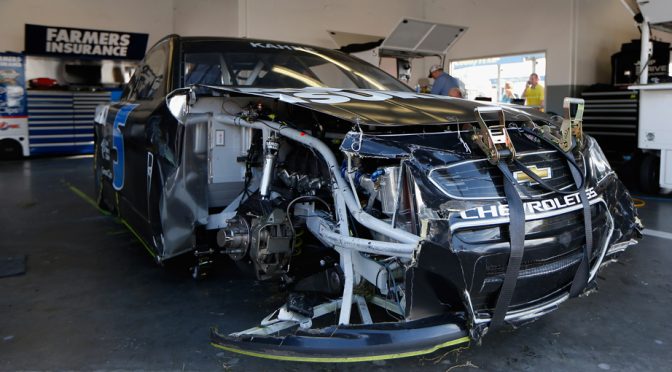
Last Friday’s drafting accident during the Preseason Thunder test at Daytona International Speedway seemed the perfect recipe for sending a vehicle into the air — cars at the front of the pack being turned sideways, others skidding through the infield grass, several spinning down onto the apron or jouncing up and down in the turf. And yet they all remained on the ground, thanks in part to the larger, redesigned roof flaps on the new Sprint Cup Series cars, the latest weapon in the battle to prevent vehicles from going airborne at restrictor-plate tracks.

It’s a challenge NASCAR has faced for years, one mitigated but not completely eliminated by the use of restrictor plates at the sport’s largest facilities. The latest example was this past October, when Tony Stewart’s car rolled over the vehicle of Paul Menard in a chain-reaction accident on the final lap. The crash in Daytona testing didn’t include nearly as many cars, and marked the first time the Generation-6 vehicles have been involved in a drafting pileup. But the difference was still obvious, and seen in the form of giant roof flaps popping up like oversized dorsal fins.

“We were pleased with what we saw,” said Robin Pemberton, NASCAR’s vice president for competition, at a Charlotte Motor Speedway test originally scheduled for two days, but due to weather was limited to Friday afternoon.

In addition to being much larger than those used on the previous-generation vehicle, the new roof flaps also appear to deploy quicker, popping up before an out-of-control car reaches too severe an angle. They also contain what Pemberton calls “parachutes,” pieces of canvas stretching from one corner of the flap to an opposite corner of the housing, designed to further disturb air and raise the speed required for a car to go airborne.

The new flaps were mandated by the shapes of the new cars, which include a great deal more brand identity and are not uniform from one manufacturer to another. Daniel Honeycutt, director of vehicle engineering at NASCAR’s Research and Development Center, had been experimenting with improved roof flaps before the series phased out the previous car, Pemberton said. When it came time for NASCAR and its manufacturer partners to design new vehicles to roll out in 2013, the series needed roof flaps in a different configuration to better wrap around the tops of the cars.

“We are better with this car than we were with the previous cars,” said Pemberton, an assertion that seemed on display in last week’s crash at Daytona. The new flaps were tested in a wind tunnel owned by Dodge, which is large enough that vehicles inside can be turned 360 degrees, and which the carmaker continues to allow NASCAR to use even though it withdrew from the sport after last season. The two flaps on the hood are also larger, in keeping with the two on the roof. The fact that the Generation-6 cars are 150 pounds lighter than their predecessor did not factor into the change, Pemberton said.

Both RPM cars, those of Almirola and Marcos Ambrose, were caught up in the melee at Daytona, which involved about a dozen vehicles. Ambrose’s No. 9 Ford was the spark, slamming into the outside wall after being tapped from behind by Dale Earnhardt Jr., its flaps popping up as it turned down into traffic and began bouncing through the grass. Almirola’s No. 43 was trapped in the aftermath, turning sideways high on the backstretch, its roof flaps deploying as it began a long skid.

“I never felt like my car got light,” Almirola said. “I felt like my car was on the ground the entire time. Ran into plenty of stuff, and bounced off quite a few other cars, but never felt like my car was going to get off the ground.”

Immediately following the crash, all RPM competition director Sammy Johns thought about was the fact that he had two wrecked race cars. “Had we come through that, we’d have three Daytona cars (per team) sitting in our shop. Right now, we have two,” said Johns, who added that the damaged vehicles were slated to be used in the Sprint Unlimited exhibition, but will probably be relegated to backups. It wasn’t until later when he realized that none of the cars had gone airborne.

“I think you’re going to find a circumstance where you hit the wall hard enough or whatever, and you get enough force to pick the car up off the ground, you’re going to get air under it,” he said. “But the crash at Daytona, that couldn’t have happened in a better spot for a car to get airborne, and nobody did. Cars got in the wall and backward, and Marcos hit the wall pretty hard. There were a lot of circumstances there where cars would have gotten upside down in the past, and we didn’t see anybody get upside down.”

Johns said Ambrose told him that the No. 9 car felt like it was going up in the air at one point, but never did. The new flaps are “a lot bigger to help disturb the air even more to keep the cars grounded,” he said. For that, he credits the continuing work NASCAR does on the safety front. The flaps are among several safety enhancements on the Gen-6 cars, which also include an additional roll bar in the windshield area, stronger windshields, and more secure window netting.

“You never know what to expect in racing,” Johns said. “We’ve seen cars hit walls we never thought they’d hit before. In every crash, I think there can be the element of the unexpected. You just don’t know. We’re going so fast, and so many different things can happen. I think the tracks and NASCAR and everybody are doing an extremely good job of being proactive nowadays, and not reactive. So as long as we can stay proactive on the safety side, I think we’ll continue to have a safe sport.”

Drivers weigh in on Gen-6 car after taking to asphalt at Charlotte Motor Speedway

CONCORD, N.C. — With the notable exception of cars built specifically for restrictor-plate superspeedway racing, NASCAR’s new Gen-6 race car will feature more downforce and mechanical grip than its predecessor, which debuted in 2007. 

The way driver Jeff Burton sees it, that means the quality of racing will improve, almost by definition.

"My theory is based on years of experience and watching what’s going on with this sport, how it’s evolved," Burton said Friday before testing the new car at Charlotte Motor Speedway. "We’ve been through this thing — a lot of downforce, little downforce; a lot of grip, low grip; all these different tire combinations.

"At the end of the day, the better the cars are stuck in the race track, the closer the cars run to each other… Especially on big tracks, the better the grip is, the closer the action can be."

"At the end of the day, the better the cars are stuck in the race track, the closer the cars run to each other."

Jeff Burton


Having tested the Gen-6 car four times before coming to Charlotte, Burton is convinced that the intermediate speedway package for the new car will provide more downforce, more grip and, consequently, closer racing.

"I believe that more grip gives the drivers more opportunity to put their car in a position that they wouldn’t be able to put it, if they didn’t have that grip," Burton said. "That’s why I think the racing is going to be better." 

As far as downforce goes, the superspeedway cars, which NASCAR Sprint Cup drivers tested last week at Daytona, are different. Because of a smaller spoiler in use at plate tracks, there is less rear downforce with those cars, but that characteristic almost certainly will help eliminate the two-car push-drafting.

"To be clear, the speedway cars have less downforce," Burton explained. "So there’s a lot less downforce on the Daytona/Talladega cars — assuming they don’t change the spoiler between now and then — and there is quite a bit more downforce on every other car."

TRUNCATED TEST

Cup drivers lost one day of testing at Charlotte because of heavy rains on Thursday. Even though Friday’s session, which started late because of track drying, was extended to 7:30 p.m., several drivers would like to get more track time before the series heads to Las Vegas for the first intermediate speedway race of the season (Mar. 10).

"This is a deal where we all roll out the new cars at the same time, and everybody is trying to get a jump on the rest of the guys," said Martin Truex Jr. "If we think we need to learn more, or if we’ve got unanswered questions, then we’ll be somewhere testing next week."

Greg Biffle agreed.

"I think a lot of it boils down to how well your car drove and then how your speed compares and how much stuff we get through (on the checklist)," Biffle said. "If the car is driving pretty good, the car has fairly good speed, and it looks like there are no major issues that we have to get figured out still, I think that there’s a possibility we wouldn’t test again. 

"But if there’s still unanswered questions or we don’t have the speed or the drive-ability, I get out there and I’m like, ‘I just can’t drive it. It’s too loose. It won’t turn as the fuel burns off,’ and we need to continue to test, we’re going end up somewhere else."

The Charlotte session was an official NASCAR test and doesn’t count against each organization’s allotment of four tests at venues that host NASCAR events. Teams also have the option of testing without restriction at tracks that don’t host NASCAR events, such as Nashville and Pikes Peak. 

BIFFLE STILL FAST

After setting the fastest lap in single-car runs last week at Daytona, Greg Biffle showed no signs of slowing down at Charlotte. 

As of 4 p.m. ET, Biffle topped the speed chart at CMS with a lap at 192.610 mph (28.036 seconds), not far off the track qualifying record of 193.708 mph (27.877 seconds) he set on Oct. 11 of last year.

Clint Bowyer (28.070 seconds) wasn’t far behind Biffle at 192.376 mph. Joey Logano, Juan Pablo Montoya and Kevin Harvick rounded out the top five as of 4 p.m. 

The afternoon, however, wasn’t without issues for Biffle, who scraped the wall just before 5 p.m. and brought his car back to the garage for repairs of minor damage.

The new qualifying format for the 2013 season places a greater emphasis on speed. The fastest 36 cars will automatically qualify for races this year in NASCAR’s new 36-6-1 format.

Once those cars are determined, the next six highest ranking cars in owners points will make the field. The final starting position is given to the most recent eligible past champion. If that does not apply, then the final car will be selected based on owners points.

The order of qualifying for NASCAR Sprint Cup Series events will return to a random draw; if qualifying is canceled due to rain, the starting lineup will be determined based on practice speeds.

One final change for the Sprint Cup Series, Nationwide Series and Camping World Truck Series is that the provisional positions will be based on owner points from the 2012 season for the first three races. It was previously the first five races for the Sprint Cup and Nationwide series, and four for the Camping World Truck Series.

Drivers use second testing to get better acquainted with Generation-6 car

CONCORD, N.C. — Most drivers participating in a weather-shortened test session at Charlotte Motor Speedway on Friday agreed on one thing — with the start of the 2013 NASCAR Sprint Cup season barely a month away, any amount of track time in the new Generation-6 car is crucial.

“This will be my fifth time in the … car,” said Jeff Burton, driver of the No. 31 Chevrolet for Richard Childress Racing. “Testing is valuable, there is no question about it. But if we go two hours today, everybody got two hours.”

The test, originally scheduled for two days, was reduced to approximately seven hours due to inclement weather. It marked the second opportunity for teams to gain on-track time with the new car and a new rules package at a 1.5-mile venue. Previous testing of the new car was done without the current rules package in place.

"Teams will leave out of here; some will be happy, some will be middle-of-the-road and you’ll have a couple of sad ones."

Robin Pemberton, vice president of competition

“The last time I remember doing testing like this was when the Taurus was first introduced,” Burton said. “I view this as a bonus test. We wouldn’t normally get this. Again, if we get two hours then the whole field gets two hours. Again, it’s about the teams that are most prepared.”

For Roush Fenway Racing’s Greg Biffle, the test provided a third opportunity in the new car, but he added that this week’s test was the first in a car that was close to race-ready.

“This is the first opportunity we’ve really had to get the car on the race track in the configuration we’re actually going to race in,” Biffle said. “We’ve tested a few times with a composite body and not all of the latest rules, but this is really it for us. We needed these two days to really figure out what the car is going to end up like."

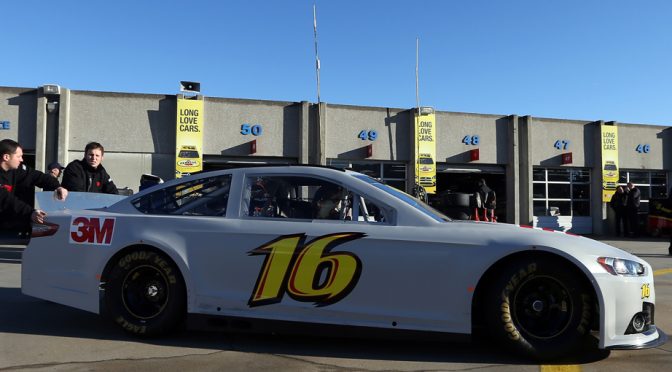
By late afternoon, Biffle (192.601 mph) had posted the fastest speed among the 33 drivers participating in the test. He had also scraped the wall, but the contact was minimal and he was back out on the track after minor repairs to the No. 16 Ford.

By the time the test concluded at 7:30 p.m., Ford driver Aric Almirola had set an unofficial track record, posting a lap of 194.021 mph. The mark exceeded the official qualifying record of 193.708 mph set last October by Biffle. In December, Kasey Kahne had topped Biffle’s mark with a lap of 193.771 mph during testing.

While team tests, as opposed to those scheduled by NASCAR, have not been allowed at Cup tracks since 2009, organizations will be able to test up to four times at Cup tracks in 2013.

With so many unknowns surrounding the new car and rules package, NASCAR officials scheduled two tests at CMS to give teams the opportunity to gather additional information.

“You get a thumb-up (from teams) and for me that’s been about the length of the conversations from most of them,” said Robin Pemberton, vice president of competition. “They’ll continue to work on it. I think like any test, teams will leave out of here, some will be happy, some will be middle-of-the-road and you’ll have a couple of sad ones.”

John Darby, Sprint Cup Series director, said the day’s efforts were “definitely just another step in the launch of the Generation-6 car.

“There are probably more cars here today that I will term as real race cars with full manufacturer’s steel bodies and the correct components — decklids, hoods and everything else that goes with it.

“For a lot of the teams, the test is probably more real-life than what some of our previous tests have been. Other than that, not a lot has changed. From the rules package and specification for the cars, most of that has settled down.”


Carl Edwards, Casey Mears, Marcos Ambrose and Jimmie Johnson completed the top five on the speed chart at day’s end, with all but Johnson eclipsing the 193.000 mph mark. Defending Sprint Cup Series Champion Brad Keselowski was 28th.

Michael McDowell filled in for Joe Gibbs Racing driver Denny Hamlin, logging 204 laps. Hamlin skipped the test to be with his girlfriend, who is expecting the couple’s first child.

NASCAR Sprint Cup Series Gen-6 Car Charlotte Motor Speedway test results
Friday, Jan. 18

Pos
Car
Driver Team
Time
Speed
# Laps
1
43
Aric Almirola Richard Petty Motorsports Ford
27.832
194.021
74
2
99
Carl Edwards Roush Fenway Racing Ford
27.882
193.673
93
3
13
Casey Mears Germain Racing Ford
27.924
193.382
109
4
9
Marcos Ambrose Richard Petty Motorsports
27.938
193.285
131
5
48
Jimmie Johnson Hendrick Motorsports Chevrolet
28.009
192.795
138
6
55
Mark Martin Michael Waltrip Racing Toyota
28.032
192.637
97
7
16
Greg Biffle Roush Fenway Racing Ford
28.036
192.610
92
8
56
Martin Truex Jr. Michael Waltrip Racing Toyota
28.063
192.424
94
9
15
Clint Bowyer Michael Waltrip Racing Toyota
28.070
192.376
109
10
17
Ricky Stenhouse Jr. Roush Fenway Racing Ford
28.075
192.342
131
11
42
Juan Pablo Montoya Earnhardt Ganassi Racing Chevrolet
28.092
192.226
85
12
5
Kasey Kahne Hendrick Motorsports Chevrolet
28.095
192.205
101
13
20
Matt Kenseth Joe Gibbs Racing Toyota
28.104
192.143
92
14
29
Kevin Harvick Richard Childress Racing Chevrolet
28.108
192.116
121
15
22
Joey Logano Penske Racing Ford
28.123
192.014
139
16
14
Tony Stewart Stewart Haas Racing Chevrolet
28.134
191.939
70
17
18
Kyle Busch Joe Gibbs Racing Toyota
28.158
191.775
156
18
78
Kurt Busch Furniture Row Racing Chevrolet
28.172
191.680
67
19
88
Dale Earnhardt Jr. Hendrick Motorsports Chevrolet
28.194
191.530
97
20
39
Ryan Newman Stewart Haas Racing Chevrolet
28.196
191.517
66
21
1
Jamie McMurray Earnhardt Ganassi Racing Chevrolet
28.214
191.394
79
22
24
Jeff Gordon Hendrick Motorsports Chevrolet
28.216
191.381
62
23
31
Jeff Burton Richard Childress Racing Chevrolet
28.241
191.211
97
24
21
Trevor Bayne Wood Brothers Racing Ford
28.278
190.961
122
25
11
Michael McDowell Joe Gibbs Racing Toyota
28.315
190.712
204
26
30
David Stremme Swan Racing Toyota
28.332
190.712
80
27
10
Danica Patrick Stewart Haas Racing Chevrolet
28.342
190.530
114
28
2
Brad Keselowski Penske Racing Ford
28.355
190.443
96
29
47
Bobby Labonte JTG Daugherty Racing Toyota
28.468
189.687
46
30
27
Paul Menard Richard Childress Racing Chevrolet
28.469
189.680
107
31
7
Dave Blaney Tommy Baldwin Racing Chevrolet
28.645
188.515
64
32
34
David Ragan Front Row Motorsports Ford
28.752
187.813
96
33
34
Scott Speed Leavine Family Racing Ford
28.882
186.968
41

————————————————————————————————————————————————-

Kenny Bruce comes to NASCAR after serving as assistant managing editor/writer at NASCAR Scene, SceneDaily.com and NASCAR Illustrated since 2001. Bruce is a three-time National Motorsports Press Association Writer of the Year and former president of the NMPA. He also was the 2012 Henry T. McLemore Award recipient, presented by the International Motorsports Hall of Fame for lifetime achievement in journalism. Bruce has 30 years of experience in motorsports journalism and is on the voting panel for the NASCAR Hall of Fame.

Despite rocky finish, Five-Time’s 2012 season leaves plenty to build on for 2013

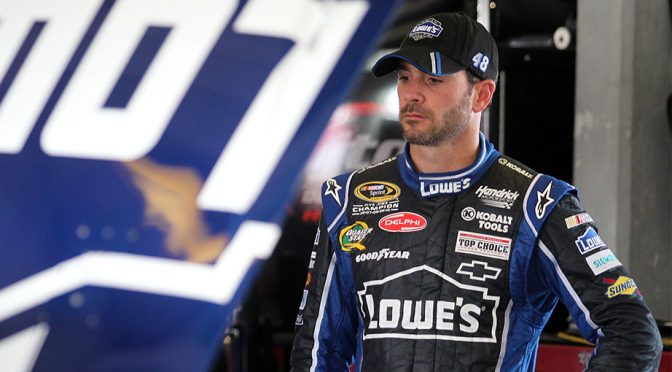
That his car was in the garage undergoing repairs almost as soon as the year began, and again as it was coming to a close, should tell you all you need to know about Jimmie Johnson’s 2012 season.

Jimmie Johnson

No. 48 Lowe’s Chevrolet

2012 rank

3rd

Team

Hendrick Motorsports

Crew chief

Chad Knaus

Biggest change for 2013 is…

The defection of lead engineer Greg Ives to JR Motorsports. Ives played a key role in the success of the No. 48 team.

Watch out for…

Johnson’s average finish on restrictor-plate tracks. In 2012 it was an unsightly 32.5 and he failed to finish three of the four events.

Will win the title if…

His team adapts to working with new car quickly and he can avoid those pesky DNFs.

2012 was…

Watch the video below for Jimmie Johnson’s 2012 season in review.

Fortunately for the five-time NASCAR Sprint Cup Series champion, that doesn’t tell the whole story.

Although Johnson posted a whopping six DNFs (Did Not Finish) this past season, on the whole he enjoyed the type of year that helped him rule the sport from 2006-2010. His five-win total tied for most in the series while his 18 top-fives and 24 top-10s were the most of any driver. His title chances weren’t completely extinguished until a problem underneath the No. 48 Chevrolet sent him to the garage after 226 laps of the 267-lap, season-ending race in Homestead.

It’s little wonder, then, that Johnson says he wasn’t ready for the season to end, and can’t wait for the 2013 season to get under way.

While he says “everyone is in the same boat” where challenges of the new Generation-6 vehicle are concerned, as well as any subsequent rule changes, “we’ll be able to … get prepared faster than most,” he said.

Such was the case in 2007 when NASCAR began phasing in the Car of Tomorrow. Hendrick teams were ahead of the curve thanks in large part to a dedicated research and development program, and the result was nine wins for the organization, including five for Johnson, in the 16 COT races on that year’s schedule.  

“Where we are most concerned is if we get into the season and we start crashing cars, especially … downforce cars," Johnson said. "There are a lot of mile-and-a-halves at the start of the season and you can be out of inventory pretty quick. … But if there is any company that can deal with it, it will be ours. I feel like we’re in a good position.” 

For Johnson and crew chief Chad Knaus, avoiding trouble on restrictor-plate tracks (where he suffered half of his DFNs last year) will be crucial. The team’s 1.5-mile and short track program remains more than adequate. From a personnel standpoint, two engineers have departed, including lead engineer Greg Ives.

Ives, who worked alongside Knaus during all five of the team’s championships, is now crew chief for Regan Smith at JR Motorsports in the Nationwide Series.

Johnson will open the season with a bit of a milestone: the Daytona 500 will be his 400th career start in the Cup series. It’s been two years now since his last championship, and, while that might not seem to be a big deal, when you win five in a row, not winning generates a bit of attention. However, the 2012 season wasn’t bad in spite of the final outcome, according to Johnson.    

Earning the 200th career victory for Hendrick Motorsports, collecting his fourth Brickyard 400 title and contending for the Chase stand out, he said, adding that “there was some really cool energy floating around the walls of that 48 shop."

“It turned out to be far different than what we wanted,” he said  “… We had a lot of speed and a lot to be proud of … so there were a lot of high spots.”

See the full schedule of our top 12 Sprint Cup Series drivers and read more below:

12. Dale Earnhardt Jr.

11. Martin Truex Jr.

10. Jeff Gordon

9. Tony Stewart

8. Kevin Harvick

7. Matt Kenseth

6. Denny Hamlin

5. Greg Biffle

4. Kasey Kahne

3. Jimmie Johnson

2. Clint Bowyer

1. Brad Keselowski

Despite losing a day of testing, teams remain hard at work on new cars

Editor’s note: Cars are on the track at Charlotte Motor Speedway for Day 2. Testing has been extended to 7:30 p.m.

CONCORD, N.C. — When it comes to competing in the Sprint Cup Series, an organization like Front Row Motorsports is often at a disadvantage. It doesn’t have as many people, as much sponsorship or the superior research and development capabilities of the top teams on NASCAR’s premier circuit.

What it has now, though, are updated race cars — an improvement mandated by NASCAR’s move to the more brand-identifiable Generation-6 vehicle beginning with the 2013 campaign. No question, it’s an added financial and managerial hurdle for a small team, but one that in the end could help an outfit like Front Row achieve its goal of becoming more competitive with the organizations that have historically dominated the sport’s top tour.

“By NASCAR making the decision to change these cars, it forced a team like Front Row Motorsports to go through their whole inventory and build new components,” said David Ragan, who drives the team’s No. 34 car. “Where in years past, what you raced at Homestead was legal the following year, and you didn’t really have to spend any money on your inventory. But now, the smaller one-, two-, three-car teams are forced by the sanctioning body to go through their whole inventory, clean up parts and pieces, (and) build new pieces. … That will help close the gap a little bit.”

"We like to be prepared, and we will (be) here in the next few weeks."

 Brian Pattie, Michael Waltrip Racing crew chief

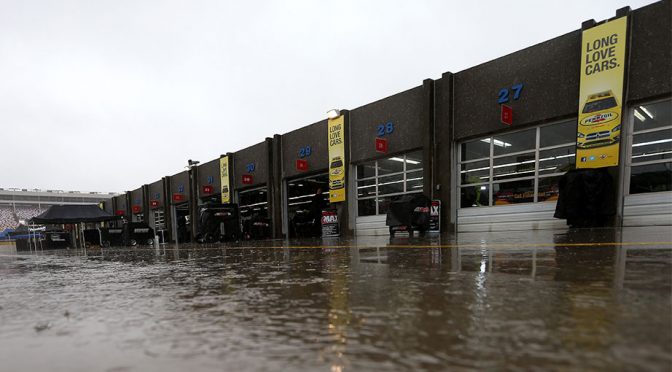
Given that Front Row’s top driver finished 28th in final points last season, the team will surely try to take advantage. Thursday was scheduled to bring another step in the Gen-6 car’s progression, but persistent rain canceled the first day of a two-day test at Charlotte Motor Speedway. The cars will be on the track Friday until 7:30 p.m.

“It’s really about the teams right now,” said Robin Pemberton, NASCAR’s vice president for competition, “and most of the feedback is that everybody‘s got enough work to do that they would rather run one good day than to run on Saturday.”

Rain or shine, work on the new car continues inside team shops, where organizations are building up their fleets in preparation for the season. That process is slower than teams are accustomed to, because they don’t build all the parts themselves — the deck lid comes from a single supplier, Composite Resources of Rock Hill, S.C., while hoods are obtained through respective manufacturers. Brian Pattie, crew chief for Clint Bowyer’s car at Michael Waltrip Racing, said his team is behind relative to what they’re used to, but believes that will change.

“Don’t take it the wrong way — being behind is not a bad thing when you have new cars,” Pattie said. “It’s just, we’re not where we were 12 months ago prepping for Daytona. But we will be. The guys are working six days a week, 14-hour days trying to get ready. Come the week after the (Daytona) 500, we should be in really good shape.”

Pattie said each of MWR’s three full-time teams has six cars built, compared to 10 or 12 apiece at this point a year ago. Ragan said Front Row, which also fields the entries of David Gilliland and Josh Wise, has about seven total cars built.

“We’ll need to have about triple that,” he added. The rush isn’t necessarily for Daytona, but to be ready for the ensuing weeks once the 38-race season begins for real. Toward that end, Pattie believes teams will eventually catch up.

“We like to be prepared,” he said, “and we will (be) here in the next few weeks.”

The Charlotte test also offers teams another opportunity to roll through NASCAR’s laser inspection system, which will debut for 2013. The device — which uses lasers to scan different points on the car — was also available for teams to try at Charlotte, Talladega and Martinsville last season, and Pemberton said teams have been in and out of the NASCAR Research and Development Center matching the new system to what they see in their simulations back at the shop.

“We’ve been doing that all winter,” Pattie said. “(We’ve) been working with NASCAR since probably (the 2012 finale at) Homestead … so we won’t have a problem when we get to the 500.”

Pemberton said teams will go through the new system at Charlotte to help work out any final bugs. “We’ve gotten some pretty good feedback about it,” he said. “Teams, now that they know how we’re going to measure, they’re able to recreate a similar type of number system at their facility, not using a laser platform. … Some of them have done a really nice job. They’ll come in, and the numbers will match identical to what they had at the shops.”

The continuing rain shut down the garage area early Thursday afternoon, leaving teams just one more track day to fine-tune their Generation-6 vehicles before they head to Daytona for Speedweeks. Much like the test last month at Charlotte, when Kasey Kahne turned what would have been a track-record lap, not all the cars on site had all their 2013 pieces in place. This time around, though, drivers are warning not to read too much into Friday’s speed chart — particularly since very cold temperatures are in store.

“It doesn’t matter how fast or slow you are,” Ragan said. “Certainly you would like to be as fast as you can, but you just want to go through some trial and error … to help us make some better decisions for (Las) Vegas and for California.”

“Just like Daytona, it’s like the first day of school,” agreed Bobby Labonte, who drives the No. 47 car for JTG Daugherty Racing. “You can make a lot out of it, but I don’t know if it’s going to be true gospel that the lineup tomorrow afternoon, you’re going to say, ‘Well, that’s the way it’s going to be for the year.’ There’s no way it can be. But you’ll see the teams that are doing the right things, they’re going to always continue to do the right things.”

And teams like Front Row will keep playing catch-up, even with a fleet of new cars.

“These teams that have money more in their bank account, they can go test more, they have more employees, they can R&D cars at a faster rate, so they learn at a faster rate,” Ragan said. “So absolutely, the playing field was very level when everything was all new. But now each team is learning at a different rate, and some cars are going to be stronger than others.”