The Official Logistics Provider of NASCAR Introduces Environmental Enhancements to Its Trackside Pick-up and Delivery Operations 

"NASCAR has stated its commitment to making the sport more environmentally responsible and as an official NASCAR partner, UPS is equally committed to this important goal."

—Ron Rogowski, UPS vice president, global brand and sponsorships

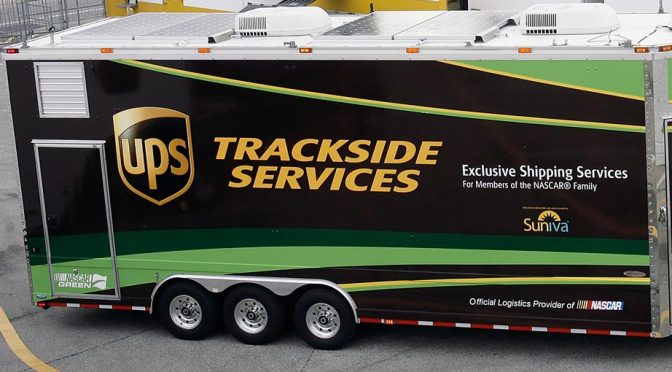
ATLANTA, Feb. 20, 2013 – NASCAR gives UPS (NYSE: UPS) the green flag in sustainability as it upgrades its Trackside Services operation for the 2013 racing season.  This "best practice" aims to reduce environmental impacts and create a model for other racing teams and sponsors to leverage in their own sustainability efforts by reducing emissions and optimizing power generation with state-of-the-art solar power. 

UPS became an official NASCAR partner in 2000 has provided critical behind-the-scenes pick-up and delivery services for race teams, sponsors, racing officials, vendors and news media at NASCAR Sprint Cup Series®  events across the country. Throughout the 2012 season, UPS began developing plans to further reduce the environmental impact of its Trackside Services operation that serve as an example of improved efficiency to drive superior environmental performance  throughout the sport. 

Beginning with this season’s opening events at Daytona International Speedway, UPS Trackside Services will operate with a truck equipped with a diesel exhaust fluid (D.E.F.) system used to reduce exhaust particulate matter.  Additionally, the service trailer has been outfitted with high-tech, state-of-the-art solar panels, designed and installed by Suniva® to help supplement sustainable energy needed to run the operation. The mobile unit features a photovoltaic (PV) powered system with a large array of battery power, which also provides for a generator and access to shore power.

"NASCAR has stated its commitment to making the sport more environmentally responsible and as an official NASCAR partner, UPS is equally committed to this important goal," said Ron Rogowski, UPS vice president, global brand and sponsorships. "UPS is leveraging its knowledge of alternative fuel and advanced fleet technology, renewable energy and carbon mitigation to reduce our carbon impact at sports venues." 

One of the most recognized tools for the UPS Trackside Services team is a miniature UPS package car that makes pick-ups and deliveries for customers throughout the race weekend. This year, the mini car is a battery powered electric cart that is also outfitted with Suniva solar panels to serve as an additional source of power. These upgrades, which allow for an additional five miles a day of travel and deliveries around the track, will be visible to fans and promote UPS’s commitment to sustainability. 

As part of its ongoing sustainability efforts, UPS also will continue to provide its NASCAR customers the ability to offset the climate impact of the CO2 emissions that result from their shipments through the company’s popular carbon neutral shipping service. These offsets have been applied to carbon offset projects such as the Garcia River Forest in California. By working with globally recognized certification and validation groups, UPS is helping its customers around the world meet their own sustainability goals in meaningful ways.

"UPS is always looking for new ways to apply our sustainability-focused expertise and experience to everything we do, including our sponsorship programs," stated Rogowski. "Logistics is more than our core business. It’s also the engine that drives our contributions to a more sustainable world."

"NASCAR Green has become one of the most influential environmental awareness platforms in the history of the US since its inception in 2008," said Mike Lynch, NASCAR managing director of green innovation.  "NASCAR’s millions of fans are now 100% more likely than nonfans to view their household as very green and always looking for ways to positively impact the environment, up from 70% more likely in 2011. A major reason for this unprecedented impact has been the efforts of partners like UPS in reducing our sport’s environmental impact by transferring solutions from their core business."
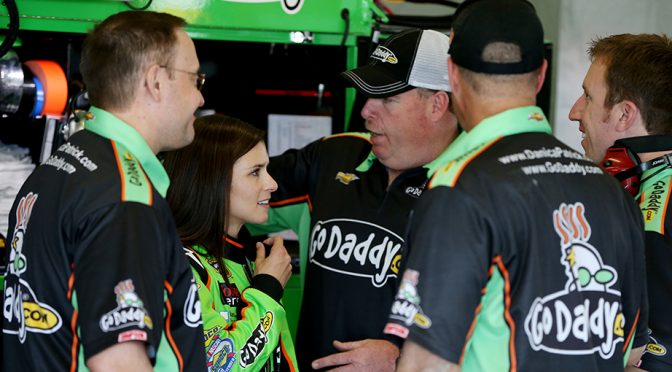
Experienced staff, led by crew chief Tony Gibson, the perfect fit for rookie driver

DAYTONA BEACH, Fla. — When Tony Stewart approached Tony Gibson with the prospect of overseeing Danica Patrick’s new Sprint Cup team for the 2013 season, the veteran crew chief had one request — that he be able to bring the rest of his crew with him.

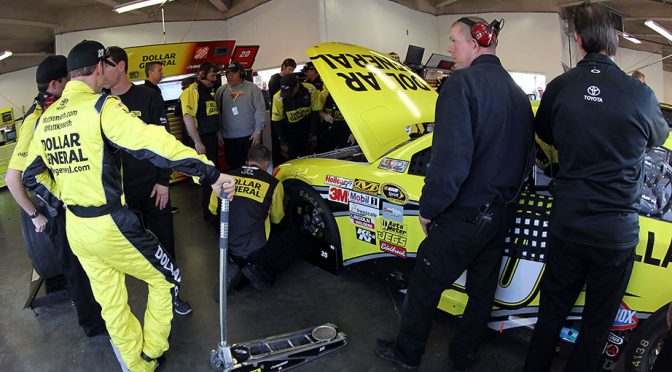
Understandable, given that Gibson and his guys had been together for much longer than just the four years they had worked with Ryan Newman. Patrick may be the star on Stewart-Haas Racing’s No. 10 team, but the crew which readied the pole-winning car for the Daytona 500 is a tight-knit group that goes back to the heyday of Dale Earnhardt Inc. — including Dale Earnhardt Jr.‘s victory in the 2004 edition of the Great American Race.

Gibson can count them on his fingers. There’s Kevin Pennell, his car chief. There’s Jay Guarneri, his interior mechanic. There’s Brandon Blake, his shop foreman. There’s Brian Holshouser, his shock specialist. There’s Al Tully, his setup guy. There’s John Klausmeier, his engineer. There’s Todd Cable, his transporter driver, and a half dozen other guys back in the fabrication shop. The heart and soul of Patrick’s team are a group of men who together experienced the highest of highs and the lowest of lows at DEI, and built indestructible bonds in the process.

"It’s like mini-DEI over there. A lot of us, we just stuck together."

— Crew chief Tony Gibson

“I have them all scattered,” Gibson said Wednesday. “It’s like a mini-DEI over there. A lot of us, we just stuck together. We figured, the only way we’re going to survive in this business now, with how it’s going, is to stick together. When the deal kind of went bad over at DEI, we all stuck together. I just wanted to make sure everybody had jobs and we could stick together. And luckily, we were able to.”

When Stewart assumed co-ownership of the rebranded Stewart-Haas operation prior to the 2009 season, he needed not just a crew chief, but a whole crew to fill out an organization that would field two competitive full-time cars. Gibson knew just what to do, gathering together many of the colleagues he had worked with at DEI before that team merged its racing operations with Chip Ganassi’s team. That crew formed the backbone of Newman’s team until late last year, when Stewart switched Gibson over to the program Patrick would front in 2013.

Not surprisingly, the crew chief once again brought his guys with him — a fact that Gibson said thrilled Stewart, who wanted his rookie driver to be surrounded with an experienced crew. “It just worked out great,” Gibson said. “Here we are again.”

That would be back out front at Daytona, a position many members of the No. 10 team are very familiar with. These are crewmen who worked at DEI when no organization was better at restrictor-plate racing, during a stretch when Earnhardt Jr. and Michael Waltrip were always the favorites at NASCAR’s largest tracks. Gibson, Pennell, Guarneri and many others on Patrick’s crew wore Budweiser red here in 2004, and celebrated memorably in the infield grass after Earnhardt Jr. won the sport’s biggest race. Others were part of Waltrip’s victories. They all know what it takes to go fast on Daytona’s high banks.

So it should come as no surprise that the fastest car on qualifying day was built and prepared by men who once seemed unbeatable on the 2.5-mile track. “Everybody puts in the same effort, whether you’re a mechanic or me or whoever,” said Gibson, who was a mechanic on the No. 8 team in 2004. “It takes everybody to make it happen. So it’s very special to me and my guys, who were at DEI and went through all that, to come here and accomplish this.”

Particularly given where they’ve come from. Despite the success DEI experienced at its height, the wake of Dale Earnhardt’s death was a turbulent time for the organization, with infighting over its direction and the eventual absorption of his racing operation by Ganassi. Gibson and his boys rode it all out, from Earnhardt Jr. and Waltrip to Mark Martin and Aric Almirola, to the bitter end following the 2008 campaign. That experience fostered a trust and a closeness that’s still very evident among Patrick’s crewmen today.

“It’s like a marriage, I guess,” said Guarneri, who was a road mechanic on the No. 8 team in 2004. “I don’t know, because I’ve never been married. But when you’re with somebody … you just know what everybody is going to do. Everybody’s got their own little thing they’ve got to do, and you don’t have to worry about double-checking. Everybody’s got their own little deal, and they know how to do it. And I think Sunday, that proved it and showed we’ve got a pretty good group of guys.”

“We have a good bond together,” added Pennell, who joined DEI in 1995, the team’s first year. “… There’s a good friendship between all of us. Everything clicks. Everybody knows what the other wants. We cover each other’s backs, pretty much.”

Gibson has been a part of four Daytona 500 winners — one each with Earnhardt Jr. and Waltrip, one with Jeff Gordon in 1999, and one in 1990 with Derrike Cope, for whom he hung car bodies even though he wasn’t officially a member of Bob Whitcomb’s race team. But as much as anything else, he’s been shaped by the trials at DEI, where he learned lessons that may help him shepherd his rookie driver through her first full-time season.

“We’ve been to the high and we’ve been on the low end of it,” he said. “I think at the end of the day, we just try to be humble and know that any day, it could go bad and we could go back to a rookie driver and starting over. I think that’s why Stewart wanted us to be with (Patrick), because we’ve been through all those ups and downs, and we understand it, and it doesn’t phase us. We’ll give you 110 percent no matter who’s driving that race car. I think going through all that deal at DEI just made us stronger. How we all survived that deal over there and still stayed together is pretty amazing. I think going through all that just made us all better people, and stronger, and made us appreciate the job we had.”

No wonder, then, so many of them embraced the idea of being a part of Patrick’s program for 2013. Guarneri will admit, there were times late last year when he heard comments from others in the garage area about being stuck with Danica. They dried up once it became evident how well Patrick and her new crew fit together, a fact that was apparent in the improved performance she enjoyed prior to the end of last season.

“When they took us off Ryan’s deal last year and put us with her with six races to go, that was a godsend,” Guarneri said. “… Everything kind of meshed. It just kind of worked out.”

Besides, dealing with a few derisive comments is nothing for crewmen who know what it’s like to be chewed out by Tony Eury Sr., the crew chief on those great No. 8 teams, where the love-hate relationships overflowed like the Bud in Victory Lane. From victory to heartbreaking disappointment, at Daytona and beyond, the members of Patrick’s crew have experienced it all  — making them a perfect complement to a driver who is going through a full NASCAR Sprint Cup Series season for the first time.

“I think that’s a huge security blanket for her, because she knows she has an experienced team,” Gibson said. “She knows when things go bad and when things go wrong in pressure situations, she’s got a solid team that will pick her up and is going to work hard and it going to make sure she has the best cars she can have. We’re not going to get disappointed when things happen, because we’ve been there. We understand the sport. So I think that relaxed her. I could see it in her. When she found out this whole team was going to be hers, she was just a relaxed person. I think it just gives her a huge comfort zone.”

___________________________________________________________________________________________

We apologize. We are having technical issues with our comment sections and fan community and it is temporarily unavailable. We are actively working on these issues and hope to have it up and running soon. We are also working on enhancements to provide a better forum for our fans. We appreciate your patience and apologize for the inconvenience.

Blown engine hits No. 88 driver as adjustments continue

RELATED: Speeds from Wednesday’s practice sessions

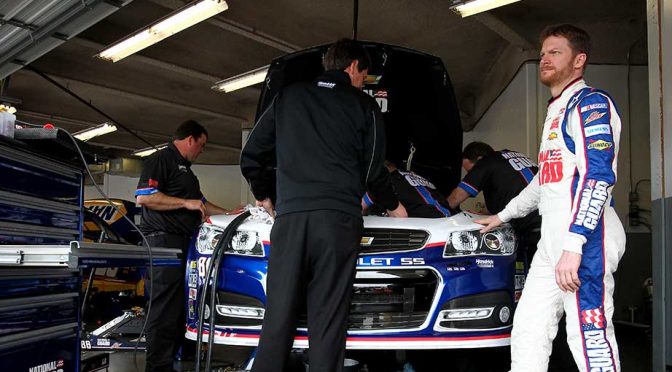
DAYTONA BEACH, Fla. — The white smoke emerging from the rear of Dale Earnhardt Jr.’s car first appeared in traces, but before long it was billowing out in a thick cloud. And very quickly, it was marking a trail back to the garage area at Daytona International Speedway.

Earnhardt’s engine failure was one of the more notable events of a very active Wednesday on the 2.5-mile speedway, as the NASCAR Sprint Cup Series field took part in a pair of practice sessions in advance of Thursday’s 150-mile qualifying races for the Daytona 500. The former Daytona 500 champion lost the engine in his Hendrick Motorsports car in the first practice, and will have to start at the rear of the first Duel at Daytona qualifying event as a result.

“I’m sure there is some logical explanation as to what happened,” Earnhardt said, “but we’ll just put a new one in and start at the back of the qualifier tomorrow, and race up through there.”

Earnhardt was slated to start sixth in the event by virtue of his speed during front-row qualifying Sunday. The failure will not impact his starting spot for the Daytona 500, which will not be determined until after the Duels are concluded. The engine change also did not affect his outlook on Speedweeks.

“Everything is good,” said Earnhardt, who got back on the track for the second practice. “We were just making some single car runs by ourselves. Everything seemed like it was working. Just trying to find a little more speed, and we found a few things that seemed to help the car. We’ll … see what else we can learn, but everything should be fine."

Earnhardt’s was far from the only team forced to make adjustments on the fly Wednesday. Reigning Sprint Cup champion Brad Keselowski had a fuel pump fail during the first practice and spent time in the garage area having the problem repaired. Keselowski was back on the track in time to turn a few more laps before the opening session concluded.

“Something went wrong with the fuel system in the car,” said Keselowski, whose starting position for Thursday was not affected. “That’s not what you want when you’re in front of the pack because when your car slows down, they’ve got nowhere to go and it could cause a wreck. So we’re going to spend a little extra time to make sure we’ve got whatever it is figured out.”

Another day of practice also brought another incident on the race track, this once involving Carl Edwards and Ryan Newman. Edwards’ car came down across Newman’s as the two were participating in the opening practice session, and Mark Martin’s vehicle suffered some damage as well. Both Edwards and Newman said their teams planned to repair the vehicles and use them in Thursday’s qualifying events.

“I didn’t know what happened, and he honestly admitted that he didn’t know what happened,” Edwards said. “Just all of a sudden, my car was going across his nose. He did say that he tried to come up and put the air brakes on me. I think in doing so it just made my car that loose. I hadn’t been loose the entire time. It was just something new, and a different characteristic of this car I guess.”

These Speedweeks are the first for the more brand-identifiable Generation-6 Sprint Cup car, and drivers are still adjusting to how the vehicle performs in the draft. “I think it’s just an aero situation,” Newman said, referring to his crash. “… That was my first experience, but I guess my car just got light in the back going into the corner.”

Michael Waltrip led the day’s first practice at 198.347 mph, followed by David Ragan, Tony Stewart, Paul Menard and Kyle Busch. Only three drivers — Michael McDowell, Dave Blaney and Josh Wise — did not participate in the opening session. The second practice saw much of the field on the sidelines, and Kasey Kahne (at 197.737 mph) post the fastest speed of a much calmer session in which just 27 cars took part.

___________________________________________________________________________________________

We apologize. We are having technical issues with our comment sections and fan community and it is temporarily unavailable. We are actively working on these issues and hope to have it up and running soon. We are also working on enhancements to provide a better forum for our fans. We appreciate your patience and apologize for the inconvenience.

Small changes make big difference for drivers at Daytona

DAYTONA BEACH, Fla. — When Matt Kenseth’s crewmen repaired his No. 20 car after it suffered damage in the opening practice last week at Daytona International Speedway, they also made one more change — moving his mirrors to the positions in which he’d been used to seeing them for a decade at Roush Fenway Racing.

Such small alterations can loom large in these Speedweeks, during which drivers are wheeling more brand-indefinable NASCAR Sprint Cup Series cars for the first time. The new Generation-6 vehicles feature slightly different dimensions in certain areas, which can mean slight differences in mirror placement, which forces competitors to adapt as they continue to prepare for Sunday’s Daytona 500.

That was certainly the case for Kenseth, whose new Joe Gibbs Racing vehicle was outfitted with that team’s customary mirror positions when it rolled out for practice last week. After he came down across the front of Kurt Busch — Kenseth later said he never saw the No. 78 car — the two-time Daytona 500 champion had his mirrors returned to the positions he was more accustomed to over his long tenure with Roush.

“I felt like I could see a lot better (afterward),” Kenseth said Wednesday before the first of two practices for Thursday’s 150-mile qualifying races. “But still, you’ve got to be aware of where somebody’s at. That wasn’t a car thing, it wasn’t anything that was out of control. I just didn’t see him there and ran over his nose.”

"You move one simple thing six or seven inches, things become a lot different."

— Kevin Harvick

But even drivers who didn’t change teams in the offseason are being forced to adapt. Former Daytona 500 winner Kevin Harvick said he believed the first two big crashes of Speedweeks — Kenseth coming down on Busch in practice, and Tony Stewart coming down on Marcos Ambrose in The Sprint Unlimited — were the product of drivers adjusting to left-side mirrors that are in different positions than they were before.

“Just the way that things are in the car, whether it be something silly like your side mirror — mine is in a much different spot, much different shape than what it was,” Harvick said. “The first five or six times I looked for the mirror, it was in a different spot, and I didn’t see it because it wasn’t there. … The mirrors are in a different spot, the window nets are a little different. Silly stuff like that really matters because when you’ve been driving something week after week for four years, everything is in the same spot. And you move one simple thing six or seven inches, things become a lot different.”

Denny Hamlin said that because the rear quarter-panels on the new cars are more flared out, mirrors have had to be adjusted so drivers can see more of the left or right sides.

“By doing that, it changes you depth perception of the inside car, whether he’s there or not,” he said. “Really, I think it’s all a learning process. Really none of the wrecks in Speedweeks so far have been the car’s fault. It’s just really the guys behind the wheel, me included, are learning. It just takes time to get it right, and that’s why we can’t go a practice without wrecking.”

That was again the case Wednesday, when Carl Edwards and Ryan Newman collided in an accident that also collected Mark Martin. But getting acquainted with new mirror placement is far from a recent phenomenon — former NASCAR champion and current ESPN analyst Dale Jarrett recalls going through similar adjustments each time he drove a different type of car.

“I can remember doing the same thing,” the three-time Daytona 500 champ said. “It’s amazing, that it’s just little things like that. … I can remember getting in new cars before, and those things not being there. You sit in the shop, and you look in your mirrors, and you see your side mirror and everything, and you get your steering wheel and you think all that’s right. And then you get here and get settled down in the seat, and all of the sudden just moving an inch or so in that seat has changed everything about that, in where you look and how you actually see. Those aren’t little things. Don’t take that as complaining. It’s just when you change things … it doesn’t take much to throw us off.”

And it requires an adjustment that will change with each race track — with Daytona being only the beginning.

“That will take some time to get used to, and that will change at different tracks as to what you want to see,” Jarrett said. “What you want to see here out of your mirrors, and what you want in the position of your seat and steering wheel, may be a little different than when it gets to Phoenix next week, and then to Vegas because the banking changes that, and the type of race track changes that. So that’s going to be some ongoing things they’re going to battle.”

___________________________________________________________________________________________

We apologize. We are having technical issues with our comment sections and fan community and it is temporarily unavailable. We are actively working on these issues and hope to have it up and running soon. We are also working on enhancements to provide a better forum for our fans. We appreciate your patience and apologize for the inconvenience.

New Agreement Designates Duralast as the ‘Official Brakes of NASCAR’

DAYTONA BEACH, Fla. — NASCAR and FDP Friction Science, a leading manufacturer and supplier of brake pads, announced today a new agreement that designates the Duralast brand as the ‘Official Brakes of NASCAR.’ With more than 50 years of brake technology and friction development experience, FDP manufactures Duralast Brakes which are sold exclusively at AutoZone.

NASCAR fans are more likely to be do-it-yourselfers when it comes to automotive maintenance and repairs. According to Scarborough Research (USA+ 2012 Release 1), among U.S. consumers who have a vehicle, NASCAR fans are approximately 15 percent more likely than non-fans to have had a brake repair in the past year and are approximately 50 percent more likely to have either done the brake repair themselves or have someone do the brake repair for free.

“Our brand loyal fan base associates NASCAR with quality and authenticity,” said Jim O’Connell, NASCAR chief sales officer. “NASCAR fans are more likely to shop at automotive specialty stores and the NASCAR bar mark will help differentiate Duralast Brakes at retail.”

Duralast will also participate in the NASCAR contingency program, with the creation of the “Brake in the Race Award” across both the NASCAR Sprint Cup Series and NASCAR Nationwide Series. The weekly award will be given to the highest eligible driver in the running order at the time of the first caution of each race. The year-end award winner will be the driver who wins the “Brake in the Race Award” the most times during the course of the season. In the event of a tie, the final series point standings shall serve as a tiebreaker.   

"We are proud of our new alliance with NASCAR,” said Jack Carney, President FDP Friction Science. “We have been developing brake technology since 1969 and will continue to manufacture high-quality Duralast brakes that millions of NASCAR fans can trust.” 

A full line supplier of both disc pads and brake shoes, FDP clients include OE manufacturers, retailers, program groups, warehouse distributors, exporters, and other brake manufacturers. FDP is headquartered in Tappahannock, Va., with manufacturing and R&D facilities located throughout the world.

___________________________________________________________________________________________

We apologize. We are having technical issues with our comment sections and fan community and it is temporarily unavailable. We are actively working on these issues and hope to have it up and running soon. We are also working on enhancements to provide a better forum for our fans. We appreciate your patience and apologize for the inconvenience.

Forty-pound weight advantage might work in Sunoco Rookie of the Year candidate’s favor

DAYTONA BEACH, Fla. — Sometimes it pays to be a lightweight.

That doesn’t mean, however, that a 40-pound weight advantage will help Danica Patrick significantly at Daytona International Speedway.

Yes, a lighter car is generally viewed as a better car. And, yes, the total weight of Patrick plus her race car is 40 pounds lighter than it is for almost every other driver in the NASCAR Sprint Cup Series.

Why? Because, for practical purposes, the NASCAR rule book assumes that every driver weighs at least 140 pounds.

By rule, a Sprint Cup car must weigh 3,300 pounds. Where the weight of the driver is concerned, for every 10-pound increment below 180 pounds, 10 pounds of weight must be added to the car. So if a driver weighs between 170 and 179 pounds, the car must weigh 3,310 pounds to compensate.

"I think at Daytona, you couldn’t measure it, (because) it would be so small. It would make very, very little difference, especially qualifying."

—Former Cup crew chief Andy Petree on any weight advantage Danica Patrick might have

For a driver who weighs between 160 and 169 pounds, 20 pounds are added; for a driver who weighs 150 to 159 pounds, the car must weigh 3,330 pounds; and, finally, for a driver between 140 and 149 pounds, the weight of the car must be increased to 3,340 pounds.

The Sprint Cup rule book does not address weights lower than 140 pounds. As a consequence, the combined weight of Patrick and her No. 10 Chevrolet SS represents a 40-pound advantage over almost every other driver/car combination in the field.

Why almost? Because Mark Martin, a 40-time winner in Cup racing, is listed at 125 pounds on Michael Waltrip Racing’s web site.

The question of a weight advantage has never been raised in Martin’s case. It became an issue when Patrick won the pole for the Daytona 500.

The truth is, however, that Daytona is a track where a lighter car/driver combination is of negligible benefit.

"Talent being equal, I’ll take the less weight every day," said Andy Petree, former Cup crew chief and car owner and current ESPN analyst. "It’s always an advantage. Now, how much? How much can you say and measure is difficult.

"I think at Daytona, you couldn’t measure it, (because) it would be so small. It would make very, very little difference, especially qualifying."

The bottom line is that lighter weight hastens acceleration, but during qualifying and racing at restrictor-plate superspeedways, acceleration isn’t the issue.

"Qualifying here is about terminal velocity," Petree said. "It’s not about acceleration, because the car really doesn’t accelerate while you’re qualifying. It accelerates up to speed, and really what limits the speed is aerodynamics over horsepower.

"That’s really what it is. The weight comes into play when you’re accelerating, like at a Charlotte or Martinsville. Her car might get up to speed a little quicker, but once it gets there, it’s not going to be any faster. I don’t see that being an advantage (in the Daytona 500)."

Because the driver sits on the left side of the car, Petree believes the weight difference might have a measurable effect at a road course, which features right-hand as well as left-hand corners.

The weight that’s added to the car to compensate for a lighter driver can also help lower the center of gravity, another potential benefit.

But driver Matt Kenseth doesn’t think the weight advantage is a significant issue.

"I don’t think it’s a huge deal," Kenseth said, then added facetiously, "but, yes, if she keeps running that fast, then I think she should have to add a bunch of weight and mount it on the roof."

___________________________________________________________________________________________

We apologize. We are having technical issues with our comment sections and fan community and it is temporarily unavailable. We are actively working on these issues and hope to have it up and running soon. We are also working on enhancements to provide a better forum for our fans. We appreciate your patience and apologize for the inconvenience.

Fans gravitate toward Danica, who keeps it all in perspective

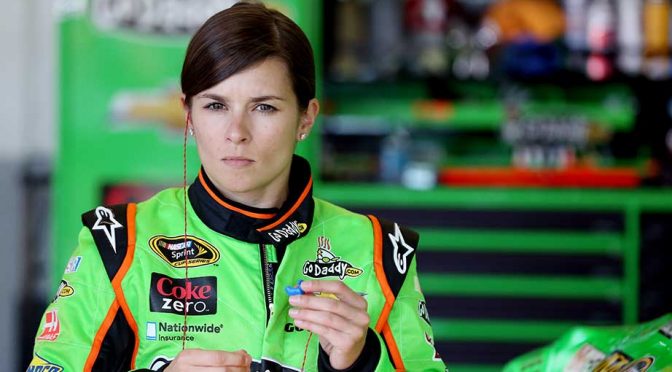
DAYTONA BEACH, Fla. — Danica Patrick says she isn’t particularly a “car person.’’ She would prefer a day of shopping with her girlfriends to sitting on the couch watching a race on television. And, according to her boyfriend, fellow NASCAR Sprint Cup Series Rookie of the Year candidate Ricky Stenhouse Jr., she plays a mean game of cards.

She’s never been able to talk her way out of a speeding ticket, loves to cook lavish meals and collects fine wine.

RELATED: Previewing the Duels

And yes, those were $1,000 Christian Louboutin spiked heels she wore during an interview session last month in Charlotte, N.C.

There’s a lot that NASCAR fans are just learning about the Sprint Cup’s high wattage rookie.

But there is one other thing you should know about Danica Patrick.

“I love to prove people right,’’ she said. Then, with a gleam in her eye, she added, “And prove them wrong.’’

"I was brought up to be the fastest driver, not the fastest girl."

— Danica Patrick

RELATED: Duels lineups

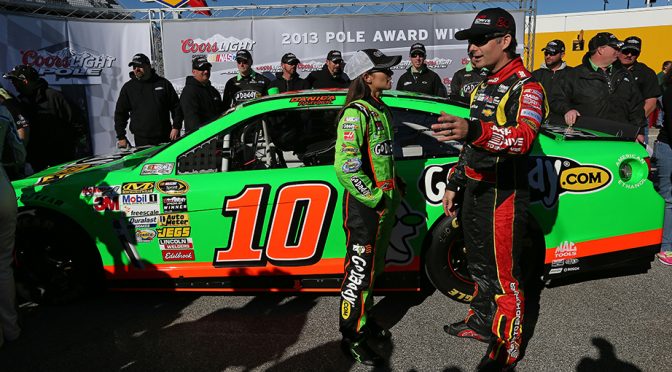
She did both this past Sunday afternoon, becoming the first woman in NASCAR history to earn the pole position for its biggest race, Sunday’s Daytona 500 — besting the sport’s biggest stars from five-time champion Jimmie Johnson to two-time Daytona 500 winner Matt Kenseth.

And for that, she will lead the field to the green flag in the first of Thursday’s Daytona Duels, the 150-mile twin qualifying races that will set the 500 starting field.

While she has proven her No. 10 GoDaddy.com Chevrolet is the fastest around Daytona International Speedway’s famous high banks so far this year, no one seems quite yet ready to pronounce Patrick, 30, the odds-on favorite for the race. She’ll be the first driver to see the green flag driving Sprint Cup’s brand-new Generation-6 cars against the highest level of competition she’s faced since joining NASCAR full time last year and the marquee Cup series this season.

She has, however, simultaneously raised expectations and ratings.

“I was really impressed,’’ said Bill Warren, 50, a fan from Friendswood, Texas, attending his first Daytona 500. “She’s like a firecracker. She’s determined and she backs up the confidence she shows.

“She’s there to win and it’s really a good thing for the sport. I have 13- and 14-year-old daughters and they pull for her. They see opportunity is out there for her to do this, so what would keep them from doing something they really wanted?’’

That’s exactly the kind of sentiment that has followed Patrick throughout her career. She became the first woman to lead laps in the Indianapolis 500 as a rookie in 2005 and the first woman to win an IndyCar race in 2008. And she earned the pole position for the NASCAR Nationwide Series season-opener last year here at Daytona.

She is always humble and mindful about blazing trails for women, although it has never been a singular purpose.

“It’s nice to hear families talk about the fact that a little girl might say, ‘but Mommy, Daddy, that’s a girl out there (racing),’ ” Patrick said. “Then they can have the conversation with their kid about, you can do anything you want and being different doesn’t by any means not allow you to follow your dreams.

“I love to think that conversation happens in households because of something I’m doing.’’

But, as she reminded reporters after winning the pole position Sunday afternoon, “I was brought up to be the fastest driver, not the fastest girl.’’

That was clearly the case Sunday on NASCAR’s brightest stage. And it may have answered skeptics who have questioned her ability and gumption.

Some fans and competitors alike developed preconceived notions about how this attractive IndyCar driver who stars in GoDaddy.com Super Bowl commercials and has posed in a bikini in Sports Illustrated’s famous swimsuit issue would fare alongside NASCAR’s best, even if the sport long ago shed its “good ol’ boy” reputation.

Patrick’s crew chief at Stewart-Haas Racing, Tony Gibson, an old-school, earn-your-way-in kinda guy, admits he didn’t know what to expect when he learned he’d be paired with her. He was most curious, he says, to see her level of commitment.

“I think I always questioned her intensity of ‘is this really what she wants to do,’ I always wondered that,’ said Gibson, who has worked on the Daytona 500-winning cars of Michael Waltrip, Derrike Cope, Jeff Gordon and Dale Earnhardt Jr. “And she answered that question pretty fast in the two races she ran with us last season. She answered that fast. I know she’s in it to win it and her head is really in it, this is what she wants to do. That was the biggest question, I had. And I was happy with the answer I got.”

Gibson said people also may be surprised at the level of technical detail Patrick immerses herself in. It isn’t a ride-and-drive-and-smile operation.

“She likes to look at all the data, she likes to see the graphs versus the other drivers — their braking and throttle traces,’’ Gibson said. “She knows she can look at a guy like Tony Stewart, study his data and learn from it and get better and I think that’s cool.’’

The way Patrick is carrying herself these days, her confidence is up, her optimism soaring. She’s wearing a perpetual smile. Of course that’s easy when you’re the darling of Daytona, the talk of the town.

But she’s always ascribed to the “what you see is what you get” philosophy and admits to wearing her emotions on her sleeve, whether it’s happily discussing her new relationship with a hoard of prying reporters this week or more famously in the past, angrily confronting fellow drivers after a race when she felt she had been wronged.

And then there’s the side people don’t get a chance to see as often.

The shopping trips with friends, the practical jokes, the interaction with the youngest of fans.

Walking through the lobby of a Concord, N.C., hotel between press interviews last month, she stopped and posed for a photograph with two young children whose parents had been waiting for a couple of hours in hopes of seeing her.

After the photo was snapped, Patrick bent down and started up a conversation before her public relations manager urged her to the waiting interview. She waved goodbye to the kids and even greeted the nervous parents.

“I didn’t know if she’d even stop,” the father said, sheepishly. “But boy, is she great.”

Consider it another fan conversion.

But it’s been a two-way street. Patrick says she didn’t initially know what to expect from the NASCAR nation. How would they feel about someone who unapologetically embraced and promoted her feminine side while expecting her competitors — and fans — to give her respect behind the wheel rubbing fenders with the men.  

And the burden of proof grew exponentially with the hype that preceded her.

“I’ve had great fans all along the way so I can’t say there was any ‘aha’ moments about where I wanted to go, what I wanted to do,’’ Patrick said. “For me it was all about driving the car and when I first took off out of the pit area the first time I drove a stock car it was like, ‘I’m home, this is comfortable.’

“I got done with my first race at Daytona in the ARCA car (sixth-place finish in 2010) and I had never had so much fun in a car before my whole life. Those are the moments that made me fall in love with the sport.’’

After being voted the 2012 Nationwide Series’ Most Popular Driver, it appears the feeling is reciprocated. And her performance over the weekend during Daytona 500 pole qualifying at the very least puts her off on the right foot. It is a start.

And while Patrick may be polarizing still to fans who can’t decide if they’re believers or doubters, she has already convincingly won over those that must believe in her the most: her team.

“She’s a lot of fun to be around and we’ve had great fun together in this short time,’’ Gibson said. “She adapts really well and fits in with our guys really well.

“Heck, we’ve got her listening to country music and she’s going to go gator hunting with me in July here. We’ve got her switched right now, hoss."

___________________________________________________________________________________________

We apologize. We are having technical issues with our comment sections and fan community and it is temporarily unavailable. We are actively working on these issues and hope to have it up and running soon. We are also working on enhancements to provide a better forum for our fans. We appreciate your patience and apologize for the inconvenience.

Pair to battle for Sunoco Rookie of the Year award as part of NASCAR National Series Contingency Awards Program

DAYTONA BEACH, Fla.  — As teams make final preparations to start the 2013 race season, NASCAR announced Wednesday the lineup of 2013 Contingency Program sponsors for all three national series.

Not since 2006, when Chase for the NASCAR Sprint Cup regulars Denny Hamlin, Clint Bowyer and Martin Truex Jr. battled for the Sunoco Rookie of the Year Award, has there been this much attention focused on the rookie title. Ricky Stenhouse Jr., Timmy Hill and Danica Patrick, all eligible for 2013 Sunoco Rookie of the Year honors, enter this season with high expectations. Stenhouse, the two-time NASCAR Nationwide Series champion, and Hill won the Sunoco Rookie of the Year Award in the NASCAR Nationwide Series in 2010 and 2011, respectively. Patrick finished the 2012 NASCAR Nationwide Series 10th in points. 

“This year’s Sunoco Rookie class is going to be truly exciting to watch,” said Andrew Kabakoff, Sunoco Brand Manager. “We are proud to support NASCAR’s rising stars and wish them the best of luck as we look forward to a very exciting season of racing."

FULL SERIES COVERAGE

• View all articles
• View all videos
• View all photos

The Coors Light Pole Award is another key contingency partner that will undoubtedly receive a lot of attention this season. Patrick’s pole in Daytona placed the award in the spotlight this week, as did the season-opening Sprint Unlimited, where the field was set by 2012 Coors Light Pole winners and past champions of the event. The Coors Light Pole Award is presented to the fastest eligible qualifier in each NASCAR Sprint Cup Series race.

Duralast, the ‘Official Brakes of NASCAR,’ has become the newest addition to the stable of companies that participate in the NASCAR Contingency Program with the creation of the “Brake in the Race Award” across both the NASCAR Sprint Cup Series and NASCAR Nationwide Series. The weekly award will be given to the highest eligible driver in the running order at the time of the first caution of each race. The year-end award winner will be the driver who wins the “Brake in the Race Award” the most times during the course of the season. In the event of a tie, the final series point standings shall serve as the tiebreaker.   

“We are proud of the strong lineup of NASCAR Contingency Program sponsors across our three national series this year, and are enthused by the excitement surrounding the intense competition for the Sunoco Rookie of the Year Award,” said Norris Scott, NASCAR vice president, Partnership Marketing. “NASCAR contingency sponsors and teams display a level of collaboration and teamwork that is unmatched in sports and continues to be one of the major reasons companies choose to partner with NASCAR.”

The NASCAR Contingency Program strives to build strong relationships with high­ quality, performance­driven brands that are leaders in their respective categories, and award money to NASCAR teams via per­race and year­end awards. Competitors become eligible for prize money by displaying sponsor decals on the front fender of their race cars and trucks. In some instances, use of a sponsor product is also required.

Below is the 2013 national series contingency sponsor lineup and special awards:

  • 3M – NSCS*, NNS*
    – Lap Leader Award
  • ARP Fasteners – NNS
  • Auto Meter Gauges – NSCS, NNS, NCWTS
  • COMP Cams – NSCS, NNS, NCWTS
  • Coors Light – NSCS*, NNS*, NCWTS* (Keystone Light)
    – Pole Award
  • Duralast Brakes – NSCS*, NNS*
    – Brake in the Race Award
  • Edelbrock – NSCS, NNS, NCWTS
  • Freescale – NSCS
    – Wide Open Award
  • Goodyear Tires – NSCS*, NNS*, NCWTS*
    – Goodyear Tires Award to Series Champions
  • American Ethanol – NSCS*, NNS*, NCWTS*
    – Green Flag Restart Award (NSCS)
    – Awarded to Series Champions (NNS, NCWTS)
  • Holley Throttle Bodies/Carburetors – NSCS (throttle bodies), NNS, NCWTS
  • JE Pistons – NNS, NCWTS
  • JEGS – NSCS, NNS
  • K&N Filters – NSCS, NNS, NCWTS
  • Lincoln Welders – NSCS, NCWTS
  • MAHLE Clevite – NSCS*, NNS*, NCWTS*
    – Engine Builder of the Race/Year Award
  • Mechanix Wear – NSCS*, NNS, NCWTS
    – Mechanix Wear Most Valuable Pit Crew (Quarterly/Year ­End)
  • Mobil 1 – NSCS*, NNS*, NCWTS*
    – Driver of the Race/Year
  • MOOG Steering & Suspension – NSCS*, NNS, NCWTS
    – Problem Solver of the Race/Year
  • MSD Ignition – NNS, NCWTS
  • Simpson Firesuits – NNS, NCWTS
  • Sunoco – NSCS*, NNS*, NCWTS*
    – Diamond Performance Award to Series Champions
    – Rookie of the Year

*Indicates Special Award sponsor with a year-end bonus.

___________________________________________________________________________________________

We apologize. We are having technical issues with our comment sections and fan community and it is temporarily unavailable. We are actively working on these issues and hope to have it up and running soon. We are also working on enhancements to provide a better forum for our fans. We appreciate your patience and apologize for the inconvenience.

Kahne, Gordon, Patrick the big winners at Wednesday’s practices

RELATED: Practice 4 results

After an action-packed earlier practice that included a crash and a blown engine for Dale Earnhardt Jr., Wednesday’s second session at Daytona International Speedway was relatively uneventful.

FULL SERIES COVERAGE

• View all articles
• View all videos
• View all photos

Kasey Kahne, Jeff Gordon and Danica Patrick stand as big winners, each earning top-six times in each of the qualifying and practice runs they’ve completed thus far. Kahne posted the fastest time in the second session, finishing his third lap in 45.515 seconds, while topping out at 197.737 mph. The driver of the No. 5 Farmers Insurance Chevrolet was sixth in the first session and sixth in Sunday’s qualifying.

“We’re making sure our car handles really well,” said Kahne. “Myself, I learned a lot from The Sprint Unlimited on Saturday night.”

Gordon, who will join Patrick in the front row of this Sunday’s Daytona 500 after racing to the second-fastest time in qualifying, ran his third lap in 45.540 seconds to place third on the day after not participating in the first runaround.

Patrick continues to see some of the fastest times of the week, notching the (fourth)-best time of the day at 45.557 with a top speed of 197.55 after having the third-fastest in the first practice. She earned the Coors Light Pole on Sunday, becoming the first woman to earn one in Sprint Cup history.

Greg Biffle was second with a time of 45.523 after posting the 30th-best time in the first session. On the opposite end of the spectrum, Joey Logano was 25th in the second session with a top speed of 191.620 mph after posting the top speed earlier in the day.

After his aforementioned engine issues, Earnhardt completed 35 clean laps in the afternoon, the most of any car.

Michael Waltrip had the fastest time of the day, hitting 198.347 mph in the day’s opening practice session.

___________________________________________________________________________________________

We apologize. We are having technical issues with our comment sections and fan community and it is temporarily unavailable. We are actively working on these issues and hope to have it up and running soon. We are also working on enhancements to provide a better forum for our fans. We appreciate your patience and apologize for the inconvenience.

Three-car wreck, flat tire also issues for drivers

  • Practice Leaderboard | Practice 3 results

    Dale Earnhardt Jr. ran 11 laps before suffering a blown motor and going to the garage during first practice Wednesday for the Daytona Duels. He will change his engine and have to move to the back.

    Earnhardt wasn’t worried at all about the blown motor, saying the team will figure out what happened and that it was probably something logical.

    "Everything seemed like it was working," he said. "Just trying to find a little more speed, and we found a few things that seemed to help the car. We’ll try to get out in this next practice, and see what else we can learn, but everything should be fine."

    Just a few laps before his motor issues, a three-car wreck involving Carl Edwards, Ryan Newman and Mark Martin sent all three to the garage. Martin’s crew said they would be done for the day, while crews worked on Newman and Edwards’ cars to attempt to get them out.

    Newman, who came down on Edwards, saw a replay of the wreck and talked with Edwards.

    "I think it’s just an aero situation, but that was news to me.  Carl (Edwards) came over and said ‘hey man’… I said ‘I don’t even know what to tell you yet’.  It was unfortunate for our Quicken Loans Chevrolet, but that is why we had practice," Newman said. "That was my first experience, but I guess my car just got light in the back going into the corner.”

  • Edwards had a similar assessment of the accident.

    “I was up close to Ryan and then all of a sudden his car just got a little loose and there was no space.  I could have given him more space, but I don’t think either one of us really understands why his car got so loose. It was just all of a sudden and he was turned sideways. It’s really interesting and something I’m gonna be careful of during the race.”

    Matt Kenseth got a flat tire while simulating a pit stop but was able to get back out on the track quickly.

    Reigning champion Brad Keselowski had an issue early on in his run when he had an issue with his fuel system.

    "Something went wrong with the fuel system in the car," Keselowski said. "That’s not what you want when you’re in front of the pack because when your car slows down, they’ve got nowhere to go and it could cause a wreck. So we’re gonna spend a little extra time to make sure we’ve got whatever it is figured out.”

    Michael Waltrip posted the top speed at 198.347 mph with a best time of 43.375 seconds.

    Tony Stewart and Clint Bowyer said they would not practice in the final practice of the day.

    ___________________________________________________________________________________________

    We apologize. We are having technical issues with our comment sections and fan community and it is temporarily unavailable. We are actively working on these issues and hope to have it up and running soon. We are also working on enhancements to provide a better forum for our fans. We appreciate your patience and apologize for the inconvenience.