The unique tracks of NASCAR are a big part of the sport’s appeal — for the most part, it’s never quite the same experience from week to week, with different sites testing different skills and putting on a different spectacle for fans.
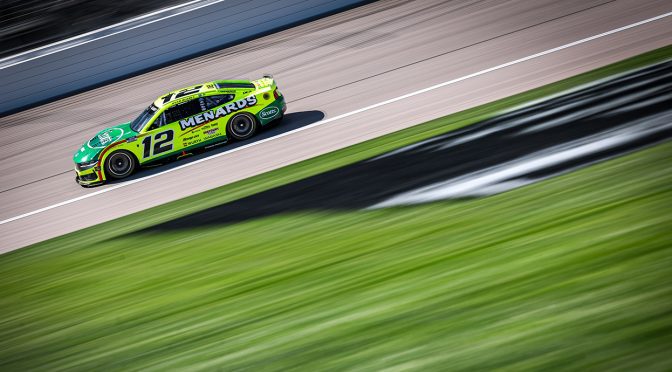
But as much as any other track type, the simple mile-and-a-half oval represents NASCAR’s most fundamental test of talent and execution. And in 2026’s Chase presented by Mobil 1, the Cup Series championship may very well ride on a trio of them coming up over the next three weeks: Kansas (Sun. 3 p.m. ET, USA Network, HBO Max, MRN Radio, SiriusXM NASCAR Radio), Las Vegas and Charlotte. Whichever contender does best during that stretch — or even just survives it with their title hopes still intact — could take control of The Chase with just four events remaining.
In particular, let’s zero in on the 10 drivers sitting within 100 points of the current Chase lead: leader Kyle Larson plus Denny Hamlin, Joey Logano, Christopher Bell, Ty Gibbs, Ryan Blaney, Tyler Reddick, Carson Hocevar, Chase Briscoe and Bubba Wallace. The truth is that it will be difficult — if not completely impossible — for anyone outside of that group to hunt down the front-runners for the title from here, with seven races remaining. Put another way, our 2026 champ will almost certainly come from that core group of 10 names. (With apologies to Austin Cindric, Chase Elliott, William Byron, Ryan Preece, Chris Buescher and Daniel Suárez.)
And as we’ve written a few times before, the fact that this pivotal three-race section of The Chase schedule involves three consecutive 1.5-mile ovals favors some contenders significantly more than others.
Denny Hamlin, for instance, is still the statistical favorite to win his first career championship despite ceding the points lead — which was his every week of the season since Sonoma on June 28 — until Larson took over at Bristol. For one thing, his loss of the lead sounds more dramatic than it actually is: Larson leads Hamlin by just a single point. But also, Hamlin is clearly the king of the intermediates this season.
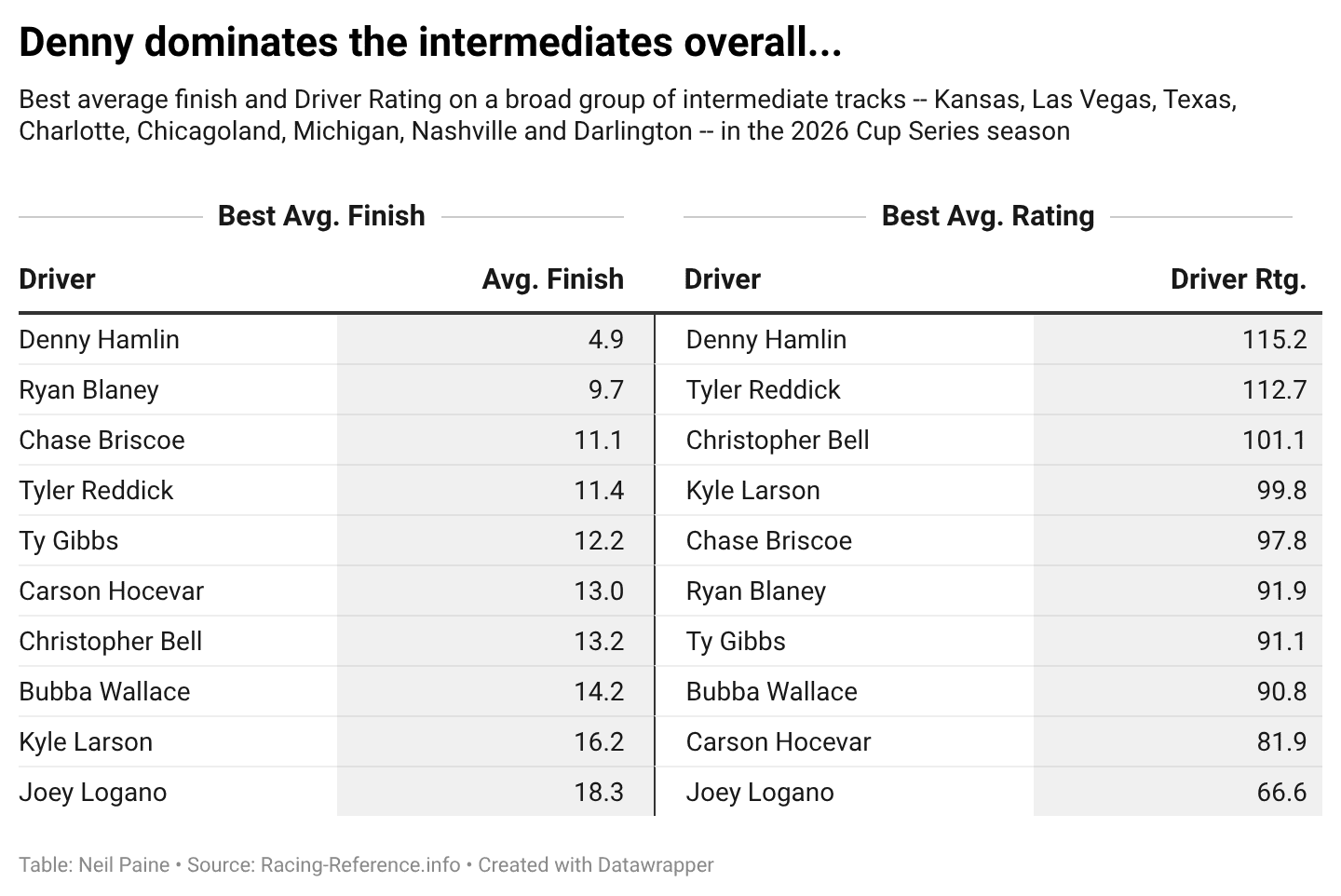
If we look at a broad group of that type of track — Kansas, Vegas, Texas, Charlotte, Chicagoland, Michigan, Nashville and Darlington — over the course of nine total races this season, Hamlin has the most wins (three), the best average finish (4.9) by far and the best average Driver Rating (115.2) as well. Reddick (with two wins and a 112.7 rating) is one of the few contenders whose resume on those tracks is somewhat comparable this year, but the rest of the title-hopefuls are bunched in a tier well behind Hamlin.
(That includes Larson, who nearly has a triple-digit rating but also has posted an uncharacteristically ordinary 16.2 average finish on these tracks.)
At the other end of the spectrum is Logano, who has been quite mediocre on the intermediates this season. Yes, Logano is coming off a thrilling win at Bristol — even if it was somewhat overshadowed by the post-race fireworks — and he is one of the most clutch drivers of the modern era, so you can never count him out from a championship performance. But he is certainly not going into a favorable sequence on the schedule, if things hold to recent form.
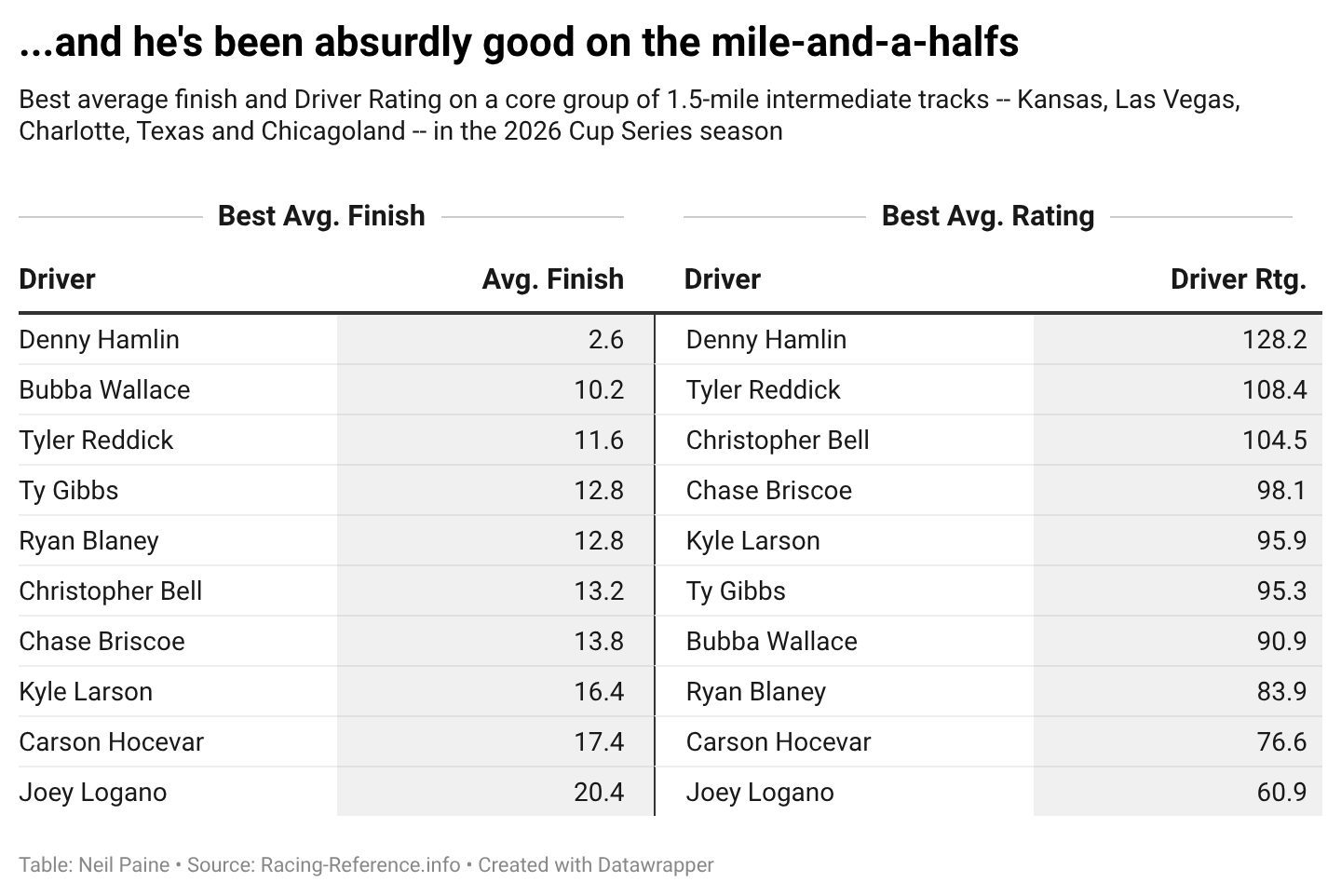
Zooming in even further on the core mile-and-a-half tracks the series has raced at in 2026 thus far, Hamlin has been even more dominant, with an average finish of 2.6 and an average Driver Rating of 128.2:
The rest of the contenders are more of a mixed bag, with Reddick looking next-best in general, followed by Bell, Gibbs, Briscoe and Wallace. (Larson, again somewhat uncharacteristically, ranks eighth out of the group in average finish and fifth in rating.)
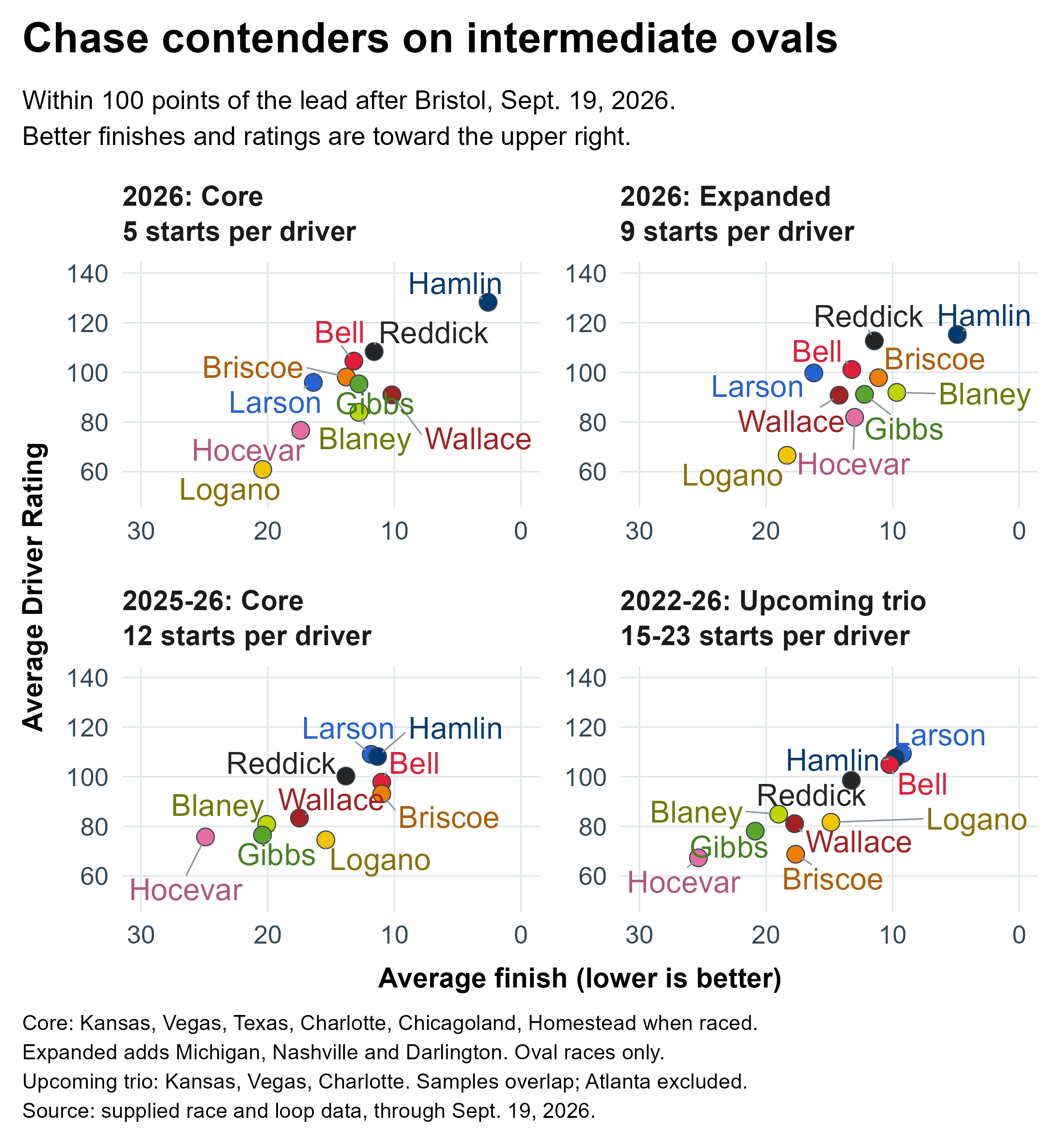
Now, that’s just a five-race sample, so it’s important not to read too much into things there, but it illustrates why Hamlin might have the edge as we speed into this critical segment of The Chase. The good news for the rest of the title hopefuls, though, is that Hamlin comes back toward the pack a bit if we expand our view to earlier seasons.
For instance, look at the same core tracks from above last year. Over the last two seasons, Hamlin ranks third in average finish (11.3) — trailing both Bell (11.0) and Briscoe (11.0) — and second in rating (108.2), in a de facto dead heat with Larson (109.0). Logano also looks a bit better by finishing quality, if not pure rating, with Hocevar emerging as the consensus weakest contender on the 1.5-mile tracks.
And if we look at just Kansas, Vegas and Charlotte in the Next Gen Car era (since 2022), Larson finally lives up to his own long-held reputation on the intermediates, leading the group in both average finish (9.2) and Driver Rating (109.3) to edge out Hamlin (9.8 and 107.5, respectively) in both categories. Bell and Reddick are the consensus next-best performers, with Logano coming up next on average finish and Blaney following on Driver Rating.
Here’s a summary of all four snapshots in a single chart, to get a good visual sense of whom to watch over these next three races:
For Hamlin, the task is obvious: Keep doing what you’ve been doing. The expectation is that he should lead in points again coming out of these races, or else he will be running out of prime chances to bolster his championship hopes. For Larson, there’s a similar story with the twist that he must clean up his finishes — we’re not used to seeing the Hendrick No. 5 finish outside the top 16 on average at these types of ovals, even if his averages are being dragged down by a pair of 34th-place runs at Texas and Chicago.
Out of the rest, Bell might be in the best position to come away stronger: He only trails Larson by 17 points in the standings, and he has driven very well (104.5 rating) at mile-and-a-half tracks this season. A similar story could be told for Gibbs, but he is both further back in the points (42) and hasn’t driven as well on 1.5-milers (95.3 rating). And perhaps the big wild-cards are Logano — who’s just 16 points back but has struggled on tracks like these in 2026 — and Reddick — who is shockingly buried in 7th place (61 points back) but has a tremendous performance record (108.4 rating) on these kinds of tracks.
It’s make-or-break time for both drivers — but then again, it’s make-or-break for everybody right now. And by the time we emerge from Charlotte, the number of plausible champs may be considerably smaller as everyone looks ahead to the final four races of The Chase, with the mile-and-a-half gauntlet having done its job of sorting the true contenders from the pretenders.
Imagine this scenario: You’re in an Olympic swimming competition. You come from behind at the last instant to win the gold, but there’s a distraction. One of your competitors moved out of his lane and bumped into another swimmer, and now they’re fighting, splashing water everywhere. Few notice your achievement.
This is Joey Logano. Without the water.
Saturday night at Bristol Motor Speedway, Logano won a race in rather remarkable fashion and, at almost the same moment, lost fans’ interest. And, to top off the irony, one of his teammates was a focal point. After finishing 33rd.
As Logano was celebrating victory in the Bass Pro Shops Night Race, Ryan Blaney, also carrying Team Penske colors, engaged in a pit-road fight with Carson Hocevar, the result of their cars coming together while racing for position late in the race. Blaney was furious. Hocevar was the target of his anger, and their prolonged brawl left Logano with what became a sort of muted celebration.
Flying fists seem to outweigh flying cars.
Lest we forget, it was an evening of blockbuster achievements for Logano. He left the track not with a feather in his cap but with the whole bird resting on his head.
Consider:
• Logano accomplished a major Team Penske in-house doubleheader. He not only surpassed Rusty Wallace for the most wins (38) in Penske Cup history but also moved past Wallace for most Cup starts at Penske with 497.
• Logano took advantage of tight racing among the other front-runners to zip into first place with seven laps remaining, winning with relative ease (1.24 seconds) over Kyle Larson.
• He won the first stage and was third in the second, eventually totaling 73 points for the race.
All in all, a superlative night.
Ironically enough, Logano had to maneuver past Blaney’s spinning car after the incident with Hocevar. It was close.
“When I saw Blaney spin, I was already committed into the corner,” Logano said. “Coleman (Pressley, his spotter) was yelling at me, ‘Get down, get down, get down.’ I’ve already sent it way too deep in there to turn it to the left any more. Everybody knows Bristol is self-cleaning, so I assumed he’s coming back down. Just had to be patient and wait for it.”
The patience paid off. Logano was on his way to a historic victory.
Logano was in fourth place — behind Ty Gibbs, Larson and Hocevar — for the race’s final restart with nine laps remaining. He closed out the win in classic Logano short-track style.
Hocevar pulled alongside Gibbs to challenge for the lead. They made side-to-side contact, slowing their momentum. Larson crowded into the scene on the outside, creating a messy, tight triangle of cars. Logano saw his opportunity, surged to the inside, passed the trio easily and was on his way to a landmark win.
Despite the awkward nature of the finish — one Penske driver wins, another takes a couple of hard fists to the face — it’s a huge moment when Logano passes a Penske legend like Rusty Wallace (on two lists at once!) and puts himself in solid position to win a fourth Cup championship.
Logano joined Team Penske in 2013 after four disappointing seasons at Joe Gibbs Racing and soon was on course to make his nickname “Sliced Bread” (as in the best thing since) a reality.
“Roger Penske has been incredible to me, my family,” Logano said. “To have the opportunity to drive cars for him, there’s nowhere else I’d rather drive. … It’s really been, obviously, what I needed, whatever it’s been — 15 years ago or whatever it’s been. It’s been a while now.
“It’s not something that I looked at much of saying, ‘Hey, I wanted to be the winningest Cup driver there.’ I didn’t really think about it much. … But I think we’re all still part of one big family over there, and we just want to keep getting more. We’re not done yet.”
For much of the season, Logano raced out of character. He was as low as 20th in points, and there were fears among some followers that he might miss the postseason field. But he finally won in Race 21 at North Wilkesboro, then added a victory at Richmond to move into The Chase presented by Mobil 1 with a sense of momentum.
Now, past the Bristol chaos and ahead to Kansas Speedway this weekend, Logano is a real threat to wear championship colors again. A 16-point deficit to leader Larson seems small considering Logano’s momentum.
“It just shows how strong this team really is,” Wolfe said. “We’re able to step up when there’s a lot on the line, and we continue to show that. Obviously, we’re probably sitting really good right now from a points perspective with the win, but, either way, I think we’ve shown that whatever format it is, we’re going to be a contender, and that’s just because of the strength of our team.”
There’s no shortage of talent heading to Martinsville Speedway this weekend for the prestigious ValleyStar Credit Union 300 (8 p.m. ET on FloRacing/NASCAR Channel).
Nine states and three countries represent the 90 drivers on the preliminary entry list for Saturday’s race. This group consists of past winners, NASCAR Local Racing Series national champions, track champions, ARCA Menards Series winners and a driver who has won in the NASCAR Cup Series.
Below are the groups of drivers to keep an eye on before they begin their respective pursuits for a grandfather clock this weekend.
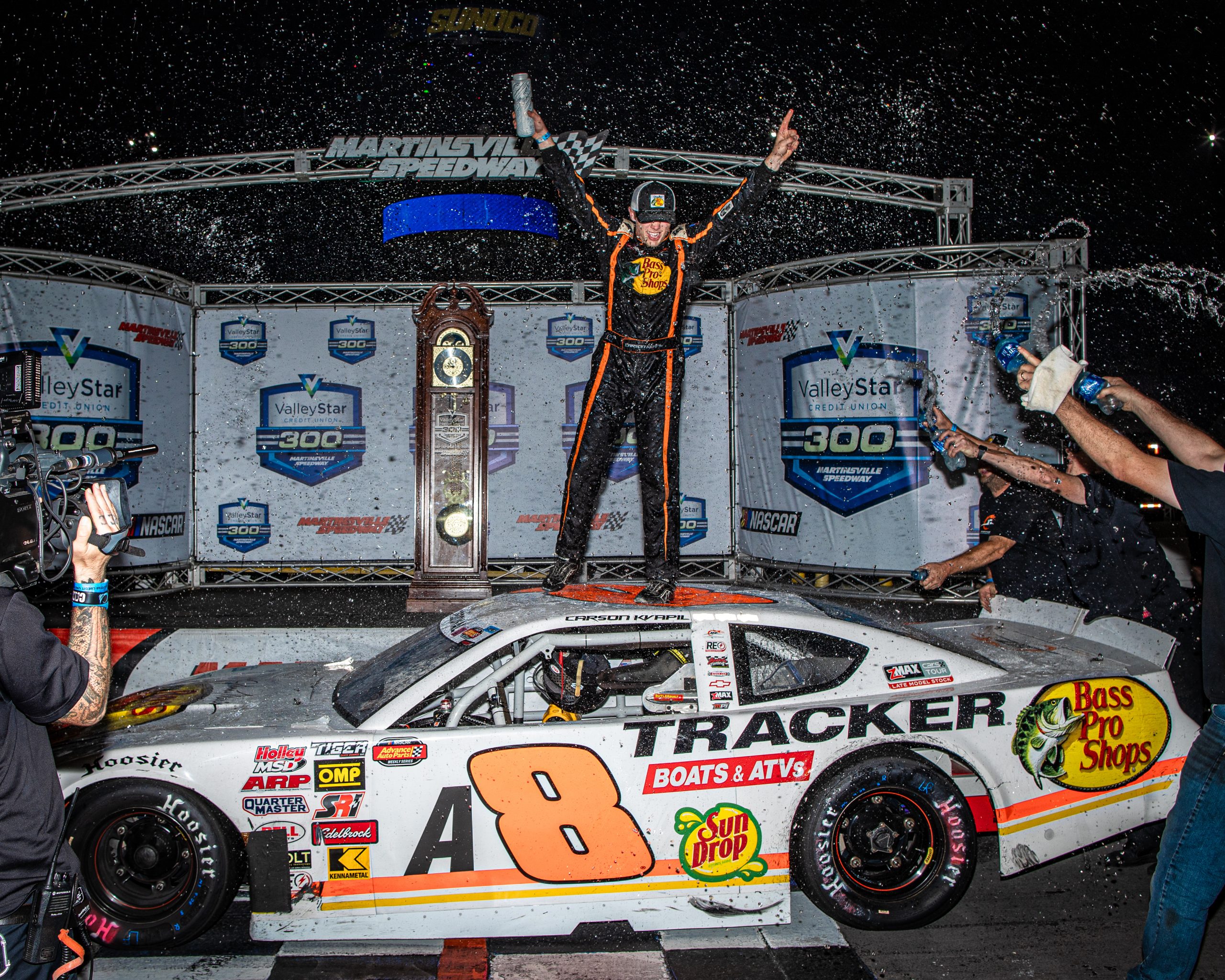
NASCAR O’Reilly Auto Parts Series championship contender Carson Kvapil heads to Martinsville Speedway this weekend in search of his second ValleyStar Credit Union 300 victory. (Photo: Ted Malinowski/NASCAR)
The stars
Corey Heim (No. 22A) – The reigning NASCAR Craftsman Truck Series champion and a two-time NASCAR Cup Series winner in 2026, Corey Heim is set to attempt his first ValleyStar Credit Union 300 since 2022. Heim’s first try at the ValleyStar Credit Union 300 in 2018 saw him narrowly miss out on a grandfather clock, but he looks to check this race off his list before moving up to the NASCAR Cup Series full-time with 23XI Racing next year.
Carson Kvapil (No. 32) – An off weekend for the NASCAR O’Reilly Auto Parts Series will allow Carson Kvapil to take a break from his championship pursuit and chase his second ValleyStar Credit Union 300 victory after previously doing so in 2024 with JR Motorsports. For Saturday’s race, Kvapil is teaming up with GO FAS Racing, a former NASCAR Cup Series operation that he has found success with in sporadic starts, which includes a runner-up in the 2025 South Carolina 400 at Florence Motor Speedway.
Lee Pulliam (No. 8A) – A four-time NASCAR Local Racing Series national champion, Lee Pulliam nearly tied Philip Morris in ValleyStar Credit Union 300 victories last year with three but was bested by Landon Pembelton in an overtime photo finish. Winning the ValleyStar Credit Union 300 on Saturday would cap an eventful year for Pulliam that saw him make his NASCAR national series debut and contest the Virginia Triple Crown with JR Motorsports, which helped lay the foundation for a full-time NASCAR O’Reilly Auto Parts Series campaign in 2027 with Peterson Racing Group.
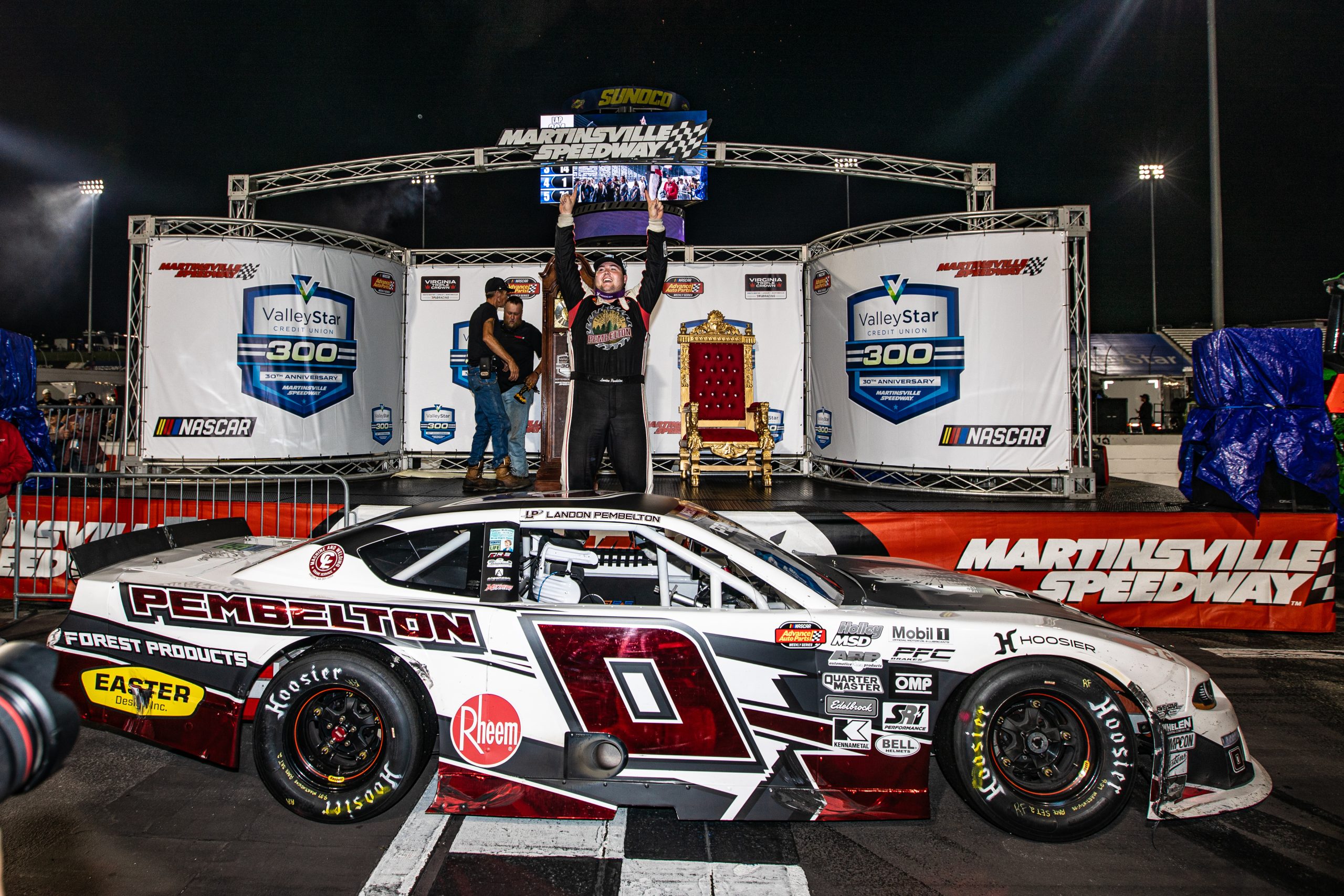
Landon Pembelton earned his second ValleyStar Credit Union 300 checkered flag at Martinsville Speedway last year after out dueling Lee Pulliam in overtime. (Photo: Ted Malinowski/NASCAR)
The past winners
Landon Pembelton (No. 0) – By fending off Late Model Stock legend Lee Pulliam in a thrilling overtime finish at Martinsville Speedway last year, Landon Pembelton became the sixth driver to win the ValleyStar Credit Union 300 multiple times. Still only 21, Pembelton looks to keep building upon his growing Late Model Stock legacy at Martinsville by joining Philip Morris as the only other three-time ValleyStar Credit Union 300 champion this weekend.
Trevor Ward (No. 77) – In 2023, blue-collar competitor Trevor Ward scored a popular first victory in the ValleyStar Credit Union 300 after holding off Landon Huffman in the closing laps, which also rewarded him with his first Virginia Triple Crown championship. Currently second in the 2026 Virginia Triple Crown standings with an average finish of sixth, Ward is seeking to replicate what he accomplished at Martinsville Speedway three years ago and take home two prestigious accolades.
Peyton Sellers (No. 26) – One of the most accomplished short-track racers of his era with a record eight South Boston Speedway track titles, two NASCAR Local Racing Series championships and five Virginia Triple Crowns, it took Peyton Sellers until 2022 for him to win his first ValleyStar Credit Union 300. Sellers’ love-hate relationship with Martinsville Speedway has continued since, as he failed to qualify for last year’s race after being collected in an accident during his heat.
Jason York (No. 18) – The longest-tenured ValleyStar Credit Union 300 winner on this year’s entry list, Jason York got his crown jewel triumph at Martinsville Speedway in the 2008 running. Known as the Reidsville Rocket, York has not earned a Martinsville top 10 finish since his triumph but is searching for better fortunes this weekend, which is expected to be his final attempt at the prestigious race.
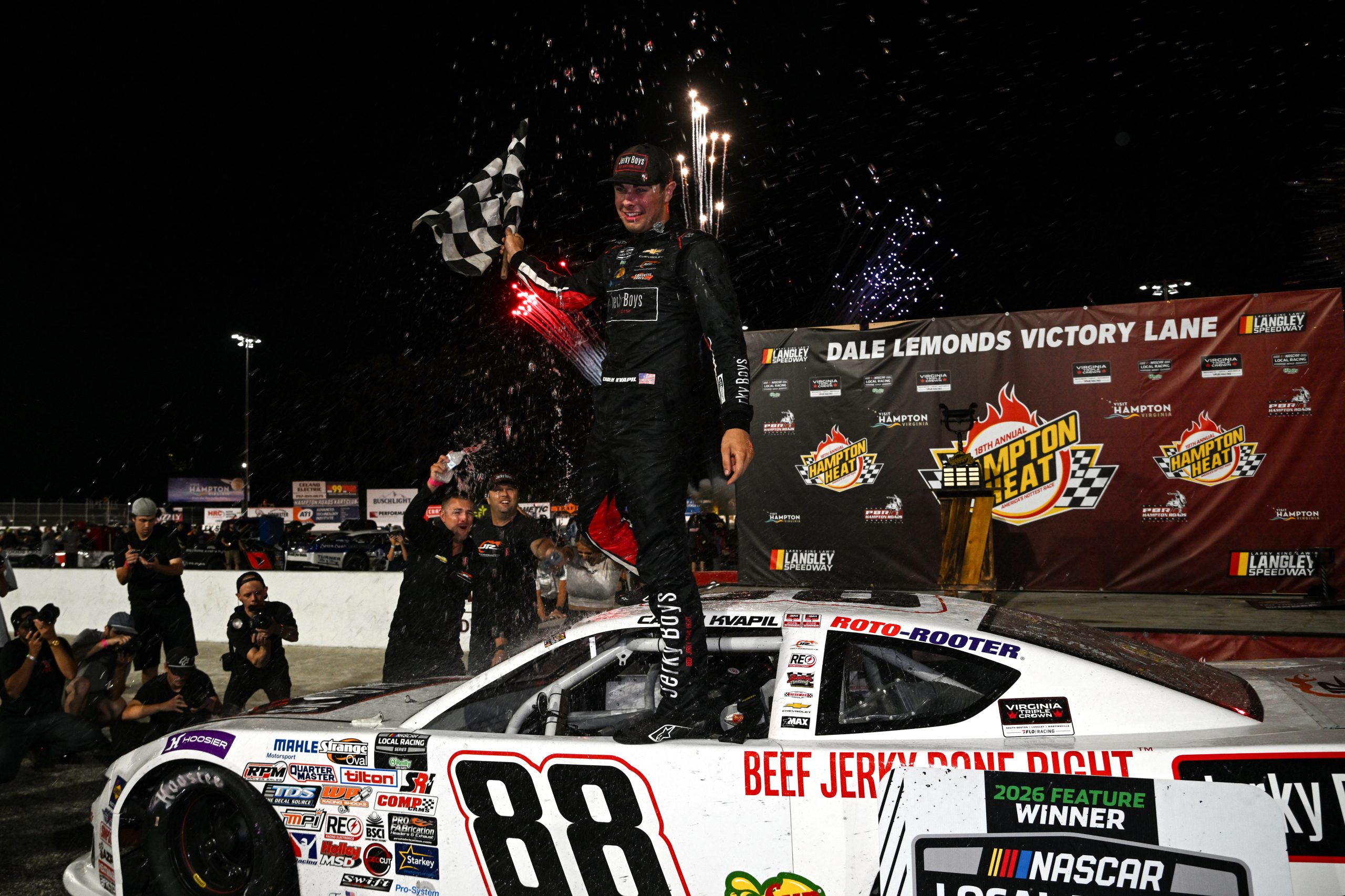
With two strong finishes in the Virginia Triple Crown this year, including a Hampton Heat victory, Caden Kvapil holds the championship lead ahead of Saturday’s ValleyStar Credit Union 300. (Photo: Katherine Gawlik/NASCAR)
The Virginia Triple Crown frontrunners
Caden Kvapil (No. 88B) – Carson Kvapil’s younger brother, Caden Kvapil has built up an impressive resumé in short-track racing himself, with his accomplishments including a victory in the Hampton Heat at Langley Speedway in July. That triumph, combined with a sixth in the Thunder Road Harley-Davidson 200 at South Boston Speedway, has Kvapil atop the Virginia Triple Crown standings heading into the ValleyStar Credit Union 300, where he finished 13th in his debut attempt last year.
Woody Howard (No. 41) – For more than two decades, Woody Howard has become a consistent presence in short-track racing around the southeast, primarily at his home track of Langley Speedway. Two strong performances in the Virginia Triple Crown, including a runner-up in Langley’s Hampton Heat, has Howard second in the standings. A bid at a championship will require him to make the ValleyStar Credit Union 300 field for the first time since 2018.
Trey Crews (No. 10) – After taking a sabbatical from active short-track competition at the end of 2023, Trey Crews has shaken off the rust this season driving for R&S Race Cars, which has a technical alliance with RAM. Crews sits fourth in the Virginia Triple Crown standings with finishes of eighth and 11th at South Boston Speedway and Langley Speedway, respectively, consistency he looks to carry over into his first ValleyStar Credit Union 300 attempt since 2021.
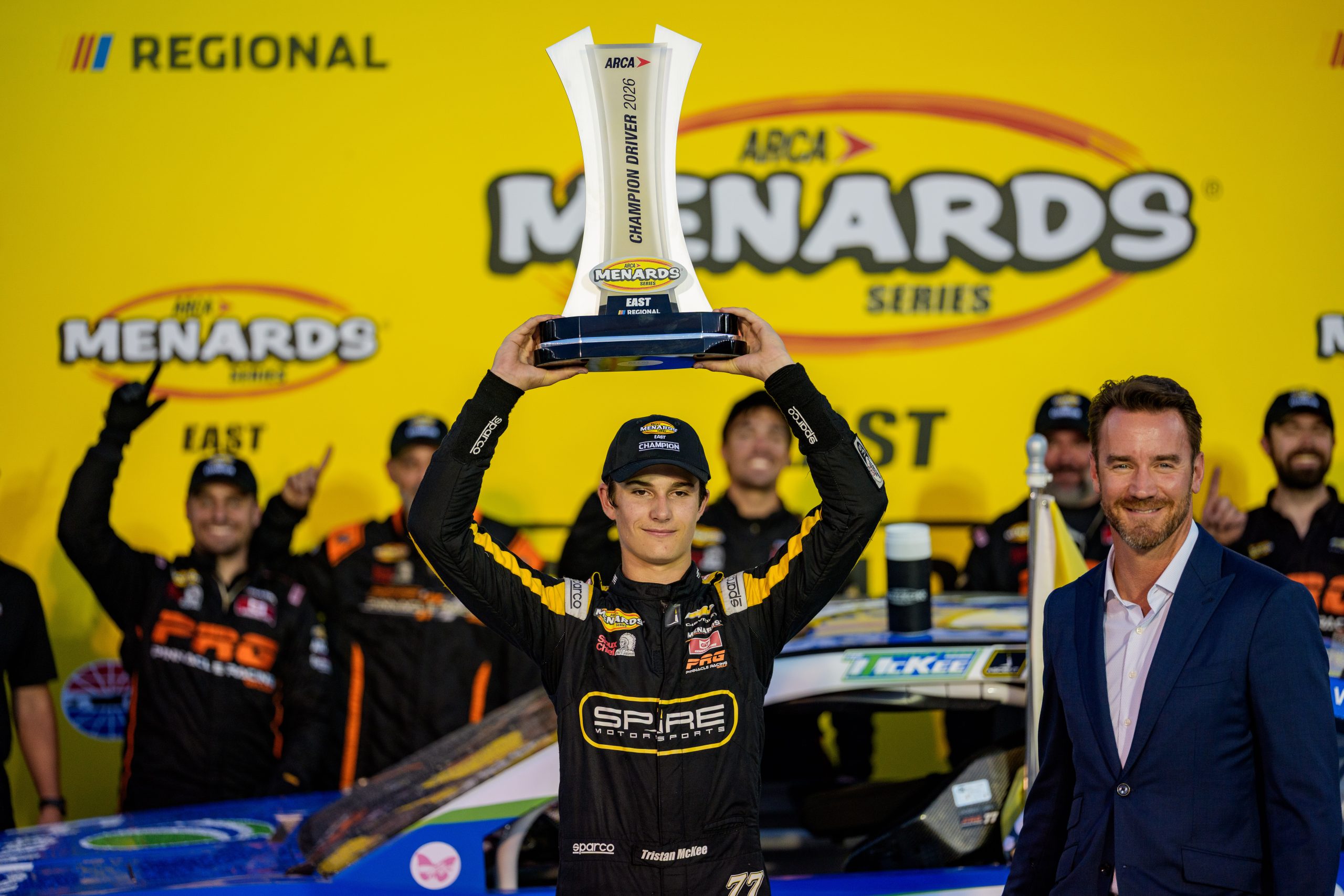
Only one week removed from his ARCA Menards Series East championship, Tristan McKee seeks to add a ValleyStar Credit Union 300 victory to his growing list of accomplishments. (Photo: Jacob Kupferman/ARCA Racing)
The ARCA Menards Series representatives
Tristan McKee (No. 7C) – Fresh off earning the ARCA Menards Series East championship last weekend at Bristol Motor Speedway, Tristan McKee seeks to continue his stellar year with a successful third attempt at the ValleyStar Credit Union 300. The 2025 race saw a strong evening for McKee get derailed following contact with Sam Yarbrough, but the young prospect seeks to rebound from that outing with the same operation he drove for last year: Matt Piercy Racing.
Tyler Reif (No. 7B) – Joining Tristan McKee in the Matt Piercy Racing stable for the 2026 ValleyStar Credit Union 300 is Tyler Reif, who possesses three victories in the ARCA Menards Series West. Reif has since advanced to the NASCAR Craftsman Truck Series on a part-time schedule and nearly won at Naval Base Coronado. But the ValleyStar Credit Union 300 presents a new challenge for him, as he has never raced at Martinsville.
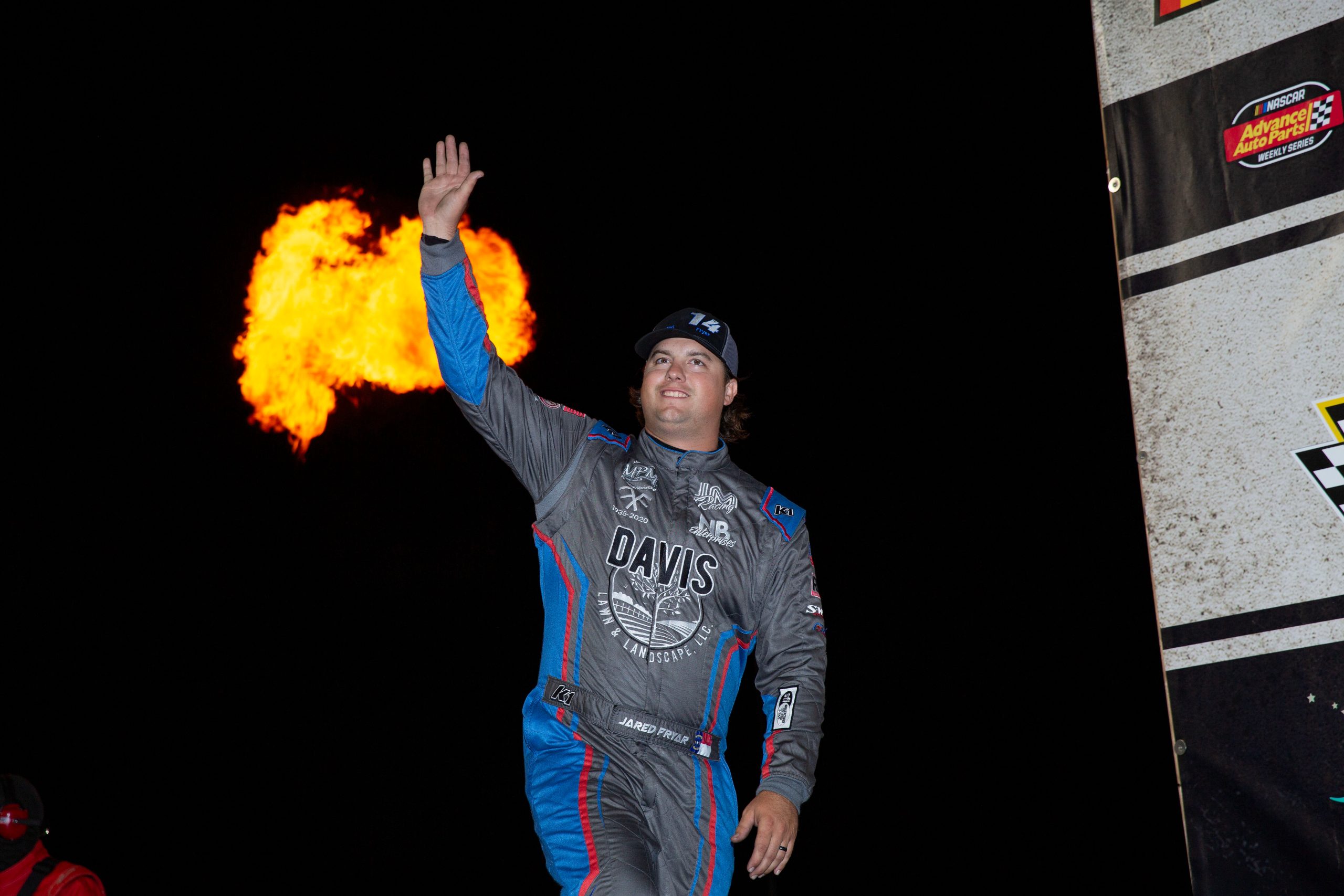
Jared Fryar’s final ValleyStar Credit Union 300 start with late car owner Jimmy Mooring was a fifth last year, a mark he seeks to improve upon this weekend. (Photo: Ryan M. Kelly/NASCAR)
The contenders
Jared Fryar (No. 12) – The 2026 edition of the ValleyStar Credit Union 300 will be bittersweet for Jared Fryar, as it will be his first time attempting the race following the passing of his long-time car owner Jimmy Mooring. Fryar and Mooring’s accolades together include a victory in the 2022 Hampton Heat at Langley Speedway and two ValleyStar Credit Union 300 top fives. Fryar looks to carry on Mooring’s legacy this weekend as he chases a grandfather clock in a second car for Nelson Motorsports.
Carson Loftin (No. 20) – During his first ValleyStar Credit Union 300 appearance last year, Carson Loftin sat on pole and led 26 laps before settling for 10th with Nelson Motorsports. A Modified driver by trade, Loftin earned his first Late Model Stock victory after joining Mike Darne Racing midseason and is seeking to build upon a solid debut Martinsville showing with his new team this weekend.
Sam Yarbrough (No. 95) – The 2026 ValleyStar Credit Union 300 will serve as veteran Sam Yarbrough’s 12thattempt at a grandfather clock; his best performance being a runner-up to Lee Pulliam in 2014. A renowned name in South Carolina’s Late Model Stock scene with six titles at the now-defunct Myrtle Beach Speedway, Yarbrough brings composure and motivation to Martinsville this year following a mid-race tangle with Tristan McKee while running top 10 in 2025.
Conner Jones (No. 44) – One of the most aggressive and entertaining drivers in Late Model Stock racing today, Conner Jones is set to tackle his fifth ValleyStar Credit Union 300 this weekend, driving one of two cars for Carroll Speedshop. Jones has not enjoyed much luck in Martinsville’s crown jewel; his best run is a 28th. But the wins he has accumulated in a Late Model Stock at tracks like North Wilkesboro Speedway make him a threat Saturday.
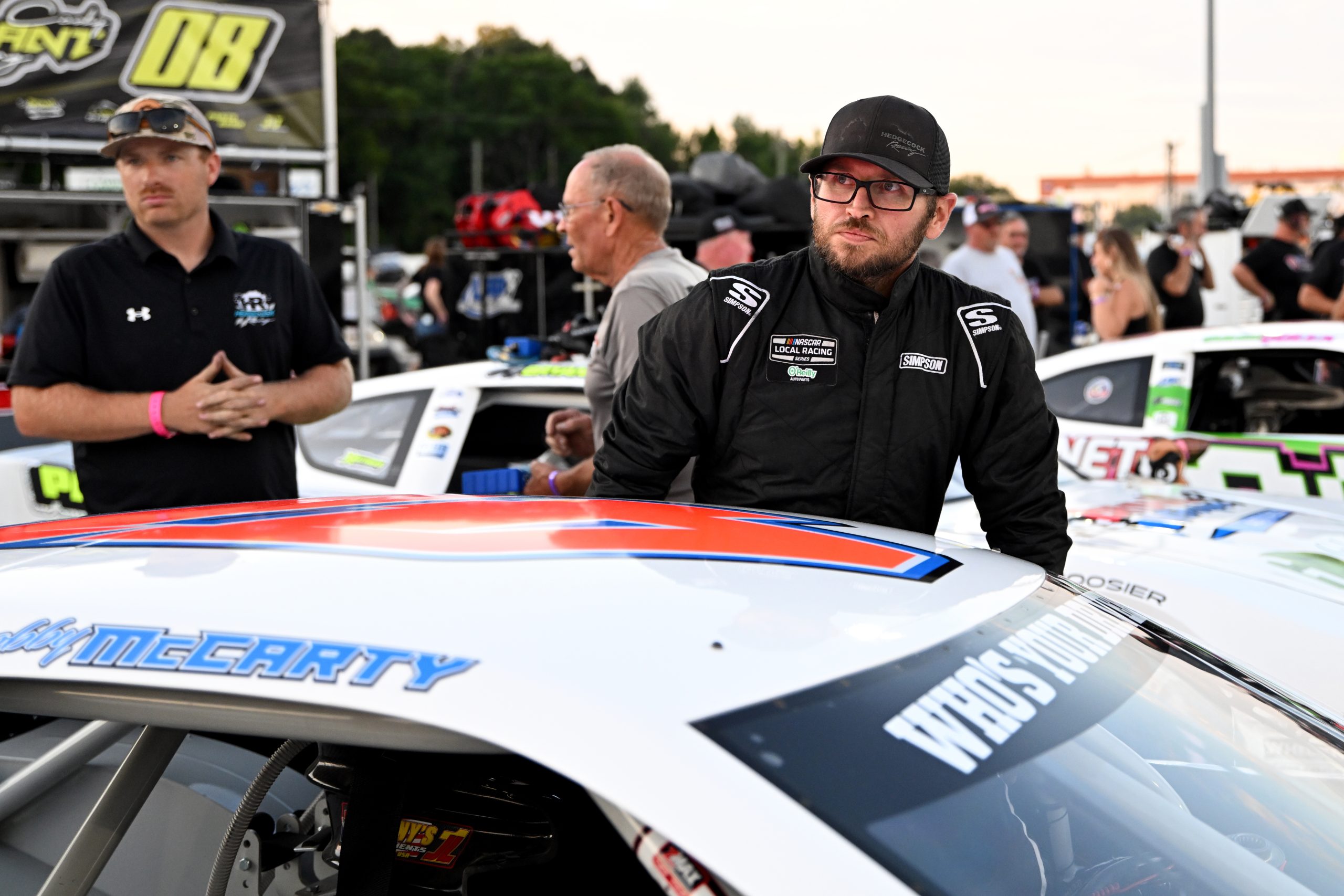
Late Model Stock veteran Bobby McCarty is chasing his first ValleyStar Credit Union 300 as he prepares for his 12th attempt this weekend. (Photo: Katherine Gawlik/NASCAR)
Other notable drivers
Bobby McCarty (No. 6A) – A name that became synonymous with Late Model Stock racing during the late 2010s-early 2020s was Bobby McCarty, whose accomplishments include winning the Virginia Triple Crown in 2021. Yet in 11 previous tries, the ValleyStar Credit Union 300 at Martinsville Speedway has eluded McCarty in every way imaginable. He is going to give the crown-jewel event another try in his own equipment for the second consecutive year.
Brandon Setzer (No. 11) – While this weekend will serve as Brandon Setzer’s ValleyStar Credit Union 300 debut, the family name is a familiar one to Martinsville Speedway. Setzer’s father in former NASCAR Craftsman Truck Series mainstay Dennis Setzer won the ValleyStar Credit Union 300 in 2007, so the younger Setzer looks to apply all the experience acquired as both a driver and Super/Pro Late Model team owner in his quest to become the second member of his family to win a grandfather clock.
Michael Hinde (No. 69) – One of the two drivers representing Lee Pulliam Performance in this weekend’s ValleyStar Credit Union 300 is Michael Hinde, who hails from the Super Late Model ranks. Hinde is no stranger to excelling in marquee events, having won the World Crown 300 in 2024. But this weekend will only be the second time Hinde has driven a Late Model Stock, the first time being with Pulliam’s operation at Cordele Motor Speedway last year.
Stacy Puryear (No. 17B) – No driver on the entry list boasts more top fives in the ValleyStar Credit Union 300 without winning than Stacy Puryear with four, his most recent being in 2011. Puryear has been trying to win a grandfather clock at Martinsville since he made his first ValleyStar Credit Union 300 attempt in 1996. Now that he’s a part-time competitor at 56, Puryear is looking to qualify for the main event and put together a complete race.
Bubba Wallace has recently hinted more than once at needing “a generational run” to claw back into the thick of the NASCAR Cup Series postseason. The three Chase presented by Mobil 1 races so far have produced a pair of top-10 finishes for Wallace, resulting in measured, forward movement from his 14th-seeded start to his current perch of 10th in the standings.
Turning the championship hunt on its head will require more than mere consistency, Wallace says, and the timing is ripe for a fall harvest.
This weekend’s trip to Kansas Speedway looms as an opportunity for Wallace and his 23XI Racing group as The Chase enters a pivotal three-race stretch of intermediate-sized tracks. Sunday’s Hollywood Casino 400 (3 p.m. ET, USA Network, HBO Max, MRN Radio, SiriusXM NASCAR Radio) marks the fourth of 10 Chase events, held at the site of one of Wallace’s three career Cup Series wins.
An encore of that 2022 triumph would be timely on many levels, potentially even generational.
“Ithinkforusit’swinning. WinningSundayultimatelyflipsthescriptforallofus,getsusontherighttracktobackupthatquote,” Wallace said in a Wednesday video conference. “Yeah,Imean from14thto10thisarun.It’snotgenerational,butIthinkthere’sobviouslyacouplespotsinfrontofusthatareeasytograb,andyeah,we’vejustgottokeeppressingforward.ButawinatKansas,asolid50-to60-pointdayatKansaswillalso startthattrend.”
In the same breath, Wallace acknowledged the strength of the competition that’s positioned ahead of him. Kyle Larson’s title defense has come to life with a win two weeks ago at World Wide Technology Raceway at Gateway, and a newfound outlook in the points lead following Bristol Motor Speedway. Denny Hamlin still packs a pop, just one point back as a four-time winner this year, and Joey Logano lurks in third place with a groundswell of progress in recent weeks, capped by his win last weekend at Bristol. A half-dozen more heavy hitters stand between Wallace and that top trio.
But Wallace says he’s taken heart in the merits of the new postseason format, offering a reminder that in recent years, Bristol’s night bout coincided with playoff elimination and the oftentimes fierce scramble to keep title hopes alive. The Chase, he says, provides a chance to make hay over a more sustained span, especially with a bigger points premium for winning.
“Itstillshowsthatwehaveachance,” Wallace said. “Youknow,we’renotkickedoutofthestandings.We’re92pointsout,whichisabigstretch,butanythingcanhappen.Yougooffandrattleofftwowinsherewith50-to60-pointdays,andthatgapshrinksquick. SoIhavetheconfidenceinourpeopleandwhatthey’rebringingtotherace track,andultimatelytheendrecipe,themainingredientisme. …I’mexcitedtotakeonthattaskandgototracksthatwewerereally,reallyfastat —Kansas,obviously,beingoneofourfavorites.Yeah,Ifeelalittlebitlessstressknowingthatwestillhaveashotwithsevenraces to go.”
Two drivers ranked ahead of Wallace, you may have heard, have been in the news lately. An on-track squabble last Saturday night between Ryan Blaney (6th in points) and Carson Hocevar (8th) escalated into highly publicized post-race fisticuffs between the two on Bristol’s emotionally charged pit road.
The story of the week hit home for Wallace, whose well-established friendship with Blaney runs deep. Wallace said he was surprised by how the confrontation unfolded as Blaney’s usually mild-mannered nature reached a boil, but he also acknowledged how tensions had built up with Hocevar’s aggressive tendencies,saying, “goodonhimforbeingtheonetoactuallydosomething,tryanddosomethingabout it.”
Wallace had said post-race at Bristol that he hoped to catch up with Blaney over a beer to get his side of the story.
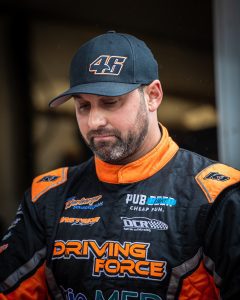
LEBANON, Ore. — Willamette Speedway’s pit area sits behind the backstretch, and Joey Tanner’s team hauler typically is parked behind the exit of Turn 2. The walk from that portion of the pits to the track’s exterior fence requires a climb up a sizable hill (and eye protection from the flying western Oregon soil).
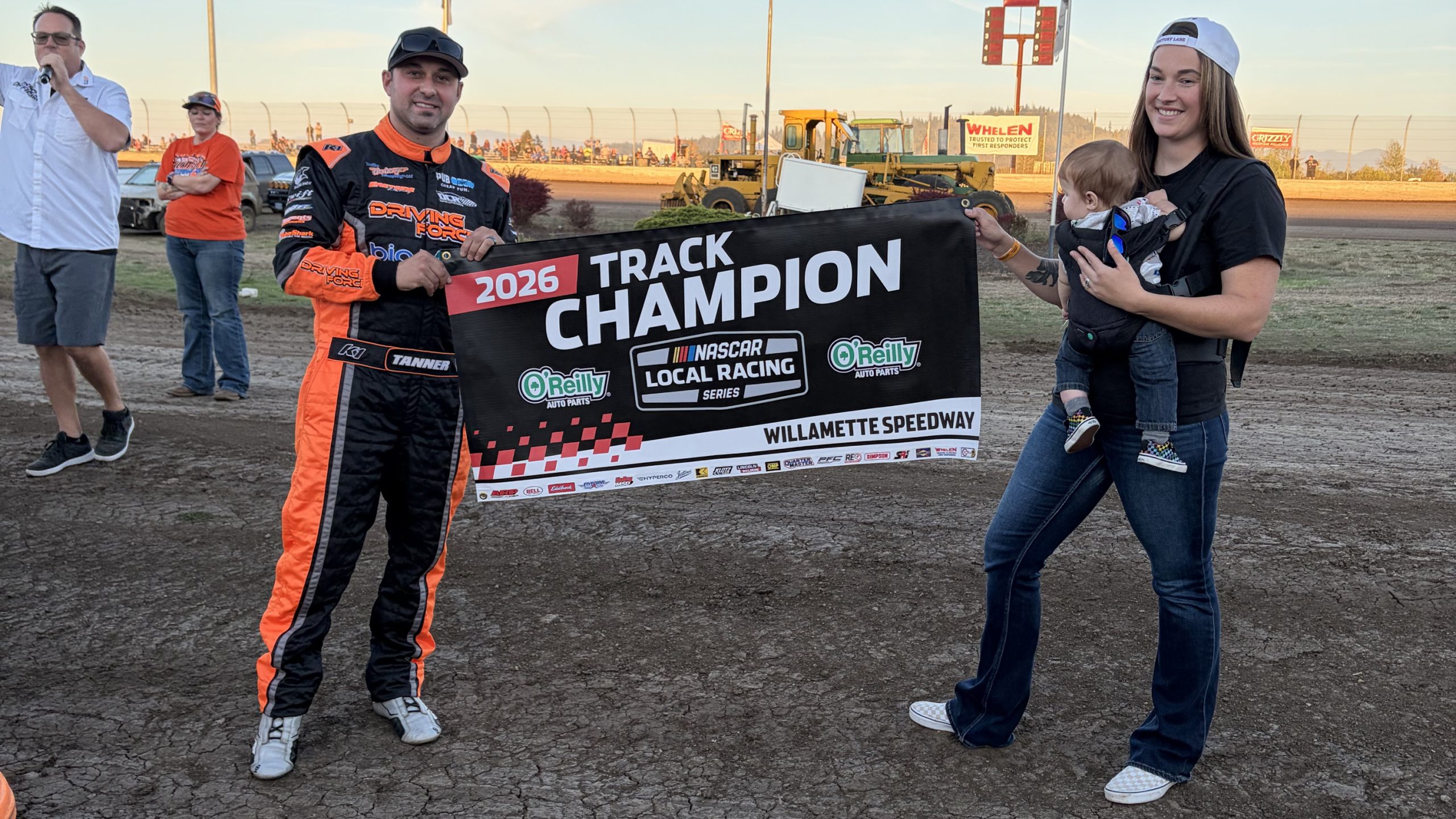
On the night of Sept. 19, when Tanner ran his final NASCAR points-paying race of the 2026 season on the third-mile dirt oval, his wife Ashlie ran up and down that hill at least a dozen times. She ascended to watch Joey’s hot laps, qualifying run, heat races and feature. In between sessions, she helped at the hauler, carrying equipment and assisting in car prep.
She did all of this with her and Joey’s 7-month-old son strapped to her chest.
Joey Tanner calls his wife a “supermom” due in part to how she takes care of their son, their 5-year-old daughter and his 10-year-old stepson all while lending her hand to what’s become one of the best dirt late model programs on the West Coast.
“The amount of support she gives me and the things she does behind the scenes, I couldn’t do this without her,” Tanner said. “She gives up a lot for me to be able to do this. Just to watch her and the things she does just so I can focus on what I’m doing at the track, I’m so grateful for it. Everybody thinks I’ve got it rough. No, she’s the strong one. She’s the one who keeps it going.”
For Tanner, not many things in life take priority over racing. Family is one of them. He gave up the former for the latter a few years back so he could buy a home, get married and have children.
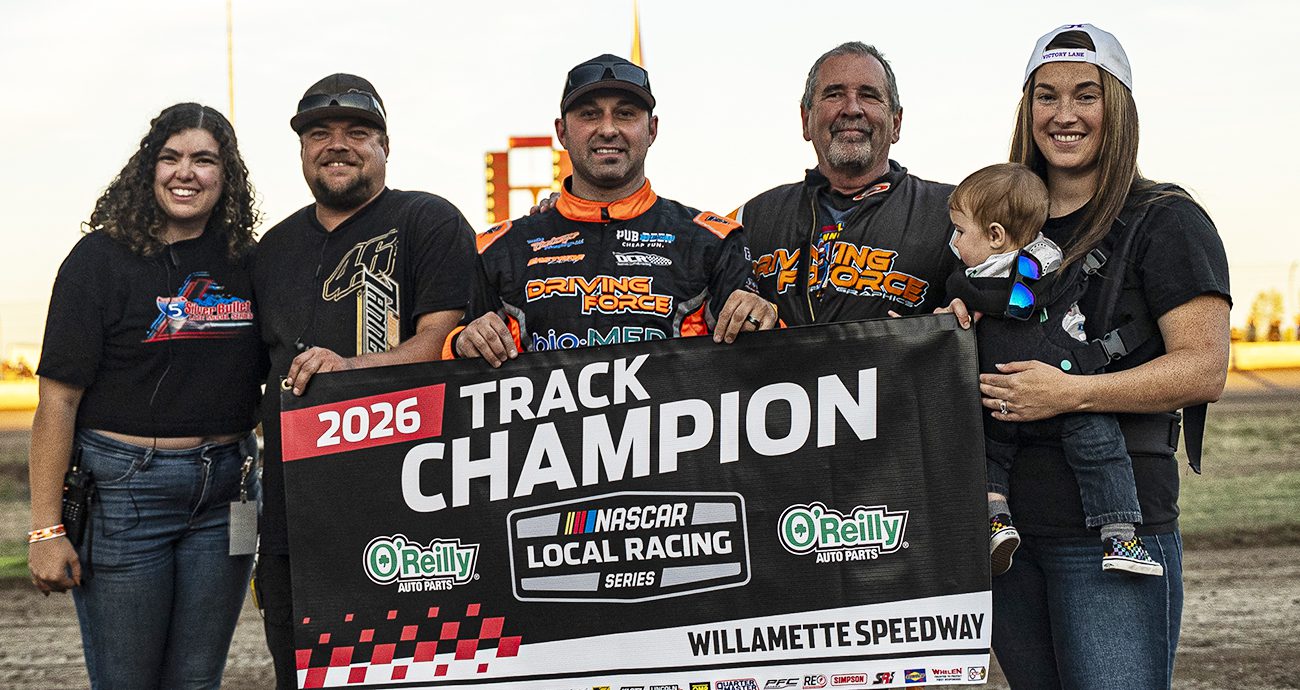
But thanks to a series of breaks, he’s back in the driver’s seat. And on that cool September night, after Tanner won his 12th race in 15 starts at Willamette, his family was the first to greet him with hugs after he clinched the 2026 NASCAR Local Racing Series Powered by O’Reilly Auto Parts Division I national championship.
Seven-month-old Tyson won’t remember the celebration, but Tanner is sure to “put it in his brain” via photos and stories as his son grows older.
After all, if Tyson grows up at the track, experiences his dad’s career first-hand, becomes a racing-obsessed boy, collects die-cast race cars, learns all the local drivers’ names and pretends to call races for fun, forges lifelong relationships in the pits, sticks with his passion into adulthood and turns his dreams into his reality, he will have done exactly what Joey did.
***
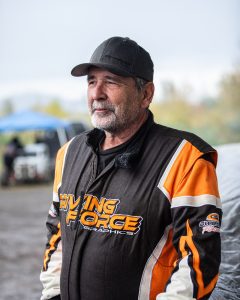
Joey and Ashlie Tanner (Photo: Tadd Haislop/NASCAR)
Pavement tracks aren’t as common as dirt tracks in the Pacific Northwest, but Joey Tanner’s father Jody was an asphalt guy in his heyday. The elder Tanner competed on NASCAR’s Northwest and Southwest Tours. Locally, he raced at the now-defunct Portland Speedway.
Joey made friends at school, especially as a tri-sport athlete. But his core relationships were built at the race track.
“From a baby to about 10 years old, while Portland Speedway was around, I’d go there every Friday night,” he said. “I grew up around (racing) with my dad and my brother; my whole family raced. Going to the tracks on Friday nights and Saturday nights in the western U.S. from Oregon to California, Idaho, Montana, even to Nevada.
“I just fell in love with it when I was a kid, and it kind of went from there. When you’re around it as a kid, it’s in you.”
Jody didn’t have to push Joey to the driver’s seat. As soon as the younger Tanner was old enough, Jody got him in an indoor go kart.
And he was good — good enough to enrage the grown men who were racing against (and losing to) a 10-year-old boy.
Joey Tanner (Photo: Ted Malinowski/NASCAR)
Rules at the time prohibited anybody under the age of 16 to race at most tracks. But Oregon’s Madras Speedway had a juniors division, which gave Tanner a chance to run a street stock at the age of 13. In his second year, he won the class championship and earned an opportunity (with signed consent from his dad) to move up to a late model.
Tanner spent a few years running dirt late models before a brief asphalt detour in 2009 and 2010, when he was old enough to try the discipline his father mastered. Tanner found success on pavement, too. He became the youngest driver to win the Fall Classic at Washington’s Yakima Speedway.
Due in part to the scarcity of pavement tracks in the region, though, Tanner returned to the dirt world in 2011 and has been there ever since.
“I loved racing pavement,” he said. “The amount of attention to detail there is, the heat, the amount of laps you race, I liked that challenge. But obviously I love dirt, too. I love the friendships you build, the communities you race with. A lot more friendly, a lot less professional.
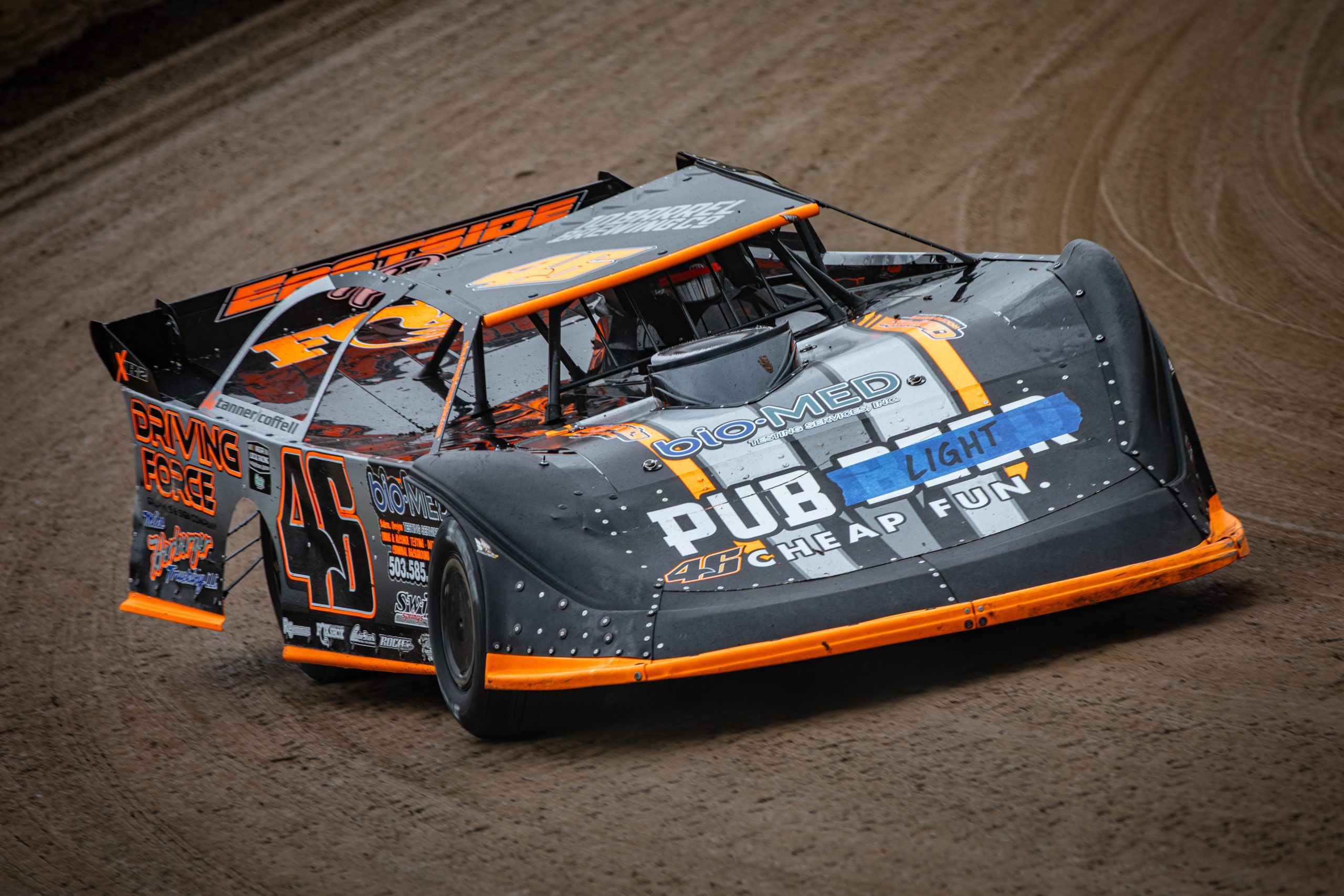
“So the dirt thing really stuck. And there’s nothing like it. Driving a 900-horsepower late model on the verge of hitting the wall every lap. (I actually hit the wall often, but try not to hit it too hard.) Obviously I’ve built a love and passion for it.”
Tanner in his dirt career has driven for multiple car owners, including himself. The opportunity to work with a longtime friend in Darren Coffell arrived when Coffell took a chance on Tanner after an event in Las Vegas. Tanner joined Coffell on the trip as a helping hand, but he ended up in the driver’s seat of the car, finishing in the top 10 and indirectly launching a partnership that’s yielded seemingly endless success.
Tanner went full-time racing in Coffell’s late models three years ago. Every season, he grows more thankful for the team’s camaraderie. The equipment is good, and the communication is great.
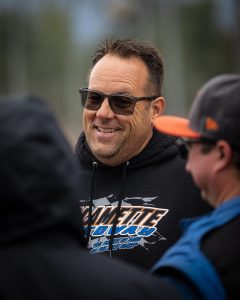
Darren Coffell (Photo: Ted Malinowski/NASCAR)
“We live and breathe racing,” Tanner said. “We’re always thinking about ways we can make our cars faster. Things we can do to beat the competition or be different, or challenge ourselves to a new goal. A lot of our success is the thought process behind shock settings, chassis adjustments, just other things to tinker that other people don’t really do. I think we’ve gained a lot more speed just by our knowledge and putting our heads together and coming up with packages that nobody else has. Not even the chassis builder recommends what we run.”
An invaluable piece of their puzzle is Chris FitzJohn, the crew chief who randomly messaged Tanner on Facebook 10 years ago asking for an opportunity to learn about and work on late models as part of a team. Tanner at the time was riding solo and needing the help, so he said yes. He now calls it “the best thing (he) ever did,” adding that FitzJohn is “consistent” and “dependable.”
Tanner’s crew also features Dick Gummus, a longtime friend of Coffell whose age (in his 80s) doesn’t stop him from helping in the shop and taking on tire work in the pits. Alexis Coffell, Darren’s daughter, lends a hand on race day, too.
That’s the extent of the squad that produced the best season in the country in NASCAR’s Division I ranks.
“I’m just so proud of our accomplishments with what we have,” Tanner said. “Obviously we know we have a great program. We know we have the stuff. But on a national level, now everybody knows. We’ve been fast for a couple years, and I’ve been winning races for a long time. Just nobody really knew.
“But doing it with a small team — we don’t think of ourselves as that small, but yeah, it is a small team — it shows what you can do with people who just work hard and put all their effort into it. I’m so happy I was able to do it for the team.”
***
From left: Alexis Coffell, Chris FitzJohn, Joey Tanner, Darren Coffell and Ashlie Tanner (Photo: Yem Sanlaeid/NASCAR)
Willamette Speedway promotors Sandy and Cory Penfold announced in March a new NASCAR sanction for the 2026 season, citing the benefits for drivers and the potential path to a national spotlight.
Tanner was completely on board with his home track’s move thanks to his first-hand experience.
When Jody Tanner won that Portland Speedway track championship in 2000, he was invited to attend NASCAR’s awards banquet in Orlando. Joey tagged along, and he vividly remembers watching Gary Webb, a dirt-track racer from Iowa, get recognized for winning that season’s national title.
No dirt-track racer had won NASCAR’s national championship since Webb’s triumph … until Joey Tanner did what he did in 2026.
Willamette Speedway promotor Cory Penfold brought the track a NASCAR sanction for the first time in 2026, paving the way for Joey Tanner’s national title. (Photo: Ted Malinowski/NASCAR)
Willamette’s NASCAR sanction created a new goal for a team that was already accustomed to winning 10-plus races a season. That success is why Tanner felt cautiously optimistic.
“We knew after last year’s performance, 13 wins in 15 starts, we could have a shot at doing something great,” he said. “Whether it was winning the region, the state or even national. We knew it was going to be tough, and we knew we weren’t going to get that many races. So our throw-outs were going to have to be pretty good just to be able to be in the hunt. So we were excited about it, and we knew from the beginning that we had a shot to do something good, and we ran with it.”
Tanner in the spring began the season on a tear, winning Willamette’s first six late model features before a relatively stunning second-place run right before the calendar flipped to June. He ended up winning 12 of 15 races with all three “losses” being second-place results.
Still, the points race was close. Tanner entered the final NASCAR weekend just a few points up on Connor Hall, the two-time Division I national champ who races asphalt late models primarily in Virginia and North Carolina. Hall won his finale at North Carolina’s Hickory Motor Speedway and put the pressure on Tanner to do the same later that night on the West Coast.
No problem. Despite unpredictable track conditions and some tire trouble after qualifying, Tanner in his final feature smoked the field to clinch not just the national title, but the West Regional championship, too.
“We were definitely focused on winning this,” Tanner said. “When we really started to notice us creeping up in the points for national and the gap was getting bigger for regional, we really dug in. Darren stepped it up. We had more tires than I had ever seen. The equipment was always beautiful. He showed up ready to go. I mean he brought both cars two weeks in a row; we were ready to go in case one car had a problem. We were fully invested.
“We actually missed a race (at Willamette) for a race at another track because it was a higher paying race. And we actually missed out on a max points night possibly. I’m glad it didn’t bite us in the butt.”
***
(Photo: Ted Malinowski/NASCAR)
When he’s not wrenching on or wheeling championship-caliber late models, Tanner works full-time as a sales professional for Maletis Beverage in Portland. He and Ashlie live East of the city in the suburb of Troutdale.
The drive from their home to Willamette on the weekends is about two hours, but they’re able to bunk with Ashlie’s family, local to Lebanon, to avoid late-night returns.
That’s how the Tanners are able to keep the family together at the race track … even if his daughter spends half the time wandering around the pits hanging out with other crews.
“It’s very special for me to have the family here,” Tanner said. “The older I get, the more I look on it, and family’s so huge to me. I gave up racing five or years six years ago for my family. I was content with what I had done in my racing career, and I was happy to leave it. Maybe not forever, but for a while. And obviously I’ve been fortunate enough to get back into it and keep going doing what I love. But having my kids around, it’s so rewarding to me, because I did it when I was a kid, and it was so cool for me to grow up around it, and I’m so grateful my kids and my family were all here to see it.”
Joey Tanner (Photo: Ted Malinowski/NASCAR)
“It,” in this case, was his clinching the national championship. Jody was there to see “it,” too, which is a huge deal given the impact he’s had on Joey’s life.
Jody brought Joey to the banquet after he won the Portland Speedway title in 2000. In November, Joey will bring Jody to the NASCAR Regional and International Awards banquet in Charlotte.
“I mean, how ironic, right,” Joey Tanner said. “It’s so rewarding for me as a son having him here. And having him going to the banquet with us will be so cool because I did go to it with him. He’s only been to one national banquet because he’s only won one championship. And that was the one that I went to was the last dirt champion.”
Ashlie will attend, too, possibly with their baby still strapped to her chest as the family continues to celebrate their accomplishment.
This triumph is as momentous for Tanner, Coffell and the rest of the team members as it is for the state of Oregon, the Pacific Northwest and a dirt-racing community that hadn’t seen a NASCAR national champ in a quarter century. That wasn’t lost on Tanner when he first celebrated in the Willamette pits on Sept. 19, and the reminders will keep coming as he continues his career. His home track will certainly make sure everyone recalls one of its drivers taking NASCAR’s national title in the venue’s first season with the sanction.
Tyson will remember, too, even if he was too young to process the moment in real time. He’ll see photos of his grandfather taking his dad to Orlando and images of his dad taking his grandfather to Charlotte.
Perhaps one day Tyson will take Joey to a NASCAR banquet, too.
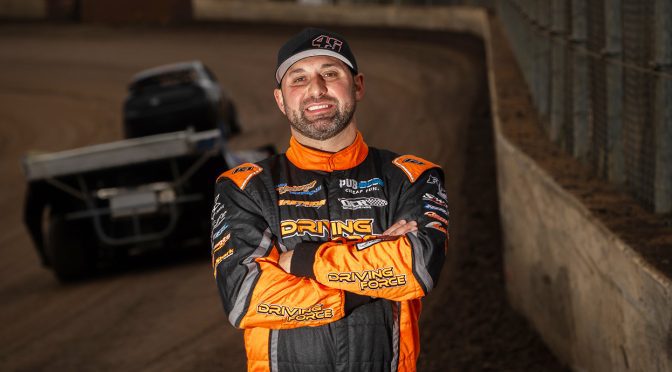
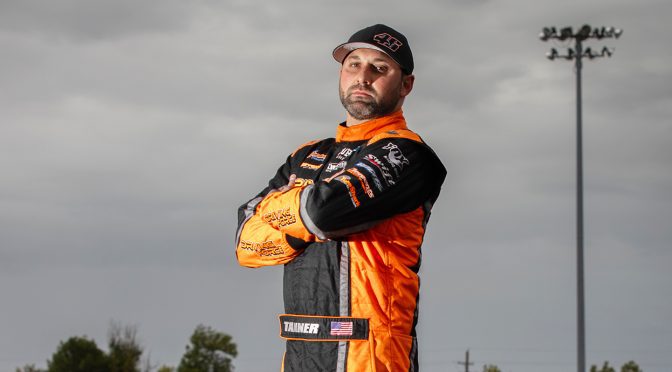
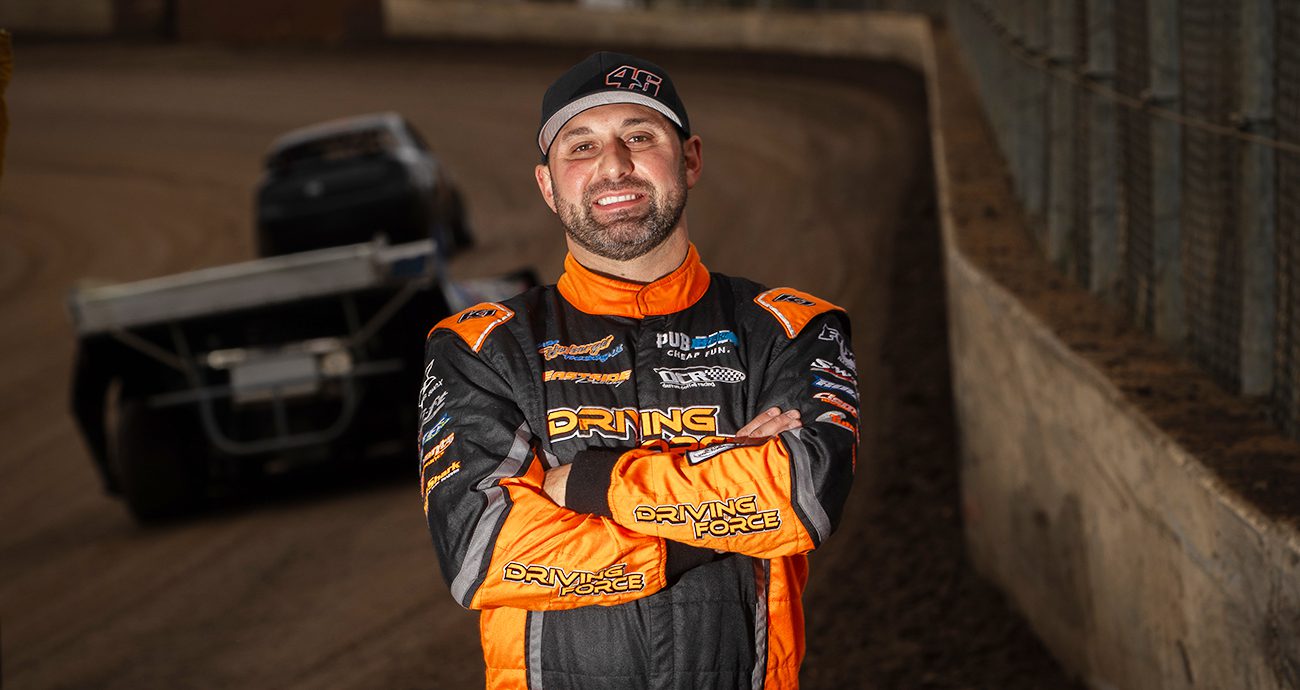
DAYTONA BEACH, Fla. — Joey Tanner has won the 2026 NASCAR Local Racing Series Powered by O’Reilly Auto Parts national championship, completing a landmark season for the Portland, Oregon driver and the No. 46 dirt Super Late Model team owned by Darren Coffell.
Tanner is the first dirt-track driver to win the NASCAR local racing national championship since Gary Webb accomplished the feat in 2000. The achievement carries special meaning for Tanner, who attended the NASCAR awards banquet with his father that year after the elder Tanner won the Portland Speedway track championship. Tanner remembers seeing Webb at the banquet; 26 years later, he joins him among NASCAR’s national champions.
“I couldn’t be more proud of the team I race for and the people who support us,” Tanner said. “This is a big win for the state of Oregon, for the West Coast, for our team and my family, my crew – everyone involved.”
Tanner earned 12 wins in 15 starts at Willamette Speedway in Lebanon, Oregon, and secured the national championship by two points. The title is the culmination of a focused season-long effort by Tanner, Coffell, crew chief Chris FitzJohn and the entire No. 46 team. Once the group recognized it was gaining ground in the national standings and building its advantage in the regional standings, it committed fully to the title pursuit.
“We were definitely focused on winning this championship,” Tanner said. “When we really started to notice us creeping up in the points nationally and the gap was getting bigger for the regional title, we really dug in. Darren stepped it up. We had more tires than I had ever seen. The equipment was always beautiful. He showed up ready to go.”
“Joey Tanner’s championship represents everything that makes NASCAR local racing special – talented competitors, dedicated teams and families, and communities that support their hometown racers week after week,” said Joey Dennewitz, NASCAR vice president of Industry Development. “Joey and the No. 46 team turned hard work, preparation and belief in one another into a historic season for Oregon and West Coast racing. We are proud to recognize him as the first dirt-track driver since Gary Webb in 2000 to win the national championship.”
“Congratulations to Joey Tanner on an outstanding season and on earning the 2026 NASCAR Local Racing Series Powered by O’Reilly Auto Parts National Championship,” said Diane Heatherly, sponsorship marketing manager for O’Reilly Auto Parts. “Joey’s 12 wins in 15 starts reflect the preparation, commitment and competitive spirit that define local racing. We are proud to celebrate Joey, the No. 46 team and the passionate fans whose support makes grassroots racing so special.”
(Photo: Ted Malinowski/NASCAR)
Tanner was born and raised in Portland and still lives outside the city, where he works as a sales professional for Maletis Beverage. His racing career began in indoor go-karts at age 10. He later advanced through street stocks and late models before beginning his dirt-racing career in 2005.
The move to dirt became a defining turn in Tanner’s career. The speed, precision and risk required to handle a powerful late model on dirt quickly developed into a lasting passion.
“I love the dirt. There’s nothing like it,” Tanner said. “Driving a 900-horsepower late model on the verge of hitting the wall every lap – there’s just nothing like it. I’ve built a love and passion for it, and I wouldn’t trade it for anything.”
Tanner said the title validates what the close-knit No. 46 team believed it could accomplish, while bringing national recognition to a program built through years of work and steady success.
“I’m just so proud of our accomplishments with what we have,” Tanner said. “We know as a team we have a great program, but now everybody knows on a national level. We’ve been fast for a couple years, and I’ve been winning races for a long time. Doing it with a small team shows what you can accomplish with people who work hard and put all their effort into it.”
From left: Alexis Coffell, Chris FitzJohn, Joey Tanner, Darren Coffell and Ashlie Tanner (Photo: Yem Sanlaeid/NASCAR)
The championship is also a family achievement for Tanner, who is married and has two children and a stepson. It extends a racing tradition passed down by his father and creates another milestone for a family with deep roots in Oregon short-track racing.
The championship picture also showcased the breadth of NASCAR local racing. The top five in the national standings represents five distinct car, surface and regional combinations: Tanner in a dirt Super Late Model from the Northwest; Connor Hall in a pavement Late Model Stock from the Southeast; Mike Lichtfeld in a pavement Late Model from the Midwest; Burt Myers in a pavement Modified from the Southeast; and Mitch Keeter in a dirt Modified from the Midwest. Defending national champion Jacob Goede finished sixth in points this season.
“Whether it was winning the region, the state or even the national championship, we knew it was going to be tough,” Tanner said. “We knew we weren’t going to get that many races, so our throw-outs were going to have to be pretty good just to be in the hunt. We knew from the beginning that we had a shot to do something special, and we ran with it.”
The NASCAR Cup Series and NASCAR Craftsman Truck Series continue their respective Chases presented by Mobil 1 this weekend at Kansas Speedway. Both fields feature 36 entries for the weekend. See the qualifying orders for Kansas below.
Kansas Speedway has spent the last few years turning the white flag into a warning.
Kyle Larson took it this spring with the lead … and Tyler Reddick held the checkered flag moments later.
Last fall, Denny Hamlin and Bubba Wallace were battling for the victory on the final lap when contact opened the door for Chase Elliott to sweep past both of them. And in May 2024, Larson edged Chris Buescher by 0.001 seconds — the closest finish in NASCAR Cup Series history.
There’s a reason Racing Insights has started referring to the recent trend as “Krazy Kansas” — because it’s been (contribution to the NASCAR Swear Jar)-ing nuts.
The winning pass has come in the final two laps in five of the last seven Kansas races, including four last-lap passes. Four of the last six have gone to NASCAR Overtime, too. Meanwhile, the driver who led the most laps has won just once in the last eight trips to the 1.5-mile track. Sometimes, it’s better to be positioned than dominant.
That unpredictability arrives Sunday (3 p.m. ET, USA Network, HBO Max, MRN Radio, SiriusXM NASCAR Radio) at an especially interesting moment in The Chase presented by Mobil 1.
Three races into the 10-race championship run, the field has already started to stretch out a bit. Larson left Saturday night’s Bristol Motor Speedway barn burner with a one-point advantage over Hamlin for his first points lead of the season, while race winner Joey Logano sits just 16 points back and Christopher Bell 17 behind. From there, the gaps grow quickly.
Ty Gibbs (-42) and Ryan Blaney (-52) remain within striking distance, but Reddick is seventh at 61 points back and very much trending the wrong way. Carson Hocevar (-85) follows, with Chase Briscoe (-87), Wallace (-92), Austin Cindric (-116), Elliott (-117), Byron (-121), Ryan Preece (-124), Buescher (-124) and Daniel Suárez (-134) rounding out the Chase field. Every driver from eighth through 16th is already more than a full race’s worth of points behind Larson.
The problem for the leaders?
Kansas might be exactly where several of those trailing contenders are best positioned to turn things around.
Start with Reddick, whose deficit grew by 19 points at Bristol. Nobody in this group has to imagine what a Kansas surge might look like — he provided the most recent example.
Reddick won here in April after Larson led at the white flag, making the winning pass between Turns 3 and 4 on the final lap. It was Reddick’s second Kansas victory in six races and remains (somewhat shockingly) the most recent of his five wins this season.
Toyota stablemate Briscoe has an equally compelling reason to welcome Kansas after Bristol dropped him from 59 points back to 87.
Since joining Joe Gibbs Racing, Briscoe has finished fourth or better in all three of his Kansas starts, including a third-place result this spring after taking four tires before overtime and charging through the field. He also won the most recent 1.5-mile race at Chicagoland and has finished fourth or better in seven of his 12 starts on traditional 1.5-mile tracks with JGR. They’re quickly becoming his bread and butter, with some Victory Lane BBQ potentially on the menu Sunday.
Wallace, meanwhile, already owns a Kansas win from 2022 and has four top-five finishes in his last eight races here. He has also finished in the top 10 in four of the last five races on 1.5-mile tracks. And 23XI Racing as an organization has turned Kansas into one of its signature venues, winning four of the last nine races at the venerable Midwestern track with three different drivers and leading in eight of those nine events.
Then there is Elliott, whose current form makes his Kansas history stand out even more — and underscores why it’s imperative for the No. 9 to convert if he’s going to save his season.
Elliott has just one top-five finish and two top 10s over his last 18 races, but Kansas has consistently been one of his best tracks. He won this race last September, owns two victories here overall and has finished in the top 10 in six of his last seven Kansas starts. His 9.81 career average finish there is also the best among drivers with at least six starts. This is about as tailor-made a bounce-back opportunity as he could hope for right now.
But his teammate Byron might be even more intriguing.
His 121-point deficit makes him look increasingly removed from the championship picture, but his results on traditional 1.5-mile tracks say something very different. Byron and Hamlin are the only drivers to finish in the top 10 in all five such races this season. Byron has gone third, seventh, eighth, ninth and fourth, producing a 6.2 average finish that trails only Hamlin’s 2.6.
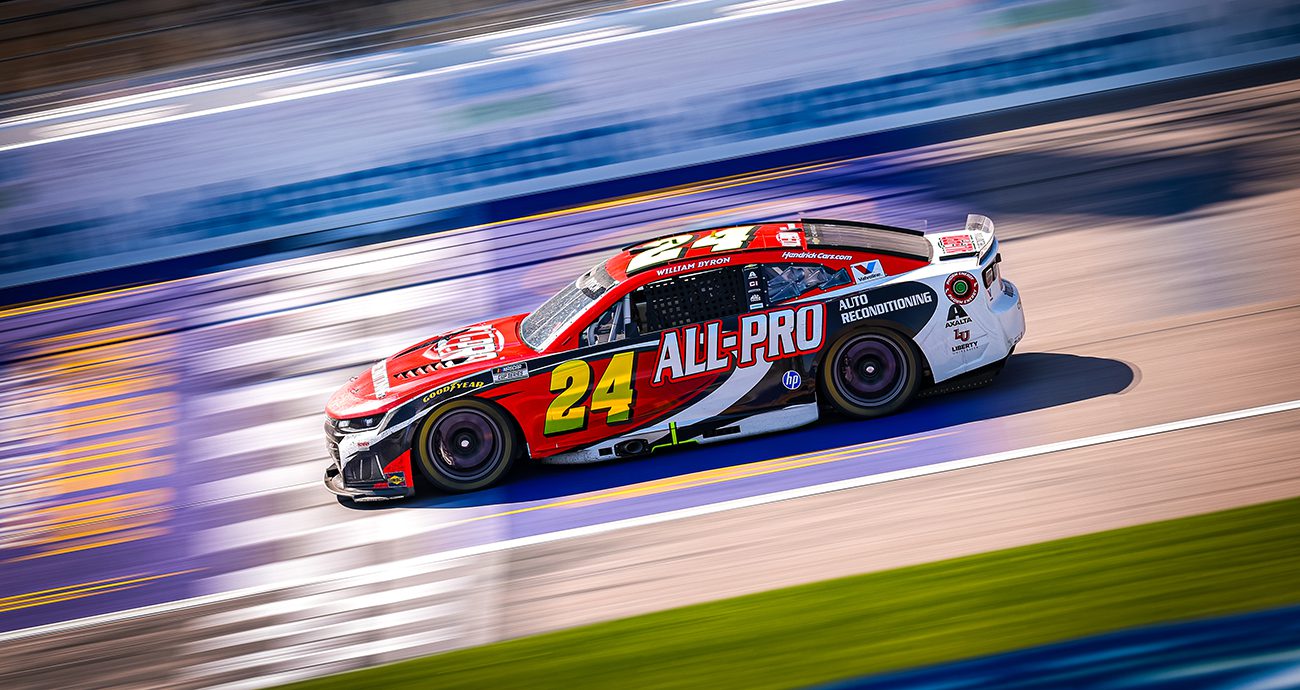
This is the No. 24 Hendrick Motorsports Chevrolet, after all — if there’s a track where it can start dragging itself back into the championship picture, Kansas fits the profile.
David Jensen | Getty Images
Even Buescher, 124 points behind, has firsthand knowledge of how close Kansas can come to changing everything for a driver. His runner-up finish to Larson here in May 2024 will certainly be mentioned and you’ll likely see the replay (at least once) this weekend.
For all its recent chaos, however, Kansas has not become random.
No driver has earned a first career Cup victory at Kansas in any of its 41 races, the most races among active tracks that have never produced a first-time winner. Plus, the last 30 Kansas winners all entered with at least 100 previous Cup starts. That distinction matters.
The recent Kansas formula has not necessarily been about an unlikely driver stumbling into Victory Lane. Instead, it’s been about proven contenders staying close enough to capitalize when the race changes in the closing laps. Veteran savvy, if you will.
Reddick did it in April. Elliott did it last fall. Larson did it by literal inches in 2024.
And in this version of The Chase, the payoff for doing so can be enormous. Bell, Larson and Logano each scored 73 points in winning the first three Chase races, tied for the second-most points scored in any Cup race this season. Winning in the postseason has clearly been the difference-maker, even though the win-and-advance playoff days are long gone.
For Reddick, Briscoe, Wallace, Elliott, Byron and the rest of the Chase’s back half, merely running well will very likely not result in a title. The gaps have grown too large, too quickly.
Thankfully for them, Kansas has shown a repeated willingness to offer something more dramatic and open a window of opportunity for whoever is positioned to take it. The next three races, all 1.5-mile venues, may ultimately bring clarity to the championship picture.
But “Krazy Kansas” gets the next chance to make a mess of it.
The review of the Carson Hocevar-Ryan Blaney altercation at Bristol Motor Speedway has concluded with no penalties, but NASCAR still has unfinished business.
NASCAR Cup Series officials will meet with Ty Gibbs after the No. 54 Joe Gibbs Racing driver hurled a water bottle that struck a media member in the fracas Saturday night.
“I know it was kind of a heat-of-the-moment thing, and he probably thought it was just kind of a funny thing to add to the moment,” NASCAR vice president of racing communications Mike Forde said Tuesday during the latest episode of the “Hauler Talk” podcast. “He probably had some frustrations with (Hocevar) as well. But obviously that could be dangerous if that hit someone in the wrong place. If the cap portion of that water bottle hit someone in the eye, that could be a dangerous situation. So we plan to have a conversation this weekend in Kansas with Ty Gibbs, but no penalty.”
“Several of our folks did listen to it or at least see some of the clips, and there were comments in the debrief meetings that they thought Ryan handled it really well and spoke very eloquently and professionally,” Forde said. “We feel he gets it, so talking with him further about what happened, we don’t think it’s totally necessary.”
NASCAR announced Monday that there would be no penalties for Blaney or Hocevar, but that the actions of crew members still were being evaluated.
Forde said the review resulted in no punishments Tuesday.
“We looked at it as they were trying to break it up vs. trying to get involved,” Forde said. “A lot of these crew members are DI athletes. They’re just coming off a football field as recently as last year, and we do not want them to be involved in any crew member to driver contact in any way. If they’re trying to break it up in a good way, we’ll take that into account. But if they’re laying their hands in a violent manner, that’s when we’re going to step in.”
Other topics covered by Forde and senior director of racing communications Amanda Ellis during the 70th episode of “Hauler Talk,” which explores competition issues in NASCAR:
— How NASCAR officials and security handled the fight and its aftermath at Bristol.
— Why penalties for fighting can vary on a case-to-case basis.
— A preview of Kansas Speedway.
— The tiebreakers that will be used in the Chase presented by Mobil 1.
Click on the embed below to listen or search for “Hauler Talk” wherever you download podcasts to hear it on your phone, tablet or mobile device.
Nate Ryan has written about NASCAR since 1996 while working at the San Bernardino Sun, Richmond Times-Dispatch, USA Today and for the past 10 years at NBC Sports Digital. He is a contributor to the “Hauler Talk” show on the NASCAR Podcast Network. He has also covered various other motorsports, including the IndyCar and IMSA series.
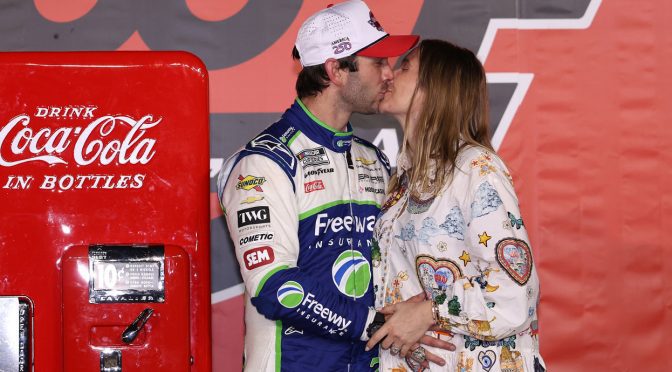
Suárez, who drives the No. 7 Chevrolet for Spire Motorsports, had been on baby watch in recent weeks while competing in the NASCAR Cup Series Chase presented by Mobil 1. Piquet’s original due date was Sept. 17, and NASCAR O’Reilly Auto Parts Series regular Justin Allgaier was on standby for the No. 7 team last weekend at Bristol Motor Speedway, where Suárez finished 14th in the Bass Pro Shops Night Race.
Suárez ranks 16th in the Cup Series standings. He earned his first victory of the season in the Coca-Cola 600 at Charlotte Motor Speedway on May 24, 49 days after the couple announced they were expecting their first child.