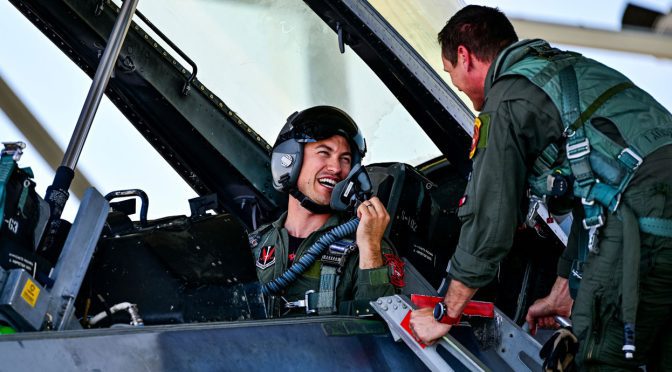
SUMTER, S.C. — Two-time NASCAR Cup Series champion Joey Logano traded his fire suit for a flight suit as Mission 600 soared to new heights during a visit with the 77th Fighter Squadron “Gamblers” on Wednesday at Shaw Air Force Base.

Charlotte Motor Speedway’s Mission 600 campaign, which pairs drivers and regional military bases as a build up to the Coca-Cola 600 on Memorial Day Weekend, provided the Coca-Cola Racing Family driver with an immersive day meeting aviators, soldiers and staff at the home to the 20th Fighter Wing, the U.S. Air Force’s largest combat F-16 wing.

RELATED: Cup Series schedule | Coca-Cola 600 tickets

Alongside FOX Sports analyst Shannon Spake, Logano toured the base, learned its history and completed a series of safety trainings before getting fitted for a flight suit, G-suit and helmet. The nearly 90-minute training flight launched off the tarmac at more than 600 mph before executing a series of S-curves, loops, barrel rolls and simulated ground attacks. Logano and pilot Lt. Col. Daniel “Rage” Trueblood also experienced up to nine times the force of gravity during the flight and refueled mid-air. For his efforts throughout the engagement, Logano earned the call sign “Left Turn” from members of the Gamblers.

“Today has been incredible,” Logano said. “To get to meet the men and women who fight for our freedom is always an honor, but then when you get the chance to fly in an F-16, that’s just dream-come-true territory, for sure. Everyone thinks that because you can drive a race car you can fly in one of these things. No, you can’t. It’s incredible the amount of speed, how quick it is … to feel the acceleration it takes. We took off at 600 mph and then went straight up, really, really fast. I’m just trying not to pass out. My vision is narrowing up. He (pilot Rage Trueblood) is up there talking and looking around like it’s a regular ol’ Tuesday.

“To refuel, in mid-air, that was something out of the movies to me. Just to see a huge tanker up there, it was a huge aircraft. We just pulled up to it like you’re pulling up to the gas station.”

Following the training flight, Spake marshalled the plane back into its hanger before the VIPs visited more than 150 aviators, families and staff from the base.

“There are so many examples that are similar to NASCAR in a lot of ways … the discipline, the pursuit of perfection,” Logano told the group. “The biggest difference is that if something goes wrong for us, we just don’t finish the race. If something goes wrong for you guys, it’s a completely different level.”

For leadership at Shaw Air Force Base, having someone like Logano visit is great for morale, but also for highlighting what these men and women do in service to the Air Force.

“Our goal is showcasing what the men and women at Shaw do day in and day out to support our nation,” said Chief Master Sgt. Christopher Griste, the Command Chief of the 20th Fighter Wing. “Any time that we have a chance to showcase our mission, that goes into the living rooms of Americans — and sometimes across the world with social media. Any time we get the chance to put a celebrity in the jet, it opens up a whole different world for recruitment purposes to show what we do.”

At Charlotte Motor Speedway, Memorial Day Weekend provides the opportunity to pay tribute to the men and women of the U.S. Armed Forces, particularly those who paid the ultimate sacrifice. With the support of the U.S. Department of Defense, the patriotic Coca-Cola 600 pre-race show includes representation from all six major branches of the military.

“So many times as a civilian, you get wrapped up in your own little world — just thinking about race cars all day long,” Logano said. “It’s very important for us to take a step back, and zoom out, and think about why we get to think about race cars all day long. It’s because of the men and women that fight for our freedom every day. That’s part of what Mission 600 is all about … to try to showcase what these guys do every day.

“When I think about what Charlotte Motor Speedway and Coca-Cola do for the Coca-Cola 600 on Memorial Day weekend at the Coca-Cola 600, it’s not really about the race. It’s really about that weekend, what it stands for and highlighting what these guys do. … Not only our military members, but also their families and the sacrifices they make.
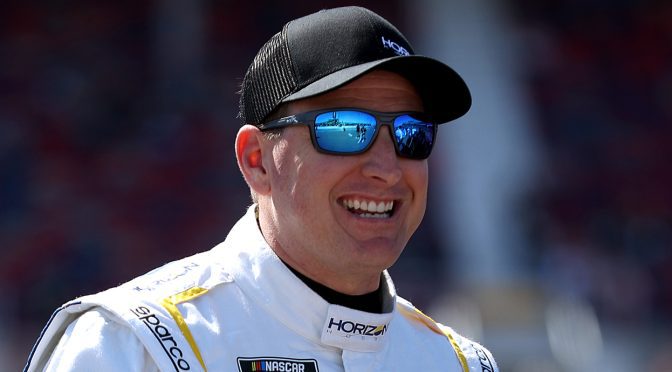
In a double dose of news Wednesday, Michael McDowell announced he will leave Front Row Motorsports after the NASCAR Cup Series season to join Spire Motorsports’ No. 71 team on a multiyear deal in 2025.

McDowell, 39, makes the move after spending each of the last seven seasons driving the No. 34 Ford for the Bob Jenkins-owned team, winning the 2021 Daytona 500 and at the Indianapolis Motor Speedway road course in 2023.

RELATED: McDowell through the years | Cup Series schedule

“This is a new chapter for my family and me, and we’re incredibly thankful for the opportunity that’s in front of us,” McDowell said in a Spire release. “It’s going to take some hard work, but I feel like everything is in place for us to be successful as a race team — to win races and contend for championships. People are the greatest asset to any organization, and with Spire’s vision, ambition, knowledge, and dedication, we will achieve great things. Failure is not an option, and that’s the mindset that it will take to achieve our goals.”

Front Row released its own statement, thanking McDowell for his time with the No. 34 FRM team.

By taking over the No. 71 Chevrolet, McDowell is set to replace rookie Zane Smith. Smith’s signing was announced last September, with his multiyear contract managed by Trackhouse Racing. No plans for Smith’s future have been announced at this time.

A native of Phoenix, Arizona, McDowell has made 477 starts in the Cup Series. Next season, McDowell is set to team up with Corey LaJoie and rookie Carson Hocevar, both of whom last year signed multiyear deals for 2024 and beyond. LaJoie has made 248 Cup starts and Hocevar 21.

“Michael McDowell is a proven winner and brings a NASCAR Playoff pedigree,” said Spire Motorsports president Doug Duchardt in a team release. “Michael has always been committed to elevate his teams. His experience and enthusiasm are a perfect fit for Spire Motorsports, and we are sure he will be a great teammate to both Carey LaJoie and Carson Hocevar. We’re thrilled to keep up the positive momentum by adding someone as accomplished as Michael to our driver lineup.

“Our 2024 plan for the No. 71 team remains unchanged. Spire Motorsports fully supports Zane Smith and (crew chief) Stephan Doran. We remain committed to the success of our collaboration with Trackhouse. That team is just beginning to realize its potential. We’re looking forward to seeing how the Rookie of the Year battle plays out between Zane and Carson.”

McDowell has competed in the Cup Series since 2008, beginning his career with Michael Waltrip Racing, driving the No. 00 Toyota on a part-time basis before other abbreviated stints with Tommy Baldwin Racing and Phil Parsons Racing.

He then joined Leavine Family Racing in 2014, driving the No. 95 car through the majority of the 2014-16 seasons before competing on a full-time basis in 2017.

In addition to his Cup experience, McDowell has one win in the NASCAR Xfinity Series, driving the No. 2 Chevrolet to Victory Lane for Richard Childress Racing in 2016 at Road America.

McDowell finished 10th last weekend at Kansas Speedway and is 26th in the Cup Series points standings.

Kyle Larson was sorry to have won by the narrowest margin in NASCAR history.

OK, maybe the Hendrick Motorsports superstar wasn’t apologizing after Sunday’s fender-banging battle for the ages with Chris Buescher at Kansas Speedway.

But the 2021 NASCAR Cup Series champion felt a little unworthy of the title being thrust upon his highlight-reel win.

Closest Finish Ever? According to a high-speed camera capturing thousands of time-stamped images per second, that was indisputable.

Best Finish Ever? According to the man who won, there was no debate.

Sunday at Kansas Speedway wasn’t it.

“That finish with (Ricky) Craven and Kurt (Busch) was, in my opinion, way cooler,” Larson said, referencing the slam-bang ending of March 16, 2003, at Darlington Raceway. “That was like a battle the last however-many laps and came down to a photo finish. But no, this was still cool and hopefully it can hang on for a long time. What was the finish before this one that was the closest?”

Well, actually Kyle … it was Craven over Busch.

The news left Larson on the verge of crestfallen.

“Oh shoot, that’s what we broke? Damn. I didn’t think this was as close as that.”

He then paused to remember the previous Best Finish Ever, which happened all of 10 races ago in this season of 1.5-mile magic.

“How is Atlanta not the closest ever?” he asked the roomful of reporters about the Daniel Suárez-Ryan Blaney-Kyle Busch showdown at Atlanta Motor Speedway in February. “There’s three cars. Like that should mathematically be better than two cars.”

The finish of Atlanta was a photo finish

If we’re now into comparisons, don’t stop there.

What about Carl Edwards and Kevin Harvick driving through each other at Phoenix Raceway in March 2016? Harvick’s nail-bitingly poignant first career win over Jeff Gordon at Atlanta 15 years earlier? Gordon’s $1 million body slam on Jeff Burton to hold on for the 1997 Southern 500?

And the fantastic finishes stretch far before the dawn of electronic scoring in 1993.

Let’s go back 65 years to what once was the most famous photo finish in NASCAR history.

In late February 1959, Lee Petty sat in a Daytona Beach hotel room for three days until Bill France ruled the Petty Enterprises founder had won the first edition of “The Great American Race.”

When France called him with the good news, Petty picked up his winner’s check from the NASCAR office and let Johnny Beauchamp keep the trophy as the initially declared winner (a story that Kyle Petty delightfully told on the NASCAR on NBC Podcast seven years ago).

The point here is as simple as racing’s most basic premise: The car that crosses the finish line first wins.

And for roughly 76 years, razor-thin endings have been part and parcel to NASCAR.

Whether it takes 72 hours or roughly a minute to determine the winner, it’s always an intrinsic game of inches.

Not every season has as many memorable final chapters as 2024. Larson credited the Next Gen car for being a game-changer on bigger speedways, and that idea has some merit.

But it’s also reductive to fall too far down the rabbit hole of proclaiming that last-lap classics are related only to the equipment or the machinery. That they are predicated on the rules packages or the race tracks.

That overlooks the real continuum from seven decades of photo finishes.

These are all human interest stories.

After three-plus hours and 400 miles, cars can be separated by the width of a few smartphones because their drivers made all the right moves – and often with impeccable bravery, sublime skill and a sharp wit.

That was a constant when Petty navigated the first draft of Daytona. When David Pearson slammed his car into gear to beat Richard Petty in 1976. When Kyle Busch survived a slide job gone wrong by Larson to conquer Chicagoland in 2018.

To paraphrase LeBron James, we again got to witness greatness Sunday at Kansas. It’s a birthright of being a NASCAR fan.

So take a moment and soak in the sport’s latest Best Finish Ever.

As its winner noted, it won’t be the last.

Nate Ryan has written about NASCAR since 1996 while working at the San Bernardino Sun, Richmond Times-Dispatch, USA TODAY and for the past 10 years at NBC Sports Digital. He is the host of the NASCAR on NBC Podcast and also has covered various other motorsports, including the IndyCar and IMSA series.

KANSAS CITY, Kan. — Dominators. Multiple photo finishes. Story lines. The 2024 NASCAR season has had it all — and just through the opening 12 weeks of action.

The year is still young, with Sunday’s AdventHealth 400 at Kansas Speedway marking the one-third mark of the 36-race campaign that will lead through the championship race in November at Phoenix Raceway. Already, though, the on-track action has proven to be some of the best ever seen throughout the course of one season.

RELATED: Kansas results | Best photos from Kansas

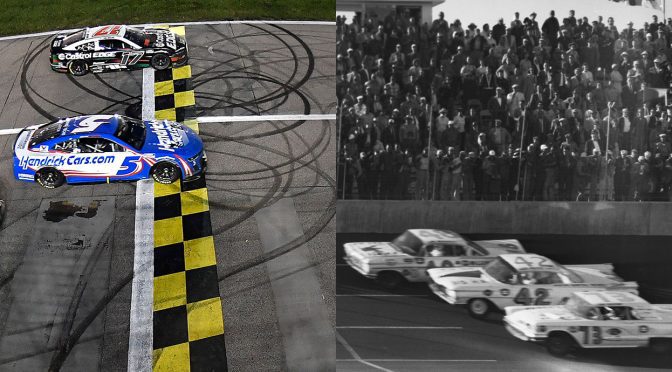
Sunday’s photo-finish nail-biter between Kyle Larson and Chris Buescher produced the closest margin of victory in Cup Series history at 0.001 seconds — besting the previous 0.002-second record set in 2003 between Ricky Craven and Kurt Busch at Darlington Raceway, then tied in 2011 with a three-wide finish at Talladega Superspeedway with Jimmie Johnson and Clint Bowyer.

Finishes like that are typically regarded as a once-a-season occurrence — if you’re lucky — which is why that record stood for some 21 years. But we were treated to a stunner back in February at Atlanta Motor Speedway, when Daniel Suárez edged Ryan Blaney by 0.003 seconds in a three-wide finish, with Kyle Busch caught between for third place just 0.007 seconds behind the No. 99. (And, oh by the way, the Xfinity Series had a doozy of its own at Texas Motor Speedway, where Sam Mayer nabbed the win from Ryan Sieg by 0.002 seconds.)

Parity can be a beautiful thing in sports — nearly evidenced once again Sunday at Kansas by Buescher, who is now painfully dubbed the driver who came closest to winning a Cup race without actually winning it. But the counter to parity is dominance, an assertion that a driver or group of drivers will be the ones to beat on a weekly basis.

Hendrick Motorsports and Joe Gibbs Racing have ruled the year so far, winning 10 of the 12 events, but the story lines only grow stronger. Larson and Hamlin have traded barbs in consecutive weeks, with Hamlin fending him off for the victory at Dover and Larson striking back a week later with an overtime win at Kansas. Byron is looking to bring the No. 24 Chevrolet back to championship prominence for the first time since 2001, when Jeff Gordon was lighting up the Cup Series with his fourth title in seven seasons.

MORE: Byron forges own path with No. 24 after Daytona 500 win

William Byron does a burnout at Martinsville.
James Gilbert | Getty Images

Winners build legacies. And legacies can grow superstars. And as defending Cup Series champion Ryan Blaney recently told the Kansas City Star: “It starts with success on the race track.”

Kyle Busch, winner of 231 Cup, Xfinity and Craftsman Truck Series races combined, is in search of his third Cup championship. So, too, is Joey Logano, the 2018 and 2022 title winner. But first, both are looking to end winless streaks, with Logano winless since March 2023 (Atlanta) and Busch since last June (World Wide Technology Raceway). Brad Keselowski, the 2012 Cup champ and third-year co-owner of RFK Racing, is seeking his first win since taking over the No. 6 Ford and has come mighty close this season with two runner-up finishes, though neither as close as teammate Buescher’s.

The story lines are seemingly endless, with still so much ahead.

Larson’s month of May is only beginning as he pursues the rare double — competing in both the Indianapolis 500 and Charlotte’s Coca-Cola 600 in the same day on Sunday, May 26. With a Kansas win ahead of Darlington (Sunday, 3 p.m. ET, FS1, MRN Radio, SiriusXM NASCAR Radio) and the All-Star Race at North Wilkesboro, Larson could be set to accomplish some unprecedented things over the next few weeks.

Still ahead are return trips to the Chicago Street Course, the Cup Series’ inaugural visit to Iowa Speedway and a stock-car return to the Indianapolis oval for the Brickyard 400.

So often, we may be blinded by what might be wrong or in need of improvement on a lap-by-lap basis. The pursuit of perfection will never end, whether in racing or life — nor should we ever stop moving forward to make the product as extraordinary as possible.

But Sunday felt just about perfect. It’s important to enjoy the beauties, thrills and pure joys of stock-car racing when these exceptionally historic — and exceptionally rare — positives are right in front of us.

Folks, these might just be the good ole days.

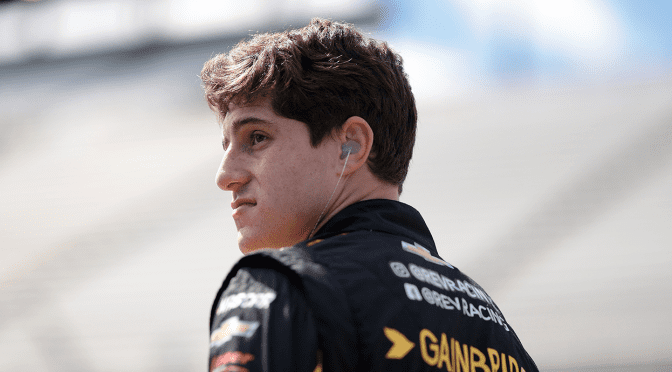
Rev Racing driver Nick Sanchez will sport a special throwback look on Friday in the NASCAR Craftsman Truck Series race at Darlington Raceway.

The No. 2 Gainbridge Chevrolet will don red and black colors to celebrate the 20th anniversary of NASCAR’s Drive for Diversity Program.

LEARN MORE: NASCAR Drive for Diversity

“It’s a really cool scheme honoring the diversity program,” Sanchez said. “Big thanks to Gainbridge for allowing us to run it and honor Rev Racing and the Drive for Diversity Program for everything they’ve done over the past 20 years. It’s a big anniversary and a big year for them, so to honor them is really awesome.”

Rev Racing has been the home for both NASCAR’s Drive for Diversity driver and pit crew development programs and has produced some of the sport’s biggest stars. Cup Series drivers such as Hendrick Motorsports’ Kyle Larson, 23XI Racing’s Bubba Wallace and Trackhouse Racing’s Daniel Suárez all got their start with Rev Racing. Other drivers and countless pit crew members were also able to jump-start their careers with help from the D4D program.

No. 2 Gainbridge racing truck
Courtesy of Rev Racing

For Sanchez, however, the connection to the D4D program goes even deeper than the backing of a full-time ride. Rev Racing team owner Max Siegel and the D4D program have been in his corner since he decided to become a professional driver as a teenager.

“I started with Rev in Legend Cars,” Sanchez said. “Through all that, I was able to climb up through each division, and in the process, Max and I decided to create a new (division entry) in the Truck Series.”

Sanchez made history for Rev Racing earlier this year when he got to Victory Lane at Daytona to kick off the organization’s second year competing in the Truck Series. Not only did Sanchez deliver Rev’s first national series win, but he also added another chapter to the program’s rich history.

“It’s really cool to be with a program from Day 1 in my journey in stock car racing, all the way to where I am now,” Sanchez said. “Last year, the first year in the Truck Series, was a huge year; this year, already a first win in the national series is an even bigger accomplishment, and getting to share that moment with a lot of people I started at Rev with was really a joy.”

As Rev Racing marks two decades of influence in the sport, the organization’s future looks bright with promising talent in the pipeline.

“I hope that in the next 20 years the (D4D) program will keep introducing drivers to the sport and give people an opportunity to drive in NASCAR,” Sanchez said.

Be sure to watch Sanchez in the Buckle Up South Carolina 200 this Friday (7:30 p.m. ET, FS1, MRN Radio, Sirius XM NASCAR Radio).

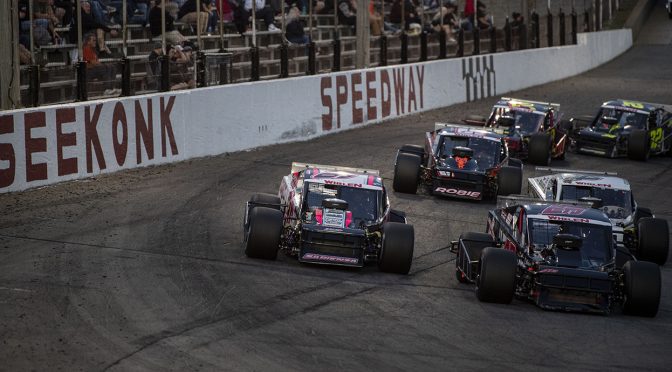
SEEKONK, Mass. — Seekonk Speedway is happy to announce that longtime local business, J&R Precast, located in Berkley, Massachusetts, has been signed as the title sponsor of the NASCAR Whelen Modified Tour event on Saturday, June 1.

The June stop for NASCAR’s oldest touring series will mark their sixth race of the 2024 season, as the series heads for the halfway point of their 16-race schedule. NASCAR’s top Modified competitors will do battle for 150 laps around the Action Track of the East. A full card of local racing – including the Sportsman, Sport Trucks and Late Models – are also on the schedule for June 1. Tickets for the race are available now online at SeekonkSpeedway.com.

Grandstand gates will open prior to that at 4 p.m. The racing card will begin at 5:30 p.m. with NASCAR Whelen Modified Tour qualifying. The qualifying racing for Seekonk divisions will follow at 6 p.m., followed by Seekonk feature racing and the NASCAR Whelen Modified Tour J&R Precast 150 to conclude the night, estimated for 8 p.m.

J&R Precast is a family-run precast concrete business that began operations in the late 1950s. Located in Berkley, they are proud to be a fourth generation business. Over the years, J&R Precast has grown consistently through a dedication to quality and a relentless commitment to customer service. As a result of this commitment to their customers, they are Southern New England’s premier precaster.

J&R Precast provides quality precast concrete products including Redi-Rock retaining walls, gravity walls, and reinforced walls. They manufacture commercial and residential precast products for use in drainage, septic, stormwater, transportation, and other precast product applications. They even offer the opportunity to work with you on a custom project, if you give them a call.

For more information, visit jrprecast.com or call 508-822-3311.

“I’ve been part of the Seekonk Speedway local racing community for many, many years,” Bob Katon Jr., president and CEO of J&R Precast, said. “I was a car owner with Dick Houlihan and we won a lot of races, and I’ve also owned a car on the NASCAR Whelen Modified Tour for many years and supported many other teams in racing. Our business is proud to stand with Seekonk on such a major race like the NASCAR Whelen Modified Tour J&R Precast 150 on June 1. We’re excited to have some of our employees there and enjoy a night at the Action Track of the East.”

J&R Precast will have many invited guests in the turn one Hospitality Pavilion for the night on June 1.

“Seekonk Speedway is proud to partner with J&R Precast for a major event like this,” Ed St. Germain, Director of Business Development at the track, said. “The NASCAR Whelen Modified Tour is NASCAR’s oldest touring series for a reason. These high-horsepower machines pound the ground and put on a great show for our dedicated race fans. We’re happy to have Bob and his team at J&R Precast joining us in a partnership to showcase the Whelen Modified Tour to our great fans on June 1.”

Seekonk Speedway’s 2024 season includes events on Friday, Saturday and even some Sunday’s. Fans can purchase tickets online at SeekonkSpeedway.com, where you can also find the full season schedule. Fans are encouraged to visit the track on social media for the latest news and information surrounding the third-mile.

Listen to the NASCAR officials’ radio-scanner channel for any great length of time, and you’re likely to hear the phrase, “per the camera.” It’s a callout from one official to another, confirming with a high-speed camera’s image the outcome of narrow margins that are too close to call by trusting the naked eye.

In some instances, that prompt is followed by the correct order of car numbers to determine the race off pit road. Other times, it’s to give proper credit to a lap leader during a green-flag run. Sunday’s “per the camera” moment was for all the Kansas checkered-flag marbles.

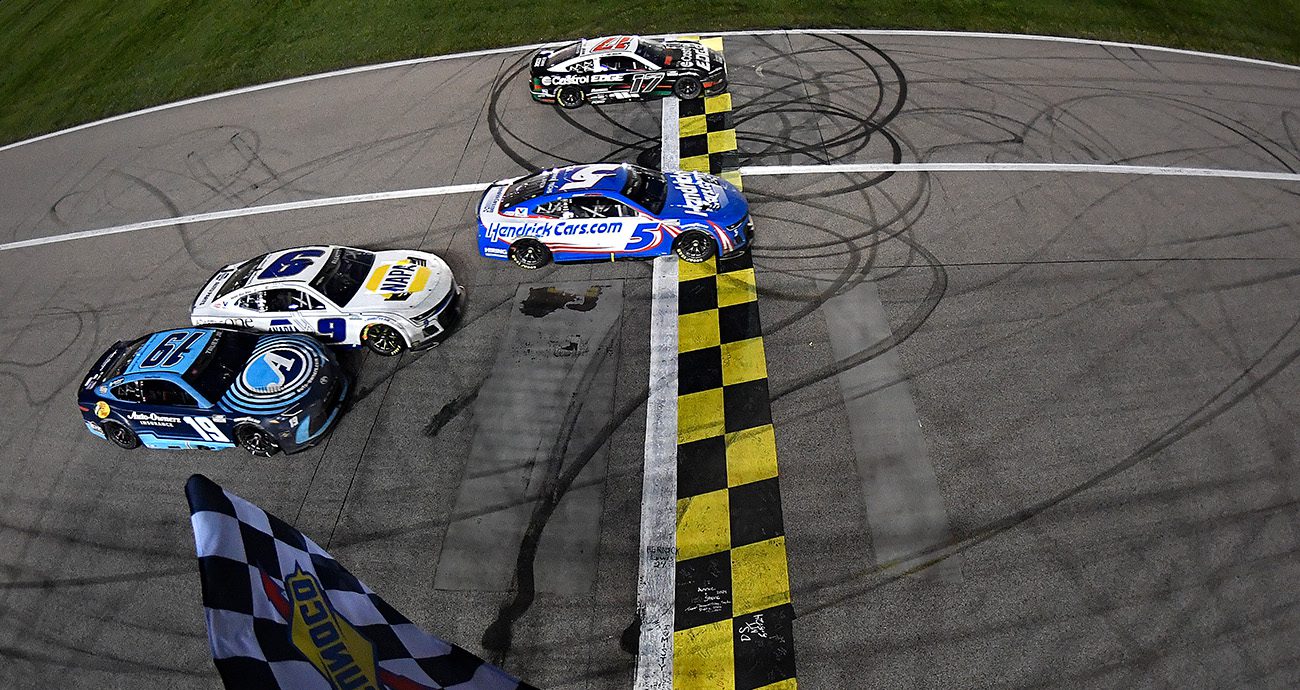
The oh-so-slim margin at the end of Sunday’s NASCAR Cup Series race at Kansas Speedway relied on a high-speed camera to determine that Kyle Larson had beaten Chris Buescher to the start/finish line by 0.001 seconds. The margin was the closest in the series’ history.

The same technology was used just one day earlier to decide horse racing’s crown jewel, the 150th Kentucky Derby, won by a nose by Mystik Dan. There, the winning speed was far slower — a lap average at 36.485 mph this year on the 1.25-mile Churchill Downs course — but the technical details used to capture what could be missed in a blink is no less complex.

RELATED: Closest finishes in Cup history | Larson lunges to Kansas victory

NASCAR uses a line-scan photo-finish camera and software system called FinishLynx, made by Massachusetts-based Lynx System Developers. FinishLynx has applications in a variety of motorsports series, including IndyCar, Formula 1 and MotoGP, and has also been used in cycling’s Tour de France and in track and field events.

The image from Sunday’s Cup Series finish showing Larson’s No. 5 Chevrolet just ahead of Buescher’s No. 17 Ford is a composite of thousands of tiny, vertical image slices from the start/finish line. When cars cross the line, the camera captures several thousands of precise, timestamped images per second to create the photo-finish result image. The camera is always on; the image-capture process is activated by the first sign of motion at the finish-line focus point — in this instance, the appearance of Larson’s front splitter breaking the plane to complete the final lap.

That composite image was made available shortly after the checkered flag to the NASCAR control tower, where race officials made the final ruling — per the camera. The finish was so close that timing and scoring data initially showed Buescher ahead because it fell within the transponders’ margin of error – a razor-thin 1.5 milliseconds.

The camera — which is set up each week in an empty, barricaded pit stall and aimed at the start/finish line on the frontstretch — is calibrated at least once daily during a race weekend. A separate camera is trained on the pit-road exit, and data from both is fed through the FinishLynx software, which has a primary and a backup. The semi-grainy feel to Sunday’s image quality, officials explained, was due to the nighttime finish and the longer distance from the camera’s location to the start/finish line across Kansas’ large patch of tri-oval infield grass. A daytime finish at, for instance, Martinsville Speedway — where the line is much closer to pit road — would be far clearer.

That focal point at the leading edge of the start/finish line cuts through any imperfections in the on-track line painting — which isn’t laser-measured by the grounds crew, and can include checkered-flag designs, track names and/or sponsor logos depending on the event. The physical start/finish line can also be altered by fans writing messages in that area during pre-race track access and the wear and tear of Goodyear rubber from a full field of stock cars crossing it hundreds of times. The camera’s line is the final judge.

WATCH: Larson wins by an eyelash in Kansas

The level of precision and speed of photo-finish technology wasn’t always the norm. The first Daytona 500 in 1959 wasn’t decided until days after the finish, when photographer T. Taylor Warren‘s single frame reversed the initial scoring decision, handing the victory to Lee Petty over Johnny Beauchamp.

A photo finish of the 1959 Daytona 500
NASCAR Research & Archives Center | Getty Images

Nearly 15 years later and back at Daytona, the only instance of a dead heat in Cup Series history took place in the contest for third place in the 1974 Firecracker 400. A more primitive high-speed camera system — 300 frames per second — was in place for the photo finish, which featured Buddy Baker’s No. 15 Ford racing door-to-door with Cale Yarborough’s No. 11 Chevrolet.

NASCAR Classics: Watch 1974 race action

In an account reported by Gary Long for the July 6 edition of the Miami Herald, the images took nearly 40 minutes to develop in the darkroom, but the small negatives that came out were inconclusive. Prints would be necessary, meaning another 30-minute wait that Baker and Yarborough spent trading good-natured barbs.

After a half-hour, along comes NASCAR President Bill France Jr. with a pile of photos. “Who got it?” he was asked. France replied with a laugh, “We can’t figure that out yet. It’s that close.”

They never did. The finish was ruled a tie, and officials pooled the third- and fourth-place prize money to split evenly — after an adjustment for contingency bonus awards — between Baker and Yarborough.

If such a deadlock happened in current-day NASCAR, even with more modern technology in the competition department’s hands, a tiebreaker system is in place to determine the finish. In the event of a dead heat, the higher finishing position is awarded to the driver who leads more laps. If that category does not settle the tie, the driver with the most laps spent in second place earns the tiebreak (then third place, fourth, and so on until the tie is broken).

TNT Sports and Amazon Prime announced Tuesday that Hall of Famer Dale Earnhardt Jr. will join their respective broadcast teams for coverage of NASCAR events starting in 2025.

Earnhardt will provide on-air analysis and commentary for the five NASCAR Cup Series races that TNT will broadcast during the summer months as part of NASCAR’s landmark media-rights deal announced last fall. Next season will mark NASCAR’s return to TNT for the first time since 2014, and the network will join FOX, NBC, Amazon and Warner Bros. Discovery as broadcast partners starting next year through 2031.

RELATED: Inside the historic media rights agreement

Earnhardt joined the NBC Sports broadcast booth in 2018, after his full-time career in the Cup Series concluded the previous year. The 15-time winner of NASCAR’s Most Popular Driver Award won 26 times during his Cup career, including two Daytona 500 triumphs. Earnhardt also won consecutive championships (1998-99) in the Xfinity Series, where he remains active as a team owner and occasional participant as a driver.

TNT also announced that Earnhardt will be a contributor for Bleacher Report’s social and digital platforms in partnership with his Dirty Mo Media productions company. The groups plan to launch a series of video interviews for select guests in ride-alongs with Earnhardt at the wheel during TNT’s five-race schedule.

“It is such an exciting time to welcome TNT Sports back to NASCAR,” Earnhardt Jr. said in a network release. “I remember watching the races on TNT back in the day, and it’s so nostalgic to see them return to the sport and to be a part of their team. I’m looking forward to joining their team and also getting the chance to work with Bleacher Report creating content that our fans will enjoy.”

TNT Sports indicated that more information about production, programming and on-air personnel “will be shared in the coming months.”

Turner Sports’ time in the sport dates back to 1983 with TBS, then known as SuperStation WTBS. NASCAR coverage shifted to sister network TNT in 2001.

Starting in 2025, Prime Video will exclusively stream five NASCAR Cup Series races following the FOX portion of the broadcast schedule. Prime Video will also present exclusive coverage of practice and qualifying for almost the entire first half of the NASCAR Cup Series season (excluding the Busch Light Clash, Daytona 500, Duel at Daytona, and NASCAR All-Star Race).

Prime Video will utilize in a number of capacities throughout its coverage, with specifics to be announced in the coming months.

“We are thrilled to welcome Dale as an official member of the Amazon family, and build our NASCAR coverage around him,” said Jared Stacy, Director of Global Live Sports Production, Prime Video. “One of the most beloved figures in racing history, Dale has an unrivaled passion for the sport. We are so excited for him to connect with NASCAR fans next season on Prime Video.”

For a complete list of compatible devices to stream NASCAR on Prime Video in 2025, visit amazon.com/howtostream.

Each of NASCAR’s national series will step back in time with Throwback Weekend at Darlington Raceway. From Trucks to the Cup Series, vehicles will be donning iconic motorsport paint schemes at the track ‘Too Tough to Tame.’ Once again, fans get to have their voices heard on which throwback scheme they think is best.

RELATED: 2024 Darlington throwback schemes

Voting is now open, and the rules are simple: Fans can vote up to five times per day using their email address. Be sure to vote for one throwback paint scheme per national series before voting closes. Remember, each series vote will close the morning of the series’ race day at 9 a.m. ET.

The winning schemes will earn bragging rights for the weekend and be awarded a ‘Best in Class’ trophy during pre-race ceremonies at Darlington.

Be sure to watch the Goodyear 400 this Sunday (3 p.m. ET, FS1, MRN Radio, Sirius XM NASCAR Radio).

KANSAS CITY, Kan. — To the 1.5-mile oval sitting in America’s heartland, the following is a love letter to you, the darling known as Kansas Speedway.

Somehow, some way, NASCAR racing at Kansas Speedway keeps getting better. But there may be no topping the action we were treated to Sunday.

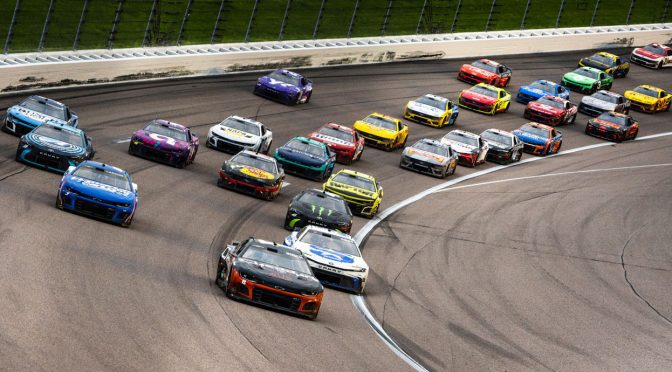
We were just witness to the closest margin of victory in NASCAR Cup Series history — a literal photo finish. Side-by-side racing from green flag to checkered. Two-wide, three-wide, four-wide, five-wide? You bet. Four cars across the checkered flag within 0.074 seconds of each other at an intermediate track.

What we were privileged to be privy to Sunday was an all-time classic that will etch Kyle Larson and Chris Buescher into NASCAR lore for eternity after No. 5 stole the win by 0.001 seconds, besting any of the tightest finishes the top level of stock-car racing has ever seen.

RELATED: Race results | At-track photos

“That race from start to finish was amazing,” Larson told FOX Sports after collecting the checkered. “That first stage was incredible. The second stage at the end was fun, and then that whole last stage with the wrecks and cautions and then fuel strategy and tires running long and all that was wild.

“You guys (the fans) got your money’s worth today, and I’m just proud to be a part of the show.”

And what a show it was. Drivers continuously crossed each other over, diving left and right to make moves and capitalize on the runs built from using different lanes around the track. Those battles ranged from the lead all the way back throughout the field — highlighted by exceptional, close-quarters racing between Larson and Ross Chastain in Stage 1.

“That was just incredible racing,” Larson said. “Way stressful racing for me, not really in the race, but that’s what you get with stages and stage points and a playoff on the line. You wouldn’t have seen us racing that hard (with a) previous era (of) points. So that was a lot of fun.

“I was obviously frustrated at myself — and I’m sure Cliff (Daniels, crew chief) was too — with how hard we were all racing, but when I got done with that stage, I gave Ross a big thumbs up, and we gave each other a big thumbs up under that caution because it was just fun, clean racing, and it was just a blast. It was that way, it felt like, the whole race.”

While Daniels was able to play a pivotal role in managing the adjustments needed for Larson’s car to perform, he was left as a spectator while his No. 5 Chevrolet darted through traffic in the fight for the win.

“It’s exciting and stressful, which is just what you want,” Daniels told NASCAR.com. “That’s what we want for the excitement in our sport. And with this car right now, I think the intermediate-style tracks are clearly far and above the best races that we produce.”

Cars race to the finish at Kansas.
Logan Riely | Getty Images

But why is Kansas continuing to deliver some of the best action — if not the best action — on the Cup Series schedule?

“I think there’s a lot more tools in the toolbox for the driver and the crew chief here,” Daniels said. “Air-pressure changes are sensitive; wedge and height changes are sensitive to the car; track position is very sensitive to the balance of the car; lanes can be very sensitive. Having the tools in the toolbox of the driver where he can change the inputs of the car and there’s a lot more that he can work with and really similar for the teams, I just think it opens up the options so much more to advance yourself or to kind of punish your tires and maybe punish yourself.”

There are also features about the track’s configuration, Larson added, that help contribute to the insane moves seen Sunday — like Buescher’s daring five-wide split up the middle while racing for second.

“I think from my perspective, it’s got grip, but it’s got progressive banking, so you kind of move your angles around and stuff,” Larson said. “The way this car is, you can get good drafts and all that. The leader is typically at a disadvantage, I feel like, on these mile-and-a-halfs because it seems as though you abuse your right-rear tire more, so it’s hard to get away. You’ve got the draft plus you’re abusing your tires more. So it just keeps the field bunched up. I think with the old car, we’d probably get out to like an eight-second lead here. The couple-second lead that I got in the second stage was as big as you’d probably see in the Next Gen era on a mile-and-a-half.

“It’s always been good, though. Even with the other car it was always a good track. I think a lot of it has to do with the progressive banking and how that kind of affects the handling of the car.”

RELATED: Classic Kansas races to relive

Denny Hamlin, a three-time winner this season, came home fifth, the first car behind the mad dash to the finish line off Turn 4 in overtime. Despite coming just short of what could have been a fourth victory of the year thanks to a late caution, Hamlin was enamored with what Kansas provided — especially after an hours-long rain delay dampened the early afternoon.

“I felt the racing was fantastic. This race track is just built for this car,” Hamlin said. “I mean, it’s one that you can move around and certainly make some moves when you need to. And so I’m really happy for the fans that stayed to get to see great finish like that. That’s what they stayed here for and glad we got to reward them with that.

“It’s just a perfect place for the Next Gen car because you can avoid the wake. We obviously can’t run behind each other, but this is a track where you can maneuver your car around and make speed. You know, I thought that even though we got put to the teens most of the day, we were able to drive back up to the front every single time.”

Sunday’s finish will live in NASCAR history forever. The beauty of it, though?

We get another trip to Kansas in the playoffs come September.

RELATED: Buy tickets for Sept. 29