Despite the Cup Series venturing into the unknown of the Chicago streets for the inaugural Grant Park 220, betting action – much of it sharp – came early and often at Las Vegas’ Westgate SuperBook, the first sportsbook each week to hang NASCAR odds.
“For a race that has no history behind it, I’m shocked at the action we’ve had so far,” Ed Salmons, the SuperBook’s vice president of risk management, said Tuesday of the bets the book had written across the eight states in which it operates.
Heading into the weekend, Chase Elliott sits atop the oddsboard, his familiar residence for road course races. A sharp bettor in Arizona played Elliott at Salmons’ +700 opener, prompting an adjustment to +500 before the No. 9 Chevrolet was nudged back up to +550.
Martin Truex Jr. and Tyler Reddick also drew early wagering interest, and professional money induced significant moves on the SuperBook oddsboard for Kyle Busch (from +1400 to +1000), AJ Allmendinger (+1400 to +900), and William Byron (+1600 to +1000).
“Then we’ve had some sprinkles on these [foreign] guys. Whenever they come over, it’s automatic, these people bet these guys. So they were betting this Shane van Gisbergen at 100-to-1, down to 60-to-1,” Salmons said
“Little bit of money on Jenson Button. Good luck. He was 200 (to 1), now he’s 100.”
Here is a partial list of drivers’ odds to win Sunday’s Chicago Street Race from three sportsbooks – the SuperBook and NASCAR partners Barstool at BetMGM:
DRIVER
SUPERBOOK
BETMGM
BARSTOOL
Chase Elliott
+550
+500
+600
Tyler Reddick
+700
+650
+700
Kyle Larson
+800
+800
+850
Martin Truex Jr.
+800
+700
+850
AJ Allmendinger
+900
+800
+1000
Kyle Busch
+1000
+1000
+1100
William Byron
+1000
+1200
+1400
Ross Chastain
+1800
+1200
+1400
Chris Buescher
+1800
+2200
+1800
Austin Cindric
+2000
+2000
+2500
Christopher Bell
+2500
+2500
+2000
Daniel Suárez
+2500
+2500
+2500
Michael McDowell
+3000
+2500
+2500
Denny Hamlin
+3000
+3000
+2500
Ty Gibbs
+3000
+4000
+4000
Joey Logano
+4000
+3500
+3000
Kevin Harvick
+4000
+4000
+3500
Does uncertainty translate into opportunity?
Some bettors are staying away from the Chicago Street Race (“I wouldn’t know where to begin,” says one pro gambler), or at least proceeding with caution (“my card will be much lighter on Sunday than typical races simply due to the lack of historical data,” said Action Network’s PJ Walsh).
Others see the uncertainty as opportunity.
“I’m very interested in [brand-new races on unique layouts],” said Blake Phillips, a sharp NASCAR bettor. “It’s really difficult for anybody to have a good expectation of what’s going to happen because none of these drivers have ever raced there before.
“The sportsbooks don’t know, either. So anytime there’s general uncertainty, your job as a bettor is not to be right, but to be a little bit less wrong than the sportsbooks. You have the advantage of being able to pick and choose; sportsbooks don’t. They have to hang a line for everything.”
While Phillips says he’ll place most of his action after he gathers information from Saturday’s qualifying and practice sessions, he does have a few drivers circled, including the favorite as a candidate to fade.
Elliott’s reputation as an excellent road course racer naturally leads to his short price – too short, in Phillips’ mind.
“When you’re putting so much emphasis on one driver, that creates value,” he said. “I just don’t see Chase Elliott dominating this weekend.
“It could happen, and I’m prepared to put my foot in my mouth, but I like to see these kinds of races where books are leaning so heavily on a driver that has a reputation,” Phillips continued, “because there’s a lot of opportunities for that to not pan out.”
Instead, Phillips, whose bread is buttered with matchup bets rather than in the outright market, is giving strong looks to drivers with the ability to adjust to the uncertainty. Joey Logano, Denny Hamlin, Kyle Busch, and Tyler Reddick are on his radar.
Salmons expects Sunday’s Grant Park 220 (5:30 p.m. ET, NBC, Peacock) to be a well-bet event because of several factors: top drivers with big potential payouts, the excitement of the inaugural Chicago Street Race, and its placement during a slow time on the sports calendar.
“I think this race will write decent money just because [bettors think they can get lucky on a longshot],” Salmons said, “and it’s pretty exciting running through a city like this.”
With the green flag dropping Sunday at 5 p.m. ET, the race doesn’t face much competition from other sports. Salmons witnessed something similar last weekend.
“The Nashville race started at 4:00 (in Vegas), 7:00 East Coast time. That was great for handle,” he said. “Two hours before the race, it was just nonstop NASCAR betting.”
With just one baseball game on, plus a USFL game, “NASCAR took the front-center stage as far as betting, which was great to see.”
Marcus DiNitto is Managing Editor at Gaming Today. He’s been covering sports business for 25 years and sports betting for 12. NASCAR is among the many sports Marcus enjoys betting but often loses on. Follow him on Twitter; do not bet his picks.
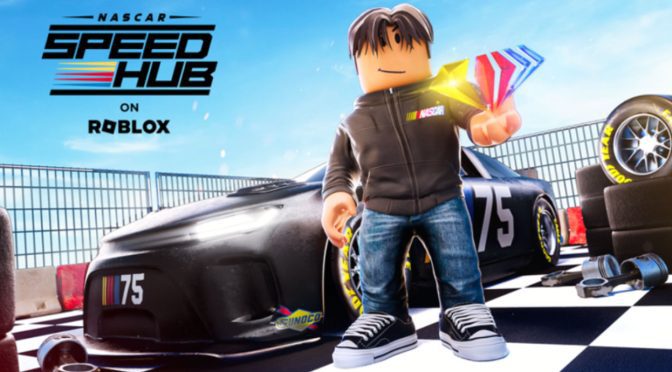
NASCAR unveiled the new NASCAR Chicago Speed Hub on Roblox Friday ahead of the inaugural NASCAR Cup Series street race on the Chicago Street Course this weekend.
The Chicago Speed Hub is a new, event-themed experience on the platform that replaces the original 75th Anniversary Speed Hub within the NASCAR Speed Hub experience on Roblox. The hub features a multitude of new and updated features and serves as a digital twin to celebrate the real 2.2-mile course through downtown Chicago that will host Xfinity Series and Cup Series events this weekend.
The map is designed as the Buckingham Fountain area of Chicago.
Players can walk or drive from the hub to the time trial, social driving area, or skyscraper car obstacle course.
Expanded car customization where players can design their cars using different colors, patterns, and numbers.
Leaderboards for best lap time, best obby time, longest burnout, most donuts, and legacy lap time.
Merch haulers featuring collectible UGC (avatar clothing items) for sale (price WIP).
Weekly collectible, limited UGC (avatar clothing items) that’s quest based to increase player engagement time.
Enjoy the thrills of the Roblox world and tune in to see the real-world stars hit the track in Chicago, culminating with the Cup Series’ main event, the Grant Park 220 on Sunday (5 p.m. ET, NBC, Peacock, MRN, SiriusXM NASCAR Radio, NBC Sports App).
It’s time to add to the NASCAR history books this weekend as the Cup Series makes its street-course debut in the Windy City.
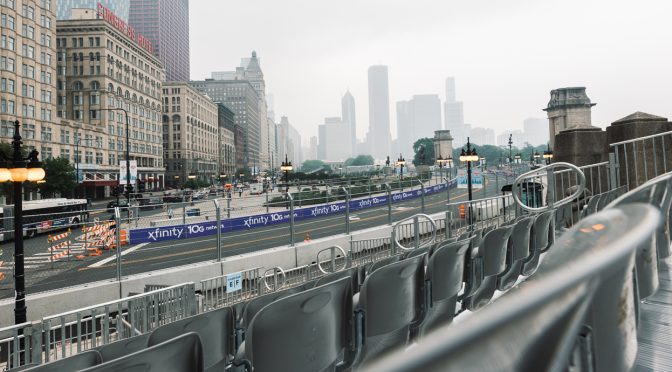
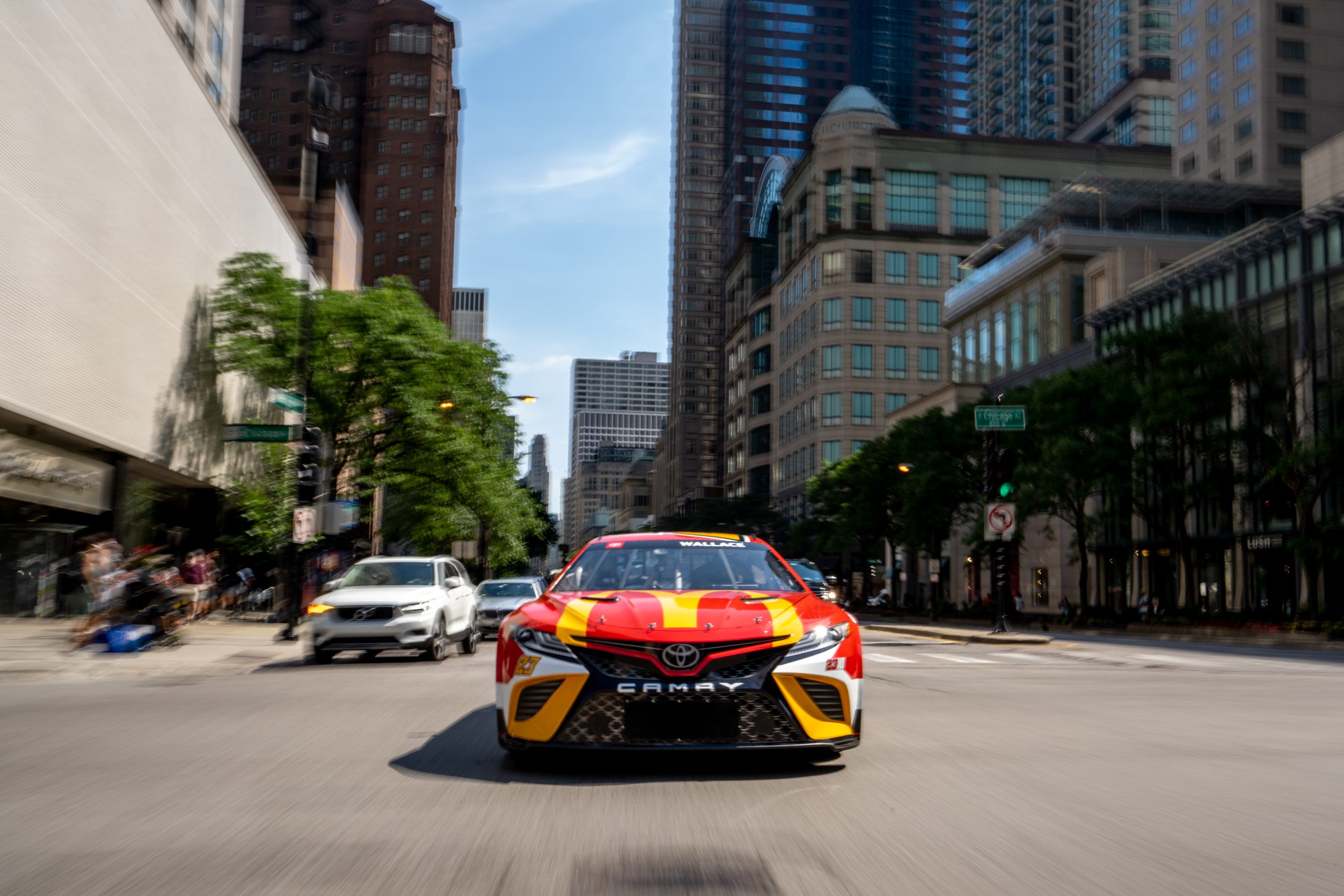
Nestled right in the heart of downtown Chicago, the 12-turn, 2.2-mile road course in Grant Park will introduce new fans to the sport and hardcore fans to a new style of racing. To help build up to Sunday’s race, there will be plenty to do at the track from attending concerts to visiting the free-to-the-public NASCAR Village at Butler Field.
Before a monumental weekend begins, check out some important info to get a taste of what to expect for Sunday’s Grant Park 220 (5 p.m. ET, NBC, Peacock, NBC Sports App, MRN, SiriusXM NASCAR Radio) with trends to watch, a look at each corner of the track, Goodyear tire notes and interactive ways to follow all of the action.
A first-time event means the potential for a first-time winner in 2023 and there are a plethora of road-course aces with street-course knowledge to break through.
Both Michael McDowell and AJ Allmendinger have competed in street-course events in different series. Both finished inside the top 10 just three weeks ago at Sonoma Raceway to build momentum into Chicago where they will run the same tire setup.
Rookie Ty Gibbs could be in play for his first career Cup Series win on Sunday. He showed his prowess on road courses in the Xfinity Series with three wins, which included outdueling 2021 Cup Series champion Kyle Larson last season.
Defending Cup Series champion Joey Logano has a knack for winning at debuting events in the Cup Series, grabbing the inaugural checkered flags at the Bristol Dirt, LA Coliseum and World Wide Technology Raceway.
NOTES ON SPOTTERS STANDS AND TRACK SERVICES EQUIPMENT ✍🏾
With drivers utilizing multiple spotters to help them navigate all 12 turns, there will be three locations where spotters will be stationed.
The primary spotters stand will be at the President’s Club where the start/finish line is located. There will be another stand in Turn 4 where the Big Bus Tour buses will be utilized and the third will be in Turn 11 where spotters will be perched on the balcony of the Chicago Symphony Center.
In the event cars crash on the course or stall due to a mechanical failure, Track Services equipment will be placed in Turns 2, 4, 7 and 12. Crashed vehicles would be recovered as normal, taken off in Turns 2, 4 and 12.
LOCAL CAUTION PROCEDURE/GEICO RESTART ZONE ⚠️
Local cautions will be implemented this weekend on the street course. A waving blue flag will indicate a local caution. This will inform drivers of a problem ahead such as debris, surface condition or incident. A waving yellow flag indicates a full-course caution and will correspond with the start/finish line flag.
The GEICO Restart Zone will be located just ahead of Turn 12 which precedes the main straightaway where the start/finish line is located.
📉 TRENDS TO WATCH 📈
— Nine races in 2023 were won by drivers 30 or younger but only three of the nine came in the last eight races
— Four of the last seven races of 2023 were won by drivers ending winless streaks of at least 33 races
— Toyota won both road-course races this season
— Ford only has two wins this season, tied for the fewest since 2010
(Via Racing Insights)
TURN-BY-TURN NAVIGATION 🗺️
• Start/Finish Line: On Columbus Drive, in front of Buckingham Fountain in Grant Park
◦ 940 feet toward Balbo Drive
• Turn 1: 90 degrees left on East Balbo Drive
◦ 900 feet towards DuSable Lake Shore Drive, with Museum Campus with Grant Park’s fields to the right
• Turn 2: 90 degrees right on DuSable Lake Shore Drive
◦ 1,350 feet on DuSable Lake Shore Drive with Lake Michigan on the left
• Turn 3: Slight right-hand curve staying on DuSable Lake Shore Drive
◦ 825 feet toward Roosevelt Road in front of the Field Museum at the Museum Campus
• Turn 4: 90 degrees right on East Roosevelt Road
◦ 375 feet toward Columbus Drive
• Turn 5: 90 degrees right on Columbus Drive, heading towards Balbo Drive
◦ 2,050 feet on Columbus Drive
• Turn 6: 90 degrees left on Balbo Drive
◦ 1,000 feet down Balbo Drive across a bridge over railroad tracks toward Michigan Avenue
• Turn 7: 90 degree Right on Michigan Avenue
◦ 500 feet on Michigan Avenue
• Turn 8: Right on Congress Plaza (street version of a chicane)
◦ Just over 500 feet toward Ida B. Wells Drive
• Turn 9: Middle of Congress Plaza Drive where it crosses over Ida B. Wells Drive
◦ Another 500 feet back to Michigan Avenue
• Turn 10: Right back on Michigan Avenue
◦ 475 feet toward E. Jackson Drive
• Turn 11: 90 degrees right on E. Jackson Drive back towards the lake adjacent to the Art Institute.
◦ 950 feet back to Columbus Drive and back across the railroad tracks
• Turn 12: 90 degree right on Columbus Drive
◦ 925 feet back down Columbus Drive to the S/F Line in front of the Buckingham Fountain
There will be no cautions at the end of the stages on Lap 20 and Lap 45. The rule first went into effect at Circuit of The Americas and will be implemented at all Cup Series road-course events along with any Craftsman Truck or Xfinity Series participating at the same road course as the Cup Series. Stage points will still be allocated as usual at the end of each stage.
The Cup Series will run the same Goodyear tire setup that was used at COTA and Sonoma Raceway earlier this season. Each team will receive two sets of tires for practice, one set for qualifying and an additional five for Sunday’s race.
In the event of a lost wheel that is contained to pit road, the offending team will be subject to a pass-through penalty under green-flag conditions. If the infraction occurs during a caution period, the offending team will restart at the tail end of the field.
If the wheel breaks free outside of pit road, the new rules guidelines mandate a two-lap penalty. Plus, a two-race suspension for two crew members. Each penalty is series-specific: Violations in one series will not impact those crew members’ eligibility to participate in other series.
Heading to the track this weekend? Make sure to download the NASCAR Tracks app to see times and locations for all the festivities taking place in Grant Park.
You’re not going to want to miss out on seeing The Black Crowes, The Chainsmokers, Miranda Lambert and more as they get the city ready ahead of two days of thrilling action.
FAN REWARDS 🫵
Fans can get in on the action all season long with NASCAR Fan Rewards, a free program that rewards fans for participating in the action when they watch races and play NASCAR Fantasy.
There’s no cost to join. Fans must be 18 years or older to participate in the program.
Earn points by checking into a race from home or at the track, setting your Fantasy Live lineup, making purchases on the NASCAR.com shop and more. Points can be redeemed for race tickets, merchandise and VIP experiences at the track, including pace car rides and waving the green flag at qualifying.
NASCAR Mobile has now added support for fans to “Follow the Race” and access live leaderboard and race information from Live Activities in the current app release (v13.2.0), available now. Android users, we didn’t forget you — the same functionality has been custom-built for Android devices, as well.
How to access Live Activities on iPhones:
Make sure your iOS device has been updated to 16.1 or higher.
Available on the leaderboard of all NASCAR Series races.
Click on the three-dot menu near the top right of screen.
Select “Follow the Race.”
Swipe up to access the home screen and you will see the Live Activities at the top.
Lock the device and you will see Live Activities on the Lock Screen.
To turn off, simply visit the leaderboard, click the three-dot menu and “Unfollow the Race.”
FANTASY LIVE 🏆
Want to manage a team and race your way to the top of the leaderboards? Check out NASCAR Fantasy Live, which is open now. The free-to-play game lets you choose your drivers each week and show off your crew-chief instincts by garaging a driver by the end of Stage 2, and there is a $25,000 prize for the winner.
Get additional camera views by logging on to NASCAR Drive, where each week, in-car cameras will be available.
NASCAR has partnered with LiveLike to add fan engagement to the NASCAR Mobile App. Log in to the mobile app during the race for polls, quizzes, the cheer meter and more — and see instant results from NASCAR fans like you.
SOPHIA, N.C. — Wednesday night marked the beginning of an unorthodox week for 2021 NASCAR Cup Series champion Kyle Larson.
After making his first Late Model Stock Car appearance in a decade at North Carolina’s Caraway Speedway, Larson is now turning his attention to the first street race in Cup Series history that will take place in downtown Chicago on Sunday afternoon.
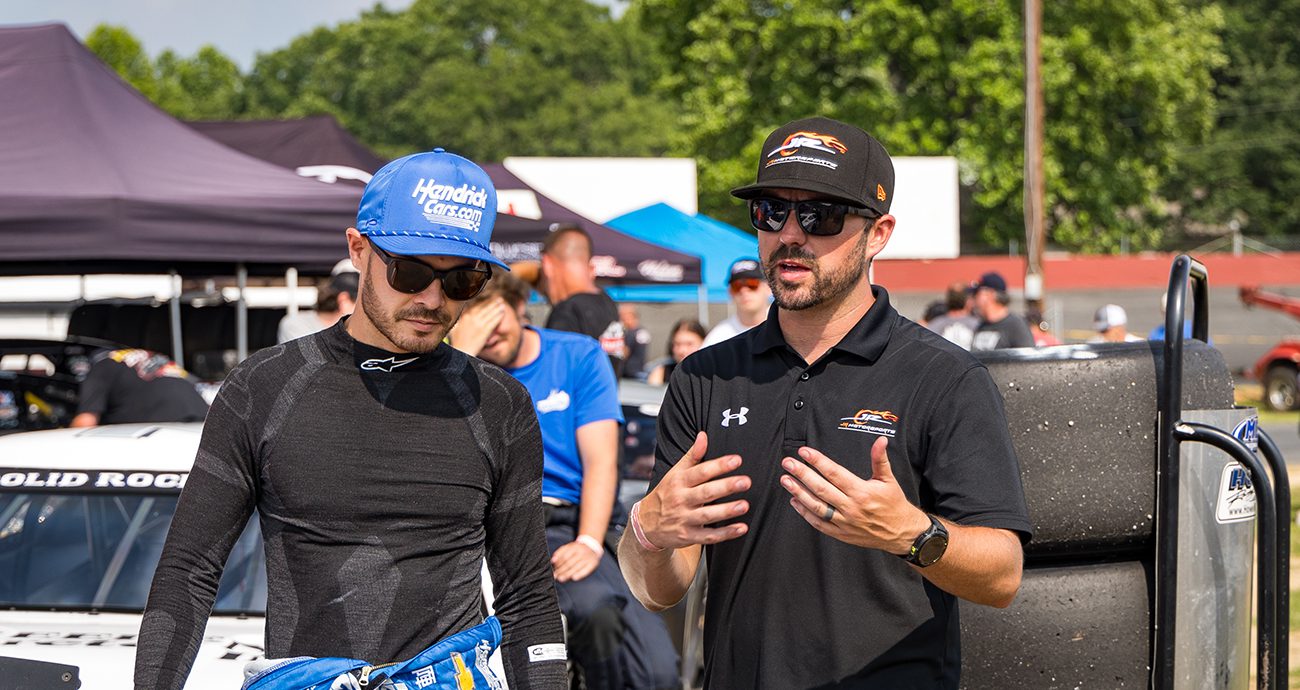
An eighth-place finish Wednesday in a car prepared by JR Motorsports helped Larson obtain the right mindset ahead of what is expected to be an unpredictable race at Chicago. It also provided him an appreciation for how much Late Model Stock racing has changed since 2013.
“It was honestly much more fun than I was expecting,” Larson said. “The cars were much quicker than what I remembered them being. Obviously, I would have liked to have done a little better, but I’m not a short-track racer. This style of racing has been difficult for me, and it showed against the guys who do this for a living.
“I figured if I got to eighth, I’d be good, and we got to eighth.”
Prior to Wednesday, Larson’s most recent Late Model Stock was in the 2013 Denny Hamlin Short Track Showdown at Richmond Raceway. In an all-star field consisting of Kyle Busch, Tony Stewart, Matt Kenseth and others, Larson placed 10th after starting in the same position.
When Dale Earnhardt Jr. asked Larson to run a second car for him at Caraway with Josh Berry as his crew chief, Larson immediately jumped at the opportunity. His goals for the race were to have fun, but also get re-acclimated to the people and cars in Late Model Stock racing.
Among the people helping Kyle Larson in his first Late Model Stock race since 2013 included 2020 NASCAR Advance Auto Parts Weekly Series champion Josh Berry, who served as his crew chief. (Photo: Susan Wong/NASCAR)
The one-day show at Caraway saw Larson gradually get more comfortable with his car. By the time the checkered flag waved, Larson had raced his way up from a 16th starting position into the top 10, beating established Late Model Stock drivers like Connor Hall and Landon Huffman.
Now that Caraway is behind him, Larson is turning his attention toward Chicago. Although he is used to balancing out busy itineraries, Larson admitted the two races on the docket this week are different with how much information and knowledge he must take in for each event.
“I jump from extreme to extreme almost every day of the week,” Larson said. “It’s not hard for me to switch my mindset and get ready [for Chicago]. I’ve never raced a street course, so there will be a lot of learning in that little practice we get. Hopefully our car is fast.”
Larson admitted to spending a little more than a couple hours in the simulator this week to prepare for Chicago, which is something he rarely does.
For Larson, a simulator can only replicate race conditions so much, especially with a course as tight and narrow as Chicago. Despite this, Larson said the laps he made in the simulator helped him figure out the corners and the slight elevation changes around the course.
Any new track on the Cup Series schedule serves as an equalizer for Larson and the rest of the field. There are many unknowns for everyone about Chicago as Sunday approaches, but Larson is determined to be the first driver to claim a Cup Series race on a street circuit.
“Everybody is on an even playing field,” Larson said. “Obviously it’d be very neat [to win on Sunday]. I’m excited for the opportunity to race on a street circuit in the NASCAR Cup Series. All of us would love to get that win.”
Hundreds of fans arrived at Caraway Speedway on Wednesday to watch Kyle Larson, who now turns his attention to the Chicago Street Course. (Photo: Susan Wong/NASCAR)
With so much going into executing a clean race at Chicago, Wednesday’s CARS Tour race served as similar-but-different territory for Larson.
A packed house descended into the foothills of Asheboro, North Carolina to see whether one of the most accomplished drivers of the current decade could defeat many of the best Late Model Stock competitors racing in the southeast.
Even though Larson wished to depart Caraway with another victory on his storied resume, he enjoyed the challenge that came with Late Model Stock racing and being able to lean on both Berry and Earnhardt Jr. for advice on how to get the most out of his car.
Should an opening in his hectic schedule arrive, Larson did not rule out a potential return to Late Model Stocks soon.
“Potentially, but who knows?” Larson said. “This [race at Caraway] obviously worked out because it was a good week and close to home, so that makes things a lot easier. I’ve never even looked at a Late Model [Stock] schedule before, so I don’t even know what else is out there.”
Until that day arrives, Larson is keeping his focus on earning a second Cup Series title. He will look to build momentum for that championship run by closing out his busy week with a victory on the streets of Chicago.
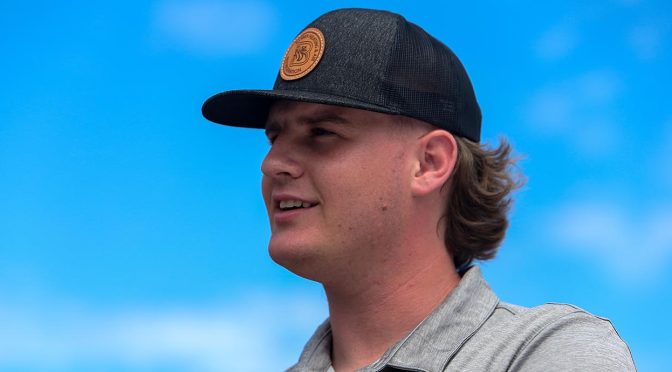
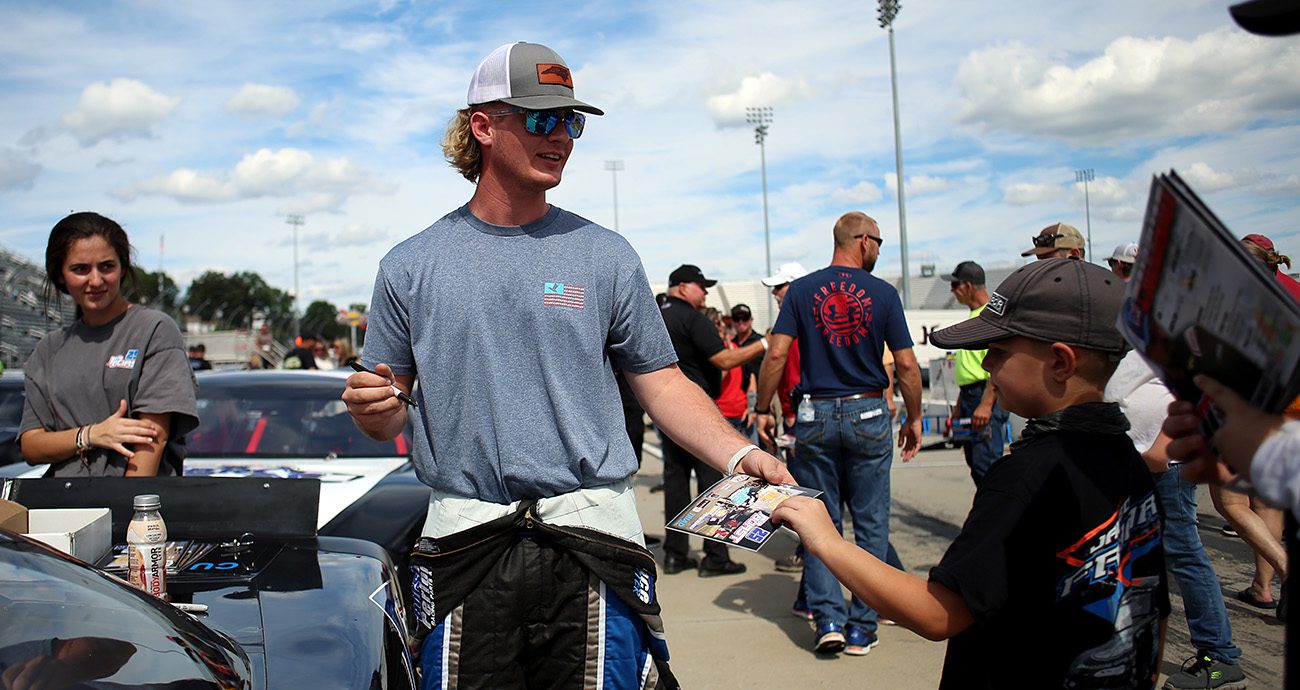
When the checkered flag flew to end the 2022 Thunder Road Harley-Davidson 200 at Virginia’s South Boston Speedway, everyone in attendance knew who Jacob Borst was.
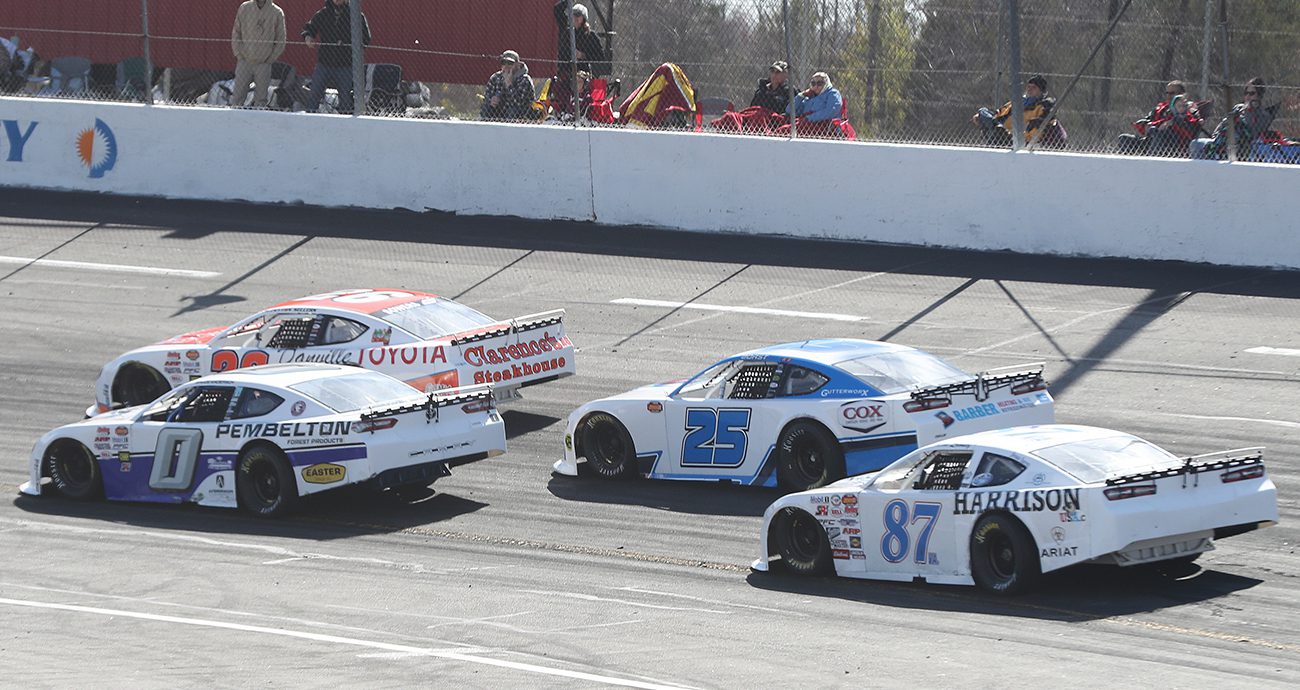
Heim won. Borst took second. Both left South Boston with damaged cars.
The last-lap crash was the only negative on a stellar weekend for Borst. He had already won twice at South Boston in 2022 entering the track’s crown jewel race and was thrilled to have race-winning speed against such a tough field.
“It was a very big deal for us,” Borst said. “The week before, we came across the [finish] line side-by-side with Peyton [Sellers], and were on the winning end. For [the Thunder Road Harley-Davidson 200], we were on the losing end, but to finish second with 40 other really good cars definitely boosted our conference for the rest of the year.”
With limited resources at their disposal, for Borst and his family, being able to race a Pulliam car for the win in the Thunder Road Harley-Davidson 200 was far from an easy journey.
Borst developed his craft and earned respect from other drivers racing quarter-midgets in the early 2010s. The on-track results gradually improved, and at the end of 2015, he finished second nationally in his age group to NASCAR Craftsman Truck Series driver Carson Hocevar.
Borst a few years later fulfilled a childhood dream of running a full-bodied stock car at South Boston. As the wins kept piling in for Borst in the Limited Sportsman division, it only made sense for him to test his luck in South Boston’s storied Late Model Stock class.
Track regulars like six-time champion Peyton Sellers only helped Borst refine his driving style and build morale in a Late Model Stock. For Borst, the key component behind the success so far is the dedication displayed by his small team every weekend.
That quality is essential given the competitive depth in South Boston’s Late Model Stock class.
“One thing that’s really big about South Boston is there are a lot of good cars,” Borst said. “South Boston still does pretty good with its car count, so even if there are only 16 cars, there’s about 14 you can put money on to win the race. It’s really competitive, which means you can have the faster car and still not win the race.
“You can’t make a mistake, and when other people do, you have to attack.”
Among the names Jacob Worst has to battle weekly at South Boston Speedway include Mike Looney and six-time champion Peyton Sellers. (Photo: Joe Chandler/South Boston Speedway)
Waiting for the right opportunity is what enabled Borst to pull alongside Heim in the final lap of last year’s Thunder Road Harley-Davidson 200.
Having tailed Heim for nearly the entire race, Borst felt his car was much better on the long run. Despite this, an onslaught of cautions over the final 50 laps meant the race would be decided on a short run, which gave Heim the advantage.
Borst did not let the race-ending circumstances deter him. He applied pressure to Heim’s back bumper, resulting in the latter getting loose in Turn 3 on the last lap. With Heim now having the preferred top line, Borst had no intention of surrendering on the bottom as he saw the checkered in his line of sight.
The resulting outcome was not one Borst had wanted. He was left to drive his battered No. 25 back to pit lane all while being confronted by members of Pulliam’s crew eager to figure out why Heim and Borst came together on the frontstretch.
Borst understood the anger Pulliam’s crew members felt, as he also had to fix the damage his car sustained from the last lap crash. He added any driver in his situation would have done something similar if it meant winning a Late Model Stock crown jewel.
“It’s just one of those things with racing,” Borst said. “Everybody is heated, and everyone is in the moment. They were frustrated, but it was a racing accident, and you can’t let that set you back. You have to move forward and take something from [the situation].”
Jacob Borst has already built a strong reputation at South Boston Speedway and will look to add a Thunder Road Harley-Davidson 200 win to his growing resume. (Photo: Veasey Conway/NASCAR)
Borst is bringing the same car that slid across the start-finish line sideways in last year’s Thunder Road Harley-Davidson 200 to South Boston on Saturday. Although he is confident about his chances, Borst is approaching this year’s race as a fresh start to his 2023 season.
Through 12 races, Borst has yet to find Victory Lane in a Late Model Stock at South Boston. Slight changes to the setup have yielded mixed results for Borst, who is hoping to tally his first win soon to build momentum against Sellers and Carter Langley for the track championship.
Earning a win in Saturday’s Thunder Road Harley-Davidson 200 would not only give Borst a much-needed jolt, but also validate the hard work put into his program since he started racing Late Model Stocks full-time at South Boston in 2021.
After coming so close to his first crown jewel win, Borst is determined to avenge his near-miss and best all the funded teams entered in this year’s Thunder Road Harley-Davidson 200.
“I play back in my head what I could have done differently last year,” Borst said. “[The Thunder Road Harley-Davidson 200] would definitely be my biggest win. All of us would be jacked up over it for a while, but there’s a lot of good drivers who haven’t won at South Boston, let alone this race. We’re just going to go out there and try our best.”
Making the most with minimal funding has helped Borst and his family become ingrained in South Boston’s vibrant culture that has featured so many notable names like Pulliam, Sellers, Philip Morris, Jack Ingram, Ray Hendrick and many more.
Borst would forever be immortalized amongst the South Boston greats should he improve upon his finish in the track’s most cherished event by one position on Saturday.
Only race-winning cars deserve nicknames, and its owners dubbed this one the “Chicago car.” Emblazoned with a “5” on its side, it featured a two-cylinder engine, a control arm instead of a steering wheel, rear tires considerably larger than the front and no roof, doors or safety features.
On Nov. 28, 1895 — Thanksgiving morning — an inventor named Frank Duryea sat in the Chicago car in Chicago’s Jackson Park and hoped to drive his way into history. At 8:55 a.m., a man named Judge Kimball yelled “go,” and at that command, Duryea, sitting on the right side of the car, used a combination of governor and hand control to engage the 1.75 horsepower his engine generated. The Chicago car’s tires found traction, the car inched across the starting line, and at that precise moment, automobile racing was born in the United States.
On a blustery, snowy and cold day in Chicago, the first automobile race in U.S. history played out like a slow-motion cross between Keystone Kops, Cannonball Run and Little Rascals. The race had weather problems, scheduling problems, route problems and inspection problems. It featured boys throwing snowballs at the cars, arcane rules and annoyed race officials. The result sparked a family feud that lasted decades.
Dozens of cars signed up, but only six showed up. Only two of those finished, and one of those drivers was so cold and tired he passed out before the race ended, which forced an umpire assigned to his car to coax it across the finish line. Despite all that, the importance of that first race reverberates today, 128 years later, as one of the most significant days in the history of transportation.
“We had opened a new era,” wrote Charles Duryea, Frank’s brother, after the Chicago car won the race. “We had set forth a new type of vehicle.”
Lest you think that’s Victory Lane bravado, this is how automotive historian Richard Scharchburg put it: “More than any other event in the world, (it) opened the door for the automobile age.”
New era!
New vehicle!
Opened the door for the automobile age!
And you thought NASCAR’s first-ever street race in Chicago this weekend was mad-hyped.
• • •
One day in May, 1895, H.H. Kohlsaat, the owner of the Chicago Times-Herald, was lounging at the Chicago Club when he picked up a French magazine. It contained an account of an automobile race from Paris to Bordeaux. The story inspired Kohlsaat — why not hold a race in Chicago? His newspaper could publicize it, fund prize money and seize on interest in these newfangled horseless carriages.
However bold Kohlsaat’s idea was in 1895, holding a NASCAR race in the streets of downtown Chicago in 2023 rivals it. Like Charles Duryea 128 years ago, NASCAR sees the Chicago Street Race as opening a new era. NASCAR has never tried anything like this and has cast this weekend’s Grant Park 220 as an attempt to rethink, reimagine and reinvent the race-day experience from a driver, fan and broadcast perspective.
The sport tabbed Julie Giese, who oversaw a massive renovation project at Phoenix, to run it. She moved to Chicago, hired a staff of more than a dozen and relishes the opportunity to make history with the races this year. “I enjoy building things from the ground up,” she says. “I like blank sheets of paper.”
Kaela Swanson | NASCAR Studios
This weekend’s course covers a very small portion of the course run in 1895, a happy coincidence NASCAR found out about after plotting the track. The 1895 race was one lap, to Evanston and back. This race will be 100 laps on a 2.2-mile course on some of the most famous real estate in the country. “The footprint that we’re racing on is so iconic,” Giese says.
The cars will scream across Michigan Avenue (just like in 1895 only 100-plus miles per hour faster) and barrel over Lake Shore Drive within shouting distance of Lake Michigan. The views — from the cockpit, grandstand, pit road, concourse and everywhere else — will be unlike anything in the history of the sport.
“It’s our 75th year. I think it’s hard to find things where you’re able to say you’re doing it for the first time,” Giese says. “And so I think unprecedented is a good word for what we’re doing.”
That was a good word for what happened in Chicago in 1895, too.
That race was postponed repeatedly because there weren’t enough cars available, perhaps giving rise to the old joke that the first car race was held five minutes after the second car was built. Finally, Kohlsaat confirmed Thanksgiving as race day. Plenty of cars were ready by then, which, as it turns out, was not necessarily good news. As Cord Scott, writing in Journal of the Illinois State Historical Society, put it: “The twenty-eighth of November was the worst possible day for an automobile race.”
A report of the first race from the Nov. 29, 1895, issue of The Dispatch.
Heavy snow blanketed the streets. Snow tires had not been invented yet, nor had radar, over-caffeinated meteorologists, red flags or weather delays. There was also this: The streets were open just like any other day, and “it was not uncommon for overworked horses to drop dead in the streets,” Scott wrote. “The carcasses then had to be hauled off by other horses before they caused hygiene and odor problems.”
If the race cars avoided dead horses, they had to contend with live people. Chicagoans who braved the cold to go outside in the snow saw no need to yield to the competitors, if they even knew they were competitors, which they probably didn’t because there had never been a race in America so how would anyone know what a race car driver looked like?
Most of the cars had little to no brakes. So these men who had zero experience racing were driving cars with primitive steering … and little to no brakes … while boys threw snowballs at them … on snow-covered and deeply rutted roads … that might have had dead horses on them and definitely had live people on them.
And you thought the way the surface at Darlington eats tires made races interesting.
• • •
As Charles and Frank Duryea traveled to the starting line, they passed a competitor who had been stuck in the snow for 20 minutes. They wondered if their own vehicle would make it there. It’s hard enough to drive in snow and slush now. In 1895, it was almost impossible. Making matters worse, the Duryeas realized their steering wasn’t working properly. “So we simply trusted to luck and tried to forget that our steering was not all right,” Charles wrote.
Along with no steering, they had no clue what would happen in the race. There’s more than a little uncertainty going into this weekend’s race, too. This is as unpredictable of an event as NASCAR has ever had, and that’s saying something, because NASCAR has made a habit lately of creating tracks where there didn’t use to be one (the Los Angeles Memorial Coliseum), cobbling one track out of two (Charlotte’s Roval, the Daytona Road Course) and racing on a new surface at an old track (Bristol dirt).
“In the last few years, NASCAR really has been pushing their boundaries,” says Ken Martin, the director of historical content for NASCAR. “What we see with the development of Chicago can have a big impact on some of the directions we may go in the future.”
It’s anybody’s guess what we’ll see. As Eric Warren, GM’s executive director of global motorsports competition, put it, nobody will have even driven the course in a rental car before it opens Saturday morning. If NASCAR’s scheduling operating principle lately has been, “what the hell, let’s try it,” the race in Chicago takes that to a whole new level.
“The venue is going to be pretty unique,” Warren says with more than a little understatement. “We kind of know the layout, there’s some simulation kind of getting made up. But it’s public streets. People are going to make some choices, let’s say, as far as how you run the suspension, how you deal the aerodynamics, not really, truly knowing how rough the track is going to be.”
At least there won’t be any people on the track.
Or snow.
Or boys throwing snowballs.
“I think it’s going to be a little bit of a mystery who’s going to be successful there,” Warren said.
At least it’s clear how they’ll be successful: By careening into corners, waiting until the last possible second to brake and executing breathtaking side-by-side passes.
None of that happened in 1895.
Side-by-side racing had not been invented and was not invented on that day. Apparently organizers deemed it a terrible idea. A staggered start kept the cars separate and the rules called for a slower car to yield when a faster car approached. “In no case may two vehicles move along abreast of each other,” the rules said.
Even with those rules, wrecks marred the day. Driver Jerry O’Connor withdrew after three of them, all of which involved (live) horses, and none of which included fellow competitors, unless you include Frederick Haas, who had already withdrawn from the race and happened to be in a horse-drawn sleigh O’Connor bashed into. O’Connor probably would have hit the pace car, too, only it hadn’t been invented yet.
An umpire rode shotgun in every car, proof that fear of cheating in racing is even older than actual cheating in racing. As one writer put it, team owners feared “invention pirates” would steal their designs before they could perfect and patent them.
Decades later, Frank Duryea described the race in a short book called America’s First Automobile. He wrote that he made two unscheduled pit stops, not that anybody knew to call them that yet. In the first, he stopped at a blacksmith’s shop to fix the steering arm, which had broken off when the left front wheel hit a rut, a problem foreshadowed on their way to the starting line.
In the second, one of the engine’s two cylinders stopped firing. “I put the machine in low gear and with one cylinder operating, drove on until a tinsmith’s shop was sighted. It being a holiday, the shop was closed and the smith asleep at home,” he wrote. “Mr. White (his umpire) and I got him up and induced him to open the shop.”
Frank Duryea spent 55 minutes fixing the problem. From there, he motored on to the finish line … except for the four minutes he spent waiting for a passing train. (Giese on the possibility of a train delay this weekend: “Nope,” she said with a laugh. “Not here.”)
He returned to Jackson Park at 7:18 p.m. He had covered the 53.5-mile route in 10 hours and 23 minutes, for an average speed of slightly more than 5 miles per hour. But if you take out the three hours he spent making repairs, getting lost (!), etc., the average speed topped 7 miles per hour.
Oscar Mueller entered the only other vehicle to finish. When it pulled into Jackson Park, Mueller was no longer driving. His umpire, Charles King, was. King steered with one hand and used the other to prop up Miller, who had passed out due to cold and exhaustion.
King crossed the line 95 minutes after Frank Duryea.
When whoever wins this weekend’s race crosses the start/finish line, his victorious moment will be viewed live by millions of people around the world. He will do an epic burnout (hopefully). NBC will beam his post-race interview into space, where it will hit a satellite and bounce back to living rooms, bars, computers, etc. His adoring team will douse him with champagne. And thousands of fans will salute his victory in person.
Just like in 1895.
Or not. Scotti Cohn, in her book It Happened in Chicago, quoted the Chicago Tribune: “The judges had become disgusted and quit, and no one witnessed the finish but two reporters.”
Frank Duryea’s one-lap dash for glory brought him fame, a fat paycheck ($72,000 in today’s money) and a strained relationship with his brother, Charles, over who deserved credit for building the car.
There seems to be no doubt that building an engine was initially Charles’ idea, nor that the two collaborated early on. But Frank and Charles disagreed about who designed and built the winning car — the Chicago car. Whichever brother deserves however much credit, the Duryeas’ place in automotive history stands secure. Wrote Scharchburg, the historian: “They justly deserve titles of father of the American automobile industry.”
Unwilling to share that title, they feuded for the rest of their lives.
And you thought drivers held long grudges against Ross Chastain.
Sources: H.H. Kohlsaat, the owner of the Chicago Times-Herald, who proposed the race and wrote about it years later in the Saturday Evening Post; Frank Duryea, who won it and wrote a short book about the race and said it was he, not his brother, who deserved the credit; Cord Scott, an historian writing in Journal of the Illinois State Historical Society; and other contemporary and historical accounts, including in Sports Illustrated, the Smithsonian Magazine and It Happened in Chicago by Scotti Cohn.
In a fast-growing industry like crypto, it can feel like a race to keep up. Olliv by CoinFlip is revolutionizing the industry by finally creating a seamless experience for everyday people. The company is revving up its engines with a $1 million giveaway to help onboard the next million users and bring the power of crypto to NASCAR fans.
Olliv by CoinFlip, a Chicago-based fintech leader, is an Official Partner of the inaugural Chicago Street Race. The first 100,000 Olliv by CoinFlip users who and complete a transaction will receive $10 in bitcoin on the platform.
Simplicity is woven into the company’s entire suite of services including its new self-custody-powered crypto platform, 24/7 award-winning customer support, personalized Order Desk, physical ATMs, and its in-person Customer Experience Center (CEC). On April 26, the company announced the launch of “Olliv” a self-custody powered crypto platform that aims to provide a frictionless way for consumers to buy, sell, send, receive and swap assets.
“We’re here to help demystify cryptocurrency, create an inviting community for everyone, and serve as a trusted resource every step of the way. Regardless of your financial knowledge or background, everyone deserves to participate in the new digital economy,” said Ben Weiss, CEO and co-founder. “We’re always looking for innovative solutions for everyday people. We are confident our self-custodial model, a key value of CoinFlip’s business since inception, will pave the path for a significant and much-needed shift in the industry. We look forward to continued growth and innovation in the coming year as we race one mile closer to on-ramping the next generation of crypto investors.”
Olliv by CoinFlip is a next-generation financial services platform powered by cryptocurrency. With more than 4,500 machines across 49 states, Puerto Rico, Canada and Australia, Olliv by CoinFlip leverages its network of Bitcoin ATMs to bridge the gap between physical and digital currency.
The NASCAR Cup Series will hit the Chicago streets for the Grant Park 220 on July 2 (5 p.m. ET, NBC, Peacock, MRN, SiriusXM NASCAR Radio, NBC Sports App).
As an event partner, Olliv by CoinFlip will have official presenting, marketing and promotional rights for the Chicago Street Race Weekend, including the NASCAR Cup Series’ Grant Park 220 and NASCAR Xfinity Series’ The Loop 121 races.
The National Motorsports Appeals Panel upheld an L1-level penalty that NASCAR levied against the No. 43 Legacy Motor Club team on June 7 after the Cup Series race at Worldwide Technology Raceway. The car, driven by Erik Jones, was found to have a modified greenhouse in post-race inspection.
The penalties issued were the loss of 60 championship points and five playoff points for the driver and owner and a $75,000 fine and two-race suspension for crew chief Dave Elenz.
In reaching the decision, the panel provided the following explanation: “The penalty was consistent with previously assessed penalties for similar situations. The rule book is clear that teams are not allowed to modify single-source parts, and therefore the penalty was upheld.”
The Appeals Panel members for this hearing were: Mr. Chuck Deery, Mr. Dixon Johnston and Ms. Cathy Rice.
Per the NASCAR entry list, Danny Efland will be atop the pit box as interim crew chief for Jones and the No. 43 Chevrolet this weekend in the Chicago Street Race (Sunday, 5 p.m., NBC, Peacock, MRN, SiriusXM NASCAR Radio, NBC Sports App). The team has not announced any plans to appeal the decision of the National Motorsports Appeals Panel but maintains the right to appeal to the National Motorsports Final Appeals Officer in accordance with the NASCAR Rule Book.
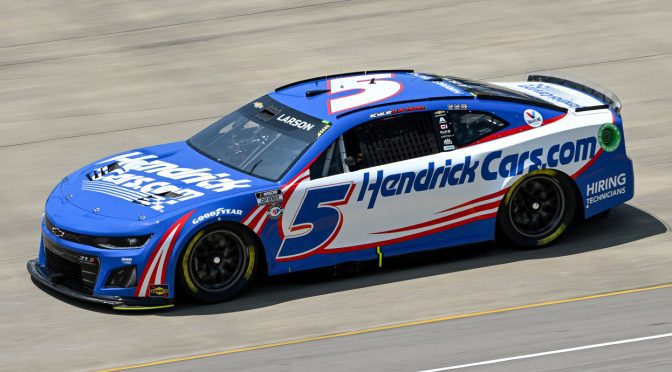
Kyle Larson’s pit crew ripped the quickest pit stop of the NASCAR Cup Series trip to Nashville Superspeedway on Sunday and one of the fastest of the season — just in time for the summer stretch.
Larson’s No. 5 Hendrick Motorsports crew of front changer Blaine Anderson, tire carrier RJ Barnette, rear changer Calvin Teague, jackman Brandon Johnson and fueler Brandon Harder completed a four-tire pit stop in 9.281 seconds, the second-quickest stop of 2023.
The stunning speed resembles a growing trend through pit lane: Teams are only getting faster as summer heats up. Kyle Busch’s No. 8 Richard Childress Racing crew of front changer Bryan Backus, tire carrier Lamar Neal, rear changer Marcus Horton, jackman Josh Sobecki and fueler Justin White turned in a series-best stop of 9.185 seconds on June 11 at Sonoma Raceway.
In fact, five of the top eight four-tire stops this season have been performed in just the past two races, with Austin Cindric’s third-best stop at Sonoma, Daniel Suárez’s fifth-fastest at Nashville and William Byron’s eighth-quickest at Nashville joining Larson and Busch.
Crews will need to maintain their quick work in the inaugural Chicago Street Race on Sunday (5 p.m. ET, NBC, Peacock, MRN, SiriusXM NASCAR Radio, NBC Sports App), a 2.2-mile street course that will see cars pitted with the right side nearest pit wall, opposite of the typical week-to-week stop.
See below to analyze additional pit-road statistics through last weekend’s race at Nashville, courtesy of Racing Insights.
The third season of “Dinner Drive With Kyle Petty” is set for a Thursday release, and true to form, the lineup of special guests is full of celebrities from different parts of the sports and entertainment realms. For the season premiere, Petty didn’t stray far from his NASCAR roots, hosting one of the Cup Series’ biggest stars in Kyle Busch.
The show — which features Petty’s homespun interviews, blending cars, meals and conversation — returns Thursday at 10 p.m. ET on the Nashville-based Circle Network. Busch is the latest stock-car star to lead off the season, following Dale Earnhardt Jr. (2021) and Jeff Gordon (2022).
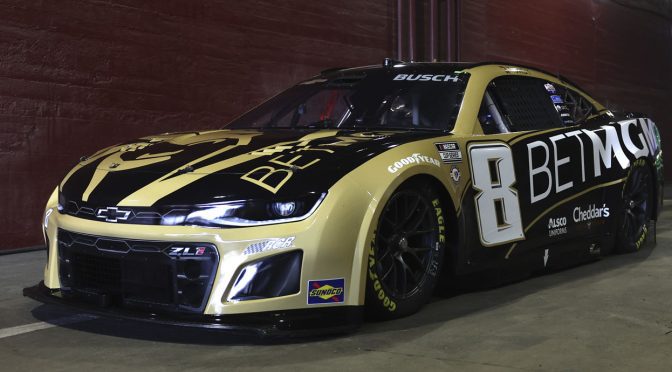
Busch brought out his 1969 Chevrolet Camaro for his ride with Petty, and the two convened at Cheddar’s Scratch Kitchen — a sponsor of his No. 8 Chevy in the Cup Series and a presenting backer of the show. The two discussed family, his thoughts on racing, and how his first year in the Richard Childress Racing organization has progressed.
“I’m thrilled to be back for Season 3 of ‘Dinner Drive,’ ” Petty said. “It’s always a treat to sit down with some of the most interesting people in entertainment and sports and pick their brains about their careers and experiences. Thank you to Circle Network for bringing me back for another season!”
In all, a dozen 30-minute episodes are packed into the season. Comedians John Crist and Bill Engvall are among the special guests from the entertainment world, and Baseball Hall of Famer George Brett and former NBA player Tyrone “Muggsy” Bogues also join in. Petty also plays host to a trio of former NFL greats who transitioned to the broadcasting booth — Terry Bradshaw, Mike Golic and Greg Olsen.