Only race-winning cars deserve nicknames, and its owners dubbed this one the “Chicago car.” Emblazoned with a “5” on its side, it featured a two-cylinder engine, a control arm instead of a steering wheel, rear tires considerably larger than the front and no roof, doors or safety features.

On Nov. 28, 1895 — Thanksgiving morning — an inventor named Frank Duryea sat in the Chicago car in Chicago’s Jackson Park and hoped to drive his way into history. At 8:55 a.m., a man named Judge Kimball yelled “go,” and at that command, Duryea, sitting on the right side of the car, used a combination of governor and hand control to engage the 1.75 horsepower his engine generated. The Chicago car’s tires found traction, the car inched across the starting line, and at that precise moment, automobile racing was born in the United States.

On a blustery, snowy and cold day in Chicago, the first automobile race in U.S. history played out like a slow-motion cross between Keystone Kops, Cannonball Run and Little Rascals. The race had weather problems, scheduling problems, route problems and inspection problems. It featured boys throwing snowballs at the cars, arcane rules and annoyed race officials. The result sparked a family feud that lasted decades.

Dozens of cars signed up, but only six showed up. Only two of those finished, and one of those drivers was so cold and tired he passed out before the race ended, which forced an umpire assigned to his car to coax it across the finish line. Despite all that, the importance of that first race reverberates today, 128 years later, as one of the most significant days in the history of transportation.

“We had opened a new era,” wrote Charles Duryea, Frank’s brother, after the Chicago car won the race. “We had set forth a new type of vehicle.”

Lest you think that’s Victory Lane bravado, this is how automotive historian Richard Scharchburg put it: “More than any other event in the world, (it) opened the door for the automobile age.”

New era!

New vehicle!

Opened the door for the automobile age!

And you thought NASCAR’s first-ever street race in Chicago this weekend was mad-hyped.

•  •  •

One day in May, 1895, H.H. Kohlsaat, the owner of the Chicago Times-Herald, was lounging at the Chicago Club when he picked up a French magazine. It contained an account of an automobile race from Paris to Bordeaux. The story inspired Kohlsaat — why not hold a race in Chicago? His newspaper could publicize it, fund prize money and seize on interest in these newfangled horseless carriages.

However bold Kohlsaat’s idea was in 1895, holding a NASCAR race in the streets of downtown Chicago in 2023 rivals it. Like Charles Duryea 128 years ago, NASCAR sees the Chicago Street Race as opening a new era. NASCAR has never tried anything like this and has cast this weekend’s Grant Park 220 as an attempt to rethink, reimagine and reinvent the race-day experience from a driver, fan and broadcast perspective.

RELATED: Chicago Street Race schedule | Turn-by-turn tour of the course 

The sport tabbed Julie Giese, who oversaw a massive renovation project at Phoenix, to run it. She moved to Chicago, hired a staff of more than a dozen and relishes the opportunity to make history with the races this year. “I enjoy building things from the ground up,” she says. “I like blank sheets of paper.”
A giant logo of the Chicago Street Race
Kaela Swanson | NASCAR Studios

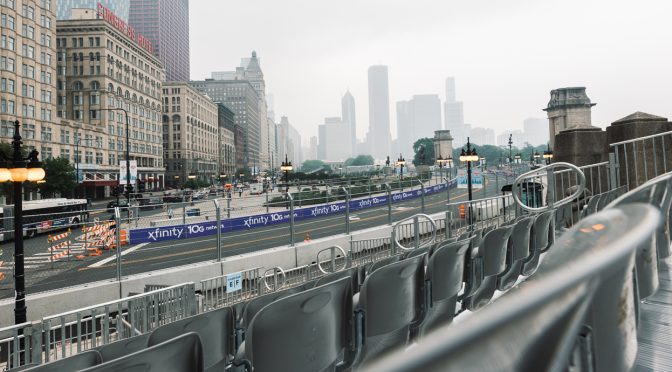
This weekend’s course covers a very small portion of the course run in 1895, a happy coincidence NASCAR found out about after plotting the track. The 1895 race was one lap, to Evanston and back. This race will be 100 laps on a 2.2-mile course on some of the most famous real estate in the country. “The footprint that we’re racing on is so iconic,” Giese says.

The cars will scream across Michigan Avenue (just like in 1895 only 100-plus miles per hour faster) and barrel over Lake Shore Drive within shouting distance of Lake Michigan. The views — from the cockpit, grandstand, pit road, concourse and everywhere else — will be unlike anything in the history of the sport.

“It’s our 75th year. I think it’s hard to find things where you’re able to say you’re doing it for the first time,” Giese says. “And so I think unprecedented is a good word for what we’re doing.”

That was a good word for what happened in Chicago in 1895, too.

That race was postponed repeatedly because there weren’t enough cars available, perhaps giving rise to the old joke that the first car race was held five minutes after the second car was built. Finally, Kohlsaat confirmed Thanksgiving as race day. Plenty of cars were ready by then, which, as it turns out, was not necessarily good news. As Cord Scott, writing in Journal of the Illinois State Historical Society, put it: “The twenty-eighth of November was the worst possible day for an automobile race.”

A report of the first race from the Nov. 29, 1895, issue of The Dispatch.

Heavy snow blanketed the streets. Snow tires had not been invented yet, nor had radar, over-caffeinated meteorologists, red flags or weather delays. There was also this: The streets were open just like any other day, and “it was not uncommon for overworked horses to drop dead in the streets,” Scott wrote. “The carcasses then had to be hauled off by other horses before they caused hygiene and odor problems.”

If the race cars avoided dead horses, they had to contend with live people. Chicagoans who braved the cold to go outside in the snow saw no need to yield to the competitors, if they even knew they were competitors, which they probably didn’t because there had never been a race in America so how would anyone know what a race car driver looked like?

Most of the cars had little to no brakes. So these men who had zero experience racing were driving cars with primitive steering … and little to no brakes … while boys threw snowballs at them … on snow-covered and deeply rutted roads … that might have had dead horses on them and definitely had live people on them.

And you thought the way the surface at Darlington eats tires made races interesting.

•  •  •

As Charles and Frank Duryea traveled to the starting line, they passed a competitor who had been stuck in the snow for 20 minutes. They wondered if their own vehicle would make it there. It’s hard enough to drive in snow and slush now. In 1895, it was almost impossible. Making matters worse, the Duryeas realized their steering wasn’t working properly. “So we simply trusted to luck and tried to forget that our steering was not all right,” Charles wrote.

Along with no steering, they had no clue what would happen in the race. There’s more than a little uncertainty going into this weekend’s race, too. This is as unpredictable of an event as NASCAR has ever had, and that’s saying something, because NASCAR has made a habit lately of creating tracks where there didn’t use to be one (the Los Angeles Memorial Coliseum), cobbling one track out of two (Charlotte’s Roval, the Daytona Road Course) and racing on a new surface at an old track (Bristol dirt).

“In the last few years, NASCAR really has been pushing their boundaries,” says Ken Martin, the director of historical content for NASCAR. “What we see with the development of Chicago can have a big impact on some of the directions we may go in the future.”

It’s anybody’s guess what we’ll see. As Eric Warren, GM’s executive director of global motorsports competition, put it, nobody will have even driven the course in a rental car before it opens Saturday morning. If NASCAR’s scheduling operating principle lately has been, “what the hell, let’s try it,” the race in Chicago takes that to a whole new level.

“The venue is going to be pretty unique,” Warren says with more than a little understatement. “We kind of know the layout, there’s some simulation kind of getting made up. But it’s public streets. People are going to make some choices, let’s say, as far as how you run the suspension, how you deal the aerodynamics, not really, truly knowing how rough the track is going to be.”

At least there won’t be any people on the track.

Or snow.

Or boys throwing snowballs.

“I think it’s going to be a little bit of a mystery who’s going to be successful there,” Warren said.

RELATED: NBC crew on courage of NASCAR running a street race

At least it’s clear how they’ll be successful: By careening into corners, waiting until the last possible second to brake and executing breathtaking side-by-side passes.

None of that happened in 1895.

Side-by-side racing had not been invented and was not invented on that day. Apparently organizers deemed it a terrible idea. A staggered start kept the cars separate and the rules called for a slower car to yield when a faster car approached. “In no case may two vehicles move along abreast of each other,” the rules said.

Even with those rules, wrecks marred the day. Driver Jerry O’Connor withdrew after three of them, all of which involved (live) horses, and none of which included fellow competitors, unless you include Frederick Haas, who had already withdrawn from the race and happened to be in a horse-drawn sleigh O’Connor bashed into. O’Connor probably would have hit the pace car, too, only it hadn’t been invented yet.

An umpire rode shotgun in every car, proof that fear of cheating in racing is even older than actual cheating in racing. As one writer put it, team owners feared “invention pirates” would steal their designs before they could perfect and patent them.

Decades later, Frank Duryea described the race in a short book called America’s First Automobile. He wrote that he made two unscheduled pit stops, not that anybody knew to call them that yet. In the first, he stopped at a blacksmith’s shop to fix the steering arm, which had broken off when the left front wheel hit a rut, a problem foreshadowed on their way to the starting line.

In the second, one of the engine’s two cylinders stopped firing. “I put the machine in low gear and with one cylinder operating, drove on until a tinsmith’s shop was sighted. It being a holiday, the shop was closed and the smith asleep at home,” he wrote. “Mr. White (his umpire) and I got him up and induced him to open the shop.”

Frank Duryea spent 55 minutes fixing the problem. From there, he motored on to the finish line … except for the four minutes he spent waiting for a passing train. (Giese on the possibility of a train delay this weekend: “Nope,” she said with a laugh. “Not here.”)

He returned to Jackson Park at 7:18 p.m. He had covered the 53.5-mile route in 10 hours and 23 minutes, for an average speed of slightly more than 5 miles per hour. But if you take out the three hours he spent making repairs, getting lost (!), etc., the average speed topped 7 miles per hour.

Oscar Mueller entered the only other vehicle to finish. When it pulled into Jackson Park, Mueller was no longer driving. His umpire, Charles King, was. King steered with one hand and used the other to prop up Miller, who had passed out due to cold and exhaustion.

King crossed the line 95 minutes after Frank Duryea.

And you thought Kyle Larson dominated the All-Star Race.

•  •  •
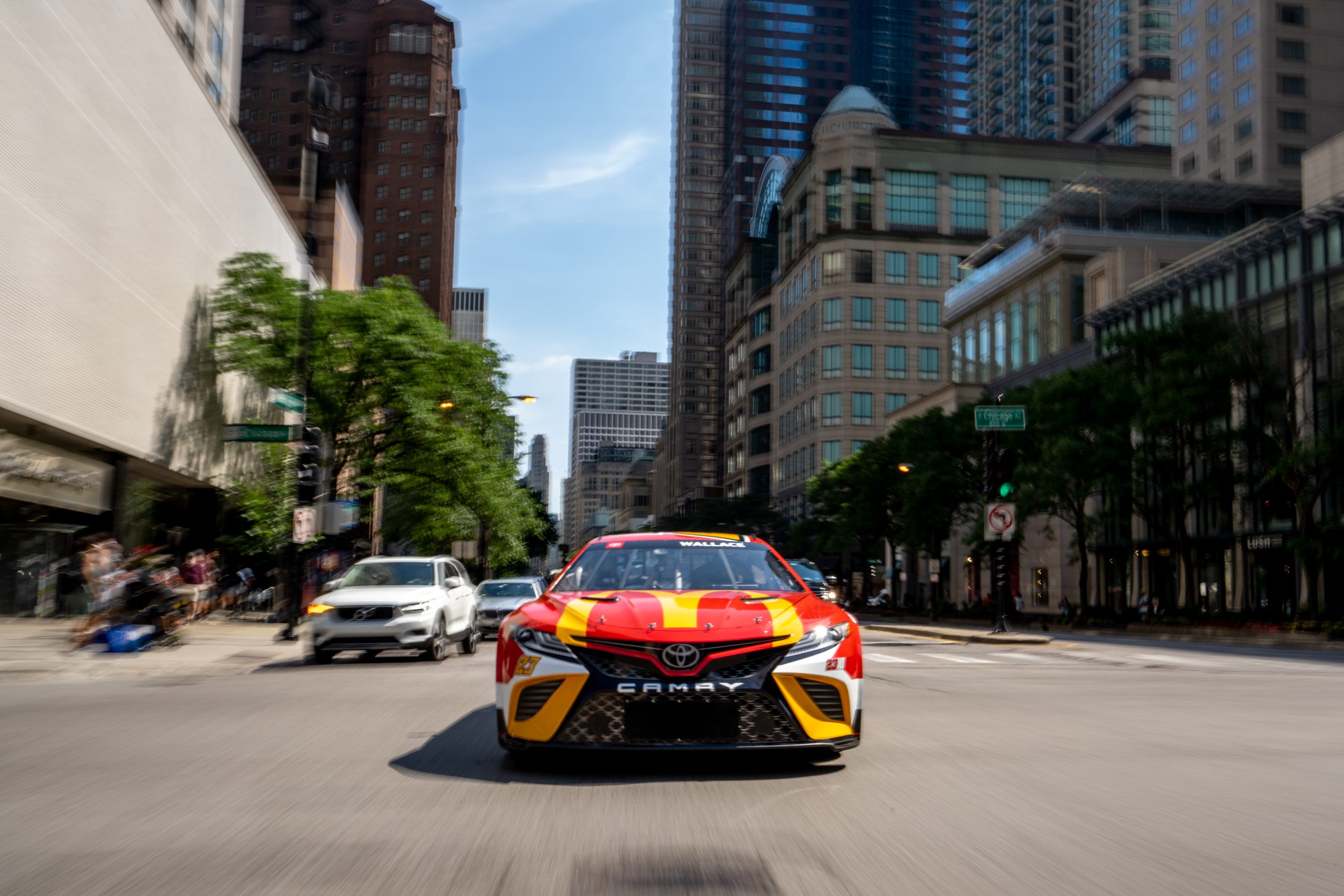
Bubba Wallace drives his No. 23 Toyota on the streets of Chicago
Alejandro Alvarez | NASCAR Studios

When whoever wins this weekend’s race crosses the start/finish line, his victorious moment will be viewed live by millions of people around the world. He will do an epic burnout (hopefully). NBC will beam his post-race interview into space, where it will hit a satellite and bounce back to living rooms, bars, computers, etc. His adoring team will douse him with champagne. And thousands of fans will salute his victory in person.

Just like in 1895.

Or not. Scotti Cohn, in her book It Happened in Chicago, quoted the Chicago Tribune: “The judges had become disgusted and quit, and no one witnessed the finish but two reporters.”

There’s no truth to the rumor they were named Bob Pockrass and Nate Ryan.

Frank Duryea’s one-lap dash for glory brought him fame, a fat paycheck ($72,000 in today’s money) and a strained relationship with his brother, Charles, over who deserved credit for building the car.

There seems to be no doubt that building an engine was initially Charles’ idea, nor that the two collaborated early on. But Frank and Charles disagreed about who designed and built the winning car — the Chicago car. Whichever brother deserves however much credit, the Duryeas’ place in automotive history stands secure. Wrote Scharchburg, the historian: “They justly deserve titles of father of the American automobile industry.”

Unwilling to share that title, they feuded for the rest of their lives.

And you thought drivers held long grudges against Ross Chastain.

Sources: H.H. Kohlsaat, the owner of the Chicago Times-Herald, who proposed the race and wrote about it years later in the Saturday Evening Post; Frank Duryea, who won it and wrote a short book about the race and said it was he, not his brother, who deserved the credit; Cord Scott, an historian writing in Journal of the Illinois State Historical Society; and other contemporary and historical accounts, including in Sports Illustrated, the Smithsonian Magazine and It Happened in Chicago by Scotti Cohn.
In a fast-growing industry like crypto, it can feel like a race to keep up. Olliv by CoinFlip is revolutionizing the industry by finally creating a seamless experience for everyday people. The company is revving up its engines with a $1 million giveaway to help onboard the next million users and bring the power of crypto to NASCAR fans.

Olliv by CoinFlip, a Chicago-based fintech leader, is an Official Partner of the inaugural Chicago Street Race. The first 100,000 Olliv by CoinFlip users who and complete a transaction will receive $10 in bitcoin on the platform.

Simplicity is woven into the company’s entire suite of services including its new self-custody-powered crypto platform, 24/7 award-winning customer support, personalized Order Desk, physical ATMs, and its in-person Customer Experience Center (CEC). On April 26, the company announced the launch of “Olliv” a self-custody powered crypto platform that aims to provide a frictionless way for consumers to buy, sell, send, receive and swap assets.

“We’re here to help demystify cryptocurrency, create an inviting community for everyone, and serve as a trusted resource every step of the way. Regardless of your financial knowledge or background, everyone deserves to participate in the new digital economy,” said Ben Weiss, CEO and co-founder. “We’re always looking for innovative solutions for everyday people. We are confident our self-custodial model, a key value of CoinFlip’s business since inception, will pave the path for a significant and much-needed shift in the industry. We look forward to continued growth and innovation in the coming year as we race one mile closer to on-ramping the next generation of crypto investors.”

Olliv by CoinFlip is a next-generation financial services platform powered by cryptocurrency. With more than 4,500 machines across 49 states, Puerto Rico, Canada and Australia, Olliv by CoinFlip leverages its network of Bitcoin ATMs to bridge the gap between physical and digital currency.

The NASCAR Cup Series will hit the Chicago streets for the Grant Park 220 on July 2 (5 p.m. ET, NBC, Peacock, MRN, SiriusXM NASCAR Radio, NBC Sports App).

As an event partner, Olliv by CoinFlip will have official presenting, marketing and promotional rights for the Chicago Street Race Weekend, including the NASCAR Cup Series’ Grant Park 220 and NASCAR Xfinity Series’ The Loop 121 races.

The National Motorsports Appeals Panel upheld an L1-level penalty that NASCAR levied against the No. 43 Legacy Motor Club team on June 7 after the Cup Series race at Worldwide Technology Raceway. The car, driven by Erik Jones, was found to have a modified greenhouse in post-race inspection.

The penalties issued were the loss of 60 championship points and five playoff points for the driver and owner and a $75,000 fine and two-race suspension for crew chief Dave Elenz.

MORE: Cup standings | Chicago schedule

In reaching the decision, the panel provided the following explanation: “The penalty was consistent with previously assessed penalties for similar situations. The rule book is clear that teams are not allowed to modify single-source parts, and therefore the penalty was upheld.”

The Appeals Panel members for this hearing were: Mr. Chuck Deery, Mr. Dixon Johnston and Ms. Cathy Rice.

Per the NASCAR entry list, Danny Efland will be atop the pit box as interim crew chief for Jones and the No. 43 Chevrolet this weekend in the Chicago Street Race (Sunday, 5 p.m., NBC, Peacock, MRN, SiriusXM NASCAR Radio, NBC Sports App). The team has not announced any plans to appeal the decision of the National Motorsports Appeals Panel but maintains the right to appeal to the National Motorsports Final Appeals Officer in accordance with the NASCAR Rule Book.

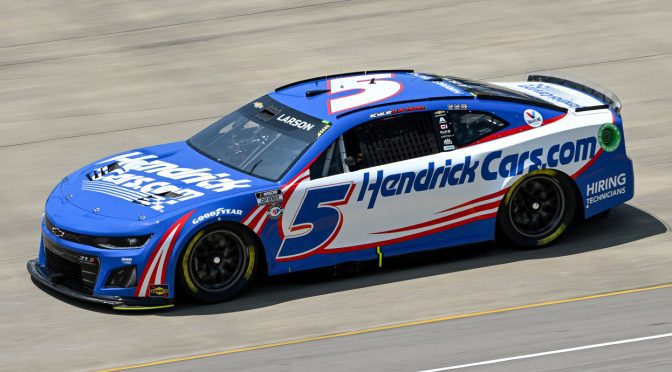
Kyle Larson’s pit crew ripped the quickest pit stop of the NASCAR Cup Series trip to Nashville Superspeedway on Sunday and one of the fastest of the season — just in time for the summer stretch.

Larson’s No. 5 Hendrick Motorsports crew of front changer Blaine Anderson, tire carrier RJ Barnette, rear changer Calvin Teague, jackman Brandon Johnson and fueler Brandon Harder completed a four-tire pit stop in 9.281 seconds, the second-quickest stop of 2023.

RELATED: Nashville results

The stunning speed resembles a growing trend through pit lane: Teams are only getting faster as summer heats up. Kyle Busch’s No. 8 Richard Childress Racing crew of front changer Bryan Backus, tire carrier Lamar Neal, rear changer Marcus Horton, jackman Josh Sobecki and fueler Justin White turned in a series-best stop of 9.185 seconds on June 11 at Sonoma Raceway.

In fact, five of the top eight four-tire stops this season have been performed in just the past two races, with Austin Cindric’s third-best stop at Sonoma, Daniel Suárez’s fifth-fastest at Nashville and William Byron’s eighth-quickest at Nashville joining Larson and Busch.

Crews will need to maintain their quick work in the inaugural Chicago Street Race on Sunday (5 p.m. ET, NBC, Peacock, MRN, SiriusXM NASCAR Radio, NBC Sports App), a 2.2-mile street course that will see cars pitted with the right side nearest pit wall, opposite of the typical week-to-week stop.

See below to analyze additional pit-road statistics through last weekend’s race at Nashville, courtesy of Racing Insights.

TEN FASTEST FOUR-TIRE PIT STOPS IN 2023

RankTrackDriverTime
1SonomaKyle Busch9.185 seconds
2NashvilleKyle Larson9.281 seconds
3SonomaAustin Cindric9.301 seconds
4RichmondCorey LaJoie9.309 seconds
5NashvilleDaniel Suárez9.333 seconds
6CharlotteWilliam Byron9.383 seconds
7CharlotteTy Gibbs9.443 seconds
8NashvilleWilliam Byron9.443 seconds
9CharlotteWilliam Byron9.504 seconds
10KansasBubba Wallace9.509 seconds

BEST AVERAGE FOUR-TIRE PIT STOP TIMES IN 2023

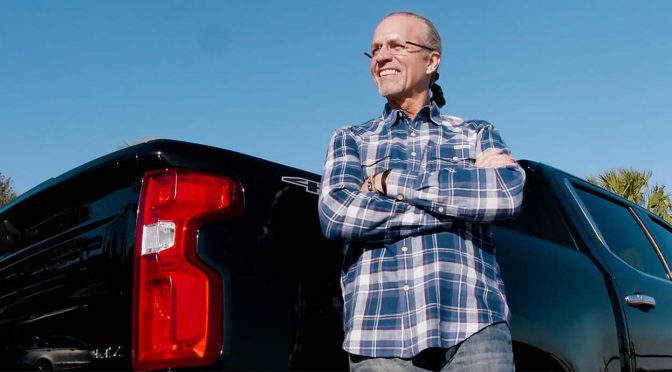
The third season of “Dinner Drive With Kyle Petty” is set for a Thursday release, and true to form, the lineup of special guests is full of celebrities from different parts of the sports and entertainment realms. For the season premiere, Petty didn’t stray far from his NASCAR roots, hosting one of the Cup Series’ biggest stars in Kyle Busch.

The show — which features Petty’s homespun interviews, blending cars, meals and conversation — returns Thursday at 10 p.m. ET on the Nashville-based Circle Network. Busch is the latest stock-car star to lead off the season, following Dale Earnhardt Jr. (2021) and Jeff Gordon (2022).

RELATED: ‘Dinner Drive’ Season 3 trailer | Cup Series schedule

Busch brought out his 1969 Chevrolet Camaro for his ride with Petty, and the two convened at Cheddar’s Scratch Kitchen — a sponsor of his No. 8 Chevy in the Cup Series and a presenting backer of the show. The two discussed family, his thoughts on racing, and how his first year in the Richard Childress Racing organization has progressed.

“I’m thrilled to be back for Season 3 of ‘Dinner Drive,’ ” Petty said. “It’s always a treat to sit down with some of the most interesting people in entertainment and sports and pick their brains about their careers and experiences. Thank you to Circle Network for bringing me back for another season!”

In all, a dozen 30-minute episodes are packed into the season. Comedians John Crist and Bill Engvall are among the special guests from the entertainment world, and Baseball Hall of Famer George Brett and former NBA player Tyrone “Muggsy” Bogues also join in. Petty also plays host to a trio of former NFL greats who transitioned to the broadcasting booth — Terry Bradshaw, Mike Golic and Greg Olsen.

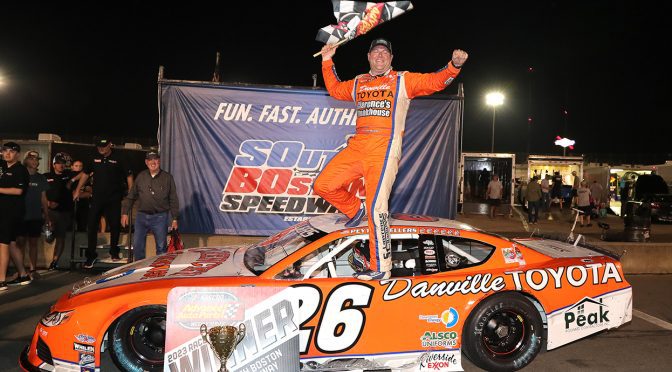
SOUTH BOSTON, Va. — Peyton Sellers says being patient and smart are two of the most important ingredients when it comes to success in the July 1 Thunder Road Harley-Davidson 200 presented by Grand Atlantic Ocean Resort at South Boston Speedway.

The six-time South Boston track champion should know. He won the Thunder Road Harley-Davidson 200 presented by Grand Atlantic Ocean Resort back-to-back in 2018 and 2019 and has not finished worse than third over the span of the last four years.

“All of the races here at South Boston Speedway are 60 laps or 75 laps and that sort of thing,” Sellers noted. “When you come here for a 200-lap race, you’ve really got to manage tires, you’ve got to be smart, you’ve got to keep the fenders on the car, you’ve got to put the car in the right spot for 200 laps, and hopefully you will have a car that can go compete for the win in the last 10 or 15 laps of the race.

“It’s going to be challenging to be smart with your tires and keep them under you.”

The July 1 Thunder Road Harley-Davidson 200 presented by Grand Atlantic Ocean Resort is a race Sellers and Late Model Stock Car division competitors throughout the region circle on their calendars each season. Saturday’s 200-lap race for the Sentara Health Late Model Stock Car Division is the first race of the Virginia Late Model Triple Crown and pays $10,000 to win.

RELATED: Watch Saturday’s South Boston race live on FloRacing

Peyton Sellers
Peyton Sellers (Photo: Adam Fenwick/NASCAR)

While the Danville, Virginia resident has won the race twice, he says anytime you can win this race it is special.

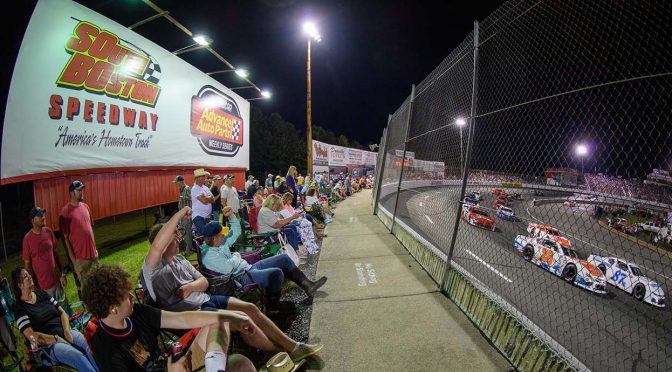
“Anytime you can win in front of your home crowd it means a lot,” Sellers remarked. “This is the biggest race of the year here at South Boston Speedway with 8,000 fans in the stands, and fireworks on and off the track. It brings in all of the top guns, all of the heavy hitters in the Late Model Stock world. This race has gained a lot of momentum in the last seven or eight years. It has become a prestigious race.

“There is a lot of money on the line, a lot of prestige and a big hometown crowd. We’ve got sponsors that will be at the race that night and it will be a big event. It gives us an opportunity to show our talents, to show our competitive spirit here at South Boston Speedway against the guys that come in from the outside.”

The July 1 Thunder Road Harley-Davidson 200 presented by Grand Atlantic Ocean Resort is the first race of the Virginia Late Model Triple Crown. Other events in the Virginia Late Model Triple Crown are the Hampton Heat 200 on July 22 at Larry King Law’s Langley Speedway and the Sept. 23 ValleyStar Credit Union 300 at Martinsville Speedway.

Sellers, the defending Virginia Late Model Triple Crown champion and a four-time Triple Crown winner, says it is vital to have a good outcome in Saturday’s Thunder Road Harley-Davidson 200 presented by Grand Atlantic Ocean Resort at South Boston Speedway.

“With the Virginia Late Model Triple Crown as competitive as it is it’s hard to have a bad race and still have a shot to win it,” Sellers pointed out. “If you start off bad at South Boston it kind of throws your Triple Crown out the window. When the Virginia Late Model Triple Crown started you could have a bad race and it wouldn’t kill you. Now it’s so competitive that you’ve got to have a pretty good string of top-three finishes to compete for the win.”

Peyton Sellers
Peyton Sellers (Photo: Adam Fenwick/NASCAR)

South Boston Speedway’s annual showcase event is one that fans will not want to miss. Fans will be treated to a spectacular, colorful Fourth of July fireworks show immediately following the last race of the night. Special patriotic festivities will be featured during Pre-race Ceremonies powered by Hitachi including a flyover. Vintage military aircraft piloted by members of the Raleigh, North Carolina-based Bandit Flight Team will make a pass over the speedway near the conclusion of the National Anthem and will return a couple of minutes later for an additional demonstration prior to the start of the first race of the night. In addition, an Autograph Session powered by Hitachi will be held immediately after qualifying.

Along with Saturday’s 200-lap race for the Sentara Health Late Model Stock Car Division, fans will see a 40-lap race for the Budweiser Limited Sportsman Division, a 20-lap race for the Southside Disposal Pure Stock Division and a 20-lap race for the Virginia State Police HEAT Hornets Division.

Close to 40 cars are expected for the 200-lap Late Model Stock Car Division race. Among the top drivers joining Sellers in Saturday’s race are Carter Langley of Zebulon, North Carolina who has won six of his 12 starts at South Boston Speedway this season, the top two drivers in the CARS Late Model Stock Tour standings, defending series champion Carson Kvapil who drives for JR Motorsports and has won three of the seven CARS Tour races run thus far this season, Brenden Queen, who competes out of the Lee Pulliam Performance stable, and 2022 South Boston Speedway Champion Layne Riggs of Bahama, North Carolina who won 10 of his 17 starts at the .4-mile oval last season.

Advance adult general admission tickets priced at $20 each may be purchased online on South Boston Speedway’s website, www.southbostonspeedway.com or by calling the speedway office at 434-572-4947 or toll free at 1-877-440-1540 during regular business hours.

Tickets at the gate on race day will be $25 each. Seniors ages 65 and older, military, healthcare workers, and students (with ID) can purchase tickets for $20 each at the gate on race day.

Saturday’s race-day schedule for the Thunder Road Harley-Davidson 200 presented by Grand Atlantic Ocean Resort has registration and pit gates opening at 10 a.m. Frontstretch spectator gates will open at 12:30 p.m. and practice will start at 1 p.m. Backstretch and Turn 4 trackside tailgating gates will open at 3:30 p.m.

Qualifying for the 200-lap Sentara Health Late Model Stock Car Division race is set for 4:15 p.m. The Autograph Session powered by Hitachi is scheduled for 5:15 p.m. on the frontstretch of the speedway. Pre-race Ceremonies powered by Hitachi will begin at 6:35 p.m. and the first race will get the green flag at 7 p.m.

Fans may come out to South Boston Speedway on Friday, June 30 for Thunder Road Harley-Davidson 200 Practice Day and Fan Appreciation Day and watch practice free of charge from the track’s spectator areas. Practice will include all four of the track’s regular racing divisions and will run from 11 a.m. until 7:45 p.m.

The latest news and information about the July 1 Thunder Road Harley-Davidson 200 presented by Grand Atlantic Ocean Resort and other South Boston Speedway events can be found on the speedway’s website and through the track’s social media channels. Information may also be obtained by phoning the speedway at 434-572-4947 or toll free at 1-877-440-1540 during regular business hours.

NASCAR officials penalized Xfinity Series driver Sheldon Creed on Tuesday for causing a crash during last weekend’s race at Nashville Superspeedway.

RELATED: Latest Xfinity Series news | Extended Nashville highlights

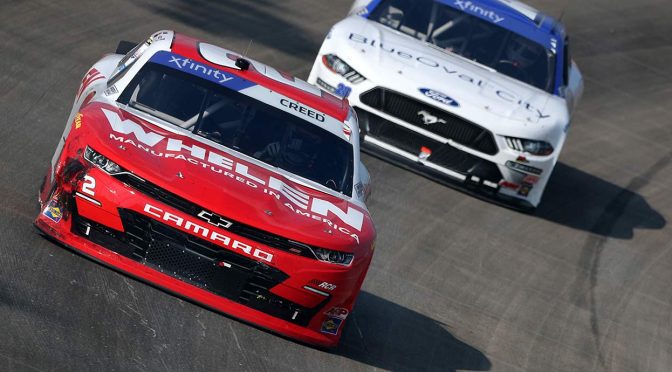
Creed — who drives the No. 2 Chevrolet for Richard Childress Racing — was sanctioned under the NASCAR Rule Book’s Section 4.4.B., which deals with the member code of conduct. Specifically, that section includes:

“Attempting to manipulate the outcome of the Race or championship.”
“Wrecking or spinning another vehicle, whether or not that vehicle is removed from Competition as a result.”

Creed was docked 25 points in the Xfinity Series standings, dropping him from seventh to eighth place. He was also fined $25,000 for his actions.

Creed was involved in a crash on the 69th of 196 laps in Saturday’s Tennessee Lottery 250. His No. 2 Chevy made contact with the No. 18 Toyota of Joe Gibbs Racing driver Sammy Smith through the first and second turns, forcing a yellow flag. Creed continued to finish 17th, but Smith was sidelined and placed 34th.

NASCAR officials explained their decision to penalize Creed in a statement released Tuesday afternoon: “Following Saturday’s race at Nashville Superspeedway, NASCAR reviewed radio communications from the No. 2 team. In NASCAR’s determination, that communication clearly resulted in the No. 2 car wrecking the No. 18 car on Lap 69, causing the seventh caution of the race.”

Competition officials also issued a penalty to the No. 15 Tricon Garage team in the NASCAR Craftsman Truck Series. The No. 15 Toyota driven by Tanner Gray to an 11th-place finish was found with one unsecured lug nut after Friday’s race at Nashville. As a result, crew chief Jerame Donley was fined $2,500.

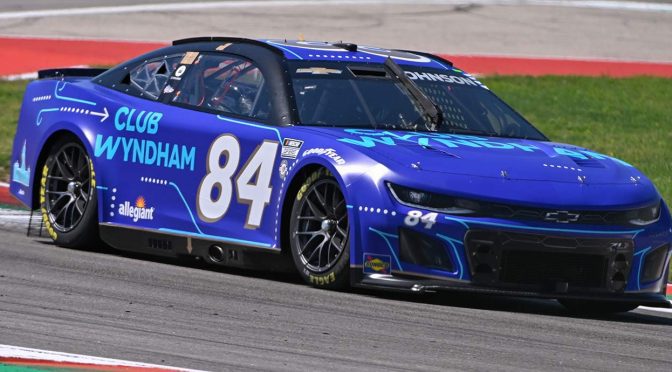
Legacy Motor Club announced Tuesday it had withdrawn the No. 84 Chevrolet from Sunday’s NASCAR Cup Series race at the Chicago Street Course.

Seven-time champion Jimmie Johnson was scheduled to drive the vehicle for the fourth time this season.

“Legacy Motor Club has elected to withdraw the No. 84 Carvana Chevrolet from this weekend’s NASCAR Cup Series event in Chicago,” the team revealed in a statement. “The Johnson family has asked for privacy at this time and no further statements will be made.”

According to FOX 23 of Tulsa, Oklahoma, Jack and Terry Janway, Johnson’s respective father-in-law and mother-in-law, were found dead with their 11-year-old grandson, Dalton Janway, in what police are investigating as a murder-suicide.

“We are saddened by the tragic deaths of members of Chandra Johnson’s family,” NASCAR said in a statement. “The entire NASCAR family extends its deepest support and condolences during this difficult time to Chandra, Jimmie and the entire Johnson & Janway families.”

Johnson, an 83-time winner at NASCAR’s top level, returned to NASCAR competition for a part-time schedule this year beginning with the Daytona 500. Johnson has made additional starts at Circuit of The Americas and in the Coca-Cola 600 at Charlotte Motor Speedway.

CHICAGO – Dale Jarrett and his family have grown up around NASCAR. He was practically born into it, coming into the world three years after father Ned Jarrett began his racing career.

And yet despite being affiliated with NASCAR for 70 of its 75 years, the Jarrett family never envisioned a NASCAR Cup Series race would take place in the downtown streets of Chicago – which will happen in the Grant Park 220 around a 2.2-mile course that rips through the roads neighboring the Windy City skyline on Sunday evening (5 p.m. ET, NBC, Peacock, MRN, SiriusXM NASCAR Radio, NBC Sports App).

“Never in my wildest dreams, the times that I spent in the city, did I ever think that we would be talking about having an actual NASCAR race here,” Jarrett told NASCAR.com.

MORE: Chicago weekend schedule | Button full speed ahead for Chicago

A literal NASCAR Hall-of-Fame father-son duo, the Jarretts’ legacy dates back to Ned’s debut in 1953. Flash forward some seven decades, and NASCAR is ready to storm down Lakeshore Drive.

“I was actually just talking to my dad yesterday before I left North Carolina and telling him that I was coming here to look at this and explain to him once again about what’s happening,” said Jarrett, now an analyst for NBC Sports. “And he was like, ‘Who would have ever thought?’ And I’m like, no, none of us would have. But you see it now and (track president) Julie (Giese) has done a tremendous job, I know, with a lot of help from a lot of others, putting all this together, and I’m really excited about this.”

NBC Sports will have the honor of broadcasting the Cup Series’ inaugural street race, a rare true first as the sport celebrates its 75th anniversary. Jarrett and Kyle Petty will be on hand to offer analysis from the network’s Peacock Pit Box, which will sit near Buckingham Fountain. Play-by-play announcer Rick Allen will anchor the call of the action alongside former crew chief Steve Letarte as NBC utilizes a “radio-style” broadcast with analysts including Hall of Famer Dale Earnhardt Jr., MRN turn announcer Mike Bagley and 48-time NASCAR national series winner Jeff Burton stationed around the track.

As the late-spring sun beamed on the fountain this particular afternoon, Burton, a native Virginian whose inaugural Xfinity Series starts came in 1988, sat on a nearby park bench, astonished at what the sport was and is preparing to accomplish.

“I was thinking about the courage it took to do this and how, like, I don’t think we would have made this decision 20 years ago,” Burton said. “The courage to do this is massive, and the open-mindedness of, ‘Hey, let’s try some different things,’ which is what took us to the (Los Angeles Memorial) Coliseum and Bristol Dirt, back to North Wilkesboro. Like, what can we do that’s better, cooler and try some things? And that courage to do things is exciting. It brings a whole ‘nother level of energy.”

NASCAR is no stranger to the greater Chicago area. From 2001-2019, Chicagoland Speedway in Joliet, Illinois, hosted Cup, Xfinity and ARCA Menards Series events, with the Craftsman Truck Series making its way to the 1.5-mile tri-oval in 2009. But the speedway sits some 50 miles southwest of the fountain, roughly an hour away.

“For years, we came here saying we were going to race at Chicago,” Jarrett said. “And actually, we might have come into Chicago, but we were a ways removed from actually being here, even though a lot of us stayed in Chicago to race at Chicagoland. But now you say we’re going to race in Chicago, we’re going to race it; you’re literally in the middle of Chicago.”

In addition to his NBC duties, Earnhardt Jr. serves as the executive director of iRacing, which worked hand-in-hand with NASCAR to create the inaugural scan of the city layout, a process that began in the fall of 2020, per the simulation’s website. While he became familiar with the course, seeing it in person offered a new perspective for NASCAR’s 15-time Most Popular Driver.

“I ran on the iRacing simulator a lot over the last couple of years at this track, and it felt, in a lot of places, really narrow,” Earnhardt said. “But when you’re actually here, in person, it’s got plenty of room, and it’s gonna be just fine. There’s a lot of imperfections, different types of asphalt, different ages of asphalt throughout the course, bumps, potholes, or manholes or whatever. There’s all kinds of character. That’ll be good.”

Burton’s reference to NASCAR’s ambitious scheduling in recent years emphasizes the fact Sunday’s inaugural race is indeed a points-paying event – meaning a full-time driver could lock himself into the NASCAR Playoffs with a Chicago triumph if he hasn’t yet won this season.

“Matter of fact, I think it’s what we have to expect,” Jarrett said, “that when we show up here in July, that someone that maybe isn’t in the playoff picture at that point in time, maybe sitting outside the points, that when we leave here on July 2 that there is another name that’s added to that (playoff list). I mean, when you think about AJ Allmendinger, I mean this has to fit right into his hand and his driving skills and abilities. You think of Daniel Suárez, who’s been outstanding at the road courses, and you come to a new place, adapts really quickly.

MORE: Allmendinger analyzes Chicago course | AJ surges into Power Rankings

“So I think there’s a lot of people that we can throw into that. I really believe that we’re going to add another name to the championship mix as far as when we talk about the 16 drivers are going to be a part of that with this race. And that’s exciting to think that not only are we doing this a street race for the first time in NASCAR, but that we can have a new winner.”

There is perhaps no more diverse schedule than NASCAR’s, which features six road or street courses in addition to six superspeedway-style events and other ovals that vary from the 0.25-mile LA Coliseum exhibition up to the 2.5-mile triangle of Pocono Raceway. The biggest key to a driver’s Chicago success, Burton believes, is embracing what lies ahead.

“It’s an opportunity. And anytime you do something new, it creates an opportunity,” he said. “And the fun part about it is seeing who can who can seize it and who’s not going to embrace it. And that’s the thing you have to do as a competitor. Like, you have to embrace it. You have to recognize that this is a very unique opportunity and embrace it and come here with a clear mind. Come here with, ‘Man, this is an opportunity.’ Get all your preconceived notions out of your head and come here like a sponge and be just willing to learn and appreciate the complexities of it.

“It’s a street course. It’s not a permanent structured road course. It is a street course, and you’re going to have corners that if you were drawing it with a clean sheet of paper, you wouldn’t draw it that way. It’s a street course. That’s what it is. … You wouldn’t build Darlington today. So you’ve got to embrace that. You’ve got to embrace the uniqueness of it – or come in here with the wrong attitude and run bad.”

Ultimately, the 2023 NASCAR Cup Series champion will have to conquer numerous obstacles from February through the season finale at Phoenix Raceway in November. That the journey rumbles through the Chicago streets, Earnhardt said, only makes sense.

“I think that NASCAR racing should be hard. NASCAR racing should be challenging,” Earnhardt said. “Our champion should be somebody who had to overcome a lot of challenges and difficult scenarios and face new challenges, and this is part of it. You know, throw them right in there and see who can sink or swim. When I was a driver, these type of things would shake you up a little bit. They’re unnerving. But some drivers, man, will look at this and be like, ‘Heck yeah, bring it on,’ right? Those are the guys that are gonna probably do well. Our sport should always be pushing the drivers, emotionally and mentally and as well as physically, and I think doing things like this certainly does that.”

The opening race of the 2023 Virginia Late Model Triple Crown, the Thunder Road Harley-Davidson 200 at South Boston Speedway, takes the green flag Saturday night shortly after 7 p.m. ET on FloRacing.

The race, in its 17th edition, annually draws the region’s top Late Model Stock Car competitors for 200 laps of intense competition. This year is no different.

Headlining the list of entries is defending Virginia Late Model Triple Crown champion Peyton Sellers. The two-time NASCAR Advance Auto Parts Weekly Series national champion is also a two-time winner of the Thunder Road Harley-Davidson 200 after winning the race in 2018 and 2019.

Only one other previous race winner is entered Saturday, that being Bobby McCarty (2021). The driver from Madison, North Carolina is fresh off his first CARS Tour victory in more than a year at Dominion Raceway and will be looking to carry that momentum into Saturday’s race at South Boston.

Other notable entries include defending NASCAR Advance Auto Pars Weekly Series national champion Layne Riggs, North Wilkesboro CARS Tour winner Brenden Queen, defending CARS Late Model Stock Tour champion Carson Kvapil, 2021 ValleyStar Credit Union 300 winner Landon Pembelton, weekly South Boston contender Carter Langley, defending Hickory Motor Speedway track champion Landon Huffman, defending Langley Speedway Hampton Heat winner Jared Fryar and 2016 ValleyStar Credit Union 300 victor Mike Looney.

Below is the full entry list for Saturday’s Thunder Road Harley-Davidson 200 at South Boston Speedway.

Car No. Driver Hometown
0 Landon Pembelton Amelia, Va.
01 Camden Gullie Durham, N.C.
01W George Waldrop North Chesterfield, Va.
2 Austin Thaxton South Boston, Va.
2BP Brandon Pierce Oak Ridge, N.C.
03 Brenden Queen Chesapeake, Va.
4 Kyle Dudley Roanoke, Va.
04 Ronnie Bassett Jr. Winston-Salem, N.C.
5 Carter Langley Zebulon, N.C.
5S Eddie Slagle Powhatan, Va.
05 Mason Bailey Richmond, Va.
6 Bobby McCarty Madison, N.C.
8 Carson Kvapil Mooresville, N.C.
9 Michael Rogers Midlothian, Va.
14 Jared Fryar Trinity, N.C.
15 Logan Clark Mechanicsville, Va.
17M Jason Myers Hurt, Va.
17S Stacy Puryear South Boston, Va.
19 Jessica Cann Trinity, N.C.
21 Lanie Buice Locust Grove, Ga.
22 Landon Huffman Claremont, N.C.
25 Jacob Borst Elon, N.C.
26 Peyton Sellers Danville, Va.
28 Jason Barnes Stony Creek, Va.
31 Aaron Donnelly Montross, Va.
32 Zack Miracle Indian Trail, N.C.
33 Kenny Forbes Bullock, N.C.
40 Brian Thomas Henderson, N.C.
57 Eddie Johnson Midlothian, Va.
74 Ronald Hill Rougemont, N.C.
77 Blake Stallings Danville, Va.
77W Trevor Ward Winston-Salem, N.C.
87 Mike Looney Stuart, Va.
90 Terry Carroll Williamsburg, Va.
91 Justin Carroll Williamsburg, Va.
95 Sam Yarbrough Myrtle Beach, S.C.
99 Layne Riggs Bahama, N.C.