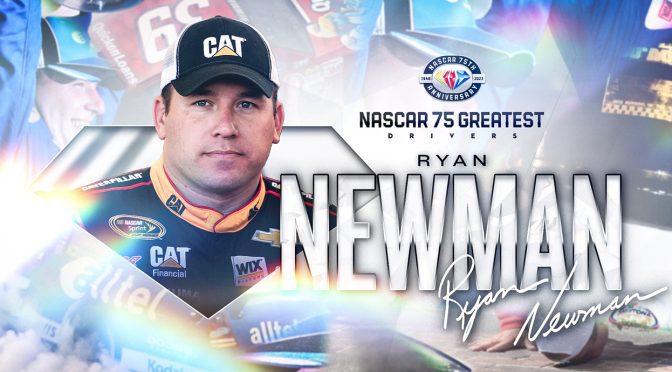
From NASCAR’s Whelen Modified Series to the Cup Series and everything in between, Ryan Newman has won in nearly everything he’s raced in, and it’s fitting the he was selected to join the ranks of the sport’s 75 Greatest Drivers.
Newman set an electrifying pace during his career, earning 64 pole awards, 51 of which came in the Cup Series, across the three national series. His premier-series prowess in qualifying earned him the nickname, ‘Rocket Man,’ and Newman is ninth all-time in Cup poles — trailing only Richard Petty, David Pearson, Jeff Gordon, Cale Yarborough, Darrell Waltrip, Bobby Allison, Mark Martin and Bill Elliott.
A true iron man of the sport, Newman made 36 starts per season for 18 consecutive seasons, only breaking his streak after a sidelining crash in the 2020 Daytona 500 at Daytona International Speedway. During his lengthy tenure, his most productive season at the Cup Series level came in 2003, where he earned the pole position 11 times and went on to win eight races.
Across his 725 career starts, Newman scored 18 victories, 117 top-five finishes, 268 top 10s and ran over 200,000 laps, leading 4,863 of them. His biggest victories came in the 2002 All-Star Race at Charlotte Motor Speedway, earning the famous ‘Winston Million’ and the 2008 Daytona 500.
The ‘Rocket Man’ footprint also extends to the Xfinity Series, where he is a seven-time winner, the Craftsman Truck Series, the ARCA Menards Series and many more.
NASCAR penalized the No. 3 Cup Series team of Austin Dillon for an L1-level infraction after last weekend’s race at Martinsville Speedway. The team violated the overall assembled vehicle rules related to the underwing assembly and hardware.
As a result, crew chief Keith Rodden has been fined $75,000 and suspended for the next two championship points events. The team and the driver also lost 60 points and five playoff points.
Dillon finished 12th at Martinsville, and he was 21st in the standings before the penalty.
Richard Childress Racing announced Wednesday that it will appeal the penalties issued to the No. 3 team.
In other penalties, NASCAR suspended Chris Jackson (rear tire changer) and David Smith (jack) of the No. 78 Cup Series team because of the loss of a tire/wheel last weekend at Martinsville.
NASCAR also fined three crew chiefs Mike Bumgarner, Jeff Meendering and Mike Scearce in the Xfinity Series $5,000 apiece for lug-nut violations.
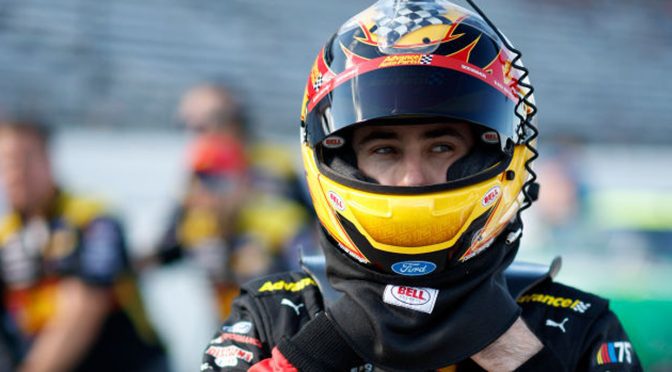
Ryan Blaney’s 55-race winless streak is the second-longest dry spell of his career, but if there’s a light at the end of the tunnel, then it comes in the form of Talladega Superspeedway and Sunday’s GEICO 500 (3 p.m. ET, FOX, MRN, SiriusXM NASCAR Radio).
Blaney has won two of the last seven races on the high banks of the 2.66-mile track, and he finished runner-up there last fall. He has been strong overall on drafting tracks with three straight top-10 finishes — the longest streak among active drivers.
While Talladega certainly brings out the unpredictable on a regular basis, the one constant seems to be Blaney. And based largely on that strong history, Racing Insights’ formula for predicting races favors him this week.
OTHERS TO WATCH
ROSS CHASTAIN: He finished first and fourth last year at Talladega and was the only driver to finish in the top five in both races.
MARTIN TRUEX JR.: He has two straight finishes of seventh or better this season, and he finished fifth in this race last year.
KEVIN HARVICK: He has three top-10 finishes in the last four races at Talladega and will be making his 800th career start in the Cup Series.
CHASE ELLIOTT: Fresh off a top-10 finish in his first race back from a leg injury, Elliott has led laps in six of the last eight Talladega races.
DENNY HAMLIN: His fourth-place finish last week at Martinsville was his first top five this season. At Talladega, he has five finishes of seventh or better in the last seven races.
Richard Childress Racing has a reputation for being a superspeedway powerhouse in the NASCAR Xfinity Series. Naturally, Austin Hill — who picked up his first NASCAR win in 2019 in the Craftsman Truck Series at Daytona International Speedway — was a good fit when he joined the team ahead of the 2022 season.
But it would be hard to imagine anyone thought Hill would be this strong on superspeedways for RCR.
In eight superspeedway starts since joining the Xfinity Series full-time, including three at the reconfigured Atlanta Motor Speedway, Hill has led 410 of 1,098 laps. In other words, he’s paced the field 37.3% of the time. In two fewer starts, Noah Gragson has led the second-most laps (109).
“I expect to go out and lead laps, run up front and try to control the race,” Hill told NASCAR.com of his superspeedway prowess. “It’s just the mentality that this whole 21 team has. One reason why we’re finding success is that I have a fast race car.
“The other side of it is, I want to go lead; I don’t want to go ride in fifth. The further forward you are in the pack – and if you’re leading – you have a less percentage of getting wrecked.”
Hill believes if he’s at the front of the field contending each lap, he’s not riding in limbo. He also thinks his spotter Derek Kneeland, who works with Kyle Busch in the Cup Series, is the best in the garage at spotting at superspeedways.
Before Hill joined RCR, Kneeland didn’t know Hill enough to even say hello in the garage. The duo met for breakfast before Daytona in 2022 to get to know each other. Hill recalled Kneeland giving him some pointers on how successful Tyler Reddick and he were on superspeedways in the past.
“Derek and I both have that same mentality; we don’t care to ride,” Hill said. “We want to lead laps and run up front. It just works out that way that we’re very aggressive guys, and he makes aggressive calls. It just works.”
Of the three national touring divisions, Kneeland believes the Xfinity cars suit his spotting style the best. The only preparation they do together for superspeedways is a call the morning of the race.
“When that green flag flies, we go out there to try to dominate the race,” Kneeland said. “That’s all we care about. Our connection, for some reason, works well together. He’s not a follower; he’s a leader, so he’s not afraid to try something.”
During the week, Hill would rather emphasize other tracks on the schedule.
“I’m being truly honest about this, I do the least amount of studying on superspeedways,” Hill noted. “One reason I don’t is because I think every superspeedway race that you run plays out differently from the next. Like Atlanta from this year, totally a different race from the two races last year. Daytona, the race played out totally different than it did last year. Just the way the runs were coming.”
Before winning his full-time series debut at Daytona last February, Kneeland recalled Hill telling him that he vividly dislikes superspeedway racing. But after having success, Hill’s mindset has changed drastically on the style of racing. It’s been an evolving process, dating back to his Truck Series days.
“I had no clue what I was doing, honestly,” Hill recalled winning the truck race at Daytona in 2019. “I was just doing moves, taking runs and doing things that came naturally.”
Now, Hill knows precisely what he’s doing on superspeedways. And it shows with an average finish of 7.6 in eight starts while driving the No. 21 Chevrolet, including four wins.
“I think a lot of guys on superspeedways get in the rhythm where they are just riding behind somebody, and I just don’t like that,” Hill said. “I like to take the risk of going out there, making the pass and making it work. I think Derek and I have a good bond right now where it’s almost like when he keys up to say something, I’m already thinking in my head what he’s about to say, and I’m already reacting.
“One thing that a lot of drivers do that I don’t do is they probably think, ‘Ah, should I take this move.’ At that point, the move was already gone. You shouldn’t have thought about it; you should have just reacted. I try to think about my moves, but if a big run comes, I just take it. I’m not even thinking about the consequences of it.”
Hill enters this weekend’s race at Talladega Superspeedway as the driver to beat. He’s been untouchable in the two drafting races this season, winning at both Daytona and Atlanta. In those races, he led 142 of 288 total laps (49.3%).
In both Talladega races last season, the No. 21 car was the dominant car. Unlike Daytona and Atlanta, however, he doesn’t have the finishes to show for it. Last spring, he was collected in a late wreck while running inside the top five when Sam Mayer got turned sideways. In the fall, he led more than half the race but made a wrong block late on Noah Gragson and dropped to 14th.
Hill is looking to rebound from a mediocre performance at Martinsville Speedway last weekend. After being just the third driver in series history to win three of the opening five races in a season, he dropped from the points lead for the first time in 2023.
As such, a win at Talladega would be huge for the Georgia native, and not solely from a better momentum standpoint. He grew up roughly an hour away from the 2.66-mile track and attended many races at the superspeedway growing up. And his first chance in 2023 to pick up a win there will come on April 22 in the Ag-Pro 300 (4 p.m. ET, FS1, MRN, SiriusXM NASCAR Radio).
“It would be just as special as winning at Atlanta like I’ve done,” Hill said. “If everything works out and we do all the right things and make all the moves at the right time, then we can do it.”
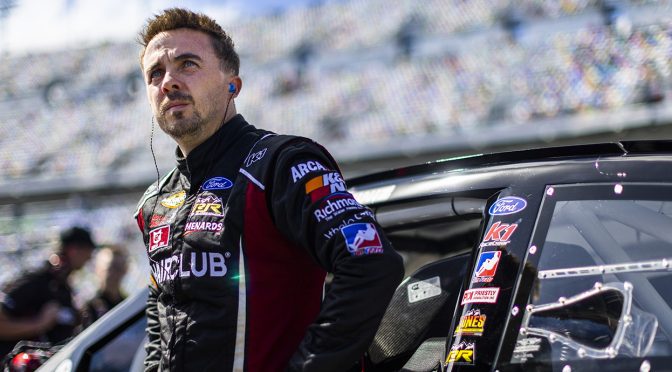
Shortly after the birth of his young son, Frankie Muniz realized he needed to go for it. He didn’t want the boy to grow up knowing his father as Frankie Muniz, actor. He wanted his son to know him as Frankie Muniz, NASCAR driver.
Muniz wants his son to see his father chasing and realizing dreams. And stock-car racing has long been an aspiration for the 37-year-old from Scottsdale, Arizona.
The 2023 season marks the beginning of Frankie Muniz’s NASCAR journey as a full-time driver for Rette Jones Racing in the ARCA Menards Series, a Midwest-based sanctioning body that functions as a feeder series for NASCAR’s three national touring series: the Cup Series, Xfinity Series and Craftsman Truck Series. NASCAR gained ownership of ARCA in 2018.
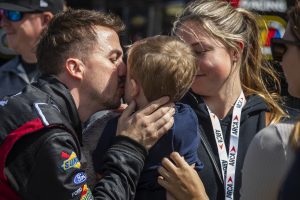
Frankie Muniz and his family (Photo: Adam Glanzman/NASCAR)
While Muniz acquired fame at a young age through his work acting on the critically acclaimed “Malcolm in the Middle” TV show among other projects, he developed a passion for racing. Which is why he put his acting career on hold in the late 2000s.
More than a decade later, and after injuries temporarily halted his racing efforts, Muniz’s love for the sport persists. And he’s cherishing his opportunity with a quality ARCA team like RJR.
“We’ve talked about this for almost a year and a half and kept thinking I would be on track sooner than I was,” Muniz said in January. “I’m throwing myself off the deep end by joining [ARCA], and I wanted to have a team behind me that would teach me as much as I need to learn. I feel like I’m ready.”
Muniz is running for the ARCA Menards Series championship in 2023, meaning he is scheduled to compete in all 20 races on the tour’s schedule.
Below is how to watch all of Frankie Muniz’s NASCAR races in the ARCA Menards Series.
How to watch Frankie Muniz’s NASCAR races: Schedule, TV channel
The NASCAR-owned ARCA Menards Series features a 20-race schedule that begins in conjunction with February’s Daytona 500 at Daytona International Speedway and ends in October at the series’ home track, Toledo Speedway.
All 20 ARCA Menards Series races in 2023 are scheduled to broadcast live on either FS1 or FS2, with a live stream for each event available on either the Fox Sports App or FloRacing, NASCAR’s home for live grassroots racing.
Below is the complete 2023 ARCA Menards Series schedule and how to watch/listen to each race.
Although Muniz does not have much experience in NASCAR or ARCA cars, he does enter his rookie season in the series with racing experience on his side.
The Toyota Pro/Celebrity Race served as the springboard for Muniz’s racing career. After finishing seventh and third overall in the 2004 and 2005 editions, respectively, Muniz wanted to become more involved in motorsports. He joined the Champ Car Atlantic Series in 2007, one year after “Malcolm in the Middle” ended.
Muniz spent the next three years in the Atlantic Championship gradually improving his race craft with the goal of joining the IndyCar Series for the 2010 season. When that deal fell through as a result of injuries sustained in a road racing crash, Muniz took a sabbatical from racing to focus on other ventures like drumming and getting back into acting.
(Photo: Adam Glanzman/ARCA Racing)
Now that he has a family of his own, Muniz wanted to set the best example possible for his young son and realized he still aspired to have a racing career. He finally made his stock car debut in a Pro Late Model at Kern County Raceway Park in 2021 before testing a car for Fast Track Racing at Daytona International Speedway a few months later.
Muniz expressed some frustration over his own decision to step away from racing, but he is now fully committed to working with everyone at Rette Jones Racing and show the entire industry he is capable of being competitive despite the prolonged absence.
“If you want to do anything successfully, you really need to give 100 percent,” Muniz said. “If you want to be a race car driver, you need to be that in everything from training to just being with the team. I wish I hadn’t waited so long [to get back into racing], because realistically I’m old to be getting started in the stock car world, but I don’t have time to waste, so hopefully [the motivation] helps the progression go a little quicker.”
The original plan was for Muniz to serve as a teammate to Amber Balcaen during the 2022 ARCA Menards Series season, but co-owner Mark Rette decided against this option so he could devote all the team’s resources towards ensuring Muniz was in the best possible position to excel in 2023 with Balcaen not returning.
(Photo: Adam Glanzman/NASCAR)
Muniz also recalls how his other co-owner Terry Jones nearly won the 2017 Lucas Oil Slick Mist 200 at Daytona before getting passed late by Austin Theriault for the win. He believes having both Rette and Jones to lean on for advice will help him get more acclimated to the draft ahead of his first Daytona race.
“[On the drive down to Daytona], I learned Terry was a bit of a maniac behind the wheel,” Muniz said. “He was drafting the semi-trucks on the freeway and told me that’s what it was going to be like [during the weekend]. It’s been so cool to hang with Terry and Mark and hear some of their stories. I want to make them proud of their decision to put me in this car.”
Gaining respect amongst his seasoned peers is the top priority for Muniz in the ARCA Menards Series. He has been appreciative of the support many in the industry have provided him through the process, and he hopes their confidence in his driving ability is maintained as the year progresses.
Any triumph for Muniz would put him in a similar category to other actors who had successful auto racing ventures like Paul Newman, Steve McQueen and Patrick Dempsey, but Muniz said he wants the motorsports aspect of his life to be at the forefront while competing in ARCA.
“I want people to think of me as a race car driver,” Muniz said. “People don’t think of Paul Newman as a race car driver, they think of him as an actor. If people can take me seriously as a driver, that would be really cool for me, but I’m running my own program with my own goals.”
When Erik Jones appeared on Dale Earnhardt Jr.’s popular podcast, the Dale Jr. Download, late last year, the two drivers compared notes about their life stories. Sure, their driving days were an obvious topic, but when they talked about the specific rush they received from reading to an audience of young students, both Jones and Earnhardt lit up.
The immediate reactions and personal engagement were tougher to measure when it was just Jones, his camera and a copy of Dr. Seuss’ “Oh, The Places You’ll Go” in April 2020, when the height of COVID-19 forced schools to shift to at-home learning. Jones had wanted to make his personal passion for reading a part of his platform as a NASCAR driver since he first reached the national series ranks. In that moment, that first Facebook appearance, it clicked.
“It was kind of crazy to hear in the industry, a lot of guys coming up and saying they watched it with their kids and wanted me to keep doing it,” Jones says now, reflecting on the start of his #READwithErik campaign. “They tune in every other week when we do it. So that was cool, unexpected for me. You never know how those things are going to take and who’s going to be interested, but it’s been fun.”
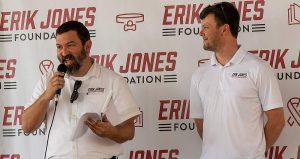
From the humble beginnings that started with storytime and a hashtag has sprouted the Erik Jones Foundation, which launched in August 2021 with the goal of giving back in three areas that remain personal to the 26-year-old driver — early cancer detection and awareness, animal welfare and his love of reading.
The foundation is making an expanded presence with its #READwithErik program this year, including events this weekend at Talladega Superspeedway. Those plans include a scavenger hunt for a VIP garage tour, a giveaway of 100 copies of Dale Jr.’s children’s book “Buster’s Trip to Victory Lane” and a read-along with Jones at 10:10 a.m. local time Sunday in the NASCAR Kids Zone.
Taylor Rose | Reine Digital
Helping to guide the foundation into its next phase is Brent Nickola, the foundation’s executive director and, like Jones, a Michigan native. His hometown of Flint has long been associated with the car culture of nearby Detroit, and Nickola’s downtown office sits two blocks from a statue of Louis Chevrolet.
Nickola’s background with the Jones family goes back to the roots of Erik’s racing career. Back then, Nickola worked for the University of Michigan, involved with the alumni relations and fundraising development office. When he needed help and a potential sponsor for a racing-themed event in 2010, he was introduced to Dave Jones, Erik’s father.
“I just stayed in touch with the Jones family over those years,” says Nickola, now 46. “And it’s interesting, actually. It would have been about 10 years ago, Erik was climbing the ranks of NASCAR, and his father and I were having a conversation about … I’ll just put it simple, he was dreaming about what Erik’s career could be. And we saw that time he was racing for Kyle Busch, and we’re like, ‘Man, there might be a path for this.’ And I said to him, ‘Dave, if something ever happens, and Erik ever makes it all the way, and you guys want to do a foundation, I’d love to be the guy to do it.’
“He passed away two or three years later, and I never brought that conversation up to Carol, Erik’s mother, or Erik because I just felt it was too self-serving. There was never a right time to bring it up. And it was about a year and a half ago, they called me and said, ‘Hey, we’re starting a foundation, we want you to be a board member,’ and after I’d worked with them for a year and a half as a board member, they said, you’re our guy.”
Those first conversations came nearly 350 national series starts ago before Jones’ name had been established on the NASCAR scene and before he had a more prominent platform to use for a good cause. Those dreams that Dave Jones had for his son came true, with Erik Jones now in his seventh season as a Cup Series regular and now driving the No. 43 Chevrolet for Legacy Motor Club.
“I’ll never forget the day, similar to a phone call like this, that I picked up the phone and called his father about a week after he won the first Snowball Derby when he beat Kyle Busch, and it was a big thing for his career,” Nickola recalls. “And I remember standing there talking to his dad, looking out the window like I am right now, he said, ‘I think he punched his ticket. This might be it.’ And that was 2012, and it’s just been a neat kind of ride to watch ever since.”
Being along for that journey on the NASCAR side has required some transition for Nickola but in a manageable amount. He’s still based in Flint, and the tenets of building strong relationships, multitasking and communicating effectively from his previous role still apply. It’s the pace, which dovetails with the 36-race schedule and then some, that’s accelerated.
Erik Jones Foundation
One thing that’s remained constant: Reading and racing have seemingly always run in parallel paths for Jones. The bedtime read-alongs that his parents would share led to novels and biographies as Jones grew up, much like how the young racer progressed from quarter-midgets at age 7 to full-bodied stock cars once he reached his teenage years.
He’s remained an avid bookworm even as he faces the week-to-week pressures of competing at NASCAR’s highest level. Reading has offered him balance and an escape. Now the racing portion of Jones’ passion is helping him share the same enjoyment of the written word with others but also to address literacy issues within the greater community. According to 2022 statistics from the National Literacy Institute, 21% of adults in the US are illiterate, and 54% of adults have a literacy level below sixth-grade proficiency, figures that Jones called “eye-opening.”
“It’s been something that I had no idea,” Jones says. “I think you always just assume, it’s just something you do. You grow up, you learn how to read, and everybody’s a pretty decent reader, but it’s not really like that. So I’ve been able to kind of promote it on the early side to children but also trying to get adults involved in reading has been something we’ve picked up on.”
Those goals also hit home with Nickola on a personal level.
“For me, a reason I’m really excited about the literacy piece of this is because I come from a family who struggled with literacy in our lives,” he says. “And so, I have a son who’s dyslexic. I suffered from learning disabilities as a youngster, I was not confident in my writing probably until I was in my mid-30s, and so for someone who struggled as a youngster, this is just such a tremendous opportunity to try to help some young folks overcome some of those struggles with their own literacy.”
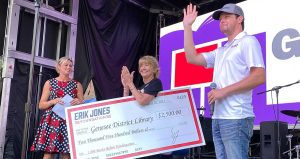
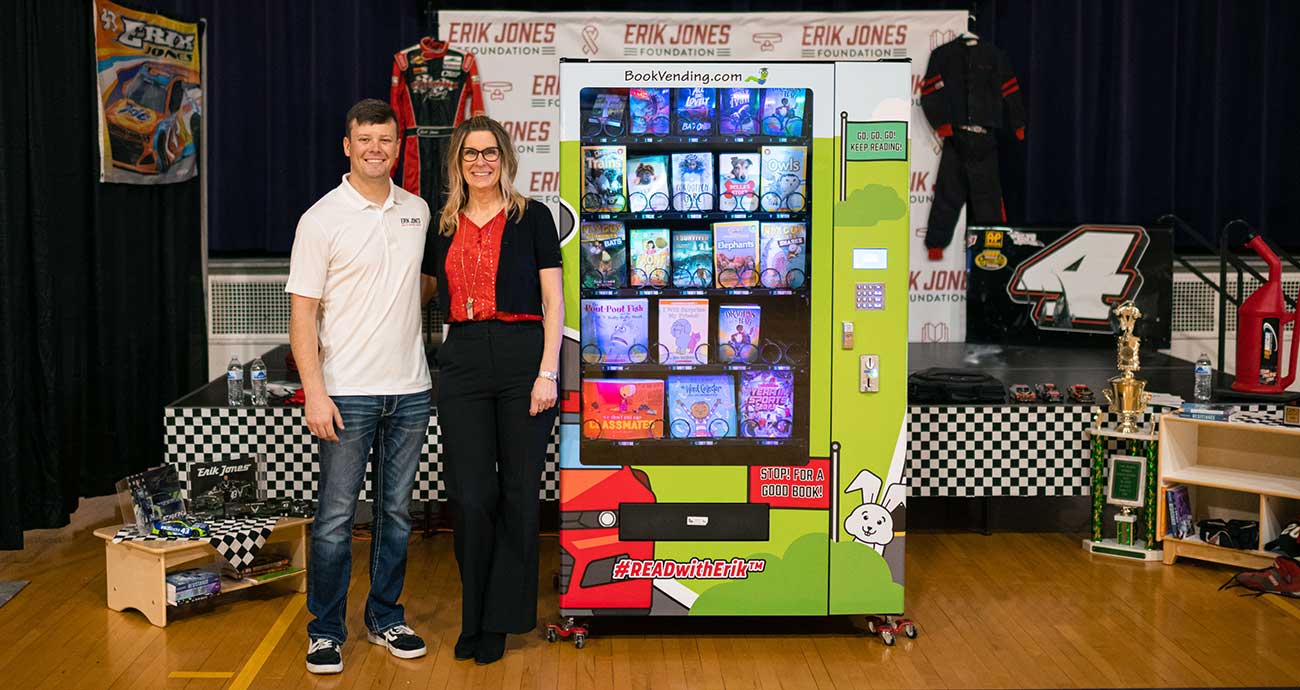
The foundation has already made strides in promoting reading in areas close to home for Jones and his family, with donations to local libraries and other events to spread awareness. Last month, Jones visited his former school of Byron Elementary, reading to students and donating a book vending machine as an incentive for young readers to build their own personal library. Tammy Laurin, Jones’ teacher in both first and fifth grades, was alongside for the machine’s unveiling.
More #READwithErik-themed events at tracks around the NASCAR circuit are in the works for this year, Nickola says, as the foundation aims to expand its reach. At the heart of it is that rush that Jones gets from reading to others.
“It’s always cool to read to the kids in person, see the reactions, following along with the book, giving some books away. Now taking that and expanding into the schools is kind of our next direction,” Jones says “… There’s a lot of different possibilities within it, and it’s been fun to uncover those.”
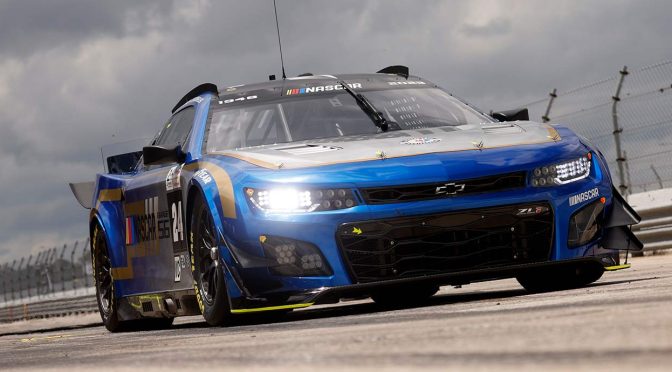
SEBRING, Fla. – A sunny sky, low humidity and a historic sports-car track greeted the NASCAR Garage 56 Project at Sebring International Raceway on Tuesday as the team turned its final test laps before the No. 24 Next Gen Chevrolet Camaro ZL1 is loaded up for its trip to compete in the historic 24 Hours of Le Mans on June 10-11.
Drivers Jimmie Johnson, Mike Rockenfeller, Jenson Button and Jordan Taylor ran laps in both the primary and backup Camaros all day Monday and the early part of Tuesday, working out any lingering technical bugs in the car and also practicing pit stops and driver changes underneath the “Gurney Terrace” overlooking Sebring pit lane.
New stickers have now been affixed to the cars – including the boxed letters “IC” just in front of the front wheels, marking the single-car “Innovative Car” class that the Garage 56 Chevrolet will compete in at Le Mans.
Hendrick Motorsports team owner Rick Hendrick flew into the Sebring airport adjacent to the rural track late Tuesday morning to see the car on track and take a photo with the approximately 50 team members guiding the test. The Garage 56 entry is a combined effort with Hendrick Motorsports, IMSA, Chevrolet and Goodyear – representatives from all invested in the project there to wish the car “au revoir.”
“I feel really good about it,” said the seven-time NASCAR Cup Series champion Jimmie Johnson, who, like Hendrick, will be making his first trip ever to the Le Mans endurance race. “We’ve put in many hours, a lot of work, a lot of collaboration and I feel like we’re in a really good spot. This has been a great test this week, really just working on the small details literally down to things like what color are the buttons on the steering wheel and is the black light inside the car bright enough in the right areas that we can see the dayglow buttons to push at the right time.
“We’re really in a good place.”
Johnson, now a team owner/driver with Legacy Motor Club in the NASCAR Cup Series, will drive in the iconic Coca-Cola 600 at Charlotte Motor Speedway on Sunday, May 28 and then leave immediately for Paris where he will undergo a nearly day-long mandatory orientation the next day.
“There’s a requirement that every new driver must come in and drive their simulators and work through all their procedures,” Johnson said. “They use a different safety car procedure; they have slow zones. There are some nuances I need to learn and that’s what the sim session is for.”
Chris Graythen | Getty Images
His teammate Rockenfeller was equally satisfied with the Sebring test sessions. The drivers – all dressed in plain black driver’s suits – were smiling in between discussions with the engineers.
“As a driver or engineer, you always like to have more time and do more stuff and prepare better,” said Rockenfeller, a sports-car champion and former Le Mans winner (2010), adding with a smile, “Luckily there is a fixed date, or we would continue to test for another three years. That’s normal in racing.
“I think we are feeling quite good to be honest. I am quite confident we are prepared. We have to go to Le Mans and it’s a different place, different track and see what challenges we will face there in terms of set-up with the car or issues we may face that we didn’t here. Then you have to react. We have a great team here.”
There were lots of smiles in the team’s trackside temporary tented headquarters. NASCAR Chief Executive Officer Jim France and IMSA President John Doonan joined Hendrick to take a final look at the Garage 56 Project before the cars are sent overseas. Former NASCAR Cup Series crew chief Greg Ives is crew chief on the No. 24 and Hendrick Motorsports executive Chad Knaus is overseeing the project for the team.
“The thing I’m most proud of is all the partners that have come in, and the sound of that race car,” France said watching laps from pit lane and declaring with a smile. “A year ago, at the Sebring race we sat down here and now to go over and watch them race is an exciting moment.”
“A lot of European fans are familiar with our IMSA cars and when a NASCAR car shows up there it’s going to be unique for a lot of European fans to actually see one up close and personal. And of course, we’ve got a fantastic driver lineup.”
“We were able to get NASCAR drivers,” he said smiling, noting that Johnson, Rockenfeller, Button and Taylor have all made NASCAR Cup Series starts in the last two seasons.
Shortly after the morning session ended, the full gathering of drivers, owner, crew and racing executives stood alongside the cars for a final photograph before they all dispatch to France to see their hard work in action.
“Now we’ve got to go do it,” Hendrick said. “There’s a tremendous amount of pride in this from our organization, Goodyear, Chevrolet, NASCAR, IMSA. You don’t have to talk to Jim France very long to know what this means to him. And I was honored he asked us to do this.”
Kyle Larson’s emotional Martinsville win — just listen to him choke up on his scanner after his first victory at the 0.526-mile short track — was a career-high watermark for the driver, who thought he’d never win at the oldest track on the NASCAR circuit.
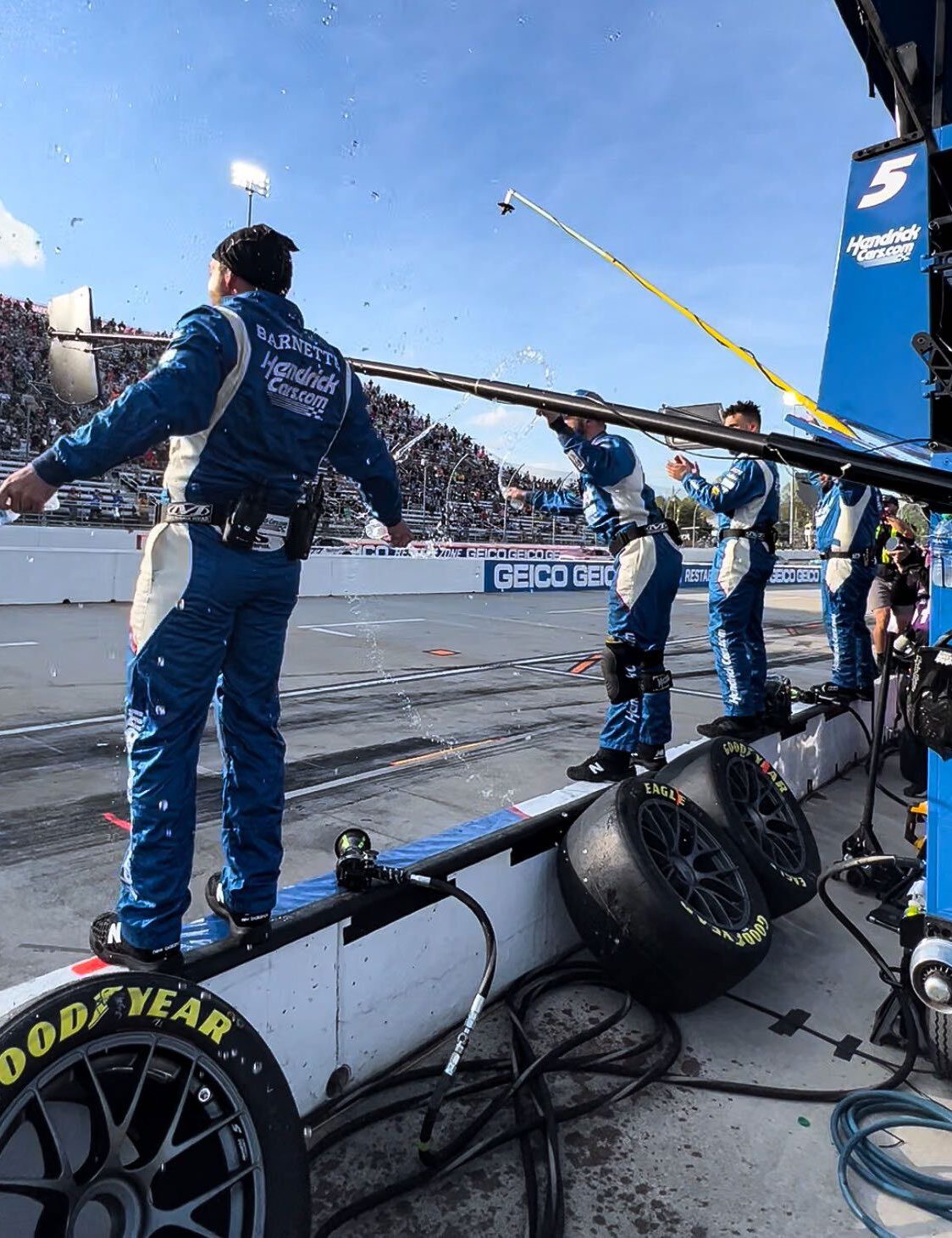
That he did speaks to his growth and grind as a NASCAR Cup Series driver, and also to the pit crew making adjustments to the No. 5 Hendrick Motorsports Chevrolet.
At Martinsville, the five-man pit crew of Blaine Anderson (front-tire changer), veteran R.J. Barnette (tire carrier), Brandon Harder (fueler), Brandon Johnson (jackman) and Calvin Teague (rear-tire changer) delivered its collective best race performance of the season.
According to data provided by Racing Insights, Larson’s pit crew recorded both the single fastest four-tire pit stop of the race and the overall fastest average four-tire stop on the afternoon.
Pitting on Lap 293, the No. 5 crew turned a 9.677-second stop — the sixth-fastest of the entire season.
Brittney Wilbur | NASCAR Studios
For the entire race, Larson’s team averaged 10.051 seconds for four-tire stops. It was the best of the afternoon at a track with a tricky pit-road configuration — not to mention tight pit stalls — and through nine races, it’s the fastest average time of the season.
“They kept working on it and got us better and better,” Larson said. “You know, never once did I really feel like we had the car to win, but we made the right strategy calls and did the right things (on pit road).”
While it was Larson’s team that allowed him to gain spots on pit road, it was ultimately crew chief Cliff Daniels’ winning call of taking two tires on the final pit stop that was the final piece of Larson’s day that led to a memorable win.
“I’ll be the first to admit for 200 laps, we weren’t a winning car. Our car just wasn’t great,” Daniels said. “Some of that was what was in our car, and some of that was kind of the track conditions. … I think being able to be more aggressive on the strategy side, get some spots on pit road or spots on what your strategy is, certainly, that’s helpful.”
PIT ROAD STATISTICS
Following a banner day by Larson’s team, read on below to see the 10 fastest four-tire stops of the season and the 10 fastest pit crews, on average, throughout the season, according to Racing Insights.
TEN FASTEST FOUR-TIRE PIT STOPS IN 2023
Rank
Track
Driver
Time
1
Richmond
Corey LaJoie
9.309 seconds
2
Richmond
Corey LaJoie
9.615 seconds
3
Phoenix
Ty Gibbs
9.643 seconds
4
Richmond
Chase Briscoe
9.647 seconds
5
Phoenix
Chase Briscoe
9.676 seconds
6
Martinsville
Kyle Larson
9.677 seconds
7
COTA
Martin Truex Jr.
9.684 seconds
8
Phoenix
Kyle Busch
9.688 seconds
9
Richmond
Tyler Reddick
9.749 seconds
10
Las Vegas
Alex Bowman
9.776 seconds
BEST PIT CREWS BY AVERAGE FOUR-TIRE STOP (SEASON-LONG)
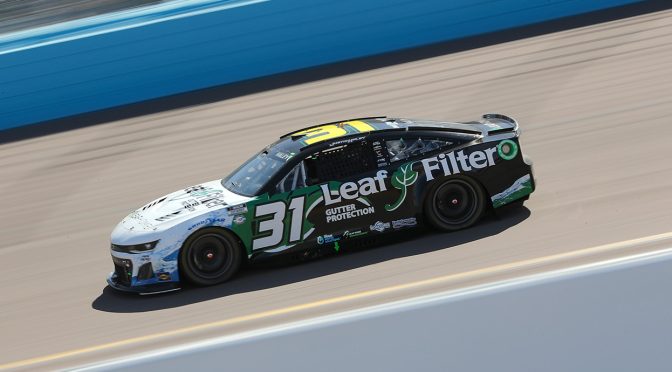
The Final Appeals Officer ruled Tuesday to amend the L2-level penalties issued to Kaulig Racing for unapproved parts modifications entering the March 12 weekend at Phoenix Raceway, but rescinded the points deductions at NASCAR’s request.
The decision states that “the Appellant violated the Rule(s) set forth in the Penalty Notice,” upholding the fine of $100,000 issued to the No. 31 NASCAR Cup Series team of driver Justin Haley but removing the loss of 100 championship driver points and 10 Playoff points initially issued to Haley. The four-race suspension levied to crew chief Trent Owens remains, however.
The Final Appeals Officer for this meeting was Bill Mullis.
“In the interest of fairness, NASCAR has requested that I remove the driver/owner race and playoff points from the penalty to Kaulig Racing,” said Mullis. “I have agreed to this request, per the Rule Book. During its opening remarks, NASCAR stated it believes that the violations did occur, the penalties were appropriate and the three-person appeals panel ruled correctly. But, because the Kaulig infraction closely mirrored that of Hendrick Motorsports (modified louver at Phoenix Raceway), NASCAR requested I rule in the same manner as the three-person appeals panel following the Hendrick Motorsports appeal on March 29. The information I heard in the room this morning created an overwhelming and unique circumstance. In fairness to the team and sanctioning body, as NASCAR documented in its remarks, this request is fully in the interest of fairness and consistency, and I agree.”
NASCAR released a statement following the ruling.
“NASCAR believes that Kaulig Racing committed the violations documented in the penalty notice, that the penalties were appropriate and that thethree-person appeals panel ruled correctly when hearing the Kaulig appeal on April 5. However, in the interest of treating all competitors fairly, NASCAR today requested that the Final Appeals Officer remove the race and playoff points from the penalty. The Kaulig and Hendrick Motorsports violations involved the same modified part found during the same race weekend (modified louver at Phoenix Raceway), and with fairness and consistency top of mind, NASCAR requested that the FAO match the final Hendrick Motorsports penalty. NASCAR believes that the updates made to the Rule Book will address similar issues in the future and keep its promise to the owners for strict penalties when single-source parts are modified. We are pleased with the swift resolution to today’s appeal, appreciate Bill Mullis’ ruling and now look forward to this weekend’s events at Talladega Superspeedway.”
Kaulig Racing also reacted to the decision, publishing a statement Tuesday afternoon.
“Kaulig Racing is pleased with the ruling of the Final Appeals Officer to amend the original L2 penalty issued by NASCAR following the confiscation of a louver at Phoenix Raceway. Regarding these unique circumstances, it means the world to us as an organization that the sanctioning body is working hard to ensure fairness and consistency across the board within our sport. We are focused ahead on Talladega and look forward to getting our season back on track with Justin Haley.”
While NASCAR discovered the hood louvers from all four Hendrick cars before practice on March 10 at Phoenix, Kaulig Racing’s louvers were discovered during pre-qualifying inspection on March 11. NASCAR officials confiscated the parts from all five vehicles and took them back to the R&D Center in Concord, North Carolina, for further examination. The team used an unmodified louver in the March 12 race, in which Haley finished 27th.
The hood louvers — which you can see on this Next Gen 3D model — are openings or vents in the hood that serve as a release point for ducts that transfer air out of the radiator. The system is intended to decouple engine performance from aero performance, offsetting the practice of teams taping off air intakes and placing undue pressure and heat strain on the car’s engine.
In the initial penalty report, the following sections of the 2023 NASCAR Rule Book were cited: Sections 10.5.1.A Guiding Principles Relative to Penalties; 14.1 C&D&Q Overall Assembled Vehicle Rules; 14.5.4.2.A Radiator Duct.
COLORADO SPRINGS, Colo. — Leidos, a Fortune 500® science and technology leader, and its Dynetics team have announced their intention to compete in another moon race through a promotional partnership with NASCAR. The partnership will be a collaboration between two organizations in the areas of speed, safety and reliability. Details of the collaboration as well as the design and technology of the Lunar Terrain Vehicle (LTV) were unveiled during a special event at the Space Foundation’s 38th annual Space Symposium, the premier assembly for the global space ecosystem.
To view the partnership teaser video please click here.
“We are thrilled to unveil our lunar vehicle design and to announce our exciting new promotional partnership,” said Leidos CEO Roger Krone. “This groundbreaking collaboration between Leidos and NASCAR takes both companies into uncharted territory, just like we believe our rover will do for NASA and its astronauts. We aim to pave the way for human exploration of space and inspire the next generation of engineers, scientists and innovators to reach for the stars.”
“NASCAR partnering with Leidos couldn’t make more sense when it comes to this vehicle,” said Pete Jung, NASCAR senior vice president and chief marketing officer. “With both companies being known for exciting innovations in distinctive fields, this collaboration brings together ideas that normally don’t meet in other developments. We are eager to watch this uniquely designed rover traverse different areas of the lunar surface.”
Leidos is looking ahead to the next phases of NASA’s Artemis program after the successful launch of Artemis I on Nov. 16, 2022. The company has submitted a bid for the Human Landing System Sustaining Lunar Development contract, a critical component of NASA’s efforts to establish a sustainable presence on the moon. In addition, Leidos is currently working on the Universal Stage Adapter (USA) for NASA, a crucial piece of equipment that will enable the transport of large payloads, including the Lunar Terrain Vehicle recently unveiled by the company. Leidos is demonstrating its commitment to advancing the frontiers of space exploration and helping to shape the future of human spaceflight with these projects.
“We are fully committed to supporting NASA’s ambitious plans for lunar exploration,” said Steve Cook, president of the Leidos Dynetics Group. “As an industry leader in space technology, we are uniquely positioned to help NASA achieve its objectives, providing everything from necessary crew mobility to workhorse flexibility for building a lunar base. We believe that our innovative solutions and unmatched expertise make us the ideal partner for NASA as it works to establish a sustainable presence on the moon and beyond. At Leidos, we are proud to be at the forefront of this historic mission. We look forward to continuing our partnership with NASA to push the boundaries of human exploration and discovery.”
The rover design is a masterclass in simplicity, harkening back to the engineering that made the Apollo missions successful, while incorporating modern innovations that prioritize sustainability. The rover’s components have been meticulously designed to support the safety and well-being of astronauts as they drive across the lunar landscape. One innovation stands out: it supports male and female crew members across varying height and weight scales, promoting inclusivity in space exploration. By combining cutting-edge technology with a sustainable design philosophy, Leidos is leading the charge in creating a brighter future for humanity both on and off Earth.
Leidos and its Dynetics team bring a wealth of experience to the table, with a long-standing reputation as trusted providers of advanced space systems and services to NASA. NASCAR, on the other hand, boasts a powerful marketing engine and a passionate fan base, as well as a proven track record of developing high-performance race cars that push the boundaries of what’s possible. Combining their strengths and expertise, this collaboration marks a new chapter in NASA’s quest to explore the universe and push the boundaries of human achievement.
Roush Industries of Livonia, Michigan, provides automotive design and manufacturing experience for the project. Other project partners include Collins Aerospace, Motiv Space Systems, Moog, A-P-T Research, Sophic Synergistics and the Center for Advanced Vehicular Systems at Mississippi State University.
“NASCAR is excited about our promotional partnership with Leidos,” Jung said. “Our partnership can take us to the moon — and potentially beyond.”
The NASCAR Cup Series season continues on Sunday at 3 p.m. ET when the sport’s biggest stars hit the track for the GEICO 500 at Talladega Superspeedway. All the action will air live on FOX, MRN and SiriusXM NASCAR Radio.