Editor’s note: NASCAR Roots will profile local drivers in advance of this weekend’s South Carolina 400 at Florence Motor Speedway, where Dale Earnhardt Jr. will compete. Click here to learn more about the track or watch Saturday at 7:30 p.m. ET on FloRacing.

There aren’t many drivers who can win a track championship in the top class at a NASCAR-sanctioned short track before their 18th birthday.

Kade Brown did it at 16.

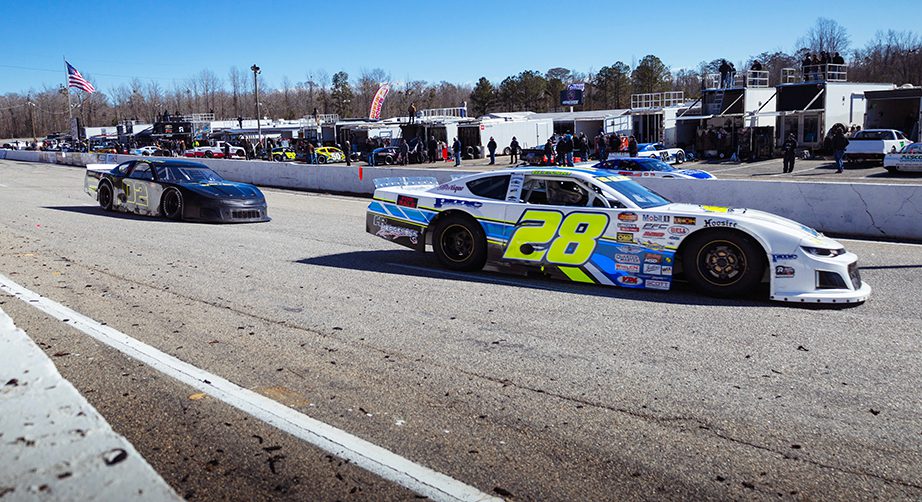
Brown, driving a late model stock car prepared by AK Performance, was the driver to beat all season at Florence Motor Speedway in Timmonsville, South Carolina.

In 17 starts at the 0.4-mile asphalt oval, Brown won six times and finished outside the top 10 just once. If that weren’t impressive enough, 2022 was Brown’s first full season racing late model stock cars after he dabbled in the class last year.

RELATED: Watch the South Carolina 400 live on FloRacing

“I started in late model stocks at Florence in 2021,” said Brown, who also claimed the NASCAR Advance Auto Parts Weekly Series South Carolina state championship in addition to the Florence track championship. “I ran about half the season, and I had one or two top threes. We were OK. We went into the 2022 season with really no idea how we were going to do.”

Part of the uncertainty was because of some bad luck late in 2021 that saw Brown crash his team’s primary car during the South Carolina 400 at Florence. The team built a new car for the 2022 season following the crash, a decision that immediately paid dividends.
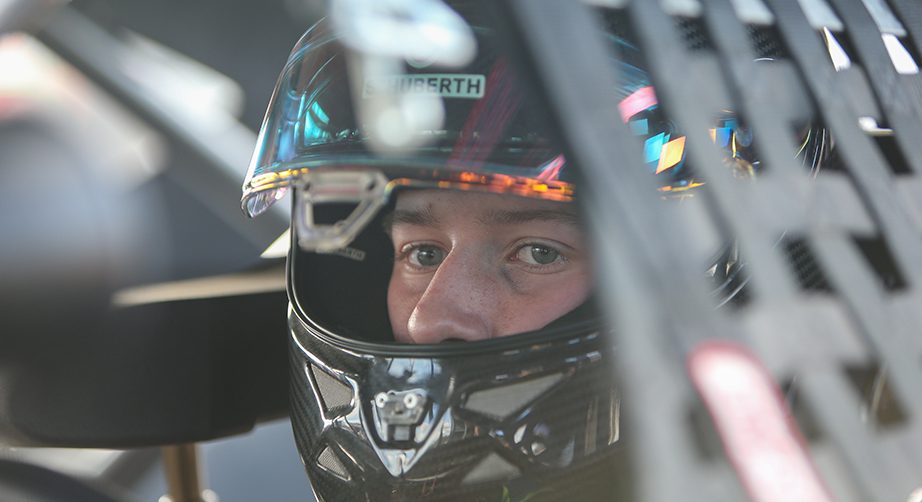
Kade Brown
Kade Brown pictured during practice for the Fall Brawl at Hickory Motor Speedway on Nov. 12, 2022. (Adam Fenwick/NASCAR)

In his first race in that new car during Florence’s IceBreaker in February, Brown drove to a third-place finish. It was at that point he knew he had a car capable of competing for the track championship.

“We knew we were good,” Brown said. “From there on out we kept getting better and better each time we were out there and learning. We ended up with six wins.

“We were confident enough to where we could go race for a championship after those first few races and how they played out.”

Brown is not a South Carolina native; he moved to the region two years ago from Fulshear, Texas. The move was the result of his father’s employer transferring him to the East Coast.

When it came time to pick exactly where in he region the family would land, Brown said they chose Denver, North Carolina, because of its proximity to the motorsports industry.

Brown had taken an interest in motorsports long before the move to North Carolina. His father, a former motocross racer, didn’t want his son to follow in his footsteps as a motorcycle racer. That’s when Brown, then just 5, got his first go kart.

He’s been off to the races – literally – ever since.
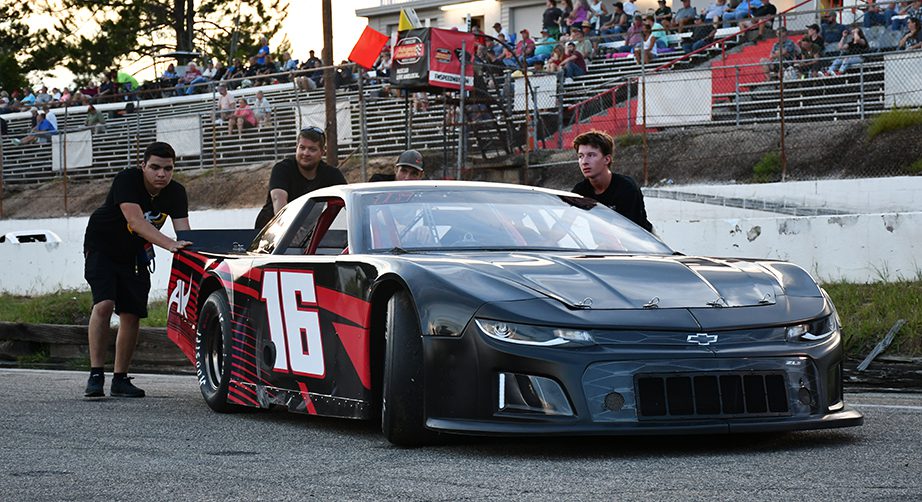
Kade Brown
Kade Brown (right) helps his crew push his car at Florence Motor Speedway earlier this year. (Photo courtesy of Kade Brown)

“I raced that go kart until I was 7,” Brown said. “Then I got a Bandolero and raced that until I was 12. Then I got in a legend car, raced it for two years, and I’m still in and out of that. Then I got in a late model when I turned 14.”

While the regular season at Florence may be over, one big event remains on the schedule. The South Carolina 400, scheduled for this Saturday evening, is expected to attract one of the biggest late model stock car fields of the year.

Brown, as the reigning track champion, will be one of more than 50 drivers looking to qualify for the race. He’s looking forward to the challenge, which would include battling NASCAR Hall of Fame Dale Earnhardt Jr., who is returning to race to Florence for the first time since his formative years in racing.

“I’m really looking forward to it,” Brown said about competing in the South Carolina 400. “I’ve never been this excited for a race. I’m a little nervous because I really want to do good. I know it’s going to be a stacked field. Dale Jr. is going to be racing. I just want to do the best I can, and however it plays out is how it goes.

“It’s going to be the best of the best there. You can’t get any better. I’m really looking forward to it. These guys are the best there is. I’m hoping we can stack up well against them.”
DAYTONA BEACH, Fla. — NASCAR today announced the creation of NASCAR Brasil Sprint Race, the sanctioning body’s fourth international series and first in South America. The series, which will begin competition in 2023, is a partnership between NASCAR and the GT Sprint Race series in Brazil.

NASCAR Brasil Sprint Race joins the NASCAR Mexico Series, NASCAR Pinty’s Series (Canada) and NASCAR Whelen Euro Series as the fourth international series racing under the NASCAR banner. In 2023, NASCAR racing will take place in 12 different countries on three continents.

“Brazil is a vibrant country, rich in motorsports culture and community, and the perfect location for our first series in South America,” said Chad Seigler, NASCAR Vice President of International. “NASCAR Brasil Sprint Race will allow us to showcase the exciting side-by-side racing that defines NASCAR while giving Brazilian race fans a series to which they feel connected. It is our hope and intention that this series also opens more pathways for the country’s best drivers, mechanics and engineers to advance to NASCAR’s national series in the United States, the worldwide pinnacle of stock car racing.”

“NASCAR is an iconic American sport, and we are honored to join forces to create NASCAR Brasil Sprint Race,” said Carlos Col, General Partner, NASCAR Brasil Sprint Race. “GT Sprint Race has delivered exciting racing to fans since 2012 and this partnership will help take it to the next level with the introduction of more NASCAR-style racing, including future races on oval tracks. This is an historic day for motorsports in Brazil, and one that will benefit race fans across the country.”

GT Sprint Race was founded in 2012 by Thiago Marques, a former standout stock car driver in Brazil, with the goal of balancing high levels of competition, performance and safety.  The 2022 schedule included 18 sprint races over nine weekends at road courses across Brazil, including Autodromo Jose Carlos Pace (Interlagos) in São Paulo. The 2023 schedule will be released at a future date.

Brazil’s strong motorsports culture has extended to NASCAR over the past 20 years. Three Brazilian-born drivers have competed in NASCAR in the United States – Christian Fittipaldi made 15 Cup Series starts in 2003, Nelson Piquet Jr. started 83 races across NASCAR’s three national series from 2010-16 winning three times, and Miguel Paludo has 81 starts in the NASCAR Xfinity Series and CRAFTSMAN Truck Series, including three this past season.

Through a partnership with Bandeirantes, all NASCAR Cup Series races and select Xfinity Series and CRAFTSMAN Truck Series races are shown on Band Sports. NASCAR is currently broadcast in 195 countries and territories, reaching over 500 million households.

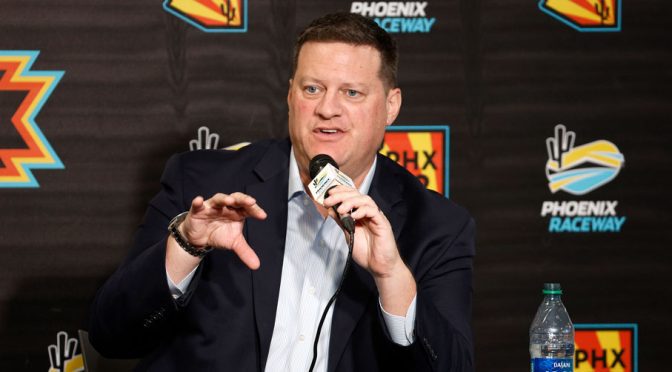
Steve O’Donnell, the latest guest to join the “Stacking Pennies” podcast with Corey LaJoie, had plenty to share.

O’Donnell, the sport’s COO, offered candor on a multitude of pressing topics surrounding the sport at the forefront of the offseason, including potential upcoming changes to the Next Gen car, possible international events and ongoing discussions with manufacturers.

MORE: Tune in to the “Stacking Pennies” podcast

The 2022 NASCAR Cup Series season saw the Next Gen vehicle debut and bring with it plenty of upside – 19 different winners, compelling racing and more parity. But criticism remained around the on-track product at both short tracks and road courses. O’Donnell conceded those areas need work and will be addressed ahead of the 2023 season.

“I agree with the fans,” O’Donnell told LaJoie and Co. “Small body of work, right? We didn’t have that many races [on short tracks]. But you take Martinsville, for instance, and the thing that caught my eye – and you heard this from BJ [McLeod], a good race car driver, right? But he’s a lap down, and he’s able to hold off the leader, I think, for what, 50 laps, right? Just kind of shifting and getting off the gas. And that’s a problem for us.

“So if you’ve got a good car and you’re out there and you’re able to pass guys, you should be able to do that. And so we’ve looked at what’s happening in short tracks. You look at the brakes on the road courses, they’re so good. So this car is different for sure. But it presents some challenges on both short tracks and road courses. So we’re looking at a lot of things around the aero. Certainly looking at some things around the tires, but you know that’s going to be our big focus in the offseason is both road courses and short tracks for sure.”

Some of that work has already begun, thanks in part to NASCAR’s partnership with Hendrick Motorsports as the team fields a Garage 56 entry for the 2023 running of the 24 Hours of Le Mans. The company’s first test car hit the track Monday at Virginia International Raceway, and some of that data is already proving notable as NASCAR officials work to improve the Next Gen product on the sanctioning body’s traditional circuit.

MORE: ‘Huge milestone’ reached for G56 at VIR

“There’s a lot of things we’ve looked at in the wind tunnel that we found on that car that I think we can try for [a] fairly inexpensive way to go about it, particularly on the short tracks,” O’Donnell said. “So you’ll see us most likely go test something up in Richmond. … But I think there’s gonna be some good things. At least from what we’ve seen already in the wind tunnel and a lot of the sim data, it looks really good in terms of getting rid of some of the challenges as we’ve seen, particularly on the short tracks.

“And then, ultimately, we’ve got to look at shifting. Do we want to eliminate that? How can we work with the engine builders to improve upon that also?”

Power components also remain a hot-button topic as manufacturers consider moving further toward electric or other power sources for their vehicles. NASCAR continues to look at those options, O’Donnell said, but all factors must make sense too.

“For us, we’ve got to be all things to all people. And at the end of the day, we got to be entertaining,” O’Donnell said. “And people want to show up, and they want to go to an event, and they want to have fun. And what I’ve seen at least around [electric vehicle] racing so far, there’s maybe some fun off-track, but the racing is not that. And so we’ve got a lot of work to do if we’re going to be in that space. How do we do it? What’s the look and feel of the car?

“So we’re building kind of a mule car, so to speak, and we’ll beat it up a little bit, see what we can learn. But we’re also going to be looking at hydrogen space, alternative fuels, all kinds of things because we’ve got to be on the forefront of that and not just put all our eggs in one basket.”

NASCAR has not seen a new manufacturer enter the sport since Toyota joined the NASCAR Craftsman Truck Series in 2004, eventually leaping to Cup in 2007. O’Donnell stressed talks are ongoing and have gotten close, but added it remains difficult to say whether a new manufacturer will join in the next five years.

“I think there’s certainly interest,” O’Donnell said. “We are having conversations right now with an OEM, so I’d like to say likely, but it’s tough. … But again, when you go back to looking at how soon is electrification going to come? Or where do you want to be? And at the end of the day, for us, it’s great if you want to be in the electric space, but we want to be entertaining, right? We’re a sport. We want to make sure our fans come out there and love what they see, and we’ve got to balance that.”

RELATED: Clash tickets, event information

Interest is also stemming from cities around the continent that don’t yet have Cup racing on its doorstep. The NASCAR Xfinity Series’ inaugural visit to Portland (Oregon) International Raceway in June — highlighted by full grandstands despite considerable rain — emphasized an appetite for racing in America’s Northwest region. But calls are also being made from across both sides of the United States’ borders.

”We haven’t necessarily brought the Cup Series to Canada or the Cup Series to Mexico,” O’Donnell said, “so there’s a lot of interest from both those places — Mexico City, Guadalajara, Monterrey, they’re all talking to us. Montreal, Toronto. So there’s a lot of interest.

“I think the key for us is going to be how do we balance this? I mean, you grew up on short tracks. Our fans love short tracks. So we don’t want to turn it into a 30-race road-course schedule, right? So we’ve got to balance where we’re going to take a race and what kind of race track we’re going to migrate that to.”

For more details on O’Donnell’s conversation with LaJoie, tune into this week’s episode of “Stacking Pennies.

Dylan “Mamba” Smith is dusting off his driving shoes once again to compete in Saturday’s South Carolina 400 late model stock car event at Florence Motor Speedway in Timmonsville, South Carolina.

Smith, who made his ARCA Menards Series debut earlier this year at Lucas Oil Indianapolis Raceway Park, will drive a car fielded by Lee Faulk Racing with sponsorship from Dodge Direct Connection and @DodgeMoparMotorsports, the brand’s motorsports Instagram channel.

The 30-year-old from Randolph, Vermont, has worked with Dodge since 2019 as part of the Dodge Thrill Ride tour.

“In April 2019 I was offered a spot on the Dodge Thrill Ride tour, and since then I’ve grown within the brand from a support staff role to serving as a brand ambassador, Dodge product specialist, and now leading event activations and acting as a ‘hype man’ on the mic,” said Smith. “Without this opportunity on the Dodge Thrill Ride tour, I don’t think I’m doing what I’m doing with NASCAR. To carry Direct Connection and @DodgeMoparMotorsports colors on this car is a full-circle life experience — the people and the brand will always be home for me.”

Smith is one of more than 50 drivers entered to compete in the late model stock car portion of the South Carolina 400. He’ll be joined by NASCAR Hall of Famer Dale Earnhardt Jr., who will drive a No. 3 late model stock car featuring a throwback wrap honoring his father’s Bass Pro Shops scheme from the 1998 NASCAR All-Star Race.

Complete coverage of the South Carolina 400 will be available on FloRacing starting Friday at 5:30 p.m. ET. Saturday’s coverage also begins at 5:30 p.m. ET.

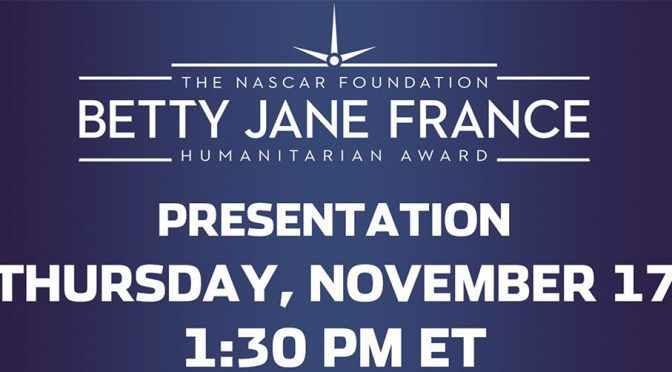
On Thursday, Nov. 17 at 1:30 p.m. ET, The NASCAR Foundation will reveal the winner of the 12th annual Betty Jane France Humanitarian Award live on NASCAR’s YouTube Channel.

THURSDAY’S STREAM: Live on NASCAR’s YouTube channel

The Betty Jane France Humanitarian Award, named in honor of the foundation’s late founder and chairwoman, Betty Jane France, recognizes NASCAR fans who volunteer for children’s causes in their racing communities. Each finalist receives a minimum $25,000 donation for their organization with the overall winner receiving a $100,000 donation from The NASCAR Foundation to further their efforts.

This year’s Betty Jane France Humanitarian Award finalists include:

  • Dan Majetich of Tempe, Arizona, a co-founder and volunteer with Nick and Kelly Children’s Heart Fund of Arizona, an organization that assists Arizona families of children with congenital heart disease and acquired heart disease. After losing their sons, Nick and Kelly, to congenital heart defects, Dan and his wife, Margaret, founded the Nick and Kelly Children’s Heart Fund in 1985. Since then, Dan has become a leading advocate for families of children with heart disease, helping to provide financial assistance and hosting annual camps for children to experience activities that normally may not be accessible to children with heart defects.
  • Ralph Maccarone of Pagosa Springs, Colorado, a co-founder and volunteer of Who We Play For, a nationwide organization whose mission is to eliminate preventable sudden cardiac arrest (SCA) in young people through affordable heart screenings. After losing his 15-year-old son to SCA, Ralph helped to co-found Who We Play For and over the last decade has dedicated his time to volunteering at heart screening events, fundraising and advocating for policy changes and serving as the chairman of the Board of Directors.
  • Tammy Garrett of Mobile, Alabama, a volunteer with Rapahope Children’s Retreat Foundation of Alabama, a non-profit organization that provides opportunities to families on the childhood cancer journey through recreational support programs. A volunteer for 17 years, Tammy is involved in all aspects of Rapahope, including involvement on the organization’s fundraising and planning committees. She is also a regular attendee of the Camp Week, Sibling Weekend, Teen Weekend and Family Day programs, often volunteering her time to cooking meals and helping campers learn to fish.
  • Tracy Williams of Jacksonville, Florida, a volunteer with the Tom Coughlin Jay Fund Foundation, a non-profit organization that supports families that are tackling childhood cancer. For the past 17 years, Tracy has played an integral role in delivering support and raising funds for families affected by childhood cancer. A chairperson to the organization’s signature fundraising event, The Celebrity Golf Classic, Tracy has helped raise over $7 million dollars, coordinating program content and logistics to assure the event’s success including its transition to a virtual environment during the pandemic.

To learn more about The NASCAR Foundation’s Betty Jane France Humanitarian Award and the 2022 finalists, visit NASCARfoundation.org/Award.

Editor’s note: NASCAR Roots will profile local drivers in advance of this weekend’s South Carolina 400 at Florence Motor Speedway, where Dale Earnhardt Jr. will compete. Click here to learn more about the track or watch Saturday at 7:30 p.m. ET on FloRacing.

From the moment his career began, Ryan Glenski has never been afraid to think outside the box to gain an advantage on his competition.

That ingenuity can be seen every race weekend at Florence Motor Speedway, as Glenski chooses to primarily utilize the high side while most drivers stick to the bottom groove. Glenski’s strategy netted him several victories in the 2021 season alone.

Approaching racing in an unorthodox manner is a mindset that Glenski’s father Randy utilized during his time as a dirt track competitor. The younger Glenski has done everything possible to mimic his father’s techniques while becoming a consistent late model stock frontrunner in South Carolina.

“Anywhere is a good place to run at Florence, but up on that outside is where I want to be,” Glenski said. “My father [Randy] use to run dirt up in New York and dirt racers know how to get the momentum going on the outside. If you can get it to work, it’s going to prevail.”

RELATED: Everything you need to know about the South Carolina 400

While Glenski has found a home racing at Florence, it was just more than a decade ago when he had an opportunity to showcase his talents on a national level.

After going through Bandoleros and the Allison Legacy Series during the late 2000s, Glenski participated in Andy Hillenburg’s Fast Track Blue Collar Hero Driver Challenge, which took place in 2011 at Rockingham Speedway’s short track known as ‘Little Rock’ from March to June.

Hillenburg was impressed by the efficiency Glenski showed during the three-month period and elected to put him in one of his cars for the ARCA Menards Series race at Lucas Oil Indianapolis Raceway Park on July 28 of that year.

Nothing would come easy for Glenski at IRP, as he was tasked with putting up a great qualifying lap against a talented entry list that included current NASCAR Cup Series drivers Ty Dillon, Ryan Blaney and Chris Buescher, as well as other accomplished competitors like Frank Kimmel, Grant Enfinger and Tom Hessert III.

Glenski managed to qualified 22nd in the 35-car field and avoided multiple incidents that took place during the event. Glenski ultimately finished sixth, the last competitor on the lead lap.

Looking back on his opportunity at IRP 11 years later, Glenski recalled the emotion surrounding the weekend, from just simply having a chance to race in ARCA to thinking about his father, who was battling Sinonasal Neuroendocrine Carcinoma at the time; a rare form of cancer.

“That was the one race my father never went to because he was going through chemo at the time,” Glenski said. “It was the most important race I ever ran, and even though my dad was stuck at home, that weekend meant so much to me and my family. It was a fun race at a fun little racetrack.”

The funding did not materialize for Glenski to make more starts in ARCA or NASCAR, so he decided to shift his focus to running his own family business while simultaneously maintaining an active racing presence at Myrtle Beach Speedway and later Florence.

Following his lone ARCA start, Ryan Glenski became a regular at Myrtle Beach Speedway and later Florence Motor Speedway. (William Chilton/NASCAR)

When he first met Glenski, Florence general manager Steve Zacharias was impressed with the competitive nature he brought to each race. As the years have progressed, Zacharias said Glenski’s determination has enabled him to develop a unique race craft that keeps him in contention for victories.

“Ryan is a fierce competitor,” Zacharias said. “He’s learned a lot about saving tires and what it takes to stay up front. A lot of these guys burn their stuff up, but Ryan stays focused on the task at hand. He’s always got a chance to win.”

For Glenski, the 2022 season at Florence has been more about overcoming adversity as opposed to establishing consistency.

The car Glenski enjoyed so much success with at Florence in 2021 was destroyed in a restart pileup during last year’s South Carolina 400. It has taken Glenski time to get acclimated to his new car, but he has seen significant progress over the past few months, especially with former NASCAR crew chief Paul Andrews helping his program.

With one victory under his belt during a part-time campaign this year, Glenski is confident the speed he found will carry over into the South Carolina 400.

“[The South Carolina 400] is everything,” Glenski said. “Whether it was at Myrtle Beach or Florence now, it’s the big one. Martinsville is one thing, but the 400 is a completely different deal. You’re going to have the best of the best there, and it’s a survival race. We got caught up in someone else’s mess last year and the guy running 25th ends up winning by saving tires.”

RELATED: Follow the South Carolina 400 on FloRacing

While Glenski is currently focused on the South Carolina 400, he has not yet given up on his dream to one day make another start in NASCAR’s top divisions.

Glenski knows he can get the most out of a car after several years of competing at Myrtle Beach and Florence, which is why he wants another chance to prove himself in either ARCA or NASCAR, even if it is just a one-race deal.

Zacharias would love to see such an opportunity develop for Glenski, but stressed that he needs proper funding starting at the local level so he can proudly represent Florence and South Carolina short track racing on a much larger stage.

“I want Ryan to be successful in whatever he does,” Zacharias said. “We’d love to have him here, but we want to see people get behind guys like Ryan. It takes a lot for our local guys to financially pull off what they’re doing, so any support Ryan can get from a sponsorship standpoint would really help him out.”

Saturday’ South Carolina 400 is only the second time Ryan Glenski has competed in the event’s Late Model Stock feature. (William Chilton/NASCAR)

Glenski has seen his team rise to the occasion numerous times through the past several years and knows everyone involved is going to do whatever it takes to ensure Glenski will be among those battling for the win in one of the south’s most cherished short track races.

“It’s really been a pleasure to do this,” Glenski said. “There’s something new every day and the sport is always evolving. We’re going up against the big dogs every week, but everything we’ve accomplished is something we’re all honored to be a part of.”

Putting together a great performance in the South Carolina 400 for Glenski will come down to being patient during the opening stages while simultaneously getting more creative than his competitors regarding strategy and race craft.

Should he make it to the final stage, Glenski fully intends to honor his dirt track heritage by making the top side work so he can join an elite list of South Carolina 400 winners.

RFK Racing faced a mini-revolution of sorts in 2022.

The year was bound to be a reset as the NASCAR Cup Series transitioned to the Next Gen car anyway. But the addition of former Team Penske driver Brad Keselowski as both a part-owner and full-time driver of the No. 6 Ford brought a revamped rebranding to RFK — known from 1988 to 2006 as Roush Racing and from 2007 through 2021 as Roush Fenway Racing.

MORE: Ty Gibbs to Cup in 2023 | Silly Season updates

Jack Roush, who founded his historic NASCAR operation in 1988, was still involved at 80 years old. But the mechanical genius known both for his engineering prowess and preference for doing things his way allowed Keselowski into the fold this year.

One of the many witnesses throughout the entire process was Chris Buescher, driver of the No. 17 Ford since 2020 but with ties to the company since 2010.

With a new teammate — who happens to be his co-owner, too — Buescher acknowledged that while much has changed, there was a surprising similarity in how Roush and Keselowski operated.

“It’s been really good,” Buescher said. “I think that, you know, both of them coming from Michigan, both being very ingrained Ford people trying to come in from both having their manufacturing side of their businesses, I think that it’s been a great fit.

“I think that Brad’s very, very knowledgeable and has been very sharp and has been able to take a lot of his practices through the years and figure out how to help it apply to us and help us and I think that’s been very, very good for us in general as well.”

That was another plus for Keselowski: While this was his biggest leap into ownership in NASCAR, it was not his first. That came in the NASCAR Craftsman Truck Series with Brad Keselowski Racing, which operated between 2008-2017 usually as a two-truck program, providing opportunities for some of today’s Cup stars like Ross Chastain, Ryan Blaney, Tyler Reddick, Chase Briscoe and Austin Cindric.

“It’s really, really similar,” Keselowski said of his experiences at BKR and RFK. “It’s just every check has another zero on it. You know, that’s the reality. The things that cost $50,000 cost $500,000. Things that cost $500,000 cost $5 million. It’s just more expensive, probably the biggest thing. But all the same values and principles hold true of how you treat your people and how you develop your car and how you interact on a daily basis with your company and your team and sponsors and all the people that are kind of stakeholders.

“So I think the fundamentals are all the same. It’s just a little more expensive and a little better competition.”

The years leading up to 2022 were lean for RFK. Carl Edwards’ wins in 2014 at Bristol and Sonoma served as the company’s only victories on non-superspeedway tracks for the next seven years. Ricky Stenhouse Jr.’s triumphs in 2017 at Talladega and Daytona were the only exceptions.

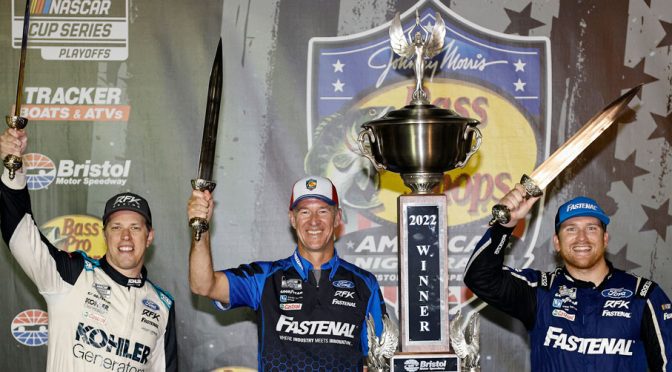
That changed this past season thanks to Buescher’s victory in September at Bristol, his second career win and first since winning a fog-shortened race in 2016 at Pocono for Front Row Motorsports. Keselowski, meanwhile, went winless for the first time since 2010, snapping an 11-year streak of consecutive seasons with victories. While disappointing for the 2012 Cup Series champion, numbers from one year alone aren’t bothering him much.

“You know, if I’m able to do what I want to do with this company — and we’re on the track to do it — then it’s not gonna mean a damn thing to me,” Keselowski said. “Part of the risk of taking the opportunity and making the move I did is giving up some of those stats, which probably feel good in the moment, but you know, 10, 20 years from now, I’m not going to remember or care about those things. What I’m going to remember or care about is what I was able to take this company from where it was a year ago to where I want it to be in the next year or so.”

The numbers don’t lie. Buescher scored a career-high three top-five finishes and 10 top 10s in addition to his Bristol win while Keselowski contributed one top five and six top 10s. The quick math says that counts for four combined top fives and 16 top 10s — an immediate improvement from 2021, when Buescher and Ryan Newman combined for three top fives and 13 top 10s.

RELATED: Clash tickets, event information

Keselowski is optimistic more good lies ahead despite him and Buescher finishing outside the top 20 in driver points this season, with Buescher 21st and Keselowski 24th.

“Definitely didn’t accomplish as much as I wanted to, but you know, looking realistically at the challenge, it’s probably somewhat on schedule,” he explained. “You know, I think we’ve got a lot of things coming over the offseason. … But we’ve got a lot of things that we’re doing to progress that have come over the last, you know, six to 12 months of understanding where the company is at and making the moves accordingly to get both race teams where they can compete for wins.”

The question remains, though, whether any baseline knowledge from 2022 can propel RFK toward an upward trajectory in 2023.

“I would like to say that we have a hold on this car and we got it all figured out and it’s gonna be much easier next year, but I’m not sure that would be truthful,” Buescher said. “We have ideas. We have baselines to start, but we are constantly learning. We’re constantly evolving even more. And I think that’s what we’re going to be looking at through the offseason, right, is how do we take our best days and figure out how to make that our every day.”

Stewart-Haas Racing announced on Wednesday that Ryan Preece will join the organization in a full-time capacity to drive the No. 41 Ford Mustang in the 2023 NASCAR Cup Series season.

The 32-year-old Preece has most recently been a reserve driver for the team but will be brought into the full-time fold to compete for next year’s championship. The Berlin, Connecticut, native will join 2014 Cup champion Kevin Harvick and returning drivers Aric Almirola and Chase Briscoe to round out the team’s quartet.

Preece replaces incumbent Cole Custer, who piloted the No. 41 for the past three seasons and is moving to the Xfinity Series to team with Riley Herbst.

RELATED: 2023 Cup schedule and tickets

“This is the opportunity I’ve been working for,” Preece said in a team release. “Nothing was guaranteed at the start of this year, but I felt like if I put in the time, whether it was in a race car or in a simulator, that SHR was the place for me. It’s a company built by racers, for racers, and it’s exactly where I want to be.

“I know this season just finished and most people are looking to take a break, but I can’t wait to get going.”

Preece appeared in a pair of Cup Series races in 2022, driving the No. 15 Rick Ware Racing Ford to a best finish of 25th at Dover Motor Speedway. He also made a combined 13 starts across Xfinity Series and Camping World Truck Series action, winning in the No. 17 David Gilliland Racing Ford F-150 in June at Nashville Superspeedway.

Custer landed three top 10s and a pole in 2022, and won at Kentucky Speedway during his rookie season in 2020.

“Cole Custer has been a part of SHR since 2017 and we’re glad to have him stay with us,” team co-owner and three-time Cup Series champion Tony Stewart said. “Cole’s experience will be invaluable to Riley Herbst as he continues his development in the Xfinity Series.”

SHR did not announce Preece’s crew chief.

Joe Gibbs Racing announced Tuesday that Xfinity Series champion Ty Gibbs will move to the NASCAR Cup Series full-time next season, taking the roster spot left open by Kyle Busch and marking the next step in his speedy ascent to stock-car racing’s major leagues.

Gibbs is set to drive the No. 54 Toyota for the team owned by his grandfather, Coach Joe Gibbs. The 20-year-old driver will bring the car number he campaigned in the NASCAR Xfinity Series with him, marking a departure from the No. 18 that’s been with the JGR organization since its Cup Series debut in 1992. Although Gibbs will be in the No. 54 car, Joe Gibbs Racing intends to use the No. 18 in the Cup Series in future years.

Chris Gayle, who served as crew chief during Gibbs’ championship season, will move with him to serve as crew chief in the Cup Series.

RELATED: More driver news

Gibbs has excelled at each stage of his rapid climb up the NASCAR ladder. He concluded the season as a seven-time winner this year in the Xfinity Series, capping his first full season of Xfinity competition with a title-clinching victory at Phoenix Raceway. That triumph was marked by tragedy with the death of his father, Coy Gibbs, in the overnight hours just after his Phoenix win.

In parts of two Xfinity seasons, he’s already won 11 times, including prevailing in his series debut in 2021 at Daytona International Speedway’s road course. But Gibbs also made an unplanned jump to the Cup Series this year, filling in with 23XI Racing — a JGR affiliate — when former series champion Kurt Busch was sidelined by a concussion after a crash during qualifying on July 23 at Pocono Raceway.

Gibbs was pressed into duty for his Cup Series debut the next day, and he filled in for Busch in 15 races the rest of the year. He withdrew from the Cup season finale after his father’s death.

Joe Gibbs Racing’s high-profile vacancy on its four-car team officially opened Sept. 13, when Kyle Busch and Richard Childress Racing announced they would join forces, starting next season. The move ended a partnership that dated back to 2008, a long-running union that produced two Cup Series championships and 56 of Busch’s 60 career wins.

The younger Gibbs’ rise to NASCAR’s top level has been marked by success and a dab of controversy. Even as he nearly immediately rounded into a consistent challenger for Xfinity Series wins on a part-time schedule last season, Gibbs cruised to a championship in the ARCA Menards Series, prevailing in 10 of the 20 races in 2021. He’s an 18-time winner on that circuit, and he also has multiple victories in each of the two ARCA regional tours.

Gibbs’ aggressive nature has helped him land in Victory Lane, but it’s also ruffled some of his competitors. He was assessed a behavioral penalty and fined $15,000 in April for making contact with Sam Mayer’s car on pit road after an Xfinity race at Martinsville Speedway. That disagreement led to fisticuffs between the two. On the Cup Series side, Gibbs also angrily bumped alongside Ty Dillon’s car on pit road during a Sept. 25 race at Texas Motor Speedway, drawing scrutiny and a $75,000 fine for unsafe driving near race officials and pit-crew personnel.

The controversy came to a head in the Xfinity Series’ penultimate race, when Gibbs bumped teammate Brandon Jones into a last-lap crash at Martinsville Speedway. The maneuver denied another JGR driver from making the Championship 4 field, and a repentant Gibbs apologized for the move.

Gibbs drove the No. 18 during his ARCA successes, flying the car number that his grandfather used when he created Joe Gibbs Racing as a single-car outfit with Dale Jarrett as his driver 31 years ago. As an Xfinity regular, though, he established his own identity with the No. 54.

The last time the No. 18 was not in regular rotation in the NASCAR Cup Series was 1991. JGR drivers account for all but one of the car number’s 80 wins — Marvin Burke was the first, winning in his only Cup appearance in 1951. Three of JGR’s five Cup Series championships have come with the No. 18 — Bobby Labonte’s 2000 title and the two crowns claimed by Kyle Busch (2015, 2019).

The No. 54 has not been used full-time in the Cup Series since 2003, when driver Todd Bodine paired with team owner Travis Carter. The No. 54 has won just three times in NASCAR’s top division, most recently in 1978 when Lennie Pond posted his only Cup Series win at Talladega Superspeedway.

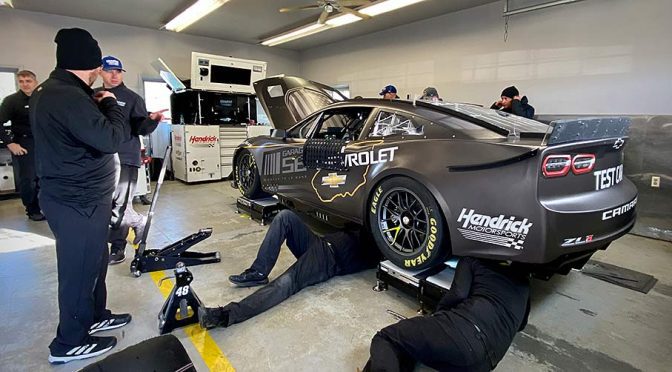
ALTON, Va. – The testing phase of the Garage 56 test-car prototype penned its latest chapter Monday, sending a loud V-8 rumble through the frigid air in the southern Virginia hills.

The Hendrick Motorsports-built Garage 56 Chevrolet Camaro ZL1 tester debuted Monday at Virginia International Raceway, marking only the program’s second on-track session ahead of a proposed special appearance in the 24 Hours of Le Mans next June.

RELATED: VIR Garage 56 test photos

The troubleshooting process sent the assembled crowds of crew and support personnel scrambling at times, but there were encouraging signs found among the challenges. The track time inched the project another step closer to a potential exhibition entry in the 2023 endurance classic, but also offered a reminder of how early in the process the car’s launch still is.

“No, it’s definitely an infant,” said Chad Knaus, Hendrick Motorsports VP of Competition. “So we’re still trying to get it to go and honestly, the way it ran today, I’m actually pleased with the performance of the car. We’ve just got to start to work out some of the bugs.”

Sports-car veteran Mike Rockenfeller, a former Le Mans overall winner, was again behind the wheel of the test car. The German road-racing ace also drove in a previous Garage 56 test, wheeling a Camaro prepared by IMSA team Action Express Racing at Road Atlanta on Aug. 29-30.

The Garage 56 Chevrolet Camaro ZL1 test car exits Turn 12 at Virginia International Raceway
Zack Albert | NASCAR Studios

This entry, Knaus said, is a closer representation of what the actual Le Mans racer might be when it hits the French countryside, with significant updates to the chassis, engine and suspension components, plus the addition of side-view mirrors. Among the most visible changes were the aerodynamic pieces, with the addition of stabilizing dive planes and a more robust splitter and diffuser – an indication of the loose leash that the Garage 56 team will have with the specifications as it builds off the Next Gen template.

“It’s definitely a big step. I mean, we have … where do I start?” Rockenfeller said after wrapping up his day’s work of hustling the car around the 3.27-mile VIR full-course layout. “We have less weight, we have a bit more downforce. Tires are the same, because we did (initial) tire testing in Atlanta, so similar-ish. Power is a bit different, so we increased a little bit there as well in that area, Now we have paddle-shift, we have traction control in, we have a new dash. I mean, everything is different, basically. So we are pretty close to what we think will be the race car in Le Mans. But of course, it’s still a very long way to go.

“We will improve in pace and reliability, definitely. So I would say that’s the difference. Between the current Cup car, and this test car, again, it’s pretty similar, I would say, its weight, its power, its tire grip – it’s just a lot faster. I mean, to give you a figure, around here, I think we are around 10 seconds faster than what I did in a Cup car, so it’s quite a lot faster.”

MORE: @NASCARG56 updates

Reaching that speed Monday took effort all around. An “electrical gremlin” that Knaus chalked up to a faulty power distribution module prevented the test car from making a sustained run during the morning hours. Afternoon testing was stopped early, just before sundown, by a fuel-pump issue that the crew worked on into the evening hours.

That drew the attention of the attending representatives – from Hendrick, Goodyear, NASCAR and Bosch among others – to jump in and lend a hand with remedies.

“I think it’s a huge milestone for us. It doesn’t go without its challenges, of course, but that’s why you come to the race track to test,” Knaus said. “But I think with all the people here and all the resources that have been here at VIR today, it shows the importance of this program, and what a big commitment it has been for everybody.”

More testing was planned for Tuesday at the scenic Virginia road course, as Rockenfeller put the car through its paces in the morning with significant rain in the forecast for later. But a course has already been charted for what’s next in the project’s development – both in performance and endurance.

“Well, this is a first step and over the course of the next six months or so there’s going to be a huge amount of iterations,” Knaus said. “Obviously, always trying to get yourself more margin from a pace standpoint, so we want to continue to try to push and make the car faster from a weight and performance standpoint. Downforce, get some more aero efficiencies put into the car, Goodyear has done a really good job of starting to get some construction and compound combinations put together, and we’ll start to get that really rolled up into what the tire is going to be. So an awful lot of work from this point forward.”