The NASCAR Xfinity Series returns after a week off to compete in the Ag-Pro 300 Saturday, April 23 at Talladega Superspeedway (4 p.m. ET on FOX, MRN, SiriusXM NASCAR Radio).

Jeb Burton earned his first career  Xfinity Series victory in this race last year, leading the final nine laps and ultimately holding off Austin Cindric, current series points leader A.J. Allmendinger, Riley Herbst, Ryan Sieg and Noah Gragson.

RELATED: Weekend schedule for Talladega | Saturday’s schemes

Kaulig Racing’s Allmendinger is in the midst of a stellar season start, earning his first victory of the year at Circuit of The Americas. He is the only driver in the NASCAR Xfinity Series with top-10 finishes in all eight races. Last year’s third-place effort at Talladega is his best showing in four Xfinity Series starts there.

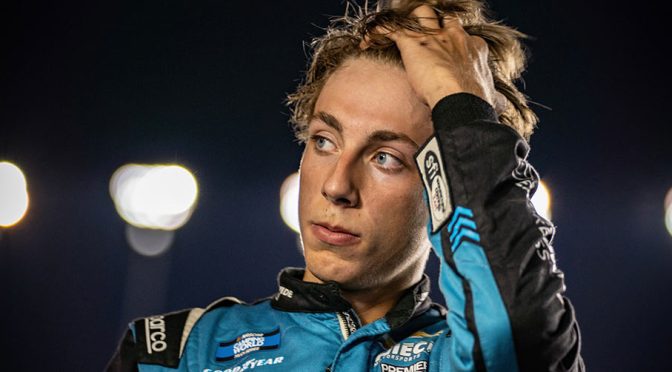
Nineteen-year-old Ty Gibbs, who will be making his series Talladega debut, is currently second in the driver standings and trails Allmendinger by 20 points with a series-best three victories. His only Xfinity Series superspeedway experience to date, however, is an 11th-place finish in the season-opener at Daytona International Speedway. The driver of the No. 54 Joe Gibbs Racing Toyota has a series-best 325 laps led on the season and has won pole position for the last three races.

Noah Gragson sits just behind Gibbs in the standings and the driver of the No. 9 JR Motorsports Chevrolet has been good on the Talladega high banks earning top-10 finishes in four of his six starts there with a best showing of third-place in 2020. Gragson was third in the first superspeedway race of 2022 at Daytona.

Brandon Brown, Sieg and the most recent race winner Brandon Jones (Martinsville Speedway) all have good cases as race favorites, too. Brown won the series’ last race at Talladega in October of 2021 – his only win in the series. He’s finished top-10 in the last three races at the track.

DASH 4 CASH: Track 2022 winners, contenders | See every D4C winner, ever

Sieg, who has five top-10 finishes in 2022, has finished 11th-place or better in the last three Talladega races, including a runner-up finish in 2020. Jones, driver of the No. 19 Joe Gibbs Racing Toyota, has three top-five finishes and was runner-up to Brown in the fall race last year.

Saturday’s race marks the third round of the Dash 4 Cash incentive with $100,000 on the line to the top finishing driver Saturday among these four: Brandon Jones, Landon Cassill, Allmendinger and Austin Hill.

The top-four finishing eligible drivers at Talladega will then race for the final $100,000 courtesy of Xfinity – when the series competes at the “Monster Mile,” Dover Motor Speedway next week. Allmendinger and Jones each pocketed one of the two $100,000 bonuses already awarded this season.

NASCAR returns to the high banks of Talladega Superspeedway this weekend.

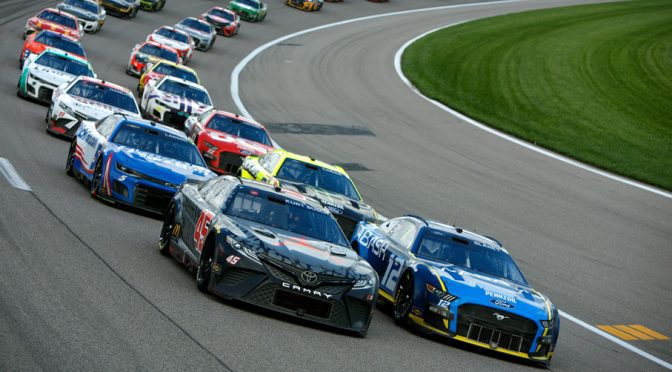
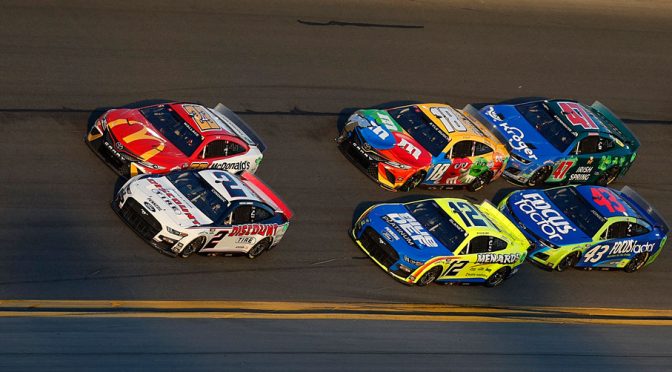
Racing on superspeedways creates plenty of three-wide, close-quarters racing. The Next Gen gets its first opportunity to taste the 33-degree banking on Sunday in Alabama (3 p.m. ET, FOX, MRN, SiriusXM NASCAR Radio).

Get ready for the weekend with all the information you need here:

GET GRIDDED, GET RACIN’

After days of superspeedway practice at Daytona back in February, there will be no practice for the Cup Series this weekend at Talladega. Instead, the series will jump straight into single-car, two-round qualifying on Saturday (11 a.m. ET, FS1). The top-10 fastest cars in the first round will advance to the second round, where each of the 10 drivers will lay down another lap. The fastest of the final 10 wins the Busch Light Pole Award for Sunday’s race.

RELATED: Talladega schedule | Cup Series standings 

TALLADEGA HISTORY

— Talladega Superspeedway was completed in 1969, built in a soybean growing area. Today, the facility covers about 3,000 acres, the most of any Cup track (Daytona is 482 acres). It cost $6 million.

— Bill Ward, an Alabaman insurance salesman and part-time racer, convinced NASCAR founder Bill France Sr. to build the track in Alabama despite France’s initial ideas to build in South Carolina. 

— Ward found the location for the enormous facility at a near-abandoned airport next to Interstate 20, which was built in 1942 to train Navy pilots.

— The track was originally called Alabama International Motor Speedway.

— Richard Brickhouse won the inaugural Cup race on Sept. 14th, 1969 at Talladega, an event run after most of the regulars decided not to compete due to concerns over the tires’ capability of withstanding the high speeds.

— The track was last repaved before the fall race in 2006. Mark Martin won the Truck Series’ inaugural race at Talladega in the first race on the fresh asphalt.

— Talladega is the biggest oval on the circuit at 2.66 miles with the steepest banking (33 degrees) and is the site of the most lead changes in one race (88, spring 2010 and spring 2011) and closest margin of victory (.002 seconds, Jimmie Johnson, spring 2011).

Source: Racing Insights

GOODYEAR TIRES

In addition to the multiple test sessions held at Daytona International Speedway, a Dec. 13, 2021 tire test by Drew Herring (Toyota), Brad Keselowski (Ford) and Daniel Suárez (Chevrolet) helped confirm the tire setup for both Daytona and Talladega.

After a test in September, the decision was made to go ahead with a December test with a change made to reduce the stagger in the superspeedway tire setups. That change was confirmed in January tests at Daytona and throughout Speedweeks in February.

“With this new car, we’ve put a lot of work into the superspeedways over the past many months,” said Greg Stucker, Goodyear’s director of racing. “We got a lot of feedback from the drivers after an early session at Daytona and we made a change to the stagger, which has given the cars more stability in the draft. We had a good race at the (Daytona) 500 in February and we expect similar results this week at Talladega.”

TALLADEGA STORY LINES 

— Team Penske has won eight of the last 13 races at Talladega — three with Brad Keselowski, three with Joey Logano and two with Ryan Blaney.

— Bubba Wallace has three consecutive top-two finishes on superspeedways, including his first career Cup win last October at Talladega. Only four drivers have scored four in a row: Cale Yarborough (twice), Dale Earnhardt, Ernie Irvan and Dale Jarrett.

— Chevrolet has just two wins at Talladega in the past 16 races there — Dale Earnhardt Jr. (spring 2015) and Chase Elliott (spring 2019).

— Four of the last seven superspeedway races were won by drivers getting their first NCS win.

— The final green-flag stretch was two laps or less in the last 15 superspeedway races.

— Martin Truex Jr. has never won a superspeedway race in 68 starts.

Source: Racing Insights

LAYING MONEY ON THE LINE

For as unpredictable as superspeedway racing can be, Team Penske sure knows how to dominate lately.

Penske drivers Joey Logano and Ryan Blaney are co-favorites this weekend at 11-1 odds, according to BetMGM. Their rookie teammate Austin Cindric, who won the Daytona 500 in February, is right behind them at 14-1 odds. 

Joining Logano and Blaney with 11-1 odds are Toyota’s quasi-teammates Denny Hamlin and Bubba Wallace. Hamlin, a Joe Gibbs Racing driver, co-owns 23XI Racing, the team for which Wallace drives. These two have won each of the last two fall races at Talladega and know how to get it done on superspeedways, as shown by Hamlin’s three Daytona 500 titles.

Don’t forget about Brad Keselowski (14-1). Now the co-owner of RFK Racing and driver of its No. 6 Ford, the former Penske driver is the defending race winner this weekend and leads all active drivers with six Talladega triumphs, tying Dale Earnhardt Jr. and Jeff Gordon for second-most all-time. The Fords carried plenty of speed at Daytona, which is likely to translate to Talladega this weekend.

RELATED: Odds for Talladega

FANTASY LIVE

Want to manage a team and race your way to the top of the leaderboards? Check out NASCAR Fantasy Live, which is open now. The free-to-play game lets you choose your drivers each week and show off your crew-chief instincts by garaging a driver by the end of Stage 2, and there is a $25,000 prize for the winner.

The 2022 Fantasy Live points leaders are Chase Elliott (318), Ryan Blaney (313) and Joey Logano (301).

How to play: Fantasy Live | Set up a team today!

ALSO ON NASCAR.COM

Get additional camera views by logging on to NASCAR Drive, where each week a select number of in-car cameras will be available — as well as a battle cam and an overhead look.

NASCAR has partnered with LiveLike to add fan engagement in the NASCAR Mobile App. Log in to the mobile app during the race for polls, quizzes, the cheer meter and more — and see instant results from NASCAR fans like you.
It’s no secret that when it comes to racing and winning at Talladega Superspeedway, Brad Keselowski is one of the best.

The driver and co-owner of the No. 6 RFK Racing Ford Mustang has scored six victories in his NASCAR Cup Series career at the 2.66-mile superspeedway and is the defending winner of Sunday’s GEICO 500 (3 p.m. on FOX, MRN and SiriusXM).

His six victories make him the winningest active driver in Cup Series competition at the track, with Team Penske’s Joey Logano next on the active win list with three.

All but one of those six victories came during Keselowski’s long tenure with Team Penske, which ended last season when he became co-owner of RFK Racing.

RELATED: Talladega weekend schedule

Luckily, according to Keselowski, the RFK Racing superspeedway program had established solid performance and has required few changes since he joined the organization.

“Honestly the superspeedway program was very strong already,” Keselowski told NASCAR.com Wednesday. “It didn’t need anything from me. I probably gave a few small ideas, but it was probably the strength of the company the second I walked in. Mostly it’s actually been not messing with it. If you’ve got something that’s working, don’t touch it.

“There are other areas that aren’t working and I’d rather work on them.”

Keselowski and his teammate, Chris Buescher, showed just how strong RFK Racing’s superspeedway program was at Daytona International Speedway in February.

The pair swept the Bluegreen Vacations Duels, with Keselowski winning the first race and Buescher capturing the second. Keselowski followed that up by leading the most laps during the Daytona 500 a few days later before ultimately finishing ninth.

Since then things have been on a downward slope for Keselowski, who has failed to crack the top-10 in the eight races since Daytona. Add to that the L2-level penalty levied against the team on March 24 for the modification of a single-source supplied part and the No. 6 team has been spending most of its time playing catchup.

Despite that, Keselowski doesn’t feel like his team is in a must-win situation entering Talladega or the other superspeedway events on the schedule at Daytona (Aug. 27) and Atlanta Motor Speedway (July 10).

While a victory would certainly be nice, he believes the team is making significant gains that could see them in Victory Lane at several tracks coming up on the 2022 schedule.

“Honestly, I’m looking at the next month and I’m really excited about the races we have,” Keselowski said. “I think we can win any one of them. We’ve got a lot of good stuff coming down the pipeline. We’re starting to figure some things out and find some of the missing puzzle pieces.

“I’m not ready to say we have to win on a plate track to advance to the Playoffs. I feel like we’re starting to find our game at other tracks, too. I’m a lot more confident in the cars and the team is learning a lot. I’m not ready to concede that, but certainly I’m still going to try to win those races at Daytona, Talladega and Atlanta.”

Carson Hocevar cherishes every opportunity to return to his home track in Berlin Raceway.

Although his commitments to the NASCAR Camping World Truck Series keeping him occupied for most of the year, the history and vibrant atmosphere of Berlin always bring Hocevar back to the facility whenever he has time on his hands.

With an off weekend for the Truck Series coinciding with Berlin’s season-opening Icebreaker on Saturday, Hocevar is eagerly looking forward to climbing back into a Super Late Model and reliving some of his fondest memories from the beginning of his career.

“I’m excited to come back home and race in front of my family and the hometown crowd,” Hocevar said. “I won’t be staying in a hotel room or in a camper because I get to go home right after the race. It will be nice to get re-acclimated to Berlin and prepare for the Money in the Bank [150] and the [Battle at Berlin] 251.”

FLORACING: Catch the IceBreaker live on Saturday night

Hocevar’s success in Berlin’s Super Late Model division was almost immediate. He picked up his first career victory in the full-bodied stock car when he was just 13 before claiming a track championship the following year in 2017.

The person Hocevar credits for his early efficiency at Berlin is former Truck Series champion Johnny Benson Jr., who ran four full-time seasons at the track and managed to claim an Outlaw Late Model championship in 1989 before making the jump to NASCAR in the mid-1990s.

Benson was approached by Hocevar’s dad Scott about mentoring his son and possibly purchasing his in-house Outlaw Late Model. While Benson did not sell the car to Scott, he agreed to have Hocevar take laps in it at Hickory Motor Speedway when he was 11.

It only took a handful of tests before Hocevar was closely mirroring Benson’s lap times at Hickory. Benson was impressed with the car control Hocevar was displaying and wanted to maintain an influence as Hocevar developed his skills at Berlin.

Benson knew Berlin itself would be a great teacher for Hocevar to figure out his driving style due to the lack of grip and abrasive nature of the facility.

“Berlin is in my top five of the hardest tracks I’ve ever run at,” Benson said. “Anybody can drive there, but being competitive there is very hard. I wanted to teach him at one of the hardest tracks instead of an easy one, but I told [Carson] that his days of winning every single race were probably done once he started racing at Berlin.”

Benson has seen plenty of drivers put together a great setup for one race at Berlin only for the next event to backfire for them despite not making any changes from the previous week, which is why he has stressed to Hocevar the importance of being patiently aggressive at Berlin.

There are many lessons from Benson’s tutelage that Hocevar still carries with him, but the one that is always on his mind every time he visits Berlin is to always be up on the wheel so none of the other drivers can gain an advantage over him.

“There’s a lot of tire wear at Berlin,” Hocevar said. “It’s a very technical, rhythm-based track, and there’s never a point where you get going straight and just relax. You’re setting yourself up early down the straightaways for how you enter and exit the corners. If you get complacent at Berlin, you’ll give up half a tenth.”

Carson Hocevar
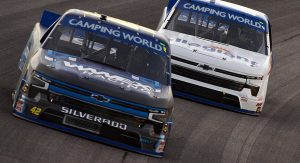
Carson Hocevar, driver of the No. 42 Premier Security Solutions Chevrolet, enters his truck for practice ahead of the NASCAR Camping World Truck Series NextEra Energy 250 at Daytona International Speedway on Feb. 17, 2022. (Photo: Chris Graythen/Getty Images)

The advice from Benson has been in Hocevar’s mind with each trip to Berlin. Along with his track championship, Hocevar’s accomplishments at Berlin also include two consecutive victories in the prestigious Money in the Bank 150, which he obtained in 2020 and 2021.

Hocevar dominated in both of those victories by leading a combined 265 of 300 laps against many talented Super Late Model drivers such as Stephen Nasse, local veteran Boris Jurkovic and former Snowball Derby winner Travis Braden.

Although the Icebreaker is smaller in scale compared to the Money in the Bank 150 and the Battle at Berlin 251, Hocevar still anticipates plenty of challenges on Saturday evening when it comes to managing equipment during the short sprint.

“With these races, the time of day and time of year is so important,” Hocevar said. “It’s been very cold in Michigan, so [Berlin] is going to have a lot more grip for the Icebreaker. The race is only 75 laps, so it will be a little bit more forgiving with tire wear, but you still have to hit on the setup right away since you won’t have a pit stop to fall back on.”

RACING REFERENCE: Hocevar’s career NASCAR stats

Hocevar is optimistic that a victory in front of Berlin’s crowd on Saturday night will help him continue the momentum from narrowly missing his first career Truck Series victory at Bristol Motor Speedway last week.

Despite coming up one spot short to defending champion Ben Rhodes, Hocevar’s second-place run matched his career-best finish in the Truck Series he obtained at Charlotte Motor Speedway last year and served to further validate the idea that his experience at Berlin is helping him with his progression.

Benson was pulling for Hocevar to hold off Rhodes in the closing laps, but he knows the patience and versatility behind the wheel will lead to that breakthrough victory soon.

“Once he gets that first win [in the Truck Series] and gets more experience, [Carson] will continue to do well,” Benson said. “He did a great job at Bristol this past weekend, and he’s figured out how to get to the finish. The hardest part about racing is finishing out the end, but Carson has gained respect from a lot of people, and he should be proud of himself.”

Carson Hocevar
Carson Hocevar pictured after the NASCAR Camping World Truck Series Pinty’s Truck Race on Dirt at Bristol Motor Speedway on April 16, 2022. (Photo: Chris Graythen/Getty Images)

Hocevar is not sure if his career trajectory would be the same without the countless hours of repetition and dedication it took to thoroughly understand Berlin and become one of the most successful drivers in the facility’s recent history.

With all three crown jewel events at Berlin on Hoecvar’s calendar this year, he feels confident about adding a few successful chapters to his history at Berlin while simultaneously gaining knowledge that he can apply to NASCAR’s top three divisions.

“Any of these races are hard to win,” Hocevar said. “Competition even at the local level is becoming very difficult because everyone’s equipment is so similar, but it’s big anytime to win a race at Berlin with how hard the place is to keep up with and how good the locals are. We just have to hit the setup and not over adjust.”

Regardless of how the Icebreaker turns out for Hocevar, he said Saturday night is simply about enjoying the moment at a track that helped shaped his career in motorsports today.

A track that Hocevar is more than happy to call home.

“They should have put it up nearer the tri-oval. It’s almost down to the first turn. I never have understood that.”

Darrell Waltrip had every reason to be dumbfounded when he said those words in 1981. He was speaking about Talladega Superspeedway’s start-finish line, a quirky nuance that added to the off-center nature of the place. To Waltrip, it was a design flaw.

Waltrip led that year’s Talladega 500 on the white-flag lap. Through the tri-oval, Waltrip tried to fend off the high-groove advances of Terry Labonte running second with the checkered flag in sight. When he did, Ron Bouchard dove low in his No. 47 Buick, slipping by both of them in the home stretch to the start-finish line to score his only Cup Series win by approximately two feet. “Just plain sneaky,” Waltrip mused later.

RELATED: Talladega weekend schedule | Buy tickets

Had the start-finish line been centrally located in the tri-oval bend, as it was at its sister track in Daytona, the race would have been settled between Waltrip and Labonte. Instead, Bouchard – a standout Modified driver from the northeast who was a relative unknown in the south – used the extra 1,250 feet of race track to score one of NASCAR’s biggest upsets.

RacingOne
RacingOne | Getty Images

Waltrip may understand it now, but the start-finish line location has been a part of the mystique – or its speedway feng shui – since the 2.66-mile track opened its doors as Alabama International Motor Speedway in 1969. To this day, announcers offer perennial reminders about the idiosyncrasy during race broadcasts and how it might affect the outcome.

The lingering question is “why there?” The answers, simple as they are, have roots that date back to the track’s origins.

NASCAR founder Bill France Sr. modeled the track’s layout after Daytona International Speedway, but made it just a bit longer and a tad steeper in the banked turns. The start-finish line’s position nearly a quarter-mile past the center point was a flourish designed to give a race’s finish more space to build to a crescendo along the main grandstand, a perk for potential ticket buyers.

“This will give the fans two prime places to sit rather than just one,” said Roger Bear, Talladega’s first general manager and publicist, explaining the configuration to United Press International in 1969. “They can sit either in front of the start-finish line or in front of the pits. It simply means more good seats.”

Fans occupying those seats have seen their share of dynamic moments. Four of the seven closest finishes in NASCAR Cup Series history have occurred at Talladega at that symmetry-averse stripe.

The area has also been the site of suspenseful crashes. Team owner Jack Roush proposed moving Talladega’s start-finish line in 2009 after Carl Edwards’ No. 99 Ford sailed into the catch-fencing after last-lap contact with eventual first-time winner Brad Keselowski. Roush reasoned that had the finish line been in the tri-oval, their contact would have unfolded in the straight chute off Turn 4 instead of at an angle with the protective barrier. It’s worth noting that the same sorts of high-speed wrecks have occurred at Daytona with its more natural start-finish line placement.

Even with the conjecture, Talladega’s start-finish line has endured in the same spot for more than 50 years. When the reminder inevitably pops up during the race broadcast’s track analysis, now you’ll know why.

“For whatever reason they decided to put it there, the results have been tremendous over the years,” says Alabama native Donnie Allison, who posted two of his 10 Cup Series wins on Talladega’s high banks. “Now maybe some of the drivers didn’t like it, but for what we were there for, which was to put on a good show for the fans, I think it was an excellent choice.”

ATTLEBORO, Mass. – When the NASCAR Whelen Modified Tour returns to Jennerstown Speedway on Memorial Day weekend, drivers will contest in the 150-lap Jennerstown Salutes special. The race will mark the second consecutive year that JDV Productions, promoters of the event, will partner with Operation Vet NOW Inc. (OVN) to honor fallen heroes and gold star families on a special weekend of remembrance.

But this year will be even bigger when the racing begins on Saturday, May 28. New for 2022, additional divisions will join the program in Pennsylvania, with the Jennerstown Fast 4s, Modifieds, Pro Stocks and Late Models all joining the Whelen Modified Tour on the card.

After success last year with fewer divisions, JDV Productions is happy to present additional house classes Jennerstown fans are used to watching. They will be a welcomed addition to the card, with Jennerstown Speedway also under the NASCAR Advance Auto Parts Weekly Racing Series sanction for the new year.

The Whelen Modified Tour race will mark the third straight year the Tour visits the Jennerstown oval. In the past three races, three-time series champion Justin Bonsignore has been to Victory Lane twice, with Craig Lutz also picking up one checkered flag. The total purse for the race will push over $104,000 in posted awards, plus additional lap money that is currently on sale.

The race will become the highest-paying asphalt Modified race in the Northeast region for the holiday weekend.

“We’re proud to present the dedicated racers of the Jennerstown house divisions and showcase them to what is sure to be an increased audience with the Whelen Modified Tour in town,” said Josh Vanada, owner of JDV Productions. “Jennerstown is located in such a great part of our country and the area is perfect for holding a major short-track event. We’re looking forward to bringing their dedicated race fans a regional short-track event, with national quality.”

Adding to the purse, lap money is now available for purchase at jdvproductions.com. All laps sold will honor fallen heroes or heroes who are currently serving. They are $100 per lap, and the funds will be split between the driver who leads that specific lap and OVN.

The house divisions will assist to provide a mix of full-fendered and open-wheel racing for the day. Through the partnership with OVN, NASCAR Whelen Modified Tour teams will carry names of fallen heroes on their windshield roofs, similar to last year.

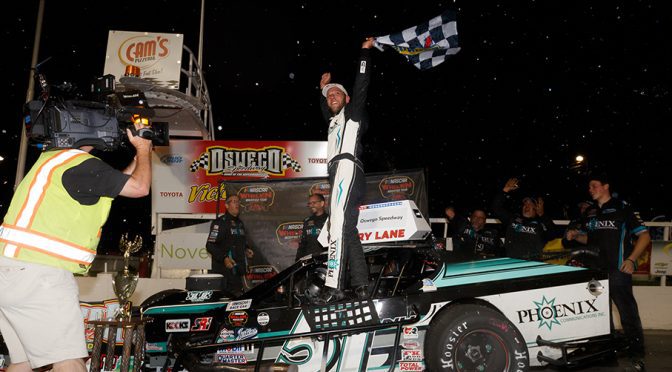
New for 2022, select Jennerstown house division drivers will also carry the banners. Last year, it was Bosnignore carrying the name of Air Force Staff Sergeant David Weiger to Victory Lane with him, and awarding Weiger’s family, in attendance, with the winning trophy.

Operation Vet NOW Inc. (OVN) is a non-profit organization established to reduce veteran suicide and improve the overall wellness of veterans, regardless of era served, through innovative outreach experiences. OVN concentrates on veterans who suffer from the invisible injuries of PTSD, TBI, combat and transition stress issues, and mental health concerns, stemming from military service, connecting them to heal their mind, body and soul.

On top of the 150-lap race for the Whelen Modified Tour, the Jennerstown Late Models will run for 50 laps, while the Pro Stocks will compete in a 20-lap race. The Modifieds will also run 20 laps, while the Fast 4s will hit the track for 15 circuits.

Race day will include a special autograph session for fans on the track prior to the drop of the green flag and additional opening ceremonies to remember fallen heroes from across the country. During the autograph session, fans will be able to head right down onto the frontstretch to meet and greet with the drivers and cars up close and personal.

All tickets for the Jennerstown Salutes 150 are now available at JDVProductions.com. This includes general admission tickets for the grandstands and exclusive passes to the JDV Experience for the day of the race. The JDV Experience pass includes preferred seating, a private autograph session and inspection tour, and much more. General admission tickets are $35 per person, while Military general admission will be $30. Kids 12 and under may enter for free. The JDV Experience for this event is $100, and pit passes are $45. All pit passes will be sold at the track.

For more information on JDV Productions, visit JDVProductions.com and follow on social media for the latest updates.

Brad Keselowski didn’t have to wait until the final lap of the 2021 GEICO 500 to take the lead. 

But if the five-time Talladega Superspeedway winner took the lead prior to the white flag last April, he might be arriving in Alabama for the 2022 GEICO 500 as a five-time Talladega winner, not a six-time Talladega winner.

RELATED: Weekend schedule for Talladega | Surprise Talladega winners | Talladega tickets

“The whole race, I had a couple of opportunities to take the lead, but I just kept thinking, ‘Man, just keep your car in one piece till the end,’” Keselowski said after passing Matt DiBenedetto in overtime to tie Jeff Gordon for the most wins in race history (four) and Gordon and Dale Earnhardt Jr. for the most wins in track history (six). 

“We’ve been so close here, and it just didn’t seem to want to come together here the last few years, and I’ve been on kind of a four-year drought here, but it’s nice to get number six,” Keselowski added, referring to six straight races at Talladega Superspeedway in which he finished outside the top 12, a period that followed three wins in his previous seven starts at NASCAR’s biggest and baddest track.

Among those three wins from October 2014 through October 2017 was a victory in the 2016 GEICO 500. And while it was Keselowski’s third win in race history, it was the 42nd time in race history (of 47 total) in which the previous year’s winner failed to defend his title.

Six years later, entering the 2022 race, only five of the 52 races have been won by the previous year’s winner, and 30 different drivers have won at least once, making it one of the most parity-filled Cup Series races over the last five decades. Only David Pearson (twice), Buddy Baker, Earnhardt Jr., and Gordon have won in back-to-back years. 

In his three previous attempts at back-to-back wins, Keselowski finished 34th (2010), 15th (2013), and seventh (2017). If he bucks history with a win on Sunday, he must, at minimum, finish ahead of 2018 winner Joey Logano, whom Keselowski faces in a featured matchup in NASCAR betting at BetMGM:

Joey Logano (-120) vs. Brad Keselowski (-110)

Joey Logano is the favorite in race-winner odds, though this is the most crowded odds board through the first two months of the season. At +1100, as of Wednesday, Logano is tied with three other drivers with the best odds and narrowly ahead of four others at +1400, among them Brad Keselowski.

Logano leads all drivers in average rating (100.5) and laps led (150) at Talladega since 2019 but since six top-5 finishes in eight starts, including two wins, from October 2015 through April 2019, he’s struggled for consistent contention, posting just one top-10 finish in his last five starts.

The public likes Keselowski in race-winner betting –  only William Byron (16.5%) and Ryan Blaney (12.4%) have a higher handle share than Keselowski (7.5%) in race-winner odds – and against Logano in this featured matchup. Eighty-nine percent of the handle (from 57% of the tickets) are on Keselowski over Logano.

Chase Briscoe (-125) vs. Tyler Reddick (-105)

Two of the least-experienced Talladega and superspeedway drivers in the field this weekend – six combined NASCAR Cup Series starts at Talladega and 15 combined Cup Series starts at superspeedways – Chase Briscoe and Tyler Reddick are both chasing their first top-five finishes at the track. 

Reddick and his BetMGM-sponsored No. 8 Chevrolet are buried in race-winner odds (+2500) despite two straight seventh-place finishes at Talladega before a 39th-place showing at the 2021 YellaWood 500. 

The BetMGM tickets are split 50-50 on Briscoe and Reddick but Reddick has 91% of the handle as he looks to finish ahead of Briscoe for the second straight Cup Series race.

Ryan Blaney (-125) vs. Chase Elliott (-105)

Chase Elliott, winner of the 2019 GEICO 500, is the new No. 1 in Pat DeCola’s Power Rankings despite going winless in the season’s first nine races. He’s been inconsistent at Talladega but ranks fourth in laps led, fifth in average rating, and fifth in average finish at speedways (min. five starts) since 2019.

Elliott is an underdog to 2020 GEICO 500 winner Ryan Blaney, who enters the weekend with four straight top-seven finishes for just the second time in his career. Of the 23 drivers with six starts at Talladega since 2019, Blaney ranks first in wins (two), average finish (11th), top-20 finishes (five), and average rating (98.9).

The public’s love for Blaney in race-winner betting carries over to the head-to-head vs. Elliott. Blaney has 99% of the bets and 98% of the handle.

Bubba Wallace (-115) vs. Denny Hamlin (-115)

Before his win in the YellaWood 500 last October, Bubba Wallace had zero top-10s in 11 career NASCAR Cup Series and Xfinity Series starts at Talladega. Now, he’s a betting favorite (+1100) to join Blaney as the track’s only back-to-back winners since Gordon won the Aaron’s 499 and UAW-Ford 500 in 2007.

BetMGM bettors, however, are not buying Wallace to win the race – 20th in both tickets (1.8%) and handle (1.2%) – or finish ahead of Denny Hamlin, who’s dominating the featured matchup splits with 97% of tickets and 95% of the handle.

You can view updated GEICO 500 odds and more NASCAR odds at the BetMGM online sportsbook.

NASCAR Cup Series drivers have another tall task on tap Sunday at Talladega Superspeedway (3 p.m. ET, FOX, MRN, SiriusXM NASCAR Radio). Before the action, try your hand at some props.

RELATED: Set your Fantasy Live lineup

Featured Matchups of the week

Race-specific data props

Before the start of the 2022 season, Josh Williams declared he would further his career by moving to BJ McLeod Motorsports for the full Xfinity Series schedule. He knew there would be critics.

“I want to race on Sundays, and (BJ McLeod Motorsports) was an avenue to have that opportunity to get some seat time off and on,” Williams told NASCAR.com last week. “I thought it was a good idea for us.”

For the previous five seasons, Williams contributed to the growth of DGM Racing, a similar team to BJMM in the Xfinity Series. There, he piled up eight top-10 results, six of which came during his standout 2020 season.

RELATED: Talladega weekend schedule | Xfinity Series Talladega entry list

This past Sunday, Williams made his Cup Series debut, piloting the No. 78 Ford for Live Fast Motorsports. When the checkered flag flew, the Florida native earned a respectable 25th-place finish.

His Cup debut has been the only bright spot thus far in 2022. His primary focus, driving the No. 78 car in the Xfinity Series, is having a rugged start to the year, failing to qualify in three of the eight races.

“It’s just part of motorsports, it’s part of racing,” Williams said. “I’ve had good years before and I’ve had really, really bad years before. We’re making gains to make it better and get back to where we need to be. It might take a little longer than we expected, but we’ll be back up where we need to be.”

After finishing 31st and 21st in the opening two races of the season, respectively, Williams missed his first race at Las Vegas. During the 20-minute practice session, the No. 78 car blew an engine and was unable to make a qualifying lap.

In the first road course of the season at Circuit of The Americas, Williams’ team missed the setup, thus resulting in him watching from the sidelines. And most recently at Martinsville, it was another instance of not being able to fix an issue from practice, when the No. 78 car had a broken seal in the right front brake caliper. Though still turning a qualifying lap — essentially with just left front brakes — Williams missed the show.

Team owner BJ McLeod was worried something like what’s happened to the No. 78 team could happen this year, especially if a team that is high in the owners standings has a problem and can just take a provisional position.

“I knew that it would be a problem with having some failures in practice and you can’t get it fixed,” McLeod said. “It’s hurt us more than others because we’re down in the points. Of the three races we got sent home, two of them are because of problems we couldn’t fix before qualifying. I’m fine with that.

“We need to do a good job of cleaning that up, get ourselves further up in points, that way if we do have a common problem that happens when you go practice then we aren’t shoved out of the race because somebody else has already taken a provisional.”

In signing Williams, McLeod knew he was getting a racer’s racer, someone he believes can run inside the top 10 weekly given the right opportunity. The entire No. 78 team was overhauled during the offseason, too, when the duo made a collaborative effort of who they wanted to work on the car. McLeod also purchased a multitude of updated chassis, hoping to step up his Xfinity efforts.

Getting everything to mesh has been a challenge.

“(This) isn’t the BJMM that you saw in 2021 or 2020,” McLeod said. “We were trying to put together a whole new program and it hasn’t worked out as quickly as we wanted it to. But we’re working hard to get that turned around and get it to where we can get in the direction we want it to go.”

RELATED: See who qualifies for Xfinity Dash 4 Cash at Talladega

Williams just boils the tough luck at the start of the season down to growing pains that most teams have.

“It’s one of those things where everybody is getting used to everybody,” he said. “I’m trying to learn what everyone wants and how to react to different people. I’m excited to get it back to where it needs to be and show everybody that the (No.) 78 car is going to be a threat every week.”

Despite the troubling start, McLeod does see light at the end of the tunnel. On paper, he said, the entire organization has seen an uptick in speed. Richmond, in particular, sticks out because Williams was second in the practice session while Stefan Parsons was right behind in third.

In addition, Parsons led his first laps in the Xfinity Series at Martinsville, as Matt Mills was running inside the top 10 before getting turned by Riley Herbst.

“We definitely have more speed than we’ve had, but we’ve had small mistakes with Josh that have cost us big,” McLeod added. “We’ve got to clean them up and do a better job in the future.”

Both the driver and owner believe the team can salvage the 2022 season. Besides, there’s still three-quarters of the year remaining, with a bunch of tracks Williams has performed well at in the past coming up.

“I’ve raced my entire life, it’s the only thing I’ve ever done,” Williams stated. “You can’t get down on yourself, can’t get down on your guys, your team. You’ve got to keep a positive attitude to try to be better. If everyone is getting upset at the shop, it’s not going to benefit your program.

“We try to keep a positive attitude and make the best of the situation and build off of it.”

Surely, McLeod, who has seen many peaks and valleys of BJMM’s seven years in the series, isn’t going to give up.

“There’s no doubt I’m not happy with what we’ve done on our side,” he said. “I’m not at peace with it, but I can also say that my guys have done a good job, too. It’s not any one person’s problem or any one thing that’s hurt us, it’s a combination of things that we have to get better and we’re all working towards that.”

The first goal is to qualify Williams into Talladega on Saturday, as the team enters the weekend 35th in the owners standings after swapping points with the No. 99 car earlier this week, which will now be a part-time entry. In the series’ first superspeedway race at Daytona, the No. 78 Chevrolet qualified solidly into the show in 24th.

Then, the racer in Williams can come out.

“The biggest thing for us is to go to Talladega and finish the race,” he said. “Try to have a good points day and then we can go to places like Dover and Darlington and race. I’ve had pretty good success there with decent finishes, so I think we’ll be good once we get back into the swing of things and get our momentum back.”

Editor’s note: Bozi Tatarevic is a professional racing mechanic and pit crew member. He will provide technical analysis for NASCAR.com throughout the 2022 season.

Overcast conditions and sprinkles during the day resulted in a damp surface to start Sunday’s Bristol Dirt Race, but we ultimately saw what the Next Gen car could do for 250 laps on dirt.

Yes, early conditions led to some mud being flung on the cars, but they eventually settled in and became very racey.  The independent rear suspension and wider tires appeared to make these cars much more compatible in the dirt, and seeing them slide into the corners was reminiscent of seeing rally cars pushed to their limits on dirt.

RELATED: Photos from Bristol Dirt Race

While the cars got off to a great start from a handling standpoint, the soft top layer of the dirt surface meant that the grilles were getting slung with mud in those early laps, eventually resulting in a caution for teams to clear grilles and windshields. This initial cleaning was enough to clear off the bulk of the dirt that had ended up stuck to the fronts of many cars, and another similar caution period for cleaning was not required. While this was probably a good idea to allow as many cars as possible to continue to race, it would have been interesting to see the dirt and debris element as part of the strategy since some teams had spent time engineering solutions that allowed them to get cool air to their radiators and engine even with dirt hitting the front of their cars.

Once the surface settled in, close competition came out and a variety of tire strategies were employed, with some drivers deciding to stay out during stage breaks to gain track position. This was partly due to the new tire design working so well with the dirt surface, and it did not degrade over long periods of time. The wider surface of the tires along with the modifications to the tread blocks for cooling did its job to allow teams not to have to worry if they would overheat or damage the right rear tire by making a setup where a driver could get the most out of the car.

Bristol Dirt Tires

Elements of the Next Gen car such as the rack-and-pinion steering and the independent rear suspension combined with removing some of the aerodynamic elements such as the rear diffuser meant that this was very much a race of car control and driver skill, combined with crew chiefs maximizing on adjustments to the tires and dampers. This race allowed a bit more freedom with things like minimum shock lengths so teams could have a little more room to play, but ultimately it came down to who was behind the wheel.

Racing with a new car on a new surface can often lead to chaos, and there was no shortage of that as cars got up close to each other all the way until the last lap. Many made it through with some bumps and scrapes, but we also saw damage similar to what we had seen in the heat races a day earlier where cars that had impacts to their wheels would sustain damage to suspension components like control arms and toe links. While the toe links have been beefed up, the series appears to be taking a careful approach to increasing the size of suspension components as there is a balance of trying to protect the rest of the car by letting a control arm or toe link bend instead of damaging the chassis.

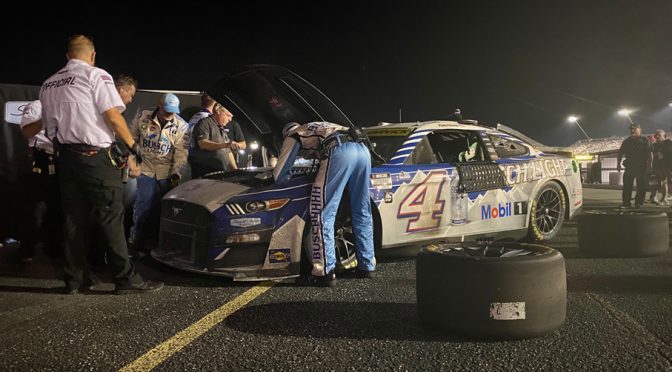
Outside of the expected suspension impacts, the Next Gen car was fairly durable for racing in an environment that many thought would be impossible for such a car. The composite body panels held up to various impacts and the changes made to the underbody allowed the cars to have enough ground clearance to not run into issues. The only other issue that seemed to pop up was ingestion of dirt by the engines in some of the cars, which seemingly resulted in the retirements of the No. 1 and the No. 11 cars. The Next Gen car has moved the air intake from the cowl of the car to the nose, so air being pulled in by the engine comes from the same central grille as the air that goes to the radiator and oil cooler. Any debris that enters there has the potential to go toward the engine.

MORE: Kyle Busch cashed in at Bristol

Teams installed screens on the grille and as usual, have a large rectangular air filter. But fine dust can still make it through all of that because you can only make these air filters so fine and not choke the engine. Some teams planned for these situations, with a few replacing the entire intake inlet assembly during stage breaks with one that had been cleaned in order to reduce the build-up of dirt and dust. Luckily, most cars in the field were not affected by these issues and if similar races are run in the future, it might be worthwhile to consider moving the intake to the top of the hood so that it points backward like we might see on dirt late models so that the air filter is not getting blasted with dust and dirt directly.

Overall, the Next Gen car on dirt seems to be a success with the way it drives and how competitive much of the field was. The changes to the track surface and the car modifications showed huge leaps in how well the cars raced and it is likely we will see similar changes to approve the product if another dirt race is put on based on all the data collected here.