“They should have put it up nearer the tri-oval. It’s almost down to the first turn. I never have understood that.”

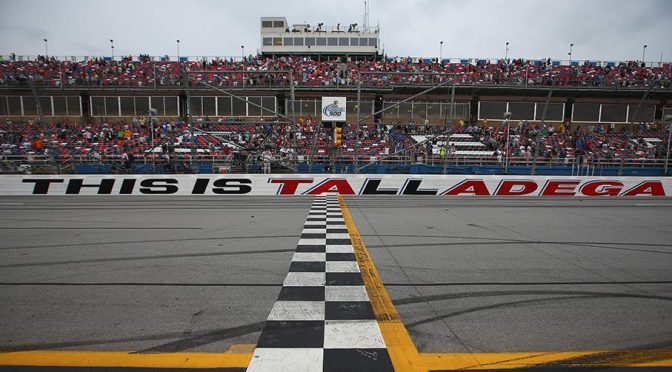
Darrell Waltrip had every reason to be dumbfounded when he said those words in 1981. He was speaking about Talladega Superspeedway’s start-finish line, a quirky nuance that added to the off-center nature of the place. To Waltrip, it was a design flaw.

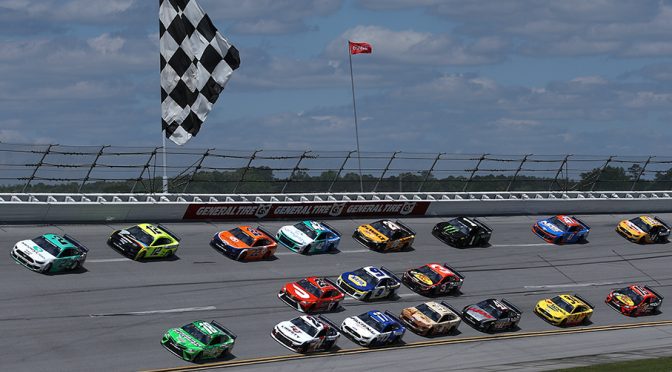
Waltrip led that year’s Talladega 500 on the white-flag lap. Through the tri-oval, Waltrip tried to fend off the high-groove advances of Terry Labonte running second with the checkered flag in sight. When he did, Ron Bouchard dove low in his No. 47 Buick, slipping by both of them in the home stretch to the start-finish line to score his only Cup Series win by approximately two feet. “Just plain sneaky,” Waltrip mused later.

RELATED: Talladega weekend schedule | Buy tickets

Had the start-finish line been centrally located in the tri-oval bend, as it was at its sister track in Daytona, the race would have been settled between Waltrip and Labonte. Instead, Bouchard – a standout Modified driver from the northeast who was a relative unknown in the south – used the extra 1,250 feet of race track to score one of NASCAR’s biggest upsets.

RacingOne
RacingOne | Getty Images

Waltrip may understand it now, but the start-finish line location has been a part of the mystique – or its speedway feng shui – since the 2.66-mile track opened its doors as Alabama International Motor Speedway in 1969. To this day, announcers offer perennial reminders about the idiosyncrasy during race broadcasts and how it might affect the outcome.

The lingering question is “why there?” The answers, simple as they are, have roots that date back to the track’s origins.

NASCAR founder Bill France Sr. modeled the track’s layout after Daytona International Speedway, but made it just a bit longer and a tad steeper in the banked turns. The start-finish line’s position nearly a quarter-mile past the center point was a flourish designed to give a race’s finish more space to build to a crescendo along the main grandstand, a perk for potential ticket buyers.

“This will give the fans two prime places to sit rather than just one,” said Roger Bear, Talladega’s first general manager and publicist, explaining the configuration to United Press International in 1969. “They can sit either in front of the start-finish line or in front of the pits. It simply means more good seats.”

Fans occupying those seats have seen their share of dynamic moments. Four of the seven closest finishes in NASCAR Cup Series history have occurred at Talladega at that symmetry-averse stripe.

The area has also been the site of suspenseful crashes. Team owner Jack Roush proposed moving Talladega’s start-finish line in 2009 after Carl Edwards’ No. 99 Ford sailed into the catch-fencing after last-lap contact with eventual first-time winner Brad Keselowski. Roush reasoned that had the finish line been in the tri-oval, their contact would have unfolded in the straight chute off Turn 4 instead of at an angle with the protective barrier. It’s worth noting that the same sorts of high-speed wrecks have occurred at Daytona with its more natural start-finish line placement.

Even with the conjecture, Talladega’s start-finish line has endured in the same spot for more than 50 years. When the reminder inevitably pops up during the race broadcast’s track analysis, now you’ll know why.

“For whatever reason they decided to put it there, the results have been tremendous over the years,” says Alabama native Donnie Allison, who posted two of his 10 Cup Series wins on Talladega’s high banks. “Now maybe some of the drivers didn’t like it, but for what we were there for, which was to put on a good show for the fans, I think it was an excellent choice.”
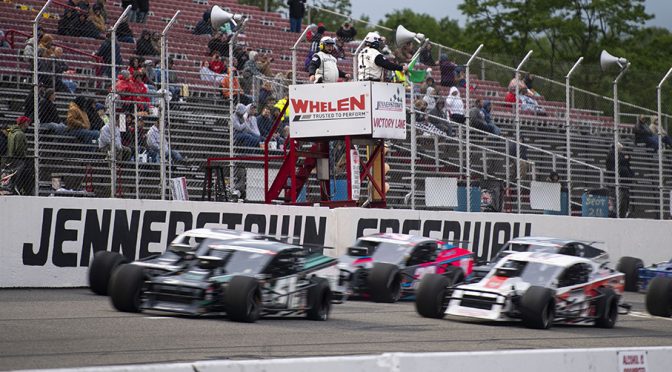
ATTLEBORO, Mass. – When the NASCAR Whelen Modified Tour returns to Jennerstown Speedway on Memorial Day weekend, drivers will contest in the 150-lap Jennerstown Salutes special. The race will mark the second consecutive year that JDV Productions, promoters of the event, will partner with Operation Vet NOW Inc. (OVN) to honor fallen heroes and gold star families on a special weekend of remembrance.

But this year will be even bigger when the racing begins on Saturday, May 28. New for 2022, additional divisions will join the program in Pennsylvania, with the Jennerstown Fast 4s, Modifieds, Pro Stocks and Late Models all joining the Whelen Modified Tour on the card.

After success last year with fewer divisions, JDV Productions is happy to present additional house classes Jennerstown fans are used to watching. They will be a welcomed addition to the card, with Jennerstown Speedway also under the NASCAR Advance Auto Parts Weekly Racing Series sanction for the new year.

The Whelen Modified Tour race will mark the third straight year the Tour visits the Jennerstown oval. In the past three races, three-time series champion Justin Bonsignore has been to Victory Lane twice, with Craig Lutz also picking up one checkered flag. The total purse for the race will push over $104,000 in posted awards, plus additional lap money that is currently on sale.

The race will become the highest-paying asphalt Modified race in the Northeast region for the holiday weekend.

“We’re proud to present the dedicated racers of the Jennerstown house divisions and showcase them to what is sure to be an increased audience with the Whelen Modified Tour in town,” said Josh Vanada, owner of JDV Productions. “Jennerstown is located in such a great part of our country and the area is perfect for holding a major short-track event. We’re looking forward to bringing their dedicated race fans a regional short-track event, with national quality.”

Adding to the purse, lap money is now available for purchase at jdvproductions.com. All laps sold will honor fallen heroes or heroes who are currently serving. They are $100 per lap, and the funds will be split between the driver who leads that specific lap and OVN.

The house divisions will assist to provide a mix of full-fendered and open-wheel racing for the day. Through the partnership with OVN, NASCAR Whelen Modified Tour teams will carry names of fallen heroes on their windshield roofs, similar to last year.

New for 2022, select Jennerstown house division drivers will also carry the banners. Last year, it was Bosnignore carrying the name of Air Force Staff Sergeant David Weiger to Victory Lane with him, and awarding Weiger’s family, in attendance, with the winning trophy.

Operation Vet NOW Inc. (OVN) is a non-profit organization established to reduce veteran suicide and improve the overall wellness of veterans, regardless of era served, through innovative outreach experiences. OVN concentrates on veterans who suffer from the invisible injuries of PTSD, TBI, combat and transition stress issues, and mental health concerns, stemming from military service, connecting them to heal their mind, body and soul.

On top of the 150-lap race for the Whelen Modified Tour, the Jennerstown Late Models will run for 50 laps, while the Pro Stocks will compete in a 20-lap race. The Modifieds will also run 20 laps, while the Fast 4s will hit the track for 15 circuits.

Race day will include a special autograph session for fans on the track prior to the drop of the green flag and additional opening ceremonies to remember fallen heroes from across the country. During the autograph session, fans will be able to head right down onto the frontstretch to meet and greet with the drivers and cars up close and personal.

All tickets for the Jennerstown Salutes 150 are now available at JDVProductions.com. This includes general admission tickets for the grandstands and exclusive passes to the JDV Experience for the day of the race. The JDV Experience pass includes preferred seating, a private autograph session and inspection tour, and much more. General admission tickets are $35 per person, while Military general admission will be $30. Kids 12 and under may enter for free. The JDV Experience for this event is $100, and pit passes are $45. All pit passes will be sold at the track.

For more information on JDV Productions, visit JDVProductions.com and follow on social media for the latest updates.

Brad Keselowski didn’t have to wait until the final lap of the 2021 GEICO 500 to take the lead. 

But if the five-time Talladega Superspeedway winner took the lead prior to the white flag last April, he might be arriving in Alabama for the 2022 GEICO 500 as a five-time Talladega winner, not a six-time Talladega winner.

RELATED: Weekend schedule for Talladega | Surprise Talladega winners | Talladega tickets

“The whole race, I had a couple of opportunities to take the lead, but I just kept thinking, ‘Man, just keep your car in one piece till the end,’” Keselowski said after passing Matt DiBenedetto in overtime to tie Jeff Gordon for the most wins in race history (four) and Gordon and Dale Earnhardt Jr. for the most wins in track history (six). 

“We’ve been so close here, and it just didn’t seem to want to come together here the last few years, and I’ve been on kind of a four-year drought here, but it’s nice to get number six,” Keselowski added, referring to six straight races at Talladega Superspeedway in which he finished outside the top 12, a period that followed three wins in his previous seven starts at NASCAR’s biggest and baddest track.

Among those three wins from October 2014 through October 2017 was a victory in the 2016 GEICO 500. And while it was Keselowski’s third win in race history, it was the 42nd time in race history (of 47 total) in which the previous year’s winner failed to defend his title.

Six years later, entering the 2022 race, only five of the 52 races have been won by the previous year’s winner, and 30 different drivers have won at least once, making it one of the most parity-filled Cup Series races over the last five decades. Only David Pearson (twice), Buddy Baker, Earnhardt Jr., and Gordon have won in back-to-back years. 

In his three previous attempts at back-to-back wins, Keselowski finished 34th (2010), 15th (2013), and seventh (2017). If he bucks history with a win on Sunday, he must, at minimum, finish ahead of 2018 winner Joey Logano, whom Keselowski faces in a featured matchup in NASCAR betting at BetMGM:

Joey Logano (-120) vs. Brad Keselowski (-110)

Joey Logano is the favorite in race-winner odds, though this is the most crowded odds board through the first two months of the season. At +1100, as of Wednesday, Logano is tied with three other drivers with the best odds and narrowly ahead of four others at +1400, among them Brad Keselowski.

Logano leads all drivers in average rating (100.5) and laps led (150) at Talladega since 2019 but since six top-5 finishes in eight starts, including two wins, from October 2015 through April 2019, he’s struggled for consistent contention, posting just one top-10 finish in his last five starts.

The public likes Keselowski in race-winner betting –  only William Byron (16.5%) and Ryan Blaney (12.4%) have a higher handle share than Keselowski (7.5%) in race-winner odds – and against Logano in this featured matchup. Eighty-nine percent of the handle (from 57% of the tickets) are on Keselowski over Logano.

Chase Briscoe (-125) vs. Tyler Reddick (-105)

Two of the least-experienced Talladega and superspeedway drivers in the field this weekend – six combined NASCAR Cup Series starts at Talladega and 15 combined Cup Series starts at superspeedways – Chase Briscoe and Tyler Reddick are both chasing their first top-five finishes at the track. 

Reddick and his BetMGM-sponsored No. 8 Chevrolet are buried in race-winner odds (+2500) despite two straight seventh-place finishes at Talladega before a 39th-place showing at the 2021 YellaWood 500. 

The BetMGM tickets are split 50-50 on Briscoe and Reddick but Reddick has 91% of the handle as he looks to finish ahead of Briscoe for the second straight Cup Series race.

Ryan Blaney (-125) vs. Chase Elliott (-105)

Chase Elliott, winner of the 2019 GEICO 500, is the new No. 1 in Pat DeCola’s Power Rankings despite going winless in the season’s first nine races. He’s been inconsistent at Talladega but ranks fourth in laps led, fifth in average rating, and fifth in average finish at speedways (min. five starts) since 2019.

Elliott is an underdog to 2020 GEICO 500 winner Ryan Blaney, who enters the weekend with four straight top-seven finishes for just the second time in his career. Of the 23 drivers with six starts at Talladega since 2019, Blaney ranks first in wins (two), average finish (11th), top-20 finishes (five), and average rating (98.9).

The public’s love for Blaney in race-winner betting carries over to the head-to-head vs. Elliott. Blaney has 99% of the bets and 98% of the handle.

Bubba Wallace (-115) vs. Denny Hamlin (-115)

Before his win in the YellaWood 500 last October, Bubba Wallace had zero top-10s in 11 career NASCAR Cup Series and Xfinity Series starts at Talladega. Now, he’s a betting favorite (+1100) to join Blaney as the track’s only back-to-back winners since Gordon won the Aaron’s 499 and UAW-Ford 500 in 2007.

BetMGM bettors, however, are not buying Wallace to win the race – 20th in both tickets (1.8%) and handle (1.2%) – or finish ahead of Denny Hamlin, who’s dominating the featured matchup splits with 97% of tickets and 95% of the handle.

You can view updated GEICO 500 odds and more NASCAR odds at the BetMGM online sportsbook.

NASCAR Cup Series drivers have another tall task on tap Sunday at Talladega Superspeedway (3 p.m. ET, FOX, MRN, SiriusXM NASCAR Radio). Before the action, try your hand at some props.

RELATED: Set your Fantasy Live lineup

Featured Matchups of the week

Race-specific data props

Before the start of the 2022 season, Josh Williams declared he would further his career by moving to BJ McLeod Motorsports for the full Xfinity Series schedule. He knew there would be critics.

“I want to race on Sundays, and (BJ McLeod Motorsports) was an avenue to have that opportunity to get some seat time off and on,” Williams told NASCAR.com last week. “I thought it was a good idea for us.”

For the previous five seasons, Williams contributed to the growth of DGM Racing, a similar team to BJMM in the Xfinity Series. There, he piled up eight top-10 results, six of which came during his standout 2020 season.

RELATED: Talladega weekend schedule | Xfinity Series Talladega entry list

This past Sunday, Williams made his Cup Series debut, piloting the No. 78 Ford for Live Fast Motorsports. When the checkered flag flew, the Florida native earned a respectable 25th-place finish.

His Cup debut has been the only bright spot thus far in 2022. His primary focus, driving the No. 78 car in the Xfinity Series, is having a rugged start to the year, failing to qualify in three of the eight races.

“It’s just part of motorsports, it’s part of racing,” Williams said. “I’ve had good years before and I’ve had really, really bad years before. We’re making gains to make it better and get back to where we need to be. It might take a little longer than we expected, but we’ll be back up where we need to be.”

After finishing 31st and 21st in the opening two races of the season, respectively, Williams missed his first race at Las Vegas. During the 20-minute practice session, the No. 78 car blew an engine and was unable to make a qualifying lap.

In the first road course of the season at Circuit of The Americas, Williams’ team missed the setup, thus resulting in him watching from the sidelines. And most recently at Martinsville, it was another instance of not being able to fix an issue from practice, when the No. 78 car had a broken seal in the right front brake caliper. Though still turning a qualifying lap — essentially with just left front brakes — Williams missed the show.

Team owner BJ McLeod was worried something like what’s happened to the No. 78 team could happen this year, especially if a team that is high in the owners standings has a problem and can just take a provisional position.

“I knew that it would be a problem with having some failures in practice and you can’t get it fixed,” McLeod said. “It’s hurt us more than others because we’re down in the points. Of the three races we got sent home, two of them are because of problems we couldn’t fix before qualifying. I’m fine with that.

“We need to do a good job of cleaning that up, get ourselves further up in points, that way if we do have a common problem that happens when you go practice then we aren’t shoved out of the race because somebody else has already taken a provisional.”

In signing Williams, McLeod knew he was getting a racer’s racer, someone he believes can run inside the top 10 weekly given the right opportunity. The entire No. 78 team was overhauled during the offseason, too, when the duo made a collaborative effort of who they wanted to work on the car. McLeod also purchased a multitude of updated chassis, hoping to step up his Xfinity efforts.

Getting everything to mesh has been a challenge.

“(This) isn’t the BJMM that you saw in 2021 or 2020,” McLeod said. “We were trying to put together a whole new program and it hasn’t worked out as quickly as we wanted it to. But we’re working hard to get that turned around and get it to where we can get in the direction we want it to go.”

RELATED: See who qualifies for Xfinity Dash 4 Cash at Talladega

Williams just boils the tough luck at the start of the season down to growing pains that most teams have.

“It’s one of those things where everybody is getting used to everybody,” he said. “I’m trying to learn what everyone wants and how to react to different people. I’m excited to get it back to where it needs to be and show everybody that the (No.) 78 car is going to be a threat every week.”

Despite the troubling start, McLeod does see light at the end of the tunnel. On paper, he said, the entire organization has seen an uptick in speed. Richmond, in particular, sticks out because Williams was second in the practice session while Stefan Parsons was right behind in third.

In addition, Parsons led his first laps in the Xfinity Series at Martinsville, as Matt Mills was running inside the top 10 before getting turned by Riley Herbst.

“We definitely have more speed than we’ve had, but we’ve had small mistakes with Josh that have cost us big,” McLeod added. “We’ve got to clean them up and do a better job in the future.”

Both the driver and owner believe the team can salvage the 2022 season. Besides, there’s still three-quarters of the year remaining, with a bunch of tracks Williams has performed well at in the past coming up.

“I’ve raced my entire life, it’s the only thing I’ve ever done,” Williams stated. “You can’t get down on yourself, can’t get down on your guys, your team. You’ve got to keep a positive attitude to try to be better. If everyone is getting upset at the shop, it’s not going to benefit your program.

“We try to keep a positive attitude and make the best of the situation and build off of it.”

Surely, McLeod, who has seen many peaks and valleys of BJMM’s seven years in the series, isn’t going to give up.

“There’s no doubt I’m not happy with what we’ve done on our side,” he said. “I’m not at peace with it, but I can also say that my guys have done a good job, too. It’s not any one person’s problem or any one thing that’s hurt us, it’s a combination of things that we have to get better and we’re all working towards that.”

The first goal is to qualify Williams into Talladega on Saturday, as the team enters the weekend 35th in the owners standings after swapping points with the No. 99 car earlier this week, which will now be a part-time entry. In the series’ first superspeedway race at Daytona, the No. 78 Chevrolet qualified solidly into the show in 24th.

Then, the racer in Williams can come out.

“The biggest thing for us is to go to Talladega and finish the race,” he said. “Try to have a good points day and then we can go to places like Dover and Darlington and race. I’ve had pretty good success there with decent finishes, so I think we’ll be good once we get back into the swing of things and get our momentum back.”

Editor’s note: Bozi Tatarevic is a professional racing mechanic and pit crew member. He will provide technical analysis for NASCAR.com throughout the 2022 season.

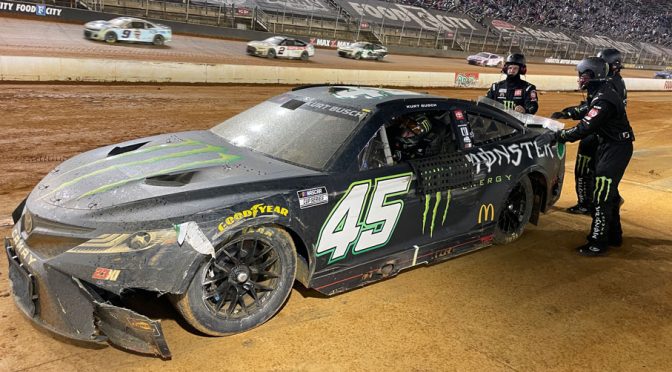
Overcast conditions and sprinkles during the day resulted in a damp surface to start Sunday’s Bristol Dirt Race, but we ultimately saw what the Next Gen car could do for 250 laps on dirt.

Yes, early conditions led to some mud being flung on the cars, but they eventually settled in and became very racey.  The independent rear suspension and wider tires appeared to make these cars much more compatible in the dirt, and seeing them slide into the corners was reminiscent of seeing rally cars pushed to their limits on dirt.

RELATED: Photos from Bristol Dirt Race

While the cars got off to a great start from a handling standpoint, the soft top layer of the dirt surface meant that the grilles were getting slung with mud in those early laps, eventually resulting in a caution for teams to clear grilles and windshields. This initial cleaning was enough to clear off the bulk of the dirt that had ended up stuck to the fronts of many cars, and another similar caution period for cleaning was not required. While this was probably a good idea to allow as many cars as possible to continue to race, it would have been interesting to see the dirt and debris element as part of the strategy since some teams had spent time engineering solutions that allowed them to get cool air to their radiators and engine even with dirt hitting the front of their cars.

Once the surface settled in, close competition came out and a variety of tire strategies were employed, with some drivers deciding to stay out during stage breaks to gain track position. This was partly due to the new tire design working so well with the dirt surface, and it did not degrade over long periods of time. The wider surface of the tires along with the modifications to the tread blocks for cooling did its job to allow teams not to have to worry if they would overheat or damage the right rear tire by making a setup where a driver could get the most out of the car.

Bristol Dirt Tires

Elements of the Next Gen car such as the rack-and-pinion steering and the independent rear suspension combined with removing some of the aerodynamic elements such as the rear diffuser meant that this was very much a race of car control and driver skill, combined with crew chiefs maximizing on adjustments to the tires and dampers. This race allowed a bit more freedom with things like minimum shock lengths so teams could have a little more room to play, but ultimately it came down to who was behind the wheel.

Racing with a new car on a new surface can often lead to chaos, and there was no shortage of that as cars got up close to each other all the way until the last lap. Many made it through with some bumps and scrapes, but we also saw damage similar to what we had seen in the heat races a day earlier where cars that had impacts to their wheels would sustain damage to suspension components like control arms and toe links. While the toe links have been beefed up, the series appears to be taking a careful approach to increasing the size of suspension components as there is a balance of trying to protect the rest of the car by letting a control arm or toe link bend instead of damaging the chassis.

Outside of the expected suspension impacts, the Next Gen car was fairly durable for racing in an environment that many thought would be impossible for such a car. The composite body panels held up to various impacts and the changes made to the underbody allowed the cars to have enough ground clearance to not run into issues. The only other issue that seemed to pop up was ingestion of dirt by the engines in some of the cars, which seemingly resulted in the retirements of the No. 1 and the No. 11 cars. The Next Gen car has moved the air intake from the cowl of the car to the nose, so air being pulled in by the engine comes from the same central grille as the air that goes to the radiator and oil cooler. Any debris that enters there has the potential to go toward the engine.

MORE: Kyle Busch cashed in at Bristol

Teams installed screens on the grille and as usual, have a large rectangular air filter. But fine dust can still make it through all of that because you can only make these air filters so fine and not choke the engine. Some teams planned for these situations, with a few replacing the entire intake inlet assembly during stage breaks with one that had been cleaned in order to reduce the build-up of dirt and dust. Luckily, most cars in the field were not affected by these issues and if similar races are run in the future, it might be worthwhile to consider moving the intake to the top of the hood so that it points backward like we might see on dirt late models so that the air filter is not getting blasted with dust and dirt directly.

Overall, the Next Gen car on dirt seems to be a success with the way it drives and how competitive much of the field was. The changes to the track surface and the car modifications showed huge leaps in how well the cars raced and it is likely we will see similar changes to approve the product if another dirt race is put on based on all the data collected here.

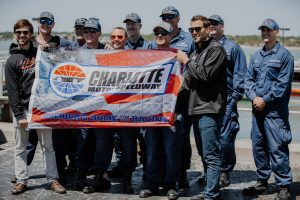
WRIGHTSVILLE BEACH, N.C. — Daniel Suárez and his No. 99 Trackhouse Racing crew chief, Travis Mack, traveled to U.S. Coast Guard Station Wrightsville Beach on Tuesday in North Carolina, as part of Charlotte Motor Speedway’s annual Mission 600 program.

Suárez, a native of Monterrey, Nuevo León, Mexico, and part of Coca-Cola Racing’s family of drivers, made his first in-person visit with the U.S. Coast Guard after a virtual interaction in 2021.

RELATED: Photos from the visit | Denny Hamlin kicks off 2022 Mission 600

“Recognition is huge,” Suárez told NASCAR.com. “To learn more about what they do and how they do it. Some of these people spend their entire lives training and working and moving different places to help others to keep people safe. And we shouldn’t be taking that for granted. I feel happy and I’m proud to be here with Coca-Cola and NASCAR to be able to understand more and learn more of how they do things.”

This visit was an exciting and wholesome one, creating an opportunity for U.S. Coast Guard personnel to learn about NASCAR and vice versa.

The Trackhouse pairing received hands-on training, including simulating a beached boat rescue mission and operating pumping units designed to counter flooding on vessels at sea. Likewise, it was a chance for at-station personnel to learn the ins and outs of day-to-day workload for drivers, crew chiefs and their race teams.

Normally leading the charge on Sundays, Mack took the opportunity to learn new things he could apply to his race team — including taking a back seat while Suárez piloted the 45-foot vessel.

“Working in a team atmosphere, learning how the military branch of authority works and how they do things as a team is really important to take some of that aspect back to our team,” Mack told NASCAR.com. “How can we apply the things that they do in the military to our racing team and make us better. These guys dedicating themselves to the Coast Guard is really impressive. It’s amazing the job that they do.”

Each year leading up to the Coca-Cola 600, drivers throughout the Coca-Cola Racing Family participate in various virtual and in-person interactions with armed forces leading up to Memorial Day weekend and the Charlotte race.

Daniel Suarez Mission 600 Sean Montgomery April 2022 1

TICKETS: Coca-Cola 600 at Charlotte Motor Speedway

And Suárez’s in-person experience was a memorable one.

“In general, a lot of respect for them,” Suárez said. “The respect hasn’t changed, I already had that respect before today. But to learn more about what they do has been something cool. They spend their entire lives trying to keep people safe and save people’s lives, so big respect for these guys.”

The 63rd running of the Coca-Cola 600 at Charlotte Motor Speedway is Sunday, May 29 (6 p.m. ET on FOX, PRN, SiriusXM NASCAR Radio).

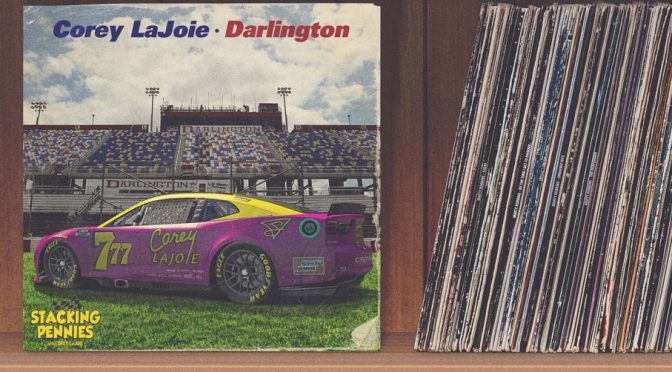
The sound of a Next Gen car is sweet music to the ears of race fans, and that’s one reason why Corey LaJoie’s throwback tribute to Marty Robbins is a lead-pipe lock to turn some heads at the Goodyear 400 on May 8 at Darlington Raceway (3:30 p.m. ET, FS1, MRN, SiriusXM).

“The whole Marty Robbins story fascinates me because it’s a great crossover between country music and NASCAR,” LaJoie said. “And I don’t think his story gets told enough, so it’s cool to bring that story some light.”

RELATED: Buy tickets to Darlington

Robbins was a country-music star whose accolades in music included 16 No. 1 hits and 11 albums, all of which went either gold or platinum, and he also was a NASCAR driver, taking part in 35 Cup Series starts, including two top-10 finishes at Darlington. So one might say it’s a perfect match for the No. 7 Spire Motorsports Chevrolet to be sporting such livery at the annual throwback race.

LaJoie revealed the purple-and-yellow scheme that should be familiar to NASCAR history buffs on his Stacking Pennies podcast Wednesday on NASCAR.com. For LaJoie, who often delves into the history of the sport with cohort Skip Flores on the podcast, the scheme is exciting to bring to fans along with the Fraternal Order of Eagles sponsorship.

Robbins, a Glendale, Arizona, native and later Nashville, Tennessee, resident who passed away in 1982 because of heart failure, was a beloved figure for NASCAR fans and for those who participated in the sport, so it’s with honor that the below paint scheme is presented:

2022april19 Corey Lajoie Throwback
Corey LaJoie Racing

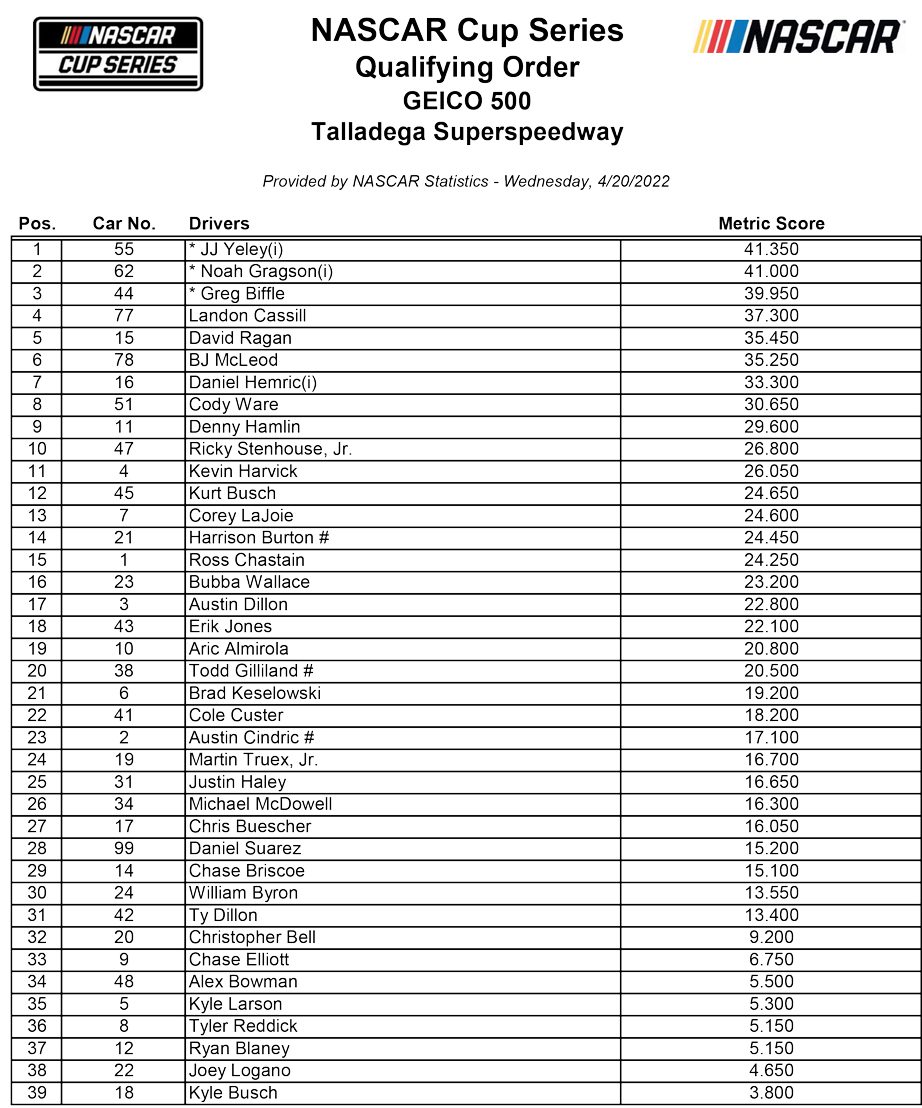
Check out the qualifying order for Saturday’s on-track action at Talladega Superspeedway (11 a.m. ET on FS1) before Sunday’s GEICO 500 (3 p.m. ET, FOX, MRN, SiriusXM NASCAR Radio).

RELATED: Talladega weekend schedule

On superspeedways this season, teams will compete in single-car qualifying with one lap, and the top 10 cars in the opening round of qualifying will advance to the final round to compete for the Busch Light Pole Award.

RELATED: Learn more about the practice and qualifying procedures for 2022


raysmith


If you’re looking for a historic NASCAR track, look no further than Bowman Gray Stadium in Winston-Salem, North Carolina.

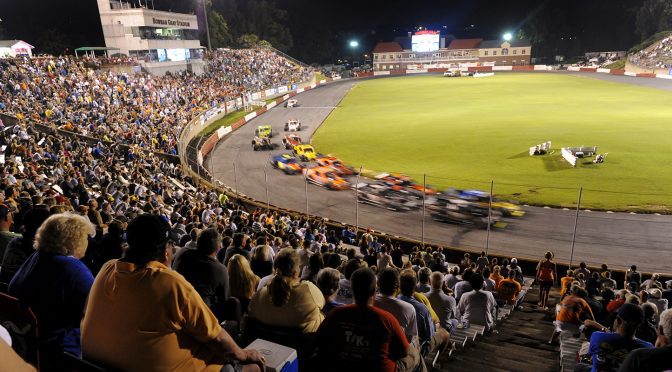
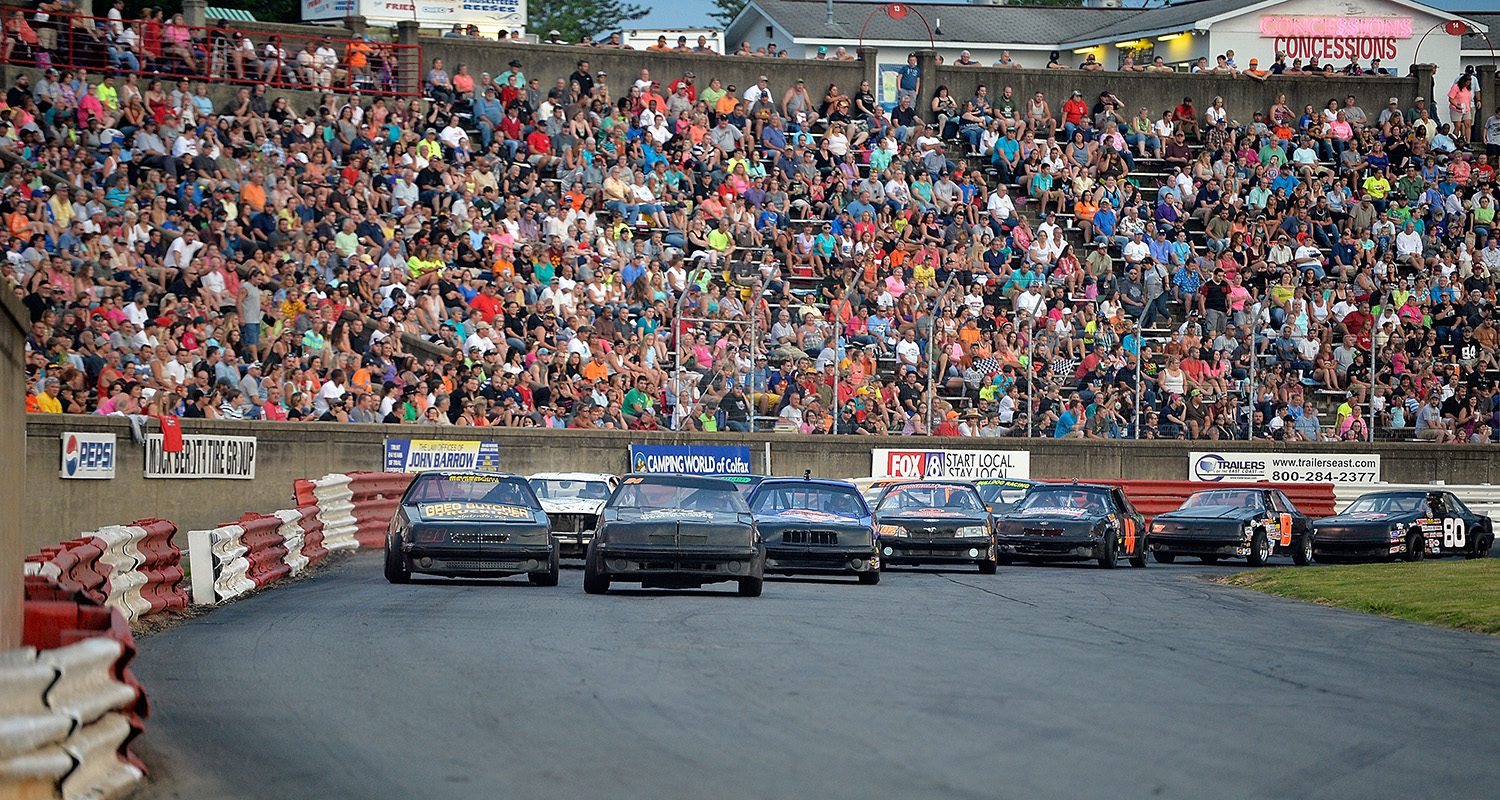
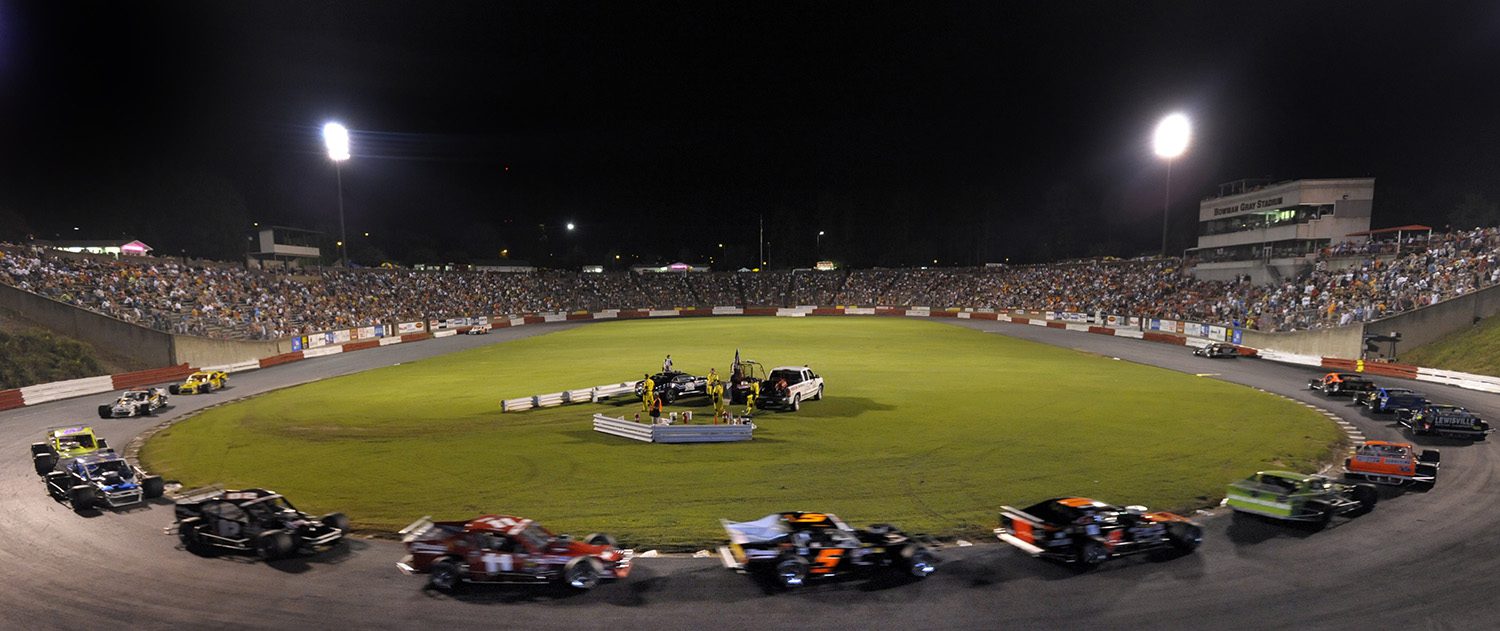
The popular quarter-mile bullring is NASCAR’s longest running weekly racing track. Hosting racing on most Saturday evenings from late April through mid-August, the grandstands are typically packed with patrons who are there to watch the ground pounding modifieds battle for supremacy and the occasional fisticuffs that result from the intense on-track action.

The track first opened for racing in 1949 under the tutelage of Bill France Sr. and Alvin Hawkins, with NASCAR Hall of Famer Tim Flock claiming the first track championship later that year.

RELATED: Watch Weekly Series action all season on FloRacing

In the years since, a number of legendary names have captured track titles at the facility, including Glen Wood, brothers Bobby and Billy Myers, Pee Wee Jones, Ralph Brinkley, Philip Smith, Junior Miller, Burt Myers and Tim Brown.

Brown is the most recent track champion, capturing his 11th crown in 2021 to give him more track championships than any other driver.

Below is everything you need to know about Bowman Gray Stadium.

Bowman Gray Stadium

Track Profile

Bg Logo Revised Hires


WINSTON SALEM, NC - AUGUST 15: during the 1,000th NASCAR race at Bowman Gray Stadium on August 15, 2015 in Winston Salem, North Carolina. (Photo by Grant Halverson/NASCAR via Getty Images)
(Photo: Grant Halverson/NASCAR via Getty Images)
Track Bowman Gray Stadium
Location Winston-Salem, North Carolina
Opened 1949
Layout Oval
Surface Asphalt
Length Quarter-mile
Banking No banking

Bowman Gray Stadium didn’t start off life as a race track.

On the contrary, it actually started life as a football field, a role the facility continues to fulfill to this very day.

The stadium was built in 1937 as a public works project to provide jobs during the Great Depression. It is owned by the City of Winston-Salem. A portion of the money to build the stadium was donated by Nathalie Gray in memory of her husband, Bowman. Mr. Gray, a philanthropist and president and chairman of the R.J. Reynolds Tobacco Company, passed away in 1935. His wife Nathalie donated $30,000 toward the stadium’s original $100,000 construction cost.

In the beginning, the stadium’s sole use was for collegiate football. Later, trotter horse racing was added on the .250-mile dirt oval surrounding the football field.

Automobile racing came to the stadium in 1947, but initially France and Hawkins weren’t involved.

“The story goes that a guy promoting the Midget races on the dirt track in 1947 asked the city to pave the track,” current manager and promoter Gray Garrison told NASCAR.com in 2011. “He said he’d pay for the paving from what he made in 1948. Apparently, he left town without paying the bill.”

That’s when France and Hawkins stepped in, with the pair reaching a deal with the city to promote the track. In doing so, they pledged to earn enough money to pay back the city for the paving of the track.

FOLLOW BOWMAN GRAY: Facebook | Twitter

They followed through with their promise, paying back the city the money it was owed and in doing so created a piece of NASCAR history that continues to operate today.

The track hosted 29 NASCAR Cup Series races from 1958-71, with 1960 NASCAR Cup Series champion Rex White scoring the most wins during that time with six triumphs. That included four straight victories in 1961 and ’62. Junior Johnson, Richard Petty and Glen Wood are tied for second with four each.

The series now known as the ARCA Menards Series East visited Bowman Gray five times from 2011-15, with current NASCAR stars Matt DiBenedetto, Corey LaJoie and Ben Rhodes among the winners. Ben Kennedy, the great-grandson of France and current senior vice president, racing development and strategy for NASCAR, also earned an East Series win at the track in 2013.

From 2005-16, the NASCAR Whelen Southern Modified Tour was a staple at Bowman Gray, with 10-time track champion Burt Myers earning three Tour victories at his home track to lead all series competitors. He scored wins in the first Southern Modified Tour race at the track in 2005 and the final race in 2016.

WINSTON-SALEM, NC - AUGUST 6: L.W. Miller #36 wins the NASCAR Whelen Southern Modified Tour Strutmasters.com 199 at the Bowman Gray Stadium on August 6, 2011 in Winston-Salem, North Carolina. (Photo by Sara D. Davis/Getty Images for NASCAR) | Getty Images
(Photo: Sara D. Davis/Getty Images for NASCAR)

NASCAR Cup Series races at Bowman Gray

Year-Race No. Date Winner
1958-19 5/24/58 Bob Welborn
1958-39 8/22/58 Lee Petty
1959-08 3/30/59 Jim Reed
1959-24 6/27/59 Rex White
1959-33 8/21/59 Rex White
1960-13 4/18/60 Glen Wood
1960-22 6/25/60 Glen Wood
1960-34 8/23/60 Glen Wood
1961-12 4/3/61 Rex White
1961-28 6/10/61 Rex White
1961-38 8/9/61 Rex White
1962-16 4/23/62 Rex White
1962-25 6/16/62 Johnny Allen
1962-42 8/18/62 Richard Petty
1963-18 4/15/63 Jim Paschal
1963-33 7/13/63 Glen Wood
1963-43 8/16/63 Junior Johnson
1964-12 3/30/64 Marvin Panch
1964-49 8/22/64 Junior Johnson
1965-17 5/15/65 Junior Johnson
1965-44 8/28/65 Junior Johnson
1966-12 4/11/66 David Pearson
1966-41 8/27/66 David Pearson
1967-09 3/27/67 Bobby Allison
1967-37 8/12/67 Richard Petty
1968-35 8/10/68 David Pearson
1969-39 8/22/69 Richard Petty
1970-36 8/28/70 Richard Petty
1971-34 8/6/71 Bobby Allison

East Series races at Bowman Gray

Year-Race No. Date Winner
2011-05 6/4/11 Matt DiBenedetto
2012-05 6/2/12 Corey LaJoie
2013-05 6/1/13 Ben Kennedy
2014-07 5/31/14 Ben Rhodes
2015-05 5/30/15 Scott Heckert

NASCAR Whelen Southern Modified Tour races at Bowman Gray

Year-Race No. Date Winner
2005-05 8/6/05 Burt Myers
2006-06 8/5/06 Jason Myers
2007-06 8/4/07 Burt Myers
2008-04 8/2/08 Brian Loftin
2009-06 8/1/09 Luke Fleming
2010-05 8/7/10 L.W. Miller
2011-06 8/6/11 L.W. Miller
2012-06 8/4/12 George Brunnhoelzl III
2013-06 8/3/13 Ryan Preece
2014-06 8/2/14 Danny Bohn
2015-06 8/1/15 Danny Bohn
2016-06 8/6/16 Burt Myers