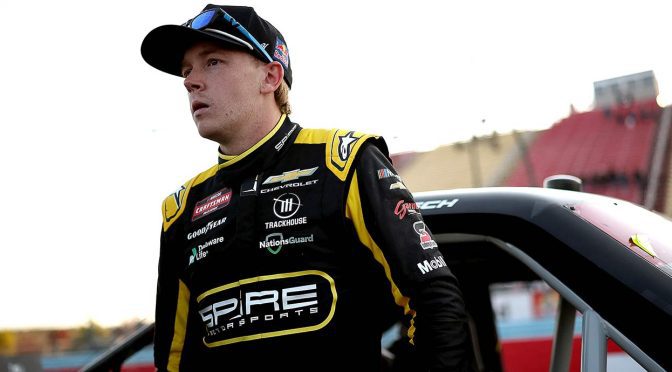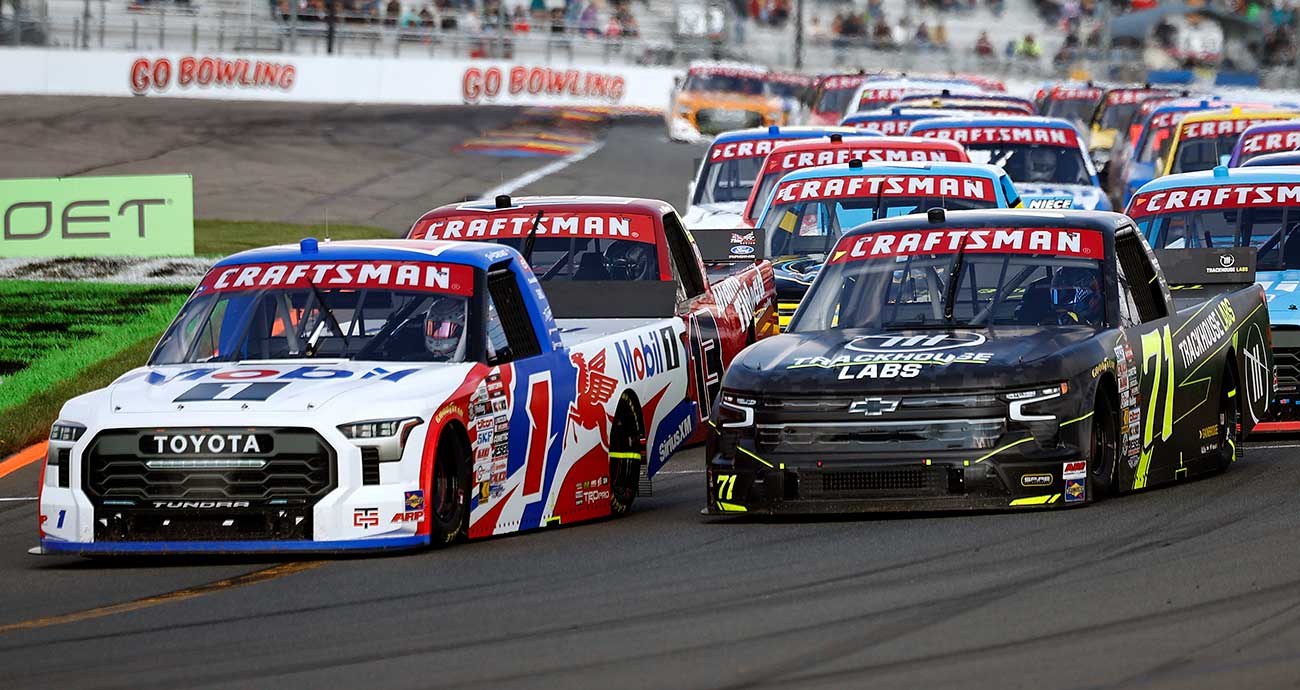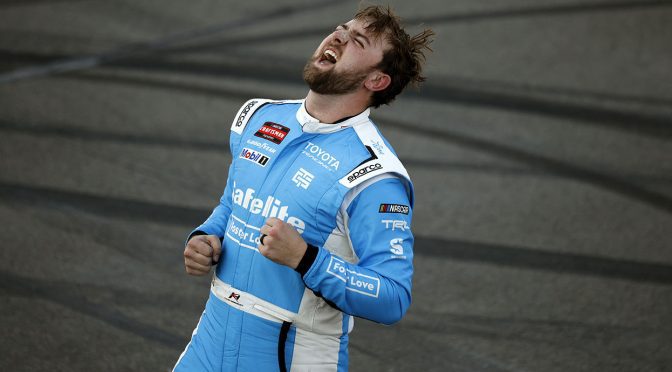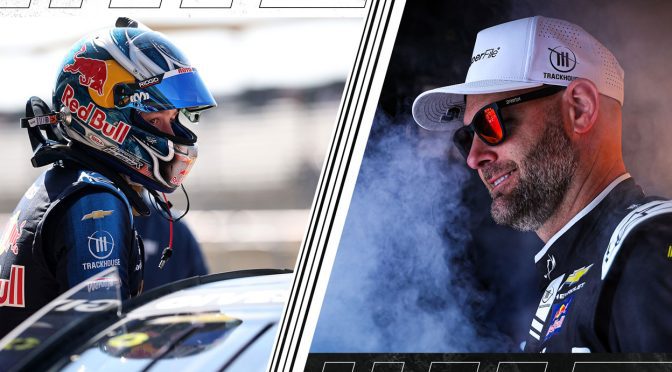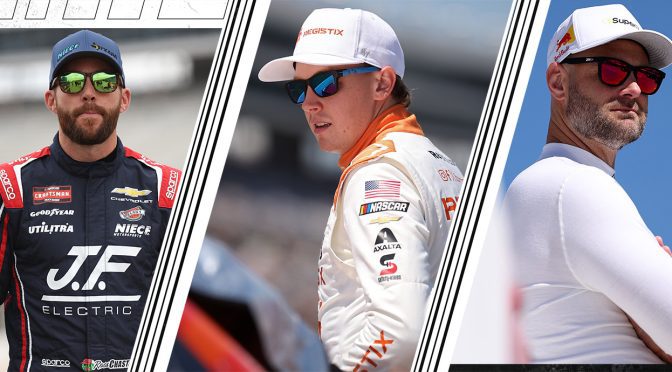
The NASCAR Cup, NASCAR O’Reilly Auto Parts and NASCAR Craftsman Truck series all head to Atlanta’s EchoPark Speedway for a spring tripleheader in the Peach State. Check out the qualifying orders for all three series.
For nearly two decades, Dale Earnhardt Jr. and Rodney Childers pondered what it would be like working together.
In 2026, after a year of Earnhardt courting Childers to JRM, the high school classmates get their chance.
“I feel like there’s nothing better than working for one of your best friends, someone that is going to have your back and put you in an environment to succeed,” Childers said. “He’s not going to let me fail. It’s been a ton of fun at the shop. That shop is the exact environment that I was looking for. Working with these guys and these old-style cars is what I always loved. It keeps me awake at night thinking of new things and how to make things better.”
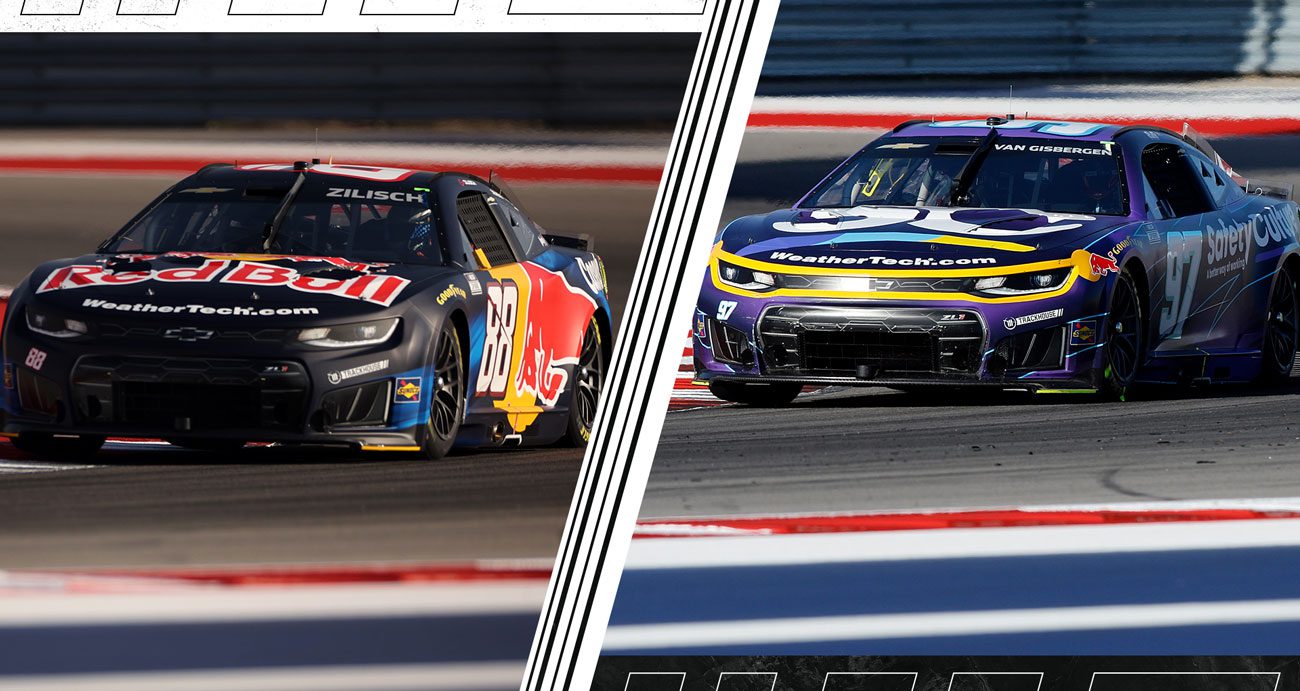
Childers signed on to crew chief JR Motorsports’ No. 1 NASCAR O’Reilly Auto Parts Series entry, split between Carson Kvapil (24 races) and Connor Zilisch, a 10-time winner in 2025 who is now the full-time pilot of the No. 88 Trackhouse Racing Chevrolet in the NASCAR Cup Series.
After last year went awry for Childers at Spire Motorsports, this gig was the next best opportunity.
“These are cars he really enjoys working on,” Earnhardt told NASCAR.com through text message. “The O’Reilly Series garage has a vintage Cup feel to it that I think will appeal to him. I hope he can appreciate the opportunity to teach drivers, engineers and mechanics.
“We get these kids who have big dreams, and over time, you become their biggest fan. In turn, you put a lot of pressure on yourself to help them get the call or next big break. That’s now what I hope Rodney sees and embraces.”
Childers joined JRM in mid-October and immediately grew a liking for the organization. He departed Spire after spending just nine races with Justin Haley in 2025.
“The more I thought about that, everything happens for a reason,” Childers said. “The Lord has put me in this place for a reason. All this [expletive] is happening for a reason. It was time to do something different.”
Joining JR Motorsports was an option that Childers contemplated with his family after spending the previous 22 seasons at the Cup Series level. It will be different, as in the past, his wife and children were able to fly to every race weekend.
“The money and glory doesn’t mean anything when you’re running 22nd every weekend on the Cup side and going home miserable every week,” Childers said. “On this side, hopefully we can contend for wins every week, go home every single day with a smile on our faces. Some things happen for a reason, and we feel like this is one of them.”
Immediately, Childers recognized the dedication that Earnhardt and his sister, Kelley Earnhardt Miller, had to their company. They lead by example from the top down, with their energy spreading throughout the walls.
“I think what has been pretty impressive to me is how involved he and Kelley are,” Childers said. “They work their butts off. This isn’t something that just happens on its own. It’s impressive to see how hungry they are. With the legacy they have, do they really have to be there every day and be as involved as they are? They want to do it and strive to do it every day.”
That grind is something Childers knows all too well. Every morning, he’s among the first employees to race to the shop, always clocking in early. That hustle has spread throughout the JRM headquarters, with more of his coworkers arriving early as well.
Childers, a straight-to-the-point individual, knows JRM is filled with “a bunch of racers.”
“Every morning, I wake up before my alarm goes off just thinking of these things and then I get there and am like, ‘I’ve got to do this, I’ve got to do this,'” Childers said. “These cars, I have so much memory bank in my head of what we did all those years.
“It was only a week or two of being there, and I was beating everyone to the shop except for [Mike Bumgarner, JRM’s director of competition], which he’s hard to outwork. I started noticing more people showing up earlier, and it was one person, then it was two people, then five and then 10. That’s good to see. They don’t have to be there at 6 a.m.; they don’t have to be there until 6:59, but they want to be there. It’s good to see that kind of motivation and people that want to be there.”
Jared C. Tilton | Getty Images
Admittedly, Childers knows there could be kinks to work out between himself and the drivers. His blunt personality, compared to both Zilisch and Kvapil’s laid-back personas, could take time to adjust. The relationship started off with a seventh-place finish for Kvapil at Daytona International Speedway. Kvapil will pilot the No. 1 machine this Saturday at Atlanta’s EchoPark Speedway (5 p.m. ET, The CW, PRN Radio, SiriusXM NASCAR Radio).
“We will see how it goes once we get a few races in,” Kvapil said. “Who knows, it might not work out, but I don’t see that. I think we’re cut from the same cloth. We’re both late model guys. There is a lot of stuff similar with me and Rodney. I’m super excited to get it going and hopefully win some races.”
Childers, known as a mastermind atop the pit box, believes his creativity will be on display more with the O’Reilly Auto Parts Series chassis. He can make more of a difference compared to being at the Cup level, where all teams have the same parts and pieces to assemble on the Next Gen car. It’s something he excelled at for a decade, guiding Kevin Harvick to 37 race wins with Stewart-Haas Racing.
“I think it will be a big advantage, honestly,” Childers said. “We were into every detail. That 4 team was a bunch of special people. I realize even more now how detailed we were. Every single thing mattered. There wasn’t one nut, one bolt, one ounce of oil that didn’t matter. We raced at a different level.
“On this side of it in the O’Reilly Series, it’s hard to race at that level. You don’t have the amount of people to race at that level, there’s not enough time in the day to race at that level. But you can damn sure try. It might take a few more hours than what you’re used to, but we’re going to try to race at the highest level we can.”
There is no new NASCAR policy this season on waiting to display a yellow flag after a crash, but there was a new approach for the Daytona 500.
On the latest episode of the “Hauler Talk” podcast, NASCAR managing director of communications Mike Forde said NASCAR was prepared to throw the yellow when chaos erupted in Turn 1 on the last lap Sunday at Daytona International Speedway. The race still ended under green despite multiple incidents involving more than a dozen cars.
But Forde noted a similar type of crash this weekend at Atlanta’s EchoPark Speedway could trigger a yellow flag because of different circumstances involving the wreck and track dimensions at the 1.5-mile track.
“We may see a hit that looks hard, a nose-into-the-wall collision that bent the front clip, and we need to get safety trucks out there as soon as possible,” Forde said. “We did not see that in Daytona.
“Or that same type of wreck could happen, but the runoff area in Atlanta is nonexistent. There is a ton of runoff area in Daytona. And so because of that, they were able to get out of harm’s way. In Atlanta, that probably won’t be the case, so there may be a flag. We are going to do our best to maintain consistency. That is the ultimate goal, but every wreck is a snowflake. No two wrecks are the same, and because we’re at a different track, it changes the game.”
Forde said NASCAR’s philosophy on throwing the yellow has been consistent since the second race of the 2025 season. After controversy over the yellow being held during a big crash in last year’s Daytona 500, officials announced in a drivers meeting they would be more aggressive about throwing cautions for debris fields.
“That was kind of a line in the sand of moving forward, this is the philosophy,” Forde said.
NASCAR senior vice president of competition Elton Sawyer also has been in touch with Drivers Advisory Council consultant Jeff Burton about caution flag timing.
“They’re making sure that the drivers feel that what we did (at Daytona) was correct,” Forde said. “And if they have any feedback, we’ll absolutely take it. … We want to make sure that the drivers feel comfortable, and that’s why we changed on the debris field philosophy. That was direct driver feedback from the likes of Denny Hamlin, Christopher Bell and others who said, ‘Don’t put us in a situation where we’ve just got to go 100% throttle and hope for the best.’ You can’t have that.” …
Forde said NASCAR is also evaluating potential changes to address the trend of mass fuel conservation on superspeedways.
“Getting rid of (fuel conservation in the Daytona 500) entirely is probably not going to happen, but that doesn’t mean that we’re not going to try and work at it,” Forde said. “It’s something on the docket. Fans wanted change in the playoffs, we did that. Fans wanted more horsepower, we did that. Fans wanted to change the (Charlotte) Roval to the oval, we did that. So this is also on the list of fan feedback, so we’ll see. TBD and no real answers yet, but it’s something that’s on the list.”
Forde also said NASCAR’s operations and security team has launched an investigation into an unidentified fan who interrupted a TV interview with Daniel Suárez after the Daytona 500.
“If we do find out who this person is, it’s certainly not going to end well for this particular person,” Forde said. “It’s certainly an unfortunate incident that we are taking seriously.”
Other topics covered by Forde and senior director of racing communications Amanda Ellis during the 43rd episode of “Hauler Talk,” which explores competition issues in NASCAR:
— The infraction that kept Anthony Alfredo from qualifying for the Daytona 500.
— An alteration to the windshield signage in the NASCAR O’Reilly Auto Parts Series this season.
Click on the embed below to listen or search for “Hauler Talk” wherever you download podcasts to hear it on your phone, tablet or mobile device.
Nate Ryan has written about NASCAR since 1996 while working at the San Bernardino Sun, Richmond Times-Dispatch, USA Today and, for the past 10 years, at NBC Sports Digital. He is a contributor to the “Hauler Talk” show on the NASCAR Podcast Network. He has also covered various other motorsports, including the IndyCar and IMSA series.
DAYTONA BEACH, Fla. — NASCAR today announced the launch of NASCAR Signature Experiences, a premium hospitality and entertainment platform designed to deliver elevated, immersive race weekend access for fans, partners and corporate guests across the NASCAR season.
The foundation of NASCAR Signature Experiences is two new flagship offerings — 1948 and Rev House — each designed to provide distinctive, high-end access and curated hospitality that will bring fans closer to the sport than ever before.
“NASCAR Signature Experiences represents the next evolution of the premium fan experience at NASCAR race weekends,” said Michael Verlatti, vice president, signature experience group. “With 1948 and Rev House, we’re creating distinct environments that blend elevated service, curated culinary programs, and immersive storytelling. The goal is to bring fans and partners closer to the sport by delivering distinct, high-touch experiences that combine access, service, and energy in a way that is unmistakably NASCAR.”
1948: Heritage Meets Modern Luxury
Named in honor of NASCAR’s founding year, 1948 is an all-inclusive, premium hospitality experience designed for guests seeking a refined race weekend access. Offered at select NASCAR events throughout the season, 1948 delivers elevated viewing with prime sightlines of on-track competition, curated amenities, elevated culinary offerings, premium beverage service, and dedicated VIP entry and concierge-level service.
The 1948 space draws from NASCAR’s history but is defined by its details: considered design, premium finishes, and a service approach that feels effortless instead of formal. Guests can expect the best sightlines in the venue, an atmosphere that feels discreet and exclusive, and a polished sense of place. Nothing is loud or showy — every touchpoint is simply thoughtful, high-end, and distinctively authentic as the year NASCAR was founded.
Additional benefits include garage and pit road access, a track lap, pre-race entertainment areas, and a curated Victory Lane celebration. Exclusive driver appearances and topped off with a bespoke commemorative gift — either received onsite or delivered to the guest’s preferred location — ensuring the feeling of 1948 extends well beyond race day.
1948 brings NASCAR’s most premium moments together in one seamless experience. It blends NASCAR’s storied heritage with contemporary hospitality design for a race-day experience at the highest level. To learn more about 1948, visit www.nascarexperiences.com/1948.
Rev House: Energy, Access, and Elevated Entertainment
The new Rev House offers a high-energy, event hospitality environment that combines premium access with an immersive entertainment atmosphere. It is designed for fans who want to be at the center of the action and showcases an elevated experience with a live DJ.
Rev House delivers prime viewing locations near key race weekend activity, inclusive food and beverage packages, curated entertainment elements and live programming, and exclusive access areas that bring guests closer to drivers and teams.
Rev House blends the social energy of race weekend with premium service, creating a dynamic environment that captures the speed, sound, and spectacle of NASCAR competition. For more information on Rev House, visit www.nascarexperiences.com/revhouse.
NASCAR Signature Experiences is led by the NASCAR Signature Experience Group, which delivers fan-facing, VIP, entertainment, and hospitality experiences each race weekend. The group leads the design, production, and execution of NASCAR’s live event product, ensuring every touchpoint from arrival to Victory Lane reflects the best of the NASCAR experience.
NASCAR Signature Experiences represents the next evolution of live motorsports hospitality. By unifying the premium access, culinary excellence, creative storytelling, and operational precision under one integrated platform, NASCAR is setting a new benchmark for fan engagement and experiential design. To learn more about NASCAR Signature Experiences, visit www.nascarexperiences.com.
NASCAR.com’s Pat DeCola ranks the top 20 Cup Series drivers competing for the 2026 championship after the season-opening Daytona 500 and before Sunday’s Autotrader 400 at Atlanta’s EchoPark Speedway (3 p.m. ET, FOX, HBO Max, PRN Radio, SiriusXM NASCAR Radio). Joe Gibbs Racing driver Christopher Bell enters as the defending winner.
Analysis: Reddick executed on Sunday’s final lap to deliver one of the most dramatic Daytona 500 finishes in recent memory, grabbing the lead in the closing seconds and barreling to Victory Lane for 23XI Racing and co-owner Michael Jordan’s first “Great American Race” win. No. 45 led only the final lap but did everything right in a truly wild race, and his points haul puts him firmly in the (extremely) early championship picture, which is still worth noting after coming off a down 2025 season. If 23XI can keep his car in the mix all afternoon at Atlanta, Reddick could be a factor to start 2-0.
Analysis: Make no mistake about it — Chase Elliott was in position to win the Daytona 500 on the final lap to finally break through for NASCAR’s most prized crown jewel, only to be swept aside by Reddick’s late move and ultimately finish fourth. That near-miss stings, but it also underscores his ability to navigate traffic and position himself when it matters most, which will come in handy this weekend as he attempts to make it two in a row at his home track. Elliott’s knack for lane choice and momentum should keep him toward the front, and while he may not have the Harley J. Earl, he left Florida with points and promise.
Analysis: Byron’s three-peat attempt was a mix of staying upright after more contact than he’d have preferred and surviving the wrecks, and he ultimately finished just outside the top 10 after splitting through pockets of chaos at the end. While not where he wanted to be — in Daytona Victory Lane celebrating a 500 win for an unprecedented third straight time — he walked away with decent points and a whole season ahead. EchoPark’s style of extended draft and pack momentum will reward those who can find consistent forward progress without overreacting, something Byron has done well over his career. If he and the team can manage position early, a rebound weekend is well within reach, but plenty of highlight-worthy days remain ahead in 2026 at large.
Analysis: Larson navigated Daytona’s turmoil all day, staying in contention into the closing moments to finish just outside the top 15 in a race that is often, to put it simply, rude to him. EchoPark’s got an unconventional drafting style that could land in Larson’s wheelhouse over time, so the defending champ will continue to be a name to watch in the early going here, in addition to all season long.
Analysis: A favorite of many to win his first Daytona 500, Blaney did lead two laps and walk out with a decent-enough 27 points, but the record books will still show a disappointing P27. EchoPark’s ever-shifting draft packs will continue to play to his strengths, though, as a driver more than comfortable in the draft and able to exploit openings without panic. If Team Penske has clean early speed, Blaney should be in the conversation again, and this weekend could establish him as one of the steadiest early contenders. As expected.
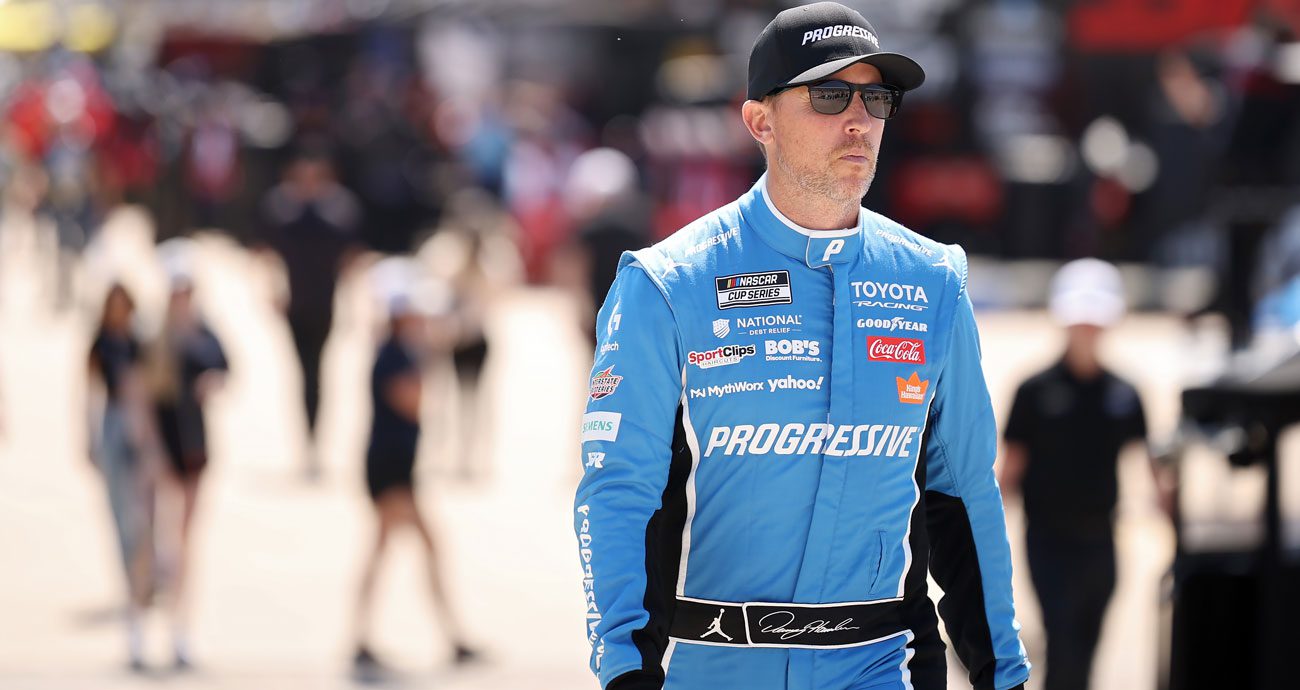
Analysis: Three-time 500 winner Hamlin wasn’t immune to the Daytona melee, but he clearly hasn’t lost a step in the rebound from a difficult end to 2025. EchoPark’s style also plays into his key abilities, so expect him to be aggressive in the draft but calculated more than most as he looks to strike early in 2026.
Analysis: Buescher appeared in the late stages of the race to be in contention for the win, and while that didn’t come to pass, he maneuvered Daytona relatively cleanly and came home with a top 10. RFK’s improvements continue to show up in moments like this, and EchoPark will only give them more opportunity to flex on this style while shaping into a threat at other tracks lately as well.
Analysis: Logano positioned himself, somehow, to bring home a top-three result out of a wild final lap, reminding everyone why he’s one of the best on superspeedways in an otherwise somewhat pedestrian day for him. The former Atlanta resident should find himself at EchoPark back where he’s comfortable — near the front of the field — and it’s quite possible “Even Year Joey” gets an early start on his championship run this weekend.
Analysis: Briscoe’s Daytona ended well outside the spotlight after he got caught up in a mess and his shot at the win ended early, though he did finish the race. Expected to compete once again for a championship after making last year’s Championship 4, look for the Daytona front-row-starter to once again have a fast ride this weekend.
Analysis: Bell’s Daytona was a tough one, with contact and chaos burying him deep despite having shown competitive speed at times earlier in the race. He is of course capable of a rebound on any weekend he’s looking for one, but with this one in particular — which he enters as the defending race winner — the title contender can feel especially good about it.
Analysis: Wallace led the most laps at Daytona (40) and still finished inside the top 10, but the dejection on his face after coming so close while seeing his teammate celebrate winning the race that eludes him was evident. Still, that performance leaves him near the top of the early standings and, more importantly, gives confirmation that 23XI has drafting command right now.
Analysis: Starting from the rear in a backup car, Chastain led at halfway, cycled to the front during green-flag stops and showed top-tier speed before the closing laps sorted him into the midpack and out of a trophy bid. EchoPark’s draft-heavy intermediate style could play directly into No. 1’s comfort zone, manipulating lanes instead of just surviving pack chaos. Plenty of Ross Chastain ahead for us this year.
Analysis: Preece wasn’t able to keep the momentum going off a Clash win and relatively strong overall Daytona week, culminating in a finish that didn’t reflect the speed he’s shown in the early going. All signs point to RFK once again giving him a car that can maneuver in the draft, and he’s got a shot to keep his name in the 2026 headlines this weekend.
Analysis: SVG once again showed flashes of comfort in pack traffic before Daytona’s late incidents cut short what could have been a noteworthy run to open an important year for him. If he and Trackhouse can avoid Atlanta attrition, SVG could put many doubters to rest if he can maintain his clear early improvements.
Analysis: Bowman’s Daytona result was a victim of circumstance more than lack of speed; he was in the mix before a big wreck thinned the field. He does have a pair of top-five runs at Atlanta in the past two seasons, but each came in the summer race. Still, he could rebound.
Analysis: Berry turned a chaotic Daytona into a points-earning top-10, mostly avoiding wrecks and doing what he needed to do. Berry’s approach has always been measured, but he may need a way to get aggressive at Atlanta, where he’s yet to finish better than 18th in five tries.
Analysis: The first-time Daytona 500 polesitter had high hopes to add “first-time Daytona 500 winner” in addition to that, but Busch will have to settle with a top 15 after making it through the chaos but failing to find the front at the end. RCR clearly has the juice it’s looking for on drafting tracks right now, though, and the two-time Atlanta winner has recent success there as well. No reason to think it won’t continue.
Analysis: Keselowski gutted out a hobbled Speedweek only to leave Daytona … gutted that he came so close to winning his first Harley J. Earl and was taken out of contention in the final seconds. A top five is still a decent way to start the year, though, and the two-time EchoPark winner and last summer’s runner-up should be once again in the mix.
Analysis: Hocevar flirted with history, leading on the white flag of the 500 and looking set to become the first to win his first Cup race in NASCAR’s crown jewel, but Lady Luck was not on his side Sunday, and it will have to wait. While heartbreaking for him in real time, it showed he has the speed and track sense to be up front at the biggest races, and we should only expect that to continue. EchoPark’s extended drafts will be a different animal, but if he can convert his raw aggression into forward position early, Hocevar could reset quickly and climb back into contention, and perhaps last spring’s runner-up will finish one spot higher this time around.
Analysis: Cindric led five laps, and his 12 points earned for a 34th-place finish certainly isn’t the worst-case-scenario, but it’s never how a Daytona 500 champion envisions their day going as they seek another “Great American Race” crown. No. 2 has led double-digit laps in each of the past five Atlanta races, and you gotta figure, just playing the odds, he’ll break through to Victory Lane there sooner than later.
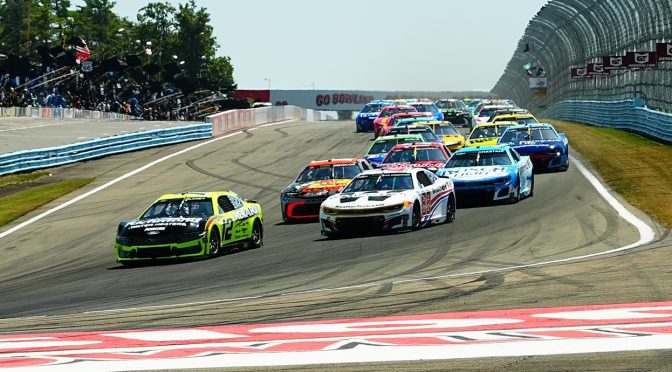
The NASCAR Cup Series returns to action Sunday afternoon at Atlanta’s EchoPark Speedway for the Autotrader 400 (3 p.m. ET, FOX, PRN Radio, HBO Max, SiriusXM NASCAR Radio).
After Tyler Reddick’s monster win in the season-opening Daytona 500, the Cup Series gears up for 400 miles at another drafting track where anything can happen. Part-time drivers J. J. Yeley and BJ McLeod will be back in action to make up the field of 38 cars entered for Sunday’s race.
The NASCAR Craftsman Truck Series returns to action Saturday afternoon at Atlanta’s EchoPark Speedway for the Fr8 Racing 208 (1:30 p.m. ET, FS1, NASCAR Racing Network Radio, SiriusXM NASCAR Radio).
Defending Truck Series champion Corey Heim will make his first start of 2026 in the No. 1 Tricon Garage Toyota. Two-time Cup Series champion Kyle Busch makes his first of eight scheduled starts in the Truck Series this year, piloting Spire Motorsports’ No. 7 Chevrolet. Busch’s teammate will be fellow Cup competitor Carson Hocevar in the No. 77 Chevrolet.
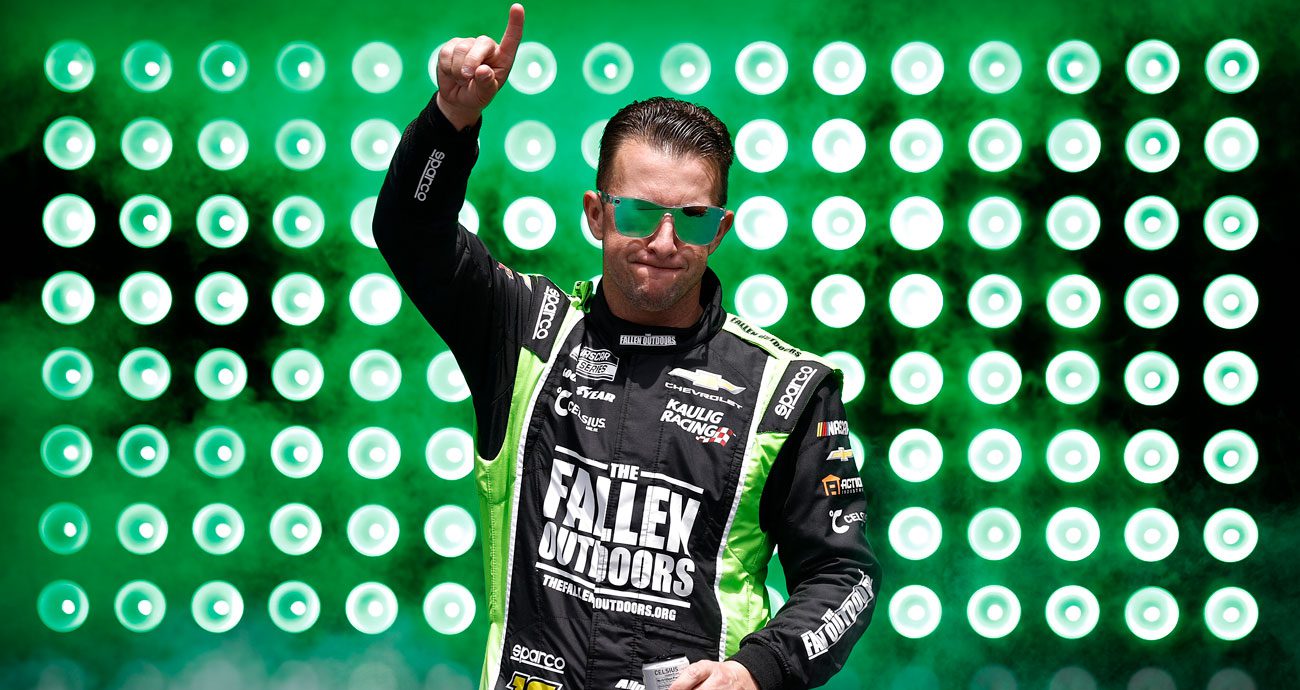
For the second straight week, Cup veteran Ricky Stenhouse Jr. returns to the No. 45 Niece Motorsports Chevrolet. Kaulig Racing will have Ty Dillon, its Cup Series driver, in the No. 25 Ram Free Agent truck entry.
The NASCAR O’Reilly Auto Parts Series returns to action Saturday evening at Atlanta’s EchoPark Speedway for the Bennett Transportation & Logistics 250 (5 p.m. ET, The CW, PRN Radio, SiriusXM NASCAR Radio).
For the second consecutive week, Craftsman Truck Series regular Gio Ruggiero returns to Joe Gibbs Racing’s No. 19 Toyota. After brother Carson Ware drove the No. 30 Barrett Cope Racing Chevrolet at Daytona, Cody Ware will pilot the entry at EchoPark.
Cup Series regular Ross Chastain makes his first O’Reilly Auto Parts Series start of the 2026 season in the No. 32 Jordan Anderson Racing Chevrolet.
A spectacle is what the Daytona 500 always is, and the 2026 iteration of the “Great American Race” was no exception, with Tyler Reddick leading the last lap — and outlasting the ensuing carnage — to capture the crown-jewel victory.
Though Reddick and 23XI Racing were the chief victors of the race weekend, plenty of other drivers picked up a hefty dose of positive momentum, too. Of course, not every driver was as lucky, with others leaving Daytona in a rut. See which drivers are on the upswing and downturn following the stretch of action at the “World Center of Racing.”
What happened: The No. 38 Ford had a knack for speed early and often. Smith not only captured the Stage 1 victory (his first in NASCAR’s premier series) but was in position during the final lap to achieve the win, battling with Chase Elliott, Reddick and other big hitters in the final circuit. Smith’s 41-point performance ranked second among all drivers, with only Reddick surpassing that total (58).
What’s next: Atlanta’s EchoPark Speedway is on deck for the 26-year-old California native, where, in 2025, he not only fared well in qualifying (he started both contests in the top eight) but finished the race itself on good terms, too, via an 11th- and seventh-place result in the spring and summer, respectively. More good fortune could be on the way for Smith and the No. 38 squad.
Sean Gardner | Getty Images
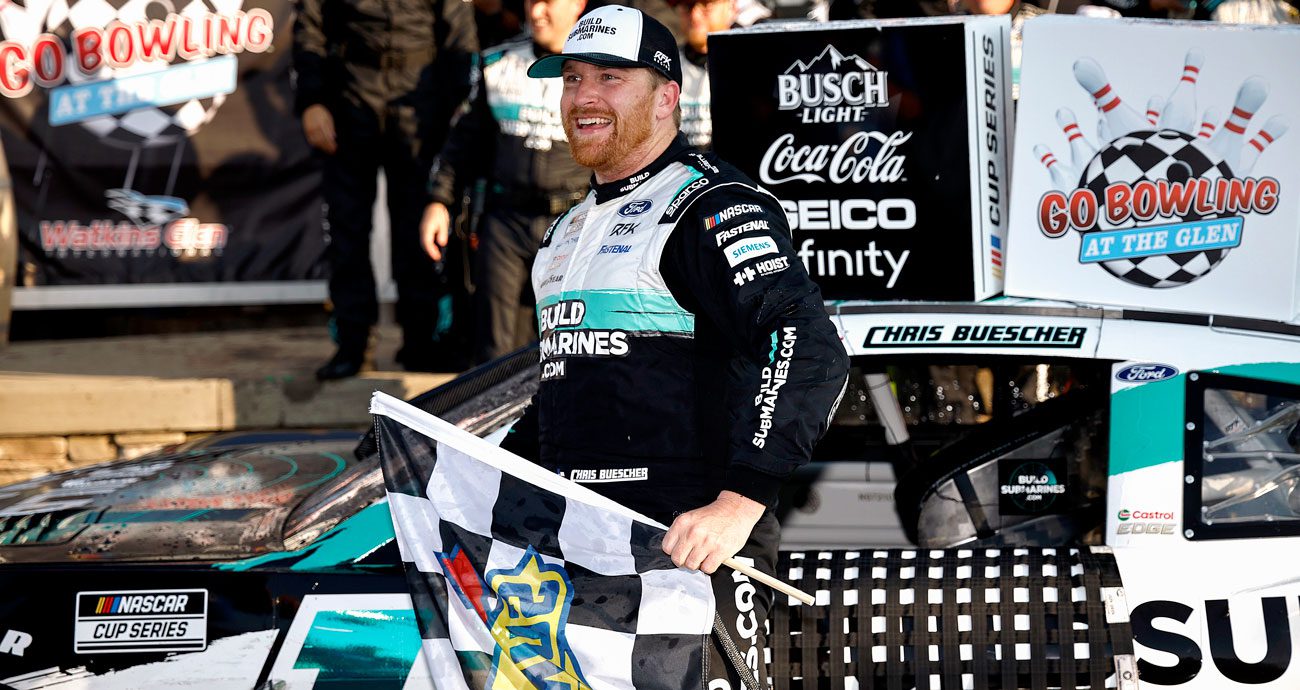
2. Chris Buescher, No. 17 RFK Racing Ford
Started: 41st
Finished: 7th
What happened: A wreck during the first Duel race forced Buescher to a backup car, but that didn’t prevent the Prosper, Texas, native from, well, prospering. Buescher finished inside the top 10 in both stages (sixth and seventh, respectively), one of only three drivers to do so. Also of note: Buescher was one of only four cars not involved in any accidents during the Daytona 500’s entirety. Keep the car clean, and good things tend to happen.
What’s next: Atlanta has been a mixed bag for Buescher. On one hand, he does have five top 10s in 15 starts, with two of those top 10s coming in the last four contests there. On the other hand, he’s finished 30th or worse in two of the last three races there. Which way will the pendulum swing this time around? Good question.
James Gilbert | Getty Images
3. Joey Logano, No. 22 Team Penske Ford
Started: 3rd
Finished: 3rd
What happened: The Duel 1 winner continued the positive swing into Daytona’s main event, finishing third and tallying the fifth-most points (36). Though the No. 22 pilot was caught up in the last-lap fracas coming to the start/finish line, such a week — and race — proved to be a solid starting point to begin the 2026 campaign.
What’s next: There’s no doubt that Logano is looking for a bit of redemption at Atlanta, given his most recent race there in June 2025 — where he started on the pole — resulted in a 36th-place finish. That said, Logano is a two-time winner at the Georgia facility, so the opportunity to rebound there is well within the realm of possibility.
Patrick McDermott | Getty Images
THREE DOWN ⬇️
1. Alex Bowman, No. 48 Hendrick Motorsports Chevrolet
Started: 21st
Finished: 40th
What happened: With a ninth-place finish to conclude Stage 1, it looked as if Bowman was on the path toward contention at the “World Center of Racing.” However, disaster struck late in Stage 2, when a 20-car pileup — and the resulting damage — proved to be too much for the No. 48 Chevy to continue action.
What’s next: One of Bowman’s top performances of the 2025 campaign came at Atlanta, when the No. 48 driver led 32 laps and finished third during the summer swing. With Atlanta on tap, that means a rebound could very well be on the docket.
James Gilbert | Getty Images
2. Chase Briscoe, No. 19 Joe Gibbs Racing Toyota
Started: 2nd
Finished: 36th
What happened: A second consecutive front-row start in the “Great American Race” seemed to be a positive sign that Briscoe would tally a second straight top five in the crown-jewel bout. That proved not to be the case, though; a Lap 85 incident resulted in the No. 19 sliding and receiving damage, and though Briscoe continued racing afterward, he finished multiple laps down, completing only 188 of the scheduled 200 circuits.
What’s next: Atlanta has been a tough nut to crack for Briscoe in his Cup career. In 10 career Cup races at the track, Briscoe has zero top-10 finishes, three DNFs and a 24.0 average finish. In other words, it could be tough sledding once again for one of 2025’s breakout performers.
Kevin C. Cox | Getty Images
3. Christopher Bell, No. 20 Joe Gibbs Racing Toyota
Started: 12th
Finished: 35th
What happened: All signs pointed to Joe Gibbs Racing making a late-race push at Daytona, and Bell was no exception, being well within the top 15 as the remaining laps neared single digits. A Lap 192 caution removed that notion, with Bell and JGR teammate Denny Hamlin making contact near the exit of Turn 4, causing both to hit the inside wall. The wreck proved too much to handle, with Bell unable to finish the race after the fact.
What’s next: While Bell leaves Daytona with a sour taste, he enters Atlanta with sweet possibilities. Bell enters the spring Atlanta bout as the defending winner, despite starting 32nd and leading only one lap during last February’s run there.
DAYTONA BEACH, Fla. — If winning the Daytona 500 changes your life, it apparently starts with your face.
Tyler Reddick’s Daytona 500 victory was scant seconds old and already his eyes, wet with tears, bulged inside his helmet. His face, pink with exertion and emotion, radiated joy.
Neither his eyes nor his face betrayed any doubt about the outcome. His brain, though, wanted to tap the brakes. Reddick didn’t want to celebrate yet. Not until it was official. Who can blame him? His life was about to start a new chapter — and so was NASCAR’s — so he wanted to be sure he was right. He worried he had missed something — and indeed there was a lot to miss in the crazy final lap — and maybe the caution had come out, and he didn’t know it.
Three times, he hit his microphone.
Three times, he asked his crew if he had won.
Three times, he was met with silence.
Where the hell was his team?
“I think they were trying to (answer),” he says. “But everyone was losing their mind.”
As well they should.
The final lap of the 2026 Daytona 500 was as chaotic as they come.
The driver who led when the white flag fell, Carson Hocevar, wrecked and finished 18th. Chase Elliott held the lead coming off Turn 4 on the final lap — the sport rose to its collective feet as NASCAR’s favorite son barreled toward his signature win! — but he got lightly doored by Reddick, then wrecked and finished fourth. The third-place car, driven by Joey Logano, crossed the start/finish line perpendicular to the oncoming field, which normally would be straight terrifying, though by that time just about everybody was either wrecked or wrecking, so maybe it wasn’t so bad.
It’s funny to look back at one of the big questions heading into this race — whether the end of the “win-and-you’re-in” era of the playoffs would change the way drivers approach the ends of races. Maybe, one line of reasoning went, if you take away that outsized incentive, drivers will be more conservative and not wreck so dang much on the final lap.
(Laughs hysterically)
There was zero evidence of that.
When Reddick exited his No. 45 car and hugged Michael Jordan — his team’s co-owner and the most famous and popular athlete in history — after leading only a few hundred yards of the race, the rough equivalent of a halfcourt buzzer beater, it became the latest addition to Daytona International Speedway’s long run of “perfect-storyline days” that would seem made up if they didn’t happen on live TV and weren’t witnessed by several hundred thousand people.
That list includes the 1979 Daytona 500 being the first broadcast in its entirety and ending in a fight as a snowed-in Eastern seaboard TV audience watched with their collective mouths agape, Richard Petty getting his 200th win with President Ronald Reagan in attendance and Dale Earnhardt Jr. winning the first race at Daytona after his dad died there on the final lap of the 2001 Daytona 500.
Reddick’s mad dash to the checkered flag, his hug of Jordan, his heartfelt embrace of his son amid the celebration, is a story worth telling today, tomorrow and for years to come for the joy of the driver, the joy of the owner and the joy of a good story.
James Gilbert | Getty Images
The joy of tension
Or really, the joy of many good stories.
The day overflowed with storylines. Connor Zilisch, the 19-year-old phenom, ran his first Daytona 500. He started next to 50-year-old Jimmie Johnson, the seven-time champion who is Zilisch’s racing hero and was competing in his next-to-last Daytona 500.
Bubba Wallace, Reddick’s teammate who has twice finished second in this race, led a race-high 40 laps, and later said it was the best Daytona 500 he had ever run. He finished 10th. Brad Keselowski, owner and driver of the No. 6 Ford, limped around the track with a cane after breaking his femur in the offseason. He had a sliver of a chance to win until he wrecked with the finish line in sight.
Yes, the 68th running of the Great American Race even had something for detractors, in particular stretches where the entire field appeared to be in fuel savings mode. That meant cars lined up three wide for 10 rows deep for lap after lap. Someone asked Reddick’s crew chief after the race whether that’s fixable. A better question might be, why do we want to fix that? Do we really not want 30 cars to be within a second of each other, as they were for several stretches?
Critics have a point — drivers are running at less than full throttle in the biggest race of the year. But maybe we should think about it differently. What we’ve lost in speed we’ve made up for in tension. The tension of waiting for something to give as the cars barrel through turn after turn inches from each other on every side.
When 30 cars race three wide for 10 rows deep, everybody has to behave. Everybody has to stay in line. Everybody has to play along. Everybody has to submit their own desires to the good of the group.
Does that sound like something NASCAR drivers will do?
Not for long.
Chris Graythen | Getty Images
‘What’s going to be in this chapter?’
All week, optimism permeated the NASCAR world. Hope had arrived anew. That’s true every year at Daytona, but especially so this year. You could see it on social media, hear it in driver’s comments, sense it as you jostled cheek to cheek on the grid before the sold-out race with the biggest purse in its history.
“There’s been so much that has gone on,” Johnson says. “Our sport has seen some headwinds in the last four to six months. To have that all behind us now and have the biggest race of the year kick off our season, it’s the perfect thing. It’s the right medicine for us.”
This was more than just the first race of a new season, more than a pivot, more than a reset.
It felt like the first race in the rest of NASCAR’s life.
Or as Jordan put it: “This is a whole new beginning.”
And a much-needed one at that.
Keselowski has a shelf full of NASCAR season yearbook magazines at home. They recap the season that just ended and look ahead to the season to come. “When you flip through them, some of the seasons just blah together,” he says. “Like, oh, that was a different season?”
Every now and then — like this season — a big change happens, and NASCAR enters a new chapter.
As last season concluded with an unsatisfying end of the final race (which managed to make a worthy champion in Kyle Larson seem less so), plus the lawsuit between two teams (and led by 23XI Racing, the team that Jordan started with Denny Hamlin five years ago) and NASCAR that ended in a settlement, it was clear NASCAR needed a jolt of … something.
That jolt came in the form of a “new” points system. Gone is the win and you’re in, elimination-style system. In its place is a return to The Chase in which the season is broken up into 26 regular-season races and a 10-race Chase.
“I think all of the industry is looking forward to having an historic year,” says Christopher Bell, driver of the No. 20 Toyota. “The changes that came to our sport are massively positive.”
NASCAR has had other “new era” seasons like this. When Winston signed on as the title sponsor before the 1972 season, NASCAR changed overnight. That year is now seen as the start of NASCAR’s modern era. The next new chapter started in 2004 with the departure of Winston, the arrival of Nextel and the introduction of The Chase.
With the return to The Chase and the end of the lawsuit, NASCAR again finds itself at a critical juncture in its history. There’s an old proverb that says if you get on the wrong train, get off at the next station. That’s where the sport is now — embarking on what everyone seems to believe is the right train taking us to the right place.
“I’m really curious what’s going to be in this chapter,” Keselowski said. “What’s it going to be known for?”
Chris Graythen | Getty Images
How to bring back the joy
For an answer about what this next chapter of NASCAR’s life will be known for, let’s start in the lobby of a hotel a block from Daytona International Speedway a few days before the race. The quiet breakfast area burst to life upon the arrival of Monica Pickerill, a member of NASCAR’s Fan Council who attended her first Daytona 500 in 1969 and, as of Sunday, has been to 26 in a row.
As she ate breakfast, seemingly everyone in the hotel stopped to say hello. She likened the opening of this season to the moments after a married couple has a fight where one promises to change, and the other folds their arms and says, “prove it.”
She wants NASCAR to laser focus on one question: “How do we bring back the joy?”
What a great question.
And in Sunday’s race, we found the answer.
There’s the joy of winning, broadcast on the face of Jordan, co-owner with Hamlin of 23XI, which Reddick drives for.
NASCAR has had famous car owners in the past, but none as famous as Jordan, and none who clearly love being involved as much as he does. He delights in telling stories of boyhood family vacations to NASCAR races. His winning crew chief, Billy Scott, Hamlin and Reddick all talked about the joy they get from bringing joy to Jordan. It’s good to be the king. It’s good to please him, too.
Who better to herald the resurgence of joy in NASCAR than the world’s most famous athlete who grew up loving this stuff? “I’m ecstatic,” Jordan said in a Fox Sports interview after the race. “I don’t even know what to say. It feels like I won a championship.”
It’s worth noting, too, that Jordan and NASCAR CEO Jim France, leading figures in that aforementioned lawsuit, shared big smiles and handshakes in Victory Lane, a signal that relationships are being patched up as the sport moves forward.
And there’s the joy of dreams fulfilled, modeled by Reddick. His joy for racing began when he was a boy sliding across dirt tracks in his home state of California. He eventually moved to stock cars, won two championships in the O’Reilly Auto Parts Series and had three straight multi-win Cup seasons before going winless last year.
He told a story of attending the Daytona 500 in 2009. He sat in the stands with his family, mesmerized by those sheet metal behemoths flying around this concrete Valhalla at nearly 200 mph. As an up-and-coming racer, surely he wondered what it would be like to drive one of those cars rather than watch them.
He told another story of the first time he did just that. It was five years later. He participated in a single-car test that he needed to pass in order to enter an ARCA Menards Series race the next day and then the Craftsman Truck Series race the day after that. He said he couldn’t believe his eyes when he came off Turn 4 and saw Daytona’s massive grandstands. “I’ve always dreamed of being able to drive off of Turn 4 through the tri-oval and see the stands.”