This weekend’s NASCAR trip to Martinsville Speedway kicks off the 75th-anniversary celebration of the legendary short track. Ahead of Saturday’s Cup Series Blue-Emu Maximum Pain Relief 400 (7:30 p.m. ET, FS1, MRN, SiriusXM NASCAR Radio), try your hand at some props on the race.

RELATED: Who’s in your Fantasy Live lineup this week?

Prime props for ‘The Paperclip’

Featured Matchups of the week

Race-specific data props

When William Byron’s crew chief, Rudy Fugle, opted against a late pit stop last weekend at Richmond Raceway, Byron knew pushing the tires on his No. 24 Chevrolet to approximately 100 miles was a gamble.

The gamble, however, was his only option in attempting to hold off Martin Truex Jr. in, to the best of his knowledge, a two-car race over the final 20 laps in the Toyota Owners 400.

“I thought there at the end, when they told me that I was just racing the 19 (Truex), I’m like ‘OK, I got him,'” Byron said. ‘But the 4 (Kevin Harvick) and the 11 (Denny Hamlin) were on a totally different planet. Just part of it. Different tire strategies and it didn’t work out.”

What Byron believed was a two-car race was actually a four-car race as both Hamlin and Harvick passed him in the final laps en route to a fourth-place finish as he failed to become the first driver with two NASCAR Cup Series wins this year.

“We just needed five less laps,” Byron said. “It didn’t quite work out there. There were times when lappers were passing me, it got me out of shape, especially if they got to me on the corner exit. It would really get me out of shape. I had to manage the throttle so much. I was only quarter throttle so as soon as I would slip up it was game over. Just trying to keep that pace, I thought we did probably the best job we could.”

One week later, 180 miles southwest at Martinsville Speedway, Byron and Truex will battle in a two-car race … at BetMGM.

RELATED: Odds for Saturday’s showdown | NASCAR BetCenter | Martinsville weekend schedule

Truex vs. Byron is among the blockbuster featured matchups at BetMGM for the Blue-Emu Maximum Pain Relief 400, which Truex is attempting to win for the third straight year. 

Before Truex’s first win (in 2020) at the shortest track on the Cup Series circuit, no driver had won the race’s grandfather clock in back-to-back years since Rusty Wallace won four straight from 1993-96.

Here’s a look at Truex vs. Byron and the other featured matchups for NASCAR betting at the BetMGM online sportsbook:

Martin Truex Jr. (-175) vs. William Byron (+145)

For more than two decades, parity ruled the Blue-Emu Maximum Pain Relief 400. Sixteen different drivers won in the 23 years between Wallace’s four-peat and Truex’s win in 2020. 

Now, Truex is on the verge of ruling the race as he seeks a third straight win and fourth overall win at Martinsville in the last three years. Through his first 18 career Cup Series races at the track, Truex had only four top-10 finishes and never finished higher than fifth. In his last 14 races, he has 11 top-10 finishes, including three wins and two more second-place finishes.

Truex ranks first in driver rating at Martinsville (121.0) and all short tracks (114.4) since 2019, while Byron ranks eighth (92.5) and 12th (84.1), respectively. And bettors are buying another Truex win this weekend; as of Wednesday, he leads the field in both ticket share (11.3%) and handle share (15%).

Byron, however, is dominating the featured matchup betting. At +140 to finish ahead of Truex, Byron has 75% of the tickets — the highest ticket share of any matchup at BetMGM — and 90% of the handle.

Chase Elliott (-115) vs. Denny Hamlin (-110)

“You’ve got to figure out how to lead the last lap, that’s pretty much all that matters,” Hamlin said after surrendering a late lead at the 2021 Toyota Owners 400 en route to a fifth-place finish at his hometown track, the eighth of nine straight winless starts at his hometown track.

The Chesterfield, Virginia, native expressed similar frustration throughout the first two months of this year as he posted zero top-10 finishes through six starts, the second-longest top-10 drought of his 18-year Cup Series career, and lamented missed late-race opportunities.

He seized the opportunity Sunday at Richmond and now is looking to win back-to-back races for the first time since June 2010. To do so, he must conquer a track he once dominated and, at minimum, finish ahead of Chase Elliott, who has the second-highest driver rating at Martinsville since 2019 (116.4).

The public likes Hamlin in race-winner betting (14.6% of the handle), but Elliott has 99% of the handle in their head-to-head option.

Kyle Busch (-125) vs. Kyle Larson (+100)

No driver has more short-track top-10 finishes (14) or a better average finish (7.71) than Busch since 2019. However, the winner of the 2016 STP 500 has just one win (the 2022 Busch Light Clash) in his last 18 short-track starts after 15 wins in his previous 59 short-track starts.

Busch is tied with Hamlin and Ryan Blaney for the second-best race-winner odds, but with only 5.1% of tickets (eighth-highest percentage), most bettors aren’t buying him and/or his value at +800. And they’re not buying him against Kyle Larson.

Larson has only two career wins in 44 short-track starts but been in contention more often than not, including a fifth-place finish one year ago at Martinsville. The ticket share is split 50/50, but Larson has 91% of the handle in this featured matchup.

Ryan Blaney (-165) vs. Ross Chastain (+125)

Blaney didn’t earn his first win of the season last weekend at Richmond, but in leading 129 laps and posting a fourth top-10 finish, he did earn a spot beside Elliott atop the points standings for the first time in his Cup Series career.

“The No. 12 Ford has been the fastest car this season, and Blaney is one streak of dominance away from being the championship frontrunner,” Pat DeCola wrote in placing Blaney atop this week’s Power Rankings.

The sportsbook responded to another strong race by giving Blaney his best odds of the season (+800), which bettors are pounding to the tune of a 13.9% handle share, third highest to only True and Hamlin. Against Ross Chastain, one of the least-experienced short-track drivers in the field, however, Blaney has just 18% of the handle.

You can view updated Blue-Emu Maximum Pain Relief 400 odds and more online sports betting opportunities at BetMGM.
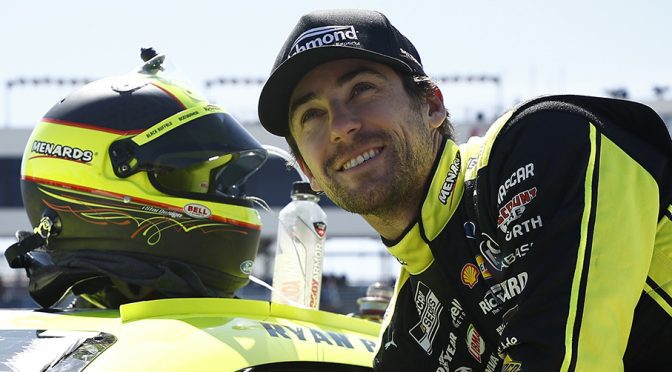
A grandfather clock awaits the winner at Martinsville Speedway. Ryan Blaney hopes the time is now to earn his first victory of the 2022 season.

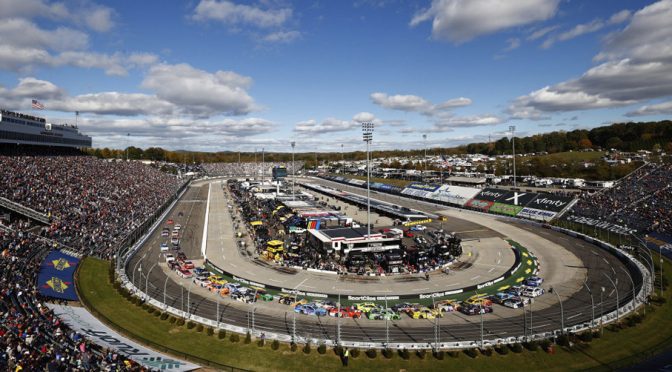
Saturday’s Blue-Emu Maximum Pain Relief 400 (7:30 p.m. ET, FS1, MRN, SiriusXM NASCAR Radio) will serve as Blaney’s 13th start at the 0.526-mile Virginia short track. His past six trips have included a pair of second-place results in 2020 and a combined average finish of 5.83.

Blaney is now focused on executing a complete race to have a shot at victory under the lights.

“I feel like three of the last four times we’ve been there, we’ve had a really good shot to win that race and probably had the best car and just we did not execute at the end of that race,” Blaney told NASCAR.com. “Kind of gave those away, to be honest with you. That’s something we’ve tried to work on — being able to rise to the occasion coming down to late pit stops and just not making mistakes. Hopefully, we’ve gotten that better. You just never know how you’re going to run at these places, especially with the new car.”

RELATED: Martinsville weekend schedule | Blaney’s paint scheme for Martinsville

The speed in the No. 12 Team Penske Ford has been prevalent each weekend, which showcases how Blaney and company have achieved an early grasp on what it takes to be successful in the Next Gen car. But the notes are slim for what it will take to be fast at Martinsville, relying on lessons learned at Phoenix Raceway and Richmond Raceway this year to piece together a game plan for the second short-track event of the year.

“Hopefully you can still use some of the things you did well with the old car at this track that you can apply to the new car,” Blaney said. “You don’t really know that until you get out there and practice and get into the race and see how everything’s going.

“A little bit is known, but a lot of it is unknown.”

After the retirement of Todd Gordon at the conclusion of the 2021 season, Blaney was tasked with finding a new crew chief to guide the ship. That effort led him to Jonathan Hassler, who came over from the No. 21 Wood Brothers Racing team after his term as crew chief for Matt DiBenedetto came to a close.

Blaney has reaped rapid benefits from having Hassler atop the pit box. In his seventh full-time Cup venture, Blaney is enjoying his second-best seven-race stretch to a season with a 13.14 average finish. In 2018, he earned an average finish of 8.0 in the first seven events.

MARTINSVILLE, VIRGINIA - OCTOBER 31: Ryan Blaney, driver of the #12 Menards/Richmond Ford, drives during the NASCAR Cup Series Xfinity 500 at Martinsville Speedway on October 31, 2021 in Martinsville, Virginia. (Photo by Brian Lawdermilk/Getty Images) | Getty Images
Brian Lawdermilk | Getty Images

“He and I kind of have the same personalities,” Blaney said. “Him and I just understand each other, and we kind of understood each other from the get-go. We started testing in the offseason. We understood each other’s language, he understood what I liked, and I understood what he liked to change. It’s kind of one of those things where the relationship kicks off the right way.”

With three poles in the last four races, two top fives and four top 10s this season, it has amounted to a tie atop the points standings with Hendrick Motorsports’ Chase Elliott. Despite a crash at Las Vegas Motor Speedway and a last-lap brush with the wall on the final lap at Atlanta Motor Speedway that took him out of contention, Blaney leads the Cup field with three stage wins and 66 stage points.

“Everyone’s had their issues,” Blaney said. “We’ve just been able to overcome some of those and be tied leading the points. We’d like to obviously have a win already. I thought we had a shot to win a couple of them, just didn’t really fall in our favor.”

After starting on the pole last Sunday at Richmond Raceway, Blaney led a race-high 128 laps, the 10th time in his career where he led 100 laps or more but didn’t wind up in Victory Lane. On the flip side, five of Blaney’s seven Cup victories have come with green-flag passes for the lead inside 10 laps to go.

For Blaney, it’s tough to look back on those 10 races and place blame on why the checkered flag didn’t fall his way. But it’s about being around at the end to give yourself a shot, not what you did to get there.

RELATED: Ryan Blaney recall fond memories of grassroots racing

“I don’t really think about that stuff too much,” Blaney. “Just try to figure out how to do the best you can all race. I don’t care if we go out and lead the whole race or I don’t care if we go out and lead one lap, as long as you go out and win the race, right? That’s the main goal. I don’t care how you get it done, as long as you do it.”

As the series prepares for another short-track showdown at Martinsville, where aggression and tempers are bound to happen, a credit to Blaney’s success is how well he’s able to shake the frost off after dustups he has had with other competitors.

That ability was apparent at Richmond, where hard racing with Ross Chastain led to fiery radio chatter from Blaney and a chain of payback between them. But what happens on the race track, stays on the race track.

“That’s just kind of how I am,” Blaney said. “I’ll get fired up about something in the moment. That’s just the competitive side of any sport, you get fired up in the moment. I’ve kind of always been that way. I gotta have my two cents about it for 15-20 seconds and then I’m over it and move on from it. I’ve just got to get some things off my chest in the moment and then I just move on and focus on other things.

“Everyone handles it in different ways. Other guys hold grudges for longer. It’s just not what I do.”

Last summer, Sam Mayer was doing media rounds to pump up his Xfinity Series debut with JR Motorsports. He set out on being a record breaker, saying aloud he wanted to become the youngest driver to ever win an Xfinity Series race.

High bar, sure, but Mayer would have had to win one of his first three starts to eclipse Joey Logano’s record of being the youngest driver to win in NASCAR’s second-highest level. It didn’t happen. Until last Saturday at Richmond Raceway — Mayer’s 25th series start — the 18-year-old hadn’t won anything at the Xfinity Series level. Alas, he won the $100,000 Dash 4 Cash bonus and picked up his best career finish of third.

“I have said this ever since I started racing, if you shoot so high and so far out there that you feel like if you can actually get there, it would be one of the craziest things ever that you could be better than Kyle Busch, then you’re better than Kyle Busch,” Mayer said. “But if you don’t quite get there, it’s still really impressive and you met a lot of expectations and goals for other people.”

RELATED: Sam Mayer driver page | Xfinity Series standings

Admittedly, Mayer hit the reset button after the 2021 season. Beginning last June at Pocono Raceway, he ran the final 18 races of the season for JR Motorsports. In that time, there were flashes of brilliance and other moments where he needed to take a step back.

It was all a learning experience.

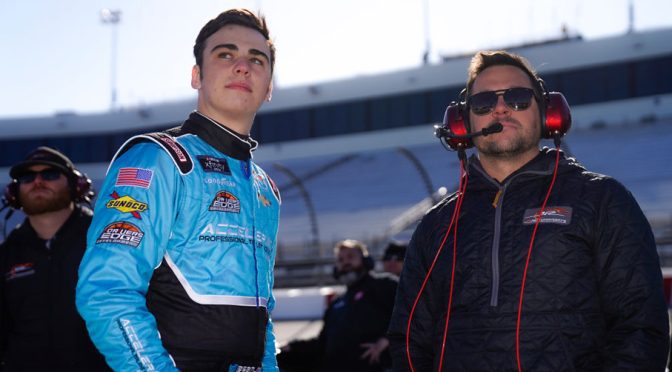
“Sam doesn’t lack speed at all; he never has and probably will never be accused of that,” said Taylor Moyer, Mayer’s crew chief. “He’s naturally fast, but what we lacked was seat time, experience, the gamesmanship and the mental aspect of racing.

“Nobody ever questioned last year that he wasn’t fast; we weren’t wrecking, running 32nd. We were racing in the top 10, but we were tearing up a lot of race cars and not getting the finishes we deserved.”

Entering the 2022 season, Mayer knew he needed to put complete races together. He didn’t want a repeat of his results from last year, which included six DNFs and an average finish south of 20th.

Because of that, once Mayer returned to North Carolina after Christmas break, he began becoming more prepared for what was to come having recent experience in the Xfinity Series.

“I worked 10 times harder than last year with note-taking and watching videos,” Mayer said. “I did everything the exact same way I did last year, just way more.”

But even with the frustration, Mayer never lost confidence. He did, however, need to learn race craft, which Moyer believes is 70% of a driver’s success, with the other 30% being directed toward talent.

“We have worked 90% between the ears of understanding race situations, the bigger picture and risk versus reward in each situation,” Moyer said. “We’ve been extremely fast off the truck all year and now we’re starting to finish some races and put them together.”

Jared C. Tilton | Getty Images

The No. 1 team is coming off consecutive top-five finishes for the first time in Mayer’s career. Last week at Richmond, he made a late charge on the long run. One week earlier at Circuit of The Americas, Mayer won his first career stage and finished fifth.

And the scary thing is, the team is starting to build some momentum.

“I came into this year with a lot of confidence and a lot of speed,” Mayer said. “We’ve had a lot of speed the last few races; we’ve been up front and finished top five in just about every stage thus far. We just have to manage staying out of other people’s trouble and being there at the end.”

A former racer himself and Mayer’s current spotter, Brandon McReynolds, has a birds-eye view of the driver’s progression this year.

Despite it taking some time, Mayer is starting to execute.

“He’s learning these race tracks in a heavier car in comparison to the ARCA car,” McReynolds said, “helping him see what other drivers with a lot of experience are doing and seeing that he has the capability and talent to run with it. He has the speed, and I think what you’re seeing is him starting to put these full races together.”

Like last year when Moyer was crew chief for Josh Berry, he believes the No. 1 bunch is beginning to turn the corner. Once Berry began figuring out the cars, he was a consistent frontrunner.

“I think we’re just hitting our stride,” Moyer said. “There’s the potential to peak sooner rather than later. We just hadn’t put a full race together and we’re just now beginning to do that. It feels good and I think we’re 7/10, with 10/10 being perfectly executed races in which we win. We won’t settle until we hit that.”

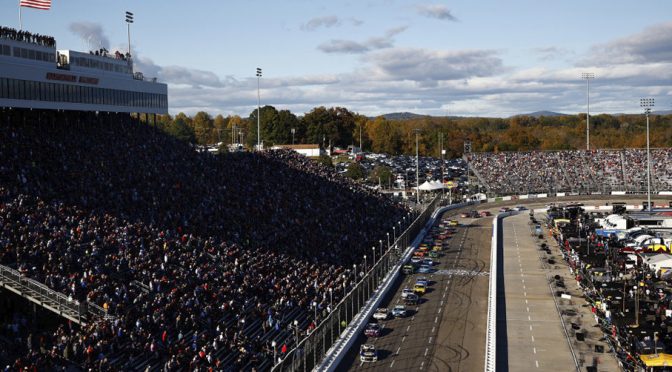
There are seven different race winners in the seven-week-old NASCAR Cup Series season and plenty of reason to believe that trend of 2022 first-timers continues in Saturday’s Blue-Emu Maximum Pain Relief 400 (7:30 p.m. ET, FS1, MRN, SiriusXM NASCAR Radio) at Martinsville Speedway.

MARTINSVILLE: Weekend schedule | Paint Scheme Preview

Last week, for the first time since he won the 2021 Las Vegas Motor Speedway playoff race, 41-year-old Denny Hamlin hoisted a trophy, snapping a streak of 12 consecutive wins by drivers under the age of 30 and also putting the perennial championship contender Hamlin back on course after a rocky start to the season.

The driver of the No. 11 Joe Gibbs Racing Toyota shows up at Martinsville as the winningest active driver (five wins) at the 0.526-mile track — and easily one of the most motivated after an uncharacteristically slow start to the year. His win at Richmond Raceway last Sunday marks his only top 10 this season.

There is a robust list of traditional annual race winners – from Hamlin’s JGR teammates, Martin Truex Jr. and Kyle Busch, to former series champions Chase Elliott, Joey Logano and Kevin Harvick – still vying for that first 2022 victory. And there’s plenty of reason to make any of them a favorite for this weekend’s race – officially shortened from the historical 500-laps (to a scheduled 400-laps) for the first time in 50 years.

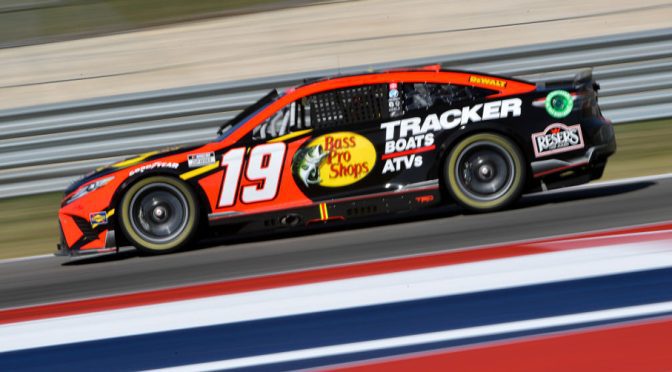
Truex, driver of the No. 19 JGR Toyota, has three wins in the last five Martinsville races and is the defending spring race winner – taking the victory by a full 1.972 seconds over Elliott and Hamlin last March – despite Hamlin’s race-best 276 laps out front.

Elliott won in 2020, Logano did in 2018, and both brothers Kyle and Kurt Busch have two victories at Martinsville as well.

As with Hamlin, William Byron, who led late at Richmond last week but was overtaken in the final laps, finished top five in both Martinsville races last year. Elliott, Byron’s Hendrick Motorsports teammate, finished among the top five in the first but not second 2021 race. The driver of the No. 9 Chevrolet’s laps-led total (525) in the last three Martinsville races (including his 2020 fall victory) is most in the series. Elliott, who has advanced to the last two Championship 4s, is the only member of the four-driver Hendrick team without a win so far this year.

Neither Elliott nor Team Penske’s Ryan Blaney have won this season, however, the pair is currently tied atop the championship standings by 19 points over Truex. Blaney has won a season-best three pole positions — including the last two — and led a series-best 334, laps but a pair of fourth-place finishes (at Daytona International Speedway and Phoenix Raceway) are his best showings.

The driver of the No. 12 Team Penske Ford is looking for his first win at Martinsville, although he has an impressive six top-10 and five top-five finishes in 12 career starts — including runner-up showings in both 2020 races. He was 11th in both races last year — leading 157 laps in this spring race.

Kyle Busch, who finished runner-up to Bowman in last fall’s race, is another driver with past Martinsville success ready to get in the win column this year. He has a pair of NASCAR Camping World Truck Series wins as well as his two Cup Series trophies. He has only a single top-five finish this season – fourth place at Las Vegas.

“There are all kinds of different ways Martinsville has always put on really good and exciting racing,” Busch said, “and we’ll see how things look with the new car and trying to adapt as best we can.”

Editor’s Note: Before Friday’s NASCAR Xfinity Series race at Martinsville Speedway — a race in which NASCAR Hall of Famer Dale Earnhardt Jr. will compete in his lone national series start of the year — we look back at Dale Earnhardt Jr.’s iconic 2014 Cup Series victory at the historic track.

The scene

It was the first year of NASCAR’s elimination-style format, and drivers still were getting accustomed to the strategies and nuances of the 16-driver postseason. Title favorites Kevin Harvick, Brad Keselowski and Jeff Gordon were still in the playoffs as the series moved to Martinsville to open the Round of 8. Upstart Joey Logano joined the three title favorites in advancing from the Round of 12, along with Carl Edwards, Denny Hamlin, Matt Kenseth and the plucky Ryan Newman. Others, like regular-season points stalwarts Jimmie Johnson and Dale Earnhardt Jr., had been eliminated following the Round of 12.

Harvick was widely considered the championship favorite, as he and crew chief Rodney Childers — both in their first year together at Stewart-Haas Racing — were in the midst of a season for the ages. Jeff Gordon looked like the Jeff Gordon of old, and Keselowski and Logano gave Team Penske a powerful 1-2 punch.

PHOTOS: Dale Jr. through the years

The action

Gordon controlled the first half of the race among the playoff contenders, leading 105 circuits in the first 250 laps despite qualifying 15th. One of the best racers in the garage on the unique .526-mile layout, it appeared to be Gordon’s race to lose early as he battled with non-playoff driver Jamie McMurray at the front of the pack.

Harvick, meanwhile, struggled at a venue that hadn’t been kind to him over the years. Keselowski, a strong short-track racer, had an issue with fewer than 100 laps to go and was caught up in a calamitous wreck that sent his mangled car to the garage.

With those two titans out of the picture, a final late-race wreck stacked the field back up for a restart and set the stage for a magical ending. Tony Stewart  led a small group of drivers to stay out on old tires, with Earnhardt Jr. and Gordon behind them as the first drivers with fresh rubber.

In a five-lap sprint to the finish, Junior bumped his way to the front and moved past Tony Stewart, and Gordon followed suit.

RELATED: See full race results

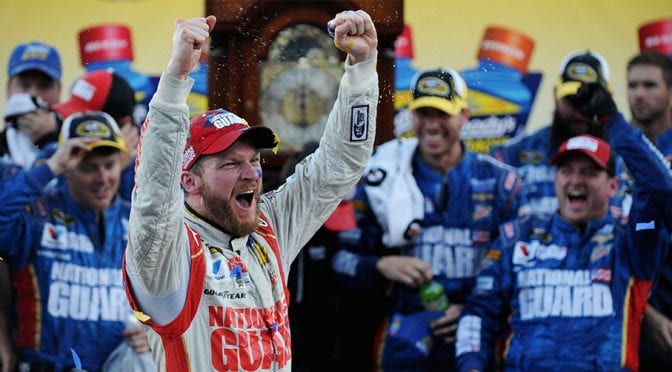
Dale Earnhardt Jr. celebrates at Martinsville
Jeff Zelevansky | Getty Images

The winner

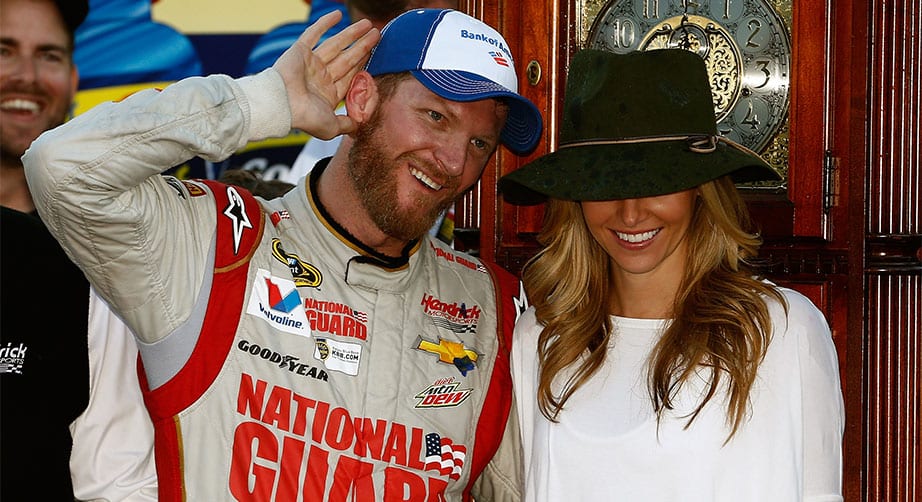
The final three laps consisted of Gordon chasing down his Hendrick Motorsports teammate, but not quite being able to catch him. Dale Jr. won his first Martinsville race and earned his first grandfather clock, capping a four-win season that was his best in years.

“When we won there, just … I had been trying to get that win for so long,” Earnhardt Jr. would say years later. “And everybody wants a clock. … It’s a hard race to win. It’s an easy track to have the best car and get beat.”

The impact

Dale Jr. would go on to win three more times in his Cup Series career, but this was one he cites to this day as his most memorable. Brad Keselowski and Kevin Harvick exited Martinsville well below the cutoff line and needing a win over the next two races to qualify for Miami. That led to a gutsy, risky move from Keselowski the next week at Texas that ensnared Gordon in a wreck, sending the drivers and pit crews into a fistfight on pit road.

Kevin Harvick would rally to win at Phoenix and go on to win the title, while Ryan Newman bumped Gordon by a single position at Phoenix to qualify for the championship race — the same one position Gordon was short at Martinsville.

Junior, meanwhile, would retire from full-time driving following the end of the 2017 season. He’s annually competed in one Xfinity Series race since, notching three top-five finishes in those four starts.

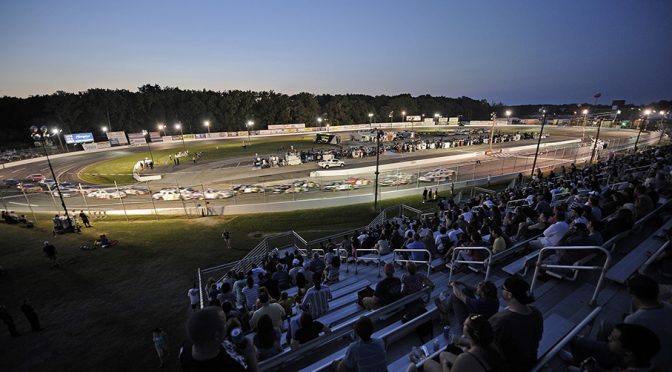
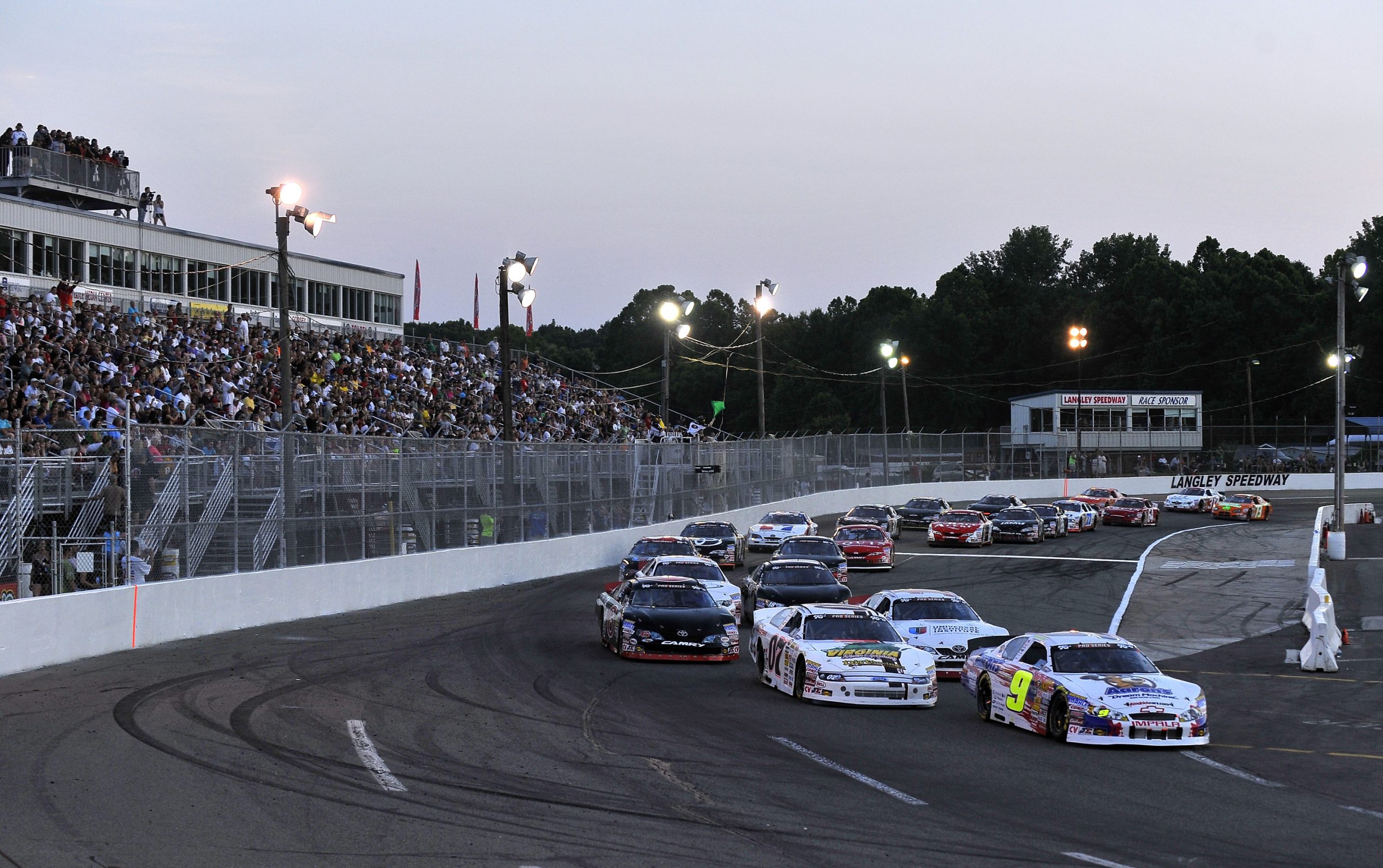
The 2022 season will see the historic Langley Speedway kick off its 72nd season of competitive, short-track racing.

During its seven decades of operation, Langley has served as a proving ground for many drivers that include seven-time NASCAR Cup Series champions Richard Petty and Jimmie Johnson, as well as current Cup Series drivers like Chase Elliott and Denny Hamlin.

Langley remains a hotspot for short track racing with a busy schedule that features plenty of marquee events that include the 14th Annual Hampton Heat, the Shawn Balluzzo Memorial 100 as well as the first NASCAR Whelen Modified Tour race at the facility since 2019.

RELATED: Watch the NASCAR Whelen Modified Tour all season on FloRacing

Local favorite Brenden Queen is looking to continue a recent string of success by tallying his third consecutive Langley track championship, but he will have to hold off plenty of talented veterans that include two-time champion Mark Wertz and six-time track champion Greg Edwards.

Below is everything to know about Langley Speedway.

Langley Speedway

Track Profile

Langley Speedway
NASCAR K&N Pro Series East racing at Langley Speedway on June 23, 2012. (Jason D. Smith/Pixelcrisp for NASCAR)
Track Langley Speedway
Location Hampton, Virginia
Opened 1950
Length 0.397 miles
Banking Six degrees in turns; Two degrees on straightaways
Surface Asphalt

Prior to Langley’s formal grand opening back in 1950, the property was known as Dude Ranch, which primarily hosted thoroughbred racing along with occasional stock car events.

Former promoter Henry Klich was responsible for revitalizing the track during its early years. Among Klich’s initiatives included bringing the first Cup Series race to Langley back in 1964 before later paving the facility ahead of its first planned Cup date in May of 1968.

The Cup Series left Langley after the 1970 season, but the track has remained popular amongst fans and drivers, with Lennie Pond, Elton Sawyer and C.E. Falk III all recording multiple track titles.

FOLLOW LANGLEY: Facebook | Twitter | Vimeo

Only nine Cup Series events have taken place at Langley. David Pearson took home the most victories during that stretch with three consecutive wins while Richard Petty and Ned Jarrett each tallied two of their own.

Langley hosted the NASCAR Xfinity Series twice a year from 1982-88 for a total of 14 appearances. Tommy Ellis, who won a track championship at Langley in 1975, led all other drivers with five victories at the facility. Jack Ingram followed closely behind him with four of his own.

The 2010s saw Langley branch out to host NASCAR K&N Pro Series East and Whelen Modified Tour events. Drivers like William Byron, Todd Gilliland, Ryan Preece and others each got to add to the track’s storied history by visiting Victory Lane.

Below are the complete lists of winners across all NASCAR divisions at Langley along with the track champions since 1963.

Langley Speedway
NASCAR K&N Pro Series East racing at Langley Speedway on June 23, 2012 (Jason D. Smith/Pixelcrisp for NASCAR)

NASCAR Cup Series races at Langley Speedway

Year-Race No. Date Winner
1964-22 5/15/64 Ned Jarrett
1965-16 5/14/65 Ned Jarrett
1966-16 5/7/66 Richard Petty
1967-19 5/20/67 Richard Petty
1968-17 5/18/68 David Pearson
1968-38 8/24/68 David Pearson
1969-20 5/17/69 David Pearson
1970-15 5/18/70 Bobby Isaac
1970-48 11/22/70 Bobby Allison

NASCAR Xfinity Series races at Langley Speedway

Year-Race No. Date Driver
1982-10 5/8/82 Jack Ingram
1982-21 8/7/82 Tommy Ellis
1983-09 5/7/83 Jack Ingram
1983-22 8/6/83 Jack Ingram
1984-09 5/5/84 Sam Ard
1984-20 8/11/84 Jack Ingram
1985-08 5/4/85 Tommy Ellis
1985-16 8/3/85 Tommy Ellis
1986-08 5/3/86 Tommy Houston
1986-21 8/2/86 L.D. Ottinger
1987-06 5/2/87 Mike Alexander
1987-17 8/9/87 Larry Pollard
1988-07 4/30/88 Tommy Ellis
1988-20 7/30/88 Tommy Ellis

NASCAR K&N Pro Series East (now ARCA Menards Series East) races at Langley Speedway

Year-Race No. Date Winner
2011-07 6/18/11 Sergio Pena
2012-07 6/23/12 Corey LaJoie
2013-07 6/22/13 Dylan Kwasniewski
2014-09 6/21/14 Ben Rhodes
2015-06 6/20/15 William Byron
2017-12 9/4/17 Todd Gilliland
2018-03 4/28/18 Tyler Dippel

NASCAR Southeast Series races at Langley Speedway

Year-Race No. Date Winner
1995-19 10/21/95 Mike Cope

NASCAR Whelen Modified Tour races at Langley Speedway

Year-Race No. Date Winner
2017-04 5/13/17 Timmy Solomito
2018-06 6/23/18 Ryan Preece

NASCAR Whelen Southern Modified Tour races at Langley Speedway

Year-Race No. Date Winner
2010-08 9/4/10 Tim Brown
2011-09 9/3/11 Andy Seuss
2012-08 9/1/12 Jason Myers
2013-08 8/31/13 Kyle Ebersole
2014-04 4/12/14 George Brunnhoelzl III
2014-08 8/30/14 Burt Myers
2015-04 4/11/15 Burt Myers
2015-08 9/5/15 George Brunnhoelzl III

Langley Speedway track champions

Year: Track champion
1963: Bruce Warren
1964: Bruce Warren
1965: Lennie Pond
1966: Bruce Warren
1967: Bruce Warren
1968: No champion
1969: Ray Hendrick & Sonny Hutchins
1970: Al Grinnan
1971: Al Grinnan & Lennie Pond
1972: No champion
1973: Sonny Hutchins
1974: Bob Smith
1975: Tommy Ellis
1976: Joe Falk
1977: Billy Smith
1978: No champion
1979: No champion
1980: No champion
1981: Charlie Doyle
1982: Bubba Adams
1983: Elton Sawyer
1984: Elton Sawyer
1985: Elton Sawyer
1986: Phil Warren
1987: Roger Sawyer
1988: Phil Warren
1989: Danny Edwards Jr.
1990: Chip Hudson
1991: Roger Sawyer
1992: Danny Edwards Jr.
1993: Eddie Johnson
1994: Phil Warren
1995: Phil Warren
1996: Mike Buffkin
1997: Phil Warren
1998: Greg Edwards
1999: Dany Edwwards Jr.
2000: Phil Warren
2001: Phil Warren
2002: Jammie Goode
2003: Mark Wertz
2004: Tommy Cherry
2005: Tommy Cherry
2006: Greg Edwards
2007: Danny Edwards Jr.
2008: Danny Edwards Jr.
2009: C.E. Falk III
2010: C.E. Falk III
2011: C.E. Falk III
2012: Greg Edwards
2013: C.E. Falk III
2014: Greg Edwards
2015: Greg Edwards
2016: No champion
2017: Matt Waltz
2018: Danny Edwards Jr.
2019: Greg Edwards
2020: Brenden Queen
2021: Brenden Queen

Clay Campbell knows exactly the photo you’re talking about, nodding in affirmation before you can even get out the words.

“There aren’t many images that exist of Red Byron,” he said, “but …”

RacingOne
NASCAR Research & Archives Center | Getty Images

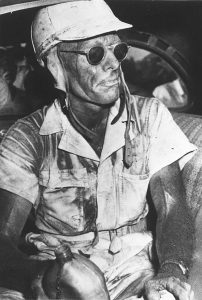
In that historic picture, that photo, there’s the driver who would become the first NASCAR Cup Series champion with an almost-smile of satisfaction on his face. Byron is covered in dirt, wearing post-war sunglasses and a canteen in hand for refreshment. Stock-car racing had barely organized by then, and the historic Streamline Hotel summit in Daytona Beach, Florida, was still a few months away. But that image captured a weathered, 32-year-old Byron on Sept. 7, 1947 after becoming the first winner at Martinsville Speedway, the race track Campbell’s grandfather crammed into a central Virginia gap some 75 years ago.

“If you look back to that day, and if I’m not mistaken, he may have had a rope tied around his waist as the seatbelt, I don’t know,” said Campbell, the speedway’s longtime president. “But, you know, they were daredevils, they were truly daredevils there. There was nothing safe about those cars, no safety features on them, and a lot of them, they drove it to the track to race it.”

The dusty, musty image of Byron offers a quaint early bookend to the first NASCAR weekend of the season, culminating with Saturday night’s Blue-Emu Maximum Pain Relief 400 (7:30 p.m. ET, FS1, MRN, SiriusXM) – the 147th Cup Series event in the track’s rich history.

RELATED: Martinsville weekend schedule | Power Rankings

Saturday’s race will be the first for the seventh-generation Next Gen stock car that has ushered in a new era of racing in NASCAR’s top series this year. Martinsville’s reach is so deep, its first events were pre-Gen 1.

“We were racing at Martinsville before there was a we,” said NASCAR vice chairman Mike Helton, soaking in the exhibit that opened earlier this week to commemorate the track’s diamond celebration.

It’s true. NASCAR founder Bill France Sr. helped to organize that first event, but the race for Modified stock cars pre-dated the sanctioning body’s first season of competition.

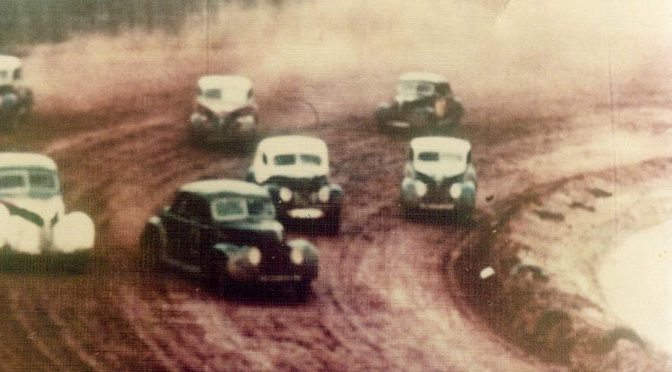
Roughly 6,000 fans took in that opening Martinsville program, which featured three 12-lap qualifying heats, a 15-lap consolation race and a 50-lap main event. Admission was $2, with children 12 and under admitted free with a paying adult. Byron won $500 of the $2,000 purse. Two years later, he’d win at Martinsville again, but this time in the new Strictly Stock Division that would become the NASCAR Cup Series. That victory helped him inch closer to sealing the first championship in the circuit’s inaugural season.

H. Clay Earles, Campbell’s grandfather, founded the track at great personal financial risk – a peril that heightened after two early investors bowed out, opening the door for France to join as a partner. Stock-car racing had yet to become a sustained, lucrative business, yet Earles was able to envision what might become of the 30 acres he first purchased from the McCrickard family’s farm plot between the towns of Ridgeway and Martinsville.

Earles bushwhacked through an overgrown thicket when he first explored the land. Soon after, his crews were carving out a half-mile oval with long, narrow straightaways and tight turns – a layout that owed its shape to the hills that cradled it and the railroad that neighbored the backstretch.

“The way it’s in here now, that’s about the only way you could have shoehorned it in here,” Campbell said. “And I think that was just a stroke of luck that it happened that way. There are many half-mile tracks all over the country, but none you’ll find shaped like this. It has a unique style of racing about it, nobody else has.”

MORE: All about Martinsville’s 75th

Another factor that set Martinsville apart in stock-car racing’s infancy was the track’s attention to fan amenities – a rarity in an era filled with fly-by-night race promoters. After the early years of the rutted dirt track kicking up clouds of dust, Earles made Martinsville one of the first paved short tracks on the circuit in 1955. Two years later, North Wilkesboro Speedway – another charter track for the Cup Series – followed suit.

But Earles also took special care to beautify the track he built. Boxwoods and azaleas once lined the turns’ retaining walls, and even the primitive restrooms from the track’s earliest days were decorated with rose beds nearby.

“I remember people asking, ‘Why do you want to do that? It’s a race track,'” Campbell said. “He said, ‘Why can’t a race track look pretty?’ That was his thought process, and he always wanted it to be maintained nicely.”

Early news reports in advance of that first race touted Martinsville as “one of the finest half-mile dirt tracks in the United States,” a state-of-the-art venue with a spacious grandstand. Some 75 years later, those features remain cutting-edge, including the LED lighting system that will illuminate all three nighttime races in this week’s NASCAR national-series tripleheader.

Campbell also noted what has been a common refrain, that the track’s management team has treaded carefully when making changes around the speedway’s grounds. Martinsville has had to adapt and grow to position itself for the future, all while taking care not to upset the rustic charm of the place.

Plenty has changed in 75 years, but the track’s shape and its spirit haven’t wavered.

“It’s been such an evolving business from Red Byron’s historic first win here,” Campbell said. “You’re right, that canteen and his dirty face and the glasses and whatever kind of helmet he was wearing – we’ve come a long way, and for 75 years, Martinsville has been a part of it. So we’re really excited and humbled by the whole thing, and I’ve said it numerous times today: I attribute most of our success to our fans. Without them, we wouldn’t be here 75 years.”

It’s starting to get real for NASCAR Hall of Famer Dale Earnhardt Jr.

The 26-time NASCAR Cup Series winner, NBC broadcaster and JR Motorsports team owner will make his lone NASCAR Xfinity Series start of the season Friday at Martinsville Speedway (7:30 p.m. ET, FS1, MRN, SiriusXM NASCAR Radio), and he and the team are getting the final details just right.

Earnhardt retired from full-time Cup Series competition after the 2017 season. In each year since, he has entered one Xfinity Series race per season in a part-time effort with his JR Motorsports team.

RELATED: Buy tickets now

Friday will mark his first Xfinity Series start at the 0.526-mile Virginia oval. The series returned to Martinsville last season after a nearly 14-year hiatus.

Earnhardt has plenty of Cup Series reps on the track, though. He notched the 23rd of his 26 career Cup Series victories in 2014 at Martinsville, claiming the track’s signature grandfather clock trophy. That win marked his last with crew chief Steve Letarte, who now works alongside Earnhardt as a fellow analyst with NBC Sports.

Since 2018, Earnhardt’s four Xfinity Series starts have produced three top-five finishes. He has competed in two one-off starts at Richmond Raceway (2018, 2021), plus single starts at Darlington Raceway (2019) and Homestead-Miami Speedway (2020).

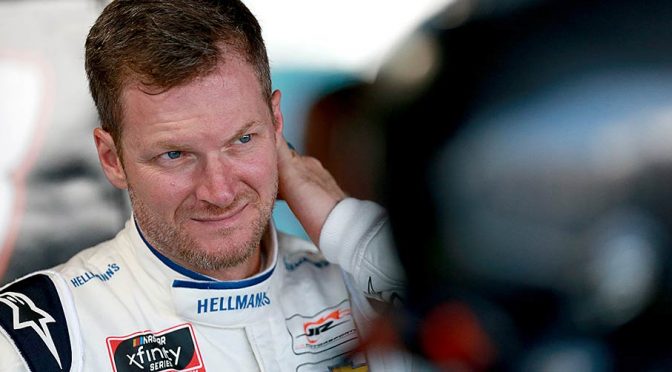
Earnhardt will drive the No. 88 Hellmann’s Chevrolet on Friday night, and he’ll have a special steering wheel, too. The orange, camouflaged wheel will be auctioned off after the event to raise funds to battle food insecurity through The Dale Jr. Foundation’s partner charities.

PHOTOS: Dale Jr.’s life in NASCAR

Ryan Blaney is no stranger to grassroots racing.

Long before he became a seven-time NASCAR Cup Series race winner and driver for Team Penske, Blaney honed his skills at short tracks across the Southeast.

The son of veteran NASCAR competitor and 1995 World of Outlaws Sprint Car Series champion Dave Blaney, the younger Blaney was a regular competitor with the Pro All Stars Series South, a touring asphalt Super Late Model series.

It’s a time of his life that Blaney remembers fondly.

“When I started running late models at 14 years old, dad was off racing on the Cup side, and these guys that I was racing around, some of them were double my age or triple my age,” Blaney recalled, speaking at the 2022 Advance My Track Challenge launch at the NASCAR Hall of Fame in Charlotte, North Carolina. “They kind of raise you on the weekends, kind of like a second family.

“You go back and you realize just how important those tracks were and those people were.”

During the 2010 and ’11 seasons, Blaney ran the full Pro All Stars Series South schedule in addition to select races with other series.

In that time, he claimed victories at several local short tracks, including Greenville-Pickens Speedway in Greenville, South Carolina, North Carolina’s Hickory Motor Speedway, Tennessee’s Newport Speedway, South Carolina’s Dillon Motor Speedway and Ace Speedway in Altamahaw, North Carolina.

In 2011, Blaney captured the Pro All Stars Series South championship by 24 points ahead of Jay Fogleman, the father of current NASCAR Camping World Truck Series racer Tate Fogleman. By 2012, Blaney was a race winner in the NASCAR Camping World Truck Series, scoring a victory at Iowa Speedway in a truck fielded by Brad Keselowski.

The rest, as they say, is history.

Ryan Blaney during a CRA Super Series Southern Division event at Hickory Motor Speedway in Hickory, North Carolina, on May 23, 2010. (Adam Fenwick)

“I can’t remember one particular moment; there were a lot of really good ones,” Blaney said when asked if he had a favorite grassroots racing memory. “Just racing hard with a lot of really good guys back in the day. The Preston Peltiers, your Ben Rowes and getting into scuffles with them. I saw Preston a couple years ago and we laughed about it, and we’re really good friends. It’s fun to look back on those things and really reminisce.

“They taught me a lot about racing, all those guys whether they were twice my age or my age. I made a lot of good memories with them. Just really neat to be a part of a traveling series week in and week out and you make friends and hopefully not that many enemies.”

Blaney’s experience at the grassroots level is what made him the ideal representative for Advance Auto Parts, the entitlement sponsor of the NASCAR Advance Auto Parts Weekly Series.

“That’s why we partnered with Ryan and the entire Team Penske team, because they stand for supporting racing at all levels,” said Jason McDonell, executive vice president of merchandising, marketing and e-Commerce for Advance Auto Parts. “Ryan and his dad in particular, who obviously have an affiliation with their own track (Sharon Speedway in Hartford, Ohio), and Ryan really spends time thinking and really reminiscing about his youth in terms of what got him to where he is today.

“It was local short track racing, all up here in North Carolina outside of High Point. That’s where he actually learned to drive a late model, and now he’s driving on Sunday. For us, it was the perfect marriage of having a great driver and a great family in a sport that is all about families and is about communities.”

As part of Advance’s support of grassroots racing, the organization announced Tuesday the return of the Advance My Track Challenge. The program spotlights NASCAR short tracks in communities across North America, with one lucky track taking home a $50,000 grand prize.

“The fact that Advance wants to give back to these local short tracks and grassroots of racing just means so much and their commitment to want to see motorsports in general continue to thrive and continue to succeed,” Blaney said. “I couldn’t think of a better partner to be with. It was a huge success last year.

“I’m fortunate for me as a driver to be involved with a company like this that wants to do these amazing things to help these tracks around the country.”

Though he’s extremely busy with his NASCAR responsibilities these days, Blaney admitted he isn’t against the idea of getting back to his roots and racing a Super Late Model at some point in the future.

“I wouldn’t mind,” Blaney said about potentially returning to grassroots racing. “I’m so removed from the Super Late Model world. I haven’t run those things in so long. I don’t even know what cars are good now a days.

“I’d love to go back and run a little bit. Just kind of hard to do it currently. I’d love to maybe jump in it,” Blaney continued. “I’m working on trying to branch out and just kind of run some local stuff. I know Advance would love it.”