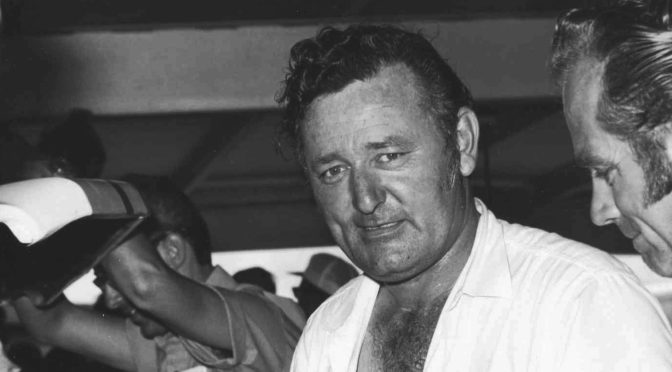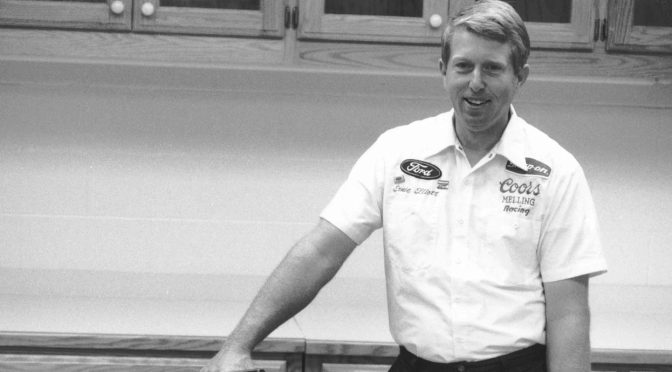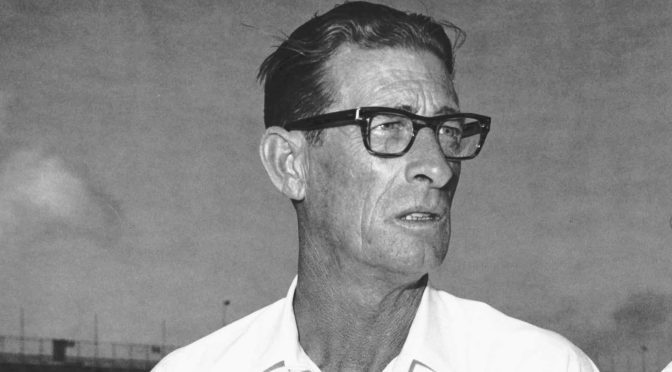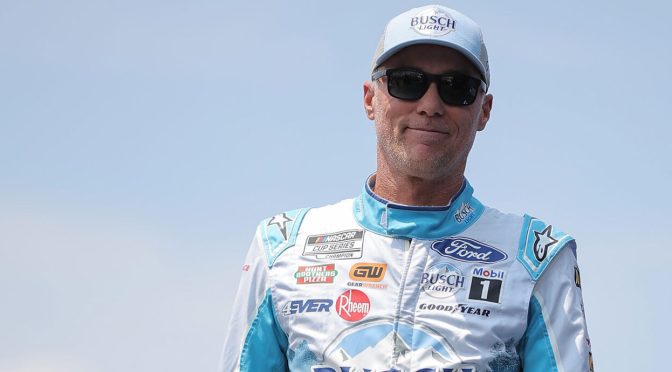
Humpy Wheeler, the innovative track promoter whose bold ideas helped reshape the modern NASCAR fan experience, was honored Friday night with the NASCAR Hall of Fame’s Landmark Award at the Charlotte Convention Center in Charlotte, North Carolina.
Best known for his 33-year tenure leading Charlotte Motor Speedway, Wheeler’s name became synonymous with promotion and innovation as he helped transform the 1.5-mile facility into one of the sport’s premier destinations. Wheeler, the 2026 Landmark Award recipient in the Executive category, died Aug. 21, 2025, at age 86.
“Humpy Wheeler was a visionary whose name became synonymous with promotion and innovation in our sport,” NASCAR Chairman and CEO Jim France said following Wheeler’s passing. “During his decades leading Charlotte Motor Speedway, Humpy transformed the fan experience through his creativity, bold ideas and tireless passion.”
Wheeler’s showmanship became a defining part of NASCAR’s big-event atmosphere, particularly through imaginative — and often over-the-top — pre-race spectacles that became the talk of the industry. Those productions ranged from school-bus stunts and massive fireworks displays to Robosaurus, the towering, fire-breathing mechanical robot known for crushing cars, along with elaborate recreations of military operations.
Wheeler’s influence extended beyond entertainment, however. Under his direction, Charlotte Motor Speedway set the pace for facility innovation, becoming the first track to build on-site condominiums, offer fine dining overlooking the racing surface and stage major events under the lights.
Perhaps his most lasting innovation came in 1992, when Wheeler’s vision helped bring night racing to NASCAR’s top level with the NASCAR All-Star Race at Charlotte. The event’s success helped spark an era in which night racing became a staple on the Cup Series schedule.
Wheeler’s path into motorsports promotion started early, and his career eventually led him to Charlotte in late 1975. He was named vice president and general manager in 1976 and later served as president of both Charlotte Motor Speedway and Speedway Motorsports Inc.
In addition to his work at the track, Wheeler helped develop the Legends car concept, scaled-down race cars that have become a cornerstone of grassroots racing across the country.
Wheeler retired from Charlotte in 2008, closing that chapter with the Coca-Cola 600. His impact, however, remains stitched into the fabric of modern race-day presentation and intricately intertwined with NASCAR’s growth as a national sport.
After scraping into the NASCAR Playoffs last year, Alex Bowman joked that he owed fellow driver Ryan Blaney “seven million beers” for winning the regular-season finale and preventing a potential new winner from taking his place on the postseason grid. With a new season just a handful of weeks away, Bowman admitted that he hasn’t settled up.
“I didn’t. Yeah, I guess I still owe him seven million beers,” Bowman said Thursday. “I don’t know that I can afford seven million beers, though. I mean, the beer would be bad by the time you got through.”
The method for how Bowman clawed his way into the 2025 postseason, however, is out – and any potential seven-figure beer pledges that go with it might be shelved, too. The dynamics that used to determine the Cup Series’ championship-eligible field have been replaced by a consistency-heavy 10-race Chase format, and Bowman believes his No. 48 Hendrick Motorsports Chevrolet team – retooled for the 2026 campaign – should profit.
“I think on paper every year, it would have benefited us,” Bowman said. “So yeah, I think it’s definitely good for me, but yeah, we’ll have to wait and see. Like I said, it probably fits us a little bit better than the other style, but at the same time, it’s just hard to see how the season plays out.”
The overall outlook for the upcoming season appears bright for the Rick Hendrick-owned organization, with defending champion Kyle Larson alongside Bowman, former champ Chase Elliott and two-time defending Daytona 500 winner William Byron in the fold. All four met the media Thursday afternoon from the Papa Joe Hendrick Meeting Center room in the gleaming new Atrium Health Motorsports Athletic Center, which represents a next-level leap in team and pit-crew performance and wellness on the Hendrick Motorsports campus.
It’s an ever farther step ahead of the norm that Rick Hendrick recollects from when he started this operation in 1984, when over-the-wall crew members were just regular guys from the shop — “big tummies, smoking cigarettes,” he said to laughs. A decade later, Hall of Famer Ray Evernham revolutionized pit-stop performance through athletic training, but even then, the methods were primitive, with wind sprints in the shop’s surrounding fields and hills a primary form of exercise early on. Evernham was there Thursday to witness Hendrick and Atrium Health officials cut the ribbon to officially open the state-of-the-art, 35,000-square-foot facility, in the former chassis shop adjacent to the team’s museum.
“Heck, five years ago I don’t know if I could have envisioned this, you know?” said Hendrick Motorsports vice chairman Jeff Gordon, who won three of his four Cup Series championships with Evernham as his forward-thinking crew chief. “I mean this is taking it to a whole ‘nother level, but the amount of attention that we’re putting into our athletes and just seeing our coaches and their recruiting process, that’s been going on for eight to 10 years, and so I’ve seen how that’s been evolving, and you see how the pit stops are becoming more and more important. Those results are really the difference-maker in a lot of races and championships.”
The other difference-making factor may well be the first new NASCAR championship structure in 13 years. Just last season, the now-shuttered elimination playoff system presented Hendrick Motorsports with fates that touched both ends of the spectrum. At one end was Larson, whose fire suit now shows him as a two-time Cup Series champion after his surprising vault past a dominant Denny Hamlin in the final laps of the season in the winner-take-all finale at Phoenix Raceway. On the other side was Bowman, who was a respectable ninth in the Cup Series standings heading into last year’s regular-season finale. Because of the crowd of winners who reached the playoffs from below the playoff standings’ elimination line by the “win-and-in” rule, the No. 48 driver’s consistent-but-winless stature placed him on the razor’s edge of qualifying for the 16-driver field.
“But under this format, he would have been in far more easily. We were going through that because of the win and you’re in,” Gordon adeptly noted, speaking from experience as a driver who competed under each recent evolution of the championship procedures. The return to a revised Chase system, he said, was a welcome adjustment with positive trade-offs – both for his team and the NASCAR industry at large.
“I think that when I look through the history, and I look at what’s the biggest, best compromise to 36 races with points accumulation versus a one-race championship win in Phoenix to decide the championship, 10 races, I think, is the right way to go,” Gordon said. “I mean, I got to experience the Chase myself, and all I had ever asked for in that is just switching up the tracks, whether it’s the lineup of the tracks or just changing up the last race or the handful of races, and so I do hope that that’s a part of this as we move forward. But from a Hendrick Motorsports standpoint, I think consistency is something that works for us very well. I think our drivers and teams are going to thrive in that, but I also think it legitimizes it a little bit more. I mean, I don’t want to take away from anybody that’s won a championship under this most recent format, but to come down to one race, you can have what we just had happen, right? It can go one way or another for you, and I think to be able to do that over 10 races, I think it’s going to really show who the best team is for the season.”
Positioning each of Hendrick’s teams in the Chase field this year will require a similar level of performance, even without victories producing an automatic pathway to the postseason. Winning now comes with a 55-point prize – a 15-point increase – and the benefits are cumulative in the overall standings. The impact on how crew chiefs form strategies and call races will be a focus point for 2026.
“You don’t know until you do it, but my first blush is, ultimately, points are always important regardless of what kind of format you’re in,” said Alan Gustafson, crew chief for Elliott’s No. 9 Chevrolet. “You want to be as good as you can, you want to win – all those things are still important. I think it’s just the way you prioritize those shifts a little bit, right? With our old format, winning was rewarded so heavily that you would shift your emphasis to win over a consistent finish or other circumstances. So that’s the biggest difference, I think. I feel like the old format, winning is what it’s about. I agree, we all want to win. That’s what a race win is. A championship is an accumulation of work over a season, right? That’s the difference, and I feel like this format now is a better representation of a championship and ultimately your whole body of work throughout the season than last.
“Having raced in it, I’ve been asked by a lot of you before the decision, and my response was always, when it was the first Chase – 10 cars, 10 races – was absolutely, by far, the toughest I’ve ever been in. No question, the hardest to compete in and win that I’ve ever been a part of. I think this is a closer manifestation of that.”
Bowman aims to be more firmly in that mix. His pairing with crew chief Blake Harris will enter its fourth season this year, but the No. 48 roster has undergone several personnel moves that underpin the team’s core.
Harris said that Jonas Bell will shift to the lead race engineer role, joining the team after a stint with Kaulig Racing’s No. 16 group. The No. 48 will also have a new car chief, with Nick Kerlin making the move after a term as a mechanic with the No. 9 team.
“Over time, you have guys that have opportunities and move on, and we just kind of had an abundance of that over the course of the winter,” Harris said. “The majority of my road crew is different, aside from me and the truck drivers. … So some of it was kind of natural progression and stuff, and really just kind of a fresh start for the 48 team. I think when you dig into it, from my perspective, we needed to clean up some execution, and as we added some new people, we’ve been able to bring on board some really good veteran guys that some are familiar to me, and some are new, but we’ll definitely look forward to the season.”
Through all the ups and downs of his career, Kurt Busch received his highest career honor Friday night as he was inducted into the NASCAR Hall of Fame as a member of the Class of 2026.
The journey was anything but smooth for Busch, the 2004 NASCAR Cup Series champion and 43-time winner across NASCAR’s three national series. He’ll tell you as much.
But the bumps along the way all made the buildup to Friday night’s induction ceremony so much sweeter.
Busch learned of his election to the Hall of Fame alongside Harry Gant and Ray Hendrick back in May. In the months since, the Las Vegas native has been reflective of every moment that led him to eternal stock-car racing glory.
“It’s been an amazing journey,” Busch told NASCAR.com in a Thursday teleconference. “And all the trips down memory lane, talking with a crew chief, just asking them to help verify one of the stories, that way I can get it into the speech. And by the time you ask one question, it’s like an hour just went by with every one of them. And just all the different stats that the statistician guys were helping me put together, it’s like, wow. We really got a lot done with a lot of different teams.”
The list of teams Busch raced with in Cup is long — from Roush Racing (before it was known as RFK) to Penske Racing (before it was known as Team Penske) to Phoenix Racing, Furniture Row Racing, Stewart-Haas Racing, Chip Ganassi Racing and 23XI Racing. The list of highlights with each of those programs glows with success: a Cup title; wins in 19 different seasons; a 2017 Daytona 500 triumph; a NASCAR All-Star Race victory in 2010, followed by a Coca-Cola 600 triumph one week later.
But frustration often got the better of Busch in the first stanza of his career, made public by frantic radio communications and unflattering media relations, to put it kindly. Now 47, Busch overcame adversity in his career that most people — drivers or otherwise — may not have been able to leave in the past.
Some of that tumult stemmed from his meteoric rise to the elite of stock-car racing. The first race of Busch’s life came in 1994. By September 2000, he was strapping into a Cup car to race against Dale Earnhardt, Jeff Gordon and NASCAR’s best in September 2000.
“It was that fast,” Busch said. “That’s why I wasn’t ready for the big time to be a professional and to understand all the responsibilities with it. … I was drinking through a fire hose at times.”
Rusty Jarrett | Getty Images
Today, he doesn’t shy away from the ugly moments; instead, he credits the work ethic instilled by his parents and the resiliency he’s gleaned from them for helping him hurdle those less-than-sparkling times in the midst of the extraordinary.
“Of course, it gets down to people — the people that you surround yourself with, and the people that help you make decisions,” Busch said. “But then age kicks in, and you start to figure things out. And again, there was the truth behind a lot of the different stories. And I raced with the truth, knowing what my version of the story is, whether it’s a team departure or a media moment or whatever it was. I knew where I sat with them and the people in the garage, the people in our sport, people with a hard card; it felt like they were always on my side. And so that gave me that motivation to keep digging.”
Busch credits former teammate and NASCAR Hall of Famer Mark Martin and Furniture Row Racing owner Barney Visser for their guidance through the tough times, particularly when Busch joined Furniture Row in 2013 after a year with the underfunded Phoenix Racing program.
What became evident at each of Busch’s stops, though, was how much better he made each team.
The last stop of his career came at 23XI, where Busch piloted the No. 45 Toyota as teammates with Bubba Wallace. Wallace had never had a teammate at the Cup level before. But the bond and memories established in their time together still resonate with Wallace years later.
“He’s always, even to this day, still sending motivational stuff to look at and understand how to navigate through certain race weekends,” Wallace told NASCAR.com Tuesday. “I think looking at things from a bigger picture and maybe a different perspective is Kurt’s philosophy, and just kind of looking at it from all angles and not just one side.”
Busch’s efforts to be a team player were intentional, returning the favor of teammates he had at his first stop with Jack Roush’s team.
“The second half of my career and being a little bit older and more experienced, usually at that time, my teammates were getting younger,” Busch said. “And so it was cool because that’s what Mark Martin and Jeff Burton did for me when I was first starting out at Roush. And so you feel that moment of giving back and helping, and if you can make them better, they’re going to make you better.”
Those days driving the No. 97 Ford gave Busch plenty of lessons because of the caliber of drivers he raced with, from Martin and Burton to 2003 Cup champion Matt Kenseth, Hall of Famer Carl Edwards and 19-time Cup winner Greg Biffle.
“This is how life was at Roush with five championship-eligible guys, right?” Busch said. “I mean, that group, they’re all Hall of Famers. And I looked at it, and I said, ‘You know, we’ve got to work together six days out of the week.’ But I know I can beat these guys on the seventh day. Might not beat all of them on the same week, but I know I can beat them most of the time. And so that’s the mentality that I put in my head, and then used that later in my career with teammates.”
Alex Daus | NASCAR Digital Media
The end of Busch’s career was ultimately beyond his control. Just eight weeks after earning 23XI Racing’s second victory at Kansas Speedway, a crash during qualifying at Pocono Raceway in June 2022 brought Busch’s career to a halt. His No. 45 car backed into the retaining SAFER barrier exiting Turn 3 before ricocheting his right-front fender against the SAFER barrier and sliding to a stop. The first sign that something was wrong, though, was that Busch had no recollection of the right-front contact.
Busch was held out of the event with concussion-like symptoms. And despite months of rehabilitation, Busch never raced in the Cup Series again, announcing his departure from full-time racing in October 2022 at Las Vegas Motor Speedway, his home track.
“I made a mistake and spun the car,” Busch said. “And when I backed into the fence, and then the right front supposedly hit, I don’t remember that. It was a different hit, and it took me to a tough place. And to go through rehab and to be cleared and to then close out with the announcement that I won’t be full-time racing anymore, that was a key moment.”
Busch has “definitely” made peace with how things ended, he said. His connections to 23XI remain strong as ever, and his eye is on the future of the Busch’s legacy in racing: Brexton Busch, his nephew and Kyle Busch’s son.
“To be able to go to 23XI, to go to the track and have a hard card and just go into their hauler, make a sandwich, jump into a meeting and listen in, yeah, that’s still that on the table,” Busch said. “But for me, it’s just been fun now to take a step back and enjoy it more from the bird’s eye view, and then rooting on my little nephew Brexton. Brexton Busch is definitely the next greatest thing happening.”
From a championship to crown-jewel victories, memories of interactions with Dale Earnhardt to moments with Michael Jordan, Busch has seen it all in his 25 years as a member of the NASCAR community. On Friday, his place within that community will forever be cemented with an induction into the NASCAR Hall of Fame, his legacy enshrined and surrounded by the sport’s heroes.
“My story, I believe, is this blue-collar kid who had a dream,” Busch said. “And it was pushed into all these uncharted territories with not having an agent or not having a family that was at this top level, or having to know anybody really. …
“And I think at the end of the day, what I found that I wanted to be for our race fans was someone that they could depend on for a top-10 finish or a win every single week. No matter if we’re in New England, Florida, Texas, the desert southwest. I wanted fans to know that I was racing hard every lap.”
Teddy Hodgdon plans to compete full-time on the NASCAR Whelen Modified Tour in search of the Rookie of the Year award in the familiar No. 55 entry, for all 16 events.
Additional announcements regarding partners will be released in the coming weeks.
“I’m ready as ever to step up to full-time on the NASCAR Whelen Modified Tour,” Teddy Hodgdon said. “Last year, we got our feet wet with the Connecticut challenge, and some of the bigger races. To focus on the whole schedule in 2026, we know what to expect. I’ve got a great group of guys and partners behind me, and we’re all super excited to get the season underway at New Smyrna.”
Teddy and the No. 55 NASCAR Whelen Modified Tour team will hit the track for the first time in 2026 at New Smyrna Speedway for the 200-lap season-opening NASCAR Whelen Modified Tour event on Saturday, February 7. The second event is at Martinsville Speedway on March 27.
Hodgdon made five NASCAR Whelen Modified Tour starts during the 2025 season, earning a best result of 12th at North Wilkesboro Speedway.
To learn more about the NASCAR Whelen Modified Tour, visit nascar.com/regional.
For more information on Teddy Hodgdon and Teddy Hodgdon Racing, visit TeddyHodgdon.com and follow Teddy Hodgdon Racing on Facebook.
Editor’s Note: This story originally was published on Sept. 1, 2016 to commemorate the 25th anniversary of Harry Gant’s magical September winning streak in 1991. It is presented here to commemorate Gant’s induction to the NASCAR Hall of Fame with the Class of 2026.
Just months before, the seemingly timeless Nolan Ryan had twirled his seventh no-hitter at the age of 44. Tennis star Jimmy Connors was days into an unlikely, age-defying run into the U.S. Open semifinals at 39.
In 1991, the sports world’s well had been primed for feats that defied both logic and the limits of advancing years. The NASCAR world was no different.
By the 1991 season, the veteran driver already possessed a handful of nicknames to choose from:
• “Hard-Luck Harry,” a label he finally shook by collecting his first premier-series win (1982, Martinsville) after finishing second a heart-wrenching 10 times.
• “The Bandit,” a nod to Gant’s longtime sponsorship from U.S. Smokeless Tobacco’s Skoal brand.
• “Handsome Harry,” his best-known alias, which owed to the matinee-idol good looks that followed him into grandfatherhood.
But 25 years ago this month, Harold Phil Gant earned another affectionate handle for his most notable accomplishment in stock-car racing’s big leagues — a history-making, four-race win streak at age 51 that transformed him into “Mr. September.”
Other drivers with Hall of Fame credentials have amassed wins in fours since the dawn of NASCAR’s modern era in 1971, but other factors beyond his age make Gant’s performance a singular achievement. Gant also won twice in what is now the NASCAR O’Reilly Auto Parts Series during that magical September, leaving him a streak of six straight national series triumphs. He won all four premier-series races with the same car — a Leo Jackson-owned No. 33 Oldsmobile Cutlass — and same engine at all four tracks.
“We’ll probably run it until we wreck it,” Gant said back then. The car was involved in two crashes during the four-race romp, but never lost its winning edge.
The phrase “better with age” was Harry Gant defined. He won eight Winston Cup races after the age of 50, a run that made his Skoal Bandit banner a frequent flyer just underneath the American flag at the Alexander County courthouse in his hometown of Taylorsville, North Carolina.
Gant still calls the town of nearly 2,100 residents home. Though he hung up his driving gloves after the 1994 season, he’s far from the formal interpretation of retirement. From sunup to sundown, Gant can be found either raising cattle and raking pastureland on his 300-acre farm or mowing neighboring solar farms with his grandson.
Taking time out to recall the details of his extraordinary record? When his daughter, 55-year-old Debbie Pollard, answers the phone in Gant’s nondescript Taylorsville office, she says he’s simply far too busy. Maybe when the grass stops growing later into October, she says, pointing out a small window to chat this weekend in Darlington.
“That might be a good place to catch him,” Pollard says.
Twenty-five years ago at Darlington, no one could. In the three magical weeks that followed, Gant’s No. 33 was just as uncatchable.
In the spirit of celebrating NASCAR’s throwback history this weekend, NASCAR.com takes a race-by-race look at Gant’s stunning surge to four wins in a row — and the chance for a fifth that barely slipped away.
DARLINGTON: Sept. 1, 1991
RacingOne
The race: Gant’s hot streak actually took root away from the race track with a Wednesday victory in a driver-invitational golf tournament. Gant qualified fifth for the Heinz Southern 500, but alterations by crew chief Andy Petree had brightened his driver’s outlook on an otherwise cloudy day.
In front of Gant on the starting grid were points leader Dale Earnhardt, going for his third consecutive Southern 500 win, and Davey Allison, who started from the pole position and dominated the early portions of the Labor Day classic. Gant didn’t take the lead until the 151st lap, but once there, he placed cars a lap down at a rapid clip.
Allison loomed as Gant’s closest competition — he ended the day leading 151 laps to Gant’s 152 — but a broken throttle spring doomed the No. 28 Ford’s chances. With his throttle intermittently sticking, Allison barreled into Michael Waltrip, sending the latter into a spin and bringing out a caution period with 70 laps to go.
Gant led the rest of the way, winning by 10.97 seconds and leaving just two other cars on the lead lap. Down the stretch, ESPN anchor Bob Jenkins remarked that Gant was “not getting older, he’s getting better” — a theme that pit reporter Dr. Jerry Punch picked up on in his Victory Lane interview.
“For 51 years of age, you look fresh as a daisy,” Punch said.
Gant, who savored the last of his four career Darlington victories, replied: “Well, I feel good. I figured that was the only way I was going to beat ’em today was just wear ’em out. They may be younger, but I can wear ’em out.”
What was different: The frontstretch and backstretch were flip-flopped, with the start/finish line still on the side closest to the Harry Byrd Highway. Pit road also was separated into frontstraight and backstraight lanes, a huge disadvantage for cars forced to pit last.
Silly season moves: Darlington weekend began with news reports of Geoff Bodine reaching an agreement with car owner Bud Moore for 1992, leaving the Junior Johnson-owned No. 11 team after two years. Bill Elliott, later tapped as Bodine’s replacement, rattled off his own four-race win streak early in the ’92 season.
Race runner-up: Ernie Irvan, the Daytona 500 winner that year. Irvan won twice in 1991 and wound up fifth in the overall standings — the highest points finish of his premier-series career.
RICHMOND: Sept. 7, 1991
RacingOne
The race: Gant had never won back-to-back races in his career, but carried high hopes after a Busch Grand National victory at Richmond Raceway, which had freshly installed lights for its first weekend of night races. Gant quipped after winning the 200-lap preliminary that the track’s switch pushed his celebration past his bedtime.
Gant had questioned Jackson, his car owner, about bringing his Southern 500-winning car to Richmond, hoping to save the familiar No. 33 for the following weekend at Dover. Jackson won the debate, and Gant had that familiar seat for the Miller Genuine Draft 400.
A TBS broadcast crew, which remarkably included NFL great Ken Stabler as a commentator and pit reporter, watched pole-starter Rusty Wallace and Davey Allison rule the early stages while Gant bided his time. By the three-quarter mark of the 400-lap race, Alan Kulwicki and Ernie Irvan came to the front to stage a spirited duel for the top spot.
That battle went sour with 88 laps left when the two front-runners collided. Gant, running third, tried to avoid the spin, but turned into the path of Morgan Shepherd and lost control. Gant looped his car and kept going, actually gaining second place in the aftermath.
The fracas allowed Allison to take control, but his grasp on the lead wasn’t a firm one. Gant reeled in the Robert Yates-owned No. 28 to lead the final 19 laps.
“We’ve been having a lot of fun the past couple of weeks,” Gant said after scoring his only premier-series triumph at Richmond. In Victory Lane, Gant received a prolonged peck on the cheek as he posed for post-race photos with a trophy girl. As Gant smiled, someone shouted: “He’s a grandpa. Not on the mouth.”
What was different: Besides making the transition to nighttime racing, Richmond also featured a pit-entrance wall perilously close to the racing groove in Turn 4. The abutment has since been moved farther away from the preferred racing line.
Silly season moves: After Dale Jarrett righted the Wood Brothers No. 21 Ford from an early spin, TBS lead broadcaster Ken Squier remarked about the future NASCAR Hall of Famer: “Of course, next year he’s one of the big stories, moves on with the coach of the Washington Redskins to form a new team. Joe Gibbs will come out here with an organization. That oughta be something.”
Race runner-up: Davey Allison, who led a race-best 150 of 400 laps. The second-generation star finished the 1991 season with five victories and a third-place ranking in the Winston Cup standings.
DOVER: Sept. 15, 1991
George Tiedemann
The race: With another Grand National victory in the books as a Saturday prelude, Gant entered the Peak Antifreeze 500 at Dover with a ton of momentum. The grandstands were catching on, too, with the Gant faithful sporting pins reading, “Life Begins at 51.”
The fans’ rally of support for the veteran Gant prompted 49-year-old Dick Trickle to quip: “The older you get, the better you get. If I was Harry’s age, we probably could’ve won.”
The Monster Mile took a heavy toll on the field that September, snaring 15 cars in a Lap 70 melee on the backstretch. Three more hopefuls bowed out just past the midpoint when pole-winner Alan Kulwicki’s engine faltered, leaving himself, Dale Earnhardt and Rusty Wallace tangled up in the No. 7 car’s dropped oil. Several more teams succumbed to crashes and mechanical woes, leaving just 16 of the 40 cars running at the finish.
Davey Allison was again Gant’s prime challenger, but after leading the first 114 laps, the engine expired on his No. 28 Havoline Ford. Allison actually continued in a brief relief stint for the ailing Kyle Petty, who missed 11 races that year after suffering a broken left leg in a crash that May at Talladega Superspeedway.
With Allison added to the lengthy attrition list, Gant poured it on, leading all but four of the final 330 laps. His only nuisance down the stretch was a warning light on his dash, indicating a potential hiccup with his car’s alternator. Rather than make a lengthy stop to remedy the issue, Gant said later that he simply unscrewed and discarded the bulb on his Oldsmobile’s dash.
Gant’s performance left little doubt to the outcome, but his excellence left the TNN broadcast booth in awe. “I can’t believe what I’m watching,” said NASCAR Hall of Fame nominee Buddy Baker. “This guy acts like there’s nobody out there but him; the rest of ’em are just traffic, you know?”
By the end, the rest of the field indeed was traffic. Gant finished on a lap by himself, a feat that’s only happened once since (in 1994 with Geoff Bodine at North Wilkesboro).
“I thought yesterday was an easy win, but today was even easier,” Gant told reporters afterward. “It just sat there glued to that race track.”
His plans to celebrate the victory in the days that followed stayed true to his working-man upbringing. “Finishing up some garage doors and just moving some dirt,” Gant said. “I may not be the best race driver, but I’m a good carpenter.”
What was different: Dover has always been known as a punishing venue, but the Monster Mile hosted grueling 500-mile events up until the 1997 season, when the track reduced its race distances by 100 miles. The September 1991 race clocked in at 4 hours, 32 minutes. In 1991, the track also used an asphalt surface, which was replaced by concrete in 1995. Dover Downs International Speedway also dropped the “Downs” part from its name in 2002.
Silly season moves: Baker mentioned during the broadcast that Hall of Famer Bobby Allison had turned laps in testing at Martinsville Speedway earlier in the week. Though the session fueled speculation for a NASCAR comeback, Allison would not race again after his severe crash in June 1988 at Pocono Raceway.
Race runner-up: Geoff Bodine, who held off Morgan Shepherd in a closely contested battle for second place over the final five miles. Bodine, who led just two of the 500 laps, exclaimed in post-race interviews: “Can anyone beat Harry Gant?”
MARTINSVILLE: Sept. 22, 1991
RacingOne
The race: With a growing buzz in the grandstands focusing on Gant, ESPN broadcasters Benny Parsons and Ned Jarrett previewed the Goody’s 500 from beside his car. By then, the two TV analysts had retired from their racing days, but it didn’t stop both of them from showing up at Martinsville Speedway in their fire suits, playfully begging Gant for a chance to drive the No. 33 Oldsmobile that had become a fountain of youth.
Gant methodically worked his way to the front from the 12th starting spot, bypassing Rusty Wallace to take the lead for the first time in the 196th of 500 laps. Though Gant set the pace for a race-high 226 laps, his path was not nearly as trouble-free as at Dover the week before.
In a contest for the lead after a Lap 376 restart, Wallace nudged Gant into a spin in the 0.526-mile track’s third turn. Gant’s No. 33 sustained significant front-end damage after third-place Morgan Shepherd became involved, but the 51-year-old drove away from the stack-up.
The amount of torn-up sheet metal and smoke around the No. 33’s nose seemed terminal, at least to Parsons. “Looks like that right-front tire is going south and the car is going north,” he said. “Pretty heavy damage to that car, so Harry Gant will not win his fourth in a row, I’m sad to say.”
Gant had fallen out of the top 10, but made a fierce charge to prove Parsons wrong. Gant said later that he “ran about 10 laps as mad as a bull,” the hood of his battered Olds held down by bungee cords and the right-front fender peeled away.
On the ensuing restart, Gant deftly jumped back up to ninth place, causing Parsons to doubt his proclamation. When Gant slipped past Terry Labonte for third, Parsons was beside himself: “This is unbelievable! I crossed Harry Gant off. I said he’s not going to win four in a row, and I don’t know — he just might still do it.”
By Lap 448, Gant had come all the way back to the top spot, passing Ernie Irvan and Brett Bodine to take control. After being bumped out of the lead by Bodine one lap later, Gant capitalized when Petree & Co. made quick work of his final pit stop, winning the race off pit road and staying out front the last 47 laps.
“I figured we had it in the bag, but then I realized how many laps were still left, and I knew it couldn’t be this easy,” Gant told reporters later. “… It sure is special. I don’t even know what to say about all this anymore.”
What was different: Martinsville Speedway’s curbs in the corners have endured, but in 1991, the pit road was split into separate lanes on the frontstretch and the backstretch. The entire area was rebuilt in 2008, creating one contiguous pit lane. Like other short tracks of its era, the 1991 starting lineup had a scant 32 cars.
Race runner-up: Brett Bodine, who faded down the stretch with a broken exhaust and worn brakes. Bodine, now NASCAR’s pace car driver, held on to secure the final top-five finish for a Buick in stock-car racing’s top series. “If it means winning races like Harry, I’ll say I’m 51 right now,” Bodine marveled post-race.
NORTH WILKESBORO: Sept. 29, 1991
RacingOne
The race: The final Winston Cup race of the month offered Gant a chance at more history: An unprecedented five-in-a-row streak in the sanctioning body’s modern era. North Wilkesboro Speedway was at a fevered pitch, the 0.625-mile track nestled just 20 miles away from Gant’s hometown in the next county over.
“I think we’ve got a home-track crowd, but I don’t think there’s any advantage for this car today,” Gant told ESPN’s Dr. Jerry Punch in interviews just before the start of the Tyson Holly Farms 400.
Qualifying indicated a clear-cut edge, with Gant netting his first pole position in more than four years, ending a dry spell of 126 races. His lap was just 0.004 seconds better than second-fastest Davey Allison, who was granted permission to go first in the qualifying order so that he could attend a wedding that Friday evening.
Gant sailed effortlessly from the start, placing all but 11 other cars a lap down before the race was even 100 laps old. He led the first 252 of 400 laps before surrendering the top spot to Morgan Shepherd in a pit-stop exchange. Just 41 laps later, Gant had reassumed the lead as the anticipation built for a potential September sweep.
But the No. 33 car that had been seemingly indestructible for the stellar four-race stretch finally developed a weak point. A faulty brake line caused Gant’s car to lose fluid for the final run to the checkered flag, allowing points leader Dale Earnhardt to close in.
Gant couldn’t hold on, and Earnhardt worked his car around on the high side with nine laps remaining. ESPN’s Ned Jarrett remarked: “First time that Harry Gant has been passed in how long?” Benny Parsons, his colleague, told lead announcer Bob Jenkins: “I feel like there’s not going to be Christmas this year.”
Off camera in Victory Lane, Earnhardt — who had assembled his own four-race sweep in 1987 — cracked: “I didn’t want ol’ Harry breaking my four-straight streak.” More significantly, the win provided a boost to his lead in the series standings, an edge that Earnhardt would carry to his fifth championship at season’s end.
Gant simply shrugged at his misfortune and managed a smile: “I was outrunning them down the straights and coasting through the corners. But with a driver like Earnhardt behind you, that won’t work for very long.”
What was different: Second-day qualifying, which allowed drivers to try to improve upon their first-round times. Earnhardt used the rule to improve his starting position from 28th to 16th in Saturday’s qualifying. NASCAR officials abandoned the next-day session after the 2000 season.
Silly season moves: Petty Enterprises made plans for a news conference, scheduled two days after the North Wilkesboro race. At the Oct. 1 media availability in Level Cross, Richard Petty ended weeks of speculation by announcing that the 1992 season would be his last as a driver.
Race runner-up: Gant, who led 350 of the 400 laps before settling for second place. Gant later reflected on the impact of his September stretch, saying that his official fan club membership rose roughly 20 percent that season. “That was probably the best thing about the streak,” Gant said, “just the support of all the fans.”
One full-time ride remains for Kaulig Racing’s NASCAR Craftsman Truck Series program as part of Dodge’s long-awaited return to the sanctioning body.
Fifteen competitors from the short-track ranks will compete for that opening.
To determine who gets to race in Kaulig’s No. 14, Ram Trucks unveiled “Race for the Seat,” a reality television show that will see drivers test their skills at tracks like South Boston Speedway and Virginia International Raceway. The program will also provide a behind-the-scenes viewpoint as competitors make their case for a full-time ride.
Those participating in “Race for the Seat” possess diverse backgrounds on their respective resumés. Making up the roster are competitors from the NASCAR Whelen Modified Tour, ARCA Menards Series, CARS Tour and NASCAR’s Weekly Series.
“Race for the Seat” debuts Jan. 25 on FOX, with the remaining episodes airing on Ram’s YouTube channel through Feb. 6. Below are the 15 drivers set to battle it out for an opportunity to drive in the Truck Series on a full-time basis.
Austin Beers won the NASCAR Whelen Modified Tour championship in his fourth full-time season. (Photo: Jacob Kupferman/Getty Images)
Austin Beers — During the 2025 NASCAR Whelen Modified Tour season, Austin Beers became the youngest champion in series history by earning two victories and never finishing outside the top 10. Consistency has followed Beers since he made his Modified Tour debut in 2021, as he has amassed five wins, 32 top fives and led 1,183 laps.
Mike Christopher Jr. — The son of Modified Tour driver Mike Christopher and nephew of Modified legend Ted Christopher, Mike Christopher Jr. is continuing his family’s proud racing heritage. Christopher Jr. earned his lone Modified Tour victory in 2022 and finished 13th in his Truck Series debut last year.
Mini Tyrrell — Despite being just 21, Mini Tyrrell has established himself as a seasoned competitor on the CARS Tour with 88 starts. His most recent full-time campaign was his best with three victories in total, including a $50,000 payday in the Throwback Classic at Hickory Motor Speedway.
Cody Kelley — The reigning track champion at South Carolina’s Florence Motor Speedway, Cody Kelley has carved out a successful career in Late Model Stock Cars primarily in South Carolina. Kelley has also excelled when racing outside his home state, as he set the fastest time for the ValleyStar Credit Union 300 last year at Martinsville Speedway.
Casey Kelley — Like his twin brother Cody, Casey Kelley is a respected Late Model Stock competitor in South Carolina with a championship at Florence on his resumé. Casey has also proven himself against stout competition; he scored a top-five finish in the ValleyStar Credit Union 300 in 2024.
Landon Huffman has carried on the success of his father Robert with several accomplishments in Late Model Stocks. (Photo: Ted Malinowski/NASCAR)
Carson Ferguson — Versatility has always been part of Carson Ferguson’s identity. He was the first to win a championship in the Dirt Nationals, Asphalt Nationals and Road Course World Finals in a Legends car in 2014. Ferguson now primarily competes in dirt-track events across the Southeast, earning two major victories in 2025.
Kade Brown — Kade Brown’s Late Model Stock accomplishments have accumulated with track championships at Hickory and Florence, plus victories in each facility’s crown-jewel events. Brown has been full-time on the CARS Tour since 2023; he earned a career-best points finish of third last year.
Ryan Gemmell — Primarily known for his success in vintage cars divisions like the NASCAR Classic series, Gemmell made his ARCA Menards Series debut with Joe Nemechek last year at Watkins Glen International. Gemmell has showcased his road-course expertise in all three of his ARCA Menards Series starts with no finishes outside the top 10.
Chase Burrow — Since breaking into Late Model Stocks at the turn of the decade, Chase Burrow has raced across his home state of Virginia, North Carolina and South Carolina looking to gain experience. Burrow’s patience and tenacity paid off last year when he obtained his first CARS Tour victory at Virginia’s Langley Speedway.
Jonathan Cash — One of the most experienced drivers on the “Race for the Seat” roster, Jonathan Cash’s career has seen him compete in Late Model Stocks, ARCA Menards Series East and USAR Pro Cup Series. Cash now finds himself in the Southeast competing full-time in Modifieds. He won in August at Coastal Plains Raceway.
In 2023, Trevor Ward won the ValleyStar Credit Union 300 at Martinsville Speedway and took home the prestigious Virginia Late Model Triple Crown. (Photo: Veasey Conway/NASCAR)
Tanner Reif — With his younger brother Tyler joining Niece Motorsports’ NASCAR Craftsman Truck Series program for 2026, Tanner Reif seeks to find his way onto the grid. The elder Reif has primarily competed in the ARCA Menards Series West during the 2020s, claiming three victories.
Landon Huffman — Motorsports has always been part of Landon Huffman’s life, as his dad Robert Huffman is a five-time NASCAR Goody’s Dash Series champion. The younger Huffman has carried on his family’s success by winning a track title at Hickory and finishing second in the ValleyStar Credit Union 300 in 2023, among other accolades.
Grant Griesbach — Although Grant Griesbach has been competing primarily in the Midwest since the mid-2010s, the 2025 season proved to be his best to date. Griesbach earned wins in the Midwest Truck Series and picked up his first major Super Late Model victory at Wisconsin International Raceway, all while gaining more experience against quality fields.
Jared Fryar — Throughout his career in short tracks, Jared Fryar has established himself as a quietly efficient competitor. He is one of two drivers to win championships in two CARS Tour divisions alongside Carson Kvapil and is coming off a career year in the platform’s Late Model Stock class, where he tallied three victories and six top fives across seven starts.
Editor’s note: Today’s Wood Brothers Racing preview continues NASCAR.com’s countdown of team previews for the 2026 Cup Series season.
WOOD BROTHERS RACING
Manufacturer: Ford Engine: Roush Yates Driver-crew chief pairing: Josh Berry-Samuel “Miles” Stanley (No. 21)
Team outlook: Wood Brothers Racing enters 2026 with momentum, looking for a third consecutive season with a victory and a second with driver Josh Berry. In just his fifth start with the team, Berry took the iconic No. 21 Ford to Victory Lane at Las Vegas, securing a 2025 playoff berth in the process. And before Harrison Burton’s 2024 Daytona victory, which doubled as the organization’s 100th at the Cup level, it had been since Ryan Blaney in 2017 that the No. 21 entry had won. The fruits of the family-owned team’s labor have paid off, and Wood Brothers Racing is primed for another stout season with Berry behind the wheel.
JOSH BERRY, NO. 21 FORD
Experience: Two full-time seasons in NASCAR Cup Series; 84 starts 2025 stats: 16th in final Cup Series standings; 1 win, 3 top fives, 8 top 10s, 0 poles, 207 laps led
Driver outlook: Berry earned a playoff berth last spring with his first career Cup win at Las Vegas, but his season spiraled upon reaching the 10-race postseason. He finished dead last in all three Round of 16 races, crashing in the first two events and suffering a brake issue in the cutoff race at Bristol. So entering 2026, Berry must certainly be motivated to shed his playoff woes and make a deep run toward the Bill France Cup. He nearly banked a second win later in the 2025 season at New Hampshire, and a seventh-place finish in the finale at Phoenix gives him momentum into the new campaign. Berry’s ceiling is extremely high, and at age 35 nearing the prime of his career, he’s a dark horse candidate heading into his third full-time Cup season.
Editor’s note: Updated times and day for on-track action.
The 2026 NASCAR Cup Series season will kick off in exhibition fashion as 23 drivers will battle at Bowman Gray Stadium on Wednesday, Feb. 4 (6 p.m. ET, FOX, MRN Radio, SiriusXM NASCAR Radio) for the annual Cook Out Clash.
The format to decide the full field at the iconic Winston-Salem, North Carolina, track — from practice groups, qualifying and setting the lineup — has been adjusted following the postponement of Saturday’s and Sunday’s on-track events due to winter weather. Let’s break down the updated format here.
Wednesday will be the day for all on-track action. There will be two 8-minute practice sessions followed by a qualifying session that will be split into groups. Each car will have four minutes to record a qualifying time over as many laps as desired within the time window. The top 20 cars from qualifying will lock into the main event. NASCAR indicated that single-lap speed during Wednesday’s sessions will play a key role in setting the 23-car starting field for the main event.
Practice and qualifying are at 1:30 p.m. ET and will be streamed on the FOX Sports App. People can watch in the FOX Sports App if they have FS1 and sign in through their provider.
The Last Chance Qualifier, meanwhile, will see the top two cars from the event advance to the main race. The Last Chance Qualifier will air at 4:30 p.m. ET on FOX.
The 23rd and final position in the Cook Out Clash will be awarded to the driver who finished highest in the 2025 driver points standings and did not already transfer into the main event.
NASCAR RaceDay on FOX will begin at 5:30 p.m. ET, followed by the Cook Out Clash at 6 p.m. ET.
NASCAR said it will continue to work closely with the City of Winston-Salem to monitor weather conditions. Any further adjustments to the competition format will be communicated as they are finalized.
The 2026 Cook Out Clash marks the second consecutive season in which the exhibition has occurred at the quarter-mile venue. Chase Elliott won the 2025 event.
Why this name? I wanted it to reflect my own personal skills at fantasy sports. I suck. I’m terrible at them. True story — I was once in a fantasy football league, and my quarterback had a season-ending injury, and I forgot to take him out. That is 100 percent true. Picture the center snapping the ball to no one. That’s how I roll.
I am excited to bring this level of skill to the league this year, and I hope you do also. Or maybe a little more. The bar is lower than a snake’s belly.
OH, I mentioned free stuff — in order to bribe you to participate, of course, I’m gonna sweeten the pot with a few prizes for 1st, 2nd and 3rd place. Ideally, I wanted the overall winner to receive a random Facebook Marketplace item chosen by Carson Hocevar, but he leaves me on read. Anyways, they are as follows:
1ST PLACE – $500 gift card for the NASCAR Fanatics store 2ND PLACE – $300 gift card for the NASCAR Fanatics store 3RD PLACE – $200 gift card for the NASCAR Fanatics store
A new season, a new championship format, an awesome new haircut for Joey Logano — lots to look forward to. So click that link above and join the league — GREEN FLAG ON FUN.
DAYTONA BEACH, Fla. — NASCAR presented team owner and motorsports innovator Jack Roush with the Bill France Award of Excellence, recognizing his decades-long impact on the sport and his ongoing commitment to competition, innovation and leadership at the highest level of stock car racing.
The Bill France Award of Excellence is NASCAR’s most prestigious honor, reserved for individuals who have made significant, lasting positive contributions to the sport. Though the award was first given in 1953, it is not given annually, underscoring its prestige. With this recognition, Roush becomes the first individual to receive the Bill France Award of Excellence twice, adding to his previous honor in 2001.
“For decades, Jack Roush has helped move NASCAR forward while staying true to what makes the sport special,” said NASCAR Chairman and CEO Jim France. “He has built championship-caliber teams and developed generations of drivers and leaders. Jack’s legacy extends far beyond victories, leaving a mark throughout the sport and reflecting the enduring impact this award was created to honor.”
Roush, inducted into the NASCAR Hall of Fame in 2019, founded Roush Racing, now Roush Fenway Keselowski Racing, in 1988 and quickly established it as one of the sport’s most influential organizations. His teams have earned multiple NASCAR national series championships and amassed 331 combined victories across NASCAR’s three national series.
Known as “The Cat in the Hat,” Roush gained a reputation for identifying and cultivating driving talent, including Mark Martin, Matt Kenseth, Kurt Busch, Carl Edwards, Jeff Burton and Greg Biffle. With a background in mathematics and engineering, his meticulous approach to competition and innovation has helped define the modern era of NASCAR. The honor also comes during the 50th anniversary of Roush Industries, marking five decades of technical excellence and leadership in motorsports and beyond.