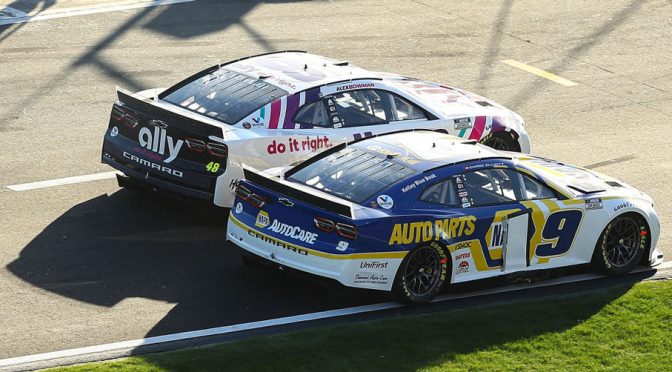
There are 41 active drivers with at least one career NASCAR Cup Series start at a road course. Forty of those drivers not named Chase Elliott have combined for 20 wins in 781 starts.

Elliott has seven wins in 19 starts, including a staggering six in 12 starts since 2019, and he’s back at Circuit of The Americas this weekend looking to remove “arguably” before “the greatest road-course driver in NASCAR history.”

RELATED: Betting odds for Circuit of The Americas  | BetMGM’s NASCAR offer 

Ten months after Elliott won a rain-shortened EchoPark Automotive Texas Grand Prix, the 26-year-old is BetMGM’s favorite to win in Austin, where mid-80s and clear skies are forecasted.

And while it’s obvious why Elliott is favored to increase his career road-course winning rate to a staggering 40%, it’s anyone’s guess — including his own — why he’s dominated on these tracks.

“I really have no idea,” Elliott said last July about the road-course success. “I feel like it’s just good cars. Our team as a whole has been good at road courses the whole time, too. Kyle (Larson) won at Sonoma. I feel like drivers are only as good as what they have to drive. Fortunately, I feel like I’ve got the best stuff and just got to make it work.”

To earn a seventh road-course win in the last four years, Elliott must, at minimum, finish ahead of road-course ringer AJ Allmendinger and Kyle Larson, who finished second last year in Austin and is the only other driver with multiple road-course wins since 2019.

Elliott and Allmendinger are paired in one of BetMGM’s four Featured Matchups for NASCAR betting this weekend:

Chase Elliott (-200) and A.J. Allmendinger (+165)

Chase Elliott sits atop BetMGM’s odds for race winner, top-2 finish, top-3 finish, and top Chevrolet car.

None of those positions are surprising for arguably the best road-course driver in NASCAR history, nor is his position as a heavy favorite over Allmendinger, who finished fifth last year at COTA and is one of only four other drivers with a road-course win since 2019.

The public is willing to pay the price for Elliott, too. As of Wednesday, he was receiving 80% of the bets and 99% of the handle in the head-to-head matchup with Allmendinger. Elliott also has 11.1% of the tickets to win the race, the highest share in the field.

Kyle Larson (-200) vs. William Byron (+165)

If the 2021 race wasn’t stopped after 54 (of a scheduled 68) laps, Kyle Larson might’ve won, overtaking Elliott from his second-place position.

Larson returns to Austin seeking his second win of the year after disappointing starts at Phoenix and Atlanta. With three road-course wins and five top-five finishes in 10 races since 2019, he’s the best active road-course driver outside of Elliott.

Larson, however, is not the public’s pick against William Byron, who’s dominating the tickets (80%) and handle (96%) in this matchup. Byron also ranks second in race-winner handle, 10.8% to Larson’s 3.7% (ninth).

Kyle Busch (-150) vs. Denny Hamlin (+125)

Only Elliott and Larson have higher average road-course finishes than Denny Hamlin since 2019 (minimum two starts), yet Hamlin hasn’t won over that time; he has seven top-five finishes, a driver rating of 100, and 85 laps led.

Despite the sustained success, Hamlin is an underdog to Kyle Busch, who finished 10th last year but has 404 laps led and four wins in 41 career road-course races. And bettors are taking the dog; Hamlin has 63% of the tickets and 59% of the handle against Busch.

Martin Truex Jr. (-125) vs. Austin Cindric (+105)

This matchup pits one of the Cup Series’ most experienced road-course drivers in Martin Truex Jr., against one of the least experienced in Austin Cindric.

Among active drivers, only Kurt Busch, Kyle Busch and Kevin Harvick have more career starts than Truex. His 39 starts dwarf the three career starts for the 23-year-old Cindric, who finished third in qualifying, fifth in Stage 1, and fourth in Stage 2 last year before dropping well out of contention.

Truex has the second-highest race-winner handle (14.2%) but has smaller ticket (20%) and handle (39%) shares than Cindric in their matchup.

You can view updated EchoPark Automotive Texas Grand Prix odds and more online sports betting opportunities at BetMGM.
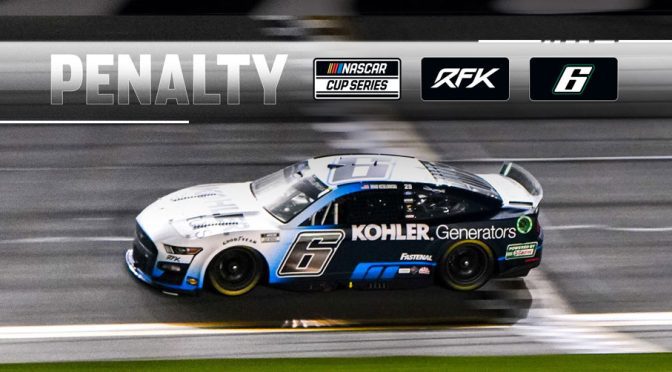
NASCAR officials issued an L2-level penalty to the No. 6 Roush Fenway Keselowski Racing team on Thursday morning, penalizing the team 100 driver points and 100 owner points to significantly impact its path to the postseason.

The penalty came under Sections 14.1 and 14.5 in the NASCAR Rule Book, both of which pertain to the modification of a single source supplied part.

In addition to the points penalties, crew chief Matt McCall was fined $100,000 and suspended from the next four NASCAR Cup Series points races. Should the No. 6 team of Brad Keselowski qualify for the NASCAR Cup Series Playoffs, it will be penalized with the loss of 10 NASCAR Playoff points.

Roush Fenway Keselowski Racing announced Friday afternoon via a statement that the team will appeal the penalty.

“In connection to the penalties announced yesterday by NASCAR, we have filed a notice of appeal and look forward to the opportunity to work through the process,” the statement read.

RELATED: Updated Cup Series standings

Prior to Sunday’s race at Atlanta, Keselowski’s No. 6 car was sent to the rear of the field for unapproved adjustments. The violations announced Thursday morning were discovered during teardown inspection at the NASCAR R&D Center following the race weekend.

The 100-point penalty will take Keselowski from 16th in the points standings with 122 points to 35th, behind every full-time driver in the field.

NASCAR officials released a more stringent penalty structure for the 2022 Cup Series season in January, introducing a list of deterrence options on a three-tiered system — from L1 to L3.

Penalty options for an L2 infraction include:

Points deductions: 75-120 points
Playoff points deductions: 10-25 points
Suspension of one or two crew members for 4-6 races
Fines: $100,000-$250,000

“To make sure that all of those things stay above board, there’s going to have to be a culture shift from the way that the teams and NASCAR, for that matter, have done business,” NASCAR Senior Vice President of Competition Scott Miller said in January when announcing the new penalty structure. “So this deterrence model has more meat in it, more meaningful penalties, but I think we all thought that it was time for this with the introduction of the new car.”

UPDATE: RFK Racing set to appeal

Also announced on Thursday’s penalty report: Veteran crew chief Eddie Troconis was indefinitely suspended from NASCAR for violating Sections 4.3 and 4.43 of the rule book, which pertain to member conduct.

Troconis’ NASCAR membership was previously suspended on Oct. 6 and reinstated Feb. 11.

Editor’s note: Bozi Tatarevic is a professional racing mechanic and pit crew member. He will provide technical analysis for NASCAR.com throughout the 2022 season.

NASCAR heads back to the Circuit of The Americas this weekend and the anticipation is high as the NASCAR Next Gen car makes its road-course debut after starting the season on a variety of ovals. This will be a big test for the new Cup car as teams will look to take advantage of some of the new features, such as the independent rear suspensions and increased braking capacity that make it more compatible with courses where they will turn both left and right.

While the cars will have drastically different suspension setups from what we’ve seen over the last few weeks, the base cars will not be based on unique chassis as we’ve seen in the past and instead will have different pieces bolted onto the same suspension uprights that teams have used on the ovals this year.

RELATED: More NASCAR 101

The most notable and visible difference between oval racing and road-course racing is camber of the wheels. Camber is the angle of the wheel in relation to the car when viewed from the front. Negative camber is when a wheel is leaning inward while positive camber is when a wheel is leaning outward. Oval tracks have positive camber on the left side and negative camber on the right while road course configuration have negative camber on both sides.

As the right side of the car is set up for negative camber on both ovals and road courses, most of the parts there can be used on both types of tracks. But the left side has multiple options, and many of the changes in advance of road-course racing happen on the left front corner of the car.

Other notes:


Insetfrontsuspension

The suspension upright assembly is the centerpiece of each corner of the suspension and it is what other suspension components and the brakes bolt up to. The upright is a sealed component that the wheel mounts to and is a part that is the same for all courses. It gets adapted for ovals and road courses based on a unique Ackermann bracket that gets bolted up to the top of it, and a unique control arm shear plate that gets bolted up to the bottom of it. These components on the upright allow for unique toe link and control arm combinations for each type of track.

Insetleftfrontupright

This is a cost-effective method that allows more expensive components, such as the suspension upright, to be reused for a variety of tracks with just some bracketry changes. Control arms and toe links are different from left to right when set up for an oval configuration, but when set up for a road-course configuration, then the same parts are used for both sides.

The best way to imagine these configuration differences is to think of a cylinder versus a cone. A road-course configuration is like rolling a cylinder, where you want both sides to be equal and center because you are turning left and right. An oval configuration is more like a cone, where you want the car to only turn left and roll in a circle.

Insetabutmentplates

The rear suspension of the car receives similar changes with control arms being mirrored for negative camber on both sides, but it also sees changes to the abutment plates, which sit between the driveshafts and the hubs. These abutment plates are customized based on the angle of the suspension and sit behind the tripods of the driveshafts.

These are some of the main component changes that need to be made to the cars in order to run them on a road course, but the largest takeaway here is that an oval car can be converted for road-course duty by bolting on new plates and brackets. This allows flexibility that teams may not have had in the past, with unique welded chassis for each type of track.

Insetrainflap

In addition to the suspension changes, road courses also see the addition of wet weather equipment such as defoggers, windshield wipers and rain lights. New for this year are rain flaps, which must also be installed if wet weather conditions are declared. These rain flaps are to be installed behind the front and rear wheels and are intended to reduce spray for following cars. In addition to the flaps, a wet weather declaration also comes with a requirement to block or remove the driver cooling duct on the windshield in order to prevent water from entering the cabin.

A windshield wiper motor must be installed for road-course events, but teams have flexibility in how they mount the motor. The wiper arm must exit the windshield somewhere in the lower center of the windshield in an 11 inch by 7 inch area that has been drawn out for teams to use. Teams are also free to choose their own wiper blade, but in order to prevent teams from attempting to use the wiper blade as an aerodynamic tool, they are now limited to a maximum cross section of  2.50 inches in height and 1.50 inches in width for that wiper blade assembly.

Austin weather is looking dry for the entire weekend, so we’re unlikely to see any of this equipment put to use, but teams will come prepared in case it does have to be employed and Goodyear will have rain tires on hand to be prepared for all situations.

Check out the qualifying order (11 a.m. ET on FS1) below for Saturday’s on-track action at Circuit of The Americas before Sunday’s Echopark Automotive Grand Prix (3:30 p.m. ET on FOX, PRN, SiriusXM NASCAR Radio).

RELATED: COTA weekend schedule

COTA is the first road-course race of the year, so there will be a 60-minute practice session on Saturday (10 a.m. ET, FS1). For most races this season, teams will be split into two groups based on a formula from the week’s previous race.

Saturday’s practice will lead directly into qualifying that is split up into two groups. The top five drivers from each group will then advance to the second round of qualifying to fight for the Busch Light Pole Award, decided in a 10-minute timed session.

raysmith


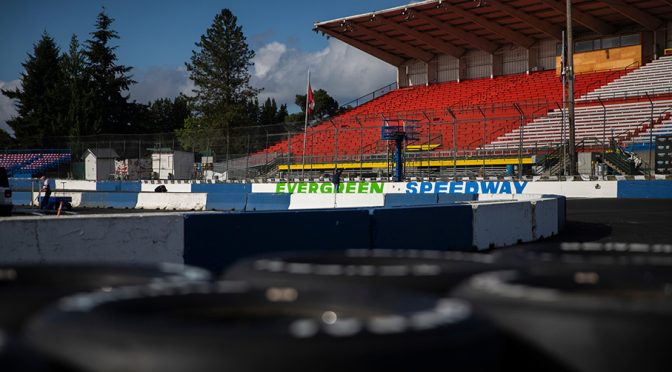
The term “superspeedway” typically is not reserved for a short track like Evergreen Speedway that measures 0.625 miles. But NASCAR Hall of Famer David Pearson knew what he was doing when he called the paved oval in Monroe, Washington, the “Superspeedway of the West.”

Evergreen is not your typical short track, as the facility is actually five tracks in one. Inside that 0.646-mile oval is a 0.375 paved oval, a 0.2-mile paved oval, a figure-eight track and a 0.75-mile road course.

Located a little more than 30 miles northeast of Seattle, Evergreen Speedway is the only NASCAR-sanctioned track in the state of Washington.

RELATED: Watch Weekly Series action all season on FloRacing

In 2022, Evergreen’s racing season begins in late March and runs though the beginning of October.

Below is everything to know about Evergreen Speedway.

Evergreen Speedway

Track Profile

Evergreen Speedway

Track Evergreen Speedway
Location Monroe, Washington
Opened 1954
Length 0.646 miles
Surface Asphalt

Originally a dirt track for horse racing, Evergreen Speedway was constructed in 1954 on the Evergreen State Fairgrounds in Monroe. It was paved almost a decade later, when regular auto races began to be held at the venue.

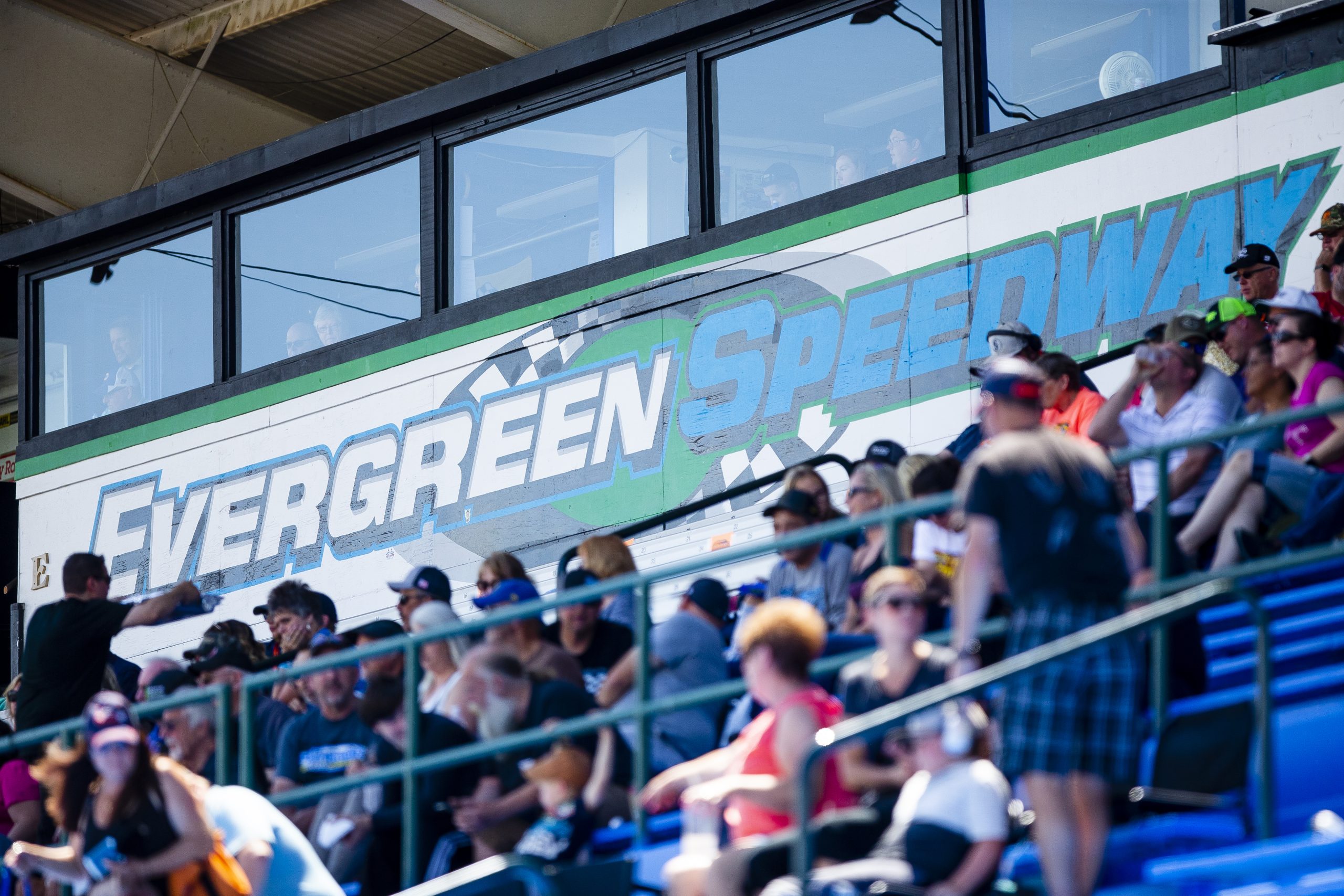
Evergreen’s covered grandstand along the track’s frontstretch can seat up to 7,500 people. Additionally, uncovered modular grandstands around the track can seat 5,000 more people.

FOLLOW EVERGREEN: Facebook | Twitter | YouTube | Instagram


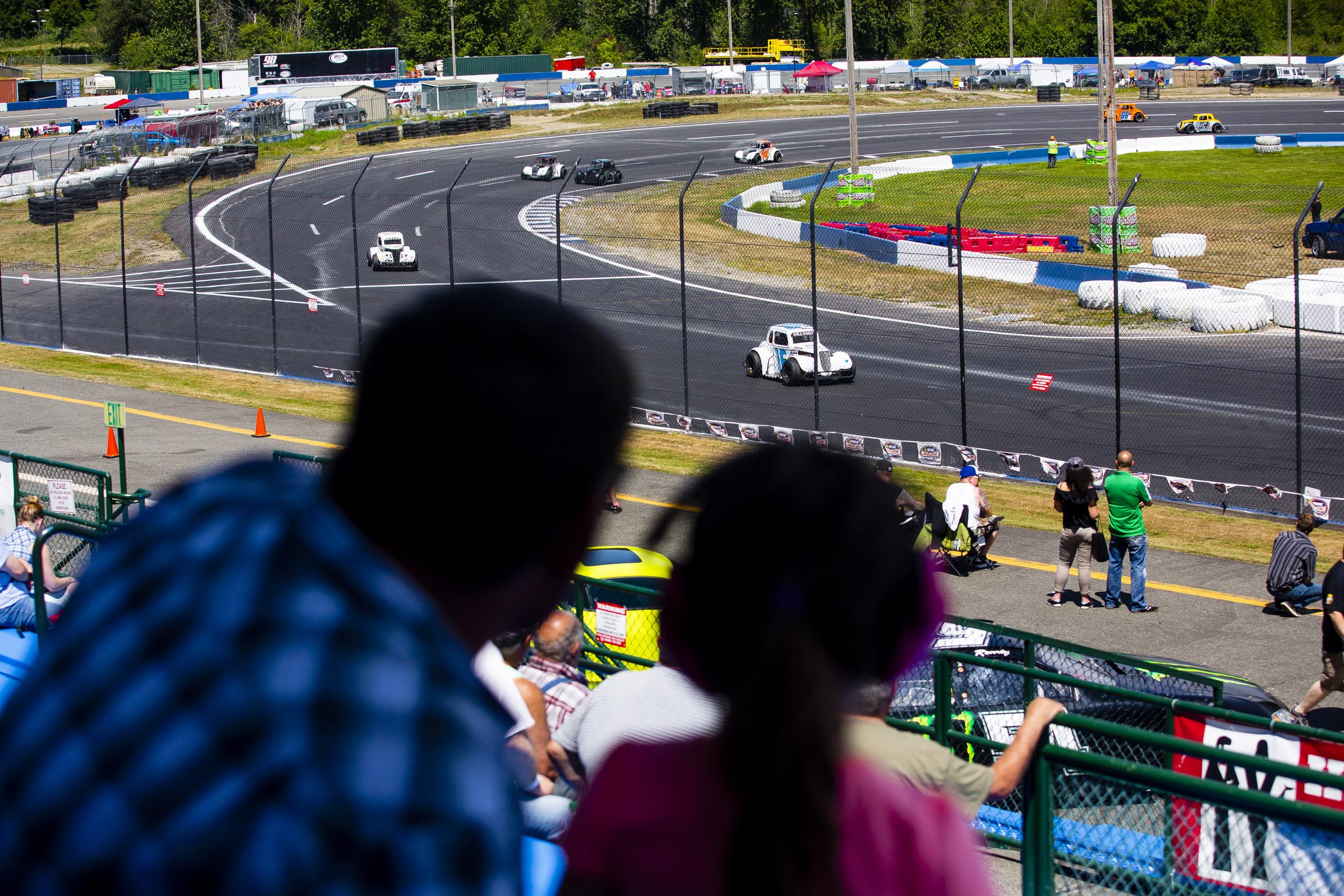
Today, Evergreen’s jam-packed weekly racing schedule features multiple stock and drift car division like pro late models, street stocks, hornets, stingers, legends, buses, pro trucks, mini stocks and more. The track also host the ARCA Menards Series West in August.

The West Series first raced at Evergreen in 1964, when Dick Bown drove a Plymouth to Victory Lane. The West Series’ 2022 visit will mark its 61st race at Evergreen. Ray Elder and Jack McCory are tied for the most West Series wins at the track with five apiece.

Evergreen also hosted NASCAR Northwest Series races from 1985 through 2006.

What’s now the NASCAR Camping World Truck Series has raced at Evergreen six times, with Ron Hornaday Jr. winning the series first race at the Washington track in 1995 and Jack Sprague winning the last in 2000.

Hornaday and Sprague both won a pair of Truck Series races at Evergreen.

Below are the all-time results from those three series’ visits to Evergreen dating back to the 1960s.

Evergreen Speedway

NASCAR Camping World Truck Series races at Evergreen Speedway

Year-Race No. Date Winner
1995-06 5/13/95 Ron Hornaday, Jr.
1996-04 5/11/96 Mike Bliss
1997-06 5/10/97 Rich Bickle
1998-05 5/9/98 Jack Sprague
1999-03 4/3/99 Ron Hornaday, Jr.
2000-10 6/3/00 Jack Sprague

West Series races at Evergreen Speedway

Year-Race No. Date Winner
1964-05 4/19/64 Dick Bown
1964-16 7/12/64 Bill Amick
1965-06 4/25/65 Bill Amick
1967-17 7/30/67 Jack McCoy
1968-09 7/4/68 Jack McCoy
1968-15 9/2/68 Jack McCoy
1969-05 7/4/69 Scotty Cain
1969-15 9/1/69 Jack McCoy
1970-07 7/4/70 Dick Bown
1971-22 9/6/71 Ray Elder
1972-08 5/28/72 Ray Elder
1972-24 9/3/72 Ray Elder
1973-17 9/2/73 Jack McCoy
1974-23 9/1/74 Harry Jefferson
1975-09 7/6/75 Ray Elder
1975-14 8/31/75 Ray Elder
1976-03 6/27/76 Chuck Bown
1976-09 9/6/76 Neal Newberry
1977-10 6/26/77 Harry Jefferson
1978-12 7/3/78 John Borneman
1979-04 6/24/79 Neal Newberry
1979-11 8/26/79 Ron Eaton
1980-06 6/29/80 Ron Eaton
1981-09 7/12/81 Roy Smith
1982-08 8/1/82 Ron Eaton
1983-05 7/31/83 Jim Robinson
1984-05 7/29/84 Jim Robinson
1985-09 8/18/85 Derrike Cope
1986-03 7/13/86 Chad Little
1987-04 7/12/87 Bill Elliott
1988-06 7/17/88 Chad Little
1989-07 7/17/89 Chad Little
1990-05 7/15/90 Bill Sedgwick
1991-01 5/4/91 Mike Chase
1991-06 7/14/91 Geoffrey Bodine
1992-06 7/12/92 Bill Sedgwick
1993-07 6/27/93 Rick Carelli
1996-08 6/29/96 Butch Gilliland
1997-08 7/5/97 Sean Woodside
1998-11 8/15/98 Butch Gilliland
1999-08 7/18/99 Kevin Richards
2000-08 7/16/00 Brendan Gaughan
2001-09 6/30/01 Brendan Gaughan
2002-05 6/29/02 Eric Norris
2003-06 6/28/03 Mark Reed
2004-05 7/17/04 Austin Cameron
2005-06 7/30/05 Mike Duncan
2006-08 7/29/06 Johnny Borneman, III
2007-11 8/4/07 Brian Ickler
2008-09 7/26/08 Jeff Barkshire
2011-08 7/10/11 Greg Pursley
2012-09 7/14/12 Eric Holmes
2013-09 8/17/13 Dylan Lupton
2014-10 8/16/14 David Mayhew
2015-09 8/15/15 David Mayhew
2016-09 8/13/16 Todd Gilliland
2017-10 8/12/17 Chris Eggleston
2018-09 8/11/18 Derek Thorn
2019-09 8/17/19 Trevor Huddleston
2020-05 8/7/20 Blaine Perkins

NASCAR Northwest Series races at Evergreen Speedway

Year-Race No. Date Winner
1985-01 5/5/85 Garrett Evans
1985-07 6/29/85 Garrett Evans
1985-12 8/17/85 Garrett Evans
1986-02 5/4/86 Garrett Evans
1986-10 7/12/86 Ron Eaton
1986-15 9/1/86 Bob Fox
1987-01 4/4/87 Garrett Evans
1987-07 7/11/87 Tobey Butler
1987-11 8/16/87 Garrett Evans
1988-08 7/16/88 Garrett Evans
1988-11 8/14/88 Ron Eaton
1989-01 4/8/89 Bob Fox
1989-09 7/15/89 Ron Eaton
1989-12 8/13/89 Garrett Evans
1990-01 3/31/90 Garrett Evans
1990-10 7/14/90 John Dillon
1990-12 7/28/90 John Dillon
1991-01 3/30/91 Garrett Evans
1991-10 7/13/91 Ron Eaton
1991-13 8/17/91 Ron Eaton
1992-01 3/28/92 Garrett Evans
1992-04 5/2/92 Tobey Butler
1992-11 7/11/92 Dirk Stephens
1992-15 8/15/92 Kirk Rogers
1993-01 3/27/93 Tobey Butler
1993-06 6/5/93 Garrett Evans
1993-08 6/26/93 Ken Schrader
1993-12 8/14/93 Kirk Rogers
1994-01 3/26/94 Gary Lewis
1994-08 6/4/94 Kelly Tanner
1994-13 7/31/94 Pete Harding
1995-01 3/25/95 Ron Eaton
1995-08 6/3/95 Monte English
1995-14 7/30/95 Ron Eaton
1996-01 3/30/96 Garrett Evans
1996-10 7/28/96 Ron Eaton
1997-01 3/29/97 Pete Harding
1997-09 8/24/97
1998-01 3/28/98 Gary Lewis
1998-09 7/18/98 Gary Lewis
1999-01 4/3/99 Gary Lewis
1999-09 7/17/99 Pete Harding
2000-01 3/25/00 Gaylon Stewart
2000-07 6/3/00 Ken Kaltschmidt
2000-11 7/15/00 Ron Eaton
2000-16 9/16/00 Gary Lewis
2001-01 4/7/01 Gary Lewis
2001-09 8/4/01 Kevin Hamlin
2002-01 3/30/02 Kevin Hamlin
2002-07 7/13/02 Jeff Jefferson
2003-01 3/29/03 Pete Harding
2003-03 5/10/03 John Bender
2003-08 7/12/03 Chris Hart
2004-02 5/8/04 Jason Jefferson
2004-05 6/26/04 Gary Lewis
2005-04 7/9/05 Pete Harding
2005-06 8/13/05 John Bender
2006-05 7/15/06 Brandon Riehl
2006-07 7/29/06 Pete Harding

At the end of last summer, Jeb Burton was in a familiar position, being without a ride once again. It’s a place he’s all too familiar with.

Ahead of the Xfinity Series race at Bristol Motor Speedway last September, Kaulig Racing announced Nutrien Ag Solutions wouldn’t return to sponsor the team in 2022. Team president Chris Rice and Brett Griffin, owner of SpotOn Activations, a marketing company with Nutrien Ag Solutions as a client, informed Burton of the news.

“That sucked,” Burton told NASCAR.com over the weekend at Atlanta Motor Speedway. “That was not good. We didn’t have the best year last year, but we were building something and the brand fit me great. I wanted to stay there another year, but it just didn’t work.”

Ultimately, Kaulig Racing announced ahead of this year’s season opener at Daytona that Nutrien Ag Solutions would sponsor AJ Allmendinger for part of the season.

RELATED: Xfinity Series schedule | Series standings

Fortunately for Burton, Chris Our, owner of Our Motorsports, immediately reached out around the Bristol weekend. As a team owner, 2022 is Our’s third year in existence at the Xfinity Series level, and the team wanted to expand its program by adding a third car.

With Burton’s experience and track record, Our wanted to center the new team around the Virginia native. It wasn’t a hard decision.

“It seemed to work out,” Our said. “He was one of the first picks we looked at; there were quite a few that talked to us, but that’s the one we honed in on at first.”

In mid-December, the team announced Burton would join the team on a two-year deal. For the first time in his career, the driver now has multiple years of stability with a singular team.

And the fact that the team sought out Burton was an added boost of confidence for Burton.

LAS VEGAS, NEVADA - MARCH 04: Jeb Burton, driver of the #27 Alsco Uniforms Chevrolet, drives during qualifying for the NASCAR Xfinity Series Alsco Uniforms 300 at Las Vegas Motor Speedway on March 04, 2022 in Las Vegas, Nevada. (Photo by Dylan Buell/Getty Images) | Getty Images
Dylan Buell | Getty Images

“Chris tracked me down and wanted me to come here,” Burton added. “That’s the first time that’s ever happened; I don’t have all the funding to be here. But he wanted me to be here and try to grow. Everybody here believes in me, and they never questioned my ability.

“Contracts are contracts in today’s world, but it means something that they want me here. Chris Our believes in me, and he wants me to wheel the race car. It means a lot.”

Competing against Our for the past two years, Burton knew the team’s success would be hidden on the stat sheet. Entering the year with a combined 96 starts, Our finished inside the top 10 on 24 occasions (25% of the time), highlighted by Brett Moffitt’s 10 from last year.

Through the opening five races of the season, Burton is the lone Our Motorsports driver that hasn’t cracked the top 10 in the running order, despite having top-20 finishes in every race. His 15.8 average finish is two positions lower from his single year at Kaulig (13.6).

“We’re not winning races right now by any means, but we’re a top 15 car and I see a path to get better,” Burton said. “That’s all I want.”

Over the offseason, Our moved his team into the old Richard Petty Motorsports building adjacent to Richard Childress Racing’s shop. However, of all the Xfinity Series teams on the RCR campus — Kaulig Racing, Big Machine Racing and Our Motorsports — Our is the only organization to not have a technical alliance with RCR.

Burton hopes that changes soon, noting that will get his No. 27 team over the hump.

“Our motors are just as good as I had last year because they’re the exact same motors,” he said. “The only difference is we don’t have a technical alliance with Richard Childress Racing, and it would be really nice if we could get that one day. That’s going to separate us from being 12th to competing for a win every week. We’re the best team without an alliance.”

Nonetheless, Burton wants to see the team keep progressing. If it can do that, he believes the team will have a fighter’s shot at making the playoffs this season.

“There’s going to be some growing pains,” Ward Burton, Jeb’s father, said. “They’re having all of those conversations now, but they’ve come a long way in a short time. It’s going to be a work in progress. But there are a lot of people that are behind Jeb and Mr. Our to get them to where they need to be.”

Burton has brought three new companies into the sport in consecutive races, including this weekend’s race at Circuit of The Americas. Not bad for someone who spends his days sending emails of sponsorship proposals to various companies, hoping to expand current relationships while making new ones.

But the battle of finding funding has haunted Burton’s racing career. For the majority of his career with powerhouse teams, he’s only garnered enough sponsorship for a partial season, including 2019 and 2020 with JR Motorsports.

“I’ve got more partners now than I ever have,” Burton said. “People are behind me; I’ve got a good group behind me that wants me to succeed. I’m missing a partner with a zero, that’s the difference. If I had a partner with another zero, we can have whatever we want.

“We’ve got things moving in the right direction, it just takes funding to get it over the edge. And people. If you could buy a Hendrick Motorsports but didn’t have the people, why would you want it? You need both: money and people.”

Through five races, Burton sits 15th in the championship standings, best of the Our Motorsports trio. He’s also just 10 points below the coveted 12th position, currently held by Sheldon Creed.

DASH 4 CASH: Eligible drivers prepare for COTA return

As the year progresses, Burton’s goal is to have zero DNFs. If the No. 27 team can crack the top 20 each week, he believes it will be a tight battle for the final few playoff positions in a deep Xfinity Series field.

“Those other guys are going to crash,” he said. “The thing that hurts us some is when we’re running 12th to 14th, we don’t get the stage points and those guys do. I think we can do it. I feel like if we make the playoffs, that’s a big deal for this team. They’ve never done it, they’ve never won a race. If I can win a race and make the playoffs this year, it would be a big deal.”

In the inaugural race at COTA last year, Burton rounded out the top 10 in the running order. Another positive is Talladega looms in the next month, a place he’s proven he can get to Victory Lane, given he’s the defending winner.

Editor’s note: This story was first published on May 20, 2021:

The NASCAR Cup Series, Xfinity Series and Camping World Truck Series are set for Circuit of The Americas in Austin, Texas, for a tripleheader weekend that will include practice and qualifying sessions.

Cota Track LayoutSaturday will be a doubleheader for the Camping World Truck Series and Xfinity Series, with Trucks taking to the track for the XPEL 225 at 1 p.m. ET on FS1, MRN and SiriusXM NASCAR Radio. Xfinity’s Pit Boss 250 race will then be held at 4:30 p.m. ET on FS1, PRN and SiriusXM NASCAR Radio.

The Cup Series finishes the weekend with Sunday’s EchoPark Automotive Grand Prix at 3:30 p.m. ET on FOX, PRN and SiriusXM NASCAR Radio.

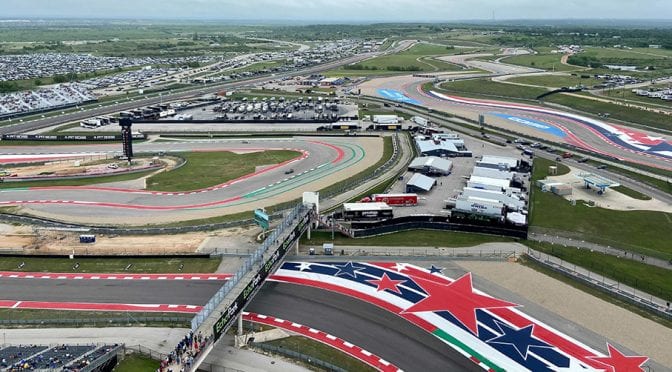
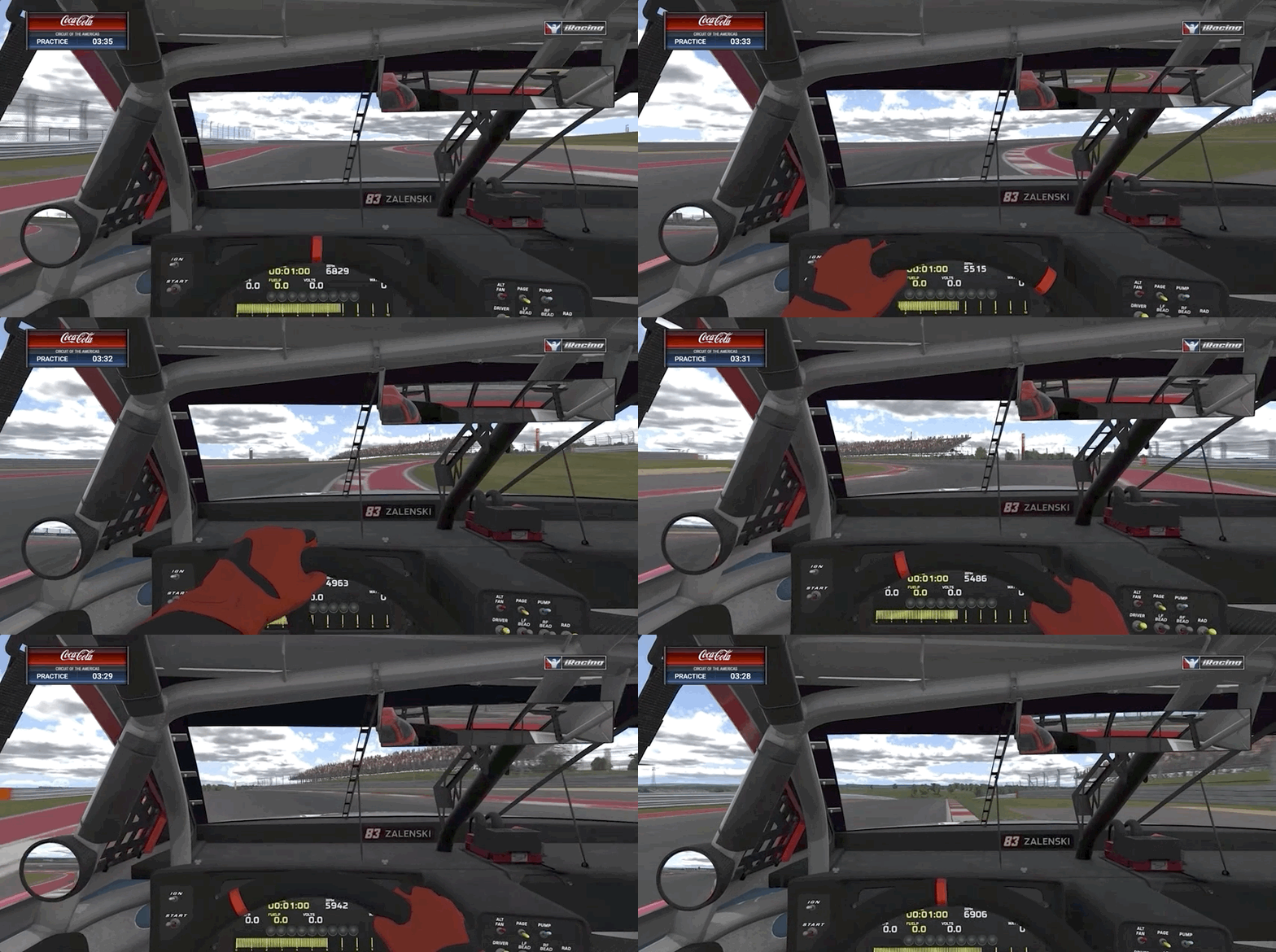
Before drivers take to the 3.41-mile, 20-turn road course, here is a turn-by-turn breakdown, courtesy of eNASCAR Coca-Cola iRacing Series driver Bobby Zalenski.

RELATED: Weekend schedule for COTA

TURN 1

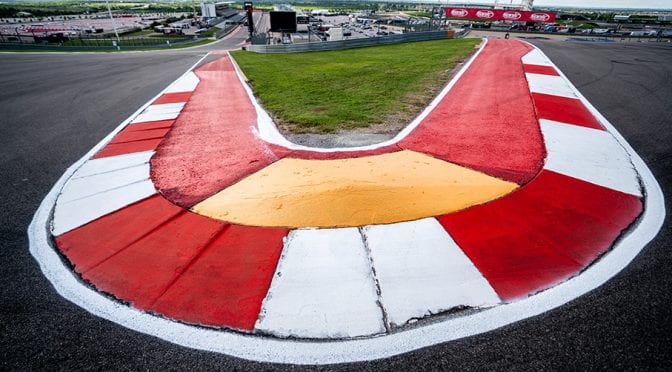
Once drivers take the green flag, it’s a steep uphill climb into a left-hand hairpin turn to kick off the lap.

Turn 1

TURN 2

It’ll be a right-hander out quickly after the exit of the first corner as the track goes back downhill.

Turn 2

TURNS 3-5

The third corner starts the esses portion of the circuit. Turn 3 is a left-hand corner, Turn 4 is a right-hand corner and Turn 5 is another left-hander.

Turns 3 4 5

TURNS 6-7

This corner is a long, sweeping right-hander, which is immediately followed by a left-hand corner.

Turns 6 7

TURNS 8-9

Drivers will want to maintain a centered line out of Turn 7 to get a good entry into the right-hand, sweeping eighth turn. Turn 9 is another quick left-hander.

Turns 8 9

TURN 10

This left-hand corner acts more like a kink in a straightaway. Drivers will use this section to set up for a good passing zone leading into the entry of the 11th turn.

Turn 10

TURN 11

Like the first corner but without as much elevation change, Turn 11 is another hairpin left-hander. A long straightaway awaits drivers at the exit of this corner.

Turn 11

TURN 12

After taking the longest straight on the course, drivers with face another sharp left-hand turn, which doesn’t provide a lot of grip for acceleration out of the corner.

Turn 12

TURNS 13-14

These two corners are tight right-handers following a short chute coming out of Turn 12.

Turns 13 14

TURN 15

Drivers will have to decide if they want to enter this sharp left-hand turn tight or with a wider angle depending on what arc they want to take through the corner.

Turn 15

TURNS 16-18

These three turns make up the carousel section, which consists of a series of sweeping right-handers.

Turns 16 17 18

TURN 19

This left-hand turn isn’t as tight, serving more of a rolling corner which sends you out into a short straight before heading into the final turn.

Turn 19

TURN 20

The last turn of the course is a hard-braking, sharp left-hand corner. Drivers will be trying to get a good launch off the corner to maximize speed down the frontstretch and toward the start-finish line.

Turn 20

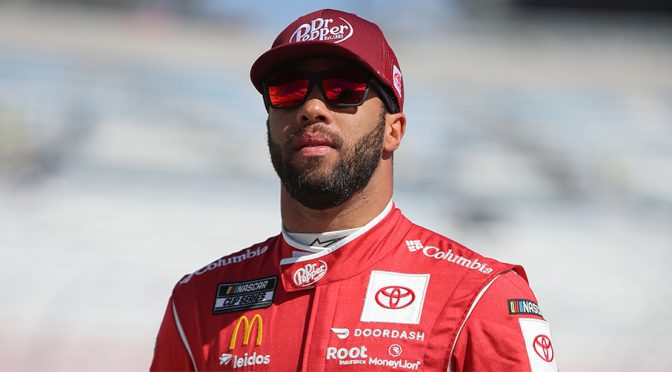
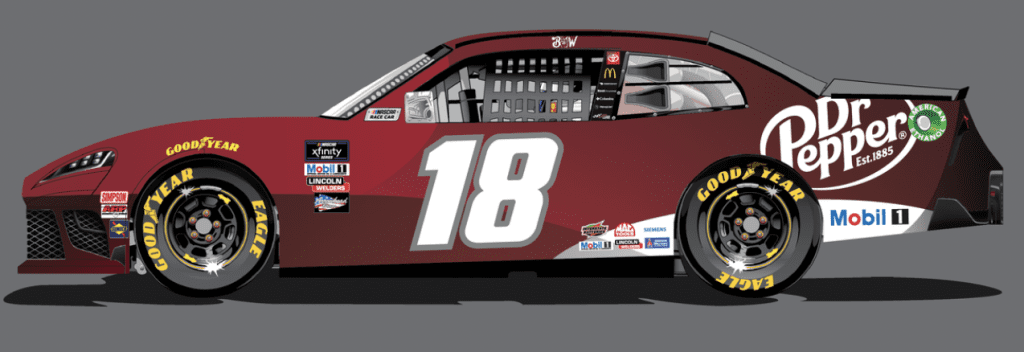
Mooresville, N.C. – 23XI Racing announced Tuesday that Bubba Wallace, driver of the No. 23 Toyota Camry TRD in the NASCAR Cup Series, will compete in two upcoming NASCAR Xfinity Series races with Joe Gibbs Racing. Wallace will pilot the No. 18 Toyota GR Supra this weekend at Circuit of The Americas and race later this summer at the Indianapolis Motor Speedway road course. Both races will take place the day before the Cup Series is set to compete at the same tracks and will provide Wallace additional track time at two of the newer courses on the NASCAR schedule.

RELATED: Complete weekend schedule for COTA

The races mark a return for Wallace, who made his NASCAR national series debut with JGR in 2012. Wallace raced in the No. 20 Toyota and made a total of six starts with JGR during the 2012 and 2014 Xfinity Series seasons, earning one pole award and four top-10 finishes. More recently, Wallace competed in one Xfinity race in 2021 to add to his 86 career starts in the series.

Dr Pepper, a founding partner of 23XI and Wallace on the No. 23 Toyota, will serve as the primary partner for the race at COTA in Austin this Saturday (4:30 p.m. ET, FS1).

More information will be shared closer to the race regarding sponsorship for Indianapolis.

“I’m looking forward to partnering back up with Joe Gibbs Racing in the Xfinity Series after making my first career start in NASCAR with them about 10 years ago,” Wallace said. “The No. 18 Toyota GR Supra team is always strong and I’m excited to be competing with them at COTA and Indianapolis. Thanks to the team at 23XI and Toyota for helping to make this happen and thanks to Dr Pepper for coming on board for the race at COTA.”

Screen Shot 2022 03 22 At 9.11.54 Am

The Xfinity Series Dash 4 Cash midseason program is upon us, with series regulars looking to be among the top-four finishers in Saturday’s Pit Boss 250 qualifier at Circuit of The Americas (4:30 p.m. ET, FS1, PRN, SiriusXM NASCAR Radio).

Drivers will battle it out to finish in that top foursome to be eligible for the first Dash 4 Cash event next month at Richmond Raceway — and the bonus $100,000 check that is awarded to the highest eligible finisher.

The top four NXS drivers at COTA will qualify for the first Dash 4 Cash event at the Virginia track. Of the four competing for Dash 4 Cash honors, the highest finisher wins the $100,000 prize and automatically moves on to defend the title at the next event. The next three highest-finishing NXS drivers, for four total competitors, will join the previous Dash 4 Cash winner to compete for the next week’s event. 

There are four Dash 4 Cash races over the next several weeks to bring the prize money to $400,000 total, courtesy of Comcast.

RELATED: 2021 Dash 4 Cash recap

SCHEDULE  

  • Qualifier: COTA – Saturday, March 26 
  • Race No. 1: Richmond Raceway – Saturday, April 2 
  • Race No. 2: Martinsville Speedway – Friday, April 8 
  • Race No. 3: Talladega Superspeedway – Saturday, April 23 
  • Race No. 4: Dover Motor Speedway – Saturday, April 30 

MORE: Dash 4 Cash 101

HAMPTON, Ga. — It’s never good to go airborne with all four wheels off the ground through the infield during a NASCAR race. But that didn’t seem to bother Corey LaJoie in Sunday’s Cup Series event at the repaved and reconfigured Atlanta Motor Speedway.

When Tyler Reddick blew a right rear tire on lap 146, it triggered the race’s “Big One.” Twelve cars received some sort of damage, including LaJoie.

RELATED: LaJoie secures first career top-five finish

“The Fraternal Order of Eagles that was on our car this week, that was pretty real life because it felt like I was flying there when I went through the grass,” LaJoie said after the race. “But luckily, these Next Gen cars are pretty rugged and it held up. I was worried about the diffuser, but it was intact and we were able to have a good day.”

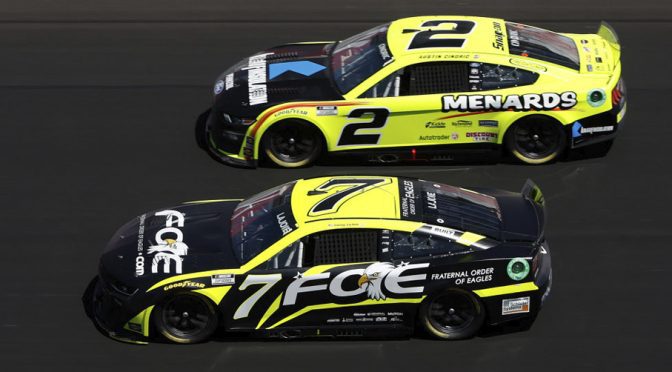
LaJoie spent much of the 500-mile race laid back, hoping to avoid potential chaos in front. Typically, that’s the game plan for Spire Motorsports in superspeedway racing at Daytona International Speedway and Talladega Superspeedway. The No. 7 Chevrolet finished Stage 1 in 26th, moving up to 23rd by the end of Stage 2.

But in the final dash to the end, LaJoie methodically made his way up the scoring pylon, missing crash after crash. Being one of nine drivers to pit with less than 25 laps remaining on a caution for Todd Gilliland and Cody Ware wrecking, the No. 7 car went on offense.

When the white flag dropped, LaJoie was running 13th. He picked off two spots in Turn 1 when Bubba Wallace, Ryan Blaney and Chase Briscoe got into the wall and Wallace, Chris Buescher and Justin Haley crashed coming to the checkered flag. Plus, Christopher Bell got penalized for making a pass below the white line, moving the No. 7 car up to fifth.

RELATED: Field shuffles in the closing laps

“It looked like they were wrecking Daytona, Days of Thunder coming to the checkered,” LaJoie added. “These things on the last lap, you commit to not lifting and, luckily, we were in the right spot at the right time.”

The fifth-place run is LaJoie’s best effort at the Cup level, and his first top-five result in 193 national series starts. Previously, his best finish was sixth in a rain-shortened race at Daytona, two years ago.

Starting off the 2022 season, LaJoie has three top-15 finishes in the opening five races of the season. That’s a big momentum boost, as the No. 7 team had just three such finishes during the duration of the 2021 season.

“I think if you would have told me that we would start the year with three out of five top 15s, I would have probably laughed at you,” LaJoie said. “We still have a lot of work to do, but today was a good day.”

When LaJoie was told NASCAR scored him fifth, he was ecstatic. Cha-ching. “It pays way better for fifth than it does for sixth.”

Through five races this season, LaJoie sits 24th in the championship standings, ahead of names like Denny Hamlin and Christopher Bell.