Check out the qualifying order (11 a.m. ET on FS1) below for Saturday’s on-track action at Circuit of The Americas before Sunday’s Echopark Automotive Grand Prix (3:30 p.m. ET on FOX, PRN, SiriusXM NASCAR Radio).
COTA is the first road-course race of the year, so there will be a 60-minute practice session on Saturday (10 a.m. ET, FS1). For most races this season, teams will be split into two groups based on a formula from the week’s previous race.
Saturday’s practice will lead directly into qualifying that is split up into two groups. The top five drivers from each group will then advance to the second round of qualifying to fight for the Busch Light Pole Award, decided in a 10-minute timed session.
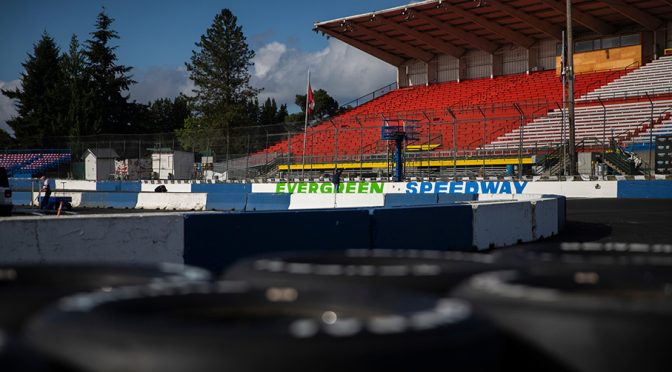
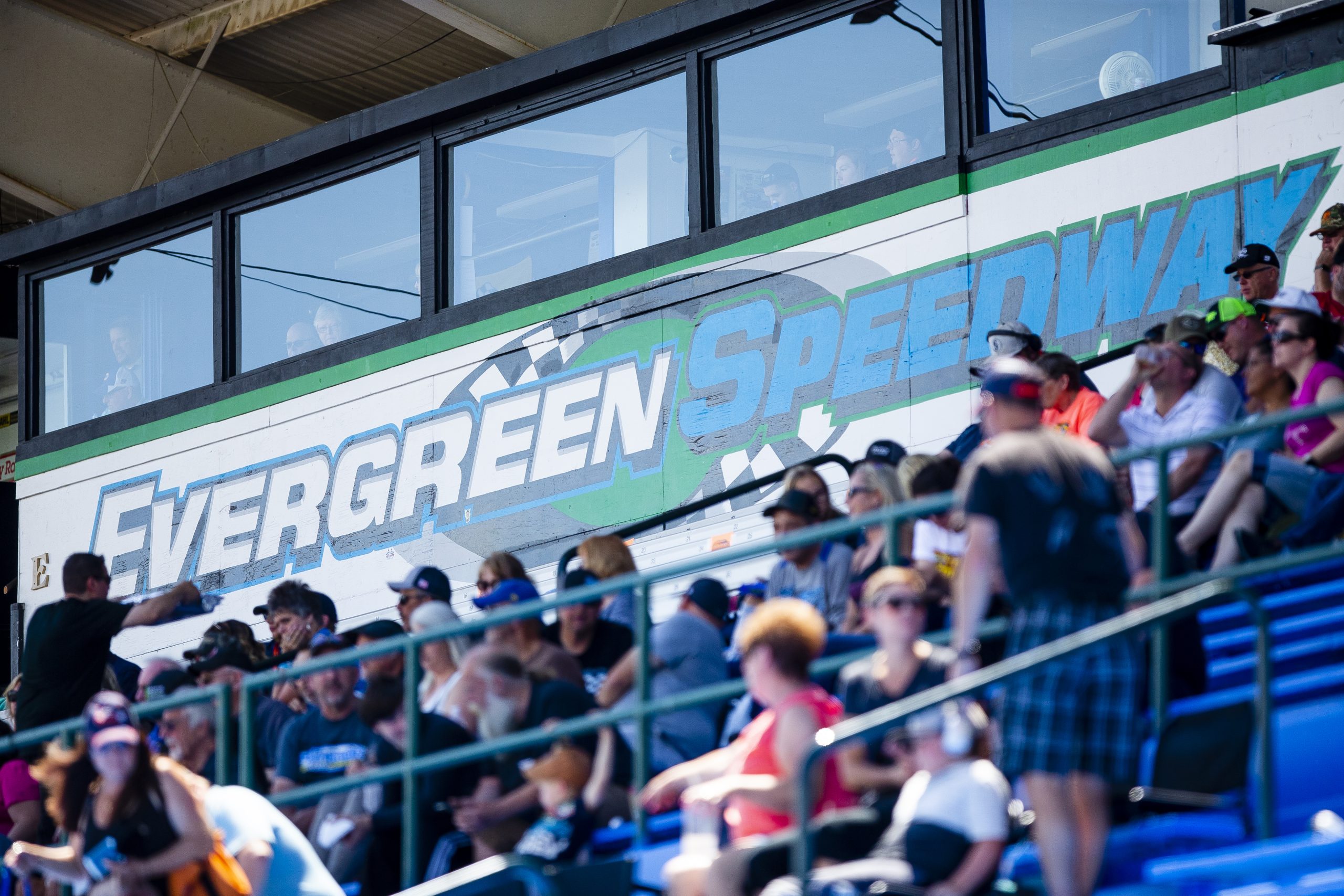
The term “superspeedway” typically is not reserved for a short track like Evergreen Speedway that measures 0.625 miles. But NASCAR Hall of Famer David Pearson knew what he was doing when he called the paved oval in Monroe, Washington, the “Superspeedway of the West.”
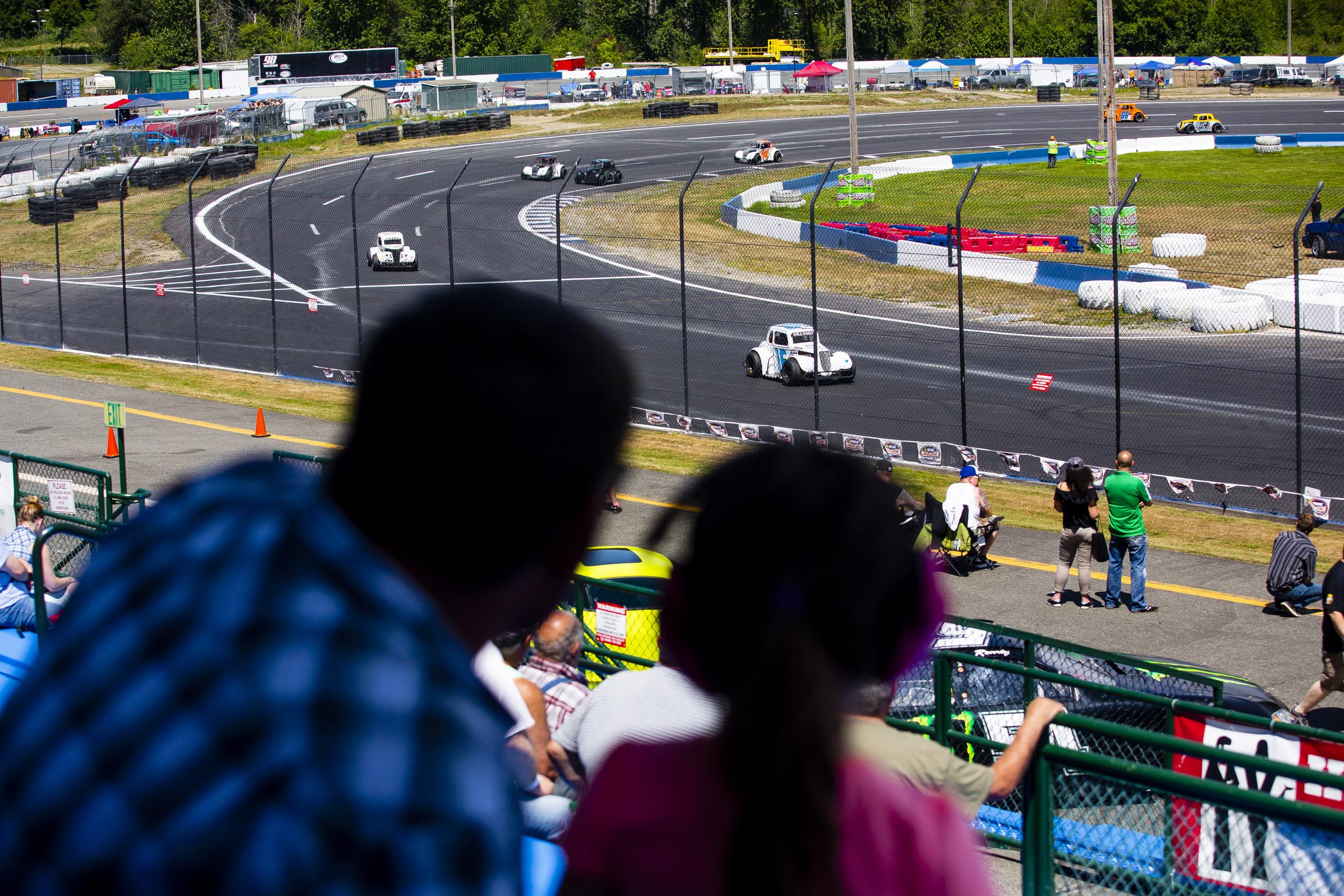
Evergreen is not your typical short track, as the facility is actually five tracks in one. Inside that 0.646-mile oval is a 0.375 paved oval, a 0.2-mile paved oval, a figure-eight track and a 0.75-mile road course.
Located a little more than 30 miles northeast of Seattle, Evergreen Speedway is the only NASCAR-sanctioned track in the state of Washington.
Originally a dirt track for horse racing, Evergreen Speedway was constructed in 1954 on the Evergreen State Fairgrounds in Monroe. It was paved almost a decade later, when regular auto races began to be held at the venue.
Evergreen’s covered grandstand along the track’s frontstretch can seat up to 7,500 people. Additionally, uncovered modular grandstands around the track can seat 5,000 more people.
Today, Evergreen’s jam-packed weekly racing schedule features multiple stock and drift car division like pro late models, street stocks, hornets, stingers, legends, buses, pro trucks, mini stocks and more. The track also host the ARCA Menards Series West in August.
The West Series first raced at Evergreen in 1964, when Dick Bown drove a Plymouth to Victory Lane. The West Series’ 2022 visit will mark its 61st race at Evergreen. Ray Elder and Jack McCory are tied for the most West Series wins at the track with five apiece.
Evergreen also hosted NASCAR Northwest Series races from 1985 through 2006.
What’s now the NASCAR Camping World Truck Series has raced at Evergreen six times, with Ron Hornaday Jr. winning the series first race at the Washington track in 1995 and Jack Sprague winning the last in 2000.
Hornaday and Sprague both won a pair of Truck Series races at Evergreen.
Below are the all-time results from those three series’ visits to Evergreen dating back to the 1960s.
NASCAR Camping World Truck Series races at Evergreen Speedway
At the end of last summer, Jeb Burton was in a familiar position, being without a ride once again. It’s a place he’s all too familiar with.
Ahead of the Xfinity Series race at Bristol Motor Speedway last September, Kaulig Racing announced Nutrien Ag Solutions wouldn’t return to sponsor the team in 2022. Team president Chris Rice and Brett Griffin, owner of SpotOn Activations, a marketing company with Nutrien Ag Solutions as a client, informed Burton of the news.
“That sucked,” Burton told NASCAR.com over the weekend at Atlanta Motor Speedway. “That was not good. We didn’t have the best year last year, but we were building something and the brand fit me great. I wanted to stay there another year, but it just didn’t work.”
Ultimately, Kaulig Racing announced ahead of this year’s season opener at Daytona that Nutrien Ag Solutions would sponsor AJ Allmendinger for part of the season.
Fortunately for Burton, Chris Our, owner of Our Motorsports, immediately reached out around the Bristol weekend. As a team owner, 2022 is Our’s third year in existence at the Xfinity Series level, and the team wanted to expand its program by adding a third car.
With Burton’s experience and track record, Our wanted to center the new team around the Virginia native. It wasn’t a hard decision.
“It seemed to work out,” Our said. “He was one of the first picks we looked at; there were quite a few that talked to us, but that’s the one we honed in on at first.”
In mid-December, the team announced Burton would join the team on a two-year deal. For the first time in his career, the driver now has multiple years of stability with a singular team.
And the fact that the team sought out Burton was an added boost of confidence for Burton.
Dylan Buell | Getty Images
“Chris tracked me down and wanted me to come here,” Burton added. “That’s the first time that’s ever happened; I don’t have all the funding to be here. But he wanted me to be here and try to grow. Everybody here believes in me, and they never questioned my ability.
“Contracts are contracts in today’s world, but it means something that they want me here. Chris Our believes in me, and he wants me to wheel the race car. It means a lot.”
Competing against Our for the past two years, Burton knew the team’s success would be hidden on the stat sheet. Entering the year with a combined 96 starts, Our finished inside the top 10 on 24 occasions (25% of the time), highlighted by Brett Moffitt’s 10 from last year.
Through the opening five races of the season, Burton is the lone Our Motorsports driver that hasn’t cracked the top 10 in the running order, despite having top-20 finishes in every race. His 15.8 average finish is two positions lower from his single year at Kaulig (13.6).
“We’re not winning races right now by any means, but we’re a top 15 car and I see a path to get better,” Burton said. “That’s all I want.”
Over the offseason, Our moved his team into the old Richard Petty Motorsports building adjacent to Richard Childress Racing’s shop. However, of all the Xfinity Series teams on the RCR campus — Kaulig Racing, Big Machine Racing and Our Motorsports — Our is the only organization to not have a technical alliance with RCR.
Burton hopes that changes soon, noting that will get his No. 27 team over the hump.
“Our motors are just as good as I had last year because they’re the exact same motors,” he said. “The only difference is we don’t have a technical alliance with Richard Childress Racing, and it would be really nice if we could get that one day. That’s going to separate us from being 12th to competing for a win every week. We’re the best team without an alliance.”
Nonetheless, Burton wants to see the team keep progressing. If it can do that, he believes the team will have a fighter’s shot at making the playoffs this season.
“There’s going to be some growing pains,” Ward Burton, Jeb’s father, said. “They’re having all of those conversations now, but they’ve come a long way in a short time. It’s going to be a work in progress. But there are a lot of people that are behind Jeb and Mr. Our to get them to where they need to be.”
Burton has brought three new companies into the sport in consecutive races, including this weekend’s race at Circuit of The Americas. Not bad for someone who spends his days sending emails of sponsorship proposals to various companies, hoping to expand current relationships while making new ones.
But the battle of finding funding has haunted Burton’s racing career. For the majority of his career with powerhouse teams, he’s only garnered enough sponsorship for a partial season, including 2019 and 2020 with JR Motorsports.
“I’ve got more partners now than I ever have,” Burton said. “People are behind me; I’ve got a good group behind me that wants me to succeed. I’m missing a partner with a zero, that’s the difference. If I had a partner with another zero, we can have whatever we want.
“We’ve got things moving in the right direction, it just takes funding to get it over the edge. And people. If you could buy a Hendrick Motorsports but didn’t have the people, why would you want it? You need both: money and people.”
Through five races, Burton sits 15th in the championship standings, best of the Our Motorsports trio. He’s also just 10 points below the coveted 12th position, currently held by Sheldon Creed.
As the year progresses, Burton’s goal is to have zero DNFs. If the No. 27 team can crack the top 20 each week, he believes it will be a tight battle for the final few playoff positions in a deep Xfinity Series field.
“Those other guys are going to crash,” he said. “The thing that hurts us some is when we’re running 12th to 14th, we don’t get the stage points and those guys do. I think we can do it. I feel like if we make the playoffs, that’s a big deal for this team. They’ve never done it, they’ve never won a race. If I can win a race and make the playoffs this year, it would be a big deal.”
In the inaugural race at COTA last year, Burton rounded out the top 10 in the running order. Another positive is Talladega looms in the next month, a place he’s proven he can get to Victory Lane, given he’s the defending winner.
Editor’s note: This story was first published on May 20, 2021:
The NASCAR Cup Series, Xfinity Series and Camping World Truck Series are set for Circuit of The Americas in Austin, Texas, for a tripleheader weekend that will include practice and qualifying sessions.
Saturday will be a doubleheader for the Camping World Truck Series and Xfinity Series, with Trucks taking to the track for the XPEL 225 at 1 p.m. ET on FS1, MRN and SiriusXM NASCAR Radio. Xfinity’s Pit Boss 250 race will then be held at 4:30 p.m. ET on FS1, PRN and SiriusXM NASCAR Radio.
The Cup Series finishes the weekend with Sunday’s EchoPark Automotive Grand Prix at 3:30 p.m. ET on FOX, PRN and SiriusXM NASCAR Radio.
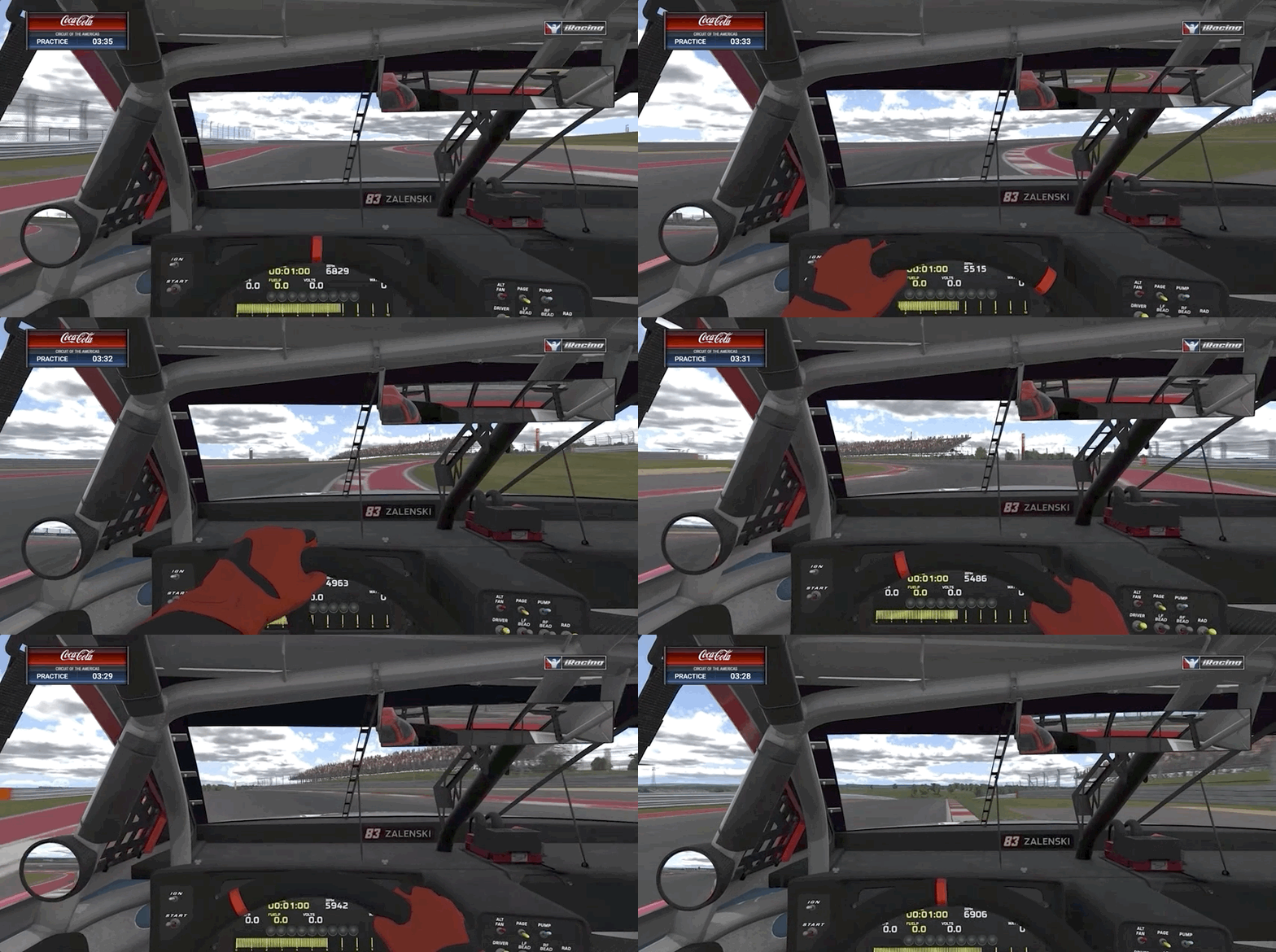
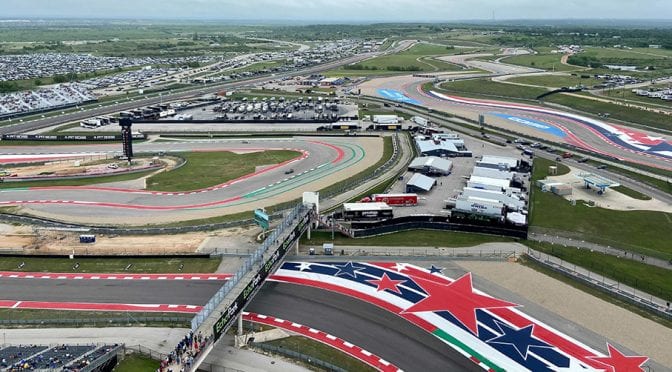
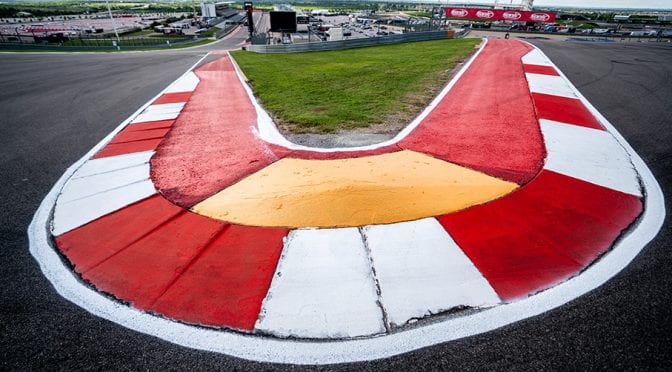
Before drivers take to the 3.41-mile, 20-turn road course, here is a turn-by-turn breakdown, courtesy of eNASCAR Coca-Cola iRacing Series driver Bobby Zalenski.
Once drivers take the green flag, it’s a steep uphill climb into a left-hand hairpin turn to kick off the lap.
TURN 2
It’ll be a right-hander out quickly after the exit of the first corner as the track goes back downhill.
TURNS 3-5
The third corner starts the esses portion of the circuit. Turn 3 is a left-hand corner, Turn 4 is a right-hand corner and Turn 5 is another left-hander.
TURNS 6-7
This corner is a long, sweeping right-hander, which is immediately followed by a left-hand corner.
TURNS 8-9
Drivers will want to maintain a centered line out of Turn 7 to get a good entry into the right-hand, sweeping eighth turn. Turn 9 is another quick left-hander.
TURN 10
This left-hand corner acts more like a kink in a straightaway. Drivers will use this section to set up for a good passing zone leading into the entry of the 11th turn.
TURN 11
Like the first corner but without as much elevation change, Turn 11 is another hairpin left-hander. A long straightaway awaits drivers at the exit of this corner.
TURN 12
After taking the longest straight on the course, drivers with face another sharp left-hand turn, which doesn’t provide a lot of grip for acceleration out of the corner.
TURNS 13-14
These two corners are tight right-handers following a short chute coming out of Turn 12.
TURN 15
Drivers will have to decide if they want to enter this sharp left-hand turn tight or with a wider angle depending on what arc they want to take through the corner.
TURNS 16-18
These three turns make up the carousel section, which consists of a series of sweeping right-handers.
TURN 19
This left-hand turn isn’t as tight, serving more of a rolling corner which sends you out into a short straight before heading into the final turn.
TURN 20
The last turn of the course is a hard-braking, sharp left-hand corner. Drivers will be trying to get a good launch off the corner to maximize speed down the frontstretch and toward the start-finish line.
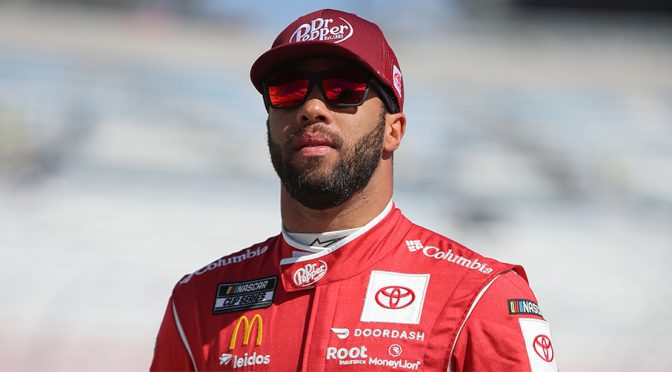
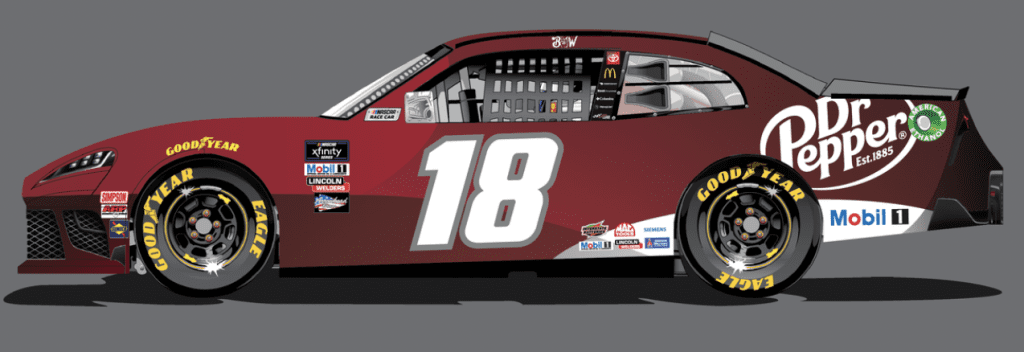
Mooresville, N.C. – 23XI Racing announced Tuesday that Bubba Wallace, driver of the No. 23 Toyota Camry TRD in the NASCAR Cup Series, will compete in two upcoming NASCAR Xfinity Series races with Joe Gibbs Racing. Wallace will pilot the No. 18 Toyota GR Supra this weekend at Circuit of The Americas and race later this summer at the Indianapolis Motor Speedway road course. Both races will take place the day before the Cup Series is set to compete at the same tracks and will provide Wallace additional track time at two of the newer courses on the NASCAR schedule.
The races mark a return for Wallace, who made his NASCAR national series debut with JGR in 2012. Wallace raced in the No. 20 Toyota and made a total of six starts with JGR during the 2012 and 2014 Xfinity Series seasons, earning one pole award and four top-10 finishes. More recently, Wallace competed in one Xfinity race in 2021 to add to his 86 career starts in the series.
Dr Pepper, a founding partner of 23XI and Wallace on the No. 23 Toyota, will serve as the primary partner for the race at COTA in Austin this Saturday (4:30 p.m. ET, FS1).
More information will be shared closer to the race regarding sponsorship for Indianapolis.
“I’m looking forward to partnering back up with Joe Gibbs Racing in the Xfinity Series after making my first career start in NASCAR with them about 10 years ago,” Wallace said. “The No. 18 Toyota GR Supra team is always strong and I’m excited to be competing with them at COTA and Indianapolis. Thanks to the team at 23XI and Toyota for helping to make this happen and thanks to Dr Pepper for coming on board for the race at COTA.”
The Xfinity Series Dash 4 Cash midseason program is upon us, with series regulars looking to be among the top-four finishers in Saturday’s Pit Boss 250 qualifier at Circuit of The Americas (4:30 p.m. ET, FS1, PRN, SiriusXM NASCAR Radio).
Drivers will battle it out to finish in that top foursome to be eligible for the first Dash 4 Cash event next month at Richmond Raceway — and the bonus $100,000 check that is awarded to the highest eligible finisher.
The top four NXS drivers at COTA will qualify for the first Dash 4 Cash event at the Virginia track. Of the four competing for Dash 4 Cash honors, the highest finisher wins the $100,000 prize and automatically moves on to defend the title at the next event.The next three highest-finishing NXS drivers, for four total competitors, will join the previous Dash 4 Cash winner to compete for the next week’s event.
There are four Dash 4 Cash races over the next several weeks to bring the prize money to $400,000 total, courtesy of Comcast.
HAMPTON, Ga. — It’s never good to go airborne with all four wheels off the ground through the infield during a NASCAR race. But that didn’t seem to bother Corey LaJoie in Sunday’s Cup Series event at the repaved and reconfigured Atlanta Motor Speedway.
When Tyler Reddick blew a right rear tire on lap 146, it triggered the race’s “Big One.” Twelve cars received some sort of damage, including LaJoie.
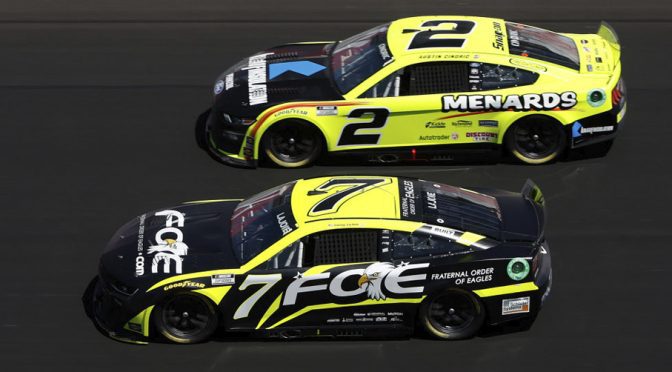
“The Fraternal Order of Eagles that was on our car this week, that was pretty real life because it felt like I was flying there when I went through the grass,” LaJoie said after the race. “But luckily, these Next Gen cars are pretty rugged and it held up. I was worried about the diffuser, but it was intact and we were able to have a good day.”
LaJoie spent much of the 500-mile race laid back, hoping to avoid potential chaos in front. Typically, that’s the game plan for Spire Motorsports in superspeedway racing at Daytona International Speedway and Talladega Superspeedway. The No. 7 Chevrolet finished Stage 1 in 26th, moving up to 23rd by the end of Stage 2.
But in the final dash to the end, LaJoie methodically made his way up the scoring pylon, missing crash after crash. Being one of nine drivers to pit with less than 25 laps remaining on a caution for Todd Gilliland and Cody Ware wrecking, the No. 7 car went on offense.
When the white flag dropped, LaJoie was running 13th. He picked off two spots in Turn 1 when Bubba Wallace, Ryan Blaney and Chase Briscoe got into the wall and Wallace, Chris Buescher and Justin Haley crashed coming to the checkered flag. Plus, Christopher Bell got penalized for making a pass below the white line, moving the No. 7 car up to fifth.
“It looked like they were wrecking Daytona, Days of Thunder coming to the checkered,” LaJoie added. “These things on the last lap, you commit to not lifting and, luckily, we were in the right spot at the right time.”
The fifth-place run is LaJoie’s best effort at the Cup level, and his first top-five result in 193 national series starts. Previously, his best finish was sixth in a rain-shortened race at Daytona, two years ago.
Starting off the 2022 season, LaJoie has three top-15 finishes in the opening five races of the season. That’s a big momentum boost, as the No. 7 team had just three such finishes during the duration of the 2021 season.
“I think if you would have told me that we would start the year with three out of five top 15s, I would have probably laughed at you,” LaJoie said. “We still have a lot of work to do, but today was a good day.”
When LaJoie was told NASCAR scored him fifth, he was ecstatic. Cha-ching. “It pays way better for fifth than it does for sixth.”
Through five races this season, LaJoie sits 24th in the championship standings, ahead of names like Denny Hamlin and Christopher Bell.
HAMPTON, Ga. — Marcus Smith stood in the corner of the Atlanta Motor Speedway media center watching the laps of Sunday’s 500-miler tick down into the single digits, a slight, wry smile on his face. His Speedway Motorsports team had been tasked with bringing a superspeedway into the corporate portfolio, and by golly, they had done it — without merger or acquisition, without a ground-up construction project.
Instead, they DIY-ed this beast at one of its own existing tracks, taking the superspeedway formula popular at 2.5-mile Daytona and 2.66-mile Talladega, shrinking it in the dryer and applying it to a 1.54-mile hybrid in Atlanta. Hence one of the reasons for Smith, the company’s CEO and president, to ever-so-slightly beam in the closing laps. The better-than-average crowd on a cool, sunny Sunday offered yet another excuse to grin.
Atlanta Motor Speedway had hosted 115 NASCAR Cup Series races before this one, but none had quite the same look and feel. In past lives, an Atlanta race was grueling for its speed, in some years the central Georgia heat, and its tendency toward tire wear. Now, it’s a taxing venue for the white-knuckle, pack-racing style of competition that used to happen just four times a year. Now it’s up to a half-dozen.
So how was it? That answer probably depends on where you line up on superspeedway racing, whether you circle the calendar dates for Daytona and Talladega in red pen, or whether your preferences lie elsewhere. Either way, a pair of last-lap passes decided the weekend’s other NASCAR national-series events, and it’s hard to argue with the gate, which added up to one of the better-attended Atlanta races in recent memory.
Sean Gardner | Getty Images
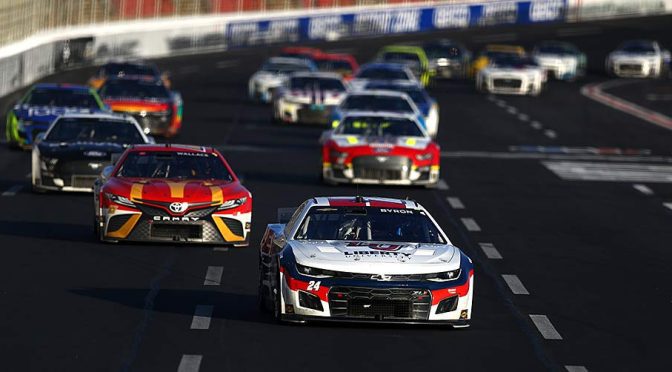
The stats were staggeringly new as well. Twenty of the 37 starters led laps, and the list of the record 46 lead changes was as long as your arm. Crash involvement ran higher than normal, too, with little place to hide once things went awry in the bunched-up draft. Kurt Busch won the last race on the old Atlanta surface last year by 1.237 seconds. Sunday, he was among the top 14 finishers who crossed the start/finish line within that margin behind race winner William Byron. Many of the regular contenders in this style of racing rose to the top again — Byron, Denny Hamlin and Bubba Wallace among them. Luck is involved, sure, but there’s also a skillset to it.
Whether that all fits the definition of a competitive race also all depends on your fondness for superspeedway racing.
“It’s a regular superspeedway. We just keep crashing,” said Joey Logano, who rallied from a mid-race incident to finish ninth. “… We survived, but a lot of cars crashed today for sure, just like we would expect. I don’t know, you be the judge if it was entertaining or not. It’s a different type of racing.”
Georgia native Chase Elliott started and finished sixth after the frantic 500 miles. “It was crazy, for sure,” he said. “Hopefully it was fun to watch because I felt like it was wild from my seat.”
Atlanta’s first two versions came during two separate periods of speedway boom times. The track initially sprang to life as a hulking 1.5-mile true oval in 1960, as stock-car racing had just started its slow gravitation away from small fairgrounds facilities and dirt tracks. The next iteration came in 1997 when Speedway Motorsports put its stamp on the place with the doglegged frontstretch that it also uses in Charlotte and Texas. Around the same time, other intermediate-sized tracks were sprouting in places across the country, some built without a promise but on the mere hope of attracting NASCAR’s national series.
This rendition of Atlanta comes during a time period where anything on the schedule seems possible. The Cup Series opened the year with an exhibition on a special-order quarter-mile track inside the LA Coliseum, and the premier division will return to a dirt vision of Bristol Motor Speedway for the second straight year. Team owner Rick Hendrick mentioned his appetite for bringing the seventh-generation Cup Series car to a street circuit during his post-race media appearance. New facilities, an influx of road courses, wide-open possibilities — it’s all there.
Still, just because you can do something doesn’t mean you necessarily should. Atlanta direly needed new pavement to replace its worn-out and patched-up surface. It also needed a side dose of pizzazz, something that allowed it to keep up with that spirit of change. Brothers and sisters, we got that and then some.
While the new-look Atlanta debut checked plenty of boxes in terms of what went right, let’s let the paving crews and heavy machinery cool off a bit before hurrying to reimagine other intermediate-sized tracks that need the same superspeedway spice.
As entertaining as Sunday’s race was — again, depending on your viewpoint — the NASCAR industry cannot do this every week. Our collective hearts can’t take it, and besides the potential for burnout, the toll in damaged machinery typically runs high at superspeedway events. Hendrick, who prevailed Sunday but has a vested interest in the crash-damage bill, suggested that capping superspeedway races at the current six would help ease some of those ills.
At the other end of the Atlanta media center from where Smith stood, there’s a display case full of diecast cars. The collection spans all previous six generations of Cup Series models, illustrating just how long the track has stood and how cars have evolved during its lifespan.
There’s room there for a miniaturized version of Byron’s winning Next Gen No. 24 Chevrolet to commemorate Sunday’s thriller, serving as a marker for Atlanta’s superspeedway revival and the next era for both car and track.
HAMPTON, Ga. — Ryan Sieg carried high hopes for making his first NASCAR Xfinity Series victory a hometown one, aided by an unlikely ally. Instead, he settled last weekend for another top-10 finish and a building block in the momentum of his small family team.
Sieg finished 10th in Saturday’s Nalley Cars 250, fading slightly in the final overtime at Atlanta Motor Speedway. He had led six laps near the end before Ty Gibbs — whom he sparred with two weeks ago at Las Vegas Motor Speedway — bypassed him on the final circuit for his second win of the year.
Before the final pass, Gibbs — in an instance of turnabout — had actually helped to push Sieg’s RSS Racing No. 39 Ford out front in the aerodynamic draft. Once the white flag was unfurled, there was only so much holding-off that Sieg could do.
Zack Albert | NASCAR Digital Media
“It was incredible,” said Sieg, who is in his ninth full season of Xfinity competition. “I was thinking about winning, and we had a really good shot and Gibbs pushed us up there, but when you get so far out there, I was trying to keep everybody behind me. … But to do it here in Atlanta, we had a shot and we’re gaining on it each week. Our program is still learning, so it’s a gain all the time for us.”
Sieg claims the Atlanta suburb of Tucker, Georgia, as his hometown, and it’s a 40-plus-mile drive to the 1.54-track just south of the metro area. So for fellow Georgia native and No. 39 crew chief Kevin “Cowboy” Starland, Saturday’s race also became a point of emphasis — both for the proximity to home and the chance to make progress on a superspeedway-style layout.
“We just had to get ourselves in position,” Starland told NASCAR.com. “I mean, we’re in our backyard, so we wanted to put a lot of effort into this race and Stewart-Haas did a lot of effort in doing it for us, also. We’re a small team. They don’t like us really being up there sometimes and nobody really wants to work with us, so it typically happens to us on superspeedways. They’ll split us, put us in the middle.
“I thought Ty was gonna maybe help us out there after the Vegas deal and help us get there, but I mean, it’s racing. Everybody’s racing for the win, so you can’t really blame him for going for it. We put ourselves in a position to win, and that’s all we could ask for.”
Sieg leaves Atlanta with his third top-10 finish in five races this season, the 36th-place crash-out at Vegas being the lone blight on his 2022 record. The 34-year-old driver has been steady so far, but Saturday marked his closest brush with a breakthrough.
“All in all, great for our team,” said Sieg, who sits 10th in the Xfinity standings. “We’re a small team, and still we’ve made gains on it, but we’re still lacking a little bit. It’s just so tough. Everybody’s on it all the time, but to gain on it each week, we’re moving in the right direction, and we’ll get there. We come back here later in the year, and we’ll make it better and hopefully find ourselves in Victory Lane.”
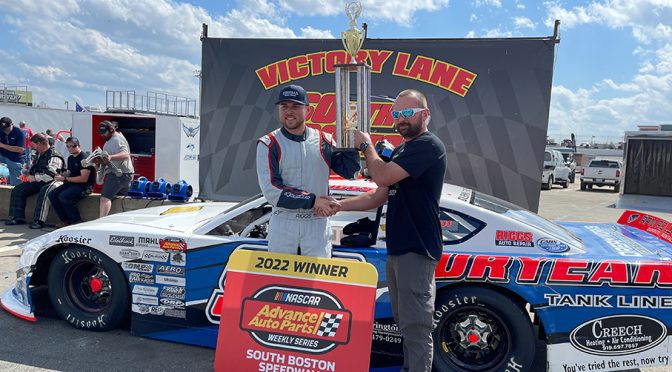
SOUTH BOSTON, Va. — Layne Riggs had never won at South Boston Speedway prior to Saturday’s NASCAR Advance Auto Parts Weekly Series opening day at the 0.4-mile oval, but by the time the day was over, he had changed that.
Riggs, the son of former NASCAR Cup Series driver and four-time NASCAR Xfinity Series race winner Scott Riggs, was a man on a mission during the pair of 65-lap Late Model Stock Car features that kicked off the track’s 65th anniversary season.
Starting second in the first 65-lap feature alongside defending NASCAR Advance Auto Parts Weekly Series national champion Peyton Sellers, Riggs took the lead on Lap 32 and led the remainder of the distance to beat Mike Looney to the checkered flag by 0.695 seconds.
The top-10 finishers from the first race were inverted for the second 65-lap feature, with Riggs lining up 10th. He avoided a big crash on Lap 2 that collected Sellers and defending ValleyStar Credit Union 300 winner Landon Pembelton before chasing down and passing Mason Bailey on Lap 21 to take the lead.
Riggs would ultimately pull away to a 2.023-second victory over Looney, who finished second in both races.
“I really hated to see the cars get torn up on the initial start,” Riggs said after winning the second feature. “A couple of cars (Sellers and Pembelton) were cars we thought were going to be in contention for the win at the end. I hated I didn’t get to duke it out with them. I know they will get fixed up and we will be doing it again really soon.”
Quick chat with today’s winner of both Late Model races at @SoBoSpeedway57!
A trio of other NASCAR Advance Auto Parts Weekly Series divisions were also in action Saturday, including the Budweiser Limited Sportsman, Southside Disposal Pure Stocks and Hornets.
Jason Myers (no relation to the Jason Myers who competes regularly at Bowman-Gray Stadium in Winston-Salem, North Carolina) triumphed in the Budweiser Limited Sportsman class. Johnny Layne was the winner of the 30-lap Southside Disposal Pure Stock main event and Kevin Currin won the Hornet feature.
South Boston will be back in action again next Saturday, with NASCAR Advance Auto Parts Weekly Series Late Model Stock Car contenders battling for supremacy in a 100-lap feature. Weekly Series action continues at South Boston on most Saturday’s through Sept. 3, which will serve as Championship Night at the historic track.
In addition to Weekly Series competition, South Boston will also host the annual running of the Thunder Road Harley-Davidson 200 on July 2. The event serves as the opening race of the Virginia Late Model Triple Crown that also includes the Hampton Heat 200 at Langley Speedway in Hampton, Virginia, on July 23 and the ValleyStar Credit Union 300 at Martinsville Speedway on Sept. 24.



 Saturday will be a doubleheader for the Camping World Truck Series and Xfinity Series, with Trucks taking to the track for the XPEL 225 at 1 p.m. ET on FS1, MRN and SiriusXM NASCAR Radio. Xfinity’s Pit Boss 250 race will then be held at 4:30 p.m. ET on FS1, PRN and SiriusXM NASCAR Radio.