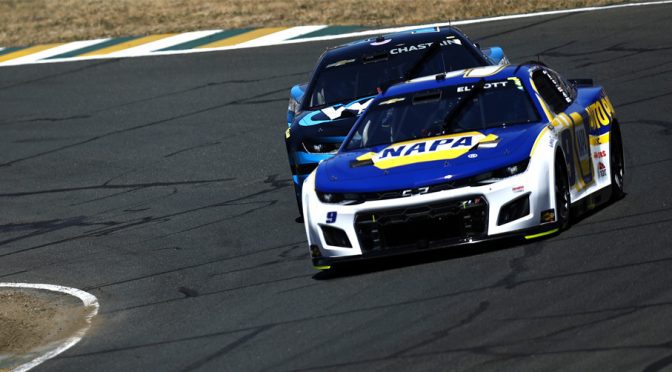
For the second year in a row, the Hendrick Motorsports teammates of Kyle Larson and Chase Elliott will lead the field to green at Sonoma (4 p.m. ET, FS1).
Last year, Larson dominated from the pole en route to a clean sweep of both stages, and the race victory.
With Larson and Elliott repeating their front row performance from last year, but at such short odds, I’m looking elsewhere for betting value.
In last year’s race, two other drivers pulled off top-six finishes, have shown speed this weekend and are undervalued relative to other drivers in their respective manufacturer groups.
NASCAR at Sonoma Picks
*Odds as of Sunday morning
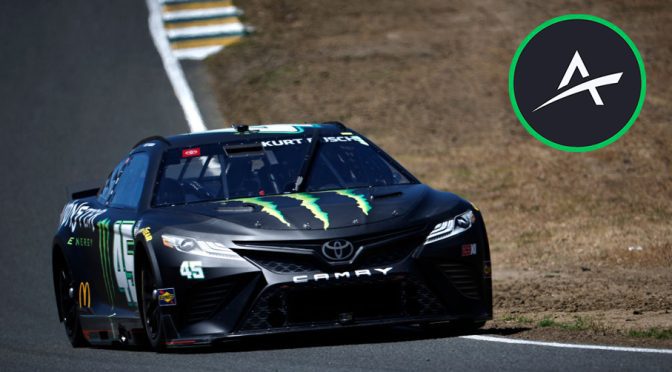
Kurt Busch Top Toyota +500
Busch has seven finishes of seventh or better in his last 10 starts at Sonoma, and rolls off 11th in today’s race.
The elder Busch brother was fast in practice as well, posting the second best five- and 10-lap average speed among the Toyotas, behind only his brother, Kyle.
With a win in the bag, Kurt is probably in good enough shape to avoid having to points race, meaning he can take the optimal strategy to finish as high as possible.
My model gives Busch a 19.9% chance to finish as the top Toyota. That means he should be priced at +400 instead of +500, making this a solid value at BetMGM.
The Bet: Kurt Busch Top Toyota +500 | Bet to: +450
Joey Logano Top Ford +425
Like Busch, Logano can focus on the race-winning strategy. Except in Logano’s case, it’s even more certain he will do so.
His two wins make him a lock for the playoffs, freeing him up to key in on the race win.
Last year, Logano started 13th and finished fourth, and I can see a similar performance today.
At Circuit of The Americas, Logano was fast, but had several spins and incidents relegating him to a 31st-place finish. However, I’d rather focus on his speed.
An incident-free race at Sonoma is likely to mean he’ll be one of, if not the top Ford. BetMGM has Logano listed at +425 to finish as the top blue oval.
That equates to implied odds of 19%. However, my model gives him a 25.2% chance to bring home the honors as top Ford.
After not leading a single lap at Circuit of The Americas, Hendrick Motorsports looks to be the team to beat entering Sunday’s race at Sonoma Raceway (4 p.m. ET, FS1, PRN, SiriusXM). Specifically, Kyle Larson and Chase Elliott were speedy during practice and qualifying, ultimately sweeping the front row. However, there were a few surprises along the way.
Dustin Albino’s race-day lineup:
Starter 1: Kyle Larson
Starter 2: Chase Elliott
Starter 3: Daniel Suárez
Starter 4: Martin Truex Jr.
Starter 5: Tyler Reddick
Garage pick: AJ Allmendinger
NEXT IN LINE: Michael McDowell, Kyle Busch, Ross Chastain, Chris Buescher.
RISING: Believe it or not, I didn’t have Kyle Larson in my original fantasy lineup for Sonoma. But the No. 5 team has won three of the last six road-course races, including Sonoma last year in dominant fashion (led 57 of 92 laps). Larson was quickest in practice on Saturday and followed that up by edging out teammate Elliott for the pole.
Michael McDowell is known for his road racing expertise. He’s brought that out in full force so far this weekend. McDowell will take the green flag from fourth position — his best career qualifying run (has four top-three starts all under the qualifying metric system in 2020 and 2021). The No. 34 team has been hot of late, earning top 10s in four of the past seven races, while McDowell led 34 laps at Gateway last weekend, the most he’s led in a single race of his 408 Cup starts.
FALLING: While Martin Truex Jr. is still on my team — simply because he’s elite at Sonoma, winning two of the past three races — the No. 19 team had a disappointing Saturday. Truex was 16th in practice and qualified 28th. Cole Pearn is going to have to work his magic to get Truex competitive on Sunday.
The same could be said for Truex’s Joe Gibbs Racing teammate Christopher Bell. After running the 31st-quickest qualifying time, the No. 20 team brought its machine to the garage to change the steering components. Bell will start from the rear.
FEATURED MATCHUPS
Kyle Busch vs. Joey Logano:
Both are underrated road course racers, but Busch gets the slight advantage with two wins at Sonoma. The No. 18 car was also running in the top five on the final lap at COTA in March before spinning out twice.
Ross Chastain vs. Denny Hamlin:
What a coincidence. Between Chastain and Daniel Suárez, Trackhouse Racing had the field covered at COTA. Unfortunately for Suárez, a spin and power steering issue derailed his chances of the win. That same speed has shown up this weekend, so the No. 1 car gets my vote. But … Hamlin could repay the favor from Gateway last week.
AJ Allmendinger vs. Austin Cindric
Surprisingly, Cindric was just 24th in practice and qualified 25th. Based on experience alone — Allmendinger has 10 starts at Sonoma; Cindric has none — the No. 16 car should get the nod. And while Allmendinger wasn’t lightning quick leading up to the race, he’s off to a better start than last week when he wrecked before the green flag at Portland in the Xfinity Series race and still won.
Christopher Bell vs. Chase Briscoe
The No. 20 team enters the weekend as one of the hottest teams in the garage, earning five straight top 10s. However, though Bell caught his steering issue on Saturday, Briscoe will have much better track position to start the race. Going with the No. 14 car to outrun Bell.
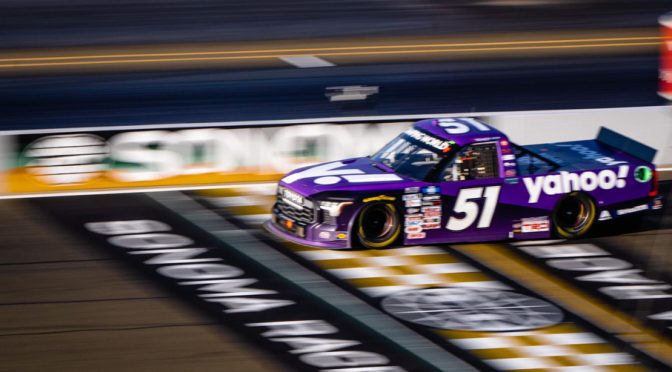
Kyle Busch held off Zane Smith in a frantic two-lap push to the finish at Sonoma (Calif.) Raceway to earn his first NASCAR Camping World Truck Series victory of the year; extending his record career total to 62 series victories and a streak of 10 consecutive years with at least one series win.
Busch led a race-best 45 of the 75 laps in the DoorDash 250 at the 1.99-mile road course in California wine country, but ultimately had to beat the young driver Smith, who leads the series with three wins in 2022.
As the Camping World Truck Series’ all-time winningest driver, Busch has certainly prevailed under any number of race circumstances and that all came in handy Saturday afternoon. There were five leaders and 10 lead changes; a nearly 13-minute red flag in the closing laps and all the pit strategy you would expect in one of NASCAR’s premier road course events.
A hard crash involving Josh Bilicki, Stewart Friesen and Alex Bowman entering Turn 1 brought the race’s final caution at Lap 71, with Bilicki and Friesen incurring the heaviest hits. Their contact with the concrete barriers shifted the walls and necessitated the red flag setting up the final dash to the finish.
Ross Chastain certainly kept Busch and Smith honest until late in the event when an off-course adventure negated any chance for him to pull off any final-lap heroics for the lead. There were five NASCAR Cup Series drivers entered Saturday in the first Truck Series race at Sonoma since 1998.
“Just continuing to work on the truck and make it better,” Busch said of his team’s race-long work on the No. 51 Kyle Busch Motorsports Toyota that has now won three times on the season, including last week with driver Corey Heim.
“This Tundra TRD Pro was awesome today and really proud to drive it. We had a struggle at Charlotte a couple weeks ago but today was really good.”
Smith, who methodically worked his way forward later in the race, finished only 1.176-seconds behind Busch and conceded his team had to work hard on the truck at every pit stop – ultimately finding the right adjustments to contend at the end.
“Man, I hate finishing second, especially to him,” Smith said, offering a smile and adding, “That last lap was the fastest lap of the race for me. I just wish I was a little closer so I would have had a shot at him.”
Ty Majeski, who won the opening stage, finished third, followed by Chastain and Busch’s teammate Chandler Smith.
Daniel Suárez – who replaced the injured driver Carson Hocevar early in the race, brought the pole-winning No. 42 Niece Motorsports Chevrolet home in sixth place. It was an amazing run for Suárez and the team, considering the truck lost two laps on pit road with the driver change on Lap 11.
“It was busy man, very busy,” Suárez said, conceding he was disappointed to lose two laps instead of just one on the driver change.
“I was hoping for long runs so I could make up some ground,” he continued. “But I think we did a very good job and very thankful we were able to get some stage points and finish in the top-six. That was a pretty decent day. I wish we could have won, the truck was capable of winning the race.”
Parker Kligerman, John Hunter Nemechek, Tyler Ankrum and Matt DiBenedetto rounded out the top-10.
The top four-ranked drivers in the series are now separated by only 14 points with reigning series champion Ben Rhodes, the Stage 2 winner, challenging Busch up front before a tire problem forced him to pit.
Rhodes earned a series-best eighth stage win and holds onto the championship lead by a mere five points over Chandler Smith.
The event was the Truck Series’ first at the California road course since its four-race run from 1995-98. The first four Sonoma truck winners — Hall of Famer Ron Hornaday Jr., Dave Rezendes, Joe Ruttman and Boris Said — were in attendance.
The Camping World Truck Series’ next race is scheduled next Saturday (9 p.m. ET, FS1, MRN, SiriusXM) at Knoxville (Iowa) Raceway’s half-mile dirt oval.
NOTE: Post-race inspection was completed without issue, confirming Kyle Busch as the winner of the race.
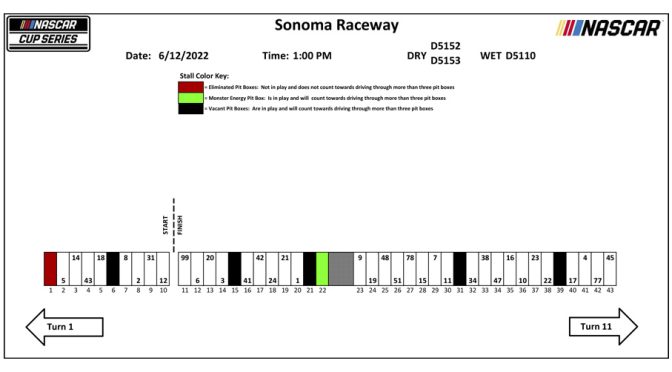
See where your favorite driver will pit for Sunday’s NASCAR Cup Series Toyota/Save Mart 35 at Sonoma Raceway (4 p.m. ET, FS1, PRN, SiriusXM NASCAR Radio).
Toyota/Save Mart 350 at Sonoma Raceway
(⏰ 4 p.m. ET | 📺 FS1 | 📻 PRN, SiriusXM)
Everything you need to know for Sunday’s NASCAR Cup Series race at Sonoma Raceway, the 16th regular-season event of the 2022 campaign.
Race-day info 📝
Where: Sonoma, California Approximate start time: 4 p.m. ET | Full weekend schedule TV/Radio: FS1, TSN, PRN, SiriusXM NASCAR Radio | Full TV schedule Forecast: Mostly sunny, with a high near 77 degrees, according to NOAA.gov | Weather tracker Race distance: 110 laps | 218.9 miles Stages: 25 | 55 | 110 Pit-road speed: 40 mph Caution car speed: 45 mph Grand marshals: The Bella Twins, WWE superstars Pace car driver: Fred Warner, San Francisco 49ers linebacker The purse: $7,629,830 Sonoma 101: Get the full lowdown
Starting lineup: See where drivers will start
Pit stalls: See where drivers will pit
Key things to watch 🔑
Big story line
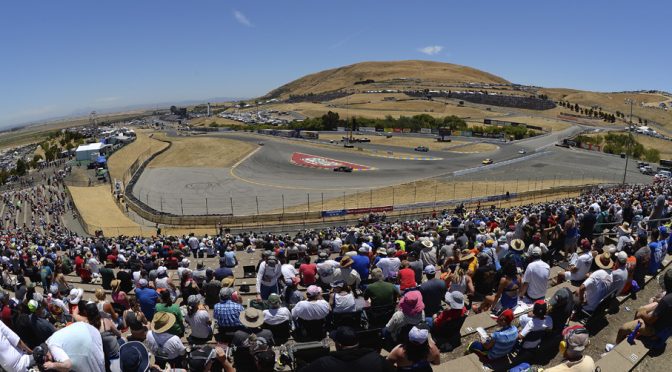
It’s no secret that the Next Gen car was built to be tough and versatile. Part of that versatility is geared toward increasing its prowess on road courses throughout the season. With a wider tire profile and a body composition that can withstand more beating and banging through the turns, the usual road-course specialists should have stiffer competition this weekend at Sonoma. During the first road-course race this season at the Circuit of The Americas, drivers with minimal experience with left-and-right turns were able to be more competitive and outrun some of the favorites. Routine front-runners like Chase Elliott, AJ Allmendinger, Kyle Larson and Martin Truex Jr., who has dominated the field at Sonoma in his career, will have to battle through a larger and stronger group of contenders if they are going to win on Sunday. And oh, yeah. The Chute is back.
Who’s hot? Who’s not?
Despite Chase Elliott’s historic dominance at road courses, it was Kyle Larson who had the hot hand for much of the 2021 season en route to his Cup Series championship. The California native has been on fire at Sonoma, starting on the pole in four consecutive races and leading a total of 68 laps. Larson has also won three of the last six races on road circuits, including last season’s showdown at Sonoma. Needing more consistent results to bolster his title defense, Larson and the No. 5 bunch could make Sunday the perfect time to jump-start a solid run.
Conversely, Aric Almirola has struggled almost as much as anyone on road courses. Almirola has 12 consecutive finishes of 12th or worse and has never led a lap in nine Sonoma starts. But looking at the numbers, the strategy hasn’t been that far off for the Stewart-Haas Racing Team at times, scoring stage points in three of six. But it will take a more complete effort for the No. 10 team to break their spiraling trend. Almirola finished 19th after starting 25th at Circuit of The Americas, suggesting that a better effort in qualifying could leave them with a solid chance at a top-10 run on Sunday.
Driving under the radar
If you just look at previous Cup Series starts as your metric, you won’t find rookie Austin Cindric among the favorites to win on Sunday. In fact, Saturday’s practice session will be the first laps for the No. 2 Team Penske driver at Sonoma. But Cindric is an accomplished road racer and would be an unsurprising winner if he can pull it off this weekend. He finished eighth at COTA and consistently ran at the front of the field in the Xfinity Series’ road-course races, including winning at the Daytona Road Course and Indianapolis Motor Speedway’s Road Course. After winning the Daytona 500, Cindric’s inaugural season has been a rollercoaster. But with a heavy slate of road courses on the horizon, expect the No. 2 crew to once again make a statement.
Saturday’s sessions
Practice was a bit of a mixed bag for teams as they tried to dial in their car for qualifying and Sunday’s race. Sonoma is only the second road-course race of the year and it showed with a bit of rust and ironing out kinks in the Next Gen car. Unsurprisingly, AJ Allmendinger rose to the forefront of the leaderboard in Group A, while Kyle Larson continued his impressive run-of-form with a titanic effort in Group B. But it was Larson whose quick pace carried over to group qualifying, landing the No. 5 Hendrick Motorsports driver his fourth consecutive pole in qualifying at Sonoma and fifth overall. A great start to the California native’s attempt to match his race-winning effort from 2021. | Full practice and qualifying recap | No. 51 team fails inspection, penalized
Alejandro Alvarez | NASCAR Digital Media
Race-day staples ✅
Our biggest pieces of the week — get covered for race day from all angles.
Read up on the top headlines from the week leading up to Sunday’s race.
• Chastain: Driver attempts to quell feuds, speaks to rivals | Full story
• Inspection: No. 51 Cup team fails multiple times, penalized by NASCAR | Learn more
• Pearn’s return: Cole Pearn serving as engineer on No. 19 JGR crew this weekend | Read more
• Twist-and-turn: Sonoma’s winding layout presents next challenge for Next Gen car | Read more
• Domino effect: Reddick on verge of first win, hoping for breakthrough at Sonoma | Read more
• Chastain vs. Hamlin: Officials set to monitor the feud | Read more
• Mark, Mamba & The Mayor: New podcast tackles Sonoma’s evolution, more | Listen here
• Chasing Smoke: Hamlin one win away from Stewart on all-time win list | Full analysis
• Le Mans: Kyle Larson drops subtle, playful hint at openness for 2023 race | Read more
• Byron blossoming: William Byron wins prestigious Super Late Model race | Race recap
• On standby: Daniel Suárez on standby for Carson Hocevar at Sonoma | Read more
• Strength in numbers: Justin Marks sticks up for Ross Chastain, welcomes competition | Read more
• Jack Ingram: Hickory Speedway set to honor NASCAR Hall of Famer | Learn more
• NDIP: NASCAR Diversity Internship Program welcomes 2022 class | See them here
Get in on the action 💰
Think you know NASCAR? Put your mettle to the test with gaming, fantasy.
• BetMGM: Which driver’s stock is rising for Sunday? | Read more
• The Action Network: Featured matchup to bet on Sunday | Read more • Play it LIVE: Full guide to 2022 NASCAR Fantasy Live game | Get the FAQ
• Going all the way: 2022 Cup Series championship odds | See them here
Wine and winding roads 🍷
Get a quick look at relevant history, including previous winners of this road-course showdown.
• Winning out west: All-time winners at Sonoma | See the list
• Do you remember? Most memorable moments at Sonoma | Relive them
• Ringers: Active Cup Series drivers with road-course wins | Who has the most?
• Turn 11: Biggest moments in Turn 11 at Sonoma | Watch the GIFs
• Sweet victory: A look at past Sonoma celebrations | Road-course laurels
Fast facts ⏩
Hard-hitting, race-relevant statistics, brought to you by the experts at Racing Insights.
• This will be the 28th race on the 1.99-mile, 11-turn layout and the first since 2018. • Sonoma is the second of six road course races in 2022. • The last four Sonoma races were won by four different organizations and Martin Truex Jr. won with both JGR and Furniture Row during that period. • Stage 1 at Sonoma has never had more than one caution and was caution-free twice. • Two of the last three Sonoma races had a final green-flag stretch of 46 or more laps, with the 2021 final stretch lasting only two laps.
Say what? 🎙
Notable quotes from the stars of the sport heading into Sunday’s race.
• “I’ve always had some good speed at Sonoma (Raceway) and it’s my home track. It’s always fun to see my friends and family, and it was cool to get my first win at my home track last year. But that was with last year’s car and on the longer track. Hopefully, we can get another pole there this weekend, lead some laps and challenge for the win again.” — Kyle Larson, driver of the No. 5 Hendrick Motorsports Chevrolet
• “This car definitely lends itself to road course racing, so I’m excited to go to Sonoma this weekend. That is always a fun track and a great area to go to. It’s a lot different than anywhere else that we go, so I know a lot of people look forward to going there. As far as the track, it will be fun to go back to the layout we ran for a long time. It will add a few extra passing zones, which you will also see quite a bit of dive-bombing into those turns. That will make for an exciting race. We just need to stay out of trouble and I feel like we can have a good day.” — Denny Hamlin, driver of the No. 11 Joe Gibbs Racing Toyota
• “Sonoma is a fun road course and just a great market and experience for many folks who will experience their first race. I know we have a large contingent of our West Coast friends coming out for the weekend, as the area provides bucket-list experiences. I’ve been in the mix and close at Sonoma before, so figuring out the left and right-handers this weekend is key in getting our Kohler Power Reserve Ford primed and ready to go for Sunday.” — Brad Keselowski, owner/driver of the No. 6 RFK Racing Ford
Ross Chastain is focused on moving forward at Sonoma Raceway this weekend after some chaotic excursions one week ago.
Chastain found himself at odds with Denny Hamlin and Chase Elliott, among others, after aggressive driving from the No. 1 Chevrolet’s pilot resulted in separate incidents with Hamlin and Elliott at World Wide Technology Raceway.
Ahead of Cup Series practice at Sonoma on Saturday, Chastain confirmed he spoke with both drivers and is ready to move on.
“I’ve talked to all parties involved and yeah, I believe I should be in this car and I believe that I did make a mistake and I hit Denny too hard,” Chastain told FS1. “But I’m not the first guy to do that. I hit him way too hard. I hate that I took him out of the day. But we had a good conversation and whatever happens happens. I’m here to go fast and I feel like the best way that I can hurt their feelings more is to take our Worldwide Express car and just go fast.”
Hamlin told reporters he and Chastain did have a conversation but declined to elaborate on the extent of that discussion.
Elliott, taken out of contention at Gateway after his spin was initiated by Chastain, waited for Chastain to reach out and was left satisfied with their talk.
“He is fast and they have a lot of pace,” Elliott said of Chastain. “And he’s gonna be just as successful with that pace that he has if he’s just a little more mindful of the positions he puts himself and others in at points of the race that don’t matter as much. That was really all I had to say.”
Whether things remain pleasant between the two drivers going forward, Elliott said, it’s Chastain’s decision.
“I think that’s up to him,” said Elliott, the 2020 Cup champion. “I tried to take the high road and talk to him as if I would want somebody to talk to me. I just tried to give him my opinion. He can take it or leave it or whatever he wants to do.”
Elliott will start second in Sunday’s Cup race at Sonoma with Chastain third. Hamlin rolls off 10th.
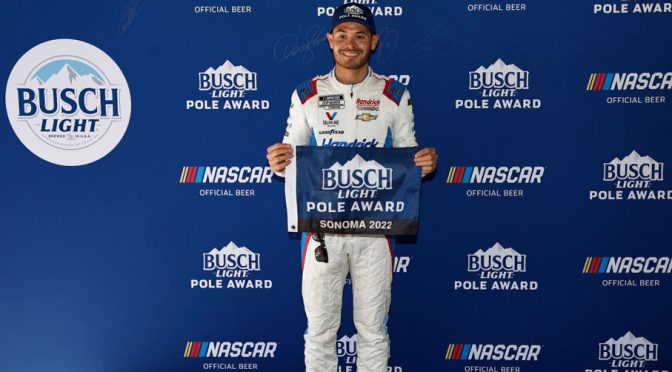
Larson’s lap at 92.111 mph topped the charts ahead of his Hendrick Motorsports teammate Chase Elliott, meaning the dynamic duo will start Sunday’s race (4 p.m. ET, FS1, PRN, SiriusXM NASCAR Radio) exactly how they finished the 2021 event in northern California. Elliott’s lap time was just 0.02 seconds shy of Larson’s.
Larson, the defending series champion, will lead the field to the green flag at Sonoma for the fifth consecutive time, a streak dating back to 2017 that skips the 2020 hiatus. Four of the five pole awards came courtesy of qualifying, establishing the track record. His 2021 pole was awarded via metrics without on-track practice or qualifying.
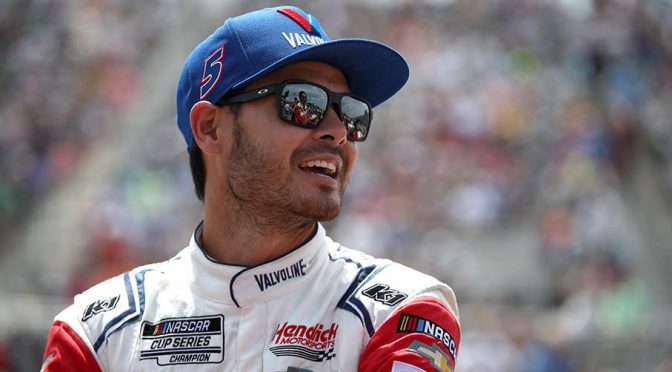
“It was good, and I was a bit surprised, because I felt like I gave up a lot of time in Turns 4 and 7, so had I had those two corners back, I felt like I could have went quite a bit faster,” said the Elk Grove, California, native. “Thanks to everyone on our team. Excited about it.”
Chris Buescher, who returns to the No. 17 Ford after missing last week’s race due to COVID protocols, posted the third-fastest lap Saturday ahead of Michael McDowell and Tyler Reddick, who completed the top five for Sunday’s starting lineup. Cole Custer, Ross Chastain, Daniel Suárez, Joey Logano and Denny Hamlin rounded out the top 10.
AJ Allmendinger was sixth fastest in Group A’s session, falling just 0.018 seconds short of Buescher, who held the final transfer position in Saturday’s opening round.
Larson is the only driver among the top-10 with a previous win at the track.
Three-time Sonoma winner Martin Truex Jr., the winningest active driver at the track, will roll off 28th in the No 19 Joe Gibbs Racing Toyota. His former championship-winning crew chief, Cole Pearn is working as an engineer this week for the No. 19 team.
His teammate, the only other active multi-time winner at Sonoma, two-time winner Kyle Busch just missed advancing to the final round of qualifying. He will start the No. 18 JGR Toyota in 11th place, right alongside his older brother Kurt Busch in the No. 45 23XI Racing Toyota. Kurt is a former winner at Sonoma as well.
Renowned sports car racer Joey Hand qualified the No. 15 Rick Ware Racing Ford in 17th in his second NASCAR Cup Series start of the season. Todd Gilliland was the fastest rookie and will start the No. 38 Front Row Motorsports Ford, 24th.
NASCAR Wire Service’s Holly Cain contributed to this report.
AJ Allmendinger and Kyle Larson posted the quickest laps in their respective practice groups on Saturday afternoon.
While Allmendinger’s lap at 89.898 mph was fastest in Group A, six drivers from Group B posted faster laps than him. Larson’s lap at 90.42 mph reigned supreme over Chase Elliott, Ross Chastain, Kyle Busch and Daniel Suárez.
Joining Allmendinger at the top of the charts in Group A was Chris Buescher, followed by Kevin Harvick, William Byron and Bubba Wallace.
The drivers atop the charts shouldn’t come as a surprise. Larson’s Sonoma win in 2021 was one of three road-course victories for him a season ago, and Allmendinger took the checkered flag at the Indianapolis Motor Speedway road course last August to accompany his 2014 Watkins Glen triumph. Seven of Elliott’s 14 career victories have come on road courses, but none of those were at Sonoma. Chastain won this year’s only road-course race so far at Circuit of The Americas.
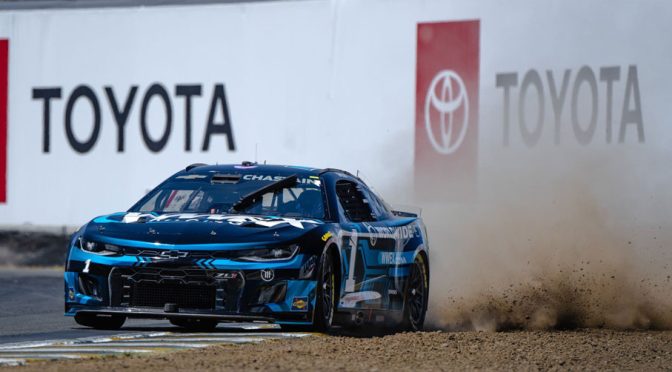
The only notable off-road excursion in Saturday’s practice sessions came courtesy of Chase Briscoe, who found himself in the Turn 2 grass after a bobble on corner entry. The No. 14 Ford left a cloud of dust behind him but continued without issue.
Kyle Larson met with the media Saturday at Sonoma Raceway, returning to his Northern California stomping grounds as the defending Cup Series race winner. The questions were customary about stage strategy, tire management, being back home, and his plans for the off weekend next week. But tacked onto the press conference was a burning question by a special guest, hinting at a special Garage 56 appearance in the 24 Hours of Le Mans.
Boris Said, a former Sonoma race winner in the NASCAR Camping World Truck Series, took the microphone Saturday to also ask about Larson’s off-weekend plans — except for 2023, not this season.
“So if next year is an off weekend, would you spend it in France vacationing?” Said asked.
Larson laughed and said, “I would, yes,” as Said interjected: “At Le Mans?”
“If NASCAR would allow us, for sure,” Larson said.
“Cool,” was Said’s reply.
The playful exchange may have gently stoked speculation about the Garage 56 collaboration between NASCAR and Larson’s Hendrick Motorsports team, targeted for the 2023 endurance race next year. The driver lineup has not been announced for the Next Gen stock-car entry into the 24-hour classic, but the organization’s pool of drivers could be natural fits if the race coincides with an idle weekend on the to-be-released NASCAR schedule for 2023.
The 2022 edition of the 24 Hours of Le Mans is this weekend. Dignitaries from both NASCAR and Hendrick Motorsports are in attendance to experience the 90th running.
Said is on hand at Sonoma this weekend as the track honors the four previous winners of Camping World Truck Series races there. The tailgate tour is back at the 1.99-mile road course this season after a four-race run from 1995-98. Said is the most recent Sonoma truck winner, and was joined by fellow victors Ron Hornaday Jr. (1995), Dave Rezendes (1996) and Joe Ruttman (1997).
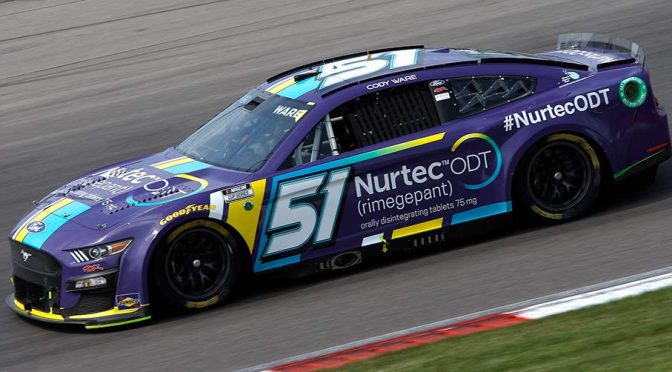
The No. 51 Rick Ware Racing Ford failed Saturday’s pre-qualifying inspection four times, drawing multiple penalties from NASCAR Cup Series officials at Sonoma Raceway.
NASCAR officials did not allow driver Cody Ware to participate in Saturday’s Busch Pole Qualifying, putting the No. 51 at the back of the field for Sunday’s Toyota/Save Mart 350 (4 p.m. ET, FS1, PRN, SiriusXM). Ware will also have to serve a pass-through penalty at the soonest opportunity after Sunday’s green flag. NASCAR also ejected No. 51 engineer Steve Gray for the remainder of the weekend.
Further penalties beyond the in-weekend punishment will be announced in next week’s penalty report. Those could include points deductions, fines, and/or team roster suspensions.
One other team had multiple inspection failures, as the No. 78 Live Fast Motorsports Ford for driver Scott Heckert failed twice. Officials ejected Chris Stanley, an engineer with the No. 78 team.
I like a challenge… In all seriousness a tough way to start the weekend, but Im confident we will learn what we can and practice and fight hard to bounce back early in the cup race. Always proud of my @NurtecODT@RickWareRacing gang https://t.co/cKFSBx5YIK
Carson Hocevar, in his return from injury, led a 1-2 sweep for Niece Motorsports in Saturday’s NASCAR Camping World Truck Series qualifying, just before crashing in his No. 42 Chevrolet at the end of his run at Sonoma Raceway.
Hocevar, hobbled by a final-lap wreck in last weekend’s race at World Wide Technology Raceway, qualified first at 91.135 mph to earn the top starting spot for Saturday’s DoorDash 250 (7:30 p.m. ET, FS1, MRN, SiriusXM). But Hocevar lost control in the final bend in the 1.99-mile track’s esses section, damaging his truck in the Turn 10 tire barrier.
Jennifer Fisher | NASCAR Digital Media
Hocevar’s truck was being tended to by his Niece Motorsports crew, which was attempting to fix the primary truck. The 19-year-old driver was evaluated and released from the track’s care center.
Teammate Ross Chastain qualified second in the Niece No. 41 entry at 90.492 mph. Fellow Cup Series regular Kyle Busch was third, with Ty Majeski fourth and Tyler Ankrum fifth.
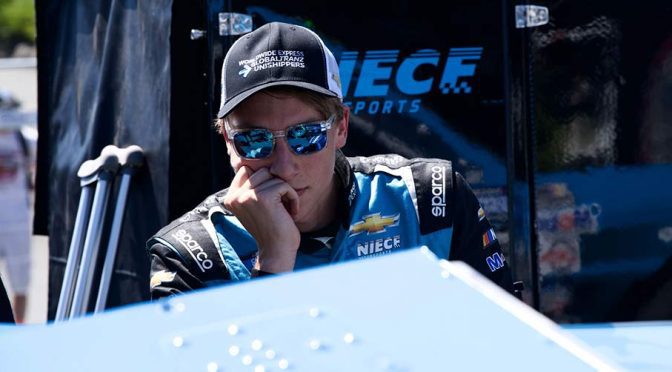
Hocevar was cleared to race by NASCAR officials on Friday. He had undergone surgery earlier in the week to repair a broken bone in his right ankle, and has been navigating the garage area on crutches since his arrival at Sonoma Raceway.
Cup Series regular Daniel Suárez remains on standby for Hocevar this weekend. The Trackhouse Racing driver split time with Hocevar during Friday’s Truck Series practice session.
Carson Hocevar explains he was trying to get a run at where the qualifying start-finish line sits and made a mistake. Did the injury cause the accident?
Hocevar: “It’s the disconnect from my head. I had what I thought was a super smart idea and tried too hard.” pic.twitter.com/22BfmIub0o