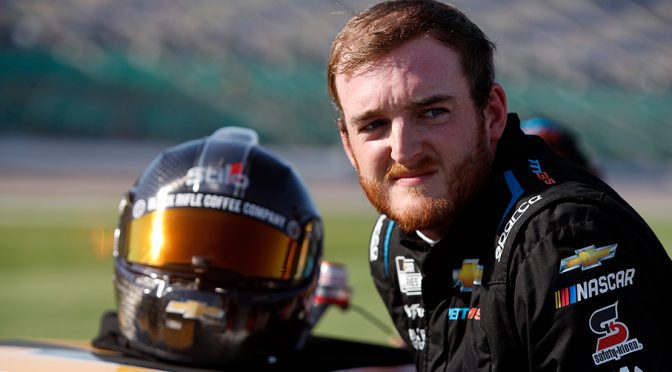
Ty Dillon said Friday he will not return to the No. 42 Petty GMS Motorsports Chevrolet in 2023.
Dillon, 30, made the announcement on social media before the NASCAR Cup Series’ visit this weekend to New Hampshire Motor Speedway. Dillon is midway through his first season with the organization, which launched last December as a two-car team after the merger of Richard Petty Motorsports and GMS Racing.
“I am grateful for the opportunity to drive the No. 42 for Petty GMS this year,” Dillon wrote. “However, at the conclusion of the 2022 Cup Series season, we have mutually agreed to go our separate ways. I’m looking forward to what is next in the future.”
Dillon ranks 27th in the Cup Series standings with one top-10 finish – 10th on Bristol Motor Speedway’s dirt in April – to date. He made his Cup Series debut in 2014 and joined the series full-time from 2017-20.
Dillon competed part-time in all three NASCAR national series last year after the closing of Germain Racing. He returned to full-time duty this year, first hired by Maury Gallagher’s GMS operation last October and retained after the merger was announced.
“Petty GMS and Ty Dillon have mutually agreed to part ways following the 2022 NASCAR Cup Series,” Petty GMS officials said in a statement later Friday. “We are appreciative of what Ty has done this year to help grow Petty GMS. As we continue the season, we remain focused on strong runs and getting the No. 42 Chevy Camaro to Victory Lane. We wish Ty all the best in the future.”
Dillon has one win in Xfinity Series competition and is a three-time winner in Camping World Trucks.
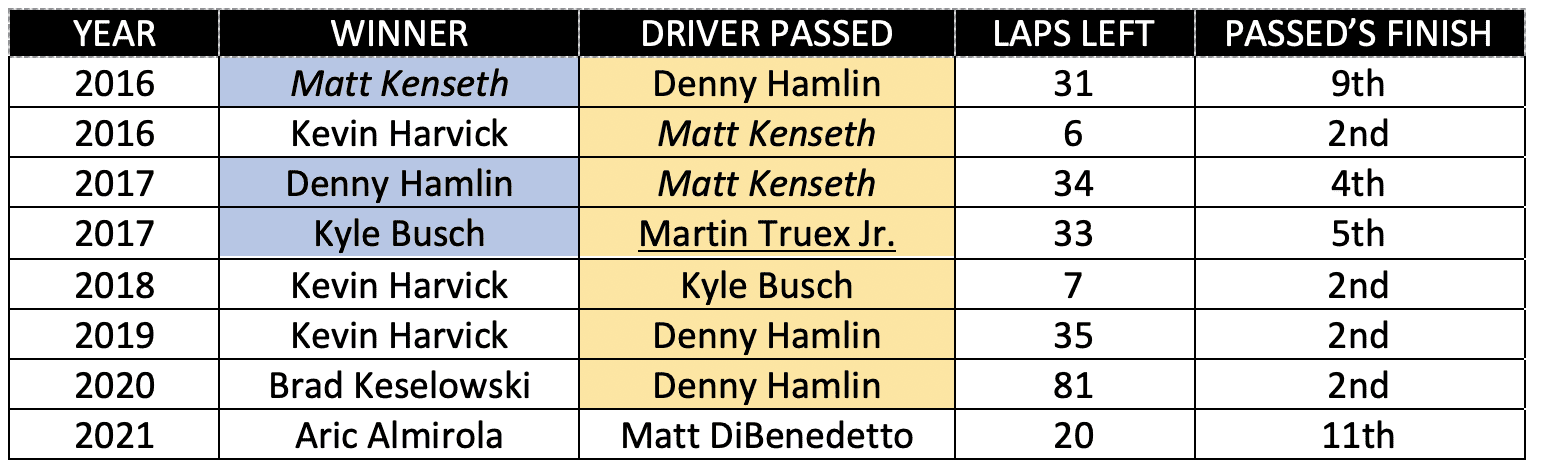
A Joe Gibbs Racing driver was passed for the win in seven of the last eight Cup Series races at New Hampshire Motor Speedway.
The streak dates back to 2016, when the Cup Series raced in Loudon, New Hampshire, twice a season; that stopped in 2018. The one instance that doesn’t fit the scenario was just last year. So, really, there were seven consecutive races where a Joe Gibbs Racing driver lost the final lead.
Matt Kenseth is no longer a full-time competitor, though he was with Joe Gibbs Racing in those 2016-17 races. Martin Truex Jr. was technically competing for Furniture Row Racing in 2017, but that now-defunct operation was an affiliate of Joe Gibbs Racing, and Truex moved to the larger team after the other closed.
And then there’s the fact that three of the instances saw a Joe Gibbs Racing wheelman win regardless. Can’t say the organization failed.
Well, it has still been since 2017 that a Toyota from the Joe Gibbs Racing camp (which really was the only one until 23XI Racing was introduced in 2021) has landed in New Hampshire’s Victory Lane. The four-car shop’s next opportunity is Sunday with the Ambetter 301 (3 p.m. ET on USA Network, NBC Sports App, PRN and SiriusXM NASCAR Radio). According to BetMGM, as of Friday, Kyle Busch (13-2) has the best odds to win out of his teammates. Denny Hamlin (17-2) is the next-best bet, followed by Truex (9-1), then Christopher Bell (16-1).
Busch and Hamlin have three wins apiece at the “Magic Mile,” their latest both coming in 2017. Bell and Truex have none in two and 28 career starts, respectively. Bell was runner-up last year while Truex has finished third three times.
The win trend tracks to overall present day, too. Hamlin has two victories this season. Busch has one. Bell and Truex are still winless through 19 races.
All of them are currently qualified for the 16-driver playoff field. Hamlin and Busch earned provisional berths with their wins. Bell and Truex have accumulated enough points to sit above the cutoff line. Truex is 62 points safe in 15th. Bell is 19 points OK in 16th, the last spot.
There have been 13 different winners, though. If that trend continues in the seven remaining regular-season events, and neither Truex nor Bell join the crowd, then they’re at risk of not having a shot at the title.
“With the playoff picture being as tight as it is, every point matters,” Bell said. “Loudon is a great track for us and we need a good showing. I’m ready to see what we can do this weekend.”
Julia Landauer’s racing career has never quite fit into neat little boxes. Instead of the more traditional progressions that racers often take on the ladder to NASCAR’s national series, hers has taken enough turns to fill a passport book.
On the eve of her Xfinity Series debut at New Hampshire Motor Speedway in Saturday’s Crayon 200 (2:30 p.m. ET, USA Network, NBC Sports App, PRN, SiriusXM NASCAR Radio), it’s worth a reflection on the path that led Landauer to an opportunity with Alpha Prime Racing.
The New York City native, now 30 and making North Carolina her home, was a fresh prospect in the NASCAR Next class of 2016 – a group that included current Cup Series rookies Harrison Burton and Todd Gilliland, who each made a fairly standard climb to their present-day roles. Landauer’s path was more of a zigzag.
“I had this vision of you know – K&N, Trucks, Xfinity, Cup, and it didn’t quite go that way,” Landauer said. Instead, her route included stints in what’s now known as the ARCA Menards Series West, the Canada-based Pinty’s Series and the NASCAR Whelen Euro Series. That last stop on her journey, in 2020, meant three months living abroad before returning to America.
“It was really fun to get back on road courses, but I’m happy to be back stateside and to be running all these bigger tracks,” Landauer said. “But I’m very grateful for the unexpected opportunities that I had, and I feel like it’s cool to race in so many different types of cars.”
Zack Albert | NASCAR Digital Media
Her background as a “Survivor” contestant, a noted public speaker and a recent explorer in the NFT (non-fungible token) and Web 3 space have made her stand out in the crowd. But the unconventional journey and passion for the racing side kept her in the conversation when Alpha Prime owner Tommy Joe Martins had openings in his driver roster for 2022.
Instead of one party reaching out to the other during the offseason, their collaboration was mutual, stoked by both sides – and an invested third party in the NASCAR hauler – all connecting nearly simultaneously.
“(Xfinity Series director) Wayne Auton said, ‘Hey, do you guys have any races available? There’s somebody that I want you to meet, her name is Julia Landauer,’ ” Martins said. “And of course, I laughed because I was like, we’ve already talked about this earlier this year. So it just kind of all fell into place.
“It’s somebody that I had, when I first started racing at the national levels, she was racing I’m wanting to say in K&N West. So I just happened to see some of those races and thought she did a really good job. So I think, for me, when I look at Julia, I see somebody that I just don’t feel like ever really got an awesome opportunity, like she’s had to really kind of grind for it. And you might notice there’s probably other people on my roster that are kind of the same way, right? But that’s kind of a relatable story to me, with Ryan Ellis and Stefan Parsons, kind of the same way where maybe these are guys that drove for smaller teams, and maybe this is a better opportunity for them.”
As for her well-traveled journey to get here, Martins appreciated all the patches to the quilt.
“It also tells you a lot about how bad she wants to do it, right?” Martins said. “She’s done it through unconventional ways and kind of gone different routes and just hung around, and that’s something that I’ve had to live with that myself, right? Everybody goes, ‘Man, why are you even doing this? You’re running 30th every week? Why are you even doing this, running for a small team?’ It’s like, well, this is what I want to do. And so you just find a way, and that’s what Julia has done.
“She’s found a way to get sponsorship, she’s found a way to kind of stay in the sport, even if it’s not what we consider the primary spot, right? But she’s done it in K&N, she’s done it overseas. She’s done it at the lower levels, and now she’s finally kind of getting an opportunity at a higher level.”
Like Landauer, her sponsors are newcomers to the series, too. Landauer said she did a “nerdy deep dive” into the world of Web 3 and NFTs last year. The connections she made in the technology field with NFT communities Boss Beauties and Garage XYZ shared a common thread with her beliefs.
“These two groups have an ethos and synergies with me and my missions, and it’s all about women’s empowerment, helping support people who are going after their dreams, being able to provide access to really cool experiences like racing,” Landauer said. “And so to be able to work with them, and to have built a really solid relationship over a long period of time, I feel like now I’m kind of working with my friends more than just a business partnership. And so it’s, it’s really cool, and it’s really cool to be able to have them be the first NFT communities to sponsor a NASCAR driver.”
Alpha Prime Racing
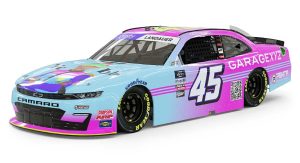
Both driver and team revealed a vivid No. 45 Chevrolet earlier in the week. How well that car will perform at the New Hampshire oval in Landauer’s first stock-car race in 17 months remains a question mark.
The goals for her debut are modest, with Landauer hoping to run every lap, get a feel for live pit stops and potentially fit inside the top 20 by the end. She said she has kept her skills sharp with simulation work and rigorous personal training, but with limited track time in practice and qualifying this weekend, the challenge is steep.
“What Julia’s about to do is extremely hard. It is extremely, extremely hard,” Martins said. “You’re about to come off the couch, basically, and just climb in an Xfinity car and you’re gonna get 20 laps of practice, right? That’s really, really hard to do, I don’t care who it is, much less somebody that doesn’t have any experience at this level. So I think we’re trying to be really realistic with what we’re going to expect out of her. And I think she is, too. I think anything around the top 25 would be an awesome day. So we know that it’s probably not gonna start there. It’s probably going to start a little further back to that. And we’re hoping that by the end of the day, we’re seeing the times improve, and obviously her spot on the race track improving as well.”
Landauer hopes to add more events to her schedule this season, putting her in position to assemble her 2023 racing slate.
“That is the plan,” she said, “and I’m cautiously optimistic that they’ll come to fruition.”
For now, Landauer has become part of the fabric at Alpha Prime, which has rotated 10 drivers – Martins included – through its two cars this season. Landauer will become the 11th.
“I think she’s an important part of what we’re doing,” Martins said. “First of all, I’ve made it a priority to make diversity a big part of our race team. That’s something that really matters to me, and so I look at what Rajah Caruth has done for us, just really being front and center for our race team all the time, and one of the best prospects in NASCAR. And I look at what Julia could become, and it’s like all she really needs is just an opportunity. She’s got everything that it takes off the track, and I believe on the track as well.
“So it’s really just about getting her in front of other people. Because behind closed doors, working with her on the level that I’ve worked with her, she’s been really, really impressive and really easy to work with. And I know all the guys in my race shop are really looking forward to her driving for us this weekend and they really want to help her out. They want to give her as good an opportunity as we can give her.”
Ryan Preece is still waiting for his breakout moment in the NASCAR Cup Series.
The Connecticut native spent each of the past three years as a full-time competitor for JTG Daugherty Racing, following multiple years on a part-time basis throughout NASCAR’s national series.
Now, the 31-year-old finds himself back on a part-time driving basis but aligned with one of the sport’s powerhouse teams at Stewart-Haas Racing, signed by the program in January to serve as its reserve driver and work closely on simulation.
It’s a different role for Preece, the 2013 NASCAR Whelen Modified Tour champion who returns to the open-wheel series Saturday at New Hampshire Motor Speedway (6 p.m. ET, FloRacing). But the job is one he said he has enjoyed. In his current position, Preece sits in on every driver debrief and absorbs what each of his teammates has to offer in addition to analyzing the SMT data at his disposal.
A new aspect for Preece has been watching each driver’s different tendencies, learning whose strengths fall where and how he can maximize those skills in his limited 2022 opportunities.
“We all have things that we’re better at than others,” Preece told NASCAR.com in a Wednesday teleconference. “And one thing that I feel like I’m extremely good at is pressure situations and late-race restarts and restarts and being aggressive. And those are the things that, put me against anybody and I feel like I can win. I will get the job done.
“But there are other things that I look at being around other drivers and I think to myself, like, man, he does a really good job with that. How does he look at this situation? Or what is he feeling at this moment in the race track? Like what is he doing different than myself? And I look at that and hopefully the next time I get on track or if I’m in that situation or my car is driving a certain way, I can look at some of that or some of the conversations that I’ve had and put that into place and try to be better as a race-car driver.”
Competing part-time – two Cup Series races with SHR-affiliated Rick Ware Racing, three with its Xfinity Series affiliate BJ McLeod Motorsports and six Camping World Truck Series races with David Gilliland Racing – is nothing new for Preece. But having access to simulation data is something Preece has never had.
“You have different opportunities like some others do, where they have the ability to go in and go to the sim or have done tire tests or other things,” Preece said. “And I think I’ve beaten that drum (that) I didn’t have those opportunities. I wasn’t able to do that stuff. So for me, it feels like I’ve been in the sport a long time. You guys have known me for six-plus years now. But really, as far as a full-time national series career, it’s not a lot.”
Logan Riely | Getty Images
That’s why Preece centered his focus around building relationships around the sport to align himself with a winning organization. Previously, Preece gambled on himself and took what would have been full-season sponsorship dollars at a smaller Xfinity Series team and instead competed part-time at Joe Gibbs Racing. In those 19 Xfinity races between the 2017-18 seasons, Preece won twice and collected 11 top fives and 14 top 10s.
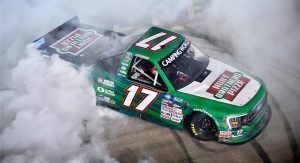
Four years later, he finds himself in winning equipment all over again and proved himself a repeat winner at Nashville Superspeedway behind the wheel of the No. 17 truck for DGR.
“I worked really hard to try and build relationships and get in with an organization that I feel like I can I can win with and be successful with,” Preece said. “I’m still working towards that long-term goal and I want to win. I want to win at the Cup Series level. I want to chase championships. I want to do those things and be full-time. I don’t want to be part-time.
“My entire career is known as that guy who just kind of fills in whenever somebody needs someone, or if they have eight races where they want to go out and they want to compete for a win. I don’t want to just be that guy. I feel like I’ve worked really hard in my career to continue to work and give myself opportunities. So I’m ready for that step. I’m ready for that role.”
Being on Stewart-Haas Racing’s payroll since January has brought plenty of speculation that Preece is the likely heir to the No. 10 Ford that will be vacated by Aric Almirola at season’s end.
Preece affirmed nothing is signed for his racing future in 2023 or beyond. But there is optimism.
“Here’s what I can tell you: I can tell you that I feel as confident as ever that partners and all these things could come together and it will be a great fairytale ending for myself,” Preece said. “But at the same time, there’s nothing, certainly by any means, on paper. And until all the stars and all those things align, I have absolutely nothing right now. It takes everything to fall into place.”
The biggest piece to align remains sponsorship. While Preece’s potential ascent to the No. 10 car – a ride that Almirola has wheeled to two Cup Series victories – seems like an obvious dot to connect, nothing can be guaranteed without corporate partners attaching themselves to him or the vehicle.
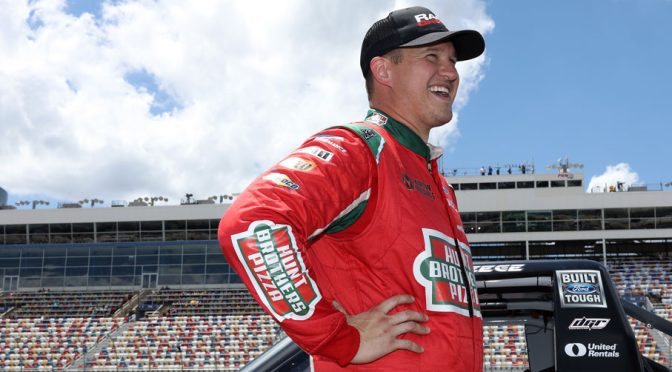
That’s where Kevin Harvick, Preece’s quasi-teammate, comes further into focus. Harvick’s management company, KHI Management, represents Preece and has parlayed existing partners like Hunt Brothers Pizza toward Preece’s current deals.
“Nashville is a good representative of that,” said Preece, who was sponsored by Hunt Brothers when he won at the 1.33-mile Nashville oval in June. “And being able to be partnered with Hunt Brothers Pizza and Morton Buildings and I’m wearing (a) United Rentals (shirt). That’s somebody who we’ve created a relationship with and hopefully can continue to build that relationship and to win more races and have more opportunities.
“As a race-car driver, I want to win, man. I want to be full-time. I want to compete for wins. I want to be in the mix and hopefully, we all know where that that goes sooner than later.”
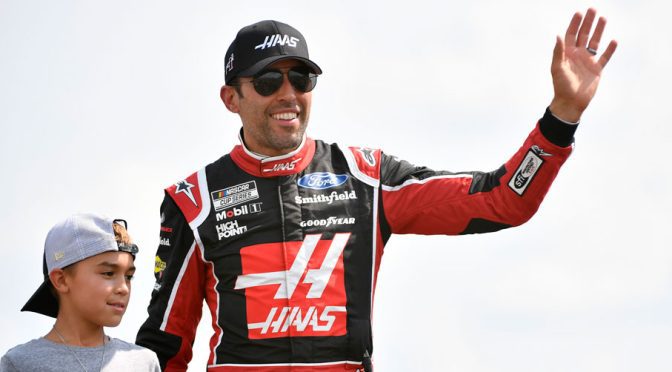
Aric Almirola spent Thursday morning surrounded by the serenity of Lake Champlain in Vermont, visiting longtime friends in New England.
The timing was perfect before this weekend’s race at New Hampshire Motor Speedway (Sunday, 3 p.m. ET, USA Network, NBC Sports App, PRN, SiriusXM NASCAR Radio).
This midweek visit isn’t something Almirola made time for in previous years on the circuit. But after 11 years of racing full-time in the NASCAR Cup Series, Almirola deemed in January that 2022 would be his last. Now, Almirola is making time to savor his time on the tour with his family before hanging up his helmet.
“In the past, I would just be head down, so focused on racing and sponsors and doing all the things that I needed to do — or that I felt like I needed to do — to make sure that I was continuing my career and giving 110%,” Almirola told NASCAR.com in a Thursday teleconference. “And this year, it’s been more about relish it, enjoy it, take it all in, enjoy the moment.”
Almirola has done exactly that this season, pointing to additional time spent with his family than ever before as members join him at the track far more regularly. On the track, his two top fives equal last year’s total, while his six top-10 finishes already better his 2021 compilation.
While Almirola, a three-time winner in NASCAR’s premier series, made his impending retirement known six months ago, chatter looms that he has pondered a Cup Series return in 2023. Almirola admitted uncertainty about what his future holds.
“For me, personally, I’ve been business as usual going to the race track and focused on winning races and continuing to do what we need to do to make the playoffs,” Almirola said. “But all the stuff behind the scenes, yeah, I’ve been involved in a part of trying to help Smithfield and help Stewart-Haas Racing figure out what their plan is going forward, and I think there’s still just a lot of question marks just in general about what that’s going to look like from Smithfield’s side, from the race team’s side.
“And so I’ve had some discussions with them. And it’s been a very small part of (me) having an opinion and kind of weighing in. And I appreciate the fact that they’ve valued my opinion enough to be involved in it. I don’t know what will happen going forward, to be honest. I think the race team is still trying to figure out that and the sponsor is still trying to figure that out.
“Ultimately, I feel like I’ve made the decision to step away from the sport full-time just because it’s a grind. It really is. There’s no doubt about it. And it’s hard with my kids. They’re starting to gain a lot of momentum and seeking their own personal interests and playing sports and doing a lot of different things. And here, dad is still chasing his childhood dreams.”
Almirola is still navigating those challenges and in communication with all parties to determine those plans. Perhaps complicating matters is that Almirola is enjoying his time behind the wheel of his No. 10 Smithfield Ford.
“I will say that this year has been one of the most fun years I’ve ever had, and we’ve really embraced it,” Almirola said. “And as a family, we’ve gone to the race track more as a family this year than we ever have in the past. And it’s been really enjoyable. And as much as I’d like to continue to race, I also know that I’ve got a short gap in time to where my kids are going to have car keys and probably not going to want to hang out with dad. So I want to make sure that make the most of that as well.”
Almirola returns to New Hampshire this weekend as the defending winner, scoring a surprising yet strong victory at the 1.058-mile oval in 2021 after leading 25 laps for his first Cup triumph away from the superspeedways of Daytona and Talladega. The No. 10 team entered the event 27th in points and catapulted into the playoffs with the victory.
“For me, that win was huge,” Almirola said. “We had gone through such a stretch of just bad finishes, bad luck and just seemed like nothing would go right for us. And then we went to Loudon, it was like, boom. Finally. Everything went right, right? We had a fast race car; we executed on pit road; I did my part. Just everything went perfectly and we were able to win.
“And it showed us what we were capable of, even when we felt like we were capable of it but none of the results were showing that. Loudon was a game changer for us and it really changed the outlook of our entire season.”
Almirola is certainly in a better position entering this year’s race, sitting 12th in the regular-season standings but 42 points out of a playoff spot.
“If I had to grade our season, I’d say it’s a B to B-plus. It’s been a good year, just hasn’t been great,” Almirola said. “We’ve missed getting the Victory Lane a few times. But overall, we’ve had a lot of consistency and we’ve run well, and I feel like we’re starting to figure out this new car. Every track is different. And we’re learning that last year’s success doesn’t guarantee success this year with this car.
“We’ve had to really re-evaluate and adapt the way we attack the weekend and the setups, and everything is so unique and so new with this car that it’s still a learning process. And I feel like we’ve been doing a good job through that learning process. And we just haven’t quite got it dialed in to figure out what we need for speed and the race car to go win each weekend.”
Another season-changing victory would be quite the send-off for Almirola in what seems to be his final year as a full-time Cup racer.
When Kasey Kahne held off a fast-charging Denny Hamlin to win the 2012 Lenox Industrial Tools 301, it was Chevrolet’s seventh win in the last nine editions of the race.
While Chevy was one tire-change miscommunication from Hamlin’s crew away from losing their winning streak at two – and sending Toyota to the winner’s circle for the second time in four years – it appeared Chevy and its army of drivers, four of whom finished in the seven spots behind Kahne, had figured out New Hampshire Motor Speedway.
Ten years later, Chevrolet can’t figure out “The Magic Mile.”
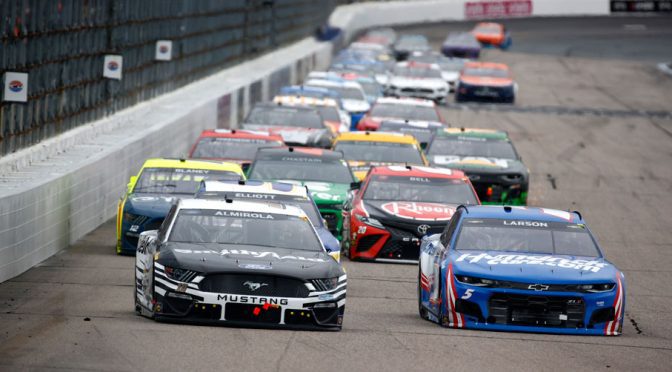
Kahne’s win in July 2012 is the last for Chevy in the event. And if this week’s NASCAR odds for the Ambetter 301 prove accurate, the drought could continue as Ford’s winning streak extends.
As of Thursday, six drivers have race-winner odds better than +1000 at BetMGM. None are Chevy drivers:
Ryan Blaney +600
Kyle Busch +650
Joey Logano +700
Ross Chastain +750
Denny Hamlin +850
Martin Truex Jr. +900
One week after becoming the first three-time winner in the Cup Series this year, Chase Elliott is seeking a third win in his last four starts – he had just one win in his previous 32 starts – and is the Chevrolet favorite to do so.
“New Hampshire has been a really hit-or-miss place for us,” Elliott said before last year’s 18th-place finish, his sixth outside the top 10 in eight Cup Series starts at the 1.058-mile track. “It’s just a different track. It takes a different driving style, I feel like, than some of the other places. I look at Loudon as being more of its own animal.”
It’s a different animal Elliott and his Hendrick Motorsports team haven’t successfully tamed since Kahne’s win a decade ago. None of his current teammates – Kyle Larson, William Byron, or Alex Bowman – have won in New Hampshire, nor has any Hendrick driver over the last nine races.
To land the first Ambetter 301 win for Chevy and Hendrick Motorsports since 2012, Elliott must, at minimum, finish ahead of Ryan Blaney, whom he faces in one of BetMGM’s featured matchups:
Ryan Blaney (-130) vs. Chase Elliott (+100)
The only winless driver in the top eight of the NASCAR Cup Series standings through 19 races, Ryan Blaney has four top-10 finishes in his last five races at Loudon. And he has four top-10s in his last five races overall, including last week’s fifth-place finish in the Quaker State 400 at Atlanta Motor Speedway.
The public doesn’t like Blaney to snap his 29-race winless drought this weekend, nor do they like him to finish ahead of Elliott. As of Thursday, Blaney has just 3.9% of the race-winner tickets (eighth-most) and 8% of the featured matchup tickets against Elliott.
Elliott, meanwhile, is a popular pick to snap Chevy’s drought; his field-leading 12.% of the race-winner tickets account for the second-highest handle (16.2%).
Denny Hamlin (-120) vs. Ross Chastain (-110)
In his age-41 season, Denny Hamlin is seeking his seventh career season with at least three Cup Series wins. This will be his 29th career start at Loudon, where he’s won three times, including the 2012 Sylvania 300, two months after that second-place finish in the Lenox Industrial Tools 301.
Ross Chastain, meanwhile, is one of the least-experienced drivers in the field this weekend. He has just three career starts at the intermediate oval speedway, only one of which ended with him inside the top 20 (eighth in 2021).
Chastain’s race-winner odds have jumped from +900 at open to +750 despite modest ticket (3.5%) and handle (3.2%) shares. In his head-to-head matchup with Hamlin, he has just 33% of the handle on a 50-50 ticket split.
William Byron (-150) vs. Alex Bowman (+115)
Here are two of the Chevy drivers looking to snap the drought at “The Magic Mile.”
Neither William Byron nor Alex Bowman has a top-five finish at the track, and in 14 combined starts – four for Byron and 10 for Bowman – they have one top-10. And neither driver is particularly hot right now, especially Byron. Since his win in the Blue-Emu Maximum Pain Relief 500 at Martinsville Speedway three months ago, the 24-year-old Charlotte native’s lone top 10 was a ninth-place finish at Sonoma Raceway.
Byron’s 1.5% share of the race-winner handle ranks 13th among all drivers, while Bowman’s 3.9% handle share ranks seventh. And Bowman is dominating featured matchup betting with 95% of the handle on 93% of the tickets.
Aric Almirola (-165) vs. Austin Cindric (+125)
“Team Penske has had a strong command over Loudon at times over the years and he could break through for win No. 2 this weekend,” NASCAR.com’s Pat DeCola wrote of Austin Cindric in this week’s NASCAR Power Rankings, where Cindric jumped three spots to No. 12, two spots shy of his season-high.
The public is buying Cindric against Aric Almirola – with 83% of the handle on 80% of the tickets – but isn’t rushing to the book with race-winner tickets. While his 2.3% handle share is among the highest this season for a driver with mid-four-figure odds (+4000), it still ranks 17th in the field.
You can view updated Ambetter 301 odds and more online sports betting opportunities at the BetMGM online sportsbook.
Judging by recent precedent, there is one important key to earning a victory in Saturday’s Crayon 200 NASCAR Xfinity Series race at New Hampshire Motor Speedway (2:30 p.m. ET on USA Network, PRN, and SiriusXM NASCAR Radio). Beat Christopher Bell.
The now third-year NASCAR Cup Series driver Bell has won the last three New Hampshire Xfinity races and been so dominant that his combined margin of victory in the last two races is more than 10 seconds. He led 151 of the 200 laps in 2021 and 186 laps in his 2019 win (there was no race in 2020 because of COVID-19).
The good news for the rest of the field is that Bell is not entered this year and it certainly presents an interesting competitive situation. There are no former New Hampshire winners among the full-time NASCAR Xfinity Series drivers. Current championship leader AJ Allmendinger has only a single start at New Hampshire (12th place last year) and Ty Gibbs, who is second place in the standings, has never previously competed in an Xfinity Series race at the one-mile New England oval.
Both Allmendinger and Gibbs are looking to regain championship form after a challenging race in Atlanta Motor Speedway last Saturday. Allmendinger, went down two laps early at Atlanta but came back to salvage a 10th-place finish in the No. 16 Kaulig Racing Chevrolet. Gibbs, driver of the No. 54 Joe Gibbs Racing Toyota, was involved in an accident and finished 35th at Atlanta – which equaled his worst showing of the season (at Talladega Superspeedway).
The differential between points leader Allmendinger and second place Gibbs atop the championship widened from nine points before Atlanta to 29 points entering the New Hampshire race.
Veteran Justin Allgaier, driver of the No. 7 JR Motorsports Chevrolet, has the most New Hampshire starts among the championship contenders. In 10 starts, he’s earned a pair of top fives and seven top-10 finishes. And he is coming off his career-best finish of runner-up last year.
Allgaier’s JR Motorsports teammate Noah Gragson is certainly aiming to turn in a good showing this week. The driver of the No. 9 JR Motorsports Chevrolet was penalized 30 driver points (and fined $35,000) for aggressive driving at Road America two weeks ago. The penalty and a sixth-place finish at Atlanta has put him fifth in the standings, 67 points behind Allmendinger.
Seven drivers have secured a playoff berth with wins – Allmendinger, Gibbs, Allgaier, Josh Berry, Gragson, Austin Hill and Brandon Jones. Landon Cassill holds an 80-point advantage over Anthony Alfredo for the 12th and final playoff spot with nine races remaining in the regular season.
Practice for the race is Friday at 5:05 p.m. ET, followed by qualifying at 5:35 p.m. ET televised on USA Network and streamed on the NBC Sports App.
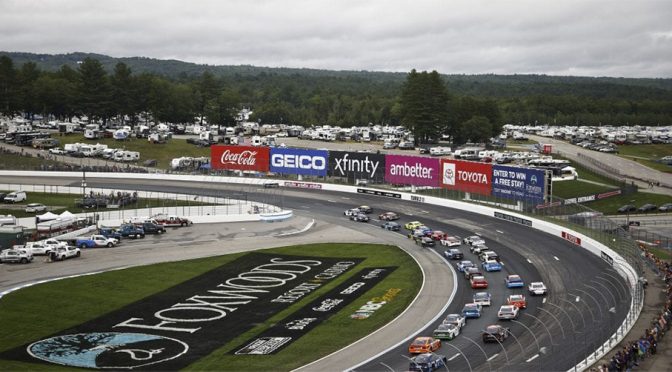
The NASCAR Cup Series ships up to New England this weekend in a return to New Hampshire Motor Speedway.
Get set for racing around the 1-mile oval before Sunday (3 p.m. ET, USA Network, NBC Sports App, PRN, SiriusXM NASCAR Radio) with plenty of storylines ahead.
MAKING HOT LAPS
Teams will be allotted 15-minute practice sessions on Saturday (11:30 a.m. ET, NBC Sports App; TV coverage starting at noon ET on USA Network) with the 36 entries divided into Groups A and B.
That precedes single-car, single-lap qualifying (12:20 p.m. ET, USA Network), which will set the starting lineup for Sunday’s Ambetter 301. The fastest five drivers from each group will advance to the final round of qualifying, where those 10 drivers will compete for the pole. The fastest lap earns the Busch Light Pole Award.
— New Hampshire Motor Speedway was built at the site of the former Bryar Motorsports Park. It is the largest sporting venue in New England at more than 1,100 acres and seating for more than 92,000. It is 75 miles north of Boston, 42 miles inland from the Atlantic Ocean and 250 miles from Montreal.
— Bryar opened as a kart track in 1960. A 0.2-mile dirt oval ran near the later paved tracks from 1961-63; it was also referred to as Route 106 Midway Raceway. The 1.6-mile road course ran cars from 1964-88 and motorcycles only in 1989. A paved 0.2-mile oval ran from 1965-88, and a 0.625-mile paved oval from 1968-88. A 0.25-mile paved drag strip operated in the 1970s.
— Bob Bahre purchased Bryar in 1989. The existing complex was dismantled, and the 1-mile paved oval and 1.6-mile paved road course were built with much of the work done by Bob Bahre and his brother, Dick. After just nine months of construction the oval successfully opened on July 15, 1990, with an Xfinity Series race won by Tommy Ellis over Harry Gant.
— The first NASCAR Winston Cup race was on July 11, 1993, won by Team Penske driver Rusty Wallace over pole winner Mark Martin.
Source: Racing Insights
GOODYEAR TIRES
Although Cup teams haven’t visited New Hampshire to race with the Next Gen car yet, there will be some familiarity this weekend.
Goodyear is providing the same tire setup at the Loudon, New Hampshire, oval that has been used at Phoenix Raceway, Richmond Raceway and Worldwide Technology Raceway at Gateway.
“Loudon falls into a significant group of tracks, so Cup teams have been on this tire set-up three times already this season,” said Greg Stucker, Goodyear’s director of racing. “Having that experience, and now having raced this Next Gen car for five months, teams have had time to work through which settings work for their cars. In looking for grip, air pressure has always been a prime tuning tool for teams at Loudon. Combined with a team’s shock and camber settings, that will be the case again this weekend.”
Scott Miller, NASCAR’s senior vice president of competition, said Tuesday on SiriusXM NASCAR Radio that PJ1 traction compound is “a thing of the past” in lieu of what resin has provided instead. Whether we see resin in the outside lanes of New Hampshire this weekend, however, remained undetermined.
“There is actually some discussion going on right now amongst the drivers and ourselves about what we need to do this weekend,” Miller said. “Last year, we didn’t spray the track up there. We had planned on it, but the way the rain was around the weekend, there was never an opportune time to do so and the track raced pretty good last year.”
NEW HAMPSHIRE STORY LINES
— Seven races remain in the Cup Series’ regular season.
— The longest top-10 finish streak by a driver this year is five races, four times: Chase Elliott, Kyle Busch, Christopher Bell and Ross Chastain. Chastain’s streak is active.
— Kevin Harvick is on a 62-race winless streak, the second longest of his career. 21 drivers have won since Harvick’s last win.
— Kyle Larson is on a 17-race winless streak, the longest of his career at Hendrick Motorsports.
— Hendrick Motorsports has not won at New Hampshire since Kasey Kahne’s victory in July 2012. Since then, HMS has won four championships and 83 races at 25 different venues. Larson is the only active Hendrick driver who had made a NASCAR National Series start (Kentucky, Camping World Truck Series) when Kahne won.
Source: Racing Insights
TAKING THE FAVORITES FOR ‘GRANITE?’
Chase Elliott is the man to beat these days, scoring his series-leading third victory a week ago at Atlanta Motor Speedway.
The 2020 Cup Series champion is listed as the 10-1 favorite Sunday, courtesy of BetMGM’s odds. However, this might be a week to stay away from the No. 9 Chevrolet. In eight starts at the “Magic Mile”, Elliott has one top five (2018) and one other top-10 finish (ninth, 2020). Hendrick Motorsports hasn’t won in Loudon in a decade, so avoiding Elliott seems to be the safer choice here.
On the other hand, Ford has been stellar on flat, mile-long ovals — both historically and this season. The Blue Ovals have won the last four races in New Hampshire, including three victories for Stewart-Haas Racing. Chase Briscoe, another SHR driver, took the victory in Phoenix this spring and Joey Logano was victorious at Gateway. Harvick scored his season-best finish (second) at Richmond earlier this year. Those results all came on this tire compound.
All that said, Harvick opens at 16-1 odds on BetMGM as the third-best bet in the field. Is this the week his 62-race winning streak comes to a close? Certainly seems plausible.
Want to manage a team and race your way to the top of the leaderboards? Check out NASCAR Fantasy Live, which is open now. The free-to-play game lets you choose your drivers each week and show off your crew-chief instincts by garaging a driver by the end of Stage 3, and there is a $25,000 prize for the winner.
The 2022 Fantasy Live points leaders are Chase Elliott (618), Ryan Blaney (583) and Ross Chastain (578).
Get additional camera views by logging on to NASCAR Drive, where each week a select number of in-car cameras will be available — as well as a battle cam and an overhead look.
NASCAR has partnered with LiveLike to add fan engagement in the NASCAR Mobile App. Log in to the mobile app during the race for polls, quizzes, the cheer meter and more — and see instant results from NASCAR fans like you.
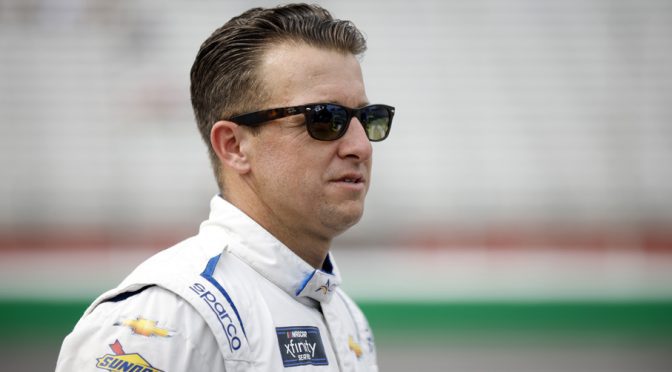
The New Hampshire native and North Carolina resident works as the car chief on the No. 16 Kaulig Racing Chevrolet in the NASCAR Cup Series that will be piloted this weekend at New Hampshire Motor Speedway by A.J. Allmendinger.
In addition to that, he and his wife are currently in the process of moving. So you might say Seuss’ life is currently complicated.
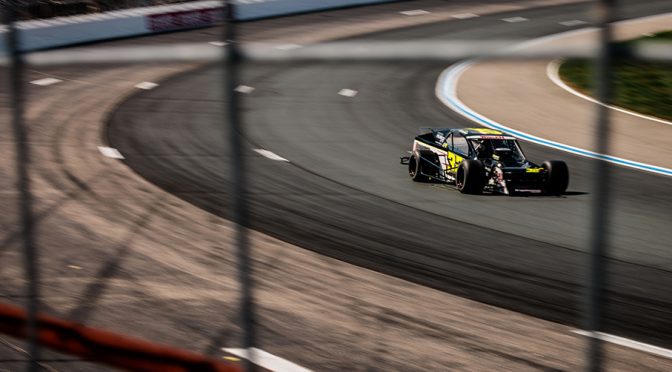
That makes this the perfect time for Seuss to dust off his driving suit and climb back into a Modified to race in Saturday’s NASCAR Whelen Modified Tour Manufactured in America 100 at New Hampshire Motor Speedway (6 p.m. ET on FloRacing).
The two-time NASCAR Whelen Southern Modified Tour champion doesn’t race often these days due to his work schedule, but he couldn’t pass up the opportunity to race on the big stage at New Hampshire.
“At a young age I fell in love with Modified racing,” Seuss said. “It was always a dream, even racing go karts not far from there, to one day run the Modified at Loudon. I guess that excitement has never really left me. It’s still important to me. It’s huge. It’s a big deal.”
Seuss has gotten to do that 24 times during his racing career, with a best finish of fourth at the 1.058-mile speedway. He earned his lone NASCAR Whelen Modified Tour pole at New Hampshire in 2020 and he led 30 laps during that event before finishing sixth.
Andy Seuss, driver of the No. 70 Rockingham Boat/TDS Chevrolet, during the Musket 200 presented by Whelen for the NASCAR Whelen Modified Tour at New Hampshire Motor Speedway on Sept. 11, 2020. (Photo: Maddie Malhotra/NASCAR)
His attempts at New Hampshire make up nearly half of Seuss’ career NASCAR Whelen Modified Tour starts. Why is New Hampshire so important to Seuss?
“It’s always still been our Daytona 500, personally, and I feel like a lot of people feel that way about the Modifieds,” Seuss said of racing at New Hampshire.
The car the 35-year-old will be driving Saturday is owned by his father, Steve Seuss, and will have sponsorship from Rockingham Boat and Acacia Energy. The father-son duo have worked together to race at New Hampshire since 2006 and have built a notebook the younger Seuss thinks is good enough to make them contenders.
However, Seuss will be at a unique deficit before he even takes the green flag Saturday afternoon.
Because of his responsibilities with Kaulig Racing, Seuss says he doesn’t expect to practice in his No. 70 Modified on Friday afternoon. In fact, he may not even get to qualify.
“I won’t be able to practice the car. I’ll be doing my day job in the Cup Series garage,” Seuss said. “Hopefully if we pass tech in time maybe I’ll get to qualify it, but if not, we’ll be starting in the back.”
So can Seuss win the race starting from the back? It’s not impossible.
Four times a winner at New Hampshire has started 29th or worse, with Mike Stefanik winning one of his record eight races at New Hampshire from the 40th position in 1998.
With 26 cars entered Saturday, Seuss won’t need to pass nearly as many cars as Stefanik did in 1998 if he hopes to win his first NASCAR Whelen Modified Tour race.
Regardless of where he finishes, Seuss said the goal will be to have fun and enjoy a weekend back in his home state with many of the crew members who have helped him race through the years.
“We know that it’s an uphill battle,” Seuss said. “Maybe we’re not as likely to have the success that we’ve had in the past by putting ourselves behind, but it’s really about going and having fun this year. We’re just looking forward to having a weekend together. Racing a Modified just happens to be one of the things we all enjoy the most.”
Preece back to battle Mod Squad in Loudon
Ryan Preece loves his Modified racing roots, and he loves New Hampshire Motor Speedway.
These are big reasons why Preece is entered in Saturday’s Manufactured in America 100 at the 1.058-mile asphalt oval, where he happens to be the defending race winner.
Preece scored his first New Hampshire Motor Speedway victory last fall in a thrilling finish that saw him go from third to first in the final two corners.
As Ron Silk and Justin Bonsignore were battling for the lead, Preece made a hard left in Turns 3-4 to go underneath both competitors to take the lead and steal the victory in thrilling fashion.
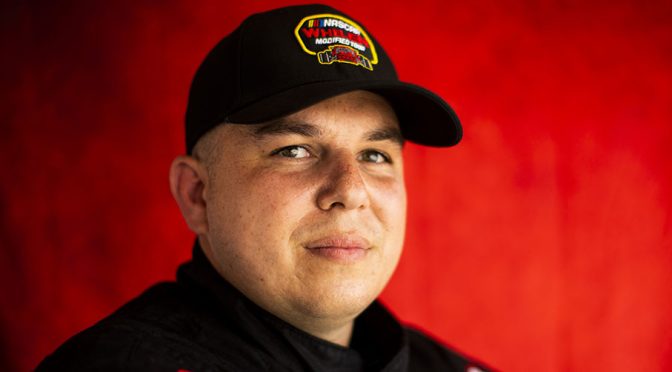
Unlike last year, when Preece was driving the No. 6 Modified for the Partridge family, this time around he’ll be in his own No. 40 Modified that he recently began campaigning.
Saturday’s race will be Preece’s 26th NASCAR Whelen Modified Tour start at New Hampshire Motor Speedway. In his previous 25 starts, he has earned the aforementioned victory as well as eight top-five and 13 top-10 finishes. He’s also fourth in laps led at the track among active drivers.
Veterans Coby, Silk look for another Magic Mile trophy
Among those entered in Saturday’s Manufactured in America 100, no one has made more NASCAR Whelen Modified Tour starts at New Hampshire Motor Speedway than Doug Coby and Ron Silk.
Coby has competed in 35 races at the track, and Silk has competed in 34. The two have combined for seven victories, with Coby owning four New Hampshire trophies and Silk having collected three.
Silk enters Saturday’s race on top of the NASCAR Whelen Modified Tour championship standings. He’s the only driver to finish inside the top 10 in every race so far this year, but he’s failed to visit Victory Lane thus far.
A trip to New Hampshire, where he has 16 top-five and 24 top-10 finishes, could be exactly what the doctor ordered as he continues his quest for his second series championship and first since 2011.
Coby, on the other hand, has already made two visits to Victory Lane this season. He earned wins at New York’s Riverhead Raceway and New Hampshire’s Lee USA Speedway aboard Tommy Baldwin Jr.’s No. 7NY, the same car he’ll be wheeling this weekend at New Hampshire.
While Coby may have more victories at New Hampshire than Silk, he hasn’t been as consistent. He has 13 top-five and 20 top-1o finishes, just a little shy of the numbers Silk has put together in one fewer start.
Baldwin’s team has earned four victories this year, two with Coby as well as wins with Mike Christopher Jr. and Jimmy Blewett. New Hampshire Motor Speedway would be an ideal place for victory No. 5.
Notes:
Anthony Nocella returns to the NASCAR Whelen Modified Tour for his second attempt of the season this weekend. He had planned to race at Richmond Raceway in April, but a mechanical failure during practice forced him to withdraw from the event.
Six previous New Hampshire Motor Speedway winners are entered in Saturday’s race. They include the aforementioned Ryan Preece, Ron Silk and Doug Coby, as well as Donny Lia, Bobby Santos III and Justin Bonsignore.
Kyle Ebersole returns to the Tour for his fourth start of the year Saturday at New Hampshire. He’s made two previous starts at the track known as “The Magic Mile,” earning a best finish of 14th in 2017.