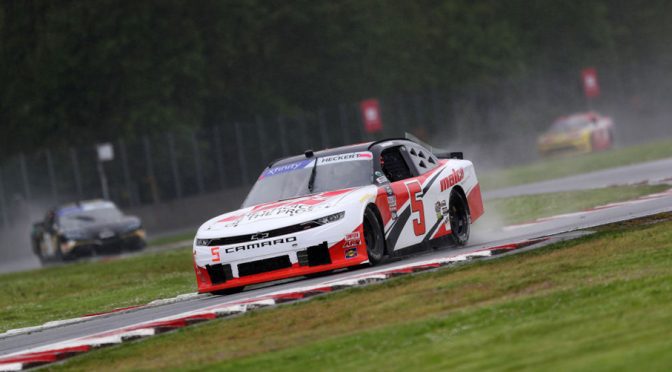
AVONDALE, Ariz. — NASCAR’s 2022 Next Gen testing schedule started and ended at the same destinations the official season will begin and conclude — Daytona International Speedway and Phoenix Raceway.

There was a two-day organizational test Jan. 11-12 at Daytona and then another this week at Phoenix. Wednesday’s eight-hour session marked Day 2 and therefore the last preseason opportunity for teams to turn laps on track. They’ll next unload with a checkered flag on the line.

“I think that, from my gray hair, we’ve all done this long enough to know that this is testing,” John Probst, NASCAR senior vice president of racing innovation, said. “We’ve done it throughout our history. And from what we’ve seen right now, we feel like we’re in a really good spot. But until we throw the green flag and guys go out there to race, with some anger and really start bumping and banging … right now, we’re really happy. We’re also prepared to monitor how the season starts and we’ll be prepared to make adjustments if we need to. But right now, all indications are pretty good.

“Experience tells us not to get too happy, so we’ll just be cautiously optimistic, how about that?”

RELATED: Next Gen test photos | Champion Kyle Larson returns to Phoenix

Up first is the Busch Light Clash at the Los Angeles Coliseum (Feb. 6 at 6 p.m. ET on FOX), a star-studded exhibition event held in Los Angeles for the first time. The regular season begins with the Daytona 500 (Feb. 20 at 2:30 p.m. ET on FOX), where the new 510-horsepower engine and 7-inch spoiler will be used. That rules configuration was confirmed at the Daytona test and will be used there, Talladega Superspeedway and Atlanta Motor Speedway.

All other tracks, including Phoenix, will feature a base 670 target horsepower and 4-inch rear spoiler. That, too, was determined before this week’s test.

“Just kind of doing one last sanity check,” Probst said. “We felt like, coming here with the short-track package, we would be in a pretty good spot. Confirmed and check on that, yes, we are. If you look at the lap times, there’s pretty good parity out there right now, a lot of times similar to what we raced here.”

Defending series champ Kyle Larson from Hendrick Motorsports (27.329 seconds, 131.728 mph) clocked the fast lap Tuesday, while Team Penske driver Ryan Blaney (27.292 seconds, 131.907 mph) topped Wednesday’s boards.

RELATED: Unofficial speeds from Phoenix | Complete Next Gen timeline

Phoenix’s shakedown was more so for teams than NASCAR. The sanctioning body monitored tire wear and debated inspection processes, but otherwise, its personnel simply shadowed the garage unless an issue arose.

Feedback from drivers varied from stall to stall.

“We may have some general ideas, but there’s nothing concrete yet until we go out there and race,” Team Penske wheelman Joey Logano said. “So, when you say comfortable, I’m far from comfortable. There’s nothing I really know for certain is coming my way.”

A very different vibe from Trackhouse Racing Team’s Daniel Suarez.

“I don’t have, honestly, one thing that bothers me about the car,” he said. “That’s my honest opinion, so I’m happy. I’m happy for the change. I’m happy for where the sport is heading. And I can’t wait to get started.”

There are others who have adopted more of a laissez-faire attitude, too.

“Once you get the first five races, you kind of have a good dialogue and a good direction of where your team is, so just grind through it,” 23XI Racing pilot Bubba Wallace said. “This car is so tricky, and it’s a lot to take in. Every lap on track, I kept getting more and more comfortable. It’s just a matter of time before it all clicks.”

RELATED: Read more of what drivers had to say about final Next Gen test

And it could very well all click — at different times, for different teams.

“I’m anxious to go through that learning process and kind of see who guesses right first, and hopefully it’s us,” Hendrick Motorsports’ Chase Elliott said. “Then, whether it is or isn’t, you definitely want to make sure you’re on the upswing at the right time, like always, and I think that swing is going to be a pretty big one this year.”

That was — still is — the whole point.

NASCAR introduced the idea of Next Gen in 2019. The actual product will competitively debut here in 2022.

“I feel like we’re a sports team,” Probst said. “We’ve been practicing for three years, and now it’s time to put the uniforms on and get out under the lights and see what we’ve got.”

RELATED: Daniel Suarez speaks highly of Next Gen | Chase Elliott discuses Next Gen competitive changes

LOS ANGELES (January 26, 2022) – A world-renowned trendsetter will make NASCAR history during the Busch Light Clash at the Coliseum on Sunday, Feb. 6.

NASCAR announced today that DJ Skee will become the first live DJ to perform during the caution breaks of a NASCAR race. As fans wait for the racing action to resume, Skee will entertain and energize the Los Angeles Memorial Coliseum crowd with the style and flair that has made him an international sensation.

RELATED: Full event schedule, buy tickets

“We’ve said from the beginning that the Busch Light Clash at the Coliseum is a first-of-its-kind event, and having DJ Skee spinning during the caution breaks adds to the fresh, unique nature of this event,” said Ben Kennedy, NASCAR senior vice president for strategy and innovation. “DJ Skee is a world-class talent who is going to create a fun and entertaining experience for everyone as our drivers prepare to take the green flag once more.”

DJ Skee built an empire by consistently identifying the next trends in music, culture, and tech. As a DJ, Skee is best known for introducing the world to artists including Kendrick Lamar, Lady Gaga, Post Malone, Travis Scott, and more on his TV and radio platforms. Skee has produced for defining artists of this era ranging from Snoop Dogg to Michael Jackson and composed music for top-selling video game series like HALO and Ghost Recon.

As a performer, Skee has opened up and held residencies at high-profile clubs and venues globally, including XS at the Wynn/Encore in Las Vegas and US Bank Stadium in Minneapolis. Skee has been honored with numerous awards and accolades including Mixtape and Radio DJ Of The Year, Billboard and Forbes “30 Under 30,” as well a mayoral proclamation in his hometown of St. Paul Minnesota, declaring May 26th “DJ Skee Day.” In raw numbers, Skee has generated over four billion views and has a network of over two million followers.

“I like the fun way that NASCAR is approaching this race, and it’s an honor to be part of that fun,” Skee said. “I know we’re going to have a lot of it together and create lasting memories on this historic day for NASCAR.”

Skee’s presence bolsters an already power-packed entertainment lineup that’s set for NASCAR’s season-opening exhibition. Pitbull will also perform a 45-minute concert presented by Coca-Cola prior to the 150-lap main event on Sunday, Feb. 6, and Ice Cube will perform during the race break.

Moreover, LA Galaxy and US Men’s National Team star Cobi Jones will join Monica Palumbo as the in-stadium announcers, while former MTV host Riki Rachtman will serve as the host of NASCAR’s Fan Fest at the Coliseum.

More celebrity participation in the Busch Light Clash will be revealed in the days ahead.

RALEIGH, N.C. — Advance Auto Parts, a leading automotive aftermarket parts retailer and the official auto parts retailer of NASCAR, announced the return of its “Home Track Highlights” program, in partnership with Team Penske and its No. 12 Ford Mustang driven by seven-time NASCAR Cup Series race winner Ryan Blaney.

During the season, Advance will use its sponsorship of the No. 12 Ford to feature race tracks across the U.S. and Canada that are part of the NASCAR Advance Auto Parts Weekly Series. Two NASCAR Home Tracks will rotate on Blaney’s Ford each weekend.

Bowman Gray 2021

The program begins next weekend, with Bowman Gray Stadium in Winston-Salem, N.C. and Riverhead Raceway in Riverhead, N.Y., displayed on the No. 12 at NASCAR’s preseason race at Los Angeles Memorial Coliseum on Sunday, Feb. 6.

For every Blaney victory in 2022, the NASCAR Home Tracks featured on his car will receive $1,200 from Advance, to be used for track operations, local driver winnings or supporting a nonprofit organization of the track’s choosing. In 2021, Advance awarded $1,200 to six home tracks following Blaney’s three NASCAR Cup Series race victories.

Advance will continue to serve as primary sponsor for the No. 12 team in four races in 2022: Martinsville Speedway on April 9, Darlington Raceway on May 8, Nashville Superspeedway on June 26 and the regular-season finale at Daytona on Aug. 27. This is Advance’s third year of a multi-year agreement with Team Penske.

“We’re thrilled to bring back Home Track Highlights alongside our partners at Team Penske,” said Jason McDonell, Advance’s executive vice president of merchandising, marketing and eCommerce. “Our customers are die hard race fans, and through our motorsports partnerships, our objective is to advance the journey of grassroots racers, tracks and fans. We appreciate the passion shared by Ryan and Team Penske around this effort, and we look forward to an outstanding season.”

Added Blaney: “Every driver in the Cup Series has fond memories growing up and racing on short tracks. I’m excited to participate in this program, representing Advance and NASCAR’s Home Tracks. These facilities are so important to their communities, and it’s awesome seeing Advance’s commitment to local racing. Our No. 12 team had a great season last year with three wins, and we’ll be hungry to win more races for our partners and local tracks in 2022.”

Along with Home Track Highlights, Advance will support grassroots racing through its second-annual “Advance My Track Challenge.” Last year, Berlin Raceway in Marne, Mich., secured the most fan votes to win a $50,000 grand prize from Advance.

It’s finally here: the Los Angeles Memorial Coliseum makes its debut on iRacing Wednesday. The newest track on the NASCAR Cup Series calendar, and one of the most iconic and historic sporting venues in the United States, can now be purchased by all iRacing users.

MORE: Full guide to 2022 Busch Light Clash at the Coliseum

The Los Angeles Memorial Coliseum represents a groundbreaking step forward for the official partnership between iRacing and NASCAR. Both the track itself, and the NASCAR Cup Series Next Gen cars that will compete on it in Feb. 6’s Busch Light Clash at the Coliseum, will have made their debuts on iRacing before ever taking part in a race in the real world. Major accomplishments like these enable new track layouts to receive far more testing than they ever had in the past, in hopes of giving fans the best possible product out of the gate.

The quarter-mile track layout for the Coliseum was designed on iRacing with the input of not only real-world NASCAR teams and drivers, but also the competitors of the eNASCAR Coca-Cola iRacing Series, NASCAR’s premier sim racing series with more than $300,000 on the line every year. The track went through multiple different designs before a final profile was selected and built within the stadium over the winter.

For those looking to get behind the wheel of the NASCAR Cup Series Next Gen cars on the Coliseum quarter-mile, numerous public series will run over the coming weeks leading up to the real event, starting with the Coliseum Clash that launches Wednesday. In addition, the eNASCAR Coca-Cola iRacing Series will kick off its 2022 season with an exhibition Clash of its own on Feb. 1, airing at 9 p.m. ET on eNASCAR.com/live and iRacing.com/live. For more information on iRacing and for special offers, visit www.iracing.com.

AVONDALE, Ariz. — Kyle Larson looked behind him. The 2021 NASCAR Championship Weekend backdrop remained from November inside the Phoenix Raceway media center.

“That’s cool,” he said.

NASCAR’s reigning Cup Series champion returned to the site of his title triumph to shakedown his No. 5 Hendrick Motorsports Chevrolet for the final time before the 2022 season commences. More than two full months have passed since Larson hoisted the Bill France Cup trophy in Victory Lane. Seventy-nine days, to be exact.

“When I was out there, I saw my long burnout that I did,” Larson said. “Yeah, that was good. I’m glad that’s still out there.

“It is cool that the first time I’m back… Well, I guess I ran Charlotte a couple of times, but not really. So, the first real day in this car was back at Phoenix. It was also the freshest track in my mind. To come here and get to feel this new car, it helped me realize that it didn’t drive too much different than before.”

Larson
Terrin Waack | NASCAR Digital Media

RELATED: Next Gen test to continue Thursday | At-track photos from Phoenix

Tuesday was just Day 1 of NASCAR’s two-day organizational test at the 1-mile track. Wednesday will consist of another eight-hour session, which NASCAR.com will stream live on its YouTube page. There is no more testing after that.

The 2022 season kicks off Feb. 6 (6 p.m. ET, FOX) with the Busch Light Clash exhibition event at the Los Angeles Coliseum before the points-paying Daytona 500 opener two weeks later (Feb. 20, 2:30 p.m. ET, FOX) in Florida.

“I feel like we’re ready to race,” Larson said. “I was happy with the balance of our race car when we unloaded today. So, yeah, I’m confident we can go out there, race and be competitive right off the bat.”

The base rules configuration for short tracks, road courses and intermediate circuits was finalized back in December. Engines have a target output of 670 horsepower, and cars will feature a 4-inch rear spoiler. Last season saw a 750-horsepower package.

RELATED: Catch up on the full Next Gen timeline

Larson posted the fastest unofficial lap time Tuesday, turning the circuit in 27.329 seconds at a speed of 131.728 mph. For reference but not comparison — preseason vs. postseason — Larson also captured the pole back in November in 26.116 seconds at 137.847 mph.

“If we qualified one of these things right now, we’d probably run a 26.80, maybe,” crew chief Cliff Daniels told NASCAR.com. “I guess, reasonable. There’s nothing crazy scary with the car. It’s a race car. There’s stuff we need to work on just from brakes, steering and stuff like that, but I can’t say that’s unexpected. That’s just trying to get him comfortable and get a feel for things.”

Larson will split time Wednesday in the No. 5 Chevrolet, taking the morning shift and passing the keys to Hendrick Motorsports teammate William Byron come afternoon.

While Larson isn’t all too concerned about the car, Daniels admits his wheels are already spinning. The garage doors closed Tuesday, and he was already thinking about Wednesday.

“I’m going to regret it one day, but I’m very much in the mindset of everything for 2022,” Daniels said. “So, 2021 is in the rearview mirror.”

RELATED: Busch Light Clash weekend schedule | Personnel changes to know for 2022

Unofficial speeds from organizational Next Gen testing for the NASCAR Cup Series on Jan. 25-26 at Phoenix Raceway. Note that times are unofficial, with no technical inspection conducted before each session.

RELATED: Scenes from preseason Cup Series testing at Phoenix Raceway

Day 1 – Practice 

Pos. No. Driver(s) Make Team Best time (seconds) Differential Best speed (mph)
1 5 Kyle Larson Chevrolet Hendrick Motorsports 27.329 131.728
2 8 Tyler Reddick Chevrolet Richard Childress Racing 27.474 -0.145 131.033
3 22 Joey Logano Ford Team Penske 27.500 -0.171 130.909
4 47 Ricky Stenhouse Jr. Chevrolet JTG Daugherty Racing 27.534 -0.205 130.747
5 23 Kurt Busch/Bubba Wallace Ford 23XI Racing 27.563 -0.234 130.610
6 12 Ryan Blaney Ford Team Penske 27.583 -0.254 130.515
7 17 Chris Buescher Ford RFK Racing 27.592 -0.263 130.473
8 9 Chase Elliott Chevrolet Hendrick Motorsports 27.611 -0.282 130.383
9 4 Kevin Harvick Ford Stewart-Haas Racing 27.648 -0.319 130.208
10 18 Kyle Busch Toyota Joe Gibbs Racing 27.743 -0.414 129.762
11 1 Daniel Suarez Chevrolet Trackhouse Racing 27.781 -0.452 129.585
12 19 Martin Truex Jr. Toyota Joe Gibbs Racing 27.784 -0.455 129.571
13 14 Chase Briscoe Ford Stewart-Haas Racing 27.809 -0.480 129.454
14 31 Daniel Hemric Chevrolet Kaulig Racing 27.848 -0.519 129.273
15 21 Austin Cindric Ford Wood Brothers Racing 27.894 -0.565 129.060
16 38 Michael McDowell Ford Front Row Motorsports 28.004 -0.675 128.553
17 42 Ty Dillon Chevrolet Petty GMS Motorsports 28.147 -0.818 127.900
18 27 Loris Hezemans Ford Team Hezeberg 28.721 -1.392 125.344

Day 2 – Practice 

Pos. No. Driver(s) Make Team Best time (seconds) Differential Best speed (mph)
1 12 Ryan Blaney Ford Team Penske 27.292 131.907
2 22 Joey Logano Ford Team Penske 27.327 -0.035 131.738
3 14 Chase Briscoe Ford Stewart-Haas Racing 27.376 -0.084 131.502
4 9 Chase Elliot Chevrolet Hendrick Motorsports 27.413 -0.121 131.325
5 4 Kevin Harvick Ford Stewart-Haas Racing 27.457 -0.165 131.114
6 19 Martin Truex Jr. Toyota Joe Gibbs Racing 27.481 -0.189 131.000
7 38 Todd Gilliland Ford Front Row Motorsports 27.594 -0.302 130.463
8 5 Kyle Larson Chevrolet Hendrick Motorsports 27.607 -0.315 130.402
9 1 Ross Chastain Chevrolet Trackhouse Racing 27.641 -0.349 130.241
10 18 Kyle Busch Toyota Joe Gibbs Racing 27.645 -0.353 130.222
11 17 Brad Keselowski Ford RFK Racing 27.688 -0.396 130.020
12 23 Bubba Wallace/Kurt Busch Toyota 23XI Racing 27.705 -0.413 129.940
13 21 Harrison Burton Ford Wood Brothers Racing 27.713 -0.421 129.903
14 31 Justin Haley Chevrolet Kaulig Racing 27.748 -0.456 129.739
15 42 Ty Dillon Chevrolet Petty GMS Motorsports 27.781 -0.489 129.585
16 8 Austin Dillon Chevrolet Richard Childress Racing 27.786 -0.494 129.562
17 47 Ricky Stenhouse Jr. Chevrolet JTG Daugherty Racing 27.826 -0.534 129.375
18 27 Loris Hezemans Ford Team Hezeberg 27.928 -0.636 128.903

DAYTONA BEACH, Fla. — National Association for Stock Car Auto Racing, LLC (“NASCAR”) continues to deliver on its commitment to evolve the racing industry through technology innovation, announcing Tuesday that Southern Computer Warehouse (SCW) has become the Official Technology Value-Added Reseller of NASCAR in a multi-year partnership.

In addition to its Official Partnership, SCW joins the NASCAR Technology Partner Platform, helping to furnish a future-forward and innovative technology approach to NASCAR with other industry leaders.

“SCW brings a vast array of technology products and solutions to NASCAR as a successful value-added reseller in the tech industry,” said Jeff Wohlschlaeger, NASCAR Vice President and Chief Sales Officer. “Through this partnership, we’re able to expand our Technology Partner Platform, encouraging additional collaboration with our partners as we help shape the direction of the sport’s future.”

“We are excited to partner with NASCAR and showcase our industry leading technology offering through the world’s most exciting sport,” said Joseph Gabriel, founder and CEO of SCW. “As we approach $1 billion in total company sales, the partnership serves as a sincere ‘thank you’ to our customers and manufacturing partners, many of whom are dedicated NASCAR fans. We look forward to showing our appreciation to them through special NASCAR events and offerings and demonstrating to millions of fans why SCW is ‘Where America Gets I.T.’”

SCW is a value-added reseller of technology products and services with manufacturing partnerships across more than 3,000 brands. It will provide NASCAR access to its more than one million IT hardware and software products, collaborating with NASCAR and other Official Partners to find more ways to leverage technology in the industry.

The NASCAR Technology Partner Platform was created in August 2021 as a way to connect tech leaders from around the globe in a collaborative and fast-paced environment that serves as an incubator for new ideas, case studies, relationships and efficiencies. More than 30 leading-edge companies participated in the program’s inaugural event at Daytona International Speedway, including NASCAR Official Partners Xfinity, Comcast Business, Verizon and Amazon Web Services.

NASCAR officials released a more stringent penalty structure for the 2022 Cup Series season on Monday, introducing a list of deterrence options that includes revoking playoff eligibility for the most severe violations.

The three-tiered system – from L1 to L3 – was added to the Cup Series Rule Book on Monday. The format was put in place before the debut of the Next Gen car model, which hits the track in season-opening events next month.

The structure reserves its harshest L3 penalty options for the tampering and counterfeiting of Next Gen single-source vendor parts. Those infractions join testing policy violations with infractions in three significant off-limits areas – engine, tires, fuel – under the L3 umbrella. That heading includes the deduction of Cup Series points, playoff points, crewmember suspensions and postseason bans among the penalty options.

RELATED: Next Gen timeline | 2022 Cup Series schedule

“To make sure that all of those things stay above board, there’s going to have to be a culture shift from the way that the teams and NASCAR, for that matter, have done business,” said Scott Miller, NASCAR senior vice president of competition. “So this deterrence model has more meat in it, more meaningful penalties, but I think we all thought that it was it was time for this with the introduction of the new car.”

Penalties for lesser violations found in pre-race inspection during a race weekend remain largely intact. For all other in-race and post-race infractions at the L1 level and up, NASCAR competition officials will disqualify the offending teams and consider the following options:

L1 penalties

Violations include:

  • Post-race failure to meet minimum weight requirements
  • Team source parts not meeting the NASCAR Rules, but not rising to a higher-level penalty
  • Failures in the submission and approval process of parts

Penalty options include:

  • Points deductions: 20-75 points
  • Playoff points deductions: 1-10 points
  • Suspension of one crewmember for 1-3 races
  • Fines: $25,000-$100,000.

L2 penalties

Violations include:

  • Modifications to single-source Next Gen parts not rising to L3 level infractions
  • Violations of engine-seal requirements
  • Unapproved alterations to the engine control system wiring
  • Use of unapproved on-board electronics

Penalty options include:

  • Points deductions: 75-120 points
  • Playoff points deductions: 10-25 points
  • Suspension of one or two crewmembers for 4-6 races
  • Fines: $100,000-$250,000

L3 penalties

Violations include:

  • Counterfeiting or modifying single-source Next Gen parts
  • Engine infractions (cubic-inch displacement, compression ratio, assembly and internal components) and performance enhancements (nitrous oxide, vacuum leaks)
  • Engine Control Unit (ECU) or Electronic Fuel Injection (EFI) violations
  • Modifying tires and/or fuel
  • Violations of private team testing policy

Penalty options include:

  • Points deductions: 120-180 points
  • Playoff points deductions: 25-50 points
  • Suspension of one or two crewmembers for six races
  • Fines: $250,000-$500,000
  • Nullifying postseason eligibility, regardless of wins, points and other qualifying criteria
  • One-race suspension for the team, in the event of repeat high-level violations

Steve O’Donnell, NASCAR executive vice president and chief racing development officer, had hinted during Next Gen testing last month at Charlotte Motor Speedway that tougher penalties — including postseason bans – were under consideration. “It used to be ‘let’s see what we can get away with and go racing.’ That’s not the case with this car,” O’Donnell said. “We’ve built this car to try and make it as fundamentally sound as possible in collaboration with the teams and then really put it on teams, and drivers and pit crews to go out there and win races.”

Miller reiterated that notion Monday, saying that teams and other industry partners had advocated for the change.

“If there aren’t penalties for altering parts and pieces on the new car, then the business model with new car won’t work,” Miller said. “So it was definitely something that was pressed for hard by the teams, and we’re doing our due diligence for establishing all the inspection procedures and all the different things. The rule book is a completely new rule book with lots more specifics than there were in the past.”

The last major update of the NASCAR deterrence system came before the 2017 season, when the L1-L2 structure replaced the P1-through-P6 penalty classification that dated to 2014. For 2019, competition officials added disqualification as a consequence for post-race L1- and L2-grade penalties. Disqualification remains in place as a penalty this season, with teams in violation relegated to last-place points, stripped of any stage points and playoff points accrued in that race.

Adding playoff points and postseason eligibility to the mix this year provides an extra layer of deterrence. Regular-season points penalties were not as effective a punishment, Miller says, under a postseason format that includes points resets and playoff berths for race winners, regardless of their points totals.

“If a regular-season violation has playoff ramifications to it,” Miller said, “obviously I think the teams will take that much more seriously than they ever did points with the current playoffs and playoff-point format that we have.”

With NASCAR shifting to a single, center-locking lug nut for the larger wheels of the Next Gen car, the rule book’s penalty language for unsecured lugs for the five lug-nut wheels has gone away. What remains is a penalty section for the loss of an improperly installed tire/wheel, which still carries a four-race suspension for the offending team’s crew chief and two additional crewmembers.

NASCAR hosts a two-day Next Gen organizational test this week at Phoenix Raceway, marking the Cup Series’ final preseason shakedown before the 2022 schedule commences.

Cars are on track in the desert Tuesday and Wednesday, and the venue just so happens to be the championship destination. NASCAR.com will live stream all of the action on its YouTube channel. Each day’s sessions will run from 11 a.m. to 7 p.m. ET. See below to watch.

RELATED: Catch up on the full Next Gen timeline

Fans will be allowed to attend Tuesday’s test session from the Phoenix Raceway Canyon section of the grandstands. Admission is free, but fans must register for access online.

This two-day effort is the second organizational test of the new year. Another was held at Daytona International Speedway two weeks ago. While there, NASCAR settled on its superspeedway package – an engine-output target of 510 horsepower combined with a 7-inch rear spoiler. The configuration will be utilized at the 2.5-mile Daytona, 2.66-mile Talladega Superspeedway and 1.54-mile Atlanta Motor Speedway.

RELATED: Superspeedway package confirmed | Base rules confirmed

Phoenix, however, is a 1-mile track, and the base rules for short tracks, road courses and intermediate circuits were announced back in December. Engines will have 670 target horsepower, and cars will feature a 4-inch spoiler. This week gives teams the opportunity to fine-tune their setups.

“Obviously Phoenix is an important not only to us but the teams, our championship event is held there, so it’s obviously one they all have marked to show up and be very competitive at,” NASCAR senior vice president of racing innovation John Probst said after the Daytona test. “From the NASCAR perspective, we want to go out there and make sure that as the track rubbers in, we got really good Goodyear tires, which they’ve done a fantastic job through this whole project with us, making sure we’ve got the right stuff on the cars. I think as far as the package goes, with the high horsepower and low downforce, I think it’s certainly something our drivers love to drive and I think that we’ve done enough testing. We’ve been to Phoenix already with our prototype cars. I would anticipate a pretty good result coming out of Phoenix.”

The Next Gen will make its competitive debut Feb. 6 (6 p.m. ET) in the Busch Light Clash exhibition race at the Los Angeles Memorial Coliseum. The 2022 points slate will then officially kick off Feb. 20 (2:30 p.m. ET) with the season-opening Daytona 500 in Florida. Both events will air live on FOX, MRN and SiriusXM NASCAR Radio.

RELATED: 2022 NASCAR Cup Series schedule | 2022 rules packages for each track

Here is a full rundown of the drivers taking part in the Phoenix test:

Organization Car No. Drivers
Front Row Motorsports 38 Todd Gilliland and Michael McDowell
Hendrick Motorsports 5 Kyle Larson
Hendrick Motorsports 9 Chase Elliott and Alex Bowman
Joe Gibbs Racing 18 Kyle Busch
Joe Gibbs Racing 19 Martin Truex Jr.
JTG Daugherty Racing 47 Ricky Stenhouse Jr.
Kaulig Racing 31 Justin Haley and Daniel Hemric
Petty GMS Motorsports 42 Ty Dillon
RFK Racing 17 Brad Keselowski and Chris Buescher
Richard Childress Racing 8 Tyler Reddick
Stewart-Haas Racing 4 Kevin Harvick and Aric Almirola
Stewart-Haas Racing 14 Chase Briscoe and Cole Custer
Team Hezeberg 27 Jacques Villeneuve
Team Penske 12 Ryan Blaney
Team Penske 22 Joey Logano
Trackhouse Racing 1 Ross Chastain and Daniel Suarez
23XI Racing 45 Kurt Busch
Wood Brothers Racing 21 Austin Cindric and Harrison Burton


As the Next Gen car for the 2022 NASCAR Cup Series prepares for its first taste of competition, it’s time to review the development and testing so far and to size up what’s next before the new model’s debut.

January 2019: Early discussion

The first talks about the Next Gen project begin in earnest at NASCAR’s Research & Development Center in Concord, North Carolina. The emphasis for the first discussions: a renewed relevance to each automaker’s production-car counterparts, budget-minded measures meant to attract new teams and manufacturers and also an improved racing product.

Feb. 4, 2019: Next Gen briefing

Our first story on the Next Gen car, then code-named “Gen-7.” Steve O’Donnell, NASCAR executive vice president and chief racing development officer, detailed the goals for the new-look model in a preseason competition briefing, establishing an accelerated timeline for a 2021 debut. | COVERAGE: 2021 the target for Gen-7 race car

Aug. 16, 2019: Big wheels keep turning

A hint of news to come as details seeped out regarding Goodyear’s work with NASCAR officials to bring a new tire to the Cup Series to accommodate a move from 15-inch wheels to 18-inch models. Again, product relevance is one of the stated goals. | COVERAGE: NASCAR expected to increase wheel diameter

Oct. 8-9, 2019: First test (Richmond)

The first Next Gen prototype hits the track for its first on-track shakedown, with Austin Dillon taking the wheel at Richmond Raceway. The public gets its first glimpse at the design as a busy camouflage body wrap attempts to hide some of the finer details. | COVERAGE: On-track test debut at Richmond | Positive early reviews for Next Gen

Joey Logano drives the Next Gen prototype, with smaller rear spoiler, near the outside retaining wall at ISM Raceway.
Alejandro Alvarez | NASCAR Digital Media

Dec. 9-10, 2019: Second test (Phoenix)

Joey Logano takes his turn behind the wheel at Phoenix Raceway, providing a thorough video walk-through in between test sessions. Officials from car builders Richard Childress Racing, Team Penske and NASCAR tried multiple setup combinations, cycling through different configurations for tires, spoilers and other aerodynamic features. | COVERAGE: Logano’s first impressions | Phoenix test in photos

Jan. 15-16, 2020: Third test (Miami)

After test runs on a short track then a flat one-miler, the Next Gen car gets its first laps on an intermediate 1.5-mile layout as Erik Jones wheels the prototype at Homestead-Miami Speedway. Among the observations: a noted decrease in side force, Jones said, plus the first glimpse at the sequential shifter that the new car will have. “You can bang right through the gears,” Jones said. | COVERAGE: New details in Miami session | Miami test in photos

Next Gen Tire Wheel MainMarch 2, 2020: New look for lugs

NASCAR officials released the first close-up look at the new wheel design, which features a single center-locking lug nut instead of a five-lug pattern. The wheels, made by BBS, had their on-track debut in a test session at Auto Club Speedway in California. Competition officials said they anticipated no dramatic changes to the look and feel of pit stops with the design change. | COVERAGE: Single-lug wheel debuts

March 2-3, 2020: Fourth test (Auto Club)

A new prototype — dubbed P3 — is put through the paces at the 2-mile Auto Club Speedway, the largest track yet for Next Gen testing. William Byron drove the vehicle, which was “probably 99 percent what we’re going to compete with next year,” according to NASCAR officials. | COVERAGE: Learning experience for Byron | Test particulars, preview | Auto Club test in photos

April 2, 2020: Project delayed

The onset of the COVID-19 pandemic temporarily halted the NASCAR racing season, but it also placed the development and testing schedule of the Next Gen car on hold. Shortly after a test session scheduled for March 16-17 at Atlanta Motor Speedway was canceled, officials made the decision to delay the model’s competition debut until the 2022 season. | COVERAGE: Debut pushed back

Aug. 24-25, 2020: Fifth test (Dover)

Next Gen testing resumes with Cole Custer at the wheel of the P3 prototype at Dover International Speedway. Officials measure the car’s capacity for a rough, high-load oval at the “Monster Mile,” using a setup similar to the current Cup Series car’s rules package. | COVERAGE: Custer piles on the miles

2020 Nov16 Next Gen Kurt Busch Main Image
Torey Fox | NASCAR Digital Media

Nov. 16-17, 2020: Sixth test (Charlotte)

For the first time, two Next Gen prototypes hit the track in the same test as former Cup Series champs Kurt Busch and Martin Truex Jr. raced together in a two-day session — one day on the Charlotte Motor Speedway oval-road course layout and another on the 1.5-mile oval. “It does everything a little bit better,” Truex said of the car after the first test. | COVERAGE: Busch, Truex on track | Photos from Charlotte test | Post-test quote sheet

Dec. 15-16, 2020: Seventh test (Daytona)

Chris Buescher kept busy in the offseason as the driver of record for the Next Gen car’s first superspeedway laps. The single-car runs at Daytona International Speedway’s 2.5-mile layout allowed competition officials to find a baseline speed for drafting tracks, meeting that goal early in the two-day session. | COVERAGE: Superspeedway sessions for Next Gen | Daytona test in photos

Jan. 12, 2021: Eighth test (Charlotte)

Kurt Busch became the first repeat test driver, as NASCAR officials returned to Charlotte Motor Speedway for a brief session to validate some of the development work on Next Gen components. Feedback from the previous Charlotte test was more favorable for the road course than the oval, so officials re-enlisted Busch for a second shakedown. | COVERAGE: ‘Successful test’ at Charlotte

Feb. 1, 2021: Development complete

Officials highlighted their 2021 competition briefing with the statement that the development phase of the Next Gen car is complete. John Probst, NASCAR senior vice president of racing innovation, said the Next Gen bodies for all three manufacturers had been approved and outlined a timetable for the car’s 2021 slate | COVERAGE: Next Gen enters next phase

March 16-17, 2021: Ninth test (Richmond)

The Next Gen car returned to where its testing journey began at Richmond Raceway as Bubba Wallace took his first turn behind the wheel. Wallace made notes about the car’s balance and the exhaust note, and officials were pleased with the results at the .75-mile track: “Overall, the performance of the car is where we want it to be.” | COVERAGE: Return to Richmond

March 30-31, 2021: 10th test (Martinsville)

Chevrolet, Ford and Toyota each put their manufacturer-specific prototypes on track in a closed test at Martinsville Speedway. Alex Bowman (Chevrolet), Drew Herring (Toyota) and David Ragan (Ford) were the test drivers, each putting laps on the .526-mile oval and gathering data through wheel-force transducers. | COVERAGE: Manufacturers make strides

2021 April7 Next Gen Main Image
Alejandro Alvarez | NASCAR Digital Media

April 6-7, 2021: 11th test (Darlington)

Tyler Reddick had the wheel of the Next Gen car as Goodyear officials went to work with different tire combinations at Darlington Raceway. The historic 1.366-mile track lived up to its “Too Tough to Tame” billing as Reddick looped the P3 prototype, making slight right-side contact with the wall. | COVERAGE: Slight scrape for Reddick | Photos from Darlington test | Video: Riding the high line

April 7: Save the date

Officials set an unveil schedule for the three manufacturers’ Next Gen models, announcing the cars would debut May 5 in Charlotte, North Carolina. The three vehicles were on the track at Martinsville Speedway in a closed session, but their appearance and specifications were set for a full release. | COVERAGE: Watch the big reveal

May 5, 2021: Manufacturer unveil

NASCAR, manufacturers unveil Next Gen models for 2022 Cup Series in Charlotte with NASCAR President Steve Phelps, Senior VP of Competition and Chief Racing Development Officer Steve O’Donnell, Senior VP of Racing Innovation John Probst, NASCAR drivers and leaders of the manufacturers. The same day, Ryan Blaney got his first taste of the Next Gen car in its 12th test, a tire-testing session at Texas Motor Speedway that coincided with vehicle’s official launch. | COVERAGE: Read about the reveal

June 2021: Wheel-force testing (Charlotte, Dover)

The data-collection process continued in June with separate tests of vehicles equipped with wheel-force transducers at Charlotte Motor Speedway on June 1-2 and Dover International Speedway on June 28-30. Kurt Busch drove the Chevrolet wheel-force car at Charlotte, and Ross Chastain was the Chevy representative at Dover. Veteran David Ragan drove the Ford wheel-force test car in both sessions, and longtime test driver Drew Herring participated in both tests for Toyota.

June 30, 2021: Crash test (Talladega)

NASCAR officials organized a real-world test of the car’s crash capabilities at Talladega Superspeedway, fitting a robotically driven Next Gen vehicle with a crash dummy. Findings and data were sent to an independent panel of experts in the biomechanics and safety field for their review. NASCAR Senior Vice President of Competition Scott Miller dismissed rumors that preliminary findings showed the car had performed poorly in the test. | COVERAGE: Crash test held

July 19, 2021: Crash-test findings

Competition officials told reporters that a meeting with a panel of crash-test experts went well, and that the findings cleared the way for initial distribution of chassis to teams. Chassis distribution was scheduled to begin by the end of the week, the first week in a two-week break in the 2021 Cup Series schedule. | COVERAGE: Chassis distribution to start

Aug. 27, 2021: New number spot

NASCAR officials indicated that the placement of the side number on Next Gen vehicles will be moved forward for 2020, closer to the front wheel and away from the middle of the door. The confirmation came after 23XI Racing’s announcement that veteran Kurt Busch would join the team in 2022, using a video that showed the number placement on his No. 45 Toyota for next season. COVERAGE: Moving the number forward in 2022

2021 Sept17 Next Gen Main Image
Alejandro Alvarez | NASCAR Digital Media

Sept. 7-8, 2021: Daytona test with eight teams

Eight teams participated in a two-day test at Daytona International Speedway that served to help Goodyear find the right tire for NASCAR’s return to the 2.5-mile track in February 2022, and NASCAR wanted to make sure it was able to hit its target speeds and learn more about the draft on the superspeedway. | COVERAGE: Eight drivers in two-day test | Scenes from the test | Video of drafting session

Oct. 11-12, 2021: First organizational test at Roval

NASCAR teams conducted their first organizational test, putting 21 cars through their paces during two days on the 2.32-mile Charlotte Motor Speedway. Teams got their first opportunity to tune on the new model, and NASCAR competition officials worked to resolve issues with a steering vibration and heat inside the car. | COVERAGE: Day 1 wrap; updates released | Photos from Roval test | Day 2: Live-show replay

2021 Oct27 Next Gen 2 Main Image
Alejandro Alvarez | NASCAR Digital Media

Oct. 26, 2021: Hot laps at Bowman Gray

NASCAR’s newest car took to one of stock-car racing’s longest running weekly tracks at Bowman Gray Stadium. Tony Stewart drove the car during the Goodyear tire test portion of the day, and racers-turned-broadcasters Dale Earnhardt Jr. and Clint Bowyer took turns shaking down the car during the afternoon — all ahead of next year’s Clash exhibition on a similar quarter-mile track at the L.A. Coliseum. All three drivers got their first impressions from behind the wheel of the new model, which felt right at home at the historic stadium, which hosted the Cup Series from 1958-1971. | COVERAGE: Next Gen wrap-up | Photos: Bowman Gray | Video: Dale Jr.’s turn behind the wheel

Nov. 17-18, 2021: Back at Charlotte to test on the oval

The second organizational test took place at Charlotte Motor Speedway’s oval layout. Austin Dillon’s early Day 1 wreck showed that the Next Gen performed as designed when it comes to safety. Drivers acknowledged that the cooling issues and steering issues have been improved from previous tests. Day 2 saw practice pit stops as part of the action. | COVERAGE: Wreck offers significant learnings | On-track pit practice | Day 1 wrap | Day 2 wrap | Photos: Scenes from Charlotte

Dec. 15 and 17, 2021: Dialing it in on the Charlotte oval

Teams tested four configurations as officials and the rest of the NASCAR industry zeroed in on a baseline rules package for the 2022 Cup Series during two days of testing at the 1.5-mile oval. Three of the four configurations used a 670-horsepower target and the rear spoiler settings were decreased to a final height of 4 inches, centered not offset. Teams made group runs in simulated races with each configuration, and a number of drivers battled spins, scrapes and other incidents as they searched for the limit. “The cars are on edge, which is a good thing,” said Tyler Reddick, who had his own adventures with the No. 8 Chevrolet. Drivers, teams and officials all met post-test to discuss their findings. | COVERAGE: Test focuses on 670-horsepower target | Drivers react after two-day test | Photos: Scenes from Charlotte

2021 Dec20 Next Gen Rules Main Image
James Thomas | NASCAR Digital Media

Dec. 21, 2021: Base rules configuration is set

NASCAR officials delivered the baseline rules configuration to teams, drivers and the rest of the stock-car racing industry, revealing that a 670-horsepower target engine output and a lower-downforce 4-inch rear spoiler would be used at a majority of Cup Series races in 2022. The most recent Charlotte test was key to determining that rules configuration, but so was the positive feedback and collaboration during the car’s development to reach that direction. That setup will be used at short tracks, road courses and intermediate-sized tracks in 2022. | COVERAGE: Base rules package unveiled | Social-media kudos emerge

Jan. 4-6: Atlanta tire test

All three national series tested at the repaved and newly reconfigured Atlanta Motor Speedway. The early reviews consider it a new race track as track officials reshaped the turns with steeper banking – 28 degrees, up from the existing 24. For the two-day test, NASCAR officials set a target of 510 horsepower (down from the base 670) and used a 7-inch rear spoiler (an increase from the 4-inch rear spoiler that will be standard on most tracks). | COVERAGE: Drivers ‘starting from a blank sheet’ | Scenes from the test

Jan. 11-12: Daytona test sets superspeedway package

The first-day-of-school feel to preseason NASCAR Cup Series testing at Daytona International Speedway had some element of a class reunion. In the meantime, Dale Earnhardt Jr. took part as he drove the No. 5 Hendrick Motorsports Chevrolet and NASCAR officials confirmed the superspeedway rules package configuration for 2022 – an engine-output target of 510 horsepower combined with a 7-inch rear spoiler to keep speeds in check. The package will be used at Daytona, Talladega and Atlanta. | COVERAGE: Superspeedway rules set | Unofficial speeds from test | Dale Jr. logs laps | See drafting practice take place | How the rearview camera works | NASCAR’s Probst looks ahead to Phoenix | Scenes from test

INSIDE THE NEXT GEN: Tire and wheel system | Composite components | Door foam upgrade | Modular design

MORE: Tougher penalty system on tap for 2022

2022 Jan26 Next Gen Main Image
Alejandro Alvarez | NASCAR Digital Media

Jan. 25-26: The final test at Phoenix

Cup Series teams returned to Phoenix Raceway for the last preseason test before the Next Gen car’s 2022 competition debut. Teams and drivers became more familiar with the baseline rules configuration (670 target horsepower, 4-inch rear spoiler) at the site of the season-ending race. “We feel like we’re in a really good spot,” was the word from NASCAR officials about the new model’s readiness for the coming season. | COVERAGE: Optimism after final tune-up |
Scenes from the test | Larson returns as champ
| Unofficial test speeds

Feb. 6, 2022: Clash at the Coliseum

Teams got a first taste of the Next Gen car in race conditions in the Busch Light Clash’s debut at the Los Angeles Memorial Coliseum. The exhibition event was announced Sept. 15, a one-off to be held on a temporary quarter-mile track. COVERAGE: Next Gen part of Clash plans

Feb. 20, 2022: Daytona 500

Drivers, start your engines — and start a new era. The annual season-opening Daytona 500 saw the formal debut of the Next Gen car that, as you can see by the timeline above, was years in the making. Austin Cindric went down in history as the race winner.