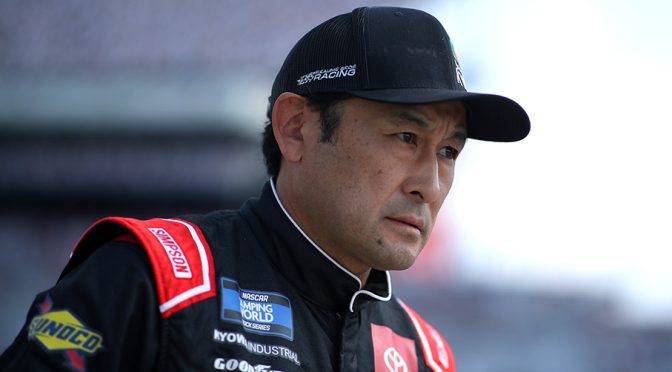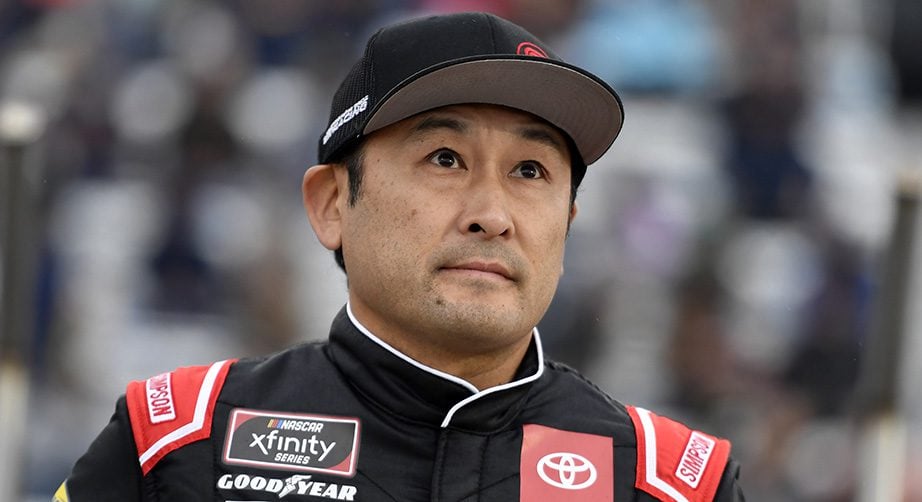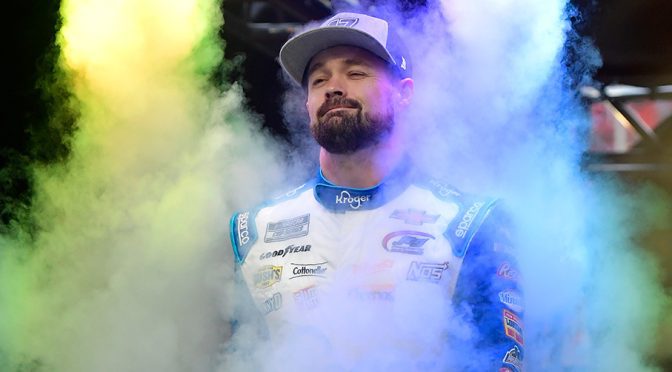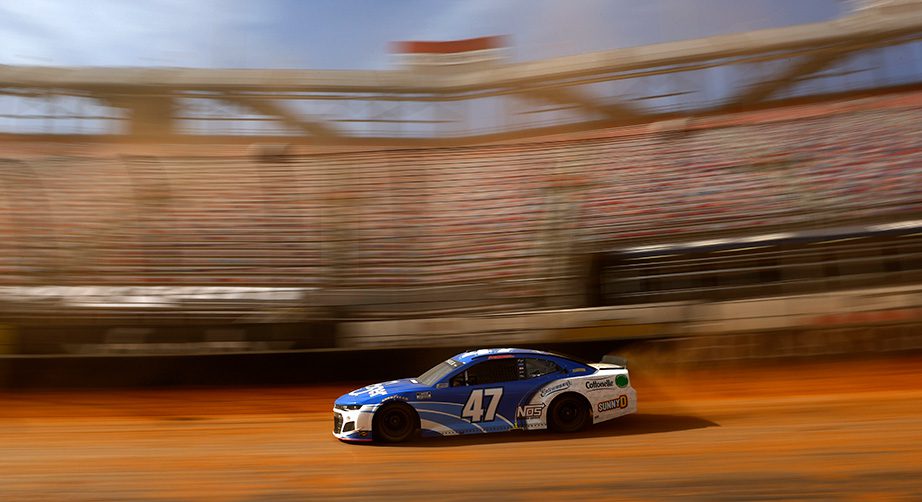
Drivers and teams alike took to social media to applaud the reveal of the 2022 baseline rules package for the Next Gen car. The package will see the cars use a 4-inch rear spoiler for downforce and will use engines with 670 target horsepower as a baseline. The base rules configuration will be used at road courses, short tracks and intermediate-sized circuits during the 2022 season. The rules package for superspeedway events will be determined at a later date.

RELATED: 2022 schedule | Next Gen timeline | 2022 baseline rules package set 

Even NASCAR Hall of Famer Mark Martin chimed in.

NASCAR officials set the rules configuration for a majority of tracks on the 2022 Cup Series schedule Tuesday, announcing that the Next Gen car will use a 4-inch rear spoiler for downforce and will use engines with 670 target horsepower as a baseline.

The determination came after a meeting with competition officials, drivers and representatives for teams and manufacturers at the end of two days of testing last week at Charlotte Motor Speedway. Those sessions marked the final tests scheduled this year for the Next Gen car that will make its debut in the 2022 NASCAR Cup Series. The rules package for superspeedway events will be determined later.

RELATED: Photos from Charlotte test | Drivers offer feedback after testing

Competition officials worked with teams to try four engine/aerodynamics configurations last week on Charlotte’s 1.5-mile oval layout. Officials said the fourth and final package — a higher 670-horsepower figure and a centered 4-inch rear spoiler for reduced rear downforce — received majority support from those attending Friday’s post-test meeting.

“It’s been a two-year process,” said Steve O’Donnell, NASCAR executive vice president and chief racing development officer. “So certainly, it came down to Friday, but that was really through all the work, the thousands of hours of on-track testing and the collaboration with the industry and continued tests to really narrow down what could be the final rules package for the Next Gen car. Friday, we were able to solidify that. We met with the industry, a number of drivers post-test on Friday with the packages we had narrowed down and really hit on what we all thought would be a great Next Gen car in terms of going out under one rules package with 670 horsepower and then a low-downforce 4-inch spoiler, which we we believe we can implement across all of our tracks outside of superspeedways.

“So the bottom line of all this, and you’ll hear this from the drivers is that this package with the Next Gen car puts it back in the drivers’ hands and we’re excited about what that will do in 2022, for sure.”

The base rules configuration will be used at road courses, short tracks and intermediate-sized circuits during the 2022 season. The package will be part of the Next Gen car when it debuts Sunday, Feb. 6 (6 p.m. ET, FOX, MRN Radio, SiriusXM NASCAR Radio) in the Busch Light Clash at The Coliseum exhibition in Los Angeles.

RELATED: Schedule for the Busch Light Clash | Format explained for exhibition event

Cars proved to be a handful at times during last week’s two-day organizational test at Charlotte, with several spins and incidents as drivers fought for control when cycling through the different configurations. Richard Childress Racing’s Tyler Reddick was top among those pushing the limits, his No. 8 Chevrolet involved in multiple scrapes and incidents. A three-car tangle in Friday’s final group run brought the test to a close after 12 of a scheduled 30 laps.

“It’s really a new beginning for everyone, right?” O’Donnell said. “So no one has a ton of data they can go back and look at for this car where we previously raced, and that’s a neat thing for the race fan. So they’re going to see the best drivers and the best engineers in the world go out there and attack this car and attack each race track, and it will be hard to drive. I think the drivers are enthusiastic about that. The tire that Goodyear has come with has really put strategy back into a race, so some of that old-school racing that a lot of fans have talked about, I think you’ll see. We’ll learn along the way as well, and there are different things we can take away from this season coming up in ’22 as we look to continually improve upon what we believe is going to be a great launch of the Next Gen car.”

A separate superspeedway rules package for the Cup Series’ largest and fastest ovals — Daytona International Speedway and Talladega Superspeedway — will be determined next month. Atlanta Motor Speedway will potentially be added to that rules package list after the 1.54-mile oval was repaved and rebuilt with 28-degree banking new for 2022.

MORE: Next Gen timeline | 2022 Cup Series schedule

Cup Series tests are scheduled Jan. 5-6 at the new-look Atlanta and Jan. 11-12 at Daytona to zero in on the Next Gen rules configuration for superspeedways. Atlanta, Daytona and Talladega each play host to two events on the 2022 schedule, the first being the season-opening Daytona 500 on Feb. 20 (2:30 p.m. ET, FOX, MRN, SiriusXM NASCAR Radio).

“Yeah, we’re close,” O’Donnell said. “We’ve done a number of tests already but our next step in the process for superspeedways will be in Atlanta, early January to confirm what package we want to put on that race track. We expect that to be the superspeedway package. Then from there, we’ll go to Daytona on the 11th and 12th of January, and really what we’re looking at there is the speed of the car. So there’s potential we could shorten the spoiler a little bit. We’ve made some cooling adjustments to the car that affected a little bit of the drag of this car, so we want to make sure that the speeds are commensurate with where we’ve run in the past. So getting some extra laps on the car, both days getting the teams more familiar with the car at the Daytona and then we’ll finalize it coming out of that test.”

Editor’s Note: This continues the series of season reviews for the 2021 NASCAR Cup Series Playoffs drivers.

Driver: Kevin Harvick
Car:
No. 4 Stewart-Haas Racing Ford Mustang
Crew chief: Rodney Childers
Final 2021 ranking: 5th
Key stats: 0 wins, 10 top fives, 24 top 10s, 217 laps led

How 2021 ended:
While Harvick ultimately finished fifth in the final standings, that’s one heck of a rebound after entering the postseason with zero playoff points and going the balance of said playoffs without earning one. He failed to advance past the Round of 12, as Charlotte Motor Speedway’s Roval drama involving Chase Elliott left him crashed into the Turn 1 wall.

After finishes of ninth and eighth at Las Vegas Motor Speedway and Talladega Superspeedway, respectively, Harvick was in position to advance with a solid run at the Roval. On Lap 56, Harvick sent Elliott into the wall, retaliation from their Bristol Motor Speedway run-in weeks prior, and was suddenly in a good spot to advance. But on Lap 100, Harvick careened into the Turn 1 wall as Elliott approached behind him while running inside the top 10, ending his afternoon and chances of advancing to the next round.

RELATED: Kevin Harvick through the years

Best race:
The Bristol playoff event marked Harvick’s second runner-up finish of the season, but the closest opportunity to a race victory he’d get all year.

Kevin Harvick Bristol
Jared C. Tilton | Getty Images

Just past the halfway point, Harvick took the lead for the first time (only his seventh race to that point up front in 2021). But in the final 100 laps, Elliott had the top spot, and Harvick wanted it. The No. 4 drove it in deep, slid up and brushed the No. 9, cutting Elliott’s tire from the lead, forcing him to pit road. Harvick then paced the field for the subsequent 32 laps.

Until Elliott, who was multiple laps down from pitting under green, planted his Chevrolet in front of Harvick on the high side for multiple laps, slowing his momentum as Harvick tried to drive away from Elliott’s Hendrick Motorsports teammate Kyle Larson in second. With four laps remaining, Larson passed Harvick for the lead and went on to win his sixth race of the season.

Harvick confronted Elliott post-race on pit road and in the garage area. And despite the second-place result, the 2014 series champion called his emotions post-Bristol “probably the maddest (he’s) ever been” over the course of his 21-year career in NASCAR.

RELATED: Kevin Harvick keeps his edge against rivals

Other season highlights:
• Harvick didn’t finish worse than 15th at Talladega and Daytona International Speedway and scored three top-10 results, marking his best average finish on superspeedways (7.75) since the 2015 season (7.25).

• Despite an early playoff exit, Harvick nabbed top 10s in eight of the 10 postseason races.

Stat to know:
Harvick, who won nine times in 2020 and none in 2021, became the second driver in the modern era to win eight-plus races one season and go winless the next, joining Carl Edwards, who won nine times in 2008 and not once in 2009. Bill Elliott also had a nine-win drop off back in the mid 1980s, going from 11 victories in 1985 to only two in 1986.

By virtue of finishing fifth in the final standings, the Bakersfield, California, native also became the first driver in this playoff format of playoff points (since 2017) to start 15th or 16th, accumulate zero playoff points (via stage wins and race wins) over the course of all 36 races and finish top five in the standings.

Quotable:
“Just chickens***. I mean, what else do you say? Throw a temper tantrum like you’re 2 years old because you got passed for the lead and got a flat tire. We barely even rubbed. It’s all Chase’s way or it’s no way, and if he doesn’t get his way, then he throws a fit […] I told him I wanted to rip his freaking head off.” – Harvick said of Elliott after Bristol 

Looking ahead:
In a recent Dale Jr. Download podcast, Harvick revealed 2021 was originally scheduled to be his final season in the Cup Series. But with two years remaining on his contract with Stewart-Haas Racing, the future Hall of Famer has all intentions of remaining in the No. 4 seat through 2023.

New sponsors such as Subway and GearWrench have signed on with Harvick and SHR for next year and beyond, giving him an extra security blanket as he and crew chief Rodney Childers look to navigate the uncharted territory of the Next Gen car.

With back-to-back Sunoco Rookies of the Year Cole Custer and Chase Briscoe in the fold along with Aric Almirola, Harvick remains the savvy veteran at the organization and will for the duration of his Cup Series career. Sitting 10th on the all-time wins list with 58 Cup Series victories, Harvick seems poised to add to that number and perhaps even add another championship to his already impressive resume.

Editor’s Note: This continues the series of season reviews for the 2021 NASCAR Cup Series Playoffs drivers.

Driver: Brad Keselowski
Car:
No. 2 Team Penske Ford Mustang
Crew chief: Jeremy Bullins
Final 2021 ranking: 6th
Key stats: 1 win, 10 top fives, 17 top 10s, 331 laps led

How 2021 ended:
Keselowski had his worst season statistically since 2015, earning just one win in his 12th and final season with Team Penske. One of the few bright spots: He made the playoffs for the eighth straight year and 10th time in the last 12 seasons (missing out in 2010, his first season with the organization, and again in 2013).

His overall wins and top fives were his fewest since 2015, and his top 10s were the least since 2013.

Best race:
Keselowski’s best race also proved to be his only win of the season — his spring triumph at Talladega Superspeedway. He didn’t dominate the event, but he wisely stayed near the front throughout the race, and that would prove to be key.

It wasn’t so much what he did to win the race, it was how he did it, capturing the victory by leading just one lap. That’s right, he led just the final lap to capture the GEICO 500, beating William Byron by a mere 0.102 seconds. The 2021 Daytona 500 winner, Michael McDowell, was third, followed by Kevin Harvick and Matt DiBenedetto.

Additional highlights:
The biggest news for Keselowski came off the track on July 20 when he announced he would be leaving Team Penske at season’s end to join Roush Fenway Racing (since renamed Roush Fenway Keselowski Racing) for the 2022 season.

The deal includes securing an equity ownership interest in the team that will eventually grow Keselowski’s share over time. To his credit, Keselowski didn’t coast after the announcement was made, something other drivers could have done. He remained competitive throughout the remainder of the season and left Team Penske on the best of terms.

Stat to know:
Without question, Keselowski did what he does best at his best track, namely, Talladega. He won the spring race there, leading just that one final lap to earn his sixth career win at NASCAR’s largest superspeedway, making him the winningest active driver on the biggest race track in the sport.

Then he almost doubled up and came super close to winning the fall playoff race, barely missing the win and settling for a second-place finish (under caution). Talladega is definitely a super special place for Keselowski — the next-winningest tracks for him are just three wins each at Bristol Motor Speedway, Las Vegas Motor Speedway and Kentucky Speedway.

Quotable:
“That passion that started this team is the DNA that will live on to me forever and that we aim to have. So, it’s with that DNA that we’re reinvigorating and trying to find that next step and making the commitment to the future because we believe – and I believe in the future of NASCAR – and so there’s a heavy emphasis on where we’re going. We’re excited to get racing and prove our worth on the race track.” – Keselowski on becoming part-owner of Roush Fenway Keselowski Racing (also known as just RFK Racing).

RELATED: 2021 Cup Series schedule | See Keselowski’s 35 premier series wins

Looking ahead:
Keselowski will replace fellow veteran driver Ryan Newman in the No. 6 Roush Fenway Keselowski Racing Ford in the 2022 NASCAR Cup Series season. As of this writing, Newman’s plans for 2022 remain uncertain. RFKR has admittedly struggled in the last few years. In fact, it has qualified just two drivers in the playoffs in the last seven years: Newman in 2019 (finished 15th) and Ricky Stenhouse Jr. in 2017 (finished 13th).

Keselowski can be very demanding of his car and team as a driver, and now as a part-owner, he’s likely going to be even more so. At the same time, however, not only will there be more pressure on him, he may be exactly the type of leader RFKR needs going forward. Longtime owner Jack Roush is pushing 80 years old with plenty of glory in the days behind him. Time will tell, of course, but if the organization is willing to spend money in the offseason to hire some significant pit-crew members and talented engineers back at the shop, Keselowski has the driver talent to at least qualify for the playoffs. Anything after that will be a bonus in his first year removed from the strong Team Penske camp.

In the spirit of the holiday season, NASCAR Cup Series driver Bubba Wallace was on-hand at zMAX Dragway for his Live to Be Different Foundation’s second annual toy drive.

As the inclement weather stayed at bay, Wallace gathered some family and friends, including his fiancee Amanda Carter and sister Brittany Wallace, to assist in handing out bikes and other toys to families who needed the assistance.

“It’s a great opportunity for us to give back, it’s all about giving back,” Wallace told NASCAR.com. “Hasn’t been the prettiest day, but it is the holiday season and everyone is in the holiday spirit. It just feels good to be giving back to the families who didn’t have enough time, the pandemic hit super hard and they might be going through some things. We’re here to help out and have that helping hand and shoulder to lean on for Christmas and give the kids the presents that they all deserve.”

RELATED: Scenes from Bubba Wallace’s toy drive

Carter noted the foundation’s toy drive has over 400 kids they are supporting this year.

“This year, we’ve had a great turnout of applicants and a great turnout of volunteers,” Carter said. “People have been very generous and have donated toys and money to support local families in the area. … Hopefully we have a lot of happy kids opening gifts this year from their families. It’s just been fun to mingle today with people and get in the holiday spirit.”

Wallace’s foundation has been active since 2017. Its mission is to encourage the next generation to be better and more inclusive than every generation before it, so that they can achieve anything they put their mind to, just as Bubba has done in his journey as a Black race-car driver.

In a season that saw five new tracks on the NASCAR Cup Series schedule, three first-time Cup Series winners, two organizations scoring their first Cup victory, five first-time NASCAR Xfinity Series winners, five first-time NASCAR Camping World Truck Series winners, notable names notching their first multi-win season at the sport’s top level and three first-time NASCAR national series champions, there were plenty of breakthrough performances to dig through in 2021. But which ones stood out the most?

NASCAR.com’s RJ Kraft and Sean Montgomery debate who had the biggest breakthrough across all of NASCAR in 2021.

2021 WINNERS: NASCAR Cup Series | Xfinity Series | Camping World Truck Series

KRAFT: For me, it’s Bubba Wallace as the driver who had the biggest breakthrough in 2021. After three full-time seasons driving for Richard Petty Motorsports, he made the move to 23XI Racing — a new team started up by Basketball Hall of Famer Michael Jordan and Denny Hamlin, who may well be a NASCAR Hall of Famer when all is said and done. The new team has its bumps in the road throughout the season, makes a crew chief change late in the season but hits pay dirt in October at Talladega Superspeedway for Wallace’s first career Cup Series win and his first win in a national series event since 2017. The win also saw him become the second Black driver to win in NASCAR’s top series and the first to do so since Wendell Scott since 1963. Wallace has shown during his Cup career that he is a factor at superspeedways and he was able to cash in at the 2.66-mile track.

The win was a monumental moment for the sport both on and off the track. The victory comes in the midst of drivers that Wallace came up the ranks with — Chase Elliott and Kyle Larson — winning Cup Series championships as part of a new wave of drivers making their mark. It also came at the site of where Wallace was thrust into the social-justice spotlight nearly 16 months earlier where the Cup garage rallied behind Wallace during pre-race ceremonies as a sign of support following the finding of a noose in Wallace’s garage stall that an FBI investigation concluded had been there for months. He has become a public voice for NASCAR as the sport looks to reach a broader and more diverse audience.

On the track, the Talladega win sets a baseline for what the expectations are in 2022: To build off that victory with another and a playoff berth in 2022 for 23XI Racing with new teammate Kurt Busch in the fold.

RELATED: Bubba Wallace through the years | Inspiring Talladega win goes out to kids with racing dreams

In the honorable mention category for me: My answer for the biggest surprise of 2021, Ty Gibbs, was a consideration with his four-win Xfinity Series season in a part-time capacity. Along the same lines, Josh Berry’s two-win partial campaign with JR Motorsports that helped land him a full-time ride at the Xfinity organization can be considered. As can Ryan Blaney’s first multi-win Cup season in six full-time years.

MONTGOMERY: The biggest, and perhaps most underrated, breakthrough of the season is Kurt Busch’s summertime win at Atlanta Motor Speedway. If you look back at the end of the 2020 season, rumors swirled around a bit, suggesting the veteran may be headed towards retirement. The 2021 win once again proved that he not only has retained the talent and grit to still win at NASCAR’s highest level, it extended his consecutive seasons with a win streak to eight — only trailing his brother Kyle Busch (17), Brad Keselowski (11) and Joey Logano (10) among active drivers. The sale of Chip Ganassi Racing to Trackhouse Racing in June heightened the urgency for the elder Busch to make another playoff push as he searched for a new ride for the 2022 season, and he answered the challenge just a month later by picking up his fourth win at the Georgia track.

Fast forward to next season and the 2004 Cup Series champion has a new ride for a second-year team in 23XI Racing alongside Wallace. The combination of a winning resume and over two decades of top-flight success brings invaluable experience to an organization seeking its first postseason appearance. While a lot of chips had to fall in place for the Las Vegas native to land where he did, 2021 certainly breathed a breath of fresh air into his career. Now, the retirement rumors have faded. The highly-anticipated Next Gen car and a talented, eager team allow Busch to look more towards the future rather than reflect on the past. At 42 years old, the 33-time winner is beginning a brand new journey.

RELATED: Kurt Busch’s 2021 season in review

While the Atlanta win will go down as the last for iconic racing owner Chip Ganassi in the Cup Series (for now, at least), it also serves as a giant page-turner into another chapter for Busch’s impressive story.

The honorable mention goes to Alex Bowman. Bowman reeled off four wins in 2021 — second most at Hendrick Motorsports — after having only two in the previous six seasons combined. Look for the driver of the No. 48 to be a solid dark horse in 2022.

CONCORD, N.C. — After nearly 16 hours of Next Gen testing on Wednesday and Friday at Charlotte Motor Speedway, NASCAR Cup Series drivers and teams have a clearer understanding of the product they’ll be putting on track in 2022.

Twenty-two drivers took to the 1.5-mile track, punctuated by three pack runs on Friday. The morning session saw a six-inch offset spoiler, while a pair of afternoon mock races focused on a six-inch centered spoiler and four-inch centered spoiler. The 670-horsepower option was used throughout the day. Steve O’Donnell, NASCAR executive vice president and chief racing development officer, indicated that will be the likely move for the power units next year, but finalization of the 2022 rules package is still ongoing.

RELATED: NASCAR, teams focusing on 670-horsepower target

William Byron and Tyler Reddick had incidents in Friday’s morning portion of the session but were able to avoid any significant damage, while Corey LaJoie looped the No. 7 Spire Motorsports Chevrolet around at the end of the second pack run coming out of Turn 4. Reddick also scraped the wall in the second pack run as he tried to find just how far the new car can be pushed.


“The cars are on edge, which is a good thing,” Reddick said on Friday. “There’s more mechanical grip in the car, less aerodynamic grip so, you know, you gotta keep it straight and you gotta keep the tires happy. You can’t get completely sideways or as sideways as we used to in years past with the other cars because the side force just doesn’t hold (the cars) down to the track.”

Ty Dillon, driving the No. 42 for newly formed Petty GMS Racing, feels the edge is a lot sharper because drivers are still trying to figure out how hard they are able to push their machines, but overall, the car is less forgiving of drivers’ mistakes.

“Your margin of error is a lot smaller,” Dillon said. “I know every lap I’ve ran I’ve gotten a lot more comfortable and I was able to drive it a little bit harder and that edge is getting a little softer for me. What makes Tyler (Reddick) so good is that he lives on that edge, the fine line of hitting the wall or spinning out but he’s super fast.”

Despite a spin in Turns 3 and 4 that left slight rear damage, Byron finished first in the second and third sessions Friday afternoon and second in the first pack run. While Byron and the No. 24 Hendrick Motorsports team have put emphasis on finding a balance with the car that makes him comfortable, he noted it was a confidence boost to be out front.

RELATED: Scenes from Next Gen testing at Charlotte

“I would rather be there than being the guy that says we’re going to be fine when the season starts and all that,” Byron said. “It’s nice, but so much is going to change. I just try to stay just as open-minded as a driver as I can because I’ve learned. I’ve been in this deal for four years now and things change so fast. It really is just about me staying open-minded, trying be as objective as I can be with my team. I think it’s gonna change a lot but it’s nice for us to show some speed.”

While Byron believes the Next Gen car will evolve even more before hitting the track for the Busch Light Clash at the Los Angeles Memorial Coliseum, his read on the 670-horsepower engine and aerodynamic packages being considered is that they’ve put the tools back into the drivers’ hands.

“I think it’s fun,” Byron said. “It’s definitely fun for the drivers. A lot more going on, you’re sweating a little bit more or at least I was working harder. You’ve got more brake usage, more throttle usage, more of a difference I feel like I’m making.”

Daniel Suarez, preparing for his second season with Trackhouse Racing as the team moves to a two-car operation with Ross Chastain, said he enjoyed experimenting with different packages on the race track. Suarez did agree with others regarding the finer line that drivers will have to toe in order to keep all four wheels pointed in the right direction.

“The car has more downforce but has no side force at all, which the side force is what all drivers were extremely used to,” Suarez said. “We have that feeling that the rear is right there and you can race sideways and it can be OK. But this, we don’t have as much of a warning. You have a little bit and you step out a little bit more and you spin out or wreck. The warning is way different.”

“But, listen, I’m excited for the challenge,” Suarez added. “I’m very, very excited with this new car and I think everyone is enjoying the journey. I think we’re going to end up with a very, very good product. We just have to continue to work together to get there.”

MOORESVILLE, N.C. — Front Row Motorsports (FRM) today announced No. 34 Ford Mustang crew chief Drew Blickensderfer has informed the team he will be leaving the organization to pursue other options.

“Drew helped lead the No. 34 team to new heights since coming to Front Row Motorsports, highlighted by winning the Daytona 500,” said team owner Bob Jenkins in an official statement. We are now in the process of securing the next leader in our organization to continue the solid foundation that has been built. That process has begun, and we will move quickly. We wish Drew the best in his next endeavors.”

FRM will announce the new hire in the future.

CONCORD, N.C. — NASCAR officials and teams indicated that 670 horsepower would likely be the target engine output for almost all tracks in the 2022 NASCAR Cup Series during Friday’s Next Gen testing at Charlotte Motor Speedway.

The second of two days of organizational testing for the 2022 Cup Series’ new model was completed Friday afternoon at the 1.5-mile Charlotte oval. The 8 a.m. ET start time was delayed roughly 45 minutes because of a damp track caused by overnight dew.

RELATED: Day 1 test speeds | Scenes from Next Gen testing

Steve O’Donnell, NASCAR executive vice president and chief racing development officer, said Friday morning that focus on the 670-horsepower target emerged after meetings with teams, drivers and other competition officials. That figure also fell within a range that would be attractive to manufacturers looking to potentially enter the sport.

Each of the three configurations that were tested Friday at Charlotte used the 670-horsepower target.

“I would say we’re more than likely going with that number across all of our tracks,” said O’Donnell, noting later that a separate package for aero/engine would be used on superspeedways. “We’ve still got a few boxes to check post tests here where we get together with our (OEMs, original equipment manufacturers) and the teams and just confirm that’s the direction we want to go with. But everything we’ve seen so far, that tells us and that’s the horsepower we want to target and go with.”

Officials and teams shifted through three configurations during eight hours of testing Wednesday:

  • Configuration 1: 550 target horsepower, centered 7-inch spoiler — a 1-inch reduction from the most recent Charlotte test.
  • Configuration 2: 670 target horsepower, centered 6-inch spoiler.
  • Configuration 3: 670 target horsepower, 6-inch spoiler offset to the right (passenger) side.

A fourth configuration was tested in the latter part of Friday’s session, using the 670-horsepower output with a centered 4-inch rear spoiler. The setup is the latest configuration as teams, drivers and officials focus on determining the rules package that will be used in the 2022 NASCAR Cup Series.

“We know where we’re at. It’ll definitely be one of the goals has been to move a little bit more downforce toward the front because we were having to run so much rearward to add stability to the car,” said Dr. Eric Jacuzzi, NASCAR managing director of aerodynamics and vehicle performance. “It seems like now that the car’s a little happier, better behaved at different ride heights, I think we’re pretty comfortable with where we’re at. It seems like product-wise, we feel pretty good.”

Three 30-lap group runs were scheduled throughout the day. Teams began each run on new tires and lined up according to unofficial test speeds, fastest to slowest.

  • 10 a.m. ET: 30-lap group run with Configuration 3
  • 1 p.m. ET: 30-lap group run with Configuration 2
  • 3 p.m. ET: 30-lap group run with Configuration 4

A separate rules package will be used at Daytona International Speedway and Talladega Superspeedway, where speeds are curtailed on the circuit’s fastest ovals. O’Donnell said Atlanta Motor Speedway, which is being reconfigured with steeper banking for the 2022 season, may also fall into that category after tests are held there — Jan. 5-6 for the Cup Series.

More preseason tests are scheduled next month — Jan. 11-12 at Daytona, and Jan. 25-26 at Phoenix Raceway. Jacuzzi said the 2022 rules and car configurations should be mostly set after this week’s Charlotte tests.

“I think depending on what comes out of today, we’re like 95% there as far as the pieces here,” Jacuzzi said. “Making the final aero package, I think early next week, we’ll be there. Then obviously, superspeedways. We have the Talladega test, so we’re just looking at speeds and whether we can kind of unify the intermediate and speedway packages, but that all depends — safety, how fast we’re going. We always try to do that and we will, but we’ll be in much better shape early next week.”

William Byron was involved in an early incident, his No. 24 Chevrolet spinning out after a left-rear tire went flat. He was unhurt and the car sustained a minor scrape to the rear bumper.

Tyler Reddick spun in nearly the same location through Turns 3 and 4, in the midst of the first group run of the day. He drove the No. 8 Richard Childress Racing Chevrolet away from the scene. Reddick was involved in a more significant incident in the same area on Wednesday, popping the sand barrels at the end of the pit-road entrance.

Reddick was involved in two more incidents Friday, the final one as part of a three-car fracas exiting Turn 2 that also collected the No. 9 of Chase Elliott and the No. 42 of Ty Dillon. That final incident brought the final group run to an end with 12 laps complete.

Editor’s Note: This continues the series of season reviews for the 2021 NASCAR Cup Series Playoffs drivers.

Driver: Ryan Blaney
Car:
No. 12 Team Penske Ford
Crew chief: Todd Gordon
Final 2021 ranking: 7th
Key stats: 3 wins, 11 top fives, 20 top 10s, 423 laps led

How 2021 ended:

When Blaney left Texas Motor Speedway after the opening race of the third round of the playoffs, he was riding high and ranked second in the standings with just three races left to go in the season. Then came disaster at Kansas Speedway, when he crashed with a little more than 40 laps to go and finished 37th, dropping him to fifth in the rankings.

He could do no better than 11th the next week at Martinsville Speedway and was eliminated from the Championship 4, leaving him seventh in the standings, where he would also finish the season after the finale at Phoenix Raceway.

Best races:

While one could point to his consecutive wins at Michigan International Speedway and Daytona International Speedway in August as his best races, the fact is he led just the last eight laps at Michigan and only seven total – including just the last two to take the checkered flag – at Daytona.

Rather, two other races that arguably stood out even more: First, how Blaney battled back to steal the lead away from Kyle Larson (who led the previous 80 laps) with just nine laps to go to win the spring race at Atlanta Motor Speedway. Second, the 157 laps (a season-high for him) he led in the spring Martinsville race before he yielded first to Denny Hamlin (who led the most laps with a race-high 276) and then to eventual winner Martin Truex Jr.

Other season highlights:

• Blaney recorded multiple wins in a single season for the first time in his Cup career, capturing three wins (Atlanta in the spring and Michigan and Daytona in the summer).

• Blaney’s back-to-back wins at Michigan and Daytona sent him into the playoffs with the No. 2 seed. At that point, he looked like a serious championship contender but ended up tying his previous best season finish of seventh achieved in 2019.

Stats to know:

2021 was Blaney’s best overall single-season performance of his Cup career to date with most wins (three), most top 10s (20), most lead-lap finishes (30), career-best finishing average (11.9) and second-best career starting average (9.6). In an ironic twist, Blaney recorded 11 top-five finishes for the third straight season.

Quotable:

“It was a really good last run for Todd (Gordon) before he hangs it up. I wish it was a win (finished fourth). I can’t thank him enough for the last couple of years and I can’t thank this whole group enough for this year. It has been a lot of fun. Hopefully, we will be in the Championship 4 next year.” – Blaney after the 2021 season finale at Phoenix, Gordon’s final race before retiring

RELATED: All of Blaney’s Cup Series wins | Blaney through the years

Looking ahead:

• Blaney will have a new crew chief in 2022, as Jonathan Hassler takes over for Gordon, who has retired. Hassler assumed the role of Matt DiBenedetto’s crew chief this past June, Hassler’s first role as a full-time crew chief in any of NASCAR’s three premier series. Blaney proved to himself and everyone else he finally could put together multiple wins in a season. And he qualified the highest (second) he ever has for the playoffs in five straight seasons.

With Brad Keselowski moving to Roush Fenway Keselowski Racing for 2022, Blaney has the chance to build upon the good he achieved in 2021 and go even further. He’s definitely a playoff contender and, with a few breaks, has strong potential to be a championship contender next season. If he doesn’t reach the Championship 4 round, it would be a big surprise and disappointment. He’s ready to step to the next level.

Follow NASCAR.com contributor Jerry Bonkowski on Twitter @JerryBonkowski