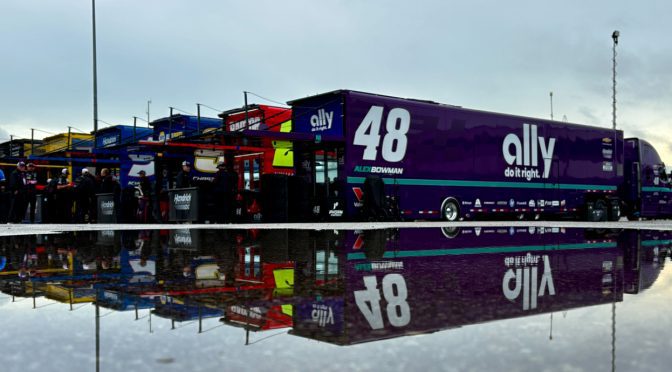
TALLADEGA, Ala. — NASCAR drivers woke up to two things Saturday at Talladega Superspeedway: the unwelcome sight of rain and a new, realigned era of the sport’s leadership.

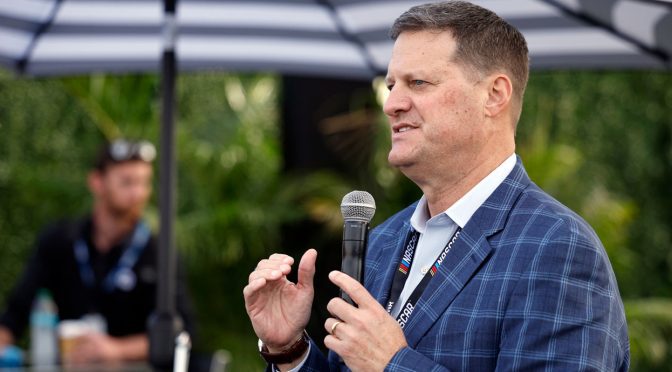
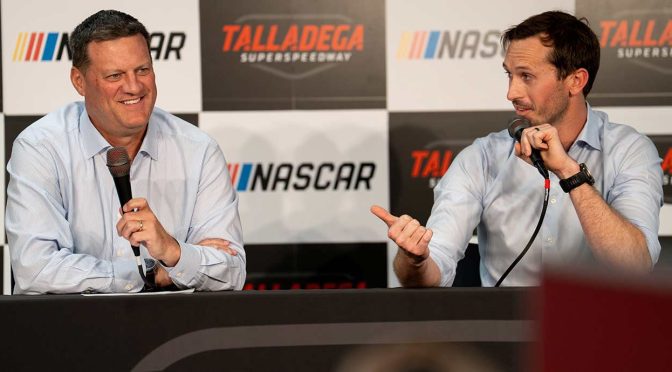
The news became official Saturday with NASCAR appointing Steve O’Donnell to the role of chief executive officer and naming Ben Kennedy to the position of chief operating officer. Jim France, CEO since 2018, will remain as chairman.

RELATED: Talladega weekend schedule | What to Watch

NASCAR Cup Series drivers were among those who received early notice Friday about the shift in NASCAR’s upper management, and the reaction was largely positive about what it meant for the sport’s direction.

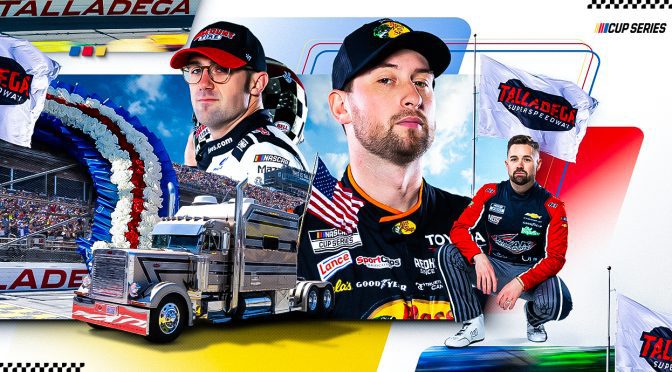
“Jim France, I believe that he has done a great job,” said Daniel Suárez, driver of Spire Motorsports’ No. 7 Chevrolet. “Obviously, he has a lot of experience, he has seen a lot of things, but you know, the sport continues to evolve, continues to grow, and I think OD, he’s been around the sport for a very long time. He has a lot of experience. He has a lot of energy, too. He’s young, so I think that’s going to be very good for him. Obviously, Ben, he is very, very young. I mean, I feel like he’s my age. We raced together, he has a lot of experience and a very, very smart guy. So I think it’s good. I think it’s going to continue to push the sport to continue to think outside the box and continue to move forward.”

Several of the current crop of Cup Series drivers said they have a slightly closer connection to Kennedy, one of their contemporaries and a former racer who shared the track with them during his driving days. Kennedy — great-grandson of NASCAR founder Bill France Sr. — learned the ropes through his ties to the family business and through short-track competition, advancing to and winning in both the ARCA Menards Series East and NASCAR Craftsman Truck Series.

That background, says Chase Elliott, should serve him well as he expands his executive reach to include NASCAR’s competition department.

“I’ve said this before about Ben, but I think it would have been very easy for him to take whatever role he wanted to take without putting the effort and time into really understanding racing, and when I say racing, also outside of the NASCAR world,” said Elliott, driver of Hendrick Motorsports’ No. 9 Chevy. “So I gained a tremendous amount of respect for him for going and racing himself and spending time around short tracks across the country and being willing to go and try, and became a really good racer, too, in that. I’m sure that he learned a lot about motorsports as a whole, and I think that that also qualifies him, not just because of his name, but he has put time in that people probably aren’t aware of, to motorsports, to understand and be worthy and capable of such a role. So a lot of respect for him in that sense.”

Ryan Blaney shared those experiences alongside Kennedy, both in climbing the stock-car ladder and growing up as the latest generation of a racing family. Blaney says he’s seen the weight of the 34-year-old’s words grow, along with his reach.

“He’s just a good human being, and I think he is getting more outspoken as well,” Blaney said, “like he’s gotten into his roles very well, and I think the role that he’s going to be in is good. He’s going to have more of a voice, but I think Ben always has really good ideas. Obviously, I think of it kind of like me, right? My family was involved in racing for a long time. I’m very passionate about it, and the same with him. His family has been involved with it since its inception, and he’s incredibly passionate about this sport and wants it to do well. So I think he has a lot of cred. I think everyone respects him.

“Like I said, I’ve always had a great relationship with Ben and always have been able to go to him with ideas or things that are on my mind and vice versa. He’s always reached out to me if he wants an opinion on anything, so I think that’s good. I think it’s good to have someone like that, so I think he’s very well-respected.”

The management shift is the latest in a series of executive moves and offseason changes in the sport. O’Donnell was promoted to president in March 2025, taking the reins from Steve Phelps, who assumed the role of NASCAR commissioner. This weekend’s announcement comes months after NASCAR reached a legal settlement for a charter agreement in December, Phelps’ departure in January and an overhaul to its postseason format that same month.

Elliott acknowledged the offseason changes that preceded Saturday’s announcement, but said he appreciated the patience NASCAR’s brass showed in building this personnel alignment.

“I mean, honestly, from my perspective, I think they took their time in that,” Elliott said. “I mean, if you just kind of look at everything that transpired over the winter, and where things started this season, and kind of all of that went on, I think it would have been very easy for them to feel like that they needed to put other people in positions and do it yesterday. So if I were to lean on any one side of the fence, it would be that I kind of appreciate them taking the time they did to be able to say, hey, these are the right people for the jobs and this is the position that whoever needs to be in to help make this thing go forward, and it seems like they took the time to at least think it through. And you know, I can admire that.”
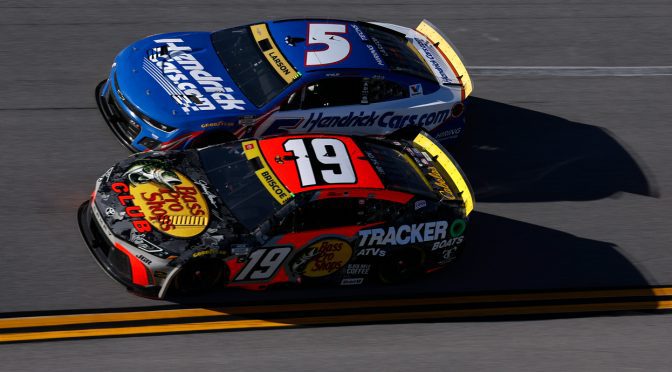
NASCAR’s biggest and arguably most daunting track comes into focus Sunday afternoon as the Cup Series treks to Talladega Superspeedway (3 p.m. ET, FOX, HBO Max, MRN Radio, SiriusXM NASCAR Radio). It’s the third time in 10 races that the premier series visits a drafting track, where a giant opportunity awaits — especially for teams buried in the early standings.

Tyler Reddick emerged victorious in both the season-opening Daytona 500 and at EchoPark Speedway, and heads to the Alabama high banks with continued momentum, winning last weekend at Kansas for his record fifth triumph in 2026.

RELATED: Full starting lineup

But it wouldn’t be a trip to Talladega without mentioning the Fords, which tend to work well in the draft and dominate a majority of these races. Will the blue ovals finally score a win on Sunday? See the full projected results for 188 laps of high-paced action, courtesy of Racing Insights, as well as drivers to keep an eye on over 500 miles.

DRIVERS TO WATCH

BRAD KESELOWSKI: The RFK Racing driver and co-owner is searching for his first victory in two years, and Talladega is no doubt his best track. He’s a six-time winner at the venue and has banked three additional runner-ups since his last Alabama dub in 2021. Keselowski enters with the sixth-best average finish in the series (11.3), and it certainly smells like a win is around the corner, so it’d only be fitting if it came Sunday.

CHASE BRISCOE: The most recent Talladega victor, Briscoe continues to climb the Cup Series ranks after a dismal start to 2026. His consecutive top fives at Bristol and Kansas slot him 15th in the standings as we’re finally seeing the championship-contending form witnessed late last year. In 10 Talladega starts, Briscoe’s average finish is 14.7, the seventh highest all-time. He’s led 50 laps on drafting tracks this year, a number that plays into his favor.

RICKY STENHOUSE JR.: All four of Stenhouse’s Cup Series wins have come at superspeedways, and he’s always a threat to capitalize. He finished second in the Daytona 500 this February and enters Talladega with consecutive finishes of 21st or better. Per Racing Insights, he’s one of the best at green flag pit stops, gaining an average of 3.6 positions each cycle at superspeedway. Stenhouse might not have the most speed, but his methodical approach should put him in contention at the very end.

MORE: At-track photos

FULL PROJECTED RESULTS FOR 2026 JACK LINK’S 500 (3 p.m. ET, FOX)

FINISHCAR NUMBERDRIVER
145Tyler Reddick
25Kyle Larson
39Chase Elliott
424William Byron
554Ty Gibbs
623Bubba Wallace
76Brad Keselowski
811Denny Hamlin
920Christopher Bell
1012Ryan Blaney
1177Carson Hocevar
1219Chase Briscoe
1317Chris Buescher
1422Joey Logano
1560Ryan Preece
167Daniel Suárez
172Austin Cindric
1847Ricky Stenhouse Jr.
1948Alex Bowman
2034Todd Gilliland
2138Zane Smith
221Ross Chastain
2371Michael McDowell
2441Cole Custer
2543Erik Jones
268Kyle Busch
274Noah Gragson
2897Shane van Gisbergen
293Austin Dillon
3021Josh Berry
3135Riley Herbst
3216AJ Allmendinger
3342John H Nemechek
3410Ty Dillon
3588Connor Zilisch
3633Jesse Love
3751Cody Ware
3844Joey Gase
3966Chad Finchum
4078Daniel Dye

TALLADEGA, Ala. — Sometimes it takes a little bit of momentum to unlock success in the Cup Series, and that’s what Todd Gilliland has found entering Sunday’s Jack Link’s 500 at Talladega Superspeedway (3 p.m. ET, FOX, FOX One, HBO Max, MRN Radio, SiriusXM NASCAR Radio).

Dubbed the “Toddfather” over recent years, Gilliland is still going through growing pains in his fifth full-time season at Front Row Motorsports.

DNFs at Daytona and EchoPark Speedway to start 2026 were the exact opposite of what the 25-year-old driver needed to be within the mix of possibly contending for a position in The Chase, but a recent top 10 at Bristol and a 17th-place run last Sunday at Kansas could spark a big swing for the No. 34 Ford team.

RELATED: Gilliland’s driver page | Talladega starting lineup

“It is fun,” Gilliland said. “Man, I definitely wish that we could start off a little bit more competitively. A lot of that starts with qualifying better. It really sets yourself up for the first stage or so. It is super nice to see some execution after that from us. I think Bristol, it was awesome to see as soon as the groove moved up to the top, we were really fast and executed flawlessly from there.”

Gilliland hasn’t started better than 17th (Circuit of The Americas) this season, and sitting 23rd in points doesn’t help his situation when it comes to maximizing Saturday practice and qualifying sessions on a weekly basis.

With no practice taking place on superspeedways and qualifying canceled for Sunday’s 188-lapper, the whole 40-car Cup field will start on an even playing field, and Talladega is arguably Gilliland’s best track. According to NASCAR Insights, he owns the second-best average finish in the Gen 7 era at Talladega (13.13) and returns to the 2.66-mile behemoth where he finished runner-up in the fall.

“A lot of it is a little bit of luck,” Gilliland said. “But also here, I feel like there’s just so much more room that you can really be looking ahead and get yourself out of a little bit of trouble if you see something happening, but I’d still say 95% of it still is being in the right place at the right time.

“I feel like last year in the fall was my best chance at getting a win at one of these places. Just how the last stage played out, we had good track position. Caution came out and we were on the front row for that last run where a lot of these times at these races, we’ve seen just the front two rows just kind of go back and forth. So I feel like it was a great spot. Ended up being in the third lane and just a much different race than what we’ve seen. Overall, I feel like we executed that well. So I feel like we’re trying to build off that and put ourselves in the same position this year.”

2025 talladega fall finish
Chris Graythen | Getty Images

Like many, when it comes to managing the updated stage lengths that include a 98-lap opening segment, Gilliland said the No. 34 team is still on the fence about what’s going to be the best course of action Sunday afternoon.

“It’s just going to be interesting to see kind of what these guys come up with, and what your teammates want to do — what your manufacturer guys want to do,” Gilliland said. “I think you can see just manufacturers split in general, of what they are going to do and stick to it. We’ve seen that with, I think, Toyotas here in the past were going to short pit it and they were making good time, but, obviously, wrecked. That’s kind of the risk of doing that as well, but it’ll be super interesting to see for sure.”

Slowly but surely, Gilliland is crawling out of the hole that kicked off an important 2026 campaign, and with Front Row and his success on superspeedways, Sunday could be a special one for the group.

“All you can do is keep fighting, and these races are long enough that if you find some speed, you can usually get yourself out of a little bit of trouble,” Gilliland said. “I’m really happy with my road-crew guys, my crew chief, all those guys. I feel like we’re all closer than ever in our second year together and all that. So definitely feel good, and I love the guys I got behind me.”

TALLADEGA, Ala. — So many unknowns tend to arise in the course of 500 miles at Talladega Superspeedway, from field-thinning wrecks to strategy sidesteps to the occasional surprise winner. For this Sunday’s go-around, the shroud of uncertainty hits a little differently for NASCAR Cup Series teams and their crew chiefs.

A shake-up of the stage lengths has tilted the strategy table for Sunday’s Jack Link’s 500 (3 p.m. ET, FOX, HBO Max, MRN Radio, SiriusXM NASCAR Radio), throwing a question mark into the equation for the first of two Cup Series stops this season at the 2.66-mile track. As is always the case, navigating the aerodynamic draft will be key for the 40-car field, but so will devising the best game plan for a new-look race, keeping in mind the emphasis on manufacturer teamwork and solidarity here.

RELATED: Sunday’s starting lineup | At-track photos: Talladega

Previous Talladega events featured stage breaks that split the race roughly into thirds. In both races last year, Stage 1 ended at Lap 60, Stage 2 at Lap 120 and the final stage ran to the full distance of 188 laps. Sunday’s event, however, will go 98 laps before the first stage intermission, with two stages of 45 laps each to round it out.

NASCAR competition officials took the measure in an effort to stem the fuel-saving style of racing at a high-banked superspeedway designed for flat-out driving, setting up the likelihood of full-throttle action without the need to pit in Sunday’s second half. But the shift has also introduced new wrinkles to how teams might handle pit stops — how many and when?

“The way the stages are set up, the first stage has put in a potentially new style of fuel saving that we haven’t really seen before, but it really depends on what the masses do,” said Luke Lambert, crew chief for Carson Hocevar’s No. 77 Spire Motorsports Chevrolet. “It’s created some options for all the teams, so it’ll be interesting to see how people play it. The length of that first stage forces the teams to have more options than we typically have, which means that it’s going to be even more important that you know what the people you plan to work with are doing, and guys can commit. So I expect it to be a little bit more dynamic, though, just once people start showing their hand and seeing what others are doing.”

Some of those options include flipping the stage, a commonplace tactic for road-course events. Pitting early before a stage’s end can place teams up front when the rest of the field hits pit road during the break, but for teams hungry to make up deficits in the points, a better stage finish and the chance to gain ground in the standings may take priority.

“I think it’s new, right? It’s different,” said Richard Boswell, crew chief for Austin Dillon’s No. 3 Richard Childress Racing Chevrolet. “I think there’s multiple different strategies that you can play, whether or not you’re going to one-stop it or two-stop it and try to short the stage. But for me, it’s really just about, we need to try and stack some points up, and if we can get points in the stages, then we’re going to. If we can’t, then we’re going to try and position ourselves like we would for a road course and short it, and try and start the next stage toward the front. So it’s going to be unique. I think we were talking about it this week, like, what do we think? Are guys going to run it like a road course? Are they going to run it out to try and score stage points? 50% think it’s this way, and 50% think it’s this way, so I think it could be very, very split.”

MORE: Cup Series standings | Weekend schedule: Talladega

The length of the opening stage creates an interesting proposition for teams opting for a two-stop or one-stop plan for the opening 98-lap portion. Matt McCall, Spire’s Cup Series competition director, said those options will mostly be predicated on how teams attack Stage 1. A hard-running lead pack that breaks out to a quick early tempo would hurt the more fuel-conscious teams’ hopes of a one-stop stage, but the chance of a race-altering caution period early on could also force audibles across the board.

“The opportunity is there for one stop, for sure,” McCall said. “I really think it dictates on how the pace of the race starts, and which manufacturer is up front will probably dictate how that plays out. I think there’ll probably be a little cat-and-mouse to figure that out within the first five or 10 laps, but there is opportunity for that to happen. I think it’s probably a little bit less, but also well aware if a caution falls in the middle of it, that’ll change everything.”

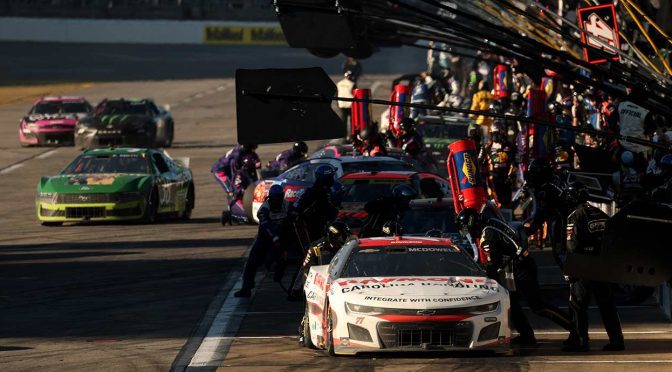
One thing that’s unlikely to change is the reliance on manufacturer teamwork. Automakers tend to pit together in groups at Talladega to keep their aerodynamic-draft alignment intact; the differences in fuel economy and pit-road execution are where the running order can be jumbled up.

Boswell says the alterations to the stage-length procedures shouldn’t have a dramatic impact on how manufacturers team up.

“I think it’s more of the same,” Boswell said. “Most of the time, the manufacturers, they pit together one because they’re the same manufacturers, but their fuel economy is the same as well, right? So they know how hard they’re pushing, they’re getting data from their teammates. They know when those guys have to pit, and quite frankly, it’s the best information we have to pit with the best people that we can, so I don’t expect that to change.”

Track: Talladega Superspeedway
Location: Talladega, Alabama
Track length: 2.66 miles
When: 3 p.m. ET
Where to tune in: FOX, HBO Max, FOX One, MRN Radio, SiriusXM NASCAR Radio
Race purse: $11,233,037
Race distance: 188 laps | 500.08 miles
Stages: 98 | 143 | 188
Sunday’s starting lineupCup Series pit stall assignments

How many options do drivers have for long Stage 1 on Sunday?

TALLADEGA, Ala. — In a twist for Sunday’s Cup Series race at Talladega, the opening stage will be the longest of the 500-mile event.

Stage 1 will make up more than half the race, consisting of 98 laps that will open the door for a myriad of strategy options when it comes to pitting for fuel.

Recent events at Daytona and Talladega have seen the field defer to a hive-mind mentality of fuel saving while running in a tight-knit pack around the superspeedways. However, this weekend could see a different pace to the choreography and three-time Talladega winner Joey Logano was quite bullish about the multiple scenarios that could take place with the new race layout.

“A, B, C, D and E. That’s where we’re at at the moment,” Logano said of Sunday’s strategy playbook. “I’m looking forward to it. “I think Stage 1 is going to be — I hope it goes green because I want to see it play out. Everybody’s a different kind of race fan, right? Some people want to see the wide-open the whole time and draft. But I mean, this race, you’re gonna get a little bit of both. The two- versus one-stop (strategy). I mean, that’s a real discussion and a real decision everyone has to make. And what’s better? I don’t know if there’s a clear answer. You can’t do it on your own, right? So everyone getting on the same page, it’s very challenging, but I think it’s kind of fun.”

With an estimated fuel window around 45 laps, it will require some serious fuel saving to try to attempt to complete Stage 1 on one pit stop if there isn’t a caution or two early on.

Joe Gibbs Racing’s Chase Briscoe described a “cat-and-mouse game,” where those toward the rear of the field could risk the one stop versus those racing toward the front.

“It’s only the guys in the back that can really do the max save to do the one-stop thing,” Briscoe said. “That’s where it’s hard because this car, even when the whole field is going hard, the guys in the back can just naturally still save more and kind of keep up. I think there’s going to be somebody that gambles the one-stop thing. Obviously, you have to have a couple guys do it with you. But if it works out, you could really screw the field because you could lap them essentially depending on how the pace works out.”

MORE: Weekend schedule, TV info | At-track photos

One of the keys to success at Talladega is whether the active or reactive decision-making will make the difference in gaining the track position for the push to the Stage 1 finish and the subsequent segments, where a fuel stop is not expected due to Stage 2 and the final stage likely falling around 40 laps apiece.

Bubba Wallace, who scored his groundbreaking first-career Cup Series win at Talladega in the fall of 2021, has been vocal on not wanting to do the saving-fuel strategy and believes there will be a bit more “freedom” for the drivers to go all-out most of Sunday.

“At the end of the day, you put yourself in the best spot possible to capitalize on stage points and obviously the race win at the end,” Wallace said. “With the adjustments to stage lengths, it changes up our strategy a little bit, but I think it allows us to control our own destiny, which is kind of what we want. I am not the one to follow orders when it’s saving and doing all this stuff. I just want to go, but I understand the big picture. We gotta keep some fuel in the tank so that’s still gonna be the name of the game, but we’ll see.”

MORE: Sunday Setup

In the details …

A dozen active NASCAR Cup Series drivers have won at Talladega, but only seven have visited the track’s Victory Lane multiple times. Brad Keselowski leads the charge with six victories, tied with Dale Earnhardt Jr. and Jeff Gordon for the second-most all-time. In the midst of a 68-race winless streak, the RFK Racing co-owner and driver is looking for a seventh Talladega win that would put him behind only Dale Earnhardt (10) in total ‘Dega triumphs.

Here are the active drivers who join Keselowski as multi-time Talladega winners:

DriversWins
Brad Keselowski6
Joey Logano3
Ryan Blaney3
Kyle Busch2
Denny Hamlin2
Chase Elliott2
Ricky Stenhouse Jr.2

Speed reads

Race-day essentials:

• Talladega hub: Key information, pit-stall assignments, results | Read more
• Paint Scheme Preview: Dip into ‘Dega looks ahead of Cup, O’Reilly doubleheader | View gallery
Hauler Talk: Officials detail in-race communications with teams | Listen now
• Reddick’s run: Where does Tyler Reddick go from here in historic stretch? | Neil Paine’s analysis
• Power Rankings: Cup Series’ top 20 drivers after Kansas | This week’s ranks
• NASCAR Classics: Inside the video vault from Talladega | Watch now

Contributing: Zach Sturniolo | NASCAR.com

Two cars in the NASCAR Cup Series garage at Talladega Superspeedway failed pre-race technical inspection multiple times, resulting in penalties.

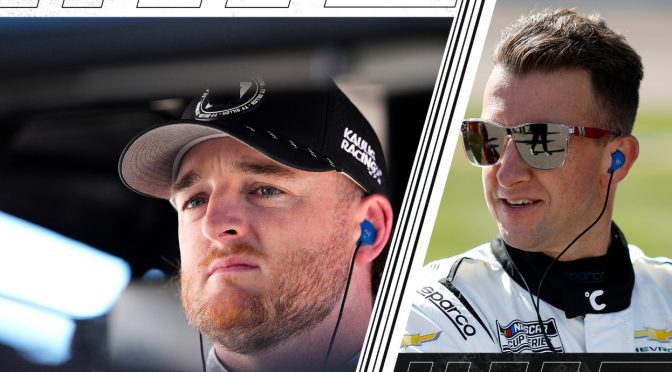
Both Kaulig Racing Chevrolets of Ty Dillon (No. 10) and AJ Allmendinger (No. 16) failed inspection twice before Sunday’s race in Alabama (3 p.m. ET, FOX, HBO Max, MRN Radio, SiriusXM NASCAR Radio), but all passed on a third time through. The teams were penalized with the loss of pit selection for the 188-lap event, and one crew member from each has been ejected.

RELATED: Starting lineup | At-track photos: Talladega

The ejected are as follows:

  • Troy Lankford Jr. (Car chief, No. 10 Kaulig Racing Chevrolet)
  • Jaron Antley (Car chief, No. 16 Kaulig Racing Chevrolet)

With Saturday’s qualifying session canceled due to weather, Sunday’s field was set per the NASCAR Rule Book. Allmendinger is set to roll off the grid in 28th, with Dillon in 35th. Austin Cindric is the defending winner of the Talladega spring race.

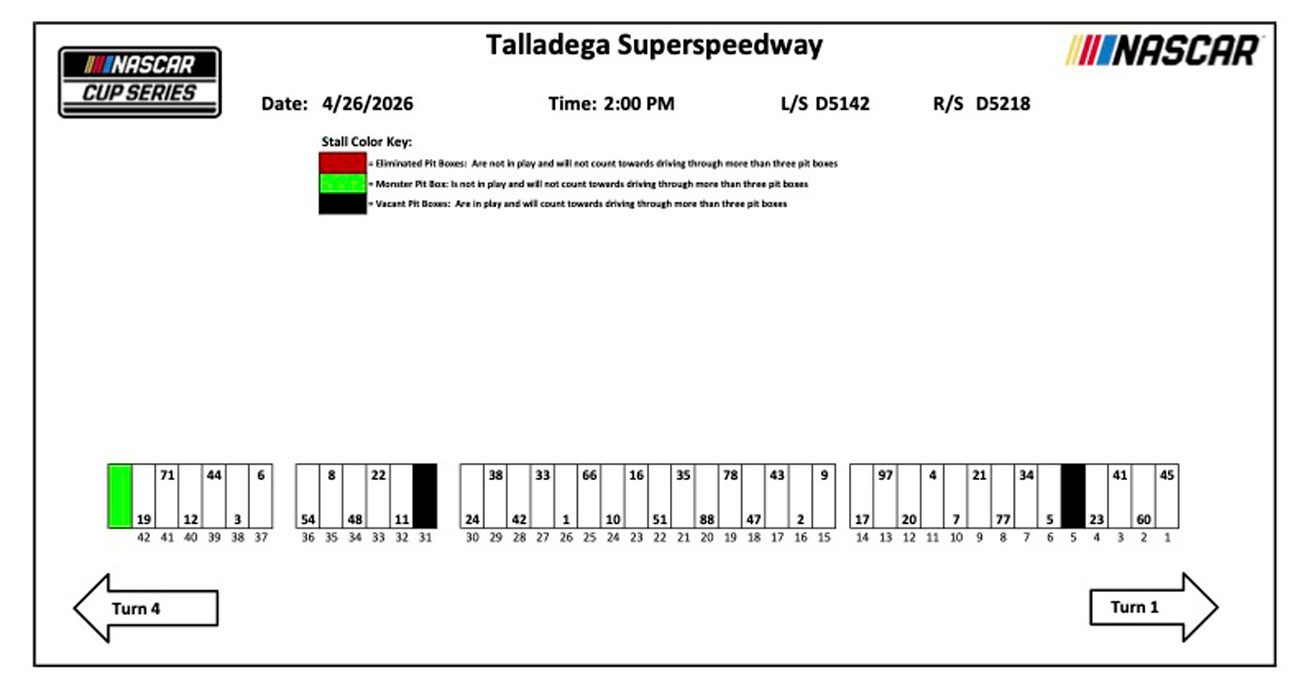
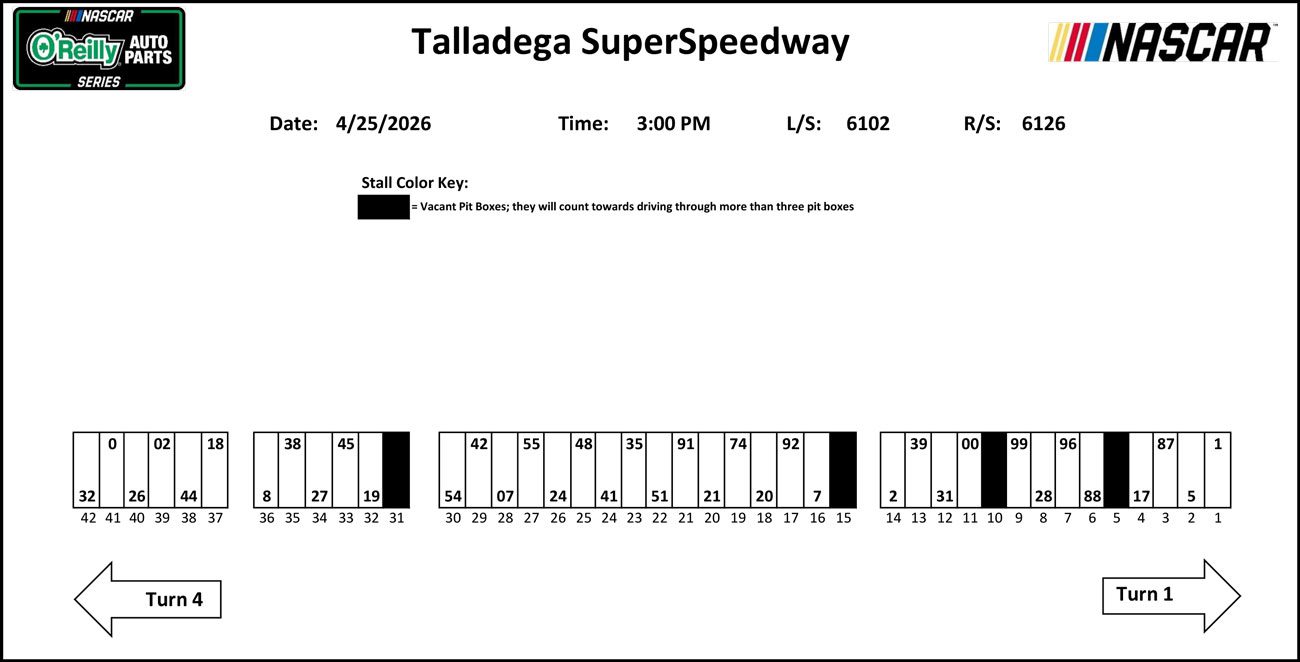
See where your favorite NASCAR Cup Series and NASCAR O’Reilly Auto Parts Series drivers will pit this weekend at Talladega Superspeedway.

NASCAR Cup Series

A graphic depicting the pit-road layout for the NASCAR Cup Series at Talladega Superspeedway.

NASCAR Cup Series Jack Link’s 500 at Talladega Superspeedway on Sunday (3 p.m. ET, FOX, FOX One, HBO Max, MRN Radio, SiriusXM NASCAR Radio).

RELATED: Talladega weekend schedule | How to watch NASCAR on FOX

NASCAR O’Reilly Auto Parts Series


NASCAR O’Reilly Auto Parts Series Ag-Pro 300 at Talladega Superspeedway on Saturday (4 p.m. ET, The CW, MRN Radio, SiriusXM NASCAR Radio).

RELATED: How to watch O’Reilly Auto Parts Series races on The CW

NASCAR heads to Talladega Superspeedway for an action-packed weekend on the high banks featuring the Cup Series and O’Reilly Auto Parts Series. Bookmark this page for everything you need — from qualifying order and practice speeds to results and more.

RELATED: Full weekend schedule | TV listings

NASCAR Cup Series

Race day: Sunday at 3 p.m. ET on FOX. The categories listed below will be filled out with links as the information becomes available.

Tires: Seven sets for the weekend (six new race sets, one set transferred from qualifying).

Entry List
Qualifying Order
Starting Lineup (QUALIFYING CANCELED, SET BY RULE BOOK)
Pit Stalls
Stage 1 Results
Stage 2 Results
Race Results

NASCAR O’Reilly Auto Parts Series

Race day: Saturday at 4 p.m. ET on The CW. The categories listed below will be filled out with links as the information becomes available.

Tires: Four sets for the weekend (three new race sets, one set transferred from qualifying). 

Entry List
Qualifying Order
Qualifying Results

Pit Stalls
Stage 1 Results
Stage 2 Results
Race Results

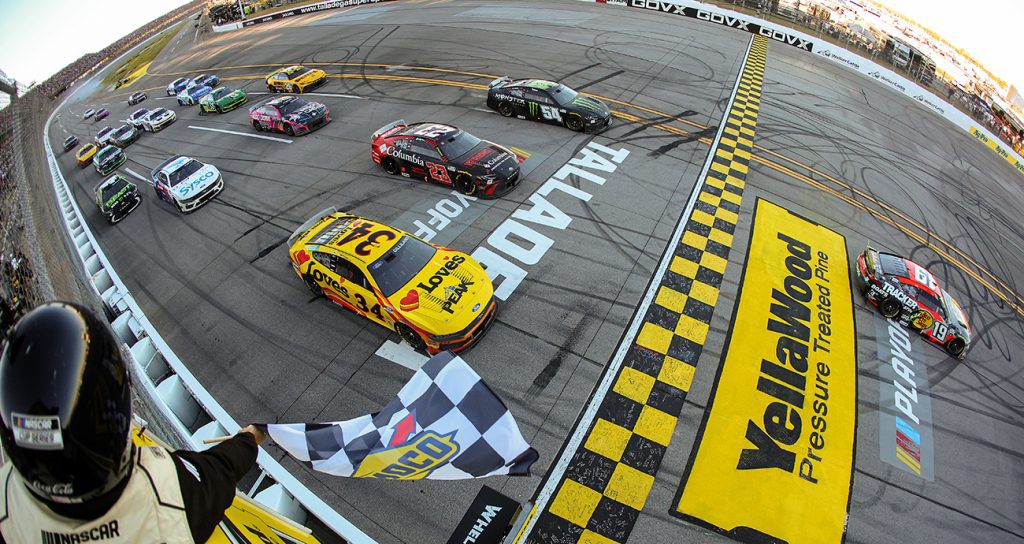
Tyler Reddick will be on the Busch Light Pole for Sunday’s Jack Link’s 500 at Talladega Superspeedway after rain washed out Saturday morning’s NASCAR Cup Series qualifying at the 2.66-mile Alabama track.

As a result of the lineup being set per the NASCAR Rule Book, Casey Mears in the No. 62 Beard Motorsports Chevrolet did not qualify for Sunday’s main event (3 p.m. ET, FOX, HBO Max, MRN Radio, SiriusXM NASCAR Radio).

RELATED: Cup standings | Tyler Reddick driver page

This will be the fourth time this season that Reddick has led the field to the green flag in his No. 45 23XI Racing Toyota. He won the race in each of the four previous attempts, most recently last weekend at Kansas Speedway.

“I think we’ll pretty much approach the race the same,” Reddick said after winning the pole. “Yes, it would be nice if we could win a stage this year, but we found ways to win races, so that’s good, too. Yeah, I think for us, nothing major, no major changes. We’re going to have a great pit stall, all the things that kind of come with getting the pole position.”

Reddick has won five of the first nine races this season and holds a 105-point lead over second place Denny Hamlin in the standings. For his career, Reddick has 13 Cup Series wins, including one in the spring of 2024 at Talladega.

PositionCarDriver
145Tyler Reddick
25Kyle Larson
311Denny Hamlin
423Bubba Wallace
519Chase Briscoe
66Brad Keselowski
724William Byron
89Chase Elliott
954Ty Gibbs
1017Chris Buescher
1160Ryan Preece
1277Carson Hocevar
132Austin Cindric
1420Christopher Bell
1512Ryan Blaney
167Daniel Suárez
1735Riley Herbst
183Austin Dillon
1934Todd Gilliland
2048Alex Bowman
2143Erik Jones
2247Ricky Stenhouse Jr.
2342John Hunter Nemechek
241Ross Chastain
2522Joey Logano
2621Josh Berry
2741Cole Custer
2816AJ Allmendinger
294Noah Gragson
3038Zane Smith
3171Michael McDowell
3288Connor Zilisch
3397Shane van Gisbergen
348Kyle Busch
3510Ty Dillon
3651Cody Ware
3733Jesse Love (i)
3866Chad Finchum (i)
3944Joey Gase (i)
4078Daniel Dye (i)

(i) = Ineligible for driver points in the series.

TALLADEGA, Ala. — NASCAR announced a series of key leadership moves Saturday morning, naming Steve O’Donnell as its Chief Executive Officer and tapping Ben Kennedy as Chief Operating Officer.

Jim France will step away from the CEO role he has held since 2018, but remain as NASCAR Chairman. The move makes O’Donnell the first chief executive outside of the France family in the organization’s 78-year history.

It’s the second major appointment in nearly a year for O’Donnell, who has spent 30-plus years in guiding NASCAR’s marketing and later competition departments, and was named president on March 31, 2025. From the lounge of the NASCAR officials’ hauler, parked in the Talladega Superspeedway garage for this weekend’s races, O’Donnell expressed his gratitude to Jim France, Lesa France Kennedy and the board of executives for the opportunity, but he also said he plans to take a measured approach early on as he rounds into the role with long-term growth as a priority.

“I think it would be a bit presumptuous of me to come in right away and say, ‘here’s the plan,’ ” O’Donnell told NASCAR.com. “What I’m going to do is go out and do a lot of listening, especially the first 90 days. We’ve got so many talented people in the industry — team owners, drivers, track, sponsors, even our own internal personnel that I want to go have some conversations with about what do they see and what are the opportunities? I think the great news is, we’ve got an unbelievable foundation, right? We’ve got a great broadcast deal. We’ve got charters in place, a strong schedule. So all those nuts and bolts are there, and it’s really taking that and looking at how do we make NASCAR an absolute must-have sport in the future.”

MORE: Drivers weigh in on NASCAR’s moves

O’Donnell says he’s seen plenty in his tenure as president, from a challenging offseason to the well-received adoption of a new version of The Chase as a postseason format. The 57-year-old executive says he’s tried to embrace the new developments as opportunities, learning from them and encouraging the sport’s stakeholders to work together. That unifying message has come with O’Donnell’s hope for “getting a little bit more fun back in the sport” — a feeling that he hopes trickles down from drivers to fans.

Though the current season is just a quarter of the way through heading into Sunday’s Jack Link’s 500 (3 p.m. ET, FOX, HBO Max, MRN Radio, SiriusXM NASCAR Radio) at Talladega, O’Donnell says he senses some of those initiatives taking hold as he looks forward.

“There’s certainly things we can always improve on, but for me, I look at this season as the start of that foundation, of kind of that next generation of NASCAR, and that foundation is really solid,” O’Donnell said. “So I think it gives us the opportunity right now to go talk about the future. From time to time, we get stuck in kind of the day to day, and I think we all recognize right now that we have a really good thing that we can build on, but let’s talk about what does it look like five years from now and make those changes, because it’s going to take time. We’re going to need everyone to be aligned, and so now’s the time to say, all right, we’ve got a good thing going here in the first quarter. Let’s get through this year, let’s not take anything for granted, but let’s really think about where we want to be in 2030 and beyond.”

France took the helm on an interim basis in the middle of the 2018 season from his nephew, Brian, and was installed as chairman and CEO full-time the next year. It has been an eventful tenure, one that included guiding the sport through the global COVID-19 pandemic, negotiating a blockbuster new deal for media rights, making an agreement final on team charters after a drawn-out legal dispute and expanding the sport into dynamic new circuits and markets.

The 81-year-old’s management style has been regarded as quiet and unassuming, but with assured strength out of the public eye. At the heart of it has been France’s passion for a wide variety of motorsports — from stock cars to sports cars to motorcycle competition — and the racer mindset that’s been both a lifelong trait and a steadying hand.

“Jim came in at a time when this sport really needed it,” O’Donnell said, “and I can speak for myself on the competition side that we were struggling a little bit in terms of having someone who understood that aspect of the sport, could be a voice to help maybe back up some of the things we wanted to do, and Jim was just credibility right away. When he came in and spent the time at the track, he was always there and had conversations. He would certainly challenge you on certain decisions you made, but incredibly supportive of everything we did, and I think his goal coming in was to get the right people in place, get a great television partnership in place, get through the charters, and then really have the people to see the sport continue to grow.

“He’s still going to be involved, obviously, but for me, personally, he’s a guy who behind the scenes always listens, but always knew what was going on and does not get nearly enough credit for everything he puts into the sport.”

O’Donnell said France’s scaling-back of his executive duties was a matter of well-suited timing.

“I think when you look at it, it was more always the plan of, ‘Here’s what he wanted to get accomplished,’ and part of that was also, do we have the leadership team that can continue to bring us to where he saw things going?” O’Donnell said. “Ben’s really stepped up as well, and I think he looked at this and said hey, now’s a good time for me to continue to be part of the sport, but also spend time with my family, and also be involved in the sport and IMSA and everything else. He’s got a ton of interest, but I think it was just perfect timing across the board for us.”

Kennedy shifts into his latest role after serving as NASCAR executive vice president and chief venue & racing innovation officer. Though just 34 years old, Kennedy has a rich history with the sport dating through his youth to his driving days in the Craftsman Truck Series, a circuit he later managed. In the years since, he’s been a key figure in creating new strategies and initiatives, especially with launching the debuts of bold, new events on the racing schedule.

O’Donnell said he anticipates Kennedy’s role to expand further into the competition world and that his reach will grow to include more parts of the racing industry. He added that Kennedy has already been a reliable asset both to him and the company, confirming what he’d gathered from his earliest impressions of him as a manager.

“I think when you look at Ben, he’s done everything,” O’Donnell said. “He’s grown up in the sport, he’s driven, he owns race teams, he’s worked at tracks, but when he first started working for us, worked with me in competition and we put him in charge of the Truck Series, and I think anyone wondered, like, how’s he going to do? And we said one of the biggest challenges we have is the relationship with owners, and we need to go out and talk to them. In three days, he had talked to every single truck owner, had a plan, and it told me right away that this guy’s all-in, and he cares, and he has great style, and he’s continued to do that.”

NASCAR remains a family business, one that’s had firm leadership from “Big” Bill Sr., to Bill Jr., to Brian to Jim. For those counting, that’s a line of CEO succession that now goes France, France, France, France, O’Donnell. “Incredibly humbling,” is how O’Donnell puts it, and though he’s still trying to grasp the magnitude of the moment, his vision for the sport’s future stays true.

“It’s something that I want to make sure that this sport is left in a better place than when I started, and the work is certainly not done,” O’Donnell says. “I think we’ve got a huge opportunity to build upon the foundation.”