DAYTONA BEACH, Fla. (April 15, 2021) – Womply, a leading small business solutions provider and local commerce platform that helps small businesses access the PPP program, enters NASCAR as the presenting sponsor of the 2021 Triple Truck Challenge Presented by Womply.
Now in its third season, “The Trip” consists of three consecutive NASCAR Camping World Truck Series races, beginning at Darlington Raceway on May 7 (7:30 p.m. ET on FS1), where drivers compete for an additional $50,000 bonus for winning a race. If a driver wins multiple events, the bonus money increases up to $500,000 for sweeping all three races. The Trip continues at Circuit of the Americas on Saturday, May 22 (1 p.m. ET on FS1) and concludes at Charlotte Motor Speedway on Friday, May 28 (8:30 p.m. ET on FS1).
“As the leader in helping small businesses access the PPP program, Womply has a timely mission to reach NASCAR’s audience,” said Jeff Wohlschlaeger, NASCAR’s vice president and chief sales officer. “With NASCAR’s brand-loyal fan base and the plethora of small and micro business involvement in the NASCAR Camping World Truck Series in particular, the Triple Truck Challenge is a perfect fit for Womply as presenting sponsor.”
During the 2021 Triple Truck Challenge Presented by Womply, the brand will be integrated throughout the program at track, on broadcast and across digital and social media. Through this agreement, Womply will highlight its PPP Fast Lane product, which assists small businesses and self-employed workers with PPP loan applications.
“Womply believes that when small businesses win, we all win,” said Womply Founder and CEO Toby Scammell. “We identified a problem in that millions of self-employed Americans simply don’t know they qualify for PPP. We solved that with the simplicity of PPP Fast Lane and our partnership with NASCAR strategically enables us to reach a demographically and geographically diverse audience.”
Womply leads in helping small businesses and self-employed workers with their loan applications to secure PPP loans through the various lenders. The company is focused on ensuring access and prioritization of all loan sizes to all small business and self-employed workers. PPP Fast Lane is a simple, web-based data collection process aiming to simplify the PPP process by removing friction that only applies to larger businesses. PPP Fast Lane includes multiple layers of fraud prevention and identity verification, which is essential to serving PPP loans at scale in accordance with government rules.
About Womply
Womply’s mission is to help local businesses thrive in a digital world. Founded in 2011, Womply is a local commerce platform that provides apps, APIs, marketing, and financial tools to make local commerce happen for over 500,000 American businesses and their customers. All of Womply’s products and services are powered by the Womply Commerce Graph, a proprietary data asset that offers the most complete view of local commerce. To learn more, visit www.womply.com or email [email protected].
Those who knew her have said the late Betty Jane France was kind, classy and generous with her time, but it was her ability to bring those same qualities out in others that helped grow The NASCAR Foundation into the success that it is today. On Thursday, The NASCAR Foundation celebrated its 15th anniversary and did it on the birthday of its founder and chairwoman emeritus, Mrs. France.
The day featured a virtual Town Hall Meeting with Lesa France Kennedy, Ben Kennedy and Mike Helton. This esteemed leadership group shared admiration for the work The NASCAR Foundation is doing as it continues Mrs. France’s legacy of helping children.
Since being founded in 2006, The NASCAR Foundation has raised nearly $40 million to impact the lives of more than 1.4 million kids in NASCAR-served communities. Over the years, two of the pillars of The NASCAR Foundation have been the Betty Jane France Humanitarian Award and the Speediatrics Children’s Fund.
Each year, four finalists are selected and then voted upon for the Betty Jane France Humanitarian Award. With the award hitting the 10-year milestone in 2020, there have been 40 finalists who have earned more than 625,000 votes cast in the contest. The NASCAR Foundation has contributed $1,770,000 to children’s charities represented by award finalists over that time, and those charities have been able to serve the needs of 354,647 children.
Joe Vaughn of the South Carolina-based Project HOPE Foundation and winner of the 2019 Betty Jane France Humanitarian Award talked about what his group has done with the $100,000 grant money within the autism community it serves.
“We used the funds to support our largest program, which is our Applied Behavior Analysis therapy program,” Vaughn said. “ABA Therapy is the best way we know to help children with autism, working one-on-one with each child 25-40 hours every week. Your contribution provided the opportunities for children to say their first words after years of silence, for families to experience their first meal together without a major meltdown, for hope to enter into the lives of the hundreds we serve.”
Charlene Greer, a volunteer at the Boys & Girls Clubs of Volusia/Flagler counties in Florida and winner of the 2020 Betty Jane France Humanitarian Award, said the $100,000 helped the clubs keep operating in a safe and socially distanced way during the COVID-19 pandemic, making it possible to provide services and a safe haven for 1,600 kids in the community.
The impact the clubs are having was particularly evident to Greer when she heard a young man lead a prayer at a February meeting in Deltona, Florida, when volunteers were allowed back in the clubs under socially distanced guidelines.
“He said, ‘Miss Charlene, thank you so much for everything, we love you guys,’” Greer said. “And then I asked him, ‘Will you say the prayer for us today before we have our afternoon snack?’ Which he gladly did. And as he was praying, he said, ‘Thank you God for letting us have a safe place to go, and please God keep us all safe and that no one else in our neighborhood will be shot.’”
These types of stories hit at the heart of what The NASCAR Foundation has stood for during its first 15 years. It’s also the need to help children that is the basis for what’s behind the Speediatrics Children’s Fund.
Mrs. France’s vision was to bring the colors and spirit of NASCAR into the pediatric inpatient unit at Halifax Health in Daytona Beach, Florida, in order to provide an environment more conducive to healing. That thought led to the fund’s birth.
Since then, the Speediatrics Children’s Fund has supported needs expressed by hospitals, specialty clinics, camps and others providing children’s medical and health care services. And by partnering with organizations in the delivery of pediatric services to fund resources critically needed to deliver high-quality care to needy children, the fund has impacted the lives of more than 750,000 children.
In addition, the Speediatrics Children’s Fund’s vision has expanded into NASCAR racing communities through the Foundation’s Speediatrics Fun Day Festival program aimed at inspiring children to live healthy lives through the lens of NASCAR. During the festivals usually held around race weekends at a particular track, NASCAR drivers have competed with kids in fun games like the tire roll, or crew members jumping rope with kids. The program started in three markets in 2017 and is set to expand into eight markets during 2021.
So, whether you are eager to donate and help kids in your community, looking for the next Speediatrics Fun Day Festival you could attend or wanting to read about and recognize some of the great people in the NASCAR community, head over to The NASCAR Foundation’s website and join in on the anniversary celebration.
Richard Lee “Ricky” Rudd was only 12 years old when he decided what his life’s work would be.
While taking a fan bus tour around the legendary Indianapolis Motor Speedway, Rudd, who was in Indiana’s capital city to compete in the national go-kart championship, was in awe of the 300,000-plus seat temple of auto racing.
“I made up my mind right then and there,” Rudd said, prophesizing he’d one day return to IMS as a star race car driver and win there.
In an Indy car, that is.
“Turns out it was in a stock car,” the now 64-year-old Rudd laughed in a recent interview with NASCAR.com. “When you’re used to open wheels like go-karts, I guess the natural migration is to Indy cars. I knew about Indy cars, I knew about Formula One, but I didn’t know anything about stock car racing.”
Although raised in NASCAR country — Rudd hails from Chesapeake, Virginia, the son of a local auto parts store owner — he didn’t start thinking about racing stock cars until he was nearly 18 years old. From the age of 4, he had been all about go-kart and motocross racing.
But from the day Rudd made his Cup debut in 1975 at North Carolina Speedway — finished a respectable 11th, albeit 56 laps down — it was all NASCAR, all the time from that point on for the next 32 years.
Indy car racing’s loss was NASCAR’s big gain. Rudd would go on to win 23 Cup races in his career, finished in the top 10 in all but two seasons from 1979 through 1996, and was named one of NASCAR’s 50 Greatest Drivers in 1998.
Oh yeah, and he fulfilled his prophecy of one day winning at IMS, capturing the 1997 Brickyard 400. But for those who think NASCAR racing is all about glamour and big parties after big wins, Rudd threw cold water on that image.
“After winning the Brickyard, we were sitting in a Steak-and-Shake, eating a hamburger and getting ready to drive up to Michigan for a test the next day,” he chuckled. “So you don’t get a chance to sort of smell the roses along the way. And so in that respect, time just sort of flies by. That’s the thing I didn’t like about racing that I’m able to enjoy now.”
The 1977 Winston Cup Rookie of the Year is living a life now totally opposite to what he lived for more than three decades of racing. For the last 13-plus years, he’s been on no one’s schedule but his own, doesn’t have to run from one appearance or meeting or race to another, and smelling the roses includes enjoying some of the simplest things in life — like daily morning coffee with Linda, his wife of 45 years.
“It probably took me a good 10 years to sort of get racing out of my system,” Rudd said. “It just is something that’s there. It was there when I was four years old. I remember getting in a go-kart on an old abandoned runway and just going like crazy fast then and it’s never left.
“You sort of learn how to deal with it. Parts of it I miss, some of it I don’t miss. What I probably do today I enjoy the most is just having an easy day, starting the day off just Linda and I, we go grab a cup of coffee and just sit down. She’s got her day going and I got mine going and we sort of meet back up. My days are mine these days.”
Many of those days are spent with a steering wheel of a different sort in his hands.
“I got back into flying about six years ago,” Rudd said. “I got my pilot’s license when I was pretty young, back in the ’80s. Then I got instrument rated, multi-engine instrument rated, and got my seaplane rating a couple years ago, which I always wanted to do.”
And in much the same fearless way he piloted a race car around Daytona or Talladega at 200 mph, Rudd has somewhat of a daredevil streak still within.
“Right now, I enjoy doing mountain flying, trying bush pilot type stuff, getting in and out of these small runways in the mountains,” he said. “That sort of gets my attention because you have to have 100 percent focus like racing was. You have to pay very close attention and the picture’s changing all the time when you’re going into a small mountain airport. You don’t have time for a second chance, you’ve got to get it right the first time. That sort of holds my interest now.”
Rudd went back to his love of go-kart racing back in 2014 and competed for several years, including finishing third in the points in 2015 in the top-level class against tough competition including former NASCAR driver Lake Speed, current driver Justin Marks (who owns the track near Charlotte) and IndyCar racer Will Power.
Rudd backed off karting the last couple years, but admits he misses the competition and camaraderie. “It may be time to revisit that,” he laughed. “It’s kind of crazy. I’ll go back and revisit things I did three or four years ago, and pick it right back up, saying, ‘Man, this was fun. I forgot how much fun I was having doing it.’ ”
RacingOne
Rudd made 906 career starts in the NASCAR Cup Series, earning the nickname of “NASCAR’s Iron Man” for a record 788 consecutive starts from 1981 through the 2005 season (since broken in 2015 by Jeff Gordon). He likely would have extended that streak had he not sat out the entire 2006 season by choice (with the exception of one race, replacing the injured Tony Stewart).
“I think it was just born into me, the character, my family, dedication and just not giving up, learning how to never give up,” Rudd said of his iron man persona. “That’s the only way I can explain it.
“I think you live off the motivation of remembering those days. … It just sort of gets programmed in you, that there’s a big reward at the end of the day if I can get to Victory Lane.”
At the age of 51, the final race of Rudd’s career — the 2007 season finale at Homestead-Miami Speedway — also marked the final time he’d ever physically be in a NASCAR paddock.
He’s stayed away ever since, by choice.
“No, I’ve not been back to a single one (NASCAR track or race),” he said. “The only race tracks I’ve been to are some go-kart tracks. What would I do if I went back? Nobody would know me.
“I remember late in my career, I was sitting in the back of the truck in the garage and in came Bud Moore, David Pearson and somebody else. They were walking around the garage area. They came up, spent some time with me in the truck. They were looking for someone who would talk to them. I guess I was one of the few who remembered them and we just had a heck of a good conversation, really enjoyed speaking with those guys.
“As soon as they left, two or three crew members on our team come up said, ‘Hey, Ricky, who are those guys? Were they in racing at one time?’ I’m thinking, ‘Man, how sad that is, that the people in a sport don’t really remember or recognize someone that was in front of them. What would I do at a race track? I probably would stay away just for that reason. I would be so lost. I wouldn’t know anybody to talk to so what do you do?
“Sometimes it seems like maybe did I really ever live that life, did I do that for 30 some years, because it seems like it’s been so long. And then you adapt and move into another lifestyle change and you adapt to that. In a lot of ways it almost seems like that (I) was a different character back then. It was such a rat race, I mean, the years just flew by.”
Even though it’s at a distance, Rudd still remains a NASCAR fan.
“It’s not that you don’t probably enjoy watching it, but you sort of step aside and you put that lifestyle behind you,” he said.
“I know Bobby Labonte’s having a great time running modified cars, but to me, that is the farthest thing from my mind. You know, I feel like if I couldn’t get the things I wanted to accomplish done in 30 years of racing, then an old guy like me, I’m certainly not going to be able to do it now. So, you sort of refocus your interests.”
But Rudd admits he misses one thing in particular from his racing days.
“The thing I miss the most are the people,” he said. “I really miss them.”
********************************
Rudd never won a Cup championship, but did finish second in 1991, behind Dale Earnhardt, who earned the fifth of his eventual seven Cup championships.
Overall, in his 32 years on the Cup circuit, Rudd had five top-five season finishes and 18 top-10 final showings.
He also drove for some of the most iconic team owners in NASCAR history, including Richard Childress, Junie Donlavey, Bud Moore, Rick Hendrick, Robert Yates and the Wood Brothers.
While his Brickyard 400 win remains his top single race memory, winning the 1992 IROC championship will always be No. 1 on Rudd’s own personal career highlight film.
“It was one of my fondest memories, beating guys from other series and divisions like IndyCar drivers Al Unser Jr. and Arie Luyendyk,” Rudd said. “The last race of that season, I had to beat Earnhardt. If he beat me, he won the championship. If I beat him, I won it.
“It came down to about four or five laps to go. I was just sort of playing with him at the end of the race. It’s actually probably the most thrill I ever got at a race, in the late stages of a race and having to move by him without getting wrecked and getting by and winning and beating him for the championship.”
As one might expect from having such an illustrious career, Rudd has received a number of accolades for his racing exploits. He was 2006 Virginian of the Year, was inducted into the Virginia Sports Hall of Fame in 2007, the Hampton Roads Sports Hall of Fame in 2010 and the Daytona Beach Stock Car Hall of Fame in 2014.
He even was featured as himself in 2013 in the second season of the revival TV show Dallas, in scenes filmed at Texas Motor Speedway.
But one distinction continues to elude him: being named to the NASCAR Hall of Fame. He’s been nominated each of the last two years but has come up short both times.
“It just hasn’t gone my way,” Rudd said. “I’ve just never sort of made the final cut.”
But he has hopes his time will come soon, a fitting recognition for a career well done.
“I’m getting now where my credentials are stacking up pretty good with the guys that got in last time,” he said. “We’ll see, who knows? I mean, is it the end of the world? No. I mean, basically, I’ve sort of moved on but I would still love to be honored in that way.”
Then, Rudd added a coda of how he’d describe his career and how he’d like to be remembered:
“Hey, I had my day and it was a lot of fun. It’s more than a job, people don’t quite understand that it’s less of a job and more of a lifestyle. I enjoyed that lifestyle. But you know, I can enjoy my lifestyle now, too. So just a lot of good friends and memories that I wouldn’t trade for anything.”
********************************
The Ricky Rudd file:
* Age: 64
* Hometown: Chesapeake, Va. Has lived in suburban Charlotte for more than four decades.
* 1977 Winston Cup Series Rookie of the Year
* NASCAR Cup career: 906 starts (including a then-record of 788 consecutive starts), 23 wins, 194 top-five and 374 top-10 finishes. Also 29 poles.
* Best NASCAR season finish: 1991 (finished second in the standings with 29 starts, 1 win, 9 top-five, 17 top-10 finishes)
* Best overall NASCAR season statistically: 2001 (2 wins, 14 top-five and 22 top-10 finishes; finished fourth in the standings)
* Biggest career wins: 1997 Brickyard 400 and 1992 IROC championship
* IROC career: 17 starts, 0 wins, 10 top-five and 16 top-10 finishes; won championship in his first year in the series (1992)
Any time a JR Motorsports driver wins a race, the entire organization comes together to celebrate the accomplishment. The win flag goes up. Beers are toasted.
That tradition includes its late-model program.
Well, Josh Berry has been a part of the team for more than a decade and is responsible for 86 late-model wins.
“We used to do the beer toast,” JR Motorsports co-owner Kelley Earnhardt Miller told NASCAR.com. “But dang, when you win every weekend, it gets to be a little out of hand.”
Safe to say Berry’s name is well known around the JR Motorsports complex. If somehow it wasn’t, it’s bound to be now.
Last Sunday, with the culmination of the Xfinity Series’ rain-postponed event at Martinsville Speedway, Berry won his first NASCAR national series race. The victory came in his sixth of 12 planned starts this year in the No. 8 JR Motorsports Chevrolet.
The part-time deal was presented after Berry won the 2020 NASCAR Advance Auto Parts Weekly Series championship for JR Motorsports’ late-model team. Before this season, Berry hadn’t driven a Xfinity Series car for JR Motorsports since 2016.
“I felt like I was almost facing a near-impossible task, going straight from a late model into a Xfinity car,” Berry said. “At times, I felt that pressure and I felt that, I guess, difficulty trying to make that move that I have. Now, to have won, I think it really shows how good the people I’ve been racing are and how ready I was for the opportunity.”
Between the 2014-16 season, Berry raced in five Xfinity Series events for JR Motorsports – highlighted by a seventh-place finish at Richmond Raceway in 2015. Otherwise, he placed ninth, 12th, 13th and 25th.
Then, nothing. Berry returned to late models.
“To be honest, I kind of felt like at that point maybe I was just going to be a career short-track racer,” Berry said. “Lots of victories, lots of championships at that level. I thought maybe that’s what was going to be my path, maybe that’s what I was meant to do.”
And he was OK with that. Berry never felt like his time was wasted in the late-model ranks. He was still learning and having fun – on top of being successful.
He taught others how to be successful, too. Berry is a mentor in the JR Motorsports’ driver development program. The late-model team has two cars, so Berry would pilot one and help his teammate adjust to the other. Berry has worked with current NASCAR Cup Series drivers William Byron and Anthony Alfredo, along with Camping World Truck Series driver Christian Eckes. Berry even assisted Sam Mayer, who will take over the No. 8 entry in the Xfinity Series later this summer after Berry’s time is up.
“Others can see how good our program is and see why it’s good: because Josh is a part of the program,” Earnhardt Miller said. “… Sure, he’s wanted to be William Byron. He’s wanted to move up. But to sit and be patient in that position just says a lot about who he really is and how grounded he is.”
Said Berry: “Being 30 years old with a family, you have to look at those things and you can’t necessarily pout because you have to step aside at times and teach these guys. You got to enjoy the opportunity to learn and better yourself because you never know what’s ahead.”
Berry has six more Xfinity Series starts with JR Motorsports left in 2021. The goal for this season was to win a race – check that off the to-do list. He’d now like another win. Preferably at a 1.5-mile track to show he’s capable on intermediates, not just the short tracks he’s familiar with from his late-model experience. Maybe even longer; his next race is at the 2.66-mile Talladega Superspeedway on April 24 (4 p.m. ET on FOX, MRN, SiriusXM NASCAR Radio).
After this stint is over, Berry will continue to race late models when and where he can.
There’s the future to consider, though. A full-time ride within NASCAR for 2022 is the goal. Berry would like to remain with JR Motorsports in the Xfinity Series, and the team has expressed the same desire. How that would work remains unknown, as the organization debates whether it wants to break into the Cup Series. In the meantime, Berry is trying to secure sponsorship by performing his best with the opportunity he has been given.
“I just really enjoy racing – the competition of it, all the people and relationships that you build along the way,” Berry said. “It’s just what’s I’ve always known really. Even if I wasn’t driving, I can’t imagine myself not being involved in motorsports.”
For the first time, a NASCAR race car roared on an ice track.
It happened at Val Thorens, France. on March 26 when NASCAR Whelen Euro Series organizer Team FJ took one of its 1225 Kg / 400 Hp EuroNASCAR cars to the mountains to complete a full day of testing on ice.
The result?
A unique milestone and a resounding success.
After impressing fans and many top drivers on the best European tracks – from Brands Hatch to Valencia, from Hockenheim to Zolder – and all over the world: at the Daytona Road Course, at the Goodwood FOS Hillclimb, on the Race Of Champions stadium tracks and on the dirt rallycross stage, once again the EuroNASCAR car proved to be one of the most versatile race cars in the world.
Piloted by NASCAR Whelen Euro Series President and CEO Jerome Galpin, Europe’s official NASCAR car dealt perfectly with ice and snow right from the get-go, dancing on the twisty Val Thorens track with ease.
In addition to being spectacular to watch, the car was also definitely fast in its first outing with studded tires. For over 10 years, the French venue annually hosts an event dedicated to ice racing and the NWES car was already quicker than all specifically-designed rear wheel drive cars and close to all-wheel-drive ice prototypes lap times.
“That was super fun! To be honest we didn’t expect this first test on ice to go so well,” Galpin said. “The EuroNASCAR car has a great balance, so it is very easy to swing around on the ice.
“It is probably among the most versatile race cars ever built, able to race on every track and every surface, in every condition. The level of performance is also pretty impressive: with only one day of testing, we were able to set one of the fastest times around the track for a rear wheel drive car.”
The test and its fully satisfactory results will lead to new potential initiatives and projects involving the EuroNASCAR cars on ice.
“This test will definitely open up new horizons and spark new ideas for the NASCAR Whelen Euro Series. We have to see what’s the next step but for sure this was a very special day,” said Galpin. “It doesn’t matter the surface you drive on, the shape of the track or the kind of driver you are: the Pure Racing character of the EuroNASCAR car is contagious and you will not want to stop driving it!”
The next dates marked on the calendar for the NASCAR Whelen Euro Series are May 15-16, when the 2021 season will begin in Valencia, Spain, at the Circuit Ricardo Tormo.
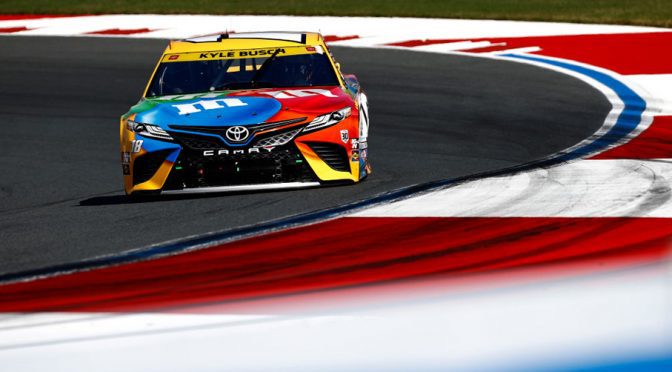
Kevin Harvick, who came into the 2021 NASCAR Cup season as the clear favorite to win the title, and Kyle Busch, among the second tier of pre-season betting choices, find themselves mired in mediocrity ahead of this week’s race in Richmond.
Opening at 5/1 odds in SuperBook USA’s championship futures market, Harvick is now listed at 10/1. Busch is offered at the same price, lengthened from an 8/1 opener. Denny Hamlin, Martin Truex Jr., Joey Logano, Chase Elliott, and Brad Keselowski all shared that same opening number.
While Busch and Harvick are first and third in average finish, respectively, over the last five races at Richmond Raceway, both drivers are also 10/1 to win Sunday’s Toyota Owners 400 (3 p.m. ET on FOX, MRN, SiriusXM NASCAR Radio). Six drivers are listed ahead of them with single-digit odds.
Neither Harvick nor Busch are rated as competitive enough this week to be paired in SuperBook matchup props against anyone besides each other. The Harvick vs. Busch matchup is priced as a coin flip, either side offered at -110 (bet $110 to win $100).
Harvick, who sits in eighth place in the standings, has six top-10 finishes but just two top fives, the most recent of which came at Homestead in the third race of the season. He has not led a lap since the season-opening Daytona 500.
Busch, 11th in the standings, has been worse, with just two top fives, four top 10s and seven laps led all season, all on the Bristol dirt.
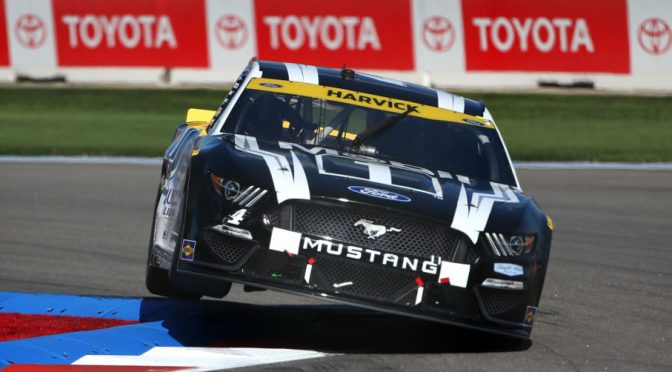
Something is not quite right with either the No. 4 Ford or the No. 18 Toyota.
“It’s been obvious from the get-go Stewart-Haas, for whatever reason, they’re off on speed this year,” Ed Salmons, VP of risk management at the SuperBook, said Tuesday of Harvick’s team. “Speed like that is not going to win a NASCAR race.”
Whatever is plaguing Harvick appears to be affecting all the drivers in the Stewart-Haas garage, as Aric Almirola, Cole Custer and Chase Briscoe all reside at 24th or lower in the points race standings
But while Harvick’s issues seem to be equipment-related, Joe Gibbs Racing cars have been among the fastest on the circuit. Hamlin sits atop the standings and has finished in the top five in seven of eight races. Truex is second in points and has two wins in 2021.
Even Gibbs’ Christopher Bell has been better than Busch, whose 10/1 odds this week at Richmond and last week at Martinsville are telling.
“He used to be like 5/2 to win Martinsville. He was such a big favorite, and now he can’t even run top five and his teammates are running one, two, three the whole race,” Salmons said. “I don’t know what to make of it. He’s got a new crew chief this year, and whatever happened last year with his crew chief, he threw him under the bus and used that as the excuse, and so far this year nothing’s really changed.
“You got an answer for me on that? I’d love to know,” the bookmaker wondered.
I wish I did, Ed.
Will they finally get it together?
Sure, they’ve been struggling early, but it may be too early to count out either Harvick or Busch.
“You see this often where a team just gets way behind,” Salmons said of Stewart-Haas. “…. But that organization is just too big for this to continue.”
Professional NASCAR bettor Zack White said last week, before Harvick’s ninth-place run at Martinsville, “I’m just not sure if Stewart-Haas has maybe slipped a little bit this year. (But) I can’t make that leap and say, ‘Oh man, Harvick’s lost it’, because I think he’s gonna win races this year for sure.”
Salmons, though, doesn’t see it turning around in Richmond.
“Basically, what you see in Las Vegas and what you see in Phoenix, that’s going to translate over probably until May. …. So I’m not really expecting anything from Harvick yet. You still think at some point they’ll figure this stuff out, but I don’t think it’s going to happen now.”
As for the No. 18, Salmons makes a cross-sport analogy for his oddsmaking prudence.
“Kyle Busch is kind of like (Rory) McIlroy in golf,” he said. “You never really want to raise his odds too high because you think he’ll eventually get it together. But it just doesn’t seem to happen.”
Marcus DiNitto is a writer and editor living in Charlotte, North Carolina. He has been covering sports for nearly two-and-a-half decades and sports betting for more than 10 years. His first NASCAR betting experience was in 1995 at North Wilkesboro Speedway, where he went 0-for-3 on his matchup picks. Read his articles and follow him on Twitter; do not bet his picks.
To fully appreciate the tempest that Brandon Thompson had risen to face last season, it helps to build a timeline. The springtime that brought the outbreak of COVID-19 also marked crucial moments in the sphere of social justice. Both were areas of global and national-level magnitude. NASCAR faced those crises in its own ecosystem.
Brandon Thompson, Credit: Scott Hunter
Thompson was named as Vice President of Diversity and Inclusion on June 16, tapped to a new position meant to promote diversity throughout the NASCAR industry. His appointment arrived in the midst of a turbulent time of change not just for the sport, but for society in general.
Kyle Larson’s dismissal for his use of a racial slur was barely two months old. George Floyd had died while in police custody on Memorial Day, and the circumstances of his death sparked protests nationwide. With the country’s reckoning on race growing, NASCAR drivers began to find their voice. Bubba Wallace and Ty Dillon hosted an impactful discussion on social media June 3, and four days later, more NASCAR drivers joined in a unified call to action amidst the unrest during their race at Atlanta on June 7, with a pre-race observance led by NASCAR president Steve Phelps and a video that expressed the drivers’ willingness to listen and learn.
NASCAR banned the Confederate flag on June 10, six days before Thompson’s assignment was announced. He’d been on the job less than a week when the tumultuous events surrounding Wallace at Talladega and the garage’s show of support for him unfolded. In the context of a sport that lists airflow as a component of its on-track competition, these winds were decidedly choppy. Thompson would have little time for an easing-in phase of orientation.
“It was a lot to do in a very short period of time, but I also think that also gave our group an opportunity to get in and show what we could do,” Thompson said.
Nearly a year later, the Diversity and Inclusion group is still showing its progress, counting numerous organizations as partners in its mission to advance diversity, equity and inclusion. The department has bolstered its existing relationships and fostered new ones, expanding its reach with the help of a newly formed Industry DE&I Committee. The committee will convene for this first time this month and features some of the most influential names in the industry — Phelps, Wallace and Rick Hendrick, among them — with additional representation across teams, tracks, manufacturers, rightsholders and official partners.
Through the work of Thompson’s department, NASCAR has developed relationships with multiple organizations — the Urban Youth Racing School, Trevor Project, the Women’s Sports Foundation and UnidosUS just as a sampling — and expanded resources for diverse employees, supplier diversity efforts, and enhanced training have all grown.
A more structured approach to supporting advocacy organizations will be a central component to NASCAR’s enhanced diversity platform, Thompson says. The new advocacy group alliance will focus on women and the Black, Hispanic/Latinx, Asian American and Pacific Islander (AAPI), and LGBTQ+ communities.
This week, NASCAR announced to employees the formation of an LGBTQ+ employee resource group (ERG) following the launch of the company’s first three ERGs last summer. Groups for women, Black and Hispanic/Latinx employees were assembled as forums for shared experiences and to build community among diverse employees and their allies.
Since last season and leading up to this year’s Daytona 500 on February 14, NASCAR worked with the Ross Initiative in Sports for Equality (RISE), the Institute for Sport and Social Justice and DECK Leadership to successfully complete more than 3,000 sensitivity and unconscious bias trainings across the industry.
As the platform continues to evolve, at the center of it is Thompson, a 37-year-old Nashville native who first came to the sport as part of the NASCAR Diversity Internship Program nearly two decades ago. The role has tapped into his leadership skills, but the strides his group has made haven’t been a solo endeavor.
“Relationship-building is definitely a key part of all this, and not only relationships internally across departments,” Thompson says. “The network can’t live just within the D&I department, but it’s even throughout the industry, whether it’s the relationships with teams, tracks, etc., as we’re trying to accomplish a lot of our goals.”
If Thompson felt the brunt of the responsibility with his appointment last June, the NASCAR community has helped him shoulder it. He had already established a foundation with the relationships he had built in his various roles with the sanctioning body — from his start as an intern in the NASCAR Diversity Internship Program in 2003 to full-time roles with the sanctioning body’s racing operations and grassroots touring series.
When his current position came amid that eventful and pivotal time last year, the industry was there with its support — whether it was making a collective statement pre-race in Atlanta or pushing Wallace’s car to the front of the grid on Talladega’s pit road.
“All of these things really illustrated how important these things were, yes because of what we were going through in society, but also what the true character of the industry was,” Thompson says. “Mentioning with that, the industry hasn’t always been cast in the best light. There’s been a lot of things put on the industry in terms of stereotypes and perceptions, but I think we at least begin the path to dispel some of those myths and perceptions.”
Arguably, some of those perceptions have been drawn from NASCAR’s past, when the idea of diversity wasn’t as readily embraced. “Within the last calendar year, sports leagues, teams and athletes and I think corporate America in general are being looked at in a different light and are expected to weigh in on things like this and speak out,” Thompson says. “The new generation of consumers is calling on that and looking for companies and leagues to do that, and it’s for all the right reasons.”
Illustrative of that effort was the Diversity and Inclusion team’s response in the wake of last month’s mass shooting tragedy north of Atlanta with the series scheduled to race at Atlanta Motor Speedway south of town just four days later. With six of the eight victims of Asian descent, Thompson said the department mobilized and worked with the Atlanta chapter of Asian Americans Advancing Justice, hosting some of their employees at the weekend’s race events to provide a needed distraction from a difficult week. Before the race, NASCAR tweeted its support for the local chapter as part of a call for followers to help #StopAsianHate.
“Being able to call attention to it, being able to highlight those organizations, and just acknowledge that moment during pre-race was something that was important to us,” Thompson says.
While Thompson is proud of what’s already been accomplished, he points to what remains on the to-do list. Social issues continue to mount and sports leagues remain active in their response to current events. NASCAR is no different, and Thompson and his team remain ready to try to smooth the turbulence.
“We are definitely at … and maybe crossroads isn’t the right word, but an inflection point,” Thompson says. “I certainly think that’s where we are, and that there is a lot more work to be done. So we certainly made a lot of strides, but last year in many ways was just the beginning. NASCAR publicly in making its stance on issues surrounding diversity, equity and inclusion, and social justice was important — a seminal moment for the sport, for sure, but now the actual work begins in terms of what that looks like.
“What are we doing in terms of areas of diversity, what are we doing in terms of our alignment with organizations who are doing the work to promote diversity, equity and inclusion, and what else are we doing internally to support our own employees and what are we doing from an industry standpoint to make sure we’re making meaningful and impactful change across the entire sport.
As is customary, Ryan Truex will have his name atop the door of the No. 40 Niece Motorsports Chevrolet when the NASCAR Camping World Truck Series resumes this weekend at Richmond Raceway. It’s the 900 other names riding along that will set his truck apart.
Truex, Niece and sponsor Marquis hot tubs will commemorate the company’s long-running association with the Make-A-Wish Foundation with a special paint scheme in Saturday’s ToyotaCare 250 (1:30 p.m. ET, FS1, MRN, SiriusXM NASCAR Radio). The No. 40 Chevy will feature all 900 names of wish recipients that Marquis has granted, dating back to its first gift more than 20 years ago.
“It’s both an honor and a privilege to have Marquis and Make-A-Wish America on board with me at Richmond,” Truex said in a news release. “This partnership with Marquis and Make-A-Wish started over 20 years ago with a wish for 15-year-old Andrea, who was diagnosed with leukemia and wanted to remedy her joint pain with hydrotherapy. Today, over 900 wishes have been granted — 900 lives changed — thanks to Marquis and their network of dealers.”
In addition to the special design for this weekend’s event, the team is offering a limited-edition hero card signed by Truex with all proceeds benefiting Make-A-Wish.
Marquis Spas has granted life-changing wishes to every child on our @MarquisSpas / @MakeAWish No. 40 Chevy. I’m honored to have all 900 wish kids riding with me at @RichmondRaceway!
Saturday’s go will mark Truex’s first Camping World Trucks appearance at the .75-mile Richmond track. He has seven career starts there in the Xfinity Series, with three top-10 finishes and a best effort of fourth place.
Truex currently ranks 17th in the Camping World Truck Series standings with a best result of fourth in the season opener at Daytona International Speedway.
DARLINGTON, S.C. — Darlington Raceway and Goodyear announce a partnership on the entitlement of the spring NASCAR Cup Series race as part of the Official Throwback Weekend of NASCAR on May 9. The official name of the race will be the Goodyear 400.
“Goodyear is one of the most iconic brands in the history of motorsports, so we are proud to welcome them back to Darlington Raceway for the Goodyear 400,” said Darlington President Kerry Tharp. “Goodyear has been a part of many monumental moments in Darlington Raceway’s storied history. We look forward to writing a new chapter with Goodyear as part of the Official Throwback Weekend of NASCAR.”
Goodyear has a rich history at Darlington Raceway as it conducted its first official NASCAR tire tests at the track in 1954 and earned its first NASCAR victory in the 1959 Southern 500 with driver Jim Reed.
In support of the Official Throwback Weekend of NASCAR, Goodyear will once again replace the yellow “Eagle” logo on the sidewalls of its racing tires with a vintage “Blue Streak” sidewall design. In keeping with the race weekend’s throwback theme, the Blue Streak tires will include white Goodyear lettering and a white logo that reflect the design of NASCAR tires used in the 1960’s and 1970’s. The Blue Streaks were phased out in 1981 as Goodyear’s racing tires moved to the “Eagle” design.
“Goodyear is honored to be a part of the Official Throwback Weekend, a tradition that drivers and fans look forward to each year,” said Karen Maroli, Goodyear’s vice president of marketing. “Goodyear and NASCAR have a shared legacy that spans six decades and multiple generations, and the throwback nature of the Goodyear 400 allows us to celebrate the accomplishments of the past while also showcasing the incredible talents of drivers today.”
The Goodyear 400 is a continuation of Goodyear’s longstanding relationship with the sport of racing. As the “Exclusive Tire Supplier” for NASCAR’s top three series, Goodyear is the longest-running continuous partner in NASCAR history. From the introduction of the racing slick in 1972 to the radial tire in 1989 and multi-zone tread design in 2013, Goodyear and NASCAR have consistently innovated to deliver compelling racing.
Goodyear produces more than 100,000 tires for NASCAR’s top three series every year, and each tire is custom-built by the hands of passionate Goodyear associates in Akron, Ohio – Goodyear’s global headquarters – and donned with the name of the employee who helped produce it.
The Goodyear 400 will be broadcast on FS1, Motor Racing Network and SiriusXM NASCAR Radio on Sunday, May 9 at 3:30 p.m. ET.
The Official Throwback Weekend of NASCAR moves to a new dedicated spring weekend as The Lady in Black unites generations of race fans to celebrate on Mother’s Day as part of the new spring weekend of action-packed racing featuring all three premier series on May 7-9. Darlington will host the LiftKits4Less.com 200 NASCAR Camping World Truck Series Triple Truck Challenge race on Friday night, May 7 at 7:30 p.m., the Steakhouse Elite 200 NASCAR Xfinity Series Dash 4 Cash race on Saturday, May 8 at 1:00 p.m. and the Goodyear 400 NASCAR Cup Series race on Sunday, May 9 at 3:30 p.m.
The Tradition Continues as the famed Cook Out Southern 500 will launch the NASCAR Playoffs for the second consecutive year as part of a Labor Day weekend of racing on Sept. 4-5. The Xfinity Series will compete on Saturday, Sept. 4 at 3:30 p.m., with the running of the Sport Clips Haircuts FVP Help A Hero 200. The Cook Out Southern 500® NASCAR Cup Series Playoff race will once again compete at night on Sunday, Sept. 5 at 6:00 p.m.
NASCAR tickets are available for purchase via phone at 866-459-7223 or online at darlingtonraceway.com. Fans can view the full 2021 NASCAR Cup Series, NASCAR Xfinity Series, NASCAR Camping World Truck Series schedules and purchase tickets at nascar.com/tickets.