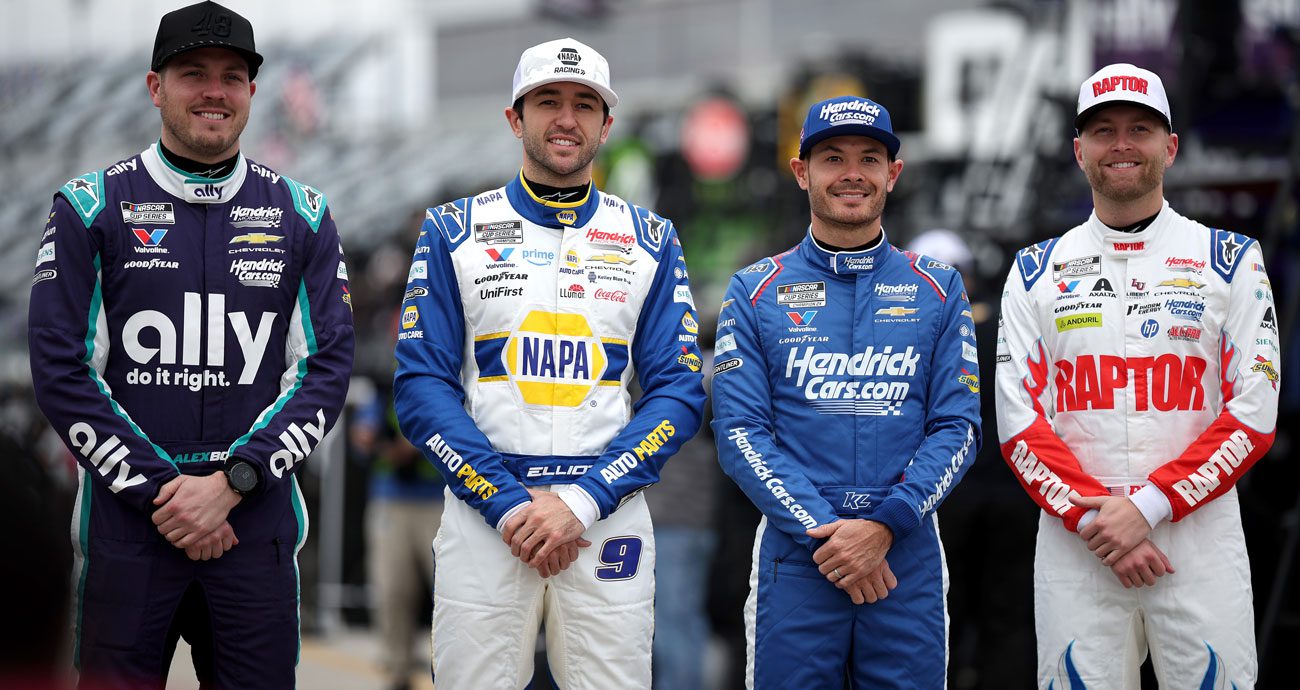
Hendrick Motorsports isn’t used to being anywhere except the top of the NASCAR pyramid. After Rick Hendrick first entered the NASCAR Cup Series in 1984, his team has ascended to the most wins (322), top-five finishes (1,342) and top-10 finishes (2,293) of anybody at the sport’s highest level, and it’s not really all that close in any of those categories. Hendrick is far and away the most dominant organization in recent NASCAR history.
And that’s precisely what makes this year’s results so jarring to see. So far in 2026, Hendrick has just two total wins — both by Chase Elliott (at Martinsville in March and Texas in May) — which is their fewest through the first 23 races of a season since winning only once to start the 2018 campaign (also with Chase Elliott). They’re tied with Spire Motorsports and Trackhouse Racing (two wins apiece) in that regard this year, well behind Joe Gibbs Racing and 23XI Racing (seven apiece) and trailing Team Penske (three) as well. They also have fewer than half as many top fives (20) as JGR (42), despite beating Gibbs 90-87 in 2024 and 2025 combined.
RELATED: Chase check-in before Richmond | Cup Series standings
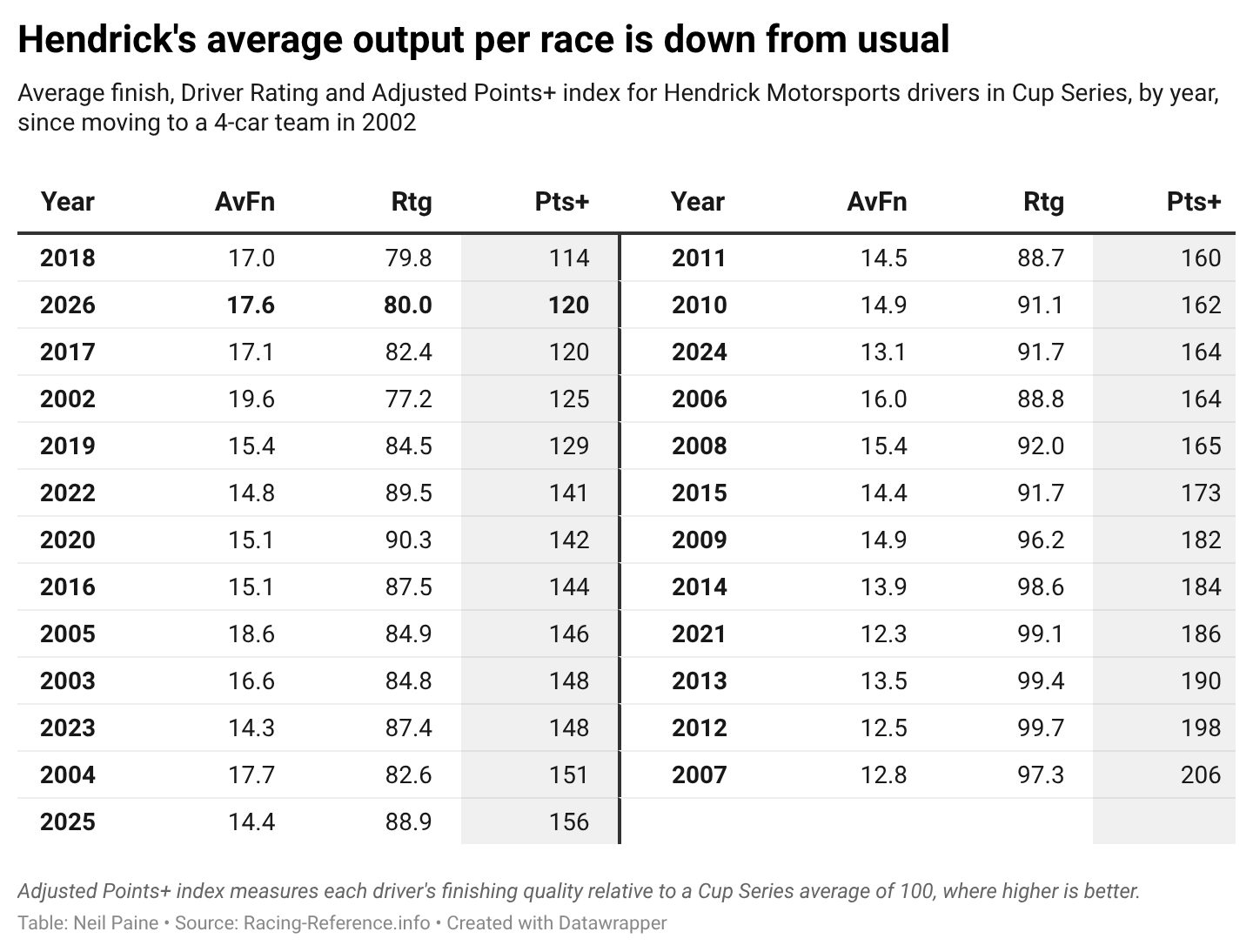
Statistically, this is on pace to be one of the most mediocre Hendrick seasons since switching to a full-time four-car lineup in 2002. Across all four Chevrolets — Kyle Larson in the No. 5, Elliott in the No. 9, William Byron in the No. 24 and Alex Bowman, Anthony Alfredo and Justin Allgaier in the No. 48 — Hendrick’s 17.6 average finish is tracking for the team’s fourth-worst showing, ahead of only 2002 (19.6), 2005 (18.6) and 2004 (17.7). Meanwhile, their 80.0 Driver Rating currently ranks third-worst — only 2002 (77.2) and 2018 (79.8) were poorer — and their Adjusted Points+ index of 120 is ahead of only 2018 (114).
No matter how you slice it, we’re not used to seeing a diminished Hendrick Motorsports, even if a “down year” for HMS would be a good year for most other teams.
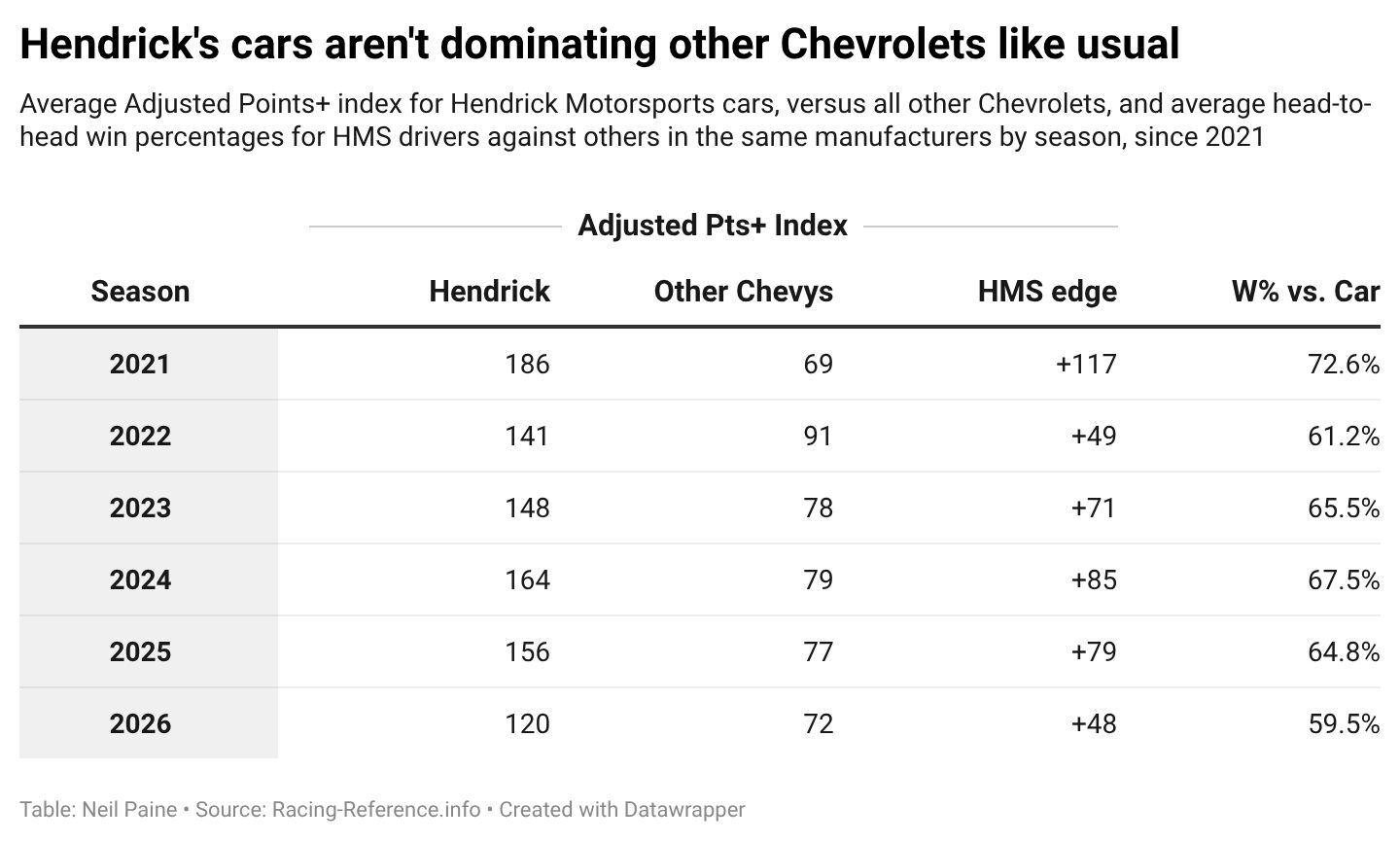
Some of Hendrick’s problems in 2026 can be attributed to the Chevrolet program still figuring out how best to extract speed from this year’s cars. While Toyota has won 14 of 23 races this season, and Ford — which had been struggling out of the gate as well, aside from Ryan Blaney’s No. 12 Team Penske machine — has produced much better results in recent weeks, no Chevy besides Elliott has won outside of Shane van Gisbergen in late June (Sonoma) and Daniel Suárez in late May (Charlotte).
And most concerning, Hendrick’s statistical edge within Chevy is down significantly as compared with recent seasons — indicating more than just a manufacturer problem overall, even granting that Hendrick is the flagship team for their OEM:
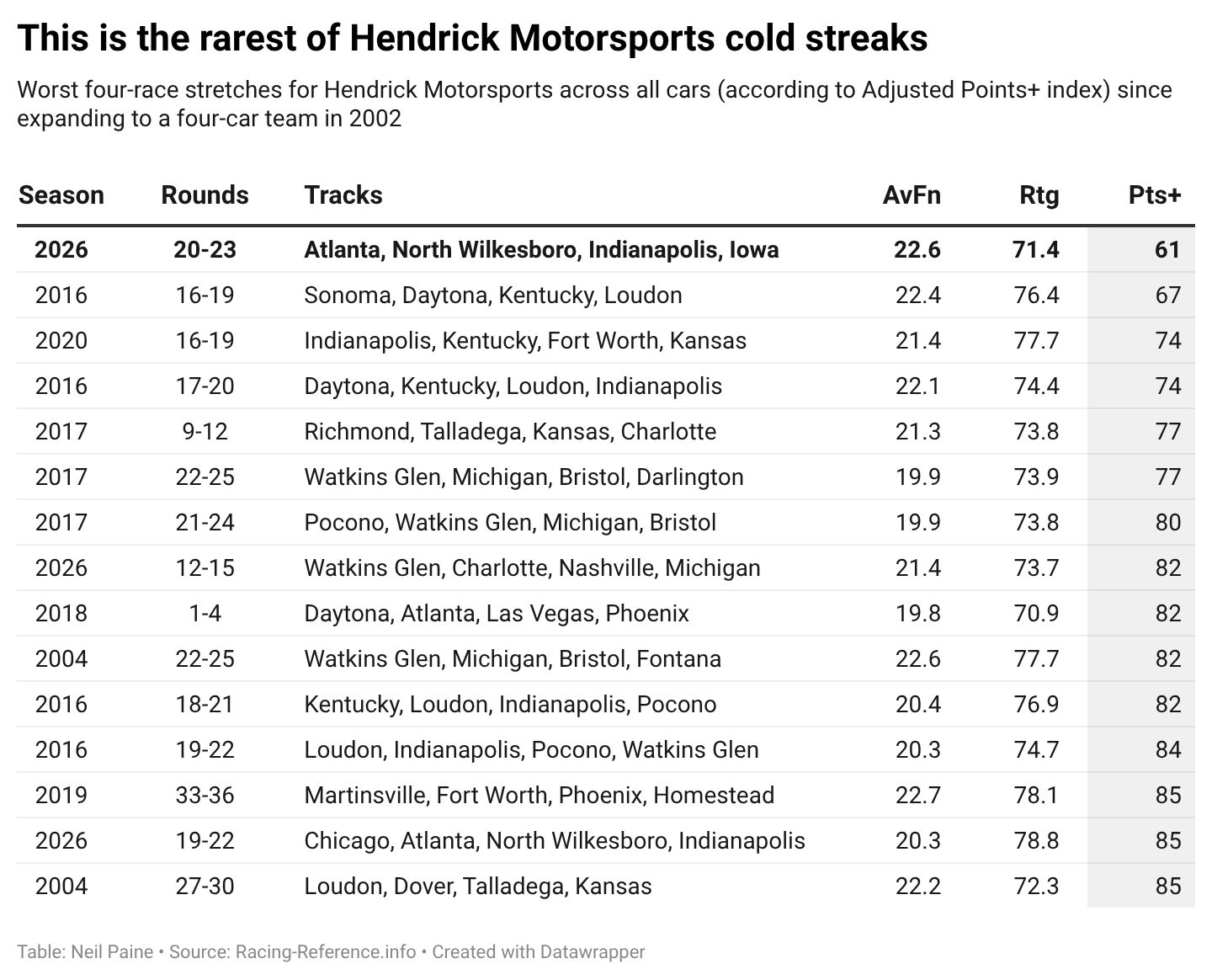
What’s more, the Hendrick funk is getting worse over time, culminating in a miserable summer stretch.
We were already talking about a possible Hendrick slump during the opening handful of races in the 2026 season, speculating about the effects of the new Chevy Camaro body design and lamenting the early absence of Bowman from the No. 48 car due to vertigo. But it also seemed fair to expect Hendrick’s fortunes to turn around from there, with more time to adjust to the new car, Bowman returning to the lineup and a larger sample size in which drivers like Larson and Byron could see their luck even out.
Aside from Elliott’s high points, though, that turnaround hasn’t really happened. Instead, the second half of the Cup calendar to date has seen meaningful performance declines across the four Hendrick cars. And in the past four races specifically, the average Hendrick car has finished outside the top 22, with a Driver Rating in the low 70s and an Adjusted Points+ index nearly 40% worse (!) than the Cup norm.
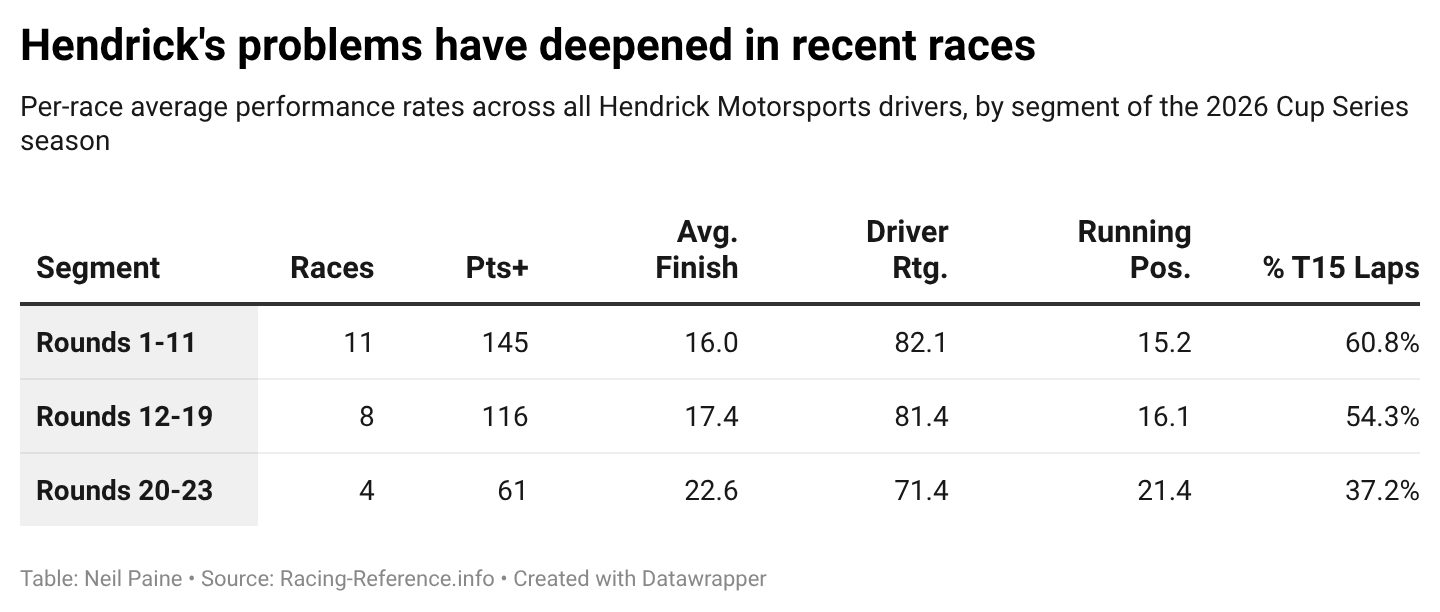
In the 25 years of Hendrick’s four-car era, that most recent four-race stretch is the team’s 13th-worst by average Driver Rating, 11th-worst by average finish and their absolute worst by Adjusted Points+ index, meaning this is the roughest stretch of finishing quality the team has seen in at least a quarter-century.
If there’s a saving grace for the HMS group — beyond the fact that there’s basically nowhere to go but up from here — it’s that Larson continues to deserve better finishes than the ones he’s gotten, based on his Driver Ratings and average running positions in races this season. No driver has a bigger negative gap between his Cup Series-wide ranking in average running position and average finish than Larson in 2026.
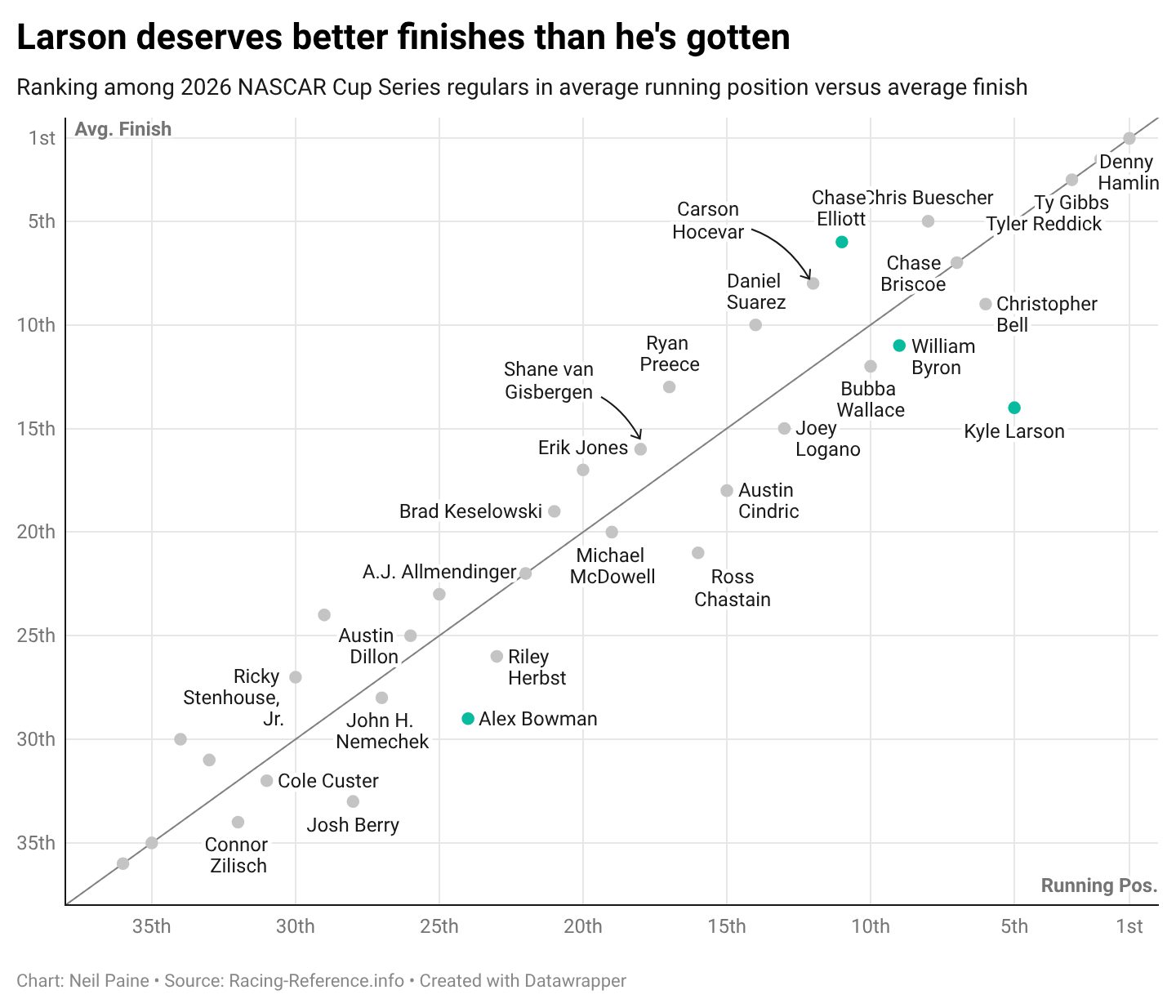
So this team probably won’t continue to see its drivers finish quite as poorly as they have in recent weeks, like when multiple HMS cars ended up outside the top 30 — and none finished any better than ninth — at Iowa Speedway this past Sunday. But that doesn’t necessarily mean there’s huge room for improvement in the underlying process, which has produced less speed from the Hendrick rides this season even beyond their bad finishing luck. And with fairly mixed projections for the quartet of Byron, Larson, Elliott and Bowman at Richmond Raceway (Sat., 7 p.m. ET, USA Network, HBO Max, MRN Radio, SiriusXM NASCAR Radio), that may not change too much this weekend, either.