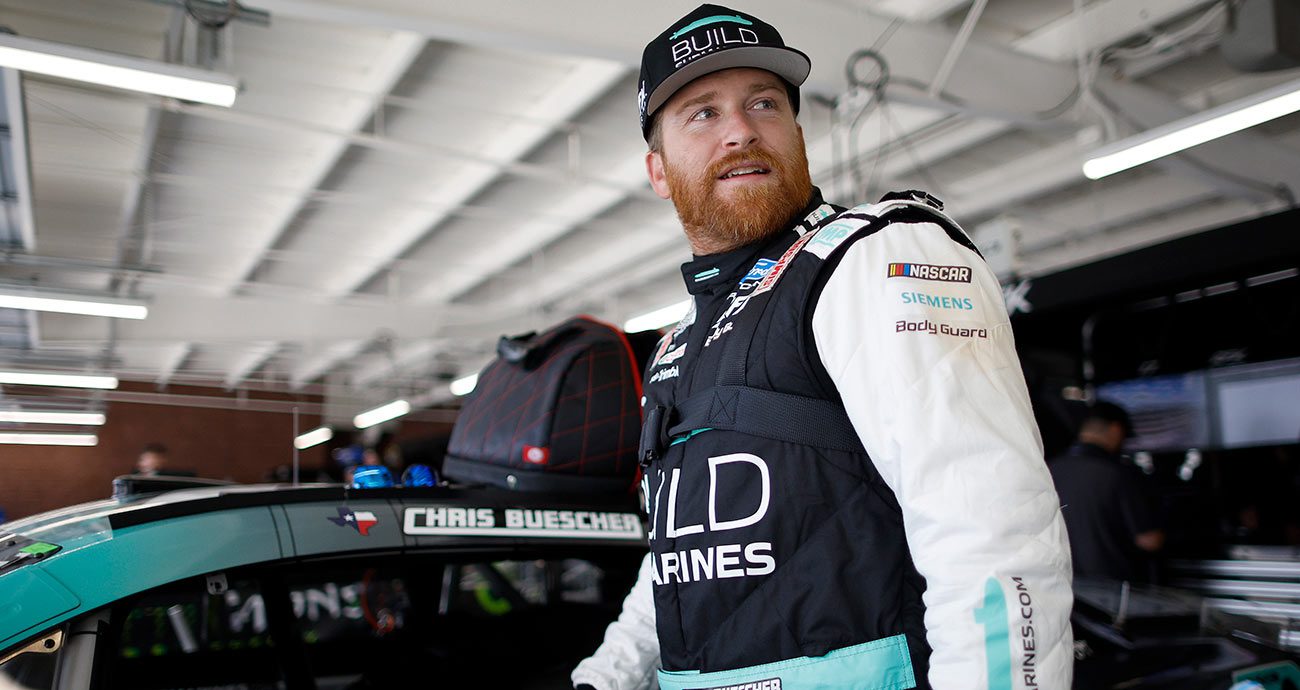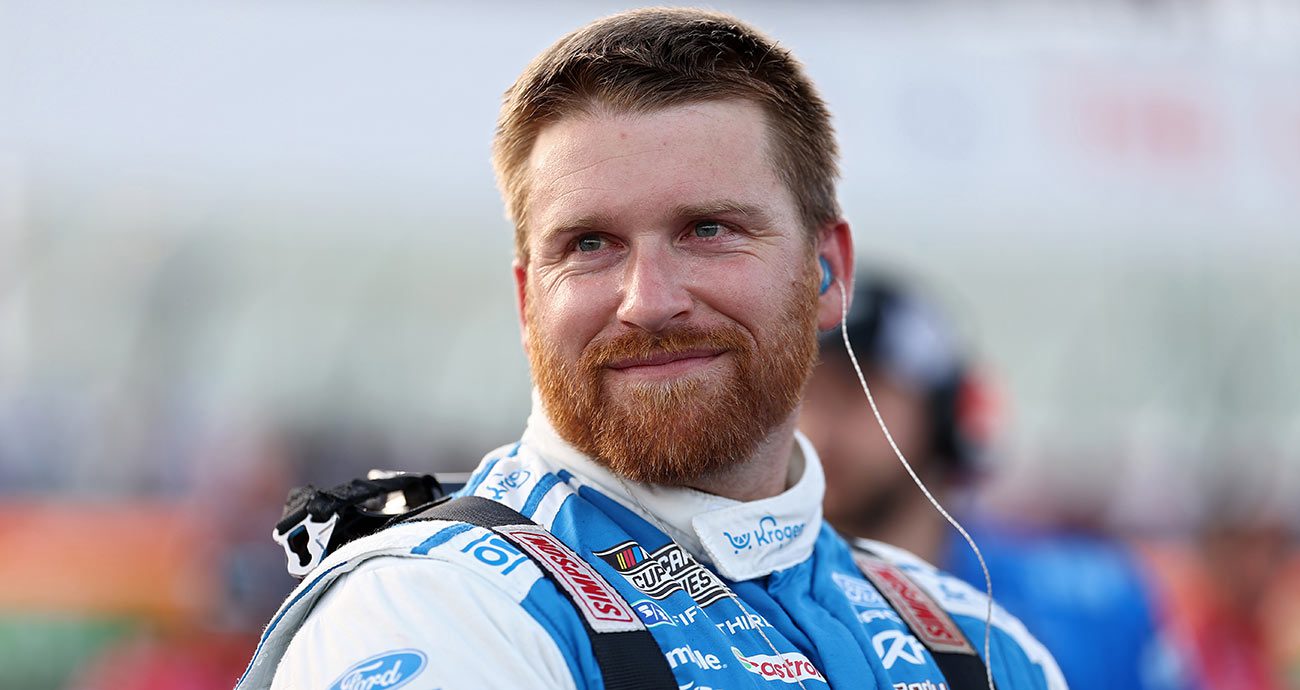
Brad Keselowski and Ryan Preece showed up early for their RFK Racing team’s scheduled press conference inside Daytona International Speedway over the weekend. After taking their seats on the podium to await their teammate Chris Buescher’s arrival — they jokingly made a $1 bet with one another as to the exact minute Buescher would enter the room.
And then, as if on cue, the door opened and Buescher quietly and unhurriedly walked in, taking his place on stage alongside the RFK pair with a minute to spare before their interview session started. Keselowski had taken the “under” on the timing and seemed to win the wager. Buescher just smiled.
Right on time. Ready to go.
“That’s just the Texas in him,” Preece grinned and said of his teammate. “He’s so laid back.”
That measured pace and even-tempered style are indicative of the 33-year-old Texan’s disposition, even if it seems at odds with someone enjoying success in a profession that rewards split-second decisions and controlled aggression.
Buescher’s perpetually modest “nothing to see here” demeanor is particularly intriguing, considering there actually is a whole lot to see here.
Two hours after that team press conference, Buescher put his No. 17 RFK Ford Mustang on the front row for the Coke Zero Sugar 400 regular-season finale — his best start ever at the sport’s most famous speedway, where he won the 2023 summer race in a dramatic overtime triumph.
Buescher is ranked 10th among the 16 championship hopefuls in the re-seeded Chase standings as the series heads to Darlington Raceway for Sunday’s Chase opener, the Cook Out Southern 500 (5 p.m. ET, USA Network, HBO Max, MRN Radio, SiriusXM NASCAR Radio).
RELATED: Darlington weekend schedule | Cup Series entry list
For the third time in his 11-year career at this level, Buescher will have the opportunity to add a NASCAR Cup Series title to his 2015 NASCAR O’Reilly Auto Parts Series and 2012 ARCA Menards Series championship work.
It’s a quietly impressive resume — so quiet that many don’t realize how accomplished Buescher really is, and how far he has come based solely on talent and potential. He’s had to rely on skill and the willpower to succeed instead of family money, a famous pedigree or longtime sponsor pushing him through the ranks.
Hard work, exceptional talent and a crucial boost earned from some of racing’s most respected team owners along the way helped land his opportunity. What he did with that illustrates both his on-track ability and the amazing determination it took him to reach NASCAR’s premier level.

“We’re a little bit understated and that’s OK. That’s frequently been the case for me,” Buescher said. “I’ve been in an underdog situation a lot growing up and I’m kinda used to flying under the radar. We got results, won a lot of races and championships and didn’t have to scream from the mountaintops to prove it.”
Of the unlikely and often hard-knocks way he earned a spot in NASCAR’s big time, Buescher insists, “It helped me in a lot of ways; one was in race-track demeanor due simply to the fact we scratched and clawed through it a lot of years and for a long time I worked on my own race cars.”
It’s also indicative of Buescher’s upbringing in football-crazed Prosper, Texas — about a 40-minute drive north of Dallas and with a population of only about 10,000 when Buescher was a youngster.
Unlike most of Prosper’s residents, Friday night high school football games weren’t a part of Buescher’s routine. And in fact, he can’t even recall going to a single game. The town has produced multiple Major League Baseball and National Football League stars. But Buescher’s interests shone under another set of equally bright lights: at the race track.
His home state’s passion for football aside, Buescher recalls hosting a Super Bowl party in early 2016 after purchasing his first home in the wake of that first NASCAR championship. Buescher smiled and said it may well have been the first NFL game he honestly watched from kickoff to the final whistle.
“The pathway there in Texas is definitely better paved for football,” Buescher conceded. “But my dad’s a hot-rodder, so I grew up around cars, working in the garage, you know, making sure I held the flashlight right for him. That was what our weekends when I was a kid looked like. We’d turn the NASCAR race on and go inside and watch. Then when a caution flag came out, we’d go out in the garage and work on the car for a little while more. That was what we did when we weren’t racing. But we were mostly on the run, racing a lot.”
Pressed for more details about his early life away from the track, the famously private Buescher shares that before he was old enough to drive legally, he was “all in” as a skateboarder — complete with the bowl haircut, always in a pair of Vans shoes that the style required.
“It was a phase,” he beamed. “But I had a good time. Growing up, that’s how I got around town was skateboarding. My best friend lived on basically the other city-limit line, so like a five- or six-mile skateboard ride over. Not smooth.”
Not smooth. But he got there, and in many ways it also describes Buescher’s more unorthodox arrival in NASCAR’s premier series.
He succeeded on natural talent combined with a fundamental willingness to learn and work hard. It drew attention, and he was able to capitalize on a shot when some pivotal people in the sport recognized his uncommon abilities and work ethic and took great steps to elevate that potential.
Buescher’s skill as a young teenager competing for his family-owned team in Legend Car races at Texas Motor Speedway and around the South was noticed early on by a pair of racing’s longtime version of talent scouts: Ken Ragan and Gary Roulo. Both were so impressed with Buescher that over the course of the next few years, they would even invite a teenaged Buescher to move in with them as he came up the ranks — living at times with the Ragan family in North Carolina and the Roulo family in Chicago — putting the young talent closer to opportunity.
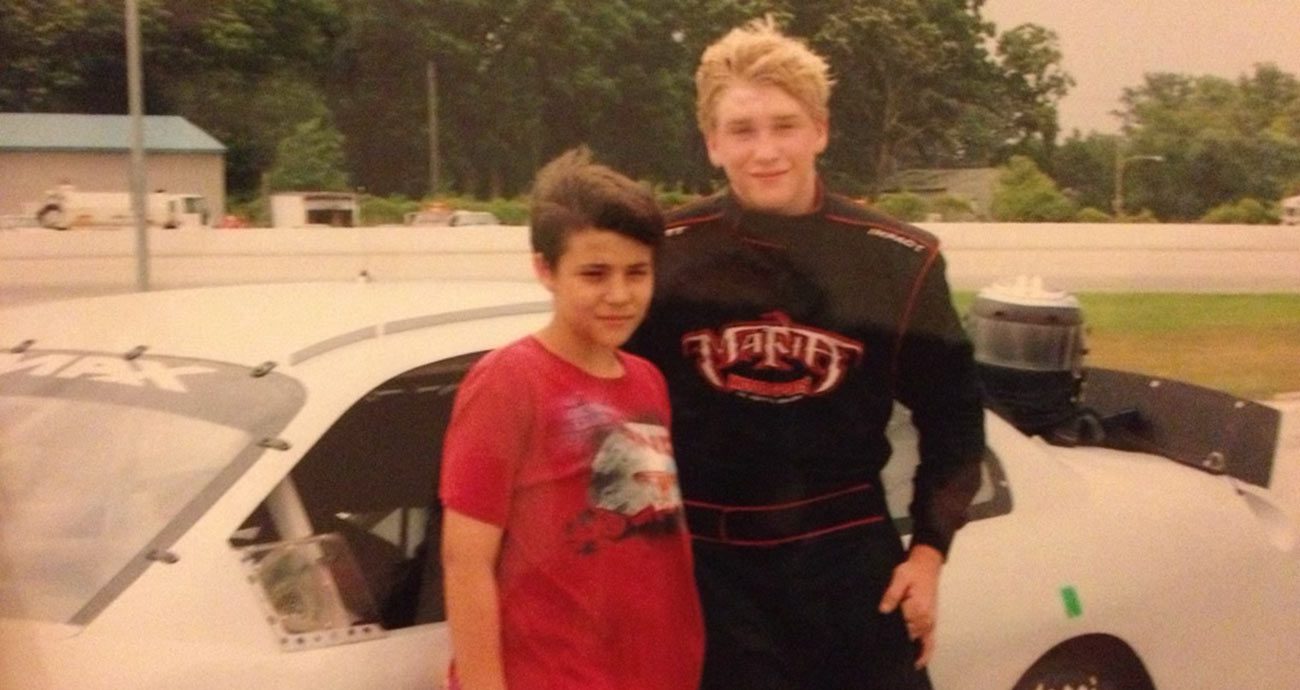
Former NASCAR Cup Series and O’Reilly Series standout driver David Ragan remembers well when his father was helping guide the early portion of Buescher’s career and how it all helped shape the kind of person Buescher is now.
“The first thing when I think of Chris, I think of the humble, hard-working, kind of laid-back, old-school race car driver,” Ragan said. “He doesn’t get into the flashy, self-promoting era that we kind of live in now, where a lot of young guys and girls have to push hard to promote themselves. He’s a great race car driver and I think he’s one of the more under-the-radar guys from the outside,” Ragan said. “He’s a champion and a lot of people forget that [2015 O’Reilly Auto Parts Series] championship.
“He doesn’t tear up a lot of race cars and doesn’t have a lot of controversy around him. He’s the kind of guy that any team owner would love to have. We’re proud of what he’s grown and become. Certainly, my days at RFK and still working with Ford, we pull for him every weekend.”
Buescher also draws high praise from Roulo, whose renowned family-owned Roulo Brothers Racing team fielded ASA and ARCA Menards Series cars over decades for a long list of successful racers, from Butch Miller, Dick Trickle, Ken Schrader, David Green and Joe Ruttman to NASCAR Hall of Famers Mark Martin and Darrell Waltrip.
“Chris was focused, coachable but couldn’t run eight or nine laps without lap times falling off because he just wasn’t physically mature yet, just a small, skinny kid in the beginning,” Roulo recollected of working with a teenage Buescher.
He credits Ken Ragan for encouraging Buescher to hit the YMCA for daily workouts and still gets a kick recalling Buescher’s perpetually shy personality — noting that while dining out, restaurant servers would ask him to repeat his food order because he was so soft-spoken.
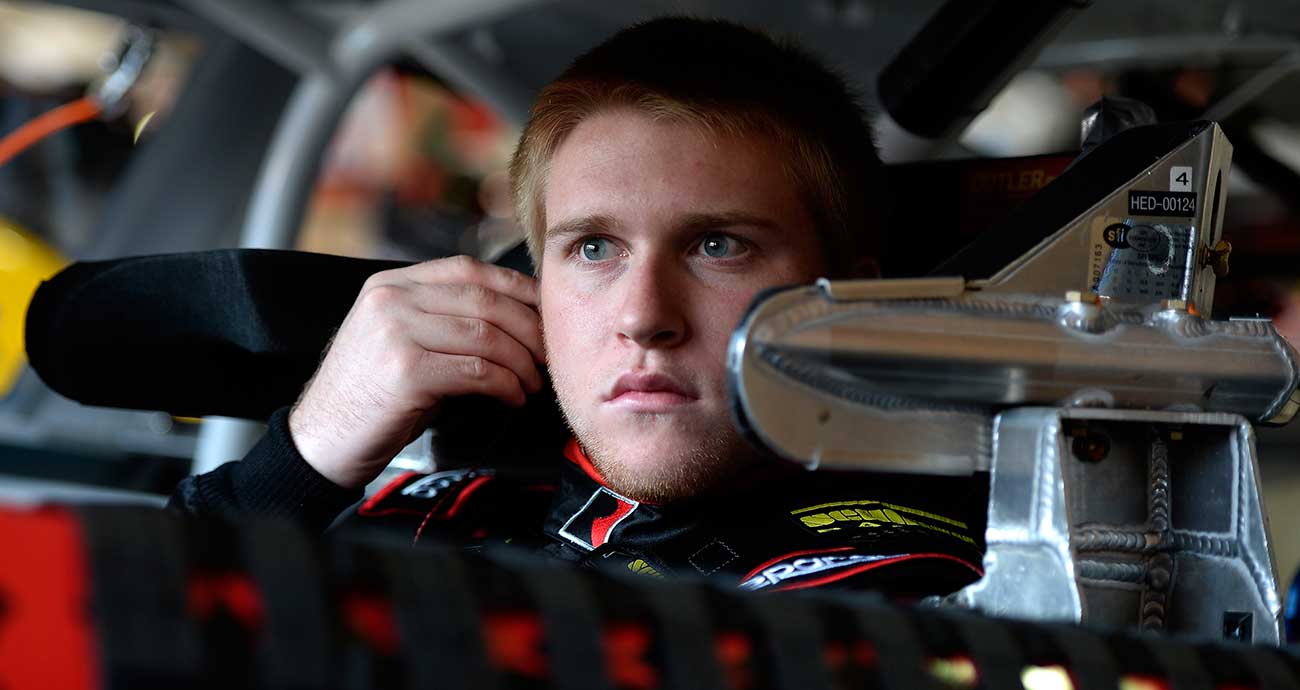
Buescher’s loudest statements were instead made behind the wheel. As with Ragan, Roulo was immediately impressed with Buescher enough to help secure him some starts and strengthen his relationship with Jack Roush, with whom he had a long history of helping develop drivers.
“Jack Roush had always told us, ‘You find the talent, and we’ll find a way to make it work,’ ” Roulo said, “and here we had the opportunity with a 15-year-old kid who’d never been in a big car before — only Legend Car racing prior to us. He didn’t have any bad habits. He was coachable, and he had talent. It was an opportunity to share everything we’d learned from this long list of established, winning race-car drivers. So it was an opportunity to translate that to him and go through different scenarios.”
The results came quickly. Although Roulo had never fielded a full-season ARCA car with the same driver, he did so in 2011 with an 18-year-old Buescher. The team won three times and finished top five in an amazing 14 of the 19 races, finishing runner-up in the championship to Ty Dillon.
The next season, he won four times and had 16 top 10s, impressively claiming the 2012 ARCA title over veteran and multi-time series champ Frank Kimmel.
“I remember telling him even in those seasons that this is week by week,” Roulo said. “If we get tore up really bad or you do something stupid, we will have to park for a while. So every week, it was focus on taking care of equipment, taking care of tires, not wrecking race cars, not wrecking people on the race track, not getting involved in stupid stuff and being there at the end.
“That was part of the upbringing.”
And Buescher has learned well. After besting that crowded field of established veterans and talented young drivers in ARCA, he went on to do the same in what’s now called NASCAR’s O’Reilly Auto Parts Series with a huge opportunity driving for the Roush championship team. He scored his first top 10 in only his third start for Roush in a brief seven-race audition of sorts as a 20-year-old in 2013.
He answered that promise the next year in his first full-time season for Roush — fittingly hoisting his first O’Reilly Auto Parts Series trophy at the Mid-Ohio Sports Car Course and besting a field that included road-course specialists such as Alex Tagliani, a former Indianapolis 500 pole-sitter, and then sports-car regular Justin Marks, now a team owner with Trackhouse in the NASCAR Cup Series.
The next year, Buescher claimed the 2015 series championship over the likes of future NASCAR Cup Series champ Chase Elliott and future fellow O’Reilly Auto Parts Series champion Daniel Suárez.
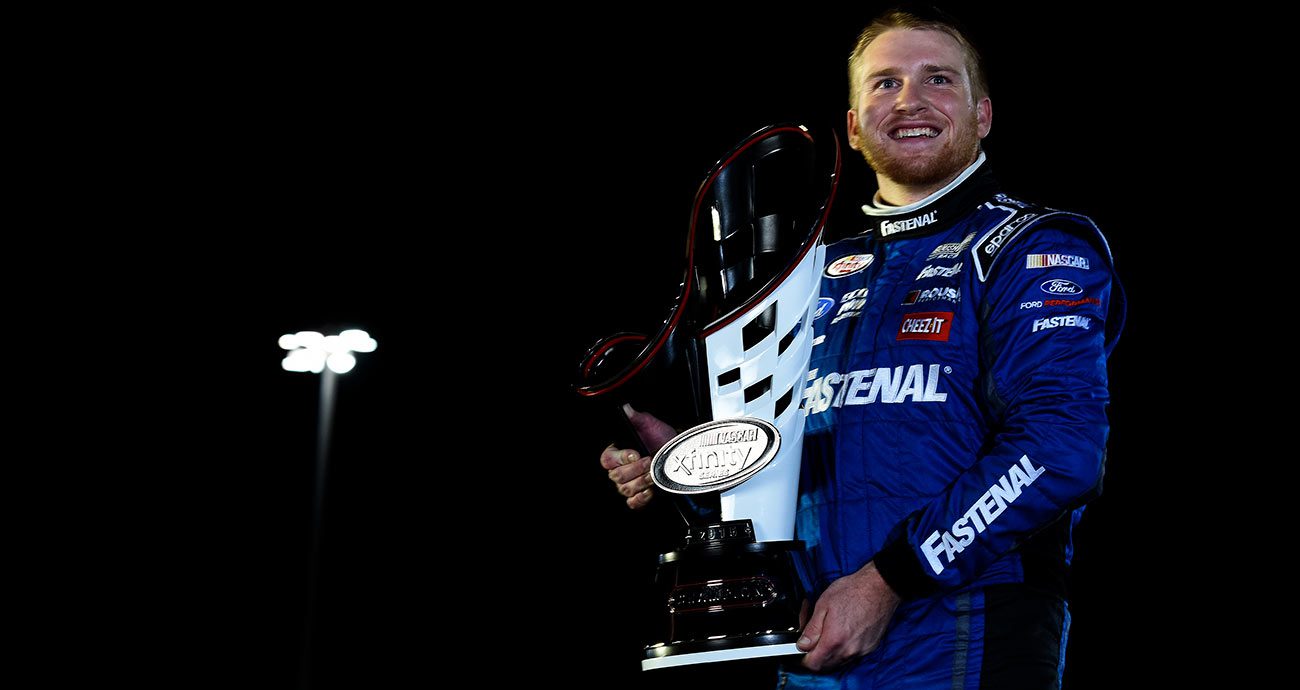
“When I think of great race-car drivers, the first thing that comes to mind is someone whose temperament is manageable and they can have a high racing IQ behind the wheel,” David Ragan said. “There’s a lot of drivers that can just go fast, but they make mistakes, pick the battles they don’t need to fight, and they’re not thinking about that final fuel run of the race, and if you sit down or hang out with Chris for a day, you’ll pick up that he listens a little more than he talks. He’s a little bit low-key, and I think he’s like that behind the wheel.
“His temperament off the track is a bit of an indicator of his decision-making behind the wheel, and I think ultimately that’s what separates the average race-car drivers from the great race-car drivers.”
MORE: Cup Series standings | Chase format 101
It’s indicative of the steady, we-got-this vibe that Buescher — now a husband and father of two young children — gives off. Ask enough people in the NASCAR Cup Series garage to describe Buescher and the faces tend to light up, invariably preceding the praise.
“He is quiet,” Buescher’s longtime crew chief Scott Graves concedes. “But I’d say a lot of his success is the talent side and his approach to this. His demeanor certainly plays a large part. He works hard, stays out of trouble on track. Having to work on his own stuff a lot coming up, he knows if he wrecked it, he fixed it. I think he really gained a lot of appreciation for what goes into this and how hard it is to bring a competitive car to the track every week. He works hard to stay out of trouble. But he knows how to go fast, and that’s a good combination for us.”
After scoring his first NASCAR Cup Series win at Pocono Raceway for Front Row Motorsports in his first full-time season (2016), Buescher spent the next three years at JTG-Daugherty Racing, earning his first two top fives with the team at Daytona’s races in 2018.
In 2020, Buescher moved back to RFK and has been there ever since — adding five more wins to his NASCAR Cup Series resume and this summer extending his contract with the team in a multi-year deal that will keep him a part of an organization that has been so impactful in his career and life.
Buescher recalls something Roush told him nearly two decades ago: “You’ll get out of it what you put into it.” It’s appropriately understated advice that has driven him ever since.
“I understood this was my shot.”
And he’s still making good on it.