NASCAR reminds teams of severe penalties
Vote: Who will win at Martinsville? | Play: NASCAR Fantasy Live
Related: Crew chief Childers loves chatter about tires
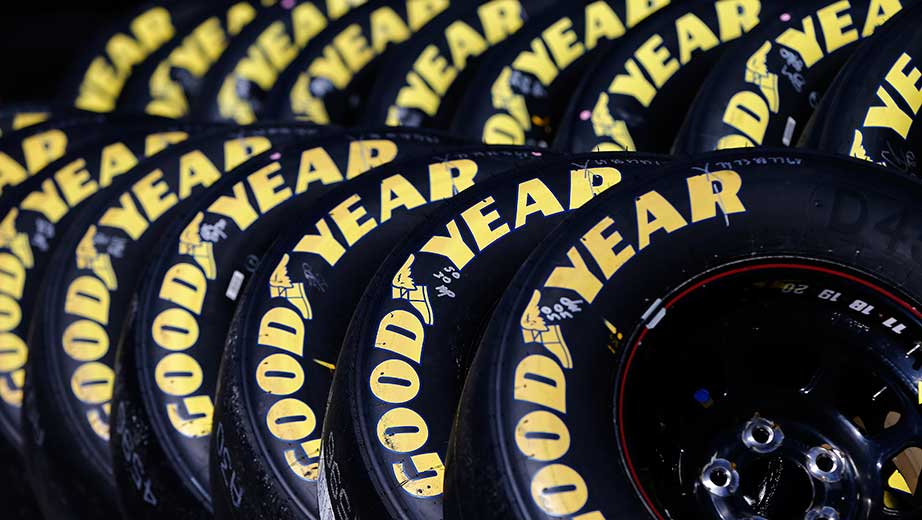
MARTINSVILLE, Va. — NASCAR gave teams a reminder Friday morning about the severity of tampering with tires, a hot-button issue after the sanctioning body sent the Goodyears from select teams for an independent audit the last two weeks.
Hendrick Motorsports crew chiefs Alan Gustafson and Chad Knaus, making an early Friday media appearance at Martinsville Speedway, addressed the issue, saying their frantic schedules on race weekends prevented them from witnessing any prohibited behavior first-hand. Still, NASCAR’s confiscations and the rumblings at the track made the issue hard to ignore.

“It’s hard to speculate because that’s all I can do, but in my experience there’s a lot of smoke around that, right?” said Gustafson, who oversees preparation for Jeff Gordon‘s No. 24 Chevrolet. “There’s a lot of talk, there’s a lot of dialogue, there’s a lot of rumors in the garage. So yeah, I think some people think something is going on. And is NASCAR reacting to that or do they feel uncomfortable with what’s going on? I don’t know that answer.
“I do think that it is something that’s on the forefront of a lot of people’s minds and obviously NASCAR is trying to make sure that we’re all on a level playing field and if anyone is violating that that they’ll pay the price, which they’ve reminded us this morning is very, very stiff. That’s all I know, but anything beyond that speculation beside the fact is that it’s a hot topic obviously.”
NASCAR took the tires from two teams — those of points leader Kevin Harvick and Joey Logano — after the season’s fourth Sprint Cup Series race, at Phoenix International Raceway. Harvick’s tires were taken again for independent study after last weekend’s race at Auto Club Speedway, joining those from the cars driven by fellow Chevrolet drivers Kurt Busch, Paul Menard and Ryan Newman.
Officials issued no penalties or expanded details from their findings, and NASCAR Executive Vice President and Chief Racing Development Officer Steve O’Donnell said in a recent appearance on SiriusXM NASCAR Radio that the “audits” were routine.
WATCH: Drivers sound off on tire tampering talk
Any infraction involving manipulating tires falls under the heading of a P5 penalty — the second-highest severity in the NASCAR deterrence system, which was introduced before the 2014 season. The NASCAR Rule Book provides examples of P5 penalties, including a specific passage about tires in Section 12.5.3.5.1.a, which states, “Effecting, modifying and/or altering the standard tires in any way, other than through authorized means such as tire pressure adjustments within the recommended range, permitted tire cooling when mounted on the race vehicle; or heat-cycling on the race vehicle on the race track earlier in the Event.”
The punishment for a P5 violation includes the loss of 50 points in the driver and team owner standings, a fine ranging from $75,000 to $125,000, a six-race suspension for the crew chief, probation until the end of the calendar year for all suspended crewmembers, and any other applicable penalties.
The practice of teams potentially “needling” tires with miniscule holes, Gustafson said, would “be a very difficult thing to police.” The tactic is intended to provide a slow release of air, which would allow tire pressures to remain more consistent — while improving grip and durability — over the course of a green-flag run. Ordinarily, pressures rise as the tires heat up, changing the handling characteristics of the car.
Gordon said that he has been a longtime advocate for NASCAR adopting bleeder valves on its tires to better regulate pressure.
“I came from sprint cars where they’re just built into the wheel,” Gordon said. “You set them. Those might not be advanced enough for what we need in a Cup car and a Cup tire, but it just makes sense. It’s crazy what we do with air pressures and these big, heavy cars build the air pressures up so much that we’re always trying to start them real low, which always causes issues for Goodyear and the teams. They just increase, increase, increase.
“So it makes sense to me that we have bleeder valves, but because we don’t, it’s pushing the teams to do things. … I’ve heard about a lot of things with valve caps and poking holes in tires for years, but I’ve never seen it done, have never had proof that it was done, so it’s very interesting to me that NASCAR is investigating this further and I look forward to seeing what comes out of it.
“If they find a way to stop that, if it’s really going on, I get excited about our chances because I know that we’re not doing it, so it will close the gap for us to whoever may be doing it.
WATCH: Chris Rice explains the issue
Gordon was at the center of another TireGate in September 1998, when rival team owner Jack Roush accused his Hendrick team of using illegal, chemically treated tires to gain an advantage. He said Friday that if Ray Evernham, his crew chief, was doing something illegal back then, he wasn’t aware of it.
No team has been outed as a rule-breaker yet, but the murmurs of unusual happenings in the garage persist. Gordon said when the rumor mill churns as loudly as its current tenor, there’s something to it — just how it’s being done is the question.
“I don’t know if there’s anything or not,” said Knaus, crew chief for Hendrick’s No. 48 Chevy driven by Jimmie Johnson — like Gordon, an eight-time Martinsville winner. “I’m busy on Sunday and I don’t have a lot of friends in the garage. I don’t talk to anybody else, either, so it’s OK. My friends are outside of racing. So I don’t know what’s going on. I know I sent (Sprint Cup managing director) Richard Buck a text and I said, ‘Hey man, can we poke holes in our tires? Is that OK?’ and he sent me a text back that said, ‘Absolutely not.’ So that’s all I know.”
Denny Hamlin said that NASCAR told all crew chiefs at Phoenix International Raceway last fall to discontinue the tactic, but since it deals with one of the three so-called sacred areas — engine, tires and fuel — the penalties should be fittingly severe.
“If it’s out there and they know about it, you should be gone forever,” said Hamlin, a four-time Martinsville winner. “I mean, that’s a major, major, major thing. This isn’t like the old rodeo days of being able to go out there and run a big motor or soak the tires. This is a professional sport and when people alter tires that’s a big, big deal. Definitely no room for it in the sport, that’s for sure. Hope they clamp down on that if they do find it, and if they find it multiple times with somebody, they should have a permanent vacation somewhere.”
That said, Hamlin acknowledged that trying to make the distinction between a natural tire leak and a man-made one is difficult.
“They’ll figure out a way, and whether it will be with someone else taking a look at the tires to try to figure it out, they’ll find it,” Hamlin said of NASCAR officials. “And when they do, that person when they feel NASCAR getting hot on them, they’re going to stop doing it and that’s maybe when you’ll see some performance differences. You never know.”
MORE:
|
|
PLAY: Sign up
|
WATCH: Latest
|
FOLLOW LIVE: Get
|
|---|
NASCAR news


