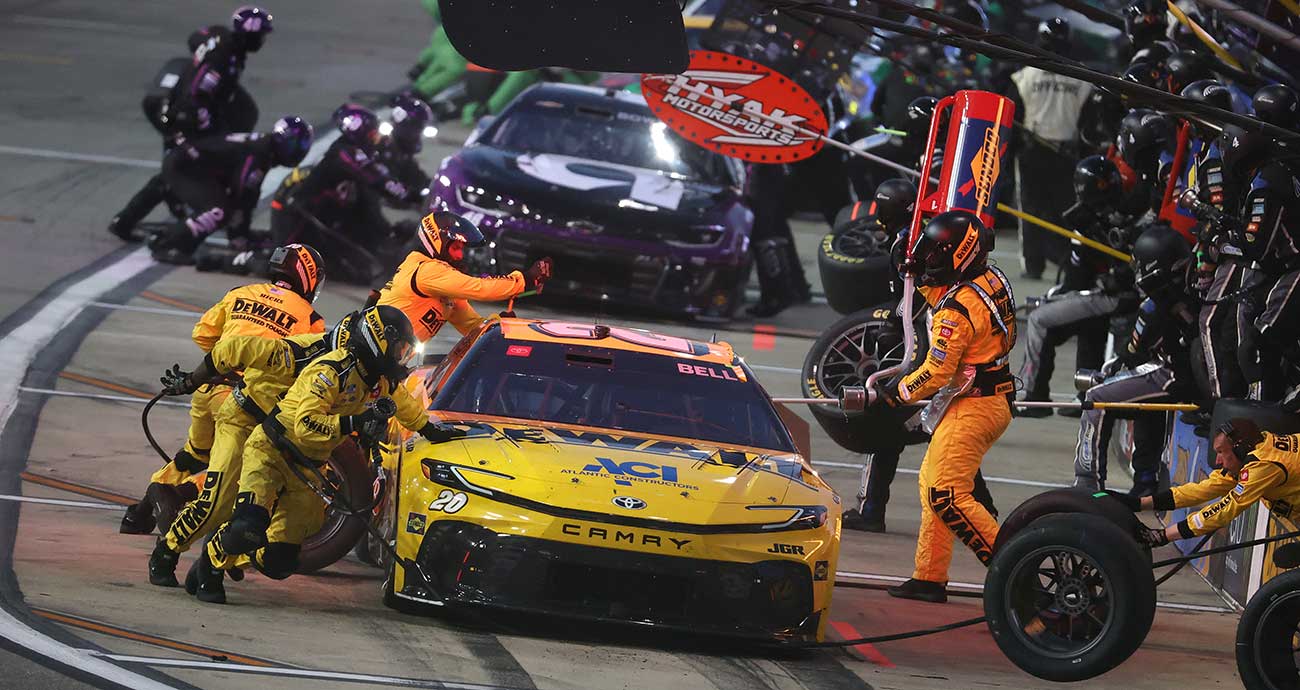
Drivers, start your engines … and start saving fuel.
The latter command has been so hard to escape in the NASCAR Cup Series this season, it’s left Chase Briscoe obsessed with maximizing his mileage — even without a fuel gauge to confirm his performance.
Whenever the yellow flag flies during a Cup race, Briscoe begins absent-mindedly toggling the engine of his No. 19 Toyota.
“It’s become a habit,” the Joe Gibbs Racing star said. “Even weeks where we don’t need to be, I’m saving fuel just for the sake of it because you never know what can happen and it eventually adds up. That’s just been something I’ve really kind of burned into my mind over the course of the last couple of years in Cup racing, and it’s obviously worked out for us.”
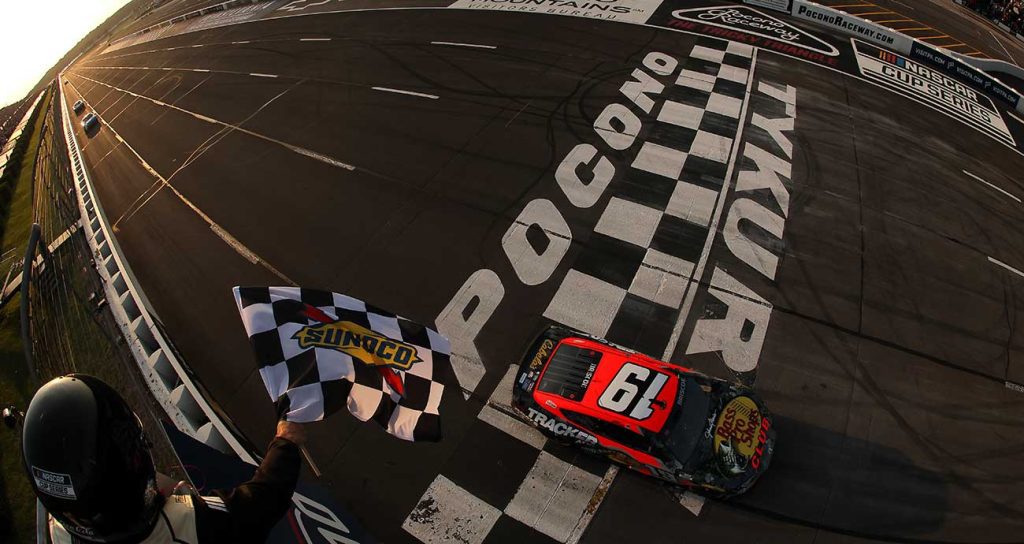
It worked out well enough to put Briscoe in the playoffs by holding off teammate Denny Hamlin at Pocono Raceway — one of several races this summer in which fuel conservation played a major role in the outcome.
The trend figures to continue into the playoffs starting Sunday with the Southern 500 at Darlington Raceway — and possibly be a key determinant in who is crowned champion. Joey Logano won the 2024 title after advancing to the championship race by running the final 72 laps in his No. 22 Ford without stopping to win at Las Vegas Motor Speedway — the increasingly rare instance of a fuel mileage outcome predicated on filling up.
RELATED: Playoffs Grid Challenge | Weekend schedule: Darlington
The only time a Gen 7 car’s 20-gallon fuel cell is typically at capacity anymore is when it’s mandatory for the initial green flag.
From that point on, it’s a neverending chess match between teams crunching numbers and strategizing to spend as little time in the pits for refueling as possible. A crack staff of engineers armed with algorithms and mounds of data might need to track the consumption of as much as 70 gallons of fuel without once having the benefit of measuring off a full tank.
Though there might be some confusion about the precision of those calculations when William Byron is still able to smoke the tires of his No. 24 Chevrolet for a few hundred feet in celebration after winning at Iowa Speedway on fumes, consider that a victory burnout takes roughly 8 ounces of fuel (or about 6 percent of a gallon).
“Even with all the technology and effort, to get it right within 8 ounces throughout the course of three hours is a really small error value that teams are tasked with hitting,” Joe Gibbs Racing director of competition Chris Gabehart said. “It’s really hard to do. When you see a burnout afterward, it might just be because the math was really, really good but not perfect.”
As a veteran of racing series that allow for real-time monitoring of fuel consumption, Austin Cindric is continually amazed that NASCAR teams can model their mileage accurately through a blend of math that includes throttle application, braking usage and lap times.
“There’s a lot more guessing that goes on in a fuel-save situation in the NASCAR Cup Series than really anything else I’ve ever driven, or been a part of,” said the Team Penske driver, who made the 2024 playoffs on a fuel-mileage win. “In any other series, I’d know what my fuel capacity is, and I’d have it on my dash. I’d know how much fuel I just used on the last lap, so I can make real-time adjustments without even getting feedback from my team.
“(In NASCAR), it is a lot of estimating based off of data. The guys that are tasked with that challenge on top of the pit box and back in the shop have a lot to overcome. When you hear guys just making it on fuel or running out at the line, it honestly is so impressive.”
After running out of fuel while leading at Michigan and contending at Indy earlier this season, Byron credited the Iowa victory to an improvement in mileage precision, and the regular-season champion believes it might be remembered as the tipping point for a team that has become more aggressively confident with strategy.
“I’m proud of my crew chief and my engineering team to make those tighter decisions and have them more refined because I think that could be the difference,” Byron said. “Fuel mileage is always a thing. You can go to a place with high tire wear where it’s not as big, but fuel mileage and track position are becoming just more and more of a critical element with the cars all being the same.
“That race gave us a ton of confidence that we can be up front competing for the lead and not have to run all out.”
With the emphasis on conserving fuel, here are answers to some questions about the practice heading into the playoffs:
Why has fuel conservation become such a hot topic in recent years?
There have been three primary inflection points, beginning with carburetors being phased out in 2012.
Before the introduction of electronic fuel injection, mileage calculations were rather primitive and often based on weighing fuel cans to determine how much gasoline was in the car.
The advent of EFI, and the electronic control unit (ECU) that records more than 60 settings ranging from RPMs to brake pressure, opened up a wealth of data that NASCAR teams were able to harness.
“ECU data made everything visible lap by lap,” Gabehart said. “There was a lot more nuance that you could see, and that was huge. Once the data got opened up to all the teams, everyone was off to the races on refining their processes.”
That next leap forward happened when teams began receiving live access to data during races as the 2017 introduction of stage cautions created two predetermined yellow-flag pit stops (which opened the strategy playbook and lessened the importance of filling up). For the 2018 season, NASCAR built a real-time data pipeline with steering, braking and throttle information distributed directly to teams.
MORE: Paint Scheme Preview | Trends loom for playoff seeds
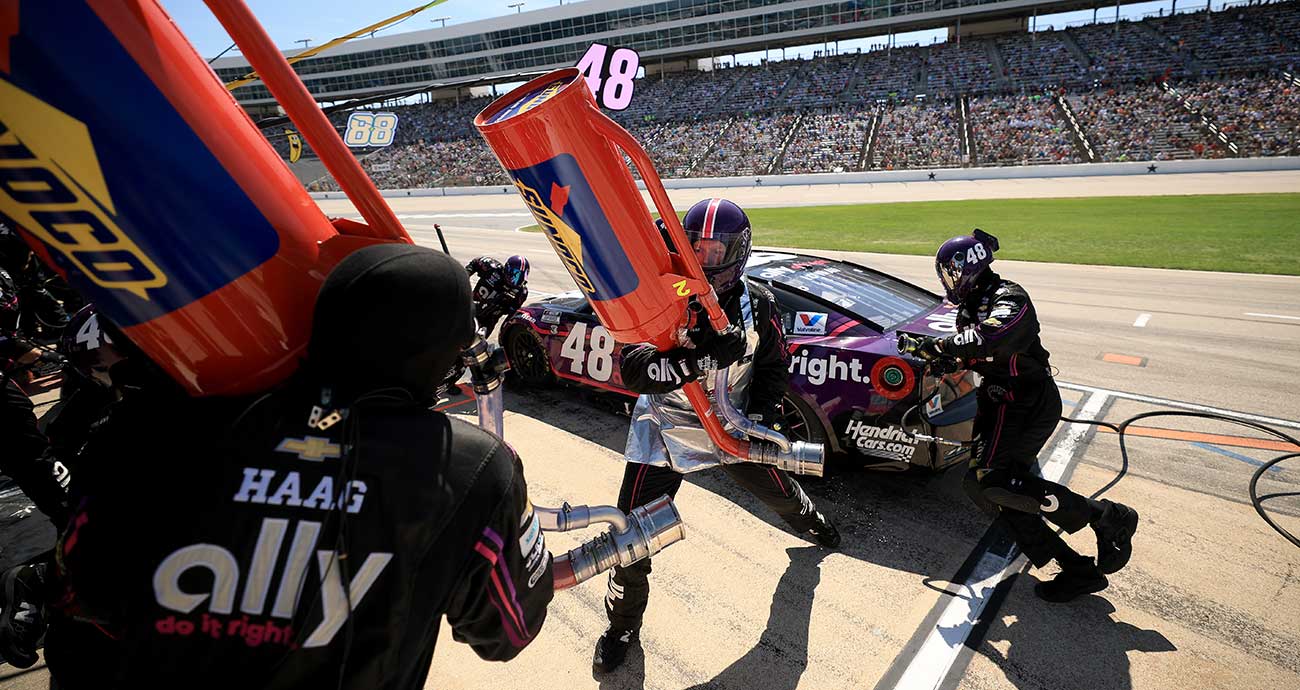
The most recent sea change was the debut of the single-lug nut pit stop with the Next Gen car’s debut in 2022. That allowed pit crews to change four tires faster than they were able to fill the car with fuel (vs. the five-lug nut era when stops were a tad slower and roughly equal to a complete fuel fill).
Logano said the single lug nut made mileage “more of a discussion point. Are you going to slow down your pit stop for more gas?”
The answer is usually no, particularly on tracks where an extra second can mean losing multiple positions on the track. Teams increasingly have chosen to send drivers from their stalls when the jack drops rather than wait.
“It does all come down to if one team is willing to leave the pit stall after 8 and a half seconds and three gallons short, but another team is willing to fill it up, that’s a second and a half or so that that team’s sitting in the pit box,” Gabehart said. “Are you willing to give up those spots for extra fuel? That’s a constant decision that these teams are facing.”
How do teams calculate fuel mileage without relying on a gauge?
The process starts with a multimillion-dollar dynamometer that allows engineers to map out fuel consumption while purposely running engines at 60 to 80 percent throttle at varying loads to mimic the myriad tracks of the Cup Series. It’s a reverse-engineering exercise to locate a sweet spot between the base amount of fuel consumption needed to avoid damaging the engine and the optimized amount of fuel for maximum power.
During the race, teams can then pinpoint how much fuel is being consumed based off how much throttle a driver uses on every lap.
Engineers generally have charts or graphs that list mileage corresponding to lap times and throttle traces. Engines use fuel proportionally to the RPMs, so consumption can be decreased by asking a driver to coast longer (which is easier to do on bigger tracks with long straightaways).
In Byron’s win at Iowa, crew chief Rudy Fugle told SiriusXM NASCAR Radio that the team relied on four engineers (three working remotely, the fourth on the pit box) to calculate and monitor fuel mileage. Working with manufacturers, teams are also evaluating the opposition’s fuel consumption rates.
How do drivers hone their fuel-saving craft?
It’s tricky because the only time they are able to improve is under race conditions.
“I don’t go to the sim and practice fuel saving,” Ryan Blaney said. “You can’t really. It’s kind of a trait that you’re learning under fire a lot. I feel like I’m OK. I can turn into a hybrid every now and then and fuel save a little bit.
“Each track is different. It’s way harder to save gas at certain places than others. (Daytona and Talladega), you can save a lot of gas pretty easy just because of the draft, but a Martinsville fuel save is way harder to do and make lap time because (of) heavy brakes.”
Bubba Wallace, who won the Brickyard 400 by being able to stretch his last tank through overtime, jokes that he has “a hybrid Toyota Tundra that shuts off at the stop lights” but otherwise just goes off feel and knowledge.
“You have to have the right people behind the scenes giving you the right information to help you do that,” Wallace said. “They just tell me to lift, and I lift, and they tell me to go, and I go. I’m just following what they’re doing, so it’s more of a testament to my engineers.”
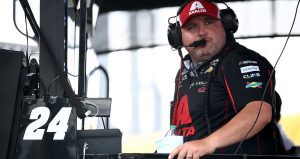
At Iowa, Fugle said Byron was three laps short on fuel with 30 laps remaining. Over the next 22 laps, Byron ran at 60 percent throttle or less — putting him within the window to reach the finish with eight laps left.
“You kind of learn how much throttle percentage it really takes to make a lap time,” Byron said.
Briscoe said he became astute at toggling the engine — a popular fuel-saving trick — by competing against former teammate Noah Gragson on who could achieve the longest shutoff time during races.
“I guess I’m really good at shutting the thing off and rolling for a long time,” said Briscoe, who’s been told by crew chief James Small that he is among the best at saving under yellow.
Drivers often are coached during the week by team engineers on their rates of deceleration, minimum corner speeds and proper steering, braking and throttle techniques for efficient laps that maintain fuel conservation without sacrificing speed.
MORE: Fantasy Fastlane: Darlington | Cup Series standings
In some cases, teams have been known to put signs inside the cockpit to depict throttle usage for conserving fuel. But an overabundance of information also can be overwhelming.
“It really becomes how much can I absorb as a driver,” Gabehart said. “So a lot of it is not just the data, but data management. And where the drivers are concerned, that’s more true now than ever because they just have so much of it.
“We’re probably evolving to a world where I don’t need the driver to know why I’m telling them to do what I’m telling them to do. I just need them to do it. Their job is to execute it. In a lot of ways, that’s where driving a car is evolving to and certainly where fuel mileage is concerned. There’s a lot of data and studying and preparation that needs to go into it, but with the live data that we have, you can just coach them through it.”
How are drivers able to maintain or increase their lead while saving fuel?
This was the mystery behind the wins by Briscoe at Pocono and Byron at Iowa.
One explanation is that the focus on saving fuel prevents over-driving the corner. By coasting on the straightaways (even going several mph slower at Pocono), a driver can give up maximum speed but recover it in the average time over the course of the lap by carrying more speed through the corner.
“My dad’s always told me, ‘If you just slow down a little bit, you probably go faster,’ and it was the truth at Pocono,” said Briscoe, who has developed a more feathery touch to his throttle since joining JGR this year. “Where my car was better compared to Denny, I could maximize the straightaway so long he would never get back to me on corner entry to be able to do something with how early I was lifting.”
Pocono and Iowa are also tracks with narrower racing lines, putting the car in the lead at an aerodynamic advantage.
“The closer you get to the car in front, the aero wake just becomes so terribly difficult to deal with for the car in the rear,” Gabehart said. “The car in the rear wears its tires out and stalls out. So it puts that premium on putting the car out front at all costs because the reality is that some tracks, once you’ve got that clean air, you can start saving fuel more and that car behind you just can’t pass you.”
What is ‘the switch?’
It’s a term commonly used by teams in referring to an emergency fuel reserve that can be activated with the driver flipping a switch if the engine begins to stumble.
NASCAR allows two lift pumps to deliver fuel from the bladder into a location where it’s sucked into the engine. When delivery stops from the primary pump, the second pump can be deployed to transfer enough fuel for about a lap at most tracks. Before last year, teams were permitted to run the secondary pump below the primary to scoop more fuel, but staggering the heights was outlawed last year to reduce the emergency supply (which once was two laps on a big track).