Editor’s Note: This month marks 25 years since Dale Earnhardt tragically lost his life on the last lap of the Daytona 500.
“What would Dale Earnhardt do?”
It was a question asked long before “The Intimidator” was robbed of his life 25 years ago on the last lap of the Daytona 500.
For more than two decades, Dale Earnhardt held a massive role that somehow transcended his incomparable career as a Hall of Fame driver.
He was the North Star of NASCAR.
Every major decision by the leadership in Daytona Beach and Charlotte was vetted through the highly valued common sense of the blue-collar hero who hailed from a North Carolina mill town. Drivers turned to Earnhardt for advice on everything from cultivating farmland to building their brands. (Earnhardt’s business team formed an LLC to quietly help secure sponsor deals for the competition.) Fans who plastered their homes, coolers and bodies with his iconic No. 3 clung to his actions and words as sacrosanct guidance.
A confidante in the highest corridors of power, Earnhardt had the ear of Bill France Jr. The late NASCAR chairman would drop in on Earnhardt’s team radio during races (using “Captain Jack” as his handle) to consult his deep-sea fishing buddy on track conditions during rain delays.
“Earnhardt was so powerful, no one would say no to him,” Ramsey Poston, the former managing director of NASCAR communications, said in 2021. “He basically ran the sport. It’d be like if Tom Brady were running the NFL.”
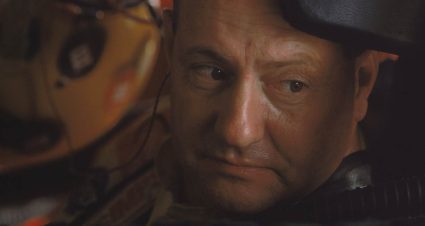
Accordingly, the question still is asked throughout the NASCAR industry.
“What would Dale Earnhardt do?”
But another question sadly emerged on Feb. 18, 2001.
“What would Dale Earnhardt have done?”
There are two ways to answer that.
Purely from a competitive standpoint, Earnhardt unquestionably would have added to the totals of 76 Cup victories and seven championships. Two months short of turning 50, Earnhardt entered 2001 with a renewed verve in his driving, and Richard Childress Racing targeted a record-breaking eighth title by investing extra money in his team.
There also is no doubt that Earnhardt, who made his Rolex 24 at Daytona debut two weeks before his fatal crash, one day would have raced at the 24 Hours of Le Mans. GM Racing already had mapped out the logistics of getting Earnhardt to France and a spot had been reserved in the No. 3 Corvette for the world’s biggest sports car endurance race.
Consider the post-NASCAR path of another seven-time Cup champion. Jimmie Johnson competed at Le Mans in the Garage 56 entry, raced the Indy 500, and tested a Formula One car. It’s easy to imagine Earnhardt on a similar journey (with his longtime ties to GM, picture his involvement in this year’s launch of the Cadillac F1 team).
He loved racing with every fiber of his being and would have been active in motorsports as long as he was physically able.
But the second part of what would have come next is harder to address.
What else would Earnhardt have done outside the confines of his black Chevrolet (or whatever other vehicles struck his fancy)?
RELATED: Earnhardt’s 1998 win among most memorable Daytona 500 moments
It’s a tricky contemplation given the enormous sway of someone whose clout in pop culture has been compared with Elvis Presley, John Wayne and even Andy Warhol (different types of art but a similar approach to commercialized fame).
The unquestioned face of NASCAR at the dawn of the 21st century, Earnhardt touched every level of the sport and could alter its overall course just through simple words and actions.
The aerodynamic rules package that turned his final Daytona 500 into a festival of nonstop passing was largely the direct result of Earnhardt forcefully complaining a year earlier (“the worst racing I’ve seen at Daytona in a long, long time … Mr. Bill France Sr. would be rolling over in his grave”). The trend of drivers racing each other to the airport after races started with Earnhardt (who usually got a head-start on a rain-shortened event because of his ties to the scoring tower). The roots of virtually any driver endorsement deal can be traced to the multimillion-dollar marketing machine that formed around Earnhardt and set the bar for how NASCAR merchandise was sold.
We can guess how he might have reacted to major events such as the Next Gen, charters and The Chase, but the challenge is that they would have already been impacted by Earnhardt (and perhaps never happened) if he still were here.
“I’m pretty sure he’d be heavily involved,” NASCAR on NBC analyst Jeff Burton said in 2021, “and be telling everybody what they’re supposed to be doing.”
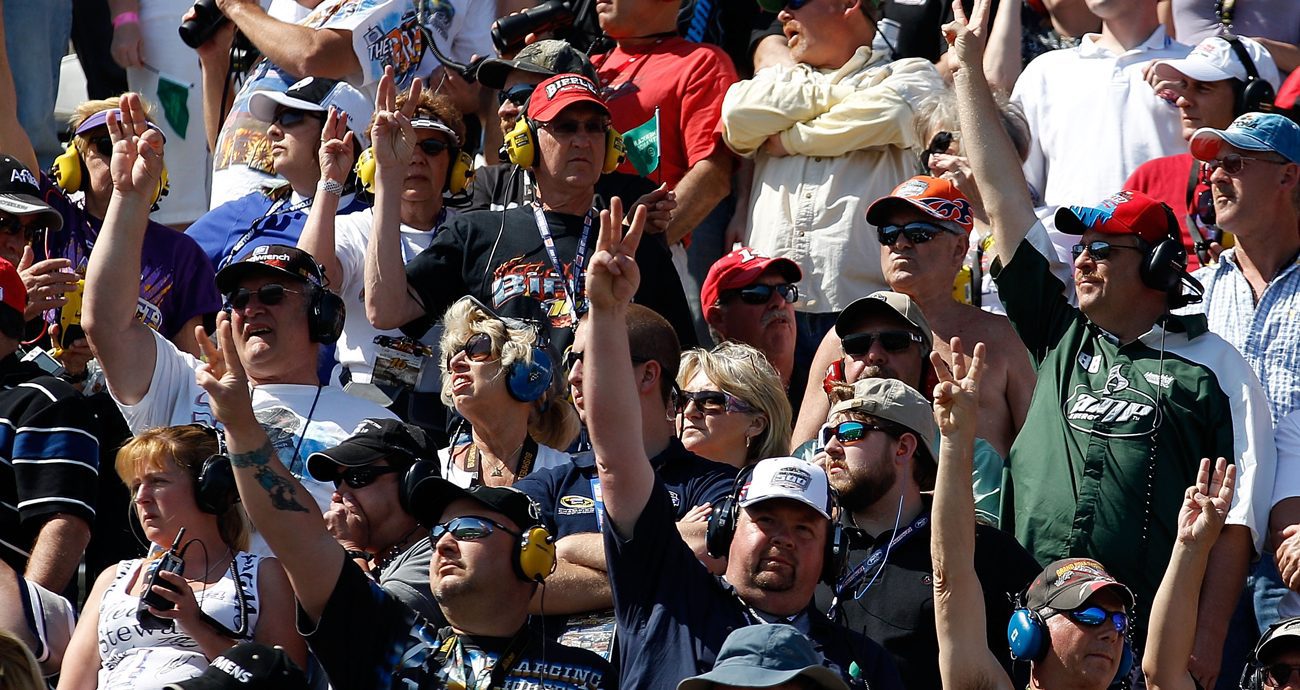
And maybe telling millions what happened in races every Sunday.
Nearly all of Earnhardt’s contemporaries entered the broadcast world when their driving careers ended.
Trading the helmet for a headset doesn’t really seem Earnhardt’s style — or at least not on a long-term, full-time basis. Jeff Gordon tried the TV booth for six years but eventually gravitated toward team leadership.
Earnhardt mentored the always polished Gordon behind the scenes, and they equally had a rock star’s command of the room when on camera.
Before Gordon became the first driver to host “Saturday Night Live,” Earnhardt was making movie cameos (check out his turn as a cab driver in “BASEketball”).
RELATED: Every driver who has won the Daytona 500
Today’s on-demand world of podcasts, social media and streaming would have been a transition for him (as for any Baby Boomer), but Earnhardt could adapt to sea changes like any great driver.
He also had the genes for cultivating mass media. It’s no accident that the standard-bearer for the incessantly expanding NASCAR Podcast Universe is Dirty Mo Media, a company that was started and shepherded by Earnhardt’s children.
Family leadership also was the goal for Dale Earnhardt Inc., and Earnhardt’s peers are in consensus that he still would have owned the Cup team that folded several years after his death.
That means Earnhardt’s strong opinions also would have heavily shaped the discussions about championship formats and car designs.
Again, it’s hard to grasp how he would have handled the hot-button issues in NASCAR because many may not have existed in his presence.
“I think about the sport today and where it’s at, and where it’d be if he were still here,” Terry Labonte said in 2019. “And it would have a completely different look because he had a lot of influence on NASCAR and decisions that they made. Whether it would be better or worse, I don’t know. But it would be different.”
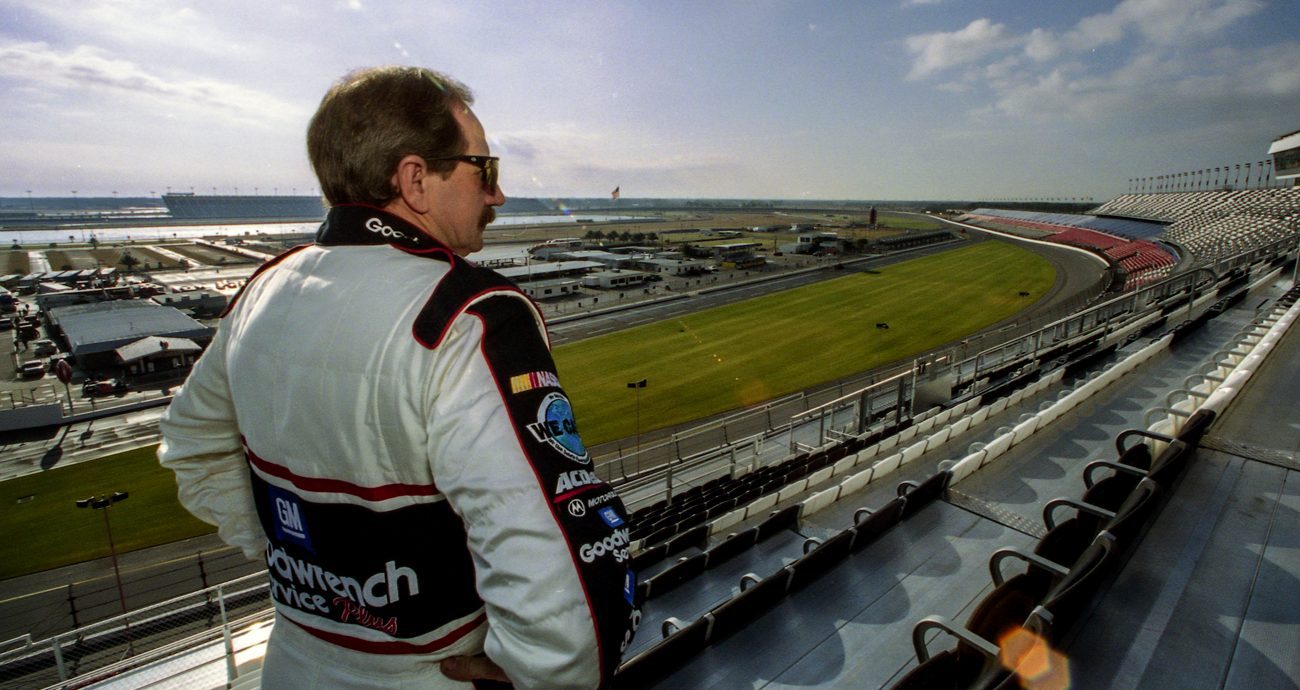
Earnhardt’s death was the most recent in NASCAR’s top three national series. Safety changed forever in his absence, which triggered an ongoing raft of cockpit improvements and the advent of SAFER barriers and mandatory HANS devices.
A full generation of stars have since reached full retirement without a fatality. We will get to watch Gordon, Johnson, Tony Stewart, Dale Earnhardt Jr., Matt Kenseth, Kevin Harvick, Martin Truex Jr., Kurt Busch and others age gracefully into their golden years.
Dale Earnhardt would have turned 75 on April 29 this year.
“His goal was to get to where he loved to hunt and fish and be on his boat,” longtime friend Dale Jarrett said in 2021. “He was going to spend a lot more time in doing that. He was looking forward to those days he didn’t have to be at the race track, and he had earned the right to have some time away.
“Just wish he would have gotten to enjoy that part of his life.”
So, what would Dale Earnhardt be doing now?
Maybe just enjoying himself.