Thanks to Advance Auto Parts, fans will have a chance to earn their favorite NASCAR Advance Auto Parts Weekly Series track up to $50,000 as part of a new program.
Advance Auto Parts, in its second season as the official entitlement sponsor of NASCAR’s grassroots racing championship series, announced the launch of “Advance My Track Challenge” on Wednesday.
“Through the ‘Advance My Track Challenge,’ we invite racing fans to show their support for their favorite NASCAR short track while bringing awareness to the great work each track is doing within their respective communities,” said Jason McDonell, Advance Auto Parts chief marketing officer. “Race fans have a tremendous amount of pride and passion around their local track, and we’re excited to see this on full display.”
The winning track will receive $50,000 from the automotive aftermarket retailer to use toward track facility enhancements and community-based programs.
How it works:
• Through Tuesday, April 27, fans have an opportunity to vote for their favorite track that has entered the “Advance My Track Challenge” on AdvanceMyTrack.com.
• Fans can vote up to three times daily, and upon voting, will be entered to win NASCAR Advance Auto Parts Weekly Series prizes.
• The six tracks that receive the most votes after April 27 will be part of a two-day final round of voting, scheduled to begin Sunday, May 9.
The runner-up track will receive $15,000, with third-place getting $10,000.
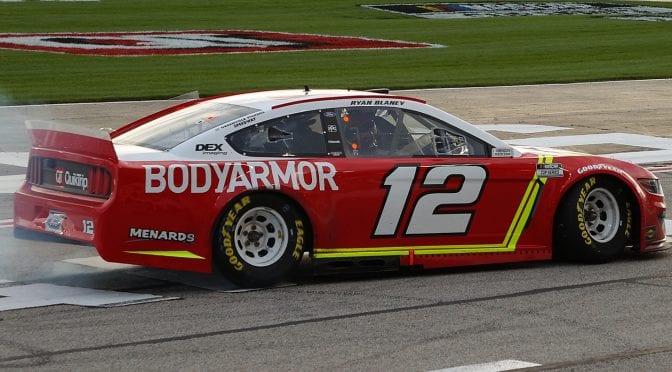
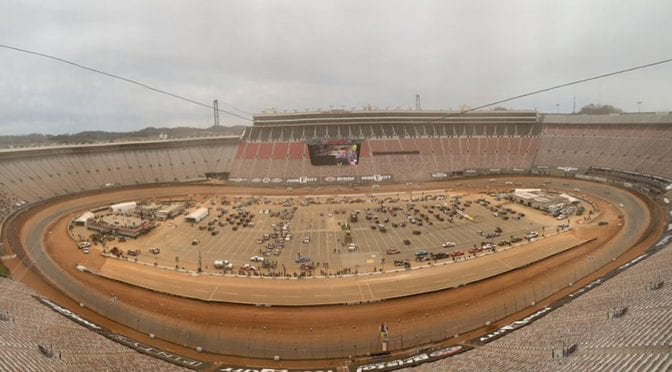
The program launches as the NASCAR Cup Series heads to race on the dirt at Bristol Motor Speedway on Sunday, and it will be featured on Ryan Blaney’s No. 12 Advance Auto Parts Ford for the Food City Dirt Race (3:30 p.m. ET, FOX).
“Advance is committed to growing local racing, and this is an awesome opportunity for fans to support their hometown tracks,” said Blaney.
Blaney is coming off a win at Atlanta Motor Speedway, which spotlighted another innovative program from Advance Auto Parts. Each race, different NASCAR Advance Auto Parts Weekly Series tracks are featured on the C-post of Blaney’s car. If he wins, the tracks on his car for that race earn $1,200 apiece.
His victory at Atlanta earned the bonus for South Carolina’s Greenville-Pickens Speedway and Florence Motor Speedway.
NASCAR officials penalized three teams Tuesday — two in the Xfinity Series and one in the Camping World Truck Series — for lug-nut violations during last Saturday’s events at Atlanta Motor Speedway.
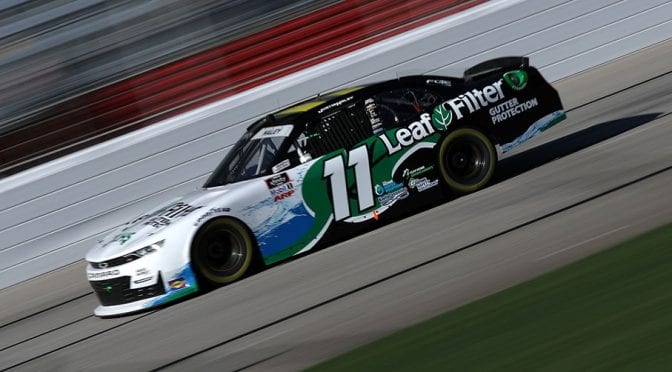
In the Xfinity Series, the No. 11 Kaulig Racing Chevrolet team (driver Justin Haley) and No. 98 Stewart-Haas Racing Ford team (driver Riley Herbst) were each found with one unsecured lug nut after Saturday’s EchoPark 250. The infractions meant $5,000 fines for each team’s crew chief — Kaulig’s Alex Yontz and SHR’s Richard Boswell.
In Camping World Trucks, the winning Kyle Busch Motorsports No. 51 Toyota for driver/owner Kyle Busch was also found with one lug nut that was not properly fastened after Saturday’s FR8Auctions 200. That resulted in a $2,500 fine for crew chief Mardy Lindley for violating Section 10.9.10.4 (Tires and Wheels) in the NASCAR rule book.
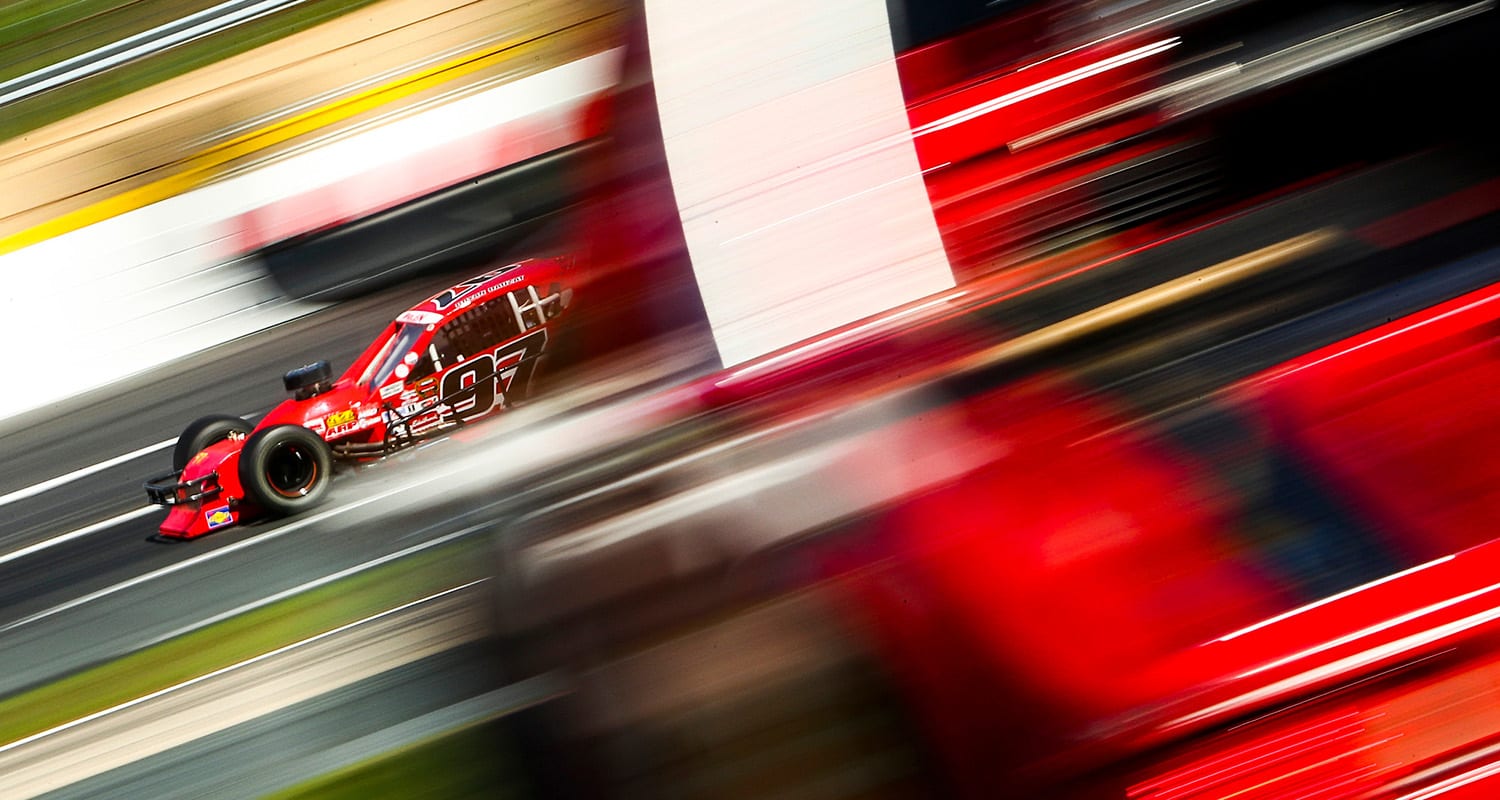
One-day shows, more southern races, and a new contingency sponsor are all on the way in the 2021 Whelen Modified Tour season.
And it all finally gets started two weeks from Thursday, when the ground-pounders head south to Martinsville Speedway.
This season’s schedule consists of 14 races, beginning at Martinsville and ending in September at Connecticut’s Stafford Motor Speedway. Stafford will also host the tour two other times.
There are return trips to New York’s Riverhead Raceway and Oswego Speedway after a one-year hiatus from each track, and the tour heads to Beech Ridge Motor Speedway in Maine for the first time since 2005. Lancaster Speedway in upstate New York hosts a race for the first time.
In addition to Martinsville, there are two other national series combination weekends: New Hampshire Motor Speedway will again be home to a race in July, and in September, the Tour goes back down to Virginia to Richmond Raceway.
Getting both Martinsville and Richmond on this year’s schedule was enormous for Tour director Jimmy Wilson.
“Ever since I became the series director for the Whelen Modified Tour back in 2013, all I’ve heard from our competitors is ‘we’ve gotta get to Martinsville, we’ve gotta get to Richmond’ ”
“A big win for us was going to be at least getting one of those tracks. To get both of them back on the schedule in the same year, it’s huge,” Wilson said. “I think it’s going to be a huge shot in the arm to Modified racing down in the South.”
It’s no secret that racing is expensive both in dollars and time. With that in mind, the decision was made this year for all Tour events to be one-day shows. That’s been done with the race teams in mind.
“The vast majority of our teams are made up of volunteer crew members and people that work a day job, Monday to Friday, nine to five,” Wilson said. “You just can’t bring them in and go to a race track and sit there for a couple free days, so between that and the travel to some of these races, we needed to make sure we did everything that we possibly could to make it easier for these teams to get to the track.”
Just because teams are only at the track for one day, however, does not mean the end of practice and qualifying. Both remain in the plans for the Tour to carry out at every race in 2021.
“We have to have a mechanism to set the field in as consistent a procedure as you can,” Wilson said. “With the different tracks that we go to, you have to have a way to set the field. We could have 35 cars show up for a 28-car starting field and 31 cars show up for a 32-car starting field. That’s why we’ve tried to cut the time back to the race track but still keep that qualifying mechanism in there so the competitors’ destiny is determined on the race track by their performance.”
The list of sponsors returning to the Tour in 2021 is even stronger than a year prior.
The Whelen Winner of the Race award maintains its $3,500 prize from the prior three years, awarding the winner at most races more than $10,000.
Mayhew Tools returns to sponsor the Tour Pole Award for the third straight season. The Tour even added a new contingency sponsor this year in E3 Spark Plugs.
“To come off of the 2020 Tour season with what it was and have strong car counts, to post and pay the awards that we did last year, it’s a great thing to have and continue to build year after year after year and show the strength in Modified racing,” Wilson said. “The impact that various companies took across the board, the fact that they see the value of the exposure they get through the platform that the NASCAR Whelen Modified Tour has to offer is huge.”
Despite an abbreviated schedule, 52 different competitors ran in 2020 — with 15 competing in all nine events. There were five different winners and 18 drivers recorded a top-five finish.
In eight seasons as Whelen Modified Tour director, 2020 brought challenges unlike any Jimmy Wilson had ever faced. Now that the year is in the rearview mirror, he and the Tour field can look forward to what will be a more normal 2021.
“It’s what all of us collectively do with getting to the other side of COVID-19, getting as many fans back into the grandstands again, competitors back to the race track,” said Wilson. “Just getting back to what we’re accustomed to seeing, and that’s full grandstands, spectators screaming and hollering, having a great time, and that’s what I hope to see by the time we get to the end of the 2021 season.”
The NASCAR Whelen Modified Tour season gets underway April 8 with the Virginia Is For Racing Lovers 200 at Martinsville.
The NASCAR Whelen Modified Tour will run its 73 championship points race at New Hampshire Motor Speedway in Loudon, New Hampshire, in July. (Adam Glanzman/NASCAR)
The entry list for Wednesday’s eNASCAR iRacing Pro Invitational Series 2021 season opener was revealed Tuesday. These are the drivers who will participate on the virtual Bristol Motor Speedway dirt track, with coverage starting at 6 p.m. ET on FS 1 during NASCAR Race Hub and the main event set for 8:40 p.m. ET, also on FS1.
This marks the return of the league that became popular during NASCAR’s pause last spring due to the COVID-19 pandemic. Wednesday’s event is the kickoff for a 10-race series in 2021 that includes the first five races on FOX Sports and second five races on NBC Sports.
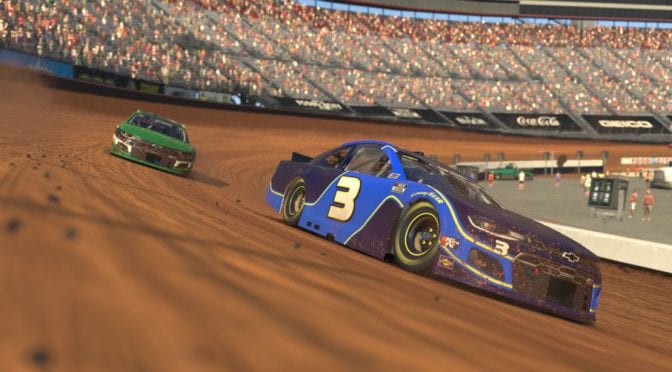
The eNASCAR iRacing Pro Invitational Series returns for its second season Wednesday evening, kicking off with a brand-new challenge: the Bristol Motor Speedway dirt track. Just four days before the stars of the NASCAR Cup Series take the green flag in the first-ever Bristol Dirt Race, the drivers will compete in a virtual exhibition race using iRacing, with television coverage on FS1.
The eNASCAR iRacing Pro Invitational Series is a 10-race series of just-for-fun esports events featuring some of NASCAR’s brightest stars and most popular drivers.
The well-received series was created last year after the start of the COVID-19 outbreak as NASCAR looked for alternative forms of racing. Seven races were held between March and May, until NASCAR returned to the track on May 17 at Darlington Raceway.
Drivers from multiple NASCAR circuits competed in the events, which were televised by FOX Sports and featured the familiar voices of commentators Jeff Gordon, Mike Joy and Larry McReynolds. Competition was fierce — but fun — and race winners included Denny Hamlin, William Byron, Alex Bowman and Timmy Hill.
Now, a year later, the iRacing Pro Invitational Series returns for 2021, offering fans — and drivers — a first, mid-week look at new stops on the NASCAR Cup Series schedule, like Circuit of the Americas in Austin, Texas, and, of course, the Bristol Dirt Race.
What to expect
It’s hard to predict what might happen in the iRacing Pro Invitational Series’ return.
Last year, the series helped spawn the now-classic on-air banter between Jeff Gordon and Clint Bowyer and also shine a spotlight on sim-enthusiast drivers like Byron, Hill and Garrett Smithley. And longtime iRacer Dale Earnhardt Jr. announced he’ll return to the series.
The drivers have zero laps of experience on the real-world dirt-covered Bristol Motor Speedway; their first laps in competition happen on iRacing. (Keep an eye out, fantasy fans!) Last year’s iRacing Pro Invitational Series featured no dirt racing, and the Bristol dirt track was just released to iRacing members earlier this month.
In other words, it’s anybody’s race.
Race format
Last week, the format for the iRacing Pro Invitational Series season opener was announced.
Drivers will have a two-hour open-practice window to get a feel for the track. FS1’s live coverage will begin at 6 p.m. ET with check-ins on the session throughout its programming.
After practice, drivers will complete a two-lap qualifying session around 7:50 p.m. ET. That qualifying session will determine the starting order for three 20-lap heat races, which begin at 8 p.m. ET.
From the three heats, seven drivers will advance from each race to make up the feature field of 21. The 70-lap feature event is scheduled to roll off at 8:40 p.m. ET.
Drivers competing in the feature event will have two damage-repair resets available to use if necessary. (No, those aren’t available Sunday.)
How to watch
Coverage of the eNASCAR iRacing Pro Invitational Series at the virtual, dirt Bristol Motor Speedway begins at 6 p.m. ET on FS1. Heat races begin at 8 p.m. ET.
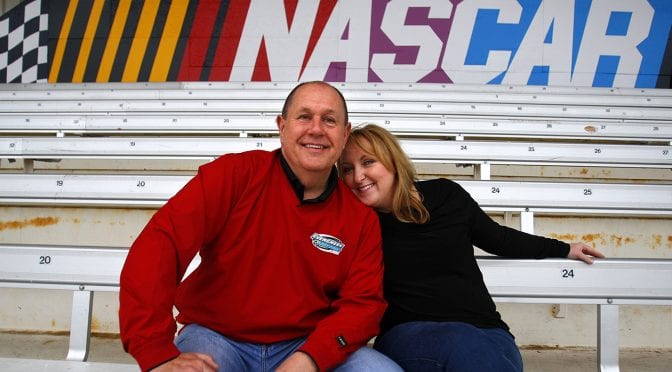
When Traci Hobbs and her husband, Doug, took over as promoters of Washington’s Evergreen Speedway 10 years ago, they inherited keys to the gates and office, and nothing else.
Hobbs said they didn’t have a single file folder or any information. She said the first year was like “drinking from a fire hose.”
“I don’t want to say I cried every single weekend the first year, but I think I cried every single weekend the first year,” Hobbs said. “There was such a steep learning curve and there were so many areas that needed our attention that the first two years were really tough.
“Now, looking back, I’m very proud of how far we’ve come.”
Hobbs didn’t come from a racing background when she took over the track. Having graduated from the University of Washington with a degree in advertising, she spent much of what she called her “first career” selling media and TV advertising.
Traci and Doug Hobbs
She was also a radio rep for Evergreen Speedway under the previous owners, and had done promotions with them, but “I didn’t know really much about racing at all,” she said.
Doug was a local car dealer, and had worked behind the scenes at Evergreen, sponsoring cars and classes for more than 20 years, and Hobbs said it had always been his dream to the buy the racetrack. The couple got married in 2011, and the same year they put in a business plan bid for Snohomish County, Washington when Evergreen was put up for bid for a long-term contract with the county, which owns the land the NASCAR Advance Auto Parts Weekly Series track sits on.
“We met through our work, ended up getting engaged and applied to take over the racetrack,” she said. “I left my job, he left his job, and we started our own company and took over Evergreen Speedway.”
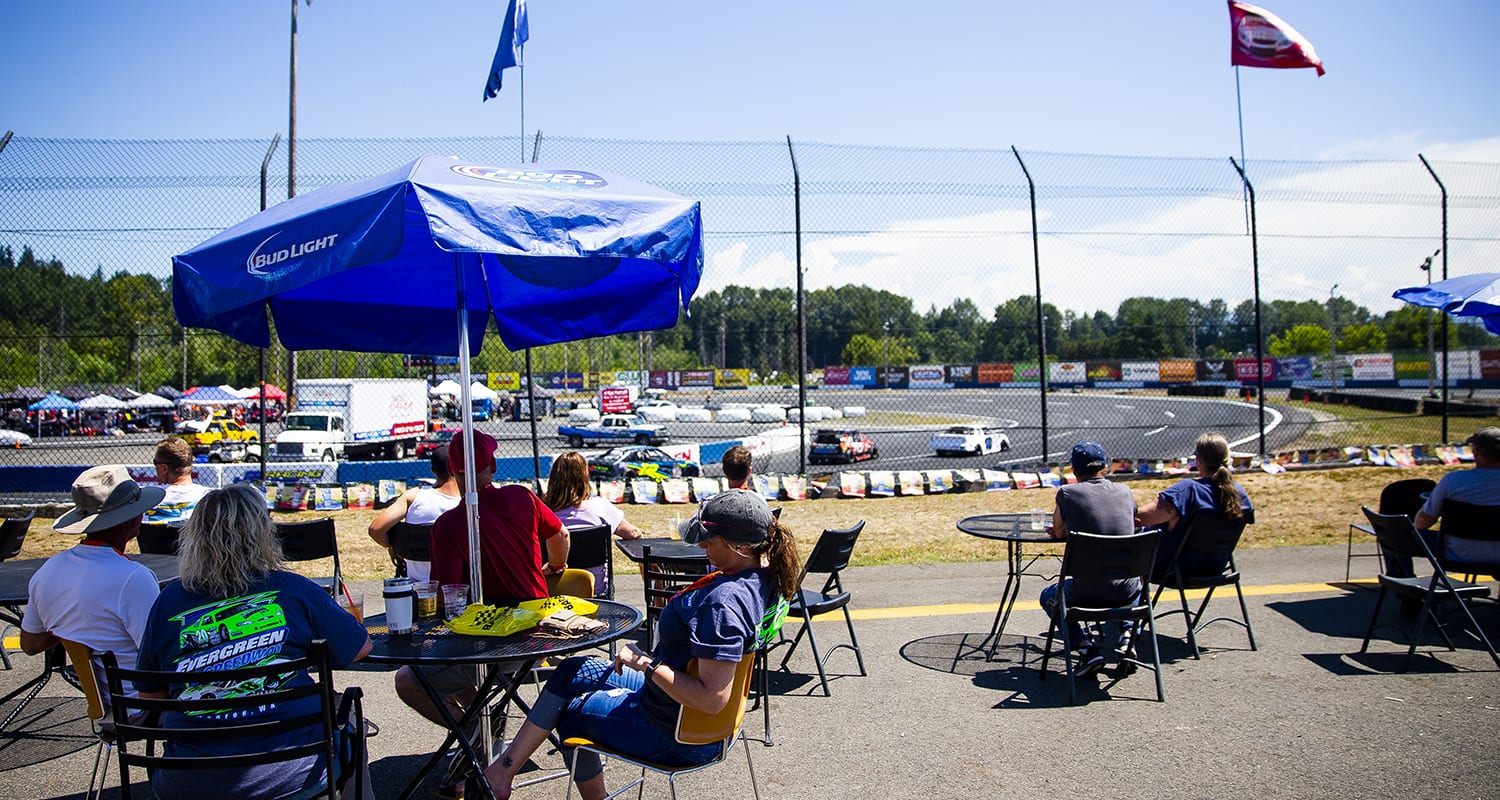
Evergreen sits on 71 acres of land, and features a .625-mile outer oval, and two smaller inner ovals, as well as a drag strip, figure 8 track, and .750-mile road course. It is the only NASCAR-sanctioned weekly track in the state of Washington.
The track is located in Monroe, Washington, and sits 30 miles northwest of Seattle.
While other bidders at the time had deeper backgrounds in racing, Hobbs said she and her husband used their business and sales background to seal the deal with the County.
There was definitely a learning curve in the racing side for Hobbs, though.
“I didn’t know the difference between the mini stocks and the super late model when I took over,” she said. “There was a lot about racing I didn’t know.”
What she did know, though, was about sponsorship and how to bring in money. Hobbs said she spent most of the first two years trying to get sponsors. This was in 2011, right after the recession, and she said at the time, “there were no drivers, hardly any fans, and very few sponsors.”
It took a couple of years to get caught up, but Hobbs focused on “inviting sponsors to the party,” she said, as well as applying for grants, and looking at the customer service side of the track.
“It could be drivers at the back gate, or customers at the front gate, we wanted to get that concierge service because the track didn’t really have the best reputation,” she said. “Evergreen was a power house in the ‘80s and ‘90s. It was larger than life. But in the early 2000s, that’s when things started to go downhill, so I was more focused on bringing sponsors, bringing groups, reaching out into the local community, making contacts, establishing ties, and bringing people to the party.”
As far as the real operations and technical side of the sport, Hobbs said she learned that on the job, and has since fallen in love with racing.
“Now, I know all the little nuances about shocks and stagger on tires and all the minutia that goes into racing, and there’s an awful lot of it,” she said.
“There isn’t a better feeling in the world than looking at the grandstands and seeing a full-packed house… and you don’t just open the doors and everybody comes. It’s a lot of work in maintaining relationships and promoting. It doesn’t happen easily, but boy, I tell you, when the super late models get all raring to go and they come down the front stretch as soon as the green flag waves and the cars go speeding by, that’s just such a thrill for me.”
The first couple of years were difficult, but Hobbs said it’s night and day now from where they started. They went through more than 3,000 gallons of paint making the track look nice, and she said in their top year they’ve also brought in over half a million dollars in sponsorship money.
Hobbs said Doug has also been the brains behind making the track relevant locally, regionally, and nationally. Three times in 10 years they’ve been in the top-10 NASCAR tracks for membership, and they’ve focused on bringing regional and even national races to Washington.
“The facility looks 100 percent different, and people can see that,” Hobbs said “But I’d say it’s more in terms of the number of drivers we’ve attracted, the series we’ve attracted, and certainly the fans. The fans have come back again.”
And the work is never over. Hobbs said they’re constantly trying to continue making improvements. They recently repaved the pits and small track, and they’re working on repaving the bigger oval track as well.
Even though taking over a track with no experience and no help was tough, Hobbs said those first two years are a distant memory now. She doesn’t think about the tears anymore, but rather she looks back with pride at how far the track how come and how well she and her husband and everyone else involved hung in there through it all.
Evergreen will open the 2021 season on Saturday, with fans allowed to attend for the first time since the start of the coronavirus pandemic.
“I love it. I get emotional the first opening night. It’s always very emotional for me,” Hobbs said. “I get so excited when the new season is about to start. I think a lot of it is the drivers. We have some driving families that have been around for three decades, or more than that. Where the second generation is now coming up from all these families.
“The support and dedication of the drivers and teams that they have to the sport and to the track, it’s very satisfying. They’ve become our family. Some of our fans are super fans. They are loyal, they come back year after year. I love those people. They’re our people. I’m very attached to the racing community and the fans.”
Evergreen Speedway has expanded its fan amenities under the leadership of Traci and Doug Hobbs. (Lindsey Wasson/NASCAR)
This story originally appeared on NASCAR.com on Sept. 30, 2020:
Bristol Motor Speedway announced Wednesday afternoon that the NASCAR Cup Series spring race at the short track will be contested on dirt. It will be the first premier series event on a dirt track in more than 50 years.
NASCAR historian Ken Martin presents a history of dirt at NASCAR’s top level:
There were 489 NASCAR Cup Series races held on dirt between June 19, 1949, and Sept. 30, 1970.
The first race in NASCAR premier series history was on dirt on June 19, 1949, at the .75-mile track known as Charlotte Speedway. Jim Roper was the winner.
In the 1949 season seven of the eight tracks competed on were dirt. The only pavement was at the Daytona Beach and Road course.
Seventy-six different drivers won on dirt, with Lee Petty holding the all-time record of 42 wins.
Rank
Driver
Wins
1
Lee Petty
42
2
Buck Baker
40
3
Herb Thomas
40
4
Tim Flock
36
5
Ned Jarrett
33
6
Richard Petty
30
7
Junior Johnson
23
8
David Pearson
23
9
Speedy Thompson
17
10
Fonty Flock
15
The top eight drivers on the above list are members of the NASCAR Hall of Fame.
In 1955 and 1956 NASCAR held 40 premier series events on dirt, the most of any seasons.
On Sept. 30, 1970, NASCAR held its final/most recent Cup Series race on dirt at the half-mile North Carolina State Fairgrounds track in Raleigh, North Carolina. Richard Petty won driving a Plymouth owned by Don Robertson.
Among the top-10 finishers still alive from that race: Petty (first), Neil Castles (second), Bobby Allison (sixth) and Dave Marcis (seventh).
There were three dirt track races in 1970 – two at Columbia Speedway (SC) and Raleigh. Richard Petty won the first race at Columbia, Bobby Isaac the second.
Richard Petty’s first career win came on dirt on Feb. 2, 1960, on the half-mile Southern States Fairgrounds track at Charlotte.
When Hershel McGriff competed in his final premier series event at Sears Point on May 16, 1993, he was the last driver with a dirt track win at NASCAR’s top level to compete.
When Dave Marcis competed in his final race at the 2002 Daytona 500, he was the last premier series driver to have competed on dirt in a Cup Series race.
The largest dirt track the series ever raced on was the 1.5 banked Memphis-Arkansas Speedway at LeHi, Arkansas. Five races were held from 1954-1957. Junior Johnson was the pole winner and Buck Baker was the winner the inaugural race in 1954.
The fastest Cup Series race ever on dirt came on March 14, 1965, when Ned Jarrett won the 150-mile race at the Orange Speedway in Hillsboro, North Carolina, at an average of 90.633 mph.
NASCAR returned to dirt in the NASCAR Gander RV & Outdoors Truck Series back in 2013 with an event at Eldora Speedway. The half-banked Ohio oval owned by Tony Stewart hosted Gander Trucks races from 2013-19, with this year’s scheduled event being realigned to another track due to the COVID-19 outbreak.
Roger Penske expressed optimism Monday about Brad Keselowski’s future with Team Penske, saying that contract talks were headed down a positive path.
Penske’s remarks came in a Monday video conference, one day after Ryan Blaney scored Team Penske’s first NASCAR Cup Series win of the season at Atlanta Motor Speedway. The 84-year-old team owner discussed Keselowski’s status within the context of his overall racing organization, with IndyCar drivers Will Power and Simon Pagenaud also reported to be nearing the end of their contracts.
“We’re in discussion with all of them,” Penske said from Indianapolis Motor Speedway, which he agreed to purchase in November 2019. “I think that with COVID, we haven’t been able to get together, but we’ve had conversations with Brad before. I think that we’re moving in the right direction. There’s no reason we wouldn’t renew, for sure. I mean, I guess it’s just a matter of us sitting down and putting it together, but with everybody not being able to move around, you don’t do that over the phone and you don’t do it by Zoom, so we want to do that face-to-face with all of them.”
Keselowski, who claimed the 2012 Cup Series championship and has 34 career wins, re-signed with Team Penske’s No. 2 Ford team last August. Terms were not disclosed, but the Associated Press reported the agreement as a one-year extension.
Blaney re-signed with the No. 12 Ford team in March 2020 with a multiyear agreement. Teammate Joey Logano re-upped in February 2017 with a contract that keeps him in Penske’s No. 22 Ford through at least the 2023 season.
Ryan Blaney’s win Sunday in the Folds of Honor QuikTrip 500 at Atlanta Motor Speedway punched his ticket for the NASCAR Cup Series playoffs.
It also carried significance for a pair of NASCAR Advance Auto Parts Weekly Series tracks in South Carolina.
As part of Advance Auto Parts activation with Blaney’s No. 12 Team Penske Ford, two weekly series tracks are featured on the car’s C-post each week. Sunday’s race at Atlanta highlighted Greenville-Pickens Speedway and Florence Motor Speedway. In addition, because Blaney won, both of those tracks will receive a $1,200 donation that the track may use for operations, weekly race winnings or charity.
The activation began with New Smyrna Speedway on the C-post for Blaney for the DAYTONA 500 at the Daytona International Speedway. Grand Bay Speedway in Ontario (Canada) and Oregon’s Coos Bay Speedway were on the car at Homestead-Miami Speedway, while Alaska Raceway Park and Idaho’s Meridian Speedway were on at Las Vegas Motor Speedway, and Massachusetts’ Seekonk Speedway and Nebraska’s I-80 Speedway were on the car at Phoenix Raceway.
Advance will continue its sponsorship of Team Penske’s No. 12 Ford in four races this season: at the Bristol Motor Speedway dirt race on March 28, Darlington Raceway on May 9, Atlanta Motor Speedway on July 11 and the night race at Richmond on September 11. The company is entering the second season of a multi-year agreement with Team Penske.
The NASCAR Cup Series will get to play in the dirt for the first time since 1970, joining the Camping World Truck Series at Bristol Motor Speedway.
The Camping World Truck Series will hit the Bristol dirt track for the Pinty’s Truck Race on Dirt on Monday at Noon ET (FS1, MRN, SiriusXM). The Cup Series will run the Food City Dirt Race on Monday at 4 p.m. ET (FOX, PRN, SiriusXM).
In order to get you ready for a weekend of action-packed racing on the dirt, we’ve put together a dirt racing glossary that includes terminology you will likely hear on the broadcasts and frequently asked questions.
Bite: The amount of traction the tread holds in the rear tires, which allows for more grip on the dirt racing surface.
The “cushion” is the darker line of dirt at the top of the racing groove in the corner. (Matt Sullivan | Getty Images)
Bottom feeder: When a driver elects to run the lowest line of the race track during a race.
Cushion: A dirt edge formed when multiple cars run on the top groove of the race track. The “cushion” will move up as cars run a higher line on the track throughout the event.
Dry or slick track: When the dirt racing surface holds little to no moisture, which results in a dustier surface.
Feathering the throttle: The amount of usage the driver applies on the gas pedal through the corner depending on the availability of grip on the dirt racing surface. The better the car handles through the corner, the more throttle they will be able to apply.
Hopping the cushion: When a car jumps above the dirt edge at the top of the highest racing groove, which will upset the car and cause it to bobble up the track and potentially into the outside wall.
This is how the track will appear when it “slicks off,” creating a shiny, gray look to the dirt surface. (Matt Sullivan | Getty Images)
Slicking off: When the dirt racing surface becomes slicker throughout the course of the race, which gives the track a shiny, gray appearance.
Slide job: When a driver makes a pass on another driver by diving low and sliding up the race track in front of the opposing car.
Tacky: When the dirt racing surface is wet, which holds moisture and is sticky.
How will the starting lineup for each main event be determined?
Both series will set the starting lineups according to the inclement weather policies in the NASCAR Rule Book since Saturday’s qualifying races were canceled. Kyle Larson will start from the pole position in the Cup Series event (and is expected to drop to the rear due to an engine change), and John Hunter Nemechek is set to start first in the Camping World Trucks.
Will there be live, competitive pit stops for each race?
Due to safety reasons, there will not be live pit stops under green- or yellow-flag conditions for both series. Teams will not be permitted to change tires, add fuel or work on their vehicles except during the breaks between stages. Exceptions will be made for vehicles involved in incidents. Additionally, teams are not required to pit during stage breaks. Those that elect to stay on the track during stage intermissions will line up ahead of the cars/trucks that pit on the ensuing restart. There will be no race onto or off pit road, using a controlled pit-stop procedure similar to the previous format in Eldora events.
Will caution laps count for the main events?
Yes, as was the case for Eldora Speedway, caution-flag laps will count for both the Cup Series and Camping World Truck Series main events. Only green-flag laps will count for the qualifying heats.
Will there be stages for each race?
Yes. Stages for Monday’s Cup Series main event will end at Lap 100, Lap 200, with 250 laps the scheduled full distance. Stage endings for Monday’s Truck Series main event are set for Lap 40, Lap 90 and Lap 150. None of the stage lengths are scheduled longer than a full fuel run for either series. There will also be competition cautions on Laps 50 and 150 in the Cup race.
Will there be a Choose Rule for these events?
The choose rule procedure of allowing teams/drivers to pick either the inside or outside line for restarts will not be in effect. The race leader — or “control car” in scoring tower parlance — will still select the inside or outside lane on the front row for restarts, as is the case for all NASCAR national series events. The difficultly of maintaining an orange “V” on the dirt-racing surface was a key determining factor of this decision.