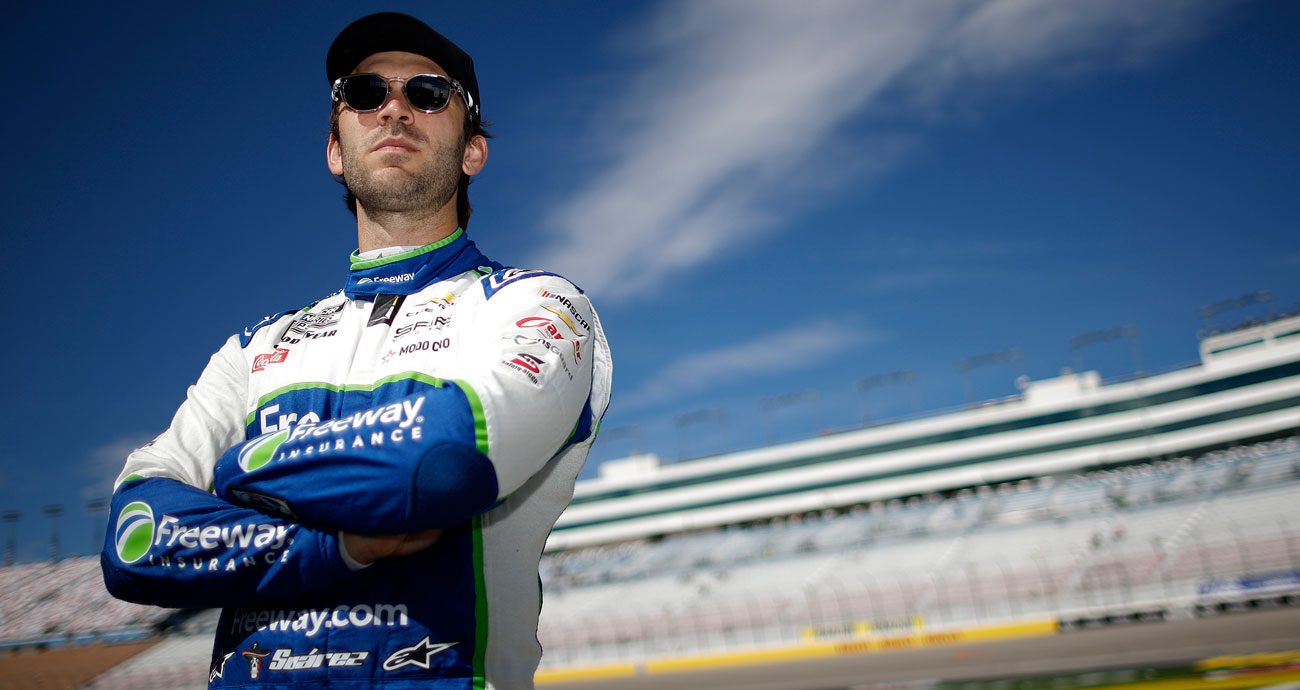
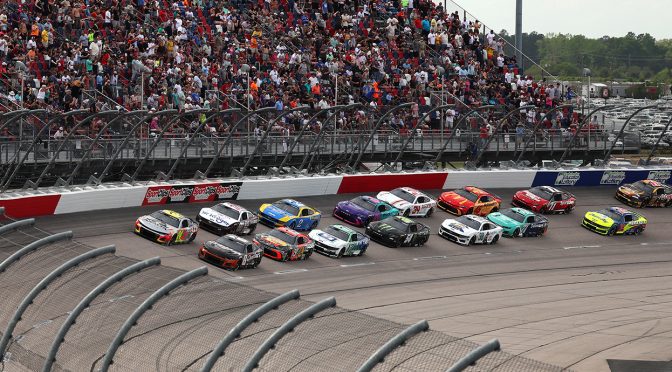
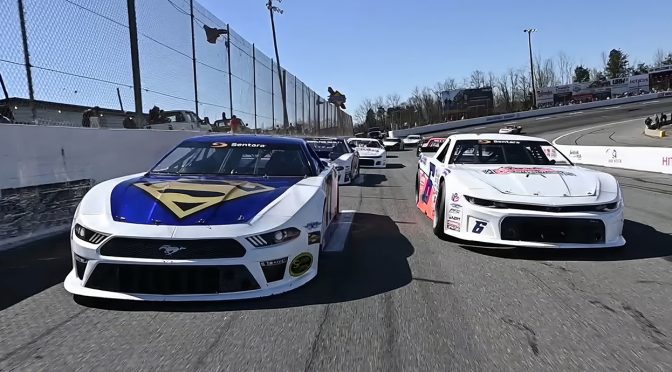
DAYTONA BEACH, Fla. (March 19, 2026) – NASCAR and Anheuser-Busch today announced the return of the highly anticipated Busch Light Summer Music Series, bringing a trio of country megastars to NASCAR race weekends across the country. The star-studded lineup for the second annual Busch Light Summer Music Series includes new country phenom Vincent Mason at Watkins Glen International, chart-topping hitmaker Mitchell Tenpenny at Chicagoland Speedway and another multi-platinum mega-star, who will be announced at a later date, performing at Iowa Speedway.
“As part of our continued partnership with Busch Light, we’re focused on elevating the at-track experience and delivering an even more unforgettable race weekend for our fans,” said Michelle Byron, NASCAR Executive Vice President and Chief Partnership and Licensing Officer. “This announcement is the latest example of NASCAR and the industry working together to provide value to current and future partners across the sport – while also providing fans with experiences they can only get by attending a NASCAR race live.”
Mason will kick off the 2026 Busch Light Summer Music Series at Watkins Glen International on Sunday, May 10, performing his fan-favorite tracks ahead of the NASCAR Cup Series race weekend (May 8-10) in the Finger Lakes. One of country music’s fastest-rising talents, Mason has quickly built a loyal following with his blend of traditional influences and modern storytelling, bringing the roots of country to NASCAR.
Tenpenny will take the stage during NASCAR’s Fourth of July holiday weekend celebration at Chicagoland Speedway on July 5. Known for multi-platinum hits including “Truth About You” and “We Got History,” Tenpenny has amassed billions of global streams and multiple No. 1 songs, bringing arena-level energy to one of the most patriotic weekends on the NASCAR calendar.
The third concert of the 2026 Busch Light Summer Music Series will take place at Iowa Speedway on Sunday, August 9, with one of the biggest names in country music. Additional details will be shared in the coming months.
“We are thrilled to be bringing back the Busch Light Summer Music Series, in partnership with NASCAR,” said Krystyn Stowe, Head of Marketing, Busch Family & Natural Family at Anheuser-Busch. “There’s no better way to kick off a race day this season than with a cold and smooth Busch Light at a pre-race country music concert.”
The Busch Light Summer Music Series continues to build on the long-standing partnership between NASCAR and Busch Light, the Official Beer Sponsor of NASCAR. Since the 1990s, the Anheuser-Busch family of brands has created countless opportunities for 21+ fans to get closer to the sport they love. The Summer Music Series once again delivers a full-length pre-race concert experience, combining the thrill of NASCAR competition with the sounds of country music’s biggest stars.
Busch Light and Trackhouse Racing also continue their partnership in 2026 with NASCAR Cup Series driver Ross Chastain, bringing 21+ fans along for the ride with dynamic specialty paint schemes and fan-focused activations throughout the season, including the brand’s signature “Race for the Mountains” campaign.
LEBANON, Ore. — Marking a historic milestone in its storied history, Willamette Speedway is proud to announce it has become an officially sanctioned NASCAR track for the 2026 season.
As the “fastest one-third mile dirt track on the West Coast” celebrates 60 years of racing action, it joins the NASCAR Local Racing Series Powered by O’Reilly Auto Parts, bringing national prestige and life-changing opportunities to local competitors.
Promoters Cory and Sandy Penfold have elected to sanction six core divisions, ensuring that drivers across all levels of experience can compete for track, state, regional and national honors:
Division 1: Albany Toyota Late Models
Division 2: J&K Auto Body & Collision Street Stocks
Division 3: Cabinet Guys Limited Late Models
Division 4: Hornets
Division 5: Modifieds
Division 6: WPCK Cage Klones Leveling the Field and Raising the Stakes
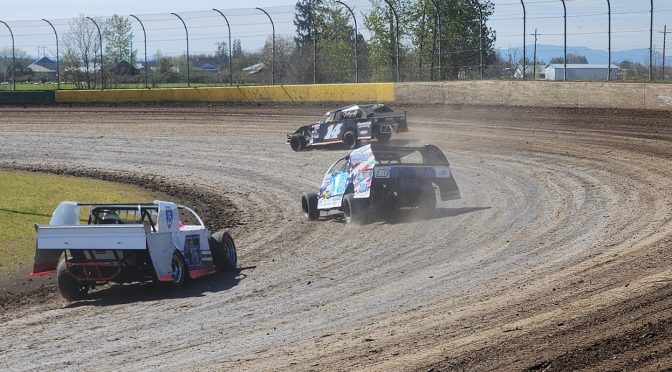
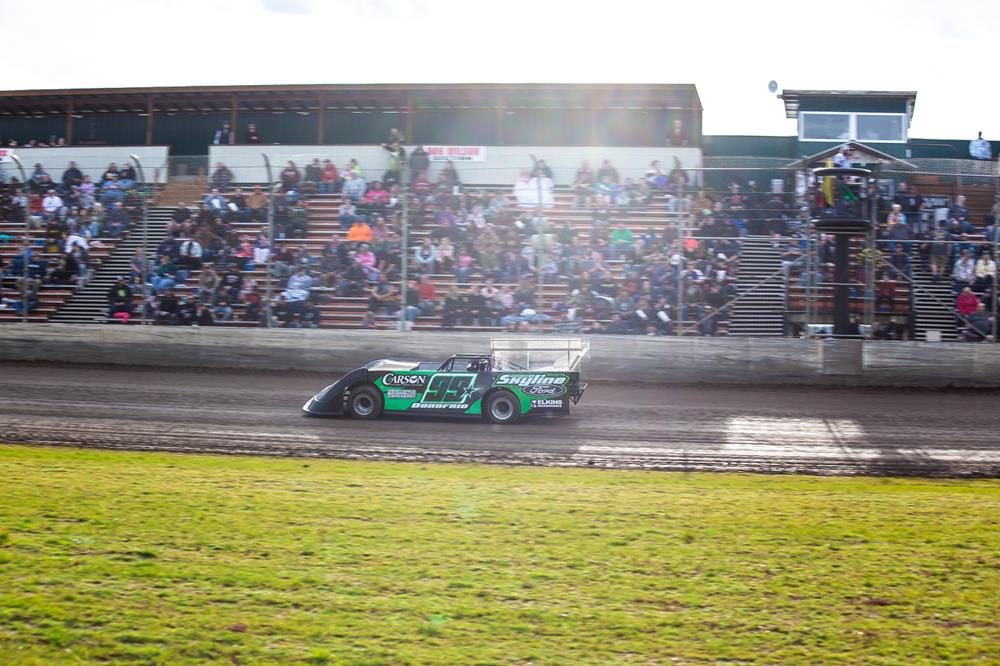
(Photo: Willamette Speedway)
The move to NASCAR brings significant changes designed to benefit the drivers and the show. Most notably, the Modified divisions will see a major shift as Sport Modifieds and Modifieds are combined into a single division. With strategic rule adjustments implemented to equalize the field, fans can expect some of the most competitive side-by-side racing in the region.
The financial incentives are equally historic. For the first time in nearly a decade, a guaranteed points fund is back for the track championship. Furthermore, local heroes now have a clear path to a national spotlight; a Division 1 driver who captures the national title could walk away with a $50,000 payday.
“We’ve got a lot of talented drivers right in the Pacific Northwest, which I believe is the most untapped market in the nation,” said Cory Penfold, entering his fifth year as the track’s promoter. “It’s time to put these drivers in a national spotlight and give them opportunities to be seen without them having to travel halfway across the country.”
The decision to join NASCAR was a personal evolution for Penfold, a self-described “dirt track purist.”
”I’m an old-school guy that appreciates what these guys do,” Penfold remarked. “I’ve struggled with getting away from tradition, but it’s time to move into the modern world of dirt-track racing. This sport evolves quickly, and you have to stay with the times. I wanted to do something to thank the drivers for the show they give the best fans in racing every week.”
To align with NASCAR standards and maximize national exposure, Willamette Speedway will debut a whole new race format this season. This structure is specifically designed to give drivers a legitimate shot at the big-money payouts and the points required to climb the national leaderboard. Fans, teams and sponsors are invited to witness history as the 60th anniversary season kicks off.
The green flag drops on a new era of speed, tradition and competition on April 18.
About Willamette Speedway: Located in Lebanon, Oregon, Willamette Speedway has been a staple of West Coast dirt-track racing since 1966. Known for its high speeds and passionate fan base, the third-mile clay oval continues to be the premier destination for dirt track racing in the Pacific Northwest.
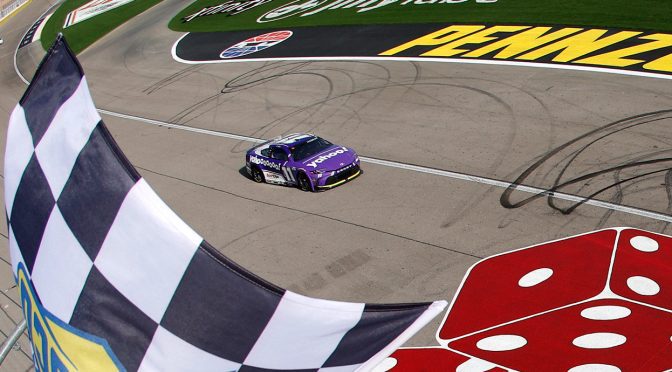
Denny Hamlin’s still got it — as if there was any doubt. Following a sequence of respectable finishes in the season’s first month, Hamlin led 134 of 267 laps on Sunday at Las Vegas Motor Speedway for his 61st career victory, and first in 2026.
“It is just so satisfying, so gratifying. You just never know what can happen year over year if you still have it or not,” Hamlin said after the race. “I wasn’t totally locked in for the first few weeks. We’ve just been hitting our stride now. This is our bread and butter, these are the tracks that we know we can go win, and we executed. This is a team win. The team did it.”
To Hamlin’s point, it may have been difficult for any driver to fully lock in until they arrived at Las Vegas last weekend. While the NASCAR season technically began in the pack-racing chaos of Daytona and EchoPark Speedway near Atlanta, then moved to the twists and turns of Circuit of The Americas and the unique challenge of Phoenix, the meat and potatoes of the Cup Series season doesn’t start until the cars hit the first 1.5-mile oval of the year.
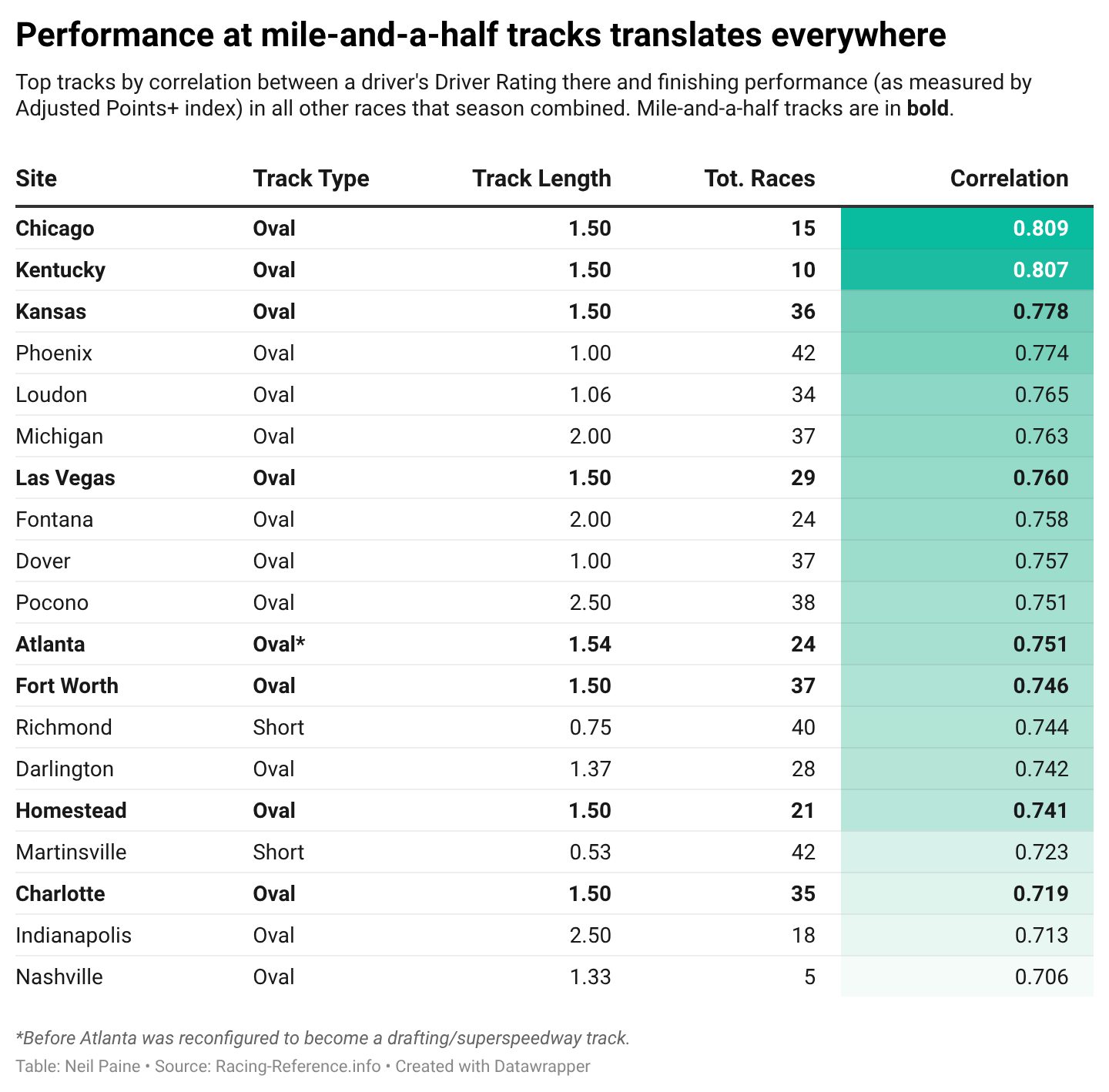
Want proof of how (to use Hamlin’s words) “bread and butter” these tracks are for the season as a whole? Going back to 2005, I charted the correlation between a driver’s Driver Rating at each track and their finishing quality (measured by Adjusted Points+ index) in every other race that year. A higher correlation means driving well at that particular track means you did better everywhere — and as the chart below shows, mile-and-a-half ovals are the sport’s ultimate bellwethers. Performances at sites like Chicagoland, Kansas and, of course, Las Vegas generally tend to be more closely linked with a driver’s season-long success than any other track types on the schedule:
That’s why teams put so much emphasis on their performance from the moment the haulers pulled up at the track this past weekend — and why drivers like William Byron stuck around in Vegas on Monday for additional test laps. The data and adjustments gleaned from running at one of the most quintessential ovals on the schedule outweigh what you might get from other tracks.
To further illustrate just how disproportionately significant the initial race of the season on a 1.5-mile track tends to be, I took data from those races each year since 2005 and set up a series of predictions, forecasting a driver’s finishing quality for the remainder of the season based on three factors:
Driver Rating from the previous year (across all track types).
Driver Rating in the current season-to-date (across all track types).
Driver Rating from the first race of the season on a 1.5-mile track.
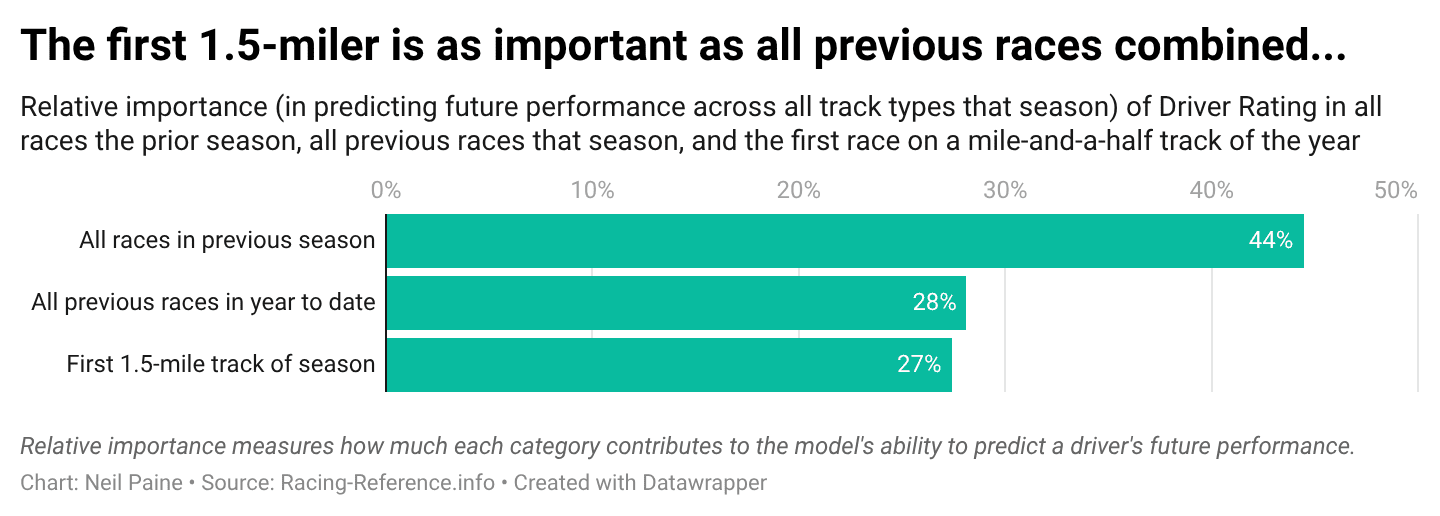
With that model, we can use a measure of relative importance to track how much each category contributes to the accuracy of the future predictions. And the results show that a single race on a 1.5-mile track is basically as valuable as all previous races that season combined (and more than half as important as all of last season) when it comes to knowing who will do well over the rest of the schedule overall:
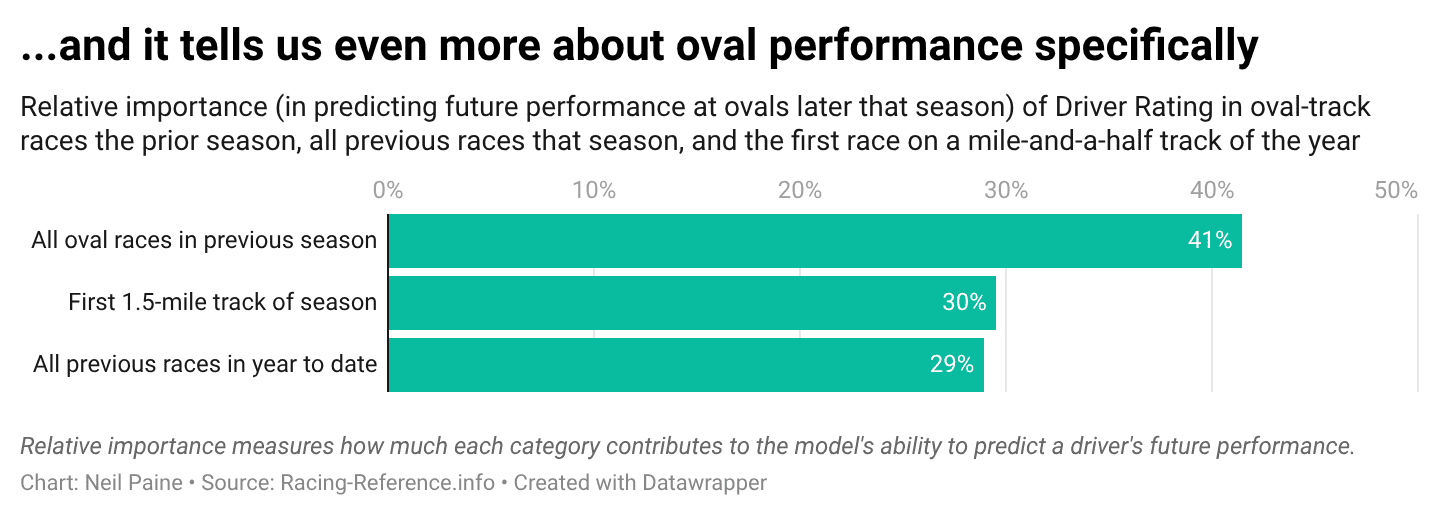
Furthermore, how you drive at the opening 1.5-miler of the season gains even more salience when we specifically focus on predicting finishes at ovals (mile-and-a-halfs or otherwise) over the remainder of the season. In that regard, that one single race on a 1.5-mile track outweighs all previous races combined to begin that season, and it’s nearly three-quarters as important as oval performance was over the entirety of the season before as well:
So we don’t blame Hamlin for being jazzed about just how well his car ran — winning in spite of an early speeding penalty that buried him in 31st place — and what it might mean over the rest of this, his 22nd season in the Cup Series. Seven of the races on the Chase schedule are, broadly categorized, ovals (Darlington, Gateway, Kansas, Las Vegas, Charlotte, Phoenix and Homestead), and four of those — Kansas, Las Vegas, Charlotte and Homestead — are specifically 1.5-mile “bread and butter” tracks.
Based on what he did at Las Vegas this past weekend, the rest of the field should fear what this No. 11 Toyota Camry might be able to do over the remainder of the schedule — and especially in those crucial late-season battles at the all-important mile-and-a-half intermediate.
WELCOME, N.C. – It was audacious, ridiculous and outrageous all at once, and Matt Kaulig knew it.
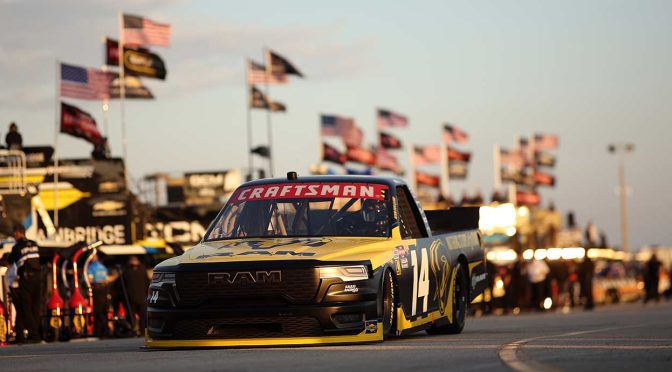
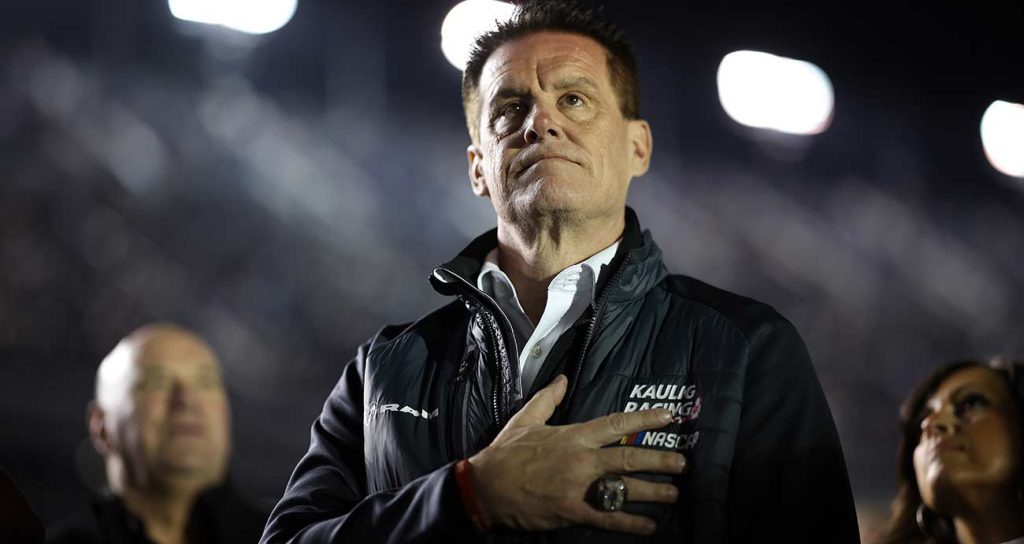
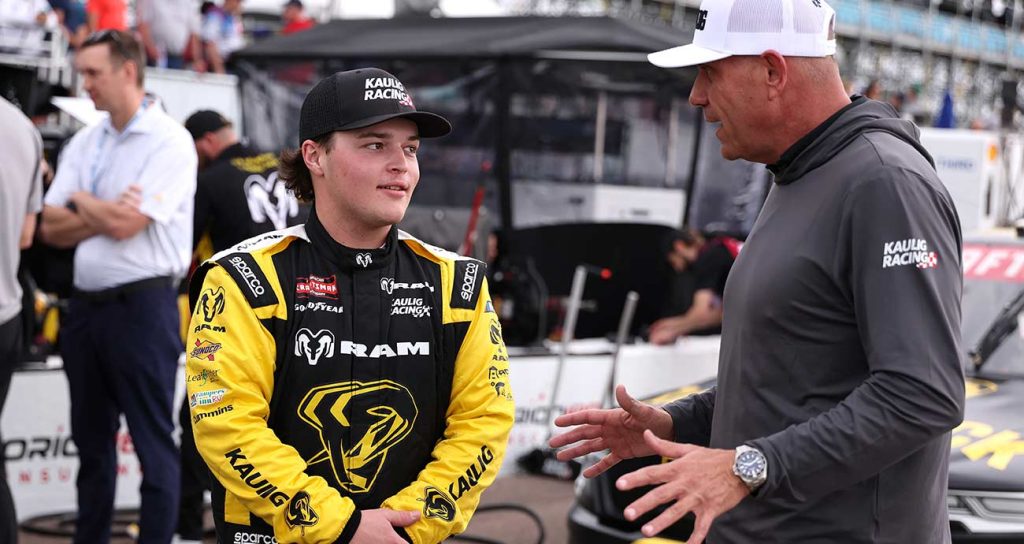
Kaulig stood on pit road in the minutes before the start of the Feb. 13 NASCAR Craftsman Truck Series opener at Daytona International Speedway, the track’s lights high atop the frontstretch grandstands illuminating the 37-truck grid. Kaulig’s new Ram truck team had yet to run a lap in anger, and already he could enjoy a moment of major accomplishment.
Five shiny Kaulig Racing trucks were scattered across the starting field. Only a few months earlier, the team had not even a truck fender, with the upcoming season an onrushing bull and the clock ticking.
“It was very, very, very surreal,” Kaulig said. “For us to build five trucks – we didn’t even sign the Ram deal until the summer – it was an epic undertaking. Some people in the racing world understand what we did to accomplish that, but they don’t really understand how we did it. I mean, we had nothing.
“Daytona was an awesome moment.”
Now the Truck season is three races old, and teams have been enjoying a three-week break before Race No. 4 on March 20 at Darlington Raceway. At Kaulig’s shop down the hill from Richard Childress Racing’s huge NASCAR complex (on Austin Lane, named for Childress’ racer grandson Austin Dillon), there has been some time to catch up on building new trucks.
Also, Kaulig and team principals Chris Rice (president) and Ty Norris (chief business officer) have been able to reflect on results of the first few weeks of a racing endeavor so new it seems right out of the box. Although the 15 Ram entries through three races have resulted in a best finish of seventh (Brenden Queen at Daytona), at Kaulig the season already is considered a “win.”
James Gilbert | Getty Images
Perhaps it can be compared to another sports effort by Matt Kaulig decades ago – precisely November 19, 1994. Kaulig was the quarterback for the University of Akron Zips, and they were playing the final game of their season against Ohio University. It was a unique game, but not in a pleasant way. Remarkably, both teams entered the season finale with 0-10 records. On the air, ESPN had dubbed it the Toilet Bowl.
“We ended up beating them,” Kaulig said of the 24-10 Akron triumph. “So I guess that was a little victory. I don’t know. It was weird.”
Virtually since that moment, Kaulig has been winning. A successful business entrepreneur, he started LeafFilter, a company specializing in leaf guards for home and building gutters, in his Ohio home and across the years has expanded that operation to more than 150 offices. Well-known in the Cleveland area through business operations and widespread philanthropy through Kaulig Giving, his organization’s charity arm, Kaulig also is a minority owner of the Cleveland Guardians Major League Baseball team.
He tiptoed into NASCAR in 2014 by sponsoring cars in two races, saw stock-car racing as another field in which he could succeed and started an O’Reilly Auto Parts Series team in 2016. He moved into the Cup Series in 2020 and now owns two Cup wins and 27 O’Reilly victories.
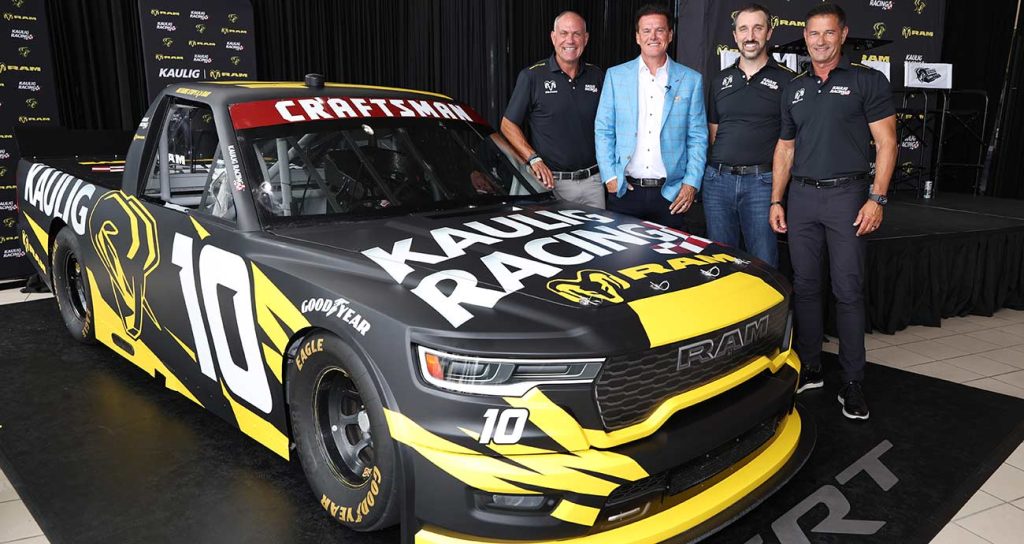
Kaulig’s fleet-like assault on the Truck Series began with conversations with officials from Stellantis, the car builder anxious to make a return to NASCAR after former involvement with its Dodge brand. Stellantis chose its popular Ram truck model as the advance guard for its new NASCAR journey, and Kaulig emerged as the company’s choice to jump into the Truck Series this year. Kaulig Racing had no experience in the Truck Series, so everything was new.
James Gilbert | Getty Images
Three races in, Kaulig executives are pleased to have had a top-10 finish in each race but are more excited by the fact that they “won” the rushed preseason construction process and have dominated much of the current talk about the Truck Series, in particular Ram’s big splash at Daytona.
Kaulig signed on with Stellantis last summer and announced its Truck Series plans with Ram in August. Kaulig’s employee numbers steadily increased as the drive toward a 2026 launch began. New engineers, fabricators and body-hangers rolled into Welcome.
There was no template from which to work. Kaulig was racing in Cup and O’Reilly with the assistance of Richard Childress Racing, with which it had an alliance. The new deal with Dodge ended the affiliation with General Motors and Childress, although Kaulig continues to race Chevrolets in the Cup Series because of the prestige and publicity of racing on Sundays and because of the fact that Kaulig owns valuable charters in Cup. So Kaulig is competing in Cup on an island of sorts.
Overtime hours and Christmas holiday work at the shop resulted in trucks being ready for preseason testing and for another unique twist to the Ram effort – a competition in which candidates raced for a chance to fill one of the Kaulig truck seats for the season. Timothy “Mini” Tyrrell won that spot, and the televised competition lifted the profile for Ram and the team. Stellantis, eager to spread the Ram name across a wider palate, also wanted a fifth team truck – a “free agent” entry – to be driven by a mix of up-and-coming drivers and accomplished veterans.
“So we went from zero trucks to five,” said Norris, a veteran racing executive who has run NASCAR operations for Dale Earnhardt Inc., Michael Waltrip Racing and Trackhouse Racing. “We didn’t get parts until December. We didn’t get our fab shop set up until November. We were still hiring people around Christmas. We had people working Christmas Eve and New Year’s Eve. At that point, the idea of leading laps wasn’t even a question. It was all about getting trucks to the track.”
So it was reasonable that Matt Kaulig would take some time pre-race at Daytona to absorb the moment. He and the team’s other leaders had no idea what to expect performance-wise. “It was my 36th time walking into Daytona in an official capacity, but the first time I ever walked in totally blind to what our level would be,” Norris said. “I didn’t know if we were going to be first, second, third, fourth and fifth and lap the field or finish at the bottom. No idea. Zero.”
The finishes were respectable for a team toddling into the competition. Queen gave Kaulig its first top 10 with a seventh. Daniel Dye was 17th, Tyrrell 19th, Justin Haley 22nd and “free agent” Tony Stewart 36th after being involved in a crash.
The “win,” in the team’s eyes, had been scored with preseason buildup, the attention gained by the television series and a generally successful first week of competition.
“All in all, this is a marketing platform,” Norris said. “When you look at what Ram did in Daytona, leading up to Daytona with the show that we did, with the announcement of Tony Stewart driving and showing up with five trucks with beautiful paint schemes and getting partners like Cummins and Mopar and Celsius, it was all a win. And our merchandise trailer was busy all week. I think we made the most noise at Daytona.”
Rice has worked for Kaulig in developing his NASCAR program since December 2015. Solid success in the O’Reilly Series followed, and AJ Allmendinger has won two Cup races for the team on road courses.
“But I knew if we didn’t get solid OEM support (assistance from a car manufacturer as a featured team) that we would die,” Rice said. “If you don’t have that, you don’t get the money and the resources you need to compete. Matt and I spent three days on a retreat and talked all things NASCAR. We went aggressively after that. We were able to get in the door and talk with Stellantis and get a relationship going.”
David Jensen | Getty Images
Rice has built a reputation as one of the most gregarious, positive people in the NASCAR garage. “I was a gas man in the Busch (now O’Reilly) Series at the age of 14 in 1989, so I’ve been around this for a long time,” Rice said. “NASCAR has given me a good lifestyle and done things for me that I would never have been able to do in a sock factory. So I’m passionate about NASCAR. That’s the passion you see from me.”
Rice also is the guy at Kaulig who counts the pennies. “People think we spend an abundant amount of money, but we watch everything,” he said. “We look like we’re bigger than we are. So, we’re just different. We’re one team fielding seven vehicles.”
The two biggest assumptions in NASCAR garage circles at the moment are that Stellantis and Dodge eventually will race in the Cup Series and that Kaulig will be the vanguard of the move. That announcement is yet to be made.
Rice said the team would prefer advance notice of 18 months to field Dodge Cup entries. “Eighteen months is the rule of thumb,” Rice said, “but I would say if we got six months, we would be happy.”
Kaulig Racing currently employs 157 people. An expected move to Cup will require many more.
“Realistically, it would take years to be absolutely 100 percent ready to be able to compete with the manufacturers that have been in the sport for decades,” Kaulig said. “But we can do it. We just proved it with the trucks.”
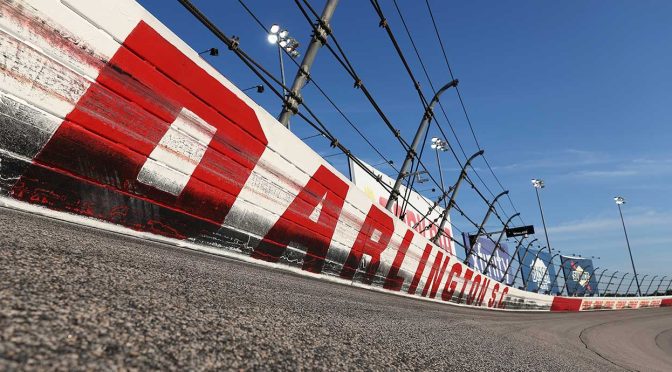
Darlington Raceway’s history book has many chapters. The tome spans all eras, from stock-car racing’s infancy — when the idea of staging a 500-mile race for late-model automobiles on a track so large was dreamlike — to the modern day, where technology, science and preparation have sent speeds around the narrow oval rocketing into the high sky.
One thing applies from any era: Only the courageous need apply.
The promise of another dynamic piece of the track’s story arrives this week at one of NASCAR’s original proving grounds, with a tripleheader weekend culminating in Sunday’s Cup Series Goodyear 400 (3 p.m. ET, FS1, HBO Max, MRN Radio, SiriusXM NASCAR Radio). The 400-miler marks the biggest turning point this season for a rules configuration that combines increased horsepower, a reduction in aerodynamic bolstering and Goodyear tires designed for aggressive wear.
The wrinkle, though, is that no matter the generation of car, driver or rules, Darlington’s toughness has become legend. In the days before every speedway on the circuit needed a plug-and-play nickname or brand as part of a marketing flourish, “Too Tough to Tame” was gospel, on par with the sinister “Lady in Black” handle that the track also wears.
Teams have already sampled the new 750-horsepower package this year, experiencing the extra output on the 1-mile Phoenix Raceway two weeks ago. But Darlington threads the line of running a configuration meant to enhance short-track racing on an intermediate-adjacent 1.366-mile layout. That combination just ramps up this weekend’s unknowns.
“We’ve got a lot more questions than answers right now with this package, with the limited amount of sim that we’ve tried to do and tried to understand, predicting fall-off to be several seconds — to the point where we don’t think we’re gonna have to count on two hands, but we might max out one,” said RFK Racing veteran Chris Buescher. “It’s going to be big from that side of things, and it’s going to certainly change the race and how we approach it and how hard you want to push. Can you conserve the tire enough to survive late into a run? You know, it’s the shorter Darlington race, but that being said, it’s still going to present a lot of challenges that really Darlington has come to present all on its own, and now we’re tacking on the horsepower, the less downforce and the higher fall-off tire. So lots of excitement going into this one, lots of hope to see some really unique, good racing.”
However new the rules alignment might be, Darlington’s rugged reputation is a decades-long trademark. That calling card began when track founder Harold Brasington began carving the layout into the South Carolina sandhills, doing much of the construction work himself. He also bore the brunt of the ridicule. Long before “Too Tough to Tame,” the site was mocked as “Harold’s Folly” for its outsized scope and seemingly foolhardy ambition.
As has been well documented, land donor JS Ramsey wanted to protect his nearby pond from all the commotion. Given the primitive track-design principles of the day, Brasington didn’t figure the asymmetry would make a difference, so he tightened the west bend’s radius — Turns 3 and 4 today — to appease his business partner.
“The lay of the land was such that we couldn’t make both ends the same size,” Brasington told the Florence (S.C.) Morning News in 1983. “So we just said, ‘What the heck? It won’t matter if one end is a little bigger than the other.'”
Oh, it mattered. It still matters.
“One of the biggest reasons it’s so demanding is it’s not — you don’t see it when you look at it — but it’s not circular in shape,” said Mark Martin, a NASCAR Hall of Famer and two-time conqueror of Darlington’s prestigious Southern 500. “The wall that goes around it seems circular, but the banking is not. So when you’re going fast, you have to hit the apron going into the corner, and then you almost hit the wall on the outside when you leave it. And it’s hard to describe, but it’s just really difficult to manage. It always was, even when it was first built, it was really only one lane wide — insane, and it’s been insane ever since, and it will be even more this year.”
NASCAR Research & Archives Center | Getty Images
Darlington has always been a divider, no matter how sparse the preferred grooves might be and how often the wall scrapes — “Darlington Stripes” in racing vernacular — come about. Those drivers who excelled there were often among the sport’s all-time greats. Those who struggled with Darlington’s tough nature often found creative ways to express their contempt.
Kyle Petty once said he loved visiting Darlington, playing golf at local courses, exploring nearby restaurants and hanging out by the motel pool — “as long as they don’t make me run the track.” John Andretti actually won one Southern 500 pole position, but his difficulties there were so pronounced that he predicted his souvenir business would skyrocket after he qualified 18th for his Darlington debut. “Man, what an accomplishment! On a track nobody should be able to drive!” Andretti told the Associated Press in 1999. “I thought, ‘Man, my T-shirts ought to start selling like crazy now.’ I thought everybody would be really impressed. I was.”
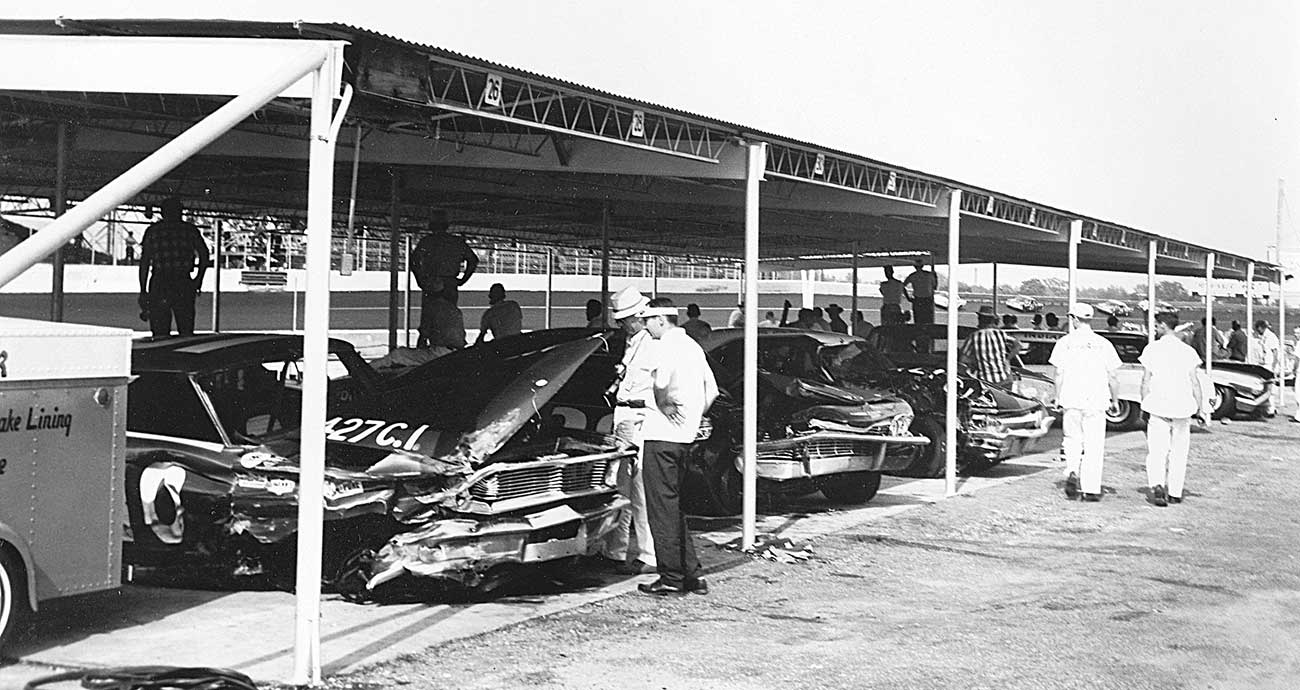
Other criticisms have not been as cheery. “This track was built over 20 years ago,” Charlie Glotzbach said after a 1971 crash there that injured Hall of Famer Fred Lorenzen. “It’s just plain murder.”
The contrast may well be why the track’s triumphs have been so heavily celebrated. David Pearson never prepared on a racing simulator or cared a whit about a rules package, but girded himself for Darlington by working on his cars and relying on his patient approach and boundless wisdom. When the time was right, he’d put out his cigarette and pounce. The speedy but savvy “Silver Fox” won 10 times at Darlington — more than anyone.
Mark Martin won two Cup Series races there, and a record eight wins in what’s now called the O’Reilly Auto Parts Series. He was once described as being as tough as the Winn-Dixie steaks that sponsored many of his No. 60 Fords in the old Busch Series days, and his tenacity helped guide him in those 10 trips to Darlington’s Victory Lane.
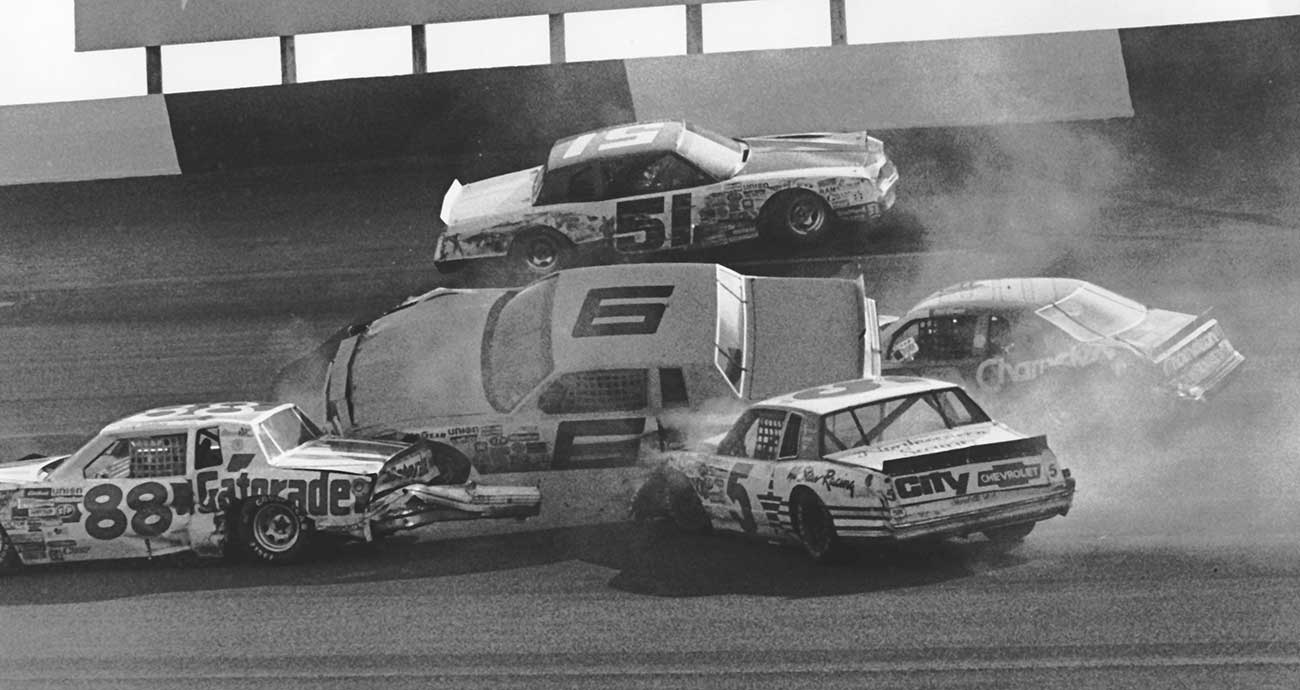
Fellow Hall of Famer Cale Yarborough won the Southern 500 five times, an accomplishment that hangs on the entrance sign to the Darlington garage that bears his name. The South Carolina native also experienced the other side of Darlington’s wrath, saying he felt like an astronaut after his car sailed over the guard railing and out of the park in a calamitous 1965 crash.
“One little slip and it bites you,” Yarborough said years later.
You can’t spell Darlington without “daring,” and that’s a tradition that lives on.
The No. 48 Big Machine Racing team in the NASCAR O’Reilly Auto Parts Series will be without three crew members for the next four races after NASCAR handed out penalties on Wednesday following last Saturday’s race at Las Vegas Motor Speedway.
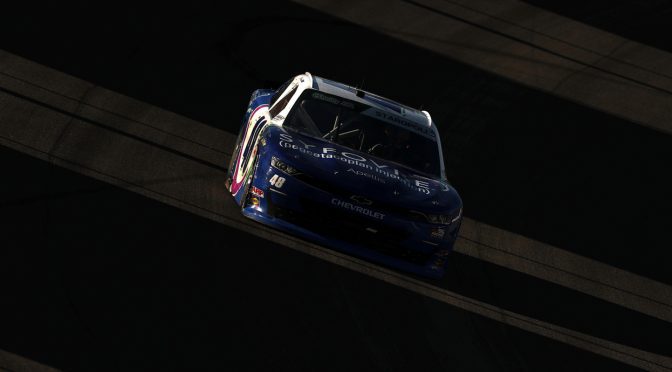
Crew members Patrick Donahue (crew chief), Dillon Bassett (car chief) and Morgan Olsen (engineer) have all been suspended for the next four O’Reilly Auto Parts Series events, through April 11 at Bristol Motor Speedway, after NASCAR discovered a loss or separation of ballast from the No. 48 Chevrolet driven by Patrick Staropoli during Saturday’s The LiUNA!
This penalty is a safety violation detailed in Sections 10.5.2.5 B & E of the NASCAR Rule Book. Ballast added to a vehicle in order to meet minimum weight can break off the car and become a debris hazard for other competitors.
Staropoli had a couple of incidents during last Saturday’s race, one on Lap 118 where he and Dean Thompson spun out to bring out a caution, and another on Lap 132 when he and Josh Bilicki spun in the frontstretch grass. Staropoli finished 21st, one lap down, and is 16th in the standings, 150 points behind leader Justin Allgaier after five races.
The O’Reilly Auto Parts Series is back in action this weekend at Darlington Raceway for Saturday’s Sport Clips Haircuts VFW Help a Hero 200 (5:30 p.m. ET, The CW, MRN Radio, SiriusXM NASCAR Radio).
NASCAR is considering the allowance of more hell-raising in its “Hell Yeah” era, but that doesn’t mean drivers can start throwing hands after races.
During the latest “Hauler Talk” podcast, NASCAR vice president of race communications Mike Forde said the sanctioning body and drivers have been discussing the protocol for post-race altercations – particularly in light of the new marketing campaign that aims to showcase personalities and emotions. Drivers have been lobbying for leeway to express themselves without being penalized. “It started probably the end of last year when we had an all drivers meeting and unveiled the ‘Hell Yeah’ campaign,” Forde said. “And the drivers were like, ‘This is kind of cool. This is awesome. So, when you’re talking about that, is the driver scuffle part of that conversation?’
“We took it back to beat it up, and we’re still beating it up. Right now, it’s still a case-by-case basis.”
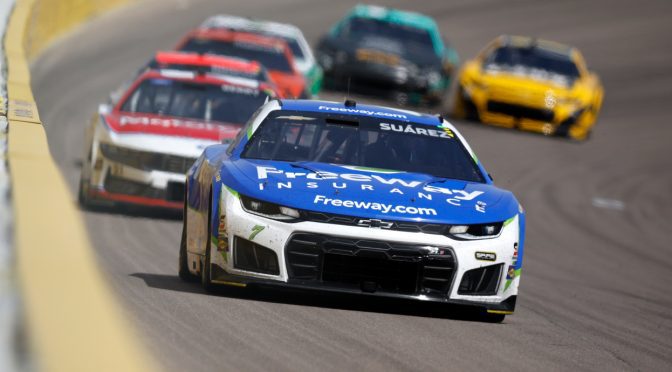
In the case of Ross Chastain vs. Daniel Suárez after Sunday’s race at Las Vegas Motor Speedway, there was no punishment after a confrontation that featured a brief exchange of words and a light shove.
Forde said that any post-race confrontation will be viewed on a case-by-case basis, depending on the severity. NASCAR currently instructs its security team to intervene in the instance of physical contact.
“It’s a moving line a little bit,” Forde said. “We really do want drivers to show their emotion, and I think in this ‘Hell Yeah’ era that we’re in, which we all love, it really goes back to what the essence of NASCAR is, and that’s passion and emotion and fiery conversations and drivers disliking other drivers.
“And some of the comments that have come out this week between Chastain and Suárez, it’s become clear that there is a little bit of a feud there. … We’re not fining for a shove. It’s a case-by-case basis. Drivers have come to us and said, ‘Maybe we could open this up a little bit and let us show our emotion without getting fined.’ That is a conversation that keeps evolving. We want to keep our drivers safe and make sure that nothing gets out of hand. So it’s a tough tightrope to walk. But we’re going to continue having those conversations with our drivers, and we’ll see where we go. But what we want to do is not neuter them and take away that passion because that’s what fans love. That’s what the drivers love. And that’s why we love NASCAR.”
During the podcast, Forde also addressed NASCAR’s decision to take the Toyotas of Christopher Bell and Erik Jones to the R&D Center for a full post-race inspection (which was being conducted on Wednesday after the Camrys completed the trip from the West Coast).
NASCAR has traditionally taken one car from each manufacturer, but Forde said “a new process and philosophy in 2026” will involve taking multiple cars from the same manufacturer.
“It’s something that we’ve discussed in the offseason,” Forde said. “And so this one just happened to be Toyota. We just took two Toyotas, and next time it might be two Chevys. It might be two Fords. It’s a chance for us to get a feel of what the teams are doing and making sure that everything’s on an even playing field.”
Forde said Cup Series director Brad Moran has a tentative schedule of which races will include cars being brought to the R&D Center.
“This was sort of pre-planned, and (Moran) knew that after Vegas, we’re going to take a couple home,” Forde said. “And he knows if we’re taking some cars home after Darlington, but the teams don’t know. So that’s to kind of keep them on their toes so they don’t know when it’s coming, and we can really get a true view of what the garage is doing.”
Other topics covered by Forde and senior director of racing communications Amanda Ellis during the 46th episode of “Hauler Talk,” which explores competition issues in NASCAR:
— The rash of speeding penalties for Joe Gibbs Racing at Las Vegas.
— Is celebrating on the roof of a Next Gen car more permissible?
— NASCAR Alumni Weekend at Darlington Raceway and the discussions with Goodyear about tire falloff with the new 750-horsepower package.
— The backstory of Daniel Dye’s indefinite suspension and what’s next.
Click on the embed below to listen or search for “Hauler Talk” wherever you download podcasts to hear it on your phone, tablet or mobile device.
Nate Ryan has written about NASCAR since 1996 while working at the San Bernardino Sun, Richmond Times-Dispatch, USA TODAY and for the past 10 years at NBC Sports Digital. He is a contributor to the “Hauler Talk” show on the NASCAR Podcast Network. He also has covered various other motorsports, including the IndyCar and IMSA series.
Michael McDowell may only be in his second year at Spire Motorsports, but he was always meant to be an instant leader for the growth of its NASCAR Cup Series program.
That’s why team owner Jeff Dickerson brought McDowell into the fold in the first place.
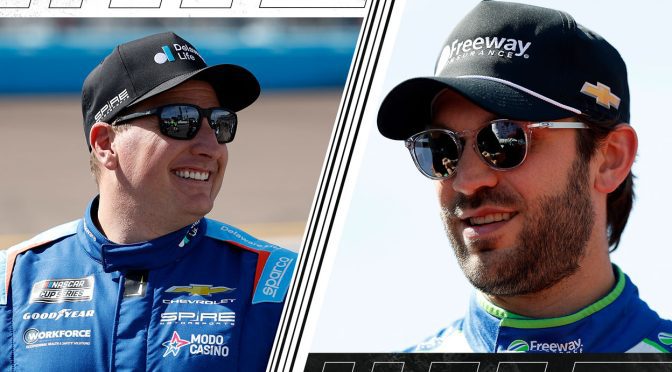
So it should come as no surprise that McDowell was the driver pushing hardest behind the scenes at the team’s Mooresville, North Carolina shop last year. This season, McDowell has some help, all thanks to the addition of veteran racer Daniel Suárez.
Suárez is a two-time winner at the Cup level, in addition to winning the NASCAR O’Reilly Auto Parts Series championship in 2016. McDowell lauds the experience Suárez brings to Spire after driving for several powerhouse teams throughout the Cup garage, adding further credibility to Spire’s stable in 2026. But what he appreciates most is Suárez’s competitive fire.
“He brings a level of intensity that is really refreshing for me here,” McDowell told NASCAR.com in a Wednesday phone interview. “Like last year, I felt like I was kind of that guy that was pushing on everything, right? Like you’re pushing to, not make changes, but just to make improvements and make things better. And now I’ve got somebody to help push with me.”
Suárez’s intensity was on full display post-race at Las Vegas Motor Speedway on Sunday, when he and former Trackhouse Racing teammate Ross Chastain had a heated conversation after the race that led to an eventual shove from Chastain.
It’s not the first time Suárez and Chastain have had a disagreement – but McDowell has also experienced an unhappy Suárez himself. McDowell mistakenly slowed Suárez’s lap during group qualifying at Phoenix Raceway in March 2019. Suárez sought out McDowell on pit road for a conversation that quickly escalated into a physical confrontation, with Suárez swinging McDowell to the pavement.
Seven years later, McDowell laughs at the memory because the two hardly knew each other before coming to blows that day. But through that moment grew a relationship Suárez called “very close” when recalling the scuffle in his Spire announcement in October 2025. Through going to the NASCAR hauler together, sitting down and having real conversations with one another, respect grew between the two fiery competitors – even if they wouldn’t be teammates until seven years later.
“What I learned through that process … is his level of intensity kind of matched mine, right?” McDowell said. “And I appreciated that and I liked that. I wasn’t worried about the altercation. It’s more like this guy’s kind of like me – he’s an idiot (laughing). And so him and I definitely got along a lot better after that, just kind of getting to know each other more. Like I said, that was sort of our first on-track issue, but also first off-track experience. And I appreciate the fight in him. And I don’t mean to use that word as fun, but like he’s just got that hunger, he’s got that fight and I feel like I do as well.”
Sean Gardner | Getty Images
There’s also a similar through line connecting the paths Suárez and McDowell took before arriving at Spire. After each spent years trying to establish stability in the Cup Series, both found landing spots at homes for at least half a decade: Suárez competed for Trackhouse for five seasons while McDowell spent seven racing with Front Row Motorsports. Transitioning to a new team has its obvious challenges, and because McDowell had just gone through that himself, he lent Suárez a guiding hand as Suárez took the reins of Spire’s No. 7 Chevrolet.
“I think it’s hard because you come in and you’re so used to how you’ve done it and how your team’s done it that you’re learning a lot of new people, and you’re learning a lot of new processes,” McDowell said. “Not only that, just where everything is. Who do you ask? And what do you do when you need to do this? I mean, it’s just things that you kind of take for granted that you’ve just done for so long that you don’t have to think about. I think that I’ve tried to help Daniel become quickly acclimated with how we do things here and tried to shorten that process so he didn’t have to figure it out on his own, and I think everybody at Spire’s done that.”
Suárez has shown few growing pains racing for his new group. In his first outing, Suárez posted a fourth-place finish in the exhibition Cook Out Clash at Bowman Gray Stadium. And through five points-paying races, Spire Motorsports’ three entrants are solidly lumped together in the points standings – and in contention for The Chase – with McDowell 14th, Carson Hocevar 15th and Suárez tied for 16th, each with one top-five finish and McDowell boasting a recent ninth-place finish at Phoenix on his tally.
“He’s fit in really well,” McDowell said of Suárez. “I think that’s probably what has and will continue to expedite that, he’s just fit in with our group really well. So it’s not so much him trying to figure out his role or figure out his place. I think he’s already found that pretty quickly, and I think everybody here has embraced that.”
“Daniel’s a Cup winner, and he’s a champion, right? And so I think that people sometimes forget that because it’s easy to get lost in the Cup Series, because there’s only a handful of guys winning every year, right? But he brings a lot of credibility and experience to our organization.”
The NASCAR Cup Series, O’Reilly Auto Parts Series and Craftsman Truck Series converge on Darlington Raceway this weekend for a tripleheader at the “Lady in Black.” Below are the qualifying orders for all three series:
Cup Series
Single-car qualifying will take place at 3:40 p.m. ET on Saturday, with practice earlier in the day at 2:30 p.m. ET (Prime Video).
POSITION
NUMBER
DRIVER
METRIC
GROUP
1
66
* Timmy Hill(i)
40.4
1
2
51
Cody Ware
34.4
1
3
34
Todd Gilliland
33.1
1
4
88
Connor Zilisch #
32.9
1
5
21
Josh Berry
31.3
1
6
10
Ty Dillon
30.6
1
7
97
Shane Van Gisbergen
30.0
1
8
4
Noah Gragson
29.4
1
9
41
Cole Custer
29.1
1
10
47
Ricky Stenhouse Jr.
29.0
1
11
48
Justin Allgaier(i)
28.3
1
12
8
Kyle Busch
26.2
1
13
35
Riley Herbst
23.0
1
14
71
Michael McDowell
22.4
1
15
2
Austin Cindric
22.3
1
16
16
AJ Allmnedinger
22.2
1
17
43
Erik Jones
22.1
1
18
42
John Hunter Nemechek
21.0
1
19
77
Carson Hocevar
19.9
1
20
1
Ross Chastain
17.9
2
21
7
Daniel Suárez
17.7
2
22
3
Austin Dillon
15.6
2
23
38
Zane Smith
15.5
2
24
22
Joey Logano
13.8
2
25
19
Chase Briscoe
13.4
2
26
12
Ryan Blaney
12.1
2
27
60
Ryan Preece
11.6
2
28
6
Brad Keselowski
10.6
2
29
45
Tyler Reddick
9.4
2
30
5
Kyle Larson
7.0
2
31
17
Chris Buescher
6.9
2
32
23
Bubba Wallace
6.9
2
33
54
Ty Gibbs
6.5
2
34
20
Christoper Bell
4.6
2
35
24
William Byron
4.5
2
36
9
Chase Elliott
2.9
2
37
11
Denny Hamlin
1.9
2
O’Reilly Auto Parts Series
Single-car qualifying will take place at 1:05 p.m. ET on Saturday, with practice earlier in the day at noon ET (The CW App).
POSITION
NUMBER
DRIVER
METRIC
GROUP
1
35
TBA
41.6
1
2
74
Dawson Cram
40.7
1
3
30
Myatt Snider
40.4
1
4
5
TBA
36.3
1
5
25
Nick Sanchez
35.9
1
6
96
Anthony Alfredo
33.4
1
7
42
Nathan Byrd
32.3
1
8
55
TBA
31.1
1
9
26
Dean Thompson
30.4
1
10
54
Taylor Gray
30.1
1
11
02
Ryan Ellis
29.4
1
12
39
Ryan Sieg
29.1
1
13
91
Mason Maggio
28.6
1
14
41
Sam Mayer
28.1
1
15
45
Lavar Scott #
26.3
1
16
87
Austin Green
25.0
1
17
51
Jeremy Clements
24.0
1
18
07
Josh Bilicki
23.9
1
19
27
Jeb Burton
23.4
1
20
92
Josh Williams
22.6
1
21
24
Harrison Burton
22.4
2
22
31
Blaine Perkins
21.7
2
23
48
Patrick Staropoli #
20.4
2
24
0
Garrett Smithley
19.2
2
25
44
Brennan Poole
18.8
2
26
28
Kyle Sieg
16.7
2
27
32
Rajah Caruth
16.0
2
28
9
Ross Chastain(i)
13.1
2
29
20
Brandon Jones
13.0
2
30
18
William Sawalich
11.4
2
31
99
Parker Retzlaff
11.4
2
32
17
Corey Day
8.0
2
33
21
Austin Hill
7.9
2
34
1
Carson Kvapil
7.0
2
35
8
Sammy Smith
5.3
2
36
2
Jesse Love
4.8
2
37
19
Christopher Bell(i)
4.7
2
38
00
Sheldon Creed
3.6
2
39
7
Justin Allgaier
3.1
2
40
88
Kyle Larson(i)
1.9
2
Craftsman Truck Series Single-car qualifying will take place at 4:35 p.m. ET on Friday, with practice earlier in the day at 3:30 p.m. ET (FS2)
POSITION
NUMBER
DRIVER
METRIC
GROUP
1
90
Justin Carroll
41.0
1
2
93
Caleb Costner
40.7
1
3
56
Timmy Hill
33.8
1
4
26
Dawson Sutton
33.6
1
5
76
Spencer Boyd
33.4
1
6
33
Frankie Muniz
29.7
1
7
22
Josh Reaume
29.3
1
8
62
Christopher Bell(i)
28.8
1
9
14
Mini Tyrrell #
27.7
1
10
18
Tyler Ankrum
27.1
1
11
2
Clayton Green
24.0
1
12
9
Grant Enfinger
23.8
1
13
1
William Sawalich(i)
22.2
1
14
52
Stewart Friesen
22.1
1
15
12
Brendan Queen #
21.9
1
16
15
Tanner Gray
21.5
1
17
81
Kris Wright
20.5
1
18
5
Corey Heim
20.3
1
19
17
Gio Ruggiero
19.3
2
20
98
Jack Garcia
18.9
2
21
10
AJ Allmendinger(i)
17.6
2
22
42
Conner Jones
17.2
2
23
13
Cole Butcher #
16.7
2
24
91
Christian Eckes
15.0
2
25
19
Daniel Hemric
13.4
2
26
16
Justin Haley
13.2
2
27
25
Corey LaJoie(i)
12.9
2
28
7
Connor Mosack
9.7
2
29
77
Carson Hocevar(i)
9.4
2
30
44
Andrés Pérez De Lara
7.9
2
31
11
Kaden Honeycutt
6.2
2
32
45
Ross Chastain(i)
5.4
2
33
38
Chandler Smith
3.1
2
34
99
Ben Rhodes
3.0
2
35
88
Ty Majeski
2.9
2
36
34
Layne Riggs
2.8
2
* Required to qualify on time # denotes series rookie (i) denotes ineligible for driver points
SOUTH BOSTON, Va. — High stakes, legendary drivers, ground-pounding thunder and the beginning of a championship chase – they’ll all be a part of the season opener at South Boston Speedway on March 21.
URW Community Federal Credit Union Race Day will feature a trio of races sure to thrill the fans and challenge the competitors. The Third Annual 125-lap SMART Modified Tour King of the Modifieds, a 100-lap race for the Hitachi Energy Late Model Stock Car Division and a 35-lap Southern Ground Pounders Vintage Racing Club race are all on the docket.
That Late Model feature will kick off the 43rd season of NASCAR-sanctioned Late Model Stock Car Division racing at South Boston Speedway and begin the run toward its lucrative 2026 track championship.
When it comes to the stakes, they couldn’t be higher.
A $20,000 payday awaits the driver who claims victory in the King of the Modifieds feature event. It is one of the biggest prizes for a Tour-Type Modified race in the nation.
“I can’t even begin to describe it,” said Luke Baldwin, who won the inaugural King of the Modifieds feature in 2024. “It’s still the biggest win of my career to date.”
Baldwin will do battle with a formidable field of drivers including former Daytona 500 winner Ryan Newman, Bowman Gray Champions Burt Myers and Brandon Ward and one legend making his return to the driver’s seat for the first time in more than six years.
Former NASCAR Cup Series standout and South Boston Speedway champion Elliott Sadler of Emporia, Virginia will pilot the No. 16VA Modified co-owned by his brother, Hermie Sadler, in the King of the Modifieds feature. It’ll be the first time he has ever raced a tour-type Modified and the first time he has been to South Boston Speedway as a driver in 30 years. He last drove a race car competitively in 2019 when he raced two NASCAR O’Reilly Auto Parts Series events for Kaulig Racing.
He recently tested the Modified at South Boston Speedway.
“It’s fun,” Sadler said of driving the Modified. “That’s what Ryan Newman told me, it’s what Bobby Labonte told me, it’s what Connor Hall told me. The Modified is so low to the ground that it’s almost like a go-kart. South Boston is one of the fastest tracks that the Modifieds race on. There is not a lot of falloff. You’ve got to get down and go.”
Sadler said his intent is to compete at a high level in the 125-lap race.
“I’m here to race but I’m also going to have fun with it,” Sadler pointed out. “I have a lot of respect for the guys that do this week-in and week-out. There are a lot of good drivers that race these Modifieds every week and they put on such a good show, have great side-by-side racing, and know how to manage tires. There will be a lot of talent on the track in this race. I’m just glad to be a part of it and I’m going to make the most of it.”
On the Late Model side, things will be just as intense.
A $20,000 award will go to the top eligible driver in the Hitachi Energy Late Model Stock Car Division through the speedway’s lucrative Championship Loyalty Bonus program sponsored by Hitachi Energy South Boston and EMPOWER Broadband.
A fantastic field of drivers are expected to vie for the Late Model title this year, and all will be gunning for defending champion Peyton Sellers of Danville, Virginia.
For Sellers the 100-lap race for the Hitachi Energy Late Model Stock Car Division marks the start of his quest for a record ninth South Boston Speedway NASCAR track championship and a third straight title.
Sellers says he is ready to get the season underway.
“It’s been a long winter, and everybody has been working hard at the shop, so it’s time to showcase and put it all out there and see what we’ve got,” Sellers said.
The eight-time South Boston Speedway champion noted that with drivers like Trevor Ward, Landon Pembelton, Bobby McCarty, Deac McCaskill, Andrew Grady and others competing for the track championship and elevating the level of the competition winning the 2026 title will be a tough chore.
“To get out there and win races is going to be just as tough as it has always been,” Sellers pointed out. “The margin for error will be much smaller. It’s going to be harder to run in the top 10. Instead of four cars that can win there are going to be nine or 10 cars that can win. If you have a little bad luck or falter you will fall further back. Where some nights if you missed it pretty bad and ran fifth or sixth, this year it will be tenth.”
While not planning to race for another South Boston championship, Lee Pulliam of Alton, Virginia, will be back behind the wheel at South Boston Speedway, as well.
Pulliam says he is excited to race again at his hometown track.
“I couldn’t be any more excited,” he remarked. “It’s the place that started it all for me. As a kid I fell in love with short track racing at South Boston Speedway. It’s been almost seven years since I’ve gone to Victory Lane. I went five years without driving anything. Six-and-a-half years is a long time. It will be one heck of a celebration if we get it done.”
Pulliam hadn’t raced competitively for the better part of five years when he returned to run the ValleyStar Credit Union 300 Late Model event at Martinsville Speedway in 2024. He raced the ValleyStar 300 again in 2025 coming within inches of winning it.
More than $75,000 in season-end bonuses are on the line this season for competitors at South Boston Speedway.
Advance tickets are priced at $20 each. Tickets at the gate on race day will be $25 each. Seniors age 65 and older, military, healthcare workers and students (with ID) can purchase tickets at the advance ticket price at the gate only on the day of the event.
The race day event schedule has grandstand gates opening at 9 a.m., practice starting at 9 a.m., Hitachi Energy Late Model Stock Car Division qualifying beginning at 11 a.m., a trackside driver autograph session starting at 11:45 a.m. and the first race of the day getting the green flag at 2 p.m.
The latest news and updates about the URW Community Federal Credit Union Race Day King of the Modifieds event and South Boston Speedway may be found online on South Boston Speedway’s website, www.southbostonspeedway.com, the track’s social media channels. or by calling the speedway office at 434-572-4947 or toll free at 1-877-440-1540 during regular business hours.

 Furthermore, how you drive at the opening 1.5-miler of the season gains even more salience when we specifically focus on predicting finishes at ovals (mile-and-a-halfs or otherwise) over the remainder of the season. In that regard, that one single race on a 1.5-mile track outweighs all previous races combined to begin that season, and it’s nearly three-quarters as important as oval performance was over the entirety of the season before as well: